1892 Silver Dollar Value Checker: Errors List, “CC”, “O”, “S” & No Mint Mark Worth

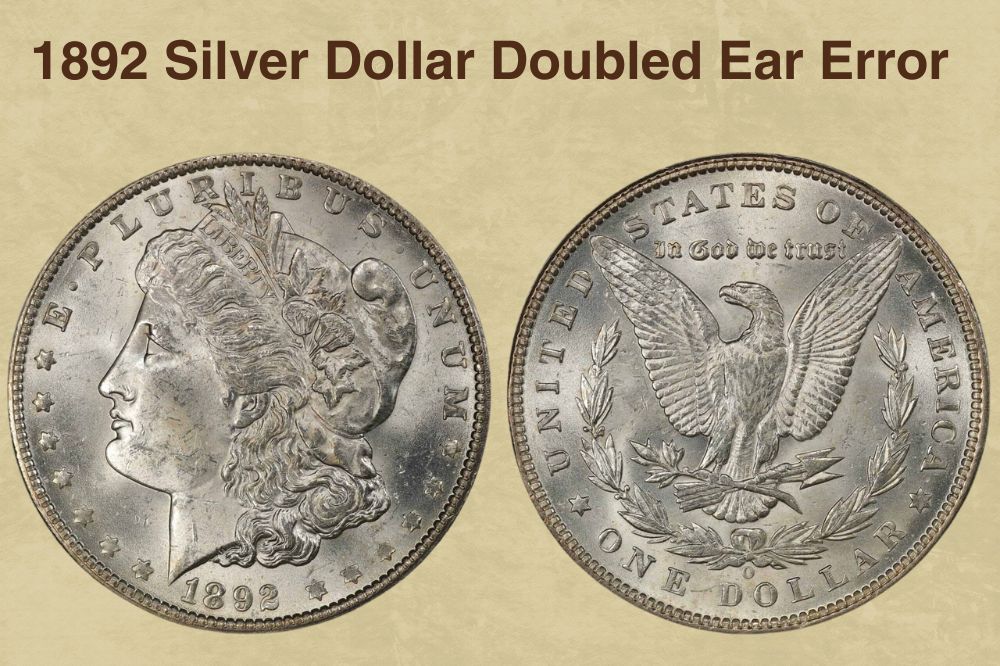
1892 Silver Dollar

Today, the silver Morgan dollars are some of the most valuable vintage U.S. coins out there, not just because of their age, but also their high silver content.

While all of these silver coins will go above their face value from a century ago, there are key dates that have values even way beyond your imagination. One of these key dates is the 1892 silver dollar.

The 1892 silver dollar value is higher than most Morgan dollars because the mintage that year started to drop, making it rarer and grabbing the attention of collectors until today.

A standard Philadelphia-minted coin in Good grade starts at around $84, while a well-preserved San Francisco example in MS grade can command over $220,000 — and rare proof and specialty strikes push even higher.

The Carson City “CC” mint mark issue, in particular, always carries a premium due to its exceptionally low production figures, making it the rarest of the 1892 Morgan dollars.

If you own an 1892 silver dollar and want to learn more about its value, varieties, mint errors, and more, stick around and read on!

1892 Silver Dollar Value Checker

Identify 1892 Silver Dollar CC, O, S and No Mint Mark Price

✨ No Sign-up Required
Obv

Front Obverse

Upload or Take a Photo

Rev

Back Reverse

Upload or Take a Photo


1892 Silver Dollar Value By Variety

The 1892 Morgan Silver Dollar was struck at four different mints — Philadelphia, Carson City, New Orleans, and San Francisco — each producing coins with distinct mintages and rarity levels that directly influence their value today. If you know the grade of your coin, you can find the exact price below in the Value Guides section.

1892 Silver Dollar Value Chart

TYPEGOODFINEAUMSPR
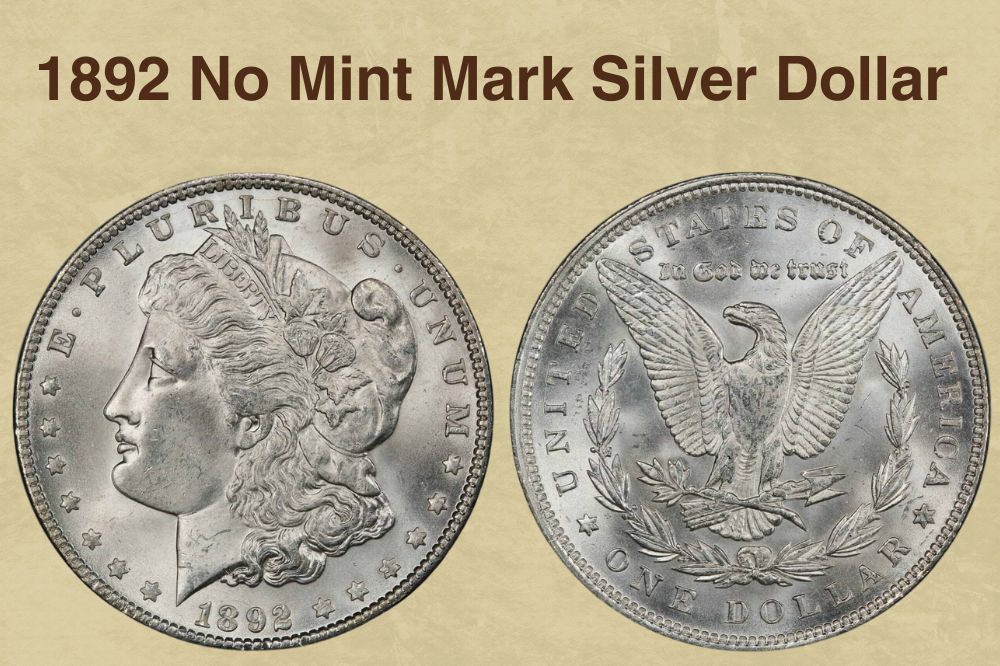
1892 No Mint Mark Dollar Value$84.00$93.00$190.00$795.00
1892 No Mint Mark Dollar (PL) Value$44.97$154.00$394.30$1410.00
1892 No Mint Mark Dollar (DMPL) Value$51.83$177.49$454.45$2492.50
1892 CC Silver Dollar Value$208.00$516.67$1190.00$7443.33
1892 CC Silver Dollar (PL) Value$157.79$540.29$1383.41$3507.50
1892 CC Silver Dollar (DMPL) Value$164.65$563.78$1443.55$6162.50
1892 O Silver Dollar Value$84.00$93.00$190.00$4373.33
1892 O Silver Dollar (PL) Value$234.78$803.91$2058.40$8855.00
1892 O Silver Dollar (DMPL) Value$280.52$960.51$2459.39$15687.50
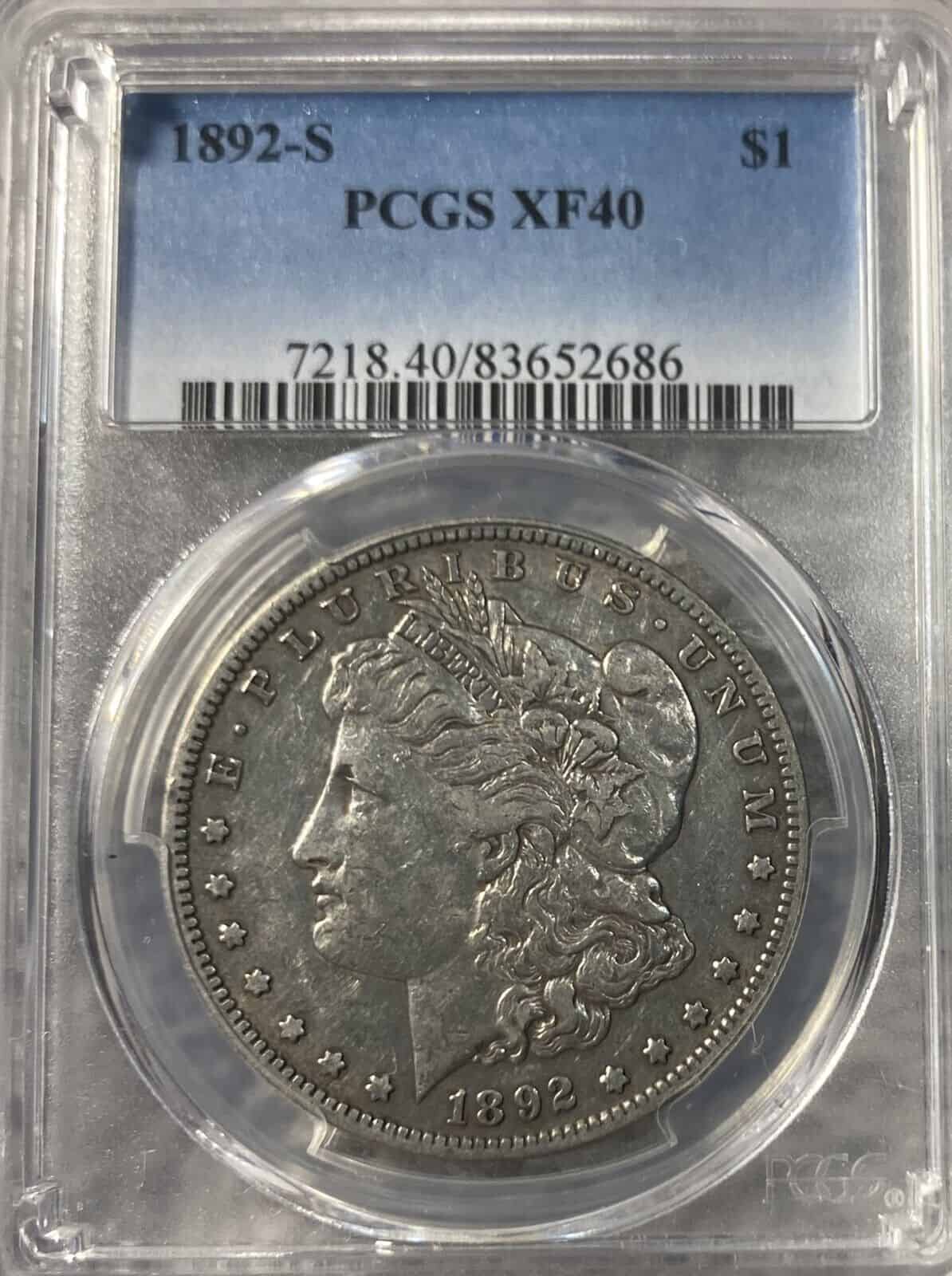
1892 S Silver Dollar Value$85.60$281.67$4780.00$220471.43
1892 S Silver Dollar (PL) Value$4207.73$14407.68$36890.85$92000.00
1892 Proof Silver Dollar Value$710.00$1190.00$10305.00
1892 CAM Silver Dollar Value$13221.25
1892 DCAM Silver Dollar Value$19525.00
Updated: 2026-05-09 13:00:22

Also Read: Top 100 Rarest Silver Dollar Coins Worth Money (Most Expensive)


Top 10 Most Valuable 1892 Silver Dollar Worth Money

Most Valuable 1892 Silver Dollar Chart

2004 - Present

The 1892-S mint issue commands the market by a significant margin. This is largely a function of survival rate. While the San Francisco Mint produced a modest number of silver dollars in 1892, most entered active circulation shortly after striking, leaving gem-quality survivors exceptionally thin on the ground.

The result is a grade-sensitive pricing curve that steepens sharply at the top. The spread between MS-65 and MS-68 alone spans nearly $440,000 — underscoring how drastically scarcity compounds as grades climb. At this level of the market, each additional grade point does not represent a linear increase in value, but an exponential one.

The 1892-CC at MS-67 ($135,125) and the 1892-O at MS-67 ($111,625) further reinforce this dynamic. Both represent coins whose high-grade populations are so limited that auction appearances are rare events in themselves, driving realized prices well above standard market estimates.

Perhaps the most analytically telling data point is the 1892-S VAM 2 Doubled Date at MS-61 fetching $99,000 — a grade that would ordinarily place a coin well below six figures. The premium here is driven entirely by variety attribution, reflecting the growing influence of VAM collecting within the broader Morgan dollar market.

In this series, grade and provenance are not merely contributing factors — they are the price itself.


History of The 1892 Silver Dollar

The 1892 Morgan Silver Dollar was born at a pivotal and turbulent moment in American monetary history. Throughout the late 19th century, the United States was locked in a fierce national debate over whether the dollar should be backed by gold or silver — a conflict that divided farmers, miners, bankers, and politicians along sharply drawn lines.

The Sherman Silver Purchase Act of 1890, passed in response to pressure from silver mine owners and Western farmers who favored inflationary measures, required the Treasury to purchase 4.5 million ounces of silver each month — more than double what the previous Bland-Allison Act had mandated. By 1892, however, the consequences were already becoming clear.

Gold exports intensified, the Treasury’s gold reserve declined, and public confidence in the currency began to erode, setting the stage for the financial panic that would arrive the following year. It was against this backdrop of monetary instability that the 1892 silver dollar was struck — not as a straightforward medium of exchange, but as a physical artifact of a nation at odds with itself over the very definition of money.

Surviving populations were further reduced by subsequent meltings, including those carried out under the Pittman Act of 1918, making what remains today not just a collectible, but a rare material witness to one of the most consequential economic debates in American history.

Also Read: Top 100 Most Valuable Morgan Silver Dollar Coins Worth Money List


Is Your 1892 Silver Dollar Rare?

52

1892 No Mint Mark Dollar

Very Rare
Ranked 346 in Morgan Dollar
95

1892 No Mint Mark Dollar (PL)

Transcendent
Ranked 128 in Morgan Dollar
93

1892 No Mint Mark Dollar (DMPL)

Divine
Ranked 133 in Morgan Dollar
49

1892-CC Silver Dollar

Very Rare
Ranked 363 in Morgan Dollar
87

1892-CC Silver Dollar (PL)

Divine
Ranked 191 in Morgan Dollar
97

1892-CC Silver Dollar (DMPL)

Transcendent
Ranked 94 in Morgan Dollar
57

1892-O Silver Dollar

Ultra Rare
Ranked 330 in Morgan Dollar
100

1892-O Silver Dollar (PL)

Transcendent
Ranked 23 in Morgan Dollar
96

1892-O Silver Dollar (DMPL)

Transcendent
Ranked 109 in Morgan Dollar
83

1892-S Silver Dollar

Mythic
Ranked 218 in Morgan Dollar
100

1892-S Silver Dollar (PL)

Transcendent
Ranked 9 in Morgan Dollar
86

1892 Proof Silver Dollar

Divine
Ranked 193 in Morgan Dollar
80

1892 CAM Silver Dollar

Mythic
Ranked 246 in Morgan Dollar
97

1892 DCAM Silver Dollar

Transcendent
Ranked 91 in Morgan Dollar

Rarity is what separates a coin worth a few hundred dollars from one worth six figures — and knowing exactly where your 1892 Silver Dollar stands requires more than a glance. The scores and rankings above are powered by the Coin Value Checker App, which evaluates every variety against the full Morgan Dollar series to give you an instant, data-driven rarity assessment.


Key Features of The 1892 Silver Dollar

Before you can accurately value an 1892 Silver Dollar, you need to know exactly what you’re looking at — and the details matter more than most people expect.

The Obverse Of The 1892 Silver Dollar

The Obverse Of The 1892 Silver Dollar

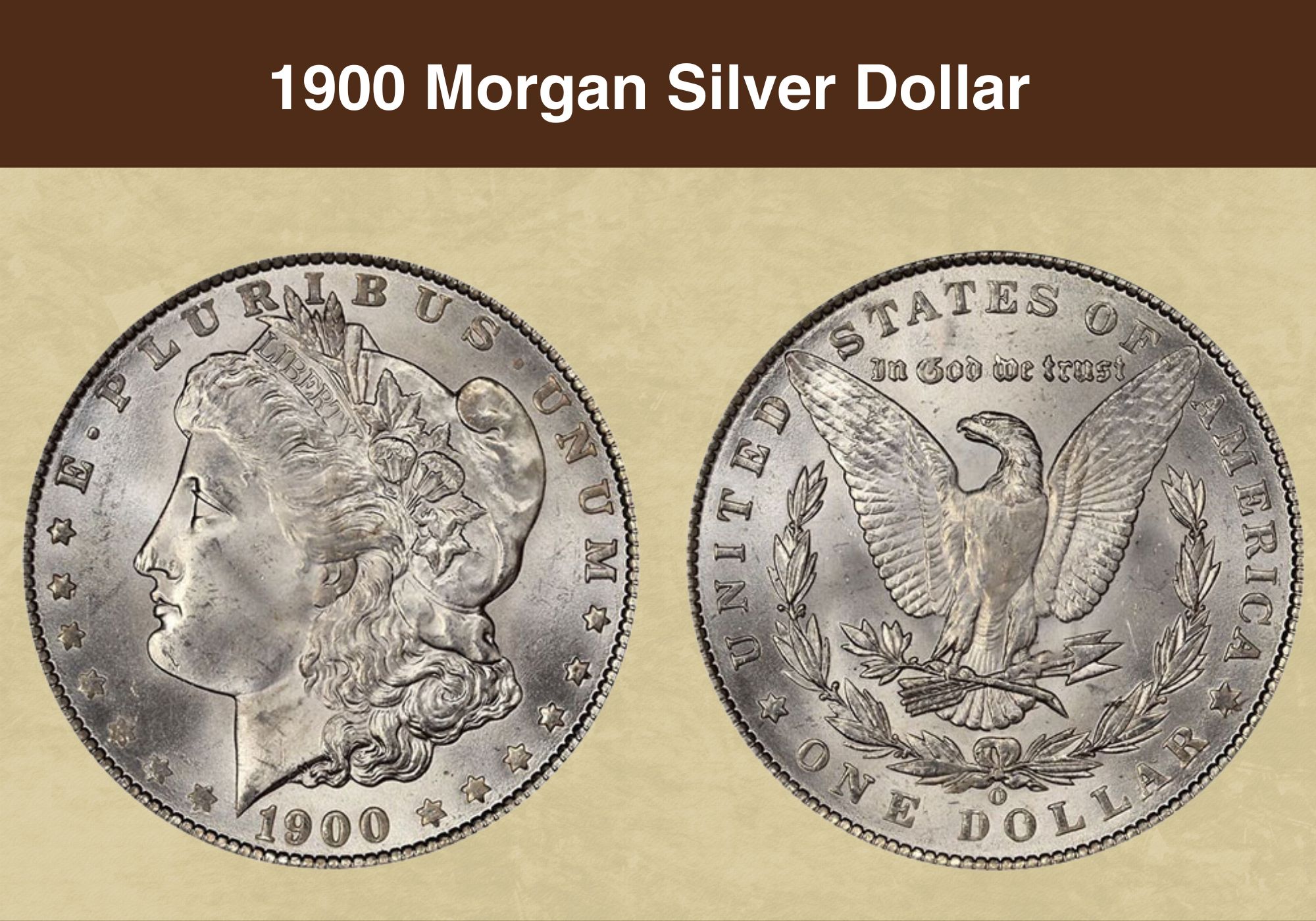
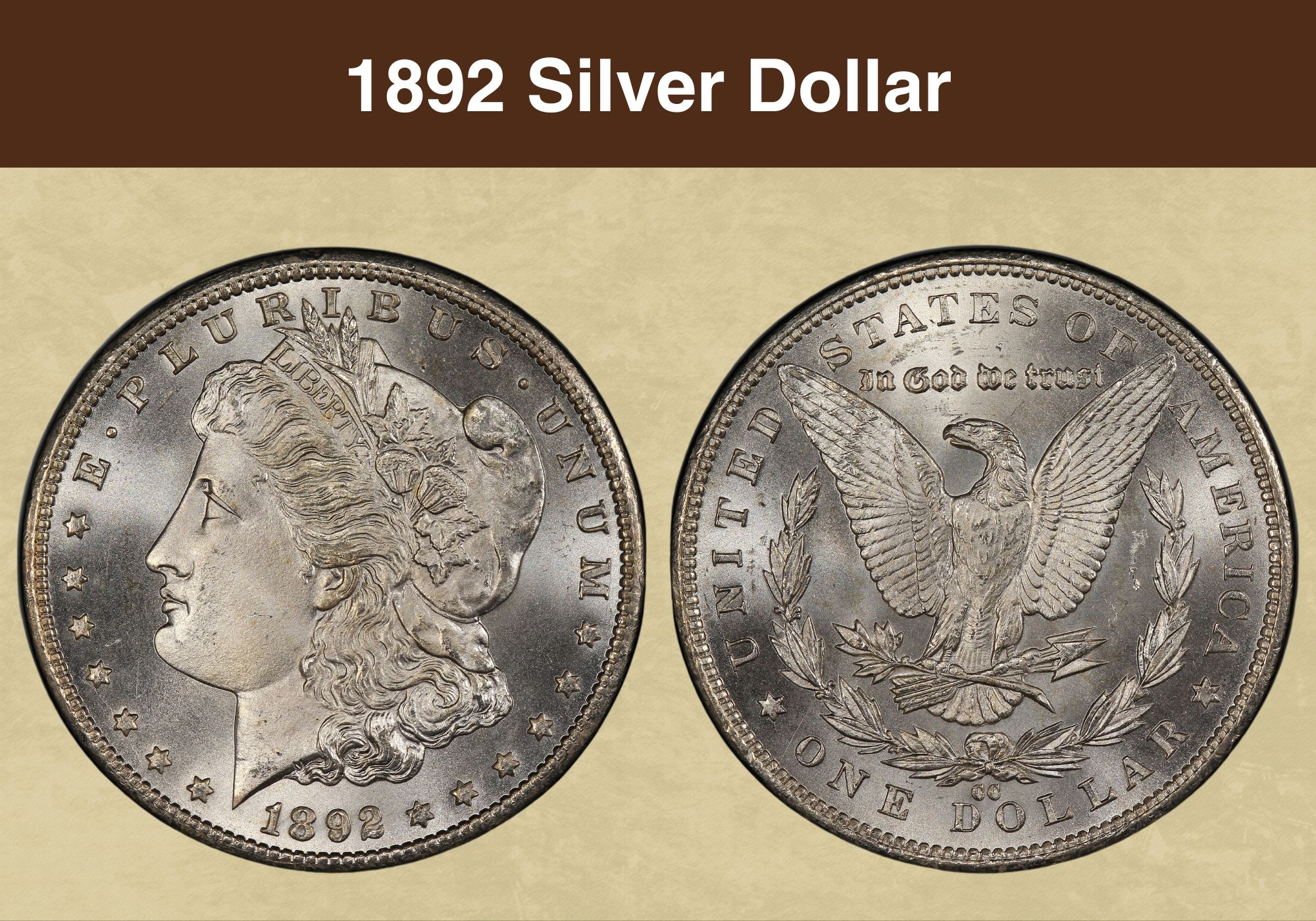
The obverse centers on a left-facing portrait of Liberty, modeled by Philadelphia schoolteacher Anna Willess Williams at the request of designer George T. Morgan. She wears a Phrygian cap secured by a headband inscribed with “LIBERTY” and embellished with wheat and cotton — a deliberate nod to post-Civil War reconciliation between North and South.

The motto “E PLURIBUS UNUM” arcs above the portrait, thirteen stars representing the original colonies flank the sides, and the date sits centered at the bottom. Morgan’s initials appear discreetly on the truncation of Liberty’s neck.

The Reverse Of The 1892 Silver Dollar

The Reverse Of The 1892 Silver Dollar

The reverse presents a heraldic bald eagle with wings fully spread, clutching a bundle of arrows in one talon and an olive branch in the other — the classical iconographic pairing of military readiness and the desire for peace.

“IN GOD WE TRUST” appears in Gothic script above the eagle’s head, while “UNITED STATES OF AMERICA” and “ONE DOLLAR” complete the inscriptions.

A laurel wreath frames the composition, and the mint mark — where present — is struck on the reverse below the laurel wreath.

Other Features Of The 1892 Silver Dollar

The coin is struck in an alloy of 90% silver and 10% copper, weighing 26.73 grams with a diameter of 38.1 mm. Its edge is reeded, a practical anti-counterfeiting measure standard to silver dollar coinage of the era.

The relatively large planchet gave Morgan the canvas to render fine detail — particularly in Liberty’s hair and the eagle’s feathers — which is precisely why strike quality and surface preservation vary so dramatically across surviving examples, and why those details matter so much to graders today.

Also Read: Top 80+ Most Valuable Sacagawea Dollar Worth Money (2000-P to Present)


1892 Silver Dollar Mintage & Survival Data

1892 Silver Dollar Mintage & Survival Chart

Mintage Comparison

Survival Distribution

TypeMintageSurvivalSurvival Rate
No Mint1,036,000104,00010.0386%
CC1,352,000135,0009.9852%
O2,744,000275,00010.0219%
S1,200,000120,00010%
Proof1,24530024.0964%
CAM1,24572057.8313%
DCAM1,245302.4096%

Across the four circulation-strike issues of 1892, total production was relatively modest by Morgan Dollar standards — a direct consequence of the Mint’s reduced coinage obligations following the expiration of mandatory minimum outputs under prior silver legislation.

The New Orleans Mint accounted for the largest share, yet despite its numerical dominance, its survival rate aligns closely with the other circulation issues, all hovering around 10%. This near-uniform attrition across mints points to a systemic cause rather than mint-specific handling: large-scale meltings, most notably under the Pittman Act of 1918, affected the entire series indiscriminately regardless of origin.

All three proof designations — Proof, CAM, and DCAM — share an identical original mintage of 1,245 pieces, yet their survival rates tell very different stories. The CAM designation retains a surprisingly high survival rate of nearly 58%, while the DCAM — the most visually dramatic and desirable of the three — survives at a mere 2.4%, with only an estimated 30 examples known.

This inversion is significant: it means that DCAM coins, despite originating from the same striking event, are categorically rarer than their CAM counterparts by a factor of more than twenty. For collectors, that disparity is not a footnote — it is the entire market.

Also Read: Top 40+ Most Valuable Presidential Dollar Coins Worth Money


The Easy Way to Know Your 1892 Silver Dollar Value

Determining the precise value of an 1892 Silver Dollar is rarely straightforward. Two coins from the same mint and the same year can differ in value by tens of thousands of dollars — driven not by any obvious flaw, but by subtle distinctions in luster, strike sharpness, and surface preservation that only a trained eye can reliably detect.

The most reliable approach is to evaluate your coin across three variables: mint mark, grade, and designation. A circulated Philadelphia issue and a DMPL example from the same year are, for valuation purposes, entirely different coins. From there, cross-referencing against verified auction records — rather than generic price guides — gives you a far more accurate picture of what the market is actually paying. The Coin Value Checker App makes this process immediate, matching your coin’s details against live auction data and population reports to deliver a rarity score and value estimate grounded in real transaction history.

Coin Value Checker APP Screenshot

For any coin where a single grade point meaningfully shifts the value — which with the 1892 issue is almost always the case — professional certification through PCGS or NGC remains the definitive next step. An ungraded coin is an unpriced coin.


1892 Silver Dollar Value Guides

The 1892 Morgan Silver Dollar was struck across four mints — Philadelphia, Carson City, New Orleans, and San Francisco — each producing coins with distinct mintage levels, survival rates, and collector demand. Beyond the circulation strikes, the Philadelphia Mint also produced a limited run of proof coinage that year, further divided into three designations based on the degree of contrast between the frosted devices and mirror-like fields.

While all seven varieties share the same fundamental design, they diverge sharply in rarity and market standing — with proof designations and certain mint mark issues commanding significant premiums over standard circulation strikes. Knowing which variety you hold, and understanding what sets each one apart, is the essential first step toward an accurate and informed valuation.

1892 Silver Dollar Varieties:

  • 1892 No Mint Mark Silver Dollar (Philadelphia)
  • 1892-CC Silver Dollar (Carson City)
  • 1892-O Silver Dollar (New Orleans)
  • 1892-S Silver Dollar (San Francisco)
  • 1892 Proof Silver Dollar (PR)
  • 1892 Proof Silver Dollar — CAM (Cameo)
  • 1892 Proof Silver Dollar — DCAM (Deep Cameo)


1892 No Mint Mark Silver Dollar Value

1892 No Mint Mark Silver Dollar Value

The Philadelphia issue occupies an interesting position in the 1892 series — neither a common date nor a true key, but a semi-key that rewards collectors who pay close attention to grade.

From the time of issue through the early decades of the twentieth century, the 1892 Philadelphia dollar was actually considered a major rarity, a reputation that softened only after Treasury bag releases in the mid-20th century brought additional examples to market. Strike quality is inconsistent across surviving examples — some are flatly struck with subdued luster, while sharply struck, frosty gems do exist and command meaningful premiums.

Prooflike and DMPL examples are rare, and many that do survive are bagmarked or flatly struck. The grade cliff between MS65 and MS66 is steep: the auction record stands at $52,800 for a PCGS MS66, realized at Stack’s Bowers in 2025.

For grading purposes, Liberty’s cheek and the eagle’s breast feathers are the primary wear indicators; any softness in those areas pushes a coin decisively into circulated territory.

1892 No Mint Mark Silver Dollar Price/Grade Chart

Price by 1-70 Grade (Latest Auction Records Included)

Updated: 2026-05-09 13:00:23

1892 No Mint Mark Silver Dollar (PL) Price/Grade Chart

Price by 1-70 Grade (Latest Auction Records Included)

Updated: 2026-05-09 13:00:23

1892 No Mint Mark Silver Dollar (DMPL) Price/Grade Chart

Price by 1-70 Grade (Latest Auction Records Included)

Updated: 2026-05-09 13:00:23

The chart below traces every recorded auction result for this variety — a timeline that maps how the market has valued the Philadelphia issue across different grade levels over time.

Date PlatformPrice Grade

The frequency of transactions below offer a snapshot of where collector demand currently sits for this issue.

CoinVaueChecker App 10

Market Activity: 1892 No Mint Mark Silver Dollar


1892-CC Silver Dollar Value

1892-CC Silver Dollar Value

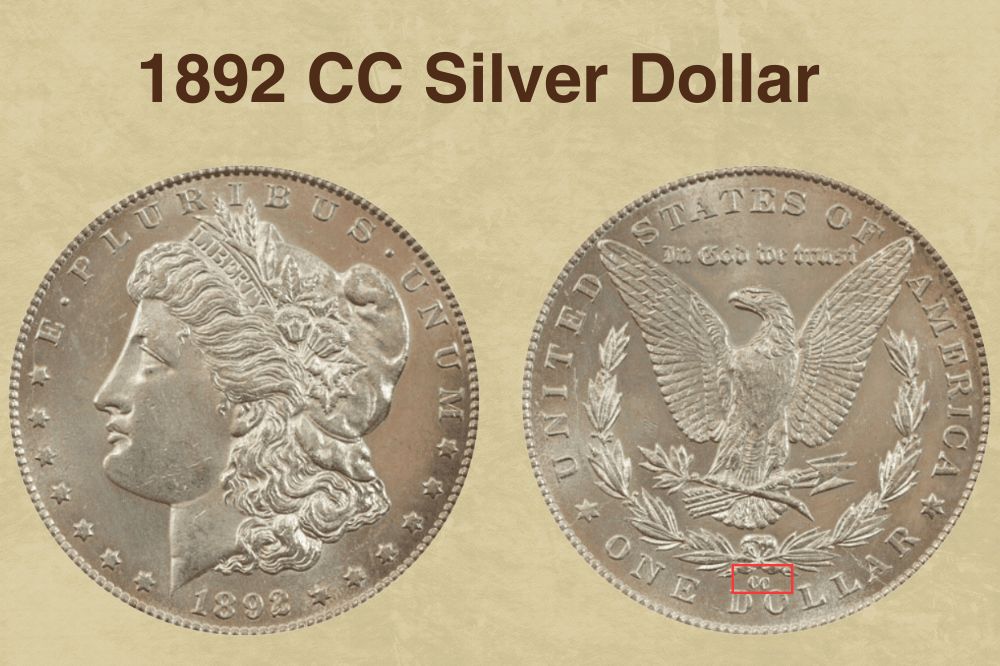
The 1892-CC is scarce today. Although its overall output exceeded several earlier Carson City issues, it is considerably more elusive in Uncirculated grade due to the relatively small number of hoard coins that have survived.

The Carson City Mint closed permanently in 1893, and quantities of 1892-CC dollars were subsequently shipped to San Francisco for storage — but the land transport introduced significant bag marks, making problem-free, high-grade survivors exceptionally difficult to locate. Most Mint State examples are heavily bagmarked and cluster between MS-60 and MS-62; MS-65 coins, when offered, are an immediate attraction at auction.

Even in lower circulated grades, the CC mint mark commands a premium that consistently places it above its Philadelphia and New Orleans counterparts. The auction record for this variety is $135,125, achieved by a PCGS MS67+ at Legend Rare Coin Auctions in June 2015 — one of only a handful of coins ever certified at that grade level.

1892-CC Silver Dollar Price/Grade Chart

Price by 1-70 Grade (Latest Auction Records Included)

Updated: 2026-05-09 13:00:23

1892-CC Silver Dollar (PL) Price/Grade Chart

Price by 1-70 Grade (Latest Auction Records Included)

Updated: 2026-05-09 13:00:23

1892-CC Silver Dollar (DMPL) Price/Grade Chart

Price by 1-70 Grade (Latest Auction Records Included)

Updated: 2026-05-09 13:00:23

Every auction appearance for the 1892-CC is plotted below, providing a clear picture of how realized prices have evolved across grades and sale venues.

Date PlatformPrice Grade

The activity chart below captures the rhythm of supply and demand for this Carson City issue.

Market Activity: 1892-CC Silver Dollar


1892-O Silver Dollar Value

1892-O Silver Dollar Value

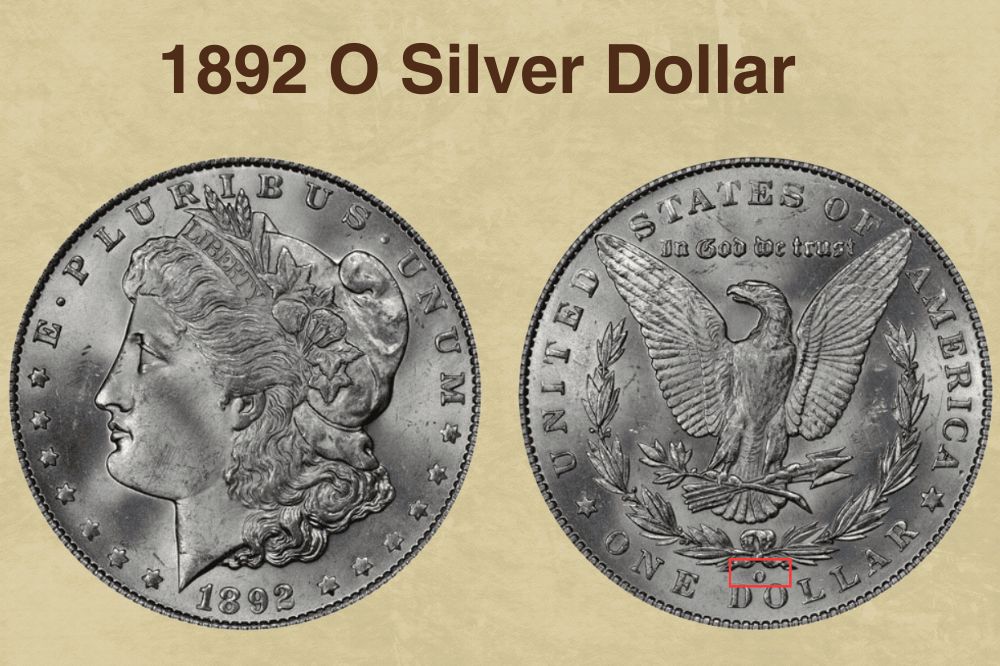
The New Orleans issue produced the highest output of any 1892 mint, yet that volume has not translated into easy availability at the upper end of the grading scale. Morgan silver dollar mintages plunged dramatically in the 1890s because a relatively high number was already in commerce, and in 1892 the Treasury stemmed New Orleans production to just a fraction of the previous year’s output.

Most coins entered circulation promptly, and subsequent meltings further reduced the surviving population. In circulated grades, the 1892-O remains accessible and represents a reasonable entry point for collectors building date sets.

The story changes sharply in Mint State: the auction record for this variety is $111,625 for a PCGS MS67, realized at Legend Rare Coin Auctions in October 2014 — and that single specimen represents an extreme rarity, with virtually no peers at that grade level. Eye appeal, particularly natural toning, plays an outsized role in how the market prices higher-grade examples of this issue.

1892-O Silver Dollar Price/Grade Chart

Price by 1-70 Grade (Latest Auction Records Included)

Updated: 2026-05-09 13:00:23

1892-O Silver Dollar (PL) Price/Grade Chart

Price by 1-70 Grade (Latest Auction Records Included)

Updated: 2026-05-09 13:00:23

1892-O Silver Dollar (DMPL) Price/Grade Chart

Price by 1-70 Grade (Latest Auction Records Included)

Updated: 2026-05-09 13:00:23

The auction chart below documents the full realized-price history for the 1892-O, illuminating exactly where grade boundaries drive value inflection points.

Date PlatformPrice Grade

Buyer activity for the 1892-O has its own cadence. The market data below reflects how frequently this issue trades hands.

Market Activity: 1892-O Silver Dollar


1892-S Silver Dollar Value

1892-S Silver Dollar Value

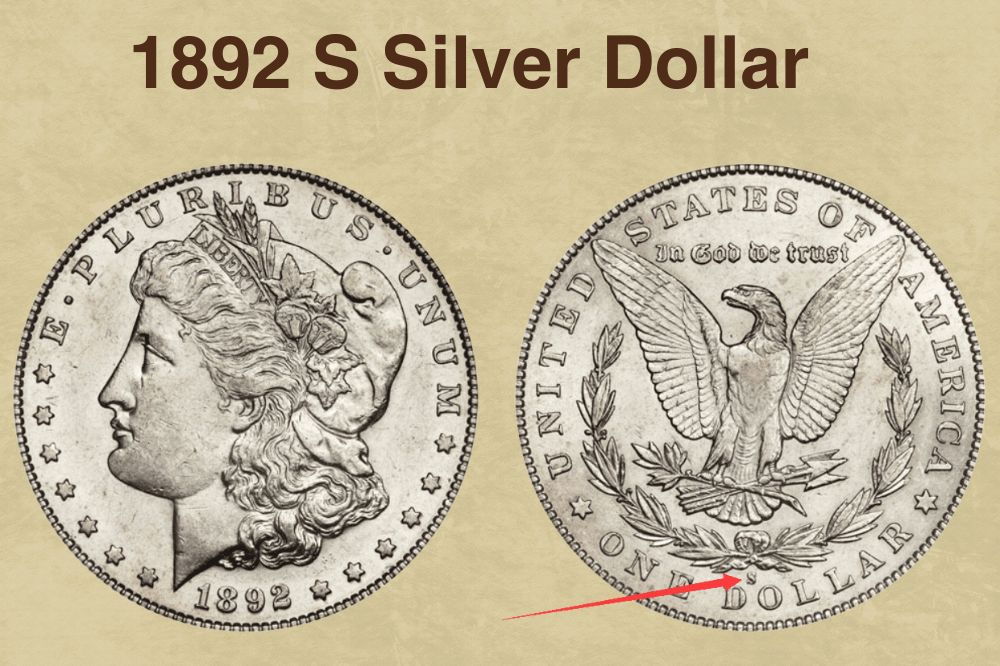
Few coins in the entire Morgan series carry the dual identity of the 1892-S quite as starkly: common in worn grades, extraordinarily rare in Mint State.

Many if not most 1892-S dollars were placed into circulation at or near the time of issue, and when the San Francisco Mint dispersed stored coins in the 1940s and 1950s, no bags of this date were found — nor were any among the millions of Morgan dollars paid out by the Treasury during subsequent releases.

The practical consequence is a Mint State population that has remained remarkably stable for decades. As of 2024, PCGS has certified only 70 Mint State grading events total, a number that has barely moved in over a decade — strong evidence of a fixed and finite population.

The record for this variety speaks to its status: a PCGS MS67 sold for $495,000 at Sotheby’s in May 2018, surpassing the previous record of $446,500 set just three years earlier. Counterfeiting risk is significant on high-grade examples, and third-party certification is considered essential before any transaction.

1892-S Silver Dollar Price/Grade Chart

Price by 1-70 Grade (Latest Auction Records Included)

Updated: 2026-05-09 13:00:23

1892-S Silver Dollar (PL) Price/Grade Chart

Price by 1-70 Grade (Latest Auction Records Included)

Updated: 2026-05-09 13:00:23

The auction record chart below traces the price trajectory of the 1892-S — a curve that reflects one of the most dramatic grade-premium stories in American numismatics.

Date PlatformPrice Grade

This chart shows the market activity trends for the 1892-S Silver Dollar over the past year.

Market Activity: 1892-S Silver Dollar


1892 Proof Silver Dollar Value

1892 Proof Silver Dollar Value

The 1892 Proof Morgan Dollar was struck specifically for collectors and presentation purposes, never intended for general circulation. As a result, surviving examples tend to exhibit sharper strike definition and superior surface quality compared to their business-strike counterparts — though the degree of cameo contrast varies considerably across the population.

Pricing is highly sensitive to surface preservation: hairlines from improper handling, even decades ago, can significantly diminish a coin’s grade and market value. The auction record for the standard proof designation stands at $36,425, achieved by a PR68 at Legend Rare Coin Auctions in June 2015. At that grade level, the coin is essentially flawless — a standard that only a tiny fraction of the surviving proof population can meet.

1892 Proof Silver Dollar Price/Grade Chart

Price by 1-70 Grade (Latest Auction Records Included)

Updated: 2026-05-09 13:00:23

Every documented auction result for the 1892 Proof is captured below.

Date PlatformPrice Grade

The market activity chart below shows the cadence of transactions for this proof issue.

Market Activity: 1892 Proof Silver Dollar


1892 CAM Silver Dollar Value

1892 CAM Silver Dollar Value

The Cameo designation elevates the standard proof by recognizing a specific and visually compelling quality: the contrast between frosted, satiny devices and deeply mirrored fields. On the 1892 CAM, this contrast results from the fresh, polished die surfaces used in early proof strikes — a characteristic that diminishes as the dies are used repeatedly.

Because of this, the finest cameo contrast is found on the earliest impressions from any given die, making true gem CAM examples a matter of timing as much as preservation. Collectors pursuing the cameo designation are willing to pay a meaningful premium over a standard proof of equivalent numeric grade, and the spread widens further at the top of the population.

The survival rate for the CAM designation is notably higher than for the DCAM, which reflects the broader definition of cameo contrast and the larger pool of coins that qualify — but gem-quality survivors with strong, even contrast across the full surface remain genuinely scarce.

1892 CAM Silver Dollar Price/Grade Chart

Price by 1-70 Grade (Latest Auction Records Included)

Updated: 2026-05-09 13:00:23

The auction chart below maps realized prices for the 1892 CAM across grade levels, offering a view of how the cameo premium has evolved in the market.

Date PlatformPrice Grade

For a sense of how actively this designation trades today, the market activity data below captures recent transaction frequency patterns.

Market Activity: 1892 CAM Silver Dollar


1892 DCAM Silver Dollar Value

1892 DCAM Silver Dollar Value

The Deep Cameo is the pinnacle of the 1892 proof series — and statistically, its rarest surviving form. With an auction record of $57,500 for a PR68 at Heritage Auctions in January 2011, the DCAM commands prices that reflect its extreme scarcity relative to both the standard proof and cameo designations.

What distinguishes a DCAM is the intensity and consistency of the contrast: devices must appear fully frosted and three-dimensional against fields that read as black mirrors under direct light — a standard that only the very first strikes from freshly prepared dies can reliably achieve.

With an estimated surviving population of only 30 examples, the 1892 DCAM is not merely rare by Morgan proof standards — it is rare by any measure. Each auction appearance is an event unto itself, and realized prices are driven as much by the presence of competing bidders as by the absolute grade of the coin.

1892 DCAM Silver Dollar Price/Grade Chart

Price by 1-70 Grade (Latest Auction Records Included)

Updated: 2026-05-09 13:00:23

The auction record chart below documents every known sale of the 1892 DCAM — a dataset so thin that each data point carries genuine weight.

Date PlatformPrice Grade

Given the extreme rarity with which these coins appear, the market activity chart below appears quiet precisely—a fact that serves to underscore just how scarce the surviving specimens truly are.

Market Activity: 1892 DCAM Silver Dollar

Also Read: 17 Rare Dollar Coin Errors List with Pictures (By Year)


Rare 1892 Silver Dollar Error List

Because the mintage of the 1892 silver dollar is so low, errors are quite rare for the issue. For more, back in the 1800s, the Mints could afford to double-check most coins for errors before releasing them into circulation. So, it can be challenging to hunt down mint errors for these coins.

Let’s dive into some of the mint errors that have been found in some 1892 silver dollars, shall we?

1. 1892-S VAM 2 Doubled Date

Among the most recognized die varieties in the 1892 series, the 1892-S VAM 2 is a Top 100 Morgan Dollar variety distinguished by clear doubling visible on the date digits.

The error originates at the die-making stage, when the hub was impressed onto the working die with a slight rotational or lateral shift, leaving a secondary ghost image alongside the primary date. On the 1892-S VAM 2, the doubling is most pronounced on the “1” and “8,” and can be confirmed under magnification without difficulty on a well-preserved example.

Given the already extreme rarity of the 1892-S in higher grades, this variety commands prices well beyond typical VAM premiums. Circulated examples in VF to XF grades sell for significant premiums over standard 1892-S coins, with About Uncirculated specimens ranging considerably higher, and Mint State examples — extremely rare — capable of commanding several thousand dollars at major auctions.

1892-S VAM 2 Doubled Date Silver Dollar Price/Grade Chart

Price by 1-70 Grade (Latest Auction Records Included)

CoinVaueChecker App 10

Updated: 2026-05-09 13:00:23

2. 1892-O VAM 5 Doubled Ear

1892-O VAM 5 Doubled Ear

The 1892-O Doubled Ear is a Top 100 VAM variety highly prized by variety collectors, showing clear doubling on Liberty’s ear that creates a thickened or shadowed appearance. This is a die-hub doubling error, produced when the working die received two impressions from the master hub that were not perfectly aligned. The result is a coin where Liberty’s ear appears distinctly broader or layered — a feature that is immediately apparent under a loupe on a coin with minimal wear.

The Doubled Ear designation places this squarely within the most sought-after tier of Morgan variety collecting, and its presence on the 1892-O — an issue already thin on high-grade survivors — only amplifies collector demand. Attributed examples in circulated grades command meaningful premiums over unattributed pieces, while any Mint State example with confirmed VAM attribution is a genuinely scarce item in the market.

1892-O VAM 5 Doubled Ear Silver Dollar Price/Grade Chart

Price by 1-70 Grade (Latest Auction Records Included)

Updated: 2026-05-09 13:00:23

3. 1892-S VAM 8 Tripled Hair

1892-S VAM 8 Tripled Hair

The 1892-S VAM 8 Tripled Hair is a Hit List variety featuring dramatic tripling on Liberty’s hair strands, along with doubling on George T. Morgan’s “M” initial at the obverse truncation and doubling visible on the wreath leaves and S mint mark on the reverse.

The tripling effect — rarer and more visually striking than standard doubling — results from three separate hub impressions on the working die, each slightly misaligned from the last. This stacking of impressions creates bold, almost sculptural hair detail that sets the variety apart even before magnification in higher-grade examples.

Circulated examples in VF to XF grades sell for $220 to $400 over standard 1892-S values, with About Uncirculated specimens ranging from $500 to $1,200, and Mint State examples capable of reaching $2,000 to $7,800 at major auctions.

1892-S VAM 8 Tripled Hair Silver Dollar Price/Grade Chart

Price by 1-70 Grade (Latest Auction Records Included)

Updated: 2026-05-09 13:00:23

4. Struck-Through Error

A struck-through error occurs when a foreign object — grease, cloth fiber, a metal shaving, or other debris — becomes trapped between the planchet and the die at the moment of striking. The object’s outline is pressed into the blank’s surface, leaving an area that is weak, indistinct, or entirely missing design detail.

On 1892 Morgan Dollars, this error most commonly appears on the obverse, affecting Liberty’s portrait and surrounding design elements, with the affected areas showing a flat, indistinct texture unlike normal wear.

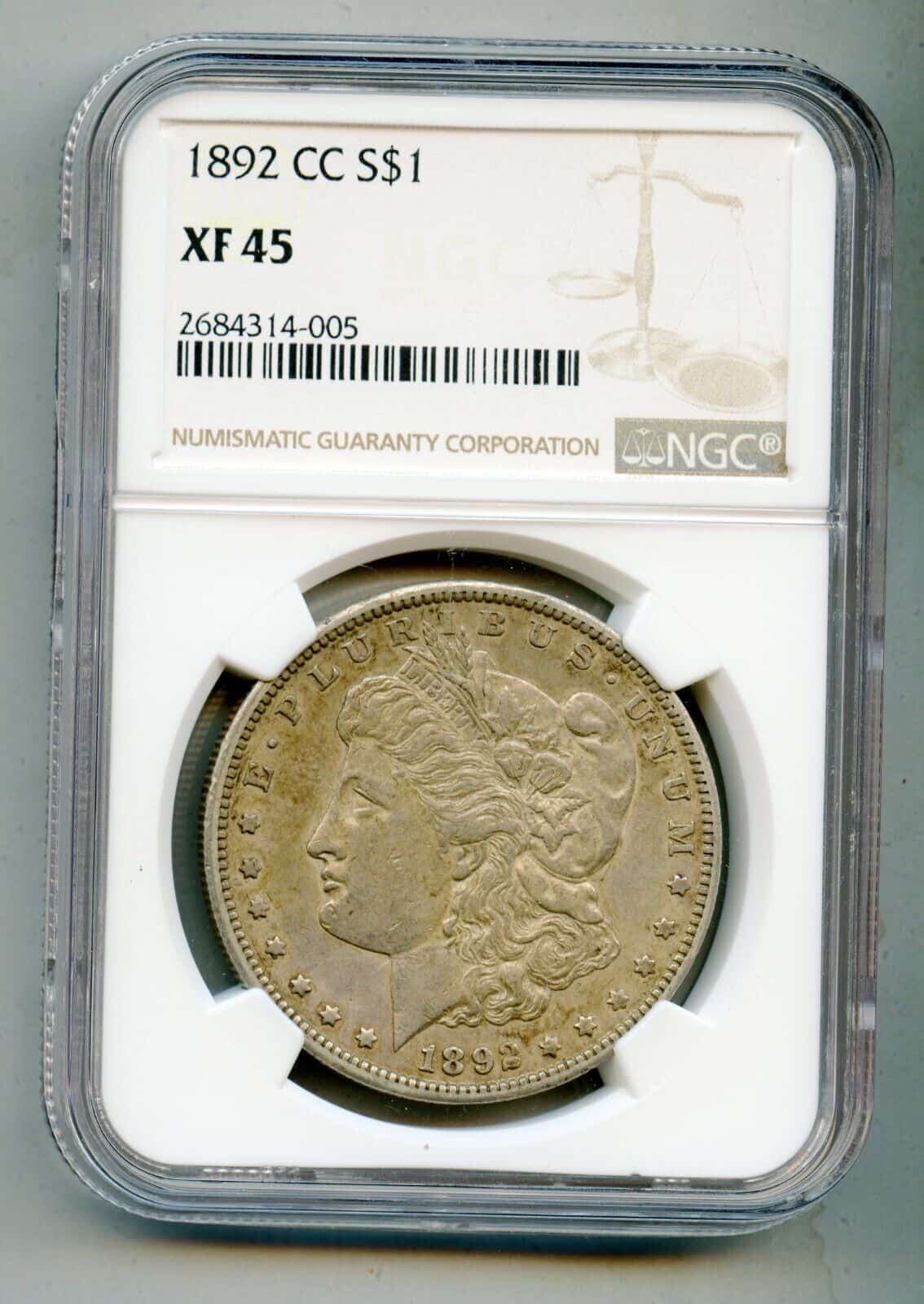
The premium a struck-through commands depends entirely on the visual drama of the error: subtle grease-fills add modest value, while a clearly outlined foreign object impression is significantly more desirable. An 1892 XF45 with an obverse struck-through error sold at auction for approximately $180 to $250, while uncirculated specimens with dramatic examples can command $300 to $600.

5. Off-Center Strike

An off-center strike results when the planchet fails to seat correctly within the collar before the dies descend, producing a coin where the design is shifted toward one edge and a corresponding blank crescent of planchet is visible on the opposite side. A coin must generally be struck at least 5% off center for it to register significant value as an error coin, with the lettering near the edge partially cut off as a minimum threshold.

On Morgan Dollars — large, heavy planchets requiring precise mechanical alignment — dramatic off-center strikes are genuinely uncommon. Off-center Morgan Dollars are highly collectible, particularly when they retain the full date, as this confirms the year and mint identity of the coin.

Examples from the 1892 series with a clearly visible, full date and a dramatic strike shift are among the most visually arresting of all Morgan errors, and can command multiples of the base coin value depending on the degree and presentation of the error.

6. Die Crack & Cud Errors

Dies can crack during use, producing jagged, raised lines on the surface of subsequently struck coins — a phenomenon particularly common in the Morgan Dollar series due to the high striking pressures involved.

Minor die cracks add modest collector interest without dramatically affecting value, but advanced-stage cracks — and especially cuds, where a section of die material breaks away entirely — are a different matter. When a broken die piece falls away, coins struck afterward display a raised, rounded, unstruck area along the edge where the die material is missing.

On an 1892 Morgan Dollar, a prominent cud located on a visually significant area — across Liberty’s portrait, the date, or the eagle — significantly elevates desirability. In circulated grades, minor die cracks add $10 to $50 over base value, while prominent cuds can command $75 to $200, with AU specimens featuring dramatic breaks trading between $150 and $500.


Where to Sell Your 1892 Silver Dollar?

After determining what your 1892 silver dollars are worth, you’re probably wondering about convenient online selling options. I’ve researched and compiled a guide to the best platforms, outlining their services, pros, and cons.

Check out now: Best Places To Sell Coins Online (Pros & Cons)


1892 Silver Dollar Market Trend

Market Interest Trend Chart - 1892 Silver Dollar

*Market Trend Chart showing the number of people paying attention to this coin.


FAQ about 1892 Silver Dollar

1. What makes the 1892 Silver Dollar different from other Morgan Dollars?

The 1892 issue marks a turning point in Morgan Dollar production — mintage figures dropped sharply across all four mints compared to earlier years, a direct result of changing silver legislation. This reduced output, combined with subsequent mass meltings under the Pittman Act of 1918, has left the 1892 series with a comparatively thin surviving population, particularly in Mint State grades. That scarcity is what drives the premium collectors are willing to pay today.

2. How do I know which mint struck my 1892 Silver Dollar?

Look at the reverse of the coin, just below the laurel wreath. A “CC” indicates Carson City, “O” means New Orleans, and “S” points to San Francisco. If there’s no mint mark at all, your coin was struck at the Philadelphia Mint. Mint mark identification is the essential first step in any accurate valuation, since the same grade can carry vastly different prices depending on which mint produced the coin.

3. Is the 1892-S really that much rarer than the other mint marks?

In circulated condition, the 1892-S is actually fairly accessible — it spent most of its life in active circulation and survived in reasonable numbers at worn grades. The rarity emerges at the Mint State level, where the certified population has remained essentially flat for over a decade. Fewer than 70 Mint State examples have ever been graded by PCGS, making gem-quality survivors among the scarcest business-strike Morgans in the entire series.

4. What does “PL” or “DMPL” mean on my coin’s holder?

These designations refer to the reflectivity of the coin’s fields. PL (Prooflike) coins display mirror-like surfaces that partially reflect images, produced by fresh dies early in their use. DMPL (Deep Mirror Prooflike) coins exhibit an even more intense, black-mirror appearance. Both designations add significant value over a standard business strike of the same numeric grade, and DMPL examples in particular are among the rarest and most sought-after in the 1892 series.

5. Can a heavily circulated 1892 Silver Dollar still be worth serious money?

It depends on the mint mark. A well-worn Philadelphia or New Orleans example may trade close to its silver melt value, but a circulated 1892-CC or 1892-S is a different matter entirely. The CC mint mark commands a premium at virtually every grade level due to persistent collector demand, and even a heavily worn 1892-S regularly sells for multiples of the standard Morgan Dollar value simply because of its identity.

6. Why does one grade point make such a dramatic difference in value for the 1892-S?

At the top of the grading scale, scarcity compounds exponentially rather than linearly. The difference between an MS-65 and MS-68 represents not just better surface preservation, but entry into an entirely different tier of the market — one where the number of available coins can be counted on one hand and where competing bidders from around the world are vying for the same piece. That dynamic, not the grading rubric itself, is what drives the price gap.

7. Are 1892 Proof Morgan Dollars a good area for collectors to focus on?

The proof series offers a distinct collecting opportunity, particularly for those interested in the intersection of rarity and visual drama. All three proof designations — PR, CAM, and DCAM — share the same original mintage, yet their survival rates diverge dramatically. The DCAM, with an estimated 30 surviving examples, represents one of the most genuinely scarce items in the entire Morgan proof series. For collectors who can access them, they represent a concentrated form of rarity in a relatively compact collecting category.

8. How significant is the VAM collecting community for 1892 Morgan Dollars?

VAM collecting — the pursuit of die varieties catalogued by Van Allen and Mallis — has grown into a major force within the Morgan Dollar market. For the 1892 series, Top 100 varieties like the 1892-S VAM 2 Doubled Date and the 1892-O Doubled Ear carry premiums that can transform an otherwise mid-grade coin into a four- or five-figure piece. The 1892-S VAM 2 sold for $99,000 at MS-61 — a grade that would ordinarily place a coin well below that threshold.

9. Should I clean my 1892 Silver Dollar before having it graded?

Absolutely not. Cleaning is one of the most destructive things that can be done to a coin’s value. Professional graders at PCGS and NGC are trained to detect even subtle hairlines left by cleaning, and a cleaned coin typically receives a “details” designation rather than a numeric grade — significantly reducing its market value and collectibility. Natural toning, even dark toning, is almost always preferable to a coin that has been chemically or mechanically cleaned.

10. Is now a good time to buy or sell a 1892 Silver Dollar?

The Morgan Dollar market has shown sustained strength, particularly for key dates and high-grade examples. Silver’s underlying bullion value provides a price floor for all examples, while collector demand for certified gems continues to push auction records higher — the 1892-S record of $495,000 was set as recently as 2018, breaking a record set just three years prior. For sellers with high-grade or rare-variety coins, the market remains competitive. For buyers, lower circulated grades still offer accessible entry points into a historically significant series.

You May Also Like