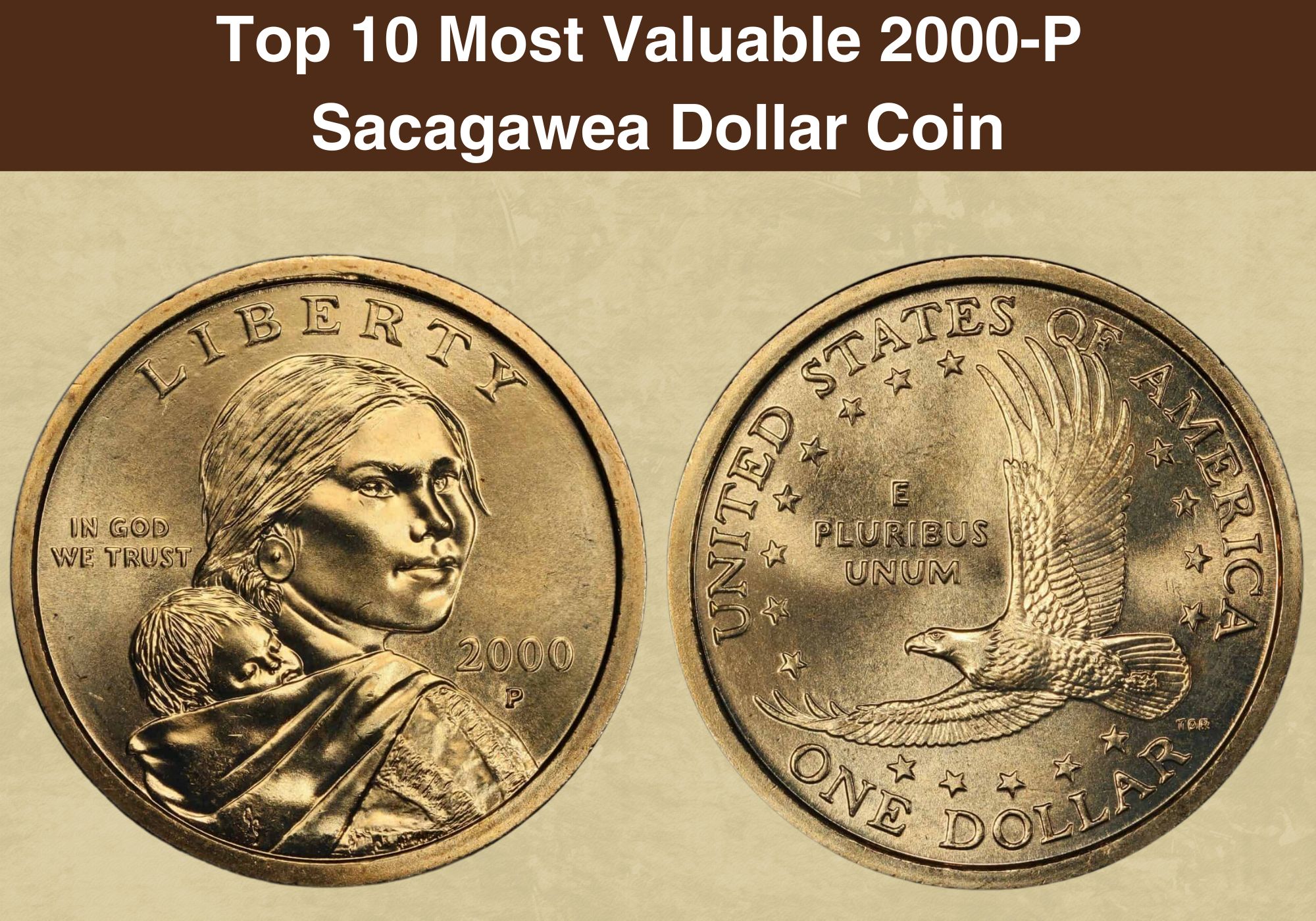
The dollar minted in Philadelphia in 2000 was one of the series known as Sacagawea dollars. The series was launched in 2000, but not minted for general circulation between 2002 and 2008.
There’s a surprising amount of variety amongst the Sacagawea dollars struck in Philly in the year 2000. And some of them are worth a lot of money to collectors. But which ones are valuable, and why?
That’s what we’re going to find out! Join us, as we seek out the most valuable 2000 P Sacagawea dollar coin.
Most Valuable 2000 P Sacagawea Dollar Coin
1. 2000 P Sacagawea Dollar, Double Struck, Flip-over in Collar, MS64 $2,760
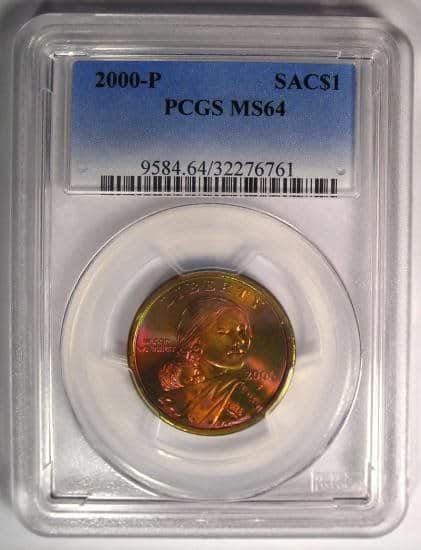
Some of the most collectable coins are those with errors.
That might sound strange when it’s also true that the best quality coins are the most valuable. But it’s very unusual for the Mint to make a mistake and for the resulting coins to be released rather than scrapped. So those that make it into the world are both rare and valuable.
There are several examples of valuable error coins amongst the Sacagawea dollars. And just as with coins that don’t have errors, the finer the quality of the coin, the more valuable it will be.
Coins are graded on a scale from 1 to 70. 1 signifies a coin in very poor condition, with just enough detail to identify the mintage year and the denomination. At the other end of the spectrum, a coin graded 70 is in perfect condition.
This particular coin was double struck. In other words, it wasn’t ejected from the collar holding it in place after it was struck. Instead, it flipped over in the collar and was struck by the dies a second time.
Despite the error, the coin was in excellent condition. It was graded MS64 by the independent coin grading agency, the NGC.
MS stands for “mint state”, and refers to a coin that’s never been circulated. As such, there’s no wear to the design, and minimal scratches or other flaws on the surface.
A coin graded MS64 is just one point short of what’s known as “gem quality”. So this coin was of great interest to collectors. And when it was offered for sale, it realized a price of $2,760.
Check 2000 Sacagawea Dollar History, Variety Price Chart & Errors List
2. 2000 P Sacagawea Dollar, Struck 50% Off-center, MS66 $3,120
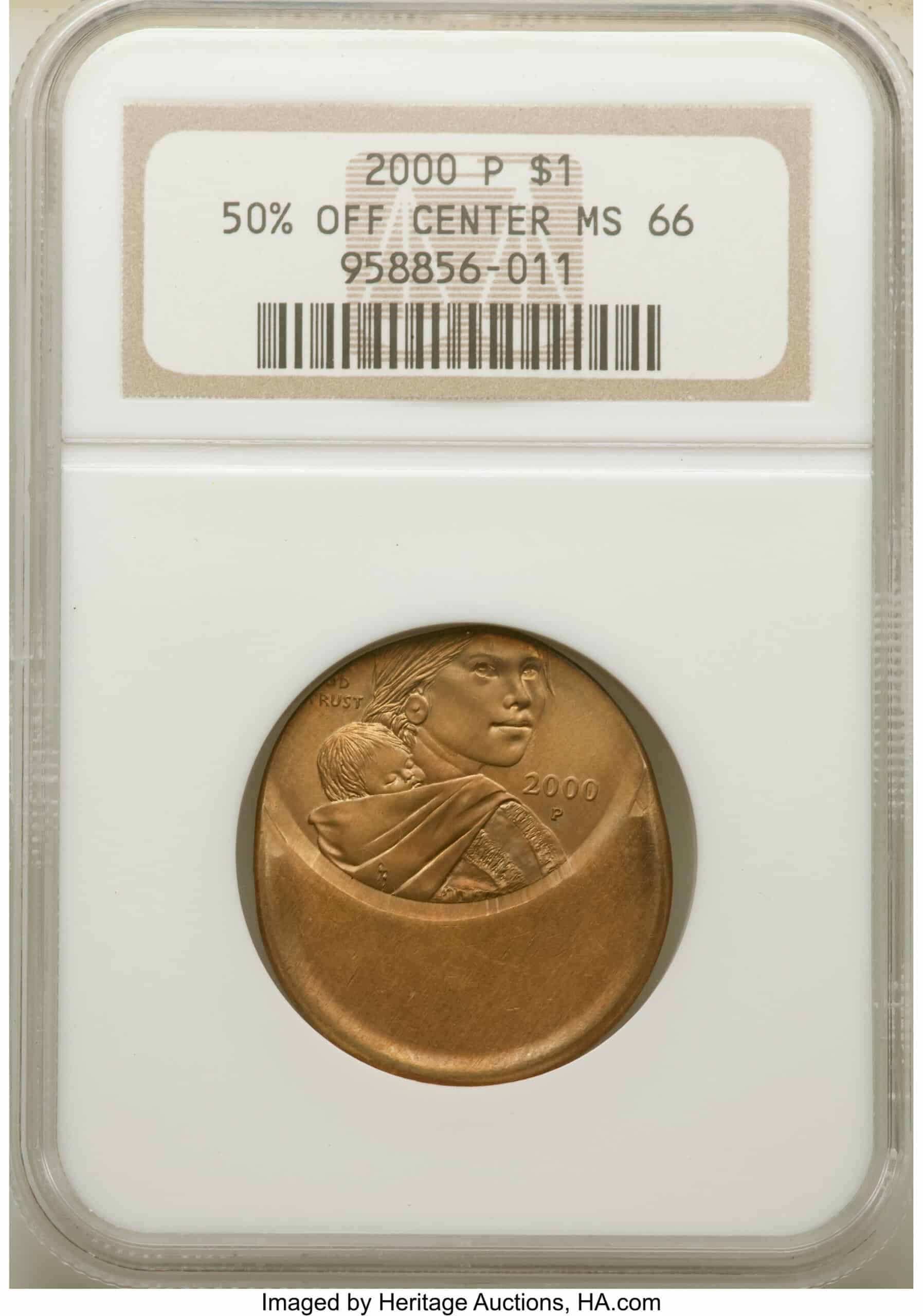
Another type of error occurs when a coin is struck off-center.
That happens when the planchet – the metal disc used to make the coin – isn’t in the right place between the dies. If that happens, the design won’t be imprinted in the right place either, and part of it will be missing.
One 2000 P Sacagawea dollar was struck 50% off-center.
The obverse design appears halfway up the planchet. As a result, only the bottom half of Sacagawea’s portrait is visible, although that includes most of her face. On the reverse, the eagle’s facing wing was lost, as well as the whole of the lower margin.
The result is a unique and very strange coin.
Despite the error, the planchet had been well struck. What was visible of the design was crisp and clear. And the NGC had certified it as MS66, making it a “gem quality” coin.
Off-center errors are rare amongst Sacagawea coins, and the more dramatic the appearance, the more collectable the coin. When this coin came to auction in 2021, it sold for $3,120.
Check 2000 Sacagawea Dollar History, Variety Price Chart & Errors List
3. 2000 P Sacagawea Dollar, “Wounded Eagle” FS-901, MS68 $5,160
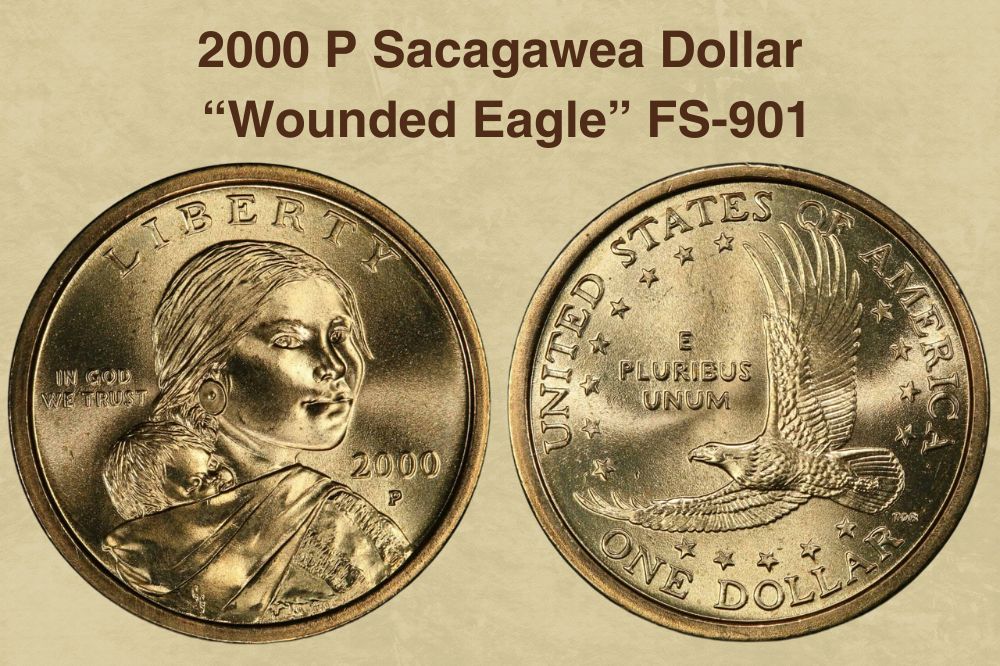
The 2000 P Sacagawea dollar mintage includes a variety known as the “wounded eagle”. These coins are named because of a die flaw on the reverse. That has produced a line on the belly of the eagle, which some think looks as if the bird has been speared.
This is a rare error. Over 767 million Sacagawea dollars were struck in Philadelphia in 2000. But to date, the independent coin graders, the PCGS, has certified fewer than 600 wounded eagle examples. These are given the code FS-901 in coin catalogs.
Most of the certified coins are in mint state, and graded between 64 and 66. But the finest of all are four examples graded MS68. The last time one of these was sold was in 2017. And it crossed the block then for $5,160.
At the time, only three of the four coins were known to exist. The discovery of a fourth has slightly suppressed prices. Today, the PCGS estimates the value of the same coin at $5,000.
Check 2000 Sacagawea Dollar History, Variety Price Chart & Errors List
4. 2000 P Sacagawea Dollar, MS69 $5,100
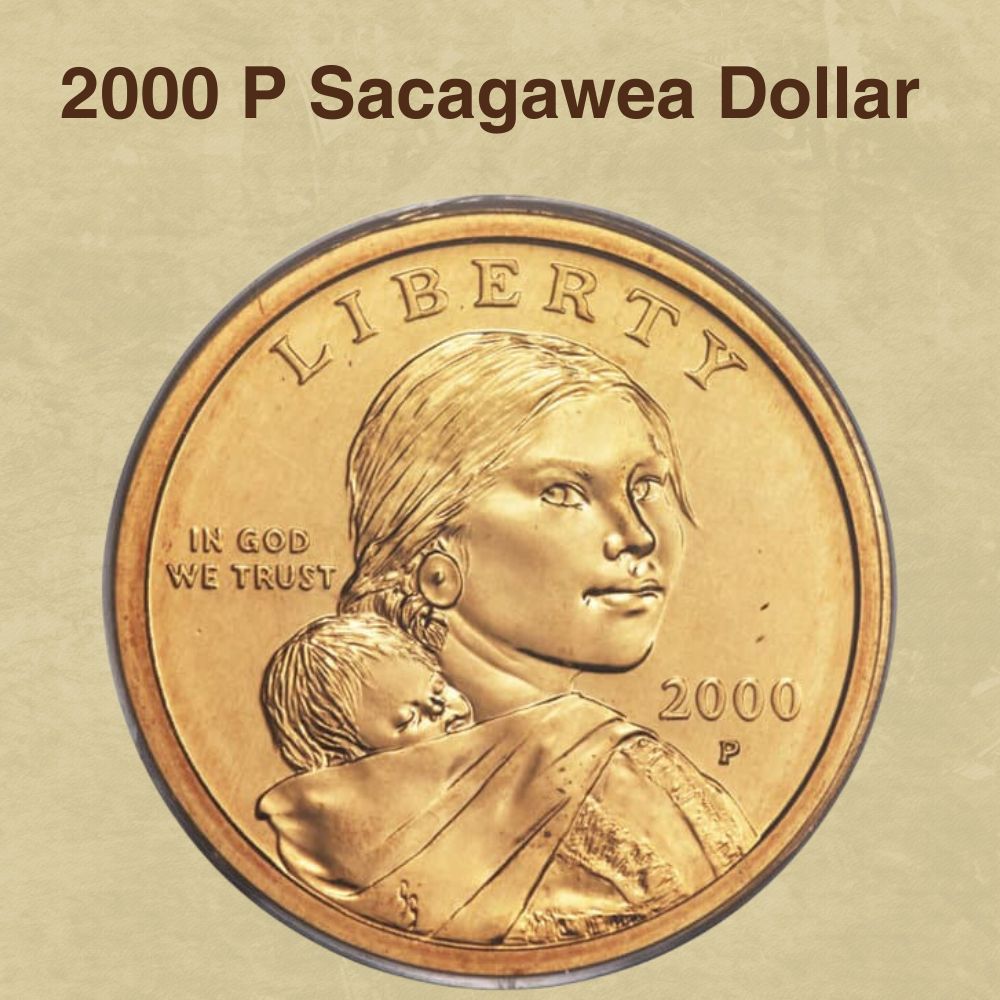
Coins don’t have to have errors to be valuable. The finest examples of 2000 P Sacagawea dollars are rare and collectable in their own right.
Of the 767 million plus coins minted in Philadelphia that year, the majority went into circulation. As a result, they exhibit varying degrees of wear and tear, making them less appealing to collectors. Unless it has an interesting error, a circulated coin will be worth only its face value.
The same applies even to some mint state coins. That’s because there are just so many of them. The PCGS estimates that 306 million uncirculated coins survive. And those graded MS60 to MS62+ are still only valued at a dollar.
The finer the condition, though, the fewer examples there are – and the more valuable they are to collectors. The PCGS values a coin graded MS67+ at $24, but half a point higher and the value more than doubles to $55.
It becomes significantly harder to find coins graded MS68+. Those are valued at $350. And at MS69, only four coins have so far come to light. There are no sale records for these, but the PCGS values them at $5,100 apiece.
Check 2000 Sacagawea Dollar History, Variety Price Chart & Errors List
5. 2000 P Sacagawea Dollar, Goodacre Presentation Set, Type 2, SP69 $5,200
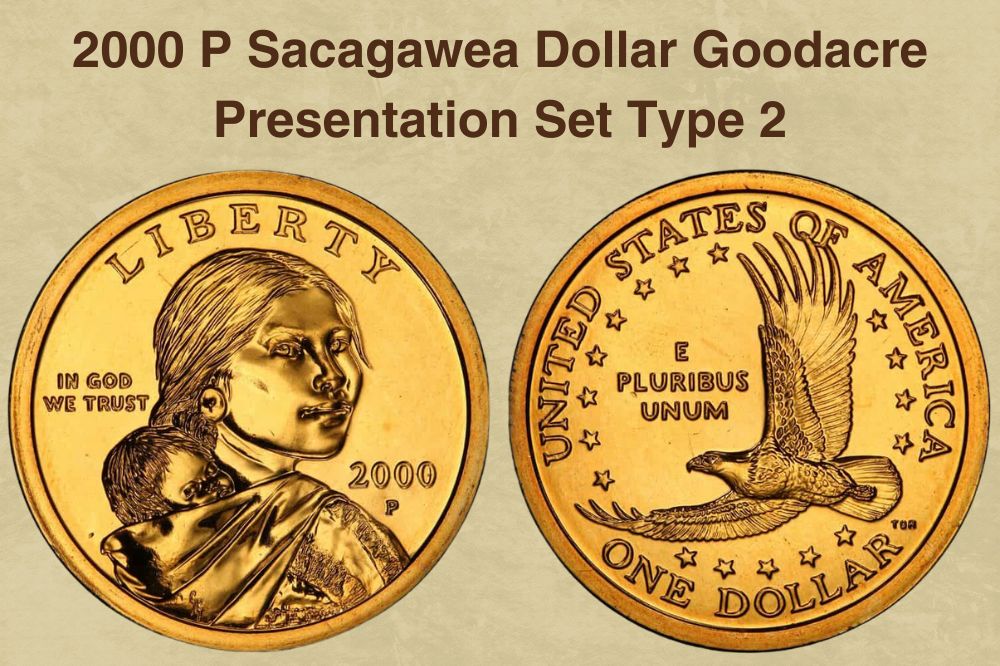
The artist who designed the image of Sacagawea which appears on the obverse of the dollar was called Glenna Goldacre. Her fee for the design was $5,000, and she requested that it be paid in the new dollar coins.
5,000 of these were duly struck especially for her. And although they were conveyed to her New Mexico studio in coin bags, the majority are still in excellent condition.
It later became apparent that most of this presentation set were different from standard Sacagawea dollars. They had a special burnished finish – making them examples of what the PCGS refers to as a “Special Strike”. And they’d been treated with an anti-oxidant coating to help prevent discoloration.
The coins with the burnished finish are known as “Type 2”. The small number that didn’t have the finish are “Type 1”.
Thousands of Type 2 coins have now come onto the market. But there are also fakes, ordinary dollar coins polished up to appear burnished. So if you want a Goldacre presentation dollar, look for one that’s been certified by a reputable coin grading agency.
The finest examples to have been certified by the PCGS are graded SP69. (The SP prefix is used for coins designated as special strikes.) The auction record for one of these coins was set back in 2013, when it achieved a price of $5,288.
Prices have stayed flat since then, and today the PCGS values the same coin at $5,200.
Check 2000 Sacagawea Dollar History, Variety Price Chart & Errors List
6. 2000 P Sacagawea Dollar Struck on 25c Planchet, MS67 $7,800
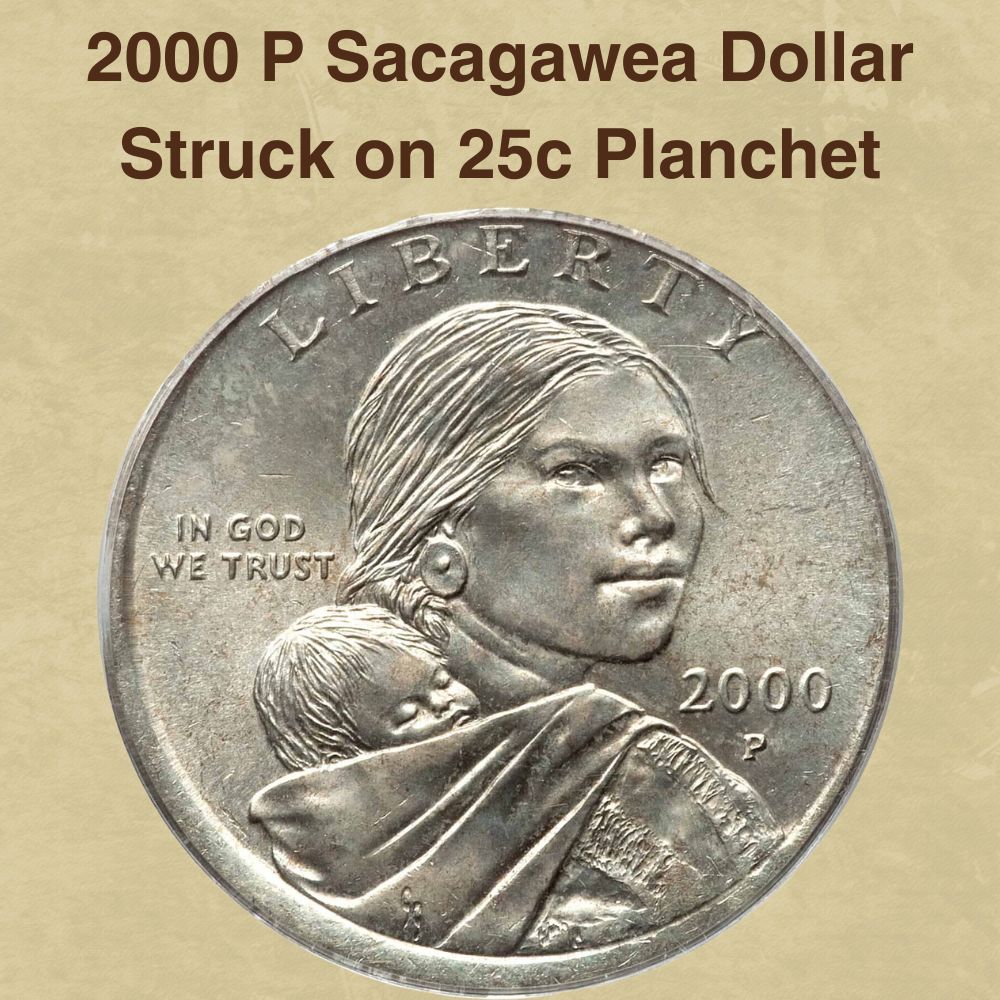
Occasionally, a coin is struck on a planchet intended for a different denomination. That was the case with one 2000 P Sacagawea dollar that was struck on a planchet intended for a quarter.
Quite how it happened is unknown. The planchets for the dollar and quarter are, however, very similar in diameter. So it’s easy to see how this error coin escaped the Mint’s quality assurance processes.
Because this type of error is so rare, it’s very popular with collectors. And as ever, coins in excellent condition and with clean strikes are more valuable still.
At least two coins with this same error have come to the market. One example, graded MS66 by the PCGS, sold at auction in 2021 for $4,560.
But the finest known examples are graded MS67. One of those with a beautiful luster sold in 2022 for $7,800. Prices can vary significantly, however. Another example graded MS67 was presented at auction in January 2023, and sold for just $4,080.
Check 2000 Sacagawea Dollar History, Variety Price Chart & Errors List
7. 2000 P $1 Sacagawea Dollar, Struck Over a 2000-P Massachusetts Quarter, MS63 $8,813
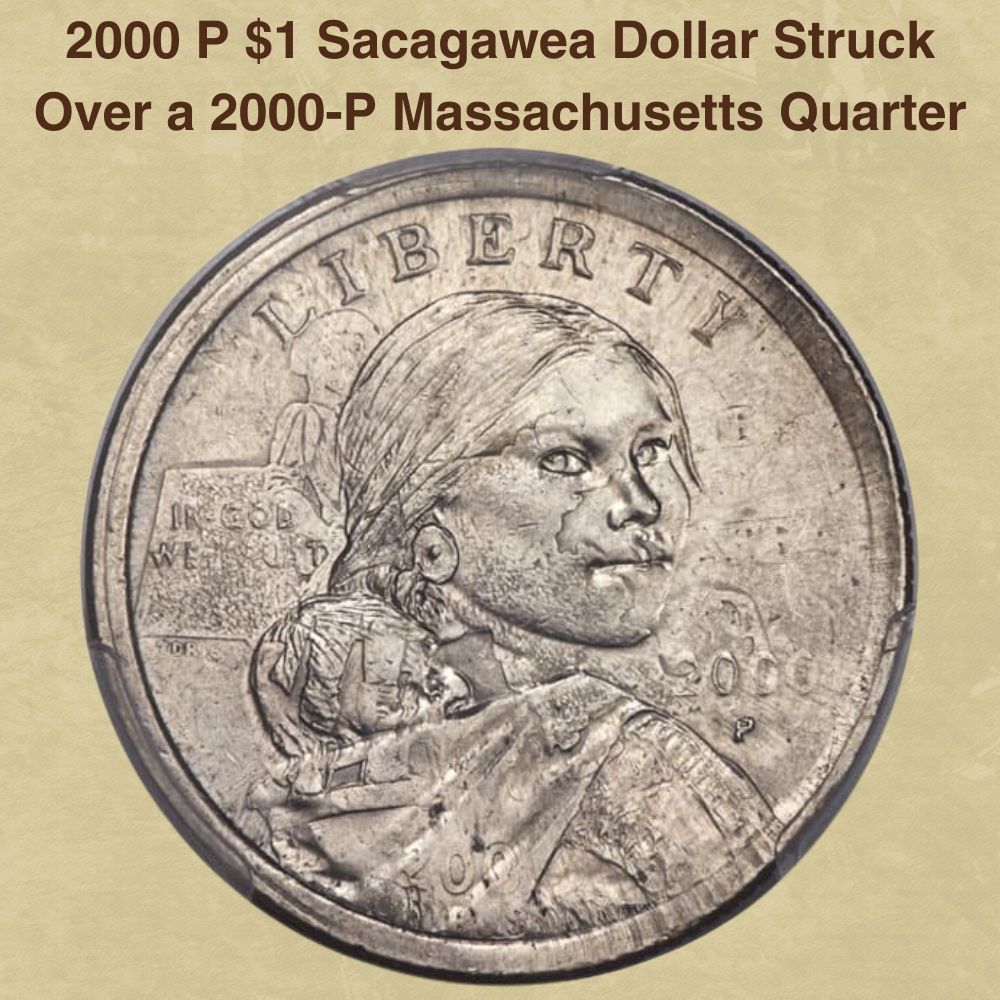
Another 2000 P Sacagawea dollar was struck on a 2000 P Massachusetts quarter, instead of a blank planchet.
It’s superficially similar to the famous Sacagawea dollar and statehood quarter mule – we’ll learn more about that later. But this is quite a different coin.
Somehow, a Massachusetts quarter got mixed in with the blank planchets in the hoppers intended for Sacagawea dollars. It then went through the coin presses in the usual way.
The result was a coin that showed the ghostly image of the Massachusetts quarter beneath Sacagawea’s portrait. You can see its date on Sacagawea’s back. And on the reverse, the “P” mintmark is just visible on the tail feathers of the eagle.
Despite its unusual genesis, the coin was well struck and was graded at MS63 by the PCGS. It was sold at auction in 2013 for $8,813.
Check 2000 Sacagawea Dollar History, Variety Price Chart & Errors List
8. 2000 P Sacagawea “Cheerios” Dollar, MS68 $11,500
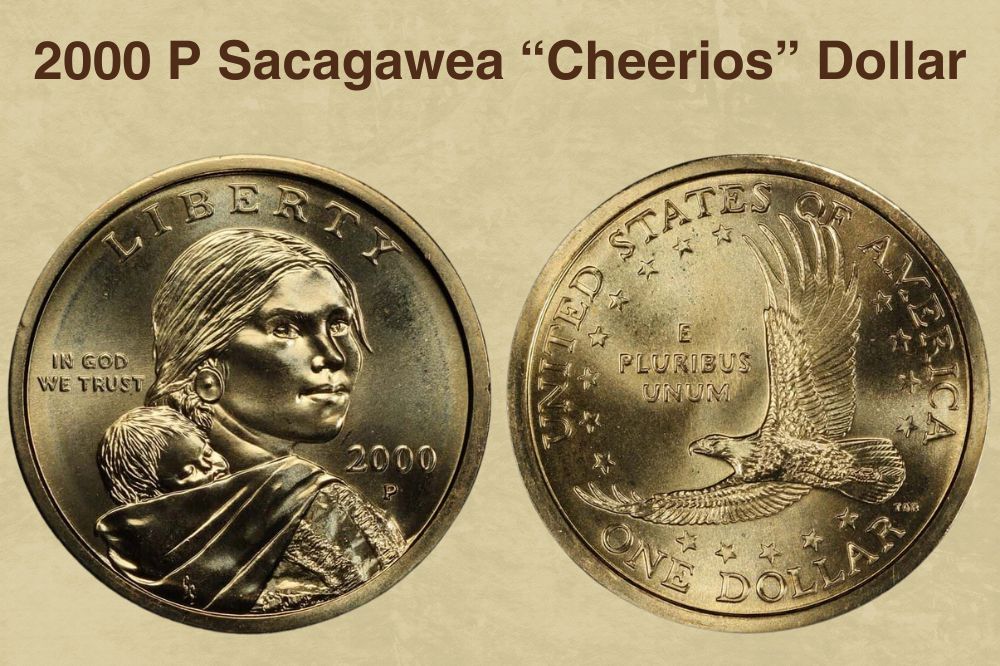
As part of the excitement around the launch of the Sacagawea dollar, the Mint supplied 5,500 coins to be placed in boxes of “Cheerios” cereals. There would be one coin for every 2,000 boxes.
In 2005, a collector named Tom DeLorey noticed something different about some of these coins. The eagles on their reverse sides had particularly detailed tail feathers. They were more detailed than standard uncirculated or even proof coins.
Soon, everyone was looking for more of these amazing coins. But to date, only 150 have come to light. Those are graded between MS63 and MS68+. And a coin at any level is worth serious money.
The PCGS values an MS63 example at $2,600. The auction record was set in 2020 for a coin graded MS68. That fetched $10,200. 57 coins have been certified at this level, and the PCGS puts their value today at $11,500.
A single coin, however, has been graded half a point higher at MS68+. That’s never come up for sale, and the PCGS hasn’t estimated its value. But there’s no doubt it would break records if it were ever offered at auction.
Check 2000 Sacagawea Dollar History, Variety Price Chart & Errors List
9. 2000 P Sacagawea Dollar Struck on Susan B. Anthony Dollar Planchet, MS65 $16,800
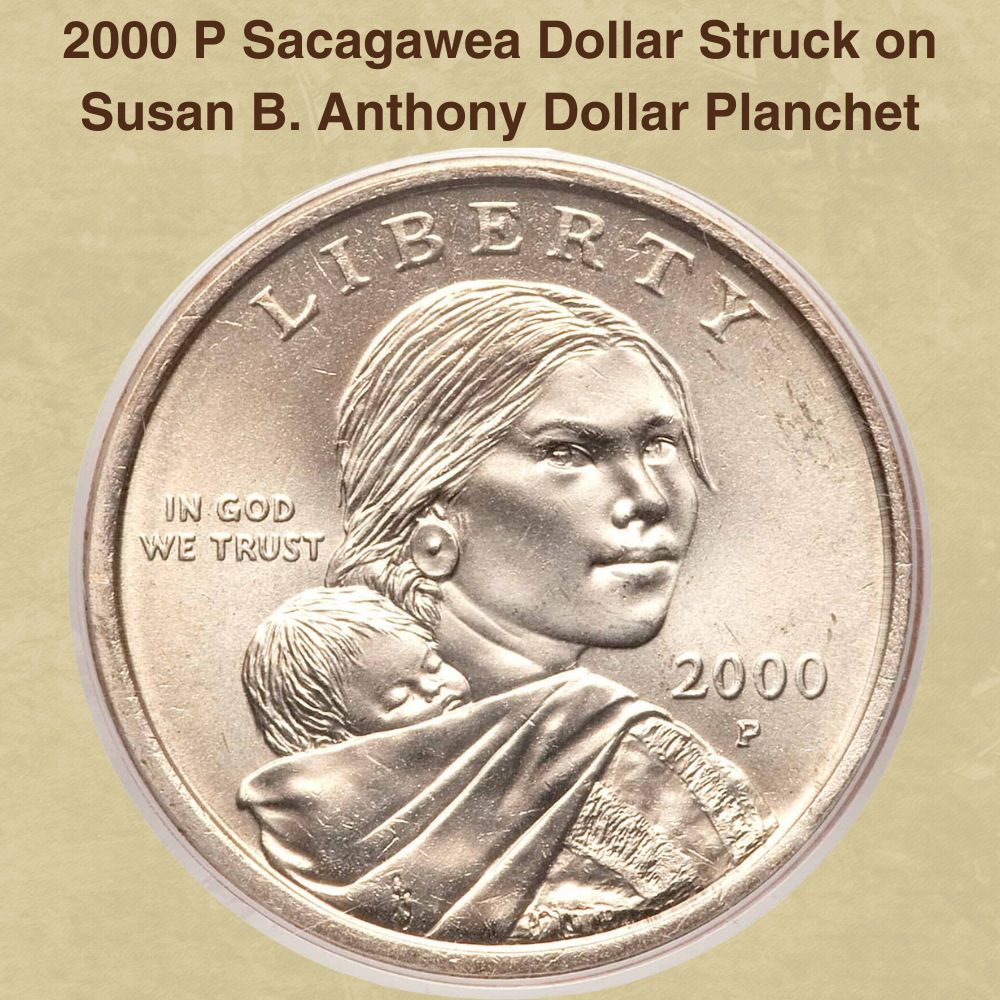
As we’ve seen, the 2000 P Sacagawea dollars include a number of interesting examples struck on the wrong planchet. One of the most highly valued is a coin struck on a planchet intended for a Susan B. Anthony dollar.
The Anthony dollars were produced well before the Sacagawea mintage, between 1979 and 1981. But more were apparently minted in 1999 for use in vending machines. It’s likely to be a planchet intended for one of these that was mistakenly used for a Sacagawea dollar the following year.
The composition of the Anthony dollars was different from that of the Sacagawea dollars. The former were clad in an alloy of copper and nickel, while the Sacagawea dollarswere clad in copper and zinc.
This type of error is known as an “off-metal” error, and is very rare. The coin was graded MS65, and it was last sold at auction in December 2022. The price then was an impressive $16,800.
Check 2000 Sacagawea Dollar History, Variety Price Chart & Errors List
10. 2000 P Sacagawea Dollar Mule with State 25c Obverse, MS67 $200,000
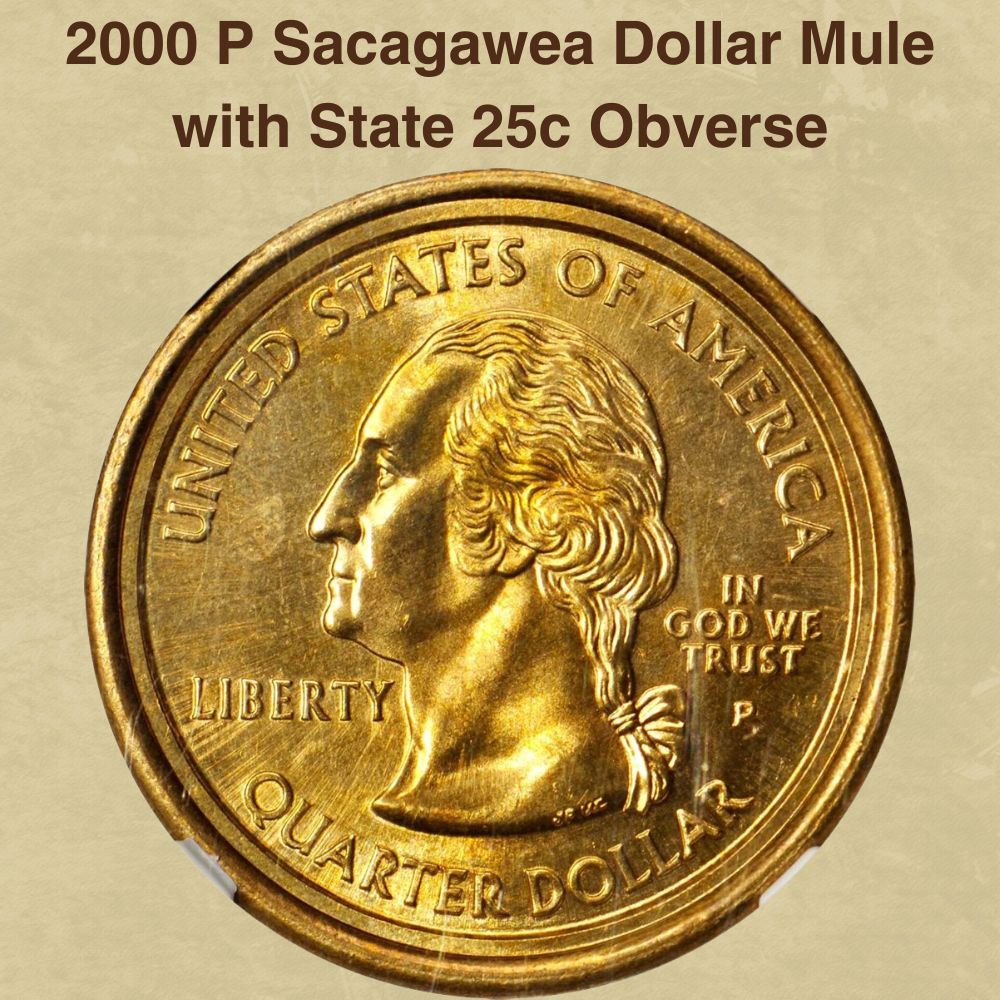
The most famous and valuable of all the Sacagawea dollars struck in Philadelphia in 2000 is what’s known as a “mule”. This is a particular kind of error coin, and it’s exceptionally rare.
Mules combine the obverse of one coin with the reverse of another. And there are about a dozen mules that combine the obverse of the Washington Statehood quarter with the reverse of the Sacagawea dollar.
It’s been reported that some examples sold privately for as much as $250,000 in around 2007. Public sales data, however, shows fluctuating values.
The finest known examples are graded MS67. One of those set an auction record in 2018, selling for $192,000. But two others at the same grade sold the following year for $120,000 and $102,000. The PCGS estimates their value today at $200,000.
Check 2000 Sacagawea Dollar History, Variety Price Chart & Errors List
The most collectable 2000 P Sacagawea dollars
We hope you’ve enjoyed our look at the most valuable 2000 P Sacagawea dollars. From interesting errors to the finest quality presentation coins, all the dollars on our list are something special.
If you’re considering spending a lot of money on a coin, it’s a good idea to invest in one that’s been certified by an independent agency. The NGC, PCGS and ANACS are all credible organizations. And if you buy a coin that they’ve authenticated, you can be confident that it’s the real deal.

I have a Sacajawea coin that’s more rustic in color. Front facing right side up w/ back upside down. Just curious if that’s a rare mistake & has any value?
I have two 2000 p dollars are they worth any value
Does a 2000p cheerios coin always have an eagles on reverse and if so how do you tell the detailed feathers
I got five 2000p and one 2000D wonder it worth anything and 2 1971 silver dollars one D on it other no latter
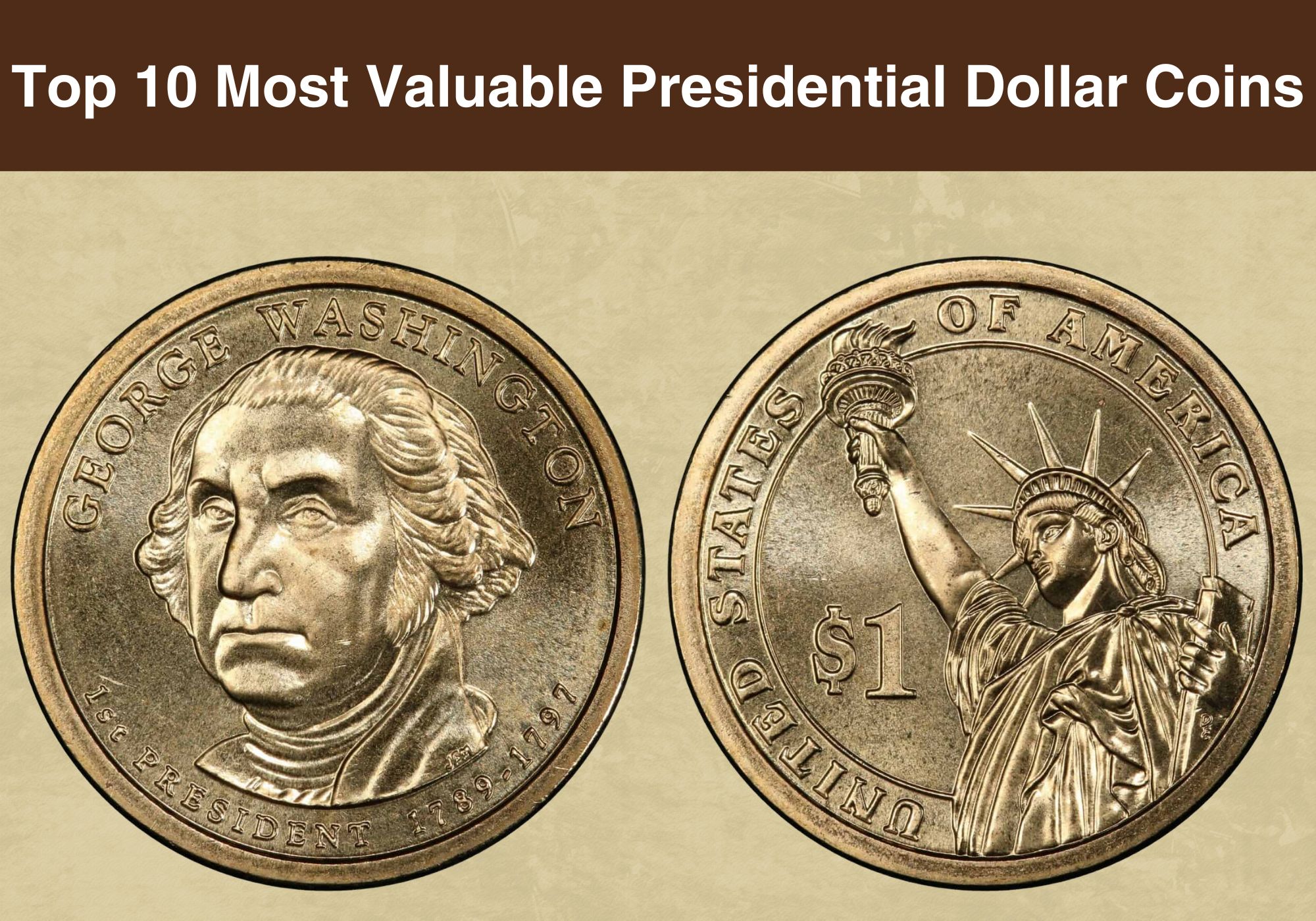
I have a sacagawea one dollar coin with statue of Liberty on backside
I have a Few Sacagawea 2000P with a date and One without at a Date.
Me to is it worth anything
Have 2 Sacagawea dollar coins with no dates. One has two hands holding a rolled paper and below says Wampanoag treaty 1621.
The other has on the back 5 rods wrapped in a wide ribbon with symbols on it and below says Haudenosaunee.