
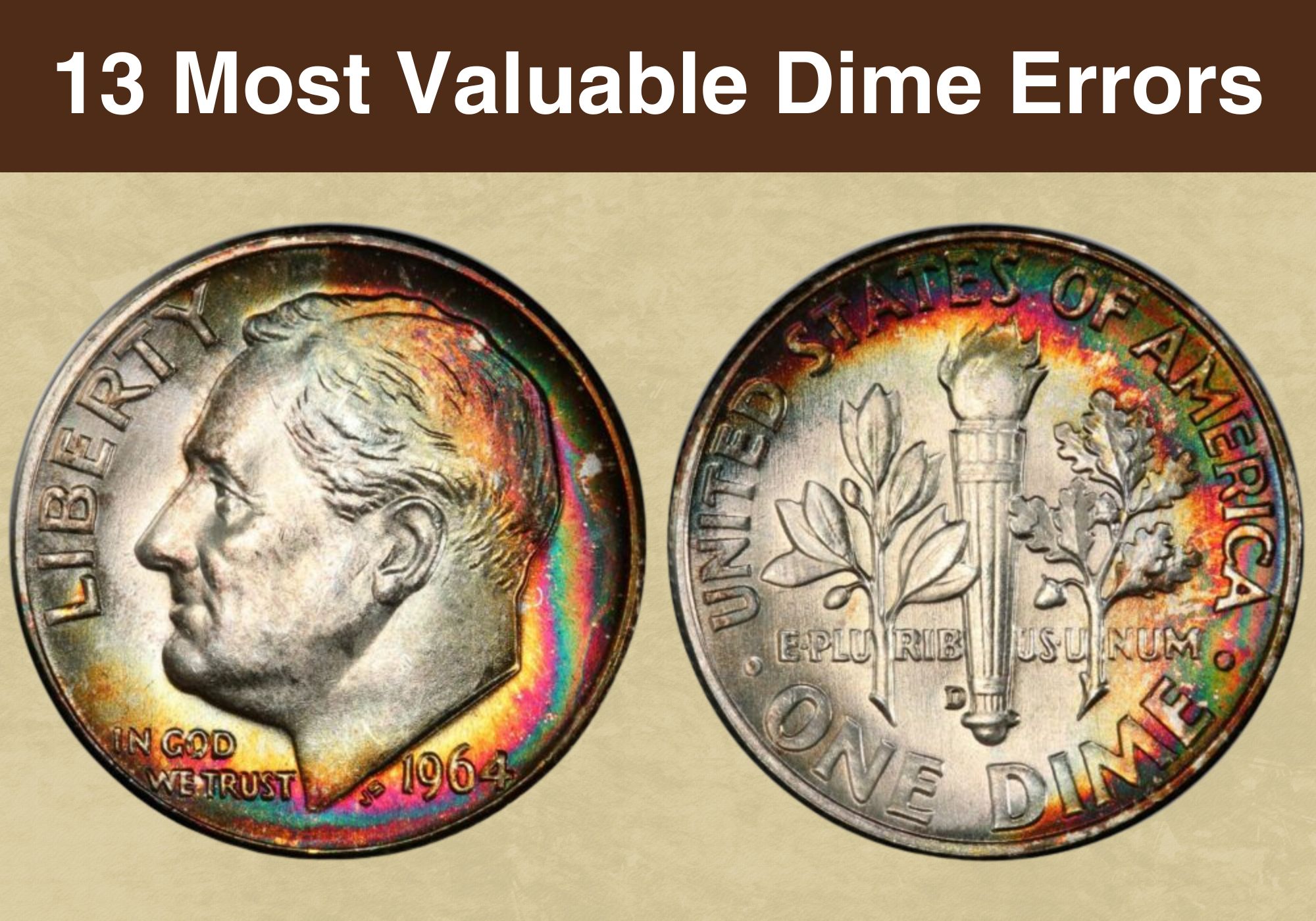
Are you considering adding Roosevelt dime errors to your collection? While most errors are insignificant and not worth much, some can earn you a fortune!
Roosevelt dimes have a long history; billions of these coins have been struck since 1946. Yet, dimes are not very popular among collectors because they are so common.
But don’t be too quick to dismiss this coin. Roosevelt dimes with well-known errors can be worth so much more than their face value.
Knowing which errors to look for takes work. That’s why we compiled this most valuable dime error list. Whether you want to cash in with your dimes or add some to your collection, this list will give you some good pointers.
So let’s jump in and get started!
Most Valuable Dime Error List
1. 1996-W Roosevelt Dime
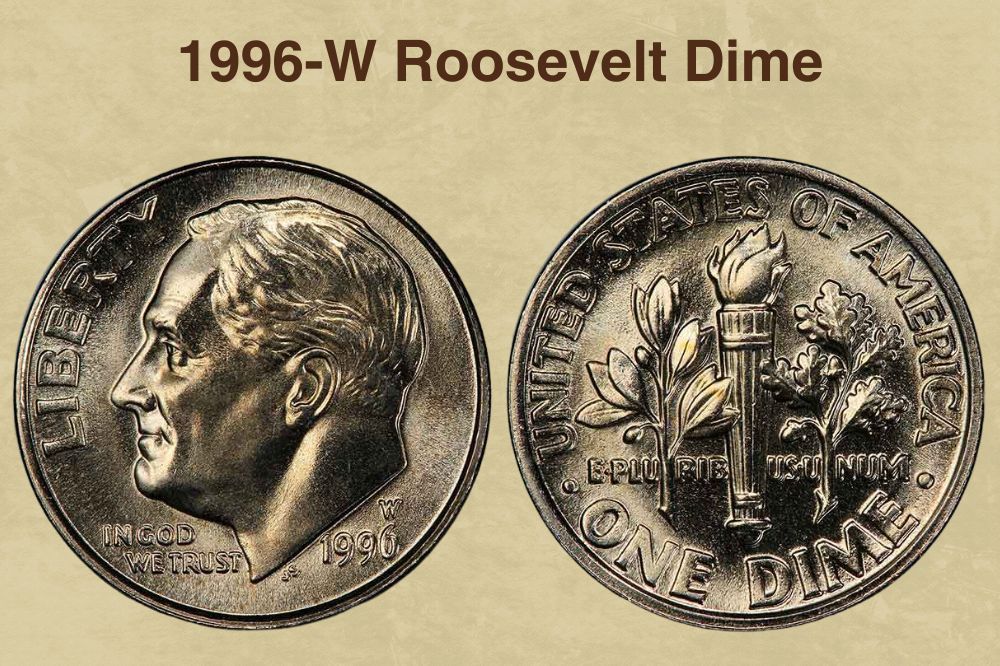 The United States Mint commissioned the mint facility at West Point to strike a special edition of the Roosevelt dime in 1996 to commemorate the coin’s 50th anniversary.
This special edition dime bore the mint mark W and was issued as part of a Mint Set only in 1996. That year, about 1,457,000 1996 W Roosevelt dimes were struck. Being part of a Mint Set meant that none of these coins were officially released into circulation.
That said, over the years, inheritors of Mint Sets may have released 1996-W dimes into circulation, oblivious that these coins are rare and quite valuable.
In lower mint state grades, a 1996- Roosevelt dime is worth between $10 and $16. One graded MS67 and above can bring in as much as $45.
Check 1996 Dime Error Full list with the Value
2. 1982 No-Mintmark Strong Roosevelt Dime
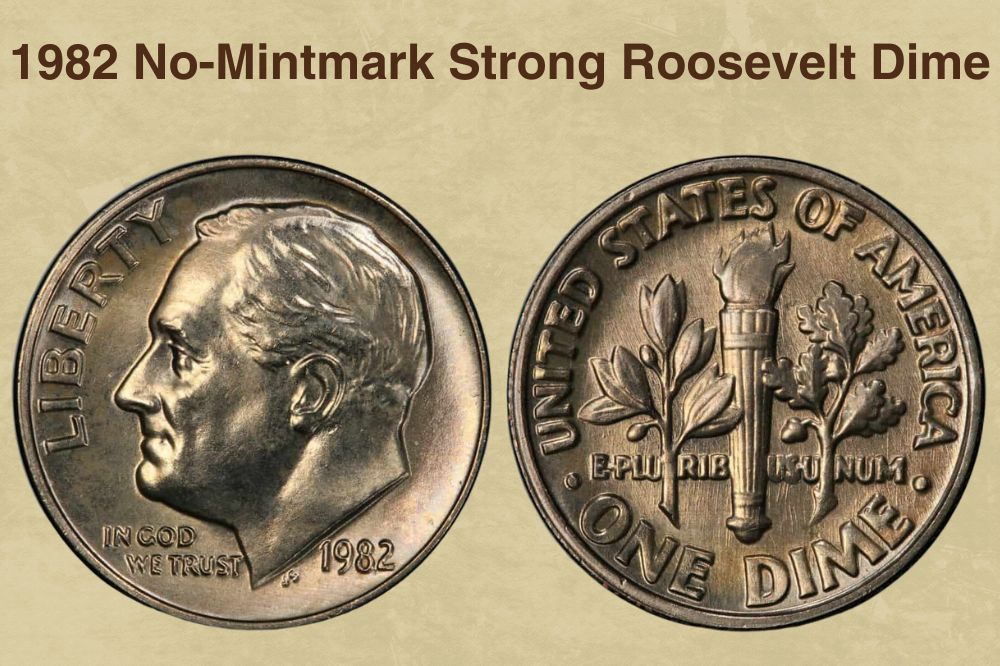
The Mint began using the P mint mark in 1980 to distinguish coins struck in Philadelphia. Adding mint marks to coins was done manually, leaving room for errors such as not including the mint mark.
This is what happened to about 75,000 1982 Roosevelt dimes that were struck without a mint mark. The low mintage and the absence of a mint mark drastically increase this coin’s value.
It is important to keep in mind that there are two varieties of the 1982 no-mint mark dime. One has a strong strike, while the other has a weak one.
1982 no-mint mark strong dimes are more valuable than their weak counterparts, with specimen graded MS65 selling for up to $2185
Check 1982 Dime Error Full list with the Value
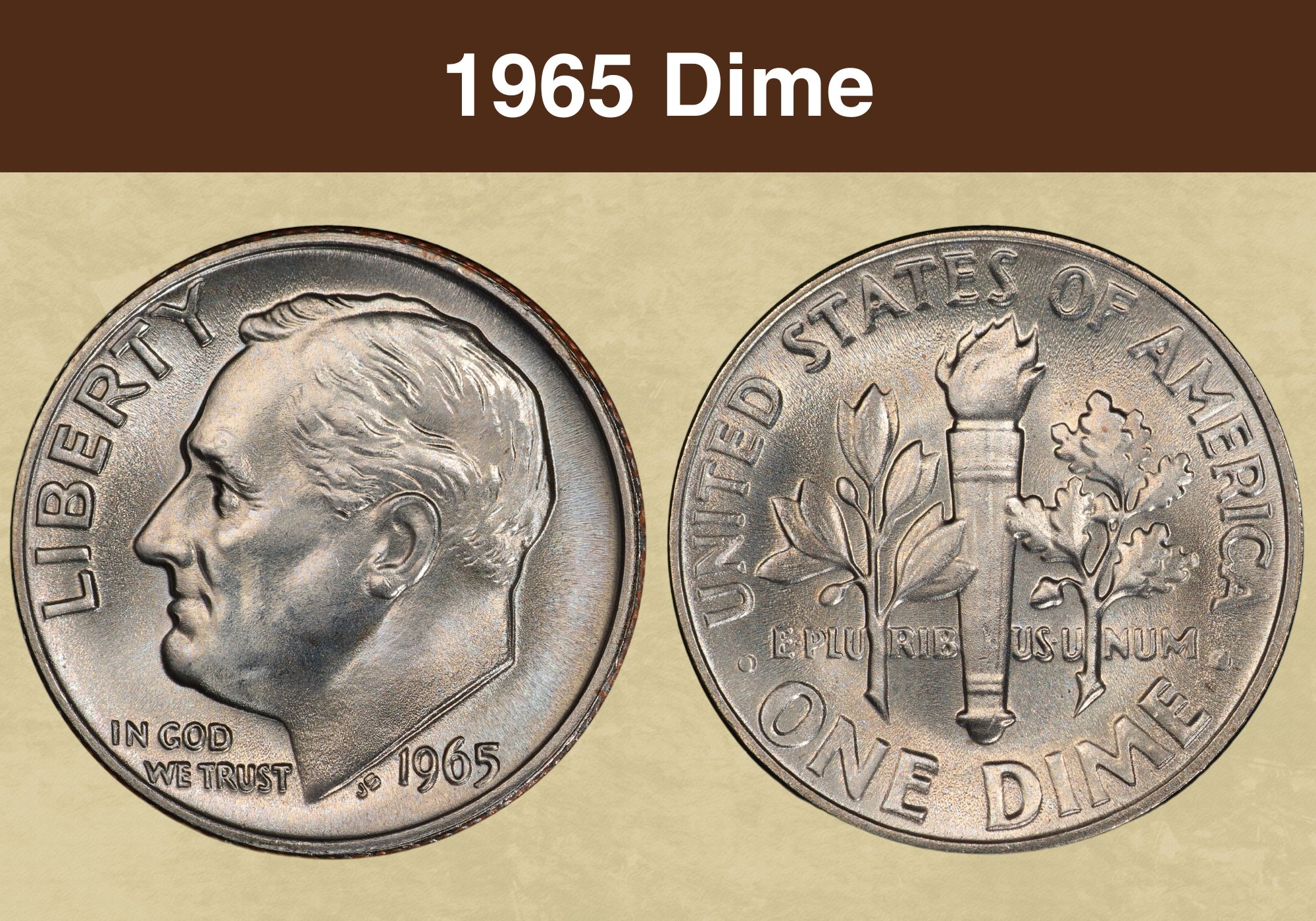
3. 1965 Transitional Roosevelt Dime
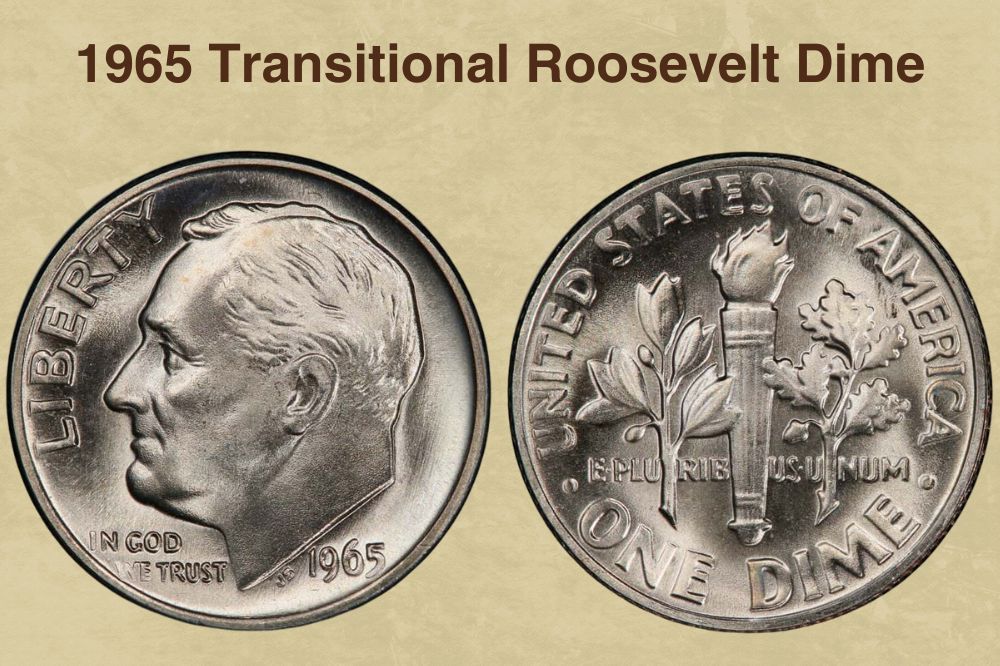
The Mint stopped production of dimes on 90% silver planchets in 1964 due to a severe silver shortage and coin hoarding among collectors.
From 1965 onwards, Roosevelt dimes were struck on a copper-nickel-clad planchet. However, some 1965 dimes were struck on 1964 silver planchets, resulting in a transitional error.
Transitional errors are bound to happen during the minting process if there are changes to the coin’s design, metal composition, and other characteristics such as size, thickness and color.
The 1965 dimes struck on 1964 silver planchets drew a lot of buzz among collectors, inevitably increasing their value to date. Combine this with the coin’s rarity, and you get one of the most valuable dime errors.
It is common for 1965 transitional dimes struck on a silver planchet to trade for up to $3,000, but you can get as much as $9,000 for dimes in gem condition.
Check 1965 Dime Error Full list with the Value
4. 1969-D Roosevelt Dime Repunched Mint Mark
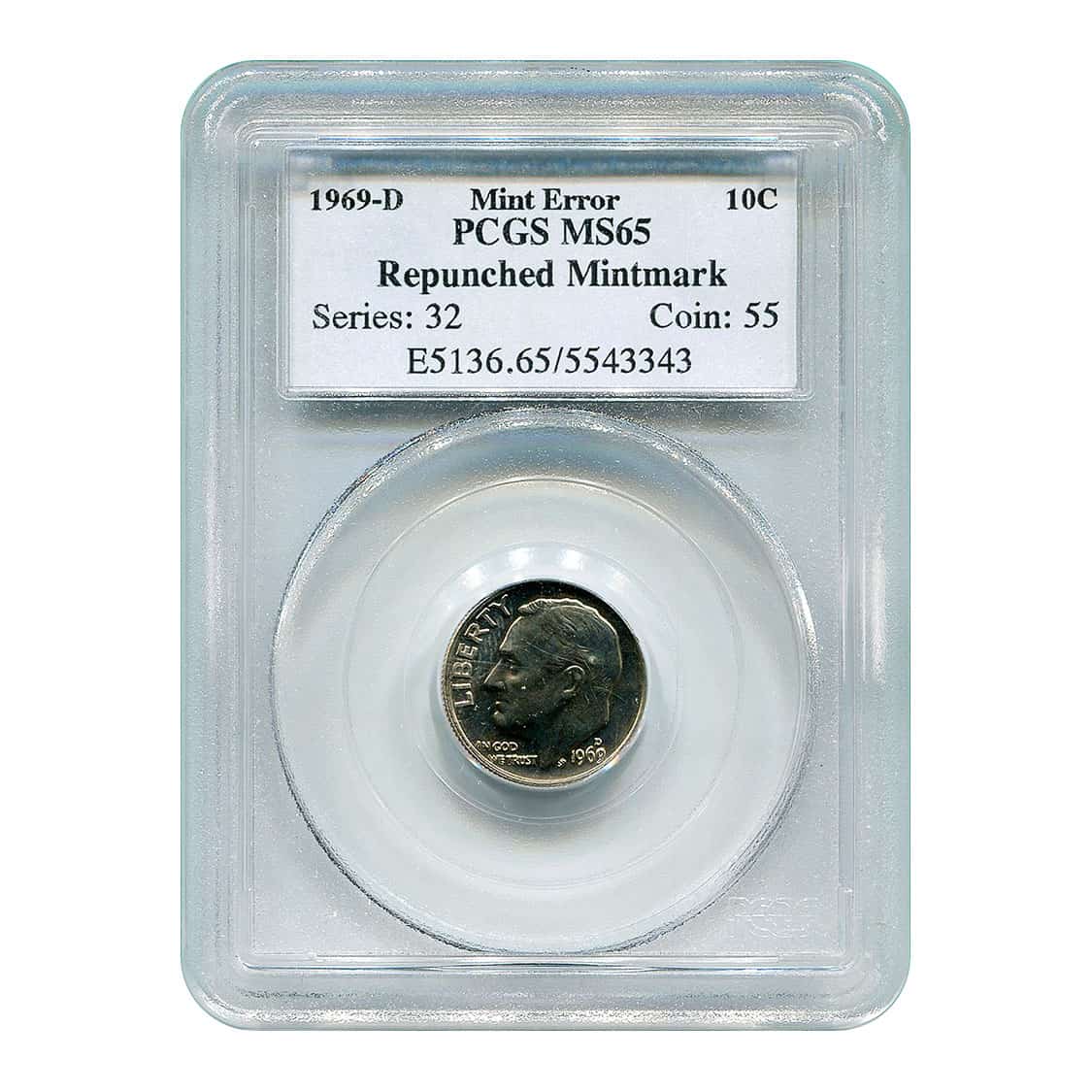
A handful of 1969 Roosevelt dimes struck at the Denver mint came out with a repunched mint mark and a doubled die error.
Few coins feature more than one minting error, so it is bound to be quite valuable when you come across one.
The doubling can be seen around the country’s motto, IN GOD WE TRUST. Upon closer inspection, you will also notice that the mint mark spots some doubling as though another letter D has been struck on top of the underlying one.
The 1969 Roosevelt dimes in regular condition are worth more or less their face value. But one with two types of errors and in mint state to boot can pull in at least $100. It is not unheard of for doubled-die and repunched mint mark 1969 dimes to sell for as much as $1,5000.
Check 1969 Dime Error Full list with the Value
5. 1964-D Roosevelt Proof Dime
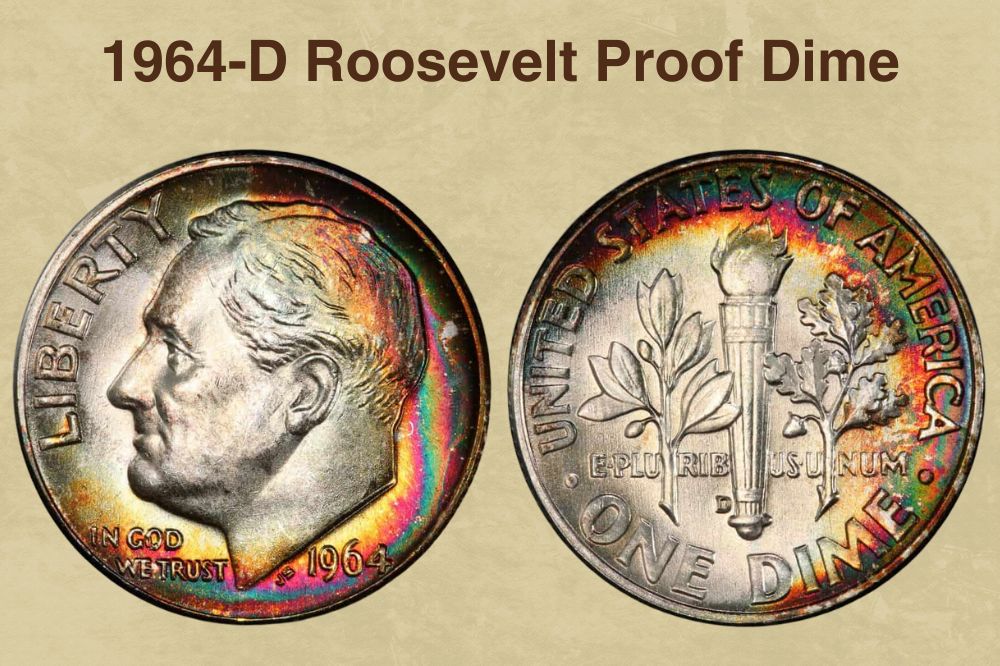
The 1964-D proof dimes were the Mint’s last 90% silver coins before transitioning to copper-clad coins.
Being the last silver coins, combined with the fact that they were struck as proofs and not circulated for public use, makes the 1964-D proof dime all the more valuable.
While regular proofs can fetch as much as $525, deep cameo (DCAM) dimes graded MS70 in gem condition have been sold for up to $4,600.
The 1964-D proof Roosevelt dime can be hard to come by, but it is worth searching for and adding to your collection.
Check 1964 Dime Error Full list with the Value
6. 1968-S No Mint Mark Roosevelt Dime
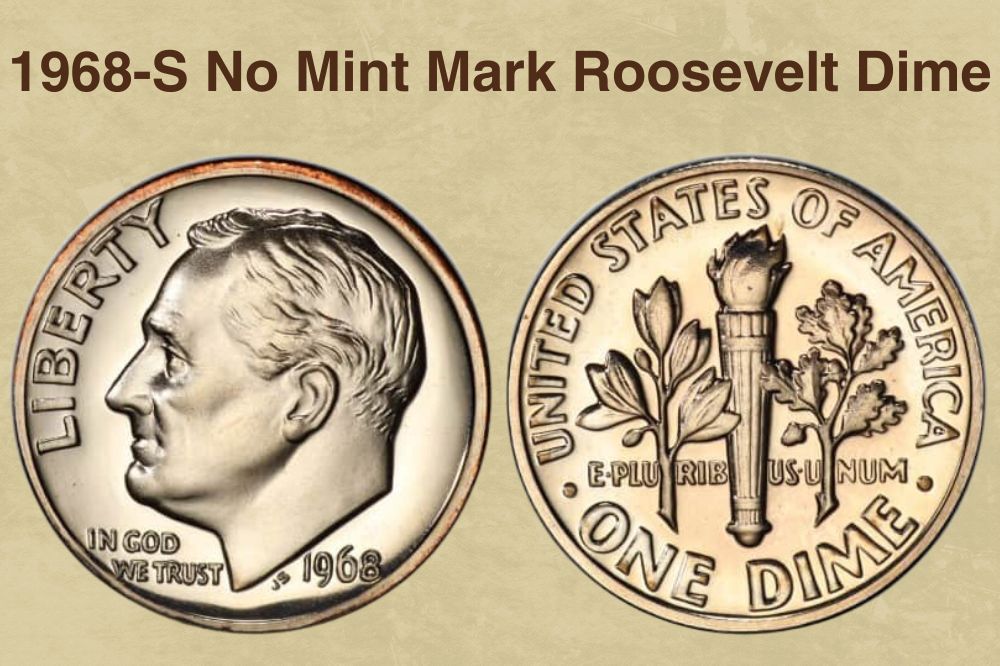
The 1968 Roosevelt dime minted in San Francisco was the first proof coin in the series to miss a mint mark. But, the Mint caught this error early enough, so only a few were produced, making them extremely rare.
This proof doesn’t come up for auction very often. Interested collectors typically wait months or years before a few 1968-S no-mint mark dimes appear at the auctions.
Only a few dozen of these proof coins are known to exist. Cameo dimes are extremely rare, while deep cameos are unknown.
Being one of the rarest Roosevelt dimes, expect to pay big money for it or to earn a fortune if you are lucky to own one. One example graded PF67 was sold at a Heritage Auction in 2008 for a mind-boggling $40,250!
Check 1968 Dime Error Full list with the Value
7. 1999-D Roosevelt Dime Broad Struck on a Cent Planchet
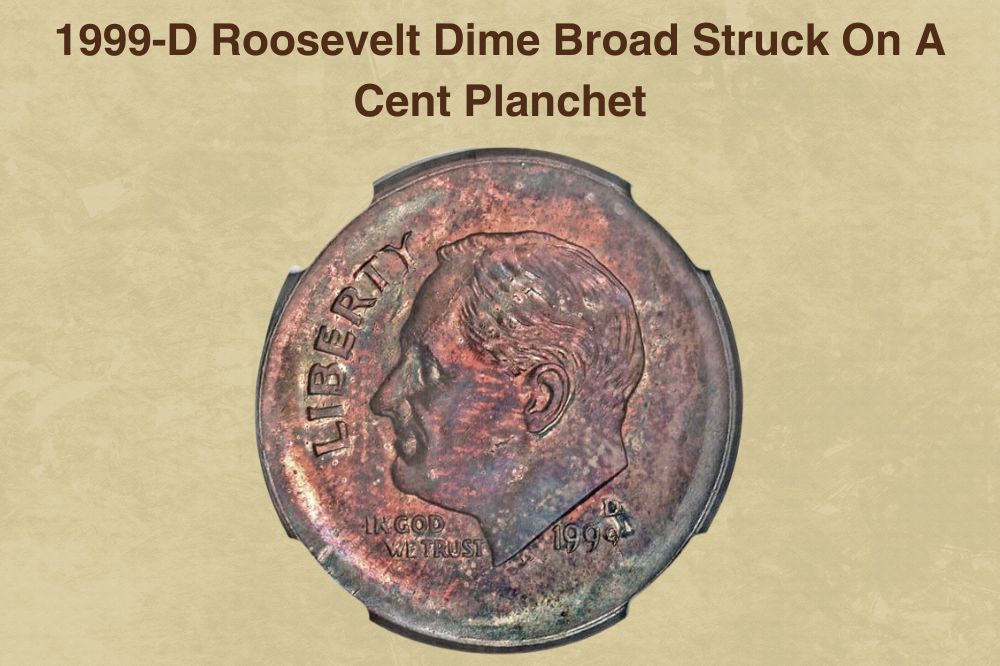
The fact that the 1999-D Roosevelt dime was broad-struck on a cent planchet seems like an impossible error, making this coin incredibly unique.
A cent planchet is larger than a dime planchet. So when Mint workers struck the dime on a planchet, the dime’s design did not completely fill the entire cent planchet. In addition, the dime design was struck out of the collar resulting in a broadsruck error.
Only two dimes are known to be struck on a cent planchet and as having this unique error. Due to the mixing of metal, a strange color formed for the 1999-D Roosevelt dime error. Coins can range from violet and blue-green to orange and gold.
A rare specimen graded MS65 by the Professional Coin Grading Service (PCGS) was auctioned for $10,000, making it one of the most valuable dime errors.
Check 1999 Dime Error Full list with the Value
8. 1998-P Cluster of Roosevelt Dimes
This group of Roosevelt dimes bonded together is rare and dramatic. Only one example has been discovered and sold today.
This 1998-P consists of about 32 wrapped dimes mangled up together due to what is believed to be a problematic coining press.
Numismatic experts explain that such a spectacularly rare error occurs when Mint workers continuously feed planchets into the coining press, but these planchets do not exit the press due to a malfunction. This results in the blank planchets being bonded haphazardly.
Bonded coins like these can escape the Mint when many coins are minted, and little quality control is done.
If one-of-a-kind, odd coins are to your liking, then the Roosevelt group of dimes would be an interesting addition to your collection.
One such cluster of 1998-P dimes sold for an impressive $9,200, which is hardly surprising given how rare and unique this coin is.
Check 1998-P Cluster of Roosevelt Dimes
9. 1969-D Missing Clad Layer Roosevelt Dime
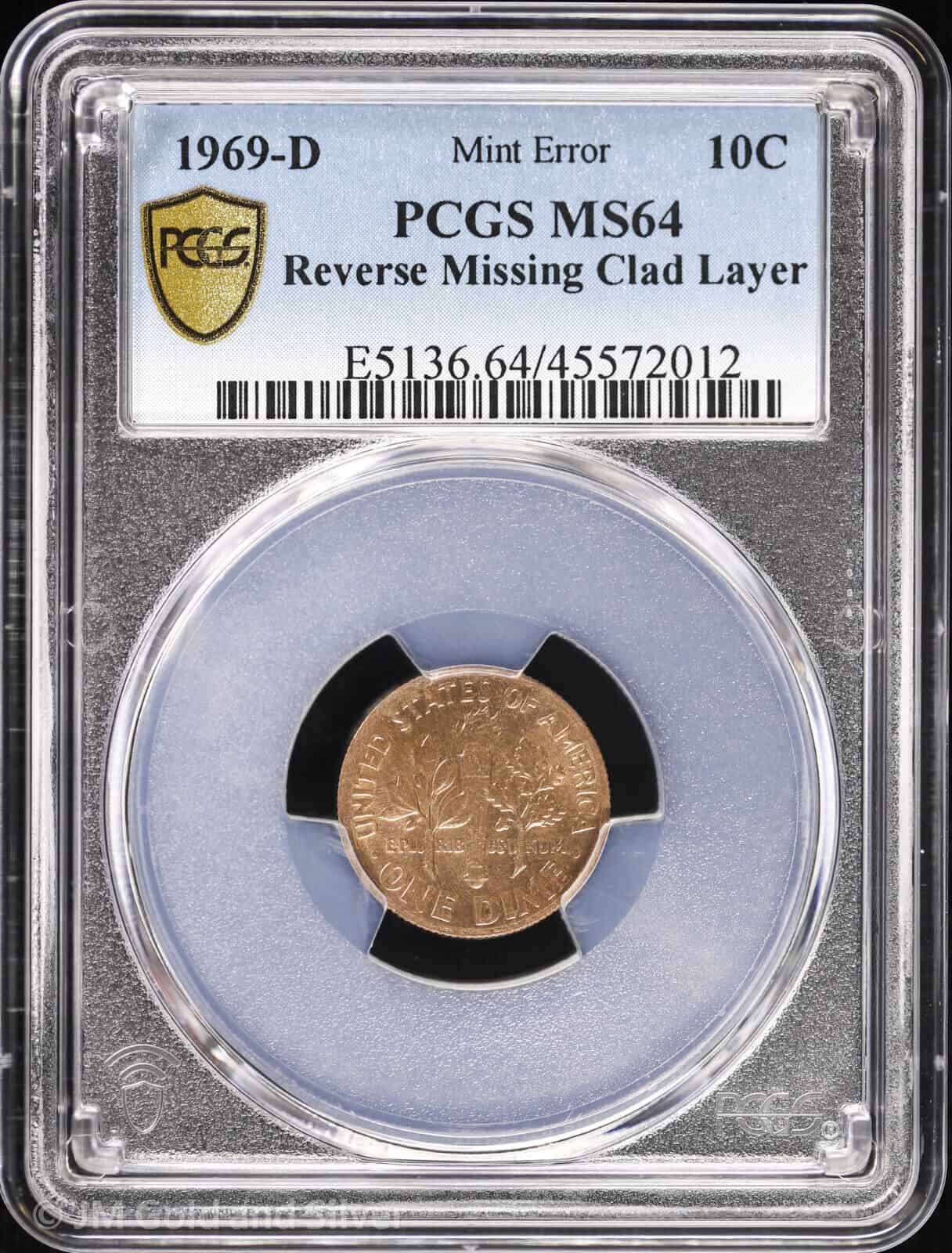
From 1965, the Mint began striking dimes with a copper core and a clad copper, zinc, and nickel layer.
A few coins were accidentally struck and came out without the outer clad either on the obverse or reverse. The result was a dime with a copper obverse and a nickel reverse or vice-versa.
Such accidents rarely happen at the Mint, so this tells you that a missing clad layer dime is extremely valuable and highly sought after.
Expect between $50 and $100 for a 1969-D missing clad dime error, but this figure can increase depending on the coin’s condition.
Check 1969 Dime Error Full list with the Value
10. 1970-S No- Mint Mark Roosevelt Dime
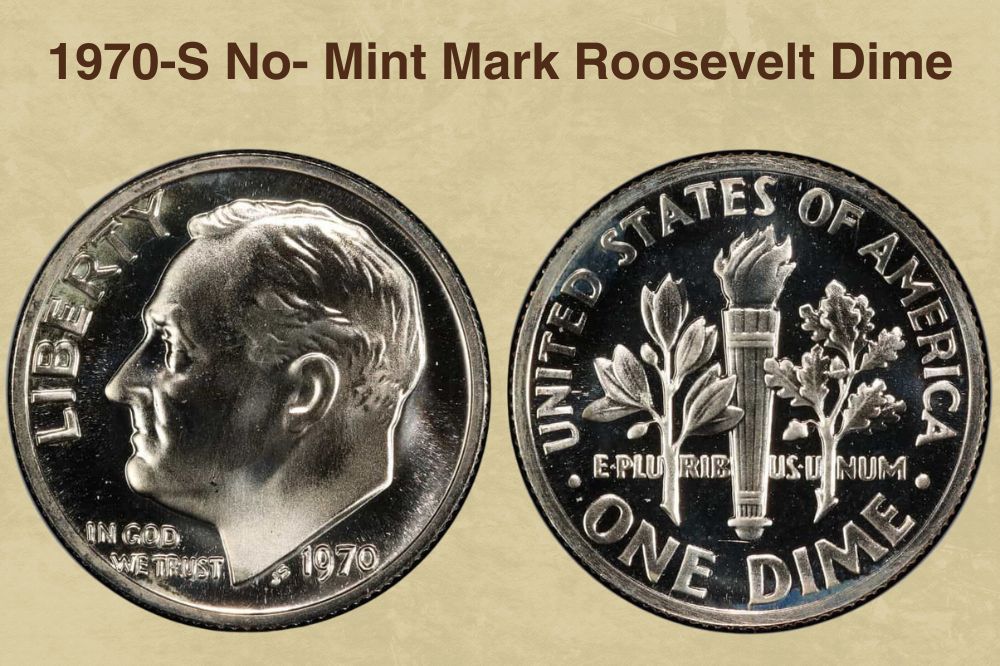
The 1970-S no mint mark Roosevelt dime was the second time the Mint struck a proof Roosevelt dime without a mint mark. The first time this happened was in 1968, and the third and fourth time was in 1975 and 1983, respectively.
No S-proof dimes are notoriously scarce. Only a few 1968 no-mint mark-proof Roosevelt dimes are currently available, and less than 500 of the 1970 dimes without a mint mark are known to exist.
A collector bought a PF69 1970-S no-mint mark Roosevelt dime for $1,610 at a 2003 Heritage Auctions session. If you are lucky enough to own this coin, have it professionally certified and graded, as it might be worth thousands of dollars.
Check 1970 Dime Error Full list with the Value
11. 1975-S No-Mint Mark Roosevelt Dime
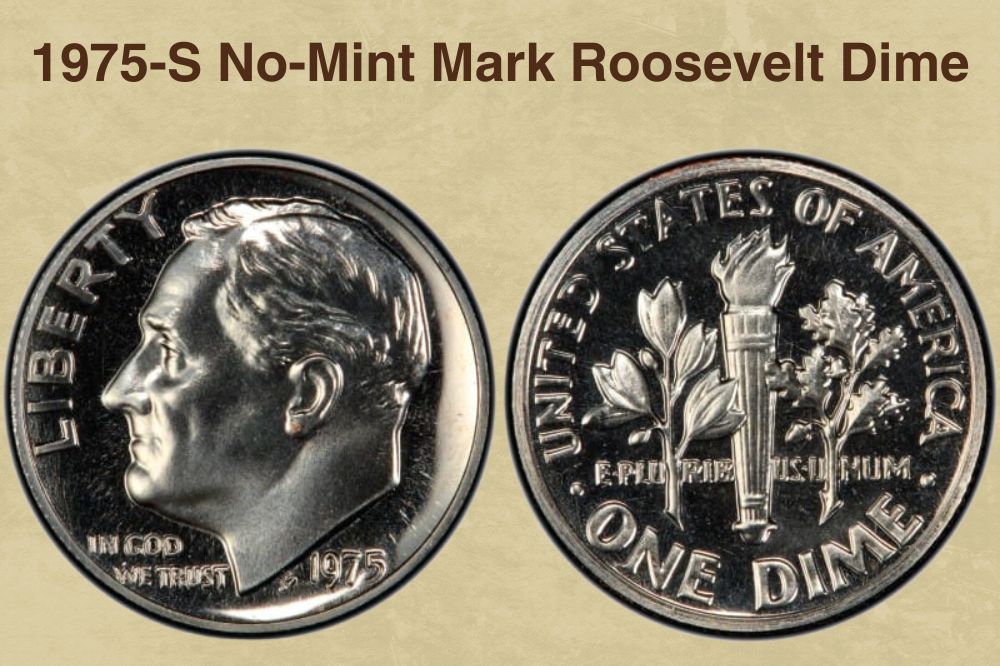
The 1975-S no-mint mark Roosevelt dime is a spectacular example of a dime error that is rare and unbelievably expensive.
Only two examples of this coin are known to date. The first was discovered in 1977 as part of a Proof Set, and the second was found in 1984.
The missing mint mark can be attributed to the way the Mint prepared proof dies in the past. Around 1968, Proof dies were first prepared in Philadelphia before being shipped to San Francisco, where the proof coin would be struck.
Preparation involved using a regular P-mint mark die press and adding an S mint mark. But the preparation process was imperfect, so some die presses were accidentally left out without the S mint mark.
In 2019, Heritage Auctions sold a 1975 no-mint mark proof Roosevelt dime graded PF68 for a record-breaking $456,000! This one certainly tops the list of the most valuable dime errors.
Check 1975 Dime Error Full list with the Value
12. 1967 Roosevelt Dime Rim Clip
A clipped error happens when Mint workers place planchets incorrectly into the striking hub. This results in the coin missing a small bit on its edge or rim.
Roosevelt dimes with such an error are a bit common, but these coins are a great addition to any error coin collection.
While the 1967-D Roosevelt may not always bring in thousands of dollars, it sells for a neat amount, allowing you to bag between $40 and $60. But, there is potential to earn so much more depending on the quality of your coin.
Check 1967 Dime Error Full list with the Value
13. 1983-S No Mint Mark Roosevelt Proof Dime
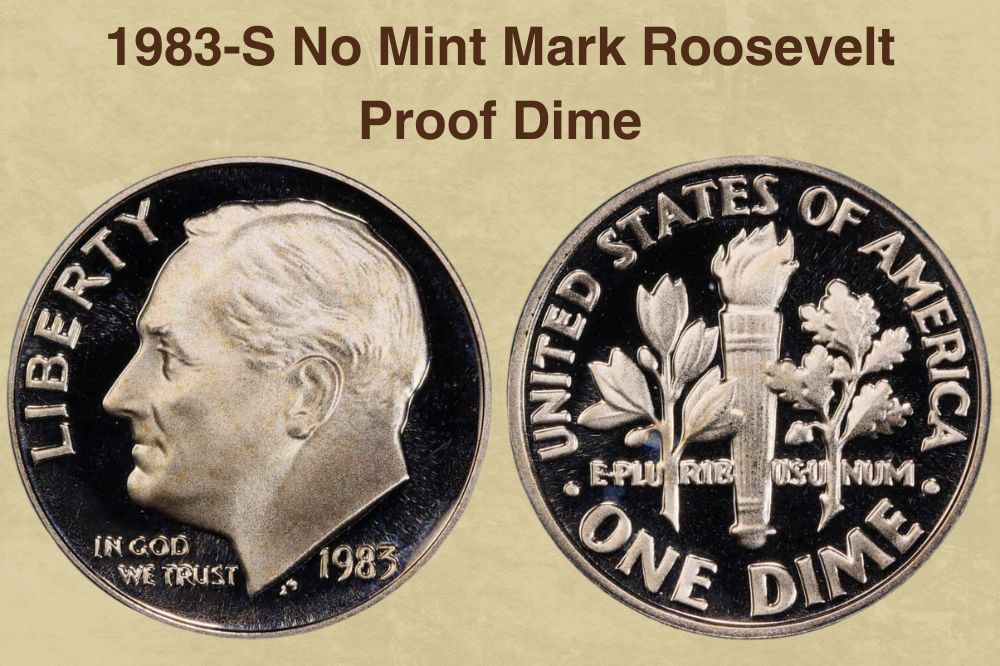
The 1983 no-mint mark-proof Roosevelt dime is the last coin without a mint mark in this dime series. About 3 million of these proofs were struck at the San Francisco mint.
Most existing examples are in deep cameo, so these dimes are guaranteed to be in gem condition if you are lucky to come across one.
Deep cameo (DCAM) 1983 no-mint mark Roosevelt proof dimes are high-value coins. One such example, graded PF70, was sold for $10,560 in 2014 at a Great Collections auction.
Check 1983 Dime Error Full list with the Value
Conclusion
Roosevelt dimes have been struck in large numbers since 1946, making them some of the most common United States coins. This explains why there isn’t such a buzz around collecting these dimes. But, there are certainly some gems in there worth paying attention to. In particular, no-mint mark Roosevelt 10-cent coins can turn in a sizeable profit and are worth scavenging for.

I have a rare Roseville dime from the Philadelphia mint 1994 that is an embedded dime. I’d like to know the estimated value of it because I believe it to be one of a kind. I’ve searched for it but cannot find any information on it.
I also have a 1994 error Roosevelt dime . Looking to find information about it.
I got a 2015 double striked dime trying to see were to take it.. an I try to have appraisal but haven’t heard back from anyone.
I have 2 1967 no mint mark and 2 1970 no mint mark and one 1975 no mint mark
I have 1965 and1967 1969 1970 1975 1983
I have 1982 dime w/P mint mark and is I believe to be a black beauty.
I have a 2021 dime that is deep struck and it’s on 2 different materials I believe the front is copper alloy. It’s actually smaller than a regular dime please help. 5026670333
I thought is was a penny I cleaned it up and it is 2018 D copper dime .I have no clue what to do with it
Sell it
I have a coin, it is a 1980 dime which has a D over P mint mark.
In all my research I am unable to find a similar coin (1980 dime).
Realizing there were mint issues between P and D in 1980 I’m hoping I have a gem.
Have a what I think is a 1995 dime the edges are not true and has a deformation on the edge next to the lip
Hard to read the date and “In God We Trust”
Is there any value
We have a 1 89 dime thats right the 9 between the 1 and 8 is not there is this dime worth anything?