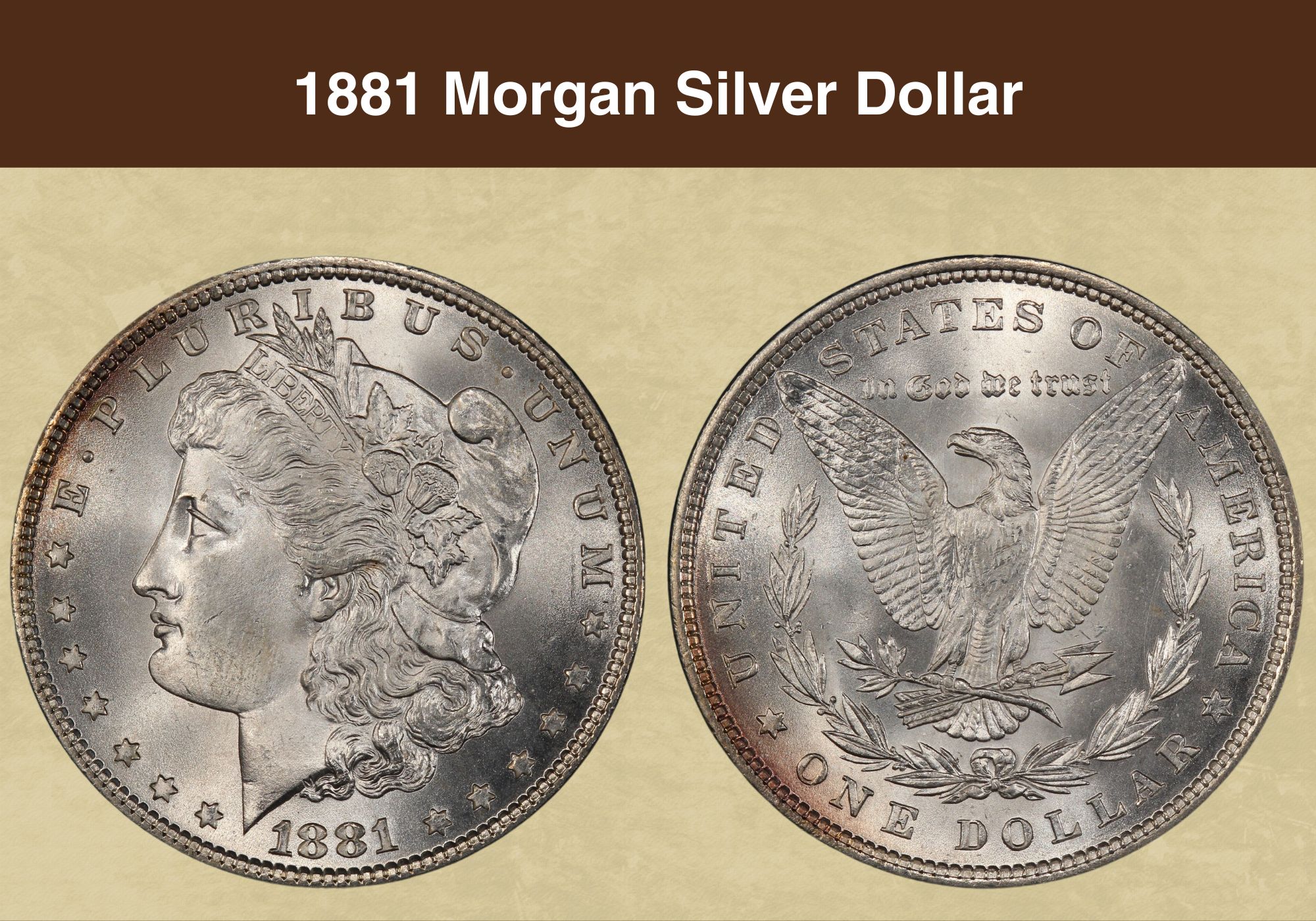
1881 Silver Dollar Value (2026 Guide): Errors List, “CC”, “O”, “S” & No Mint Mark Worth

1881 Silver Dollar Value

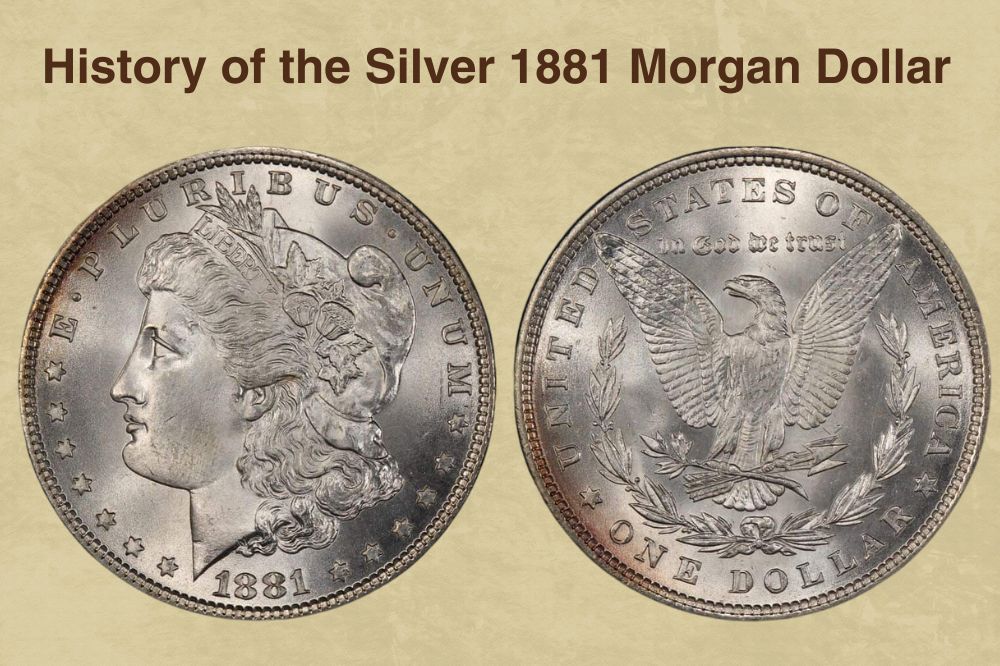
The 1881 Morgan Dollar was struck at four different mints — Philadelphia, Carson City, New Orleans, and San Francisco — and that alone makes the 1881 dollar value conversation more interesting than most people expect.

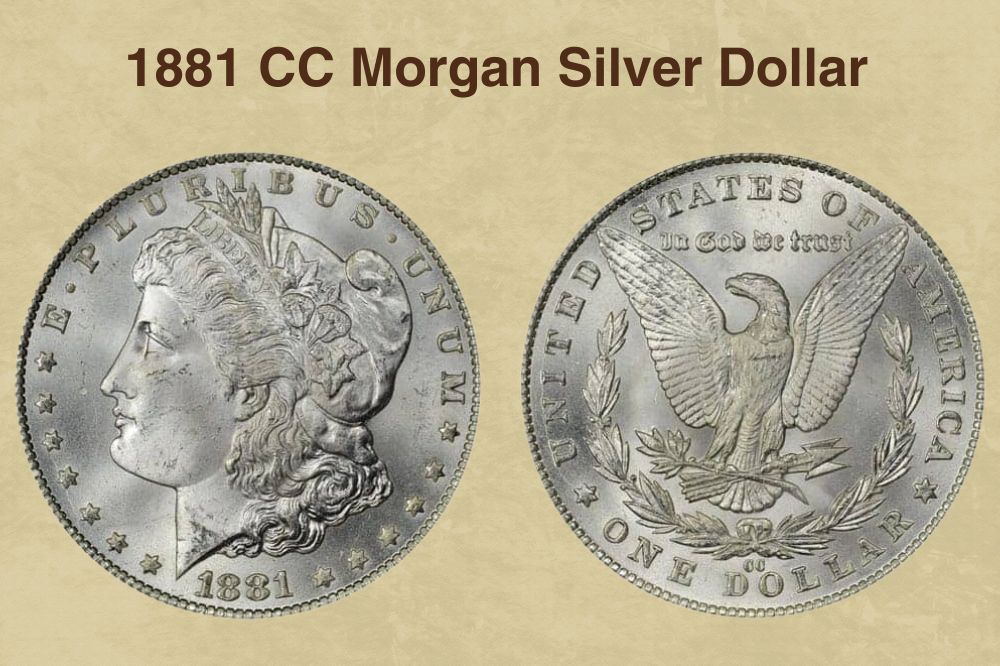
The Carson City (CC) issue is the standout of the four, carrying a premium because of its notably low production numbers, making it the rarest 1881 Morgan. A Good-grade 1881-CC starts at $314.00, while an MS example reaches $1,535.71 — a wide spread that reflects just how seriously collectors pursue this mint.

The Philadelphia no-mint-mark issue shows an equally striking contrast: an normal MS coin is valued at $381.95, but a Deep Mirror Proof-Like (DMPL) version in the same grade climbs to $2,864.00 — nearly eight times more, purely based on surface quality.

Read on for a full breakdown of each mint, each grade, and the specific details that actually move the needle on price.


1881 Silver Dollar Value By Variety

Where a coin was minted in 1881 makes a real difference to what it’s worth today. Each mint produced a distinct version of the Morgan Dollar — with its own mintage, its own collector demand, and its own price range.

If you know the grade of your coin, you can find the exact price below in the Value Guides section.

1881 Silver Dollar Value Chart

TYPEGOODFINEAUMSPR
1881 No Mint Mark Silver Dollar Value$4.52$15.46$39.59$381.95
1881 No Mint Mark Silver Dollar (PL) Value$11.43$39.15$100.25$626.00
1881 No Mint Mark Silver Dollar (DMPL) Value$22.11$75.69$193.81$2864.00
1881 CC Silver Dollar Value$314.00$456.67$565.00$1535.71
1881 CC Silver Dollar (PL) Value$44.97$154.00$394.30$1483.33
1881 CC Silver Dollar (DMPL) Value$50.31$172.27$441.09$2303.33
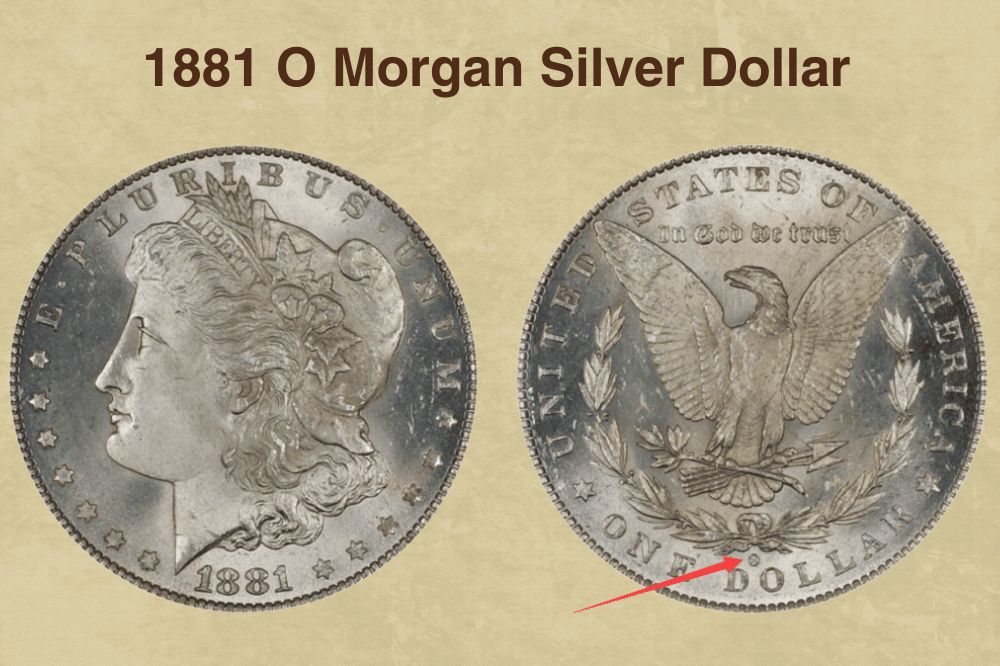
1881 O Silver Dollar Value$84.00$84.00$86.00$1429.00
1881 O Silver Dollar (PL) Value$9.15$31.32$80.20$934.00
1881 O Silver Dollar (DMPL) Value$17.53$60.03$153.71$565.00
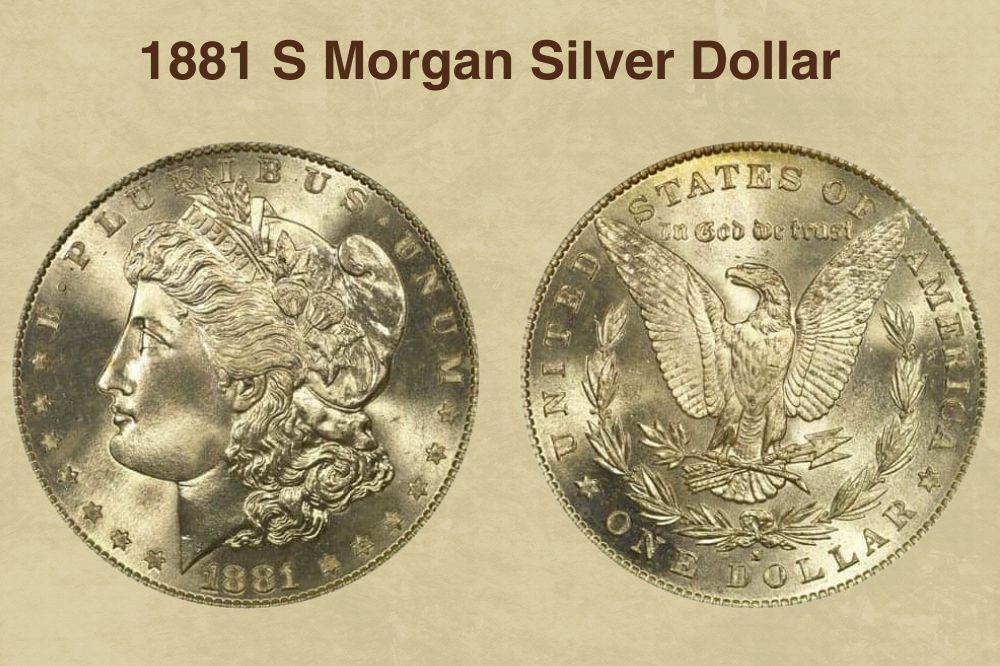
1881 S Silver Dollar Value$84.00$84.00$86.00$273.71
1881 S Silver Dollar (PL) Value$7.62$26.10$66.83$517.14
1881 S Silver Dollar (DMPL) Value$12.20$41.76$106.93$3328.57
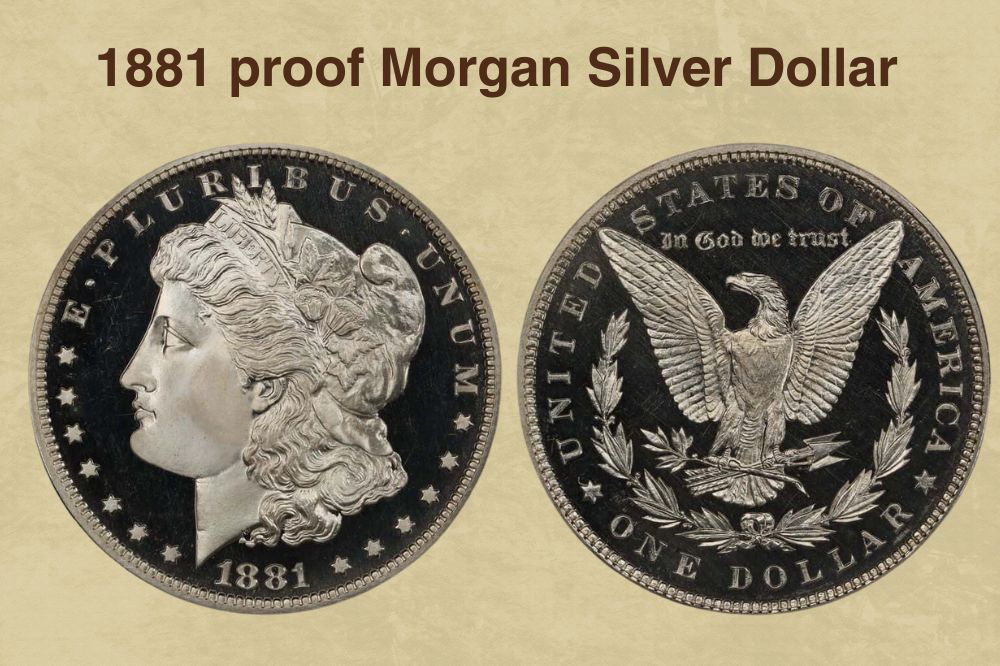
1881 Proof Silver Dollar Value$1190.00$9620.00
1881 CAM Silver Dollar Value$14898.75
1881 DCAM Silver Dollar Value$115000.00
Updated: 2026-04-13 08:05:27

Also Read: Top 100 Rarest Silver Dollar Coins Worth Money (Most Expensive)


Top 10 Most Valuable 1881 Silver Dollar Worth Money

Most Valuable 1881 Silver Dollar Chart

2003 - Present

Most 1881 Morgan Dollars that show up at auction fall into a fairly predictable range — but the top-end sales from this year are a different matter entirely.

The 1881-CC holds the highest auction record of the entire 1881 Morgan series, with a PCGS MS67+ DMPL example selling for $228,000 at Heritage Auctions in January 2024.

The result sits well above anything else from this year, and it reflects both the CC mint’s low mintage and the extreme rarity of a DMPL coin at that grade level.

The 1881 Proof 67 DCAM reached $105,000 in 2018, while a PR 69 example sold for $83,950 back in 2005. Proof coins from this year were struck in limited numbers, and deep cameo contrast at the top grades commands serious collector premiums.

Outside of the CC and Proof issues, the 1881-S MS69 brought $51,600, and the 1881-O MS65 DMPL fetched $40,250 — both well above what most people would expect from coins of their respective mints.

Across the four mints, grade and surface quality are what ultimately separate a modest sale from a record one.


History Of The 1881 Silver Dollar

The Morgan Dollar came out of the Bland–Allison Act of 1878, which required the U.S. Treasury to purchase between two and four million dollars’ worth of silver each month to be coined into dollars. The legislation was driven by western mining interests who wanted a guaranteed market for American silver.

For the new coin, Mint Director Henry Linderman selected a design by English-born assistant engraver George T. Morgan, who based his portrait of Liberty on the likeness of Philadelphia school teacher Anna Willess Williams.

By 1881, the series was in its third year of full production, with all four active mints — Philadelphia, New Orleans, San Francisco, and Carson City — striking dollars under the ongoing obligations of the Bland-Allison Act.

Despite the millions of coins produced, Morgan Dollars did not circulate widely in the eastern United States, where paper currency was preferred. Much of the 1881 output went directly into bank vaults and Treasury reserves.

That storage would matter decades later. In the 1960s, the U.S. Treasury discovered about 3 million silver dollars sitting in its vaults, of which nearly 2.5 million were Carson City Morgans.

Congress authorized the General Services Administration to sell the hoard to the public, and the GSA conducted a series of sales between 1972 and 1980 — including a significant quantity of 1881-CC dollars that had never seen circulation.

Those GSA sales shaped how collectors view the 1881-CC today, and the surviving coins from all four mints that year remain actively collected and traded.

Also Read: Top 100 Most Valuable Morgan Silver Dollar Coins Worth Money List


Is Your 1881 Silver Dollar Rare?

43

1881 No Mint Mark Silver Dollar

Rare
Ranked 417 in Morgan Dollar
86

1881 No Mint Mark Silver Dollar (PL)

Divine
Ranked 197 in Morgan Dollar
91

1881 No Mint Mark Silver Dollar (DMPL)

Divine
Ranked 145 in Morgan Dollar
27

1881-CC Silver Dollar

Scarce
Ranked 549 in Morgan Dollar
56

1881-CC Silver Dollar (PL)

Ultra Rare
Ranked 337 in Morgan Dollar
56

1881-CC Silver Dollar (DMPL)

Ultra Rare
Ranked 334 in Morgan Dollar
46

1881-O Silver Dollar

Very Rare
Ranked 388 in Morgan Dollar
91

1881-O Silver Dollar (PL)

Divine
Ranked 147 in Morgan Dollar
93

1881-O Silver Dollar (DMPL)

Divine
Ranked 134 in Morgan Dollar
18

1881-S Silver Dollar

Uncommon
Ranked 684 in Morgan Dollar
31

1881-S Silver Dollar (PL)

Scarce
Ranked 481 in Morgan Dollar
52

1881-S Silver Dollar (DMPL)

Very Rare
Ranked 348 in Morgan Dollar
93

1881 Proof Silver Dollar

Divine
Ranked 130 in Morgan Dollar
82

1881 CAM Silver Dollar

Mythic
Ranked 232 in Morgan Dollar
97

1881 DCAM Silver Dollar

Transcendent
Ranked 87 in Morgan Dollar

Rarity in the 1881 Morgan Dollar series varies quite a bit depending on the mint and grade — the CoinValueChecker App makes it easy to check exactly where your coin stands.


Key Features Of The 1881 Silver Dollar

The 1881 Morgan Dollar is one of the more recognizable coins in American numismatic history, and its design holds up well even under close inspection.

Both the obverse and reverse were the work of George T. Morgan, whose choices in imagery and inscription give this coin a distinct identity worth examining before assessing any example you come across.

The Obverse Of The 1881 Silver Dollar

The Obverse Of The 1881 Silver Dollar

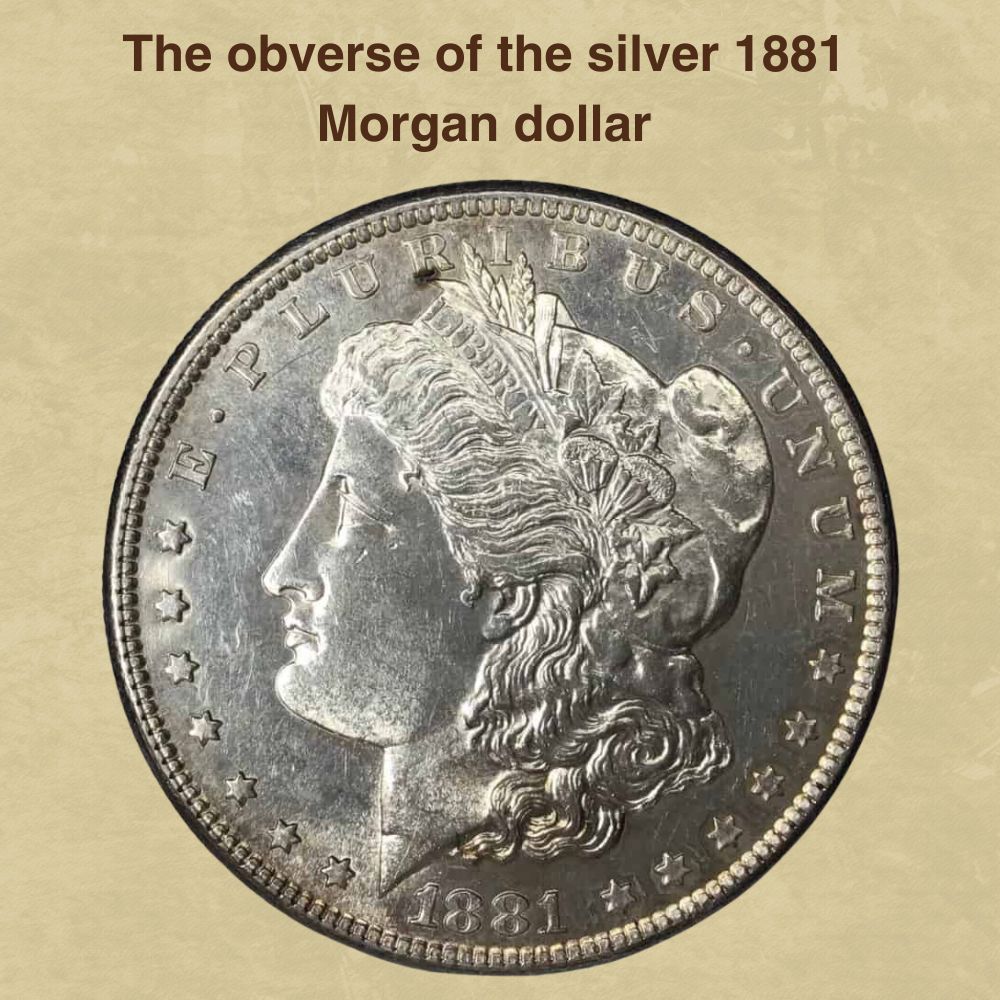
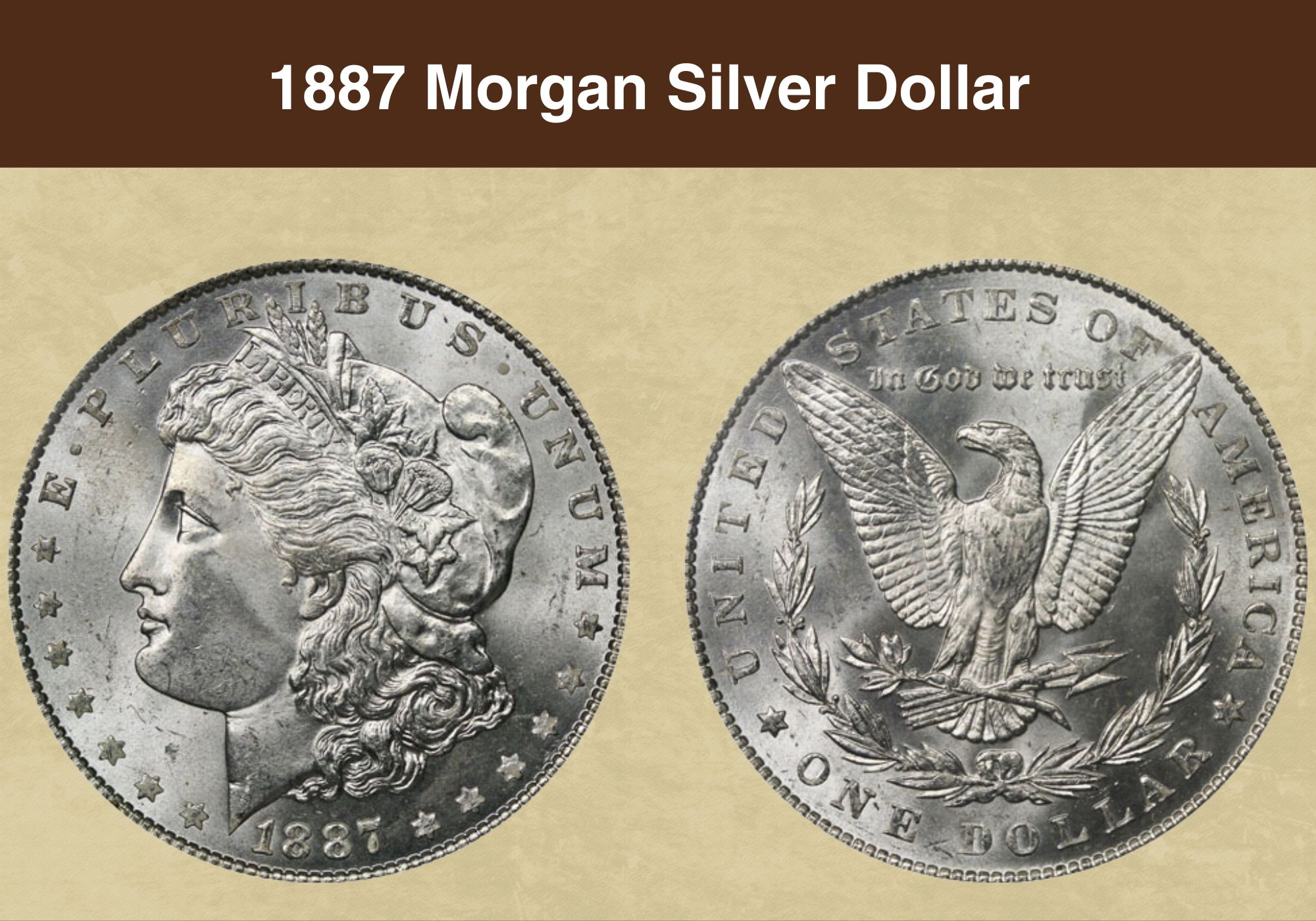
The obverse features a large, left-facing portrait of Lady Liberty wearing a Phrygian cap — a classical symbol associated with freedom. The model used for Liberty was Miss Anna Willess Williams of Philadelphia, whom Morgan declared to have the most perfect feminine profile he had ever seen.

Her cap and hair are adorned with agricultural symbols of wheat and cotton, representing liberty and prosperity. The word “LIBERTY” is inscribed directly on the headband of her cap.

Surrounding the central portrait are 13 stars, representing the original thirteen colonies, along with the motto “E PLURIBUS UNUM” along the upper edge. The date “1881” appears at the bottom, just below the portrait’s truncation line.

The Reverse Of The 1881 Silver Dollar

The Reverse Of The 1881 Silver Dollar

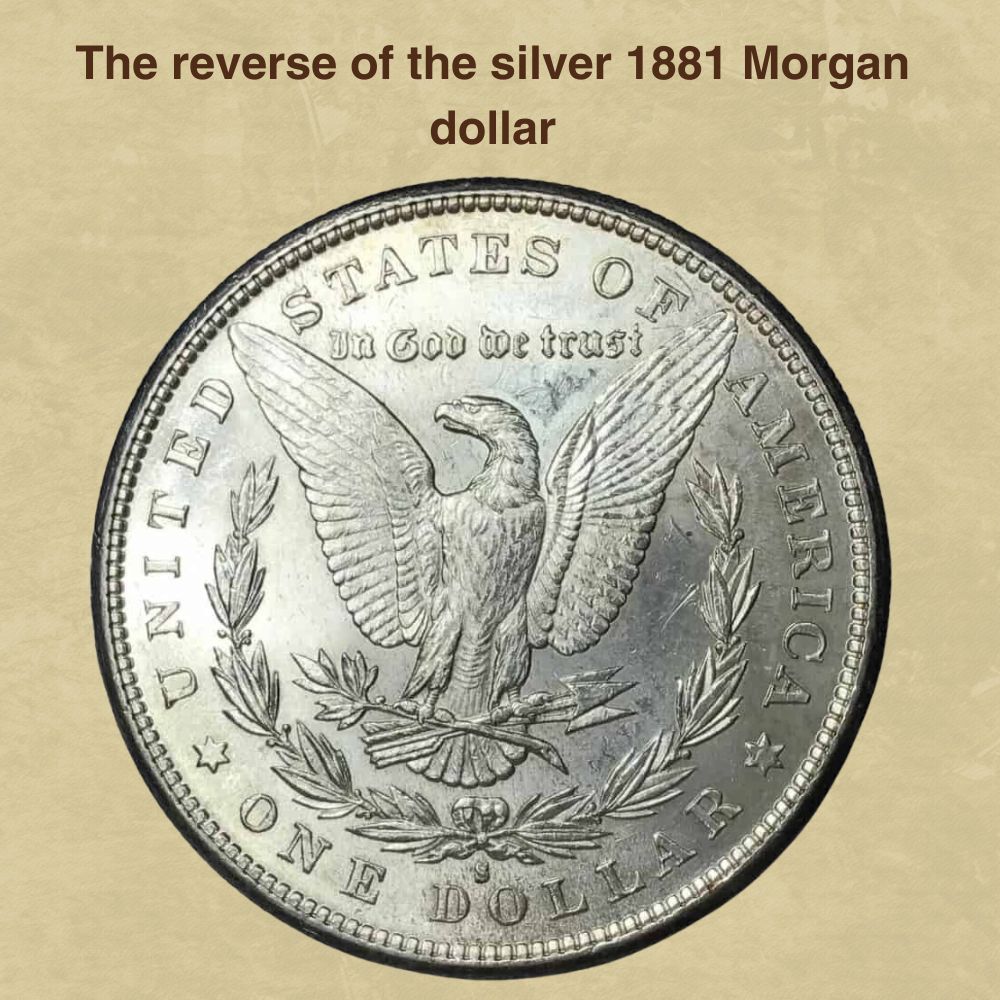
The reverse depicts a front-facing American bald eagle with its wings outstretched, clutching both arrows and an olive branch in its talons — a pairing that traditionally represents readiness for war alongside a commitment to peace.

The inscription “UNITED STATES OF AMERICA” runs along the upper outer edge, with “ONE DOLLAR” appearing below the eagle. The national motto “IN GOD WE TRUST” is positioned above the eagle’s head.

The mint mark — “CC,” “O,” or “S” — appears on the reverse just above the letters “DO” in “DOLLAR.” Coins struck at the Philadelphia Mint carry no mint mark at that location.

It is worth noting that the eagle on the Morgan Dollar shows seven tail feathers. The original 1878 design had eight, but this was corrected early in production to align with the standard depiction used on prior U.S. coinage.

Other Features Of The 1881 Silver Dollar

The 1881 Morgan Dollar is composed of 90% silver and 10% copper, weighs 26.73 grams, and measures 38.10 millimeters in diameter. Its silver content comes to 0.7734 troy ounces, and the coin has a thickness of approximately 2.40 mm.

The edge is reeded, meaning it carries a series of parallel grooves around the rim. These reeds number approximately 118, though this can vary slightly depending on the individual coin.

The coin’s face value is one dollar, though its actual worth today is determined almost entirely by silver content, condition, and mint mark rather than denomination.

Also Read: Top 80+ Most Valuable Sacagawea Dollar Worth Money (2000-P to Present)


1881 Silver Dollar Mintage & Survival Data

1881 Silver Dollar Mintage & Survival Chart

Mintage Comparison

Survival Distribution

TypeMintageSurvivalSurvival Rate
No Mint9,163,000900,0009.8221%
CC296,000180,00060.8108%
O5,708,000570,0009.986%
S12,760,0001,200,0009.4044%
Proof98417017.2764%
CAM98460060.9756%
DCAM984303.0488%

The four 1881 Morgan Dollar circulate issues varied widely in mintage, and that gap matters when assessing what survives today.

The San Francisco mint had the highest mintage at 12,760,000, followed by Philadelphia at 9,163,000 and New Orleans at 5,708,000. Carson City, by contrast, recorded just 296,000 — one of the lowest mintages in the entire Morgan Dollar series.

Despite its small mintage, the 1881-CC carries an unusually high survival rate of 60.81%. Thanks to the presence of 147,485 examples of the 1881-CC in the GSA sales of the 1970s, the coin is relatively available today — had it not been for that hoard, it might well have become a significant rarity.

The three higher-mintage issues — Philadelphia, New Orleans, and San Francisco — each show survival rates of roughly 9–10%, reflecting the combination of decades in circulation and large-scale silver meltings.

The Proof issues stand apart from all business strikes. With a mintage of just 984, approximately 170 are estimated to survive — a rate of 17.28%.

The CAM (Cameo) designation, applied to the same 984-coin Proof mintage, carries an estimated survival of 600 pieces, giving it a 60.98% rate. The DCAM (Deep Cameo) examples from that same group are the scarcest of all, with only around 30 estimated survivors and a survival rate of just 3.05%.

Also Read: Top 40+ Most Valuable Presidential Dollar Coins Worth Money


The Easy Way to Know Your 1881 Silver Dollar Value

Two things matter most when figuring out what an 1881 Morgan Dollar is worth: the mint mark and the grade. The mint mark tells you where the coin was struck, and the grade reflects how much wear it has taken over the years. Together, these two factors account for most of the price difference you’ll see across the market.

Grading by eye takes practice, and mint marks can be easy to miss if you’re new to the series. The CoinValueChecker App makes this straightforward — just take a photo of your coin, and the AI will read the mint mark, estimate the grade, and pull up the corresponding value instantly.

CoinValueChecker APP Screenshot


1881 Silver Dollar Value Guides

The 1881 Morgan Dollar came from four mints, plus a small run of Proof coins from Philadelphia — and each issue has its own price range, collector demand, and market behavior. Mint mark and grade are the two factors that drive value across all of them.

Here is a quick overview of each variety covered in the guides below:

  • 1881 No Mint Mark Silver Dollar — Philadelphia issue; affordable entry point for most collectors.
  • 1881-CC Silver Dollar — Rarest of the four; commands premiums at every grade level.
  • 1881-O Silver Dollar — New Orleans issue; more accessible, weaker strikes are common.
  • 1881-S Silver Dollar — Highest mintage; widely regarded for sharp strikes and strong luster.
  • 1881 Proof Silver Dollar — Struck at Philadelphia for collectors.
  • 1881 CAM Silver Dollar — Proof with cameo contrast; scarcer and more sought-after than standard Proofs.
  • 1881 DCAM Silver Dollar — Deep cameo contrast; the rarest and most valuable of the Proof designations.

The 1881-S stands out as the most common in high grades and is widely considered one of the best-produced Morgan Dollars of the entire series, while the 1881-CC commands strong premiums at every grade level due to its low mintage and connection to the legendary Carson City Mint.

Proof examples from 1881 are rare across all years of the Morgan series, which makes them consistently expensive. The surface designation — standard Proof, CAM, or DCAM — makes a significant difference in what collectors are willing to pay, with DCAM pieces sitting at the top of the range.


1881 No Mint Mark Silver Dollar Value

1881 No Mint Mark Silver Dollar Value

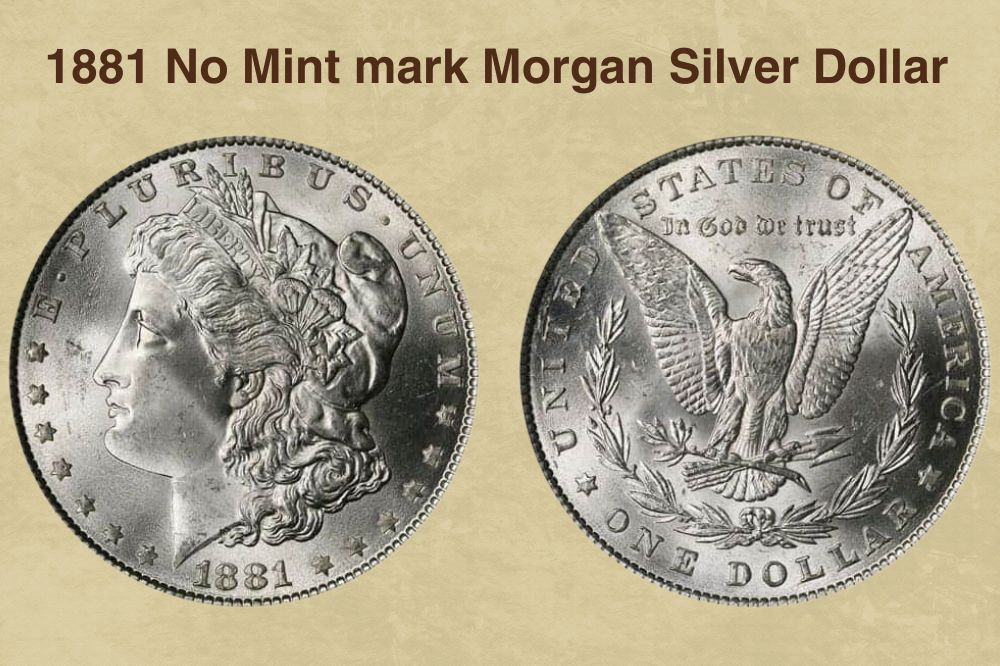
The Philadelphia issue is the most accessible entry point in the 1881 Morgan series. Circulated examples are easy to find and modestly priced, but the value picture changes significantly once you move into Mint State grades.

Many examples show a soft strike on Liberty’s hair and the eagle’s breast feathers, along with moderate to heavy bag marks. This is a coin where eye appeal matters a great deal. Two MS64 examples from the same mint can look very different, and the market prices them accordingly.

An MS66 standard strike currently sits at $1,600, while a PL (Prooflike) at the same grade reaches $5,250 — more than triple. The DMPL version jumps to $32,500 at MS66, reflecting how scarce deeply mirrored business strikes are at gem level.

The finest known example, an MS67, sold for $28,200 at Heritage Auctions in 2014, and a later MS66 DMPL brought $26,400 in 2023.

The 1881 no-mint-mark dollar tends to be a nice coin, with ample quantity surviving in brilliant white and others imbued with various degrees of color. If you come across a well-struck, mark-free example at MS65 or above with strong luster and clean surfaces, it is worth a closer look — those are genuinely harder to source than the numbers suggest.

1881 No Mint Mark Silver Dollar Price/Grade Chart

Price by 1-70 Grade (Latest Auction Records Included)

Updated: 2026-04-13 08:05:28

1881 No Mint Mark Silver Dollar (PL) Price/Grade Chart

Price by 1-70 Grade (Latest Auction Records Included)

Updated: 2026-04-13 08:05:28

1881 No Mint Mark Silver Dollar (DMPL) Price/Grade Chart

Price by 1-70 Grade (Latest Auction Records Included)

Updated: 2026-04-13 08:05:28

A full breakdown of confirmed auction results for this issue is listed in the table below.

Date PlatformPrice Grade

The chart tracks how the market for this coin has moved over the past year.

Market Activity: 1881 No Mint Mark Silver Dollar


1881-CC Silver Dollar Value

1881-CC Silver Dollar Value

The CC is the most sought-after of the four 1881 business strikes, and its pricing reflects that at every level. Even a heavily circulated example in G12 carries a current value around $460 — a floor that no other 1881 issue comes close to matching. MS65 and above range from $1,150 to over $65,600 depending on grade and surface designation.

CoinVaueChecker App 10

The reason circulated examples command such a premium is straightforward: very few of the 1881-CC coins actually entered everyday commerce. With roughly half the entire mintage turning up in Treasury vaults decades later, most surviving examples went straight from the mint to storage and never saw a pocket.

The 1881-CC is collectively among the most valuable and sought-after coins in the entire Morgan Dollar series. GSA examples still in their original government holders carry an additional collector premium on top of the grade, and that gap has widened as original-holder examples become harder to find.

It is a coin with deep collector demand at virtually every grade level, and that demand shows no sign of softening.

1881-CC Silver Dollar Price/Grade Chart

Price by 1-70 Grade (Latest Auction Records Included)

Updated: 2026-04-13 08:05:28

1881-CC Silver Dollar (PL) Price/Grade Chart

Price by 1-70 Grade (Latest Auction Records Included)

Updated: 2026-04-13 08:05:28

1881-CC Silver Dollar (DMPL) Price/Grade Chart

Price by 1-70 Grade (Latest Auction Records Included)

Updated: 2026-04-13 08:05:28

Every recorded auction result for the 1881-CC, across all grades and surface designations, is compiled in the table below.

Date PlatformPrice Grade

To see how demand and pricing have shifted in recent months, the market activity chart is available below.

Market Activity: 1881-CC Silver Dollar


1881-O Silver Dollar Value

1881-O Silver Dollar Value

The New Orleans issue tends to be underestimated, but it has a distinct appeal — particularly for collectors who prioritize value at the higher end of the grade scale.

These pieces typically display a weak strike and subdued, satiny luster, with flatness on the high points of the design being common. That is a production characteristic of the New Orleans Mint, not evidence of wear — but it does mean that finding a sharply struck example in MS65 or above takes real effort.

That scarcity at the top end is exactly what drives the ceiling on this coin. When a well-struck, high-grade 1881-O does come to market, it attracts serious bidding. An MS66+ example sold for $39,950 at Legend Rare Coin Auctions in June 2015.

The DMPL version pushes even higher — an MS65 DMPL example brought $40,250 at auction in 2008 — a result that reflects how much collectors will pay for a New Orleans coin that beats the typical quality bar.

For buyers on a moderate budget, the 1881-O offers a solid entry into the 1881 series. Circulated examples are affordable and plentiful. But if you are looking at uncirculated pieces, pay close attention to the strike definition on the eagle’s feathers and Liberty’s hair — those details separate an average example from one that will hold its value over time.

1881-O Silver Dollar Price/Grade Chart

Price by 1-70 Grade (Latest Auction Records Included)

Updated: 2026-04-13 08:05:28

1881-O Silver Dollar (PL) Price/Grade Chart

Price by 1-70 Grade (Latest Auction Records Included)

Updated: 2026-04-13 08:05:28

1881-O Silver Dollar (DMPL) Price/Grade Chart

Price by 1-70 Grade (Latest Auction Records Included)

Updated: 2026-04-13 08:05:28

The auction records here document actual sale prices across the grade range for this issue.

Date PlatformPrice Grade

This chart reflects how market pricing for this coin has tracked over the past twelve months.

Market Activity: 1881-O Silver Dollar


1881-S Silver Dollar Value

1881-S Silver Dollar Value

The 1881-S is widely considered one of the best-produced Morgan Dollars of the entire series, featuring consistently sharp strikes and vibrant, booming mint luster. San Francisco was known for tight quality control, and it shows in the coin’s surfaces and strike definition even on average examples.

What makes this issue particularly interesting from an investment standpoint is the DMPL population. Only around 885 DMPL examples have been certified at MS65 and above across major grading services — a surprisingly thin number given the 12.76 million coin mintage.

The finest known DMPL example, graded MS68, sold for $40,250 in 2007, while an MS69 standard strike brought $51,600 at Heritage Auctions in April 2025.

For a coin this common in lower grades, the top-end scarcity is real. The 1881-S is an ideal type coin at MS64–65, but if you can locate a DMPL example with strong mirrors and a clean strike, the premium is well justified.

1881-S Silver Dollar Price/Grade Chart

Price by 1-70 Grade (Latest Auction Records Included)

Updated: 2026-04-13 08:05:28

1881-S Silver Dollar (PL) Price/Grade Chart

Price by 1-70 Grade (Latest Auction Records Included)

Updated: 2026-04-13 08:05:28

1881-S Silver Dollar (DMPL) Price/Grade Chart

Price by 1-70 Grade (Latest Auction Records Included)

Updated: 2026-04-13 08:05:28

Confirmed auction results for the 1881-S, spanning circulated grades through gem Mint State, are listed in the records below.

Date PlatformPrice Grade

The market activity chart offers a closer look at how this issue has been noticed over the past year.

Market Activity: 1881-S Silver Dollar


1881 Proof Silver Dollar Value

1881 Proof Silver Dollar Value

With just 984 pieces struck at Philadelphia, every surviving Proof example was made specifically for collectors — never intended for commerce, and handled accordingly from day one.

An estimated 150 to 170 coins survive today. That puts the survival rate well below most other 1881 issues, and it means even a lower-grade example carries real weight in the market.

The grade range clusters in the PR60–PR64 window, with examples above PR65 becoming progressively scarcer. Lower-graded Proof coins typically range from $2,550 to $4,650, while better-condition specimens reach $5,000 to $85,000.

These coins were struck with deeply mirrored fields and sharply defined devices — a level of technical precision that sets them apart from any business strike of the same year, regardless of how well-preserved the latter might be.

The auction record for the standard Proof stands at $83,950, achieved by a PR69 example sold at Bowers & Merena in January 2005. At the top of the grade scale, these coins are firmly in museum-quality territory and rarely change hands.

1881 Proof Silver Dollar Price/Grade Chart

Price by 1-70 Grade (Latest Auction Records Included)

Updated: 2026-04-13 08:05:28

The auction records below cover the full range of known sales for this issue, from lower Proof grades through the finest certified examples.

Date PlatformPrice Grade

Following that, the chart illustrates how these coins have performed in the market over the past year.

Market Activity: 1881 Proof Silver Dollar


1881 CAM Silver Dollar Value

1881 CAM Silver Dollar Value

The CAM designation reflects a visible contrast between the frosted devices and the mirrored fields — and on an 1881 Proof, that contrast has to be consistent and well-defined across both sides to earn the designation. Many Proof coins from this era fall short because die wear softens the frosting before the full run is complete.

The auction record sits at $46,000, set by a PR67 example at Heritage Auctions in August 2011. That result reflects just how much the market rewards a coin that combines a top grade with strong, even cameo contrast — both together in a single example is genuinely uncommon for this date.

When evaluating a CAM purchase, the quality and evenness of the frosting matters as much as the grade number. A PR65 with bold, consistent contrast will often outperform a higher-graded example with uneven surfaces in real-market transactions.

1881 CAM Silver Dollar Price/Grade Chart

Price by 1-70 Grade (Latest Auction Records Included)

Updated: 2026-04-13 08:05:28

Documented auction results for the 1881 CAM, reflecting the premium this designation commands at each grade level, are listed below.

Date PlatformPrice Grade

Here is an overview of market activity illustrating the level of collector engagement with the Cameo issue.

Market Activity: 1881 CAM Silver Dollar


1881 DCAM Silver Dollar Value

1881 DCAM Silver Dollar Value

With an estimated 30 survivors, the DCAM is the scarcest designation in the entire 1881 Morgan Dollar series. Deep cameo examples are much more challenging to find than Proofs with duller surfaces — achieving that level of mirror-to-frost intensity requires fresh dies, and most Proof runs exhausted that quality well before completion.

DCAM examples have sold in the $29,000 to $105,000 range, and demand at auction is consistently strong — driven by both specialist Proof collectors and registry set participants, two buyer groups that rarely give ground on price.

As more examples move into long-term private collections, the number available on the open market only shrinks over time — which makes any opportunity to acquire one worth taking seriously.

1881 DCAM Silver Dollar Price/Grade Chart

Price by 1-70 Grade (Latest Auction Records Included)

Updated: 2026-04-13 08:05:29

Given how rarely this designation surfaces, each auction result carries particular weight — the full record of known sales is listed in the table.

Date PlatformPrice Grade

How the market has responded to recent appearances of this coin is tracked in the activity chart below.

Market Activity: 1881 DCAM Silver Dollar

Also Read: 17 Rare Dollar Coin Errors List with Pictures (By Year)


Rare 1881 Silver Dollar Error List

Not every 1881 Morgan Dollar is worth the same — but some are worth considerably more because of what went wrong at the mint. Errors occur when something in the production process breaks down: a misaligned planchet, a contaminated die, or a die that received an unintended double impression.

The 1881 Morgan series is not known for headline-grabbing error coins the way some other dates are, but documented examples do exist, and a few have sold for prices that would surprise anyone who assumed errors are a modern phenomenon.

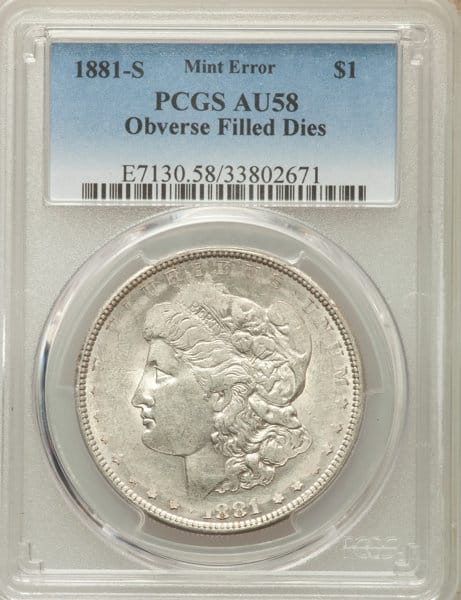
1. 1881 Silver Dollar Doubled Die Obverse (DDO) Error

1881 Silver Dollar Doubled Die Obverse (DDO) Error

The Doubled Die Obverse appears across multiple 1881 issues including Philadelphia and San Francisco. It occurs during die production when the working die receives two hub impressions at slightly different angles — meaning every coin struck from that die carries the same error.

To spot it, examine Liberty’s eye, ear, and the date numerals under 5x to 10x magnification. The doubling appears as a raised shadow or echo of the design. One important distinction: machine doubling produces a flat, shelf-like displacement and carries no premium. True hub doubling shows distinct, raised secondary impressions — the difference matters significantly in terms of value.

Circulated examples typically sell for $55 to $150. In uncirculated condition, MS63 coins range from $200 to $800, and sharply doubled MS65 examples can exceed $1,500. Professional attribution by PCGS or NGC is recommended before buying or selling.

2. 1881-O Silver Dollar VAM 27 Doubled Ear Error

1881-O Silver Dollar VAM 27 Doubled Ear Error

The VAM-27 is the most recognized variety in the entire 1881-O Morgan Dollar series and the only 1881-O issue to make the Hot 50 Morgan Dollar Varieties list — a reference compiled by Jeff Oxman first published in 2000 identifying the most collectible die varieties across the series. It has been a known variety since the early 1990s and remains one of the most actively traded New Orleans Morgans among specialist collectors.

The doubling appears on the complete right side of Liberty’s ear and on the right inside of the ear — a misaligned hub impression made during the die production process. What sets this variety apart from many others is how visible the doubling is.

One caution worth noting: buying a certified, attributed example is strongly preferable to identifying one yourself from photographs. Shadows in and around the ear area can mimic the appearance of doubling under certain lighting conditions. A PCGS or NGC holder with the VAM-27 designation on the label is the standard for confident attribution.

The variety is described as relatively available in circulated grades but expensive and harder to locate in Mint State. Well-struck MS63 to MS65 examples typically command $700 to $800 in premiums over a standard 1881-O. An MS64 example sold for $5,750 in May 2021, and the variety is also listed in the Mega Red 10th Edition, further cementing its standing in mainstream numismatic references.

1881-O VAM 27 Doubled Ear Silver Dollar Price/Grade Chart

Price by 1-70 Grade (Latest Auction Records Included)

Updated: 2026-04-13 08:05:29

3. 1881-O Silver Dollar VAM 1D “Pummeled Eye” Error

1881-O Silver Dollar VAM 1D “Pummeled Eye” Error

The Pummeled Eye — also called the Flaky Eye — is one of the most visually distinctive varieties in the entire 1881 Morgan series. It is listed in the Hit List 40, a reference compiled by Jeff Oxman identifying the most collectible and significant Morgan Dollar die varieties, and it is exclusive to the New Orleans issue.

The variety gets its name from the unusual, roughened texture around Liberty’s eye on the obverse. The surface in and around the eye appears broken up or disturbed — as though the die itself was damaged in that specific area. This is caused by die deterioration or polishing that affected the eye recess, creating a pitted or flaky appearance that transfers to every coin struck from that die.

CoinVaueChecker App 10

What makes this variety particularly beginner-friendly is its identification. The key feature sits in the recessed area of the eye and the lower bridge of the nose, and it remains identifiable even on circulated examples.

Circulated examples typically sell for $90 to $225. In uncirculated condition, MS62 to MS63 certified coins reach $375 to $475, with a MS64 example selling for $1,250 through eBay in 2018. Attribution on the holder from PCGS or NGC is the standard expectation among serious buyers.

1881-O VAM 1D Pummeled Eye Silver Dollar Price/Grade Chart

Price by 1-70 Grade (Latest Auction Records Included)

Updated: 2026-04-13 08:05:29

4. 1881 Silver Dollar Off-Center Strike Error

On a large coin like the Morgan Dollar, off-center strikes are considerably rarer than on smaller denominations. The size and weight of silver dollar planchets made misalignment less likely during production, and that scarcity is exactly what makes surviving examples so collectible.

The percentage of misalignment determines both the visual drama and the value. As the percentage increases, the error becomes more striking — particularly when the date remains visible. A coin without a readable date is much harder to attribute and commands less collector interest.

A documented 1881-S example struck 5% off-center sold for $3,000 in 2007. For Morgan Dollar errors specifically, even modest off-center examples attract competitive bidding from specialists in this area.

5. 1881 Silver Dollar Struck-Through Error

1881 Silver Dollar Struck-Through Error

A struck-through error happens when a foreign object comes between the die and the planchet at the moment of striking — grease, metal shavings, cloth fiber, or other debris — leaving an indentation or a missing area in the design.

The most common version on the 1881 Morgan is the grease-filled die, where accumulated debris prevents metal from flowing into the die’s recessed areas, producing letters, date digits, or design details that appear weak or entirely absent.

More dramatic examples involve hard objects that leave a clear impression of their own shape in the coin’s surface. When the foreign object actually remains attached to the coin — known as a retained struck-through — the result is among the rarest and most visually striking error types in the series.

A documented 1881-S struck-through example sold for $540 in 2015, while grease-filled die errors generally range from $450 to $1,500 depending on severity and location.


Where To Sell Your 1881 Silver Dollar?

Getting a fair price for your 1881 Morgan Dollar comes down to where you sell it — the right platform connects you with buyers who understand what the coin is actually worth, whether that’s a standard circulated example or a certified high-grade specimen.

Check out now: Best Places To Sell Coins Online (Pros & Cons)  


1881 Silver Dollar Market Trend

Market Interest Trend Chart - 1881 Silver Dollar

*Market Trend Chart showing the number of people paying attention to this coin.


FAQ About The 1881 Silver Dollar

1. How much is an 1881 Morgan Silver Dollar worth?

Value depends almost entirely on mint mark and grade. A heavily circulated Philadelphia example starts around $4 to $40, while an MS66 standard strike currently sits at $1,600. The 1881-CC commands a floor of around $314 even in Good condition, and top-tier examples like the MS67+ DMPL sold for $228,000 at Heritage Auctions in January 2024.

Surface designations also push prices dramatically. An MS66 DMPL from Philadelphia reaches $32,500 — more than twenty times a standard MS66 — purely based on the coin’s mirror-like surface quality.

2. Where is the mint mark on an 1881 Silver Dollar?

The mint mark appears on the reverse side of the coin, just above the letters “DO” in “DOLLAR.” You will find either a “CC” for Carson City, “O” for New Orleans, or “S” for San Francisco at that location.

Coins struck at the Philadelphia Mint carry no mint mark — that space will simply be blank. Philadelphia was the main mint of the era and did not use a mint mark identifier during this period.

3. Which 1881 Morgan Silver Dollar is the most valuable?

The 1881-CC is the most valuable of the four business strike issues at every grade level. Even a worn circulated example in Good4 condition carries a current value around $314, while MS65 and above examples range from $1,150 to over $65,600.

Among all 1881 issues including Proofs, the absolute ceiling belongs to the 1881 Proof DCAM — a PR67 example sold for $105,000 in 2018. Only around 30 DCAM survivors are estimated to exist across the entire 1881 Proof run of 984 coins.

4. How do I tell if my 1881 Silver Dollar has been cleaned?

Look for fine parallel hairline scratches in the fields, especially visible under directional lighting at an angle. Cleaned coins often appear unnaturally bright or have a dull, “washed out” look that lacks the cartwheel luster of original surfaces.

Grading services will label cleaned examples as “Details” coins — for example, “AU Details — Cleaned” — which significantly reduces resale value. Cleaned coins typically sell at 30–70% discounts compared to original examples of the same grade. Never clean your coin under any circumstances.

5. How do I find the grade of my 1881 Silver Dollar?

Grading measures the amount of wear a coin has taken. On the Morgan Dollar, the first signs of wear appear on Liberty’s cheek just below the eye and on the eagle’s breast feathers. A coin with full original luster and no visible wear qualifies as Mint State; circulated examples fall into grades from About Good through About Uncirculated depending on how much detail remains.

For coins that appear to be in MS65 or above, or any 1881-CC regardless of grade, professional certification by PCGS or NGC is strongly recommended before buying or selling. Grading costs typically run $100–$150 per coin, so it makes financial sense only when your coin appears to be worth $200 or more.

6. What is a Prooflike or DMPL 1881 Morgan Silver Dollar?

Prooflike (PL) and Deep Mirror Prooflike (DMPL) are designations applied to business strike coins — not Proof coins — that have unusually reflective, mirror-like fields. They were struck from freshly polished dies early in the die’s production run, before regular use dulled the surfaces.

The value difference is significant. A standard 1881 Philadelphia MS66 is worth $1,600, while the PL version at the same grade reaches $5,250, and the DMPL version climbs to $32,500. On the 1881-S, DMPL examples at MS65 and above number only around 885 certified examples — a thin population given the 12.76 million coin mintage.

7. Are 1881 Morgan Silver Dollar error coins worth anything?

Yes, documented errors carry real premiums above standard values. A 1881-S example struck 5% off-center sold for $3,000 in 2007, and an MS64 DMPL example of the 1881-O VAM-27 Doubled Ear sold for $5,750 in May 2021. The 1881-O VAM-1D “Pummeled Eye,” listed in the Hit List 40, brings $300 to $600 in uncirculated condition.

The key distinction for Doubled Die errors is between true hub doubling — which shows distinct raised secondary impressions on Liberty’s eye, ear, or date — and machine doubling, which produces a flat, shelf-like displacement and carries no collector premium. Professional attribution by PCGS or NGC is recommended before buying or selling any error coin.

8. How do I know if my 1881-CC Silver Dollar is a GSA coin?

GSA coins are 1881-CC examples that spent decades in U.S. Treasury vaults and were later sold to the public by the General Services Administration in a series of sales between 1972 and 1980. They were packaged in distinctive black hard plastic holders with a certificate card behind the coin.

The GSA’s audit found approximately 147,500 examples of the 1881-CC still sitting in Treasury vaults — roughly half the entire mintage of 296,000. Original-holder GSA examples carry an additional collector premium today, and that premium has widened as examples in their original packaging become increasingly scarce.

9. Should I get my 1881 Silver Dollar professionally graded?

Professional grading makes the most financial sense for any 1881-CC regardless of condition, coins that appear to be MS65 or above, examples with Prooflike or DMPL surfaces, and any coin you believe may be worth $200 or more. Both PCGS and NGC are equally respected, with grading fees typically ranging from $20 to $100 or more depending on service level and declared value.

For circulated Philadelphia or New Orleans examples in average condition, the grading cost often exceeds the potential value gain. In those cases, using the CoinValueChecker App to get an initial estimate before committing to professional grading is a practical first step.

10. Is the 1881 Silver Dollar a good coin to collect or invest in?

The 1881 series offers entry points across a wide range of budgets. Circulated Philadelphia or San Francisco examples start around $4 to $40, making them accessible for new collectors. At the other end, the 1881-CC in high Mint State grades and the 1881 DCAM Proof represent serious numismatic investments with a track record of strong auction results.

The 1881-S is frequently recommended as one of the best first Morgan Dollars because of its reliable strike quality and availability across all grades. Carson City examples hold collector demand consistently across market cycles, and the Proof series — with only an estimated 170 standard survivors from a mintage of 984 — offers genuine long-term scarcity for those focused on the higher end of the market.

Similar Posts