Coin Value Contents Table
- 1923 Peace silver dollar value
- History of the 1923 Peace Silver Dollar
- 1923 Peace silver dollar Types
- Features of the 1923 Peace Silver Dollar
- 1923 Peace Silver Dollar Grading
- 1923 Peace Silver Dollar Value Guides
- 1923 No Mint mark Peace silver dollar Value
- 1923 D Peace silver dollar Value
- 1923 S Peace silver dollar Value
- Rare 1923 Peace Silver Dollar Error List
- Where to Sell Your 1923 Peace Silver dollar ?
- FAQ about the 1923 Peace Silver Dollar
Peace silver dollars are beautiful and highly collectible coins produced on two occasions. The first time was from 1921 to 1928, and the US Mint repeated the process in 1934 and 1935.
This coin is famous for its fantastic design, amazing history, and atypical errors, so collectors don’t spare money to get one of these specimens. The 1923 silver dollar value depends on numerous factors, making their price range wide. Let’s see.
1923 Peace silver dollar value |
|||
| Condition | 1923 No mint mark silver dollar | 1923 D silver dollar | 1939 S silver dollar |
| Good | $34 | $34 | $34 |
| Very good | $34 | $39 | $34 |
| Fine | $34 | $39 | $34 |
| Very fine | $34 | $39 | $34 |
| Extra fine | $36 | $44 | $40 |
| AU | $42 | $46 | $42 |
| MS 60 | $52 | $120 | $60 |
| MS 65 | $185 | $1,200 | $3,000 |
History of the 1923 Peace Silver Dollar
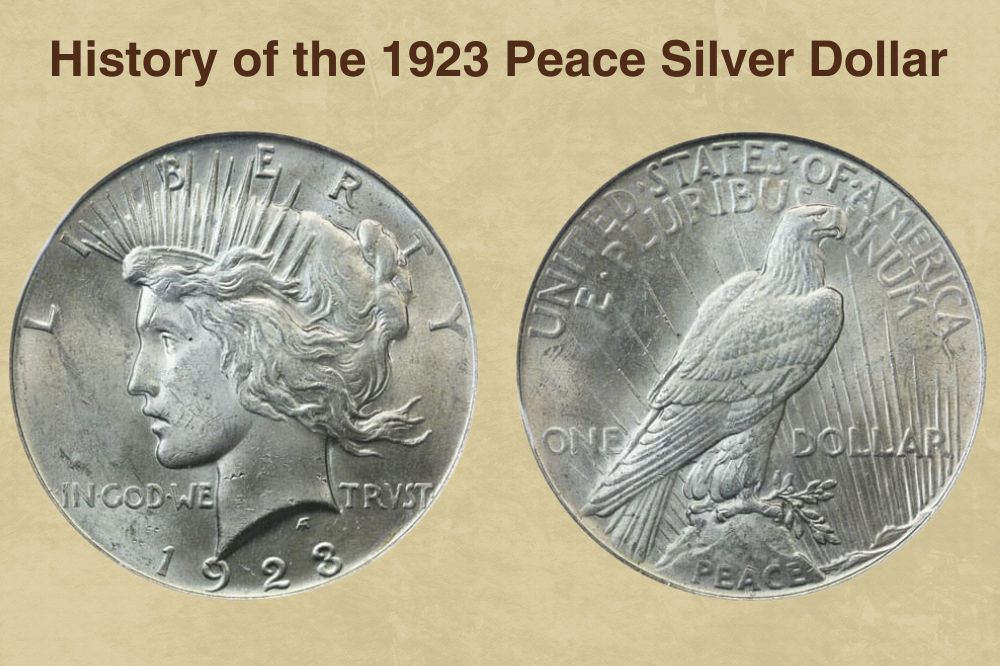
The US Mint struck Peace silver dollars from 1921 to 1935 and started producing them again in 2021. It was a symbol of the new world after WWI and a way of commemorating the return to normal life.
1923 Peace silver dollar Types |
||
| Location | Year | Minted |
| Philadelphia | 1923 No Mint mark silver dollar | 30,800,000 |
| San Francisco | 1923 S silver dollar | 19,020,000 |
| Denver | 1923 D silver dollar | 6,811,000 |
| Total | / | 56,631,000 |
Even though the Italian-American sculptor de Francisci was young and inexperienced in coin design, he did an excellent job. However, he needed to change the first design version with an eagle on a broken sword because Americans thought something like that was a sign of defeat.
Also read: 12 Most Valuable One-Dollar Coin Worth Money
Features of the 1923 Peace Silver Dollar
Engraver Anthony de Francisci created the Peace dollar, a beautiful American coin with atypical destiny. The US Mint produced them from 1921 to 1928 and continued minting from 1934 to 1935 after a five-year break. Finally, this piece appeared again in a slightly changed composition in 2021.
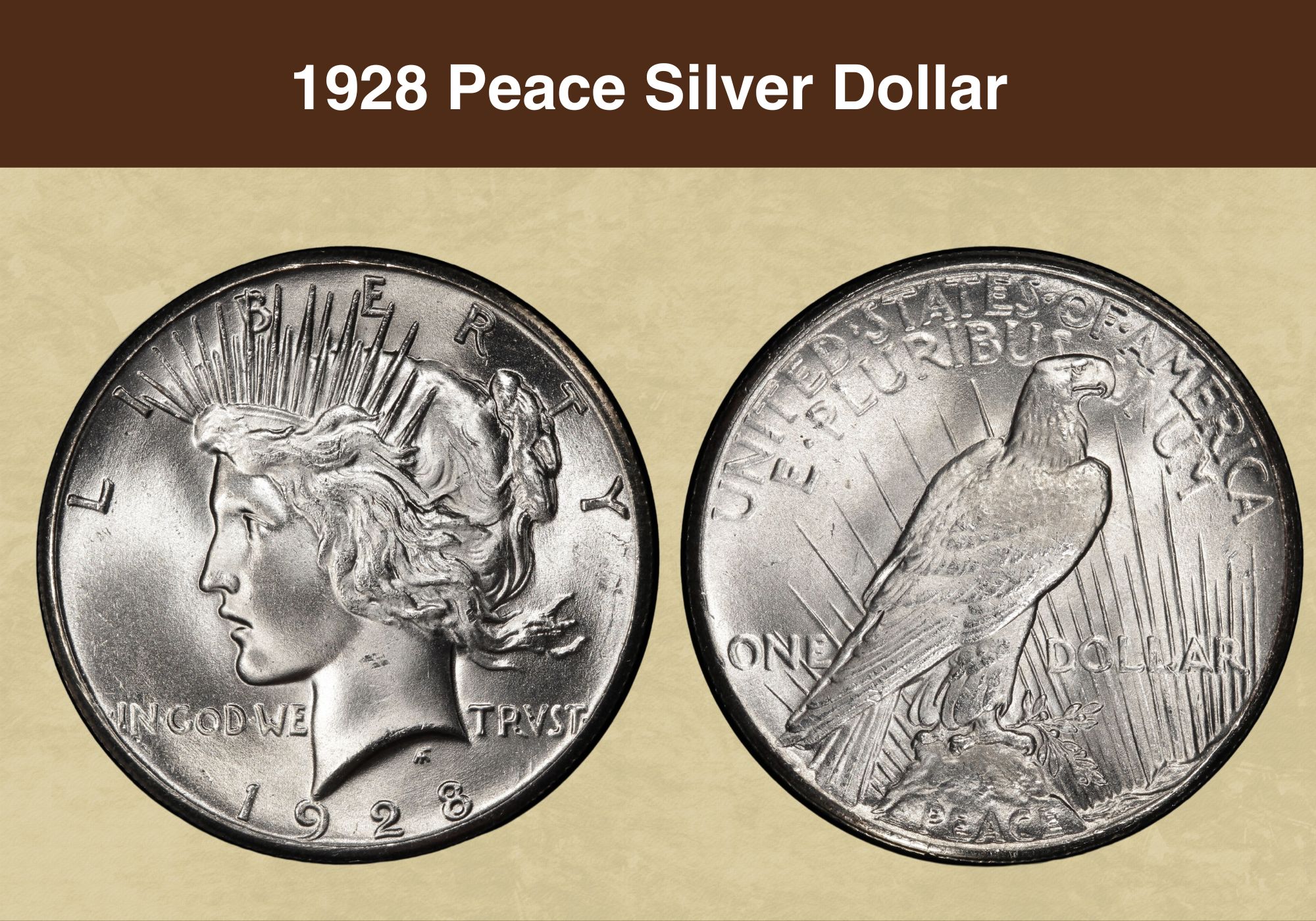
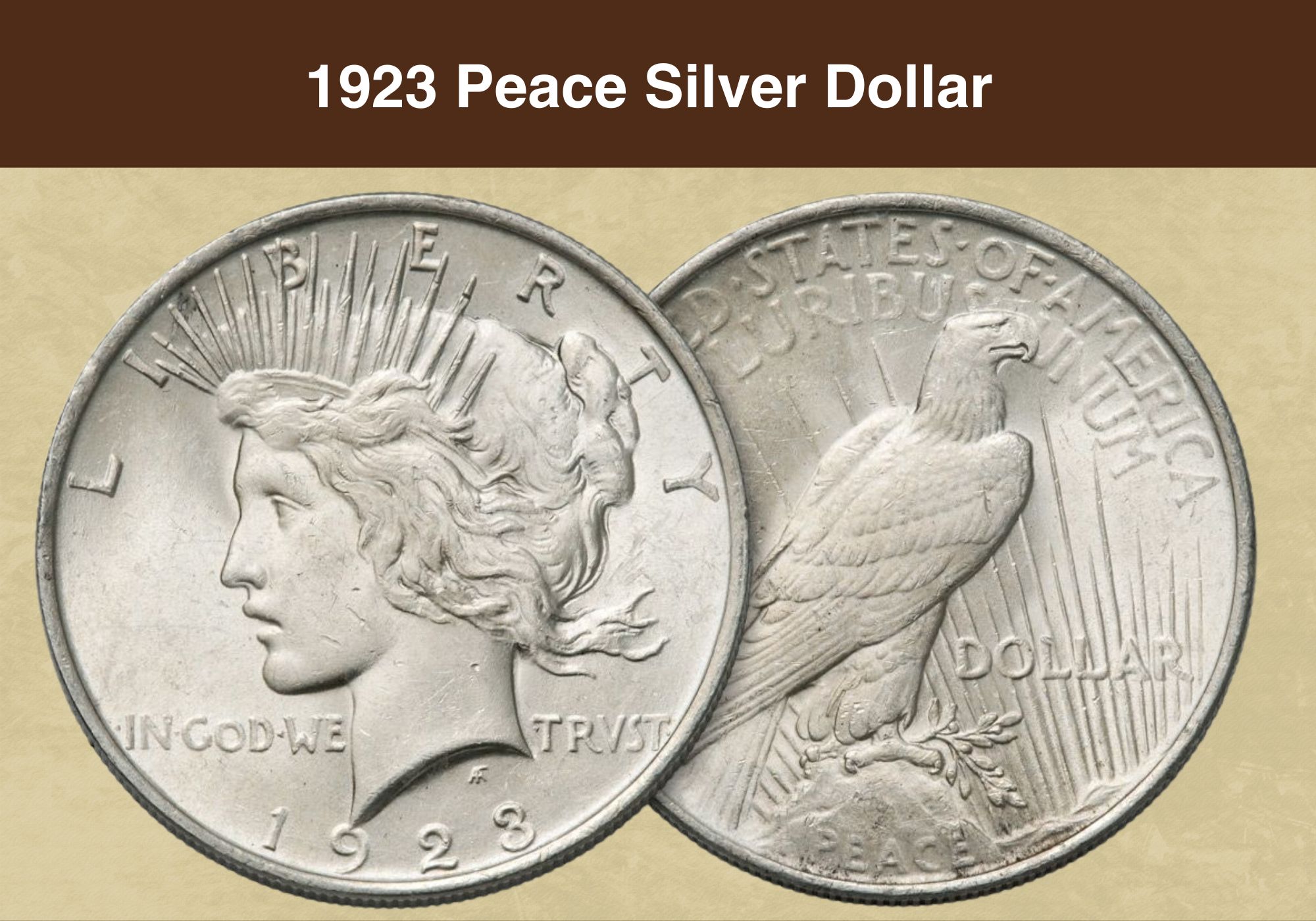
The obverse of the 1923 Peace silver dollar
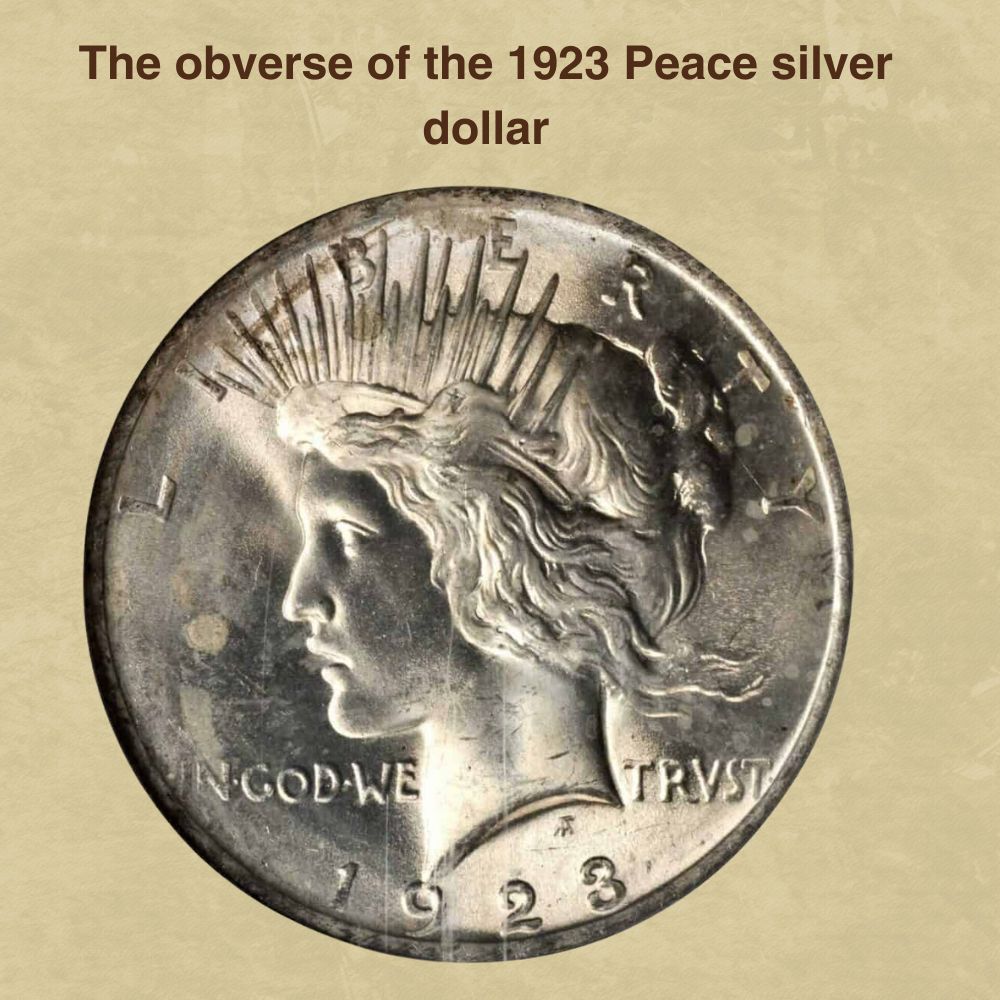
The 1923 silver dollar obverse is recognizable after Miss Liberty, that wears a crown with radiating sun rays over hair tied in a bun. Designer Anthony de Francisci based her profile on his wife, Teresa de Francisci.
Behind the rays is the word LIBERTY, while the IN GOD·WE TRVST is on the left and right sides of Liberty’s neck. You can also see the minting year at the coin base and the artist’s initials, AF, at the neck truncation.
The reverse of the 1923 Peace silver dollar
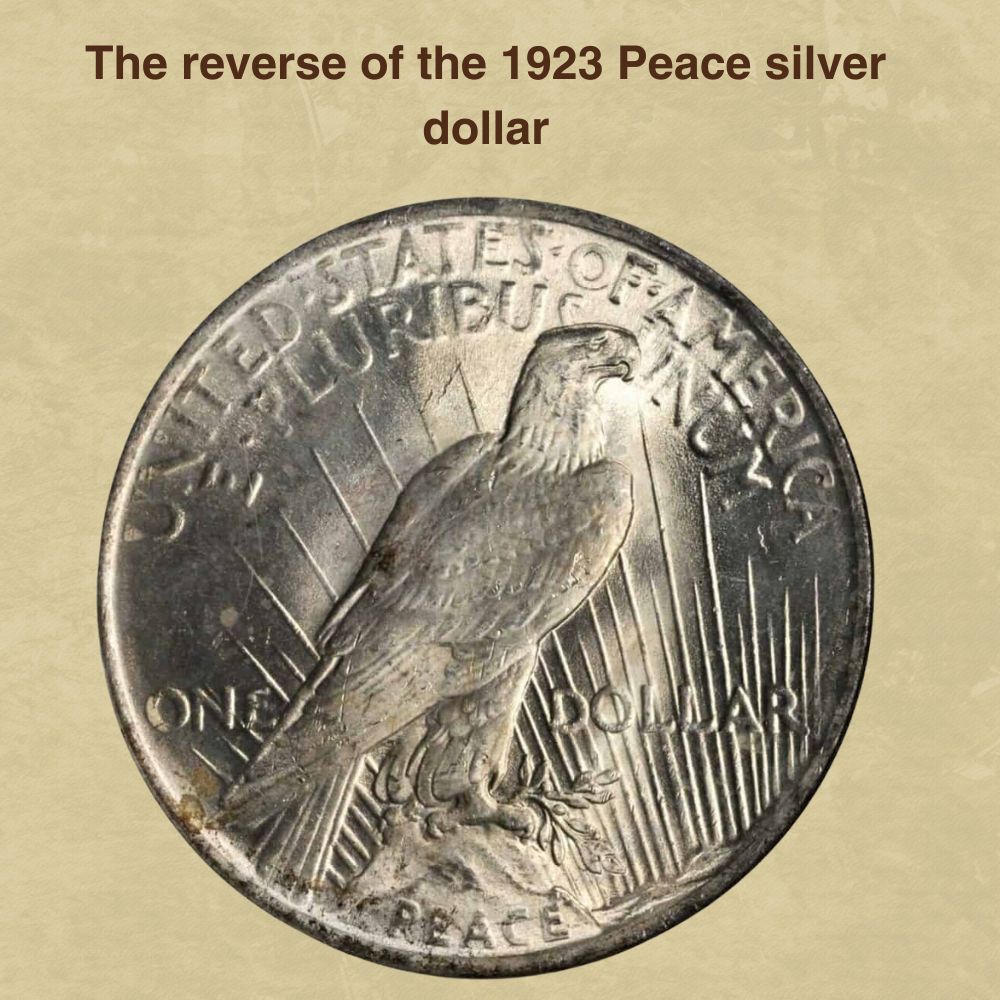
The controversial reverse coin side shows a bald eagle with an olive branch in its claws. The sun’s rays spread behind a mountain peak in the background, with ONE DOLLAR in front and the word PEACE along the bottom rim.
The top coin rim is reserved for the UNITED·STATES·OF·AMERICA and E·PLURIBUS UNUM written one under another. The mint mark is struck left of the eagle’s tail.
1923 Peace silver dollar Details |
|
| Face value | One dollar ($1) |
| Shape | Round |
| Compound | Silver and copper (90%: 10%) |
| Coin thickness | 0.09449 inches (2.4 mm) |
| Coin diameter | 1.50 inches (38.1 mm) |
| Coin weight | 0.85939 troy ounces (26.73 g) |
| Silver weight | 0.77344 troy ounces (24.06 g) |
| Edge | Reeded |
Other features of the 1923 Peace silver dollar
The 1923 Peace silver dollar is a round coin made of two metals in a 90%: 10% ratio. Besides a small percentage of copper, each piece weighing 0.85939 troy ounces (26.73 g) contains 0.77344 troy ounces (24.06 g) of silver. You can measure its diameter of 1.50 inches (38.1 mm) and its thickness of 0.09449 inches (2.4 mm).
Also read: 14 Most Valuable Coins In Circulation
1923 Peace Silver Dollar Grading
The modified Sheldon grading system is a well-established way to rank coins, depending on their preservation levels. It starts with non-collectible POOR, FAIR, and ABOUT GOOD pieces in horrible condition.
On the other hand, collectible circulated pieces are those from GOOD to ABOUT UNCIRCULATED grades. Finally, collectors appreciate specimens in the MINT STATE the most, but even they differentiate from MS 60 to MS 70, depending on the degree of perfection.
| # | Grade |
|---|---|
| 1 | Basal State-1 |
| 2 | Fair |
| 3 | Very Fair |
| 4, 5, 6 | Good |
| 7, 8, 10 | Very Good |
| 12, 15 | Fine |
| 20, 30 | Very Fine |
| 40 | Extremely Fine |
| 50 | About Uncirculated |
| 60 | Mint State |
| 65 | Mint State |
| 70 | Mint State |
Please check our grading guides to know your coin scale, It’s the necessary step to know the exact value of your coin.
Check out now: How to Grade Peace Silver Dollar?
1923 Peace Silver Dollar Value Guides
Since the US Mint didn’t produce proofs in 1923, all 56,631,000 Peace silver dollars minted this year were from the regular strike. Three mints struck these beautiful coins, but the one in Philadelphia produced most pieces.
1923 No Mint mark Peace silver dollar Value
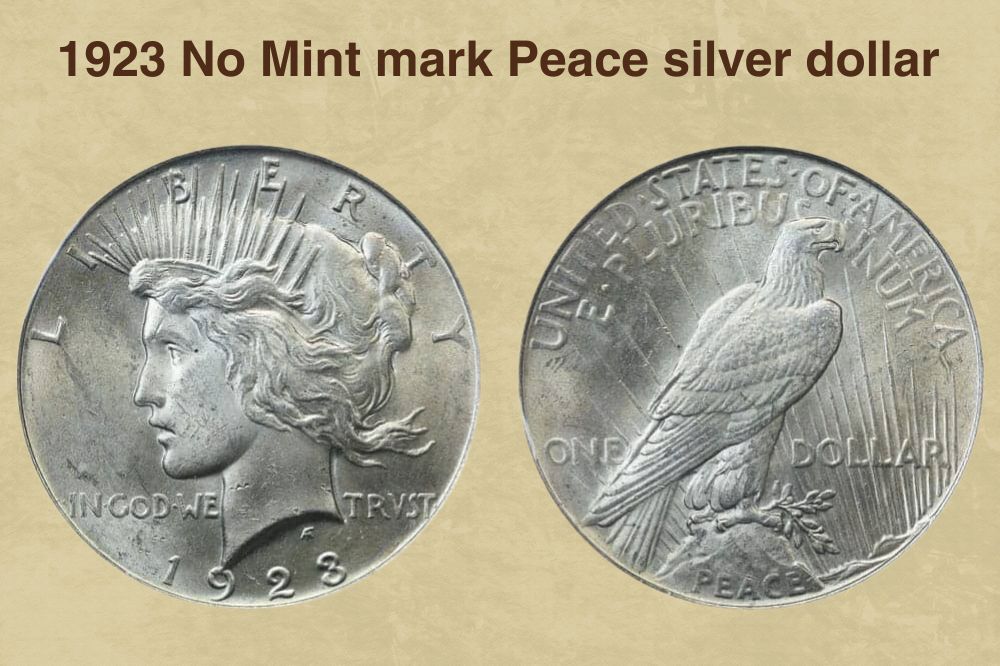
Even the 1923 Peace silver dollars in the worst condition are worth some money because of the silver content. Collectible circulating coins can bring you more cash, so you can count on $32 to $50 per piece, depending on their preservation level. On the other hand, specimens in the mint state can be pricey, with average prices like:
- MS 60 dollars – $45 to $52
- MS 61 dollars – $50 to $60
- MS 62 dollars – $60 to $65
- MS 63 dollars – $70 to $80
- MS 64 dollars – $85 to $110
- MS 65 dollars – $175 to $185
- MS 66 dollars – $500 to $550
As always, silver coins with the MS 67 grade are the most pricey. Their average price is estimated at $3,750 to $5,250, but some pieces reach much higher values at auctions. For instance, one silver dollar was sold on December 16, 2021, for $39,950.
1923 D Peace silver dollar Value
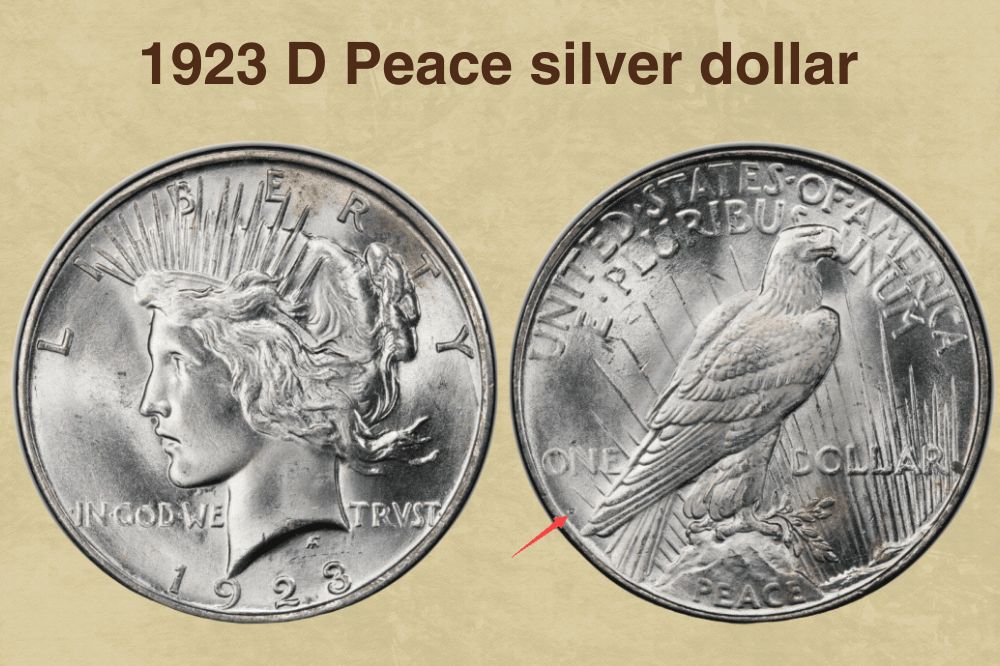
The 1923 D peace silver dollars cost virtually the same as those minted in Philadelphia, from $34 to $44. However, those in AU and better grades are more expensive. You should set aside about $46 to $105 per such piece, while those in perfect condition come in the price range like:
- MS 60 dollars – $80 to $120
- MS 61 dollars – $100 to $150
- MS 62 dollars – $150 to $165
- MS 63 dollars – $225 to $325
- MS 64 dollars – $425 to $525
- MS 65 dollars – $1,100 to $1,200
Coins in higher grades are even more expensive. It is possible to find 1923 MS 66 Piece silver dollars for $4,000 to $5,250, while collectors are prepared to set aside $110,000 to $132,000 for those ranking MS 67. The absolute auction record won the coin from Denver, paid $120,000 on August 22, 2021.
1923 S Peace silver dollar Value
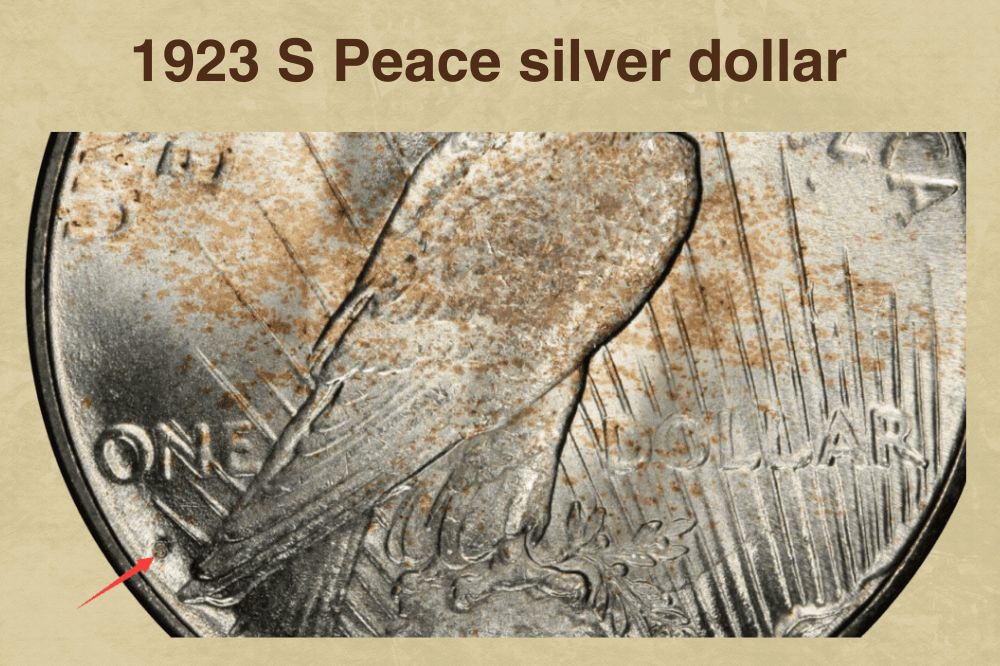
The first-class 1923 S peace silver dollars from this set are worth the most. However, those in circulated conditions typically reach only $32 to $54, similar to pieces from other mints. On the other hand, specimens in the highest grades are valuable, so you can expect prices like:
- $60 for MS 60 dollars
- $75 for MS 61 dollars
- $100 for MS 62 dollars
- $140 for MS 63 dollars
- $375 for MS 64 dollars
- $3,000 for MS 65 dollars
These silver dollars are an excellent example of how significant the difference in price range can be. While a coin in MS 60 costs only $60, the one ranking in MS 66 quickly reaches $50,000 to $70,000 at auctions. An estimated value of MS 67-graded silver dollars minted in 1923 is an unbelievable $90,000 to $108,000.
However, such quality coins are scarce and rarely available at auctions. The 1923 S MS 66 Peace silver dollar was the most expensive specimen offered this way. One collector purchased it for $49,200 in 2021.
Also read: Top 10 Most Valuable Morgan Silver Dollar Worth Money
Rare 1923 Peace Silver Dollar Error List
The 1923 Peace dollar set is full of errors. Some of the most common and valuable include:
Double die
The slightly shifted die can result in this error type during minting, leaving doubling on the design. You can notice it on the eagle’s head, feathers, or olive branch on the reverse and the word LIBERTY and radiate crown on the obverse. Such coins are worth $100 to $1,300.
Die adjustment strike
Peace dollars struck with little pressure are die trials used to adjust the die for a perfect strike on following planchets. Since they were never released into circulation, those accidentally saved are highly collectible. You can find 1923 P and S Peace dollars without clearly recognizable details for $2,000 to $3,000.
Planchet lamination obverse
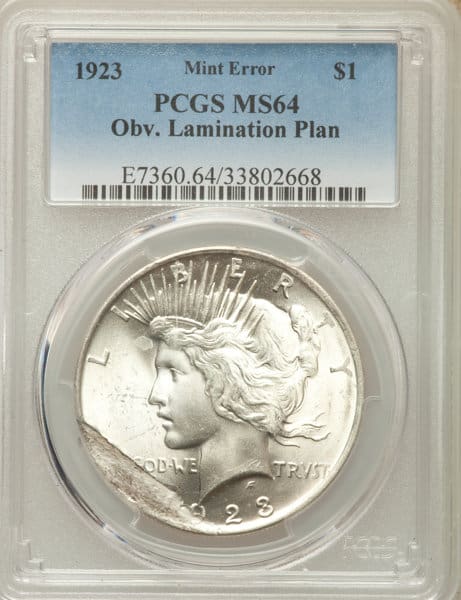
This error appears when the planchet surface cracks during minting, resulting in a flaking effect. Such Piece dollars cost about $100, even in lower grades.
Whisker on the Liberty’s face (cheek or jaw)
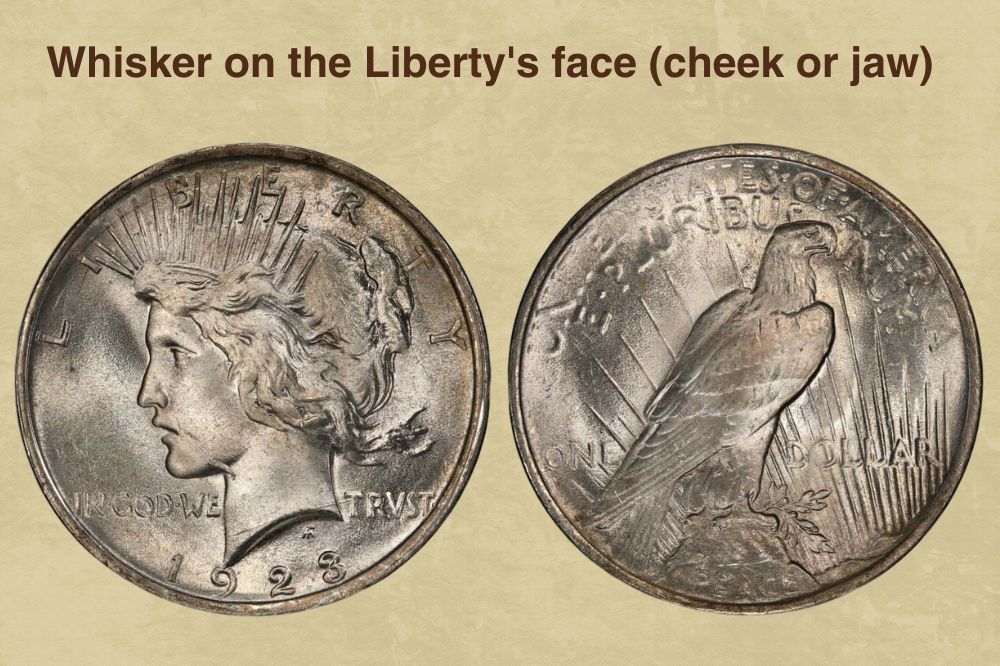
Old dies often crack over time and transfer their imperfections onto coins. They imply a recognizable whisker down Miss Liberty’s jawline or cheek. Such coins usually cost $90, but high-quality ones can reach $2,000.
Broken wing
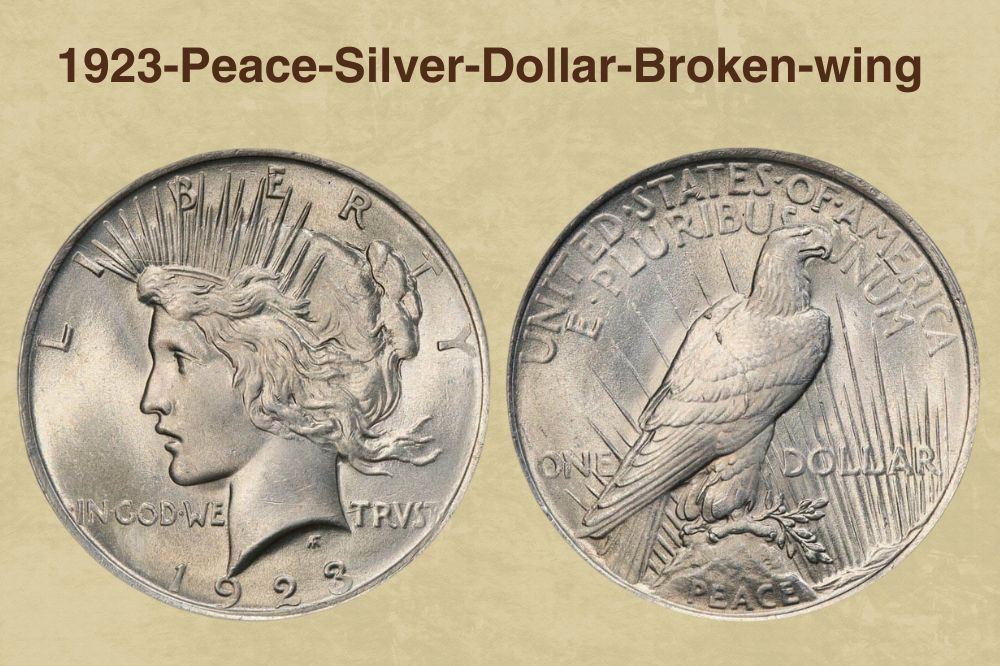
Deteriorating dies sometimes left cracks on the eagle wings, increasing coins’ value to $300 or even $1,000 for highly-graded pieces.
Extra hair
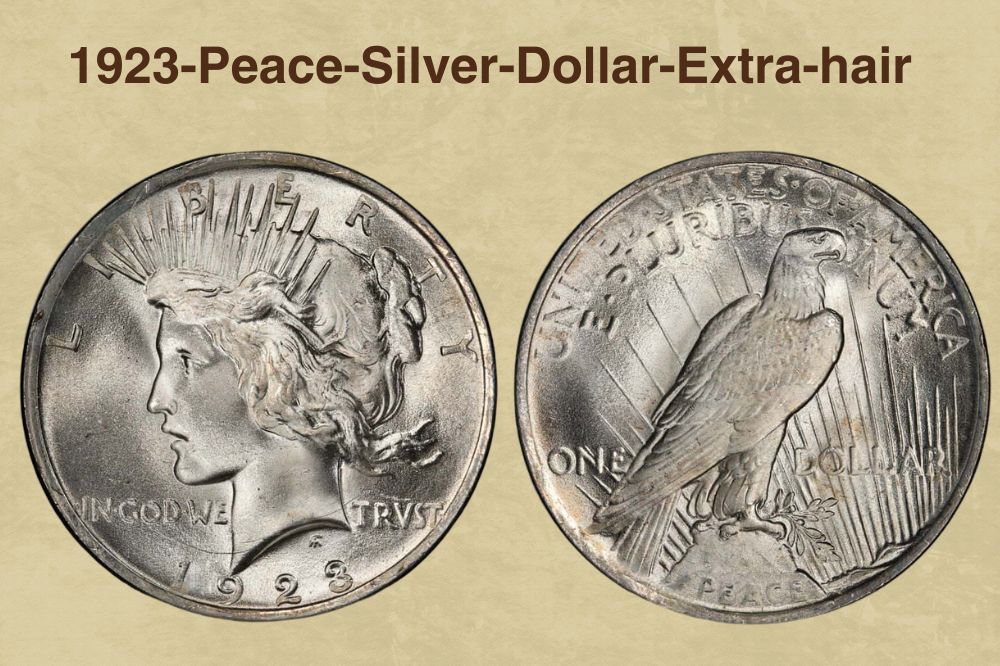
Several additional strands in Liberty’s hair can bring you approximately $100 to $400, depending on the coin quality.
Tail on O in DOLLAR
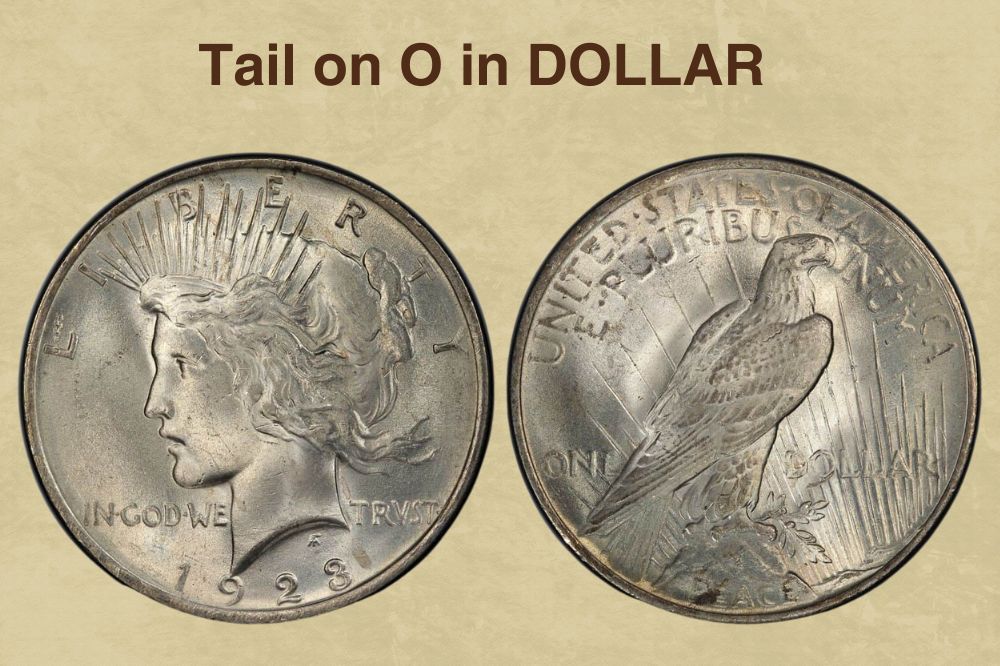
This die error appeared in thousands of flawed Peace dollars before anyone noticed it. Depending on the coin’s preservation level, this VAM variety sells at $150 to $1,500.
75-degree rotated reverse
When the planchet shifts during minting, the obverse and reverse don’t match to some degree. Drastic shifts increase these error coins’ value, so you can find those with a 75° distortion at $300 to over $750.
Where to Sell Your 1923 Peace Silver dollar ?
Now that you know the value of your coins, do you know where to sell those coins online easily? Don’t worry, I’ve compiled a list of these sites, including their introduction, pros, and cons.
Check out now: Best Places To Sell Coins Online (Pros & Cons)
FAQ about the 1923 Peace Silver Dollar
What makes 1923 Peace silver dollars rare?
The 1923 Peace silver dollars are plentiful, meaning they are not particularly rare. However, some errors can be scarce, making them collectible and expensive nowadays.
Which 1923 Peace silver dollars are worth a lot of money?
- 1923 D MS 67 Peace silver dollar – $120,000 (August 22, 2021)
- 1923 S MS 66 Peace silver dollar – $49,200 (August 22, 2021)
- 1923 MS 67+ Peace silver dollar – $39,950 (December 16, 2021)
- 1923 MS 67+ VAM Peace silver dollar (extra hair) – $33,600 (August 22, 2021)
- 1923 MS 64 VAM Peace silver dollar (tail on O) – $5,175 (April 28, 2010)
- 1923 MS 64 VAM Peace silver dollar (doubled tiara) – $5,000 (April 12, 2019)
- 1923 MS 66 VAM Peace silver dollar (extra hair) – $2,233 (September 7, 2016)
- 1923 MS 66+ VAM Peace silver dollar (whisker jaw) – $1,998 (April 27, 2016)
- 1923 S MS63 VAM Peace silver dollar – $1,732 (September 27, 2022)
- 1923 D XF 40 GSA Hoard Peace silver dollar – $1,320 (March 1, 2023)
- 1923 MS 63 VAM Peace silver dollar (broken wing) – $1,528 (December 5, 2013)
- 1923 MS 65 VAM Peace silver dollar (whisker cheek) – $1,500 (January 30, 2019)
- 1923 MS 65 VAM Peace silver dollar (bar wing) – $1,410 (August 16, 2015)
- 1923 S MS64 VAM Peace silver dollar (pitted reverse) – $1,275 (August 31, 2011)
- 1923 D MS 63 VAM Peace silver dollar (doubled eagle head) – $1,200 (April 23, 2019)
- 1923 D MS 65 VAM Peace silver dollar – $875 (November 24, 2018)
- 1923 MS 65 VAM Peace silver dollar (extra hair) – $599 (December 5, 2021)
- 1923 MS 65 VAM Peace silver dollar (tiara die gouge) – $500 (August 6, 2018)
- 1923 D MS 63 VAM Peace silver dollar (extra hair) – $456 (September 19, 2022)
- 1923 D MS 62 VAM Peace silver dollar (ponytail) – $456 (September 19, 2022)
- 1923 MS 66 VAM Peace silver dollar (extra hair) – $432 (July 26, 2019)
- 1923 MS 65 VAM Peace silver dollar (chin bar) – $425 (August 4, 2019)
- 1923 MS 64 VAM Peace silver dollar (DDR) – $353 (July 12, 2016)
- 1923 MS 63+ VAM Peace silver dollar – $300 (December 9, 2021)
How much are the 1923 Peace silver dollars (No Mint mark) worth?
The 1923 Peace silver dollars without the mint mark are worth at least $32 to $50 in collectible condition. However, those in the mint state are more expensive, and you should set aside $52 to $500 to get one. Specimens with the MS 67 grade have the highest estimated prices, approximately $5,250.
What are the most pricey Peace silver dollars?
- 1922 PR 67 Peace dollar with high relief and matte finish – $458,250
- 1922 PR 67 Peace dollar with modified high relief – $381,875
- 1922 PR 65 Peace dollar with low relief and matte finish – $192,000
- 1927 D MS 66+ Peace dollar – $176,250
- 1921 PR 67 Peace dollar with satin finish – $150,000
- 1921 MS 67 Peace dollar – $132,000
- 1925 S MS 65+ Peace dollar – $132,000