Coin Value Contents Table
- 1966 Half Dollar Value
- History of the 1966 Half Dollar
- 1966 Kennedy Half Dollar Types
- The 1966 Kennedy Half Dollar Features
- 1966 Kennedy Half Dollar Grading
- 1966 Half Dollar Value Guides
- 1966 Kennedy Half Dollar Value
- 1966 SMS Kennedy Half Dollar Value
- Rare 1966 Kennedy Half Dollar Error List
- Where to Sell Your 1966 Kennedy Half Dollar ?
- FAQ about the 1966 Kennedy Half Dollar
In 1966, the mint in Philadelphia struck two types of coins, regular and special strikes. Standard pieces went into circulation, while coins from the Special Mint Set were reserved for collectors. Their quality was better than standard, but never at the level of proof halves.
Interestingly, all coins in the set are without the mint mark, despite being minted in two different mints. Even though the 1966 Half Dollar value is always higher than their denomination, it is rarely surprisingly high. Only extra scarce and preserved specimens can reach unexpectedly high prices at auctions. Let’s see.
1966 Half Dollar Value |
|
| Condition | 1966 half-dollar |
| Good | $4.15 |
| Very good | $4.15 |
| Fine | $4.15 |
| Very fine | $4.15 |
| Extra fine | $4.15 |
| AU | $4.15 |
| MS 60 | $7 |
| MS 65 | $36 |
History of the 1966 Half Dollar
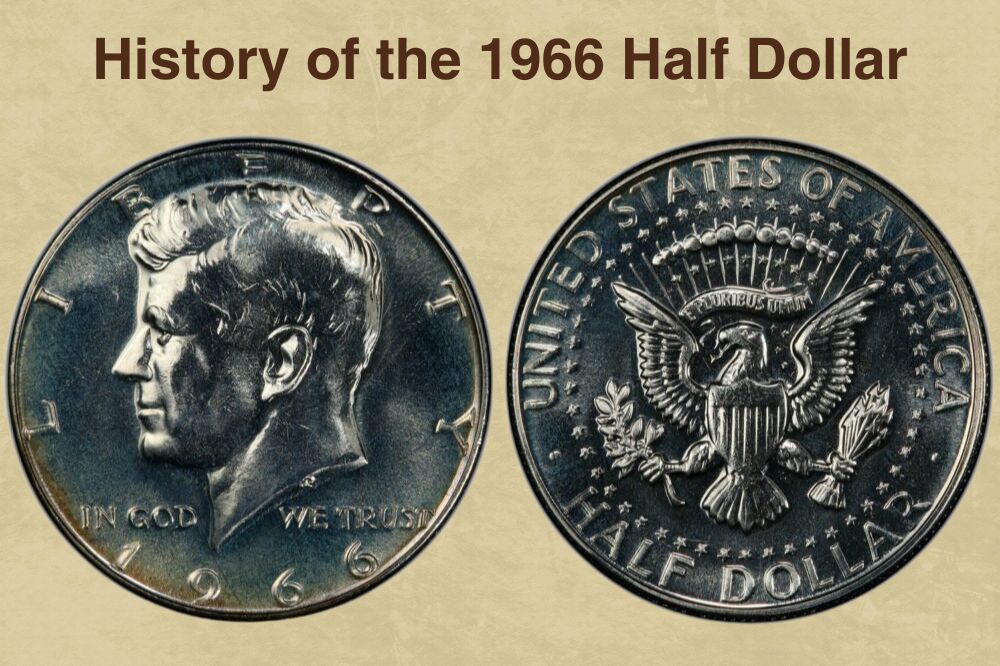
The US Mint started producing Kennedy Half Dollars in 1964 and has kept minting them until the present. The first pieces appeared a few months after President’s assassination.
After this tragedy, members of the President’s family and officials from the Treasury and Mint discussed which coin to use and details about the design. Because of a lack of time, designers modified their existing creations, and the first coins were issued in March 1964.
1966 Kennedy Half Dollar Types |
||
| Location | Year | Minted |
| Philadelphia | 1966 half-dollar | 108,984,932 |
| San Francisco | 1966 SMS half-dollar | 2,261,583 |
| Total | / | 111,246,515 |
The first Kennedy halves were made of 90% silver, but it was changed the next year because of hoarding. Americans put aside numerous coins, causing a silver shortage. Therefore, all pieces minted from 1965 to 1970 contained 40% of precious metal, including those from 1966.
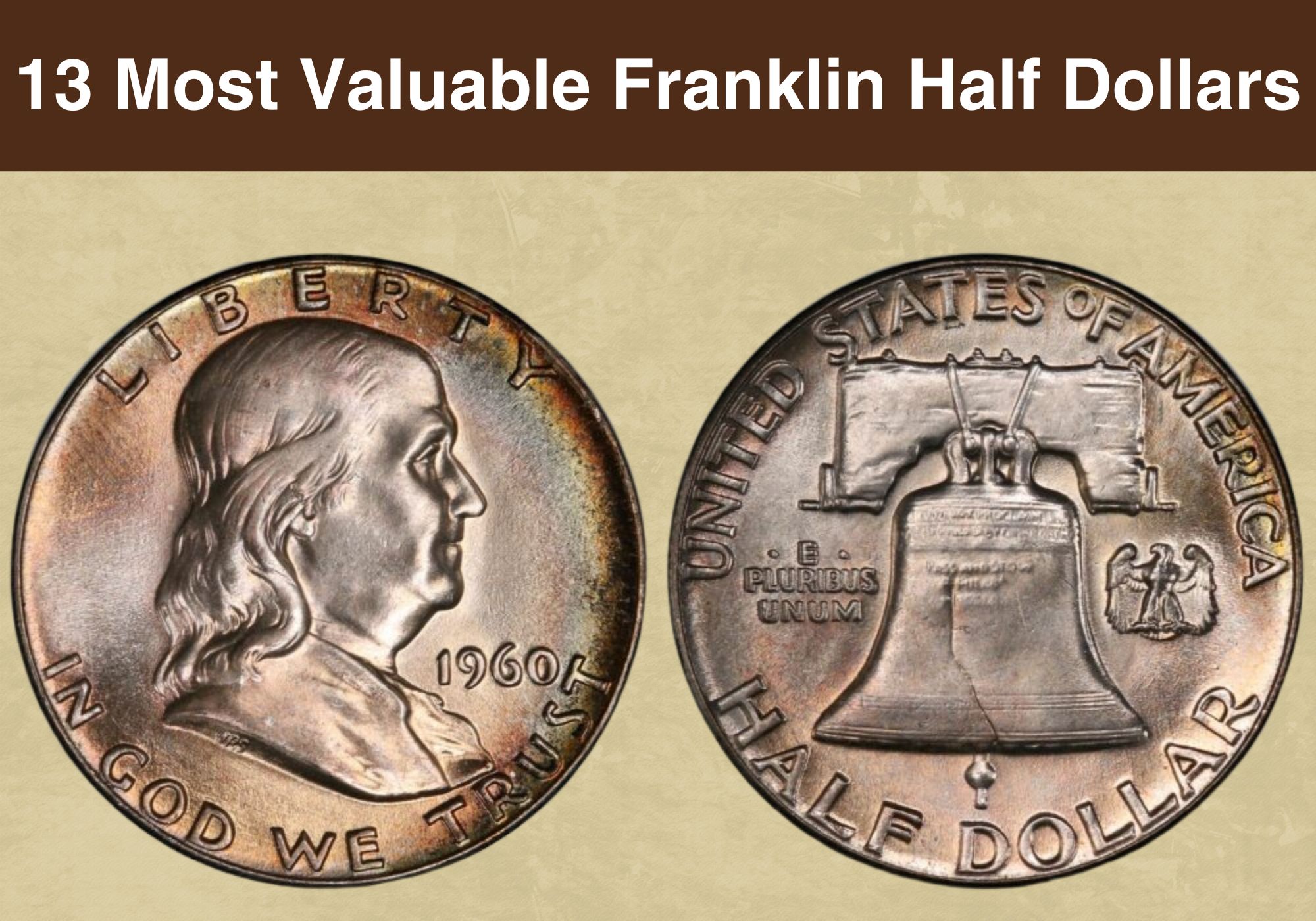
Also read: 13 Most Valuable Franklin Half Dollars Worth Money
The 1966 Kennedy Half Dollar Features
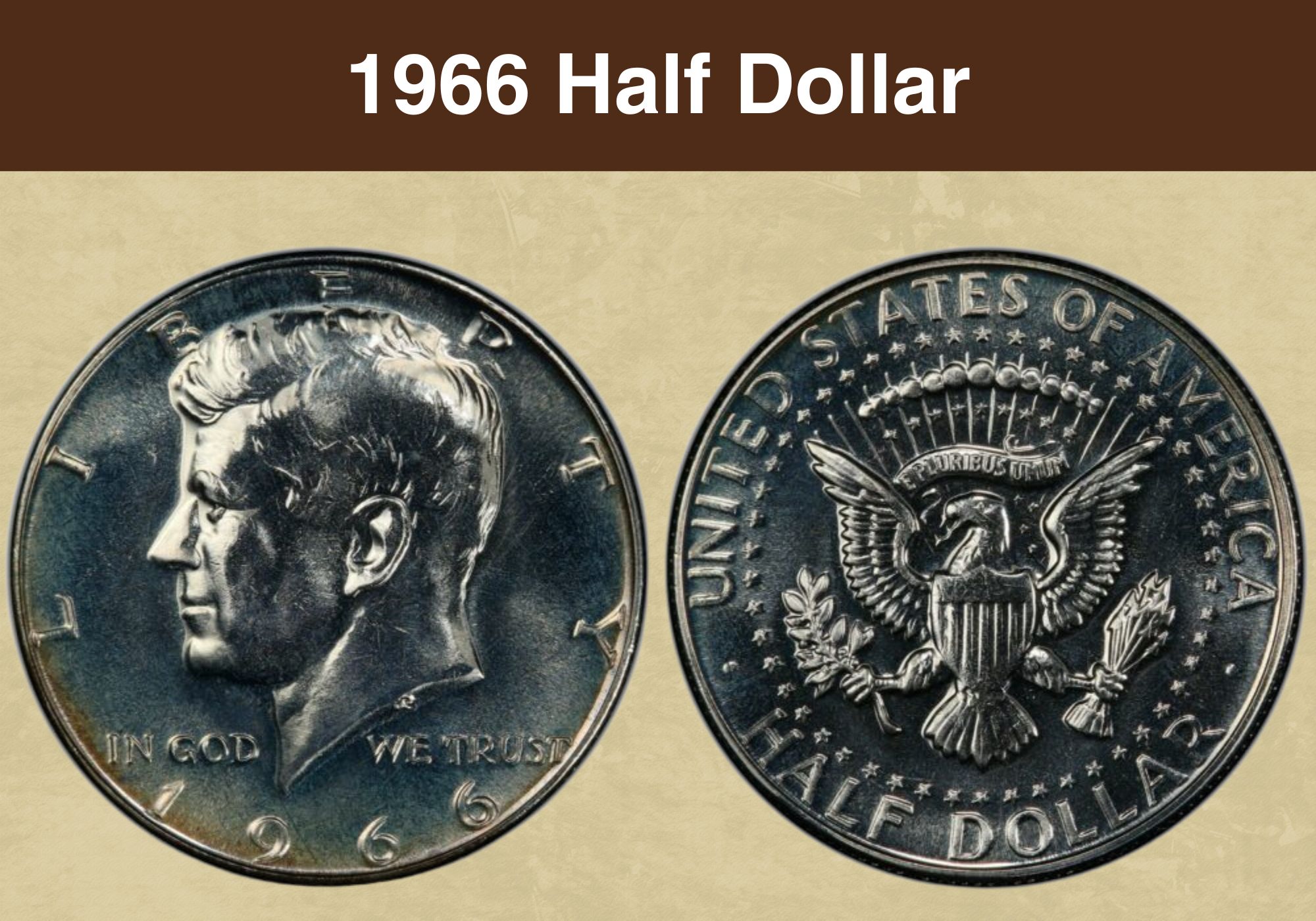
Two engravers were responsible for the 1966 Kennedy Half Dollar design. Gilroy Roberts created the obverse, so you can see his initials on the neck’s truncation. Frank Gasparro was responsible for the reverse, and he added his initials between the eagle’s leg and tail feathers on the right coin side.
The Obverse the 1966 Kennedy Half Dollar
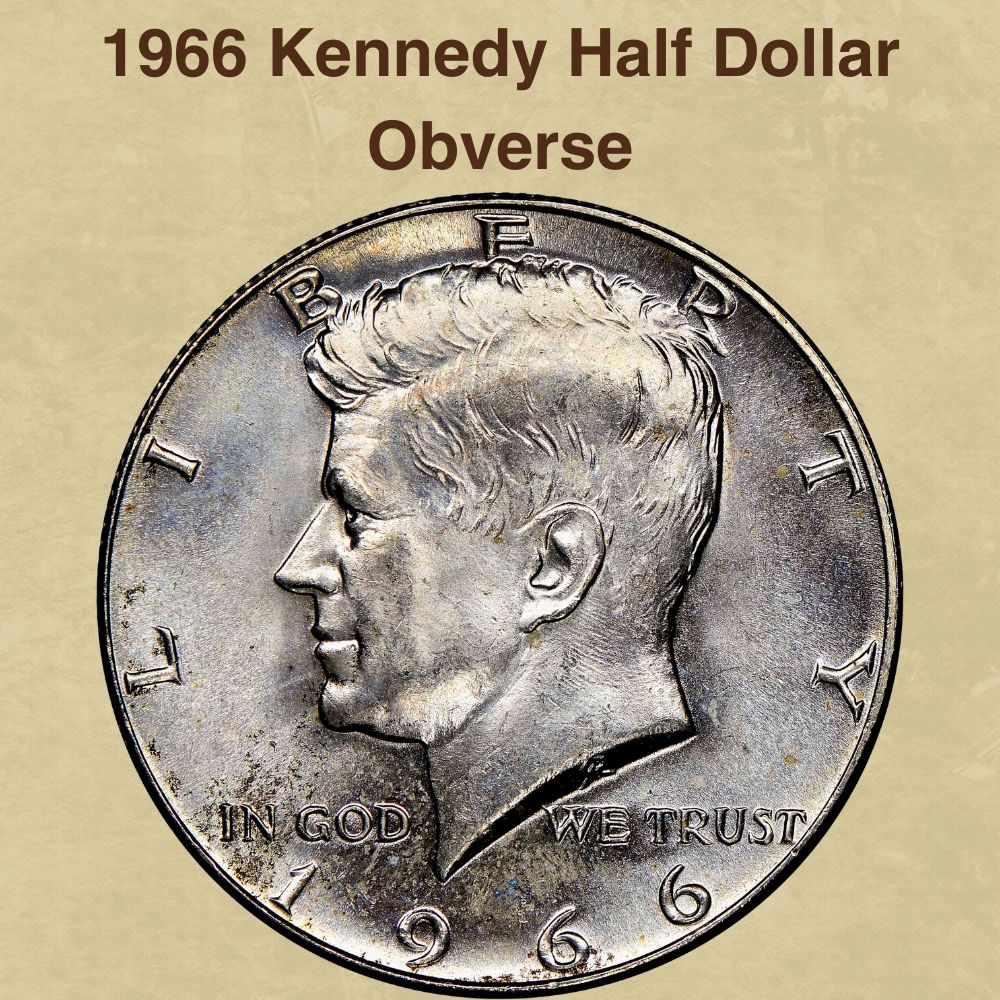
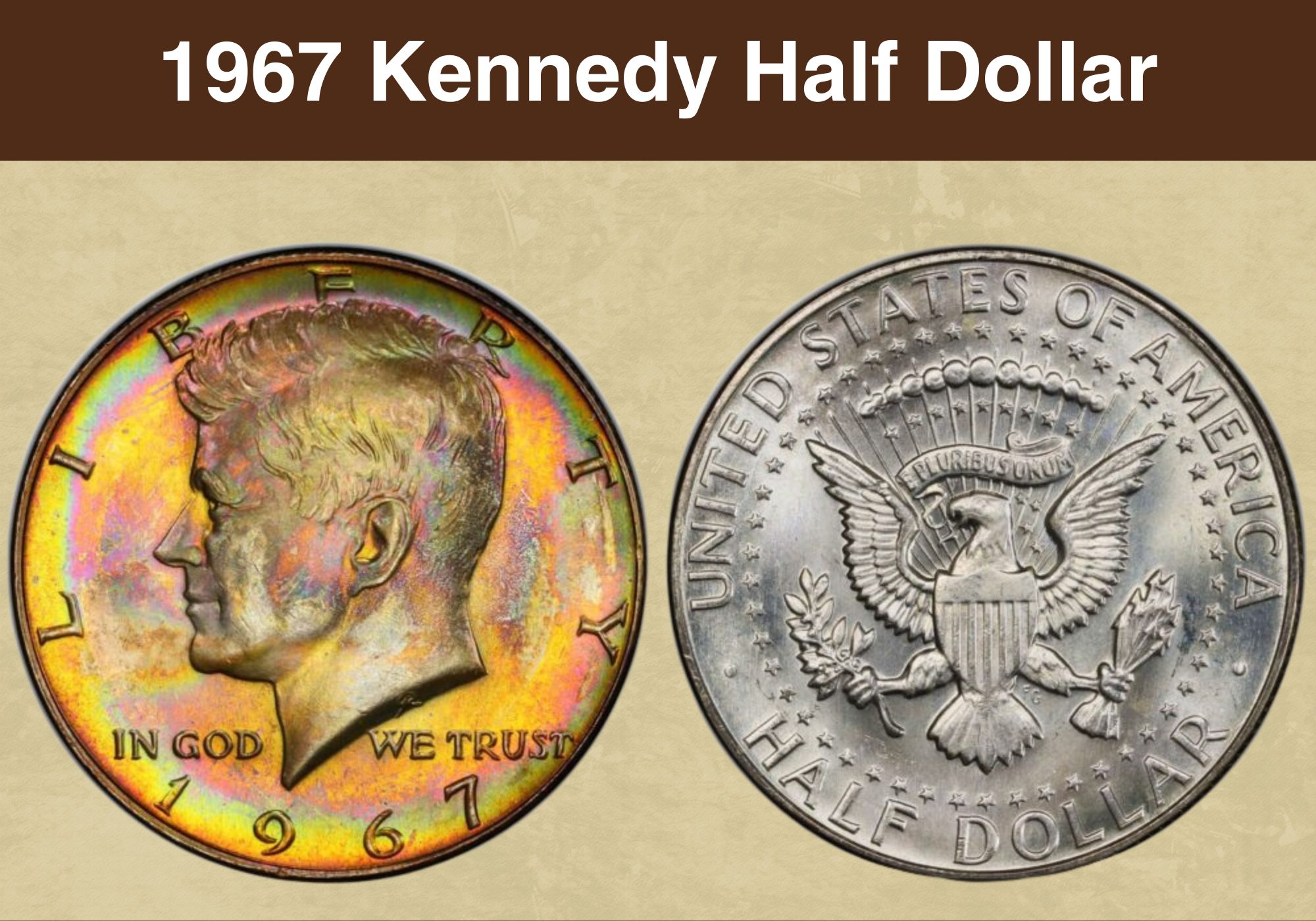
Besides John Fitzgerald Kennedy’s profile, this humble coin contains IN GOD – WE TRUST inscription divided into two parts. Above President’s head is LIBERTY, struck behind strands of his hair. The bottom line is reserved for the date, which is 1966 in this case.
The reverse of the 1966 Kennedy Half Dollar
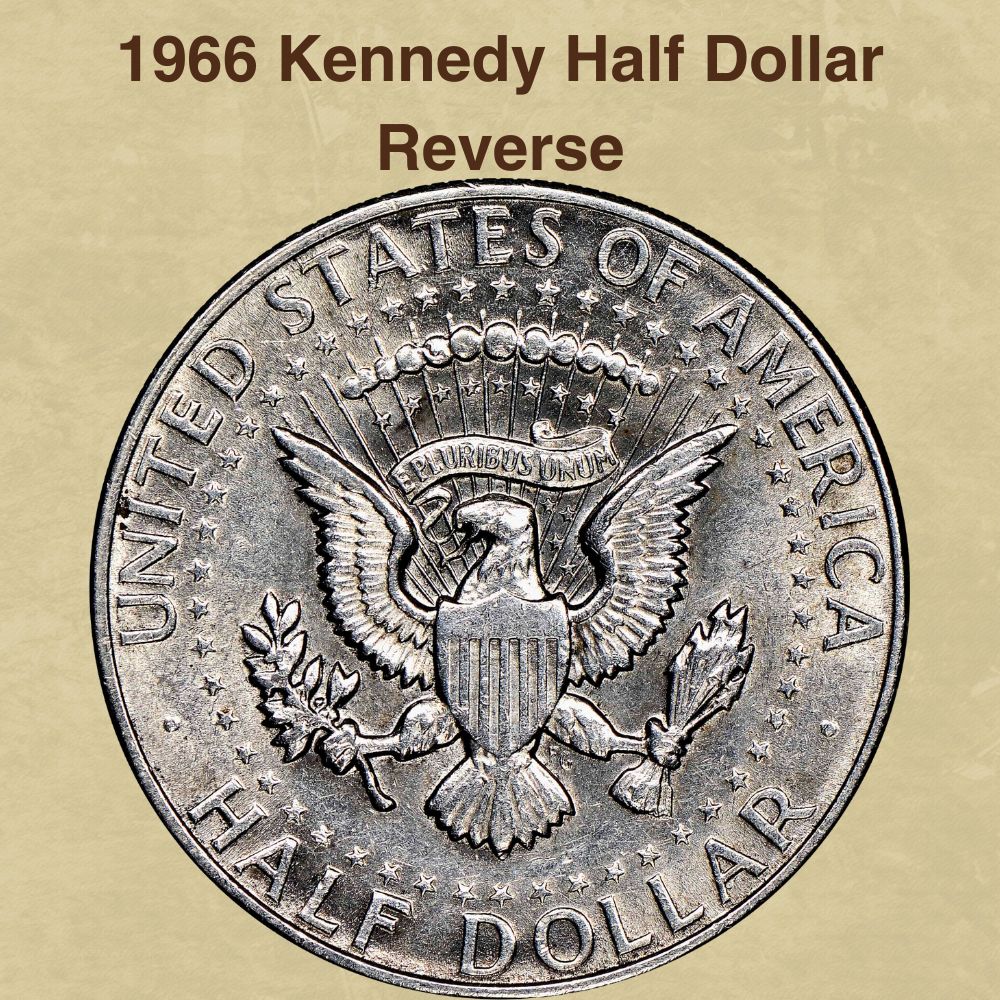
The intricate reverse of the 1966 Kennedy Half Dollar shows a bald eagle in the center with the President’s Coat of Arms attached to its chest. You can see an olive branch and arrows in the eagle’s talons, while a ribbon with a Latin motto is in its beak.
The ring of 52 stars surrounds the centrally positioned composition, while the UNITED STATES OF AMERICA and HALF DOLLAR inscriptions are stretched along its outer side. Even though all these coins came from Philadelphia and San Francisco, they came without the mint mark regularly positioned to the left of the olive twig.
1966 Kennedy Half Dollar Details |
|
| Face value | Fifty cents ($0.50) |
| Shape | Round |
| Compound | 40% silver – 60% copper |
| Silver weight | 0.1479 troy ounces (4.60 g) |
| Coin thickness | 0.08464 inches (2.15 mm) |
| Coin weight | 0.3697 troy ounces (11.50 g) |
| Coin diameter | 1.20472 inches (30.61 mm) |
| Edge | Reeded (150 Reeds) |
Other features of the 1966 Kennedy Half Dollar
The 1966 Kennedy Half Dollar is a silver-clad coin with 150 reeds along the edge, necessary to save them from scraping off. That way, each piece has a precisely measured diameter of 1.20472 inches (30.61 mm) without variations.
The reeded edge also keeps the coins’ weight to 0.3697 troy ounces (11.50 g), so you can always count on 0.1479 troy ounces (4.60 g) of silver content. This coin’s thickness is 0.08464 inches (2.15 mm).
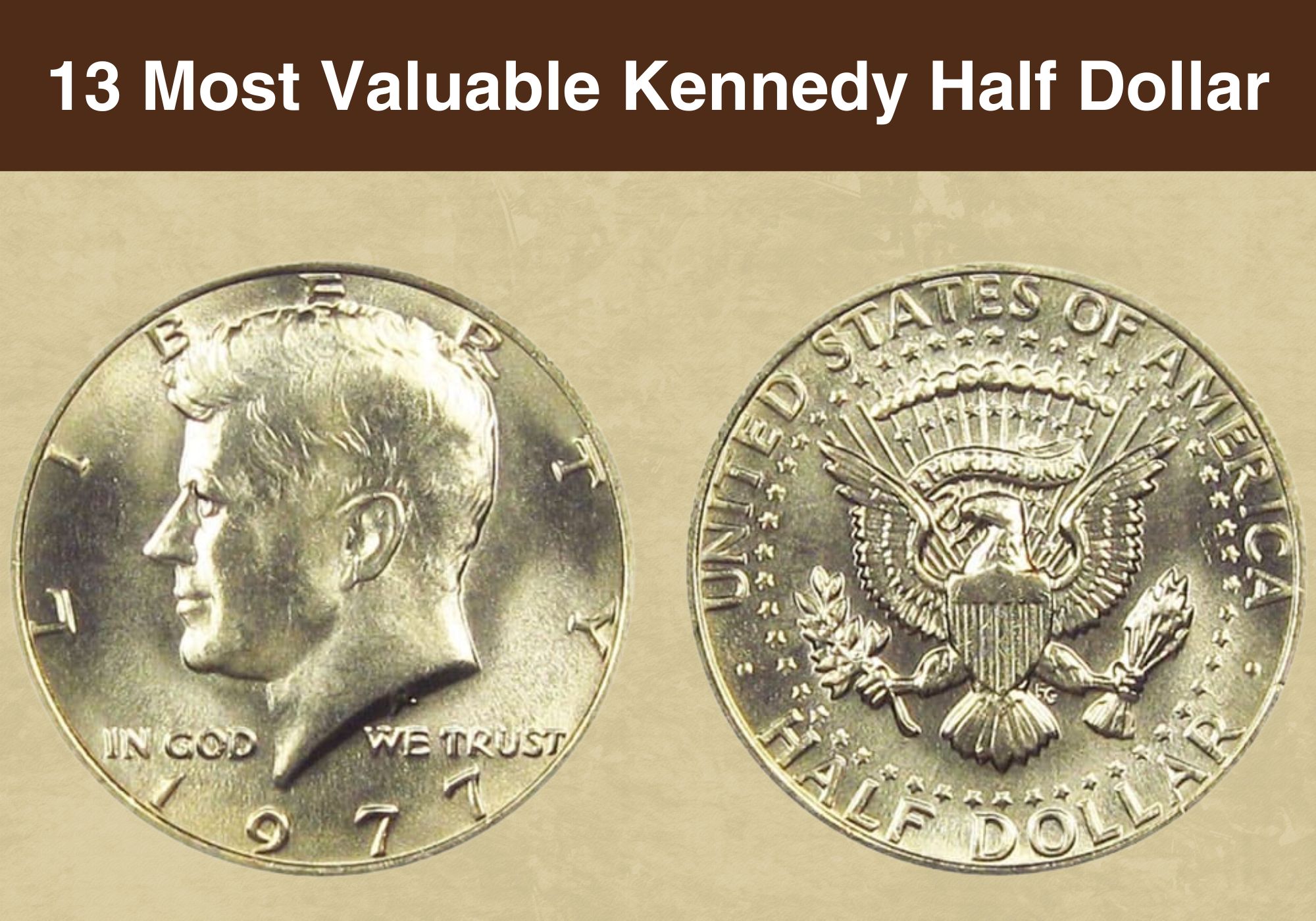
Also read: 13 Most Valuable Kennedy Half Dollar Worth Money
1966 Kennedy Half Dollar Grading
The 1966 Half Dollar grading is often effortless because most are in good uncirculated condition. Besides, they contain 40% silver, making them valuable even in the lowest non-collectible rank.
The best option to evaluate your coin value is to have it checked by a professional service, particularly when having an ideal or almost perfect piece.
1966 Half Dollar Value Guides
In 1966, two mints released Kennedy Half Dollars into circulation. Most of the 111,246,515 coins were from regular strikes and produced in Philadelphia. Instead, the San Francisco mint issued coins for Special Mint Sets intended for collectors.
The US Mint issued Special Mint Sets from 1965 to 1967. They looked better than standard coins since they were struck on higher-tonnage coin presses. However, they never reached a proof quality.
Each set contained five coins. So, you can find 1966 Kennedy halves along with Lincoln penny, Washington quarter, Roosevelt dime, and Jefferson nickel in the same box. All these coins were in uncirculated condition and never sold separately.
1966 Kennedy Half Dollar Value
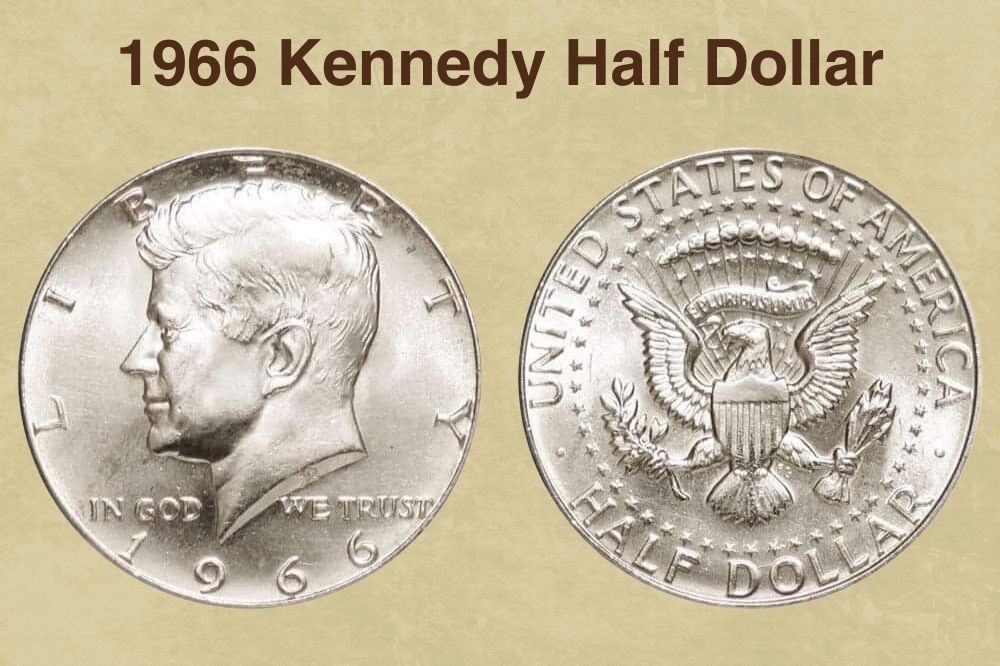
The Philadelphia mint was the one to produce the 1966 Kennedy Half Dollars from regular strikes. Precisely 108,984,932 coins without the mint mark were realized that year, but there were no proofs.
Thanks to high mintage, age, and low silver percentage, these coins are never worthless, but their value is relatively moderate. In this case, the lowest collectible half dollars are those in About Circulated condition.
They are the most affordable and typically cost $4.15. Those in the mint state are often only slightly costlier. For instance, you should pay:
- $7 for the 1966 Kennedy Half Dollar in MS 60 grade
- $8 for the 1966 Kennedy Half Dollar in MS 61 grade
- $8 for the 1966 Kennedy Half Dollar in MS 62 grade
- $10 for the 1966 Kennedy Half Dollar in MS 63 grade
- $26 for the 1966 Kennedy Half Dollar in MS 64 grade
- $36 for the 1966 Kennedy Half Dollar in MS 65 grade
Only highly-ranking specimens are expensive, so you can expect to get about $300 for a coin with the MS 66 grade. On the other hand, those in MS 67 are rare nowadays, and their estimated price is approximately $3,500.
Despite estimations, the auction record of $7,500 went to one 1966 MS 67+ Half Dollar. The owner got that unexpectedly high sum for their coin in 2020.
1966 SMS Kennedy Half Dollar Value
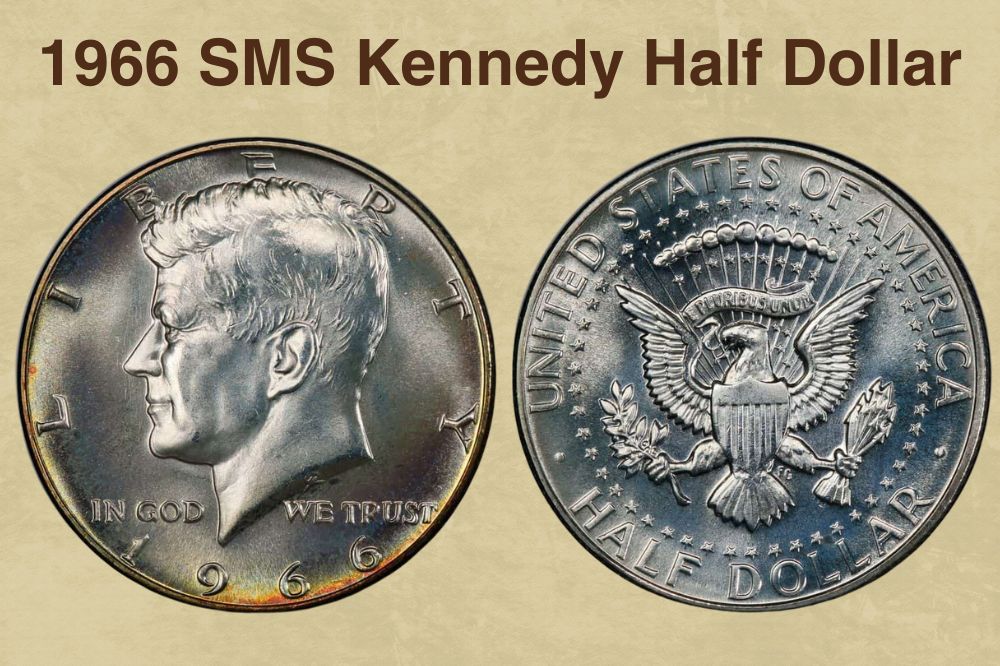
San Francisco released 2,261,583 SMS Half Dollar coins in 1966. They were intended for collectors, so you can expect to find only those in the mint state. Pieces of those in MS 60 to MS 62 grade are worth $5-$7, while the price range for MS 63- to MS 67-ranking specimens is from $10 to $60.
Coins with the MS 68 grade cost about $280, while collectors set aside $900 for the most precious MS 69-ranking coins without hesitation. In fact, one bought the 1966 SP 68 SMS Kennedy silver-clad coin for $13,200 in 2003.
Expectedly, the 1966 SMS CAM Kennedy halves cost more, so you need to set aside the following:
- $40 for a piece in MS 64 grade
- $50 for a piece in MS 65 grade
- $75 for a piece in MS 66 grade
- $150 for a piece in MS 67 grade
More precious SMS coins are those in MS 68 grade, with prices up to $250. On the other hand, the best-ranking 1966 MS 69 halves are worth $2,750. The auction record is only slightly higher since one such piece was sold at $2,880 in 2018.
The 1966 SMS DCAM Half Dollars are typically the most valuable and collectible. You can expect them to reach high prices at auctions of:
- MS 64-graded coins cost $215
- MS 65-graded coins cost $500
- MS 66-graded coins cost $550
- MS 67-graded coins cost $1,750
- MS 68-graded coins cost $7,000
The costliest specimen from this group was purchased for much more. One collector bought this deep cameo Half Dollar for $16,450 at an auction in 2016.
Also read: 11 Most Valuable Half Dollars In Circulation
Rare 1966 Kennedy Half Dollar Error List
The 1966 Kennedy halves come with a few imperfections, making these coins attractive for collectors. Let’s see.
Straight clip
This error is common among Kennedy halves from 1966 and is a result of the die that struck the blank planchet outside the strip. Such a clipped coin is worth about $85.
Missing obverse cladding
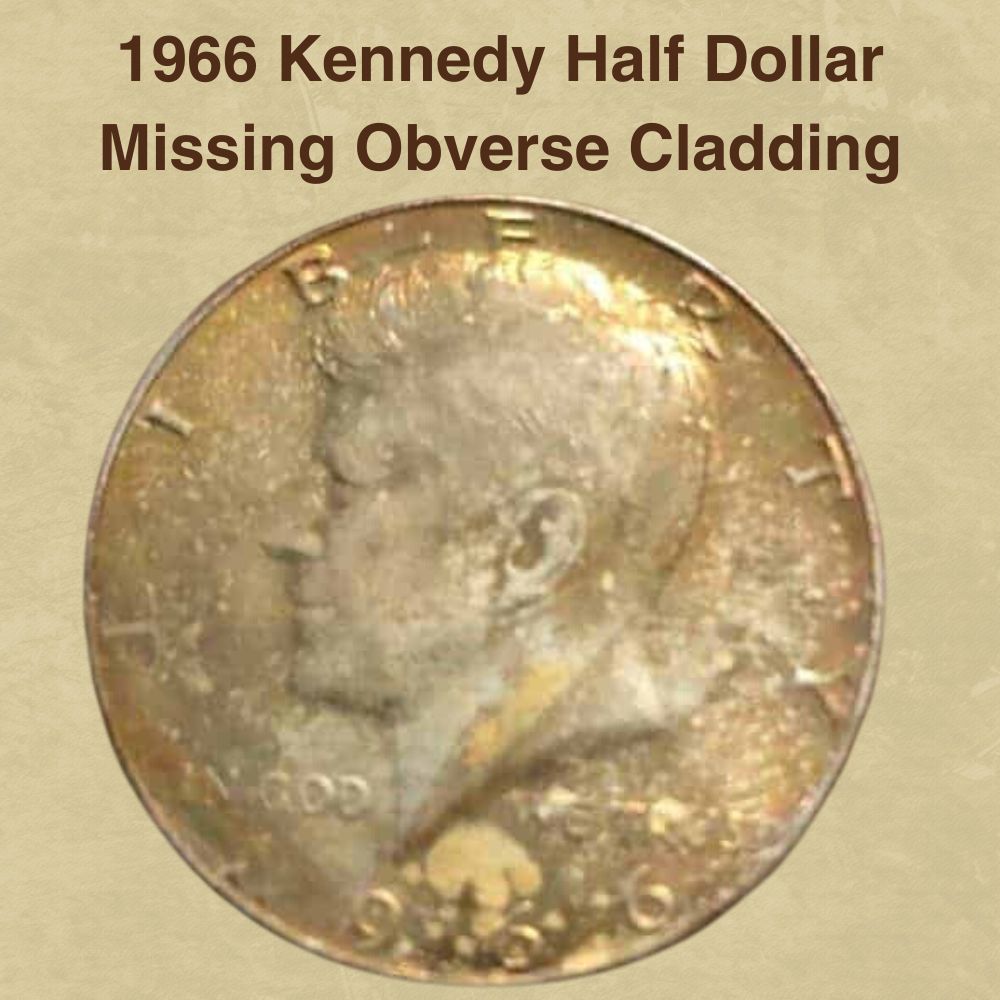
Coins without the obverse cladding look like they have the obverse and reverse of different colors. You can buy such a piece for about $120 to $125.
Missing initials
The 1966 Kennedy halves without initials are costly. The coin with the SP 67 grade and this error won the auction record of $2,820 in 2019.
Struck through
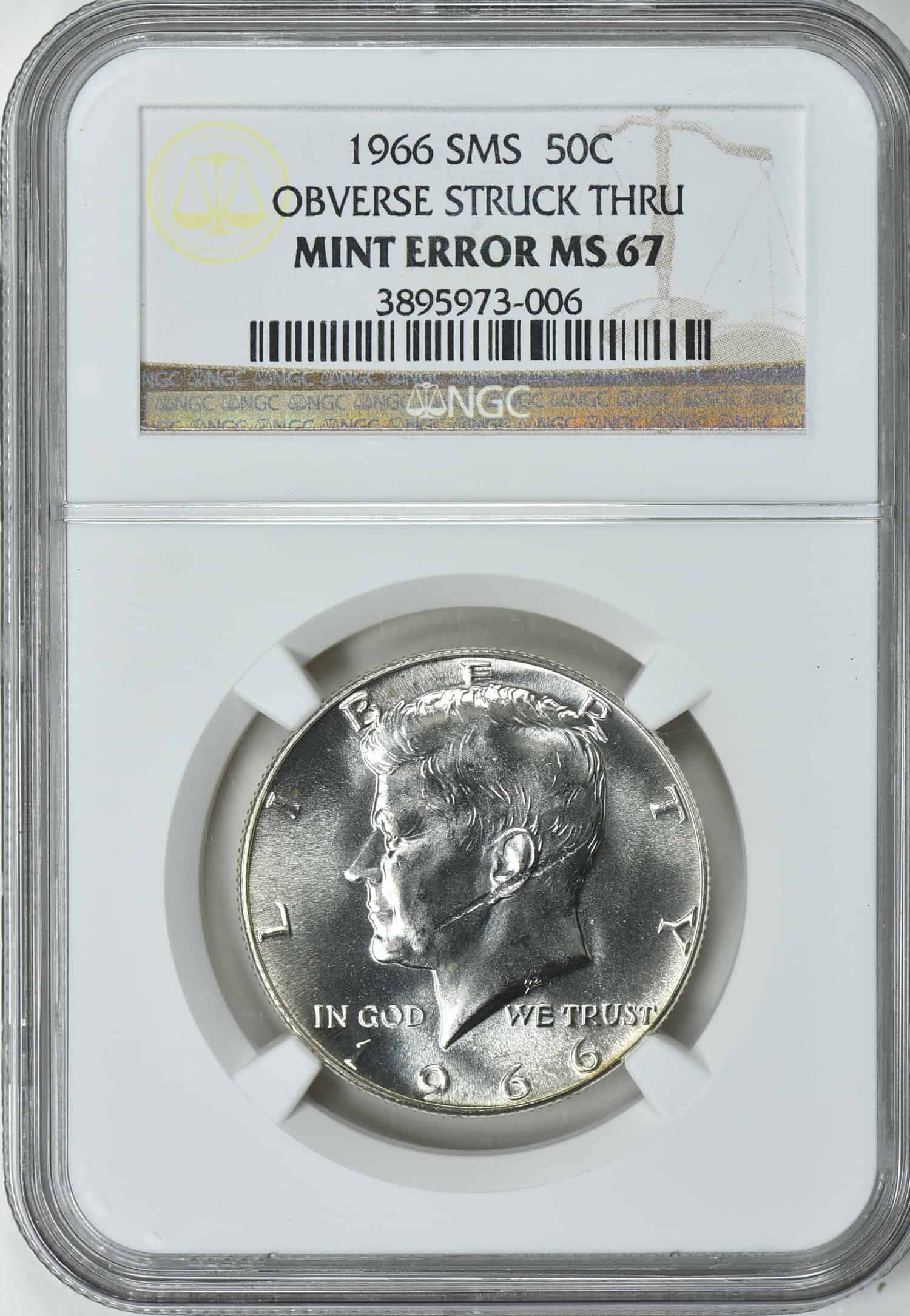
This atypical error worth thousands of dollars occurs when a foreign object ends up on the die or planchet. It always leaves a trace on the coin’s surface.
Double die
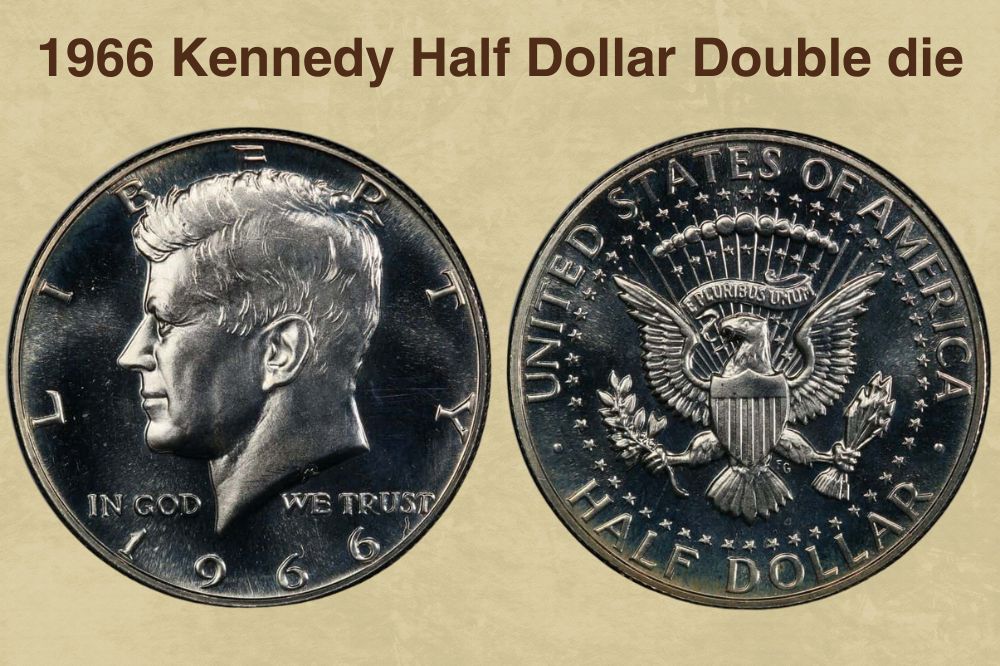
The 1966 DOO Half Dollars have a double image on the surface. Their value is higher when the imperfection is more intense. You can expect to find such pieces in a price range from $65 to $1,200, while the most expensive is the one in SP 67 grade with CAM quality. It won a record price after selling at $1,920.
Rotated (upside down) die
This error coin has the obverse and reverse oriented wrongly (upside down) because incorrectly aligned planchet. Since such coins are collectible, their prices go up to $400.
Where to Sell Your 1966 Kennedy Half Dollar ?
Now that you know the value of your coins, do you know where to sell those coins online easily? Don’t worry, I’ve compiled a list of these sites, including their introduction, pros, and cons.
Check out now: Best Places To Sell Coins Online (Pros & Cons)
FAQ about the 1966 Kennedy Half Dollar
What makes a 1966 Kennedy Half Dollar different from others?
The 1966 Kennedy Half Dollars are pretty common coins despite their silver content and age. One of the reasons is that these 60-year-old pieces came with a high mintage of 111,246,515.
You can find them on eBay or ask a dealer for desirable pieces. Thanks to the excellent offer of specimens in all grades, your budget is the only limiting factor when buying.
Which 1966 Kennedy Half Dollars are the priciest on the market?
- The 1966 SP 68 Half Dollar (SMS) with deep cameo contrast and an auction record of $16,450 • Heritage Auctions • January 2016
- The 1966 MS 67+ Half Dollar with an auction record of $15,105 • eBay • November 2020
- The 1966 SP 68 Half Dollar (SMS) with an auction record of $13,200 • Goldberg Auctioneers • May 2003
- The 1966 SP 69 Half Dollar (SMS) with cameo contrast and an auction record of $2,880 • Heritage Auctions • August 2018
- The 1966 SP 67 Half Dollar (No FG, SMS) with an auction record of $2,820 • Heritage Auctions • August 2019
- The 1966 SP 67 Half Dollar (DDO, SMS) with cameo contrast and an auction record of $1,920 • Heritage Auctions • January 2020
- The 1966 MS 66 Half Dollar (DDO) with an auction record of $1,375 • Great Collections • July 2013
- The 1966 SP 68 Half Dollar (DDO, SMS) with an auction record of $1,000 • eBay • June 2018
- The 1966 MS 68 Half Dollar (DDO, SMS) with an auction record and cameo contrast of $900 • Heritage Auctions • July 2021
- The 1966 SP 67 Half Dollar (DDO, SMS) with cameo contrast and an auction record of $853 • Great Collections • September 2014
- The 1966 SP 67+ Half Dollar (DDO, SMS) with an auction record of $750 • eBay • July 2015
- The 1966 SP 65 Half Dollar (DDO, SMS) with cameo contrast and an auction record of $646 • Heritage Auctions • July 2013
- The 1966 SP 68 Half Dollar (DDO, SMS) with an auction record of $627 • eBay • March 2018
- The 1966 SP 68 Half Dollar (DDO, SMS) with an auction record of $481 • eBay • December 2018
- The 1966 SP 67 Half Dollar (DDO, SMS) with an auction record of $204 • Heritage Auctions • June 2019
How much money to set aside for the 1966 Half Dollar?
Most Half Dollars struck in 1966 cost $4.15 to $20, and only better-graded pieces are costlier. For instance, you should set aside $120 for a coin with the MS 66 grade and $1,250 for the one ranked MS 67.
What are the priciest Kennedy Half Dollars?
- 1964 SP 68 (PCGS) SMS Half Dollar reached a record price of $156,000 in 2019
- 1964 Accented Hair PR 69 (NGC) DCAM Half Dollar reached a record price of $45,600 in 2022
- 1967 SP 69 (NGC) DCAM, SMS Half Dollar reached a record price of $31,200 in 2019
- 1964 D MS 68 (PCGS) Half Dollar reached a record price of $22,325 in 2016
- 1968 S PR 70 (PCGS) DC Half Dollar reached a record price of $21,600 in 2017