Coin Value Contents Table
- 1974 Half Dollar Value Chart
- History of the 1974 Half Dollar
- Features of the 1974 Half Dollar
- 1974 Half Dollar Value Guides
- 1974 No Mint Mark Half Dollar Value
- 1974 D Half Dollar Value
- 1974 S Proof Half Dollar Value
- 1974 Half Dollar Grading
- Rare 1974 Half Dollar Error List
- Where to Sell Your 1974 Half Dollar ?
- FAQ
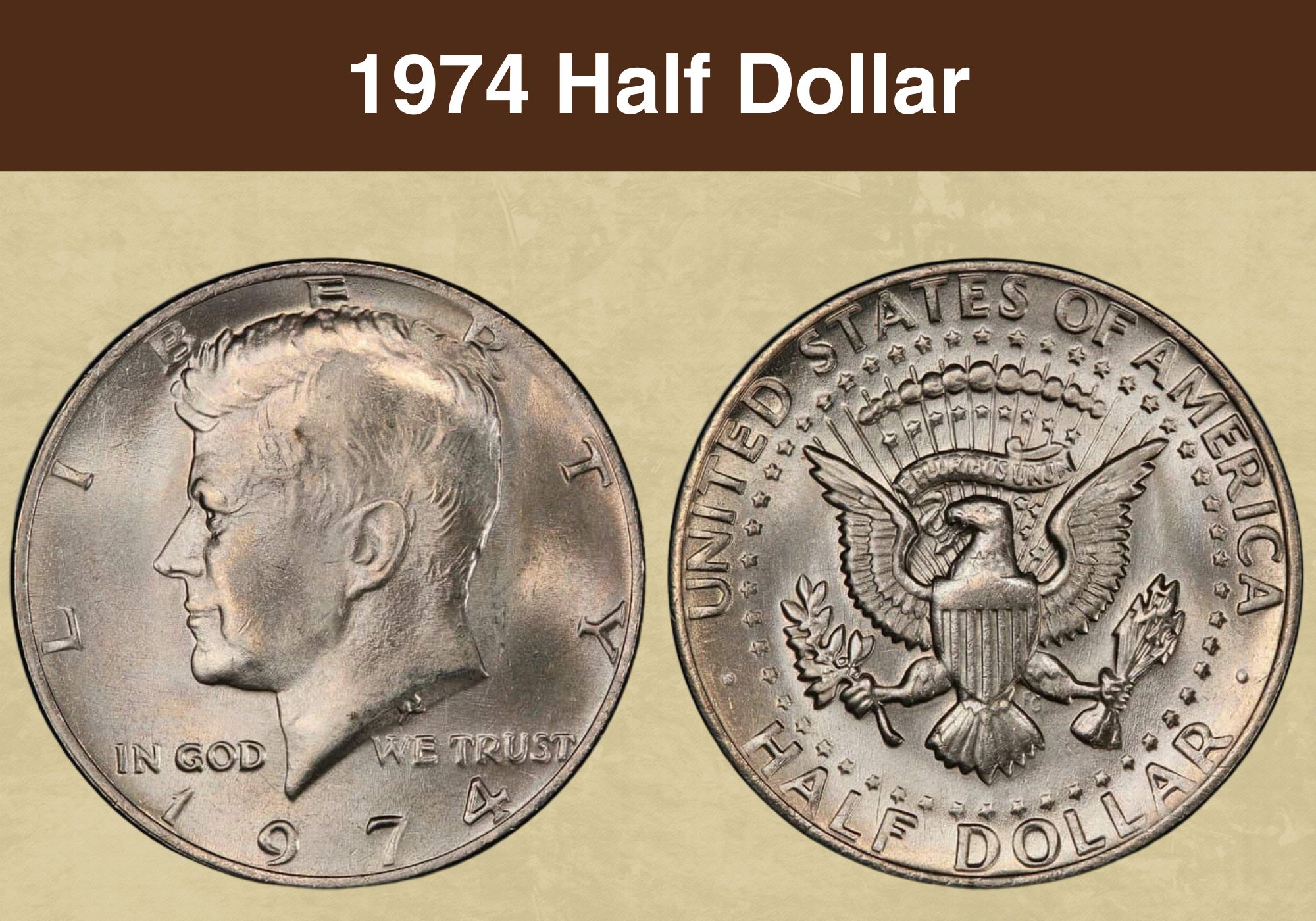
Have you come across a 1974 Kennedy half dollar and wondered how much this coin is worth?
Being a relatively old coin, you might be curious about the 1974 half dollar value. You’ve come to the right place!
In this article, I explain everything you need to know about the half dollar of 1974. You will learn about the coin’s history, features, and grading tips.
We’ll also explore some unique errors that make this coin special and which might be worth hundreds of dollars or more.
The United States Mint resumed minting half dollars in 2021 for general circulation after a long hiatus from 2002. So, the 1974 Kennedy dollar is an antique coin, but is it worth anything?
Read on to find out!
1974 Half Dollar Value Chart |
||||
| Mint Mark | Good | Fine | Extremely Fine | Uncirculated |
| 1974 No Mint Mark Half Dollar Value | $0.60 | $0.60 | $0.60 | $2,950 |
| 1974 D 1974 Half Dollar Value | $0.60 | $0.60 | $0.60 | $325 |
| 1974 S Half Dollar Value (Proof) | – | – | – | $425 |
History of the 1974 Half Dollar
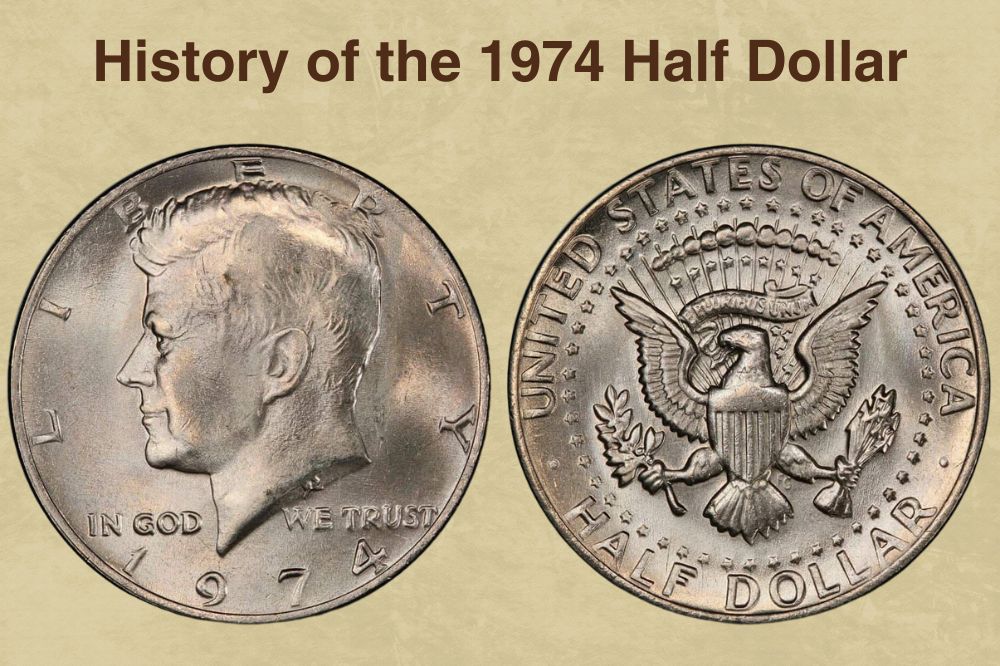
The half dollar, also known as the Kennedy half dollar was first struck in January 1964, approximately two months after the assassination of President John Fitzgerald Kennedy in November 1963.
The United States Mint, the Department of Treasury, Congress and the public all supported the noble idea of commemorating the fallen president on one of the country’s currencies.
Congress quickly passed legislation approving the minting of a new currency depicting the popular president. It was agreed that the Mint would strike a half dollar depicting John F. Kennedy.
Chief engraver Gilroy Roberts designed the obverse side, while his assistant Frank Gasparro designed the reverse. They based their designs on the John F. Kennedy Presidential inauguration medal they had both designed in 1962, enabling fast production of the new half dollar.
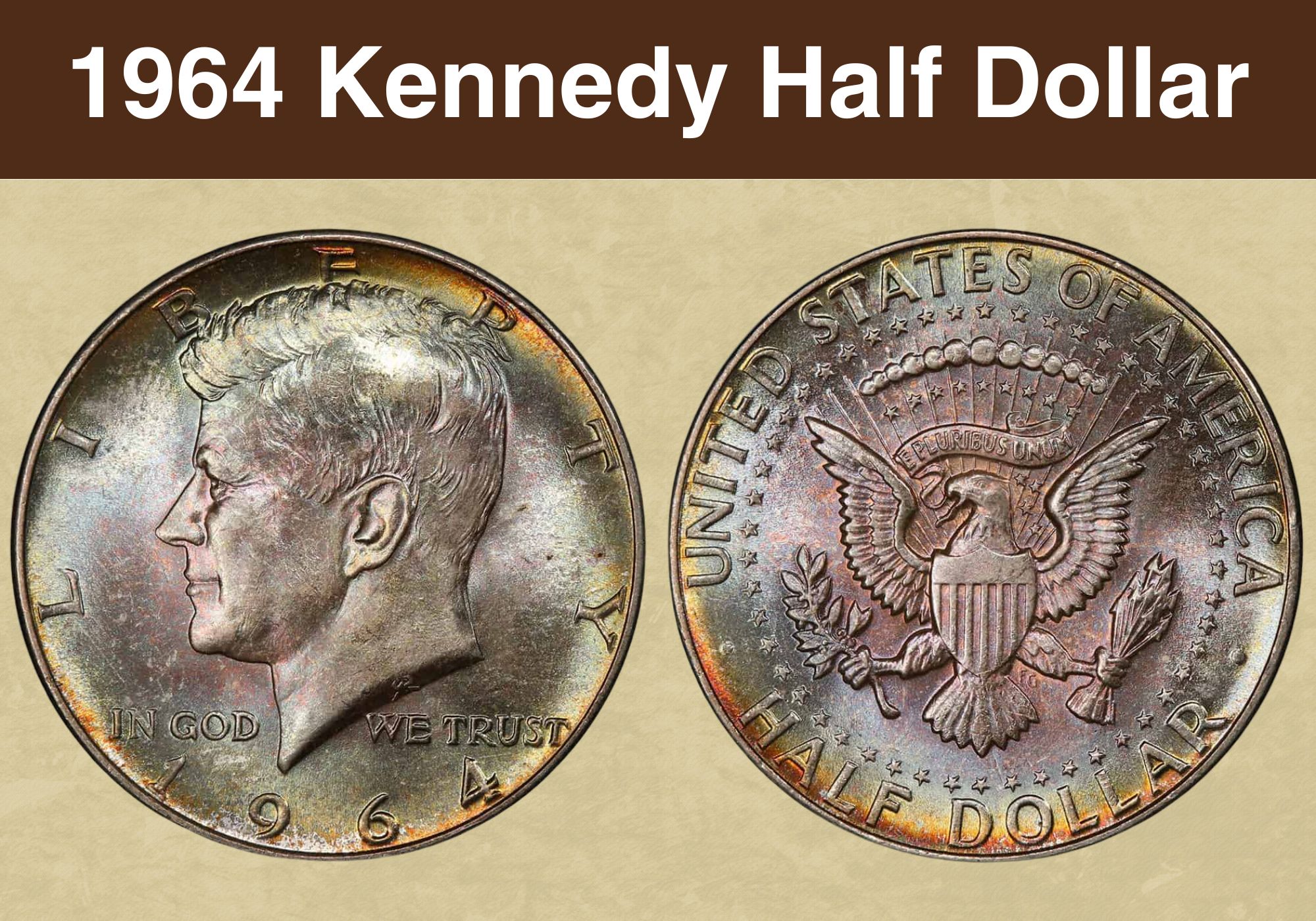
The Kennedy half dollar comprised 90% silver, which contributed to the massive hoarding of these coins when they were released at the start of 1964.
The rising prices of silver also contributed to the hoarding. So although the U.S. Mint struck millions of Kennedy half dollars, there was a huge circulation shortage due to the hoarding.
From 1965, the silver content in half dollars was reduced from 90 percent to 40 percent to disincentivize collectors from pulling silver coins from circulation and melting them.
By 1971, the Mint ceased using silver in Kennedy half dollars and replaced this with a copper core and a copper-nickel clad.
The 1974 half dollar is somewhat a transitional coin struck just before the Bicentennial celebrations in 1975, during which time the Mint struck commemorative presidential coins to celebrate the country’s independence.
Also read: 13 Most Valuable Franklin Half Dollars Worth Money
Features of the 1974 Half Dollar
The 1974 half dollar is a large, beautiful coin that espouses one of our country’s most beloved presidents. Let’s look at the physical attributes unique to this coin.
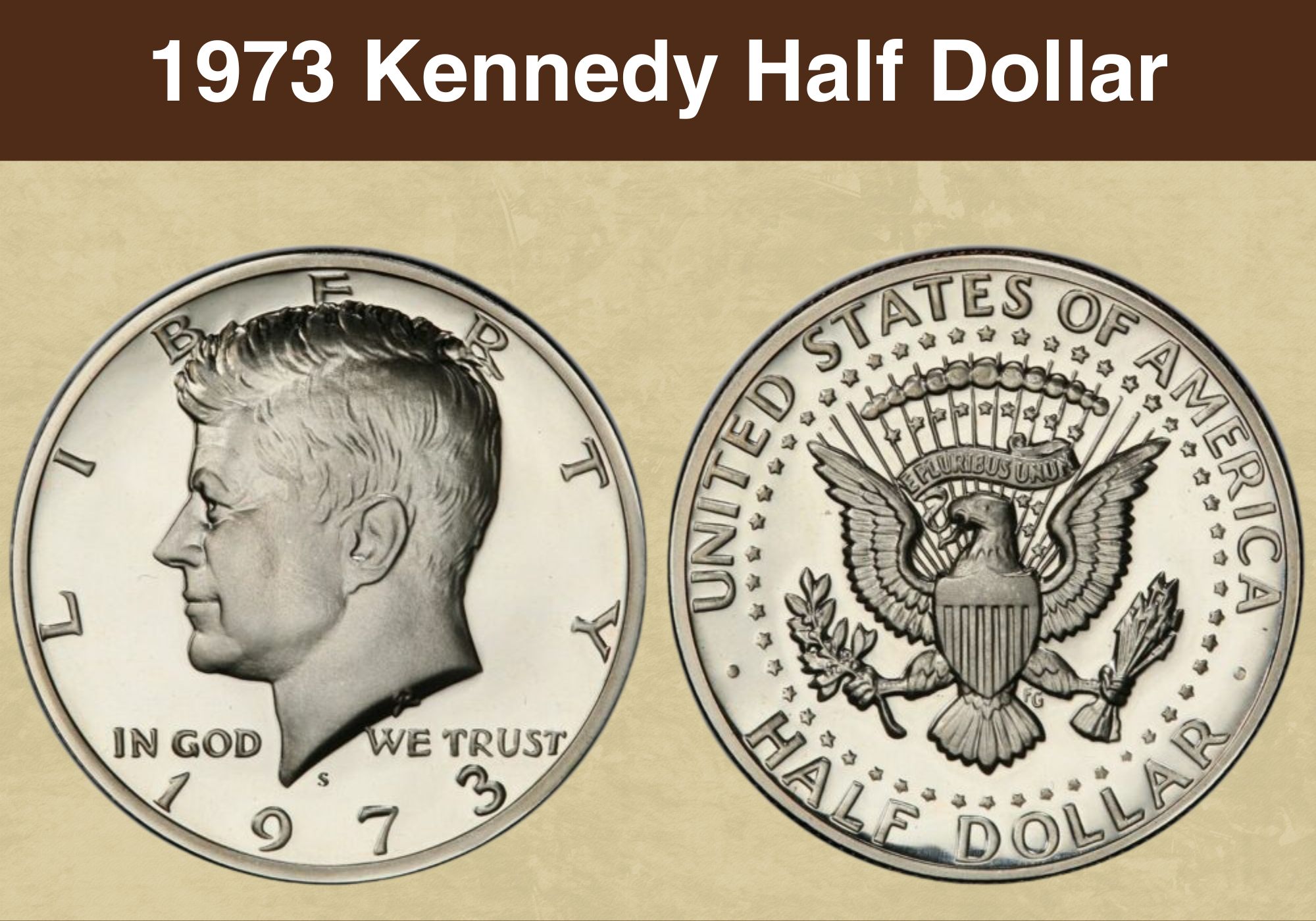
The Obverse of the 1974 Half Dollar
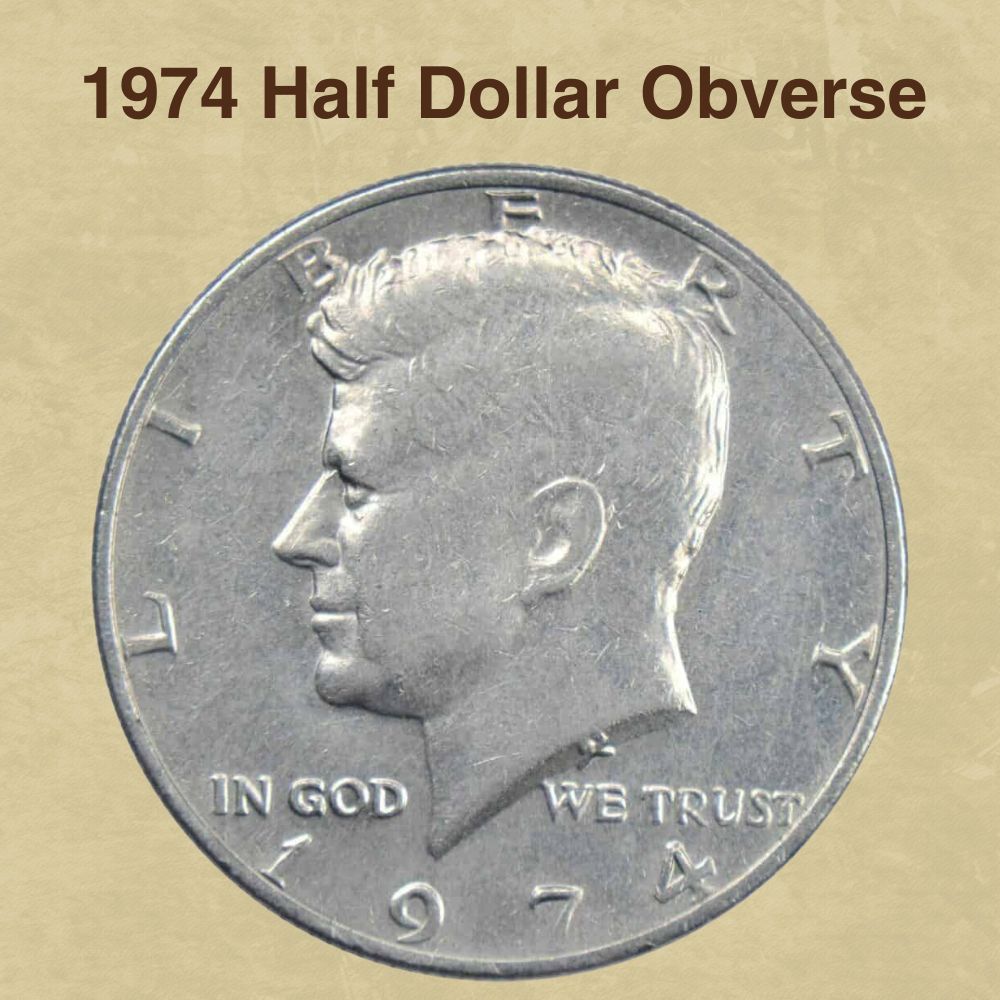
The obverse features the left-facing portrait of John F. Kennedy, based on Robert Gilroy and Frank Gasparro’s earlier portrait of the presidential medal.
The word LIBERTY appears along the coin’s upper rim, while the date 1974 is seen along the lower rim.
The motto IN GOD WE TRUST also appears on the obverse with the words separated as IN GOD and WE TRUST. Kennedy’s truncated neck separates the two words that make up the phrase.
Underneath the truncated neck, you will notice a sign similar to a sick cell. This sign actually stands for GR in a stylized form and represents the chief engraver Gilroy who designed the coin’s obverse side.
The Reverse of the 1974 Half Dollar
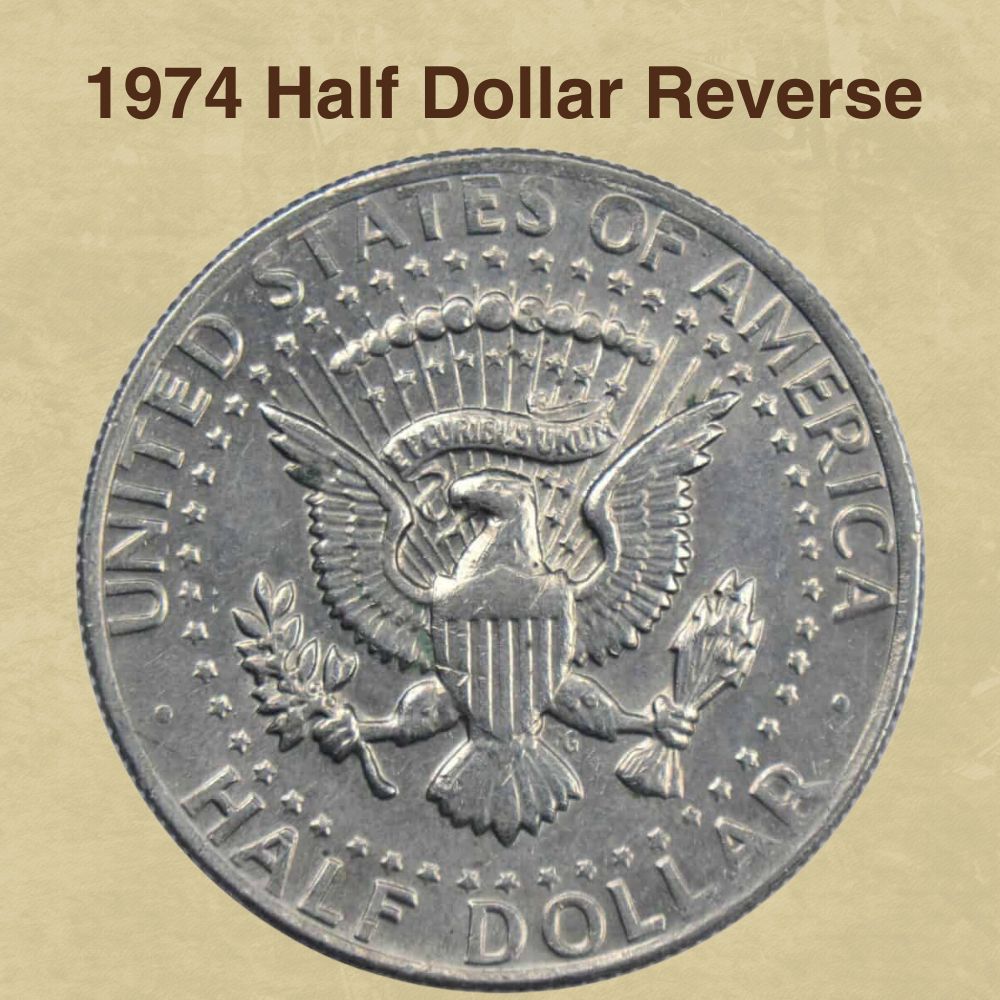
The half dollar has a very detailed reverse design. The most dominant feature is the bald American eagle, with its wings wide open.
The majestic bird holds an olive branch in one talon and a bunch of leaves in the other. The image of a shield is depicted at the center of the eagle’s chest with thirteen stripes.
The left-facing eagle holds a flag in its beak with the motto E PLURIBUS UNUM printed on it. You will also notice rays emerging from behind the eagle. Adorning the rays are thirteen clouds and thirteen stars. The number thirteen represents the first 13 states to gain independence.
The entire presidential seal is surrounded by fifty-two stars representing all the states in the Union.
The country’s name appears around the top rim, while the denomination, HALF DOLLAR, appears at the bottom along the rim.
Upon closer look, you will notice the initials FG underneath the eagle’s left talon. These initials stand for Frank Gassparo, who designed the coin’s reverse.
Other Features of the 1974 Half Dollar
The 1974 half dollar is made of a pure Copper core and 75% Copper and 25% Nickel outer layer.
It weighs 11.30 grams and measures a diameter of 30.61 millimeters, making this coin one of the largest in the country’s currency history. The half dollar boasts a reeded edge spotting 150 reeds.
The mints in Philadelphia, Denver and San Francisco all struck the Kennedy half dollar. The coins minted in San Francisco and Denver have mint marks S and D on the obverse just above and between the numbers 9 and 7 of the date.
Here’s a video to help you spot 1974 half dollars worth money.
Also read: 13 Most Valuable Kennedy Half Dollar Worth Money
1974 Half Dollar Value Guides
In this section, we’ll answer the question: How much is a 1974 half dollar worth?
The Kennedy dollar was minted in all three minting facilities in 1974, so this coin has three varieties. These are:
- 1974 No Mint Mark Half Dollar
- 1974 D Half Dollar
- 1974 S (Proof) Half Dollar
We’ll look at each variety and determine how much each is worth.
1974 No Mint Mark Half Dollar Value
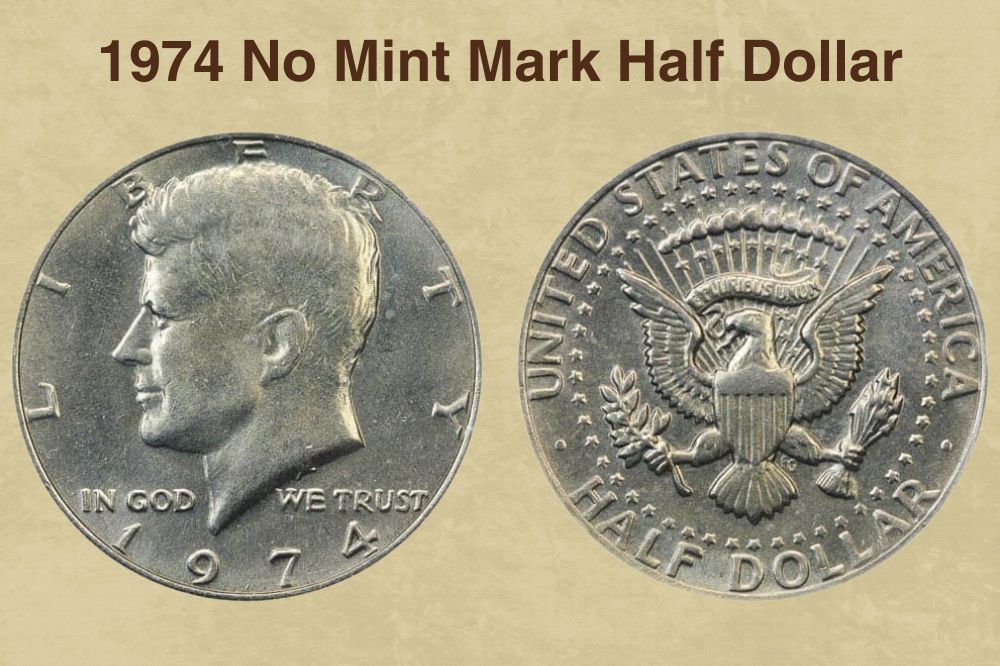
The Mint in Philadelphia struck an estimated 201,596,000 Kennedy half dollars in 1974. This is definitely a high mintage, so these coins are not considered rare, especially in circulated condition.
Coins graded MS66 are quite rare, and any 1974 half dollar higher than MS68 is exceptionally scarce and should be certified if you happen to come across one.
So common are these coins that they are worth more or less their face value. In particular, expect to pay or earn between $0.65 and $0.90 for a circulated 1974 Kennedy half dollar.
These coins are worth slightly more in lower mint states. For example, one graded MS60 is valued at $1, but this figure can go up to $2950 for Kennedy half dollars graded MS68.
One of the rarest 1974 half-dollar specimens graded MS68 sold for a whopping $8,000 in a 2021 online auction.
1974 D Half Dollar Value
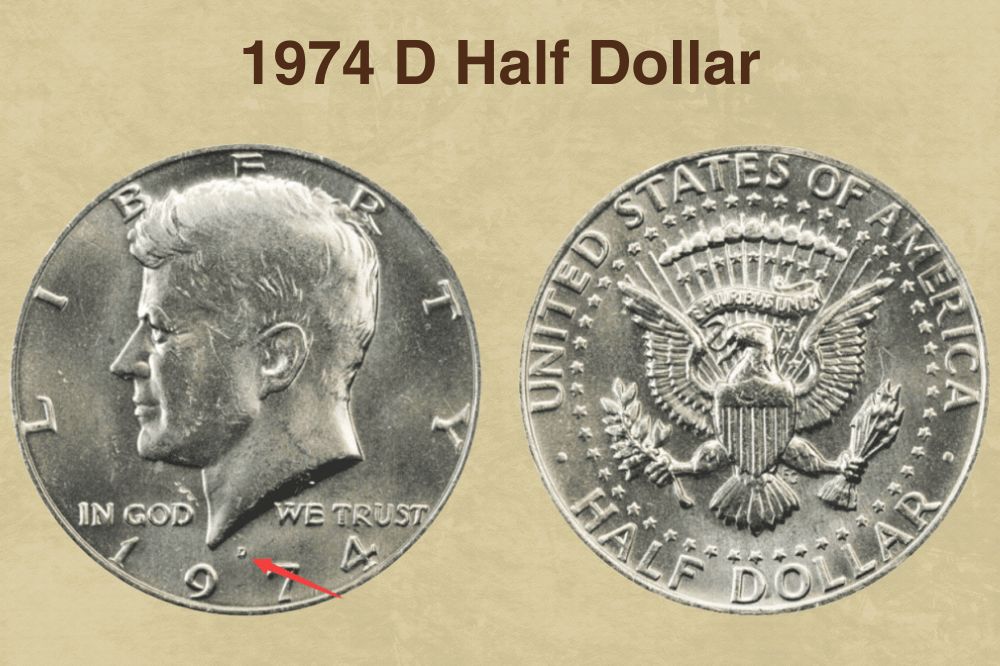
In 1974, the Denver mint struck about 79,066,300 Kennedy half dollars, slightly less than half the amount minted in Philadelphia.
Many of these coins were released into circulation and remained there. The relatively high mintage and the fact that little, if any hoarding of the coins took place means that the 1974 D half dollar is quite common.
Only starting from MS66 does this coin become scarce. 1974 Kennedy half dollars in grade MS68 are rare, with fewer than 100 existing examples.
In circulated condition, 1974 D half dollars are worth between $0.65 and $0.75. The value increases to $20 for one graded MS65, while one in gem condition graded MS67 can fetch as much as $325.
According to the Professional Coin Grading Service (PCGS), a 1974 D half dollar graded MS67 in gem condition was auctioned for an impressive $2,468.
1974 S Proof Half Dollar Value
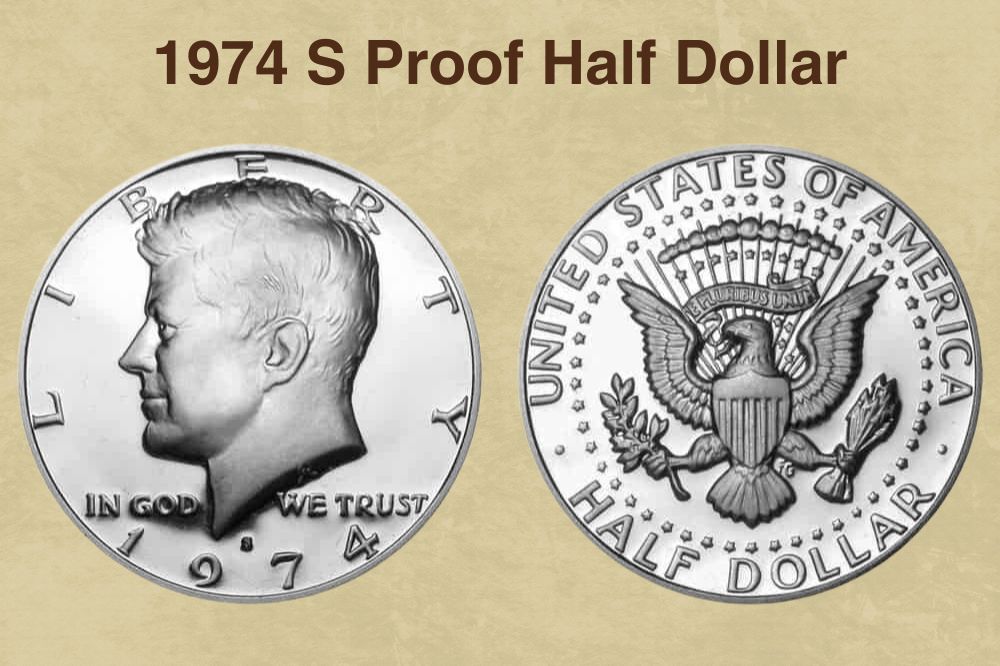
The San Francisco mint struck approximately 2,612,568 proof coins. The Mint uses special dies to strike proofs, resulting in coins with a brilliant, mirror-like finish and intense contrast.
Proofs are graded as regular, cameo, deep cameo or ultra-cameo, depending on the contrast and finish.
A regular 1974 half dollar proof coin graded PF69 is worth about $12. At grades PF66 to PF69, the value may rise to $12.
About 350 examples of deep cameo (DCAM) 1974 proof half dollars exist. Specimens graded PF68 are worth about $11, but this price can increase to $425 for 1974 DCAM half dollars graded PF70. The most expensive DCAM half dollar from 1974 was graded PF70 and sold for $7,931 in 2013.
Also read: 11 Most Valuable Half Dollars In Circulation
1974 Half Dollar Grading
You should focus on specific areas when grading the 1974 Kennedy half dollar. These include Kennedy’s cheek, jaw, center of neck and the hair below the parting on the obverse. Examine the eagle’s tail feathers, arrow points, and lettering on the reverse.
Circulated half dollars in lower grades will show visible wear and tear in the mentioned areas. Coins with more visible detail on the obverse and reverse score higher on the grading scale.
Look out for luster as well. Shiny half dollars with a brilliant finish are graded as Mint State, while those lower in the scale will have little to no luster.
Check out this video for excellent tips on how to grade Kennedy half dollars.
Rare 1974 Half Dollar Error List
As mentioned, 1974 half dollars are not rare; you can easily find them in your day-to-day change. But, a few of these coins have noticeable errors, which can significantly increase the value of your coin.
Here are some common errors to look out for in your 1974 Kennedy half dollar:
1974 Doubled Die Obverse Half Dollar Error
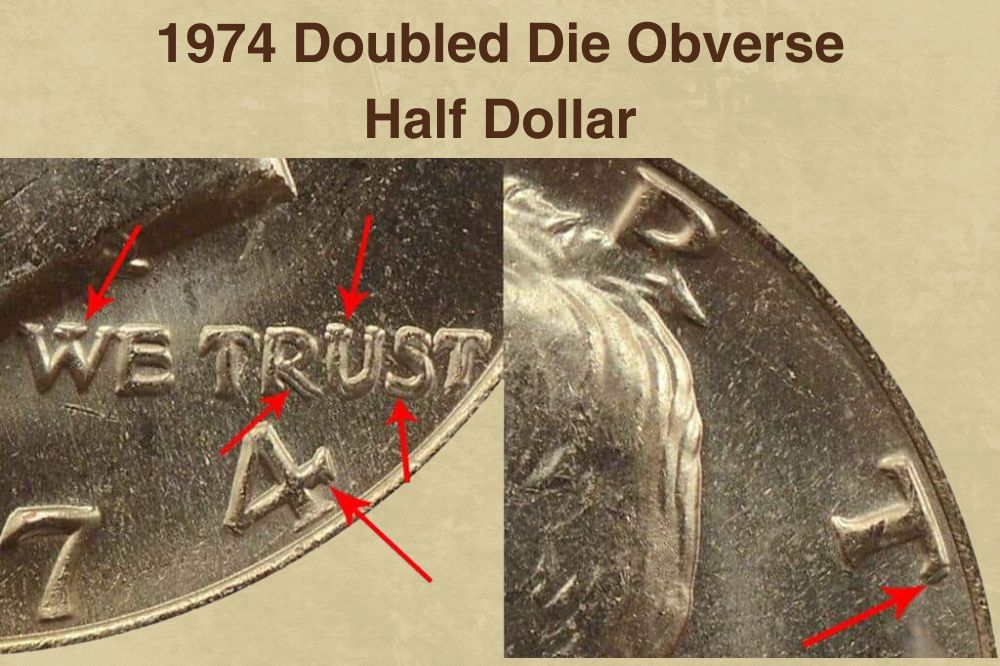
Quite a number of 1974 half dollars feature the doubled die error. This error occurs when the die shifts slightly between strikes. This causes the die to strike the subsequent lettering and design at an angle, creating a doubling effect.
The doubling in 1974 half dollars is most noticeable on the obverse lettering particularly around the date, but also on the motto IN GOD WE TRUST and the word LIBERTY.
An example of a 1974 half dollar doubled die error graded MS66 can fetch up to $575.
1974 No Mint Mark Half Dollar on a Taiwan Planchet Error
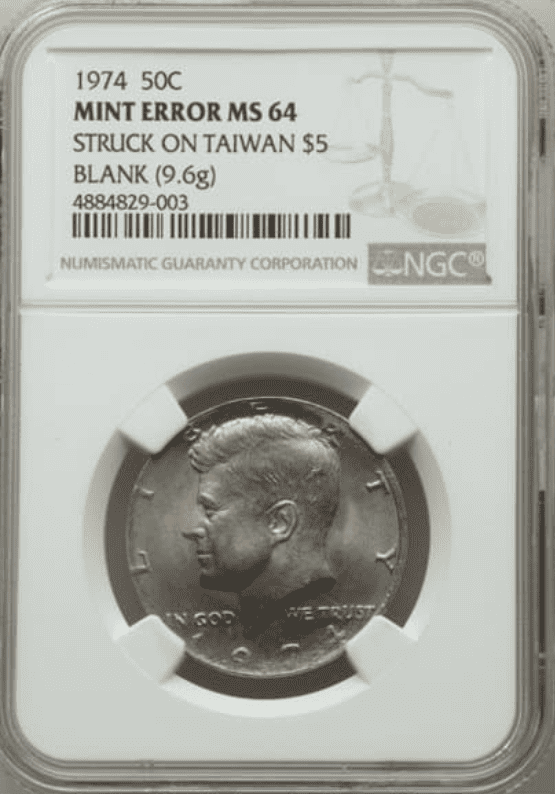
This error is quite interesting. It occurred when the design of the Kennedy half dollar was struck on a stray $5 planchet from Taiwan.
Whether done intentionally or accidentally, this coin definitely makes for a fascinating addition to any coin collection.
As you might have already guessed, it is very rare. It is not common for Taiwanese currency to find itself in a United States Mint!
There is only one known example of a 1974 P half dollar struck on a Taiwanese planchet, and it was auctioned for $430.
1974 Broad Struck Half Dollar Error
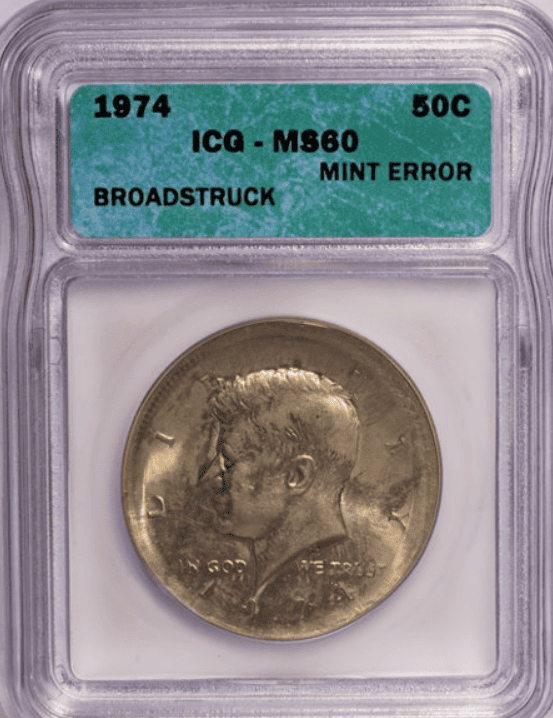
A broad struck error occurs when the collar that holds the coin in place during the striking process falls off or shifts, causing the coin to stretch out when struck.
A 1974 broad-struck half-dollar error coin is quite popular among collectors and can fetch as much as $120 or more, depending on the condition.
Where to Sell Your 1974 Half Dollar ?
Now that you know the value of your coins, do you know where to sell those coins online easily? Don’t worry, I’ve compiled a list of these sites, including their introduction, pros, and cons.
Check out now: Best Places To Sell Coins Online (Pros & Cons)
FAQ
What makes a 1974 half dollar rare?
Kennedy 1974 half dollars are not rare, as close to 300 million of these coins were minted that year. Even in mint state, these coins are readily available at affordable prices. That said, half dollars in gem condition, i.e. those graded MS69 and above with a satin-like finish, can be rare and expensive.
How do I know if my Kennedy Half Dollar is valuable?
1974 Kennedy half dollars are not very profitable; they are worth more or less their face value. However, a half dollar coin can be valuable if it features a significant error that makes it unique. Kennedy half dollars with brilliant contrast, satin-like finish, a shiny surface with few if any marks, and graded as a deep cameo is the most valuable half dollar.
How can you tell if a Kennedy Half Dollar is silver?
Examining the edge can tell you if a coin is silver. Silver coins have a solid silver stripe along the edge. If the coin shows a copper stripe, it is a clad coin with a copper core and an alloy layer. The 1964 Kennedy half dollars are the only pure silver coins in the series. From 1965 to 1970, the coins contained only 40% silver; by 1971, the Mint eliminated all the silver content from these coins. So, an authentic 1974 half dollar does not contain any silver.

I have a ddr 74 half dollar and filled mm I’ll attach a photo could you let me know about what it’s worth