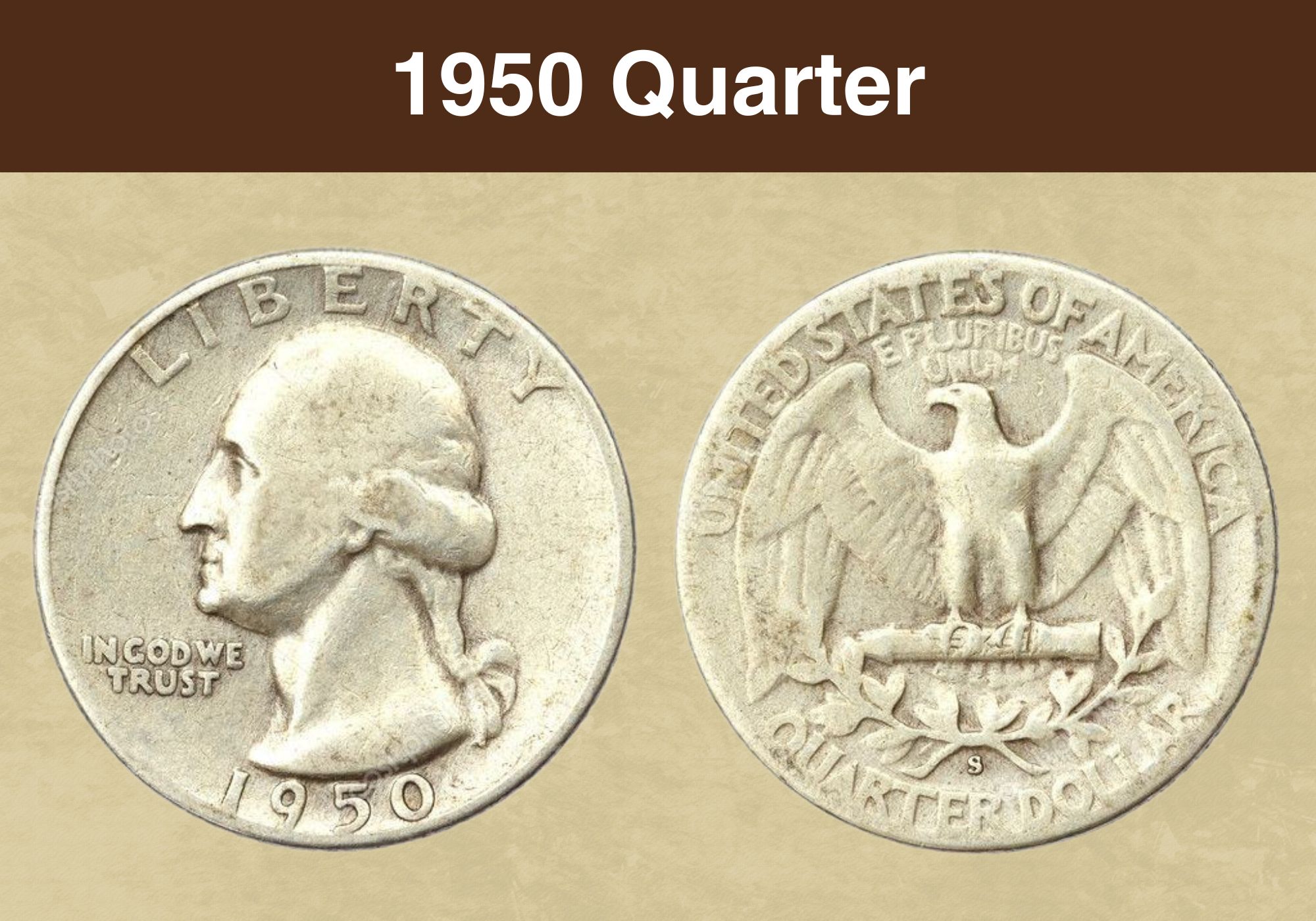
1950 Quarter Value Checker: Errors List, “D”, “S” & No Mint Mark Worth

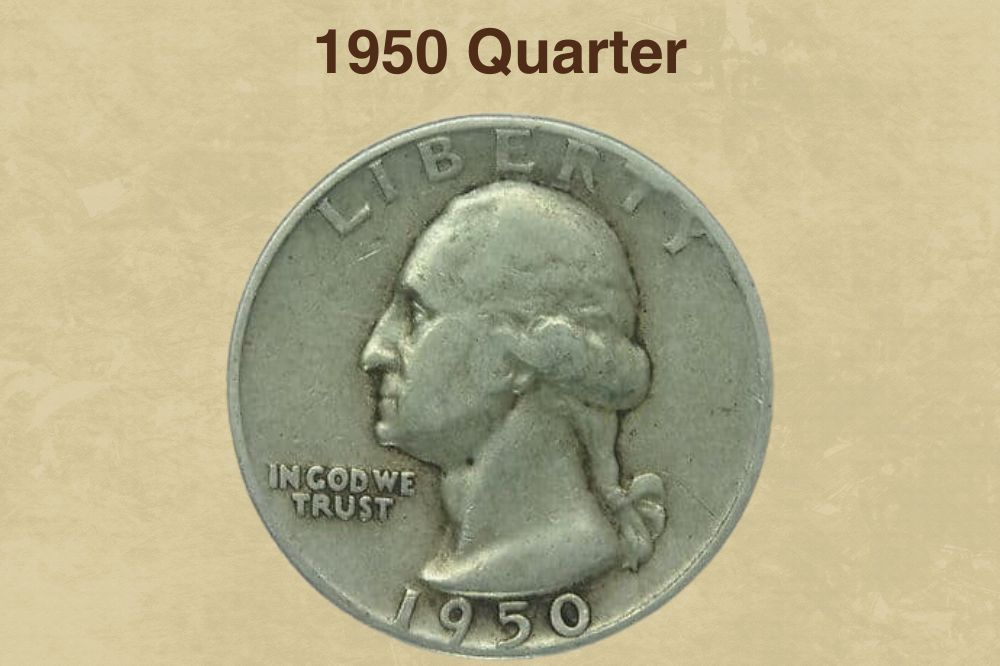
1950 Quarter

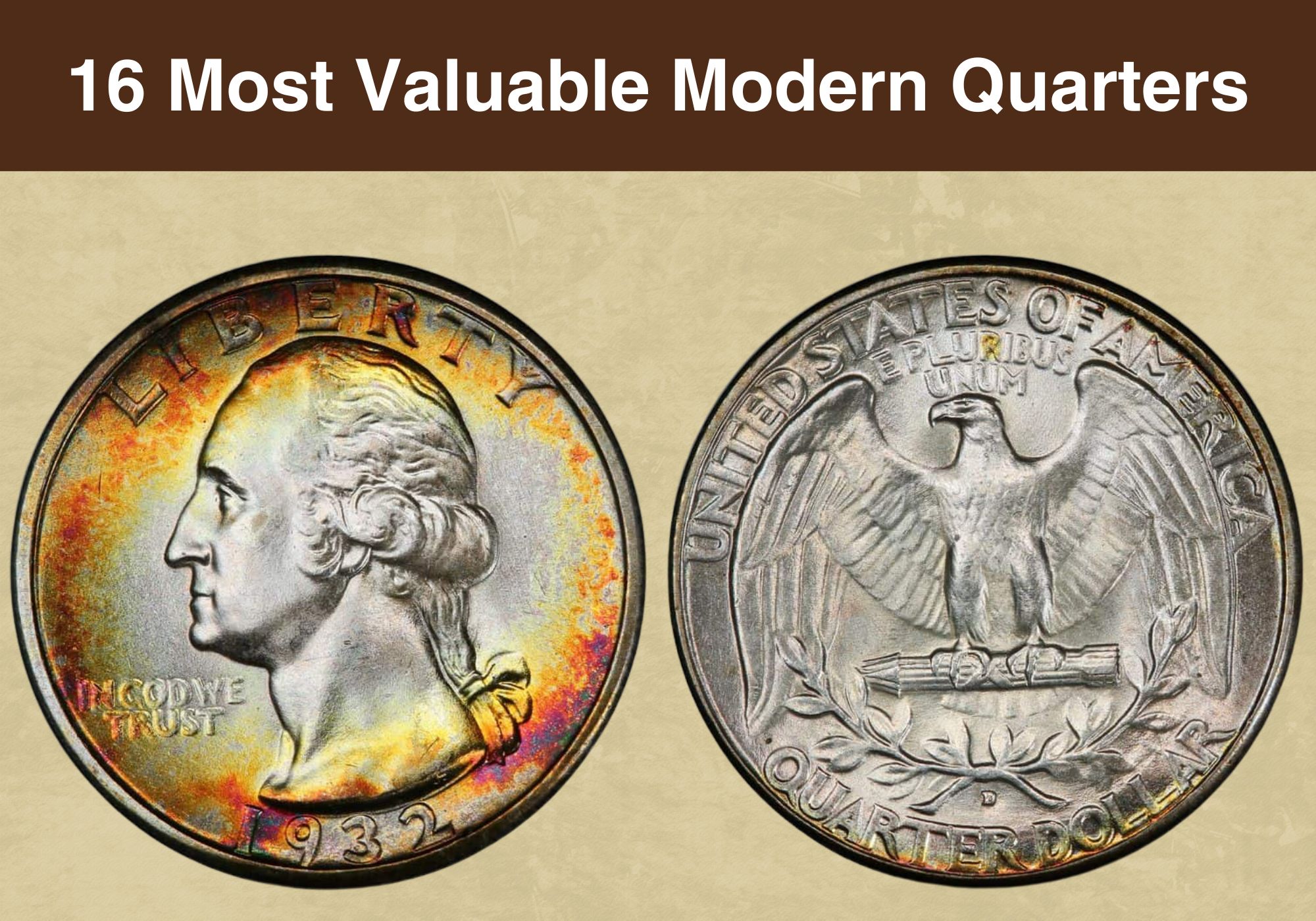
The 1950 Washington quarter is one of the most collectible silver quarters of the post-war era, combining a 90% silver composition with the first-ever return of proof coinage after an eight-year wartime suspension. Three mints produced circulation strikes — Philadelphia, Denver, and San Francisco — while Philadelphia alone struck 51,386 proof coins, now among the most coveted modern proof issues in the Washington quarter series.

What really sets this year apart is the rare overdate error story: two mint mark mix-up varieties (the 1950-D/S and 1950-S/D) were created when dies were repurposed and re-punched across facilities. Add in the exceptionally rare Deep Cameo proofs, of which fewer than a dozen examples have been certified by PCGS, and you have one of the richest single-year collecting challenges in American numismatics.

1950 Quarter Value Checker

Identify 1950 Quarter D, S and No Mint Mark Price

✨ No Sign-up Required
Obv

Front Obverse

Upload or Take a Photo

Rev

Back Reverse

Upload or Take a Photo


1950 Quarter Value By Variety

This chart shows the market values of different 1950 U.S. quarter varieties and grades. If you know the grade of your coin, you can find the exact price below in the Value Guides section.

1950 Quarter Value Chart

TYPEGOODFINEAUMSPR
1950 No Mint Mark Quarter Value$15.00$15.83$19.00$29.17
1950-D Quarter Value$15.00$15.83$19.00$33.00
1950-S Quarter Value$15.00$15.83$19.00$27.50
1950 Proof Quarter Value$158.25
1950 CAM Quarter Value$328.14
1950 DCAM Quarter Value$3354.29
Updated: 2026-05-12 02:35:34

Also Read: Top 100 Most Valuable Modern Quarter Worth Money (1932 – Present)


Top 10 Most Valuable 1950 Quarter Value Records Worth Money

Most Valuable 1950 Quarter Chart

2000 - Present

This chart reveals the top auction results for 1950 Quarter varieties from 2000 to the present, sourced from major platforms including Heritage Auctions and Stack’s Bowers. The undisputed leader is the 1950 DCAM graded PR68, which sold for $31,200 at Heritage Auctions on January 13, 2022 — a record that reflects both its extraordinary scarcity and the intense competition among advanced proof collectors.

The famous overdate errors are close behind in the rankings. The 1950-D/S graded PCGS MS67 fetched $29,375 at Heritage Auctions in June 2013, while a separate example of the same variety graded MS66 achieved $9,400 in 2014, showing how dramatically grade impacts value in this series.

High-grade business strikes also show impressive strength. The 1950-S graded MS68 sold for $19,800, and even the standard Philadelphia no-mint-mark issue hit $11,400 in MS68 at Heritage Auctions in May 2024 — proof that superb condition alone can make a common date extraordinary.

Cameo proof specimens command their own premium tier. A 1950 CAM in PR68 reached $5,875, while a PCGS PR68DCAM sold again at Stack’s Bowers in June 2023 for $22,800, confirming that the market for elite 1950 proof quarters remains robust year after year.


History of the 1950 Quarter Value: Post-War Mint Resumption

The 1950 quarter’s story begins in 1932, when sculptor John Flanagan’s portrait of George Washington — based on the celebrated Jean-Antoine Houdon bust of 1786 — was chosen for the quarter by Treasury Secretary Andrew Mellon. Mellon overruled the U.S. Commission of Fine Arts, which had favored Laura Gardin Fraser’s competing design, making this a historically contested coin from its very origins.

The U.S. Mint discontinued proof coinage in 1942 when World War II forced a pivot to wartime production, ending a run of proof sets that had grown from 3,837 in 1936 to 21,120 in 1942. When proofs finally resumed in 1950, the 51,386 sets sold represented more coins than the Mint had produced in its entire proof programs for 1940, 1941, and 1942 combined.

Three facilities struck circulation coins that year: Philadelphia produced 24.9 million pieces, Denver 21.075 million, and San Francisco 10.284 million. However, it was during die preparation at Denver and San Francisco that the story took a dramatic turn — mint mark punches were applied to the wrong dies, creating the legendary 1950-D/S and 1950-S/D overdate varieties.

The 1950 proof issue was also a quality leap over its pre-war predecessors. PCGS CoinFacts notes that the 1950 proofs appear to be better-struck than the 1936–1942 issues — a fact confirmed by the emergence of Cameo and Deep Cameo surfaces that were almost never seen on earlier proof quarters.

Also Read: Top 30 Most Valuable State Quarter Worth Money (1999 – 2008)


Is Your 1950 Quarter Value Rare? Check Here First

27

1950 No Mint Mark Quarter

Scarce
Ranked 116 in Washington Quarter
29

1950-D Quarter

Scarce
Ranked 92 in Washington Quarter
29

1950-S Quarter

Scarce
Ranked 84 in Washington Quarter
27

1950 Proof Quarter

Scarce
Ranked 117 in Washington Quarter
48

1950 CAM Quarter

Very Rare
Ranked 20 in Washington Quarter
50

1950 DCAM Quarter

Very Rare
Ranked 19 in Washington Quarter

Understanding the rarity hierarchy is the first step to knowing what your coin is worth. To quickly assess scarcity rankings and compare values across all 1950 Quarter types, our Coin Value Checker App provides instant results using real-time market data.


Key Features of the 1950 Quarter Value Collector Should Know

John Flanagan’s Washington quarter design — unchanged since 1932 — carries special significance in 1950 as the first year proof coinage resumed after the wartime gap. The Philadelphia Mint struck both business-strike coins and all 51,386 proof examples, while Denver and San Francisco produced circulation strikes only.

This year is also distinguished by two dramatic die-preparation errors. The 1950-D/S and 1950-S/D over-mint-mark varieties occurred when dies meant for one facility were re-punched for use at another, making them two of the most sought-after varieties in the entire Washington quarter series.

The Obverse of the 1950 Quarter

The Obverse of the 1950 Quarter

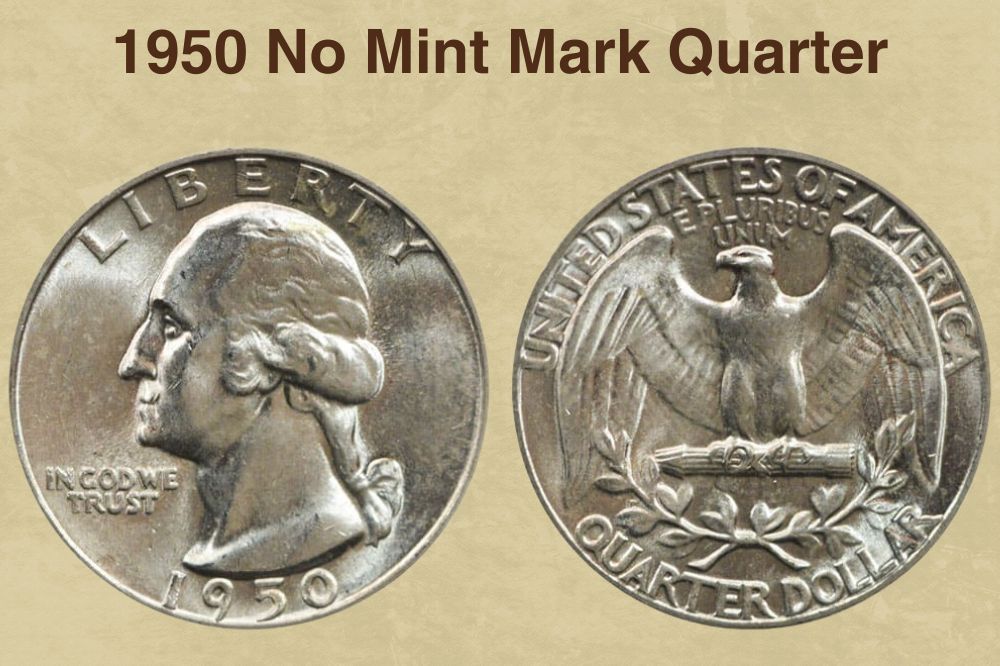
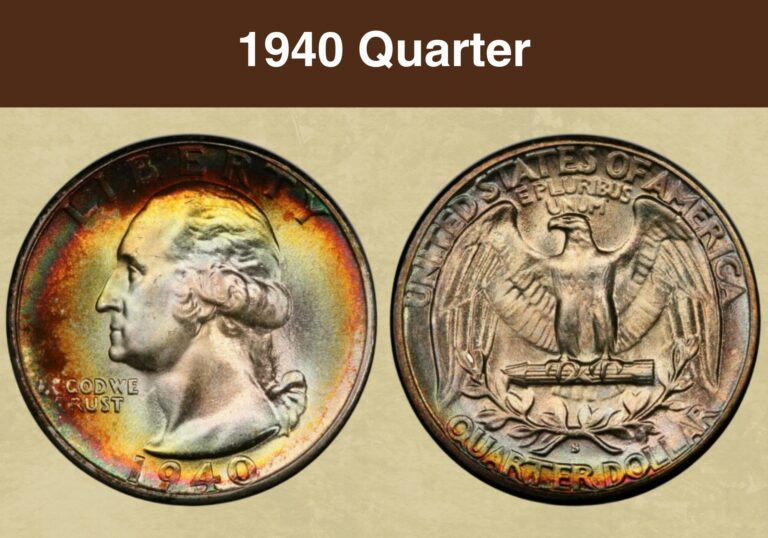
The 1950 quarter obverse displays George Washington’s left-facing profile with “LIBERTY” along the left rim and the date “1950” at the bottom right. “IN GOD WE TRUST” appears below Washington’s chin, while designer John Flanagan’s “JF” initials are positioned at the base of the neck. The portrait was modeled on the famous 1786 Houdon bust — the same sculpture used in all Washington Quarter designs from 1932 through 1998 and again in 2021.

The Reverse of the 1950 Quarter

The Reverse of the 1950 Quarter

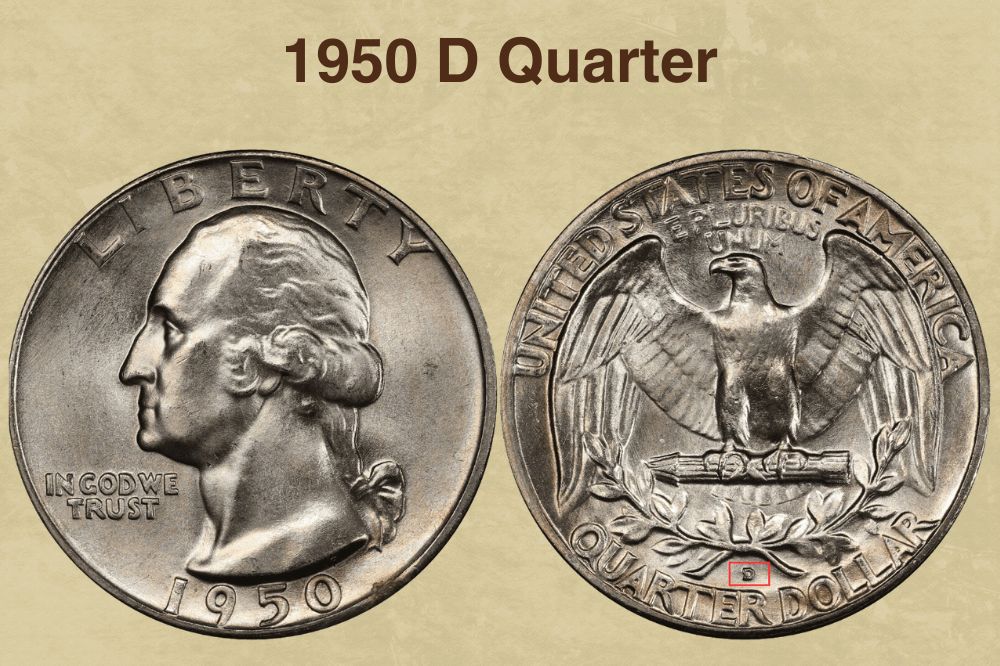
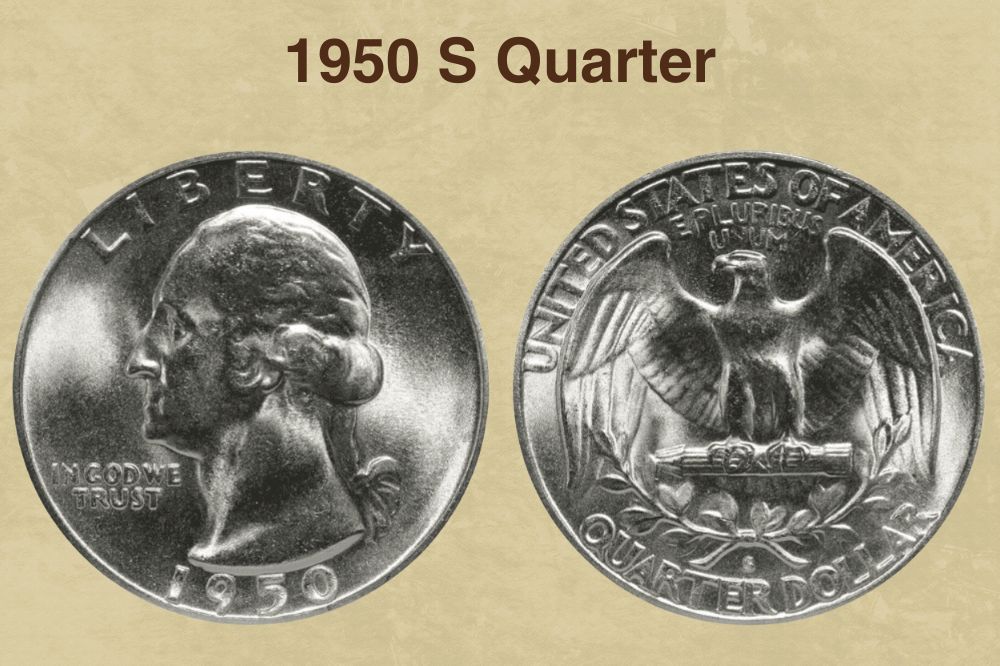
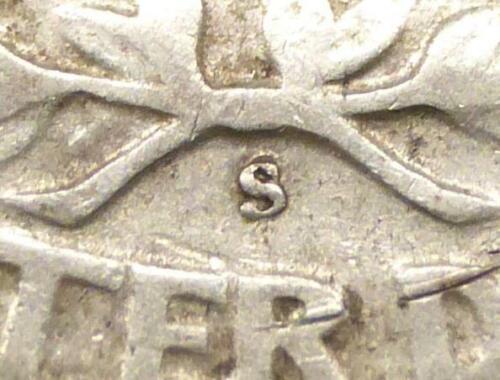
The reverse features a heraldic eagle with outstretched wings, clutching arrows in the left talon and an olive branch in the right. “UNITED STATES OF AMERICA” curves along the top rim, “QUARTER DOLLAR” appears at the bottom, and “E PLURIBUS UNUM” is inscribed on a ribbon above the eagle. The mint mark — D for Denver, S for San Francisco, or absent for Philadelphia — sits below the eagle, and this is precisely where to look for the famous overdate varieties.

Other Features of the 1950 Quarter

The 1950 quarters are composed of 90% silver and 10% copper, containing 0.1808 troy ounces of pure silver in a total coin weight of approximately 6.25 grams. Every 1950 quarter struck — whether a plain business strike or a Deep Cameo proof — shares this identical silver composition, giving even circulated examples a meaningful silver melt value floor.

Each coin measures 24.3 mm in diameter, carries a reeded edge with 119 reeds, and has a standard thickness of 1.75 mm. These specifications were held constant across all three minting facilities that year.

Also Read: Top 20 Most Valuable 1776-1976 Bicentennial Quarter


1950 Quarter Value Mintage & Survival Data

1950 Quarter Mintage & Survival Chart

Mintage Comparison

Survival Distribution

TypeMintageSurvivalSurvival Rate
No Mint24,920,1262,490,0009.9919%
D21,075,6002,107,0009.9973%
S10,284,0041,028,0009.9961%
Proof51,38639,00075.8962%
CAM51,3862,0003.8921%
DCAM51,3861,5002.9191%

This chart presents mintage and survival estimates for all 1950 Washington Quarter varieties. Philadelphia led circulation production at 24.9 million, followed by Denver at 21.1 million and San Francisco at 10.3 million — the lowest of the three mints that year.

The proof picture is far more complex. Of the 51,386 proofs struck, roughly 39,000 plain-finish examples survive (75.90%), but the Cameo and Deep Cameo subsets are genuinely rare: CoinWeek’s June 2025 census data shows PCGS has attributed its Cameo designation to just 4.24% of submissions, and only 11 examples across all grades have earned PCGS Deep Cameo. NGC’s numbers are nearly identical — 6.89% Cameo, with just 12 Ultra Cameo (NGC’s equivalent term for Deep Cameo) grading events recorded through June 2025.

The combined PCGS and NGC certified population represents approximately 12.1% of the total 51,386 proof mintage. That means roughly 87.9% of surviving proofs have never been submitted — leaving some potential for discovery, though dramatic upgrades into the Deep Cameo tier are considered highly unlikely given the coin’s age and rarity.

Also Read: Top 100 Most Valuable Washington Quarter Worth Money (1932 – 1998)


The Easy Way to Know Your 1950 Quarter Value

The single most important factor in determining 1950 Quarter Value is whether you have a plain business strike, a proof, or one of the famous overdate errors — that decision alone separates a $6 coin from one worth thousands. For business strikes, the next key check is mint mark: Philadelphia coins carry no mark, Denver shows a “D,” and San Francisco shows an “S,” all located below the eagle on the reverse.

For proof coins, look for mirror-like fields (the flat background areas) and frosted devices (raised design elements like Washington’s portrait and the eagle). If your proof shows strong contrast between those frost-white devices and jet-black mirror fields, you may have a Cameo (CAM) or Deep Cameo (DCAM) specimen — the two most valuable proof designations, awarded by grading services like PCGS (Professional Coin Grading Service) or NGC (Numismatic Guaranty Company).

Our Coin Value Checker App provides instant, accurate appraisals using professional grading standards. Rare varieties like doubled dies or repunched mint marks significantly increase value, making expert authentication essential for serious collectors.

Coin Value Checker APP
Coin Value Checker APP Screenshot


1950 Quarter Value Guides: All Six Varieties Explained

The 1950 Washington Quarter was produced in six distinct collectible varieties, ranging from widely available business strikes to some of the rarest proof coins in the series:

  • 1950 No Mint Mark (Philadelphia)
  • 1950-D (Denver Mint)
  • 1950-S (San Francisco Mint)
  • 1950 Proof (Philadelphia)
  • 1950 CAM (Philadelphia)
  • 1950 DCAM (Philadelphia)

Each variety follows its own value logic: business strikes are priced primarily on grade and silver content, while proof coins add the Cameo and Deep Cameo premium tiers on top. The two overdate error varieties — the 1950-D/S and 1950-S/D — sit in their own category entirely, regularly outperforming all other 1950 issues at major auctions.

Completing a full 1950 variety set is one of the most rewarding challenges in Washington quarter collecting, blending affordable entry points with genuine top-tier rarities that can take decades to acquire.


1950 Quarter Value — No Mint Mark Philadelphia Issue

1950 No Mint Mark Quarter value

The 1950 Philadelphia quarter has a mintage of 24,920,126 coins — and according to PCGS population data, it ranks as the second most common Philadelphia Mint Washington quarter in MS65 or better condition, surpassed only by the 1941 issue. That means well-preserved examples are relatively easy to find in gem grades, making this an accessible but still historically meaningful coin for new collectors.

Despite its availability in lower grades, the top-tier examples command serious money. A PCGS MS68 example sold for $11,400 at Heritage Auctions in May 2024, showing that condition rarity still drives enormous premiums even in a high-mintage year.

1950 No Mint Mark Quarter Price/Grade Chart

Price by 1-70 Grade (Latest Auction Records Included)

Updated: 2026-05-12 02:35:34

This combination of historical importance and collector accessibility has produced steady auction results that consistently meet or exceed catalog estimates.

Date PlatformPrice Grade

Market activity remains strong year-round, with the 1950 Philadelphia Quarter maintaining consistent collector interest among both novice collectors and seasoned numismatists.

Market activity: 1950 No Mint Mark Quarter


1950 Quarter Value — D Mint Mark (Denver) Guide

1950-D Quarter Value

Denver struck 21,075,000 quarters in 1950, and the result was a consistently well-struck coin with attractive original luster — qualities that make high-grade examples readily available to collectors today. The “D” mint mark appears below the eagle on the reverse, slightly above where the famous 1950-D/S error shows the residual “S” beneath it.

The top auction record for the regular 1950-D business strike is $7,638 for an NGC MS68 CAC example sold at Heritage Auctions in November 2013. That CAC sticker (issued by the Certified Acceptance Corporation) signals the coin was deemed above-average quality for its grade — a meaningful premium in competitive markets.

1950-D Quarter Price/Grade Chart

Price by 1-70 Grade (Latest Auction Records Included)

Updated: 2026-05-12 02:35:34

The consistent quality and strong preservation levels of the 1950-D Quarter have produced reliable auction results that reflect steady collector appreciation over time.

Date PlatformPrice Grade

Market activity shows sustained interest from both type collectors and Denver Mint specialists, with collector engagement remaining consistently active across multiple grade levels.

CoinVaueChecker App 10

Market activity: 1950-D Quarter


1950 Quarter Value — S Mint Mark (San Francisco) Guide

1950-S Quarter Value

San Francisco produced just 10,284,004 quarters in 1950 — the lowest mintage regular-issue Washington quarter from the West Coast facility in the early 1950s. The clear, well-struck “S” mint mark and consistently sharp details from this facility make the 1950-S a favorite among type collectors and variety specialists alike.

The 1950-S also forms the baseline for understanding the 1950-S/D overdate error: if your “S” coin shows traces of an underlying “D” beneath the mint mark, you may have one of the most valuable Washington quarters in existence, which in MS67 sold for $16,450. A plain 1950-S in MS68 has achieved $19,800, demonstrating that even standard issues from this lower-mintage facility command strong premiums in top condition.

1950-S Quarter Price/Grade Chart

Price by 1-70 Grade (Latest Auction Records Included)

Updated: 2026-05-12 02:35:34

The combination of lower mintage and consistent quality has produced strong auction performance that often exceeds price guide estimates.

Date PlatformPrice Grade

Market activity shows steady collector demand throughout the year, with the 1950-S Quarter maintaining active market participation among both variety specialists and completion-focused collectors.

Market activity: 1950-S Quarter


1950 Quarter Value — Proof Strikes: The Historic Post-War Return

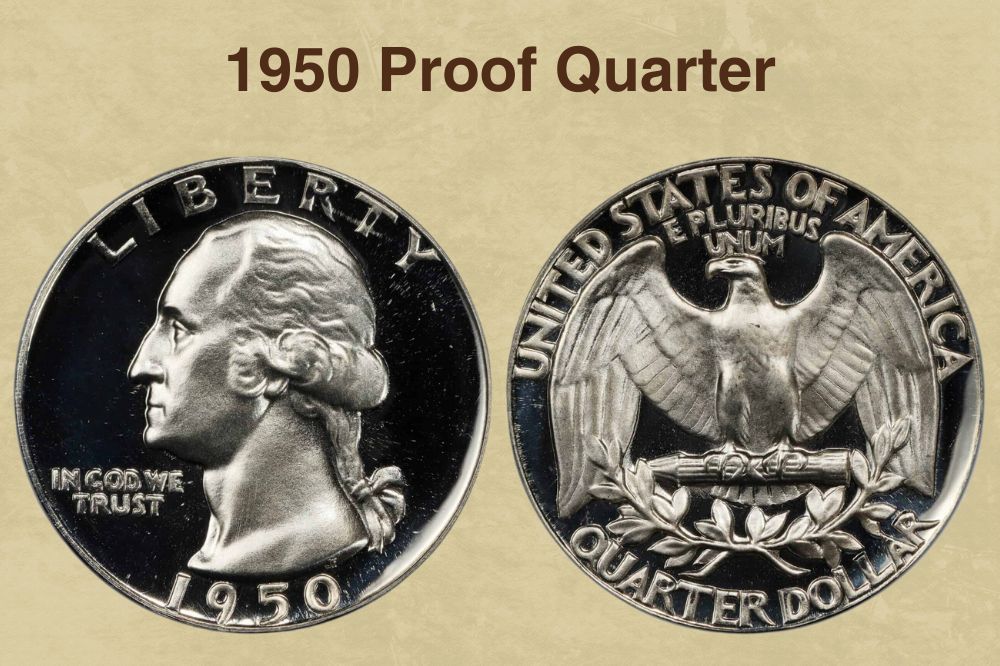
1950 Proof Quarter Value

The 1950 Proof quarter is a genuine milestone coin: it was the first Washington quarter proof issued after the Mint suspended proof production in 1942 due to World War II. The 51,386 sets produced represented a huge jump in collector demand — more than all the Mint’s proof sets from 1940, 1941, and 1942 combined — and set the stage for the explosive growth of proof collecting through the rest of the decade.

Each 1950 Proof Set was packaged in cellophane flips inside a small cardboard box and sold for $2.10 per set (equivalent to approximately $25.92 in 2024 dollars). That modest price makes the current $550–$600 value of a plain PR68 example — and the $31,200 record for a PR68DCAM — all the more remarkable.

1950 Proof Quarter Price/Grade Chart

Price by 1-70 Grade (Latest Auction Records Included)

Updated: 2026-05-12 02:35:34

The historical significance and strong collector following have produced consistent auction results that reflect steady appreciation over the decades.

Date PlatformPrice Grade

Market activity remains robust year-round, with 1950 Proof Quarters maintaining steady collector interest among both proof specialists and Washington Quarter completists seeking this pivotal transitional issue.

Market activity: 1950 Proof Quarter


1950 Quarter Value — CAM Proof (Cameo Designation)

1950 CAM Quarter Value

A Cameo (CAM) proof is one where the raised design elements — like Washington’s portrait and the eagle — show a frosted, almost white appearance against the mirror-like reflective fields. This contrast only occurs on coins struck from freshly prepared dies, which is why it was rare even in 1950: CAM contrast was possible only for the first few hundred strikes from a properly prepared die pair.

PCGS has attributed its Cameo designation to just 4.24% of the 3,214 grading events it has recorded for 1950 proof quarters through June 2025. NGC’s data shows a slightly higher Cameo rate of 6.89% across its 3,202 grading events — still a small fraction of the 51,386 coins originally struck.

The combined certified population from both services represents approximately 12.1% of the total mintage, meaning thousands of surviving proofs have never been professionally examined. If you have a 1950 proof with visible contrast, having it evaluated by PCGS or NGC could reveal hidden Cameo value.

1950 CAM Quarter Price/Grade Chart

Price by 1-70 Grade (Latest Auction Records Included)

Updated: 2026-05-12 02:35:34

The combination of striking visual appeal and genuine scarcity has generated exceptional auction results that consistently exceed expectations across all grade levels.

Date PlatformPrice Grade

Market activity shows intense competition among proof specialists, with 1950 CAM Quarters creating bidding excitement whenever quality examples become available.

Market activity: 1950 CAM Quarter


1950 Quarter Value — DCAM Proof: The Rarest Washington Quarter

1950 DCAM Quarter Value

The Deep Cameo (DCAM) designation — called “Ultra Cameo” by NGC — represents the absolute extreme of proof quality: deeply frosted, bright-white devices set against jet-black mirror fields, creating an almost three-dimensional visual impact. PCGS CoinFacts compares finding a 1950 DCAM to finding Tanzanite, a mineral rarer than diamonds — and the certified population data backs that up.

As of June 2025, PCGS has awarded Deep Cameo to just 11 examples in its entire grading history of this coin, while NGC has recorded only 12 Ultra Cameo grading events. The top population sits at just two examples each at PCGS PR68DCAM and NGC PF68UC — there is literally nothing finer certified at either service.

Jaime Hernandez of PCGS has specifically noted that fewer than a dozen Deep Cameo examples survive across all grades. That scarcity, combined with spectacular eye appeal, is why auction results have reached $31,200 (Heritage Auctions, January 2022) and $22,800 (Stack’s Bowers, June 2023) for the same coin in PR68DCAM.

1950 DCAM Quarter Price/Grade Chart

Price by 1-70 Grade (Latest Auction Records Included)

Updated: 2026-05-12 02:35:34

The exceptional rarity and stunning visual impact have produced spectacular auction results that consistently set new benchmarks for Washington Quarter proofs.

Date PlatformPrice Grade

Market activity remains highly selective and intensely competitive, with each 1950 DCAM Quarter appearance generating significant excitement among the most advanced proof collectors and registry participants.

Market activity: 1950 DCAM Quarter

Also Read: What Quarters Are Worth Money


Rare 1950 Quarter Value Errors: Full List with Prices

The 1950 Washington Quarter series is unusually rich in error varieties because of the die-preparation challenges the Mint faced during its post-war transition back to peacetime production. Errors range from the dramatic over-mint-mark varieties — where the wrong mint mark was punched into a die — to subtler doubled-die and repunched-mint-mark varieties that reward careful examination under magnification.

Understanding these errors is critical to unlocking the true 1950 Quarter Value spectrum, since a coin that looks ordinary in hand could be a $29,000 rarity if its mint mark tells the right story.

1. 1950 DDR FS-801 Errors

1950 DDR FS-801 Errors

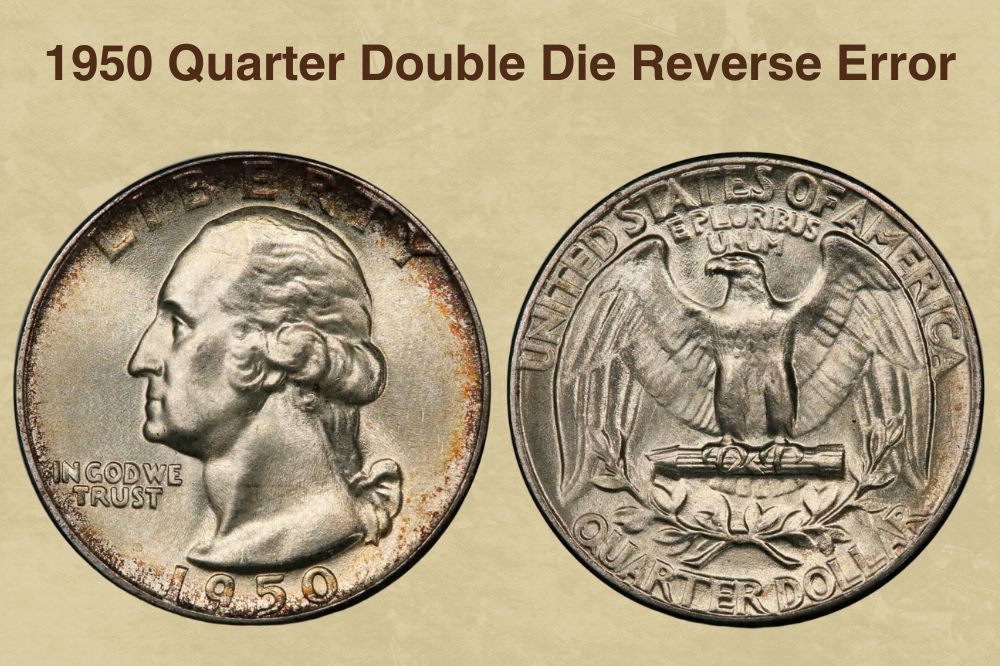
The 1950 DDR (Doubled Die Reverse) FS-801 is a Philadelphia Mint variety showing visible doubling on the reverse inscriptions “UNITED STATES OF AMERICA” and “QUARTER DOLLAR.” A DDR — Doubled Die Reverse — occurs when the working die receives multiple misaligned impressions from the master hub during die preparation, creating a shadow or separation effect on all coins struck from that die.

The FS-801 designation comes from the Fivaz-Stanton (FS) variety numbering system, which is the industry-standard reference for catalogued die varieties on U.S. coins. Under 5–10x magnification, the rim lettering on this variety clearly shows each letter with a distinct duplicate image beside it.

1950 DDR FS-801 Price/Grade Chart

Price by 1-70 Grade (Latest Auction Records Included)

Updated: 2026-05-12 02:35:34

2. 1950-D DDR Errors (FS-801 And FS-802)

1950-D DDR Errors (FS-801 And FS-802)

Denver produced two distinct DDR varieties in 1950, catalogued as FS-801 and FS-802. The FS-801 shows doubling concentrated in the upper rim lettering, while the FS-802 has more pronounced separation in the lower inscriptions and the eagle’s details — making these two separate varieties on the same coin type, requiring careful attribution to identify correctly.

Both occurred through the same mechanism as all doubled dies: misaligned hub impressions during die preparation at the Denver facility. Attribution requires magnification and side-by-side comparison with reference images, making them rewarding varieties for collectors who enjoy the detective work of variety hunting.

1950-D DDR Price/Grade Chart

Price by 1-70 Grade (Latest Auction Records Included)

Updated: 2026-05-12 02:35:34

3. 1950-D/D RPM FS-501 Errors

1950-D/D RPM FS-501 Errors

The 1950-D/D RPM (Repunched Mint Mark) FS-501 shows a Denver “D” that was hand-punched into the die more than once at slightly different positions, creating a visible doubling or shadow within the “D” itself. RPM — Repunched Mint Mark — varieties like this one were common before 1990, when all U.S. mint marks were punched into working dies by hand rather than being included in the master die.

The FS-501 classification indicates specific positioning of the secondary punch relative to the primary, distinguishing it from other D/D varieties. While less dramatic than the overdate errors, RPM varieties have a dedicated collector base and represent an important window into the era of manual mint mark application.

1950-D/D RPM FS-501 Price/Grade Chart

Price by 1-70 Grade (Latest Auction Records Included)

Updated: 2026-05-12 02:35:34

4. 1950-D/S Errors

1950-D/S Errors

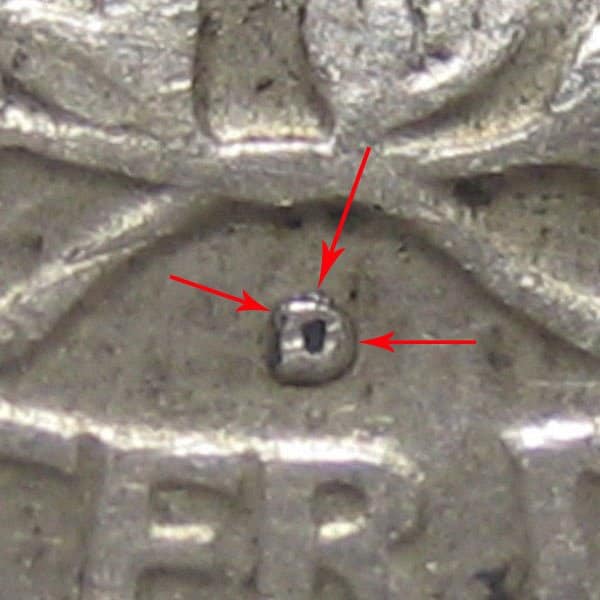
The 1950-D/S is one of the most famous error varieties in the entire Washington Quarter series — a Denver “D” mint mark stamped directly over a San Francisco “S” mint mark, leaving the “S” partially visible beneath the “D.” This occurred when dies originally intended for San Francisco were repurposed and re-punched for use at Denver, a cost-saving practice at a time when the Mint was readjusting to peacetime production demands.

The best way to identify this variety is to examine the upper and upper-left area of the “D” under 5–10x magnification, where portions of the underlying “S” remain clearly visible. In top condition, this variety achieved $29,375 at Heritage Auctions in June 2013 (PCGS MS67), and an MS66 example sold for $9,400 in 2014 — with lower grades still bringing strong premiums from error collectors.

1950-D/S Price/Grade Chart

Price by 1-70 Grade (Latest Auction Records Included)

Updated: 2026-05-12 02:35:34

Discover the true value of your coin collection with the Coin Value Checker App, featuring comprehensive authentication tools and real-time market data to help you identify valuable doubled die varieties and other numismatic treasures.

Coin Value Checker APP3
Coin Value Checker APP Screenshot

5. 1950-D/S OMM FS-601 Errors

1950-D/S OMM FS-601 Errors

The 1950-D/S OMM (Over Mint Mark) FS-601 is a related but distinct variety from the famous D/S overdate. In this case, the original “S” mint mark was ground or filed off the die before the “D” was applied — meaning the underlying “S” is not clearly visible but may leave ghost impressions or subtle trace lines under ideal lighting.

This die alteration was a deliberate Mint action to repurpose dies, rather than an accidental punch-over-punch as in the more famous variety. The FS-601 designation specifies the exact positioning and characteristics of the ghost impression, making proper attribution by a knowledgeable specialist essential for this scarce variety.

1950-D/S OMM FS-601 Price/Grade Chart

Price by 1-70 Grade (Latest Auction Records Included)

Updated: 2026-05-12 02:35:34

6. 1950-S DDR FS-801 Errors

1950-S DDR FS-801 Errors

The San Francisco mint also produced its own DDR variety in 1950, classified as FS-801, with doubling most evident in “UNITED STATES OF AMERICA,” “QUARTER DOLLAR,” and portions of the eagle. Like its Philadelphia and Denver counterparts, this variety resulted from a misaligned hub impression during reverse die preparation at the San Francisco facility.

The doubling is most easily spotted in the rim lettering under moderate magnification, where each letter shows a distinct shadow or separation effect. This variety is particularly interesting to collectors because it shares a production year with the legendary 1950-S/D overdate, giving San Francisco two premium varieties in a single issue.

1950-S DDR FS-801 Price/Grade Chart

Price by 1-70 Grade (Latest Auction Records Included)

CoinVaueChecker App 10

Updated: 2026-05-12 02:35:34

7. 1950-S/S RPM FS-501 Errors

1950-S/S RPM FS-501 Errors

The 1950-S/S RPM FS-501 is a San Francisco repunched mint mark variety, where the “S” punch was applied to the die twice at slightly different angles or positions. The result is a doubled or shadowed “S” with the secondary impression visible beside or slightly overlapping the primary strike.

This variety carries the FS-501 designation because the positioning and strength of the secondary punch meet the specific criteria for this catalogued variety — distinguishing it from other potential S/S RPM types. While more subtle than the overdate errors, this coin appeals strongly to variety specialists who appreciate the craft of mint mark attribution.

1950-S/S RPM FS-501 Price/Grade Chart

Price by 1-70 Grade (Latest Auction Records Included)

Updated: 2026-05-12 02:35:34

8. 1950-S/D Errors

1950-S/D Errors

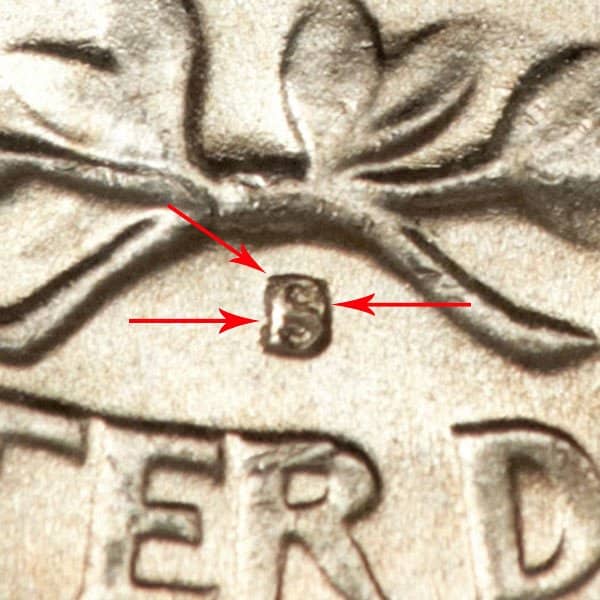
The 1950-S/D is the mirror image of the D/S variety — here, a San Francisco “S” was punched over a Denver “D” when dies prepared for Denver were transferred to and repurposed at San Francisco. The underlying “D” is detectable beneath the “S,” and many collectors regard the 1950-S/D as clearer and more diagnostically satisfying than the D/S variety.

This coin achieved $16,450 at auction in MS67 and is recognized by Greysheet as one of the most important die varieties in the entire Washington quarter series. Because the “S” and “D” are visually distinct shapes, the diagnostic is easier to spot than on some other over-mint-mark varieties — making it a favorite among collectors new to variety attributions.

1950-S/D Price/Grade Chart

Price by 1-70 Grade (Latest Auction Records Included)

Updated: 2026-05-12 02:35:34

Take the guesswork out of coin collecting with the Coin Value Checker App, your essential companion for spotting valuable error coins and determining accurate market values with professional-grade identification features.

Coin Value Checker APP4
Coin Value Checker APP Screenshot

9. 1950-S/D OMM FS-601 Errors

1950-S/D OMM FS-601 Errors

The 1950-S/D OMM FS-601 is the San Francisco equivalent of the D/S OMM variety: an “S” was applied over a die from which the original “D” had been deliberately removed. Unlike the main 1950-S/D variety where both mint marks remain visible, this over-mint-mark shows only faint ghost impressions or trace outlines of the original “D” beneath the “S.”

Ghost impressions are best revealed under raking (angled) light rather than direct illumination. The FS-601 designation establishes the specific characteristics that differentiate this OMM from others, and proper attribution by a variety specialist or professional grading service is strongly recommended before buying or selling.

1950-S/D OMM FS-601 Price/Grade Chart

Price by 1-70 Grade (Latest Auction Records Included)

Updated: 2026-05-12 02:35:34

Also Read: 20 Rare Washington Quarter Errors Worth Money (Full List with Pictures)


Where to Sell Your 1950 Quarter Value Collection

Whether you have a circulated Philadelphia strike worth a few dollars over silver melt or a Deep Cameo proof that could bring tens of thousands, the right selling platform matters. Major auction houses like Heritage Auctions and Stack’s Bowers are the best venue for high-value examples — both have sold 1950 Quarter rarities at record prices and have the collector base needed to generate competitive bidding.

Check out now: Best Places To Sell Coins Online (Pros & Cons)


1950 Quarter Value Market Trend

Market Interest Trend Chart - 1950 Quarter

*Market Trend Chart showing the number of people paying attention to this coin.


FAQ About 1950 Quarter Value

1. Are 1950 quarters worth anything?

Yes — every 1950 quarter is worth at least its silver content. At current silver prices, the melt value runs around $12–$15 depending on the spot price, while even circulated examples typically sell for $6–$8 in the numismatic market. High-grade or proof examples are worth significantly more, from $50 for a basic MS64 up to $31,200 for the rarest proof designations.

2. Is a 1950 quarter all silver?

Every 1950 Washington quarter — whether struck at Philadelphia, Denver, or San Francisco — is composed of 90% silver and 10% copper. The total silver content is 0.1808 troy ounces per coin, giving all 1950 quarters an intrinsic silver value floor that fluctuates with the silver spot price.

3. What is the rarest 1950 quarter variety?

The rarest 1950 quarter is the Deep Cameo (DCAM) proof, with fewer than a dozen examples certified across all grades by PCGS and only 12 Ultra Cameo grading events recorded by NGC through June 2025. The top population sits at just two PCGS PR68DCAM examples — coins that last sold for $31,200 and $22,800 respectively.

4. How do I identify a 1950-D/S overdate error on my quarter?

Examine the mint mark area on the reverse (below the eagle) under 5–10x magnification. On a genuine 1950-D/S, you will see portions of an “S” shape visible at the upper or upper-left area of the “D” mint mark. The underlying “S” was not fully obliterated when the “D” was re-punched, so careful inspection reveals traces of both letters. Professional attribution by PCGS or NGC is strongly recommended before assigning high value to any suspected example.

5. What do CAM and DCAM mean, and how do they affect 1950 Quarter Value?

CAM stands for Cameo and DCAM stands for Deep Cameo — both are designations awarded by PCGS (the Professional Coin Grading Service) to proof coins where the raised design elements (devices) show a frosted white contrast against mirror-like fields. DCAM requires the deepest, most dramatic contrast and adds the largest premium: a plain PR67 proof is worth around $100, a CAM PR67 jumps to several hundred dollars, and a DCAM PR65 is valued at $2,500–$2,800. The difference in 1950 Quarter Value between a plain proof and a Deep Cameo proof can be tens of thousands of dollars.

6. How many 1950 DCAM quarters are known to exist?

Fewer than a dozen examples have been verified across all grades. PCGS has certified just 11 Deep Cameo specimens in its entire grading history of this coin, and NGC has recorded only 12 Ultra Cameo (its equivalent term) grading events through June 2025. The top population is just two examples at each service in the highest-certified grade of PR68 — making the 1950 DCAM among the scarcest designated proof coins in the Washington quarter series.

7. What did a 1950 Proof Set cost when it was first released?

The 1950 Proof Set sold for just $2.10 per complete five-coin set when issued by the U.S. Mint — equivalent to approximately $25.92 in 2024 dollars. At the time, that price was considered reasonable but the 51,386 sets sold was already considered a large run. Today, a complete 1950 Proof Set in original packaging trades for hundreds of dollars, and individual top-grade coins from these sets — especially DCAM quarters — can bring thousands at auction.

8. Where is the mint mark on a 1950 quarter, and why does it matter?

The mint mark on all 1950 Washington quarters is located on the reverse, just below the center of the eagle. Philadelphia-struck coins have no mint mark, Denver coins show a “D,” and San Francisco coins show an “S.” The mint mark location matters enormously for this year because it is precisely where the rare overdate errors appear: the 1950-D/S shows a residual “S” beneath the “D,” and the 1950-S/D shows a residual “D” beneath the “S.”

9. Should I clean my 1950 silver quarter to improve its value?

Never clean a coin — this is one of the most important rules in collecting. Cleaning with polish, baking soda, or any abrasive permanently destroys the original mint luster and typically reduces a coin’s value by 50–90%, often pushing it down to near-melt value regardless of grade. Professional conservators may carefully remove environmental contaminants in specific cases, but any home cleaning will harm rather than help your coin’s 1950 Quarter Value.

10. What is the rarest Washington quarter overall, and how does the 1950 quarter compare?

The rarest Washington quarter overall is the 1932-D, with only 436,800 struck; a PCGS MS66 example holds the auction record at $143,750. The 1950 quarter is not a key date in the circulation series, but the 1950 DCAM proof competes directly with the rarest pre-war issues in terms of certified population and auction results. In terms of proof rarity, only the 1950 DCAM has a certified population of fewer than a dozen examples at PCGS — a figure that rivals the scarcity of the great key dates in terms of absolute availability.

You May Also Like