Coin Value Contents Table
Can you believe it’s been over 70 years since the first 1949 Half Dollar was minted? Yet, this fascinating piece of American history still holds its value to this day. Although the world has changed a lot since then, the 1949 Half Dollar remains a highly coveted artifact of a bygone era.
Whether you’re an avid coin collector or just starting out in the hobby, understanding the 1949 Half Dollar value is crucial. In this article, we’re going to dive into the rich history of the 1949 Half Dollar and explore why it’s still a valuable commodity today. Trust us, you won’t want to miss this!
1949 Half Dollar Value Chart |
||||
| Mint Mark | Good | Fine | Extremely Fine | Uncirculated |
| 1949 Half Dollar without Mint Mark | $11 | $11 | $13.50 | As high as $8500 |
| 1949 “D” Half Dollar | $11 | $11 | $13.50 | As high as $2000 |
| 1949 “S” Half Dollar | $15 | $16.50 | $20 | As high as $15,500 |
1949 Half Dollar Grading
The 1949 Half Dollar is graded by carefully inspecting the coin’s condition, including its surface, features, and general appearance.
Collectors and numismatists grade the state of a coin on a scale from 1-70, with 70 representing the best possible grade. The degree of wear, any damage or flaws, and the quantity of original mint shine left all contribute to a coin’s grade.
Sharp details, the original brilliance, and the absence of wear are all characteristics of a coin with a high grade, such as MS-65 or higher. Accurate coin grading is necessary to establish the coin’s worth and validity.
| # | Grade |
|---|---|
| 1 | Basal State-1 |
| 2 | Fair |
| 3 | Very Fair |
| 4, 5, 6 | Good |
| 7, 8, 10 | Very Good |
| 12, 15 | Fine |
| 20, 30 | Very Fine |
| 40 | Extremely Fine |
| 50 | About Uncirculated |
| 60 | Mint State |
| 65 | Mint State |
| 70 | Mint State |
Please check our grading guides to know your coin scale, It’s the necessary step to know the exact value of your coin.
Check out now: How to Grade Franklin Half Dollar?
1949 No Mint Mark Half Dollar Value
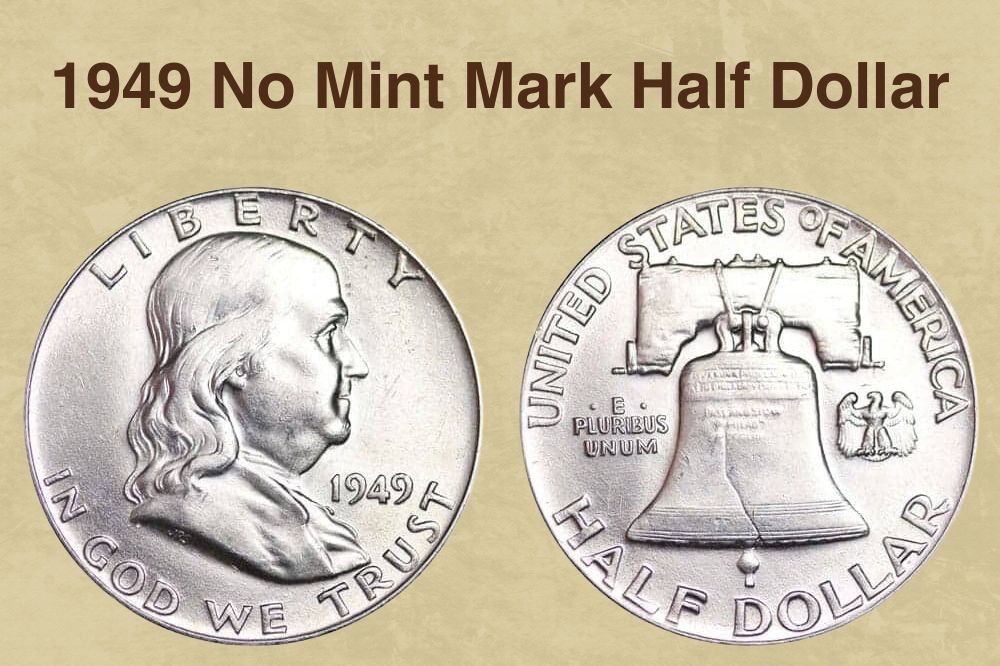
The classic 1949 Half Dollar without a mint mark symbolizes an important period in American history. Although it may appear to be merely a piece of currency, this coin has a rich history and intrinsic value, making it a necessary addition to the portfolio of any coin lover.
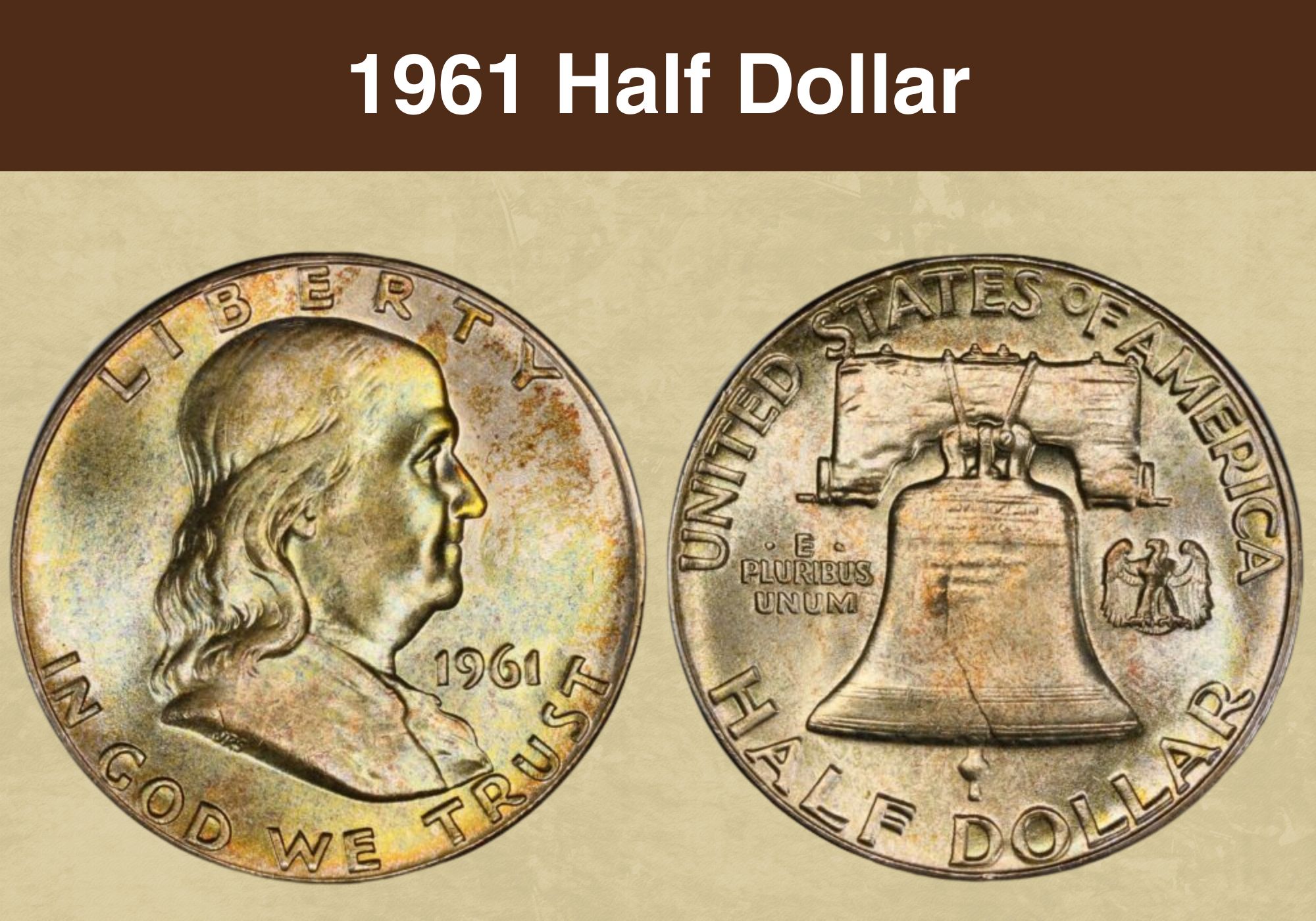
The Philadelphia Mint, the only mint operational at the time, produced the 1949 Half Dollar. This coin is a variant of the Franklin Half Dollar series, created in 1948 to commemorate Benjamin Franklin’s birth’s 200th anniversary.
The obverse side of the coin of the 1949 Half Dollar without a mint mark depicts an image of Benjamin Franklin. John R. Sinnock, the United States Mint’s Chief Engraver from 1925 to 1947, crafted this design. Sinnock was also in charge of creating the Roosevelt dime, which continues to be in circulation today.
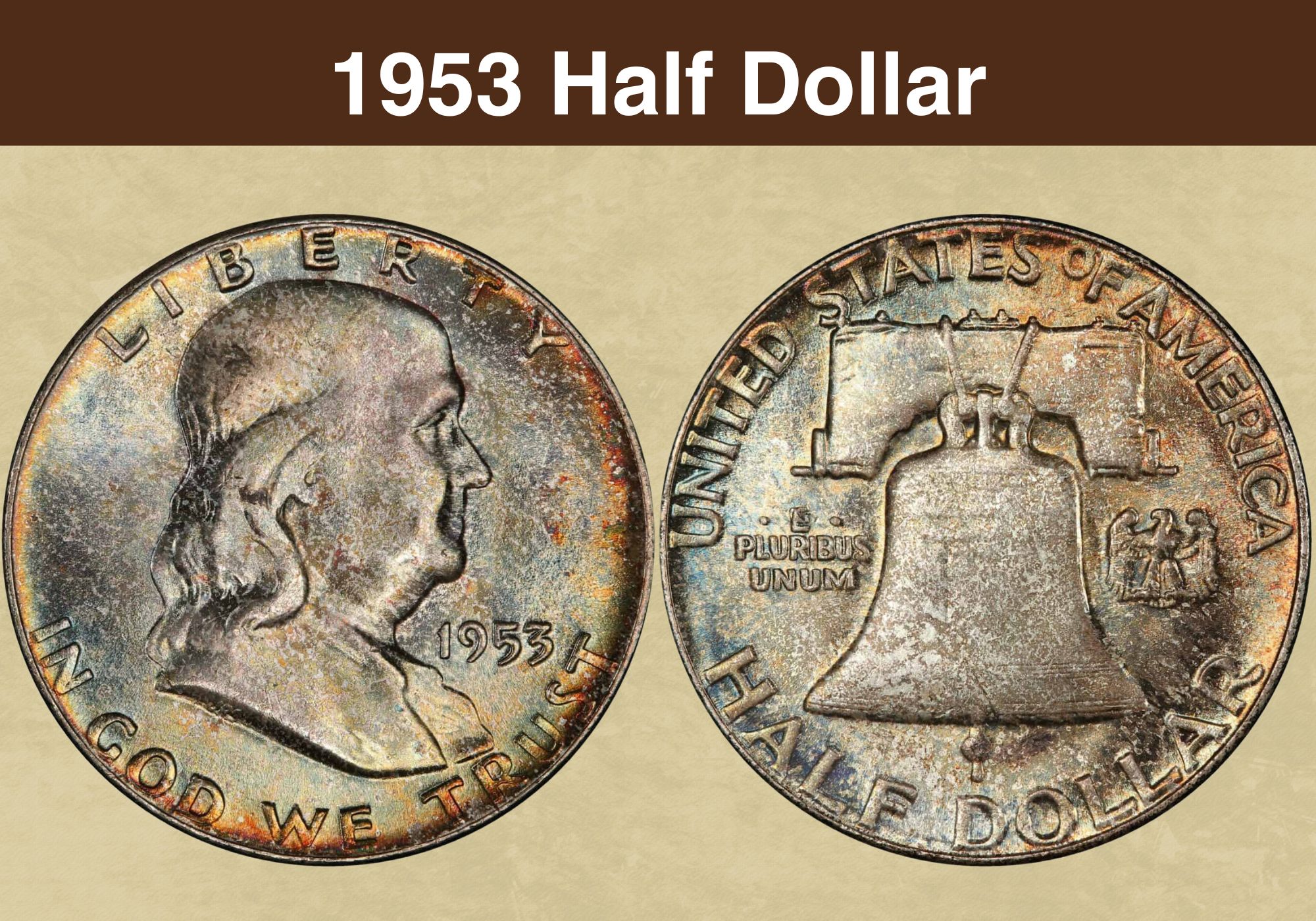
Franklin is shown on the coin’s obverse side with a serious look, donning his well-known spectacles and a high collar. Around the image are the phrases “LIBERTY” and “IN GOD WE TRUST,” while on the bottom of the coin is the year “1949.”
The Liberty Bell, a representation of American independence and freedom, may be seen on the coin’s reverse. You can also find the inscription “UNITED STATES OF AMERICA” and “E PLURIBUS UNUM,” meaning “out of many, one,” alongside the denomination of “HALF DOLLAR” on the back of the coin.
Despite the absence of a mint mark, the 1949 Half Dollar had a significant mintage, with 5,614,000 coins being produced.
While this may appear to be a large number, it’s worth noting that the Franklin Half Dollar series was top-rated among both collectors and the general public. Furthermore, locating high-quality examples of these coins can be challenging due to heavy circulation.
While the 1949 Half Dollar without a mint mark may not be classified as a rare coin, it’s still a highly valuable addition to any coin collection since they were extensively circulated.
Moreover, coins that have well-preserved surfaces and clear-cut details are highly coveted by collectors, which adds to their overall value.
The condition and grade of a 1949 Half Dollar without a mint mark, among other things, will determine how much it is worth. A circulating coin will often sell for $11 to $25 as of 2023.
On the other hand, a 1949 Half Dollar in MS-65 condition can be valued at around $175 and is a wonderful addition to any coin collection.
Coins with a grade of MS-66 or MS-67 can fetch prices in the thousands of dollars from collectors looking for higher-quality specimens, underscoring the rarity and numismatic appeal of the currency.
Any serious coin collector must own a 1949 Half Dollar without a mint mark, regardless of grade, as it is a priceless piece of American history.
1949 “D” Half Dollar Value
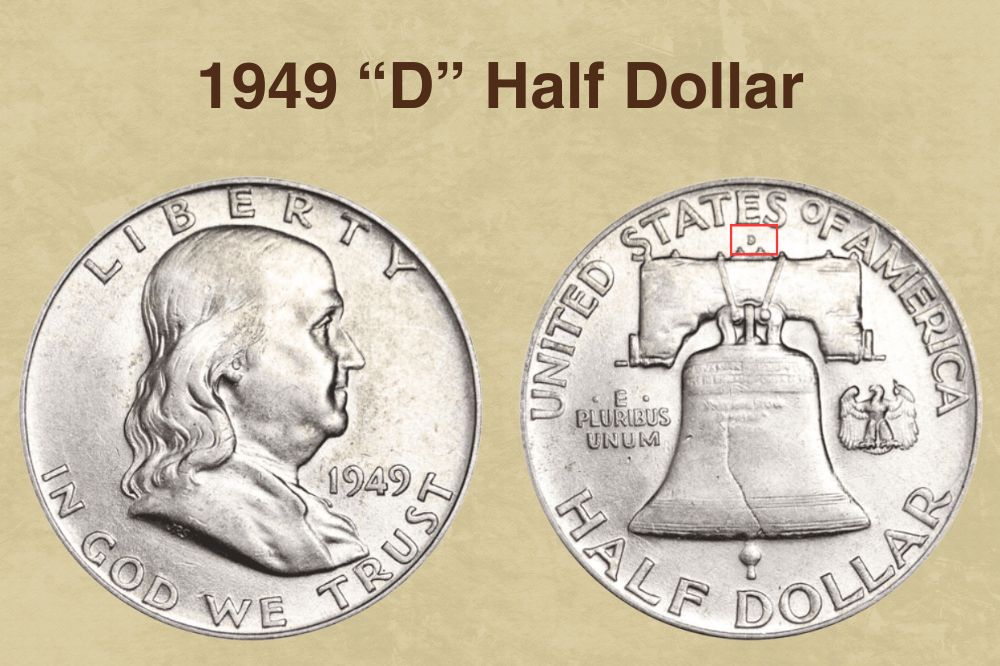
The 1949 “D” Half Dollar is a distinctive and worthwhile addition to any coin collection. The “D” mintmark identifies the piece as being produced in Denver, Colorado.
This coin’s history begins in the post-World War II era when the nation went through an unheard-of period of economic boom and prosperity.
The coin was made as a part of the Franklin Half Dollar series, created in honor of Benjamin Franklin, one of the most well-known founding fathers of the United States.
The artist of the 1949 “D” Half Dollar was John R. Sinnock, the Chief Engraver of the United States Mint. Sinnock is renowned for his work on numerous coins and medals, notably the World War II Victory Medal and the Roosevelt Dime.
The coin’s obverse side depicts a picture of Benjamin Franklin, while the slogans “LIBERTY” and “IN GOD WE TRUST” are placed around the picture.
The Liberty Bell is shown on the coin’s reverse side, and the words “UNITED STATES OF AMERICA,” “E PLURIBUS UNUM,” and “HALF DOLLAR” are etched all around the bell.
The 1949 “D” Half Dollar has a diameter of 30.6 millimeters, weighs 12.50 grams, and is composed of 90% silver and 10% copper. The coin is 2.15 millimeters thick and has a reeded edge.
Silver has historically been a precious and sought-after metal, so its composition and weight make it a popular currency with investors and collectors.
The 1949 “D” Half Dollar occupies a particular place in American numismatic history, even if it may not be the rarest coin in the Franklin Half Dollar series. It’s essential to keep in mind that not all of the 1949 “D” Half Dollar’s 4,120,600 total mintage have withstood the test of time. The number of destroyed or lost coins increased the coin’s attraction and mystique.
Because of its long history of widespread use, it can be challenging to locate high-grade copies of the 1949 “D” Half Dollar. In fact, most of these coins saw heavy commercial use, resulting in wear and tear that reduced their worth.
The value of the coin varies to some extent based on a number of variables. The value for circulated copies can range from $11 to $30. If someone is fortunate enough to find a coin that is MS-66 or MS-67, they may be able to sell it for thousands of dollars.
The coin’s overall condition, rarity, and historical relevance are the primary determinants of its worth because they all have a significant impact on the coin’s overall value. For example, take a look at this 1949 “D” Half Dollar graded MS-66. It was sold for $11,500 at an auction in 2011!
1949 “S” Half Dollar Value
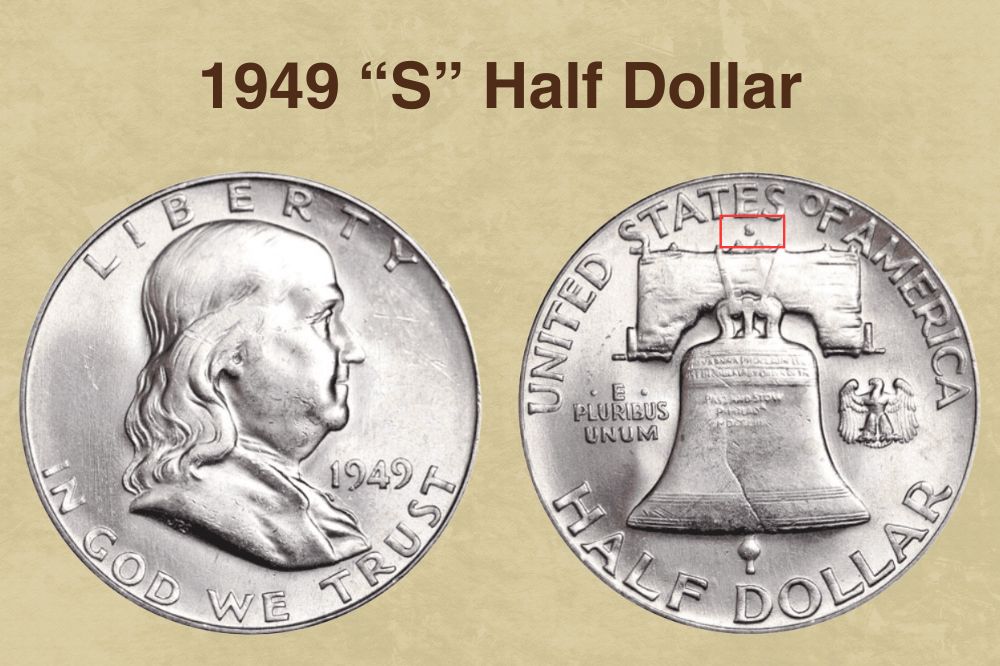
The United States Mint created a large number of Franklin Half Dollar coins between 1948 and 1963, including the 1949 “S” Half Dollar. The “S” mint mark on the coin implies that it was minted at the San Francisco Mint, one of the three mints that manufactured coins during this era.
The face value of the 1949 “S” Half Dollar is 50 cents and is made up of 90% silver and 10% copper. The coin weighs 12.50 grams and has a diameter of 30.6 mm.
Similar to its other varieties, the obverse of the coin displays a portrait of Benjamin Franklin, one of the United States Founding Fathers. The reverse illustrates the Liberty Bell with the phrases “E PLURIBUS UNUM” and “UNITED STATES OF AMERICA” written on it.
The 1949 “S” Half Dollar is not exactly a rare coin, as a considerable number of 3,744,000 coins were minted. Yet, obtaining high-grade specimens can be a challenging pursuit due to their extensive use in daily transactions. As a result, heavily circulated coins may not fetch the same value as those in pristine condition.
A circulated 1949 “S” half dollar is currently worth between $11 and $45, making it a reasonable choice for collectors just beginning to amass a collection. Coins with a grade of MS-65 or higher and in superb condition, however, have a markedly higher value. In fact, an uncirculated 1949 “S” half dollar can sell for up to $15,500.
It should be noted that coins of higher grades are extremely rare, as many of them have been lost or burned down. These coins are scarce and in excellent shape, making them prized by investors and collectors.
In a rare occurrence, a 1949 “S” Half Dollar in near-perfect condition was sold for a staggering $9,600 at an auction in 2022.
This particular coin was graded MS-68 by the Professional Coin Grading Service (PCGS) and is considered one of the finest examples of the 1949 “S” Half Dollar in existence.
Its rarity and exceptional quality led to a heated bidding war among collectors, driving its final sale price to nearly ten times its face value. This impressive sale showcases the immense value and significance of rare coins like the 1949 “S” Half Dollar.
The 1949 “S” Half Dollar is significant not only for its historical value but also for its composition. It is mainly made of silver, like many coins produced at this time.
Yet eventually, the United States Mint stopped employing silver in coin manufacture because of the soaring silver price and the economic realities of the day.
As a result, the 1949 “S” Half Dollar is a priceless example of numismatic history because it dates back to the period when coins were still struck using precious metals.
Also read: 13 Most Valuable Franklin Half Dollars Worth Money
Rare 1949 Half Dollar Error List
1949 Half Dollar Bugs Bunny Error
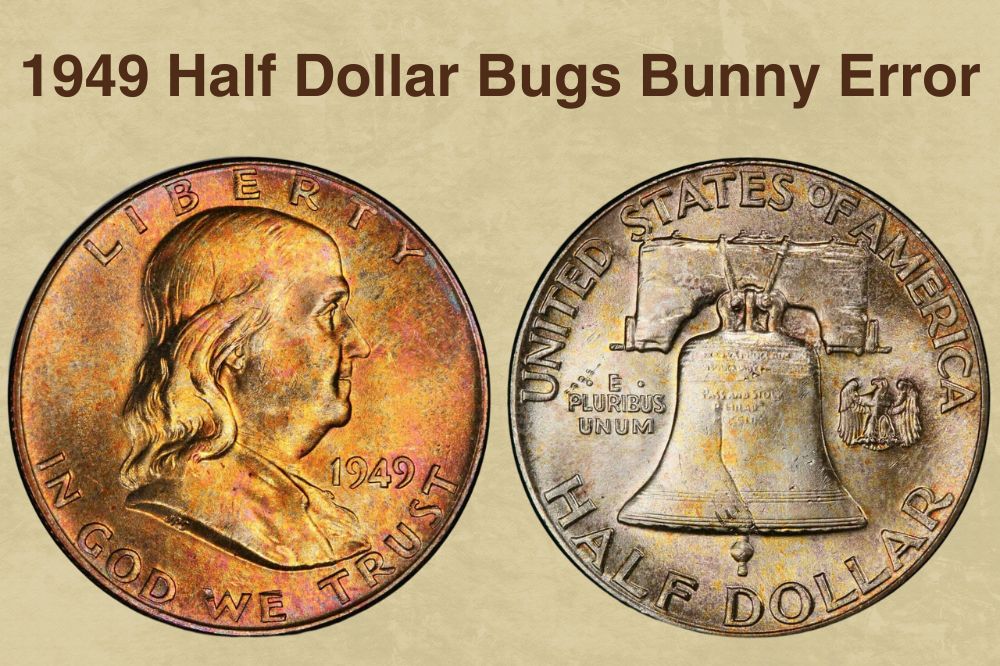
Die clashes on Benjamin Franklin’s figure led to the error, making it appear as though he has two protruding front teeth like the well-known cartoon figure.
This humorous mistake gives the coin’s design a whimsical touch and has helped it become well-liked among collectors.
An MS63-grade coin with the “Bugs Bunny” error was sold for $365 at an auction held on eBay. But an MS60-grade coin with the same error can be valued at $30 less. This is because the grade significantly affects the coin’s value.
1949 Half Dollar Double Die Error
The 1949 Franklin Half Dollar is one of the coins known to have a double die error, where the specifics on either the obverse or reverse of the coin are duplicated. The 1949 half dollar is one of many American coins that frequently include this kind of error.
The coin still needs to be rated despite the error, and depending on the level of doubling, it might fetch a higher price than its initial grade.
Due to their uniqueness and scarcity, double die error coins are frequently sought after by collectors, and as a result, they can command a premium in the collectible industry. Watch this video to learn more about rare 1949 Franklin Half Dollar errors!
Also read: 11 Most Valuable Half Dollars In Circulation
Where to Sell Your 1949 Half Dollar ?
Now that you know the value of your coins, do you know where to sell those coins online easily? Don’t worry, I’ve compiled a list of these sites, including their introduction, pros, and cons.
Check out now: Best Places To Sell Coins Online (Pros & Cons)
1949 Half Dollar FAQs
Are Ben Franklin half dollars worth anything?
Yeah, Ben Franklin half dollars can be very valuable. The value is determined by a number of elements, including the coin’s year, mintmark, condition, and scarcity. Depending on the coin, a Benjamin Franklin half-dollar may be worth hundreds of dollars or only its face value.
How much is a 50-year-old half dollar worth?
A circulated half dollar that is 50 years old is often worth 50 cents. Yet, if a coin is in exceptional shape or has specific unique qualities, it may have a higher value than others produced 50 years earlier.
How much silver is in a 1949 Franklin Half Dollar?
A 1949 Franklin Half Dollar contains 0.36169 troy ounces of silver. This coin is composed of 90% silver and 10% copper, a standard for many U.S. coins minted before 1965.