Coin Value Contents Table
- 1965 dime value Chart
- History of the 1965 Dime
- 1965 dime Types
- Features of the 1965 Dime
- 1965 Dime Grading
- 1965 Dime Value Guides
- 1965 No Mint mark dime Value
- 1965 dime with Full Bands Value
- 1965 SMS dime Value
- Rare 1965 Dime Error List
- Where to Sell Your 1965 Roosevelt Dime ?
- FAQ about the 1965 Roosevelt Dime
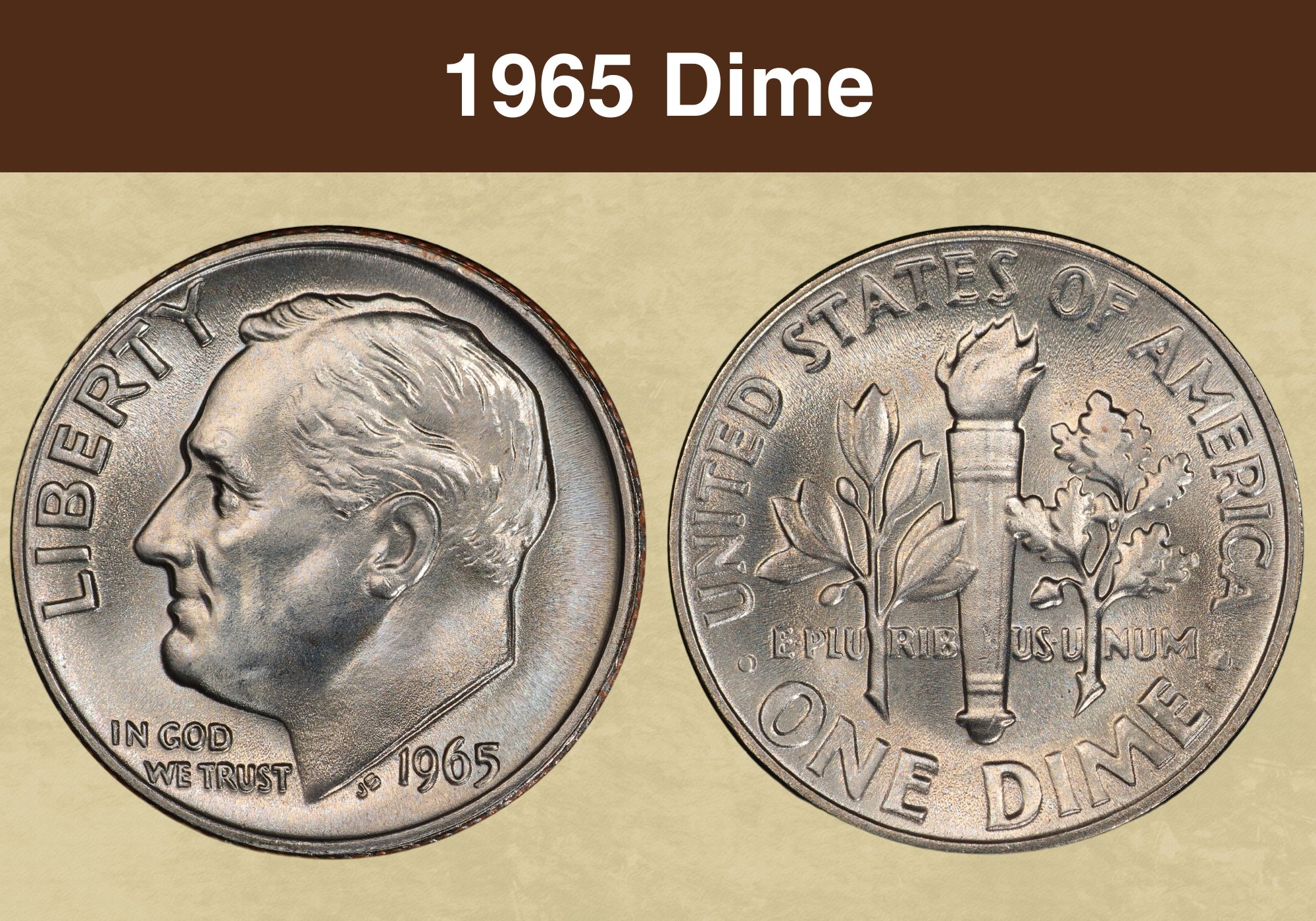
Roosevelt dimes were established in honor of Franklin Delano Roosevelt, the 32nd President of the United States of America. Those produced in 1965 were the first variation made of copper after the US Mint produced silver coins from 1946 to 1964.
In total, 1,654,500,570 coins from regular and special strikes were released into circulation, resulting in a relatively modest 1965 dime value. Besides quantity, their prices depend on their quality, while collectible error pieces can be costly.
1965 dime value Chart |
|
| Condition | 1965 dime |
| MS 65 | $12 |
History of the 1965 Dime
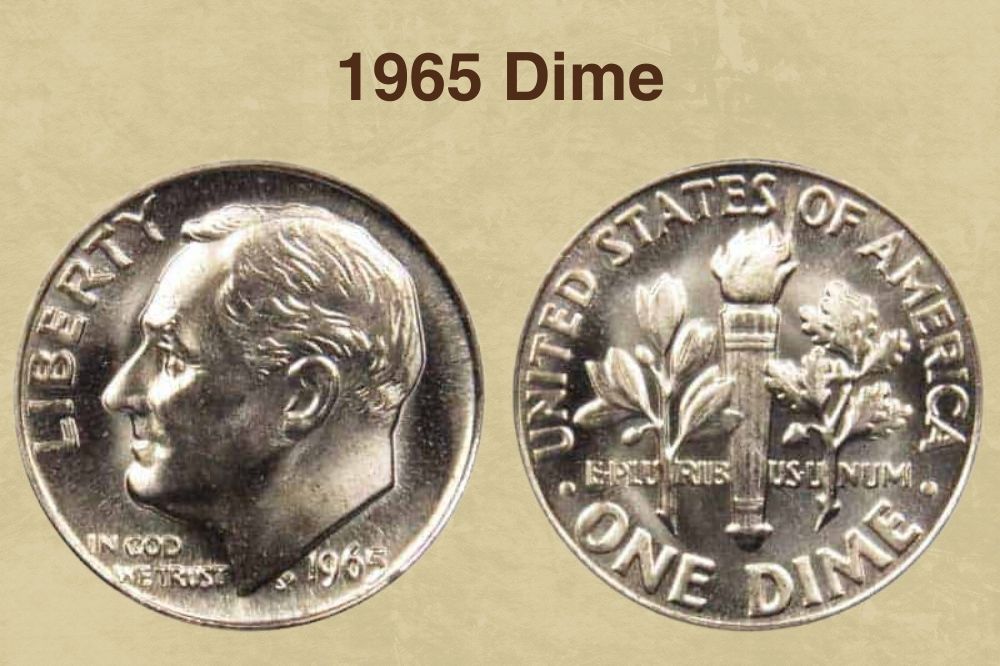
Roosevelt dimes are the latest, the sixth variation of this coin type in the series, appearing in circulation in 1946. Previously, the US Mint produced dismes made of 89.24% silver in 1792 and then five different ten-coin variations, including:
- Draped (1796-1807) and Capped (1809-1837) Bust dimes
- Seated Liberty dimes (1837-1891)
- Barber dimes (1892-1916)
- Mercury dimes/Winged Liberty Head dimes (1916-1945)
The last dime type was dedicated to beloved war-President Franklin Roosevelt after his death on April 12, 1945. This honorable man was a synonym for the war leader and great fighter against polio. He founded and supported the March of Dimes, helping hundreds of families with children suffering from the same health problem.
The first new coins were released the next year based on John R. Sinnock’s design. The rumor said that the initials JS placed on these coins obverse were dedicated to the Russian leader, Josef Stalin. Many Americans believed that Soviet agents caused that turmoil in the US Mint.
Since it was a touchy subject after WWII and the beginning of the Cold War, the officials gave their best to set the record straight and oppose the rumor. However, no one believed them, and many people were convinced that these initials were the way for America to honor Stalin on US coins.
1965 dime Types |
||
| Location | Year | Minted |
| Philadelphia | 1965 No Mint mark dime | 1,652,140,570 |
| Philadelphia | 1965 dime from Special Mint Set | 2,360,000 |
| Total | 1,654,500,570 | |
The 1965 Roosevelt dimes were the first in the series made of copper without the precious metal content. That clearly reflected the post-WWII America economy condition and tendency to save the economy.
The grand entry of copper dimes implied withdrawing prior silver ones. That act preserved the economy of the US, threatened by the massive silver coins hoarding, decreasing the coins amount in circulation.
Also read: Top 17 Most Valuable Roosevelt Dimes Worth Money
Features of the 1965 Dime
Like other coins in the series, the 1965 Roosevelt dimes were minted in honor of the 32nd President of the US. This particular year, only the mint in Philadelphia produced them in two variations.
Therefore, you can recognize pieces from the regular strike. Another type was those packed in Special Mint Set intended for collectors with four other coins depicting American presidents.
The obverse of the 1965 Roosevelt dime
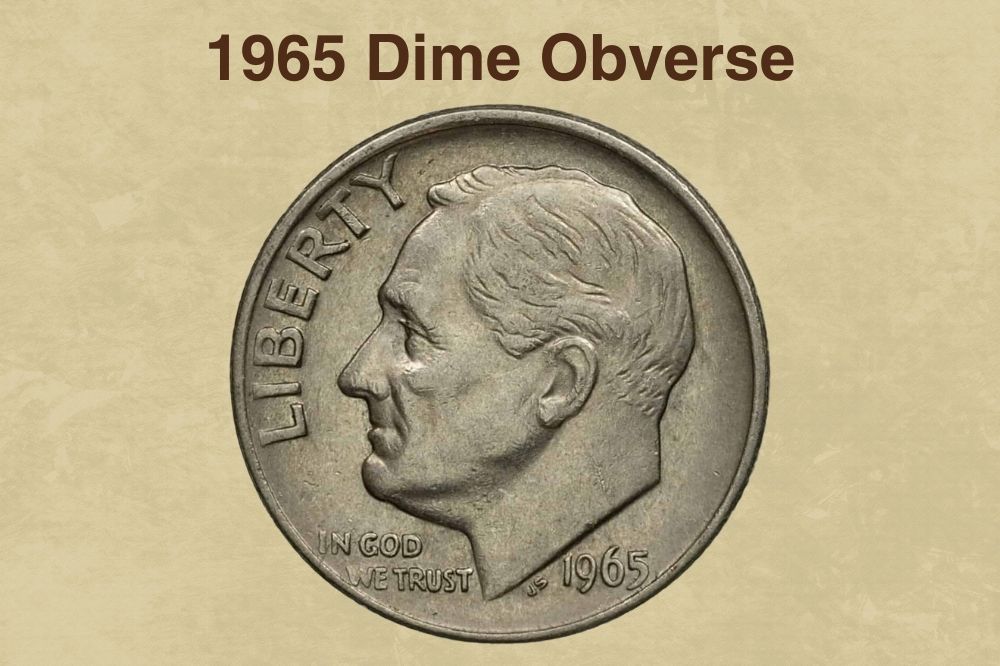
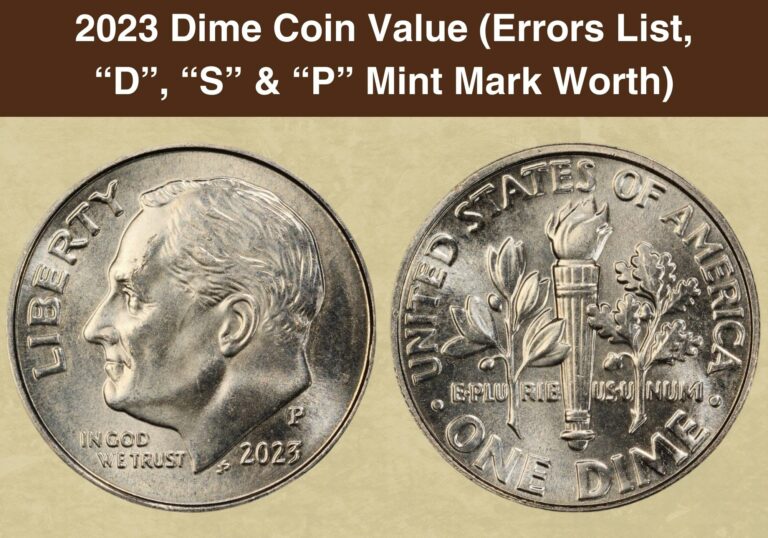
The 1965 Roosevelt dimes have the obverse with the portrait of Franklin Delano Roosevelt, former President of the US. The creator of this dime, John R. Sinnock’s initials JS are at the bottom of the bust, while the minting year, 1965, is placed just on the right in a more sizable font.
The word LIBERTY, written in capital letters, is along the left coin edge in front of the portrait. The required sentence, IN GOD WE TRUST, is divided into two rows under the central image’s bottom. It is positioned on the left coin side with letters I and W that slightly touch the coin band.
The reverse of the 1965 Roosevelt dime
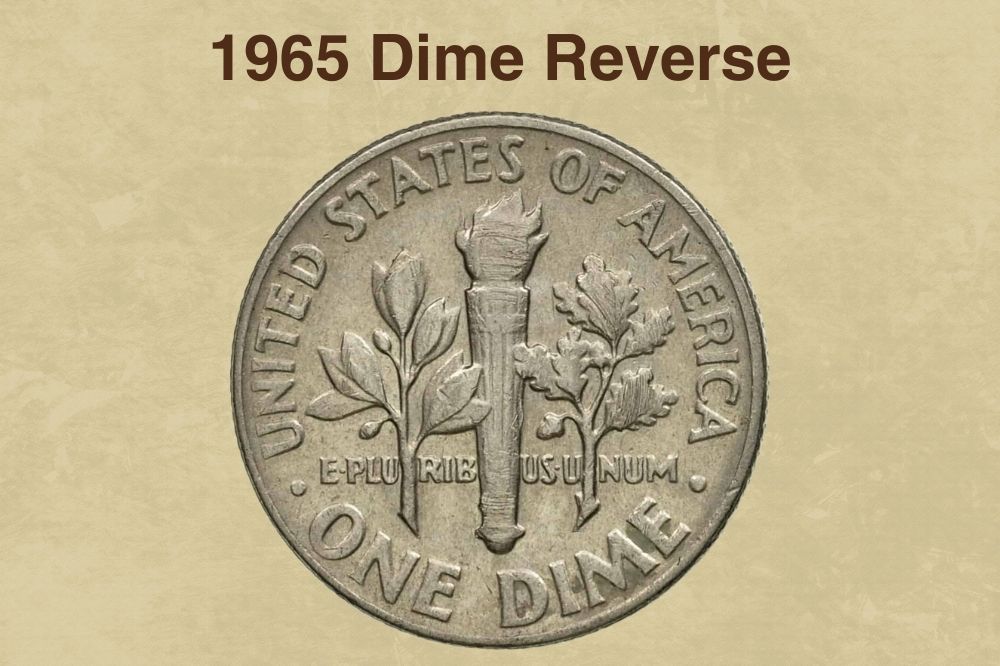
The torch occupies the center of the 1965 dime reverse. You can recognize all details in well-preserved pieces, including the flame, vertical grooves, and horizontally placed bands. This torch is the symbol of liberty, one of the most important American achievements.
On its left side is the olive twig, which represents peace as a necessary balance to war destruction. To the opposite side are oak leaves, symbolizing the independence and strength of the young nation. Since dimes minted in 1965 came from Philadelphia, they don’t have the mint mark struck left of the torch.
You can also see the inevitable country name written in capital letters, the UNITED STATE OF AMERICA, above the torch and twigs. The bottom rim is reserved for the denomination, while the well-known Latin phrase is on the right side.
1965 dime Details |
|
| Face value | Ten cents ($0.10) |
| Shape | Round |
| Compound | 91,67% of copper content, including copper core and cupronickel-clad coating |
| Coin thickness | 1.3 mm (0.051181 inches) |
| Coin diameter | 17.91 mm (0.70511 in inches) |
| Coin weight | 2.27 g (0.0801 ounces) |
| Edge | Reeded (118 reeds) |
Other features of the 1965 Roosevelt dime
The 1965 Roosevelt dimes are the first in the series without precious metal content. Up until this year, all of these coins were made of silver. However, the US Mint changed that because of increased hoarding, resulting in a shortage of dimes in circulation.
The very core of these coins is pure copper, and the covering is cupronickel alloy. Nickel color gives a silverish look to new coins, resembling the old variety made of 90% silver.
However, their compound includes 91.67% copper and very little nickel (only 8.33%) in total. These dimes are round with 118 reeds edges and have a diameter of 17.91 mm (0,705 inches). Their thickness is 1.3 mm (0.05118 inches).
The 1965 Roosevelt dimes are slightly lighter than the first version. They weigh 2.268 g (0.008 ounces), or a bit lighter than silver coins weighing 2.5 g (0.08037 troy ounces).
1965 Dime Grading
The Sheldon grading system is an indisputable authority for coin quality estimation in the world of the numismatic. This system grades coins from those of the lowest quality (non-collectible and collectible) to specimens in the best mint states, marked from MS 60 to MS 70.
| # | Grade |
|---|---|
| 1 | Basal State-1 |
| 2 | Fair |
| 3 | Very Fair |
| 4, 5, 6 | Good |
| 7, 8, 10 | Very Good |
| 12, 15 | Fine |
| 20, 30 | Very Fine |
| 40 | Extremely Fine |
| 50 | About Uncirculated |
| 60 | Mint State |
| 65 | Mint State |
| 70 | Mint State |
Please check our grading guides to know your coin scale, It’s the necessary step to know the exact value of your coin.
Check out now: How to Grade Roosevelt Dime?
1965 Dime Value Guides
As I have already mentioned, only the mint from Philadelphia minted 1965 Roosevelt dimes. It released 1,654,500,570 coins this year, representing a remarkable number necessary to replace missing silver pieces.
Besides regular coins, this mint reserved a significant mintage part for collectors. These coins were planned for the Special Mint Set of five American coins showing ex-presidents on the obverse.
1965 No Mint mark dime Value
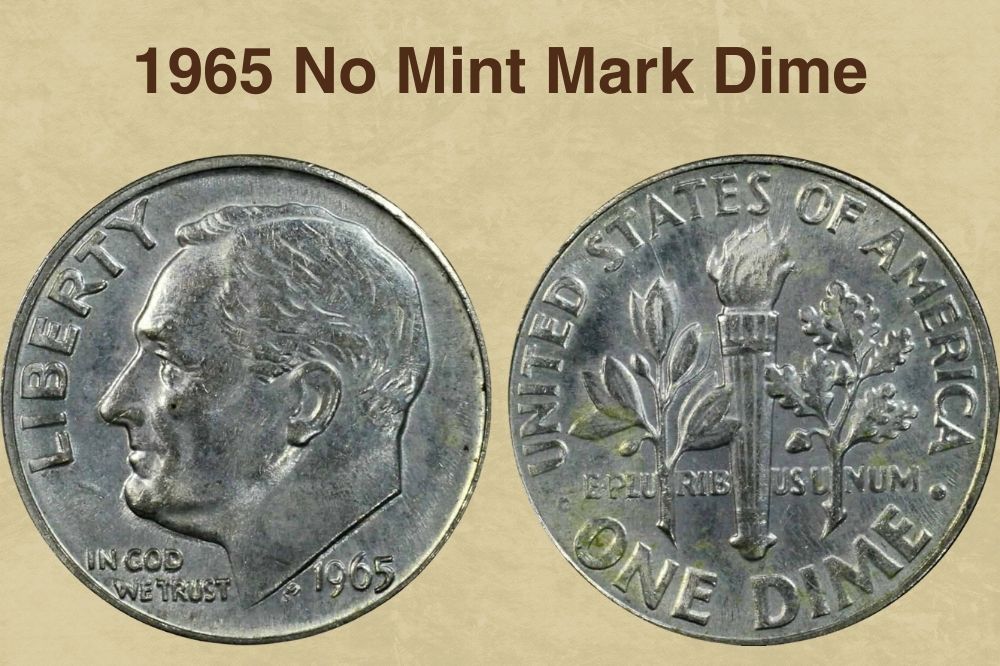
Precisely 1,652,140,570 dimes from regular strikes came from Philadelphia, and all those coins were without the mint mark. Their value depends on each piece’s preservation level and detail precision, while those with Full Bands are the most costly.
Believe it or not, many 1965 dimes are still in circulation all over the country. These pieces spending years in use cost approximately ten cents, or their face value. On the other hand, specimens in the mint state cost far more. For instance, you need to pay:
- $4 for dimes in the MS 60, MS 61, and MS 62 grades
- Approximately $5 for MS 63-ranking coins
- $6 for dimes in the MS 64 grade
- $12 for dimes in the MS 65 grade
- $26 for dimes in the MS 66 grade
- $50 for dimes in the MS 67 grade
As expected, the most expensive are relatively rare MS 68-ranking pieces with an average price of $1100.
1965 dime with Full Bands Value
The most collectible coins in the set are definitely 1965 dimes with Full Bands. The name comes from two bands wrapping the torch on the coin reverse. These two lines placed on the upper and bottom torch sides are clearly separated in the original design. However, it is not the case with all coins, particularly those in everyday use.
Therefore, collectors constantly look for pieces with clearly separated bands looking like the designer planned them to be. That determines their price, almost always higher than ordinary coins without this unique feature. For instance, their estimated cost is:
- $55 for dimes in MS 65 grade
- $135 for dimes in MS 66 grade
- $1000 for dimes in MS 67 grade
The most sought-after are MS 68-ranking 1965 dimes that may cost you at least $4,000. However, the most expensive Full Bands Roosevelt dime minted this year was sold on eBay in July 2018 for $4,000.
1965 SMS dime Value
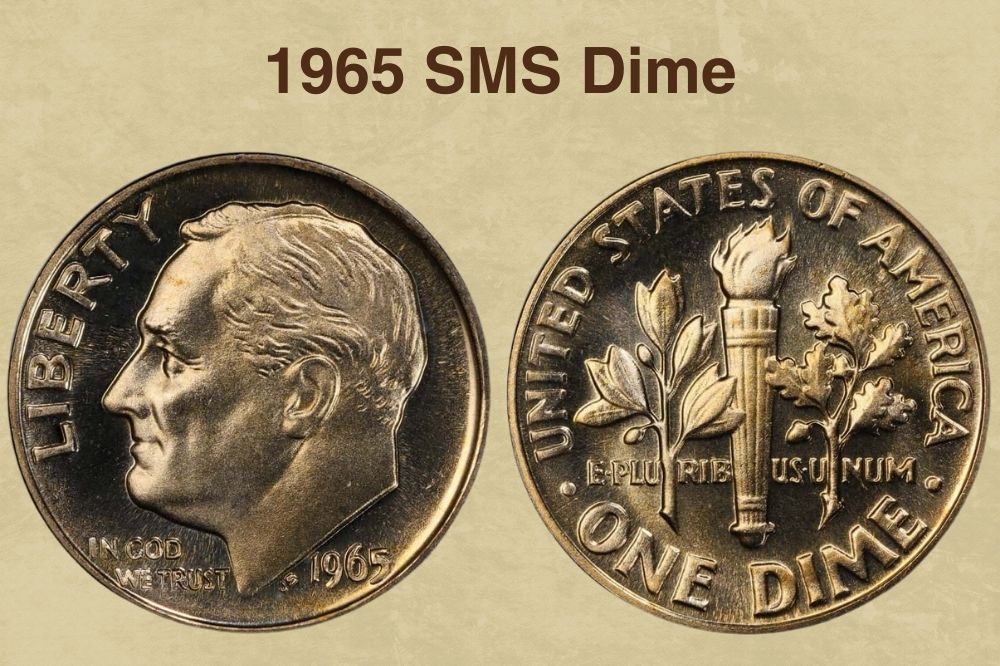
Like regular 1965 Roosevelt dimes, those dedicated to the Special Mint Set also came from the Philadelphia mint. This year, the mint produced 2,360,000 of these excellently toned coins. Their current prices vary between $2 and $150, depending on their quality and rareness.
- MS 63 and MS 64-graded dimes cost $5
- MS 65-graded dime costs $8
- MS 66-graded dime costs $14
- MS 67-graded dime costs $18
- MS 68-graded dime costs $32
- MS 69-graded dime costs $500
Besides, you can find dimes from Special Mint Strike dimes with CAM quality. Their average prices are from $15 to $50 for specimens in MS 63 to MS 66 conditions. Better-quality coins are more valuable, including:
- MS 67 SMS CAM dimes that cost $200
- MS 68 SMS CAM dimes that cost $2750
Finally, you can find rare, pricey 1965 dimes with deep cameo contrast. Their price in MS 67 grade is at least $200.
Also read: Top 17 Most Valuable Mercury Dimes Worth Money
Rare 1965 Dime Error List
The1965 was the transitional year from silver dimes to those with the cupronickel-clad composition. Therefore, numerous errors appeared before the mint stabilized production. Paradoxically, such imperfect specimens are the most collectible and can be significantly more costly than regular ones.
Transitional off-metal error
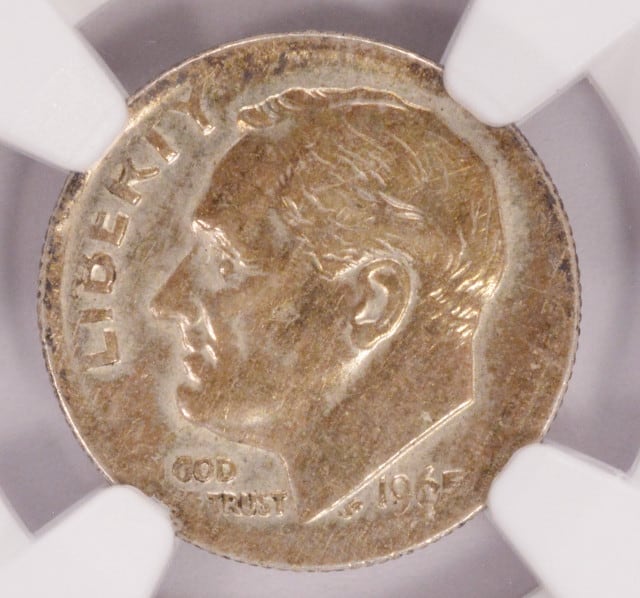
You can find the extra rare Roosevelt dime with the 1965 date on the obverse struck on the silver planchet. As expected, these pieces are very pricey, and you can get one after setting aside $3,000 to $6,000.
Broad strike
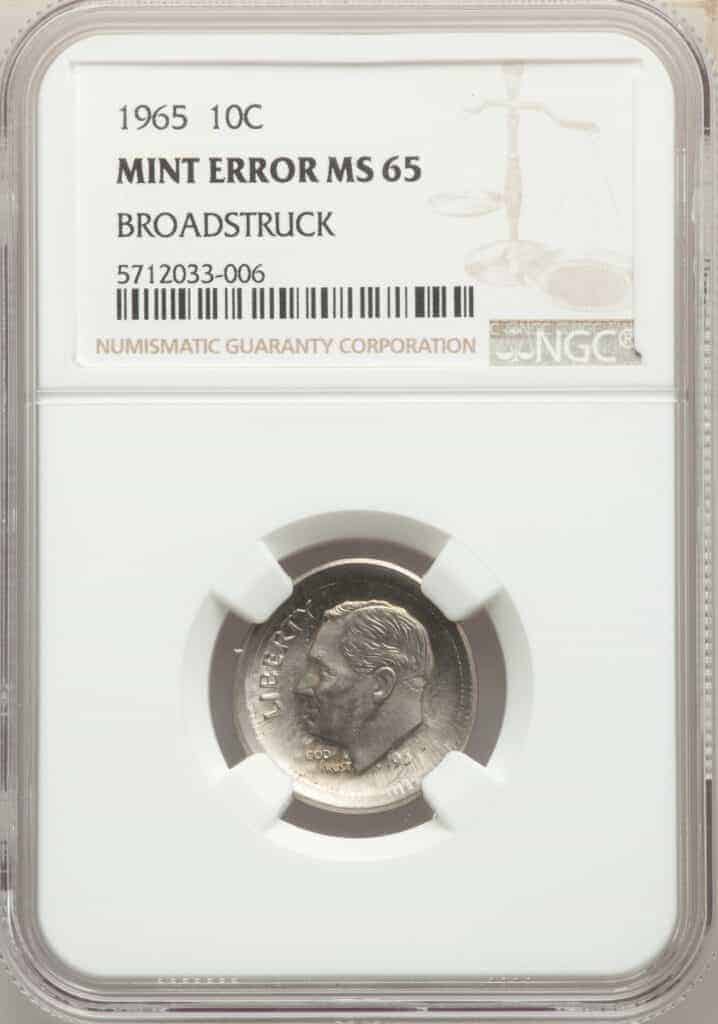
Sometimes, technical problems occurred during the process of the 1965 Roosevelt dimes minting. One famous error was coins struck without a proper rim, while the obverse and reverse designs were intact. The expected price for MS 65-graded pieces is approximately $80.
Die break
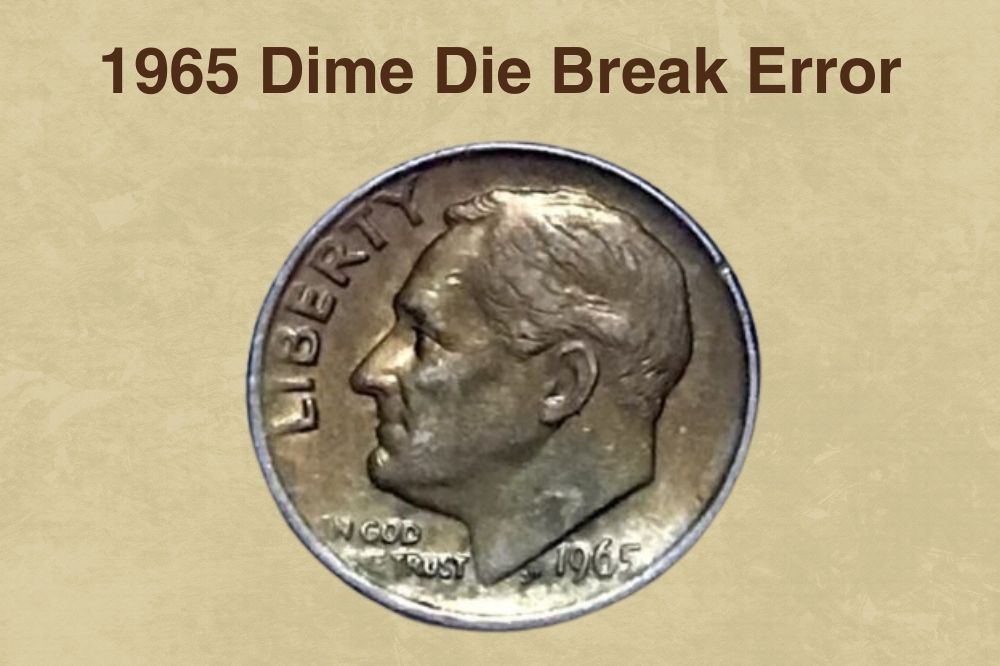
It sometimes happened that the mint used dies for a long that often got broken off with pieces falling off. That resulted in the 1965 dimes with missing details or a flat area on the surface. The estimated value of these errors can vary but is often around $20 for MS 65-graded coins.
Clad error
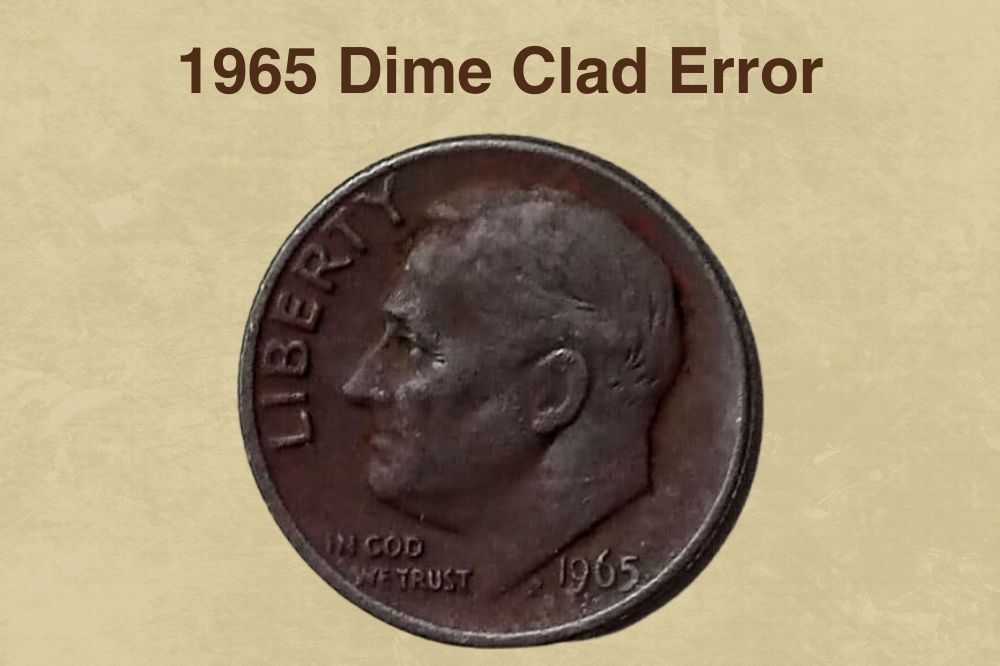
The 1965 dime with a missing clad layer came without the outer coating over the copper core. In such a case, you can recognize silverish color on one coin side, while the other is reddish because of copper visible on the surface.
Because of the lack of outer coating on one side, such dimes are approximately 15% lighter than regular pieces and can cost up to $90.
Also read: 13 Most Valuable Dime Errors Worth Money
Where to Sell Your 1965 Roosevelt Dime ?
Now that you know the value of your coins, do you know where to sell those coins online easily? Don’t worry, I’ve compiled a list of these sites, including their introduction, pros, and cons.
Check out now: Best Places To Sell Coins Online (Pros & Cons)
FAQ about the 1965 Roosevelt Dime
What makes 1965 dimes rare?
Even though the Philadelphia mint released 1,652,140,570 Roosevelt dimes from regular strikes in 1965, there are not too many top-graded ones available nowadays. Scarce are only unique error coins and pieces with Full Bands in the highest ranks.
Which 1965 Roosevelt dimes cost the most?
- The 1965 AU 55 dime reached $8,625 in January 2006
- The 1965 MS 68 dime (Full Bands) reached $4,000 in July 2018
- The 1965 SP 66 dime (SMS) reached $2,000 in May 2022
- The 1965 SP 68 dime (CAM, SMS) reached $2,585 on January 2014
- The 1965 MS 67 dime (DCAM, SMS) reached $2,128 in July 2003
How much money to set aside for the 1965 Roosevelt dime?
The circulated, worn-out, or slightly damaged but still collectible 1965 Roosevelt dimes cost approximately their face value (10 cents). Since serious collectors always seek quality, they pay $0.20 to $500 per piece, depending on their budget and the coin quality. Those who want the 1965 FB dime in their collections are prepared to set aside $22 to $2,500 for such specimens.
What are the most pricey Roosevelt dimes?
- The 1975 PR 68 dime with No S – sold at $456,000
- The 1968 PR 69 dime with No S – sold at $48,875
- The 1951 PR 68 dime – sold at $23,500
- The 1956 PR 69 dime with DCAM quality – sold at $19,975
- The 1950 PR 68 dime – sold at $18,800
- 1999 D MS 65 dime – sold at $14,375
- 1949 MS 68 dime with Full Bands – sold at $13,200

I have a 1965 dime no mint mark not in perfect condition but in good condition
I have a 1965 roosevelt dime with no mint mark. Both sides appear to be double stamped. Some letters appear to cut off at the rim. There is no ridges on the edge of coin and it shows only copper. It will sit perfectly inside and on top of any other dime. I don’t have great scales but it said 2.0g or .o5oz. The 5 in the date is only showing the top portion of a 5. Finally the coating is weird. It is a blue Grey on both obverse and reverse. It seems to me it was struck on a planchet that was not a dime planchet. And the clad layer on is missing layers or wrong type of clad? Of course it is not in super good shape, like a good or fine. It is a cool little piece. If I can figure it out, I’d like to send you photos if your good with that. I think I really have something here. I’ve only been in serious collecting mode for about 6 months.
Tamara, recently sold 1, in descent shape for $1,100. Keep it though, made a mistake to sell it. As each month goes by the value goes up.
-Oates