Coin Value Contents Table
- 1936 Mercury dime value
- History of the 1936 Mercury Dime
- Features of the 1936 Mercury Dime
- 1936 Mercury Dime Grading
- 1936 Mercury Dime Value Guides
- 1936 No Mint mark Mercury dime value
- 1936 proof Mercury dime value
- 1936 D Mercury dime value
- 1936 S Mercury dime value
- Rare 1936 Mercury Dime Error List
- Where to Sell Your 1936 Dime ?
- FAQ about the 1936 Mercury Dime Value
Even though the 1936 dime value is under $100 in most cases, collectors appreciate pieces in uncirculated condition and proof coins as a part of this beautiful collection. On the other hand, Full Band specimens with fully struck horizontal lines on the fasces are fairly rare.
Besides intriguing error dimes, you can also find a particular beauty in those with cameo contrast. These coins are always worth some money despite their look and preservation level. The reason is 90% of silver content with its own melt value.
1936 Mercury dime value |
|||
| Condition | 1936 No Mint mark dime | 1936 S dime | 1936 D dime |
| Good | $2.97 | $2.97 | $2.97 |
| Very good | $3.53 | $3.53 | $3.53 |
| Fine | $4.05 | $4.05 | $3.05 |
| Very fine | $4.04 | $4.30 | $4.30 |
| Extra fine | $4.30 | $4.58 | $7.73 |
| AU | $7.27 | $15 | $17 |
| MS 60 | $12 | $28 | $29 |
| MS 65 | $36 | $44 | $65 |
| PR 65 | $1.162 | / | / |
History of the 1936 Mercury Dime
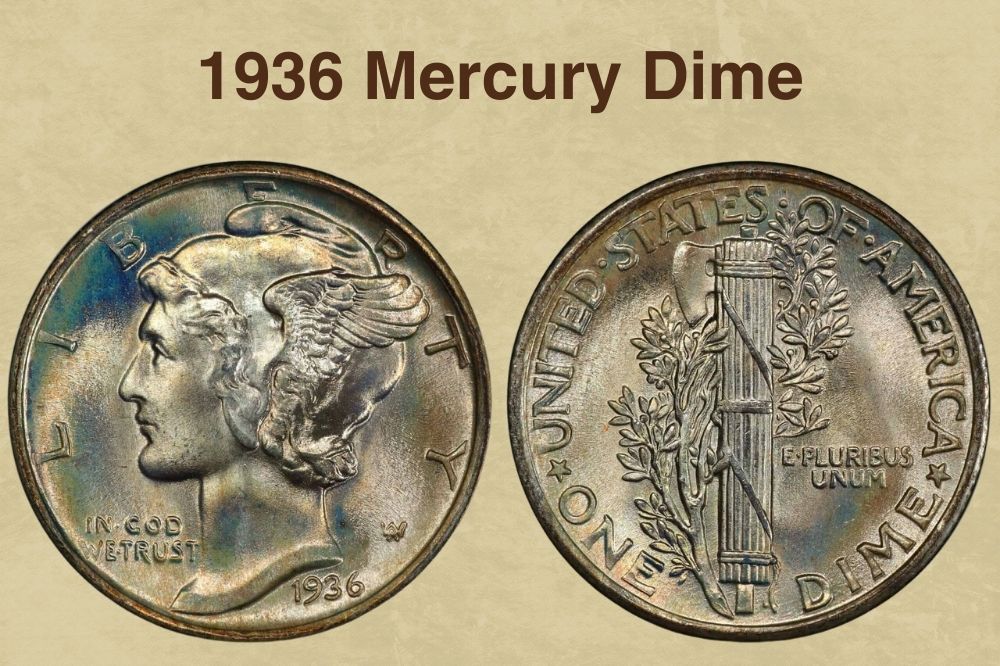
Artist Adolph A. Weinman created a beautiful design for Mercury dimes (Winged Liberty Head dimes) in 1916 with Elsie Stevens as a model for Lady Liberty. These coins replacing Barber dimes are still among the most collectible pieces in American coinage.
The Commission of Fine Arts approved the design solution after a few reviews. They were impressed by the unique obverse depicting Lady Liberty with a recognizable Phrygian winged cap on her head and Roman fasces occupying the reverse.
1936 Mercury dime Types |
||
| Location | Year | Minted |
| Philadelphia | 1936 no mint mark dime | 87,500,000 |
| Philadelphia | 1936 proof dime | 4,130 |
| San Francisco | 1936 S dime | 9,210,000 |
| Denver | 1936 D dime | 16,132,000 |
| Total | / | 112,846,130 |
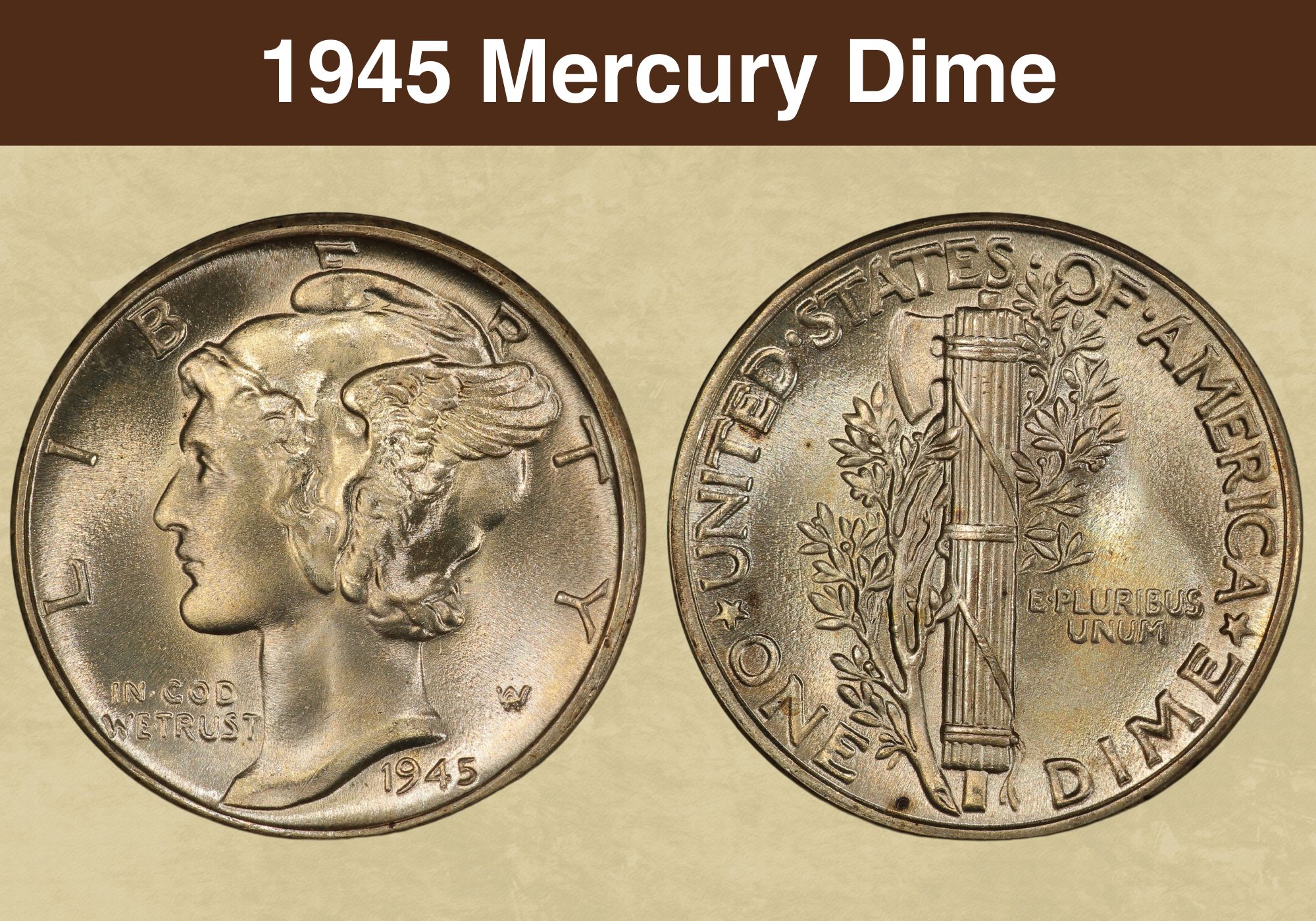
Despite the official name, most people know these coins after the nickname Mercury dime. The reason is a Lady Liberty look that reminds the eponymous Roman god. The US Mint produced these coins until 1945 when they were replaced by the Roosevelt dime design.
You can recognize three dime types minted in 1936. Coins from Philadelphia came without the mint mark, while those produced in the other two mints have the letter S or D under fasces on the reverse.
Also read: Top 17 Most Valuable Roosevelt Dimes Worth Money
Features of the 1936 Mercury Dime
Designer Adolph A. Weinman created Mercury dimes in 1916, and the US Mint produced these beautiful coins for almost 30 years.
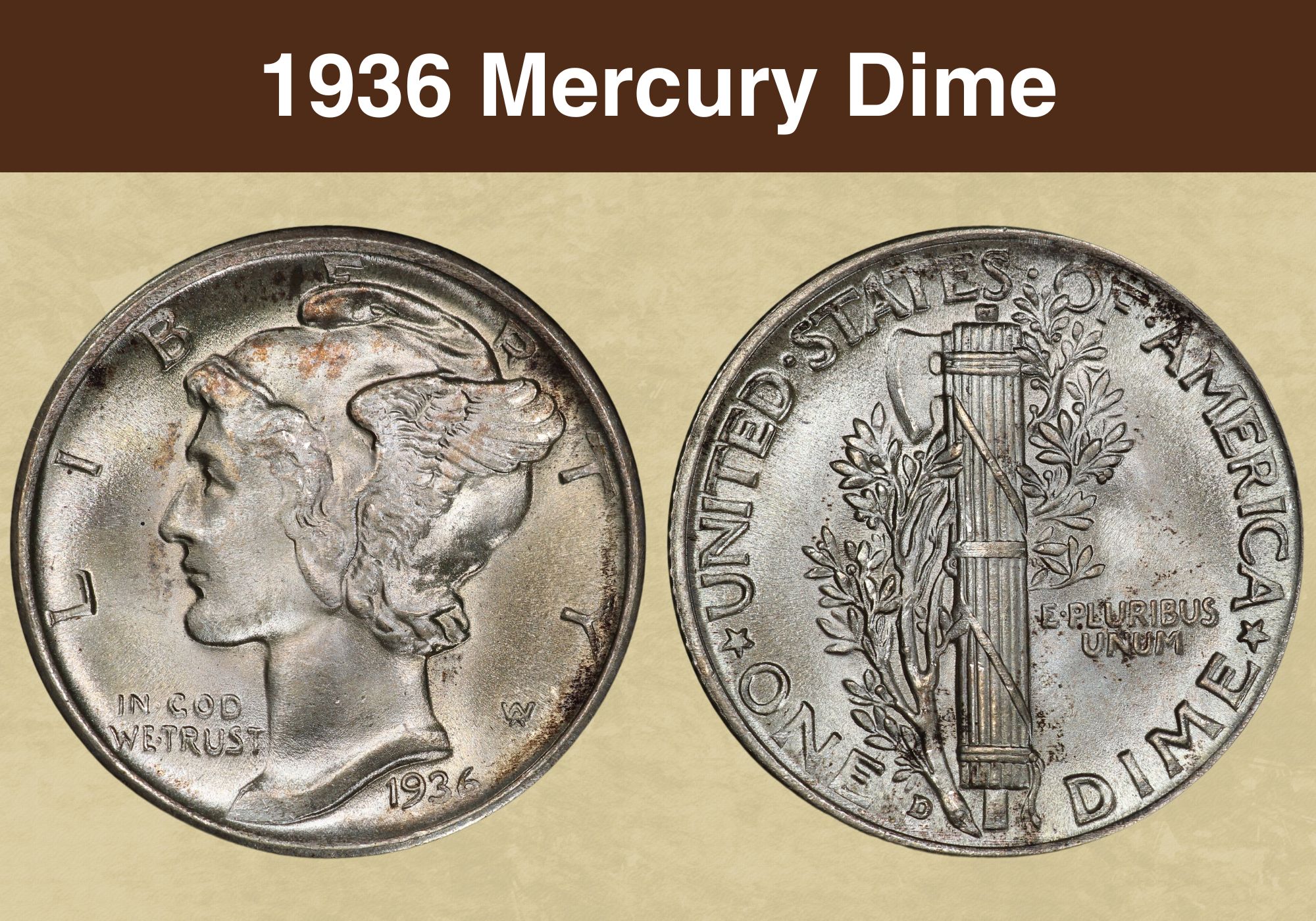
The obverse of the 1936 Mercury dime
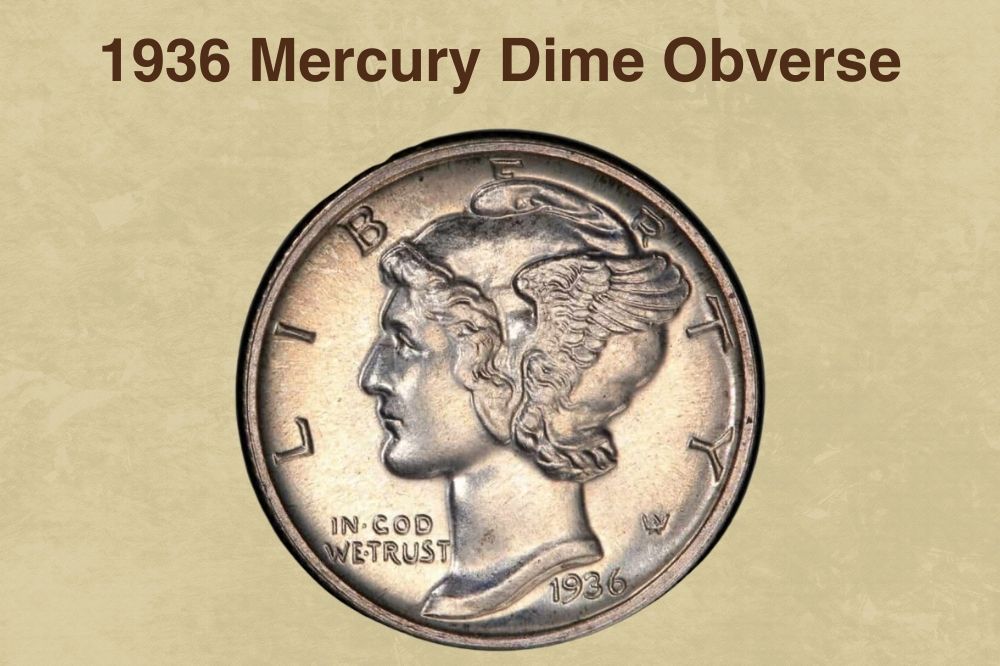
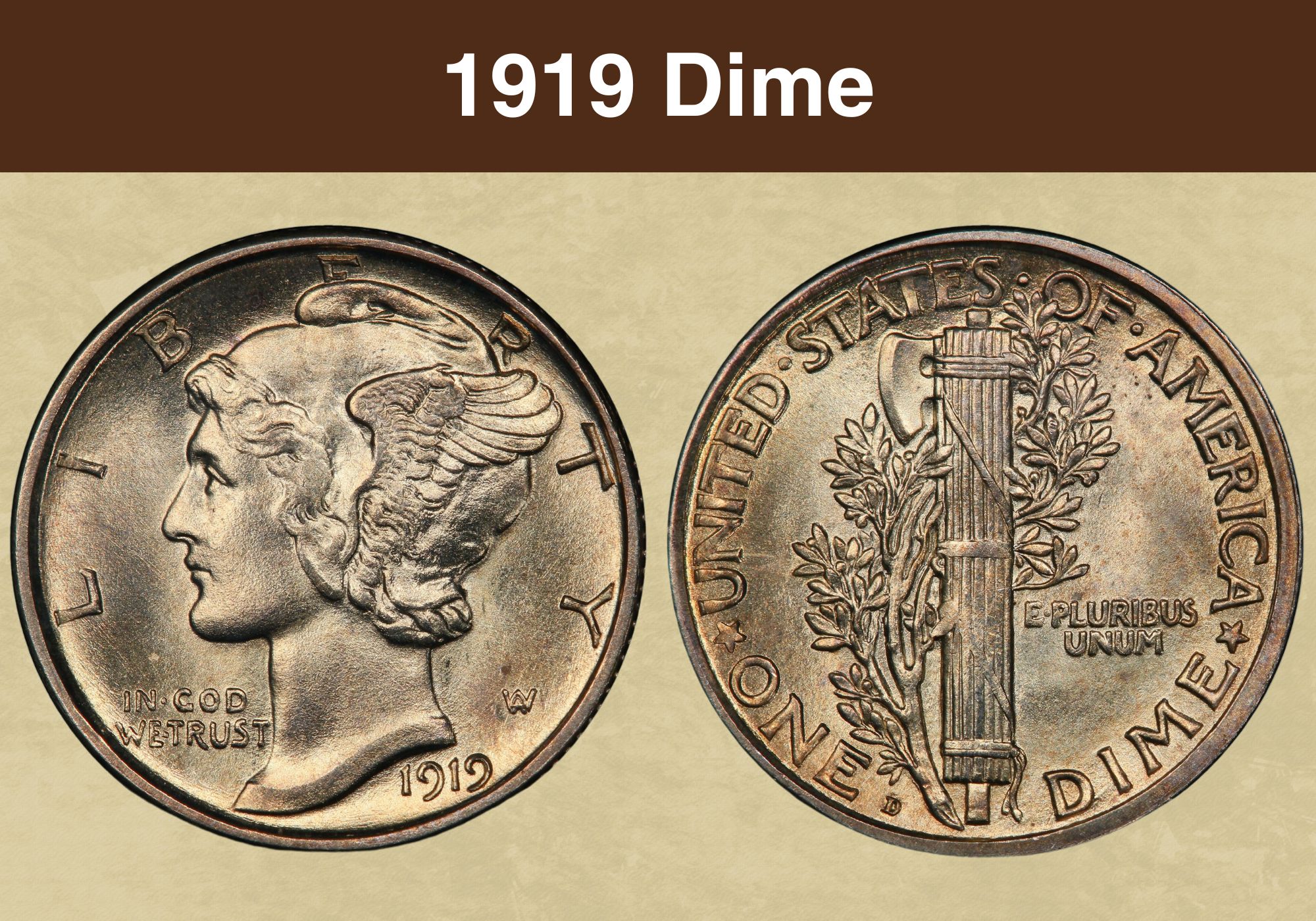
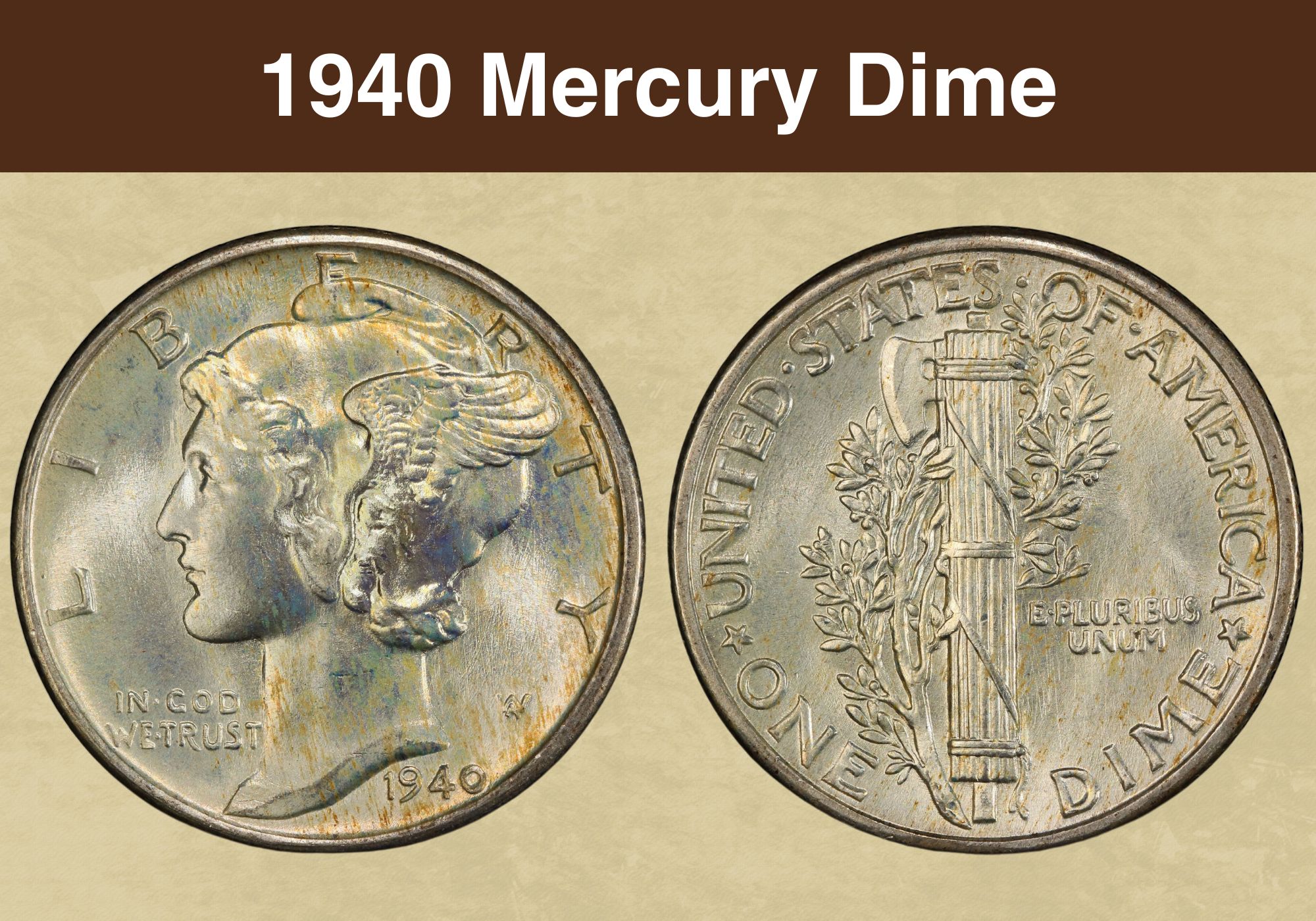
The 1936 Mercury dime has a beautiful Lady Liberty on the coin obverse. Her profile facing left shows her curly hair under a winged Phrygian cap and is surrounded by a sizable written word LIBERTY.
The minting date, 1936, is under her neck truncation, while you can see the inscription IN·GOD WE·TRUST on the left. On the right side is engraved the letter W, representing a designer’s initial.
The reverse of the 1936 Mercury dime
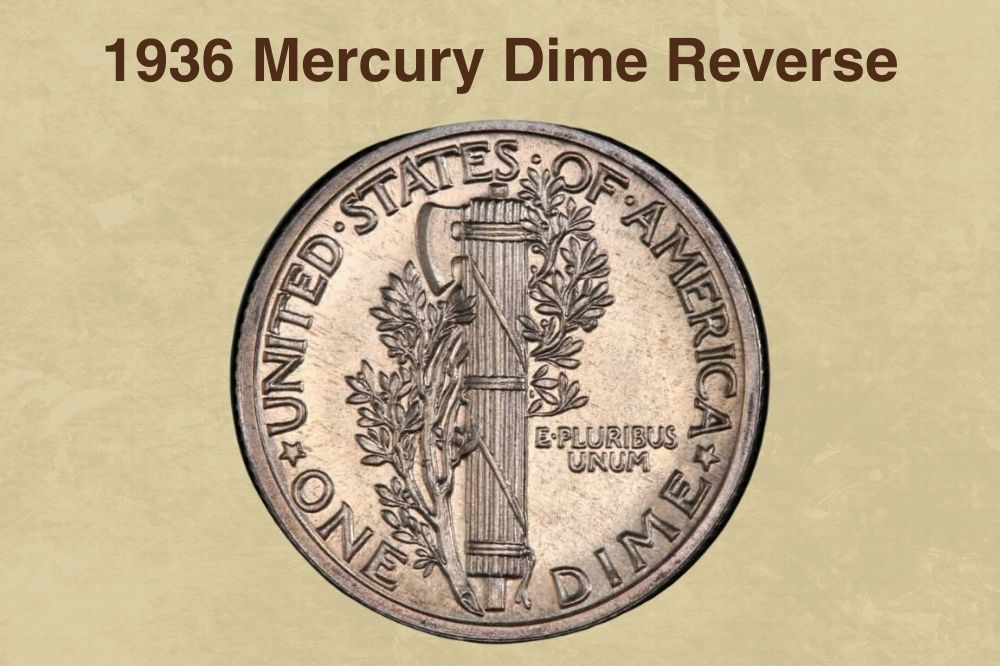
Like other Mercury dimes, these minted in 1936 have centrally positioned fasces and an axe wrapped with an olive branch.
Along the rim and separated by two five-pointed stars are UNITED·STATES·OF·AMERICA and ONE DIME. The mint mark is placed at the bottom when existing, while the required motto E·PLURIBUS UNUM is to the right of the fasces.
1936 Mercury dime Details |
|
| Face value | Ten cents ($0.10) |
| Shape | Round |
| Compound | 0.900 silver with 0.100 copper |
| Coin thickness | 0.053 inches (1.35 mm) |
| Coin diameter | 0.705 inches (17.91 mm) |
| Coin weight | 0.080 troy ounces (2.5 g) |
| Silver weight | 0.072 troy ounces (2.24 g) |
| Edge | Reeded (118 reeds) |
Other features of the 1936 Mercury dime
The 1936 Mercury dime is a round, ten-cent silver coin with 118 reeds along the edge. The diameter of this 0.053 inches (1.35 mm) thick dime is 0.705 inches (17.91 mm). It weighs 0.080 troy ounces (2.5 g) and contains 0.072 troy ounces (2.24 g) of silver, making 90% of its total weight.
1936 Mercury Dime Grading
Coin grading helps collectors understand each piece’s condition and value on the coin market. The lowest grade for collectible coins is GOOD, while the ABOUT UNCIRCULATED describes the best-quality circulated coins you can find.
The adapted Sheldon coin grading scale also describes specimens in the mint state and graduates them from MS 60 to MS 70.
| # | Grade |
|---|---|
| 1 | Basal State-1 |
| 2 | Fair |
| 3 | Very Fair |
| 4, 5, 6 | Good |
| 7, 8, 10 | Very Good |
| 12, 15 | Fine |
| 20, 30 | Very Fine |
| 40 | Extremely Fine |
| 50 | About Uncirculated |
| 60 | Mint State |
| 65 | Mint State |
| 70 | Mint State |
Please check our grading guides to know your coin scale, It’s the necessary step to know the exact value of your coin.
Check out now: How to Grade Mercury Dime?
1936 Mercury Dime Value Guides
Three mints produced 112,846,130 Mercury dimes in 1936. You can recognize four types, three from regular strikes and proof coins.
1936 No Mint mark Mercury dime value
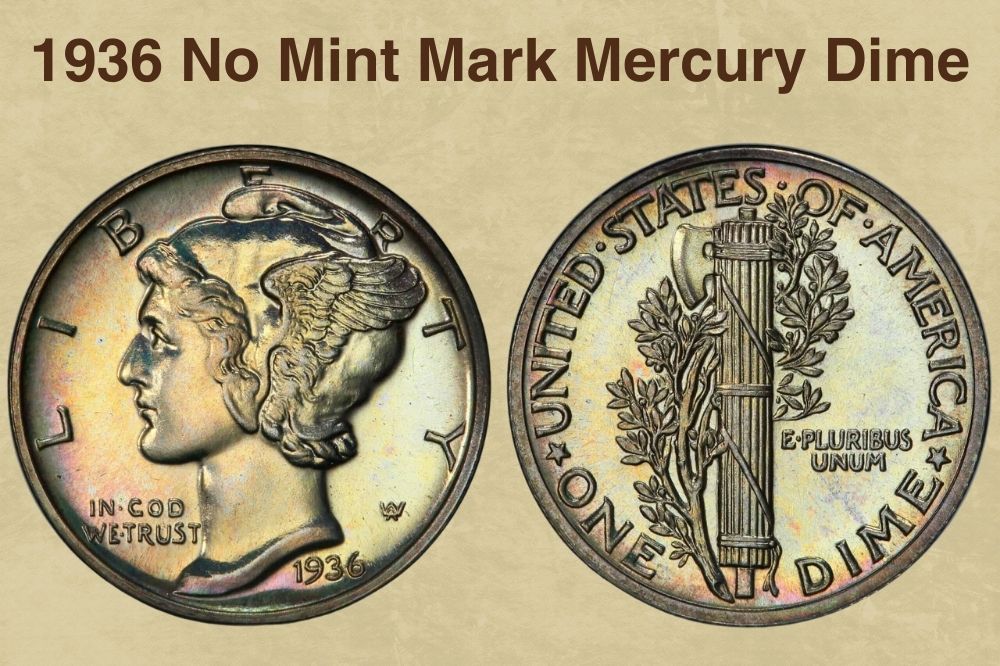
In 1936, the mint in Philadelphia produced 87,500,000 dimes without the mint mark. Their value significantly varies, depending on their grade. For instance, circulating coins typically cost $2.97, but those in about circulating condition are worth $7.27
The difference is even more significant with pieces in the mint state, so you should set aside $8 to $53 for most coins. However, those in MS grade can reach up to $100, while dimes graded MS 68 are the most pricey. Their average price is $1,075.
As expected, 1936 No Mint mark Full Band dimes are more expensive, and you can count on higher prices, such as:
- $30 for MS 61 dime
- $35 for MS 62 dime
- $45 for MS 63 dime
- $60 for MS 64 dime
- $125 for MS 65 dime
- $210 for MS 66 dime
- $450 for MS 67 dime
- $2500 for MS 68 dime
1936 proof Mercury dime value
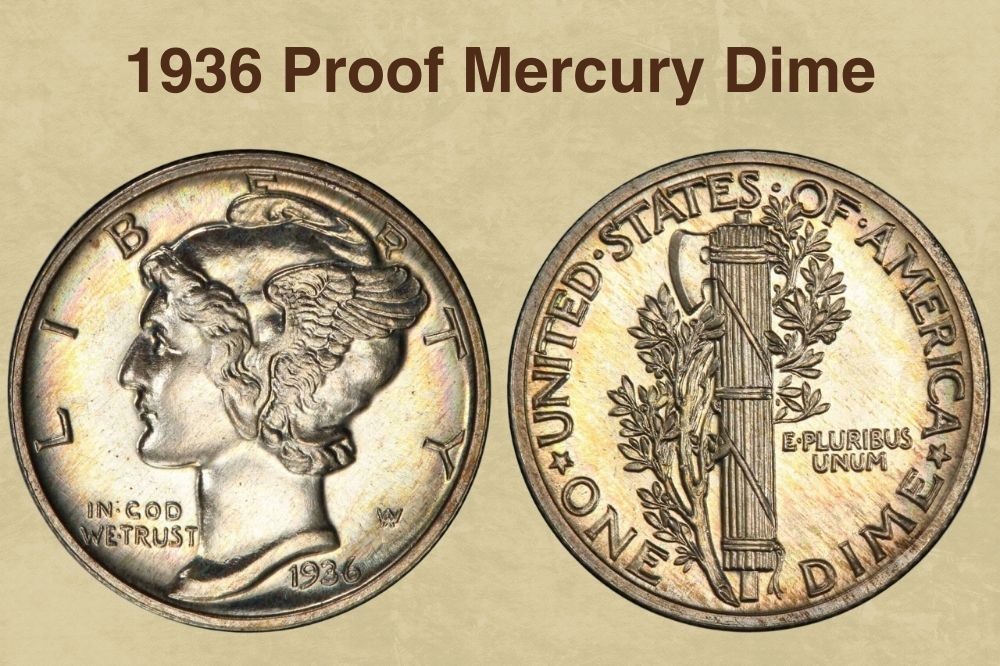
Besides regular coins, the mint in Philadelphia also produced 4,130 proof dimes in 1936. Their prices depend on the grade and range from $500 to $828 when ranking from PR 60 to PR 64. On the other hand, you need to set aside more money for those in a higher grade, like:
- $1100 for PR 65 dimes
- $1600 for PR 66 dimes
- $4000 for PR 67 dimes
The most precious are coins with PR 68 grade. These rare pieces cost $28,000 to $33,600 at auctions.
1936 D Mercury dime value
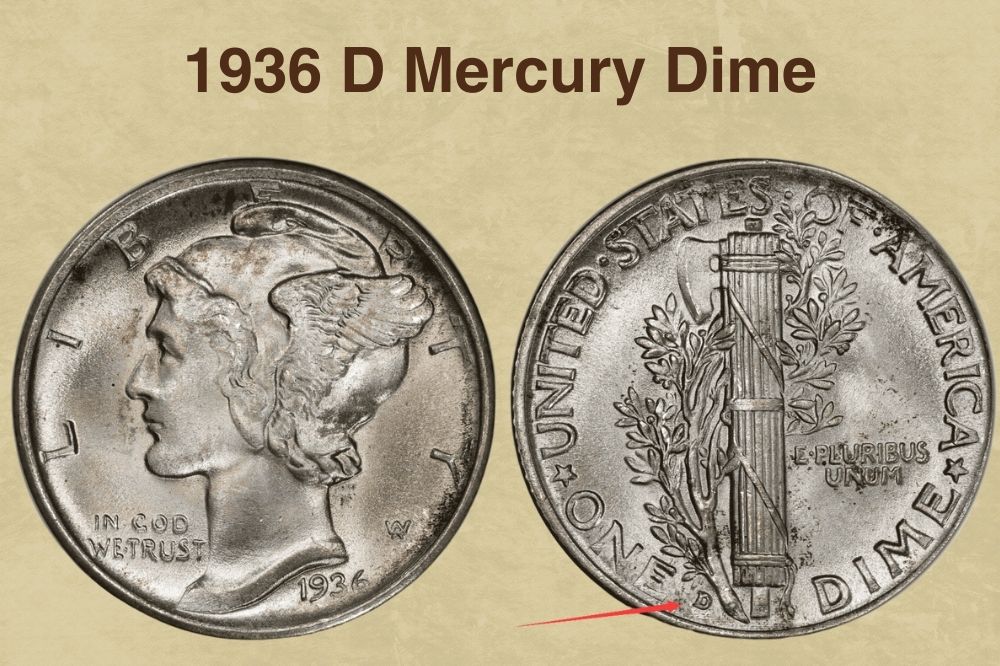
With 16,132,000 Mercury dimes produced in 1936, the Denver mint reached the second-highest mintage this year. Their value depends on their conditions and possible Full Bands. Regular dimes that spent years in use are worth $2.23 to $21.60, while specimens in the mint state are expectedly more costly. Their average prices are:
- $35 for D MS 60 dime
- $40 for D MS 61 dime
- $45 for D MS 62 dime
- $55 for D MS 63 dime
- $70 for D MS 64 dime
- $90 for D MS 65 dime
- $125 for D MS 66 dime
- $360 for D MS 67 dime
Most collectors look for 1936 D dimes with Full Band features, so their prices are typically higher. Therefore, you should set aside more money to get one of these rare specimens.
- The 1936 D MS 61 FB dime costs $50
- The 1936 D MS 62 FB dime costs $65
- The 1936 D MS 63 FB dime costs $125
- The 1936 D MS 64 FB dime costs $170
- The 1936 D MS 65 FB dime costs $265
- The 1936 D MS 66 FB dime costs $400
- The 1936 D MS 67 FB dime costs $775
The 1936 MS 68 FB Mercury dimes are the most sought-after, and collectors are prepared to pay $3,100 to $3,720 per piece.
1936 S Mercury dime value
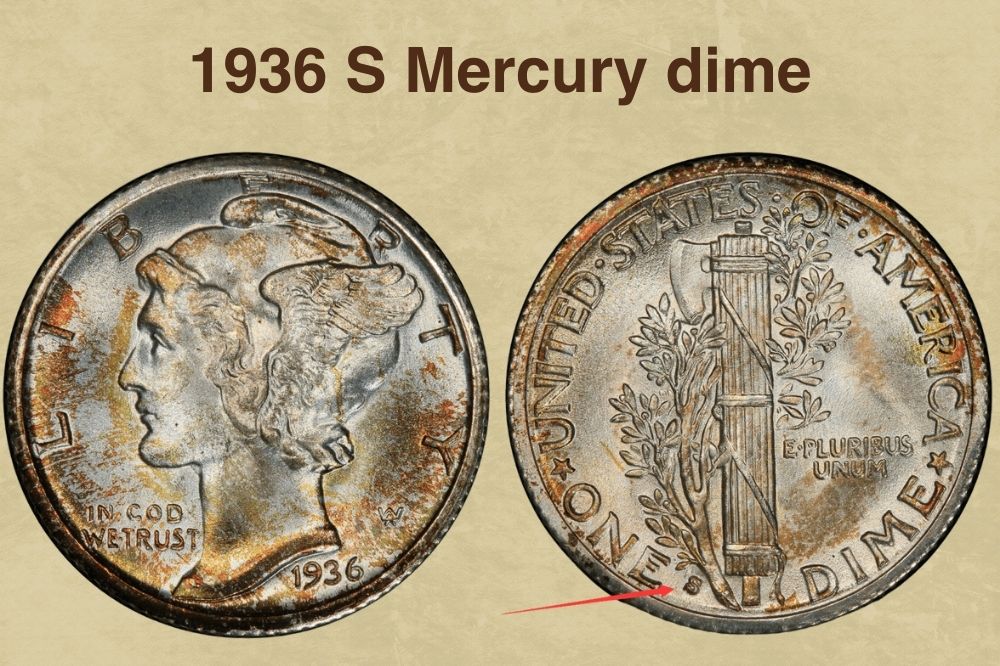
The San Francisco mint minted only 9,210,000 regular Mercury dimes, the lowest mintage in 1936. As expected, that affects their value, so you should pay approximately $2.97 for the 1936 S dime that spent months or years in circulation.
As always, specimens in the mint state are worth more, and their prices vary depending on quality. Be prepared to pay:
- $30 for the S MS 60 dime
- $32 for the S MS 61 dime
- $35 for the S MS 62 dime
- $40 for the S MS 63 dime
- $50 for the S MS 64 dime
- $60 for the S MS 65 dime
- $100 for the S MS 66 dime
- $250 for the S MS 67 dime
Compared to these relatively affordable coins, those in MS 68 grade are more valuable. Their price range is approximately $1450. Finally, pieces with Full Bands on the fasces are expectedly more expensive, while those grading MS 68 are really costly. Their average price range is:
- S MS 61 dime costs $40
- S MS 62 dime costs $50
- S MS 63 dime costs $60
- S MS 64 dime costs $105
- S MS 65 dime costs $170
- S MS 66 dime costs $240
- S MS 67 dime costs $675
Extra scarce S MS 68 Mercury dimes can reach $16,000 to $20,000 at auctions.
Also read: Top 17 Most Valuable Mercury Dimes Worth Money
Rare 1936 Mercury Dime Error List
In most cases, mint errors increase the dime value. So, imperfect 1936 Mercury dimes are typically valuable and can be precious for collectors.
Double die obverse
You can recognize this error when the die strikes the coin more than once, leaving a slightly offset image, date, and lettering. The price range for these error coins is wide. For instance, one coin in MS 64 grade was sold for $129 in 2012, while one collector paid $1,795 for the other with Full Bands and in MS 67 grade in 2018.
Die clash
This error occurs when two dies clash with each other without a coin placed in between. Therefore, the next coin shows a faint obverse image on the reverse side and vice versa. This imperfection is pretty often in 1936 dimes.
Planchet error
Planchet errors on the coin surface result from the clipped metal sheet used during the minting process. Since such dimes are scarce, you can count on a price of a few hundred dollars, sometimes even thousands.
Broad struck
Early fallen coin collars cause broad-struck dimes to appear. Such a piece is thinner than required and has an atypical shape and wider rim. They often cost a few tens of dollars.
Also read: 13 Most Valuable Dime Errors Worth Money
Where to Sell Your 1936 Dime ?
Now that you know the value of your coins, do you know where to sell those coins online easily? Don’t worry, I’ve compiled a list of these sites, including their introduction, pros, and cons.
Check out now: Best Places To Sell Coins Online (Pros & Cons)
FAQ about the 1936 Mercury Dime Value
What makes a 1936 Mercury dime rare?
Despite these coins being minted almost 90 years ago, the high mintage made them abundant. Only several coins, particularly proofs in first-class condition, are considered rare and can be highly costly.
Which 1936 Mercury dimes are worth a lot of money?
- The 1936 PR 68 Mercury dime was sold for $29,375 at Heritage Auctions on March 12, 2015
- The 1936 S MS 68 FB Mercury dime was sold for $23,000 at Bowers & Merena on November 9, 2006
- The 1936 MS 68+ FB Mercury dime was sold for $15,275 at Legend Rare Coin Auctions on August 27, 2020
- The 1936 D MS 68 FB Mercury dime was sold for $14,950 at Heritage Auctions on November 7, 2003
- The 1936 PCGS Genuine Mercury dime was sold for $7,111 on eBay on December 25, 2021
- The 1936 S MS 66 FB Mercury dime was sold for $1,925 at Great Collections on June 29, 2014
- The 1936 S MS 68 Mercury dime was sold for $1,920 at Heritage Auctions on October 31, 2022
- The 1936 MS 67 FB DDO Mercury dime was sold for $1,795 on eBay on November 30, 2018
- The 1936 D MS 65 Mercury dime was sold for $840 at Heritage Auctions on April 25, 2022
- The 1936 S MS 63 Mercury dime was sold for $203 on eBay on November 1, 2017
- The 1936 MS 64 DDO Mercury dime was sold for $129 at Heritage Auctions on November 29, 2012
How much is the 1936 No Mint mark Mercury dime worth?
The average price for the 1936 Mercury dime minted in Philadelphia is $2 to $8 after they spend some time in circulation. Those in the mint state are more costly and come with a price range from $8 to $1,200, depending on grade. However, you should set aside up to $2,600 for specimens with Full Bands.
What is the most pricey 1936 Mercury dime?
The most expensive Mercury dime was minted in San Francisco in 1938. This coin in MS 68+ grade with Full Bands reached a price of $364,250 in 2019.