Coin Value Contents Table
- 1968 Dime Value By Variety
- 1968 Dime Value Chart
- Top 10 Most Valuable 1968 Dime Worth Money
- History Of The 1968 Dime
- Is Your 1968 Dime Rare?
- Key Features Of The 1968 Dime
- 1968 Dime Mintage & Survival Data
- 1968 Dime Mintage & Survival Chart
- The Easy Way to Know Your 1968 Dime Value
- 1968 Dime Value Guides
- 1968 No Mint Mark Dime Value
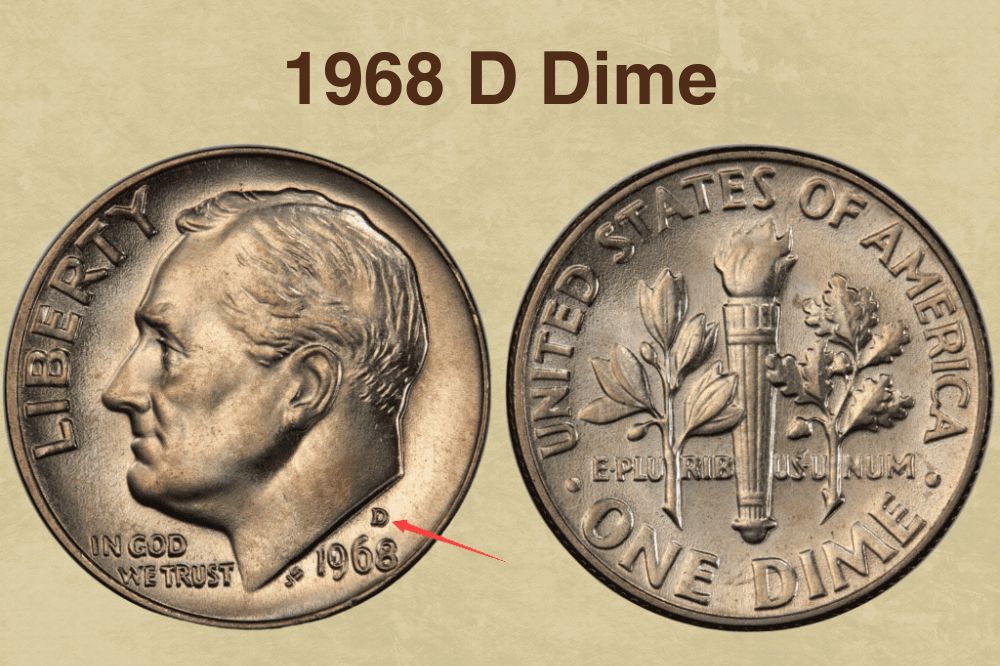
- 1968-D Dime Value
- 1968-S Proof Dime Value
- 1968–S CAM Dime Value
- 1968-S DCAM Dime Value
- Rare 1968 Dime Error List
- Where To Sell Your 1968 Dime?
- 1968 Dime Market Trend
- FAQ About The 1968 Dime
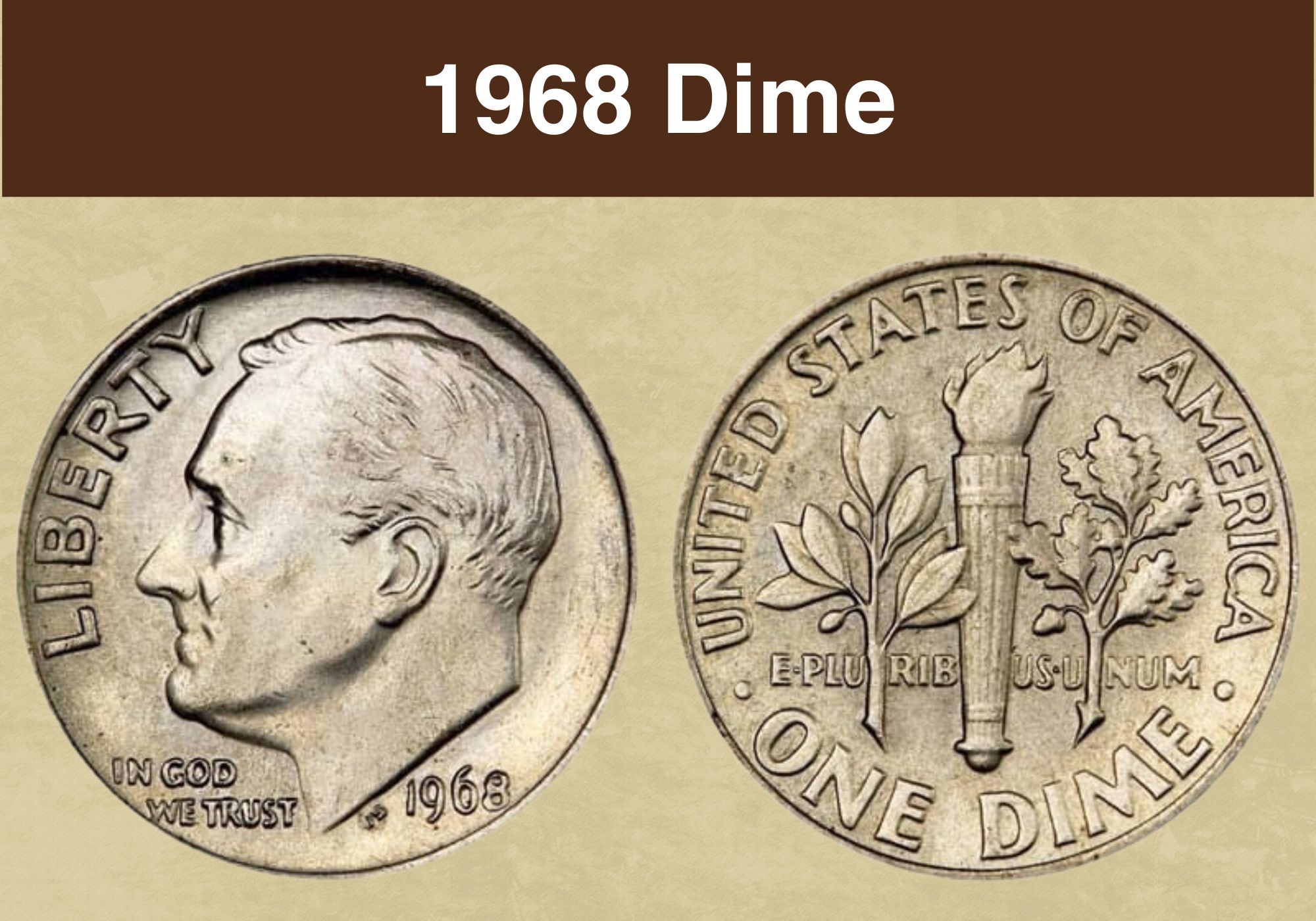
The 1968 dime marks a turning point in American coinage. This year brought back mintmarks after their three-year absence, setting the stage for one of numismatics’ most valuable modern errors.
Understanding 1968 dime value means recognizing these distinctionsโa standard circulation strike holds face value, while mint state examples reach $10.57, and top-grade Full Bands specimens command $25.17.
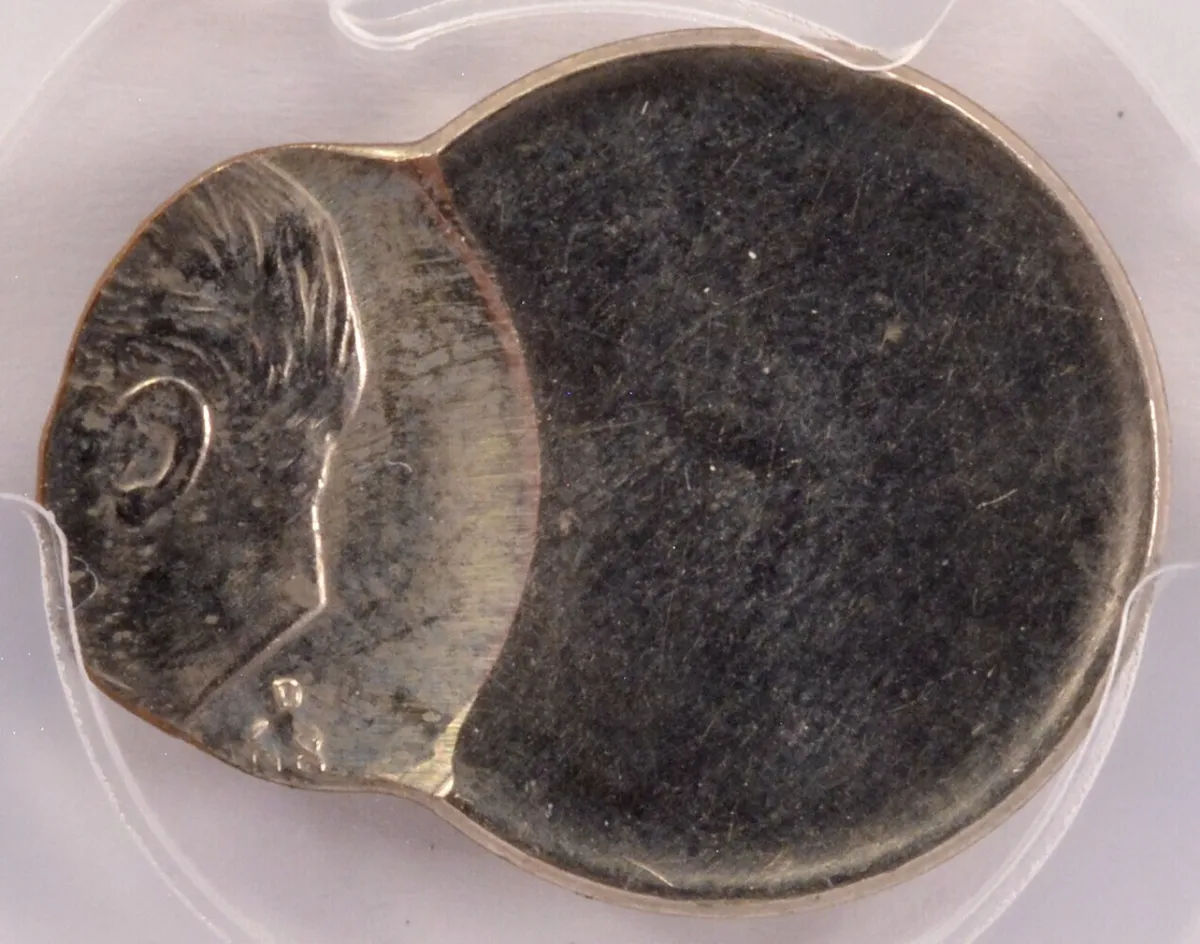
When Philadelphia prepared proof dies for San Francisco that year, at least one escaped without its required “S” mintmark. That oversight created the 1968 No S proof dime, which sold for $48,875 at auction. Only 12-20 examples exist today, making this one of the rarest modern U.S. coins.
This dramatic price gapโfrom ten cents to nearly $50,000โcomes down to knowing what you’re looking at. Different mint locations, striking methods, and surface qualities all impact value. This guide shows you how to identify each variety and determine exactly what your 1968 dime is worth.
1968 Dime Value By Variety
The 1968 one-cent coin has different collectible values โโdepending on its different minting versions and condition grades. If you know the grade of your coin, you can find the exact price below in the Value Guides section.
1968 Dime Value Chart
| TYPE | GOOD | FINE | AU | MS | PR |
|---|---|---|---|---|---|
| 1968 No Mint Mark Dime Value | $0.10 | $0.31 | $0.79 | $10.57 | โ |
| 1968 No Mint Mark Dime (FB) Value | $0.23 | $0.78 | $2.00 | $25.17 | โ |
| 1968 No Mint Mark Dime (PL) Value | $3.11 | $10.65 | $27.28 | $90.20 | โ |
| 1968 D Dime Value | $0.10 | $0.31 | $0.79 | $8.57 | โ |
| 1968 D Dime (FB) Value | $0.30 | $1.04 | $2.67 | $15.71 | โ |
| 1968 S Proof Dime Value | โ | โ | โ | โ | $3.25 |
| 1968 S CAM Dime Value | โ | โ | โ | โ | $5.62 |
| 1968 S DCAM Dime Value | โ | โ | โ | โ | $20.00 |
Also Read: Roosevelt Dime Value (1946-Present)
Top 10 Most Valuable 1968 Dime Worth Money
Most Valuable 1968 Dime Chart
2003 - Present
This chart reveals an extreme value divide. The top seven positions are all “No S” mint error coins. They dominate the rankings completely. Only 12-20 examples exist worldwide. Their rarity reaches the R-9.5 level. This makes them extraordinarily scarce.
The top-selling PR-68 CAM at $48,875 is one of only 5-7 Cameo specimens. Compare this to a regular PR-68 at just $29,375. The Cameo feature adds 66% more value.
Grade increases drive exponential value growth. PR-67 to PR-68 jumps by $20,000-28,000. This reflects fierce collector competition for high-grade error coins.
Positions 8-10 are regular strikes. Values drop sharply to $1,250-$2,650. Normal versions hold only 5-20% of error coin values. This highlights how mint errors dominate collectible worth.
The data confirms coin collecting’s core principle: Rarity ร Condition ร Uniqueness = Market Value. No S errors rank among the rarest modern U.S. coins. Their values grew strongly from 2003-2022. Returns far exceeded typical collectibles.
History Of The 1968 Dime
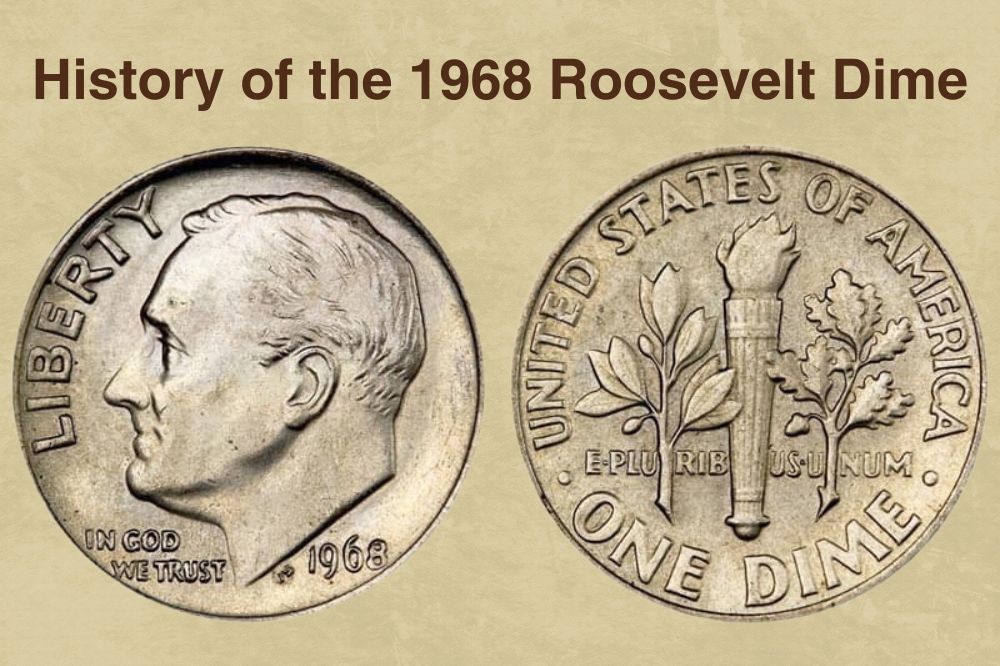
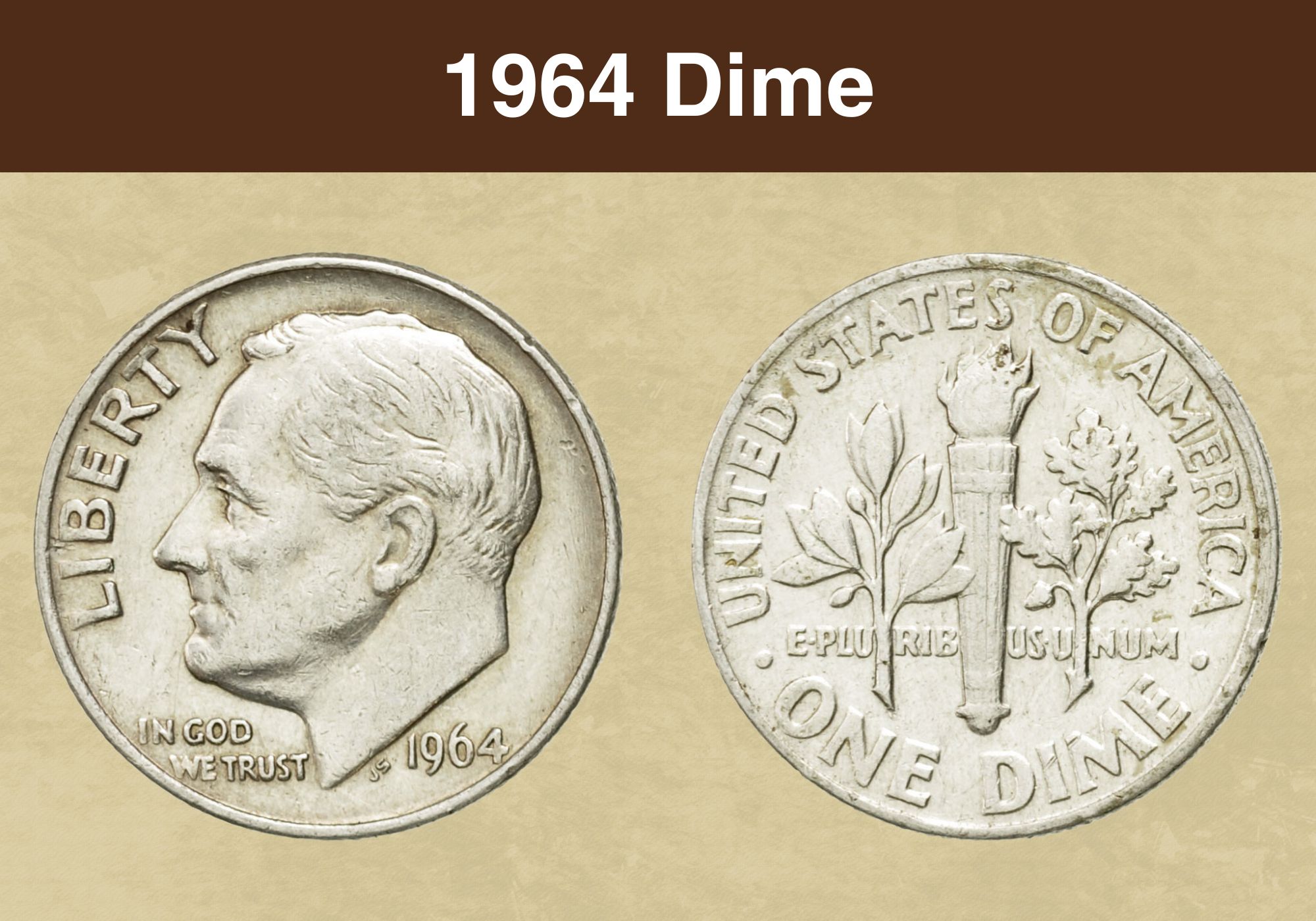
The Roosevelt dime was born in 1946 to honor President Franklin D. Roosevelt. He died in April 1945 after leading America through World War II. Roosevelt suffered from polio and championed the March of Dimes.
Chief Engraver John R. Sinnock designed the coin showing Roosevelt’s profile. The reverse features a torch for liberty flanked by olive and oak branches. This design remained unchanged when the 1968 dime entered circulation, continuing Roosevelt’s legacy into the modern clad era.
The 1968 dime marked a turning point in American coinage history. It was the first year mintmarks returned after a three-year absence. From 1965 to 1967, the U.S. Mint removed all mintmarks to combat a nationwide coin shortage.Because Officials believed collectors were hoarding coins based on mint marks. The Coinage Act of 1965 also eliminated silver from dimes to reduce production costs.
In 1968, Congress restored mintmarks to help the Mint track production quality. For the first time, all mintmarks moved to the obverse side.
San Francisco resumed proof coin production after being closed since 1955. This transition created the rare “No S” error when dies accidentally lacked the mintmark.
Also Read: Top 100 Most Valuable Roosevelt Dimes Worth Money List
Is Your 1968 Dime Rare?
1968 No Mint Mark Dime
1968 No Mint Mark Dime (FB)
1968 No Mint Mark Dime (PL)
1968 D Dime
1968 D Dime (FB)
1968 S Proof Dime
1968 S CAM Dime
1968 S DCAM Dime
Curious about your 1968 dime’s rarity? Our CoinValueChecker App provides instant rarity verification, current market values, and error detectionโall free! Simply snap a photo to get expert analysis in seconds. Download now and discover if your coin is a hidden treasure worth thousands!
Key Features Of The 1968 Dime
Understanding the distinctive features of the 1968 dime helps collectors identify authentic specimens and spot valuable variations. The coin’s design elements remained unchanged from the original 1946 Roosevelt dime, but 1968 marked a crucial shift with the mintmark relocation from the reverse to the obverse. Examining these features closely is essential for distinguishing common circulation strikes from rare proof errors and determining accurate grades that directly impact value.
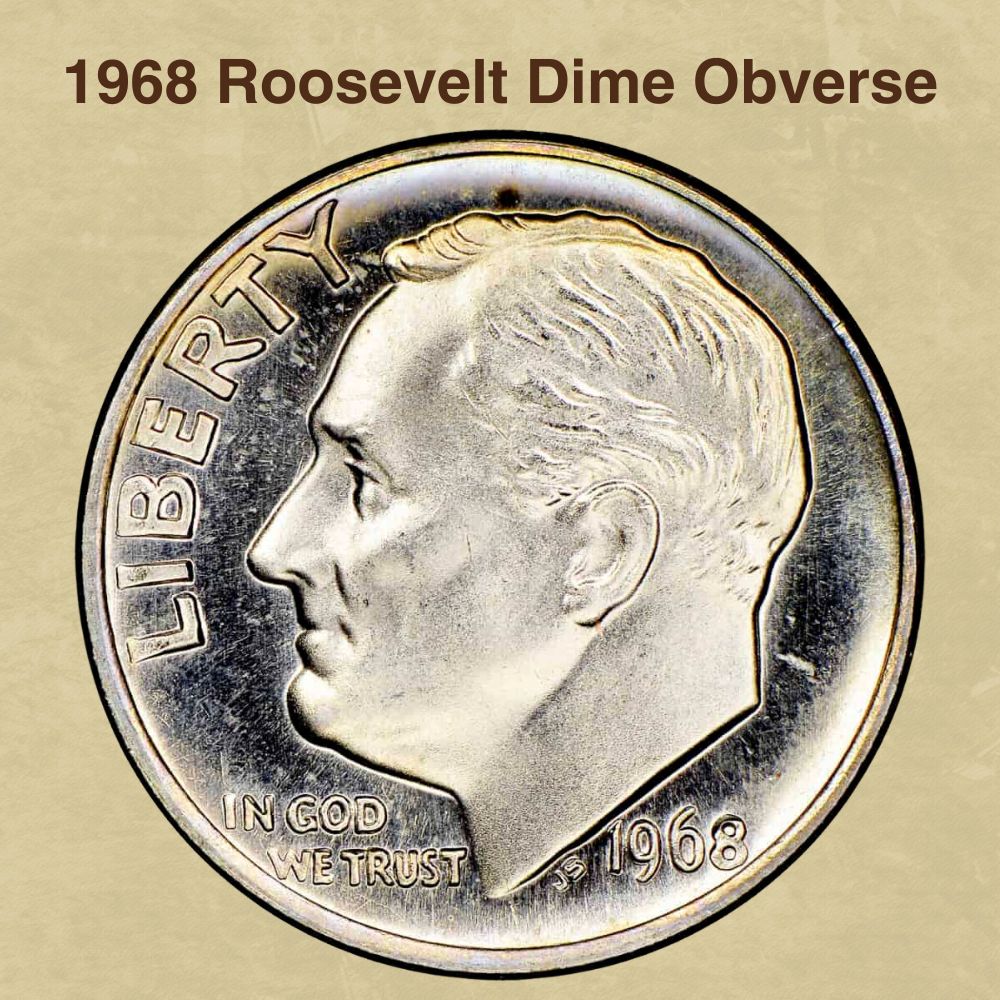
The Obverse Of The 1968 Dime
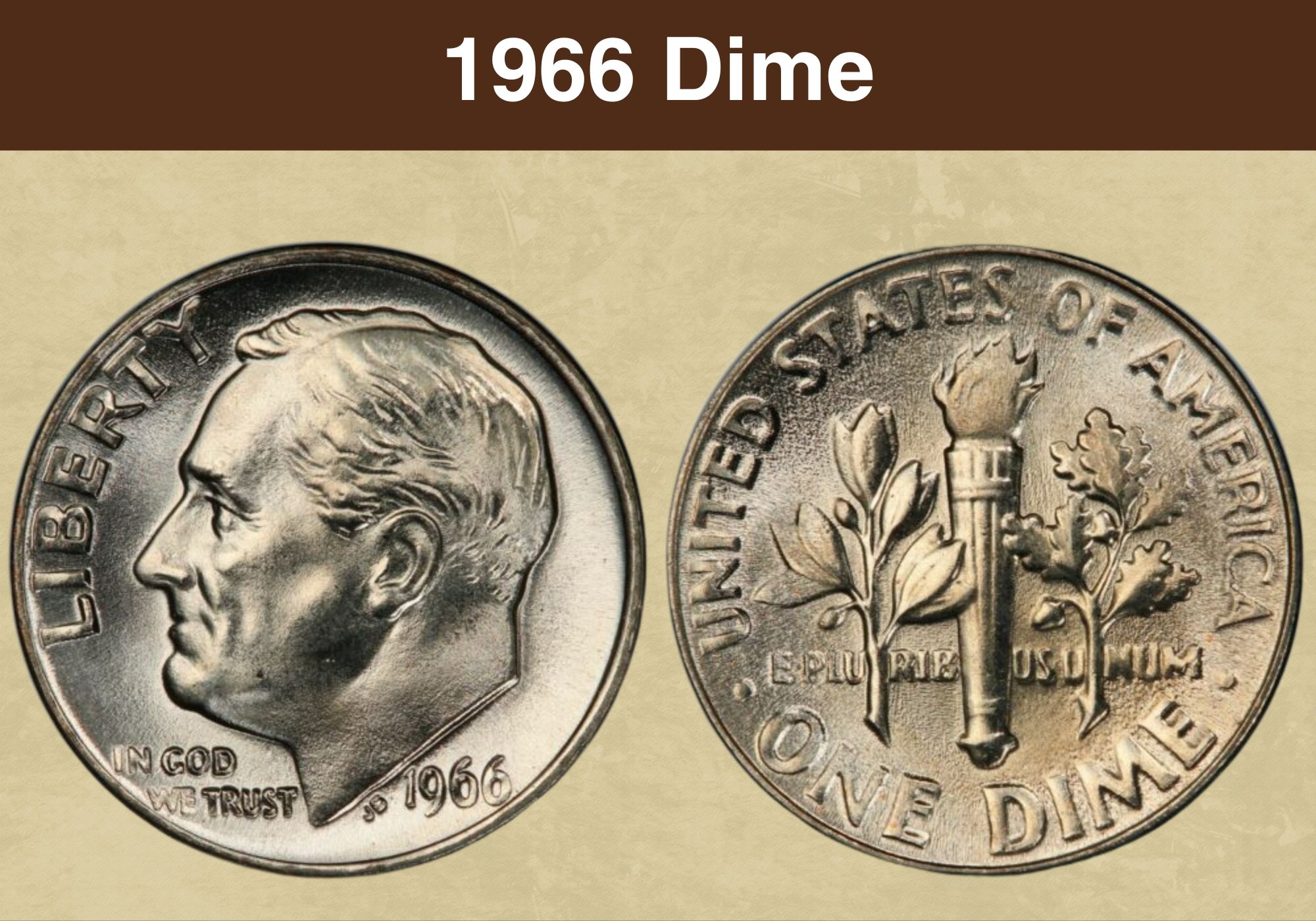
The obverse showcases President Franklin D. Roosevelt’s left-facing profile as the dominant design element. His dignified portrait captures fine details including his distinctive features and hair texture.
The word “LIBERTY” runs along the left rim in bold lettering, positioned where Roosevelt’s gaze naturally directs. Below his chin sits the national motto “IN GOD WE TRUST” in smaller capital letters.
The date “1968” appears at the bottom right of the coin, positioned just below Roosevelt’s neck. For 1968, this marked a significant change as mintmarks moved from the reverse to appear directly above the date on the obverse for the first time.
The designer’s initials “JS” for John Sinnock are subtly placed at the truncation of Roosevelt’s bust near the bottom rim.
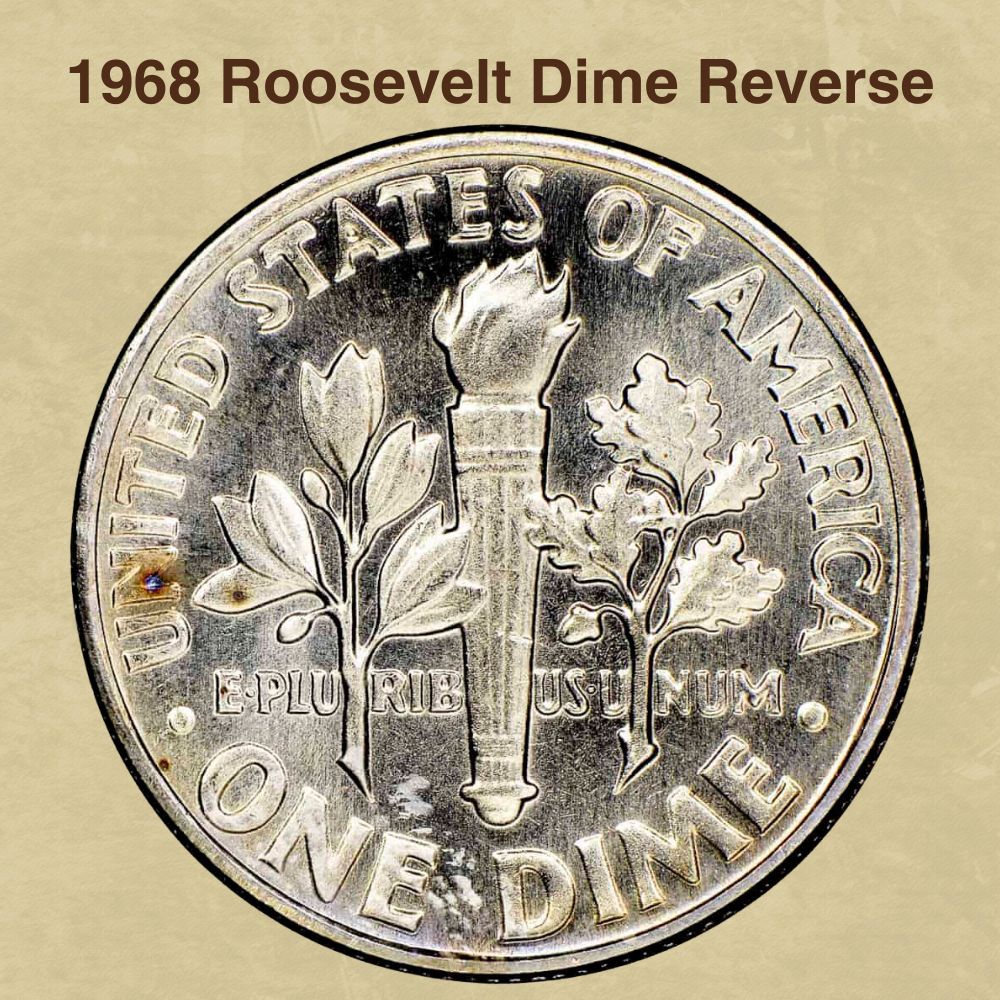
The Reverse Of The 1968 Dime
The reverse design carries powerful symbolism representing American values and World War II victory. A flaming torch dominates the center, symbolizing liberty and enlightenment for the nation.
Flanking the torch on the left appears an olive branch, traditionally representing peace and reconciliation after the war. On the right sits an oak branch, symbolizing strength, endurance, and independence of the American people.
The national motto “E PLURIBUS UNUM” (Out of Many, One) divides into four parts across the field, reading “E PLU / RIB / US U / NUM” with centering dots between each segment.
The legend “UNITED STATES OF AMERICA” arches across the top rim in capital letters, while “ONE DIME” curves along the bottom in slightly larger text, clearly stating the coin’s denomination.
Other Features Of The 1968 Dime
The 1968 dime maintains precise physical specifications that define its identity. The coin weighs exactly 2.27 grams and measures 17.9 millimeters in diameter. Its thickness spans 1.35 millimeters, making it the thinnest circulating U.S. coin.
The edge features 118 reeds (some sources cite 115) that run vertically around the coin’s circumference, providing both security against counterfeiting and practical benefits for the visually impaired.
The composition represents a major departure from earlier silver dimes. The 1968 version uses a copper-nickel clad structure with 75% copper and 25% nickel forming the outer layers bonded to a pure copper core. This sandwich construction was introduced in 1965 when rising silver prices made the previous 90% silver composition economically unsustainable.
Also Read: Top 100 Rarest Dimes Worth Money (Most Expensive)
1968 Dime Mintage & Survival Data
1968 Dime Mintage & Survival Chart
Survival Distribution
| Type | Mintage | Survival | Survival Rate |
|---|---|---|---|
| No Mint | 424,470,400 | unknown | unknown |
| D | 480,748,280 | unknown | unknown |
| Proof | 3,041,506 | unknown | unknown |
| CAM | 3,041,506 | unknown | unknown |
| DCAM | 3,041,506 | 1,292,640 | 42.5% |
The mintage comparison reveals a massive production imbalance. Philadelphia and Denver combined struck over 905 million circulation dimes. Meanwhile, San Francisco produced only 3 million proof specimens for collectors.
This 300:1 ratio between circulation and proof strikes reflects their different purposes. Business strikes entered daily commerce immediately. Proof coins went into protective sets purchased by collectors who preserved them carefully.
The survival data shows clear preservation differences. Only proof DCAM specimens have documented survival rates at 42.5%. All circulation strike survival rates remain unknown despite their enormous original mintages.
This data gap isn’t accidental. Circulation dimes suffered decades of handling and wear. Many were lost, damaged, or spent without preservation. High-grade survivors became increasingly scarce over time.
Also Read: Top 70+ Most Valuable Mercury Dimes Worth Money (Chart By Year)
The Easy Way to Know Your 1968 Dime Value
Figuring out what your 1968 dime is really worth can feel overwhelming. Between mintmarks, grades, errors, and proof designations, there’s a lot to consider. Even experienced collectors sometimes struggle to spot the details that make or break a coin’s value.
That’s where CoinValueChecker App makes things simple. Just snap a photo of your dime, and the app instantly analyzes its condition, identifies potential errors, and provides accurate market values.

No guessing, no complicated grading guidesโjust clear answers in seconds. Whether you’ve got a common circulation strike or a rare proof variant, you’ll know exactly what it’s worth.
1968 Dime Value Guides
The 1968 dime series divides into five distinct types based on mint location and production method. Philadelphia and Denver produced business strikes for circulation, with Philadelphia leaving coins unmarked while Denver added a “D” mintmark.
San Francisco focused exclusively on proof production for collectors. Standard proofs offered superior quality with mirror-like fields. The CAM designation identified pieces with noticeable cameo contrast between frosted devices and reflective backgrounds.
DCAM proofs represented the pinnacle of striking quality. Only the earliest strikes from fresh dies achieved this dramatic white-on-black contrast. These Deep Cameo specimens command the highest premiums among regular San Francisco production.
- 1968 No Mint Mark Dime
- 1968-D Dime
- 1968-S ProofDime
- 1968-S CAM Dime
- 1968-S DCAM Dime
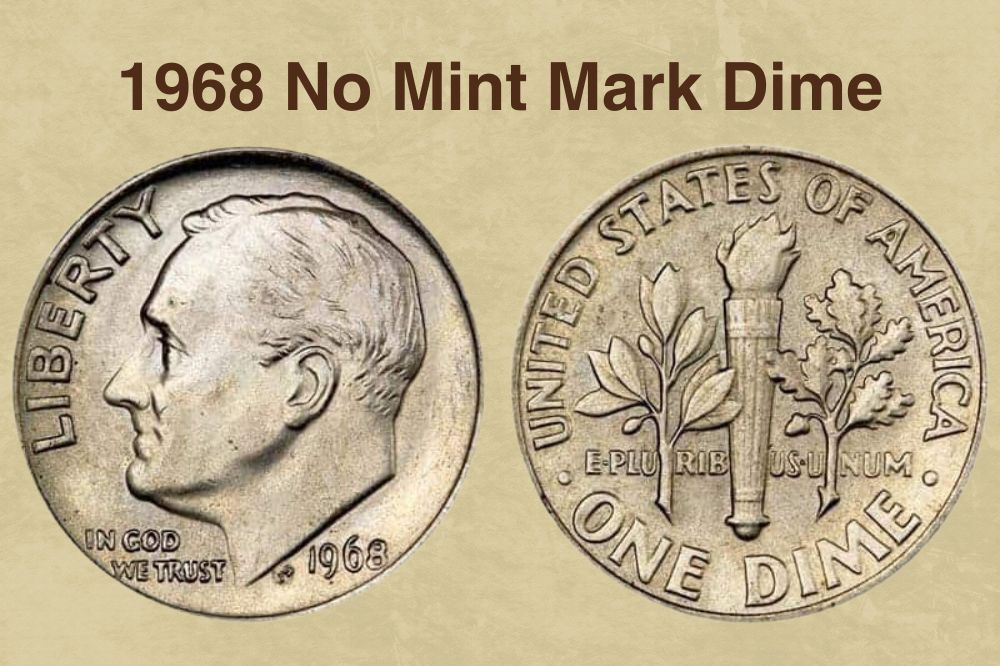
1968 No Mint Mark Dime Value
The Philadelphia Mint struck 424 million Roosevelt dimes in 1968, a massive mintage that defines their market positionโcirculated to MS65 specimens are extremely common, with worn examples worth only face value. However, MS67 and higher grades are exceptionally rare, particularly those displaying Full Band (FB) characteristics, which represent the pinnacle of 1968 striking quality.
The value difference between MS and FB coins reflects collectors’ exacting standards for strike quality. Regular MS specimens range from $5 at MS63 to $475 at MS68, while Full Band versions exhibit a significant scarcity premium: MS64-66 FB coins sell for $18-80, and MS67 FB examples surge to approximately $500.

CoinValueChecker App
Not sure what your coins are worth? Get Instant Value โข Grade โข Error Detection with CoinValueChecker (3 Free Checks Daily)
A 1968 MS67 FB dime realized $1,250 in 2022. In high grades, perfect strike details prove scarcer than mere preservation. When a coin achieves both MS67 condition and complete torch bands, its value can reach several times that of non-FB counterparts at the same grade.
1968 No Mint Mark Dime Price/Grade Chart
Price by 1-70 Grade (Latest Auction Records Included)
1968 No Mint Mark Dime (FS) Price/Grade Chart
Price by 1-70 Grade (Latest Auction Records Included)
1968 No Mint Mark Dime (PL) Price/Grade Chart
Price by 1-70 Grade (Latest Auction Records Included)
The following chart displays this coin’s auction record evolution over the years.
| Date | Platform | Price | Grade |
|---|
The market activity chart reflects the long-term value trends of the 1968 Philadelphia Roosevelt dime.
Market activity: 1968 No Mint Mark Dime
1968-D Dime Value
The 1968-D Dime was produced at the Denver Mint, with a mintage of nearly 481 million pieces. This figure makes it one of the highest-production dime varieties that year. However, like many other years in the Roosevelt dime series, large-scale production doesn’t mean all grades are easy to find.
PCGS population reports show 7 coins graded MS67+ FB and only 12 coins at MS68 FB, demonstrating clear scarcity. Auction records for the 1968-D Dime show an MS68 FB example sold for $1,495 in June 2021. This price fully demonstrates market recognition for top-grade specimens.
From a collecting perspective, the 1968-D Dime is easily obtainable in mid-to-low grades. But coins with real investment value are those graded MS67 and above, especially pieces with Full Bands. These coins have stable market liquidity. Coins certified by professional grading services are more sought after.
For collectors with limited budgets, MS65-MS66 FB versions offer an ideal entry point. Collectors pursuing top-quality pieces should focus on MS67+ FB coins. These may have greater appreciation potential in the future.
1968-D Dime Price/Grade Chart
Price by 1-70 Grade (Latest Auction Records Included)
1968-D Dime Price/Grade Chart
Price by 1-70 Grade (Latest Auction Records Included)
Historical auction data provides clear reference points for this coin’s market performance.
| Date | Platform | Price | Grade |
|---|
The market activity chart reflects trading activity trends for this coin across different periods.
Market activity: 1968-D Dime
1968-S Proof Dime Value
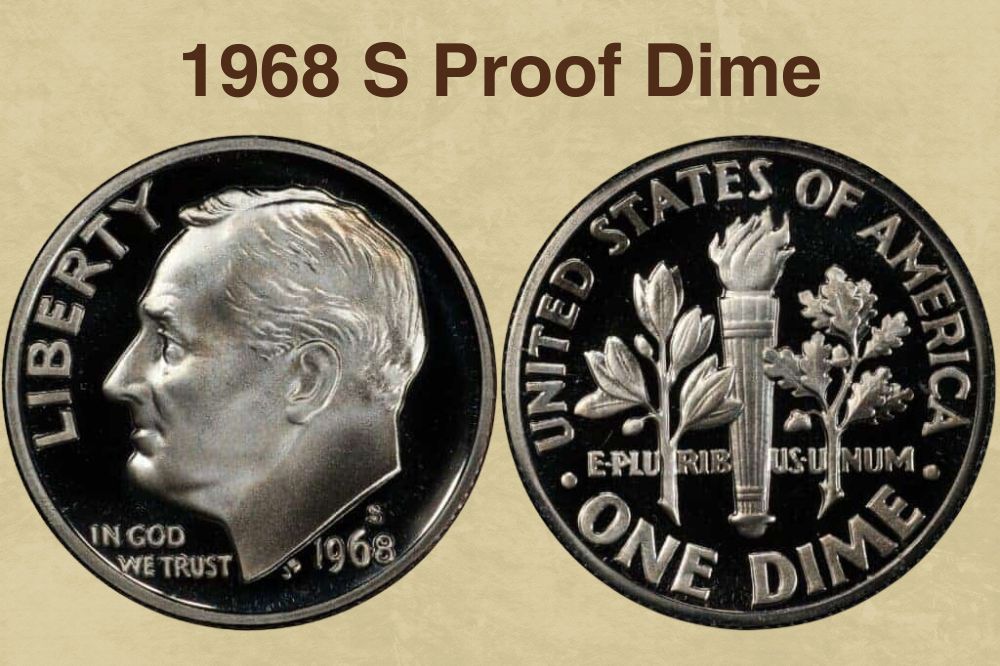
1968 marked a significant milestone for proof coin collectorsโthis was the year the San Francisco Mint took over proof coin production and added the “S” mintmark to coins for the first time, with sales surpassing 3 million sets.
This copper-nickel clad dime showcases frosted designs that appear to float above brilliant mirror-like surfaces, with standard versions typically valued at $1 to $2 in the market.
As the first San Francisco-minted proof Roosevelt Dime, its symbolic significance within the series far outweighs its scarcityโthis is an extremely common coin in the proof market, better suited as a foundational piece for complete set collectors rather than an investment vehicle.
1968-S Proof Dime Price/Grade Chart
Price by 1-70 Grade (Latest Auction Records Included)
Looking at its auction performance, the 1968-S Proof Dime maintains stable and modest pricing in the secondary market, primarily serving set collectors and series completists.
| Date | Platform | Price | Grade |
|---|
In today’s market, this coin is readily available through major trading channels and dealers, with ample surviving examples ensuring good market liquidity.
Market activity:1968-S Proof Dime
1968–S CAM Dime Value
Over 5,000 1968-S Proof Dimes have been graded. Nearly 4,000 failed to achieve Cameo designation. This ratio defines the Cameo version’s market position. It represents about 12% of total graded coins. It’s neither readily available everywhere nor truly scarce.
The frosted devices contrast with mirror fields at Cameo level but fall short of Deep Cameo standards. This moderate visual enhancement appeals to collectors who want better than standard but won’t pay the Deep Cameo premium.
Market data shows regular-grade Cameo versions maintain modest pricing. The top PR70 CAM reached $2,650 at auction. Only one coin worldwide has achieved this perfect grade. This number reveals the true scarcity of “absolute perfection + Cameo.”
For series collectors, the 1968-S CAM Dime offers a reasonable upgrade path. It elevates the set’s visual quality without the Deep Cameo price jump.
1968-S CAM Dime Price/Grade Chart
Price by 1-70 Grade (Latest Auction Records Included)
Looking at its price evolution, Cameo versions maintain steady pricing in regular transactions, with high-grade specimens occasionally showing impressive results.
| Date | Platform | Price | Grade |
|---|
In terms of market activity, this grade maintains moderate trading frequency among proof collectors, mainly attracting series completists seeking quality enhancement.
Market activity: 1968-S CAM Dime
1968-S DCAM Dime Value
The strong contrast between frosted reliefs and deep mirror fields was not the norm under the proof minting process of that era. Die wear would quickly diminish this contrast. Only a small number of coins from early strikes could maintain Deep Cameo standards.
The supply-demand relationship shows something noteworthy: PR68DCAM has 214 survivors but only trades around $28, while PR69DCAM with 372 examples maintains steady pricing at $100-110. This shows collectors’ pursuit of “near perfection” far exceeds a one-grade difference. This psychology directly drives the price premium for PR69 grade.
In historical auctions, a PR69 DCAM sold for $575 in 2006. However, this price point is no longer common as more high-grade coins have emerged. From actual trading, PR69 DCAM ensures market liquidity with its relatively sufficient population.
It also provides visual quality notably superior to standard proofs. It has become the choice for collectors seeking quality while mindful of value.
1968-S DCAM Dime Price/Grade Chart
Price by 1-70 Grade (Latest Auction Records Included)
Looking at price history, Deep Cameo versions demonstrate price stability at PR69 grade under ample supply.
| Date | Platform | Price | Grade |
|---|
This grade maintains an active trading rhythm in the proof market. PR69 and higher grades especially receive continued attention from registry collectors.
Market activity: 1968-S DCAM Dime
Also Read: 16 Rare Dime Errors List with Pictures (By Year)
Rare 1968 Dime Error List
The 1968 Roosevelt dime series contains several highly sought-after mint errors that command significant premiums among collectors. These error coins resulted from various minting mishaps at the Philadelphia and San Francisco facilities, including missing mintmarks, repunched mintmarks, and die doubling varieties. While millions of standard 1968 dimes were produced, these error specimens are considerably scarcer, with values ranging from modest premiums to thousands of dollars depending on rarity and condition.
1. 1968 No S
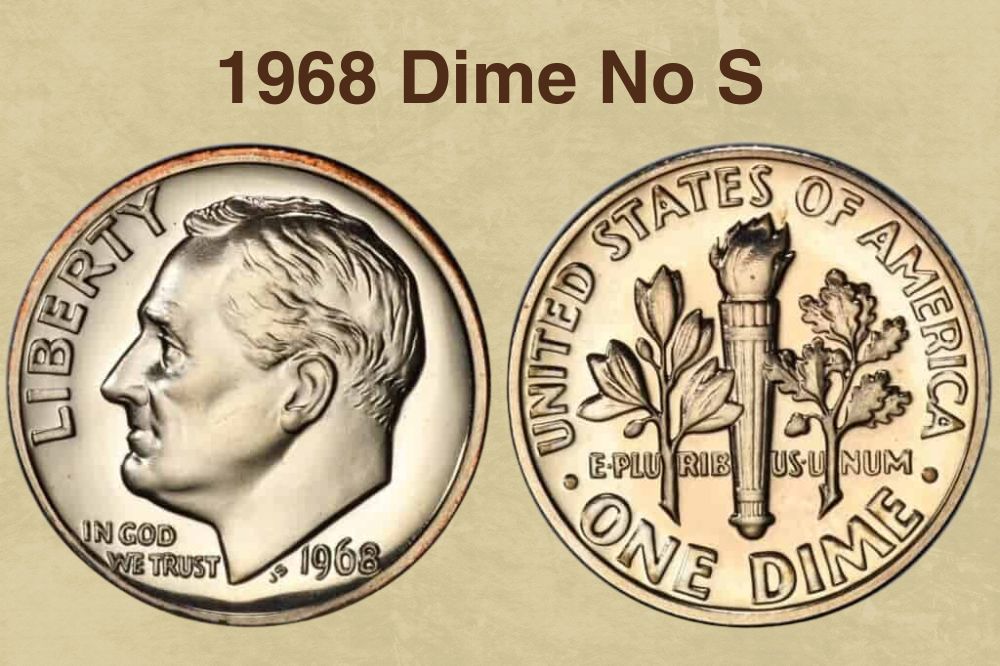
The 1968 No S is one of the most notable minting errors in modern coinage history. This error stemmed from the fact that in 1968, all proof dies were made at the Philadelphia Mint, and at least one die was not stamped with the “S” mark in the final stage of production before being shipped to the San Francisco Mint for use. San Francisco accidentally struck a small number of proof dimes without their required “S” mintmark.
The coin must show proof characteristics including mirror-like fields and sharp details, yet lack any mintmark above the date on the obverse. This distinguishes it from common Philadelphia business strikes that also carry no mintmark.
Only 12-20 examples exist across all grades, making this extraordinarily rare. Most survivors grade PR-67 or PR-68, with Cameo specimens numbering just 5-7 pieces.
The error’s value reflects its scarcity and collector demand. A PR-68 CAM example achieved $48,875 at auction in 2006, while a standard PR-67 brought $40,250 in 2008. These prices demonstrate why this remains one of the most sought-after modern error coins, ranking among the greatest 20th-century rarities.
1968 No S Dime Price/Grade Chart
Price by 1-70 Grade (Latest Auction Records Included)
2. 1968-S/S RPM FS-502
The 1968-S/S Repunched Mintmark (RPM) variety FS-502 occurred when the “S” mintmark was punched into the proof die multiple times in slightly different positions, creating a distinctive doubled appearance.
This happened during the manual mintmark application process at the San Francisco Mint, where human error led to misaligned multiple impressions on proof dies. The repunching is visible under magnification, showing clear doubling or tripling of the mintmark with the primary “S” showing traces of additional impressions to the south and east.
On proof specimens with their mirror-like surfaces, the repunched mintmark becomes quite apparent when examined with a 10x loupe, displaying clear separation between the overlapping impressions.
Values typically range from $75-$150 for standard proof examples to $200-$400 for high-grade cameo, depending on the strength and clarity of the doubling.

CoinValueChecker App
Not sure what your coins are worth? Get Instant Value โข Grade โข Error Detection with CoinValueChecker (3 Free Checks Daily)
1968-S/S RPM FS-502 Dime Price/Grade Chart
Price by 1-70 Grade (Latest Auction Records Included)
3. 1968 DDO FS-101
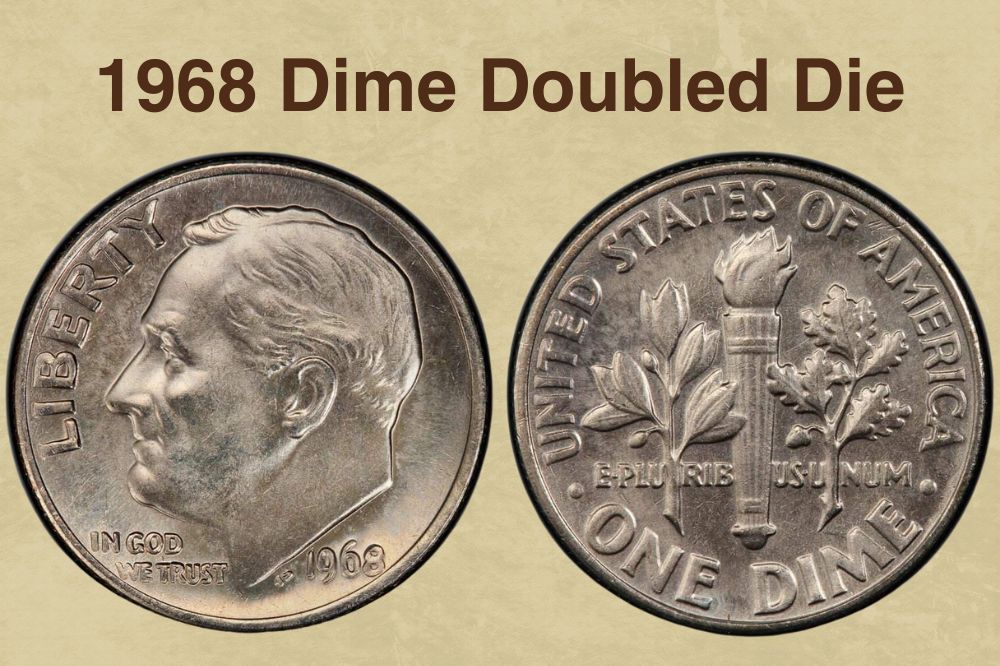
The 1968 Doubled Die Obverse FS-101 exhibits noticeable doubling on the obverse design elements, particularly visible in the date, “LIBERTY,” and “IN GOD WE TRUST.” This error occurred during the hubbing process when the working die received multiple impressions from the master hub at slightly different angles or positions.
The doubling appears as a distinct separation or notching of design elements, most prominent on Roosevelt’s profile and the lettering. Under magnification, collectors can observe clear spreading or duplication of letters and numbers, with the strongest doubling typically seen in the last two digits of the date.
Circulated examples trade for $25-$75, while uncirculated specimens can reach $100-$250 depending on the clarity of doubling and overall grade. The variety is popular among doubled die enthusiasts and represents one of the more affordable significant errors from 1968, though authentication remains important for premium examples.
1968 DDO FS-101 Dime Price/Grade Chart
Price by 1-70 Grade (Latest Auction Records Included)
4. 1968-S DDR (FS-801 and FS-802)
The 1968-S Doubled Die Reverse varieties FS-801 and FS-802 display distinctive doubling on the reverse design, affecting elements like “ONE DIME,” the torch, olive branches, and oak leaves. These errors resulted from misaligned multiple hub impressions during reverse die production at the San Francisco Mint.
FS-801 typically shows stronger doubling in the lettering around the rim, while FS-802 exhibits more pronounced separation in the torch and botanical elements.
Identification requires careful examination under magnification, focusing on the torch flame tips and the “E PLURIBUS UNUM” motto where doubling creates a notched or spread appearance.
Values vary significantly: FS-801 ranges from $30-$100 in circulated grades to $150-$400 for mint state, while FS-802 commands $20-$60 circulated and $75-$250 uncirculated.
Both varieties attract dedicated collectors of reverse doubled dies, though FS-801 generally commands higher premiums due to more dramatic visual impact.
1968-S DDR FS-801 Dime Price/Grade Chart
Price by 1-70 Grade (Latest Auction Records Included)
5. 1968-S DDO (FS-101 and FS-102)
The 1968-S proof Doubled Die Obverse varieties FS-101 and FS-102 showcase prominent doubling on the coin’s front, primarily affecting Roosevelt’s portrait, date, and inscriptions.
FS-101 typically exhibits stronger doubling in “LIBERTY” and the date numerals, with clear separation visible even to the naked eye on high-grade proofs. FS-102 shows more subtle doubling concentrated in Roosevelt’s hair details and facial features.
Both originated from multiple hubbing impressions during proof die manufacturing, a process requiring precise alignment that occasionally produced these spectacular errors. The mirror-like proof surfaces make the doubling particularly dramatic and easier to identify compared to circulation strikes.
Values for FS-101 range from $200-$600 depending on grade and doubling severity, while FS-102 typically sells for $100-$350.
1968-S DDO FS-101 Dime Price/Grade Chart
Price by 1-70 Grade (Latest Auction Records Included)
Where To Sell Your 1968 Dime?
Now that you’ve determined your 1968 dime’s value, the next critical step is selecting the right marketplace to maximize your return. We’ve carefully evaluated the leading online platforms for coin sales, providing comprehensive insights into each venue’s strengths, limitations, and ideal use cases to help you make an informed selling decision.
Check out now: Best Places To Sell Coins Online (Pros & Cons)
1968 Dime Market Trend
Market Interest Trend Chart - 1968 Dime
*Market Trend Chart showing the number of people paying attention to this coin.
FAQ About The 1968 Dime
1. Are 1968 Roosevelt dimes rare?
The circulation of almost 910 million 1968 dimes means these coins are not scarce in todayโs market. Many are still in circulation, making them numerous. However, No S dimes from that year can be extremely rare and thus have a high price.
2. How much should you pay for the 1968 Roosevelt dime (No Mint mark)?
The high number of circulated 1968 dimes and their presence in todayโs circulation directly affect their value. It is not high, and you can find these coins for only $0.1. The situation is somewhat different for those in the mint state. In this case, it is necessary to set aside between $0.15 and $300, depending on each coinโs grade.
3. What Roosevelt dimes are the priciest?
Roosevelt dimes began their era in 1946, and their minting continues today. Usually, specimens from an earlier period are more attractive to collectors, and their value is more significant.
Interestingly, the most expensive piece is not from that period. The 1975 No S Proof Dime stands as the undisputed champion of Roosevelt dime values. Only two examples exist, and one recently sold for $506,250 in October 2024, setting a new record. The other known specimen brought $456,000 in 2019. This error occurred when San Francisco struck proof sets without punching the “S” mintmark onto the die.