Coin Value Contents Table
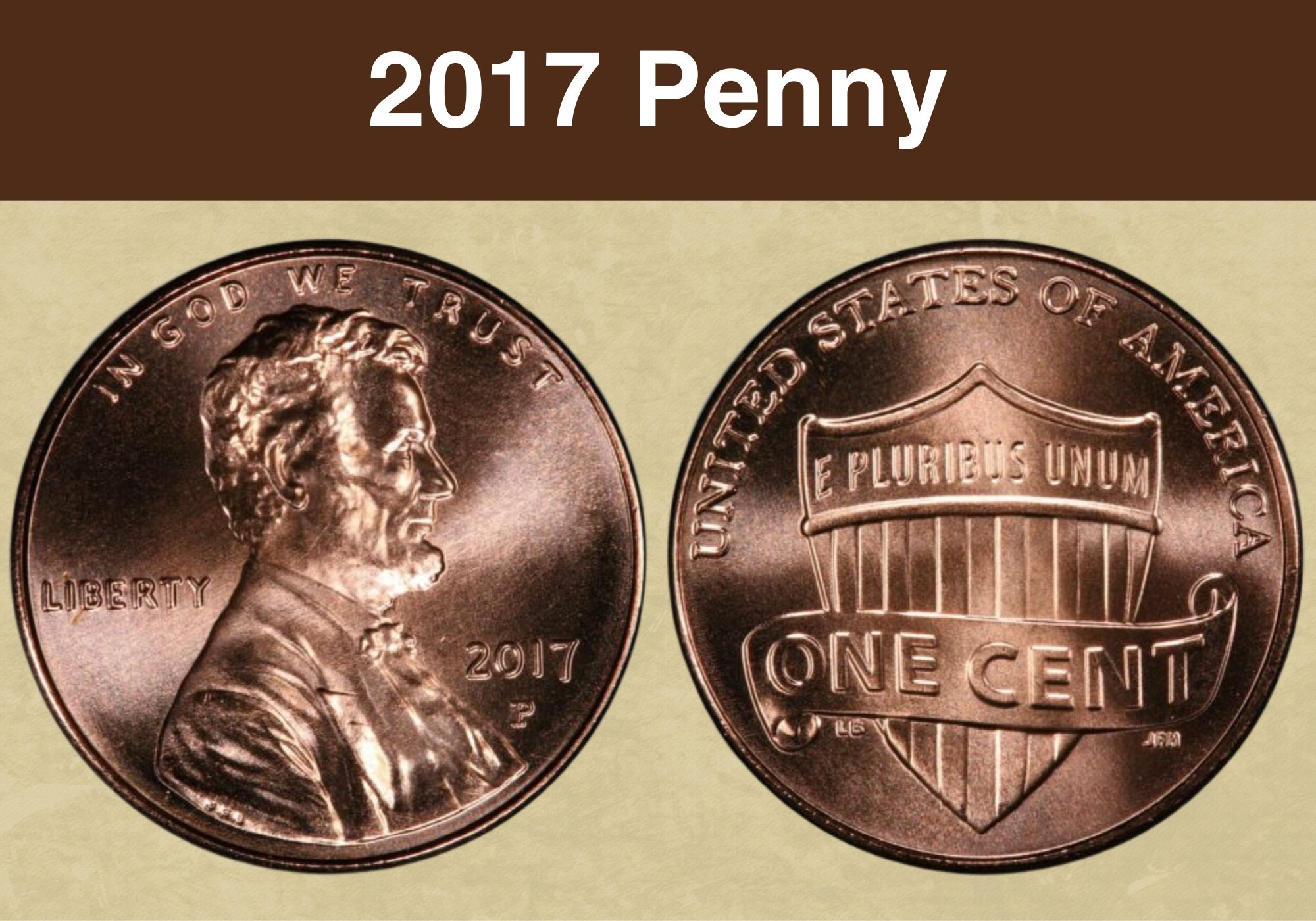
Are you interested in adding a 2017 penny to your collection?
Are you curious how much this modern coin is worth in the numismatic market?
You’ve come to the right place!
We wrote this guide to explain everything you need to know about the 2017 penny value.
Adding this coin to your collection is an excellent idea. In some years, a 2017 penny will be ancient and worth a lot.
So, now is definitely a good time to invest in this penny.
This guide will also be helpful if you are considering selling your 2017 penny for a profit.
We will explore the coin’s interesting history, outstanding features and tips for grading your modern penny.
You will also discover some errors that, despite being mistakes from the minting process, are worth hundreds or even thousands of dollars!
So, let’s jump in and find out: How much is a 2017 penny worth?
2017 Penny Value Chart
| Mint Mark | Good | Fine | Extremely Fine | Uncirculated |
| 2017-P Penny Value | – | – | – | $0.34 |
| 2017-D Penny Value | — | – | – | $0.34 |
| 2017-S Proof Penny Value | – | – | – | $5.84 |
The History of the 2017 Penny
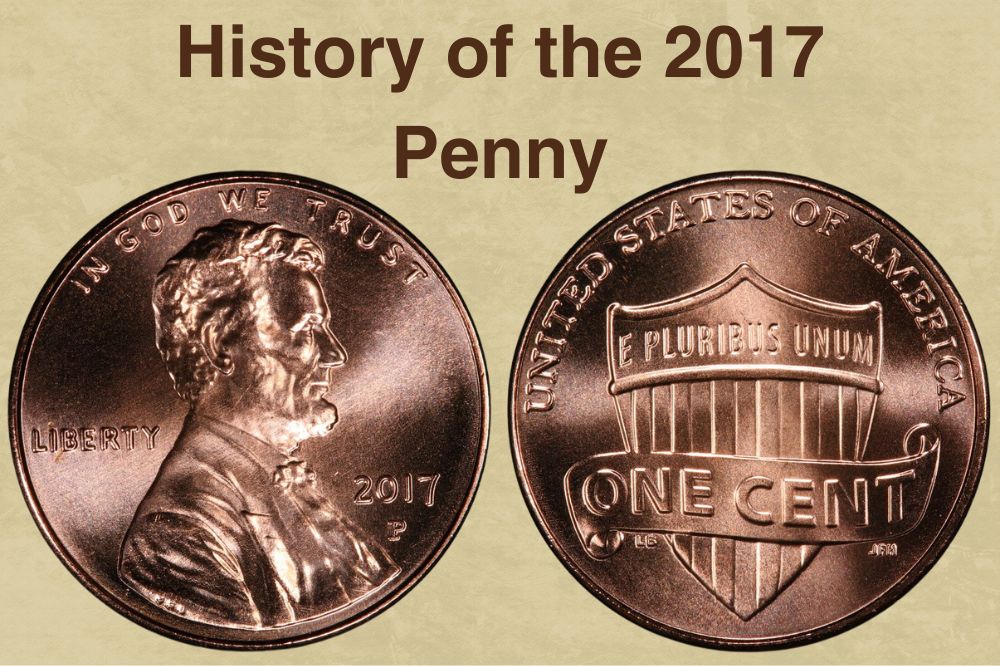
The 2017 penny belongs to the Lincoln Penny series, one of the longest-circulating coin series in our country’s history.
The Lincoln cent was first struck in 1909 as part of President Theodore Roosevelt’s move to redesign American coinage.
Initially, the United States Mint commissioned sculptor August Saint-Gaudens to develop a new design for the cent and the four gold coins.
Saint-Gaudens, who was very sick with cancer, only managed to submit designs for the gold coins and passed on in 1907 before redesigning the cent.
In 1909, the Mint hired another sculptor, Victor David Brenner, to take on the task of redesigning the cent.
The new coin would feature President Abraham Lincoln on the obverse to commemorate his bicentennial birth anniversary. The reverse depicted two wheat stalks, giving the new coin the name Wheat Penny or Wheaties.
Wheaties entered into circulation in early August 1909 and were only replaced in 1959 by the Lincoln Memorial penny designed by Frank Gasparro.
In 2009, the reverse of the Lincoln Memorial was replaced with four different commemorative designs and in 2010, the Mint ushered in the Union Shield reverse designed by Lyndall Bass.
According to the Presidential One Dollar Coin Act, by 2010, the Mint was required to produce a cent representing President Lincoln’s historical efforts to create a united and single country.
In April 2009, the Commission of Fine Arts proposed that the new design depict wheat sheaves bounded by a ring to represent unity. This design was, however, not feasible as it resembled German coins in the 1920s.
Another group, the Citizens Coinage Advisory Committee (CCAC), presented their own recommendation that the new design depicts a Union shield with the words ONE CENT imprinted on a scroll and the motto E PLURIBUS UNUM at the top of the shield.
Ultimately, the CCAC’s design won the day. The Mint explained that the thirteen stripes on the shield symbolize the first states to join the union under the Federal government. The horizontal bar on top of the vertical stripes represents the Federal government.
Lyndall Bass designed the new CCAC-approved reverse, while Joseph Menna, a sculptor and engraver for the U.S. Mint, sculpted it. The new pieces were released into circulation in January 2010 in Puerto Rico and then in February at a ceremony in Springfield, Illinois.
At the start of 2017, the Mint released pennies with the mint mark P on the obverse to honor the institution’s 225th anniversary. This was the only year the Mint placed the mint mark P on Union Shield pennies.
Also read: 12 Most Valuable Lincoln Penny Worth Money
Features of the 2017 Penny
As a collector, one of the best ways to know whether your 2017 penny is worth money is to understand the features to look for in your coin.
The obverse of the 2017 Penny
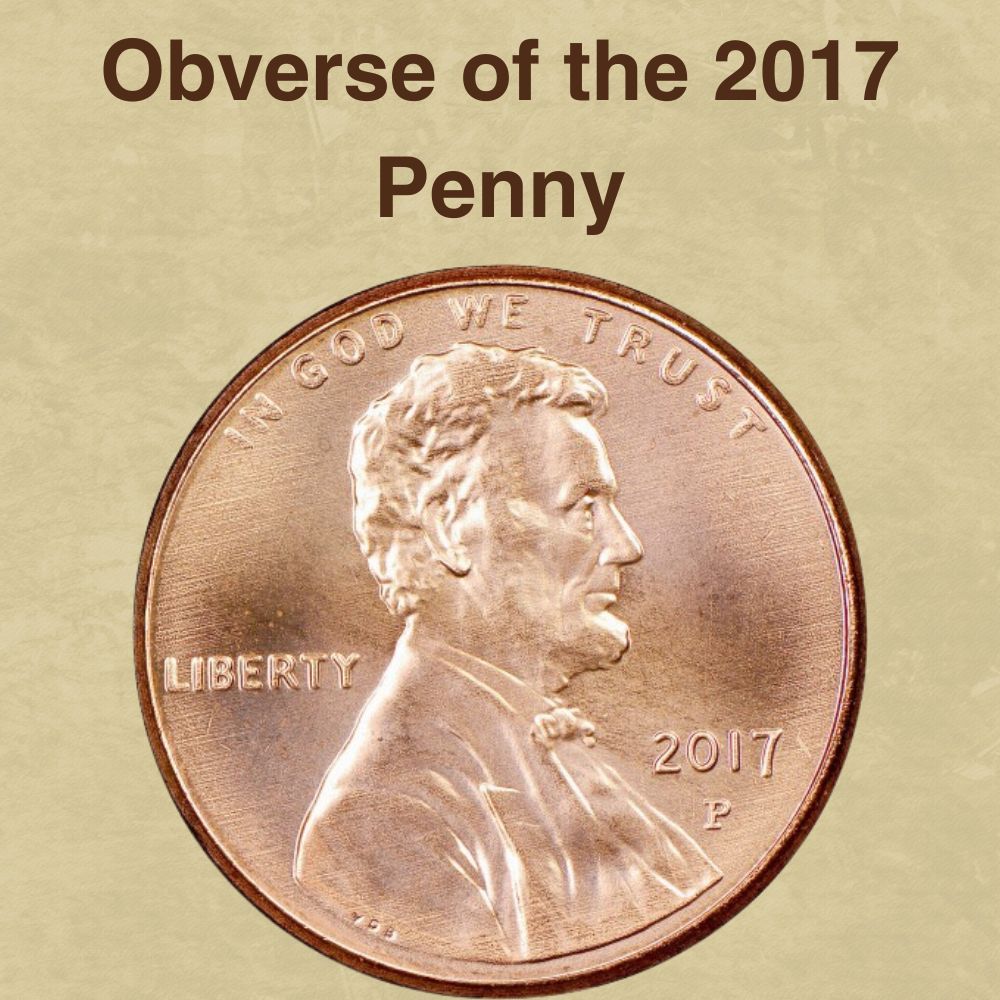
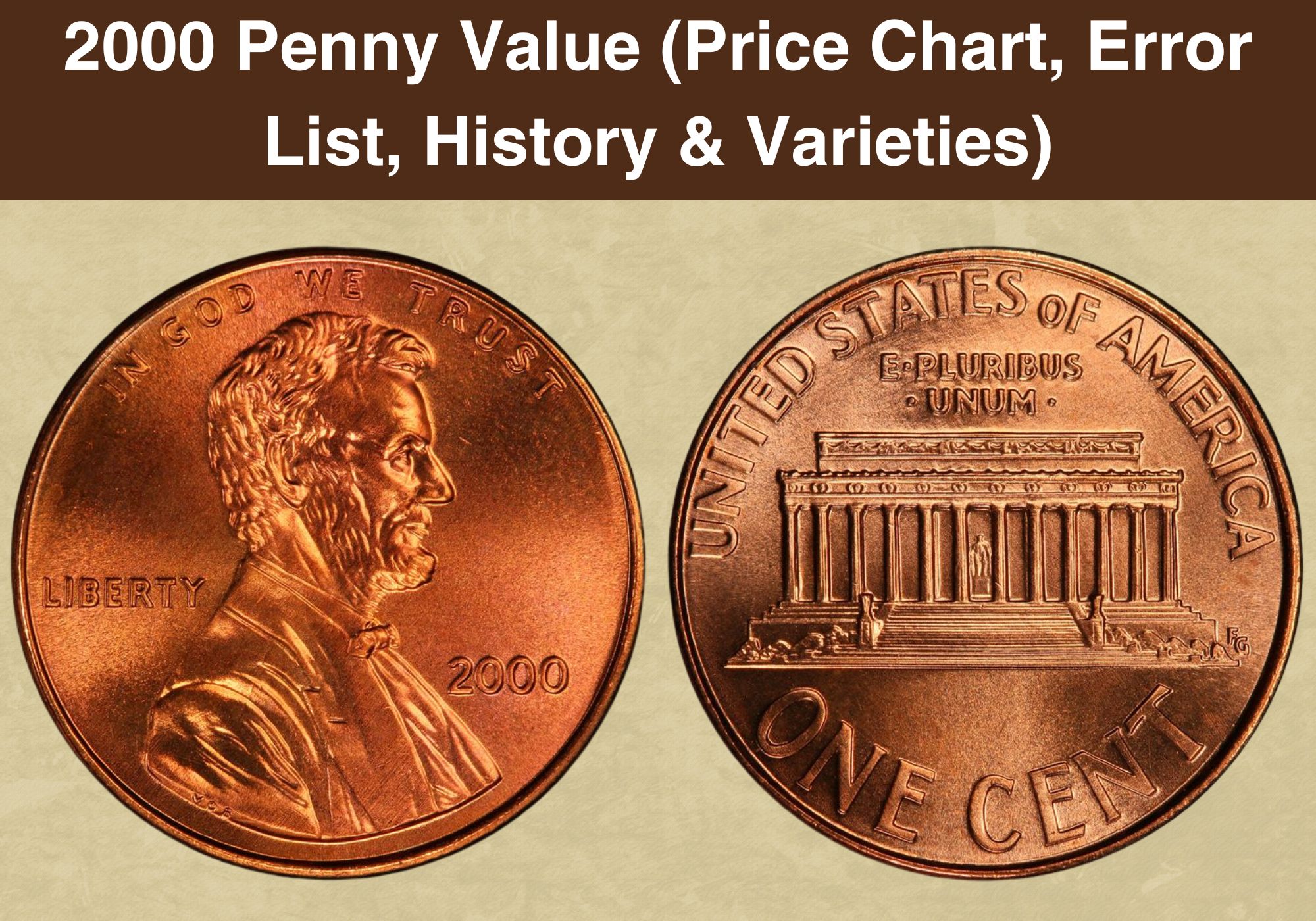
On the obverse, the 2017 penny features the left-facing portrait of President Abraham Lincoln.
Above his head and around the inner collar is our country’s motto: IN GOD WE TRUST. You will see the word LIBERTY on the left surface while the year date, 2017, is shown on the right, in front of Lincoln’s portrait.
Upon closer look, you will notice tiny writings where Lincoln’s shoulder is truncated. These are actually the initials VDB, which stand for Victor David Brenner, the coin’s initial sculptor.
The Reverse of the 2017 Penny
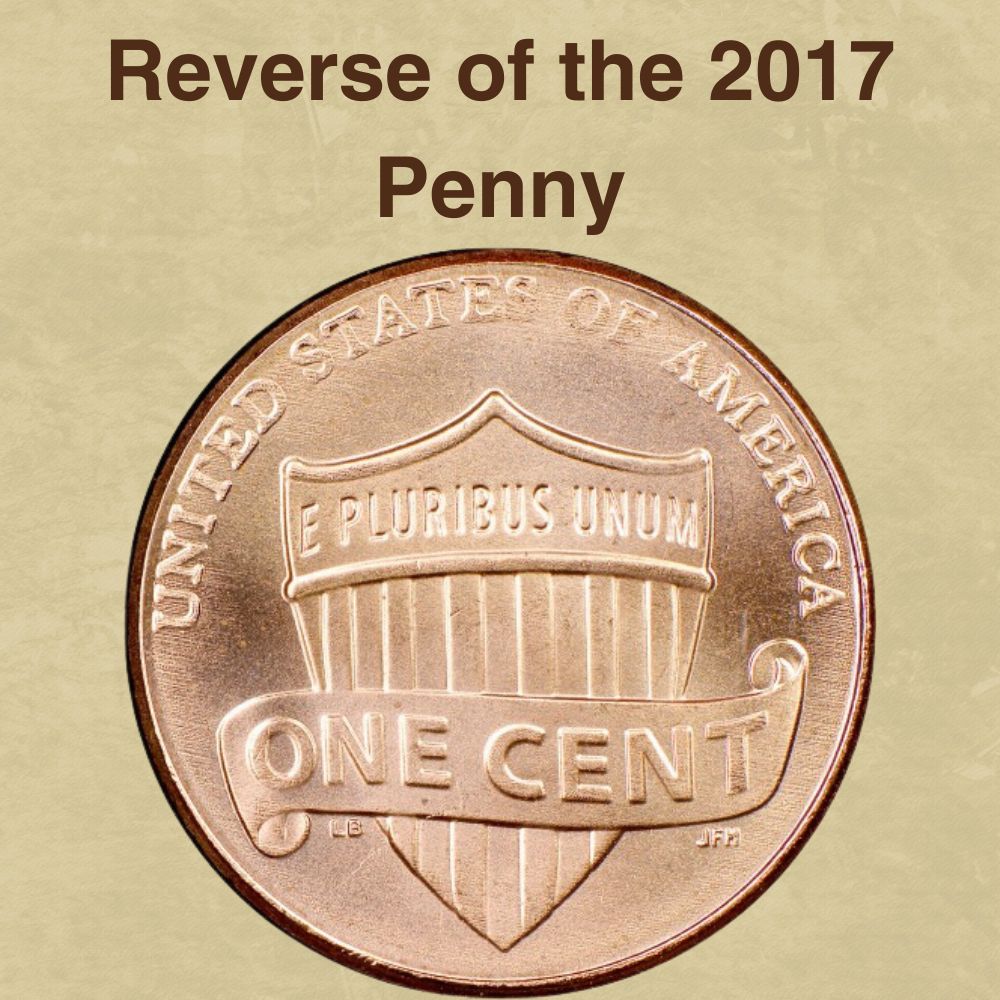
When you turn over the coin on the reverse, you are met with the glorious image of the Union Shield flanked by a scroll with the coin’s denomination, ONE CENT, superimposed.
On the shield, you will notice thirteen vertical stripes and one horizontal stripe on top. According to the Mint, the vertical stripes represent the thirteen states that initially formed the union after gaining independence from the colonialists.
The horizontal bar symbolizes the federal government under which the states are united. The motto E PLURIBUS UNUM graces the top of the shield. This motto translates to “Out of many, one.”
Our country’s name boldly appears at the top of the coin.
You will notice the initials LB and JFM on the left and right ends of the scroll. These represent the reverse’s designer, Lyndall Bass and the sculptor Joseph Francis Menna.
Other Features of the 2017 Penny
The 2017 penny is a plain-edged coin made of copper-plated zinc, with copper making up 2.5% of the coin and zinc comprising 97.5%
It measures 19.00 millimeters in diameter and weighs 2.50 grams.
All three mints, i.e. Philadelphia, Denver and San Francisco, produced pennies in 2017. Coins from each facility, including Philadelphia, spot a mint mark on the obverse, just below the date.
Also read: 13 Most Valuable Wheat Penny Worth Money
2017 Penny Grading
When grading the Lincoln Union Shield reverse pennies, including those produced in 2017, you must pay attention to the high points for signs of wear.
On the obverse, high points include Lincoln’s beard, the area below, the shoulder, and the coat’s edge. For a penny to qualify to be graded uncirculated, it should be free of flaws and smoothness, demonstrating complete luster.
Examine the reverse as well. The scroll, the words ONE CENT, and the area around the top of the shield are high points prone to wear. You can get a sense of the coin’s grade by assessing these points for contact marks, dullness, and smoothing due to circulation.
| # | Grade |
|---|---|
| 1 | Basal State-1 |
| 2 | Fair |
| 3 | Very Fair |
| 4, 5, 6 | Good |
| 7, 8, 10 | Very Good |
| 12, 15 | Fine |
| 20, 30 | Very Fine |
| 40 | Extremely Fine |
| 50 | About Uncirculated |
| 60 | Mint State |
| 65 | Mint State |
| 70 | Mint State |
Please check our grading guides to know your coin scale, It’s the necessary step to know the exact value of your coin.
Check out now: How to Grade Lincoln Wheat Penny?
2017 Penny Value Guides
So, how much is the 2017 penny worth?
Like Wheaties and Lincoln Memorial pennies, Union Shield pennies are graded based on their condition, closely related to their coloration.
Pennies with a copper element can be brown, red-brown or red, with red coins being the most valuable and desirable.
Other factors such as mint marks, rarity and errors can also affect the value of your 2017 pennies.
There are three varieties of the 2017 penny whose value we will explore below. The three are:
- 2017 P Penny
- 2017 D Penny
- 2017 S Proof Penny
Let’s take a look at each and discover the 2017 penny value.
2017-P Penny Value
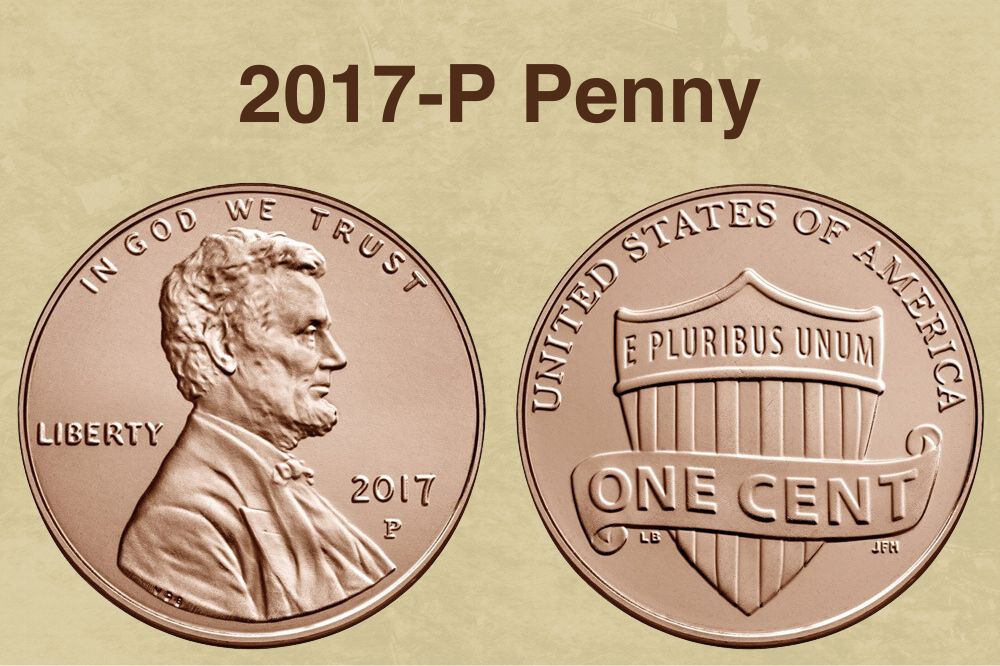
The Philadelphia Mint produced an eye-watering 4,361,220,000 Union Shield cents in 2017. That is a lot of coins!
With such a high mintage, you can expect to find 2017-P pennies in circulation easily. Also, this coin is very modern, minted less than ten years ago, so billions are still in circulation.
Because the 2017 penny with a P mint mark is very common, this coin is only worth more or less its face value. Circulated pieces are worth between $0.05 and $0.01.
Uncirculated 2017-P pennies do not fetch a fortune either, especially if the coin has acquired a brownish coloration. You can expect about $7.50 for such a piece.
That said, fully red specimens can be worth good money only because they are somewhat scarce. Most of the 2017 pennies from the Philadelphia Mint were released into circulation, leaving only a few uncirculated pieces.
A fully red gem graded MS68 can fetch up to $325 or more. According to records from the Professional Coin Grading Service, PCGS, 2018, a collector paid an impressive $4,500 for a 2017-P fully red penny. graded MS68.
2017-D Penny Value
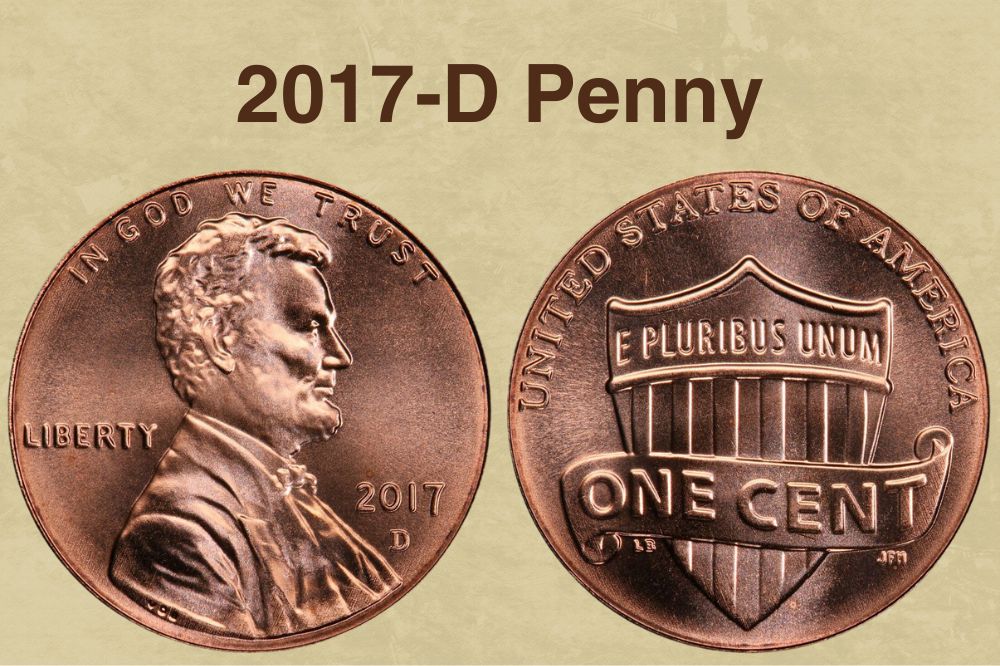
The Denver Mint recorded an equally high mintage of 4,272,800,000 pennies in 2017.
These coins are also very common, and you can easily spot them in day-to-day transactions and loose change.
Full red specimens are relatively rare as you go up the grading scale. A piece graded MS68 is valued at about $500.
Still, pennies in lower to middle-mint states are very affordable. For example, a 2017-D graded MS65 is worth about $2.50, and an MS67 is valued at $15 or thereabout.
The large price difference between Mint State examples is attributable to the fact that while gem specimens are very rare, other Mint State examples further up the scale are plentiful and, therefore, affordable.
Circulated examples are equally plentiful and are only worth their face value of between $0.05 and $0.10.
The most expensive 2017-D penny is a fully red gem graded MS68. It was sold at a 2021 online auction for an enviable $1,595.
2017-S Proof Value
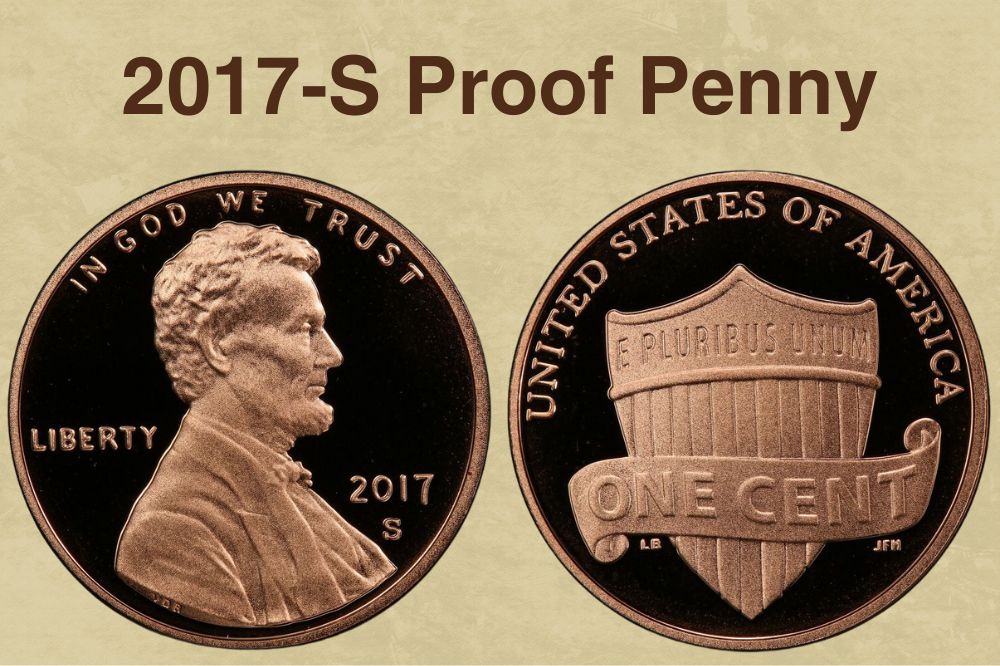
The San Francisco Mint also produced pennies in 2017, but these were proof coins meant for collectors. That year, an estimated proof coins with the S mint mark on the reverse were struck.
Although many collectors preserve their proof coins, some of these coins are released into circulation, resulting in red and red-brown examples, as is the case with 2017 pennies.
Close to a million proof cents were struck in 2017, making them relatively common and dampening their value.
On average, you can acquire or sell your 2017-S proof cent for $35 to $65. Brown, red, brown and fully red examples are extremely common, but the population dwindles for cameo and deep cameo pieces.
A rare deep cameo (DCAM) 2017-S penny graded PR70 fetched only $90 at an online auction, making it the most expensive piece of its kind to date.
Also read: 17 Most Valuable Indian Head Penny Worth Money
Rare 2017 Penny Errors List
Errors are mistakes during the mint process, resulting in a few odd-looking coins. Errors can, however, increase the coin’s value, depending on its popularity among collectors.
Here are some common 2017 penny errors worth money to look out for:
2017 Doubled Die Penny Error
Doubled die errors occur when the die that imprints the design onto the planchet shifts.
Due to the shifting, the die, which strikes the planchet multiple times, creates subtly overlapping design elements, which appear as doubling.
In 2017, pennies doubling mostly appear on the words IN GOD WE TRUST in the obverse. Such a coin can fetch up to $50 or more, depending on the condition.
2017 Strike-Through Penny Error
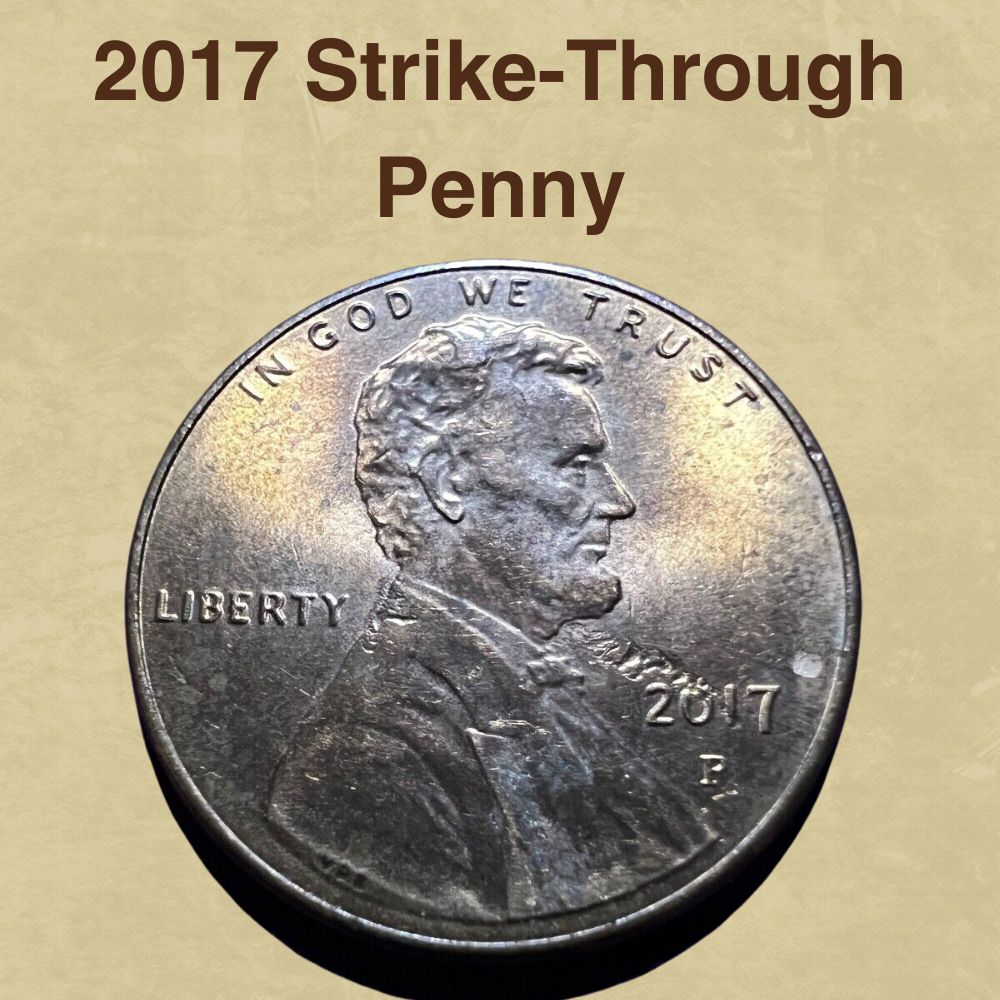
A strike-through error occurs when a foreign element, this time some grease, accidentally comes between the die and planchet. This obstructs a part of the design from being transferred to the coin.
Collectors will pay up to $70 for a circulated 2017 penny bearing a strike-through error.
Also read: 11 Most Valuable Wheat Penny Errors
Where to Sell Your 2017 penny ?
Now that you know the value of your coins, do you know where to sell those coins online easily? Don’t worry, I’ve compiled a list of these sites, including their introduction, pros, and cons.
Check out now: Best Places To Sell Coins Online (Pros & Cons)
FAQ
How much copper is in a 2017 penny?
Like other Lincoln Union Shield pennies, the 2017 penny comprises a copper-plated zinc planchet. While the zinc component makes up $97.5% of copper per penny, it is 2.5%. Although this penny has a strong copper appearance, it is not a fully copper coin.
Why do 2017 pennies have P?
Traditionally, coins struck at the Philadelphia Mint do not bear a mint mark. But 2017 was historical in that the Mint included a mint mark P on the obverse to celebrate the institution’s 225th anniversary. This was the only year the Lincoln Union Shield pennies struck in Philadelphia bore the mint mark P.
Is the penny going away in 2023?
There is no official announcement from the Mint or Treasury Department concerning the end of the penny in 2023. Such a decision would require input from Congress; the Mint wouldn’t just go ahead and solely end the production of such an important coin.

2017P floating head is that an error if it is what’s the value
How much would a circulated 2017 no mint mark penny be worth? Pretty good condition.