Coin Value Contents Table
Are you considering adding the 1984 penny to your coin collection?
Do you own a 1984 Lincoln Memorial penny and wonder how much it is worth?
You’ve come to the right place!
Lincoln memorial pennies are quite popular among collectors, given that Abraham Lincoln was a much-loved and memorable president. It is one of the most collected coins in American coinage history.
We wrote this guide to explain the real 1984 penny value. As you will find out, some errors can significantly increase the coin’s value, allowing you to potentially fetch hundreds or thousands of dollars depending on the type of error.
Read our guide to learn more about how much your 1984 penny might be worth.
1984 Penny Value Chart |
||||
| Mint Mark | Good | Fine | Extremely Fine | Uncirculated |
| 1984 No-Mint Mark Penny Value | $0.05 | $0.05 | $0.05 | $7.50 |
| 1984-D Penny Value | $0.05 | $0.05 | $0.05 | $7.50 |
| 1984-S Proof Penny Value | – | – | – | $600 |
The History of the 1984 Penny
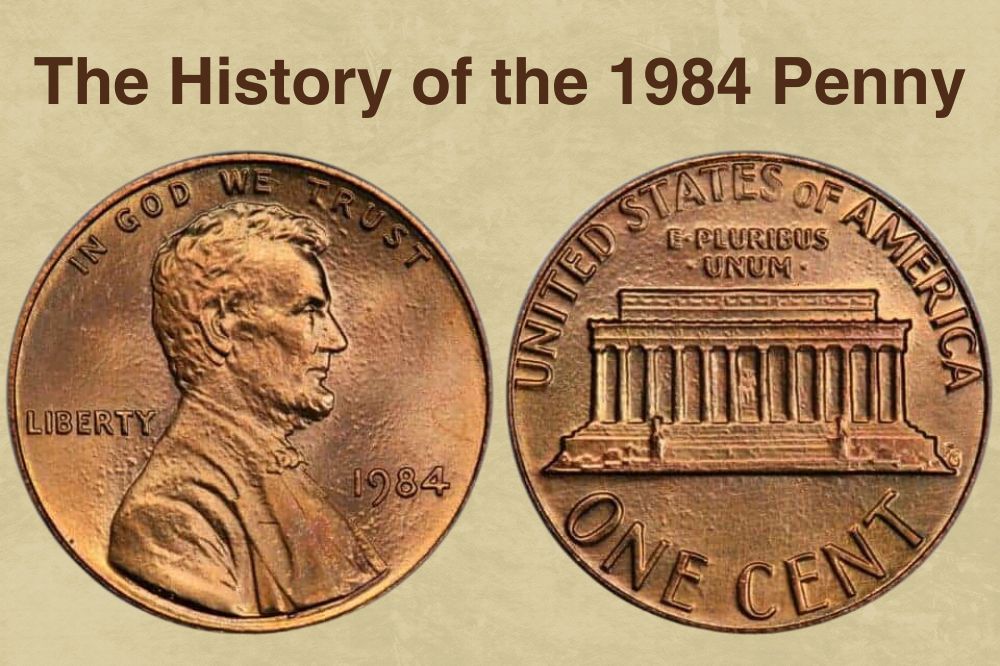
The 1984 penny is part of the Lincoln series, a coin whose production and circulation spans for years. The Lincoln pennies are among the longest circulating coins in U.S. coinage, first produced in 1909.
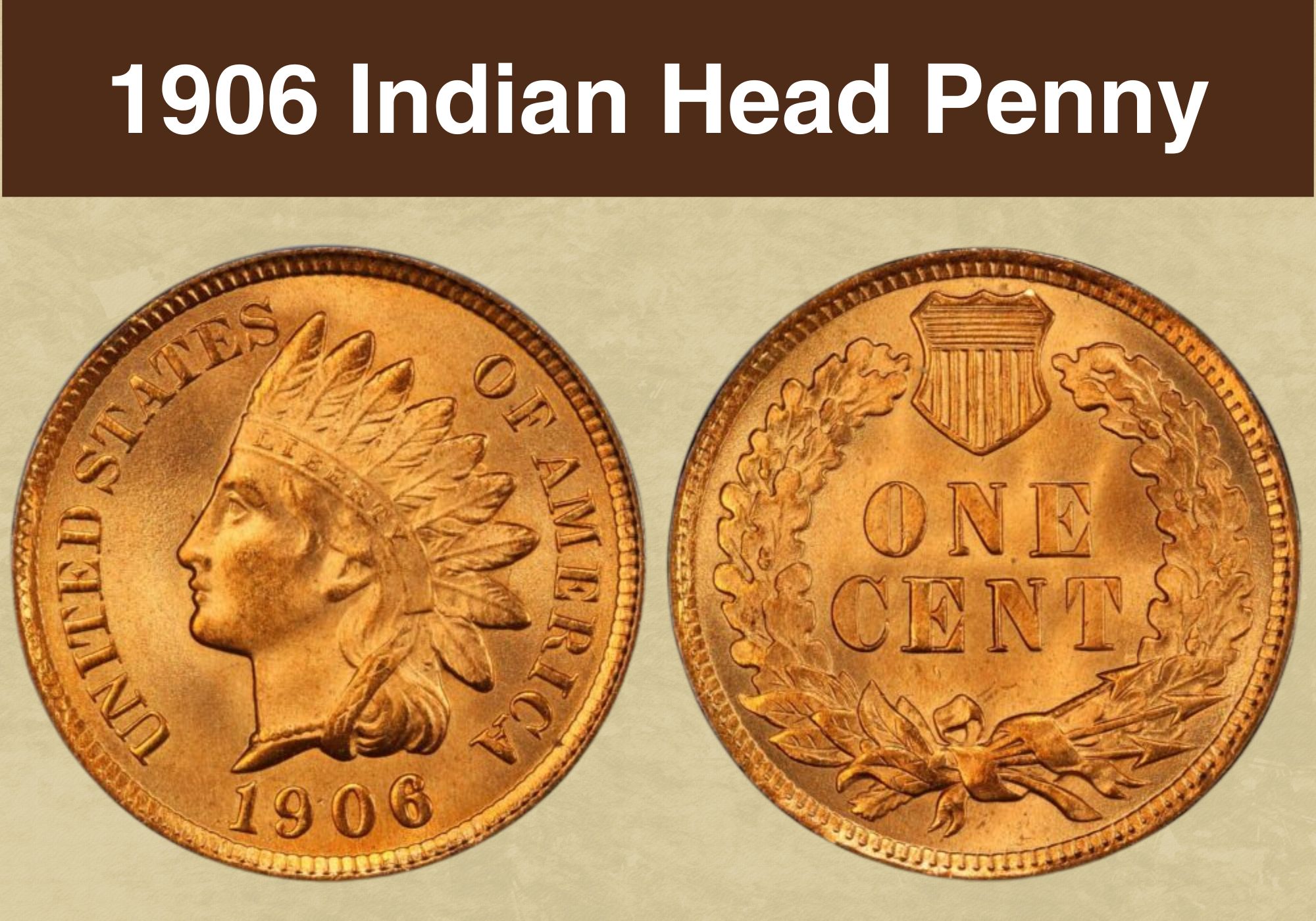
In 1905, the Mint commissioned sculptor Augustine Saint-Gaudens for a new design for the cent (also known as the penny), but Saint-Gaudens passed away in 1907 before submitting the design.
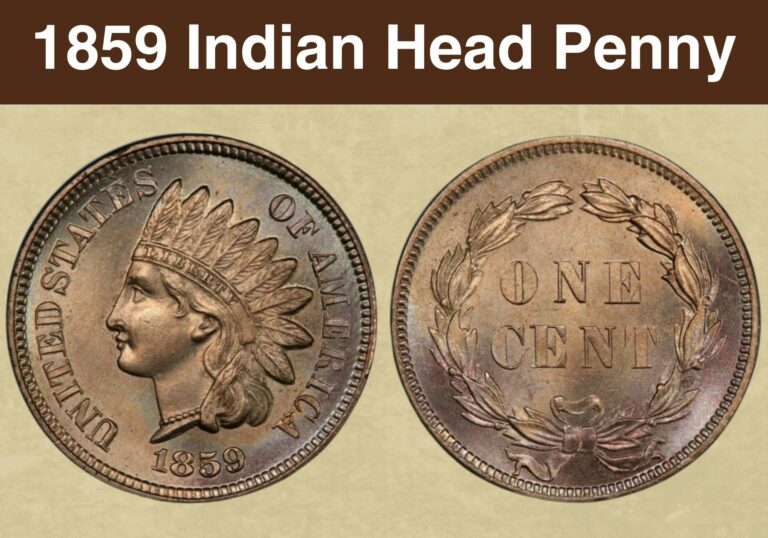
President Theodore Roosevelt was instrumental in creating a Lincoln cent, which would replace the Indian Head cent. After Saint-Gaudens passed, the Mint hired another sculptor named David Victor Brenner. After Roosevelt sat for Brenner to redesign a medal for the Panama Canal Commission, it is believed he recommended the sculptor to the Mint.
Many people had written to the Treasury vouching for Abraham Lincoln to be honored on the newly proposed coin. Lincoln’s centennial birth year of 1909 was very close, so Roosevelt was also keen to commemorate his fellow Republican.
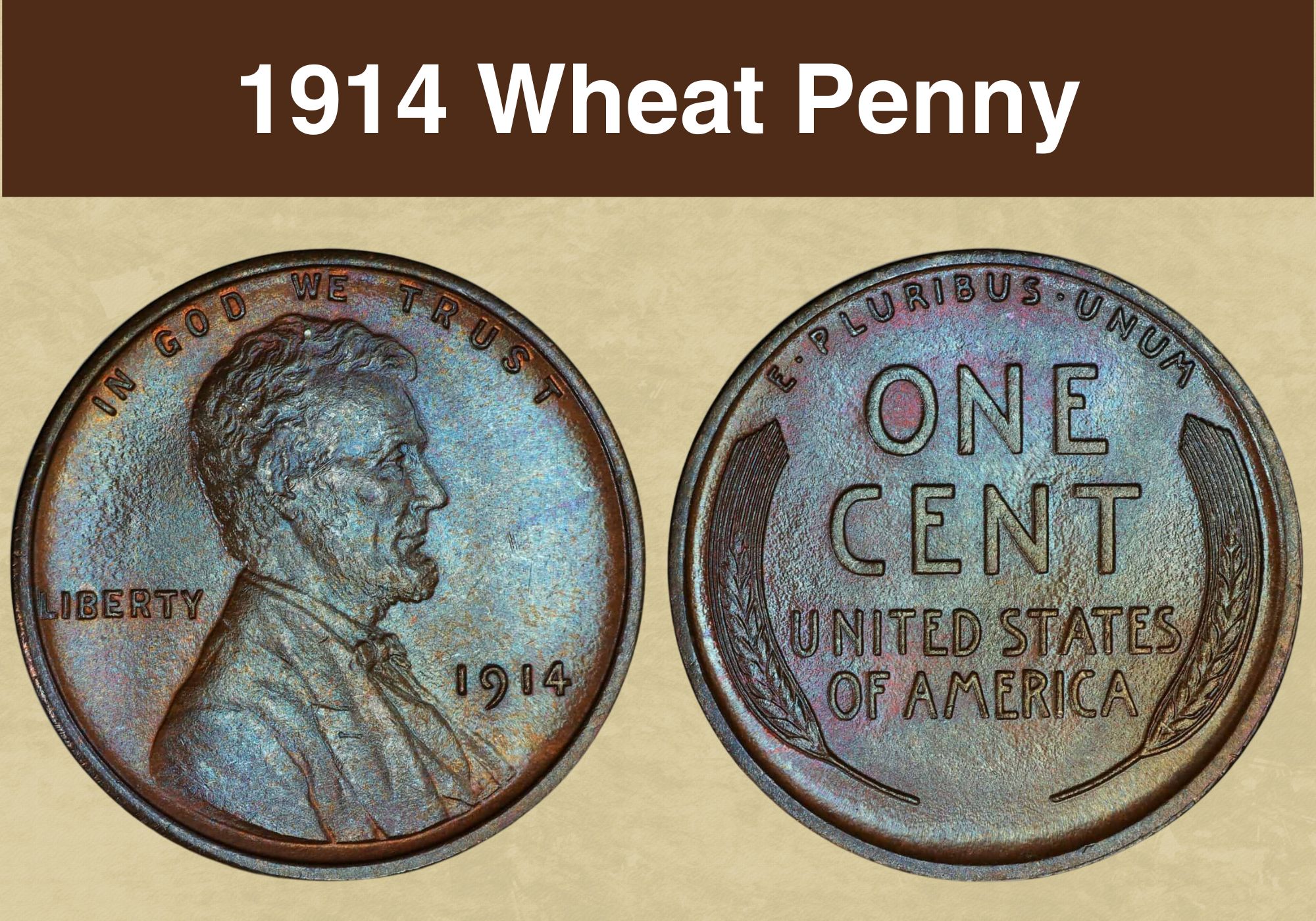
Brenner submitted the final design, and the Lincoln cents were released into circulation on August 2, 1909. The obverse and reverse designs remained unchanged until 1958 when Brenner’s reverse design, which featured two wheat leaves, was replaced by Frank Gasparro’s, which depicted a portrait of the historical Lincoln Memorial. The 1984 penny is part of the Lincoln Memorial coin series, whose design only changed in 2009 for the bicentennial celebrations.
Also read: 12 Most Valuable Lincoln Penny Worth Money
Features of the 1984 Penny
Let’s look at the physical attributes of the 1989 penny. Familiarizing yourself with these features will help you know if your Lincoln Memorial penny is worth anything.
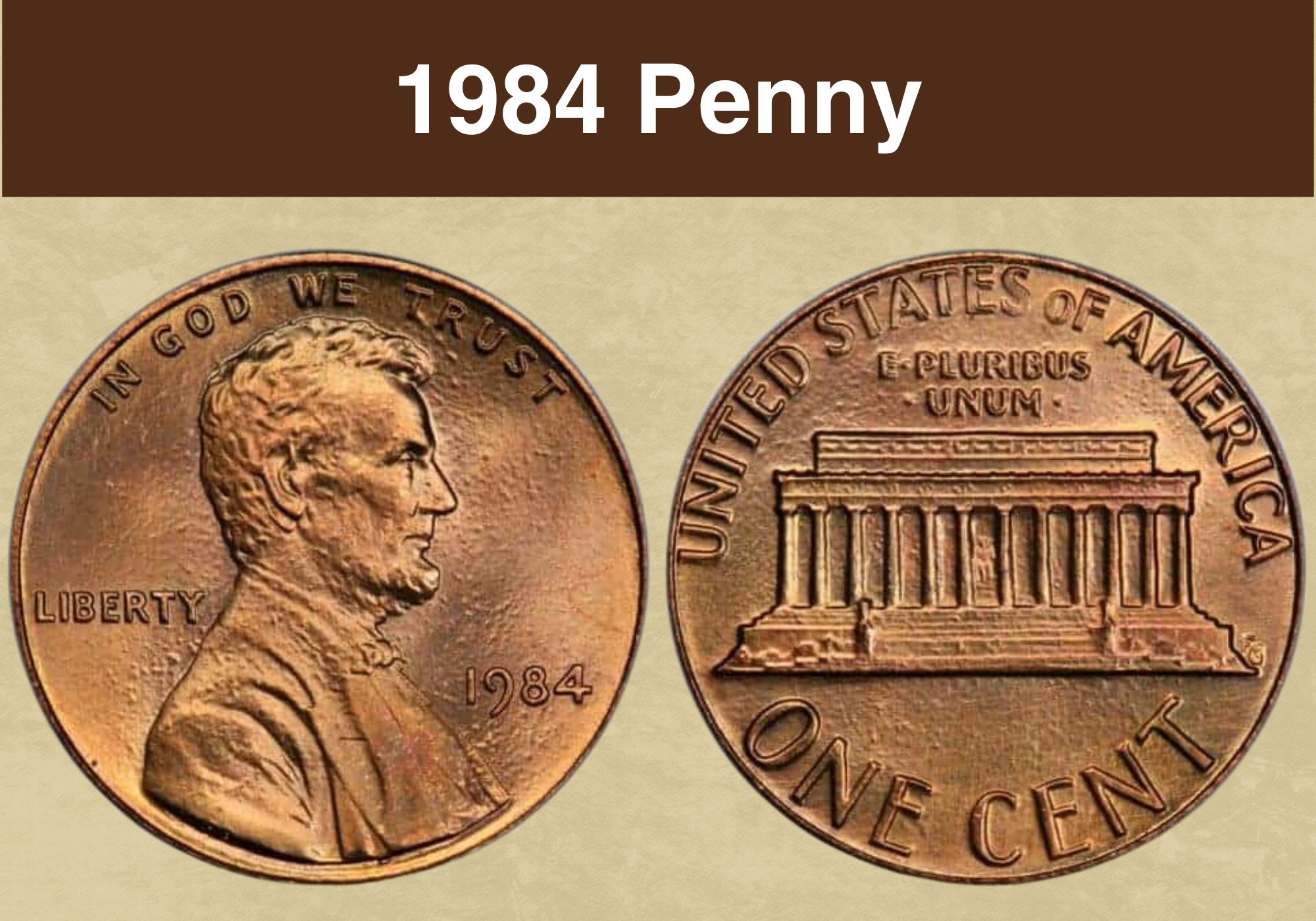
The Obverse of the 1984 Penny
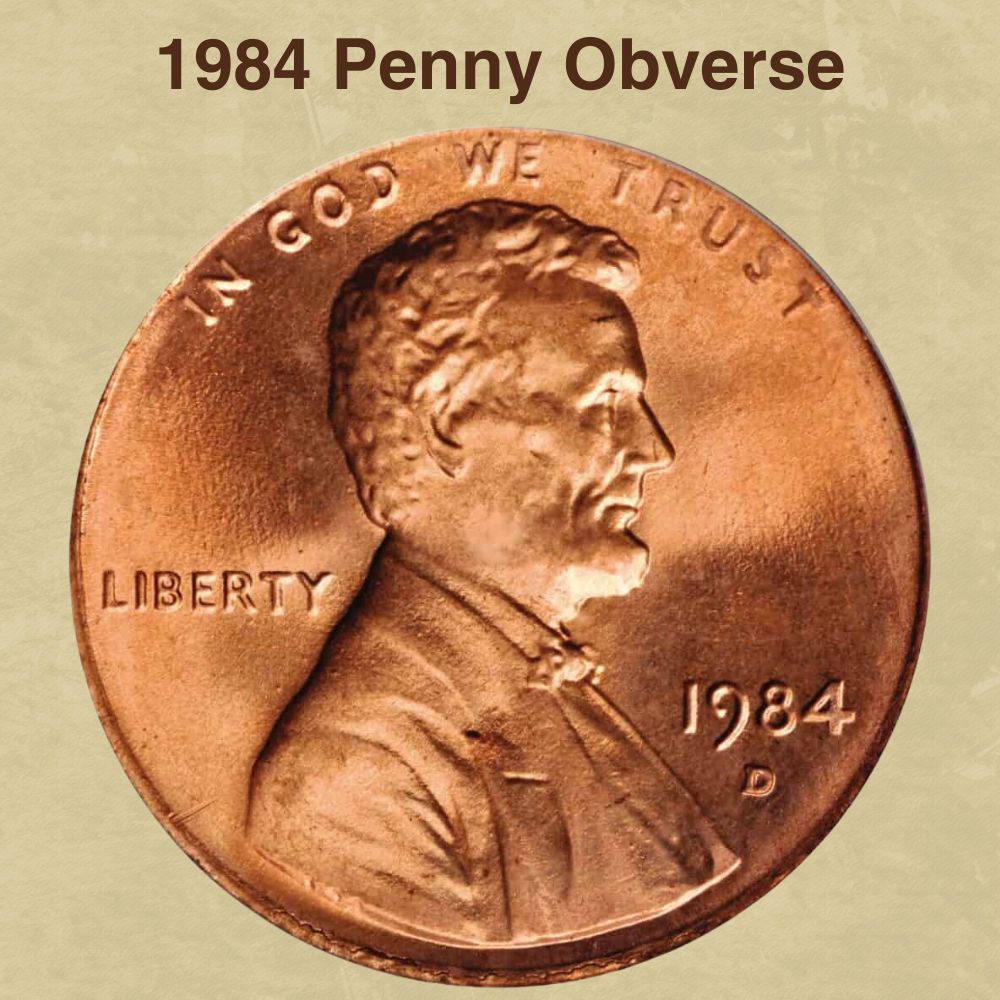
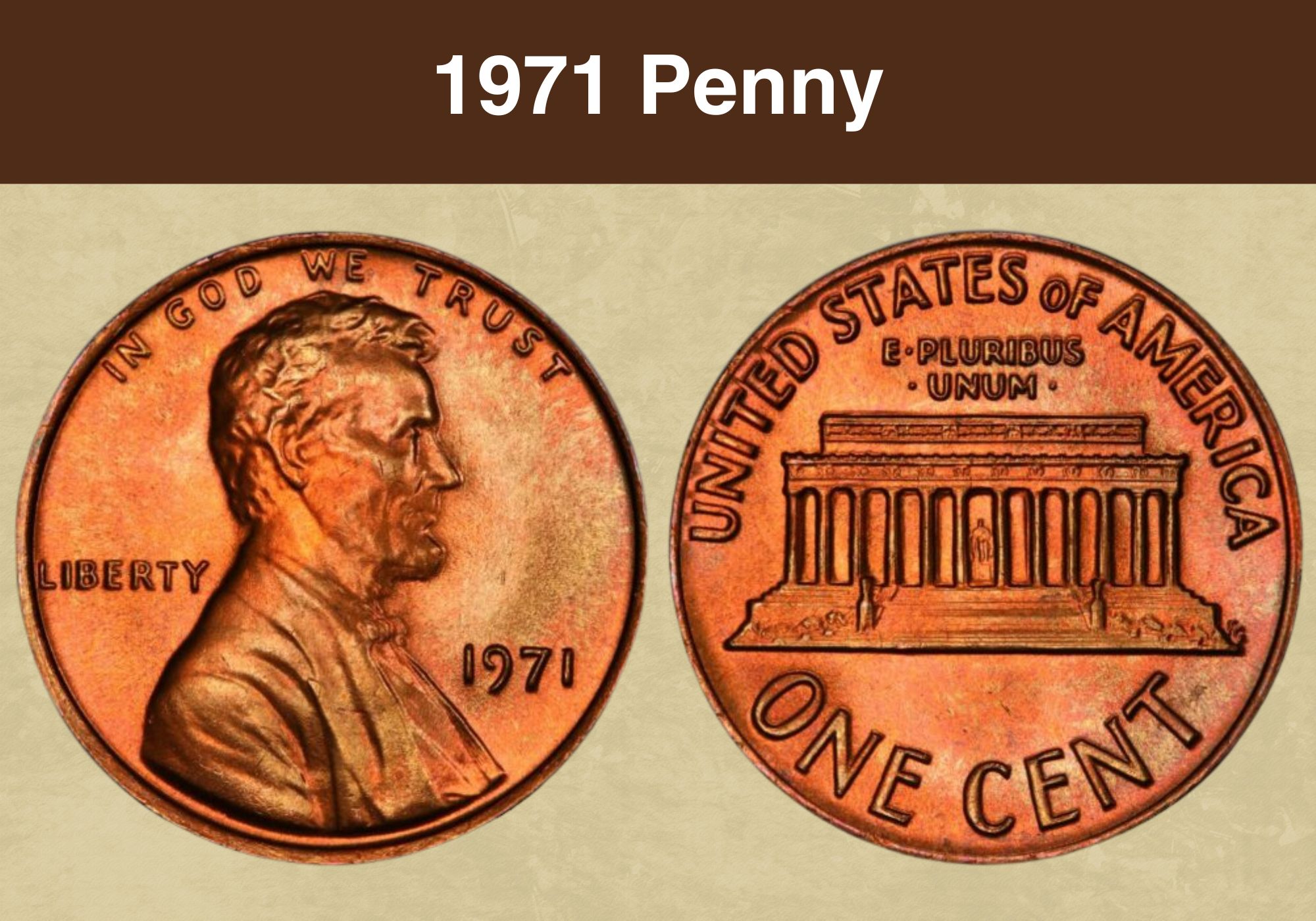
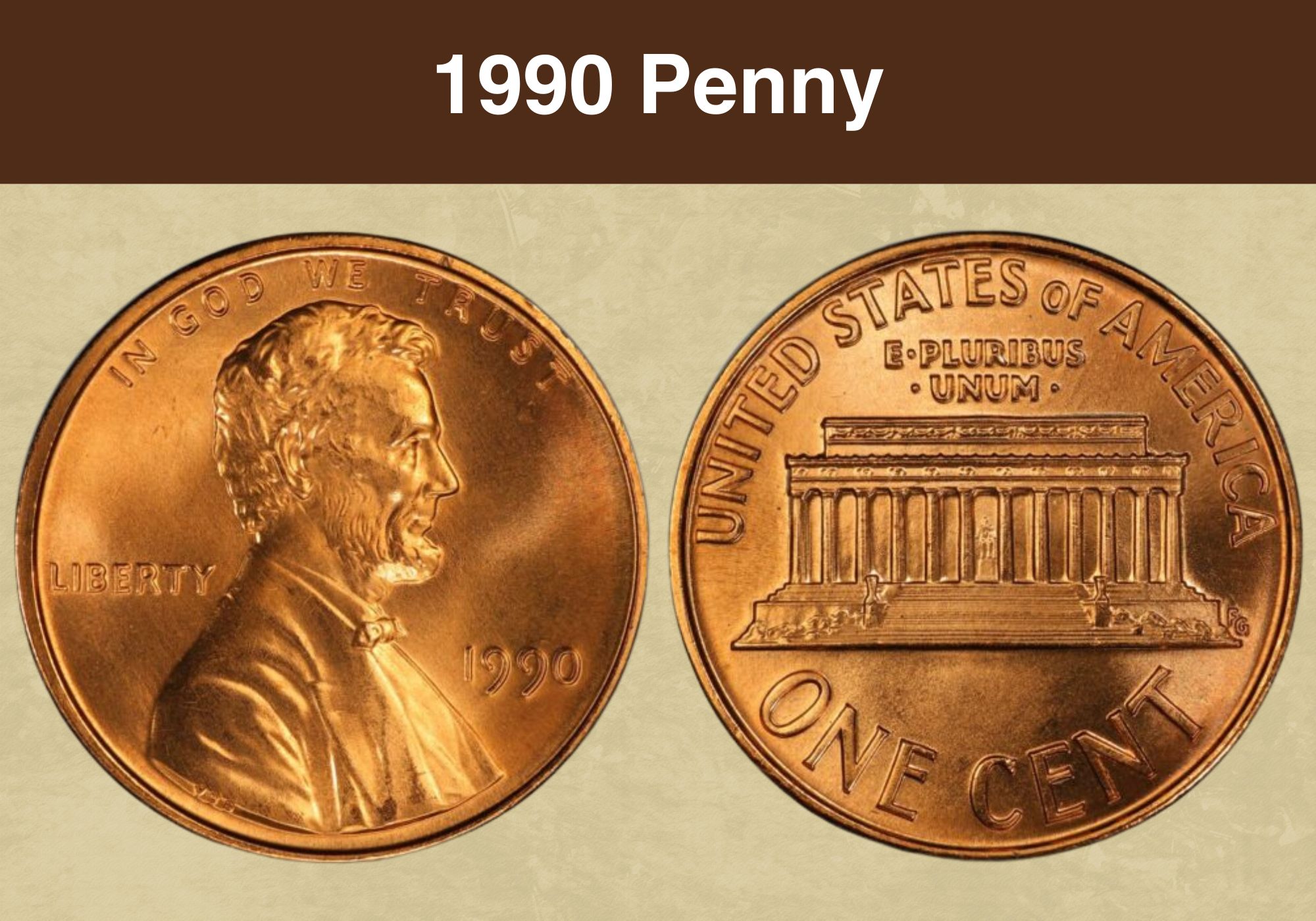
President Abraham Lincoln’s right-facing profile features prominently on the obverse of the 1989 penny. You will notice our country’s motto, IN GOD WE TRUST, above his head.
The word LIBERTY is imprinted on the left surface behind Lincoln’s back, while the date 1984 appears in front of his profile on the right.
The Reverse of the 1984 Penny
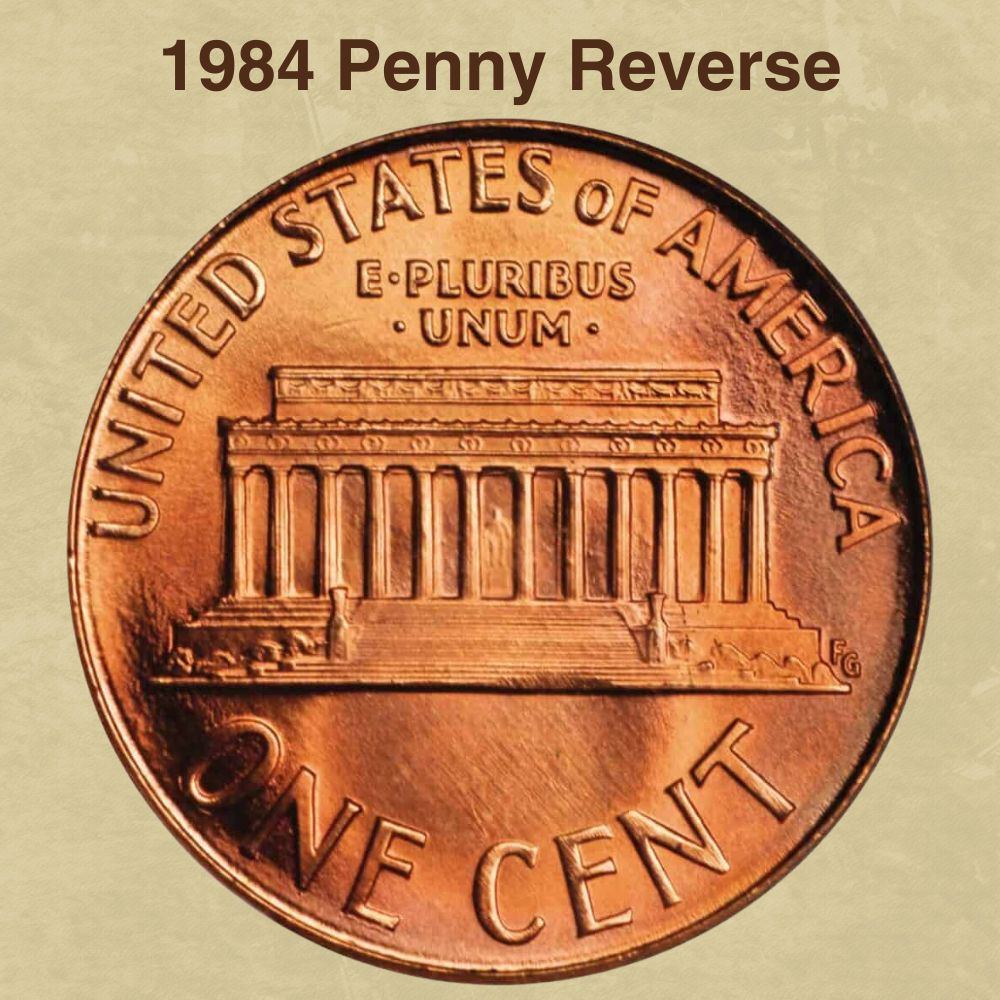
When you flip the coin on the reverse, you will find the iconic Lincoln Memorial designed by chief coin engraver Frank Gasparro in 1959. You will notice the engraver’s initials, FG, next to one of the building’s columns on the furthest right. A portrait of Lincoln’s life-sized statue can be seen inside the building.
Our country’s name appears prominently at the top around the rim, followed by the motto E PLURIBUS UNUM. Underneath the memorial, you will find the coin’s denomination, ONE CENT.
Other Features of the 1984 Penny
The 1984 Lincoln Memorial penny has a zinc core and an outer copper layer. The coin’s metal composition is primarily copper because copper prices have increased since the 1960s.
The Lincoln penny is comparably lightweight, weighing just 2.5 grams and measuring 19 millimeters in diameter. The coin has a plain edge.
The 1984 penny was struck at the Denver, Philadelphia, and San Francisco mints. Only the Denver pennies feature a mint mark on the obverse underneath the date.
Also read: 13 Most Valuable Wheat Penny Worth Money
1984 Penny Grading
Color plays a major role when grading Lincoln pennies, which applies to the 1984 Lincoln penny too. Red coins are the most desirable as these are uncirculated and are typically assigned a ‘mint state’ grade. Full red coins are likelier to earn you a premium than brown or red-brown pennies.
The condition is another key factor when grading your 1984 penny. Examine high points prone to signs of wear, including the top of Lincoln’s head, his lower jaw and earlobe, and his bow tie.
On the reverse, the Memorial steps and the Lincoln statute inside the building are good places to check for signs of wear. The most desirable coins will have clear details and a solid strike on the obverse and reverse.
Premium 1984 Lincoln Memorial cents will have few signs of scuffing and contact marks. The fields should have a shiny luster and be attractive to the eye.
When collecting 1984 pennies, it’s best to focus on uncirculated coins. Circulated examples are very common with heavy signs of wear, which diminishes their market worth.
| # | Grade |
|---|---|
| 1 | Basal State-1 |
| 2 | Fair |
| 3 | Very Fair |
| 4, 5, 6 | Good |
| 7, 8, 10 | Very Good |
| 12, 15 | Fine |
| 20, 30 | Very Fine |
| 40 | Extremely Fine |
| 50 | About Uncirculated |
| 60 | Mint State |
| 65 | Mint State |
| 70 | Mint State |
Please check our grading guides to know your coin scale, It’s the necessary step to know the exact value of your coin.
Check out now: How to Grade Lincoln Wheat Penny?
1984 Penny Value Guides
So, how much is a 1984 penny worth?
This depends on factors such as the coin’s condition, rarity, and color. In this section, you will discover how much you can expect from your 1984 Lincoln Memorial Cent based on these factors.
There are three varieties of the 1984 penny, each with its own value in the open marketplace. These are the following:
- 1984 No-Mint Mark Penny
- 1984-D Penny
- 1984-S Proof Penny
Let’s find out the value of each of these 1984 pennies.
1984 No-Mint Mark Penny Value
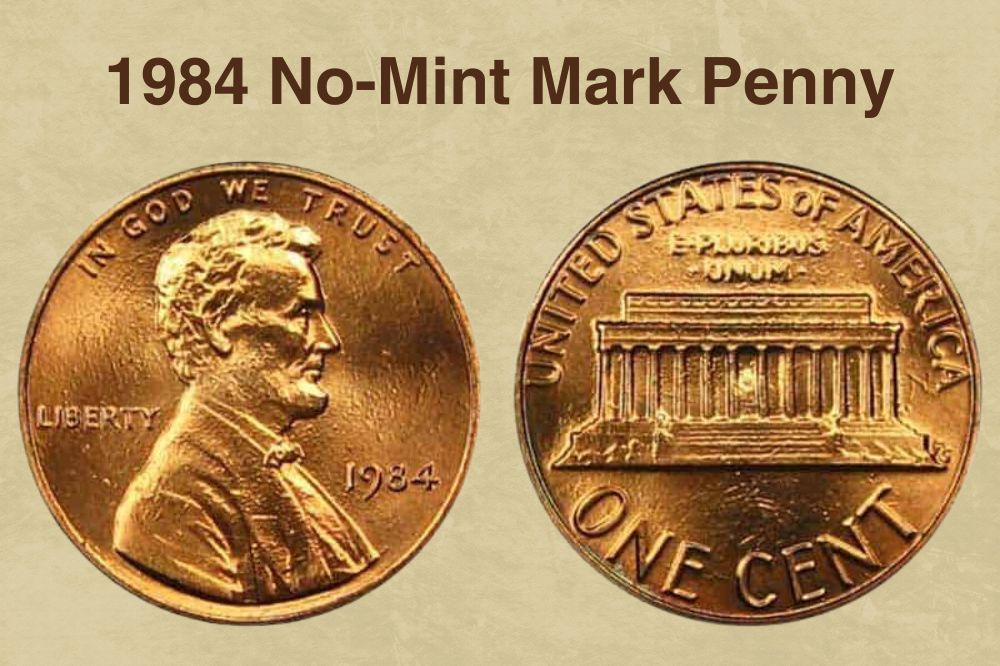
The Philadelphia mint struck about 8,151,079,000 pennies in 1984. As per the Mint’s tradition, these coins do not have a mint mark.
Undoubtedly, eight billion coins is a very high mintage, making these coins extremely abundant on the rarity scale.
Although the 1984 no-mint mark pennies were struck over thirty years ago, you can still easily find these coins in circulation, thanks to the high mintage.
Because these coins are so common in circulated condition, don’t expect them to be worth much. For example, a brown 1984 penny will bring $0.05 to $0.10. This coin will only fetch about $7.50 even in mint, uncirculated condition.
A red 1984 no-mint mark penny is slightly more valuable, but these are typically uncirculated and can be sold for as much as $155 at grade MS68. The most expensive 1984 red specimen penny was graded MS69 and sold in 2023 for an impressive $9,250.
1984-D Penny Value
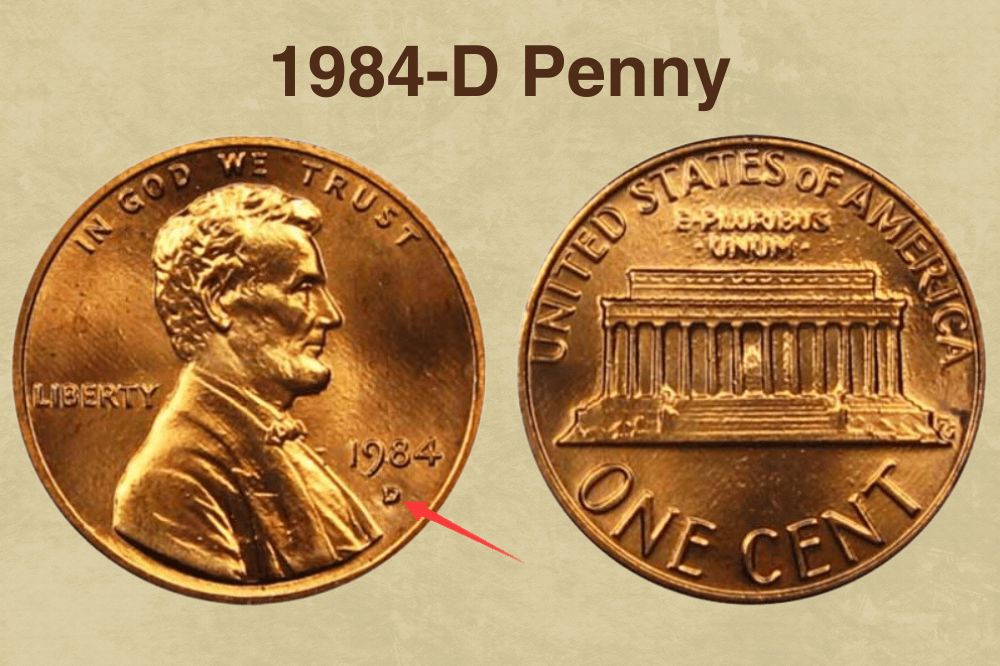
The next regular strike was the 1984-D penny; an estimated 5,569,238,906 were struck at the Denver facility.
Although the Mint reduced the number of coins struck at Denver, the mintage is still comparably high, making these coins very common.
Like the Philadelphia pennies, the 1984-D penny is not as profitable, and a brown one will bring you about $0.05- $0.10 in circulated state.
In mint condition, one graded MS67 will fetch up to $7.50, while in the same grade, a red 1984 penny can sell for as much as $685. A rare example was snapped up for a whopping $4,025 in 2008 at a Heritage Auctions sale.
1984-S Proof Penny Value
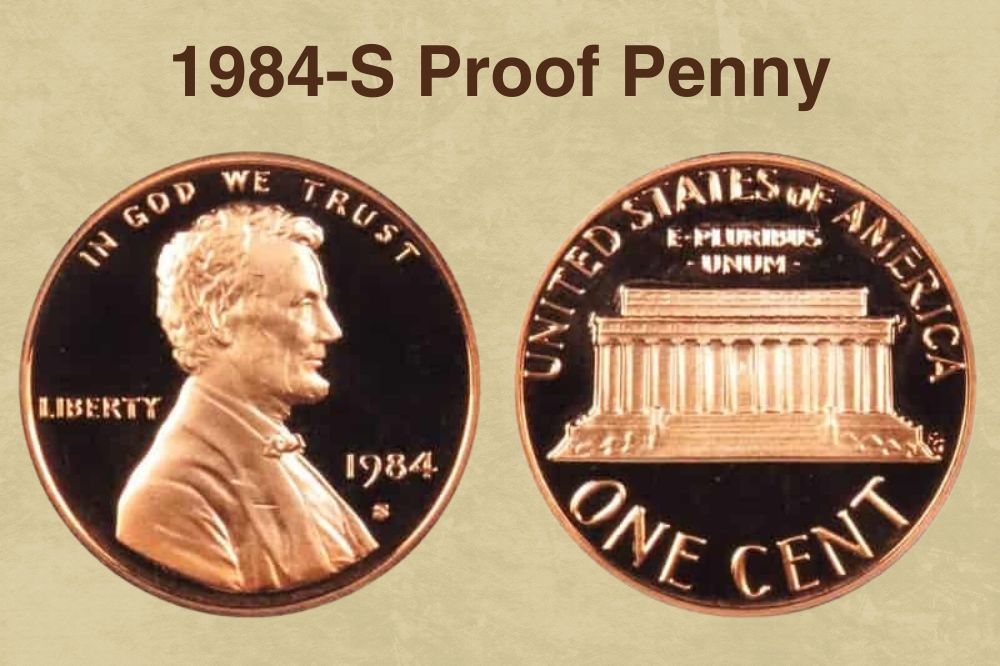
The San Francisco facility was the third mint to strike the 1984 penny, producing an estimated 3,3,000,000 coins.
Despite the relatively low mintage and superior strike, compared to the Philadelphia and Denver coins, the 1984-S proof penny is relatively inexpensive.
You will, however, notice a big price difference between various uncirculated grades. For example, a red example graded PF60 is worth only $-0.25, and one graded PF65 is worth about $2. But this price can shoot up to $600 for a gem quality 1984 proof penny graded MS70.
Cameo and deep-cameo quality 1984-proof pennies are the most desirable. These rare specimens have a brilliant luster, frosted fields, and a superior strike incomparable to regular pennies. The most expensive 1984-S proof penny graded PF70 with a deep cameo designation sold for $1,380 in a 2002 Heritage Auctions sale.
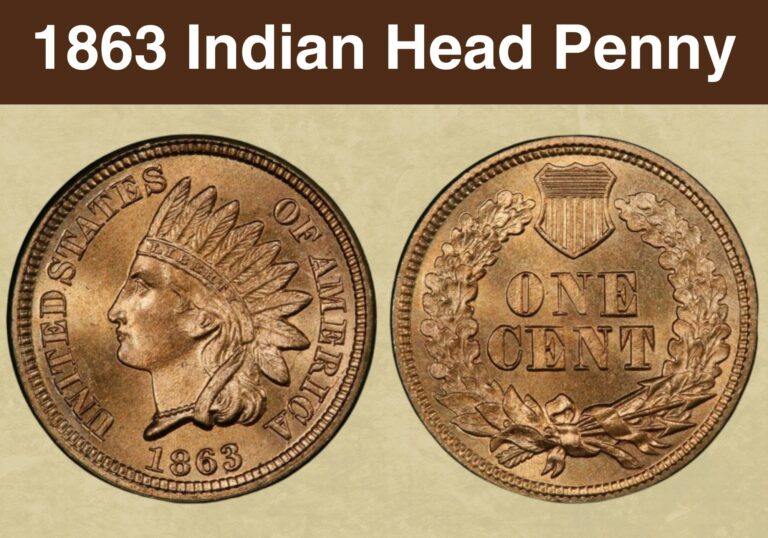
Also read: 17 Most Valuable Indian Head Penny Worth Money
Rare 1984 Penny Errors List
As we’ve seen, circulated 1984 pennies are worth more or less their face value. But all it takes is a unique error to boost the market price of your 1984 penny.
Errors are inevitable during the minting process, especially when dealing with a high-mintage production like the one in 1984.
Here are the most valuable 1984 Lincoln penny errors to look out for:
1984 Doubled Die Obverse Penny Error
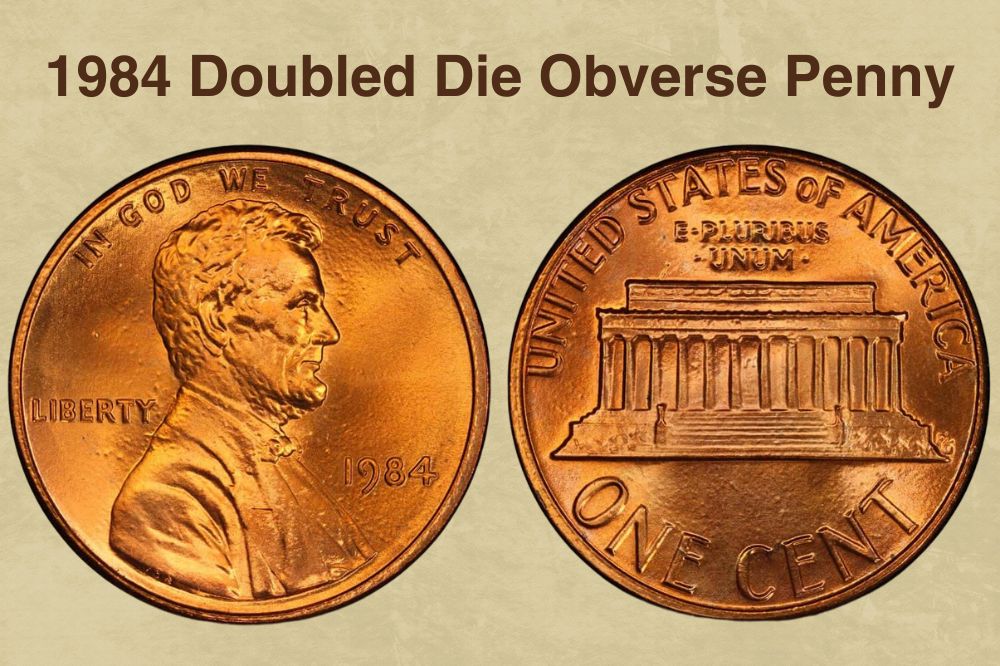
As the name implies, a doubled die obverse error occurs when there’s doubling on the coin’s details. When the die strikes the planchet multiple times at slightly different angles, doubling may occur.
The 1984 doubled die obverse is the most popular error because the doubling can easily be seen with the naked eye. The doubling is particularly visible on the lower ear, bowtie, and beard.
There are probably several thousand examples of 1984 doubled die obverse error coins, and collectors will pay hundreds of dollars per piece. The most expensive example was auctioned at a 2009 Heritage Auctions sale and fetched an impressive $3,900.
1984 Double Struck Off Center Penny Error
A double-struck off-center error occurs when a coin is struck the first time, doesn’t eject from the die hub, and is struck off-center the second time.
This error mostly shows up in the 1984-D Lincoln pennies. It is equally popular among collectors and can fetch as much as $100; this may not seem like a lot, but it is something considering that a regular 1984 penny is only worth its face value.
If you come across such a ‘distorted’ coin, you should have a professional grading service check it out; it might be worth a fortune.
1984 Uniface Reverse Strike Penny Error
A uniface strike error occurs when a blank planchet enters the minting hub and rests on another blank planchet between the anvil and hammer dies.
As a result of this setup, the planchet at the bottom will have the reverse design and remain blank on the obverse, while the top planchet will receive the obverse design and remain blank on the reverse.
A 1984 uniface reverse strike penny error can fetch up to $155 or more, depending on the coin’s condition.
1984 Rotated Die Penny Error
A rotated die error occurs when the hammer or anvil die spins on its axis, causing disorientation between the two dies. One side of the coin is then struck at an incorrect angle.
Instead of the Lincoln Memorial facing upright or northward, the image is rotated so the roof faces northeast.
A rotated die error is easy to spot, making it desirable to collectors willing to pay upwards of $150 for a piece.
1984 Die Crack Penny Error
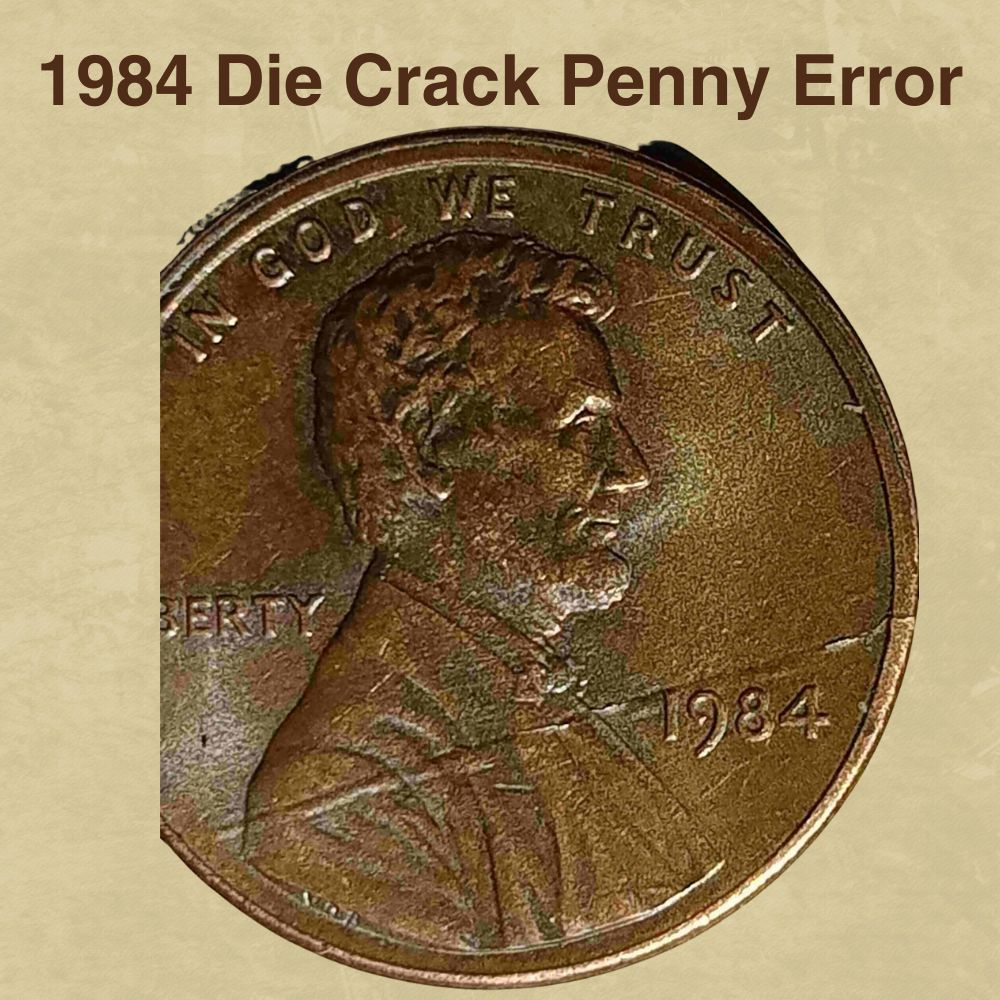
The die crack error is common among the 1984-D pennies. This error occurs when a crack or hole forms in a die where pieces of metal are trapped.
As you continue using the die, it fills up with metal debris, so when you strike a coin, the piled and dried-up metal debris is imprinted on the coin, resulting in a raised line on the surface of the coin.
Depending on the condition of the coin, a die crack error can bring in as much as $100
Also read: 11 Most Valuable Wheat Penny Errors
Where to Sell Your 1984 penny ?
Now that you know the value of your coins, do you know where to sell those coins online easily? Don’t worry, I’ve compiled a list of these sites, including their introduction, pros, and cons.
Check out now: Best Places To Sell Coins Online (Pros & Cons)
FAQ
How much is a 1984 penny worth with mint mark?
The only 1984 pennies with a mint mark are those minted at the Denver minting facility. These coins are generally worth more or less their face value, with circulated ones fetching between $0.05 and $0.10. In mint state, a brown 1984 penny with a mint mark is worth about $8, but this price can shoot up to $600 for a gem-quality specimen.
Are 1984 pennies rare?
No. The U.S. Mint struck about 8 billion Lincoln Memorial pennies in 1984, so these coins are very common. More than 30 years after they were minted, you can still find 1984 pennies in circulation.
Why would a 1984 penny be worth so much?
An error can significantly increase the value of a 1984 penny. The doubled die obverse error, which shows doubling on Lincoln’s ear, beard and bowtie, is the most expensive. Circulated 1984 pennies with this error can be worth a lot, with collectors willing to pay more than $3,000 for a piece.