Coin Value Contents Table
- 1917 Wheat penny value Chart
- History of the 1917 Wheat Penny
- 1917 Wheat penny Types
- Features of the 1926 Wheat Penny
- 1917 Wheat Penny Grading Guides
- 1917 Wheat Penny Value Guides
- 1917 No Mint Mark Wheat penny Value
- 1917 D Wheat penny Value
- 1917 S Wheat penny Value
- Rare 1917 Wheat Penny Errors List
- Where to Sell Your 1926 Wheat penny ?
- FAQ about the 1926 Wheat penny
Despite the name that came from the British coin, the first pennies minted in the US in 1787 were real American coinage. Their official name is one-cent pieces, but most people still use the traditional foreign term.
Be prepared that the 1917 Wheat penny value is almost always higher than their denomination. However, most of these coins are often more common and less expensive than you probably hope. Still, they are a part of the popular series minted from 1909 to 1959 and are among the most beloved coins you can collect.
1917 Wheat penny value Chart |
||||
| Condition | 1917 no mint mark penny | 1917 DDO penny | 1917 D penny | 1917 S penny |
| Good | $0.50 | $160 | $2.25 | $2.50 |
| Very good | $0.75 | $260 | $5 | $5 |
| Fine | $1.50 | $315 | $8.50 | $8 |
| Very fine | $5 | $550 | $17.50 | $12.50 |
| Extra fine | $10 | $1,400 | $40 | $25 |
| AU | $15 | $1,600 | $47.50 | $32.50 |
| MS 60 | $31 | $3,750 | $90 | $100 |
| MS 63 | $55 | $8,150 | $150 | $200 |
History of the 1917 Wheat Penny
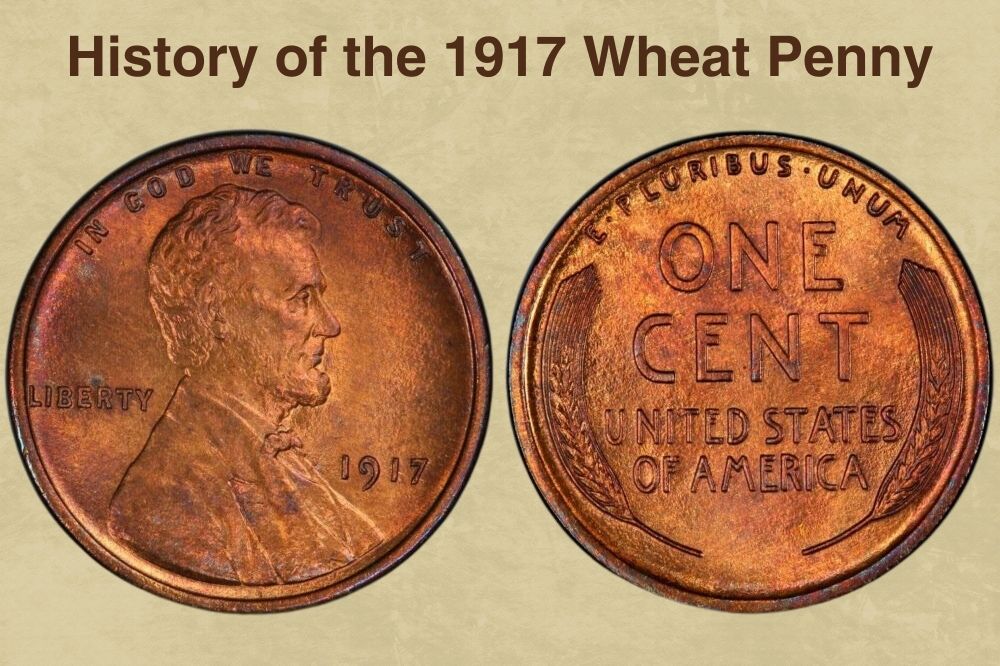
Most Americans, particularly collectors, believe Lincoln Wheat pennies are the most impactful national coins ever minted in the US Mint. Besides, they have an exciting history and impressive background as a piece celebrating such a giant historical person like Abraham Lincoln.
1917 Wheat penny Types |
||
| Mint | Year | Mintage |
| Philadelphia | 1917 no mint mark penny | 196,429,785 |
| San Francisco | 1917 S penny | 32,620,000 |
| Denver | 1917 D penny | 55,120,000 |
| Total | / | 284,169,785 |
Pennies minted in 1917 are identical to other pieces in the series issued after 1910. Only those that appeared in 1909 had the designer’s initials, VDB, on the obverse, making them rare. Another exception is cents made of reused shell cases during WWII.
Once the US Mint re-designed these beautiful coins and changed the reverse look, one era was finished. The new Lincoln cents got the Lincoln Memorial on that coin side, then a shield. However, Wheat pennies will always stay a special part of genuine American coinage.
Also read: 12 Most Valuable Lincoln Penny Worth Money
Features of the 1926 Wheat Penny
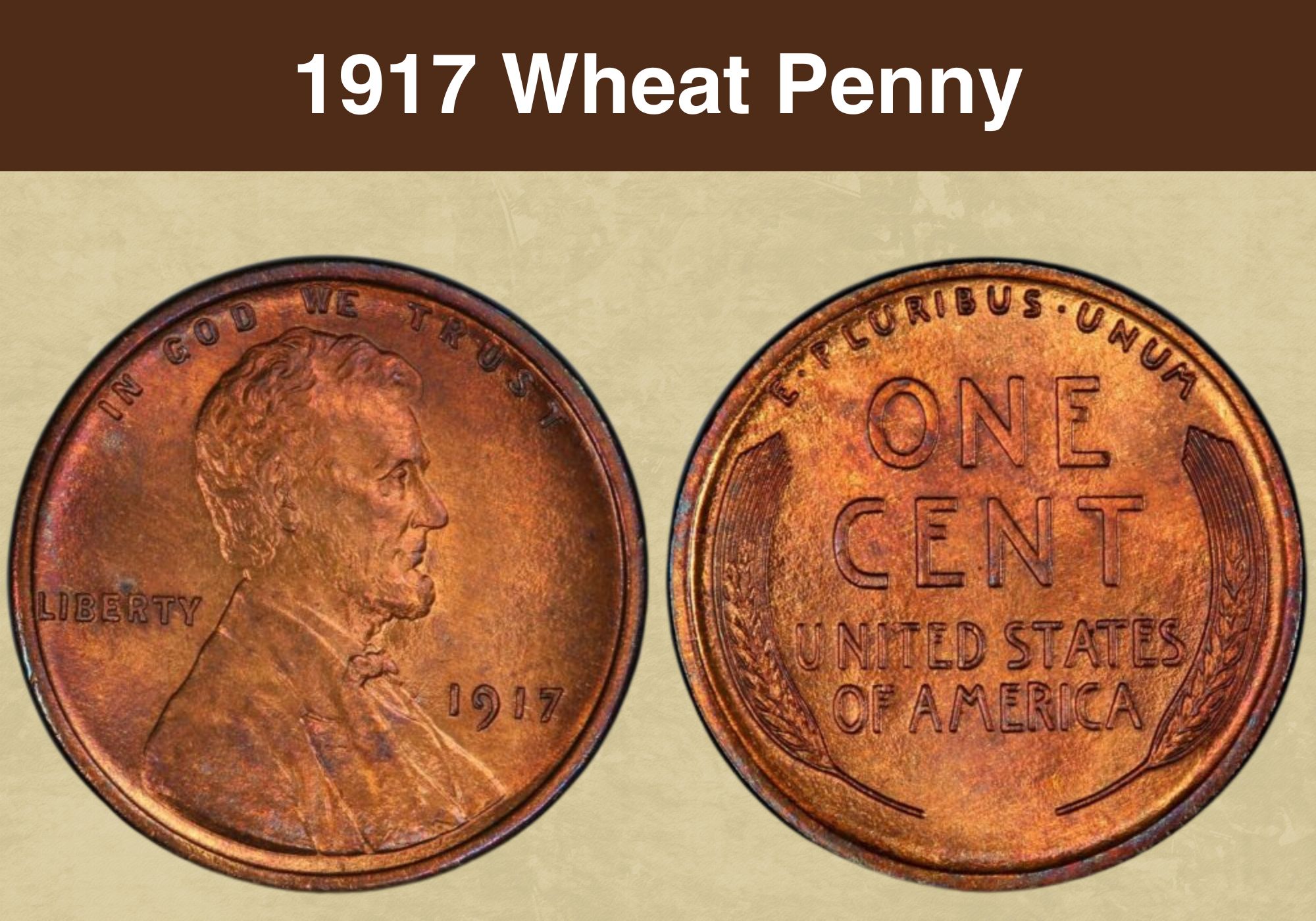
The 1917 pennies are a part of the series minted from 1909 to 1958, based on Victor David Brenner’s creative idea. They look the same as other coins from this early period, but some are more valuable than the average.
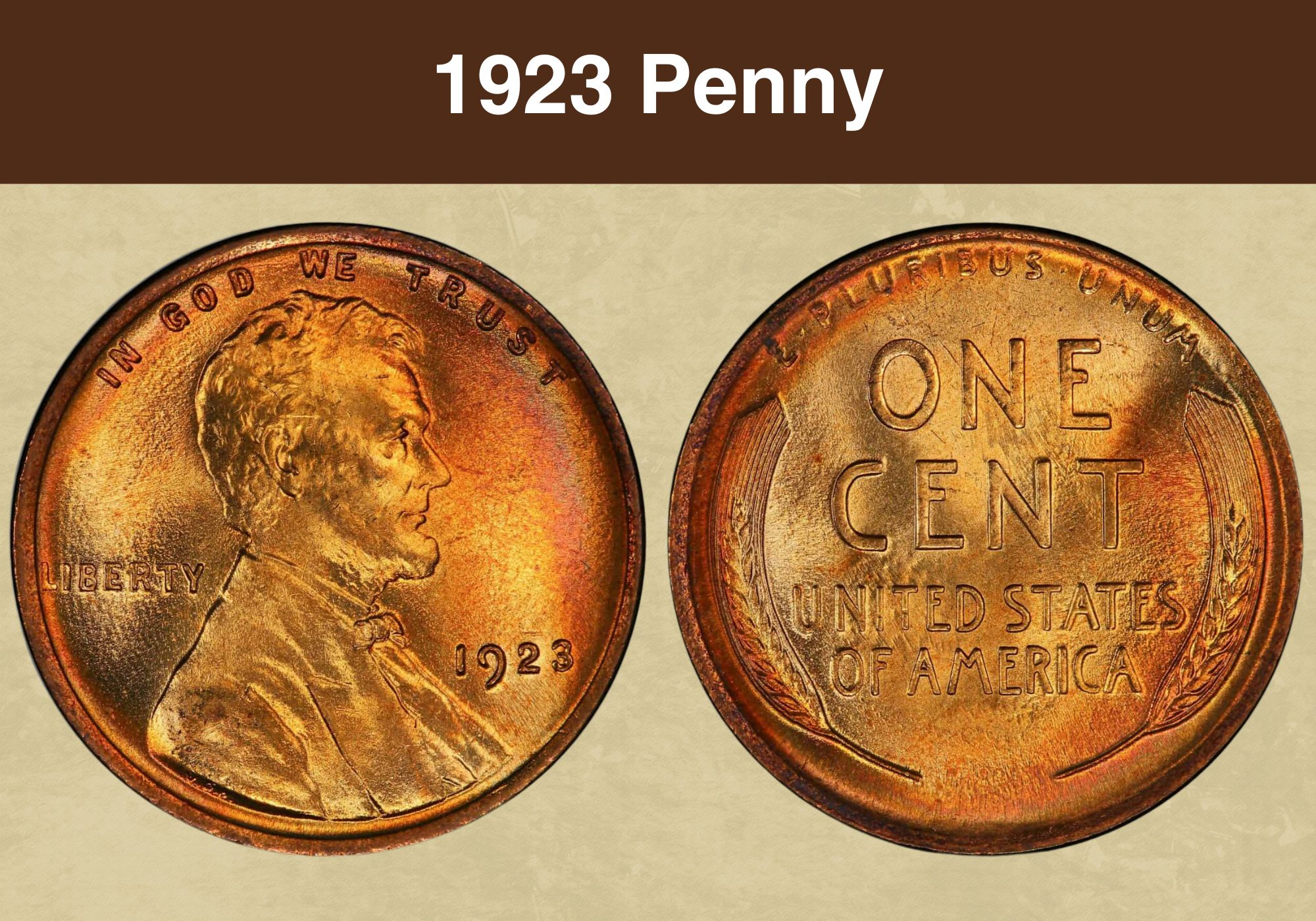
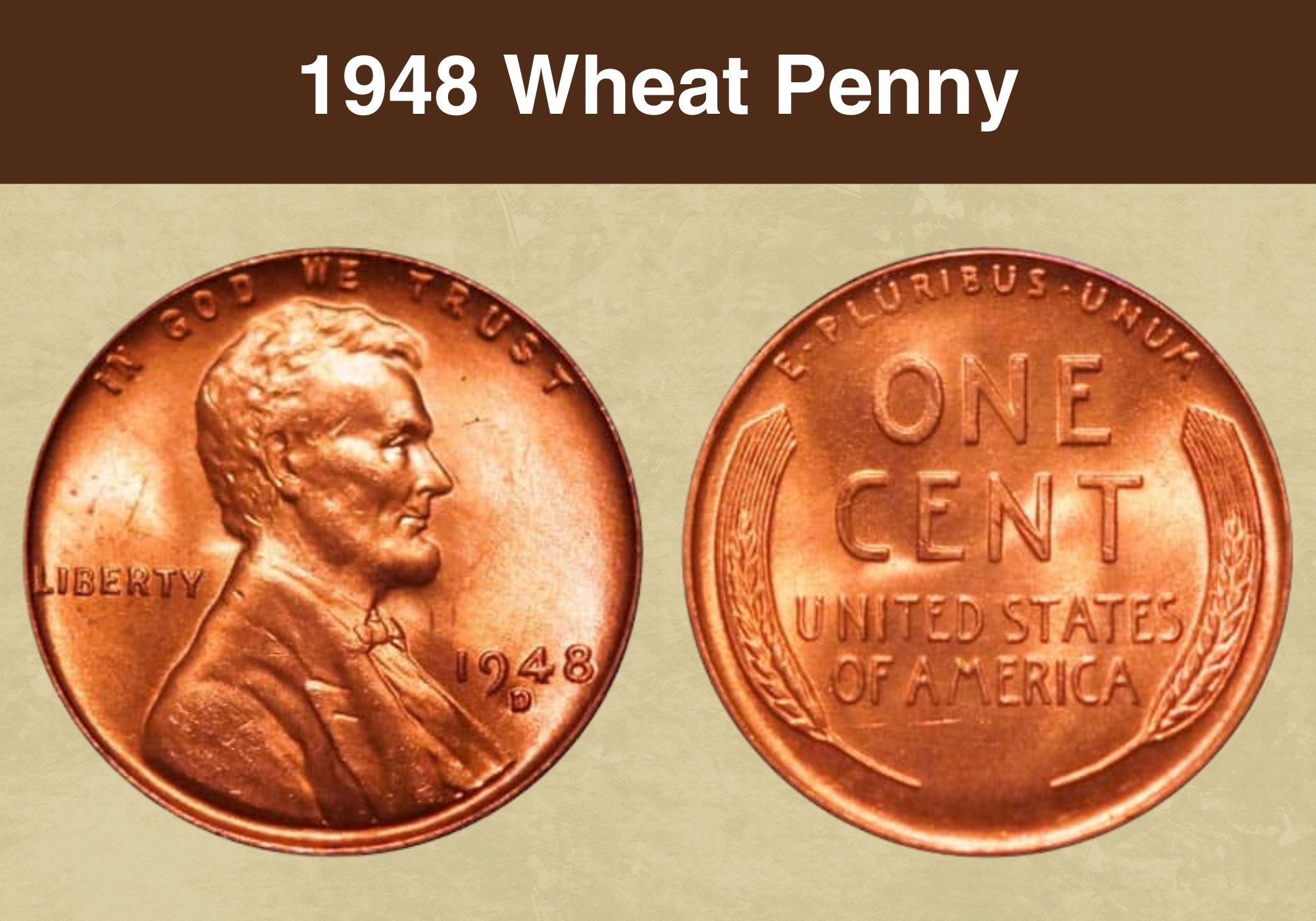
The obverse of the 1917 Wheat penny
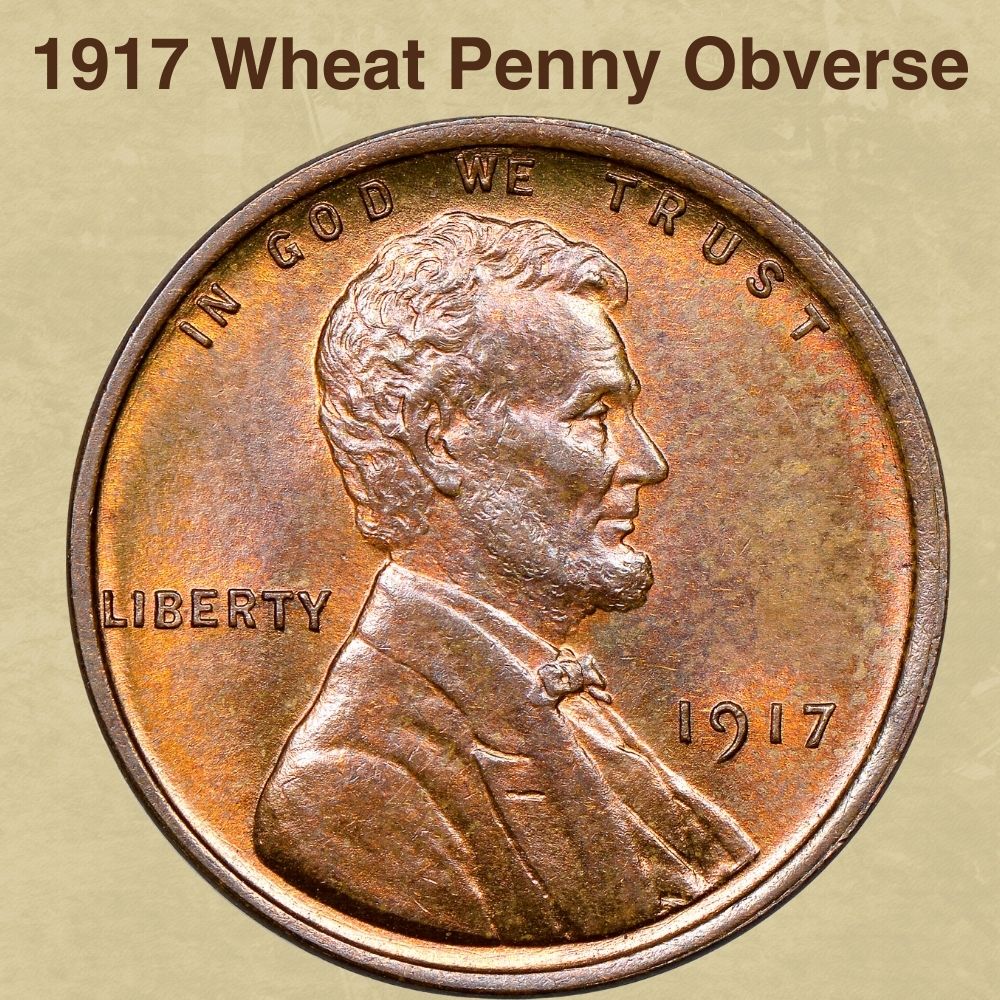
Victor David Brenner created the penny obverse, which includes:
- Abraham Lincoln portrait
- The date, 1917
- LIBERTY
- IN GOD WE TRUST
- The mint mark D or S or blank area
The reverse of the 1917 Wheat penny
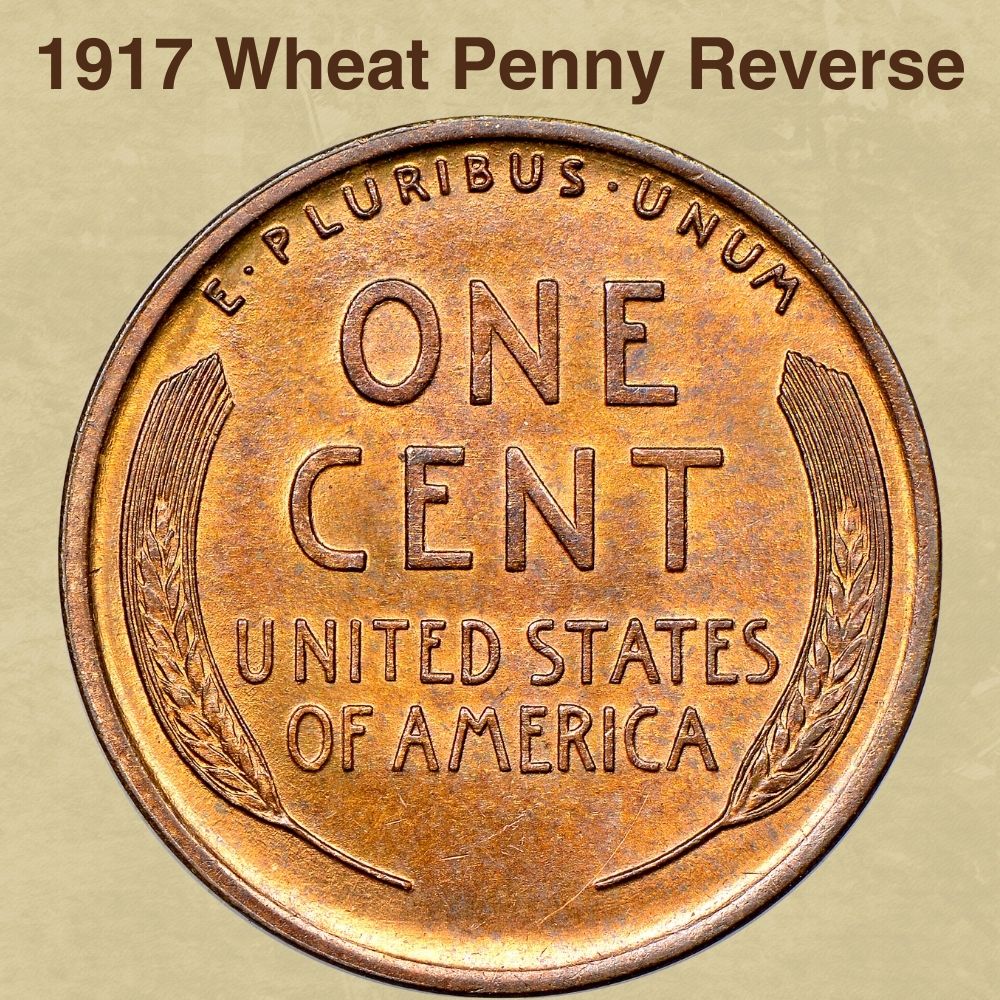
The 1917 penny reverse includes the following:
- UNITED STATES
- OF AMERICA
- Two wheat ears
- ONE CENT
- EPLURIBUS·UNUM
1917 Wheat penny Details |
|
| Face value | One cent ($0.01) |
| Shape | Round |
| Coin thickness | 1.52 millimeters (0.0598 inches) |
| Coin weight | 0.11 ounces (3.11 grams) |
| Edge | Smooth (plain) |
| Coin diameter | 19.05 millimeters (1.75 inches) |
| Compound | An alloy of 95% copper with zinc or tin |
Other features of the 1917 Wheat penny
The 1917 plain-edged Wheat penny has a face value of one cent and a diameter of 19.05 mm (1.75 inches). Each piece is made of a 95% copper alloy and weighs 3.11 g (0.10970 ounces). Its thickness is a modest 1.52 mm (0.0598 inches).
Also read: 13 Most Valuable Wheat Penny Worth Money
1917 Wheat Penny Grading Guides
Examining penny condition and the existence of valuable errors is the best possible way to determine their price range. Since most best-preserved 1917 cents are rare and expensive, you should ask an expert to grade your coins and tell you whether it is unique and one of the real gems.
| # | Grade |
|---|---|
| 1 | Basal State-1 |
| 2 | Fair |
| 3 | Very Fair |
| 4, 5, 6 | Good |
| 7, 8, 10 | Very Good |
| 12, 15 | Fine |
| 20, 30 | Very Fine |
| 40 | Extremely Fine |
| 50 | About Uncirculated |
| 60 | Mint State |
| 65 | Mint State |
| 70 | Mint State |
Please check our grading guides to know your coin scale, It’s the necessary step to know the exact value of your coin.
Check out now: How to Grade Lincoln Wheat Penny?
1917 Wheat Penny Value Guides
Even though the total mintage in three mints was 284,169,785 coins in 1917, not all pennies produced during this First War year have survived until now. That is particularly true for the highest-ranked coins that are real gems on the current market.
1917 No Mint Mark Wheat penny Value
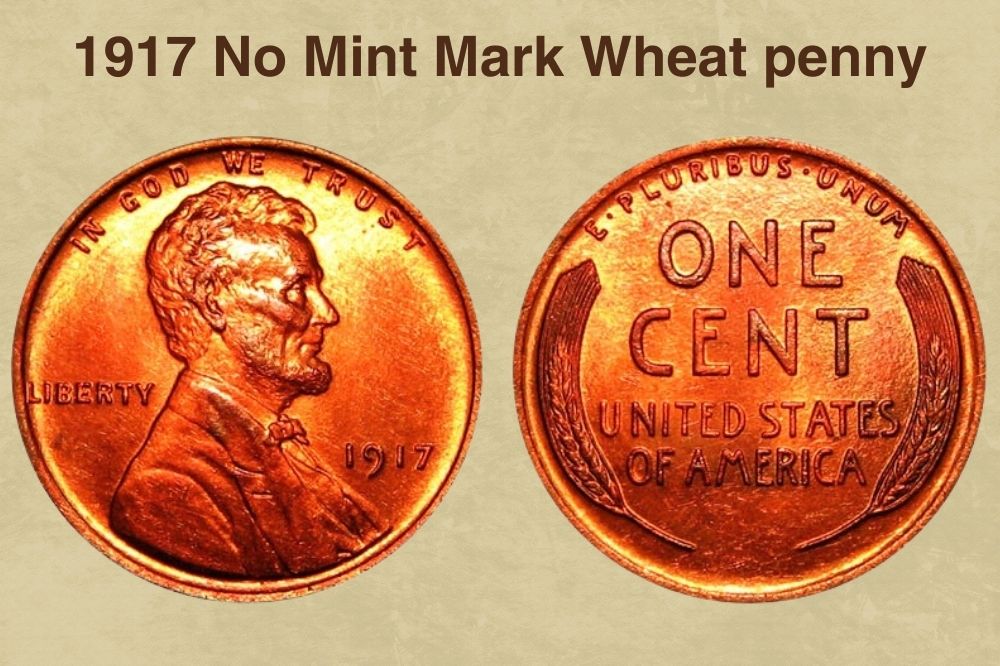
Most Wheat pennies that came from Philadelphia in 1917, precisely 196,429,785 coins. You can divide preserved pieces into three groups, from the least to the most collectible ones.
For instance, brown-toned pieces are the least desirable among collectors, so you shouldn’t be surprised by their low prices. Depending on their quality, you can buy one circulated coin from 1917 for $0.20 to $14.40.
Even pieces in the mint state are affordable, with an average price ranging from $13 to $144. Like always, you can find a few exceptions to the rule. In this case, it is the 1917 MS 66 brown penny, sold at $1,125 in 2021.
The 1917 red-brown pennies are better collectibles than brown ones, with the average price from $55 to $360 for pieces in MS 63 to MS 66 grades. Even the 1917 MS 66 RB penny auction record is a bit higher. It reached $1,293 at an auction in 2013.
Finally, the best collectible pennies minted this year are those with high luster and attractive red coloring. You should set aside $110 to $132 for the lower-ranked pieces (MS 63), while others are more valuable:
- MS 64-graded coins assessed at $190 to $228
- MS 65-graded coins assessed at $360 to $432
- MS 66-graded coins assessed at $950 to $1,200
- MS 67-graded coins assessed at $3,700 to $4,400
- MS 68-graded coins assessed at $44,000 to $60,000
The most expensive 1917 MS 68 red Wheat penny won an impressive auction record of $38,813 in 2006.
1917 D Wheat penny Value
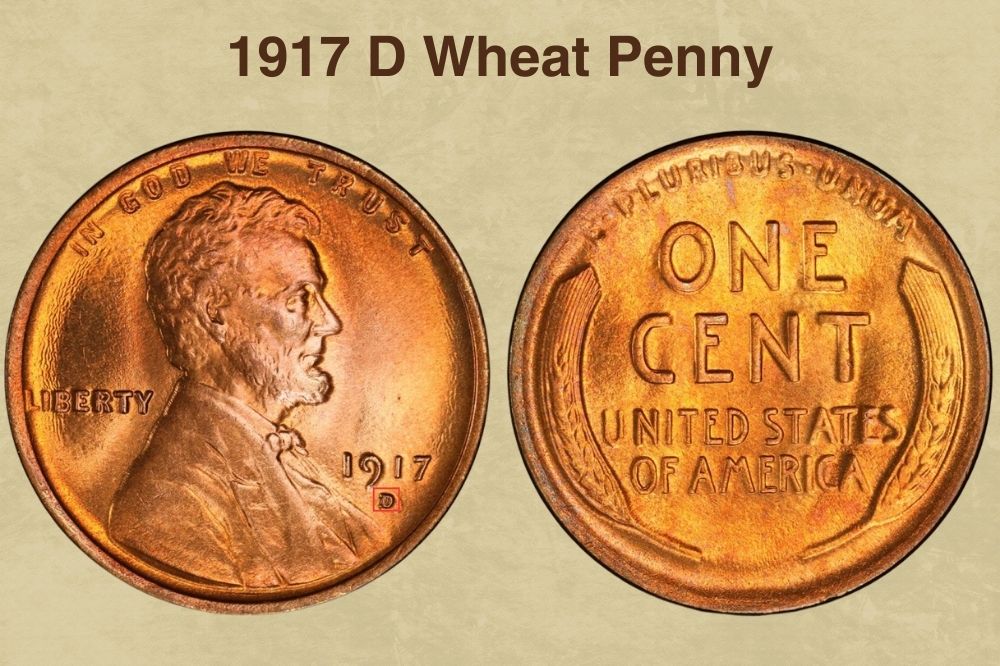
The 55,120,000 minted pennies secured the second-highest mintage in 1917 for the Denver mint. Brown coins in circulated condition with the D mint mark typically cost $0.50 to $57.60.
However, those in the mint state are higher, so you can count on $90 to $500 for pieces rated MS 60 to MS 65. That makes the auction record from 2010 of $1,725 surprisingly high. The 1917 D RB pennies are significantly more expensive, with a price range from:
- $165 to $198 (MS 63-graded coins)
- $360 to $432 (MS 64-graded coins)
- $575 to $690 (MS 65-graded coins)
Those rated MS 66 are rare nowadays, and their estimated prices range from $1,900 to $2,400. The most quality red-brown penny was sold for $3,600 in 2021.
Expectedly, the most appreciated pennies are red-colored ones. Professionals working in reputable grading companies estimate these coins at:
- MS 63 – $300 to $360 for pieces in MS 63 grade
- MS 64 – $450 to $540 for pieces in MS 64 grade
- MS 65 – $1,200 to $1,440 for pieces in MS 65 grade
Even though the assessed price for MS 66-graded penny of $7,000 to $8,400 sounds unrealistically high, be prepared for more surprises. One red Wheat penny minted in Denver in 1917 in MS 66 rank won an auction record of $21,275 in 2005.
1917 S Wheat penny Value
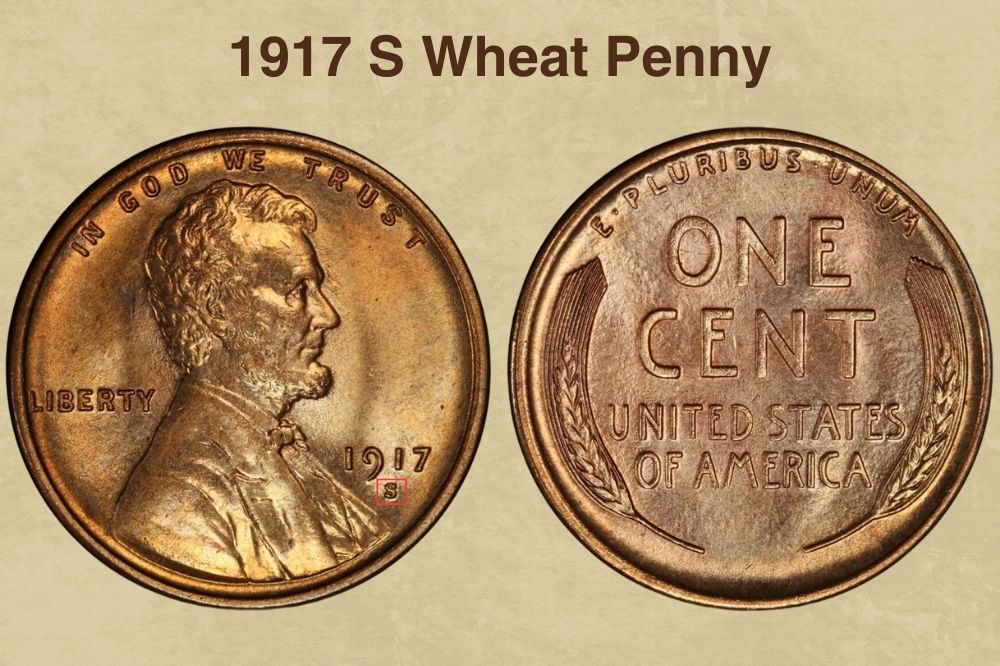
The San Francisco mint had the lowest penny mintage in 1917. However, the number of 32,620,000 coins is still high enough to make them abundant, particularly in lower grades.
While circulated brown pieces cost $0.35 to $54, those in uncirculated condition are worth $60 to $550. Therefore, the actual auction record sounds like a fairytale. One collector set aside $8,225 to get a brown penny with an MS 66+ ranking in 2018.
Expectedly, red-brown cents are more expensive and estimated at $160 to $1,000. However, those in the MS 66 grade can reach an impressive $2,250.
The record at a 2013 auction was higher, and one MS 66 penny reached $3,850. Still, nothing can compare with the 1917 S red pennies. You should have an unlimited budget for coins estimated at:
- $600 to $720 for cents ranked MS 63
- $1,200 to $1,440 for cents ranked MS 64
- $8,500 to $15,000 for cents ranked MS 65
The biggest surprise is scarce pennies in MS 66 grade that can be worth $34,000 to $60,000. For now, the best-valued piece is the 1917 S MS 65 red Wheat cent, sold at $36,800 in 2007.
Also read: 17 Most Valuable Indian Head Penny Worth Money
Rare 1917 Wheat Penny Errors List
Like other sets, the 1917 pennies have numerous imperfectly struck coins resulting from human errors or old or broken machines. One of them is particularly famous. Let’s take a look.
DDO
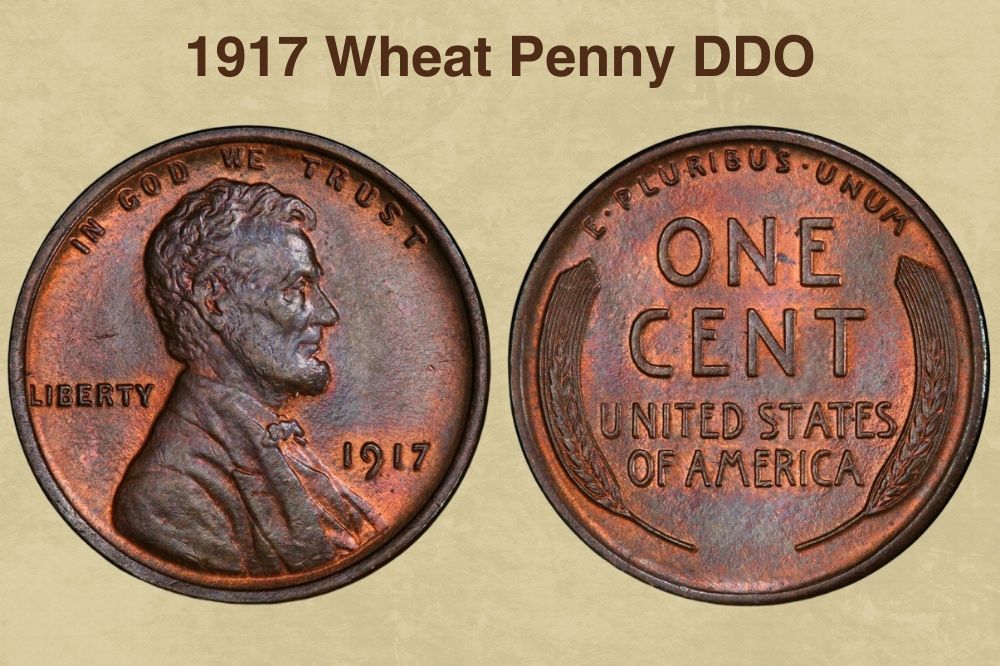
The 1917 Double Die Obverse pennies are rare and collectible coins, meaning they can be costly. For instance, even pieces in circulated condition can be worth $100 to $2,640, while the estimated price range for those in the mint state is from $2,750 to $7,200.
Coins with red-brown coloring are pricey, and you need to pay $6,500 to $10,500 for one, depending on grade (MS 63 to MS 65). However, the real pearls are red-toned cents minted in 1917. They are estimated at:
- MS 63 – $8,000 to $9,600
- MS 64 – $10,500 to $12,600
- MS 65 – $15,000 to $18,000
- MS 66 – $25,000 to $30,000
- MS 67 – $85,000 to $100,000
Expectedly, the auction records are almost always significantly higher than assessed values. The 1917 MS 67+ red penny with a DDO error is the absolute winner. Its price of a fantastic $120,000 reached in 2019 makes this piece the priciest in the set.
Other 1917 penny errors
Besides famous DDO error pennies minted this year, you can find a few other exciting imperfect coins, including:
- Die crack (die cud) error pennies are available at prices from $3 to $150
- Off-center error pennies are available at prices from $10 to $20
- Re-punched mint mark error pennies are available at prices from $5 to $20
- Reverse struck-through error pennies are available at prices from $10 to $100
Also read: 11 Most Valuable Wheat Penny Errors
Where to Sell Your 1926 Wheat penny ?
Now that you know the value of your coins, do you know where to sell those coins online easily? Don’t worry, I’ve compiled a list of these sites, including their introduction, pros, and cons.
Check out now: Best Places To Sell Coins Online (Pros & Cons)
FAQ about the 1926 Wheat penny
What makes a 1926 Wheat penny scarce?
Even though 1917 pennies are often common coins, you can find rare and costly errors that can be worth over $100,000. Besides, collectible red specimens can be considered rare, particularly those produced in the San Francisco mint.
Which 1926 Wheat penny is worth a lot of money?
- The auction record for the red 1917 MS 67+ Wheat DDO penny reached in 2019 was $120,000
- The auction record for the red 1917 MS 67 Wheat DDO penny reached in 2018 was $84,000
- The auction record for the red 1917 MS 68 Wheat penny reached in 2006 was $38,813
- The auction record for the red 1917 S MS 65 Wheat penny reached in 2007 was $36,800
- The auction record for the red 1917 D MS 66 Wheat penny reached in 2005 was $21,275
- The auction record for the red-brown 1917 MS 65 Wheat DDO penny reached in 2010 was $14,950
- The auction record for the red-brown 1917 MS 65 Wheat DDO penny reached in 2018 was $8,700
- The auction record for the brown 1917 MS 63 Wheat DDO penny reached in 2023 was $8,400
- The auction record for the brown 1917 S MS 66+ Lincoln Wheat penny reached in 2018 was $8,225
- The auction record for the brown 1917 MS 61 Wheat DDO penny reached in 2022 was $3,951
- The auction record for the red-brown 1917 S MS 66 Wheat penny reached in 2013 was $3,850
- The auction record for the red-brown 1917 D MS 66 Wheat penny reached in 2021 was $3,600
- The auction record for the brown 1917 D MS 66 Wheat penny reached in 2010 was $1,725
- The auction record for the red-brown 1917 MS 66 Wheat penny reached in 2013 was $1,293
- The auction record for the brown 1917 MS 66 Wheat penny reached in 2021 was $1,125
How much is the 1917 Wheat penny worth?
Wheat penny price range depends on their color and overall condition. The least desirable brown-toned pieces in circulated condition cost $0.20 to $14.40, while uncirculated ones are worth $13 to $144.
Red-brown pennies average from $30 to $360, while red specimens are significantly costlier. You can buy one for $110 to $4,400, while those in MS 68 grade are estimated at $44,000 to $60,000.
What is the costliest Lincoln penny?
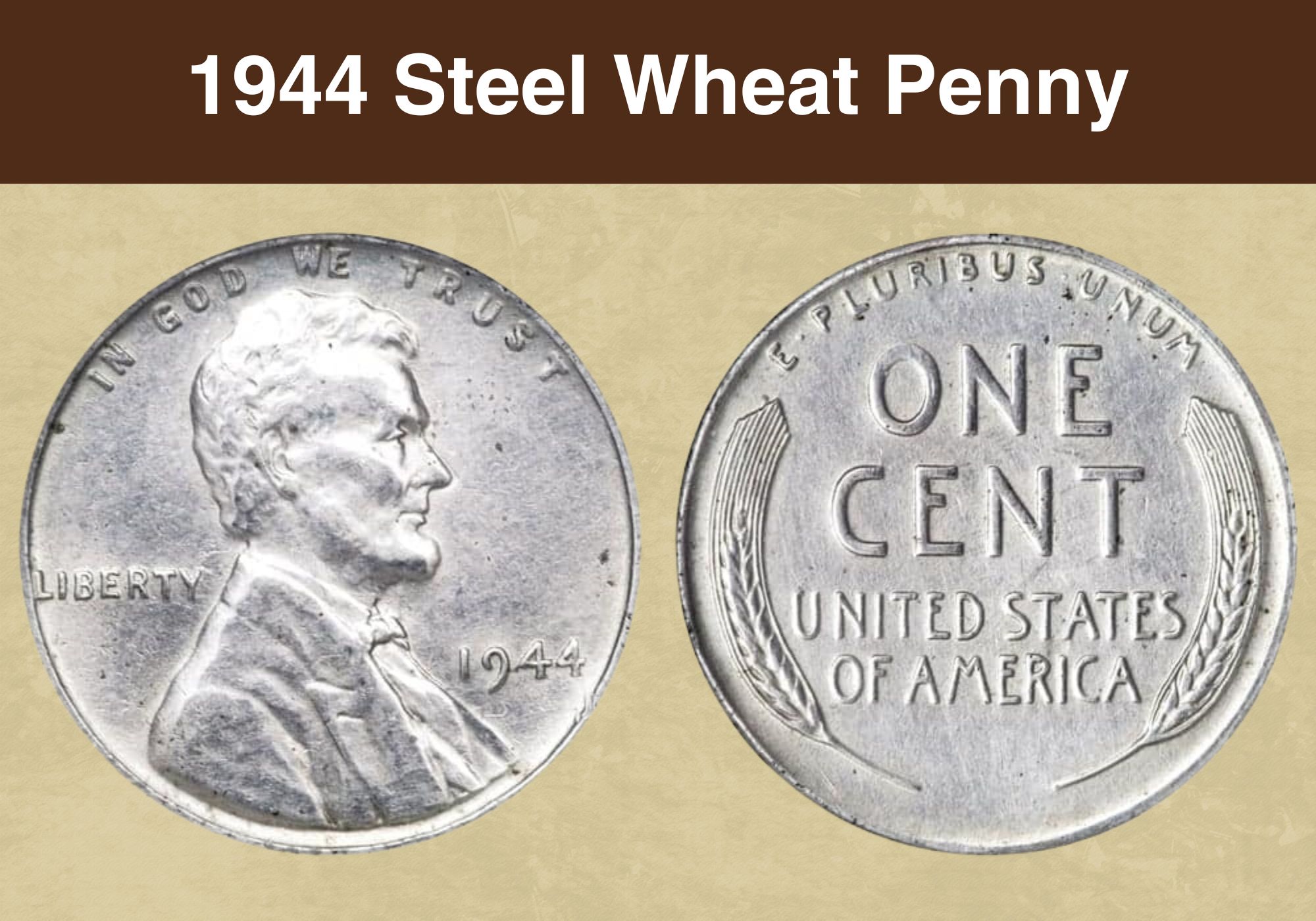
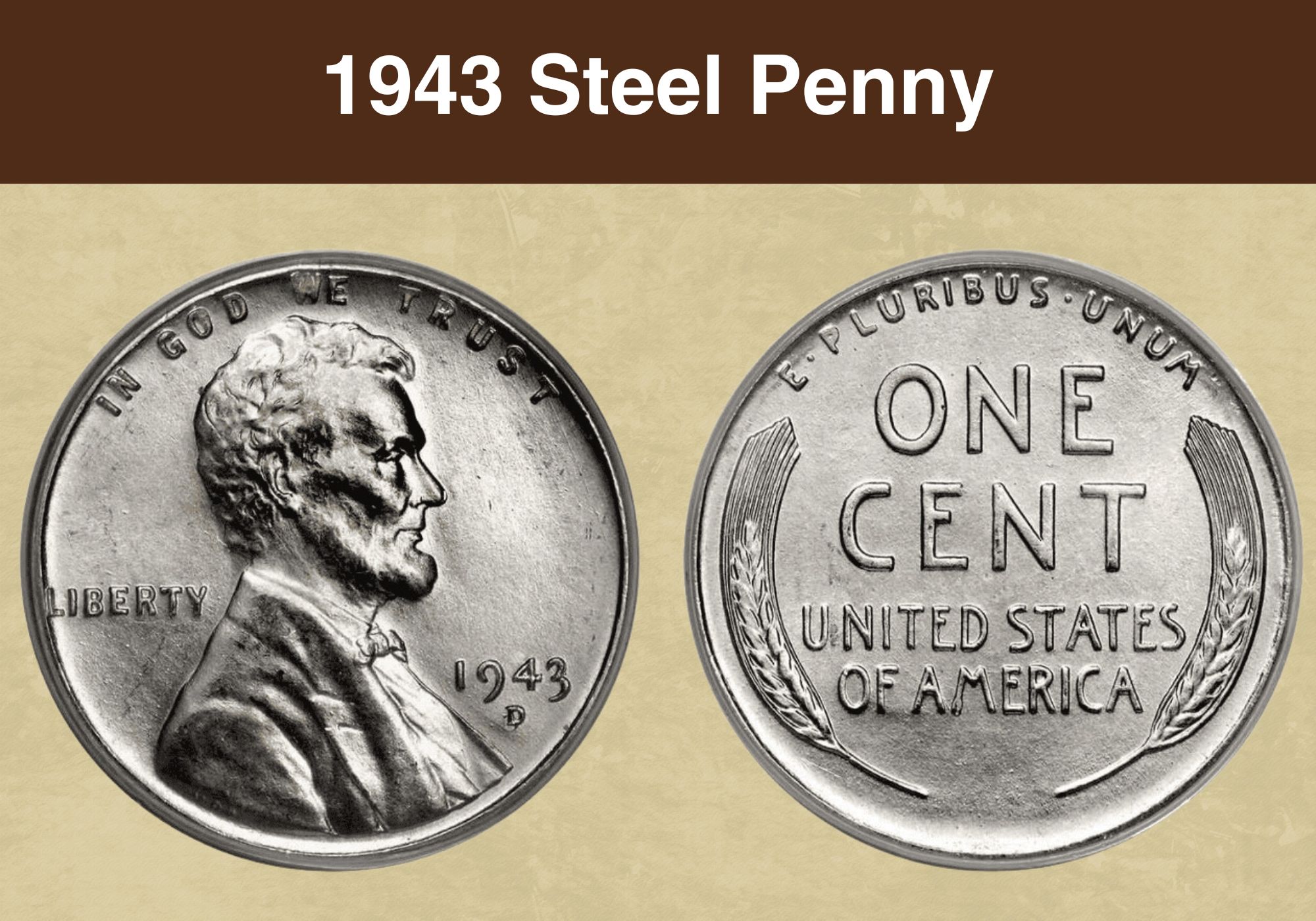
The 1943 D MS 64 brown (bronze) penny is the most expensive regular coin in the series ($840,000). The 1909 VDB PR 67+ penny is the priciest proof in the series ($258,500). Besides, collectors paid high sums for the following pennies:
- 1943 S MS 63 brown (bronze) penny cost $504,000
- 1944 S MS 66 (steel) penny cost $408,000
- 1958 MS 64 red DDO penny cost $336,000
- 1944 MS 64 (steel) penny cost $180,000