Coin Value Contents Table
- 1902 Indian Head Penny Value Chart
- History of the 1902 Indian Head Penny
- 1902 Indian Head penny Types
- Features of the 1902 Indian Head Penny
- 1902 Indian Head Penny Grading
- 1902 Indian Head Penny Value Guides
- 1902 no mint mark Indian Head penny Value
- 1902 proof Indian Head penny value
- Rare 1902 Indian Head Penny Errors List
- Where to Sell Your 1910 Indian Head Penny ?
- FAQ about the 1902 Indian Head Penny
The first one-cent coins paying tribute to Native Americans were issued from 1859 to 1909. Most sets of these Small Cents are abundant on the current market, making them affordable for most collectors.
The 1902 Indian Head penny value is surprisingly low for these 120-year-old coins. The reason is the high mintage for those times, but that doesn’t affect their collectability as a valuable part of US coinage history.
1902 Indian Head Penny Value Chart |
|
| Condition | 1902 No Mint mark penny |
| Good | $2 |
| Very good | $2 |
| Fine | $4 |
| Very fine | $6 |
| Extra fine | $20 |
| AU | $32 |
| MS 60 | $50 |
| MS 63 | $80 |
| PR 63 | $260 |
History of the 1902 Indian Head Penny
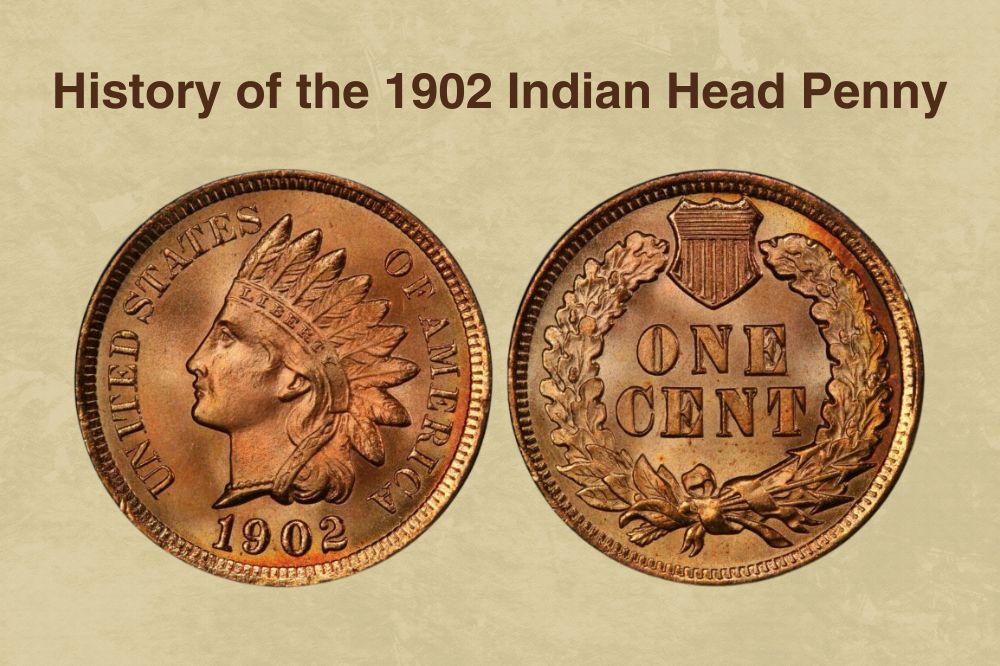
The Indian Head pennies, made of 88% copper, replaced the Flying Eagle pennies in 1859. Nowadays, most collectors make a series with both coin types because the older ones were issued for only two years.
However, even the new coins were problematic because of increased raw material and production costs. Therefore, the US Mint quickly changed pennies’ composition, and the first lighter pieces containing 95% copper appeared in 1864. The last minting year for this design was 1909.
1902 Indian Head penny Types |
||
| Location | Year | Minted |
| Philadelphia | 1902 no mint mark penny | 87,374,704 |
| Philadelphia | 1902 proof penny | 2,018 |
| Total | / | 87,376,722 |
The designer was James B. Longacre, who started working as a chief engraver in the US Mint in 1844. Even though he also created a few other coins, these pennies are his best and most recognizable work.
Even though many people believe he based Lady Liberty’s portrait on his daughter, he denied that. On the contrary, an ancient Greek statue was an inspiration for this coin obverse. The traditional Indian headdress look was based on the Lakota and Cheyenne’s war bonnet.
Also read: 12 Most Valuable Lincoln Penny Worth Money
Features of the 1902 Indian Head Penny
The Indian Head pennies replaced the difficult-to-strike Flying Eagle design after only two years of minting. The first coins were released into circulation in 1858, based on Longacre’s creation.
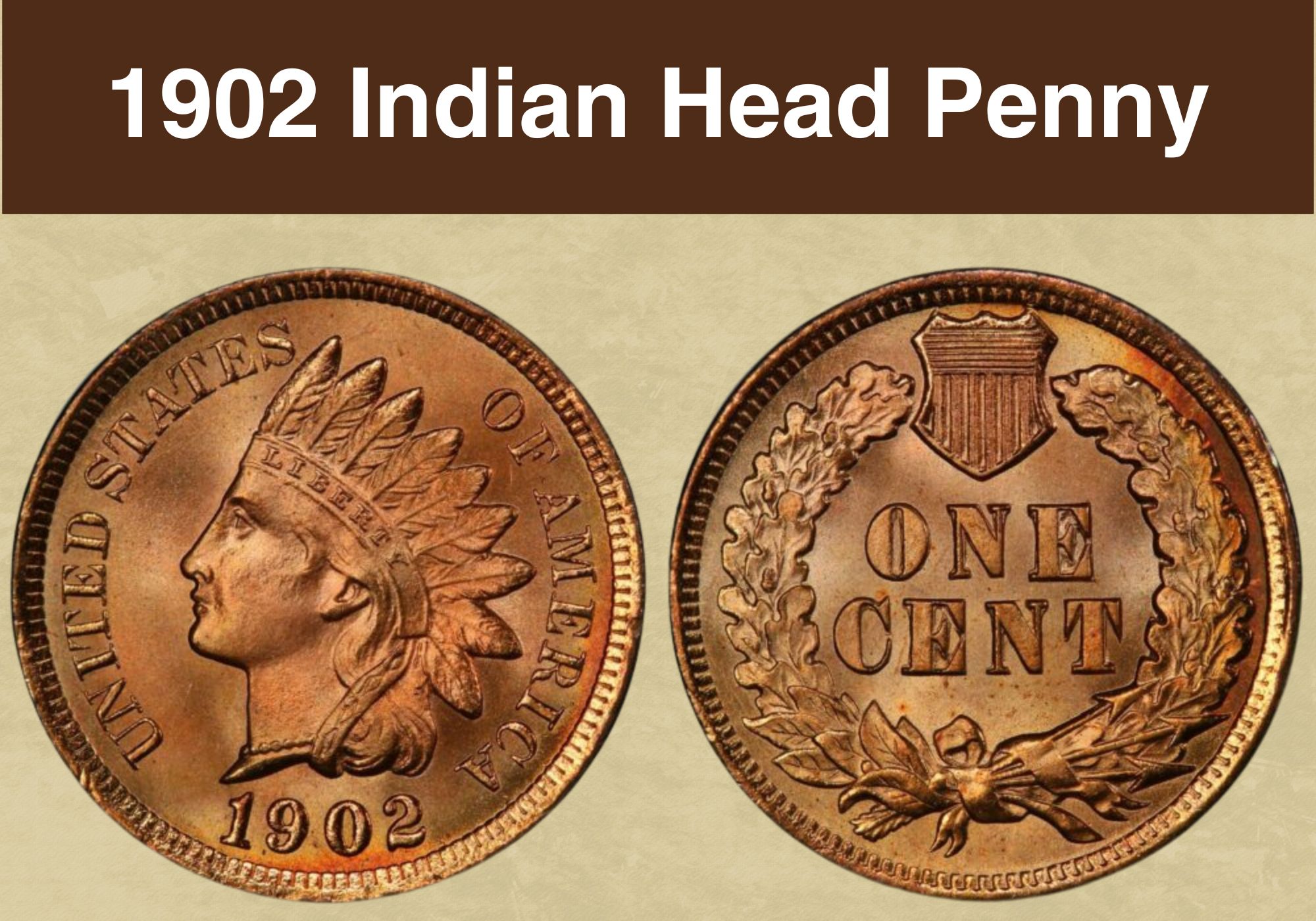
The obverse of the 1902 Indian Head pennies
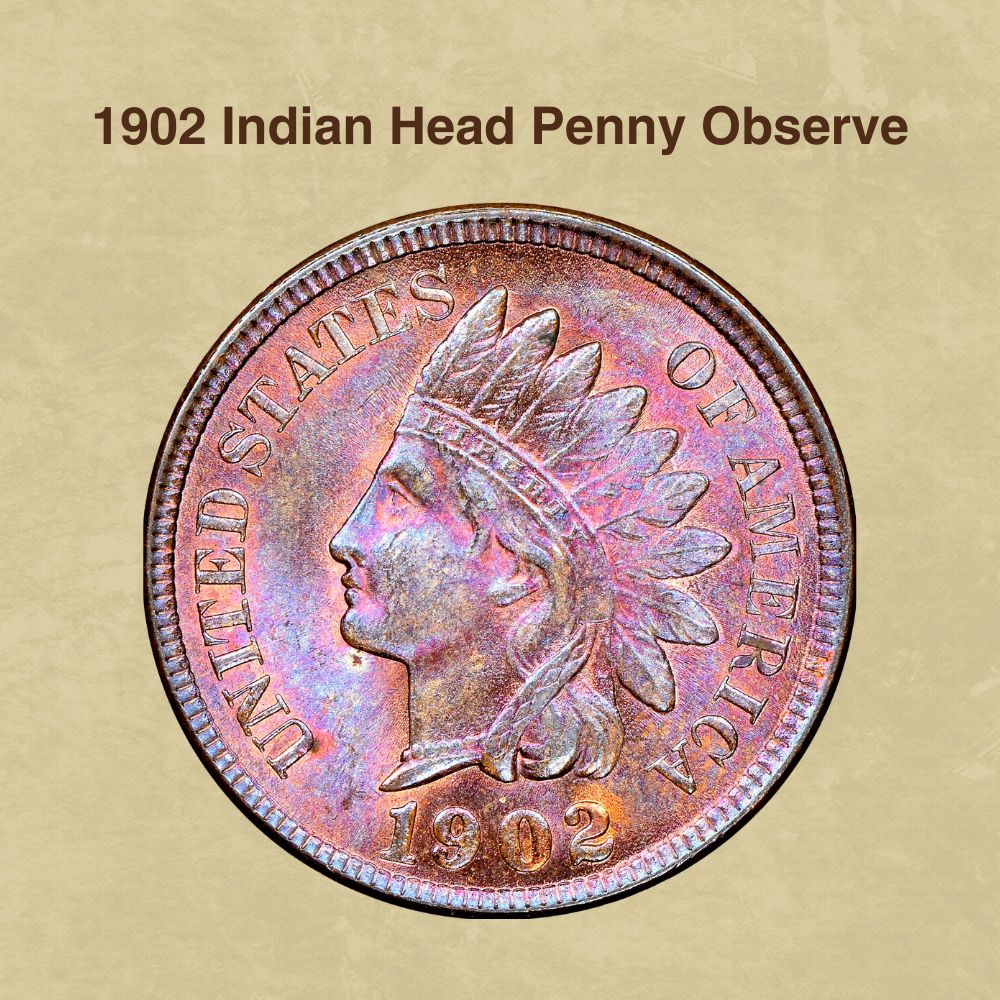
Like most old American coins, the 1902 Indian Head pennies have a simple design. You can see Lady Liberty in the center with the word LIBERTY written on the Indian headdress she wears on her head. Along the coin rim are engraved the UNITED STATES OF AMERICA and the date 1902.
The reverse of the 1902 Indian Head pennies
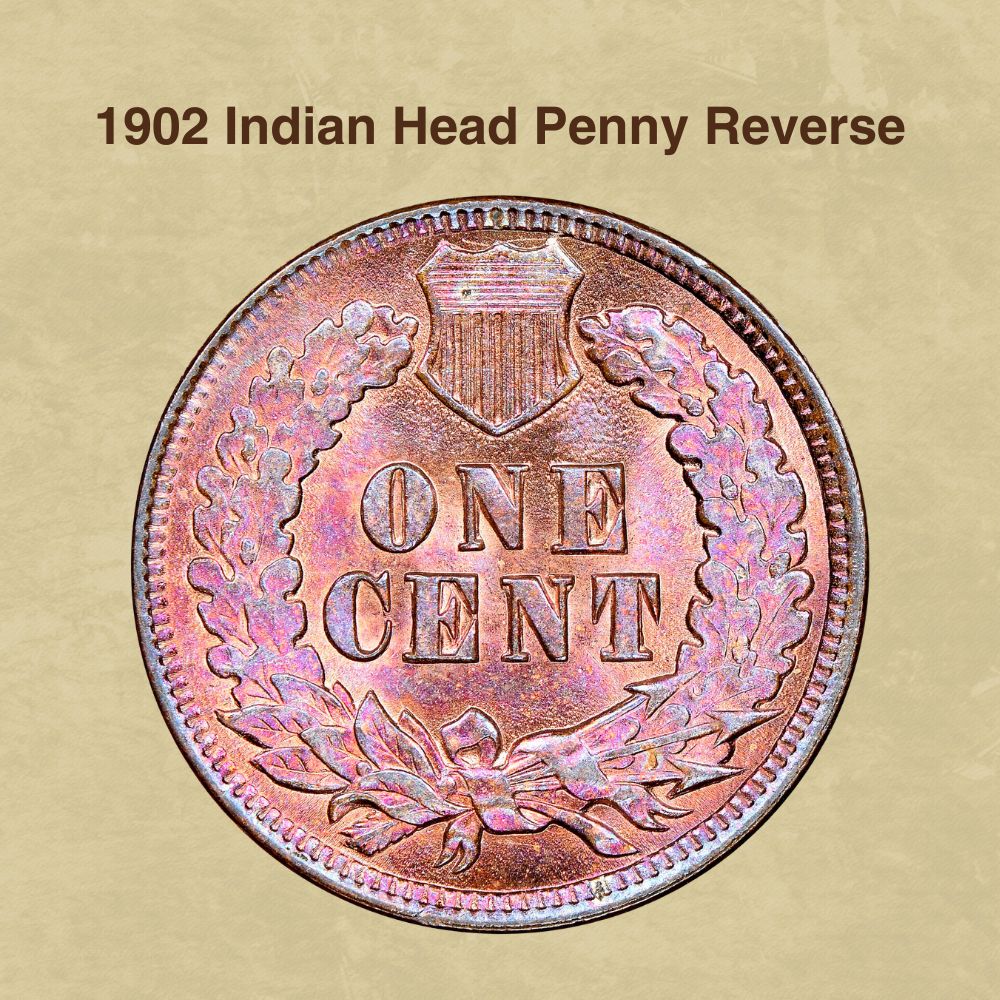
The first Indian Head penny design variation had a laurel wreath on the reverse, but it was replaced in 1860. Therefore, coins minted in 1902 came with a shield on the top of an oak wreath. This composition surrounded a coin’s denomination, ONE CENT.
1902 Indian Head penny Details |
|
| Face value | One cent ($0.01) |
| Technique | Milled |
| Shape | Round |
| Coin diameter | 19.05 mm (0.75 inches) |
| Compound | An alloy of 95% copper with zinc or tin |
| Type | Standard circulation coin |
| Coin thickness | 1.47 mm (0,058 inches) |
| Coin weight | 3.11 g (0.10970 ounces) |
| Edge | Plain |
Other features of the 1902 Indian Head pennies
The 1902 Indian Head pennies are modest copper one-cent coins with a diameter of 19.05 mm (0.75 inches) and a plain edge. Their standard weight is 3.11 g (0.10970 ounces), while you can measure each piece’s thickness of 1.47 mm (0,058 inches).
Also read: 13 Most Valuable Wheat Penny Worth Money
1902 Indian Head Penny Grading
Collectors always check the coin condition first, making their grading crucial. The best option is to let a reputable company determine the 1902 Indian Head penny appearance. In this case, experts notice possible defects and valuable errors and estimate a particular coin’s price range, increasing its value at auctions.
| # | Grade |
|---|---|
| 1 | Basal State-1 |
| 2 | Fair |
| 3 | Very Fair |
| 4, 5, 6 | Good |
| 7, 8, 10 | Very Good |
| 12, 15 | Fine |
| 20, 30 | Very Fine |
| 40 | Extremely Fine |
| 50 | About Uncirculated |
| 60 | Mint State |
| 65 | Mint State |
| 70 | Mint State |
Please check our grading guides to know your coin scale, It’s the necessary step to know the exact value of your coin.
Check out now: How to Grade Indian Head Penny?
1902 Indian Head Penny Value Guides
The total mintage of Indian Head pennies in 1902 was 87,376,722. All these coins came from the mint in Philadelphia, which was responsible for releasing regular coins into circulation. Besides, it produced over two thousand proofs for collectors.
1902 no mint mark Indian Head penny Value
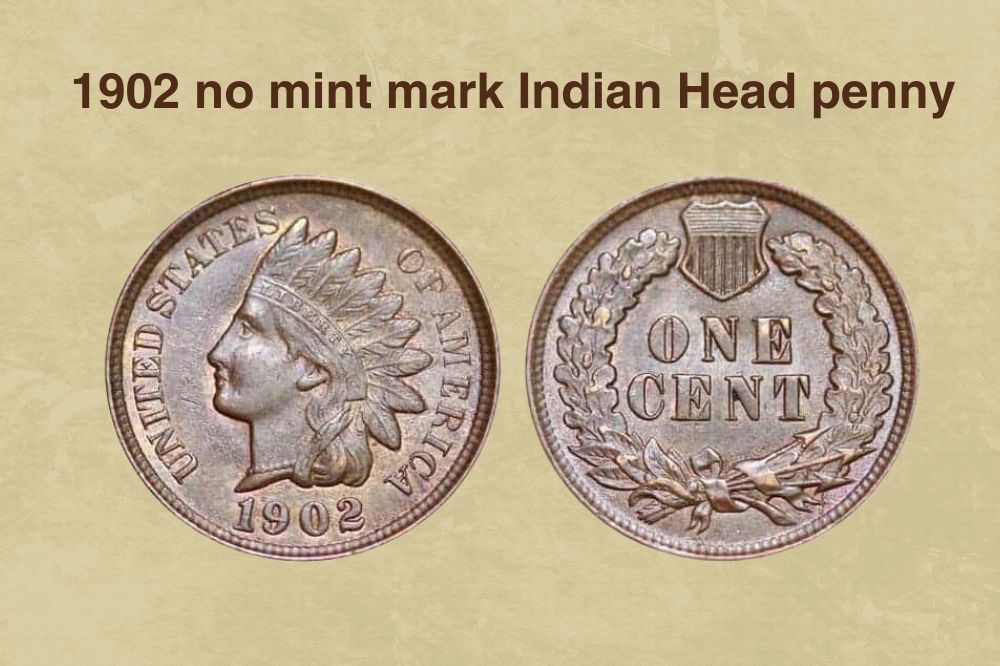
The Philadelphia mint was the only place for production of the 1902 Indian Head pennies from regular strikes. Even though these coins are over 120 years old, their price can be modest, thanks to the 87,374,704 minted and the high number of surviving pieces.
Depending on condition and color, you can find these pennies at various prices, adapted to every budget. For instance, brown circulated coins cost from $2 to $28, a pretty low price for such old pieces.
Even uncirculated specimens can be affordable, and you should set aside $50 to $550 for MS 60- to MS 66-graded pennies. Only those rated MS 67 are worth more, about $1,350 to $1,688. However, the auction record is higher, and one piece in MS 60 rank was paid $4,370 in 2001.
Like with most pennies, the final price depends on color, so you can notice that red-brown coins are more valuable than brown. For instance, you can get $60 for the MS 61-graded specimens.
Better-ranked coins cost even more, so you need to pay $80 to $600 for pennies graded MS 62 to MS 66. The best-valued pieces with MS 67 rating quickly reach $1,800 to $2,200 at auctions.
The most expensive Indian Head red-brown penny is in MS 64 grade. One collector paid $1,100 for it in 2022. As expected, the costliest 1902 MS 64 Indian Head pennies are those with desirable red toning. You can expect to pay relatively high sums for these tiny coins, like:
- MS 61-graded pennies cost $85
- MS 62-graded pennies cost $110
- MS 63-graded pennies cost $175
- MS 64-graded pennies cost $325
- MS 65-graded pennies cost $700
- MS 66-graded pennies cost $2,150
- MS 67-graded pennies cost $16,000
Despite these high prices, they are nothing compared to coins with an MS 68 rating. Such quality pennies are estimated at $125,000, but the auction record is even higher. The 1902 MS 68 Indian Head red penny was paid $144,000 in 2022.
1902 proof Indian Head penny value
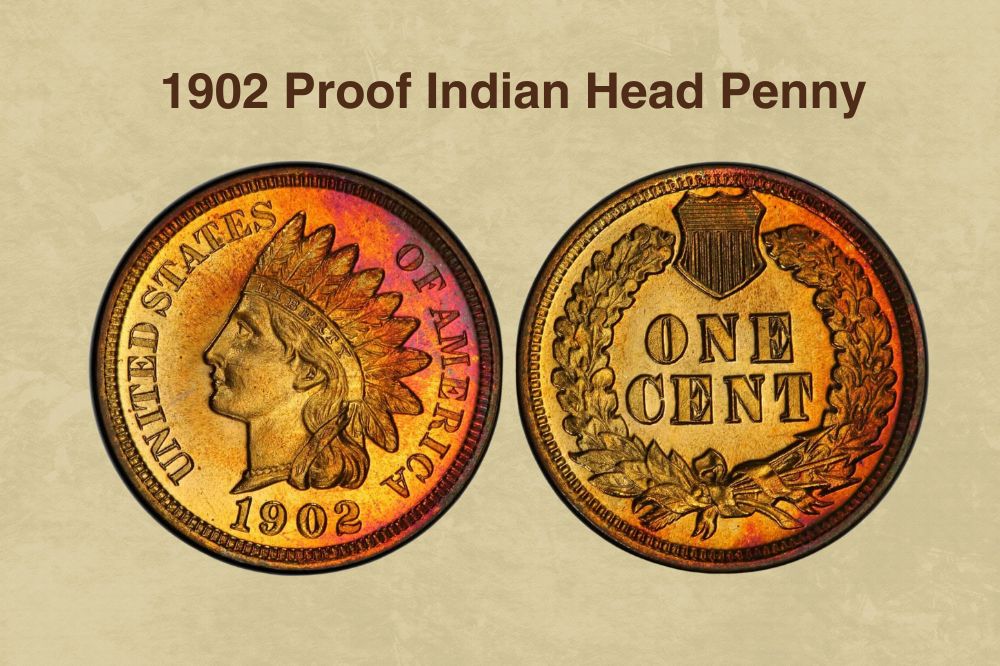
Besides regular coins, the mint in Philadelphia produced 2,018 proof pennies in 1902. These beautiful coins in brown color intended for collectors cost at least $120 now. However, you can count on a price range of $150 to almost $1,350 for pieces ranked from PR 61 to PR 66.
If you prefer the best-existing specimens, you need to set aside about $2,650 for one in PR 67 grade. Expectedly, the auction winner is more expensive than that, with a price of $3,525, won in 2015.
The red-brown 1902 pennies are more valuable, with a price range from $150 to $160 for most coins in the mint state. However, the best-ranking ones cost more, with the following market prices:
- $1,400 for coins in PR 66 grade
- $3,850 for coins in PR 67 grade
The costliest 1902 Indian Head red-brown penny is a piece with a PR 67 ranking. It reached an impressive $3,055 at an auction held in 2018.
Finally, you can also find extraordinary and highly collectible 1902 red-toned pennies, but be aware that their prices are high. So, you should set aside at least $220 for pieces in PR 60 grade. Others are even costlier, with an estimated price range like:
- Red coins rated PR 63 are available at $360
- Red coins rated PR 64 are available at $750
- Red coins rated PR 65 are available at $1,200
- Red coins rated PR 66 are available at $1,600
- Red coins rated PR 67 are available at $10,000
The auction records are often higher than assessed ones, so it is also a case with red Indian Head proofs minted this year. Even though the estimated price for coins with PR 68 grade ranks at $41,500, one collector paid $39,100 for one such piece in 2008.
Sometimes, you can come across coins with cameo contrast priced more than regular ones. For instance, the 1902 Indian Head CAM proof penny in high PR 67 grade was paid $31,200 at an auction in 2019.
Also read: 17 Most Valuable Indian Head Penny Worth Money
Rare 1902 Indian Head Penny Errors List
Like most old coins, the 1902 Indian Head penny series includes a few valuable errors. The high mintage contributed to the rapid wear of the dies and the increase in the number of imperfect coins.
Die gouge
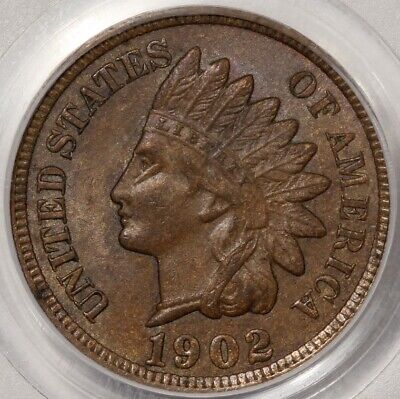
These error coins are a result of striking on a faulty die that can be scratched or without a part, affecting the penny’s surface. The most collectible 1902 Indian Head pennies are those with an error on Lady Liberty’s bottom eyelid. Some of these coins are worth only $10, but auction records are typically from $400 to $600.
Off-center
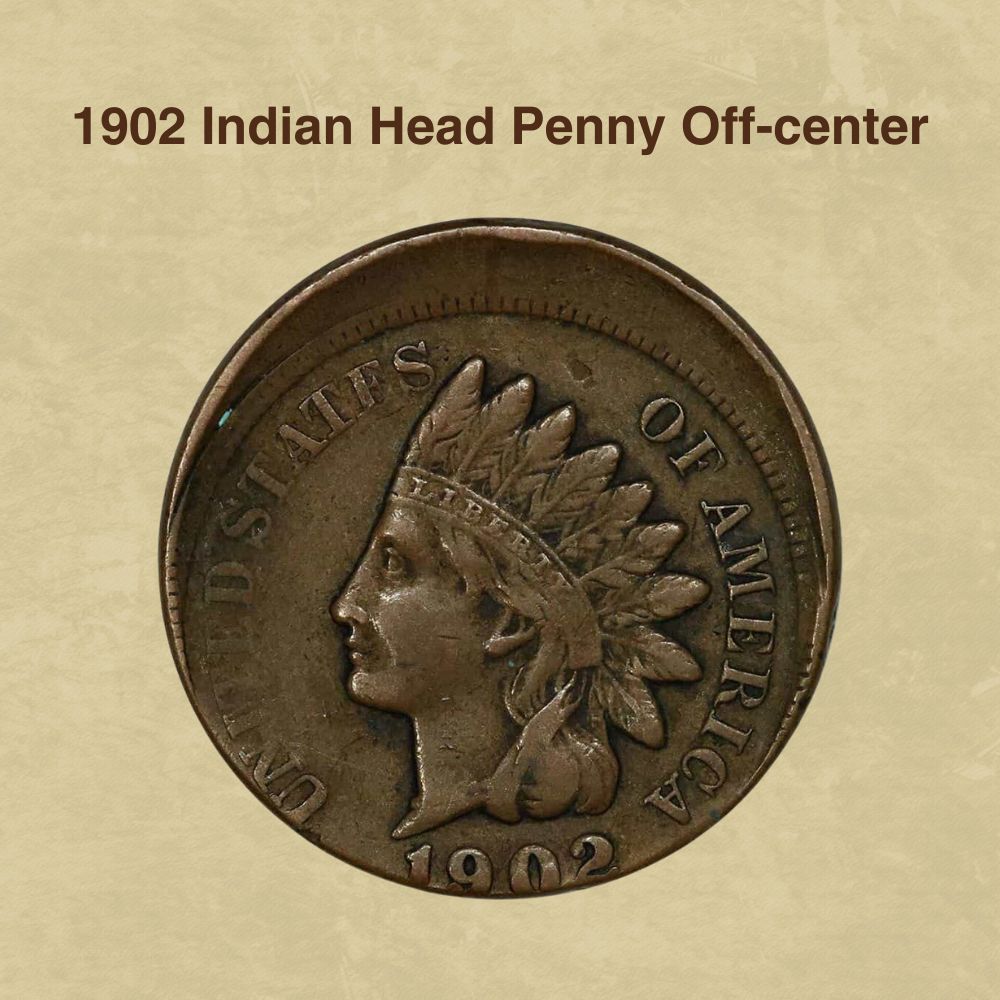
The 1902 pennies with the off-center error appeared when the planchet was placed incorrectly during minting. Their average prices nowadays are from $160 to $800, depending on the coins’ condition and the error percentage.
Displaced minting
Such error coins are valuable for collectors because of their unusual displaced design, resulting from incorrectly minting. The deviation ranges from minor to greater than 50%, affecting the price.
Double strike
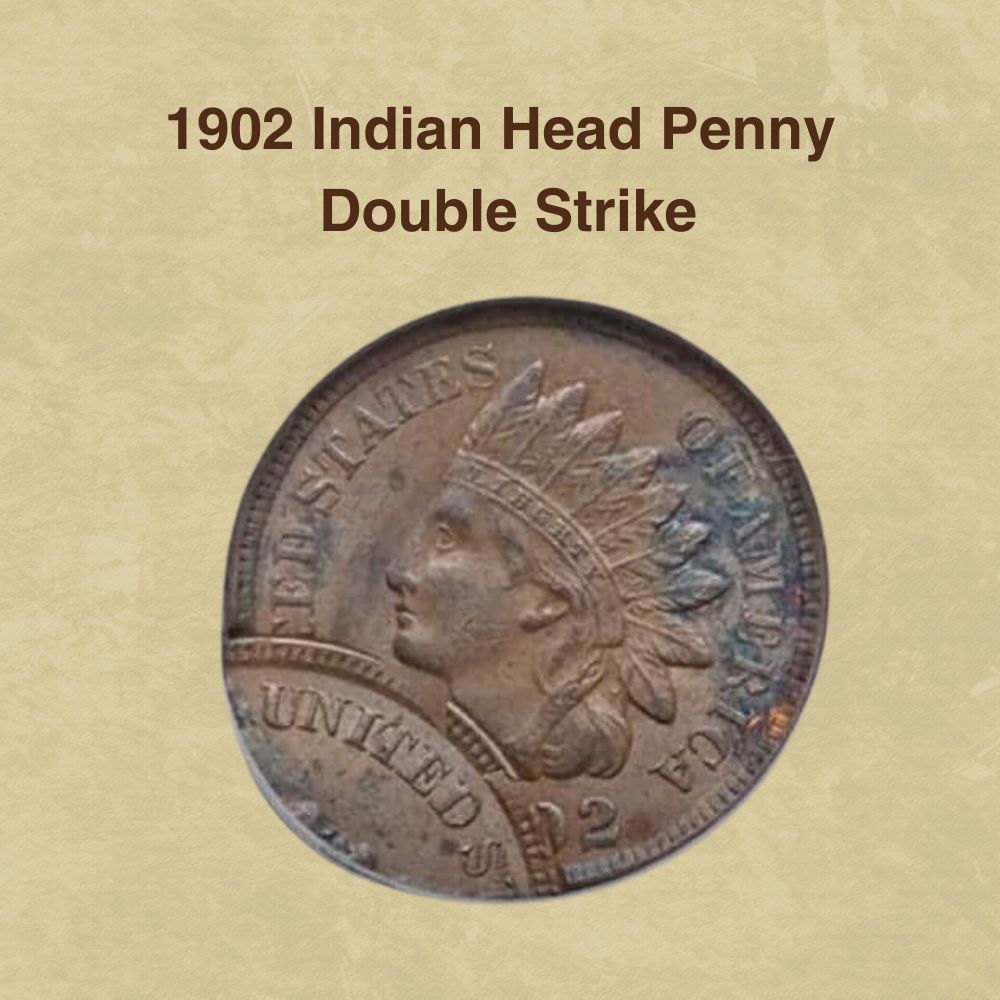
These pennies resulted in incomplete ejecting from the dies after the first strike. They get stuck for a while and become hit once more, resulting in a second partial imprint over the already-struck design. You can count on at least $650 for such a piece.
Broad strike
Broad strike pennies appeared after being struck while placed in the insecure collar. They are broader and thinner than regular pieces, sometimes followed by an off-center design. Some of these coins reached almost $350 on the market.
Also read: 11 Most Valuable Wheat Penny Errors
Where to Sell Your 1910 Indian Head Penny ?
Now that you know the value of your coins, do you know where to sell those coins online easily? Don’t worry, I’ve compiled a list of these sites, including their introduction, pros, and cons.
Check out now: Best Places To Sell Coins Online (Pros & Cons)
FAQ about the 1902 Indian Head Penny
What makes a 1902 Indian Head penny rare?
Even though 1902 pennies are 120-year-old coins, they are available on the market in different conditions. Only the best-graded pieces are rare and can cost thousands of dollars.
Which 1902 Indian Head penny is worth a lot of money?
- The auction record of the 1902 MS 68 Indian Head red penny was $144,000 at Stack’s Bowers, organized on June 17, 2022
- The auction record of the 1902 PR 68 Indian Head red penny was $39,100 at Bowers & Merena, organized on April 1, 2008
- The auction record of the 1902 PR 67 Indian Head CAM penny was $31,200 at Stack’s Bowers, organized on August 20, 2019
- The auction record of the 1902 MS 60 Indian Head brown penny was $4,370 at Goldberg Auctioneers, organized on February 16, 2001
- The auction record of the 1902 PR 67 Indian Head brown penny was $3,525 at Legend Rare Coin Auctions, organized on December 17, 2015
- The auction record of the 1902 PR 67 Indian Head red-brown penny was $3,055 at Legend Rare Coin Auctions, organized on September 27, 2018
- The auction record of the 1902 MS 64 Indian Head red-brown penny was $1,100 at David Lawrence RC, organized on November 27, 2022
- The auction record of the 1902 MS 64 Indian Head red-brown penny (Die Gouge) was $602 at Stack’s Bowers, organized on March 6, 2015
- The auction record of the 1902 AU 58 Indian Head brown penny (Die Gouge) was $425 on eBay on May 20, 2021
How much is the Philadelphia 1902 Indian Head penny worth?
Prices of the 1902 proof Indian Head pennies depend on their grade and coloring, so you can find brown circulated pieces at $1.10 to $28.75. On the other hand, those in the mint state are worth $32 to $1,688. The red-brown coins are more valuable, and you can get $50 to $2,200 per one at auctions.
The most expensive are red Indian Head pennies that come with a price range from $90 to $13,000, depending on preservation level. However, be prepared that super quality pieces with MS 68 rating quickly reach approximately $120,000 at auctions.
What is the costliest Indian Head penny?
- $161,000 was the price for the 1864 PR 65 L on ribbon penny in 2011
- $149,500 was the price for the 1877 MS 66 penny in 2007
- $144,000 was the price for the 1902 MS 68 red penny in 2022
- $126,500 was the price for the 1872 MS 66 penny in 2007
- $108,000 was the prices for the 1899 MS 68 red penny in 2019 and the 1897 PR 67+ DCAM penny in 2021