Coin Value Contents Table
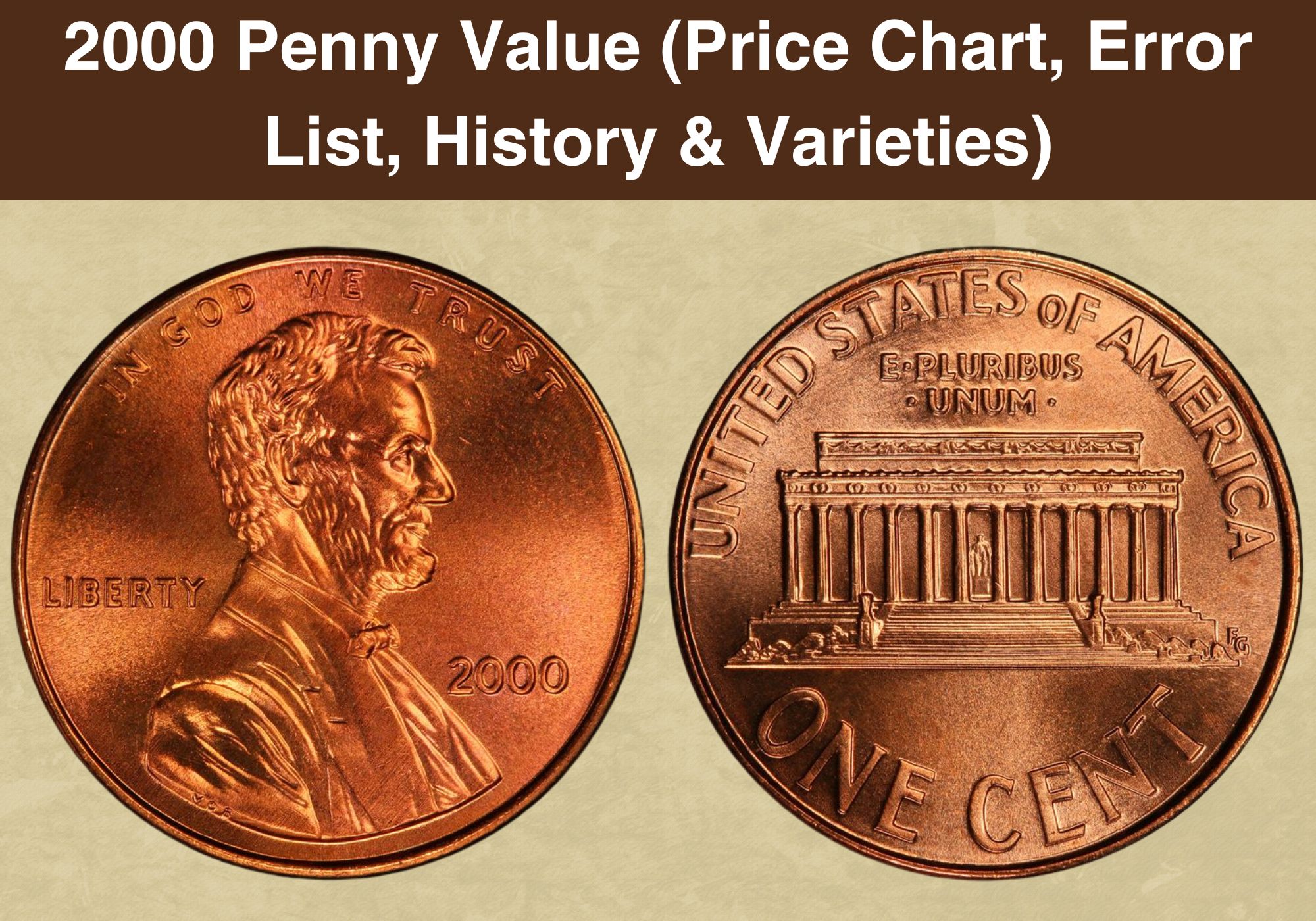
Have you discovered a 2000 Lincoln penny and wondered how much it might be worth?
Are you considering adding this coin to your collection and want to know its real value?
You’ve come to the right place!
In this article, I will explain everything you need to know about the 2000 penny value. The information you will learn here will help you decide whether this long-running Lincoln cent is worth adding to your collection.
We will learn about the coin’s history, unique features, and tips for grading it. Importantly, you will discover rare 2000 pennies worth more than their face value—some even thousands of dollars!
So, without further ado, let’s jump in and find out: How much is a 2000 penny worth? What is the value of a 2000 Lincoln cent?
2000 Penny Value Chart |
||||
| Mint Mark | Good | Fine | Extremely Fine | Uncirculated |
| 2000 No Mint Mark Penny Value | $0.05 | $0.05 | $0.05 | $7.50 |
| 2000-D Penny Value | $0.05 | $0.05 | $0.05 | $7.50 |
| 2000-S Penny Value | – | – | – | $15 |
The History of the 2000 Penny
The 2000 penny is part of the long-running Lincoln cent or penny series struck since 1909. Over the years, the coin has retained the same obverse design, although the reverse design has changed several times.
The Lincoln penny’s inception can be traced to 1904 when President Theodore Roosevelt proposed the idea of a new coin design to the United States Secretary of the Treasury.
The penny was one of the first coins the United States Mint struck when it was first established in 1792. The first penny featured a lady, Liberty, with flowing hair on the obverse.
Although Liberty stayed on the penny for 60 years, the penny’s design changed slightly over the years. Between 1857 and 1858, the penny featured the Flying Eagle on the obverse and wheat ears on the reverse. This design changed in 1859 when it was replaced by the Indian Head design, which lasted until 1909.
At Roosevelt’s recommendation, the Mint hired sculptor Augustus Saint-Guadens to redesign the penny and other gold coins. Saint-Guadens only presented new designs for the gold coins and died from cancer before he could submit a new design for the penny.
Another sculptor, David Brenner, was commissioned in 1908 to design a Roosevelt portrait for the Panama Canal Commission medal. It is believed that Roosevelt recommended that the Mint hire Brenner also to redesign the penny.
The centennial birth anniversary of President Abraham Lincoln was coming up in 1909. This provided the government an opportunity to commemorate the assassinated president.
Brenner’s design for the new coin would feature Lincoln’s portrait on the obverse. This was the first time the portrait of a U.S. president was depicted on a circulating coin.
The reverse, which featured wheat ears, remained in place until 1959 when it was replaced by Frank Gasparro’s design featuring the Lincoln Memorial commemorating his sesquicentennial birth anniversary. The reverse changed again in 2010 to feature the Union Shield, which remains in place to date.
Features of the 2000 Penny
Some 2000 pennies are worth hundreds and even thousands of dollars. But you must know what to look for to find these highly valuable coins.
It all starts with familiarizing yourself with the features of a 2000 Lincoln penny. Here, I explain the most important attributes to identify 2000 pennies worth money.
The Obverse Of The 2000 Penny
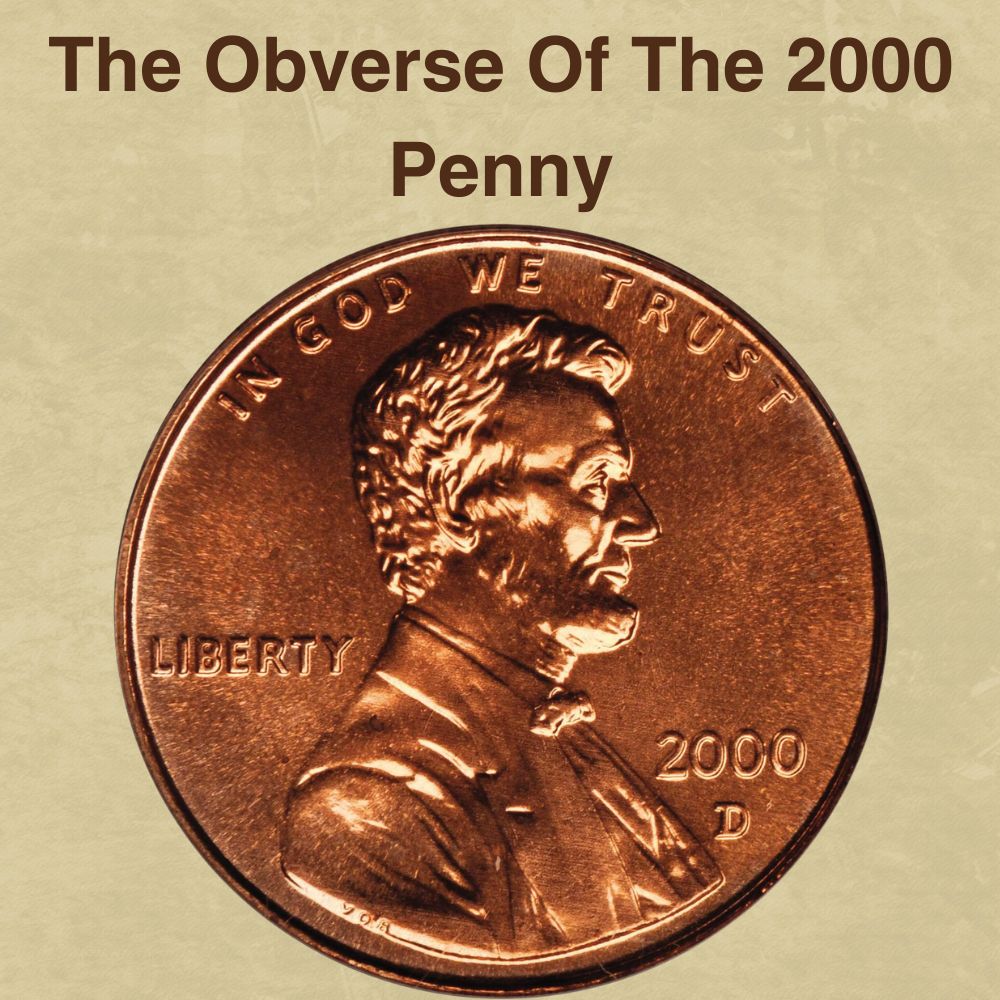
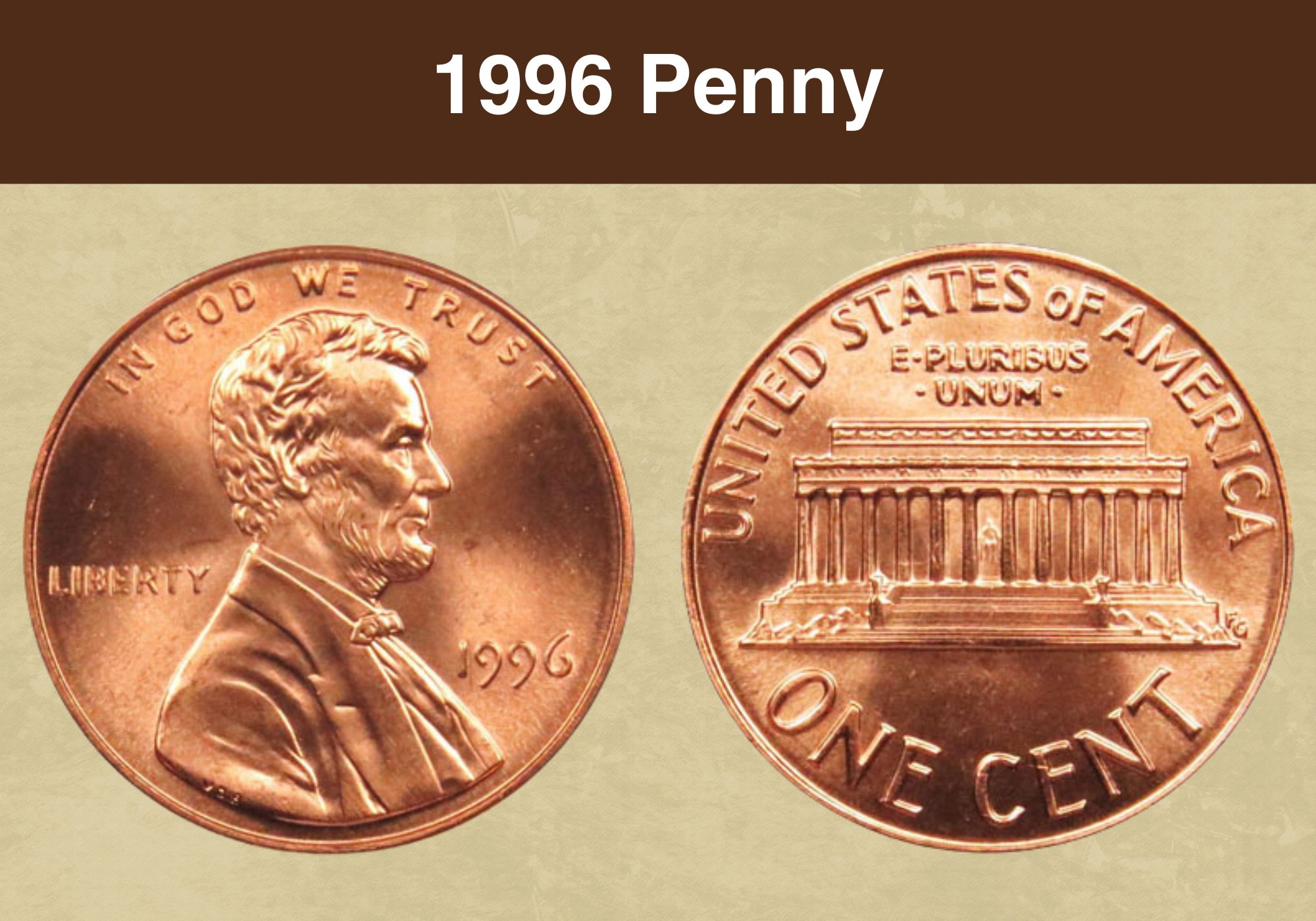
The head or top side of the 2000 penny features the right-facing bust portrait of President Abraham Lincoln. He is facing straight ahead, his head full of hair and adorned in what seems like a tuxedo suit.
Our country’s motto, IN GOD WE TRUST, is etched at the top along the coin’s inner rim.
On the left, you see the word LIBERTY spelt out boldly, while on the right, in front of Lincoln’s portrait, is the year 2000.
The Reverse Of The 2000 Penny
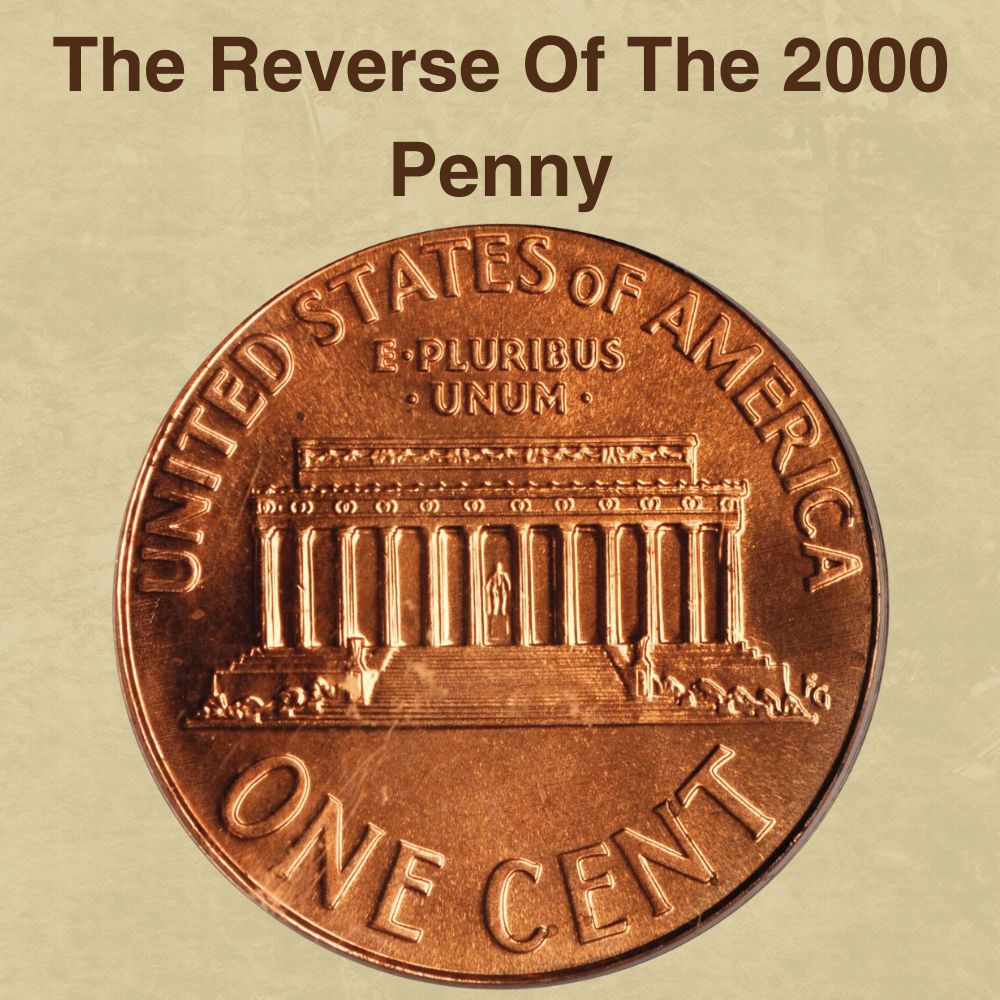
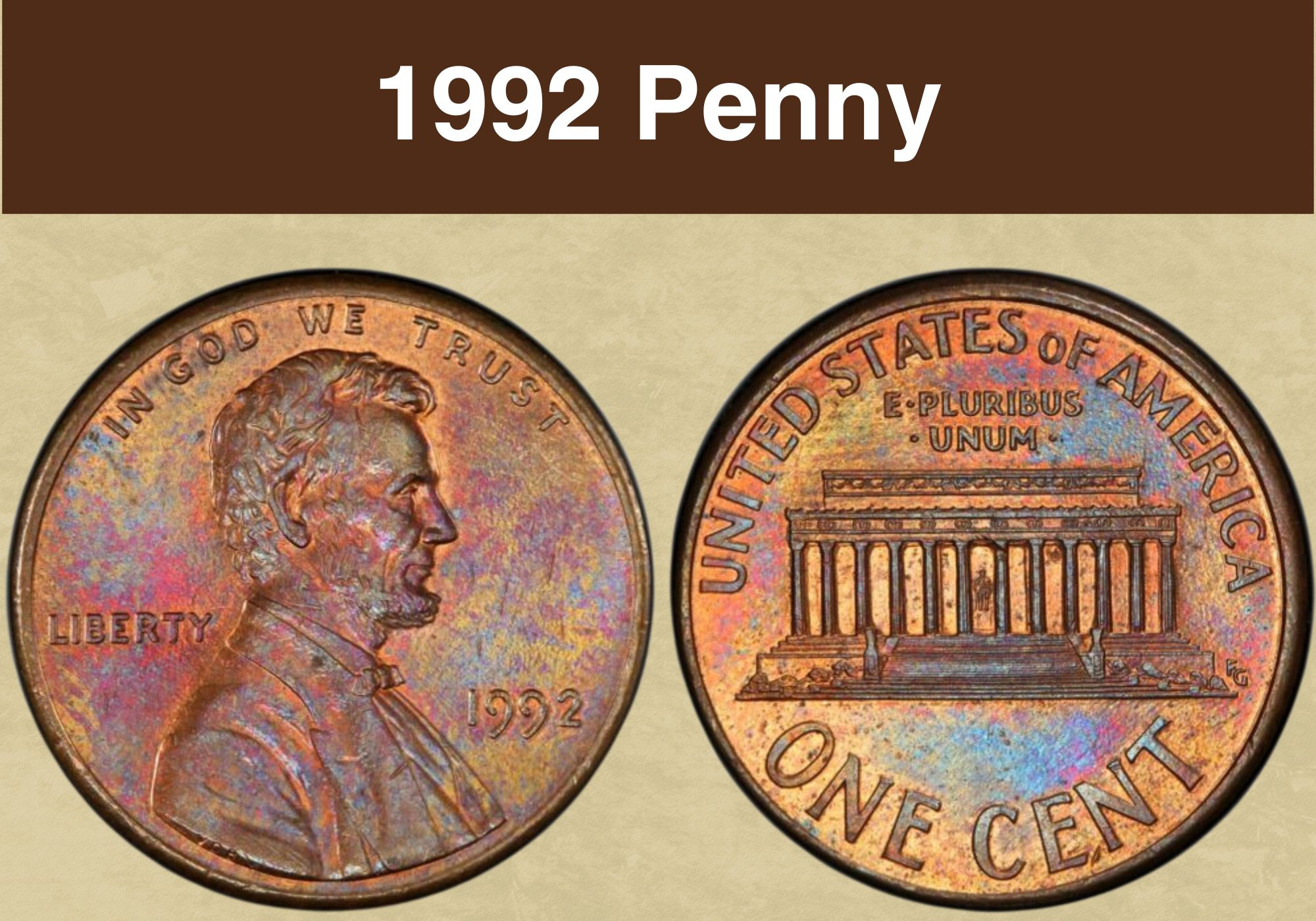
When you turn over the coin, you are met with an impressive portrait of the famous Lincoln Memorial, built in honor of President Abraham Lincoln. The Memorial occupies most of the coin’s centre.
Our country’s name, UNITED STATES OF AMERICA, is shown at the top, arching along the inner rim, while the coin’s denomination, ONE CENT, appears at the base.
You will also notice the motto, E PLURIBUS UNUM, directly above the Memorial. The motto translates to Out of Many, One.
A look at the far right adjacent to the staircases will reveal the initials FG, which stand for Frank Gasparro, the sculptor who designed the penny’s reverse.
Other Features of the 2000 Penny
The 2000 penny is made of copper-plated zinc. This coin is relatively small, weighing 2.50 grams and measuring 19 million in diameter.
The coin has a plain edge. Depending on the extent of circulation and exposure to the elements, your penny may appear red, red-brown, or brown.
The Philadelphia, Denver and San Francisco mints produced Lincoln pennies in 2000. Only the Denver and San Francisco coins have a mint mark, D and S, respectively, found on the obverse below the year date.
These are the most common features when determining whether a 2000 penny is worth any money.
So, how much is the 2000 penny worth? We’ll answer that question in the next section.
2000 Penny Grading
It always helps to have a professional grade your coins. But, with some basic knowledge, a loupe and the Sheldon Coin Grading Scale, you too can loosely assign a grade to your coins.
When it comes to the Lincoln Memorial pennies, including the 2000 penny, there are a few things you should look out for, and the first one is luster. In circulated pennies, the luster will be less visible or completely invisible in worn pennies.
Look out for signs of smoothing on high contact points such as the jaw, cheeks, and hair. On the reverse, traces of wear will begin to show on the steps of the Memorial building, pillars, and the top of the building.
Uncirculated 2000 pennies will show a sharp and brilliant mint luster and a few, if any, contact marks. The coin will have clean fields and excellent eye appeal.
| # | Grade |
|---|---|
| 1 | Basal State-1 |
| 2 | Fair |
| 3 | Very Fair |
| 4, 5, 6 | Good |
| 7, 8, 10 | Very Good |
| 12, 15 | Fine |
| 20, 30 | Very Fine |
| 40 | Extremely Fine |
| 50 | About Uncirculated |
| 60 | Mint State |
| 65 | Mint State |
| 70 | Mint State |
Please check our grading guides to know your coin scale, It’s the necessary step to know the exact value of your coin.
Also read: How to grade your coin?
2000 Penny Value Guides
Are 2000 pennies worth anything? The 2000 penny value depends on factors such as mint mark, mintage, and even color.
There are three varieties of the 2000 penny. These are the:
- 2000 No Mint Mark Penny
- 2000-D Penny
- 2000-S Proof Penny
Let’s look at how much each coin is worth.
2000 No Mint Mark Penny Value
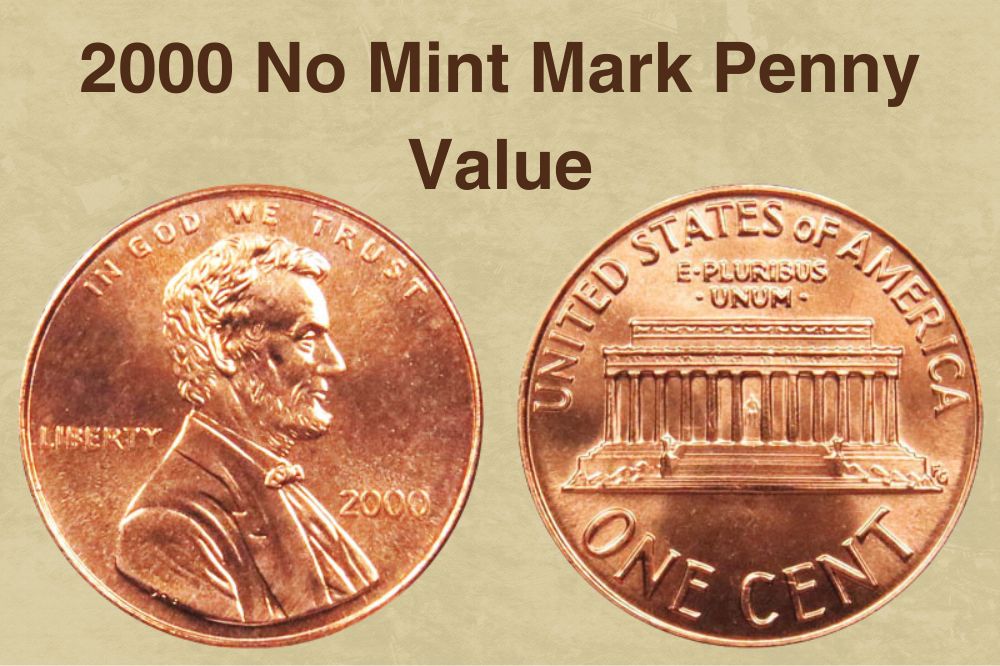
The Philadelphia Mint struck a whopping 5,503,200,000 Lincoln pennies in 2000. That’s a large number of coins!
These pennies have no mint mark; this is the simplest way to identify them. The high mintage means that 2000 pennies with no mint mark are very common, and you can easily find one of these in your pocket change.
Because 2000 No Mint mark pennies are so common in circulated condition, they are only worth their face value of $0.05. Circulated pennies are usually graded as brown, and less worn circulated examples are categorized as red-brown.
Uncirculated 2000 no-mint mark pennies are slightly more valuable, with those graded MS66 fetching as much as $6. Gem quality examples graded MS67 will bring in up to $7.50.
The Professional Coin Grading Service records show that the most expensive 2000 penny was sold for a record-breaking $4,700 in 2006. The specimen was graded MS67.
2000-D Penny Value
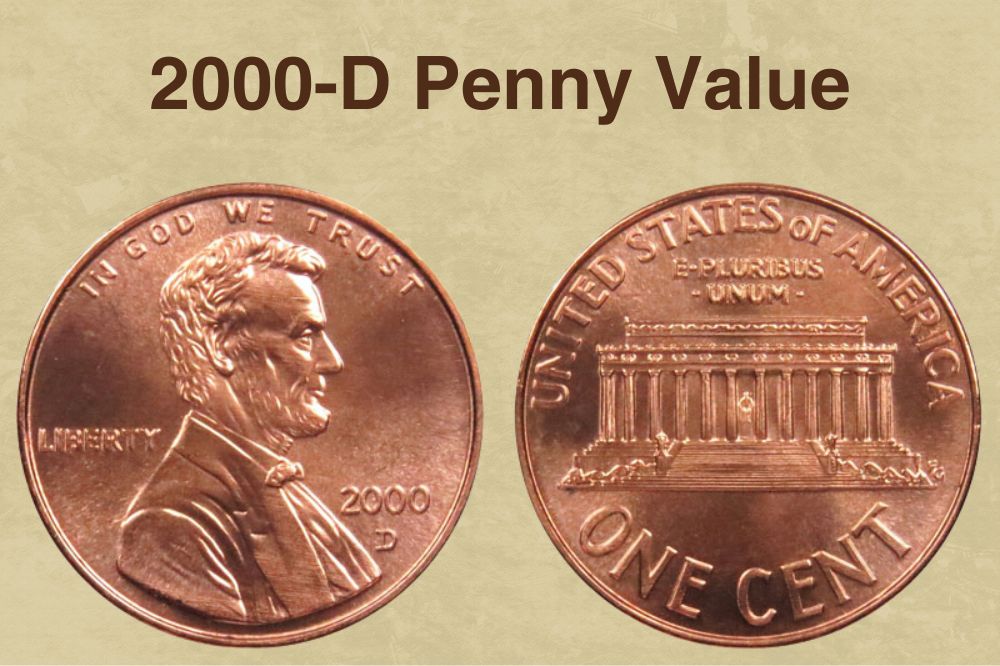
The Denver Mint also produced an equally large number of Lincoln pennies in 2000. About 8,774,220,000 pennies came from this facility, making these coins very common.
You will likely find a 2000-D penny in your coin jar—that’s how easy it is to come by these coins. Because they are so common, the 2000 pennies with a D mint mark are only worth their face value of $0.05 in circulated condition.
Uncirculated examples are only worth a premium if they have a notable error or are rare gem quality. Even a 2000-D penny that is graded MS65 is pretty affordable at just $5, while one graded MS67 will fetch $7.50.
The most valuable 2000-D penny is a Red-colored specimen graded MS69. A collector paid a whopping $2415 for this penny at a Bowers & Merena auction in 2010.
2000-S Proof Penny Value
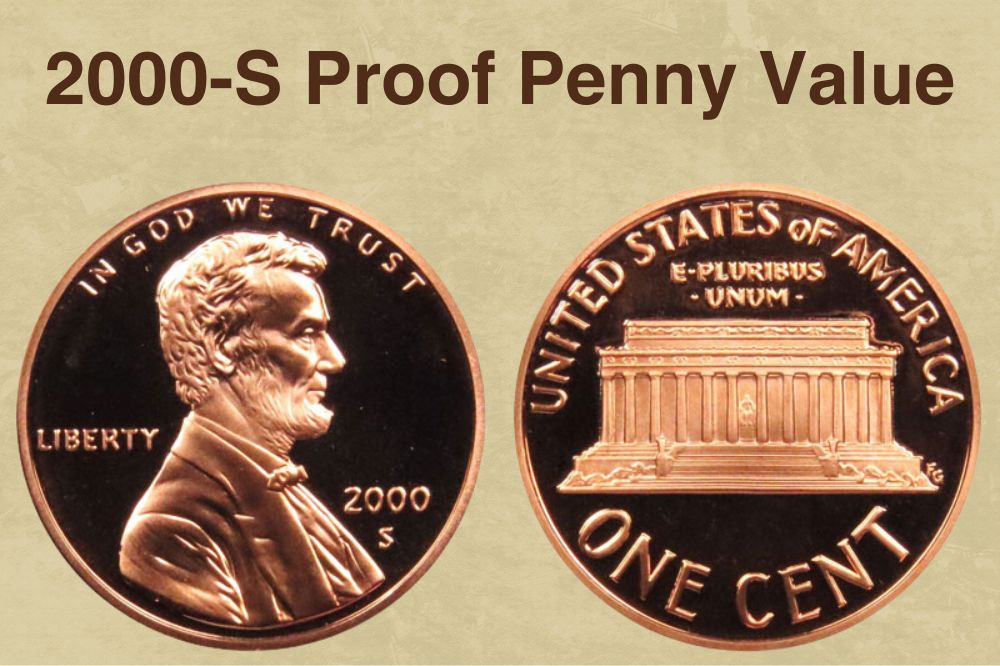
The minting facility in San Francisco is known for striking proof coins meant for collectors, and 2000 was no exception.
That year, the mint produced about 3,082,483 2000 proof pennies with an S mint mark. This is a significant number of coins, but it’s obviously much smaller than the billions of pennies struck at the Philly and Denver facilities separately.
Proof pennies are of a higher quality than their regular business strike counterparts. These coins are sold to collectors instead of being released into general circulation.
They are characterized by a brilliant, frosted surface and great contrast between the devices and surface on both sides. As such, proofs are often more valuable than business strikes and typically fetch a premium.
At grade PF67, you can expect to part with about $5 for a 2000-S proof penny. A deep cameo specimen will be worth as much as $15.
The most valuable 2000-S proof penny was sold for $2645 at a Heritage Auctions sale in 2004. The coin was a deep cameo specimen graded PF70, a very rare penny indeed.
2000 Penny Errors
Although circulated 2000 pennies are worth more or less their face value, some sell for a premium even if they are circulated. We’re talking about error pennies!
Error pennies are coins with notable minting errors that make them so unique that collectors are willing to pay a premium to acquire them.
If you find an uncirculated error penny, you should consider yourself lucky indeed, as such a coin could be worth a fortune.
Here are some 2000 penny errors worth money to keep an eye out for:
2000 Wide AM Penny Error
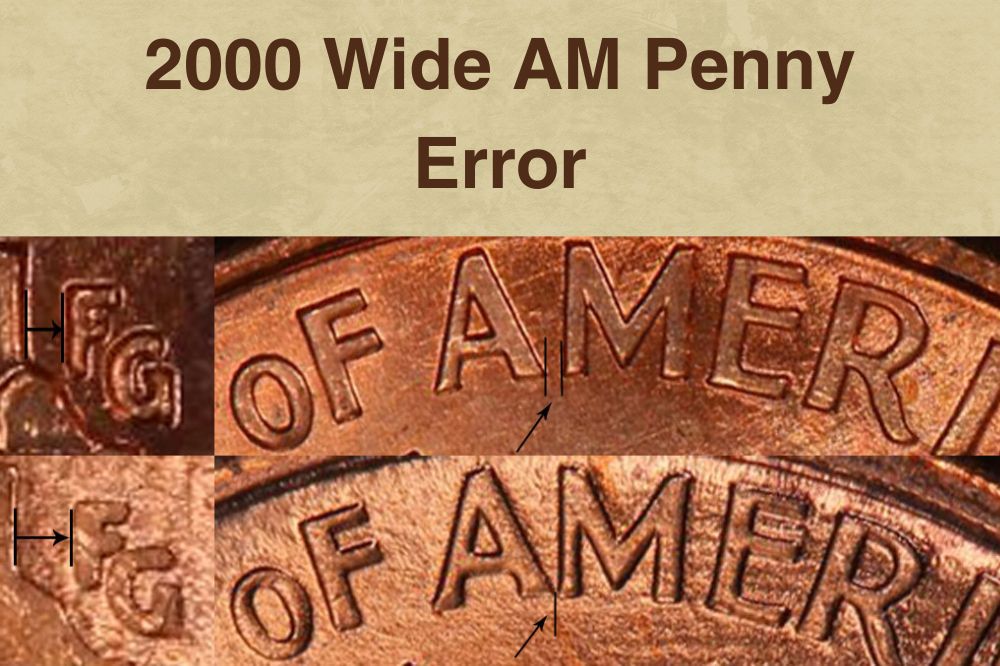
On some 2000 Lincoln pennies, there is a visible space between the A and M in the word AMERICA on the reverse side of the coin.
Normally, there would be no space between the two letters, and the base of A would touch that of M.
Pennies with a space between the two letters are known as wide AM and are considered error coins.
The wide AM error occurred when the die meant for striking the reverse of proof pennies was used to strike regular circulation pennies instead.
The 2000 wide AM pennies are very popular among collectors, with some willing to pay up to $30 for a circulated example. In fact, in 2012, a collector paid an enviable $800 for a brilliant red 2000 wide AM penny graded MS68.
2000 BIE Penny Error
The BIE penny error is a die-crack error common in minting.
When a cracked die strikes a blank planchet, it leaves an impression of the crack on the coin. The crack then fills with metal, resulting in a tiny raised surface on the final coin.
In some 2000 pennies, the raised surface appears as a small vertical line between the letters B and E in the word LIBERTY on the obverse.
BIE errors are quite interesting and create a buzz in the collector community. If you find one of these error coins, you could sell it for between $5 and $20, depending on the coin’s condition.
2000 Off Center Penny Error
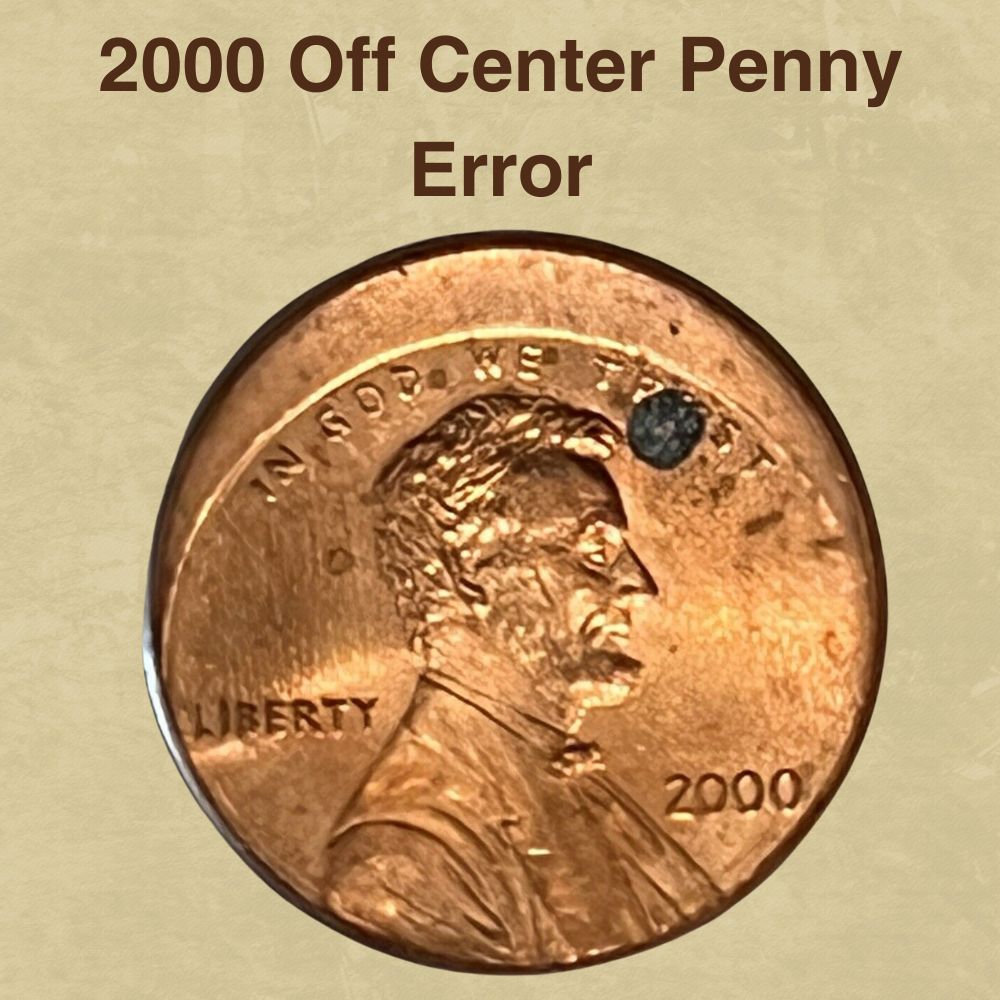
An off-centre error occurs when the die strikes the coin design away from the centre. This can happen if the planchet in the coin chamber moves even slightly, causing a misalignment between the die and the planchet.
A 2000 penny with an off-centre error can be worth between $15 and $25 depending on the extent of the error in terms of percentage.
If the design or image is off-centre by 50% or more, the error can be worth more than $20. The error might be less valuable if the off-centre percentage is just 1 or 3%.
Where To Sell Your 2000 Penny?
Now that you know the value of your coins, do you know where to sell those coins online easily? Don’t worry, I’ve compiled a list of these sites, including their introduction, pros, and cons.
Check out now: Best Places To Sell Coins Online (Pros & Cons)
FAQS
Is a 2000 penny worth collecting?
The 2000 penny can be a nice addition if you want to collect Lincoln cents. It is affordable and readily available, giving you more reason to add this coin to your collection. Circulated examples may only be worth their face value, but you should definitely be on the lookout for error pennies that can be worth much more.
Where is the mint mark on a 2000 penny?
The 2000 pennies have either a mint mark D or S. This letter is placed on the obverse below the year date. If you don’t see a mint mark on your penny, it is because it was minted in Philadelphia; this facility did not etch mint marks on the 2000 Lincoln pennies.
What should you look for in a 2000 penny?
Because a 2000 penny is only worth its face value, you should look for notable minting errors such as the wide AM, BIE, doubled die, and off-centre error if you want a penny worth more.

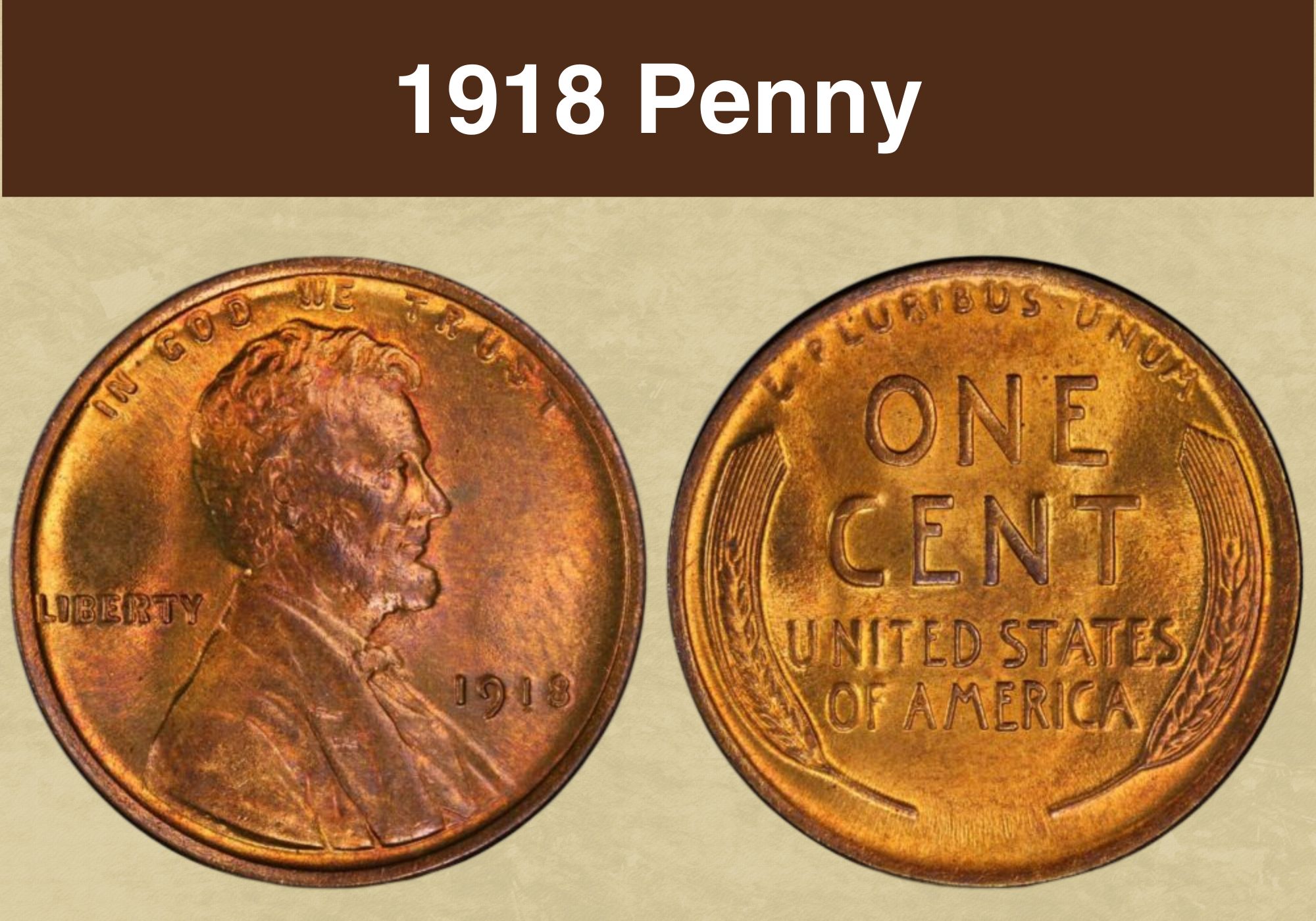
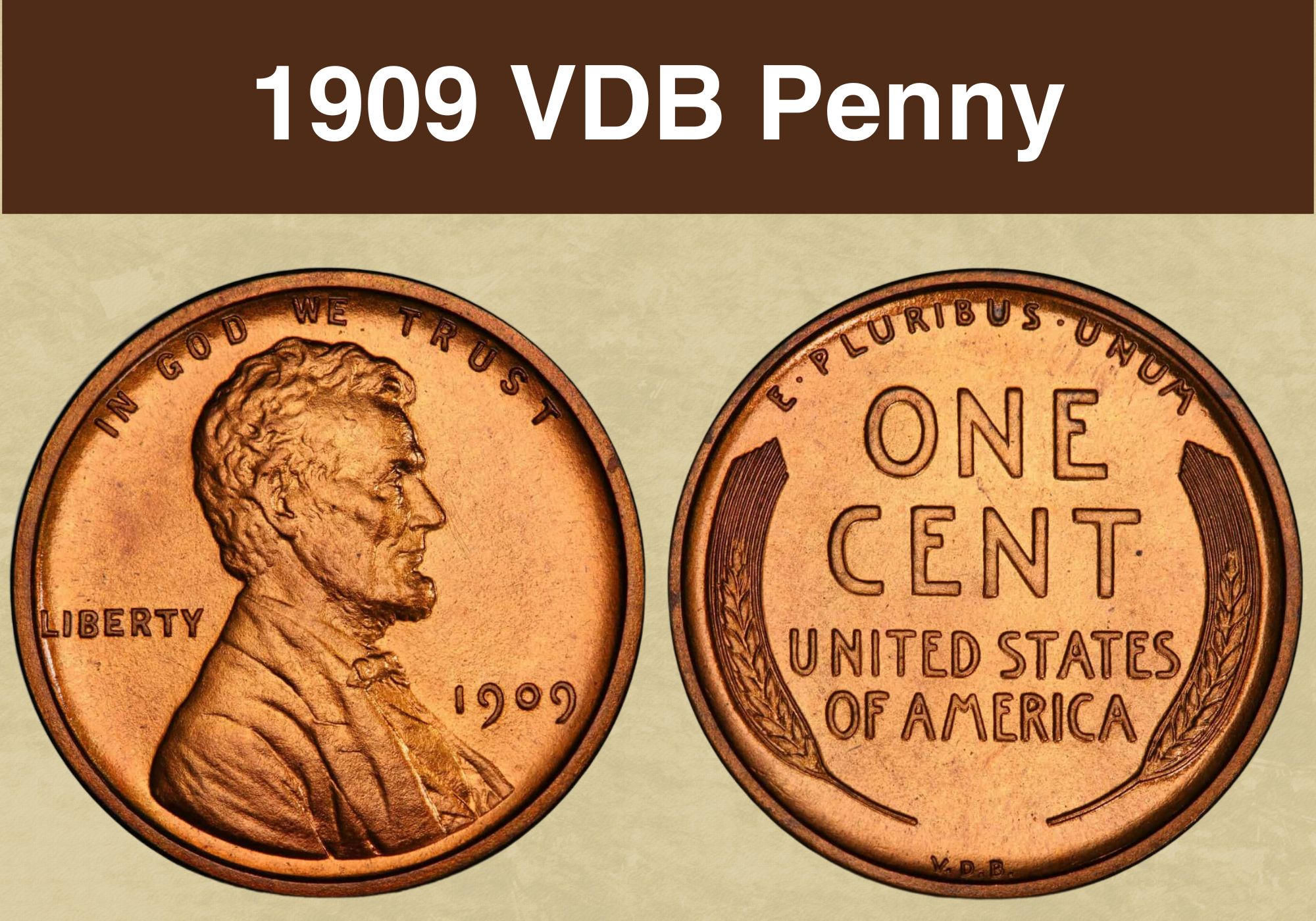
I would really like if you would be able to reach out to me because I do have a quite a few coins and bills that I have inherited from a family member passing and they told me I would always be well off once I figure out what to do with them and get them looked at by the right person My information will definitely be below Thank you and looking forward to hearing from You or somebody soon God bless Patrick
1-(609)604-4123 please do reach out I would definitely like to talk to somebody and figure a few things out to be honest I would not mind getting into this full time because I inherit it a lot of coins and cards and definitely would like to make it a part-time job I also did purchase a scope that comes with a monitor and can be hooked up to a TV with a recording device to it and do not mind sharing some profits to get some help Thank you Hope to hear from somebody soon God bless…!!!