Rare 2020 Quarter Errors Worth Money (Full List With Pictures)
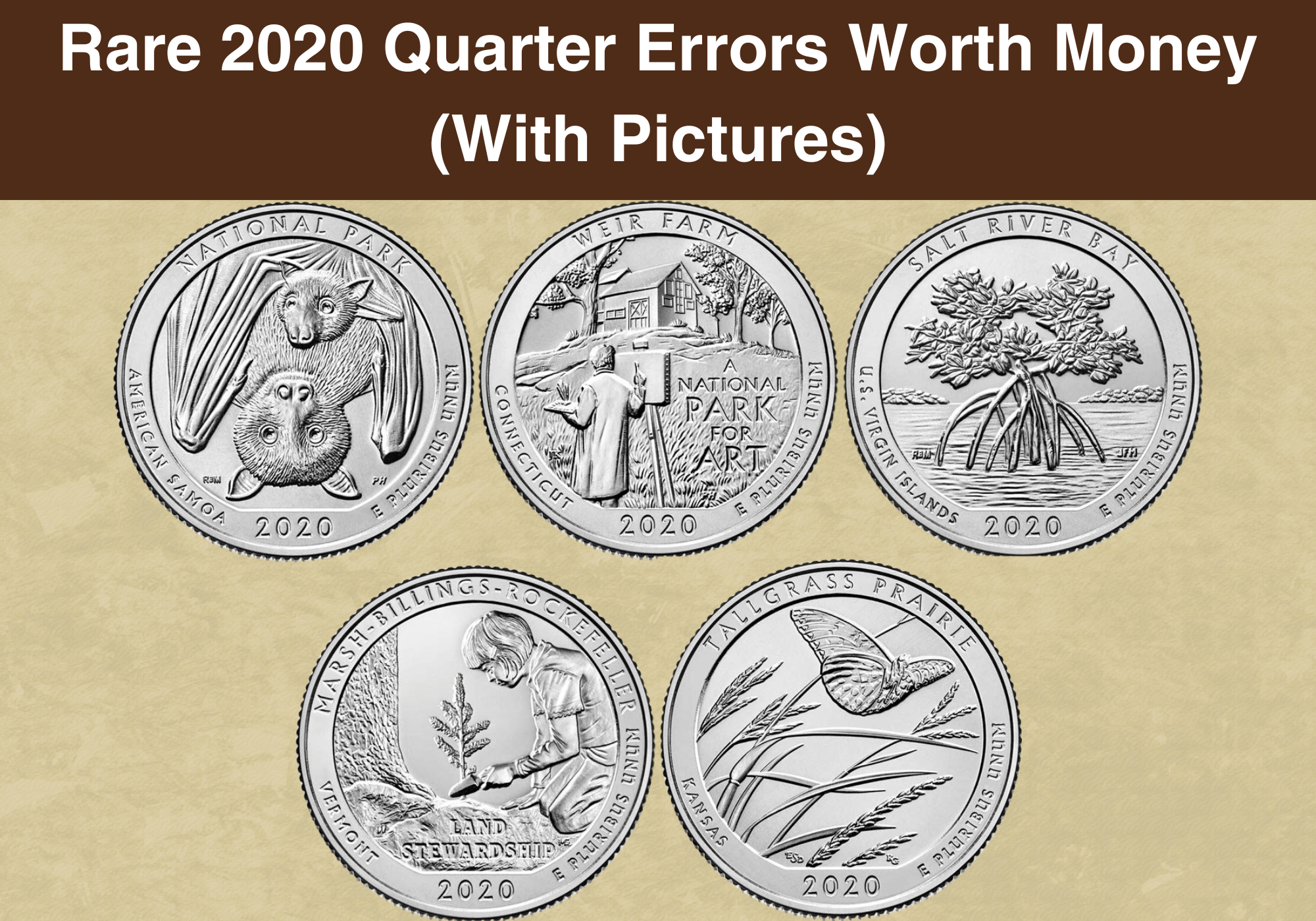
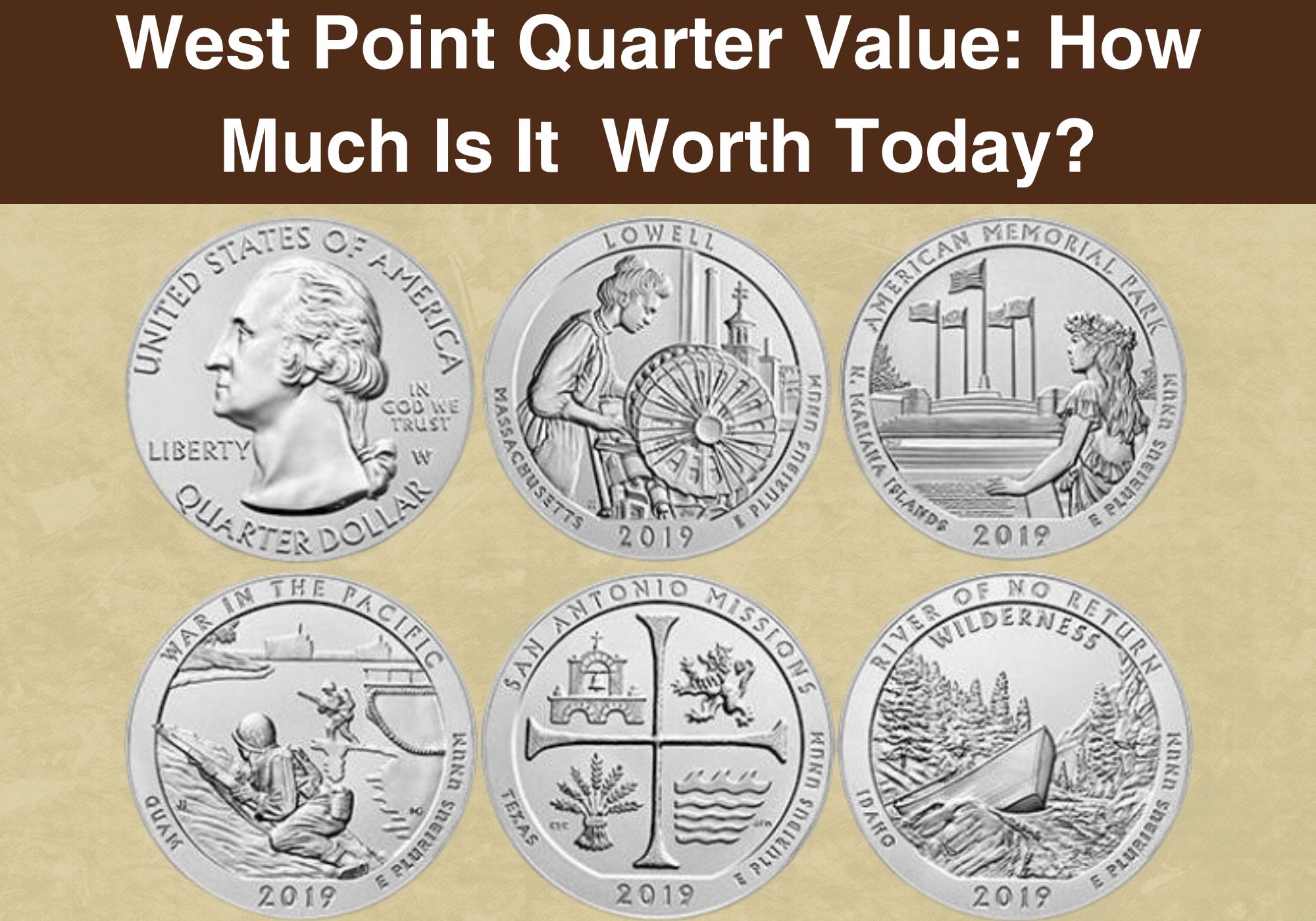
A 2020-D American Samoa quarter with 98% of its reverse clad layer missing sold for $2,499 at GreatCollections in September 2024, graded PCGS MS-64. 2020 Quarter errors range from $10 for minor die chips to nearly $2,500 for extreme planchet defects, spanning all five America the Beautiful designs struck that year.
Here is every verified error sorted by value.
1. 2020 Quarter Die Chip Error (Up to $10)

Die chips form when small pieces of the working die fracture away under repeated striking pressure, leaving a void that fills with planchet metal. The result is a raised bump on every coin struck from that damaged die.
On 2020 quarters, die chips appear across all five ATB designs and both major mints. The American Samoa bat quarter produced the most collected chips — lumps on the bat’s eye, wing, or ear that collectors call “Blind Bat,” “Cactus Bat,” or “Leaking Bat.”
A die chip on Washington’s mouth, nicknamed “Drooling George,” shows up across all five designs.
Value: Die chips on 2020 quarters sell for $2 to $10 on eBay depending on size, location, and visual impact. Small generic chips in the field bring $2 to $3, while dramatic chips that alter the bat’s appearance on the American Samoa design can reach $10.
No PCGS or NGC certified die chip examples from 2020 have appeared at major auction houses. This is strictly an eBay novelty market.
How to Identify: Under 5x magnification, look for small raised lumps of metal on the coin’s surface. On the American Samoa quarter, check the bat’s eye, wing tips, and ear area for chips that alter the animal’s appearance.
Die chips are always raised above the surrounding surface. If a bump is pressed into the metal or shows scratch marks, it’s post-mint damage from coin-on-coin contact.
On the Tallgrass Prairie design, check the bison and butterfly wings, and on Weir Farm, examine the painter’s smock area. Each design has its own stress points where dies fracture first.
Weight should remain 5.67 grams and diameter 24.26mm. The fastest confirmation: a raised bump in the same location across multiple coins from the same roll.
Use Our 2020 Quarter Value Checker
2. 2020 Quarter Die Crack and Rim Cud Error (Up to $200)

Die cracks form as stress fractures across the die surface, while rim cuds occur when a piece of the die breaks away entirely at the edge. Both transfer raised metal features to struck coins — thin lines for cracks, blob-like protrusions for cuds.
On 2020-W quarters with the V75 privy mark, rim cuds have been documented near the W mintmark. A 2020-W Weir Farm quarter with a prominent “flowing river” die crack attracted significant collector attention.
Small cracks add $10 to $30. Dramatic rim cuds affecting significant design areas can reach $200, with W-mint V75 coins at the top end.
Value: Small die cracks on 2020 quarters sell for $10 to $30 on eBay. Dramatic rim cuds affecting significant design portions have been listed for $50 to $200, scaling directly with the size of the affected area.
No major auction house records exist for 2020 quarter rim cuds specifically. Rim cuds on W-mint coins with the V75 privy mark command higher premiums due to the limited 2 million per design mintage.
How to Identify: Under 5x magnification, look for thin raised lines running across the surface (die cracks) or raised blob-like protrusions along the rim (cuds). Both must sit above the surrounding design.
Die cracks are continuous lines of consistent width. Rim cuds appear as flat, featureless raised areas where the design stops abruptly — the die was simply missing in that spot.
Post-mint scratches cut into the surface; die cracks and cuds sit above it. Rim cuds show smooth, struck-surface texture rather than rough or gouged marks.
Weight should remain 5.67 grams. The fastest confirmation: a flat raised blob along the rim with no design detail — that’s where the die broke away.
Use Our 2020 Quarter Value Checker
3. 2020 Salt River Bay Quarter Doubled Die Reverse Error (Up to $400)

During die manufacturing, the hub that stamps the reverse design into the working die was slightly misaligned between impressions. That flaw became permanent in the die steel, and every coin struck from it carries identical doubling.
This 2020-P Salt River Bay DDR is catalogued as WDDR-001 and was authenticated by error specialist John Wexler, who confirmed over a dozen specimens. The doubling appears on designer initials “JFM” for Joseph Menna and “RaM” for Richard Masters, specifically on the right leg of the M — a P-mint-only variety.
Value: Circulated 2020-P Salt River Bay quarters with the WDDR-001 sell for $30 to $100 on eBay. Uncirculated specimens with strong doubling trade for $100 to $250, with top-grade certified pieces pushing toward $400.

Coin Identifier and Value App
Not sure what your coins are worth? Get Instant Value • Grade • Error Detection with coin identifier and value app (FREE Usage Daily)
This variety is confirmed by Wexler’s Doubled Die database and Variety Vista but is not yet listed in mainstream PCGS or NGC price guides — early collectors may be acquiring these below their long-term market value.
How to Identify: Under 10x to 20x magnification, examine the designer initials in the lower-right area of the Salt River Bay reverse. Focus on the right leg of the “M” in “JFM” — the doubling appears as a distinct secondary shadow creating a three-dimensional shelf effect.
Also check the “RaM” initials for Richard Masters, where similar doubling should be visible. Doubling direction and strength should be consistent between both sets of initials.
A genuine doubled die shows raised, rounded secondary images with depth, while machine doubling produces flat, shelf-like smears with no dimensionality. Rotate the coin under a light source — true doubled dies show full thickness on both images.
This variety exists only on P-mint coins. The fastest confirmation: a sharp split on the right leg of the M in JFM on a 2020-P Salt River Bay quarter.
Use Our 2020 Quarter Value Checker
4. 2020 American Samoa Quarter Faceless Bat Strike Through Error (Up to $500)

The American Samoa quarter features a Samoan fruit bat mother hanging upside down with her pup. On some coins, grease, lubricant, or metal dust clogged the die in the area corresponding to the mother bat’s face, transferring that blockage onto the planchet during striking.
The result: the bat’s face is partially or completely obliterated, leaving a smooth surface where eyes and cheeks should appear. Severity ranges from a single missing eye to the full “Faceless Bat” — the signature error of the entire 2020 quarter series.
This is the most searched and most recognized error from the 2020 ATB program.
Value: PCGS-certified Faceless Bat quarters sell for approximately $50 in XF, $150 to $225 in MS-65, and up to $500 in MS-67. An MS-66 example brought $295 at auction in 2024.
Partial versions — one-eye or missing forehead — trade for $50 to $100 raw, while full faceless examples with complete obliteration command the premium. Specimens from the West Point mint with the V75 privy mark push values to $300 to $600.
How to Identify: Examine the mother bat’s face on the American Samoa reverse. On a normal coin, the bat has clearly defined eyes, cheeks, and facial structure. On a Faceless Bat, some or all of this detail is replaced by a smooth, flat surface.
The struck-through area should have the texture of the original planchet — slightly rough or pebbled, with no tool marks. Post-mint damage from grinding shows parallel scratches or displaced metal around the affected area.
Check severity: one missing eye carries the lowest premium, missing forehead is mid-range, and full face obliteration commands the highest value. Grade matters substantially with this variety.
Weight should remain 5.67 grams. The fastest confirmation: a smooth flat area where the bat’s face should be, surrounded by fully struck wing and pup detail.
Use Our 2020 Quarter Value Checker
5. 2020 Quarter Off-Center Strike Error (Up to $560)

Off-center strikes occur when the planchet is not properly positioned in the collar before the dies strike. The result is a coin with its design shifted to one side and a blank crescent-shaped area on the opposite edge.
The 2020 production year saw elevated error rates across all five ATB designs due to a nationwide coin shortage that pushed mints to increase output speed.
A 16% off-center 2020-W Salt River Bay quarter graded PCGS MS-66 sold for $560 in 2023 — the W mintmark, significant displacement, and high grade combined to drive that price.
Value: The 16% off-center 2020-W Salt River Bay quarter graded PCGS MS-66 sold for $560 in 2023. Standard P and D mint 2020 quarters with 10% or more displacement sell for $20 to $50 circulated and $75 to $120 in MS-63/64.
Shifts under 10% have modest value. Greater displacement with a visible date and mintmark commands the premium — coins shifted so far the date disappears lose most of their collectible value.
How to Identify: Look for a design shifted noticeably toward one edge, leaving a blank crescent of unstruck metal on the opposite side. The blank area should be smooth, showing the original planchet surface.
Both obverse and reverse will be shifted in the same direction by the same amount. If only one side appears off-center, the coin may have been altered.
Check that the date remains visible — off-center coins retaining a full readable date are worth significantly more. The rim will be incomplete or absent on the shifted side.
Weight should remain 5.67 grams since the full planchet was struck despite the misalignment. The fastest confirmation: a blank crescent of unstruck metal on one side with the design pushed toward the opposite edge.
Coin Identifier and Value App
Not sure what your coins are worth? Get Instant Value • Grade • Error Detection with coin identifier and value app (FREE Usage Daily)
Use Our 2020 Quarter Value Checker
6. 2020 American Samoa Quarter Missing Clad Layer Error (Up to $2,499)

Standard clad quarters are a copper core bonded between outer nickel-copper layers. A missing clad layer occurs when one outer layer fails to bond during planchet preparation, exposing the reddish copper core on one face.
The most extreme documented example is a 2020-D American Samoa quarter with 98% of its reverse clad gone — only four have been certified by PCGS. Reverse missing clad layers are 5 to 10 times rarer than obverse versions.
The visual effect is dramatic: normal silver obverse, nearly all-copper reverse.
Value: The 2020-D American Samoa quarter with 98% reverse missing clad, graded PCGS MS-64, sold for $2,499 at GreatCollections in September 2024. This is the highest confirmed auction price for any 2020 quarter error.
Raw uncertified missing clad layer 2020 quarters trade for $250 to $800 on eBay depending on the percentage of clad missing and overall condition. Complete reverse missing clad examples command far more than partial strips or small peels.
How to Identify: Color is the first indicator — one face appears distinctly reddish-copper instead of normal silver-gray while the other retains its standard appearance. On the famous 2020-D specimen, the entire reverse bat design is rendered in copper.
The definitive test is weight — a standard quarter weighs 5.67 grams, while a missing clad layer quarter weighs approximately 4.7 to 5.1 grams because an entire layer of metal is absent. Both color change and underweight must be present.
Check the edge — on a normal quarter the copper-nickel-copper sandwich is visible, while a missing clad layer coin has one outer band absent or thinner. Plated coins, the most common false positive, weigh a normal 5.67 grams.
The fastest confirmation: if it weighs under 5.2 grams and one face is copper-colored, it’s almost certainly genuine.
Use Our 2020 Quarter Value Checker
Conclusion
The 2020 quarter error list runs from $10 die chips to a $2,499 missing clad layer at GreatCollections, with the Faceless Bat strike-through and Salt River Bay doubled die sitting in between as the most actively traded varieties. The nationwide coin shortage pushed production speeds higher that year, and the error count reflects it — a digital scale, a 10x loupe, and a few rolls of 2020 ATB quarters are all you need to start checking.