1977 Penny Value Checker: Errors List, “D”, “S” & No Mint Mark Worth

1977 Penny

The 1977 penny is one of those coins that looks completely ordinary — but can surprise you in a big way. Most are worth only a cent or two in pocket change, but the right combination of mint mark, color, and condition can push values into the thousands of dollars.

With just two known examples graded MS-68 (Mint State 68 — meaning nearly flawless and never circulated) and a record auction price of $7,050, the 1977 Lincoln cent is proof that common mintage coins can still be numismatic treasures. “Numismatic” simply means related to coin collecting.

In this guide we break down everything you need to know — values by grade, mint mark, and color designation, plus a complete error list updated with the most recent auction data including a remarkable 2025 sale that changed what collectors thought they knew about this year.

1977 Penny Value Checker

Identify 1977 Penny D, S and No Mint Mark Price

✨ No Sign-up Required
Obv

Front Obverse

Upload or Take a Photo

Rev

Back Reverse

Upload or Take a Photo


1977 Penny Value By Variety

This comprehensive value chart displays the current market prices for different types of 1977 pennies across various condition grades, helping collectors quickly assess their coin’s potential worth based on mint mark and preservation quality.

If you know the grade of your coin, you can find the exact price below in the Value Guides section.

1977 Penny Value Chart

TYPEGOODFINEAUMSPR
1977 No Mint Mark Penny Value (RD)$0.09$0.32$0.82$11.19
1977 D Penny Value (RD) $0.33$1.12$2.87$17.83
1977 S Proof DCAM Penny Value$6.44
Updated: 2026-05-12 02:08:57

Also Read: Top 100 Most Valuable Modern Pennies Worth Money (1959 – Present)


Top 10 Most Valuable 1977 Penny Worth Money

Most Valuable 1977 Penny Chart

2001 - Present

The 1977 penny holds significant value in the numismatic world due to production variations and preservation challenges from that era. The most prized specimens — including the 1977-D MS-68 RD and the 1977-S PR-70 DCAM, both valued at $7,050 — represent coins that survived nearly five decades without typical wear, discoloration, or handling damage.

What makes these coins particularly interesting is the contrast between mint locations and striking methods. Denver mint coins with full red copper luster are especially scarce in top grades, while San Francisco proof coins with Deep Cameo (DCAM) contrast — meaning a sharp, frosted design against mirror-like background fields — showcase superior die quality and striking pressure.

The 1977 MS-66 RD at $2,645 demonstrates how even small condition differences can dramatically impact collector demand.

Beyond pure monetary value, these pennies serve as time capsules from the late 1970s, when copper composition was still standard and inflation was reshaping American economics. Collectors appreciate not just the financial potential but also the historical significance and the challenge of locating well-preserved examples from regular pocket change or inherited collections.

Also Read: Lincoln Wheat Penny Value (1909-1958)


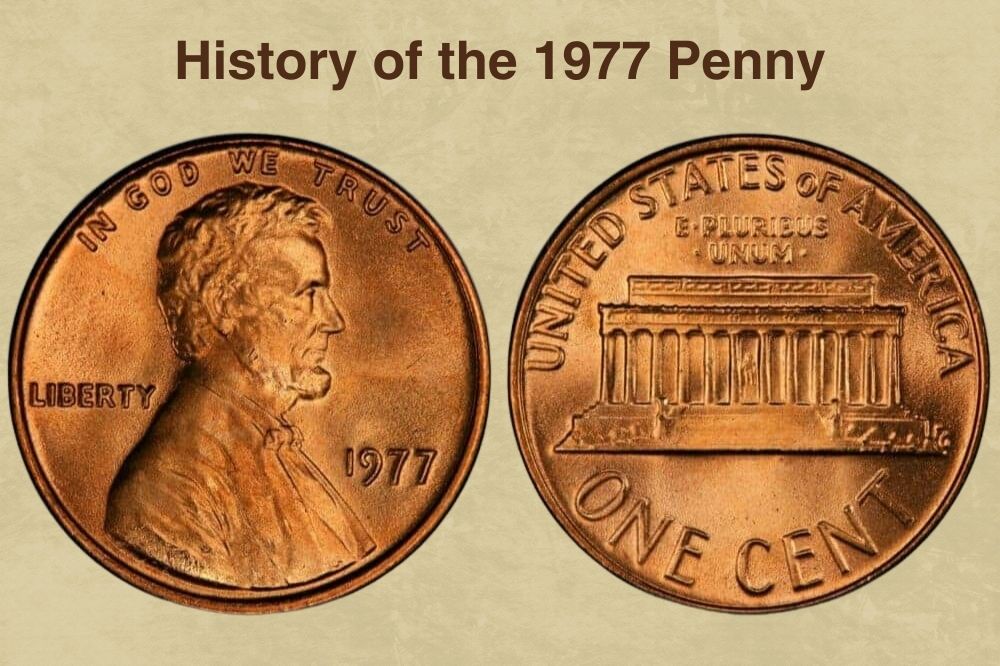
History of the 1977 Penny

The 1977 Lincoln penny belongs to a series that was first released in 1909 to commemorate 100 years of Abraham Lincoln’s birth. US Coin designer and engraver Victor D. Brenner created both the obverse (heads side) and reverse (tails side) of the original design.

Abraham Lincoln, born in 1809, was the 16th President of the United States. Before becoming President, he was a lawyer who entered politics early in life.

His greatest achievement was issuing the Emancipation Proclamation on January 1, 1863, only three years after being elected President in 1860. It was the first step toward the abolition of slavery in 1865.

Even though he was re-elected in 1864, his second term lasted only a few months before he was assassinated. It was a great loss for the nation, given that this President accomplished so much in such a short time — including establishing the Department of Agriculture, the Secret Service, and a national banking system.

The US administration announced a redesign of the Lincoln cent’s reverse side in 1958. This redesign was organized in honor of Abraham Lincoln’s 150th birthday and lasted until the US Mint again commemorated his 200th birthday in 2009.

The US Mint held a competition for the new reverse design, and assistant coin designer Frank Gasparro’s work won. The new cent featured the Lincoln Memorial monument on the reverse.

Gasparro’s intention was to depict the Memorial with Abraham Lincoln visible between the pillars. That design made this coin the first in American coinage history to feature the same person on both sides — front and back.

The redesigned pennies appeared in circulation in 1959 and remained largely unchanged until 2008. The Lincoln Bicentennial penny appeared in 2009 to honor his 200th birthday, followed by the Shield cent introduced in 2010.

Also Read: Top 100 Rarest Pennies Worth Money (1787 – Present)


The 1977 Penny in Economic Context

The late 1970s were a turbulent time for American coinage. By 1977, copper prices had risen so sharply that the metal content of a penny was approaching its face value of one cent.

This economic pressure would ultimately force the US Mint to switch to a zinc core with copper plating in 1982 — making 1977 pennies among the last generation of solid copper cents. That fact alone gives them historical significance beyond their collector value.


Is Your 1977 Penny Rare?

10

1977 No Mint Mark Penny (RD)

Common
Ranked 991 in Lincoln Cent (Modern)
10

1977 D Penny (RD)

Common
Ranked 971 in Lincoln Cent (Modern)
10

1977 S Proof DCAM Penny

Common
Ranked 1002 in Lincoln Cent (Modern)

For collectors seeking to assess the complete rarity profile and current market position of their 1977 penny, our Coin Value Checker App provides instant rarity ranking analysis alongside comprehensive grading evaluation tools.


Key Features of the 1977 Penny

The US Mint produced a very high number of 1977 Lincoln pennies, making them common in general, but some examples can be very valuable. Despite their lower average prices, even lower-graded pieces are in demand among collectors. They are considered ideal coins to start a collection with.

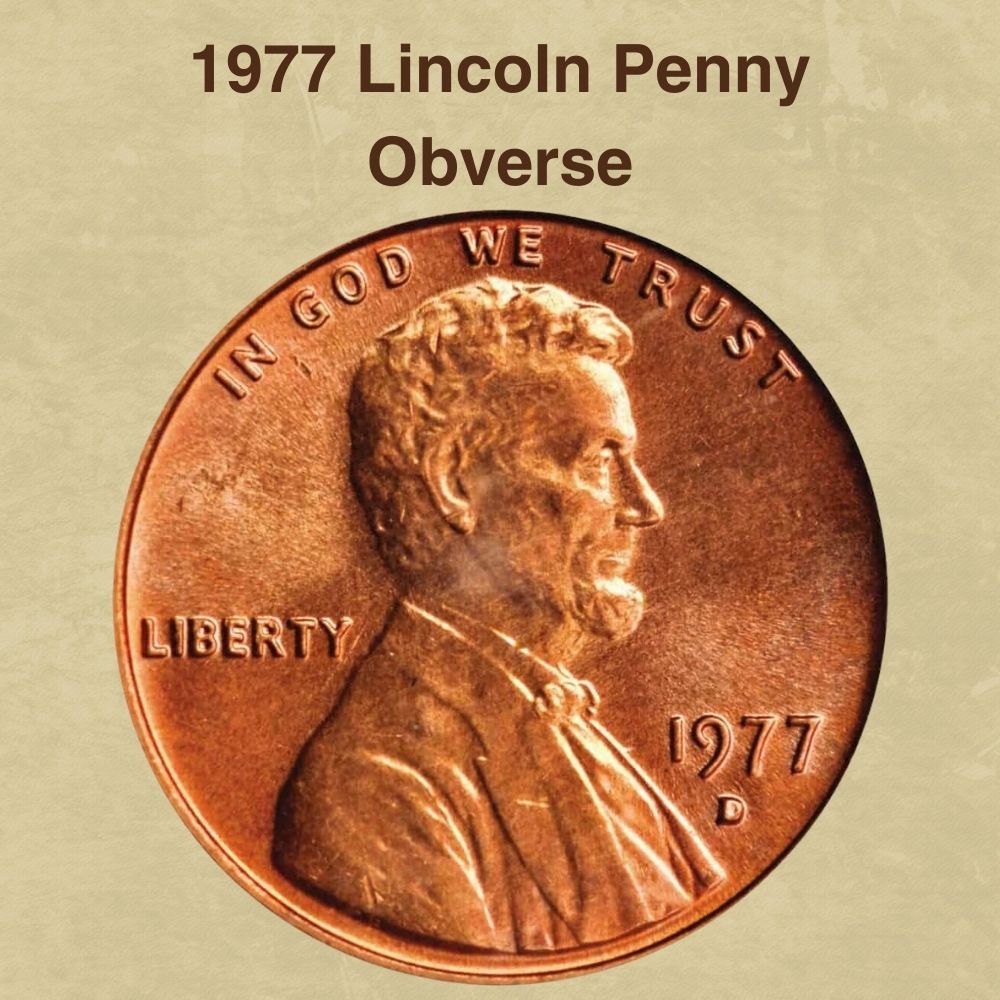
The Obverse of the 1977 Penny

The Obverse of the 1977 Penny

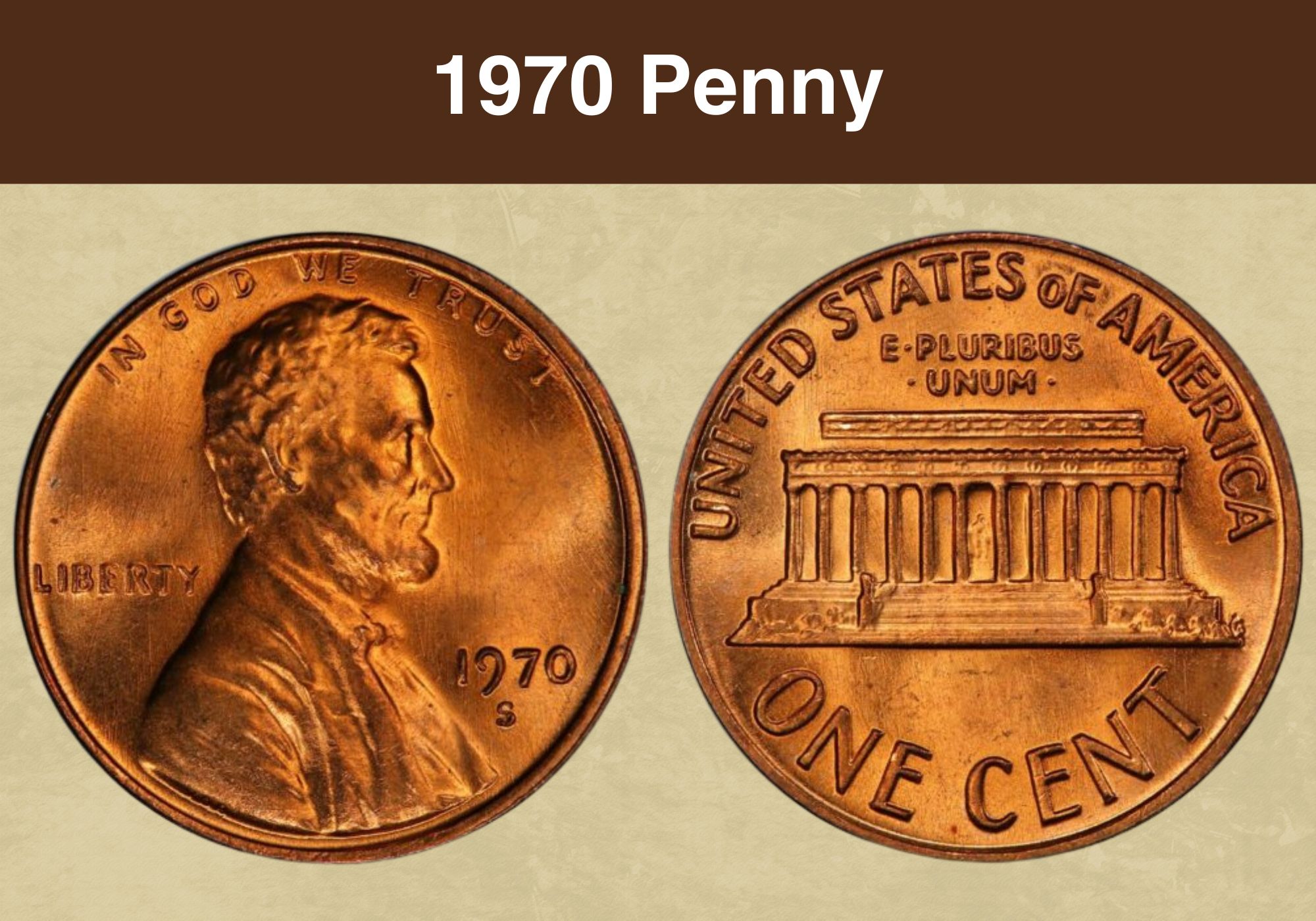
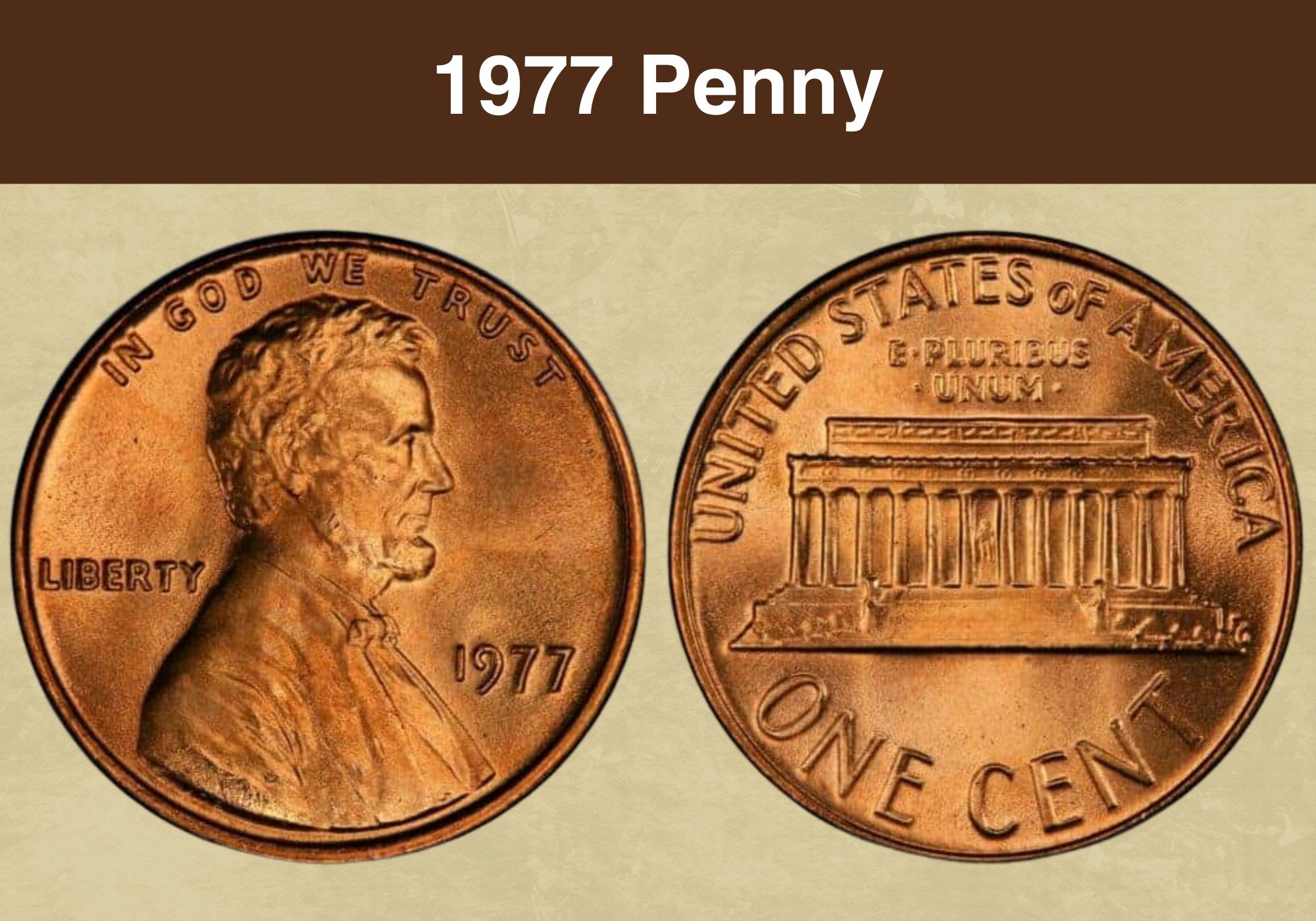
Victor D. Brenner designed the obverse side of this coin back in 1909. You can see Abraham Lincoln’s bust profile facing left in the center, with IN GOD WE TRUST inscribed above.

The word LIBERTY is on the left side behind Lincoln’s back, while the production year is struck in front of his chest. You can notice the mint mark below the year if there is one. This side also includes the designer’s initials (VDB) between the rim and Lincoln’s shoulder.

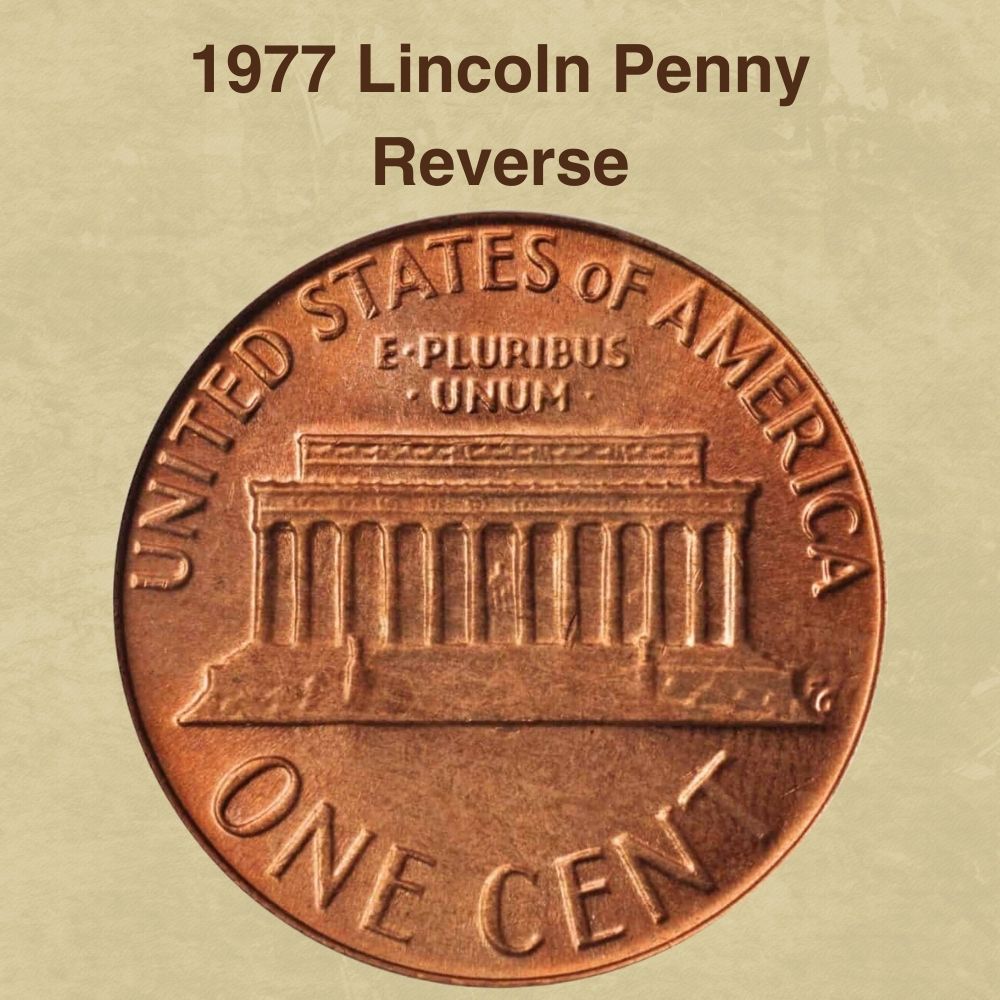
The Reverse of the 1977 Penny

The Reverse of the 1977 Penny

The contemporary look of this coin’s reverse appeared after Frank Gasparro redesigned it to commemorate 150 years of Lincoln’s birth. The unique feature that makes this coin stand out from traditional American coinage is Lincoln’s sculpture placed inside the Memorial building on the coin’s reverse.

The E PLURIBUS UNUM phrase is centered just above the Memorial, while UNITED STATES OF AMERICA runs along the upper edge. The wording ONE CENT appears below the Memorial. Gasparro’s initials (FG) are placed on the right side of the Memorial.

Other Features of the 1977 Penny

The 1977 Lincoln cent is made of a copper alloy — 95% copper and 5% zinc (with trace amounts of tin). The high copper content determines its color, which can be red (RD), brown (BN), or an in-between combination called red-brown (RB).

The penny is a round coin 0.7480 inches (19 mm) in diameter and 0.0598 inches (1.52 mm) thick. It has a plain edge and weighs 0.353 ounces (3.11 grams).

Also Read: 100 Most Valuable Wheat Pennies Worth Money (1909 to 1958)


1977 Penny Mintage & Survival Data

1977 Penny Mintage & Survival Chart

Mintage Comparison

Survival Distribution

TypeMintageSurvivalSurvival Rate
No Mint4,469,930,000893,986,00020%
D4,194,062,300838,812,46020%
S PR DCAM3,251,1522,625,30580.75%

The 1977 Penny Mintage & Survival Chart presents a fascinating study in circulation economics and collector preservation patterns.

The massive production volumes from Philadelphia and Denver mints — each exceeding four billion pieces — demonstrate the enormous scale of penny manufacturing during this era. Philadelphia produced 4,469,930,000 cents, while Denver struck 4,149,062,300, making these among the highest-mintage years in Lincoln cent history.

However, the stark contrast in survival rates tells a compelling story. Circulation strikes from both mints show survival rates of around twenty percent, reflecting the natural loss of heavily-used pocket change over nearly five decades. The San Francisco proof coins exhibit dramatically different characteristics — despite a mintage of just 3,251,152, those collector-focused pieces achieved survival rates exceeding eighty percent, because collectors preserved them intentionally.

This survival data pattern mirrors broader trends across American coinage series, where proof and special mint issues consistently outperform their circulation counterparts in long-term preservation.

CoinVaueChecker App 10

Also Read: 100 Most Valuable Indian Head Penny Coins Worth Money (1859 – 1909)


The Easy Way to Know Your 1977 Penny Value

Accurately valuing 1977 pennies requires systematic evaluation of multiple critical factors. First, identify the mint mark — Philadelphia (no mark), Denver (D), or San Francisco proof (S) — as origin significantly impacts value.

Next, assess color designation. Red (RD) specimens preserving original copper brilliance can command over $7,000 in top grades. Red-Brown (RB) examples showing partial oxidation command dramatically less — often under $100 even in high grades. Brown (BN) coins, which have fully toned over time, fetch only modest premiums. These three color designations are assigned by professional grading services like PCGS (Professional Coin Grading Service) and NGC (Numismatic Guaranty Corporation).

Grade condition is equally crucial. The scarcity of MS-67 and higher survivors creates dramatic price premiums. Additionally, inspect for error varieties like doubled dies, repunched mint marks (RPMs), BIE errors, or off-center strikes that can substantially increase value.

The Coin Value Checker App eliminates guesswork through instant photo analysis — providing precise variety identification, professional-grade condition assessment, and current market valuations in seconds.

Coin Value Checker APP Screenshoot


1977 Penny Value Guides

The 1977 penny collection encompasses both regular circulation strikes and specialized varieties that appeal to different collector segments.

While the Philadelphia and Denver mints produced billions of standard pennies for everyday use, the San Francisco facility created limited proof coins exclusively for collectors, featuring mirror-like surfaces and enhanced details. Error varieties — including doubled dies and striking anomalies — represent the most sought-after specimens in this series.

Each type offers unique characteristics and value propositions, from affordable circulated examples perfect for beginning collectors, to rare error coins that command premium prices among advanced numismatists.

Also Read: Value Of Old Pennies By Year (1959-Present)


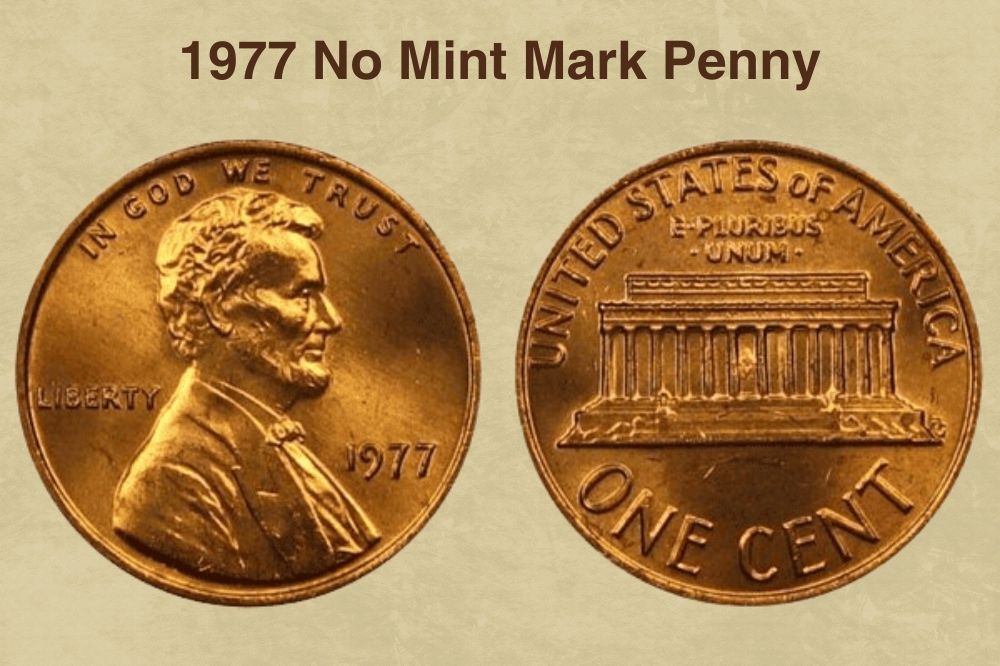
1977 No Mint Mark Penny Value

1977 No Mint Mark Penny Value

The 1977 No Mint Mark penny represents a fascinating chapter in American numismatic history. Struck at the Philadelphia Mint, these coins carry no mint mark — not as an error, but as the continuation of a tradition dating back to 1793. Philadelphia did not add a “P” mint mark to Lincoln cents until 2017.

The coin features Victor David Brenner’s timeless Lincoln portrait paired with the Lincoln Memorial reverse — a design that perfectly captured the dignity and permanence of American coinage. With a mintage of 4,469,930,000, this is the most common of the three 1977 varieties.

The 1977 No Mint Mark penny’s solid copper composition creates a fascinating value hierarchy based entirely on surface preservation. Red (RD) specimens that maintain their original brilliant luster can reach nearly $3,000 in MS-68 grade — a truly extraordinary premium for a coin with billions minted. Red-Brown (RB) examples showing partial oxidation trade for dramatically less, and Brown (BN) coins command only modest premiums.

This extreme disparity — where color alone can mean the difference between a $50 and $3,000 valuation — reflects how much collectors prize coins that have defied nearly five decades of natural tarnishing. Circulated examples in average condition are typically worth about $0.10 to $0.25.

1977 No Mint Mark Penny Price/Grade Chart

Price by 1-70 Grade (Latest Auction Records Included)

Updated: 2026-05-12 02:08:57

Auction records consistently demonstrate fierce competition for high-grade red specimens, with bidding wars erupting whenever MS-67 or better examples appear on the market.

Date PlatformPrice Grade

Market activity data reveals sustained collector engagement with notable spikes in recent months.

Market Activity: 1977 No Mint Mark Penny


1977-D Penny Value

1977-D Penny Value

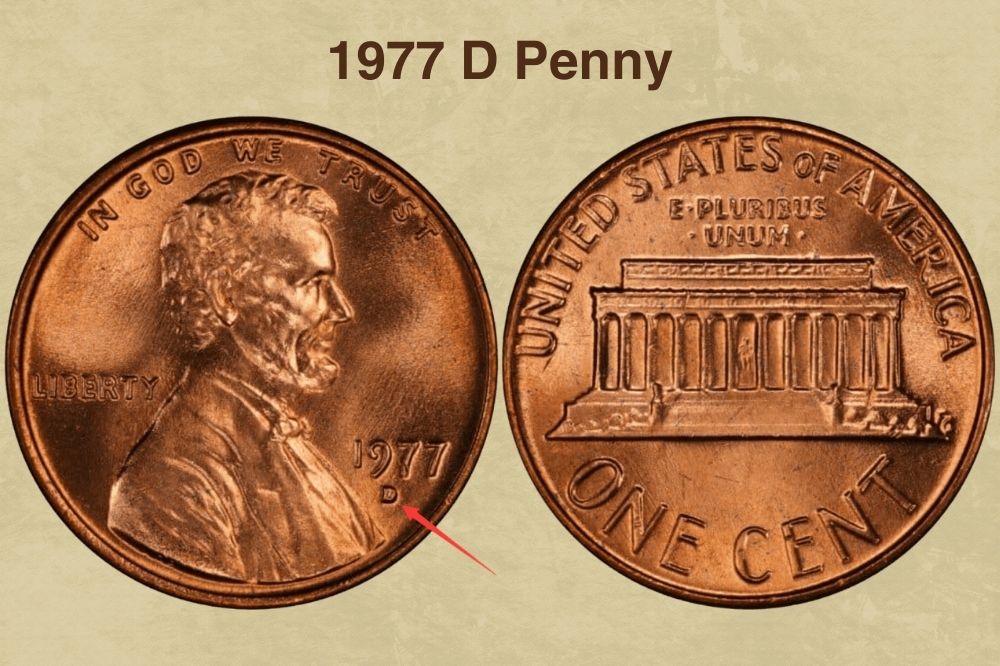
The 1977-D penny represents Denver’s production during the final years of solid copper coinage before the 1982 transition to zinc-core construction. It features the 95% copper and 5% zinc alloy that had been the standard for American pennies for decades.

By 1977, copper prices had soared to the point where the penny’s metal value nearly matched its one-cent face value — setting the stage for the composition change that came five years later. That economic backstory gives Denver cents from this era an extra layer of historical significance for collectors.

The value hierarchy for 1977-D pennies demonstrates the extreme importance of color preservation in copper coinage.

Red (RD) specimens maintaining their original mint brilliance can soar to over $6,000 in MS-68 grade — an extraordinary premium for a coin with over four billion minted. Red-Brown (RB) examples showing partial oxidation command dramatically lower values, typically under $100 even in high grades, while Brown (BN) coins fetch only modest premiums above face value.

The most famous sale for this variety was a 1977-D MS-68 RD cent that sold for $7,050 at Heritage Auctions on April 2, 2016 — described at the time as “flawlessly preserved” and certified by PCGS as the sole finest known example in that grade. No other 1977-D has since matched that price.

1977-D Penny Price/Grade Chart

Price by 1-70 Grade (Latest Auction Records Included)

Updated: 2026-05-12 02:08:57

Auction records reveal this coin’s steady progression from overlooked change to recognized collectible with proven market performance.

Date PlatformPrice Grade

Market activity demonstrates growing collector recognition of this issue’s unique characteristics and investment potential.

Market Activity: 1977-D Penny


1977-S Proof DCAM Penny Value

1977-S Proof DCAM Penny Value

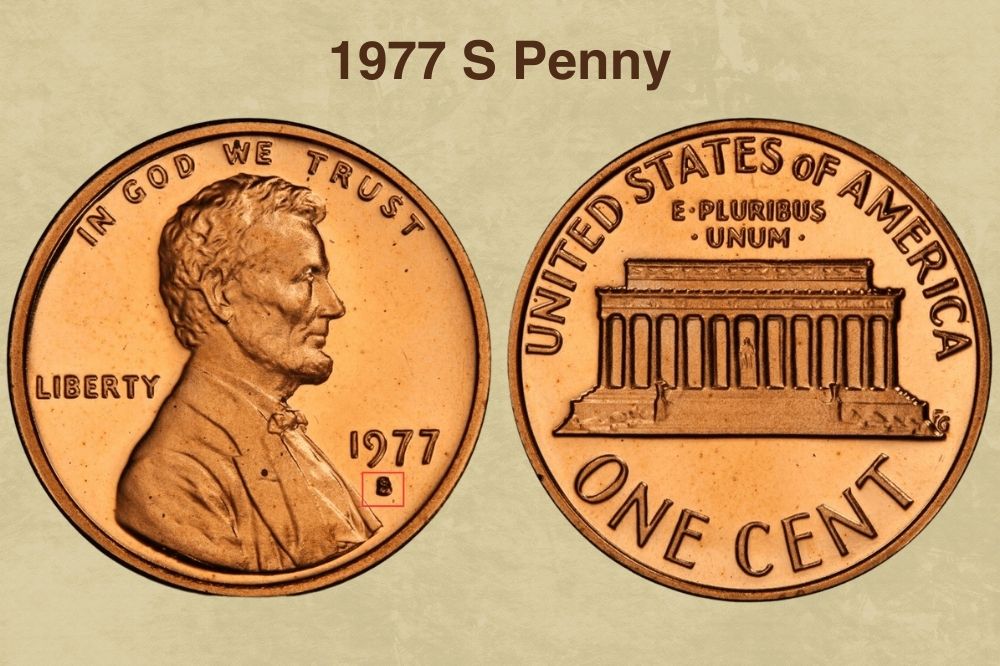
The 1977-S Proof DCAM penny represents San Francisco’s exclusive collector coin production during the late 1970s. These proof specimens feature Deep Cameo (DCAM) contrast — which means the design elements (like Lincoln’s portrait) appear frosted and white, while the background fields are deeply mirrored and reflective.

The Deep Cameo designation requires exceptional die preparation and striking techniques that produce maximum contrast between design elements and fields.

Struck in San Francisco and designated as a Proof (PR) strike, this coin is made of 95% copper and 5% zinc. The total mintage was 3,251,152 pieces. Each proof penny received multiple strikes from specially polished dies on carefully prepared planchets, resulting in sharp details and brilliant surfaces.

The solid copper composition of these 1977 proofs would soon become historic — just five years later, the Mint transitioned to zinc-core construction, ending an era of all-copper pennies.

Only 59 of the 5,534 surviving 1977-S DCAM specimens are in the PR-70 grade (the highest possible grade on a 70-point scale), making perfect examples extremely scarce. Perfect PR-70 DCAM specimens can reach over $1,600, with the auction record of $7,050 achieved for a PR-70 DCAM specimen on July 11, 2013 at Heritage Auctions.

1977-S Proof DCAM Penny Price/Grade Chart

Price by 1-70 Grade (Latest Auction Records Included)

Updated: 2026-05-12 02:08:58

Auction records reveal that top-grade examples with perfect Deep Cameo contrast achieve prices that rival or exceed many rare date circulation strikes.

Date PlatformPrice Grade

Market activity shows pronounced seasonal patterns with notable spikes during major collecting seasons, reflecting steady demand from registry set builders and proof specialists.

Market Activity: 1977-S Proof DCAM Penny

Also Read: Top 100 Most Valuable Modern Pennies Worth Money (1959 – Present)


Rare 1977 Penny Error List

Errors in the penny series are common and can create a few desirable and collectible varieties. Such coins often reach significantly higher prices than regular ones. Here are the most collectible 1977 error coins, including a stunning 2025 discovery that set a new record.

1. Aluminum Planchet Error (Unique — The Holy Grail of 1977 Errors)

This is the most extraordinary 1977 penny error known to exist — a one-of-a-kind cent struck on an aluminum planchet. The coin weighs only 1.04 grams, compared to the standard 3.11 grams for a normal copper cent, and was certified MS-60 by NGC.

Experts believe this coin was struck on a leftover aluminum planchet from the US Mint’s 1974-1975 experimental aluminum cent program. During that program, the Mint struck approximately 1.5 million aluminum test cents — but they were never released for circulation and nearly all were recalled. A stray planchet apparently lingered in a production hopper for years before being struck with 1977-dated dies.

This unique specimen sold for $50,400 at Heritage Auctions’ ANA US Coins Signature Auction in August 2025 — making it the highest recorded price for any 1977 cent error by a wide margin.

2. Double-Punched Mint Mark (RPM — Repunched Mint Mark)

Minting in 1977 still involved manual mint mark punching, which left room for mistakes. The mint mark sometimes ended up in the wrong place or was struck at a slight angle. Mint employees would re-punch the mark to correct it, leaving an error coin with a doubled or offset “D” under the date.

CONECA (Combined Organizations of Numismatic Error Collectors of America) has documented RPM varieties for the 1977-D. These pennies are collectible and typically priced between $3 and $15.

3. Doubled Die Obverse (DDO)

A doubled die (DDO) occurs when the die used to strike coins receives multiple impressions at slightly different angles during the manufacturing process. The result is a noticeable doubling effect on the front of the coin — you may see extra lines or shadowing on the date “1977,” in the word “LIBERTY,” or in “IN GOD WE TRUST.”

Variety Vista and CONECA both list a DDO for the 1977 Philadelphia issue, noting it is the only confirmed Doubled Die Obverse recognized by CONECA for any 1977 mint that year. Diagnostics on 1977 DDO pennies are minor compared to famous varieties like the 1955 or 1972. Minor examples are worth $25 to $100 depending on the strength of doubling; stronger examples can command more.

CoinVaueChecker App 10

4. BIE Error

You can recognize this error by a raised line between the letters B and E in the word LIBERTY, resembling the capital letter “I.” This BIE error is distinctive to Lincoln cents, including those from 1977, and results from a small vertical die crack. These pieces typically cost $5 to $10.

5. Lincoln Cent Struck on a Dime Planchet

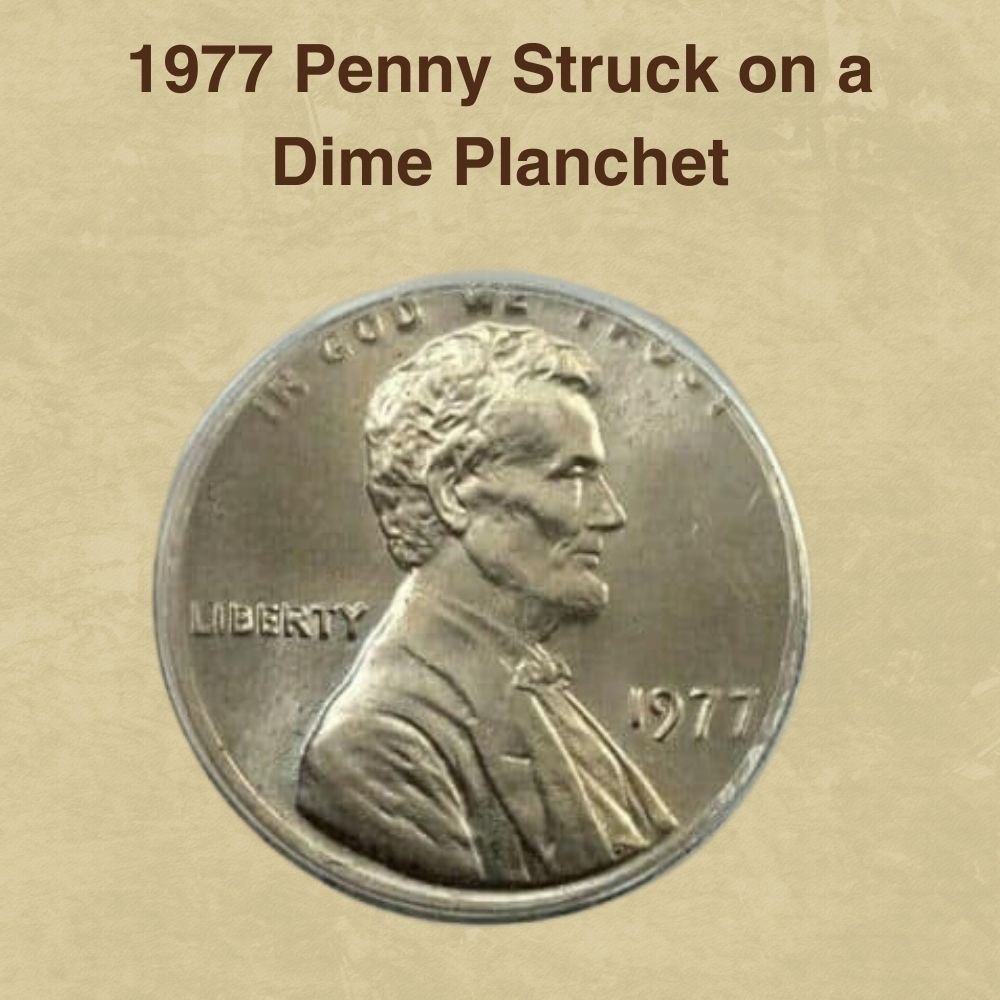
This error occurred when a cent die struck a planchet intended for a Roosevelt Dime. The dime planchet is smaller (17.9 mm vs. 19 mm) and made of copper-nickel clad metal rather than bronze — so the resulting coin appears silver-colored, and the cent’s design is incomplete because the die was larger than the available planchet. An NGC MS-65 example weighing 2.3 grams was offered for approximately $768.

6. Lincoln Cent Struck Over a Roosevelt Dime

This double-denomination error has both Presidents’ images on the obverse, but Roosevelt’s bust appears upside-down. The 1977 year appears to have been struck twice at an angle, leaving both images and lettering in a distorted, overlapping position.

7. Off-Center Strike

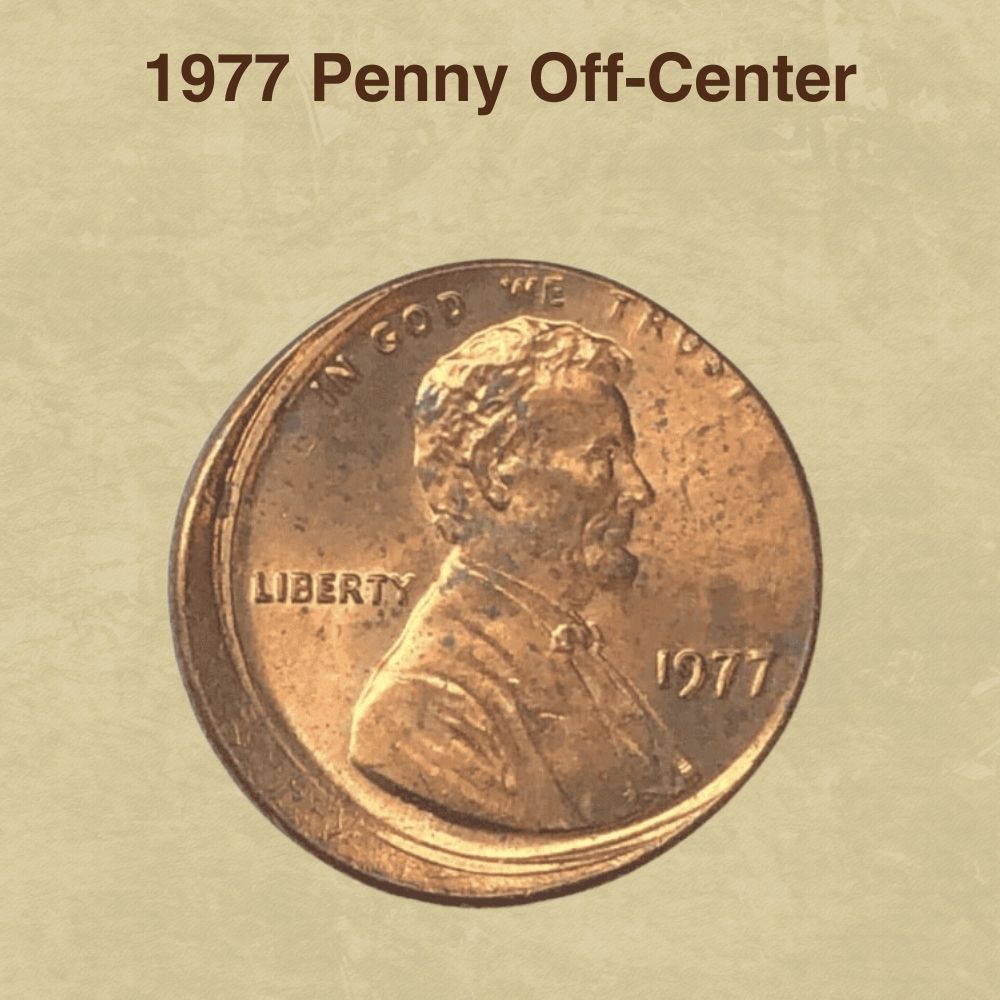
This error happened when the planchet was not centered under the dies during striking. The result is a penny with one edge side wider than the other, and depending on how far off-center the strike is, parts of the image or lettering may be missing. Off-center pennies missing about half the design but still showing a complete date can be worth $100 or more — the more dramatic the offset, the higher the value.

8. Die Cud

When a die develops a large crack that breaks off a chunk of the die face entirely, the resulting coins show a large raised blob of flat metal attached to the rim. These are called die cuds and are among the rarer types of die breaks. A 1977 die cud can be worth $150 or more depending on its size and placement.

Also Read: 42 Rare Penny Errors List with Pictures (By Year)


How to Store and Preserve Your 1977 Penny

Copper is one of the most reactive metals used in coinage, and preserving a 1977 penny’s original red color is the single biggest factor in maximizing its value. Even a coin that was near-perfect at the time of minting can lose most of its premium simply through improper storage.

The most important rule is to never touch the coin’s surfaces with bare fingers — skin oils cause immediate toning and chemical reactions on copper. Always handle coins by their edges.

For valuable uncirculated examples, airtight capsules offer the best protection by sealing out air and moisture. Avoid PVC-based flips or soft plastic holders, as the chemicals in PVC react with copper over time and cause green, sticky residue that can permanently damage the coin’s surfaces. Climate-controlled storage away from heat, light, and humidity is essential for long-term preservation.


Where to Sell Your 1977 Penny

Whether you choose online marketplaces, local coin dealers, or professional auction houses, the key to maximizing your 1977 penny’s value lies in proper authentication, accurate grading, and selecting the right venue that matches your coin’s rarity and condition level.

For coins potentially worth $500 or more, submitting to PCGS or NGC for professional certification before selling is strongly recommended. Major Heritage Auctions and Stack’s Bowers auctions consistently achieve the highest prices for top-grade 1977 Lincoln cents.

Check out now: Best Places To Sell Coins Online (Pros & Cons)


1977 Penny Market Trend

Market Interest Trend Chart - 1977 Penny

*Market Trend Chart showing the number of people paying attention to this coin.


FAQ About the 1977 Penny Value

1. What makes a 1977 Lincoln Penny rare?

Most 1977 pennies are common because billions were produced. The real rarity comes from condition — only a tiny number survived nearly five decades without wear, toning, or damage. Just two coins are known in MS-68 RD (the highest confirmed grade), and only 59 of the 5,534 surviving 1977-S DCAM proof coins are graded PR-70, making perfect specimens genuinely scarce.

2. Which 1977 Lincoln Penny won an auction record?

  • The 1977 aluminum planchet error (NGC MS-60) sold for $50,400 at Heritage Auctions in August 2025 — the highest known price for any 1977 cent
  • The 1977-S PR-70 DCAM cent sold for $7,050 on July 11, 2013 at Heritage Auctions
  • The 1977-D MS-68 RD cent sold for $7,050 on April 2, 2016 at Heritage Auctions
  • The 1977 MS-66 RD cent sold for $2,645 on July 27, 2008
  • The 1977 MS-62 BN cent sold for $475 on April 11, 2018
  • The 1977-S PR-69 RD cent sold for $125 on April 24, 2021
  • The 1977-D MS-65 BN cent sold for $72 on March 18, 2021
  • The 1977-D MS-66 RB cent sold for $55 on August 1, 2021
  • The 1977-S DCAM Joe Orlando Signature cent sold for $40 on January 12, 2022
  • The 1977 MS-65 RB cent sold for $20 on March 17, 2018

3. How much is a 1977 No Mint Mark Memorial Penny worth?

Circulated 1977 Philadelphia pennies are typically worth about $0.10 to $0.25, mostly for their copper content. Uncirculated coins in MS-65 Red condition can fetch $5 to $15, while the finest MS-68 Red examples are valued at $2,000 or more. The average sale across all grades is approximately $2.61.

4. What is the color designation on a 1977 penny, and why does it matter so much?

Color designation refers to how much original copper luster a penny has retained. Red (RD) means the coin looks nearly as bright as the day it was minted — this commands the highest price. Red-Brown (RB) means the coin has partially toned, showing a mix of original luster and darker areas. Brown (BN) means the coin has fully toned to a brown color. A 1977-D MS-65 Red might sell for $10–$30, while the same coin in Brown might only bring $2–$5.

5. How do I tell if my 1977 penny has a Doubled Die error?

Use a 5x to 10x magnifying loupe and look closely at the date “1977,” the word “LIBERTY,” and the motto “IN GOD WE TRUST.” On a genuine Doubled Die Obverse (DDO), you will see crisp, separate secondary images of the letters — not a mushy or shelf-like doubling. A true doubled die has well-defined, rounded separation. CONECA lists one confirmed DDO variety for the 1977 Philadelphia issue. Minor examples are worth $25 to $100.

6. What is the most valuable 1977 penny error ever sold?

The most valuable 1977 penny ever sold is a unique example struck on an aluminum planchet — not the normal copper alloy. Certified MS-60 by NGC and linked to the US Mint’s experimental 1974-1975 aluminum cent program, this one-of-a-kind coin sold for $50,400 at Heritage Auctions in August 2025. It weighs only 1.04 grams, compared to 3.11 grams for a normal copper cent.

7. What’s the difference between a 1977 proof penny and a regular penny?

A proof penny (the 1977-S) was made exclusively for collectors at the San Francisco Mint using specially polished dies and carefully prepared planchets. Each coin was struck multiple times at high pressure, creating razor-sharp details and mirror-like background fields. Regular circulation pennies from Philadelphia and Denver were struck once quickly on standard planchets and intended for everyday use. Proof coins are not made for spending — they come in collector sets and should never be handled with bare hands.

8. Is a 1977 penny from Denver worth more than one from Philadelphia?

In top grades, yes. The 1977-D is actually rarer in MS-68 condition than the Philadelphia issue — only one 1977-D MS-68 RD is known to PCGS, while two Philadelphia MS-68 coins are documented. In lower and mid grades, both are worth similar amounts. The Denver coin carries a small “D” mint mark below the date on the obverse; the Philadelphia coin has no mint mark in that location.

9. Should I clean my 1977 penny to make it look better?

Never clean a coin if you want to preserve or increase its value. Cleaning removes the original surface of the coin and leaves microscopic scratches that grading services can detect immediately. A cleaned coin will be labeled as “Details — Cleaned” and will sell for a fraction of what an uncleaned example would bring. Even a dark brown 1977 penny in its original, unaltered state is worth far more than a shiny cleaned one.

10. When did the US Mint stop making solid copper pennies, and how does that affect 1977 penny value?

The US Mint switched from solid copper pennies to zinc-core, copper-plated pennies in 1982. The 1977 cent — made of 95% copper — was part of the last generation of genuine copper cents. This historical significance adds to collector interest, since 1977 pennies represent a composition that no longer exists in circulating US coinage. The copper melt value of a 1977 penny is currently around $0.03, which itself exceeds the coin’s face value.

You May Also Like