Coin Value Contents Table
Do you own a Lincoln penny dated 1987? You are probably curious how much such an old coin is worth.
If you are a Lincoln fan, this coin might be a nice addition to your collection.
But, the truth is the 1987 penny value is not all that high. Considering the long U.S. coinage history, this coin is fairly modern and is therefore not very expensive.
If you are a new collector, you can add this coin to your collection without breaking the bank. If you are a seller, you may not earn much from your 1987 penny.
That said, some rare errors and uncirculated 1987 Lincoln memorial pennies may be worth slightly more than their face value. Depending on its condition, your 1987 penny might be worth hundreds or thousands of dollars.
In this article, you will learn everything you need to know about the 1987 penny, including its history, unique attributes and errors worth money. You will also discover grading tips to estimate how much your Lincoln penny might be worth.
So, let’s’ jump in and find out: Is a 1987 penny worth anything?
1987 Penny Value Chart |
||||
| Mint Mark | Good | Fine | Extremely Fine | Uncirculated |
| 1987 No-Mint Mark Penny Value | $0.05 | $0.05 | $0.05 | $7.50 |
| 1987- D Penny Value | $0.05 | $0.05 | $0.05 | $7.50 |
| 1987-S Proof Penny Value | – | – | – | $15 |
History of the 1987 Penny
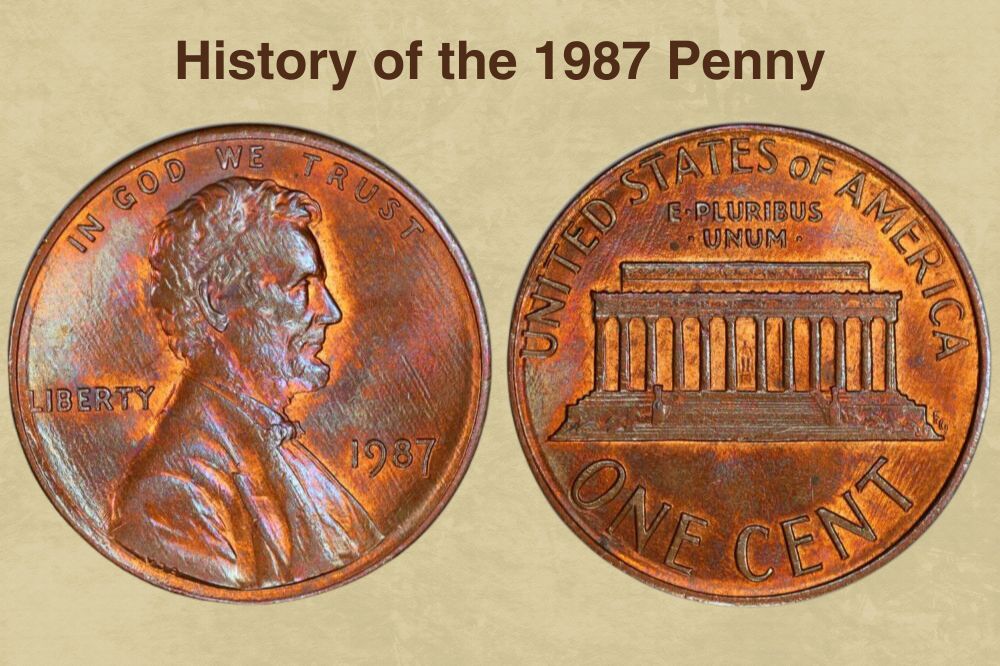
The United States Mint has struck the Lincoln penny, also known as the Lincoln cent, since 1909. From 1909 to 1958, these coins were known as wheat pennies or Wheaties as they featured two wheat stalks on the reverse.
From 1959, the Lincoln Memorial replaced the wheat ears, giving these coins a new name, the Lincoln Memorial pennies. The obverse design, featuring Abraham Lincoln’s portrait has remained largely the same over the years but the reverse has undergone several design changes.
As early as 1904, President Theodore Roosevelt had prompted the Mint about redesigning and beautifying the American coins. The Mint obliged and in 1905, it commissioned the renowned sculptor, Augustus Saint-Gaudens to submit new designs for the four American gold coins and the cent.
Saint-Gaudens submitted designs for the gold coins and the Mint adapted two of these designs. But, the sculptor passed away in 1907 before completing designs for the cent. This prompted the Mint to bring in a new sculptor in 1909, Victor David Brenner, to complete the designs for the new proposed coins.
The year 1909 being Abraham Lincoln’s centennial birth anniversary, the Mint required Brenner’s design to depict the late president’s portrait on the reverse. The Lincoln cent became the first widely circulating coin depicting a U.S. president.
After a few changes, the Mint approved Brenner’s design and issued the new pennies in August, 1909 amid great public anticipation.
The new Lincoln pennies were however controversial mainly because of the VDB initials on the reverse at the bottom of the coin. The initials stood for Victor David Brenner, the coin’s designer, but the public felt these letters were too prominent and amounted to free advertising, demanding that they be removed.
The Mint removed the initials a few days after the coins were released but several pennies with the initials had already been placed into circulation. Known as VDB coins, these are some of the scarcest and most valuable Lincoln cents.
The 1959, the wheat pennies were replaced a depiction of the Lincoln Memorial, designed by Frank Gasparro commemorating Lincoln sesquicentennial birth anniversary.
The original coins were first struck in 95% copper. But, in 1982, this composition changed to a pure copper core and a zinc and copper outer clad due to the high copper prices.
Also read: 12 Most Valuable Lincoln Penny Worth Money
Features of the 1987 Penny
Let’s now look at the unique characteristics of the 1987 penny. Familiarizing yourself with these features can help you identify 1987 pennies worth adding to your collection or how much you can expect from your penny.
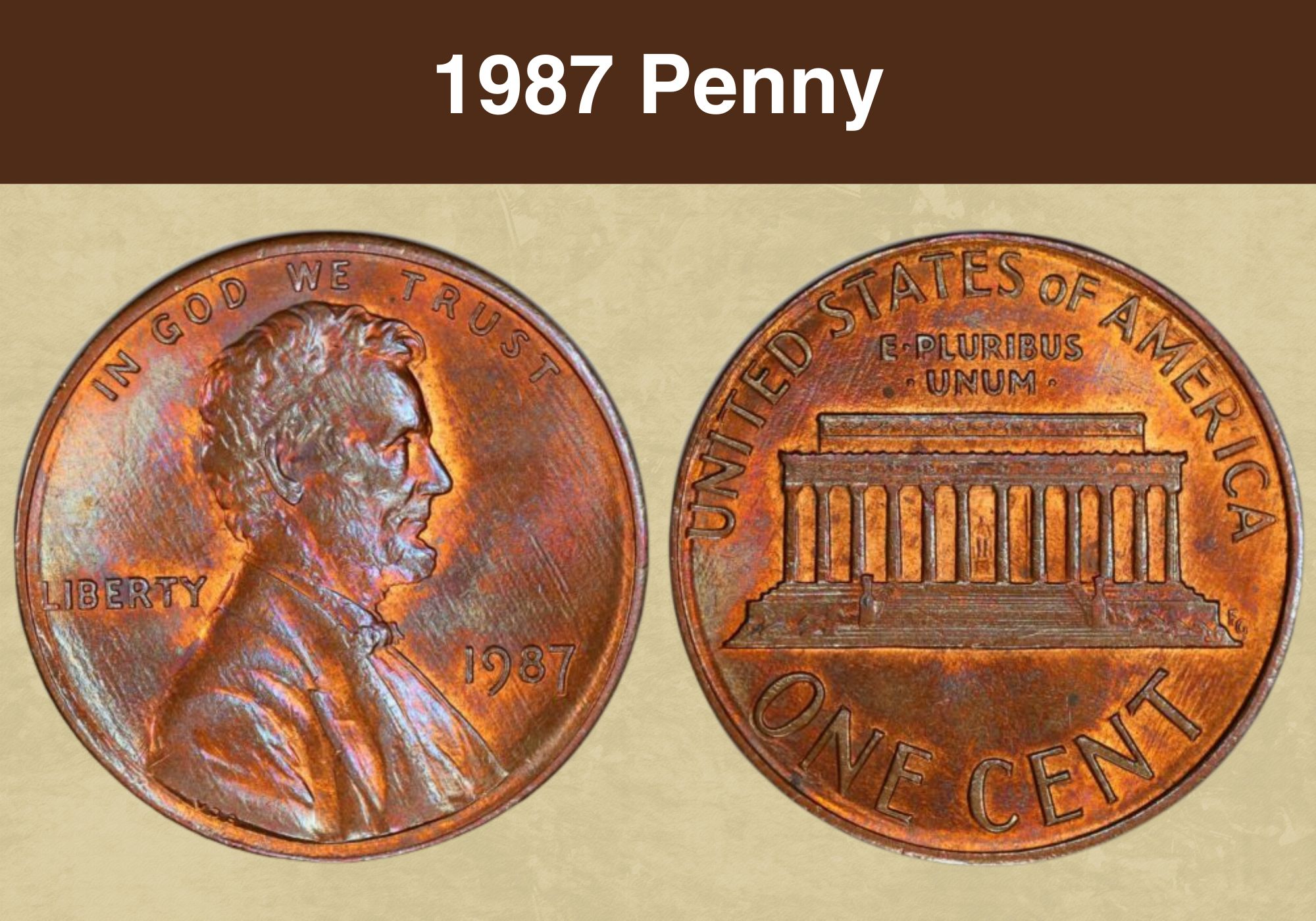
The Obverse of the 1987 Penny
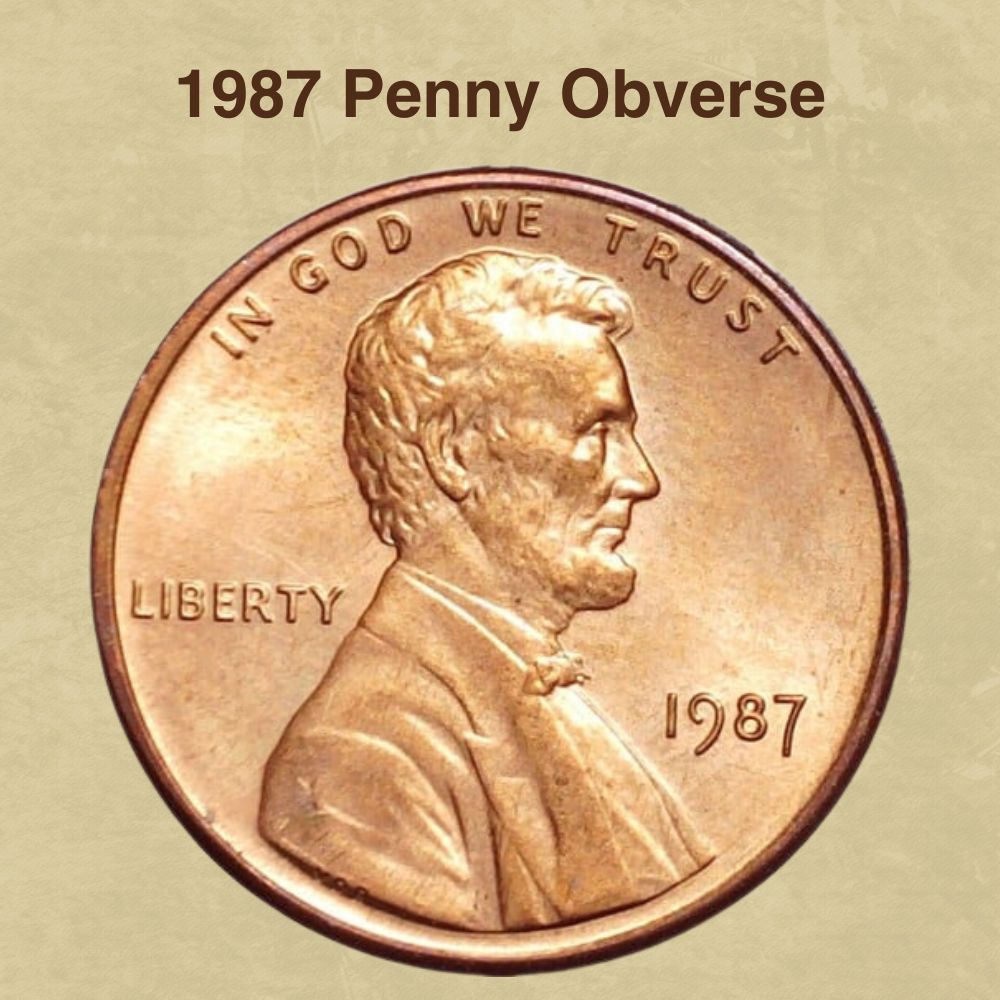
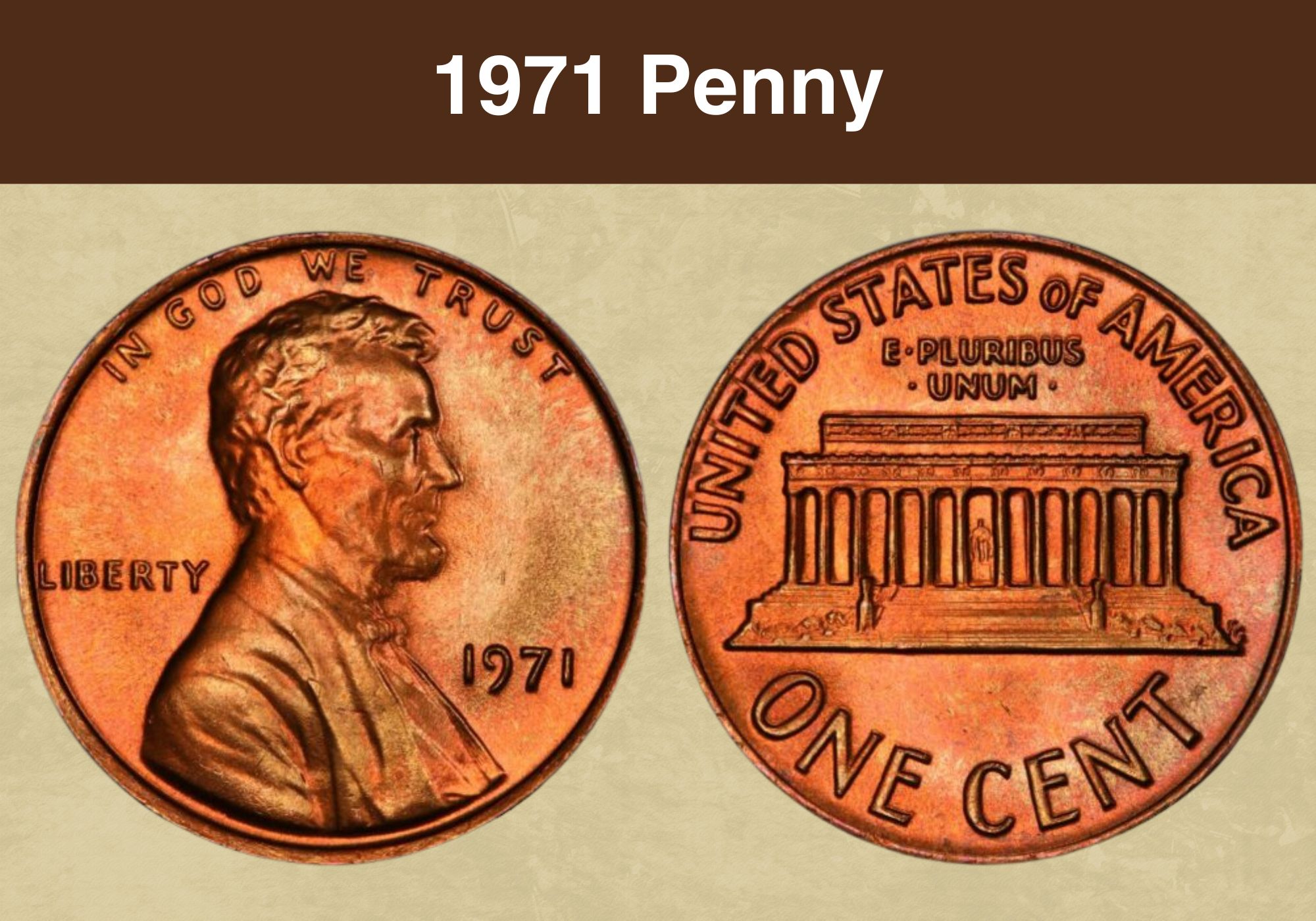
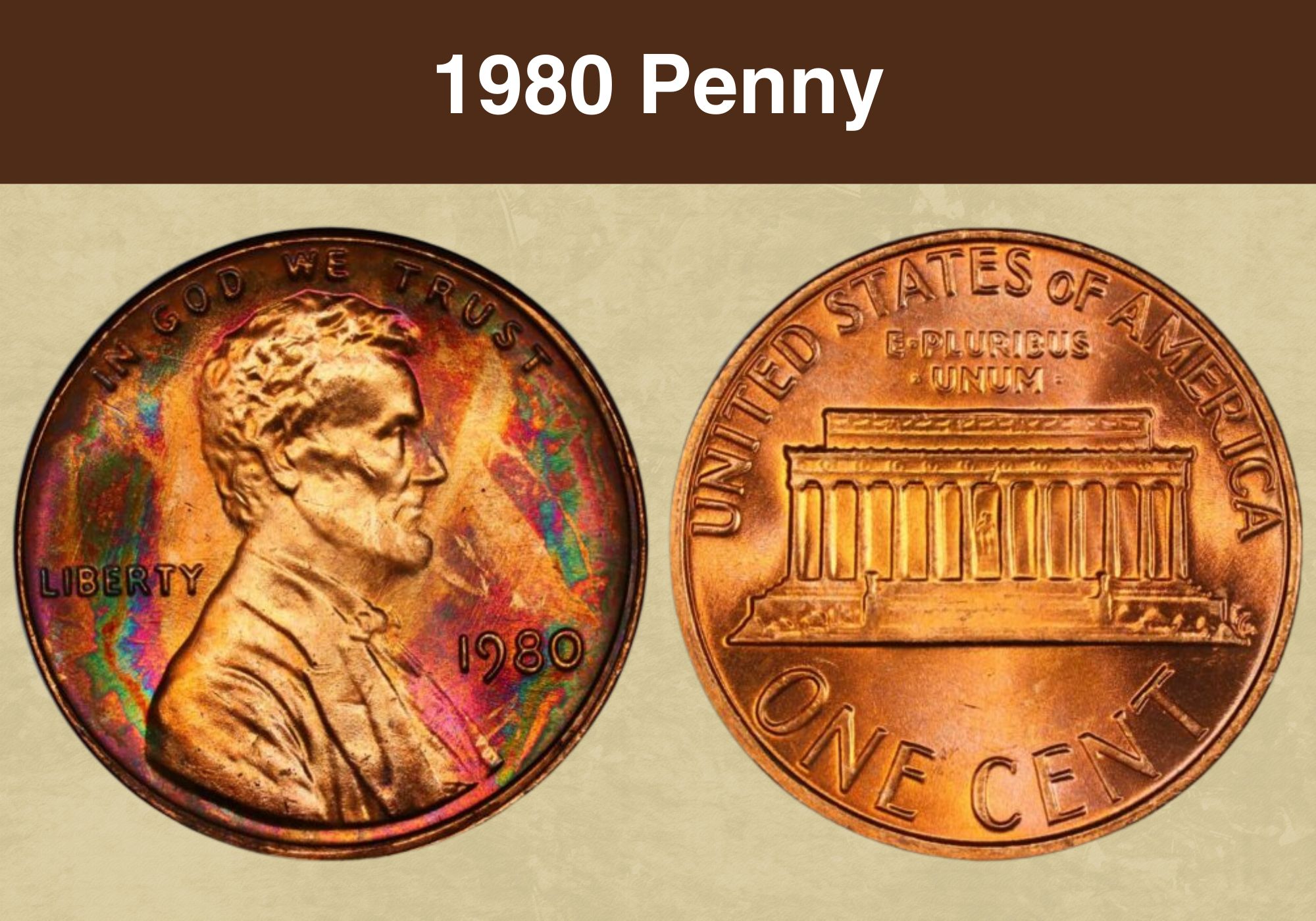
The obverse or heads side of the 1987 penny shows the right-facing portrait of President Abraham Lincoln. The portrait was based on Brenner’s past work such as a plaque he had sculpted and photograph he had taken of the late president.
The country’s motto: IN GOD WE TRUST, is shown at the top along the inner rim.
You will also see the word LIBERTY on the left side while the year date appears on the right in from of Lincoln’s profile.
The Reverse of the 1987 Penny
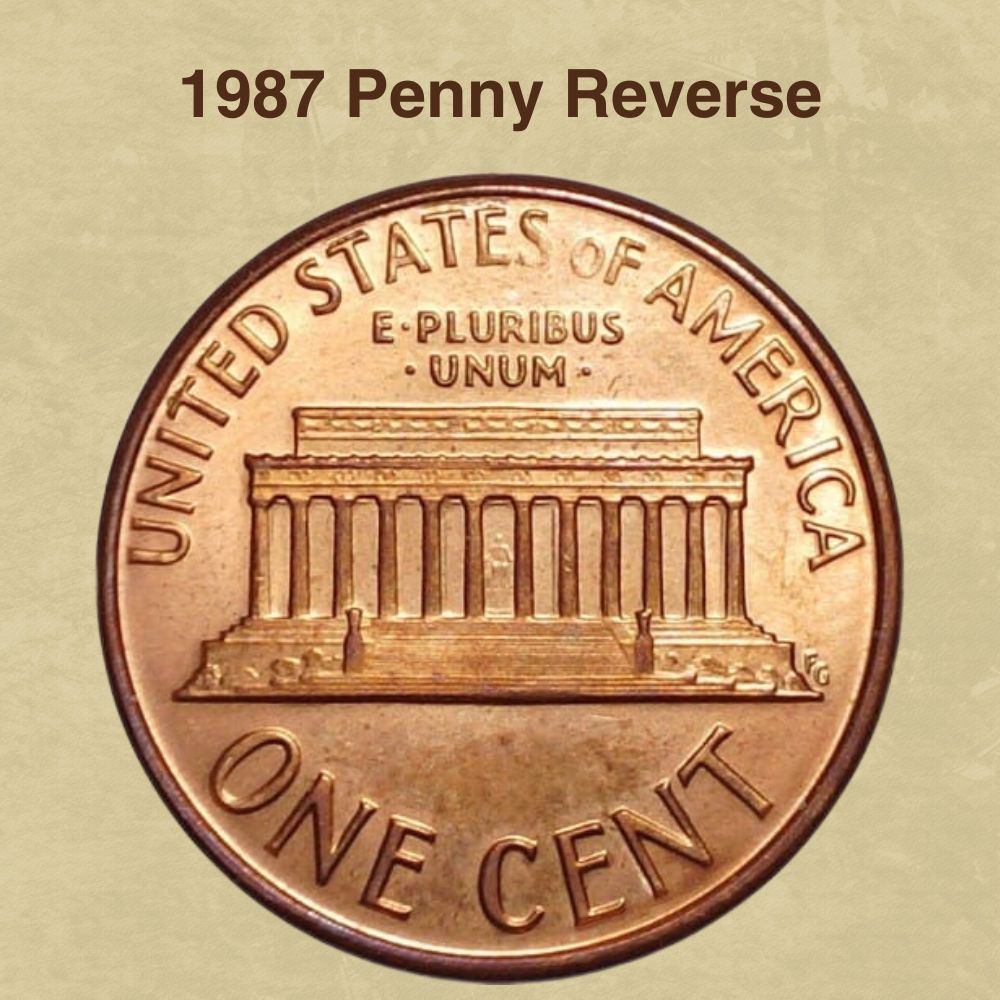
On the reverse or tails side of the 1987 penny, you will see the Lincoln Memorial, which prominently takes center-stage on the coin’s surface.
Upon closer look, you will notice Lincoln’s statute seated inside the Memorial. Frank Gasparro designed the reverse image even though he had never seen the Lincoln Memorial in real life, which is quite impressive.
If you check to the furthest right close to the staircase, you will see the initials FG, representing Frank Gasparro.
The country’s name appears along the top of the coin followed by the motto E PLURIBUS UNUM, which means “Out of many, one.”.
The coin’s denomination, ONE CENT, appears at the bottom along the coin’s inner rim.
Other Features of the 1987 Penny
Aside from having a fairly simple obverse and reverse design, the 1987 penny is a fairly small coin measuring 19.00 millimeters in diameter and weighing only 2.50 grams.
The coin is made of Copper-plated Zinc and has a plain edge.
The mints at Philadelphia, Denver and San Francisco produced Lincoln pennies in 1987. But, only the ones from the Denver facility, which you can identify by the mint mark D on the obverse below the date.
The San Francisco mint struck proofs with no mint marks and as per tradition, the pennies from Philly do not have a mint mark either.
Also read: 13 Most Valuable Wheat Penny Worth Money
1987 Penny Grading Guides
When it comes to collecting the 1987 Lincoln penny, it’s best to focus on uncirculated pieces. Circulated pennies are not only common; they are also worn and worth more or less their face value.
For a coin to be graded as mint state and uncirculated, check for full, unbroken luster on the obverse and reverse. Pay attention to high points such as the top of Lincoln’s hair and the side too, his cheek, beard and shoulder; these points should show no signs of dullness or smoothness.
On the reverse, ensure that the steps of the Lincoln Memorial are fully visible with no signs of wear. The denomination, ONE CENT, is also susceptible to wear; so check that there is no dullness in this area either.
| # | Grade |
|---|---|
| 1 | Basal State-1 |
| 2 | Fair |
| 3 | Very Fair |
| 4, 5, 6 | Good |
| 7, 8, 10 | Very Good |
| 12, 15 | Fine |
| 20, 30 | Very Fine |
| 40 | Extremely Fine |
| 50 | About Uncirculated |
| 60 | Mint State |
| 65 | Mint State |
| 70 | Mint State |
Please check our grading guides to know your coin scale, It’s the necessary step to know the exact value of your coin.
Check out now: How to Grade Lincoln Wheat Penny?
1987 Penny Value Guides
So, how much is a 1987 penny?
The value of your Lincoln Memorial penny will depend on several factors. These include the coin’s condition, color, and rarity. Pennies in above average or mint condition are worth more than circulated examples.
Rare coins such as those with peculiar errors can fetch tens, hundreds or even thousands more than the penny’s face value.
Lastly, color is an important consideration when assessing the value of a Lincoln penny. These coins are graded from brown, red brown to red pennies.
Read pennies are typically in mint, uncirculated state and more desirable. Brown and red-brown Lincoln cents are less expensive as they show more signs of circulation and wear.
There are three varieties of the 1987 penny whose value we will examine below. These are:
- 1987 No-Mint Mark Penny
- 1987-D Penny
- 1987-S Proof
1987 No-Mint Mark Penny Value
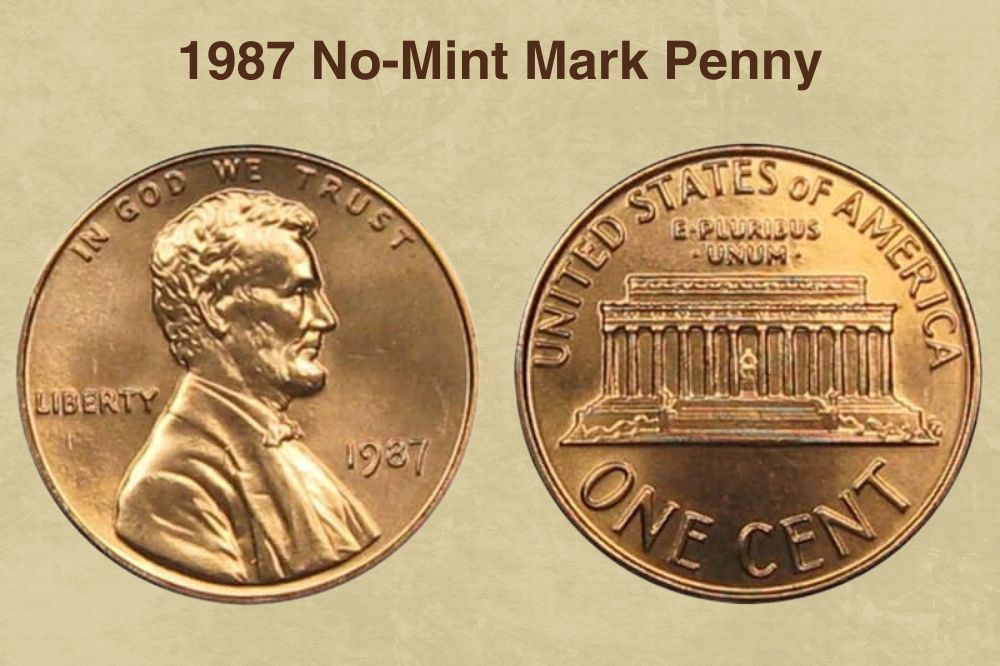
The Philadelphia facility minted a whopping 4,682,466,931. We are talking about more than four billion Lincoln Memorial pennies—that’s a lot of coins for sure!
With such a high mintage, you can expect the value of these coins to be quite low because they are extremely common.
A circulated 1987 penny is worth between $0.05 and $0.10, which is only slightly more than the coin’s circulated value.
The 1987 Lincoln penny is also very affordable even in mint condition. With only $2.50 you can acquire one of these uncirculated pennies graded MS65 while an MS67 is worth only about $7.50.
Full red 1987 pennies will fetch noticeably more than their brown and red-brown counterparts. You can expect up to $135 for an example graded MS68.
Keep in mind that specimen graded MS67 and above are very rare in this series, which explains the big price difference even among coins graded mint state.
1987-D Penny Value
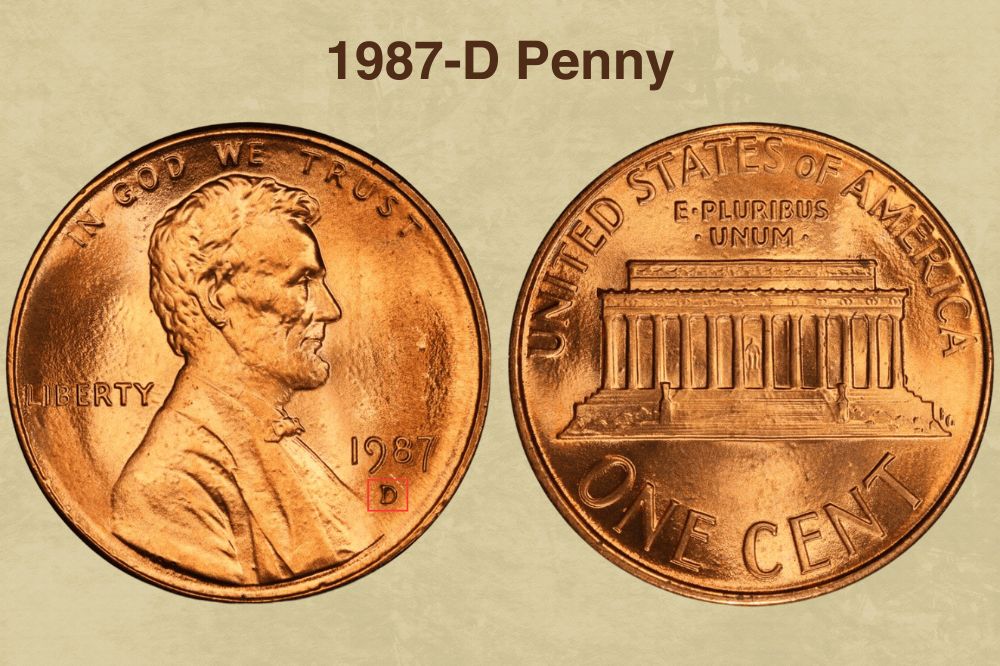
The Denver facility had the highest mintage in 1987, producing about 4,879,389,514 Lincoln Memorial pennies.
Like the Philly pennies, the coins struck in Denver are plentiful in all grades and you can still find these coins in circulation to date. However, many of these pennies are worn and not worth much.
In circulated condition, a brown 1987-D penny will fetch you between $0.05 and $0.10. Uncirculated examples are also very affordable, so you can acquire an MS66 specimen with only $5.
Full red 1987-D pennies are equally affordable, with examples graded MS67 fetching about $35. If this value looks low, it’s because of the high mintage seen at the Denver facility in 1987.
On the upside, because these pennies are affordable, it’s easy to add them to your collection if you are getting started in numismatics.
1987-S Proof Penny Value
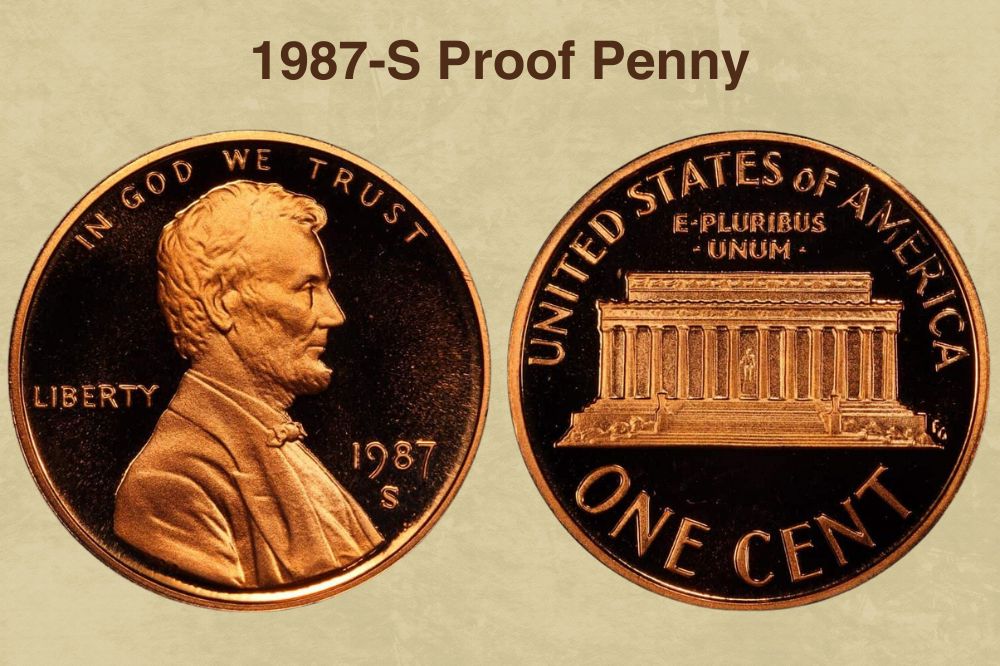
The mint at San Francisco struck about 4,227,728 proof coins in 1987.
The Mint produces proof coins for collectors. These coins are of a higher strike with frosted surfaces, full luster, and great eye appeal.
The 1987-S proof pennies are not worth a fortune, though. These proof coins were not as well struck due to the facility using old, worn out dies to produce these collectors’ coins.
The relatively high mintage at the San Francisco mint also greatly contributes to the low value of these proof coins. The upside is that you can acquire a generally good-looking PF70 for about $110.
The most expensive 1987-S proof penny is a Deep Cameo graded PF70. One collector paid an impressive $2,040 for this specimen at a 2004 Heritage Auction sale.
Also read: 17 Most Valuable Indian Head Penny Worth Money
Rare 1987 Penny Errors List
Errors are inevitable during the coin minting process. Some of these anomalies are quite fascinating to collectors and can be worth a fortune depending on their popularity in numismatic circles.
Although 1987 pennies are generally only worth their face value, those with errors can be worth significantly more.
Let’s take a look at 1987 penny errors worth money.
1987 Doubled Die On Date Penny Error
Doubled die errors occur when the working die strikes the obverse or reverse design multiple times but at slightly different angle, resulting in doubling of the design elements such as the date, images or inscriptions.
In some 1987 pennies, you will notice doubling on the year date on the obverse. Such coins can fetch up to $150, which is hardly surprising given that doubled-die errors generally fascinate collectors.
1987 Re-Punched Mint Mark Penny Error
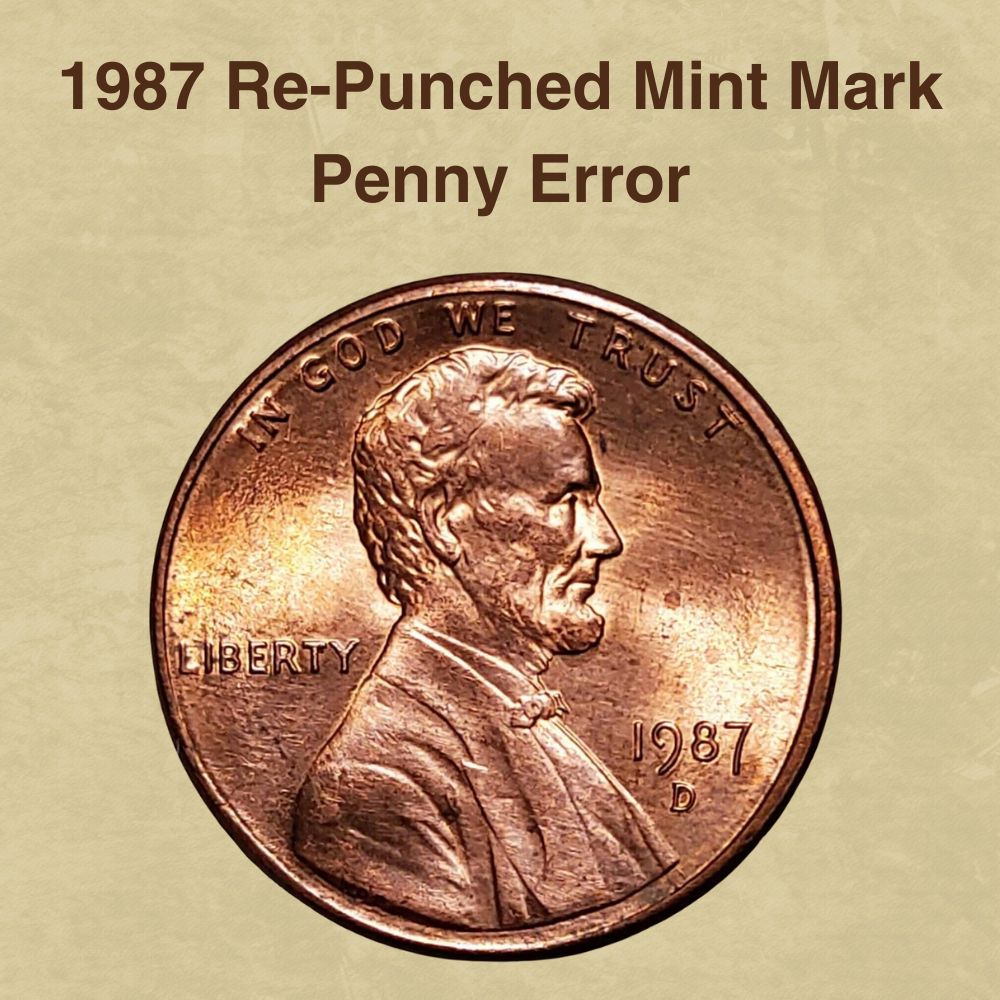
The re-punched mint mark penny error occurs when the working die strikes the mint mark two or more times at slightly different angles so that the primary and secondary mint mark appear overlapped.
Re-punched mint mark errors are also very popular among collectors. In the 1987 penny series, this error can be seen on proof coins with a satin finish. The S mint mark on the obverse has been re-punched two or more times.
A 1987 penny with a re-punched mint mark error can bring in as much as $125 or more depending on the coin’s condition.
1987 Off-Center Penny Error
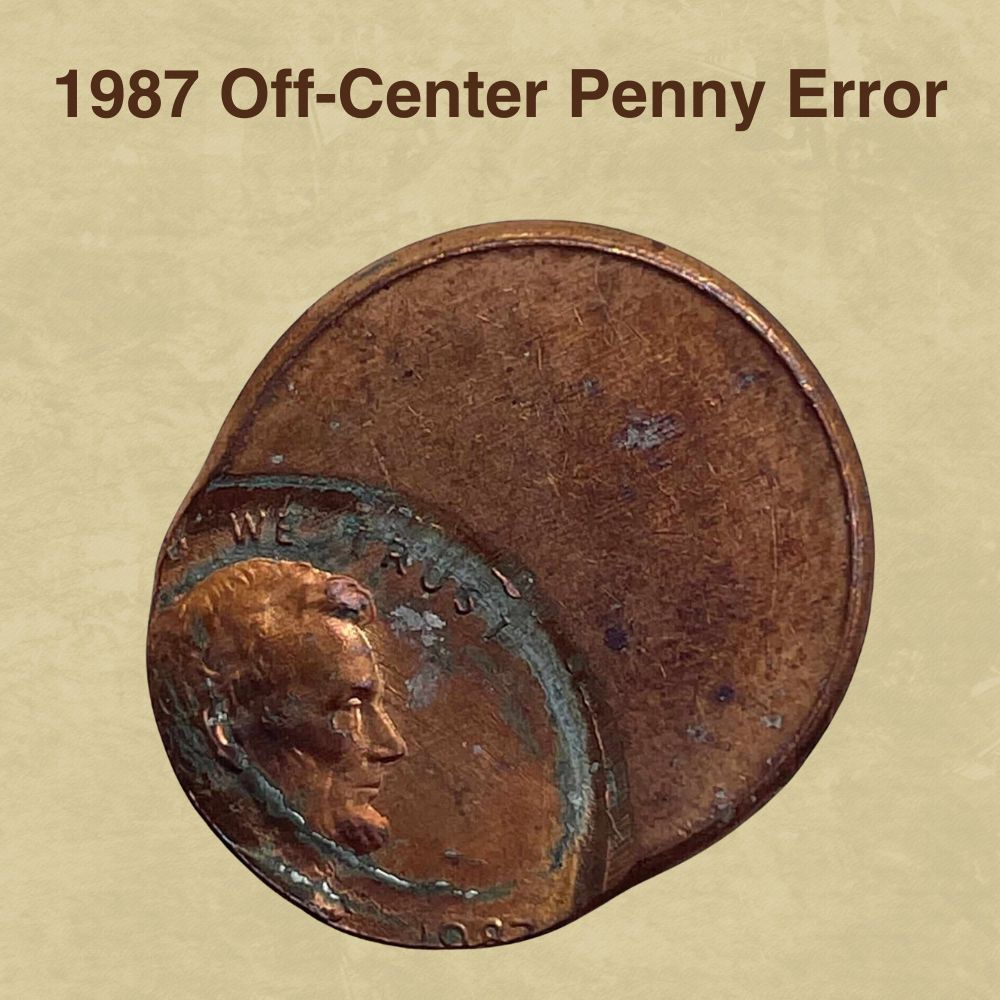
As the name suggests, an off-center error occurs when the design elements are struck away from the center. This can result in some of the coin’s details missing or being cut off.
Collectors can pay up to $100 for 1987 penny with an off-center error. But this price can increase if another error such as strike-through or doubled die appears on the same coin. Such a combination of errors can fetch as much as $150 or more depending on the coin’s condition.
Also read: 11 Most Valuable Wheat Penny Errors
Where to Sell Your 1987 penny ?
Now that you know the value of your coins, do you know where to sell those coins online easily? Don’t worry, I’ve compiled a list of these sites, including their introduction, pros, and cons.
Check out now: Best Places To Sell Coins Online (Pros & Cons)
FAQ
Are any 1987 pennies worth money?
Generally, 1987 pennies are only worth their face value. These coins are common and very affordable in all grades but some may be worth money. In particular, full red 1987 pennies graded MS68 and above are extremely rare and can therefore fetch as much as $35. The proof coins struck in San Francisco are also relatively valuable, bringing in up to $110.
How much copper is in a 1987 penny?
The 1987 penny is essentially a zinc coin as it comprise a 97.5% zinc core and 2.5% copper outer layer. The coin weighs approximately 2.5 grams.
Where is the mint mark on a 1987 penny?
The mint mark is on the obverse below the date. Only the 1987 pennies from Denver and the proofs from San Francisco have a mint mark D and S respectively.