Coin Value Contents Table
- 1941 Wheat Penny value
- History of the 1941 Wheat Penny
- 1941 Wheat Penny Types
- Features of the 1941 Wheat Penny
- 1941 Wheat Penny Grading
- 1941 Wheat Penny Value Guides
- 1941 No Mint mark Wheat Penny Value
- 1941 proof Wheat Penny Value
- 1941 D Wheat Penny Value
- 1941 S Wheat Penny Value
- Rare 1941 Wheat Penny Error List
- Where to Sell Your 1941 Wheat Penny ?
- FAQ about the 1941 Wheat Penny
Cents from 1941 are not particularly challenging to find these days because of over a billion pieces produced. The 1941 penny value depends on several crucial factors since most are well-worn after decades in circulation.
However, over 80 years old specimens in high grade are collectible and potentially valuable. Besides, collectors highly appreciate coins with specific and significant errors, so checking your cents can sometimes pay off.
1941 Wheat Penny value |
|||
| Condition | 1941 No mint mark penny | 1941 D penny | 1941 S penny |
| Good | $0.05 | $0.05 | $0.05 |
| Very good | $0.05 | $0.15 | $0.20 |
| Fine | $0.15 | $0.30 | $0.40 |
| Very fine | $0.30 | $0.55 | $0.70 |
| Extra fine | $0.69 | $1.16 | $1.16 |
| AU | $0.45 | $1.25 | $1.25 |
| MS 60 | $1.15 | $2.25 | $2.75 |
| MS 63 | $2.5 | $3.50 | $3.75 |
| PR 63 | $46 | / | / |
History of the 1941 Wheat Penny
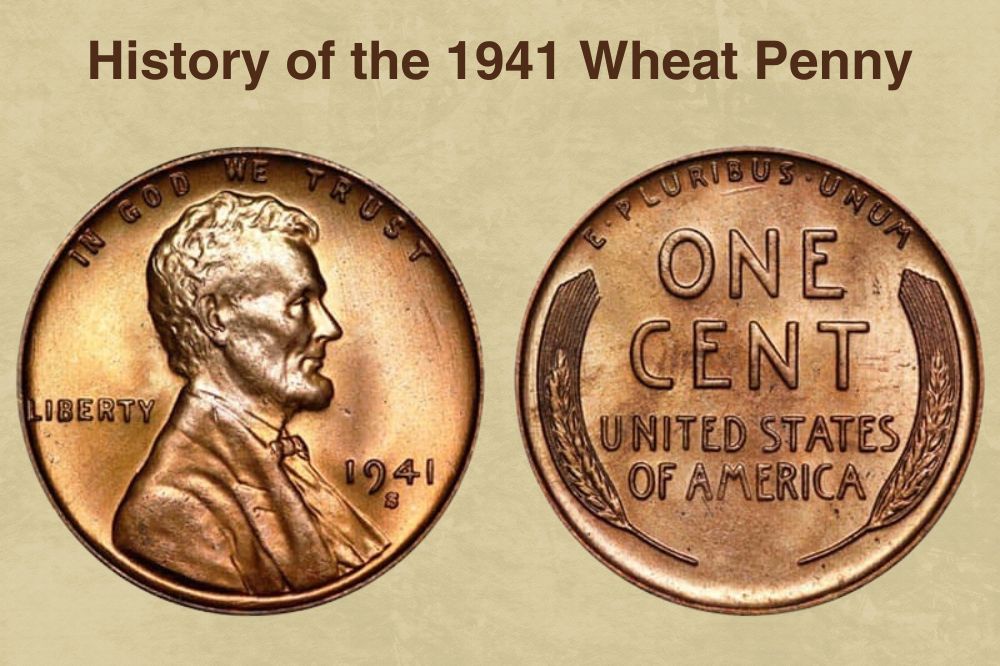
The first Lincoln cents with wheat stalks on the reverse appeared in 1909. The plan was to honor the 100th birth anniversary of the birthday of one of the most beloved American Presidents in history.
Since these coins were popular as collectibles, the US Mint started striking proofs in 1936 primarily intended for collectors. It was the first time in US history to mint coins only for pleasure, not everyday use.
1941 Wheat Penny Types |
||
| Location | Year | Minted |
| Philadelphia | 1941 No Mint mark cent | 887,018,000 |
| Philadelphia | 1941 proof cent | 21,100 |
| San Francisco | 1941 S cent | 92,360,000 |
| Denver | 1941 D cent | 128,700,000 |
| Total | / | 1,118,099,100 |
After 32 years, it was the turn of the first war coins minted after the attack on American soil. The 1941 pennies are unique, particularly because that particular minting date struck on the obverse.
Besides, they were among the last ones made of copper since the US Mint changed pennies’ composition to zinc-plated steel in 1943. It was the way to support troops with the necessary copper supply.
Even though these cents look like all other coins in the Wheat series, they were produced while the Japanese attacked Pearl Harbor and America formally entered WWII. These events make them historically significant and collectible.
Since cents from this year were minted in the 6th highest Philadelphia mintage, they are pretty common these days. However, the story behind them and the popularity of the entire series makes them desirable for both novices and experienced collectors.
Also read: 12 Most Valuable Lincoln Penny Worth Money
Features of the 1941 Wheat Penny
The 1941 Wheat cents are a part of one of the most popular series in the US. They appeared in 1909 after President Theodore Roosevelt decided to advance American coinage artistically. Thanks to Victor Brenner, these coins got the obverse appearance still in use, while the US Mint changed the reverse depending on the occasion.
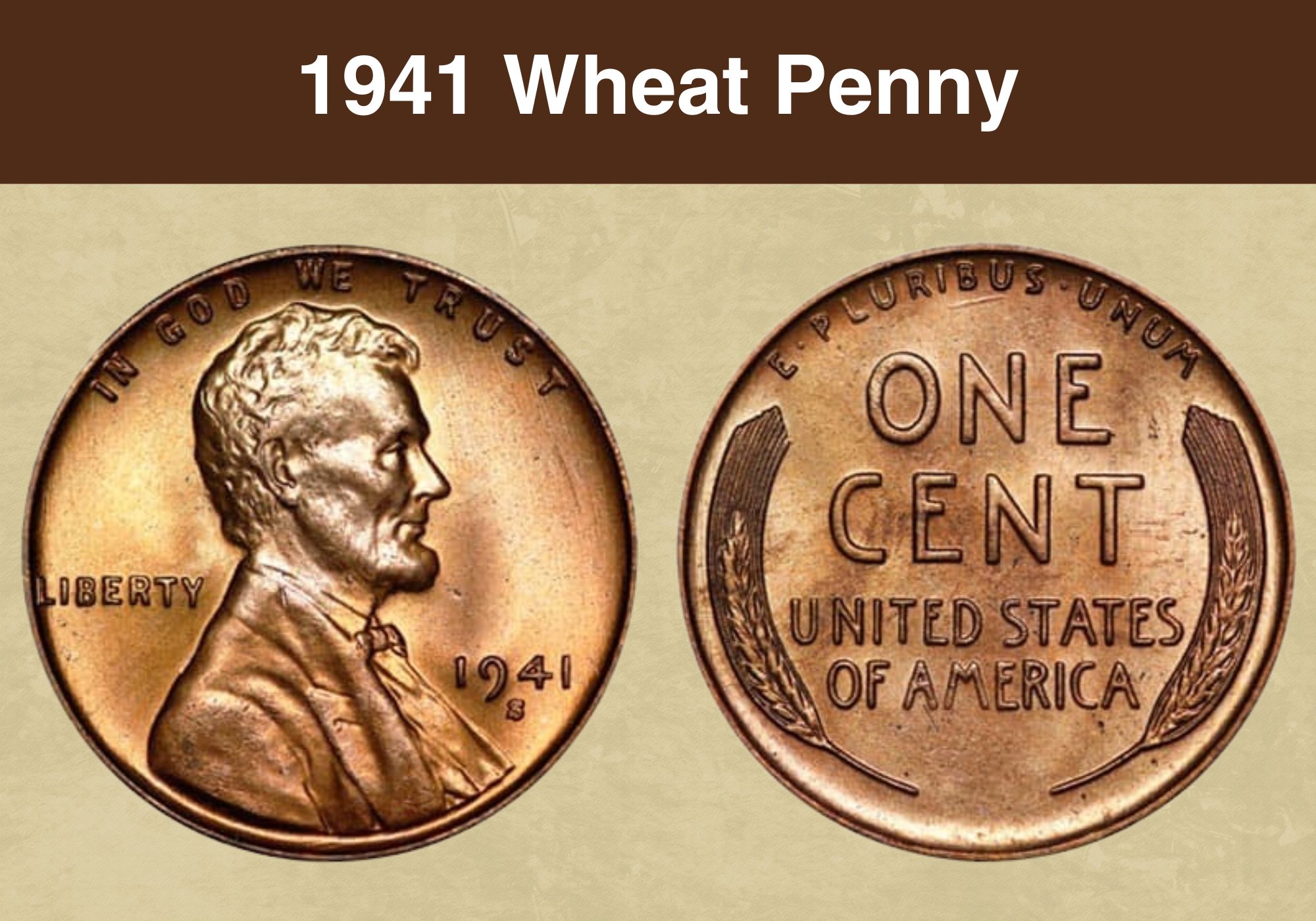
The obverse of the 1941 Wheat Penny
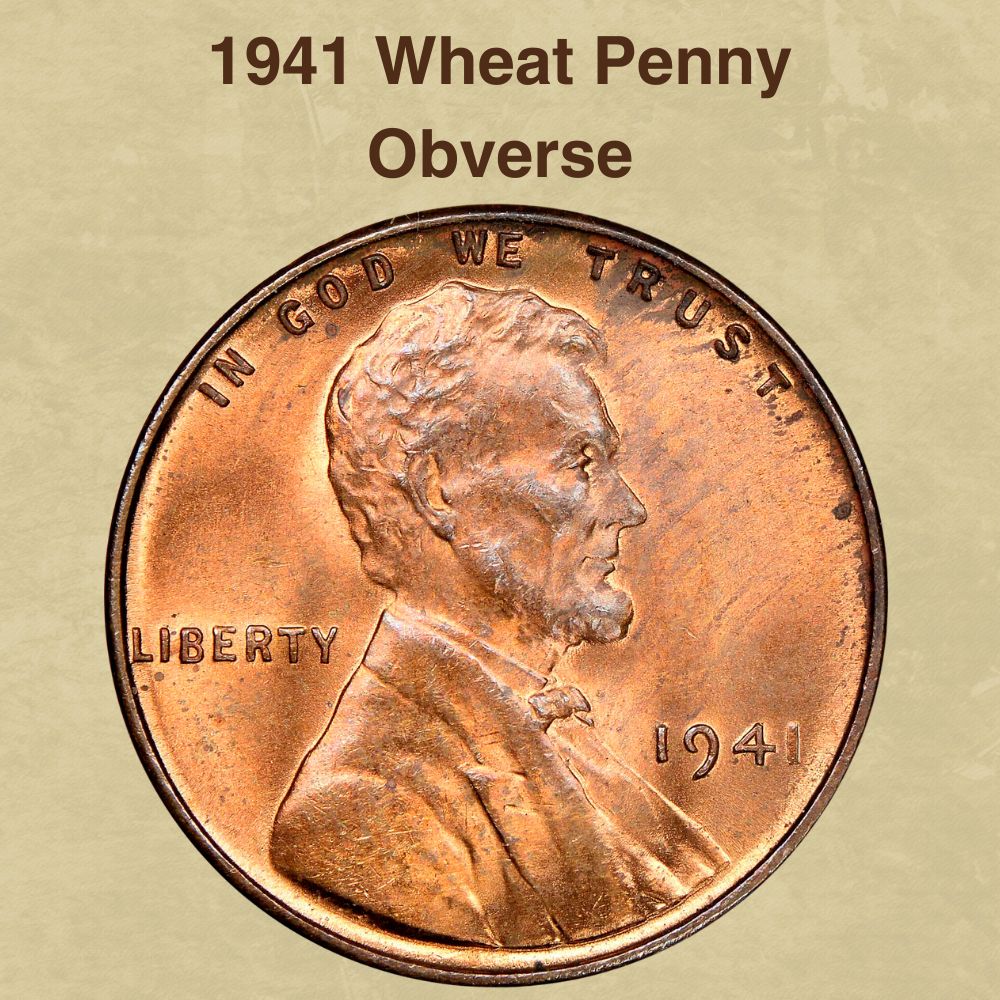
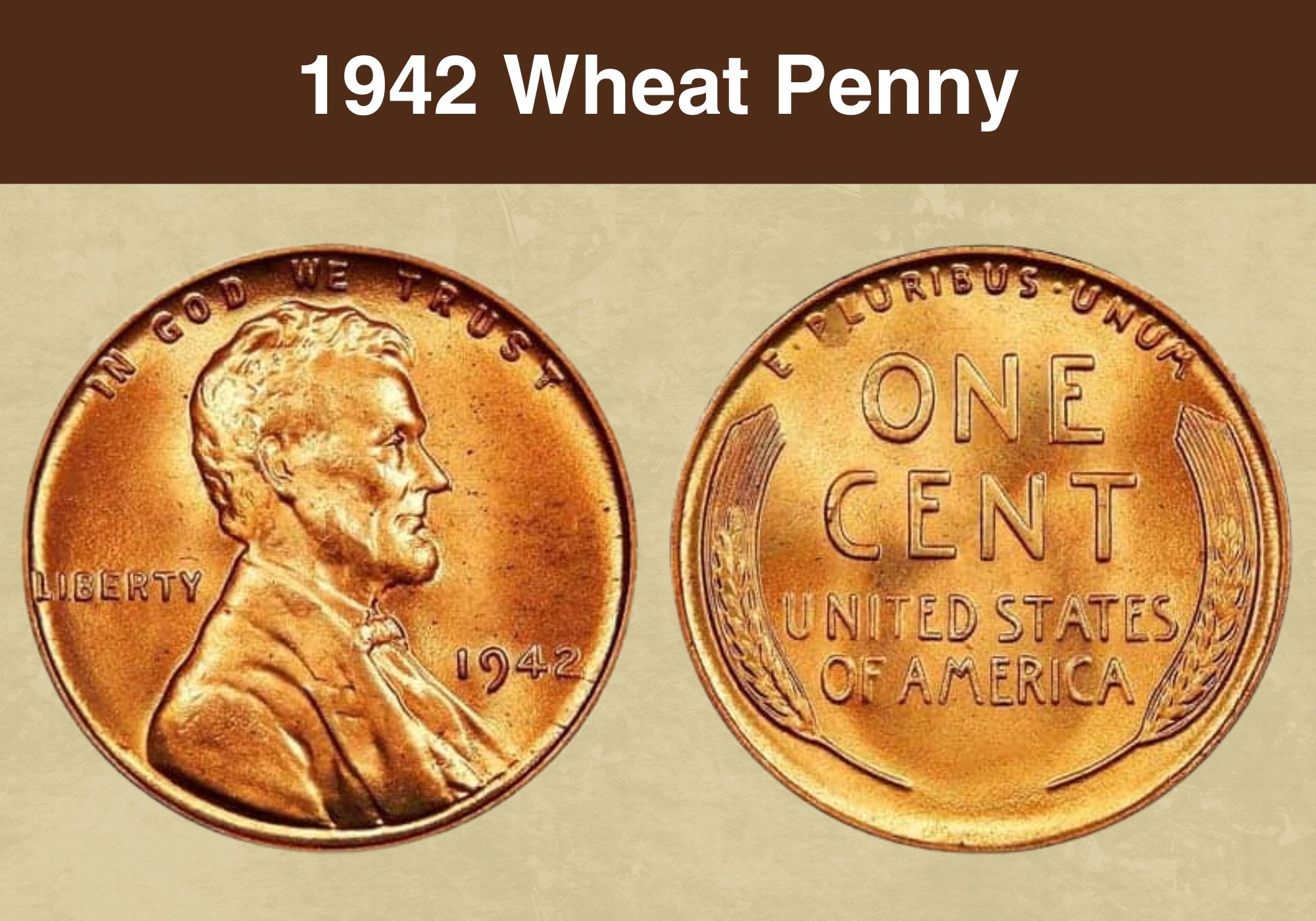
Like all other pennies, those minted in 1941 depict Abraham Lincoln’s portrait on the obverse side. Designer Victor D. Brenner placed the LIBERTY on the left, behind the President’s back. The number 1941, representing the minting year, is on the right side, in front of the centrally positioned image.
Pieces from all mints except Philadelphia have the mint mark below the date. Besides, all pennies minted this war year have the designer’s initials discreetly tucked into the bust’s lower edge. Finally, the composition is framed with IN GOD WE TRUST from above.
The reverse of the 1941 Wheat Penny
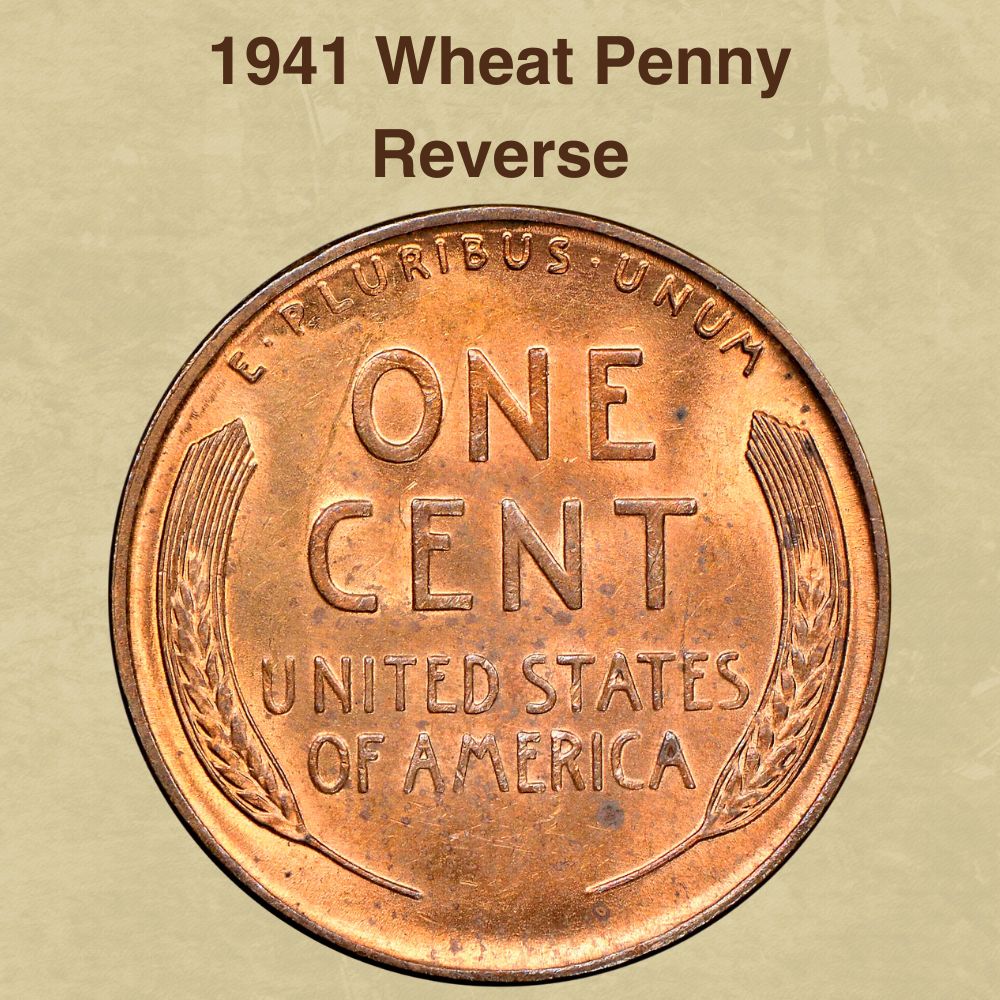
The 1941 pennies are a part of the Wheat series, meaning they show two wheat stalks on the reverse. They surround two inscriptions divided into four lines:
ONE
CENT
UNITED STATES
OF AMERICA
Besides, you can see the E PLURIBUS UNUM motto struck above.
Interestingly, Brenner initially wanted to depict tree branches on the reverse, but that design was too similar to the French coins’ look. Therefore, then Mint Director Frank Leach asked for a different solution.
There was one more problem with the original reverse design. Brenner placed too sizable initials on this coin side, and they were quickly removed under public pressure. They appeared on the obverse only in 1918, so you can see them in cents minted in 1941.
1941 Wheat Penny Details |
|
| Coin weight | 3.11 g (0.10970 ounces) |
| Shape | Round |
| Compound | An alloy of 95% copper with zinc or tin |
| Coin thickness | 1 mm (0.03937 inches) |
| Coin diameter | 19.05 mm (1.75 inches) |
| Edge | Plain |
| Face value | One cent ($0.01) |
Other features of the 1941 Wheat Penny
The 1941 cent with wheat stalks on the reverse is a round one-cent coin made of copper alloy. Its thickness is 1 mm (0.03937 inches), while its diameter is 19.05 mm (1.75 inches). This plain-edged coin weighs 3.11 g (0.10970 ounces).
Also read: 13 Most Valuable Wheat Penny Worth Money
1941 Wheat Penny Grading
The coin grading system for collectible coins starts at a GOOD grade and ends up in MS 70 grade for the best-preserved pieces without the tiniest flaw. The best-ranking 1941 pennies are those in MS 68 grade, so you can expect them to be the most expensive in the set.
| # | Grade |
|---|---|
| 1 | Basal State-1 |
| 2 | Fair |
| 3 | Very Fair |
| 4, 5, 6 | Good |
| 7, 8, 10 | Very Good |
| 12, 15 | Fine |
| 20, 30 | Very Fine |
| 40 | Extremely Fine |
| 50 | About Uncirculated |
| 60 | Mint State |
| 65 | Mint State |
| 70 | Mint State |
Please check our grading guides to know your coin scale, It’s the necessary step to know the exact value of your coin.
Check out now: How to Grade Lincoln Wheat Penny?
1941 Wheat Penny Value Guides
The mint in Philadelphia took over the minting of the largest number of 1,118,099,100 struck pennies in 1941. Besides almost 900 million coins from regular strikes, there were also proof coins. The other two mints had significantly lower mintages this year.
1941 No Mint mark Wheat Penny Value
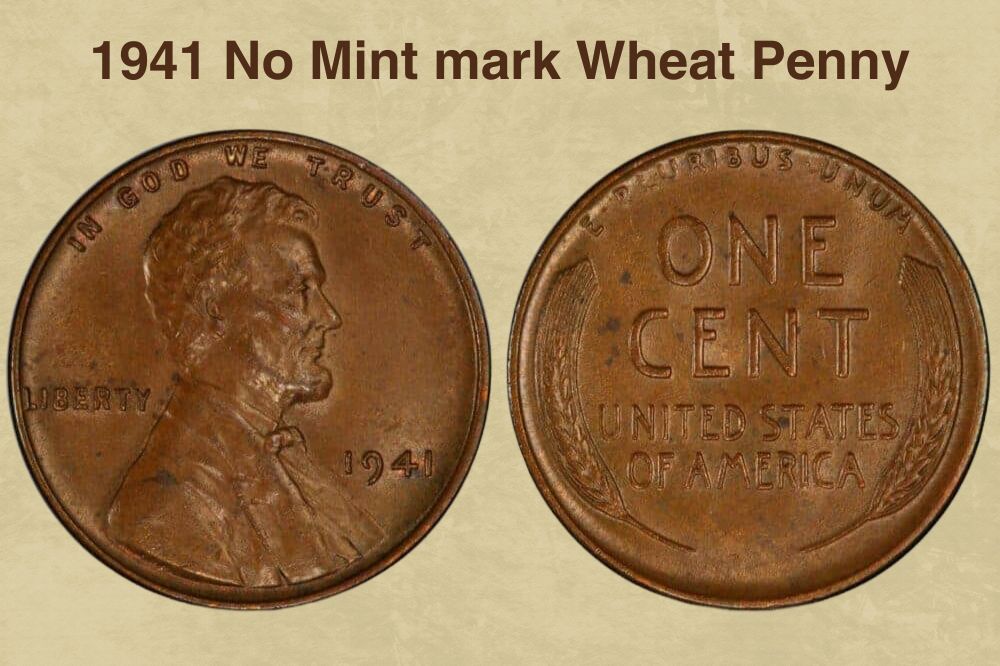
The mintage of 887,018,000 pennies in 1941 was really high, and all those coins came from Philadelphia. That is one of the reasons for their moderate value on the market.
For instance, you can find coins with brown-colored surfaces for $0.05 to $3.60, correlating pennies’ prices with their appearance. On the other hand, red-brown pieces are always more costly, ranging from $2 to $15.
As expected, the most valuable are specimens with beautiful red toning. Well-preserved pennies with this feature are available in a few grades, hence the price difference. Be prepared to set aside about:
- $3 to $3.60 for MS 63-ranked penny
- $4 to $4.80 for MS 64-ranked penny
- $8 to $10 for MS 65-ranked penny
- $25 to $30 for MS 66-ranked penny
- $115 to $138 for MS 67-ranked penny
Interestingly, pennies in the highest possible grade in the set (MS 68) are pieces minted in this mint. Since they are unbelievably rare, you can get at least $3,500 per one.
1941 proof Wheat Penny Value
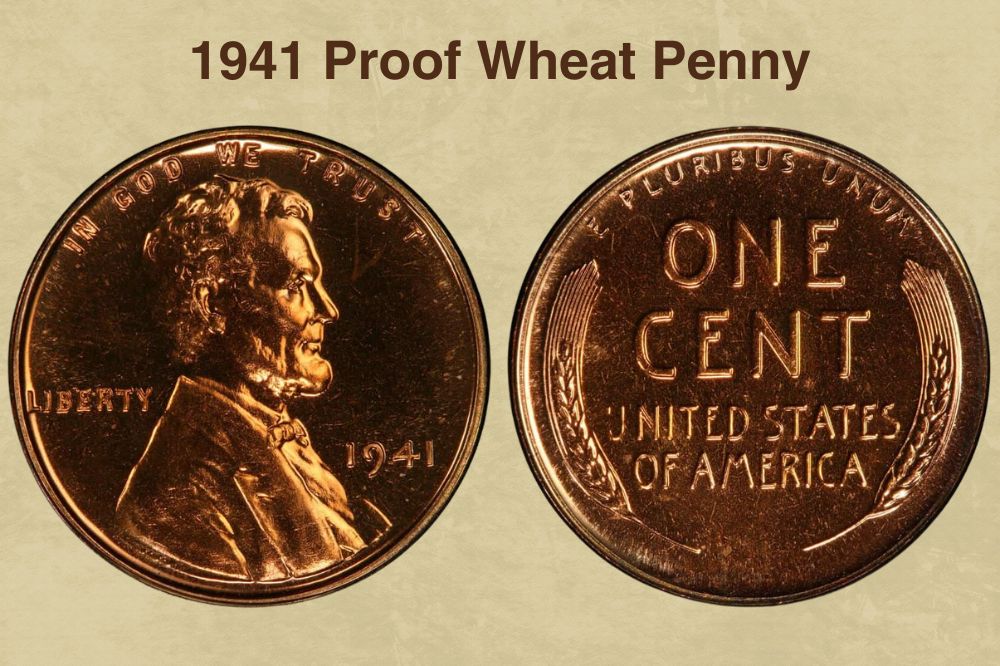
Besides regular cents without the mint mark, the Philadelphia mint also struck 1941 proofs. Thanks to a low mintage of only 21,100 coins, their price can be high, particularly for those in the highest grades.
Since brown pennies are the least desirable among collectors, their price range is the lowest, from $18 to $150, depending on quality. Red-brown colored ones are a bit more expensive, and you should set aside $25 to $180 to get one.
However, the 1941 penny with PR 67 ranking can surprise you with an average price of $2,000 to $2,400. Red specimens can be even more costly. For instance, you can find them at a price of:
- PR 61-graded cents – $48 to $50
- PR 62-graded cents – $50 to $60
- PR 63-graded cents – $60 to $72
- PR 64-graded cents – $70 to $85
- PR 65-graded cents – $130 to $156
- PR 66-graded cents – $360to $432
You can be sure that the PR 67-graded coins are the most collectible. They are typically worth $3,500 to $4,500.
1941 D Wheat Penny Value
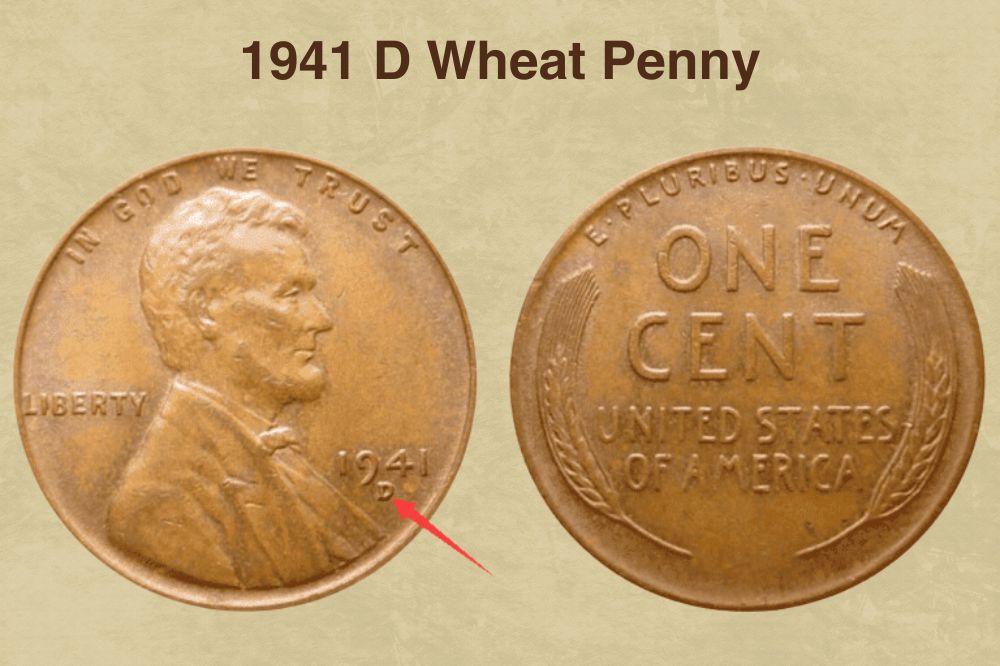
The mintage of the 1941 D pennies was 128,700,000. Such a high number is one of the reasons for their moderate value nowadays. So, you can buy one brown penny minted this year for $1.75 to $3.60, while those with red-brown toning are worth approximately $2 to $15.
Red-colored 1941 cents reach a bit higher prices, and you should set aside $3 to $120 to get one. However, some pieces are a real surprise. For instance, one owner sold his MS 68-rating penny minted this year for $6,600 in 2023.
1941 S Wheat Penny Value
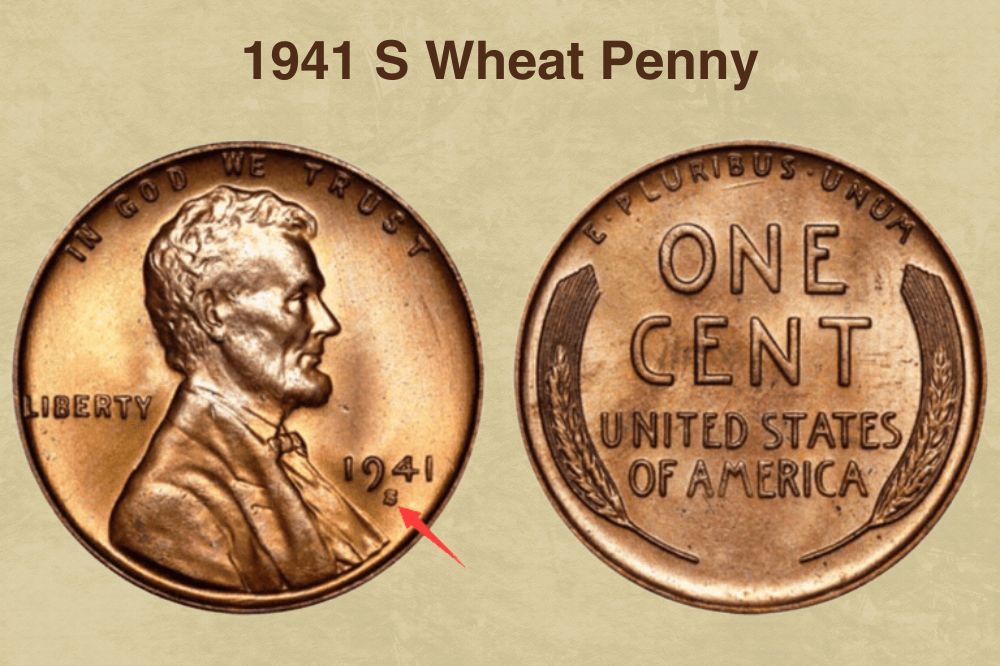
The San Francisco mint had the lowest penny mintage of only 92,360,000 coins in 1941. However, that doesn’t affect their prices much, and you can effortlessly find brown-toned pieces for $2 to $5. Red-brown specimens can be a bit pricey, ranging from $3 to $15.
Only red coins in the highest grades are more valuable. While those ranking from MS 63 to MS 66 are worth $4 to $40, those with the MS 67 grade can reach $140 to $170 at auctions.
Also read: 17 Most Valuable Indian Head Penny Worth Money
Rare 1941 Wheat Penny Error List
At the beginning of WWII, the US Mint faced a few problems with supply. Therefore, they sought the best solution to continue Whet penny minting during the war. Their efforts often resulted in error coins, which were not good for mints but made collectors happy.
DDO
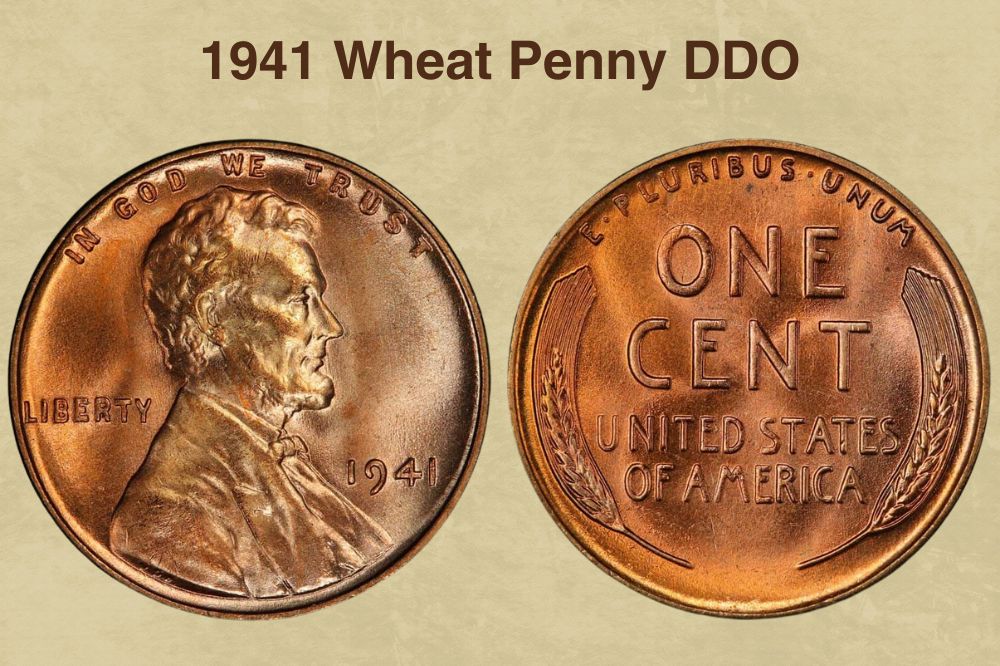
Double die obverse is a famous error among 1941 pennies that occurred when the die struck the future coin surface more than once. You can find doubling on the LIBERTY and/or IN GOD WE TRUST.
These coins can be pricey. For instance, brown pieces cost approximately $80 to $500, while red-brown-toned ones are typically worth $225 to $780. On the other hand, the 1941 DDO red penny price range is from $275 to $2,400, depending on their grades.
Penny with digit shift
It is a rare case to see an error in the minting year. You can find such pieces among pennies from the San Francisco mint and recognize them for the slightly shifted last digit to the left. The 1941 Wheat cent, with the number 1 leaning to the side, cost about $300.
Penny on an experimental planchet
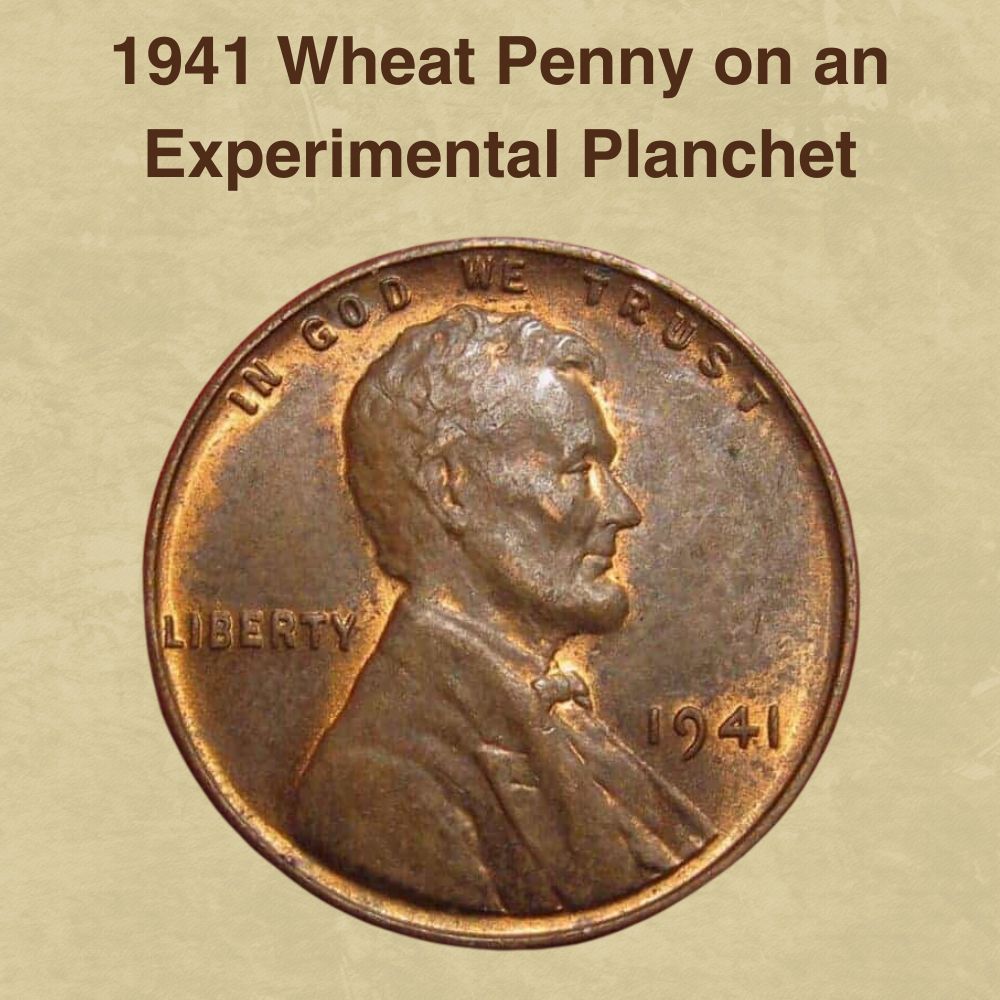
The 1941 pennies with this unusual imperfection are relatively rare. They occurred because the US Mint was forced to experiment with numerous metals after the Army increased demand for copper.
Even though these pieces are practically not errors but experimental coins, they are highly collectible. In most cases, they have a lower percentage of copper and cost up to $600.
Also read: 11 Most Valuable Wheat Penny Errors
Where to Sell Your 1941 Wheat Penny ?
Now that you know the value of your coins, do you know where to sell those coins online easily? Don’t worry, I’ve compiled a list of these sites, including their introduction, pros, and cons.
Check out now: Best Places To Sell Coins Online (Pros & Cons)
FAQ about the 1941 Wheat Penny
What makes a 1941 Wheat Penny rare?
The 1941 pennies are common and relatively affordable coins in lower grades. However, high-ranking pieces and a few well-known errors can be rare, increasing their value to a few thousand dollars.
Which 1941 Wheat Penny are particularly pricey?
- 1941 PR 67 penny (red) – $28,200 in 2013
- 1941 MS 66 penny (red, DDO) – $9,200 in 2010
- 1941 MS 66 penny (red, DDO) – $8,280 in 2011
- 1941 MS 66 penny (red, DOO) – $7,475 in 2011
- 1941 D MS 68 penny (red) – $6,600 in 2023
- 1941 MS 66 penny (red, DDO) – $5,288 in 2013
- 1941 MS 65 penny (red) – $4,994 in 2013
- 1941 D MS 68 penny (red-brown) – $4,600 in 2020
- 1941 PR 67 penny (red-brown) – $3,525 in 2015
- 1941 S MS 64 penny (red, PL) – $3,360 in 2022
- 1941 MS 65 penny (red-brown, DDO) – $1,140 in 2023
- 1941 D AU 58 penny (brown) – $1,035 in 2007
- 1941 MS 64 penny (red, DDO) – $940 in 2013
- 1941 XF 45 penny (brown) – $920 in 2007
- 1941 MS 64 penny (brown, DDO) – $908 in 2014
- 1941 MS 65 penny (red-brown, DDO) – $828 in 2008
- 1941 PR 60 penny (brown) – $805 in 2006
- 1941 MS 64 penny (red-brown) – $633 in 2005
- 1941 MS 64 penny (red-brown, DDO) – $460 in 2019
- 1941 MS 64 penny (brown, DDO) – $319 in 2022
- 1941 MS 62 penny (brown, DDO) – $288 in 2022
- 1941 VF 30 penny (brown, DDO) – $155 in 2019
- 1941 S MS 67 penny (brown) – $121 in 2023
- 1941 S MS 67 penny (red-brown) – $74 in 2020
- 1941 S AU 58 penny – $26 in 2023
How much are the 1941 Wheat Penny (No Mint mark) worth?
Wheat pennies minted in 1941 are relatively affordable coins, but their prices vary depending on their surface color and overall condition. So, you can find one brown penny for $0.05 to $3.60, while red-brown pieces are worth $2 to $15.
On the other hand, the most collectible red specimens come in a price range from $3 to $138, except for those with the MS 68 grade. Their price can go over $3,500.
What is the most pricey Lincoln cent?
- 1943 D MS 64 bronze brown penny – $840,000
- 1943 S MS 63 bronze brown penny – $504,000
- 1944 S MS 66 steel penny – $408,000
- 1943 MS 62 bronze brown penny – $372,000
- 1958 MS 64 RD DDO penny – $336,000
- 1909 PR 67+ VDB penny – $258,500
- 1943 AU 58 penny – $218,500