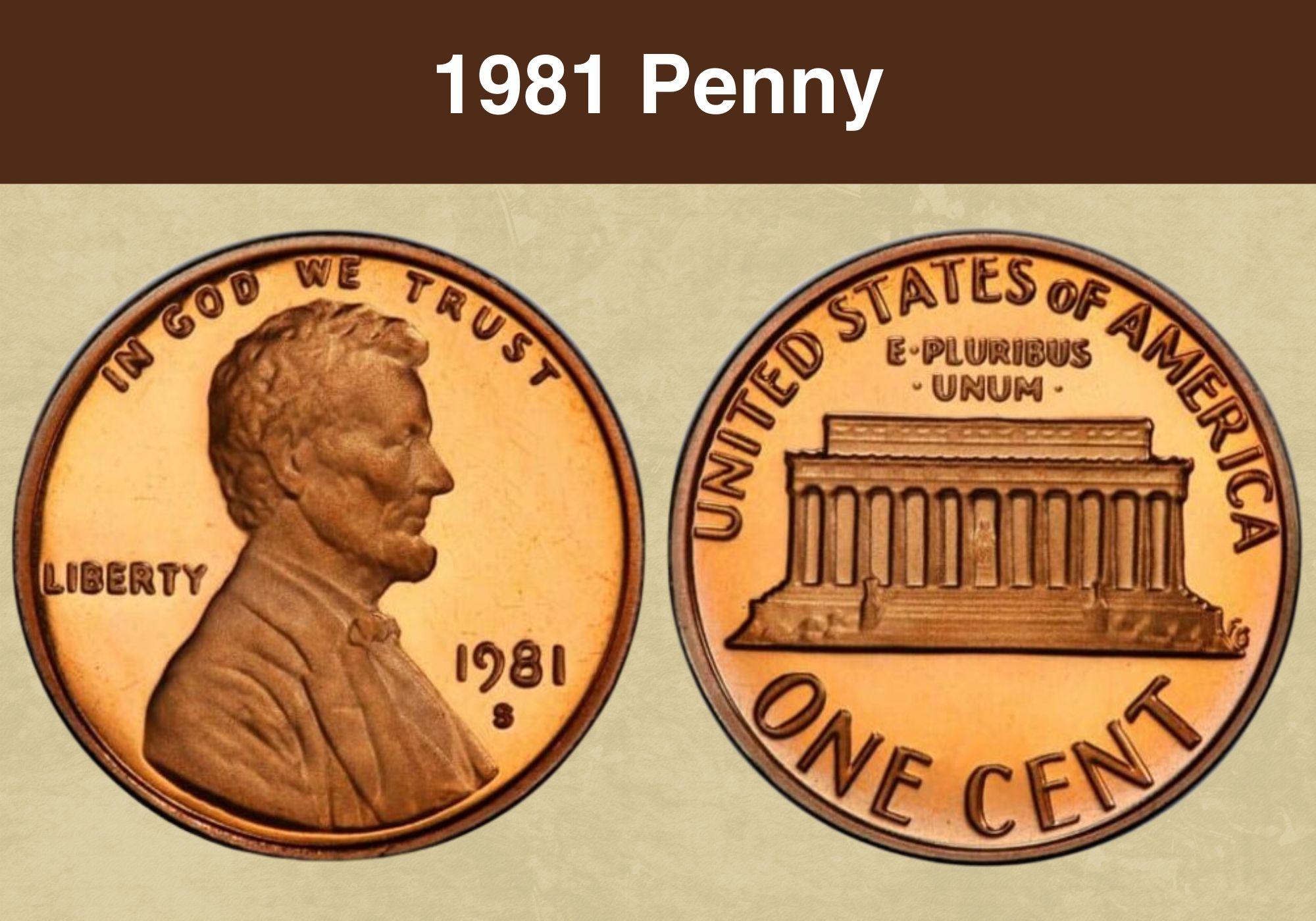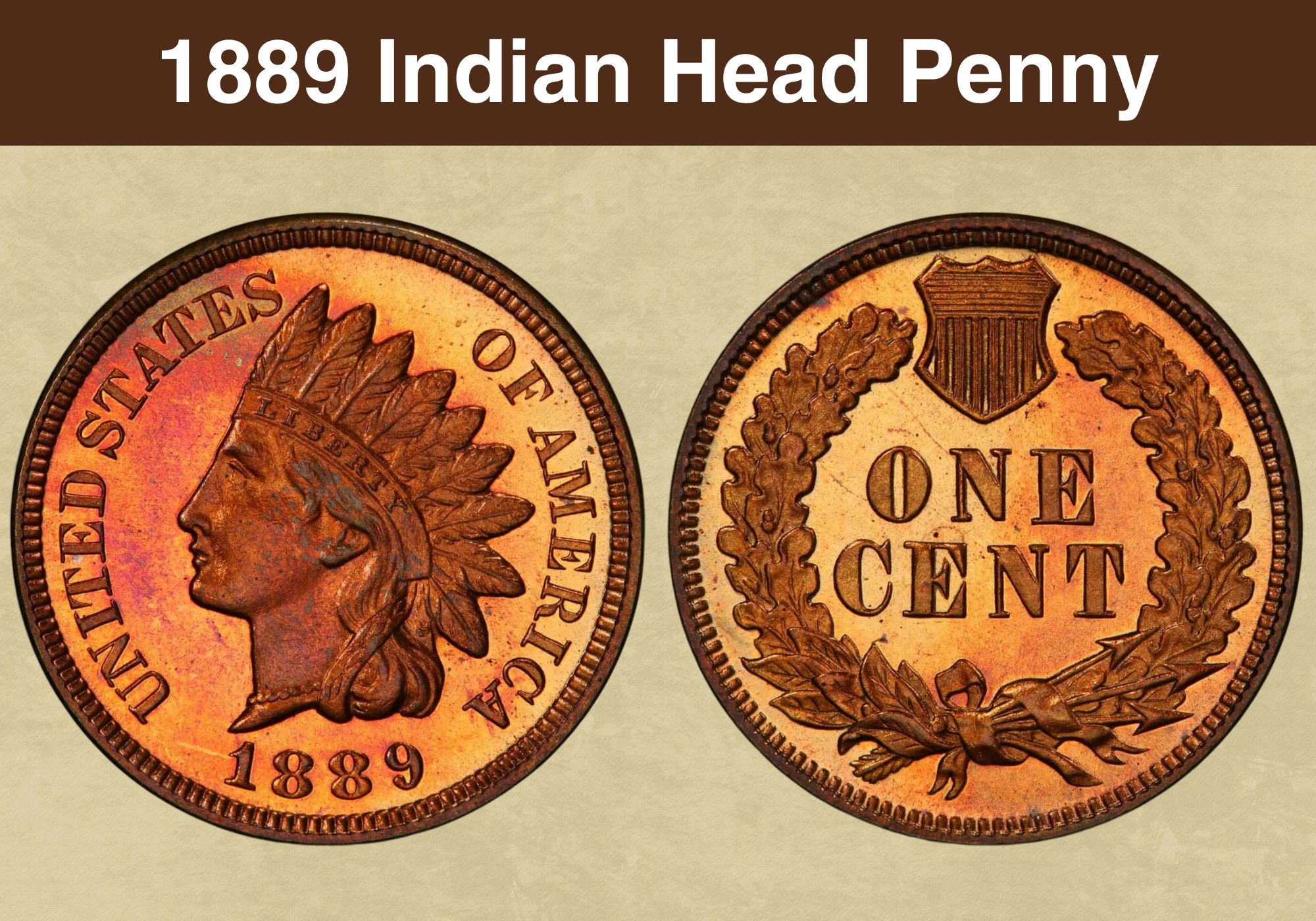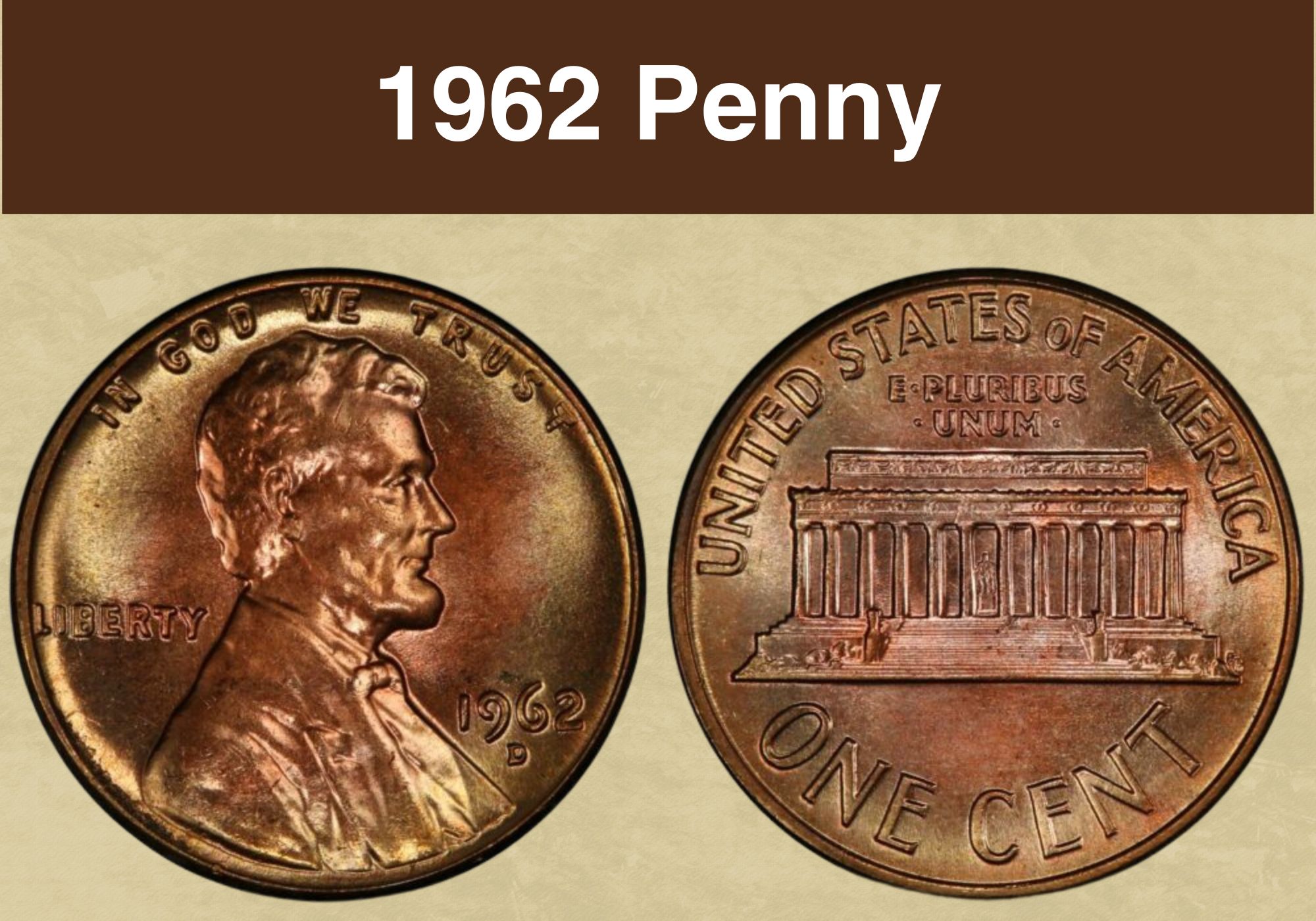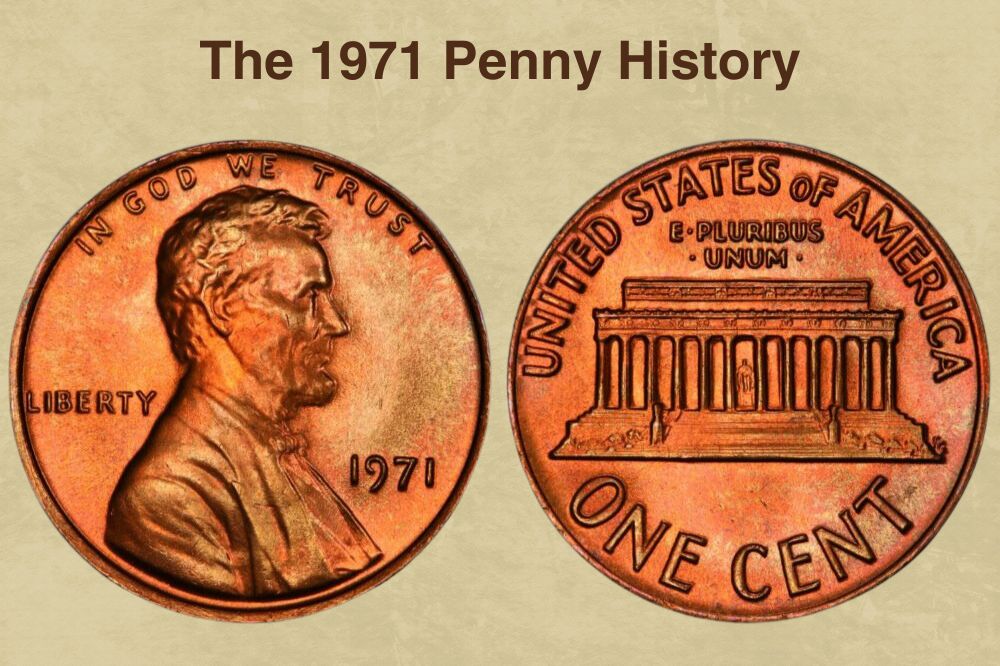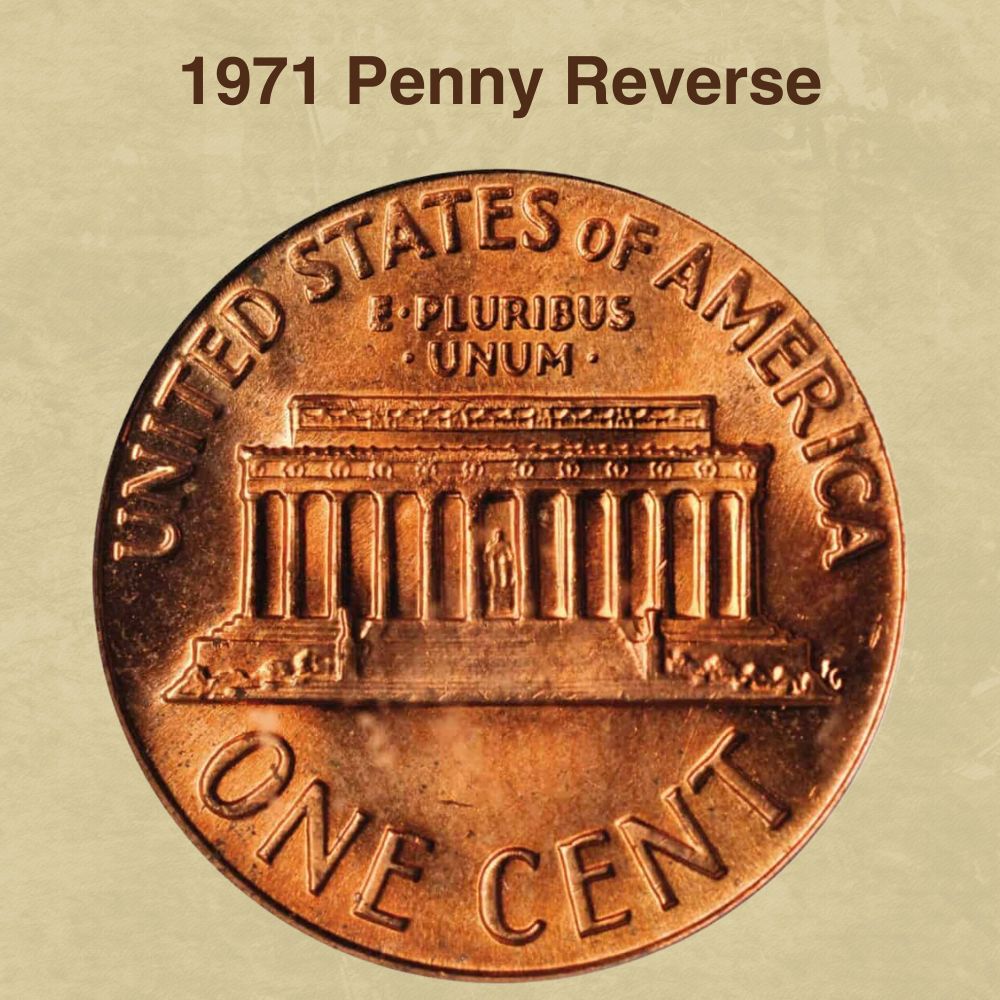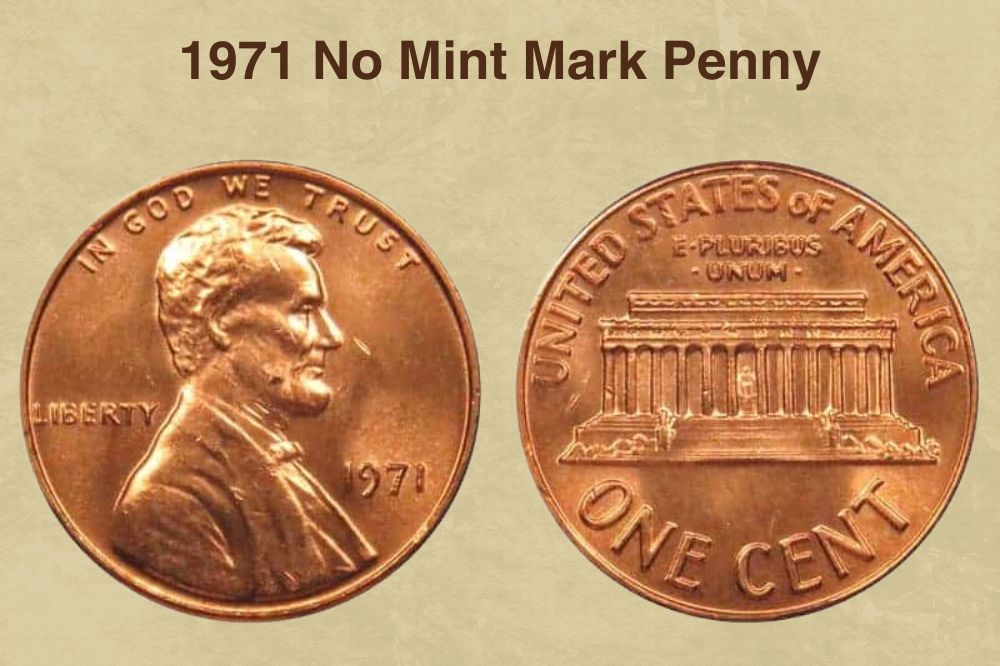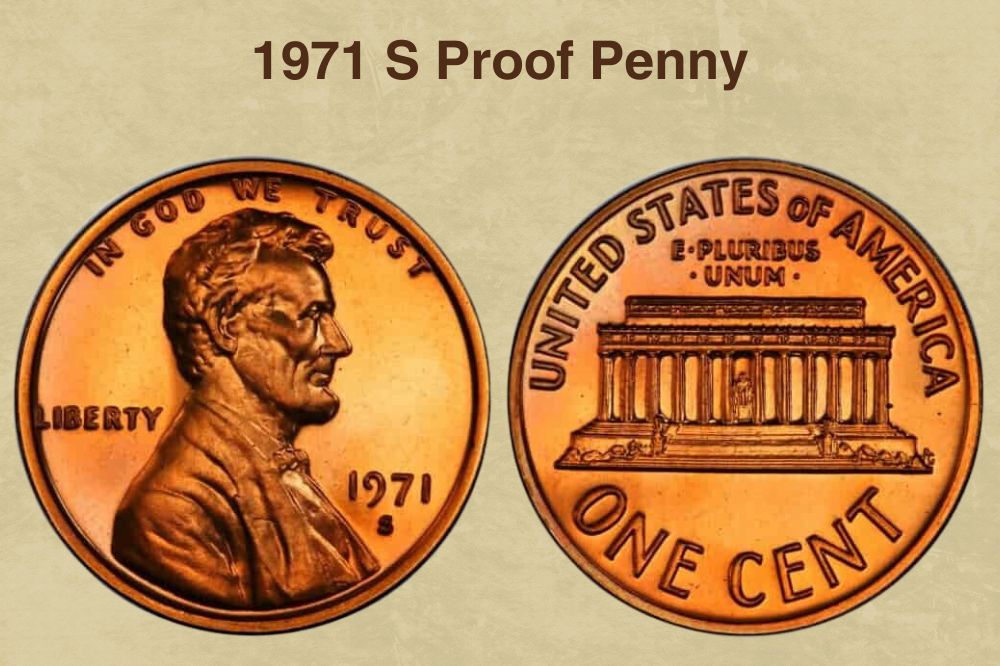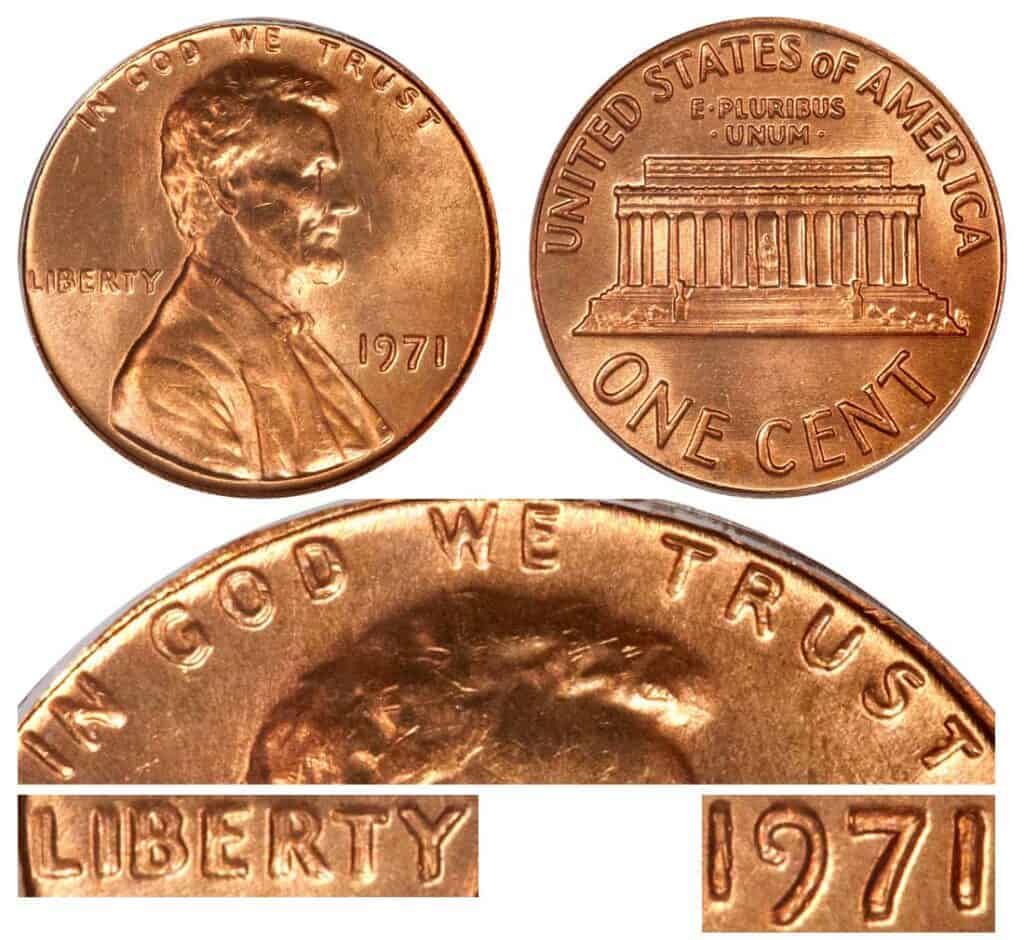
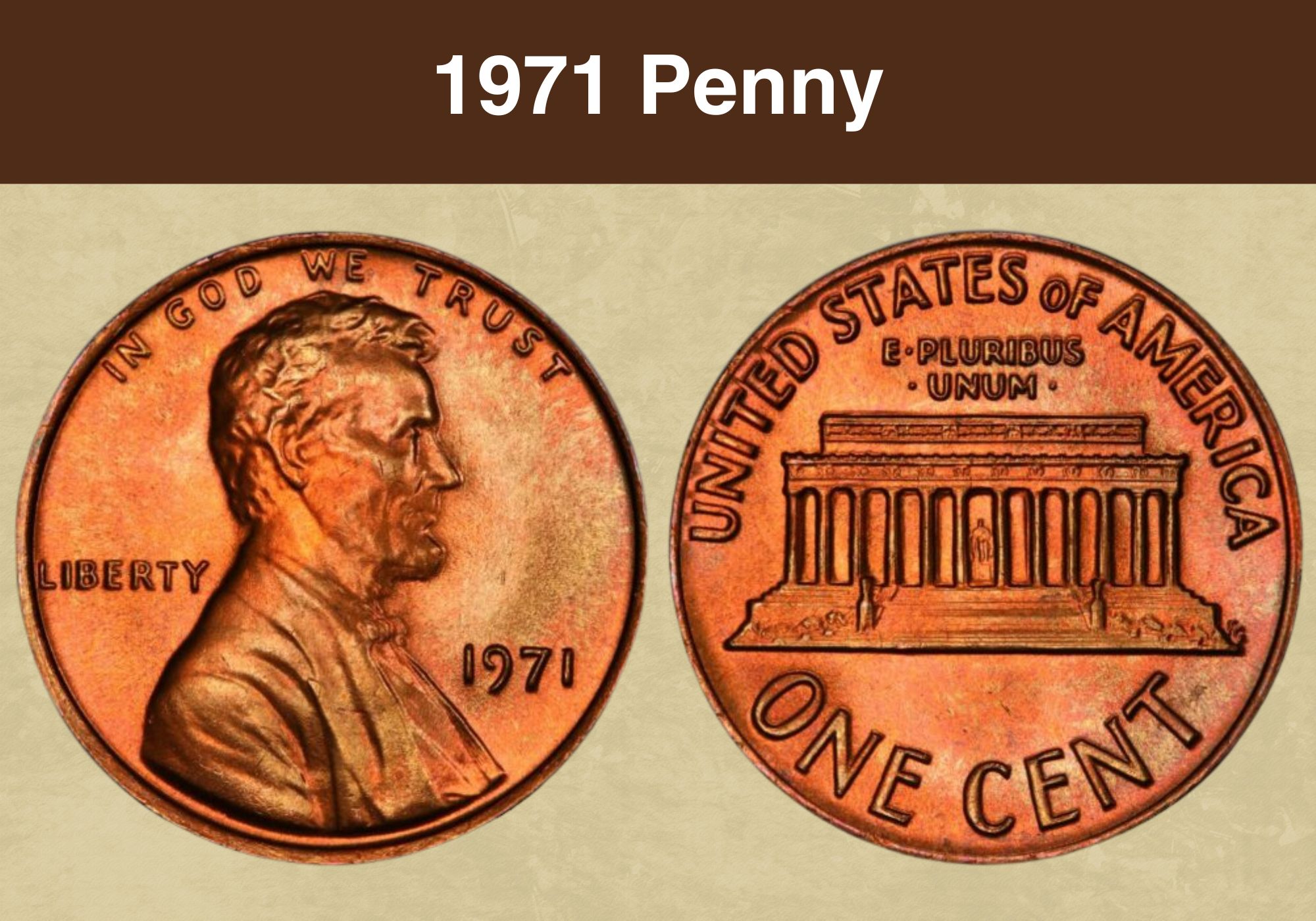
The 1971 Lincoln cent features Frank Gasparro’s design of the Lincoln Memorial, which had been in circulation for over a decade. The reverse depicts the Memorial’s columns and steps, with a prominent image of Lincoln in the center, making it the only U.S. coin to depict the same president on both sides.
Most 1971 cents are worth only their face value, with the average price of the mint state condition ranging from $15.95 to $13.69, while the average price of the deep cameo Proof version is $23.62.
Coin Value Contents Table
- 1971 Penny Value By Variety
- 1971 Penny Value Chart
- Top 10 Most Valuable 1971 Penny Worth Money
- History Of The 1971 Penny
- Is Your 1971 Penny Rare?
- Key Features Of The 1971 Penny
- 1971 Penny Mintage & Survival Data
- 1971 Penny Mintage & Survival Chart
- 1971 Penny Value Guides
- 1971 No Mint Mark Penny Value
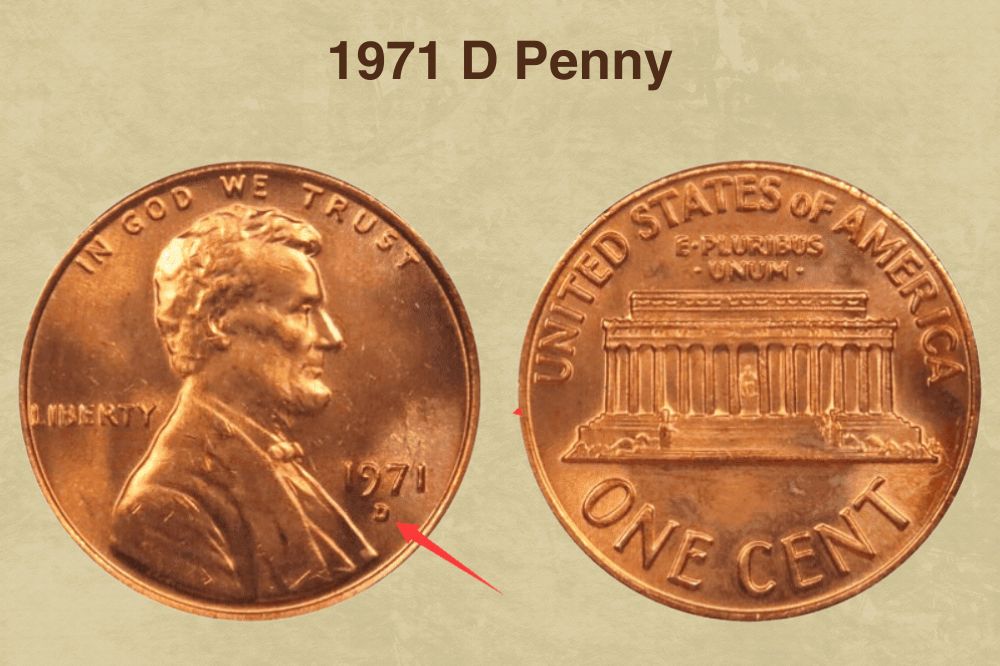
- 1971-D Penny Value
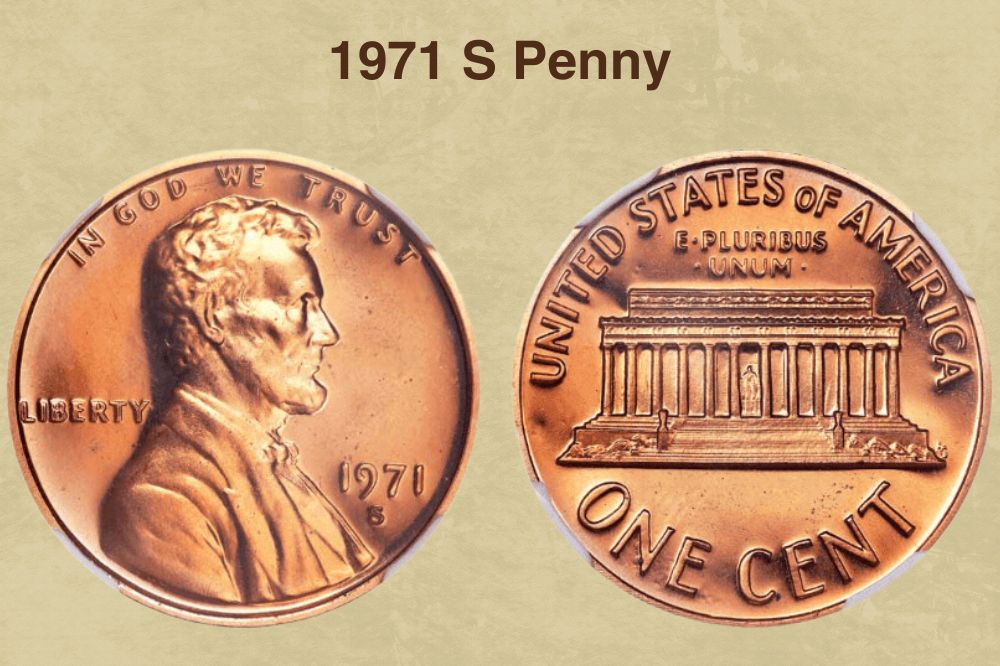
- 1971-S Penny Value
- 1971-S Proof Penny Value
- 1971-S CAM Penny Value
- 1971-S DCAM Penny Value
- Rare 1971 Penny Error List
- Where To Sell Your 1971 Penny?
- 1971 Penny Market Trend
- FAQ About The 1971 Penny
1971 Penny Value By Variety
The table below shows current market values for different 1971 penny varieties based on their condition and type, with prices ranging from face value for circulated coins to several hundred dollars for pristine mint state examples.
If you know the grade of your coin, you can find the exact price below in the Value Guides section.
1971 Penny Value Chart
| TYPE | GOOD | FINE | AU | MS | PR |
|---|---|---|---|---|---|
| 1971 No Mint Mark Penny Value (RD) | $0.47 | $1.60 | $4.10 | $15.95 | — |
| 1971 D Penny Value (RD) | $0.23 | $0.80 | $2.05 | $13.14 | — |
| 1971 S Penny Value (RD) | $0.42 | $1.44 | $3.69 | $13.69 | — |
| 1971 S Proof Penny Value | — | — | — | — | $7.62 |
| 1971 S CAM Penny Value | — | — | — | — | $9.25 |
| 1971 S DCAM Penny Value | — | — | — | — | $22.38 |
Also Read: Top 100 Most Valuable Modern Pennies Worth Money (1959 – Present)
Top 10 Most Valuable 1971 Penny Worth Money
Most Valuable 1971 Pennies Chart
2000 - Present
This chart showcases the most valuable 1971 pennies, highlighting the significant worth of rare minting errors from 2000 to present.
The 1971 DDO RD 65 tops the list at an impressive $6,900, followed by the 1971 DDO FS-101 66 valued at $5,640. These high values are primarily attributed to double die obverse (DDO) errors, font style variations (FS), and other minting anomalies that occurred during production.
The chart demonstrates how manufacturing mistakes can transform ordinary pennies into valuable collectibles, with prices ranging from $2,703 to $6,900.
These error coins are highly sought after by numismatists due to their rarity and unique characteristics. Factors like coin condition, certification grades, and specific error types significantly influence their market value.
Also Read: Lincoln Wheat Penny Value (1909-1958)
History Of The 1971 Penny
The first US cents with Lincoln’s image were released in 1909, replacing the Indian Head coins. The reason was the President’s 100th birthday commemoration.
From that year onwards, the obverse design was dedicated to the 16th President of the United States.One of the most worshiped US presidents, Abraham Lincoln, was a skilled politician whose presidential mandate lasted five years.
The nation has respected and remembered him as the one who saved the Union and facilitated freedom for enslaved ones.
Victor David Banner, the US coin designer and engraver, created the initial penny design, which remained unchanged until 1959. Half a century after the first Lincoln cents were released, the reverse side was re-designed, honoring the 150th Lincoln birthday.
For this occasion, coin designer Frank Gasparo created a new reverse look featuring the Lincoln Memorial with the statue inside. Besides getting a different design, Lincoln pennies went through composition changes.
Initially, these cents contained 95% copper, but their composition was zinc-plated steel in 1943, in the middle of the war. After that, the US Mint went back to copper alloy pennies.
The 1971 Lincoln pennies have the Memorial reverse. During this year, three US Mints released over five billion coins into circulation. This year is also known for a high number of DDO error cents coming from the Philadelphia and San Francisco mints.
Also Read: Top 100 Rarest Pennies Worth Money (1787 – Present)
Is Your 1971 Penny Rare?
1971 No Mint Mark Penny (RD)
1971-D Penny (RD)
1971-S Penny (RD)
1971-S Proof Penny
1971-S CAM Penny
1971-S DCAM Penny
Use our CoinValueChecker App to quickly determine the rarity grade and current market value of your 1971 Lincoln cents.
Key Features Of The 1971 Penny
Between 1909, when the first Lincoln pennies were released, and 1971, there were some changes in their composition and design.
The Obverse Of The 1971 Penny
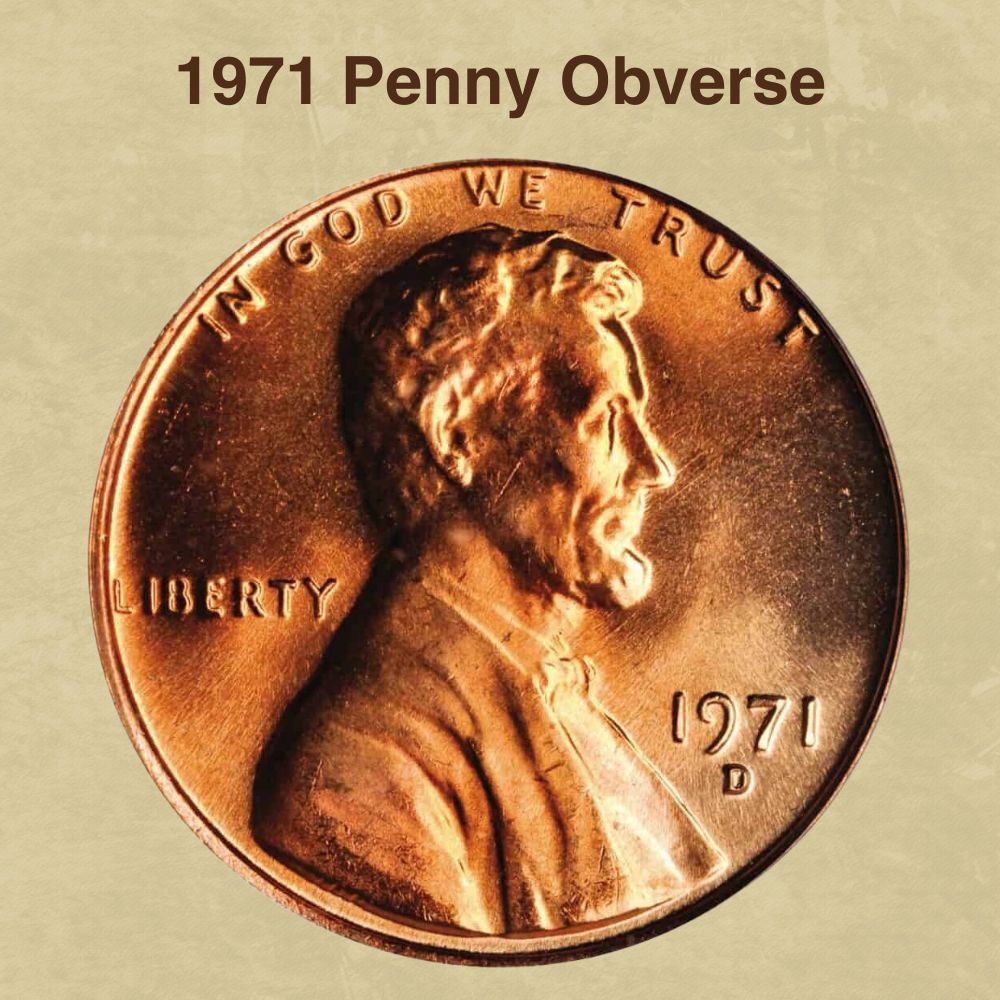
Like other coins in the series, the 1971 one-cent coin features the same obverse design that Victor David Brenner created in 1909, with Abraham Lincoln’s profile serving as the primary relief element.
The portrait is positioned in the center and facing right, with other design elements surrounding it.
You can see the motto, IN GOD WE TRUST, between the bust and the cent rim. The left side’s field area contains LIBERTY, aligned with the back side of Lincoln’s neck.
The minting year, 1971, is on the right, in front of the President’s chest, with the mint mark D or S below it. There are also initials, VDB, on the lower edge of the shoulder, standing for the coin designer.
The Reverse Of The 1971 Penny
The Lincoln Memorial was built in 1921 in Washington, but its image with the President’s statue inside appeared on the cent reverse side in 1959.
Above the Memorial is the Latin motto divided into two lines (E PLURIBUS UNUM), referring to the Union of the numerous States.
The UNITED STATES oF AMERICA frames the upper coin’s edge while the denomination (ONE CENT) is positioned along the lower edge.
The reverse side design was Frank Gasparo’s work, and you can see his initials FG in the lower right corner.
Other Features Of The 1971 Penny
The Lincoln cents from 1971 are round coins with a plain edge. Their diameter is 1.75 inches (19.05 mm), and they weigh 0.10970 ounces (3.11 g). These copper-zinc alloy pieces are 0.03937 inches (1 mm) thick, and you can find them in three red and brown color variations.
Also Read: 100 Most Valuable Wheat Pennies Worth Money (1909 to 1958)
1971 Penny Mintage & Survival Data
1971 Penny Mintage & Survival Chart
Survival Distribution
| Type | Mintage | Survival | Survival Rate |
|---|---|---|---|
| No Mint | 1,919,490,000 | 28,792,350 | 1.5% |
| D | 2,911,045,600 | 436,656,840 | 15% |
| S | 528,354,192 | 79,253,128 | 15% |
| S Proof | 3,220,733 | unknown | unknown |
| S CAM | 3,220,733 | unknown | unknown |
| S DCAM | 3,220,733 | 821,286 | 25.5% |
The 1971 penny production numbers tell a compelling story of massive mintage versus actual survival rates. Denver Mint dominated production with nearly 3 billion coins, while Philadelphia struck almost 2 billion pieces.
San Francisco contributed over 500 million regular strikes plus approximately 3.2 million proof coins. However, survival rates paint a different picture entirely.
Despite the enormous mintages, only 1.5% of Philadelphia pennies and 15% of Denver and San Francisco coins remain in collectible condition today.
The standout performer among proof coins shows the 1971-S Deep Cameo variety achieving an impressive 25.5% survival rate, making these specimens significantly more available to collectors than their regular strike counterparts.
These survival patterns demonstrate how production volume doesn’t always correlate with long-term availability, especially for circulating coins that faced decades of pocket wear.
Also Read: 100 Most Valuable Indian Head Penny Coins Worth Money (1859 – 1909)
The Easy Way to Know Your 1971 Penny Value
Every 1971 penny contains 95% copper, making each worth at least double its face value based on metal content alone. However, certain varieties can be significantly more valuable. The rare doubled die obverse (DDO) error is the prize find, with specimens commanding anywhere from several hundred to several thousand dollars depending on condition. Look for clear doubling on “LIBERTY,” the date, or “IN GOD WE TRUST”.
Authenticating these valuable varieties requires specialized knowledge—identifying mint marks (Philadelphia, D for Denver, S for San Francisco), recognizing doubled die characteristics versus post-mint damage, and accurately assessing copper color designation (Red, Red-Brown, or Brown) that dramatically affects value.
CoinValueChecker App transforms this complex evaluation into a simple photo. The app’s technology instantly identifies mint marks, detects doubled die and other errors, evaluates color and condition, then provides real market valuations.

1971 Penny Value Guides
1971 Penny Types:
- 1971 No Mint Mark Penny
- 1971-D Penny
- 1971-S Penny
- 1971-S Proof Penny
- 1971-S CAM Penny
- 1971-S DCAM Penny
The 1971 Lincoln penny comes in six distinct varieties across three mint facilities. Philadelphia produced coins without mint marks, while Denver struck D-marked pieces for circulation.
San Francisco created regular S-marked coins plus three proof categories: standard proofs, Cameo (CAM) proofs with frosted devices, and Deep Cameo (DCAM) proofs featuring the strongest contrast between frosted portraits and mirror-like fields.
Also Read: Value Of Old Pennies By Year (1959-Present)
1971 No Mint Mark Penny Value
The 1971 No Mint Mark penny showcases dramatic value differences across color designations, with Red (RD) examples commanding the highest premiums due to their original copper luster preservation.
The current highest auction record was set in 2014, when an MS67+ RD sold for $4,406. The value of RB and BN is much lower than RD. For example, a MS63 RD only sold for $276.
This color hierarchy reflects copper’s natural aging process, where exposure to air and moisture gradually transforms the bright red surface to brown patina.
The steep exponential pricing curve from grades 65-70 demonstrates how condition sensitivity amplifies across all three color categories, with RD coins showing the most dramatic premium increases at gem levels.
1971 No Mint Mark Penny (RD) Price/Grade Chart
Price by 1-70 Grade (Latest Auction Records Included)
These pricing patterns become evident when examining recent auction records across major numismatic platforms.
| Date | Platform | Price | Grade |
|---|
Current market activity data reveals how collector interest fluctuates throughout the year, with seasonal trends affecting trading volume and price realization.
Market activity: 1971 No Mint Mark Penny
1971-D Penny Value

CoinValueChecker App
Not sure what your coins are worth? Get Instant Value • Grade • Error Detection with CoinValueChecker – the ultimate coin value app (FREE Usage Daily)
The 1971-D penny from Denver Mint represents the highest mintage year with nearly 3 billion coins produced, yet premium examples still command strong collector interest.
Red (RD) specimens demonstrate the most dramatic value escalation, with gem MS67 examples reaching $250 and a MS67-grade RD was auctioned for $1,380 in May 2007.
Normally, RD is the most valuable, but this is not always the case. In addition to the color grade, a MS63 BN was once sold for $199, while a MS60 RB was only sold for $101.
The exponential pricing curve above MS65 indicates that while lower-grade examples remain affordable, superb gem Denver pennies compete directly with their Philadelphia counterparts for serious type collectors.
1971-D Penny (RD) Price/Grade Chart
Price by 1-70 Grade (Latest Auction Records Included)
Recent auction activity shows consistent demand across major numismatic platforms, with Heritage Auctions and Stack’s Bowers regularly featuring high-grade examples.
| Date | Platform | Price | Grade |
|---|
Market activity data reveals steady collector engagement, with notable seasonal spikes reflecting broader numismatic market cycles.
Market activity:1971-D Penny
1971-S Penny Value
The 1971-S penny holds a unique position as San Francisco’s regular circulation strike with over 528 million coins minted, distinct from the facility’s more famous proof production.
Red (RD) examples in MS67 condition typically command around $300-400, with a MS67+ grade RD auctioned for $4,500 in September 2013.
Due to surface oxidation, it is difficult to find high-grade BN and RB coins. A MS63 RB was once auctioned for $440, which is not outstanding among many coins.
The San Francisco issue often exhibits superior strike quality compared to Philadelphia and Denver counterparts, making gem red examples particularly desirable among date collectors.
Unlike proof coins from the same facility, these circulation strikes show the characteristic wear patterns and surface quality variations that create distinct collecting opportunities across the color spectrum.
1971-S Penny (RD) Price/Grade Chart
Price by 1-70 Grade (Latest Auction Records Included)
Historical auction record reveals how this often-overlooked circulation strike performs against collector expectations.
| Date | Platform | Price | Grade |
|---|
Current market trends show renewed interest as collectors recognize the quality advantages of San Francisco production.
Market activity: 1971-S Penny
1971-S Proof Penny Value
The 1971-S Proof penny represents the San Francisco Mint’s specialized collector production, struck with extra care using polished dies and selected planchets to achieve mirror-like fields and frosted design elements.
With approximately 3.2 million proofs produced, these coins were sold directly to collectors in annual proof sets, ensuring careful handling and preservation from the moment of striking.
Unlike circulation strikes, proof pennies maintain consistent quality standards and exhibit the characteristic contrast between reflective backgrounds and textured portraits that define proof coinage.
Most examples grade between PR65-PR68, with higher grades becoming increasingly scarce.
1971-S Proof Penny Price/Grade Chart
Price by 1-70 Grade (Latest Auction Records Included)
Auction records demonstrate the steady demand for these collector-oriented strikes across all major numismatic platforms.
| Date | Platform | Price | Grade |
|---|
Market activity patterns reveal consistent trading volume throughout the year, reflecting their role as foundational pieces in Lincoln cent proof collections.
Market activity: 1971-S Proof Penny
1971-S CAM Penny Value
The 1971-S CAM (Cameo) penny represents an enhanced proof strike where the contrast between frosted devices and mirror-like fields creates a distinctive visual appeal beyond standard proof coins.
CAM designation requires noticeable frosting on Lincoln’s portrait and the inscriptions, achieved through specially prepared dies that create textured relief elements against polished backgrounds.
The cameo effect gradually diminishes as dies wear during production, making early strikes with strong contrast increasingly valuable.
Professional grading services evaluate cameo strength, with only coins showing sufficient contrast earning the CAM designation, creating a distinct collecting category within 1971-S proof pennies.
1971-S CAM Penny Price/Grade Chart
Price by 1-70 Grade (Latest Auction Records Included)
Trading records across major auction houses showcase how cameo quality variations affect final hammer prices.
| Date | Platform | Price | Grade |
|---|
Market dynamics show steady collector interest as these enhanced proofs bridge the gap between standard proofs and premium deep cameo specimens.
Market activity: 1971-S CAM Penny
1971-S DCAM Penny Value
The 1971-S DCAM (Deep Cameo) penny represents the pinnacle of proof coin production, featuring the most dramatic contrast between heavily frosted devices and pristine mirror-like fields.
DCAM designation requires exceptional frosting quality that creates an almost three-dimensional appearance, achieved only from the earliest die strikes before frosting deteriorates.
With a remarkable 25.5% survival rate among the original 3.2 million proof mintage, these coins showing different premiums depending on grade.
The deep cameo effect creates stunning visual impact that makes these pennies stand out dramatically from regular proofs, explaining their popularity among both type collectors and Lincoln cent specialists.
Professional grading services apply strict standards for DCAM designation, ensuring only coins with superior contrast quality receive this coveted attribution.
1971-S DCAM Penny Price/Grade Chart
Price by 1-70 Grade (Latest Auction Records Included)
Auction record reveals how deep cameo quality consistently drives premium pricing across all certification services.
| Date | Platform | Price | Grade |
|---|
Market activity demonstrate sustained collector demand as these represent the finest proof pennies available from the 1971 production year.
Market activity: 1971-S DCAM Penny
Also Read: Top 100 Most Valuable Modern Pennies Worth Money (1959 – Present)
Rare 1971 Penny Error List
The 1971 penny year produced several significant minting errors that have become highly sought after by collectors. These doubled die varieties occurred when dies were struck multiple times during production, creating visible doubling on design elements.
From Philadelphia’s circulation strikes to San Francisco’s proof coins, each error type offers unique characteristics and varying degrees of rarity, making them essential pieces for Lincoln cent variety collectors.
1. 1971 FS-102
The 1971 1C FS-102 represents a doubled die obverse variety created during the die-making process when hub impressions became misaligned during multiple hubbing procedures.
This variety shows distinctive doubling characteristics on design elements, particularly visible on “LIBERTY” and “IN GOD WE TRUST”.
The formation occurs when the working hub strikes the die multiple times with slight positional shifts, creating doubled images permanently embedded in the die itself.
Unlike regular 1971 cents, FS-102 displays these doubled design elements that appear on every coin struck from that specific die.
FS-101 represents the primary cataloged doubled die obverse variety designation within the Fivaz-Stanton numbering system (101-299 range), identifying it as an officially recognized “Obverse Doubled Die” variety.
The key distinction lies in FS-102’s specific doubling pattern and die characteristics that differentiate it from other 1971 doubled die varieties, making it a collectible numismatic variety rather than a minting anomaly.
1971 FS-102 Penny (RD) Price/Grade Chart
Price by 1-70 Grade (Latest Auction Records Included)
1971 FS-102 Penny (RB) Price/Grade Chart
Price by 1-70 Grade (Latest Auction Records Included)
1971 FS-102 Penny (BN) Price/Grade Chart
Price by 1-70 Grade (Latest Auction Records Included)
2. 1971 Double Die Obverse
The 1971 Double Die Obverse represents a significant variety in the Lincoln cent series, classified as Class II distorted hub doubling.
This error occurs during the die-making process when the hub receives multiple misaligned impressions, creating doubled images on design elements.
Doubling appears strongest on “LIBERTY” and “IN GOD WE TRUST,” though magnification is typically required for clear observation.
The 1971 DDO FS-101 variant represents the primary cataloged example within the Fivaz-Stanton numbering system.

CoinValueChecker App
Not sure what your coins are worth? Get Instant Value • Grade • Error Detection with CoinValueChecker – the ultimate coin value app (FREE Usage Daily)
FS-101 designates this as an officially recognized “Obverse Doubled Die and/or Obverse Die Variety” (numbers 101-299), distinguishing it from the general term “1971 Double Die Obverse” by providing standardized identification and market valuation for this specific authenticated variety.
1971 Double Die Obverse Penny (RD) Price/Grade Chart
Price by 1-70 Grade (Latest Auction Records Included)
1971 Double Die Obverse Penny (RB) Price/Grade Chart
Price by 1-70 Grade (Latest Auction Records Included)
1971 Double Die Obverse Penny (BN) Price/Grade Chart
Price by 1-70 Grade (Latest Auction Records Included)
Before exploring the 1971 Double Die Obverse details, download our CoinValueChecker app to instantly identify if your penny has this valuable error type and scan for other rare minting defects that could make your coin worth thousands.

3. 1971-S DDO Type 3 FS-103
The 1971-S DDO FS-103 Type 3 is a distinct doubled die obverse variety among the San Francisco Proof Lincoln cents.
This particular variety is characterized by by far the strongest doubling on Liberty and In God We Trust compared to other 1971-S DDO varieties.
The formation occurred during the die production process when the working die received multiple impressions from the master hub with slight misalignment between strikes.
Based on auction records, examples have appeared at major auction houses like Stack’s Bowers, though specific realized prices vary by grade.
The rarity and strong visual appeal make it sought-after among Lincoln cent specialists, with values typically ranging from several hundred to over $1,000+ depending on preservation grade and market conditions.
1971-S DDO Type 3 FS-103 Penny (RD) Price/Grade Chart
Price by 1-70 Grade (Latest Auction Records Included)
1971-S CAM DDO Type 3 FS-103 Penny Price/Grade Chart
Price by 1-70 Grade (Latest Auction Records Included)
4. 1971-S Doubled Die Obverse
The 1971-S Doubled Die Obverse represents a proof variety created during the San Francisco Mint’s proof production process.
Like other doubled dies, this error originates from misaligned hub impressions during die creation, where the working hub strikes the die multiple times with slight positional shifts.
The 1971-S proof series features three distinct doubled die varieties, with doubling visible on “IN GOD WE TRUST” and “LIBERTY” but typically not on the date. The two variant versions were the 1971-S version DDO FS-101 and FS-102. are 1971-S DDO FS-101 and FS-102.
FS-101 (formerly FS-032) represents the more common variety, while FS-102 (formerly FS-033) is scarcer and more valuable due to slightly stronger doubling characteristics.
The key difference between these variants lies in the degree of doubling visible on the motto above Lincoln’s head, with FS-102 showing more pronounced doubling than FS-101.
Both varieties distinguish themselves from the general “1971-S Doubled Die Obverse” designation by representing specific, authenticated die states with distinct doubling patterns and individual market valuations within the Fivaz-Stanton classification system.
1971-S Doubled Die Obverse Penny (RD) Price/Grade Chart
Price by 1-70 Grade (Latest Auction Records Included)
1971-S CAM Doubled Die Obverse Penny Price/Grade Chart
Price by 1-70 Grade (Latest Auction Records Included)
1971-S DCAM Doubled Die Obverse Penny Price/Grade Chart
Price by 1-70 Grade (Latest Auction Records Included)
Also Read: 42 Rare Penny Errors List with Pictures (By Year)
Where To Sell Your 1971 Penny?
Now that you understand your coins’ potential value, the next crucial step is finding the right marketplace to sell them. Choosing the proper platform can significantly impact your final sale price and overall selling experience.
I’ve researched and compiled a comprehensive list of the best online coin-selling platforms, complete with detailed introductions, key advantages, and potential drawbacks to help you make an informed decision.
Check out now: Best Places To Sell Coins Online (Pros & Cons)
1971 Penny Market Trend
Market Interest Trend Chart - 1971 Penny
*Market Trend Chart showing the number of people paying attention to this coin.
FAQ About The 1971 Penny
1. What Makes 1971 Lincoln Cents/Pennies Rare?
The Lincoln penny from 1971 is a common coin. Scarce can be the only pieces with significant and famous errors, especially those in the high mint state with doubled die obverse.
2. Which 1971 Lincoln Cents/Pennies Are Worth A Lot Of Money?
- The 1971 S DCAM penny in PR 69 grade – $17,250 in January 2004
- The 1971 RD DDO penny in MS 66 grade – $14,950 in November 2011
- The 1971 RD DDO penny in MS 65 grade – $10,925 in August 2007
- 1971 S CAM DDO penny in PR 68 grade – $9,775 in September 2003
- The 1971 S CAM penny in PR 68 grade – $4,700 in July 2018
- The 1971 S RD penny in MS 67+ grade – $4,500 in September 2013
- The 1971 RD penny in MS 67+ grade – $4,406 in June 2014
- The 1971 S DCAM penny in PR 69 – $3,600 in February 2022
- The 1971 S CAM DDO penny in PR 67 grade – $3,220 in May 2005
- The 1971 S RD DDO penny in PR 68 grade – $3,000 in September 2018
- The 1971 S RD DDO penny in PR 67 grade – $2,990 in November 2004
- The 1971 S RD penny in PR 68 grade – $1,725 in September 2007
- The 1971 S CAM penny in PR 67 grade – $1,438 in January 2004
- The 1971 D RD penny in MS 67 grade – $1,380 in May 2007
- The 1971 RB DDO penny in MS 62 grade – $1,265 in January 2012
- 1971 S DCAM DDO penny in PR 67 grade – $764 in January 2015
- 1971 S RD DDO penny in PR 66 grade – $748 in May 2007
- The 1971 S BN PCGS Genuine – $510 in July 2020 on eBay
- The 1971 RD DDO penny in MS 64 grade – $353 in March 2010
- The 1971 BR penny in MS 63 grade – $276 in February 2007
- 1971 S RB penny in MS 62 grade – $219 in July 2006
- The 1971 RB DDO penny in MS 64 grade – $207 in November 2010
- The 1971 BN penny NGC Genuine – $200 in March 2023
- The 1971 S BN DDO penny PR Details – $200 in June 2022
- The 1971 D BN penny in MS 63 grade – $199 in April 2018
- The 1971 BN DDO penny in MS 64 grade – $173 in November 2010
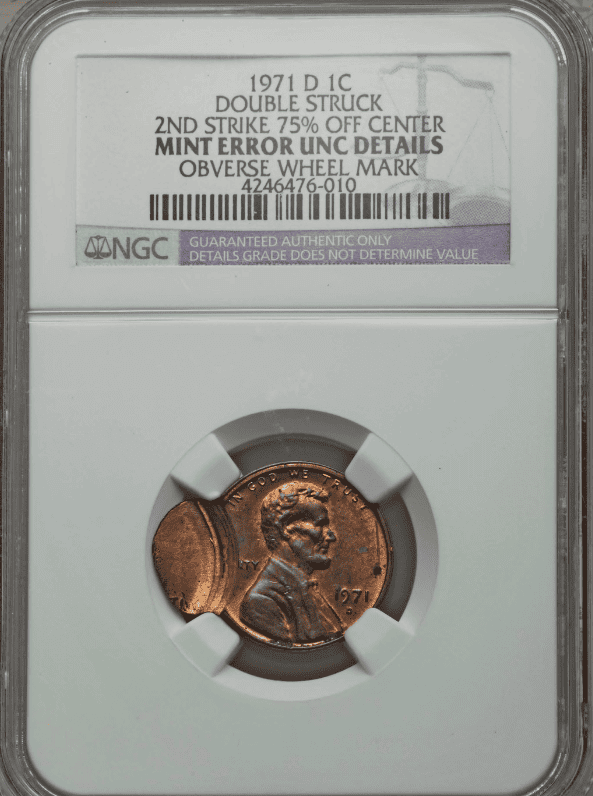
- The 1971 D RB penny Double Struck, Second Strike 85% off center in MS 60 grade – $101 – in December 2014
- The 1971 D penny UNC Details – $74 – in January 2020
3. How Much Are The 1971 Lincoln Cents/Pennies (No Mint Mark) Worth?
The Lincoln coins cost their face value, while those in the mint state are a bit more valuable. In the MS 60 grade, their price is $0.25, while those ranked MS 67 sell for $125. Be aware that the auction prices are often significantly higher, so these pennies often reach auction records of several thousand dollars.
4. What Are The Most Valuable Lincoln Cents/Pennies?
- The 1943 D brown bronze penny in MS 64 grade with the wrong planchet error had a sale price of $840,000 in 2021
- The 1943 S brown bronze penny in MS 63 grade had a sale price of $504,000 in 2022
- The 1944 S steel penny in MS 66 grade had a sale price of $408,000 in 2021
- The 1999 penny in MS 66 grade with die error had a sale price of $138,000 in 2006
- The 1969 S penny in MS 64 grade with DDO had a sale price of $126,500 in 2008