1926 Dime Coin Value: Errors List, “D”, “S” & No Mint Mark Worth

1926 dime value ranges from $0.10 face value to $60,000. That record belongs to a 1926-D FB graded MS-67, sold at Heritage Auctions in January 2019. Wondering what yours might be worth? Upload your coin photo below for a quick value range. You can also scroll down to check recent eBay sales and see what collectors are actually paying right now.
1926 Dime Value Checker
Identify 1926 Dime D, S and No Mint Mark Price
Front Obverse
Upload or Take a Photo
Back Reverse
Upload or Take a Photo
1926 Dime Value By Variety
Three mints struck dimes in 1926, and the price gap between them is enormous. If you know your coin’s grade, check the exact price in the Value Guides section below.
| Type | Good(G4-6) | Fine(F12-15) | AU(AU50-58) | MS(MS60-70) | PR(PR60-70) |
|---|---|---|---|---|---|
| ▶1926 No Mint Mark Dime Value | $8 | $8 | $15 - $36 | $46 - $3,680 | — |
| ▶1926 No Mint Mark Dime (FB) Value | $2 | $4 - $5 | $18 - $36 | $55 - $2,890 | — |
| ▶1926 D Dime Value | $8 - $9 | $12 - $15 | $55 - $160 | $230 - $3,910 | — |
| ▶1926 D Dime (FB) Value | $18 - $22 | $34 - $41 | $120 - $210 | $270 - $36,800 | — |
| ▶1926 S Dime Value | $15 - $18 | $46 - $69 | $420 - $1,650 | $2,020 - $11,500 | — |
| ▶1926 S Dime (FB) Value | $160 - $190 | $310 - $370 | $1,160 - $1,900 | $2,430 - $69,000 | — |


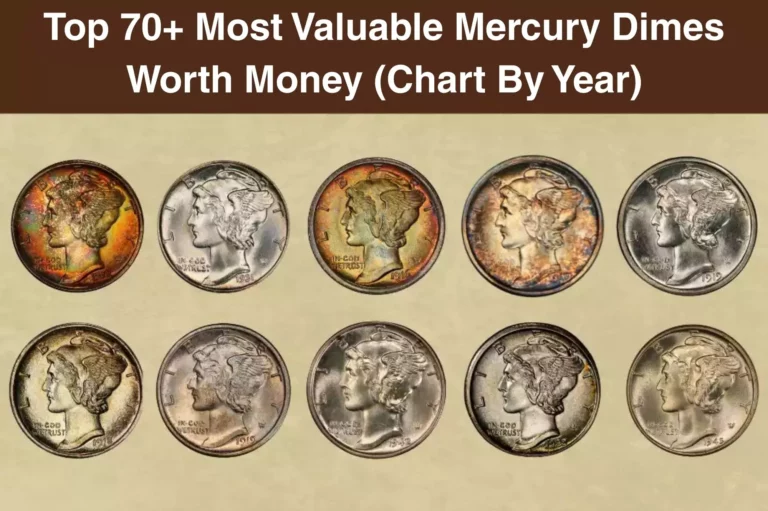
Also Read: Top 70+ Most Valuable Mercury Dimes Worth Money (Chart By Year)
Top 10 Most Valuable 1926 Dime Worth Money
Most Valuable 1926 Dime Chart
2000 - Present
That $60,000 top spot belongs to a 1926-D graded MS-67 FB by PCGS, sold at Heritage Auctions in January 2019. Full Bands made all the difference. A standard MS-67 from Denver trades around $3,100–$4,250 — add the FB designation and the price jumps over 1,300%. Denver’s dies just couldn’t consistently deliver a sharp strike in 1926, so finding one that survived a century in gem condition is a near-miracle.
Denver and San Francisco coins own the top of this list. The 1926-S FB examples range from $15,600 at MS-65 all the way to $54,625 at MS-67 — driven by registry set collectors fighting over population-one coins. Notice the price cliff between MS-66 and MS-67 in the FB category. Values double or triple in that single grade jump because certified survivors at MS-67 FB may number in the single digits. Every auction appearance is a price-discovery event.
History of the 1926 Dime
By 1926, the Mercury dime had been circulating for a full decade. Sculptor Adolph A. Weinman designed it in 1916, modeling Liberty after Elsie Stevens — wife of poet Wallace Stevens. The winged Phrygian cap was supposed to symbolize freedom of thought, but the public saw the Roman god Mercury instead. The nickname stuck and never let go.
Here’s a fun detail: Weinman beat out several competitors for the commission, and his design replaced Charles Barber’s Liberty Head dime that had run since 1892. By the mid-1920s, these little silver coins were everywhere — jingling in pockets during the Roaring Twenties, spent freely in an economy running hot with optimism. The series lasted until 1945, when the Roosevelt dime took over. Your 1926 dime is a genuine artifact of that roaring decade.
Also Read: Mercury Dime Coin Value (1916-1945)
Is Your 1926 Dime Rare?
1926 No Mint Mark Dime
1926 No Mint Mark Dime (FB)
1926-D Dime
1926-D Dime (FB)
1926-S Dime
1926-S Dime (FB)
Here’s what catches people off guard: the Philadelphia coin had the highest mintage by far, yet its FB version isn’t the hardest to find — Philly actually struck these pretty well. The Denver coin is the sleeper. Decent mintage, but the strike quality was so inconsistent that FB examples in gem grades are a completely different kind of rare. Use the Coin Identifier and Value App to instantly check where your coin ranks in the Mercury Dime series.
Key Features of the 1926 Dime
At just 17.9mm across and 2.5 grams, the 1926 Mercury dime packs a lot of design into a tiny package.
The Obverse of the 1926 Dime

Liberty faces left in a sharp, youthful profile. She’s wearing a Phrygian cap with small wings on the sides — Weinman’s way of representing freedom of thought. The public saw Mercury instead, and that’s the name that stuck for good.
Look for LIBERTY arcing across the top. IN GOD WE TRUST sits to the lower left of the portrait, and the date anchors the bottom. Flip the coin to check the designer’s mark — Weinman’s “W” over “A” monogram hides just behind the neck truncation. It’s small, but it’s there on well-struck examples.
The Reverse of the 1926 Dime

The reverse centers on a fasces — a bundle of rods bound around an axe, an ancient Roman symbol of strength and unity. Weinman wrapped a large olive branch around it to balance the message: power tempered by peace. With World War I still fresh, that pairing was deliberate.
UNITED STATES OF AMERICA and ONE DIME encircle the design, separated by five-pointed stars. The mint mark — if your coin has one — sits to the left of the olive branch base, right along the curve of ONE DIME. That’s where you want to look first.
Other Features of the 1926 Dime
The edge carries 118 reeds, and the coin is 90% silver, 10% copper — standard for U.S. dimes until 1965. That reeded edge served double duty: anti-counterfeiting measure and a sign of quality coinage.
Also Read: Top 100 Rarest Dimes Worth Money (Most Expensive)
1926 Dime Mintage & Survival Data
1926 Dime Mintage & Survival Chart
Survival Distribution
| Type | Mintage | Survival | Survival Rate |
|---|---|---|---|
| No Mint | 32,160,000 | 5,000 | 0.0155% |
| D | 6,828,000 | 3,000 | 0.0439% |
| S | 1,520,000 | 6,000 | 0.3947% |
Philadelphia pumped out over 32 million dimes in 1926. That’s a lot of coins — and nearly all of them got spent. The Roaring Twenties meant money moved fast, and nobody was setting aside pocket change. Only 0.0155% survive in collectible condition. To put that another way, out of every 6,400 coins struck, roughly one made it into a collector’s hands.
San Francisco tells a different story. Starting from just 1.52 million struck, the survival rate jumps to nearly 0.40%. Collectors were clearly pulling these aside at release.
Denver sits in between at about 6.8 million struck and a 0.044% survival rate. But the real issue with Denver wasn’t circulation wear — it was strike quality. The mint had trouble producing fully struck coins, which is exactly why top-tier FB examples from Denver carry such heavy premiums today. Mintage gets you started. Survival rates tell you what actually matters.
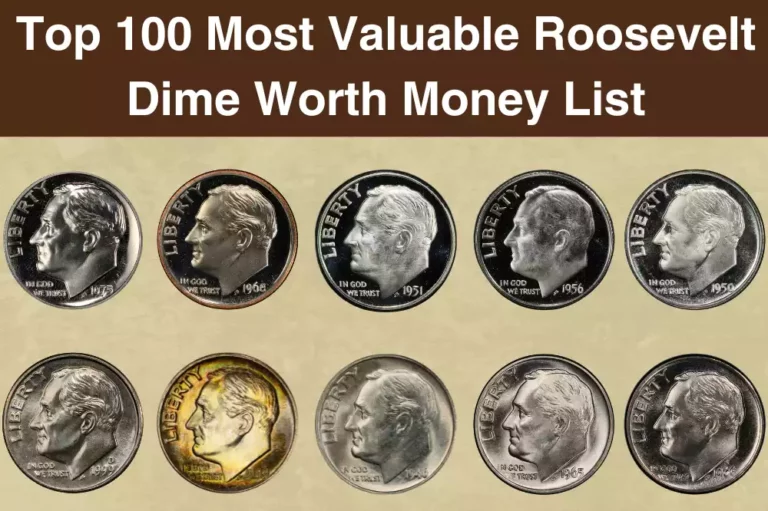
Also Read: Top 100 Most Valuable Roosevelt Dimes Worth Money List (Year Chart)
The Easy Way to Know Your 1926 Dime Value
The fastest way to know where your 1926 dime stands is to identify three things: the mint mark, the strike quality, and the grade. Mint mark location is on the reverse — no letter means Philadelphia, “D” is Denver, and “S” is San Francisco. From there, condition does most of the talking.
Upload a photo to the Coin Identifier and Value App for an instant read on variety and value range. A coin that looks ordinary can carry serious collector premium once properly identified.

1926 Dime Value Guides
Not all 1926 dimes are created equal. The mint that struck your coin is the first thing any serious collector checks — it determines rarity, strike characteristics, and ultimately, market value. Here are the three varieties to know:
Coin Identifier and Value App
Not sure what your coins are worth? Get Instant Value • Grade • Error Detection with coin identifier and value app (FREE Usage Daily)
-
- 1926 No Mint Mark Dime — Struck in Philadelphia, the most accessible of the three and a solid entry point for collectors building a Mercury dime set.
- 1926-D Dime — The Denver issue, notable for the difficulty of achieving a sharp, fully struck example — making high-grade FB specimens genuinely scarce.
- 1926-S Dime — The San Francisco issue and the most coveted of the three, commanding strong premiums across all grade levels due to its limited original production and key-date status within the series.
1926 No Mint Mark Dime Value

If you’re building a 1926 Mercury dime set on a budget, start here. Philadelphia struck the most, and circulated examples run $2 to $36 depending on grade. Uncirculated pieces range from $46 up to $3,680 for typical Mint State coins.
Philadelphia actually did a decent job striking these, so Full Bands specimens are more available than you’d expect compared to Denver or San Francisco. That’s good news if you’re cherrypicking FB coins without paying Denver premiums.
The market tightens hard above MS-65, though. The top-pop coins are genuinely scarce. The auction record sits at $9,200 — a PCGS MS-67 CAC example that sold at Heritage Auctions.
1926 No Mint Mark Dime Price/Grade Chart
Price by 1-70 Grade (Latest Auction Records Included)
1926 No Mint Mark Dime (FB) Price/Grade Chart
Price by 1-70 Grade (Latest Auction Records Included)
Scan the auction record chart below to see how the 1926 No Mint Mark Dime has performed at the podium over time.
| Date | Platform | Price | Grade |
|---|---|---|---|
| 11/23 | HA | $1,380 | 67 |
| 06/23 | HA | $198 | 65 |
| 05/23 | LM | $1,469 | 67 |
| 11/22 | HA | $119 | 64 |
| 10/22 | HA | $125 | 64 |
| 06/21 | HA | $94 | 64 |
| 02/20 | HA | $91 | 64 |
| 12/19 | HA | $348 | 66 |
| 10/19 | HA | $720 | 66 |
| 02/19 | HA | $264 | 66 |
This chart shows the market activity trends for the 1926 No Mint Mark Dime over the past year.
Market activity: 1926 No Mint Mark Dime
Market activity score: 43/100 as of Oct 2026 — up 6 points from Jul 2026. 12-month peak: 50 (Aug 2026).
1926-D Dime Value

Here’s a question worth asking: how does a coin with 6.8 million struck end up selling for $60,000? The answer is Full Bands. Circulated 1926-D dimes run $3 to $130, and standard uncirculated pieces range from $200 to $3,910. Respectable numbers. But add the FB designation and everything changes.
A standard 1926-D in MS-67 trades around $3,100–$4,250. The same coin with Full Bands? $60,000. That’s a premium exceeding 1,300%. Denver’s dies struggled to deliver a sharp strike in 1926. Below MS-65, FB examples are actually fairly available. Above that? They vanish. The PCGS population at MS-66+ stands at just 10 examples with 7 finer.
That $60,000 sale happened at Heritage Auctions in January 2019 for a PCGS MS-67 FB example. It redefined the ceiling for this variety and still stands as the benchmark. I think the 1926-D FB in gem grades is one of the most underappreciated coins in the Mercury series — everything had to go right at the Denver Mint, and it almost never did.
1926-D Dime Price/Grade Chart
Price by 1-70 Grade (Latest Auction Records Included)
1926-D Dime (FB) Price/Grade Chart
Price by 1-70 Grade (Latest Auction Records Included)
Trace that record through the auction history chart below, where one grade point and an FB designation changed everything.
| Date | Platform | Price | Grade |
|---|---|---|---|
| 01/26 | SB | $145 | 58 |
| 06/25 | SB | $264 | 58 |
| 12/23 | HA | $3,120 | 67 |
| 05/23 | LM | $1,528 | 66 |
| 03/23 | DL | $451 | 63 |
| 01/23 | HA | $266 | 63 |
| 12/22 | DL | $300 | 63 |
| 08/22 | SB | $456 | 64 |
| 06/22 | SB | $264 | 64 |
| 06/22 | SB | $336 | 64 |
The market activity below shows how the 1926-D trades in the current collector environment.
Market activity: 1926-D Dime
Market activity score: 62/100 as of Oct 2026 — up 16 points from Jul 2026. 12-month peak: 69 (Aug 2026).
1926-S Dime Value

Most collectors already know this one’s special. The 1926-S is the key date of the series, and you feel it at every grade level. Even a beat-up Good-4 example starts around $15. An MS-65 FB pushes to $6,250.
Circulated pieces are out there, but uncirculated coins are genuinely scarce. Gems? Maybe 100 to 200 pieces exist at MS-65 or above, regardless of Full Bands. PCGS has awarded the FB designation to only 150 uncirculated pieces total — making any slabbed FB example a serious acquisition.
The auction record stands at $54,625 for a PCGS MS-67 CAC example sold at Heritage Auctions in August 2010. That benchmark has held firm for over a decade. We consider the 1926-S one of the strongest long-term holds in the Mercury dime series — demand never dries up for this date.
1926-S Dime Price/Grade Chart
Price by 1-70 Grade (Latest Auction Records Included)
1926-S Dime (FB) Price/Grade Chart
Price by 1-70 Grade (Latest Auction Records Included)
The auction record chart below traces the 1926-S Dime’s price history at the podium — a coin where top-grade appearances are rare enough to move the market.
| Date | Platform | Price | Grade |
|---|---|---|---|
| 02/24 | SB | $240 | 40 |
| 11/23 | HA | $3,120 | 61 |
| 08/23 | HA | $71 | 25 |
| 08/23 | SB | $264 | 40 |
| 04/23 | DL | $170 | 35 |
| 03/23 | DL | $360 | 45 |
| 01/23 | HA | $1,260 | 58 |
| 01/23 | DL | $2,089 | 61 |
| 11/22 | SC | $1,357 | 58 |
| 09/22 | DL | $300 | 40 |
The market activity below captures how the 1926-S trades today.
Market activity: 1926-S Dime
Market activity score: 69/100 as of Oct 2026 — up 14 points from Jul 2026. 12-month peak: 75 (Aug 2026).
Also Read: 16 Rare Dime Errors List with Pictures (By Year)
Rare 1926 Dime Error List
Your 1926 dime might be worth more than you think — a handful of production mistakes turn ordinary coins into real collectibles. Here’s what to look for.
1. Doubled Die Obverse (FS-101)
This one has a great backstory. The 1926 DDO was first reported after showing up at a major coin show, and none of the CONECA representatives there had even heard of it. Nobody knew it existed. The doubling shows up on “ERTY” of LIBERTY, the AW designer’s monogram, and the wing feathers on Liberty’s cap. You can also spot light to moderate doubling in the hairlines.
CONECA cataloged it as DDO-001, and major grading services have since authenticated it. A CACG-certified XF Details example surfaced at a GreatCollections auction, so these do come to market occasionally. In circulated grades, confirmed examples bring meaningful premiums — potentially several hundred dollars depending on doubling strength and eye appeal.
1926 Doubled Die Obverse (FS-101) Dime Price/Grade Chart
Price by 1-70 Grade (Latest Auction Records Included)
2. Off-Center Strike
When the planchet shifts before the dies come together, you get a coin with part of the design missing and a blank crescent of metal along one edge. The sweet spot for collectors is about 50% off-center with the date still fully readable. That combination is tough to find.
Certified circulated examples typically sell in the $150–$400 range. Uncirculated pieces push higher, depending on how dramatic the misalignment is and whether you can still read the full date.
3. Broadstrike
No collar, no reeds, no standard diameter. When the retaining collar fails to engage, the metal spreads freely during striking. You end up with a coin that’s wider than normal with a smooth, flat rim instead of the usual reeded edge.
Coin Identifier and Value App
Not sure what your coins are worth? Get Instant Value • Grade • Error Detection with coin identifier and value app (FREE Usage Daily)
On a 1926 Mercury dime, a clean broadstrike with full design detail and original luster is a nice find. Circulated examples trade in the $200–$500 range. Slabbed mint state pieces can go higher depending on how dramatic the spread looks.
4. Clipped Planchet
This error happens before striking even begins. When the blank-punching press overlaps or misaligns on the metal strip, you get a planchet with a curved or straight chunk missing from the rim. Curved clips are more common and typically sell for $75 to $150 in circulated grades. Straight clips are rarer and bring more.
On a 1926 Mercury dime, the silver content and age add appeal. Look for a clean, well-defined clip — the bigger the better. Certified examples with a 15–20% clip and original surfaces consistently outperform raw coins at auction.
Where to Sell Your 1926 Dime?
Now that you’ve determined your 1926 Dimes’ worth, are you wondering about the best online platforms to sell them? I’ve got you covered with a comprehensive guide to these websites, complete with detailed descriptions, advantages, and drawbacks.
Check out now: Best Places To Sell Coins Online (Pros & Cons)
1926 Dime Market Trend
Market Interest Trend Chart - 1926 Dime
Market interest: 2,870 collectors tracking this coin as of Oct 2026 — up 1,000 from Mar 2026. Currently at its 12-month peak.
*Market Trend Chart showing the number of people paying attention to this coin.
FAQ about the 1926 Dime
1. What makes a 1926 dime valuable?
Mint mark, grade, and strike quality. Full Bands is the biggest value driver — it can multiply a coin’s worth by ten times or more over a standard uncirculated example at the same grade.
2. How do I know if my 1926 dime has a mint mark?
Flip it over and look just left of the fasces base, near the bottom rim. “D” means Denver, “S” means San Francisco. No letter means Philadelphia — the most common of the three.
3. Is a worn 1926-S dime still worth keeping?
Absolutely. The 1926-S carries collector premium at every grade level, unlike most Mercury dimes where circulated pieces trade near melt value. Even a heavily worn Good-4 is worth well above face value.
4. What is the Full Bands designation and why does it matter so much?
Full Bands (FB) means the horizontal bands crossing the fasces on the reverse are fully separated and sharply defined. It signals an exceptionally well-struck coin. Most 1926 dimes — especially from Denver and San Francisco — came off the press weakly struck, so FB-certified examples are genuinely rare and bring dramatically higher prices.
5. Why did the 1926-D sell for $60,000 when so many were made?
Mintage doesn’t tell the whole story. Denver struggled to produce fully struck coins in 1926, making FB examples at top grades extraordinarily rare regardless of how many were originally minted. That $60,000 coin was a PCGS MS-67 FB — a grade where only a handful exist.
6. Are there any 1926 dime proof coins?
No. The Mint suspended proof production for Mercury dimes and didn’t resume until 1936. Anything sold as a 1926 proof is either a business strike with unusually reflective surfaces or flat-out misrepresented.
7. What should I look for when examining a 1926 dime for errors?
Grab a 10x loupe and good lighting. Check LIBERTY and the date for doubling. Inspect the rim for clips or irregular edges. Look at the overall shape for broadstrike signs. The most valuable error is the DDO-001, showing doubling on LIBERTY and the AW monogram.
8. Does the coin’s toning affect its value?
Natural toning that developed over decades? Collectors love it — it can actually boost eye appeal and value. Artificial toning or any sign of cleaning? That’ll hurt you. Expect a “Details” grade from PCGS or NGC, which tanks resale value.
9. How does the 1926-S compare to the 1926-D as a long-term investment?
Different strengths. The 1926-S is a recognized key date with broad appeal across all grades. The 1926-D is more of a specialist play — its value concentrates in the FB category, where condition rarity creates extreme price swings. Registry set collectors actively chase both.
10. Should I get my 1926 dime professionally graded?
If it looks uncirculated or close to it, yes. Certification from PCGS or NGC adds authenticity, protects the surfaces, and typically boosts resale value. For any coin potentially worth $200 or more, a single grade point can mean hundreds of dollars at auction.