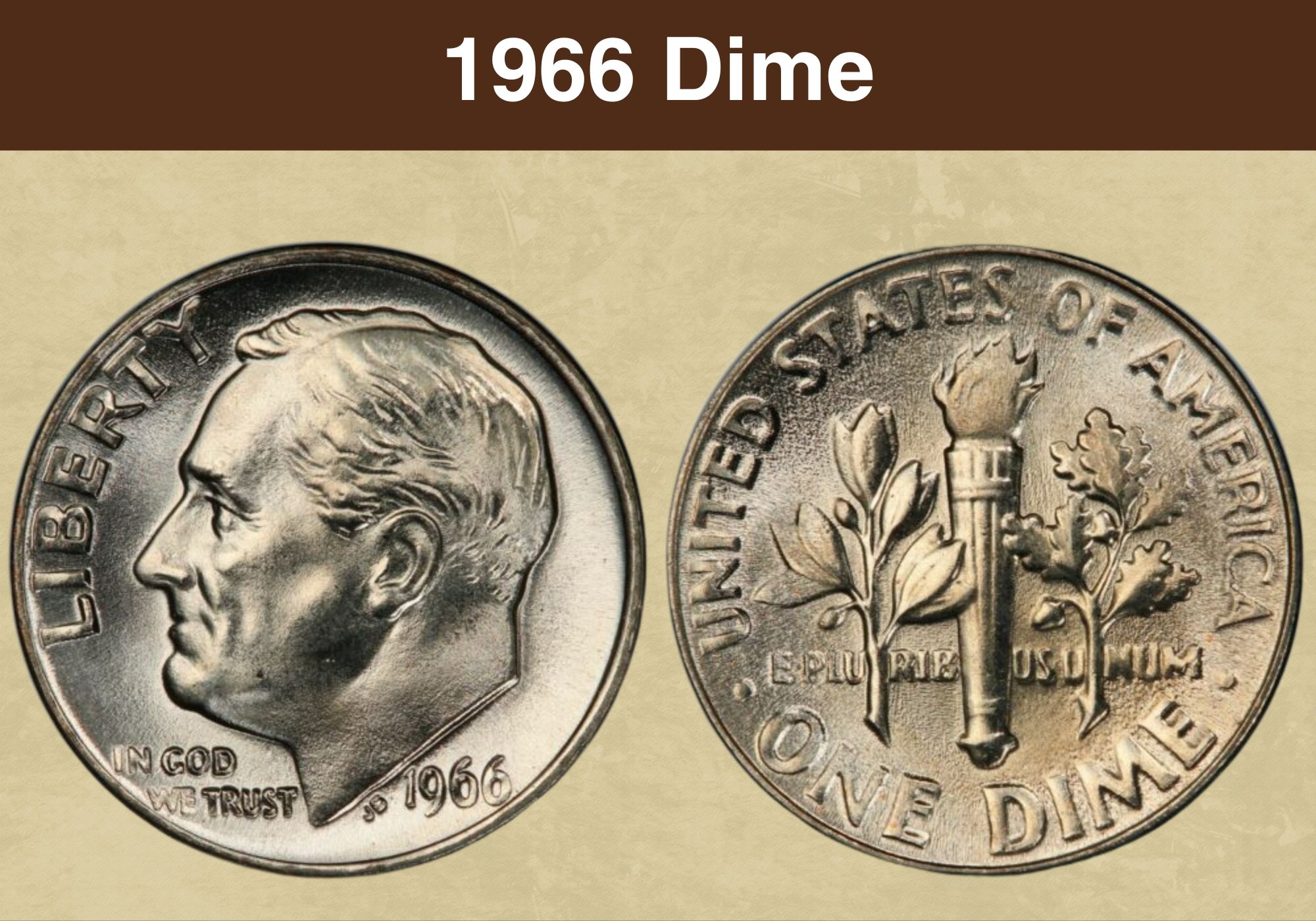
If you’ve found a 1966 dime in your pocket change or inherited coin collection, you’re probably curious about its worth.
The 1966 dime value for most circulated examples hovers around 10 cents, which is close to face value. However, the coin’s worth can increase depending on its condition and type. Uncirculated specimens in high mint state can fetch around $8 to $9, while special varieties can be worth considerably more.
What matters to collectors is the existence of Special Mint Set (SMS) varieties, especially those with Deep Cameo (DCAM) finishes that can command prices exceeding several hundred dollars in top grades.
Whether you’re holding a common circulation strike or a rare SMS variety, understanding the factors that influence 1966 dime value—including grade, strike type, and special characteristics—will help you determine what you actually have.
Coin Value Contents Table
- 1966 Dime Value By Variety
- 1966 Dime Value Chart
- Top 10 Most Valuable 1966 Dime Worth Money
- History of the 1966 Dime
- Is your 1966 Dime rare?
- Key Features of the 1966 Dime
- 1966 Dime Mintage & Survival Data
- 1966 Dime Mintage & Survival Chart
- The Easy Way to Know Your 1966 Dime Value
- 1966 Dime Value Guides
- 1966 No Mint Mark Dime Value
- 1966 SMS Special Strike Dime Value
- 1966 SMS Special Strike CAM Dime Value
- 1966 SMS Special Strike DCAM Dime Value
- Rare 1966 Dime Error List
- Where to Sell Your 1966 Dime ?
- 1966 Dime Market Trend
- FAQ About the 1966 Dime
1966 Dime Value By Variety
This chart displays the values of 1966 Roosevelt dimes across different conditions and varieties, including standard circulation strikes and Special Mint Set (SMS) coins with various designations such as Full Bands, Cameo, and Deep Cameo finishes.
If you know the grade of your coin, you can find the exact price below in the Value Guides section.
1966 Dime Value Chart
| TYPE | GOOD | FINE | AU | MS | PR |
|---|---|---|---|---|---|
| 1966 No Mint Mark Dime Value (MS) | $0.10 | $0.31 | $0.79 | $8.86 | — |
| 1966 No Mint Mark Dime Value (FB) | $0.23 | $0.80 | $2.05 | $105.27 | — |
Also Read: Roosevelt Dime Value (1946-Present)
Top 10 Most Valuable 1966 Dime Worth Money
Most Valuable 1966 Dime Chart
2003 - Present
The auction record data spanning from 2003 to present reveals that Special Mint Set specimens dominate the highest value tier for 1966 dimes, with the top position held by a 1966 SMS SP 67 at $12,500.
The chart demonstrates a clear value hierarchy determined primarily by grade and strike type. Regular circulation strikes, even at the MS68 grade level, reach auction values around $2,820, while SMS specimens in comparable or lower grades command similar or higher prices.
The pricing structure reflects multiple factors related to production and preservation. SMS coins were produced using polished dies and specially prepared blanks at quantities significantly lower than circulation strikes—approximately 2.26 million sets compared to over 1.3 billion regular strikes.
This production method created enhanced surface quality, but achieving Deep Cameo designation requires perfect die conditions that exist only during the earliest strikes from fresh dies, resulting in extreme scarcity for DCAM specimens.
Grade rarity drives the premium tier values. MS68 represents the highest grade for regular strikes with fewer than 15 specimens known at this level, creating competition among advanced collectors. For SMS specimens, grades of SP67 and above command exponential price increases due to limited populations in these preservation levels.
The FS-401 “5 on Cheek” variety, reaching $1,500 in SP67, demonstrates how recognized die varieties add value through catalog designation and visual distinctiveness.
The market data indicates that 1966 dimes function as condition rarities rather than absolute rarities. While circulated examples remain common at face value, the percentage of specimens surviving in gem grades diminishes dramatically.
This creates a collector dynamic focused on quality over scarcity, where die preparation characteristics, strike sharpness, and surface preservation determine market position. The concentration of SMS coins in the value chart reflects both their inherent production quality and their appeal to registry set competitors seeking the finest available examples within each designated category.
History of the 1966 Dime
The 1966 dime continued the Roosevelt dime series that had been introduced in 1946 to honor President Franklin D. Roosevelt following his death in 1945, commemorating his leadership during the Great Depression and World War II.
However, the 1966 dime represents a significant transitional period in American coinage history. It marked the second year after the United States Mint abandoned the use of silver in dime production, a change prompted by the Coinage Act of 1965 in response to rising silver market prices.
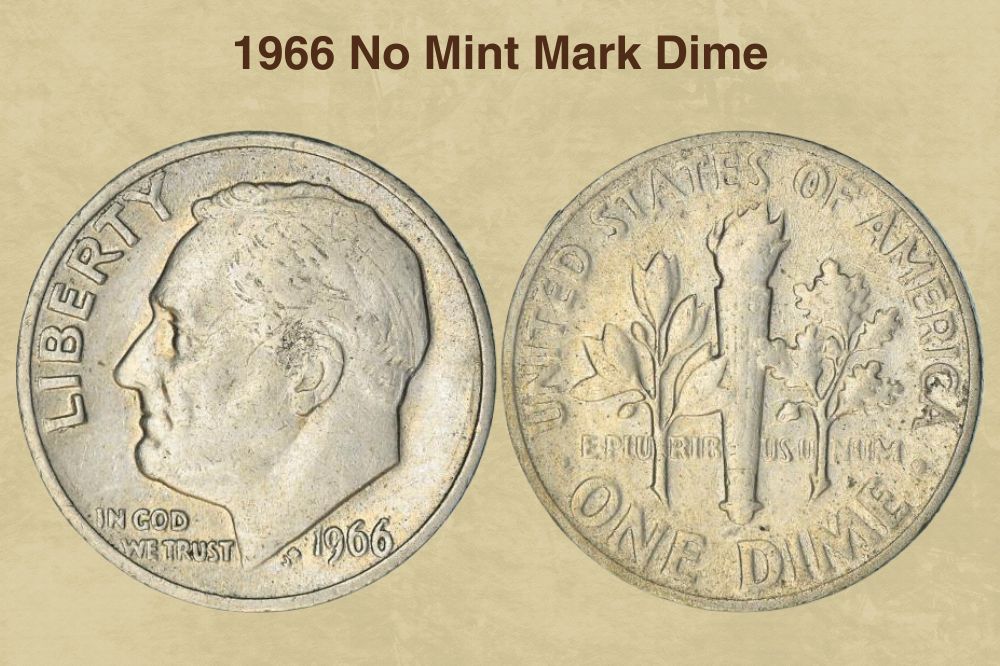
What makes the 1966 dime particularly unique is its distinction as the last year dimes were produced without mint marks. From 1965 through 1966, the U.S. Mint deliberately omitted mint marks from all dimes, regardless of whether they were struck at the Philadelphia, Denver, or San Francisco facilities.
This unusual decision stemmed from concerns that coin collectors might hoard the newly redesigned clad dimes in anticipation of value increases, potentially worsening the coin shortage that had prompted the composition change in the first place.
During this same period of coin shortage, the U.S. Mint temporarily ceased proof coin production in 1965. To satisfy collector demand, Special Mint Sets (SMS) were introduced in 1966 as an alternative.
The 1966 SMS, released on June 30, 1966, included the Roosevelt dime along with other denominations, featuring coins with a higher quality finish than regular circulation strikes but not as meticulously produced as traditional proof coins.
The mint mark system was restored to dime production in 1968, making the 1966 issue the final year of this brief but notable period in American numismatic history.
Also Read: Top 100 Most Valuable Roosevelt Dimes Worth Money List
Is your 1966 Dime rare?
1966 No Mint Mark Dime (MS)
1966 No Mint Mark Dime (FB)
Understanding the rarity of your 1966 dime varieties is crucial for accurate valuation, and the CoinValueChecker App provides instant rarity assessments and rankings to help collectors identify whether they possess a common circulation strike or an uncommon SMS specimen worth significantly more.
Key Features of the 1966 Dime
The 1966 Dime belongs to the Roosevelt dime series, designed by John R. Sinnock. All 1966 dimes were struck without mint marks, regardless of their production facility, making them unique among Roosevelt dimes. Both regular circulation strikes and Special Mint Sets (SMS) with enhanced finishes were produced to meet collector demand.
The Obverse of the 1966 Dime
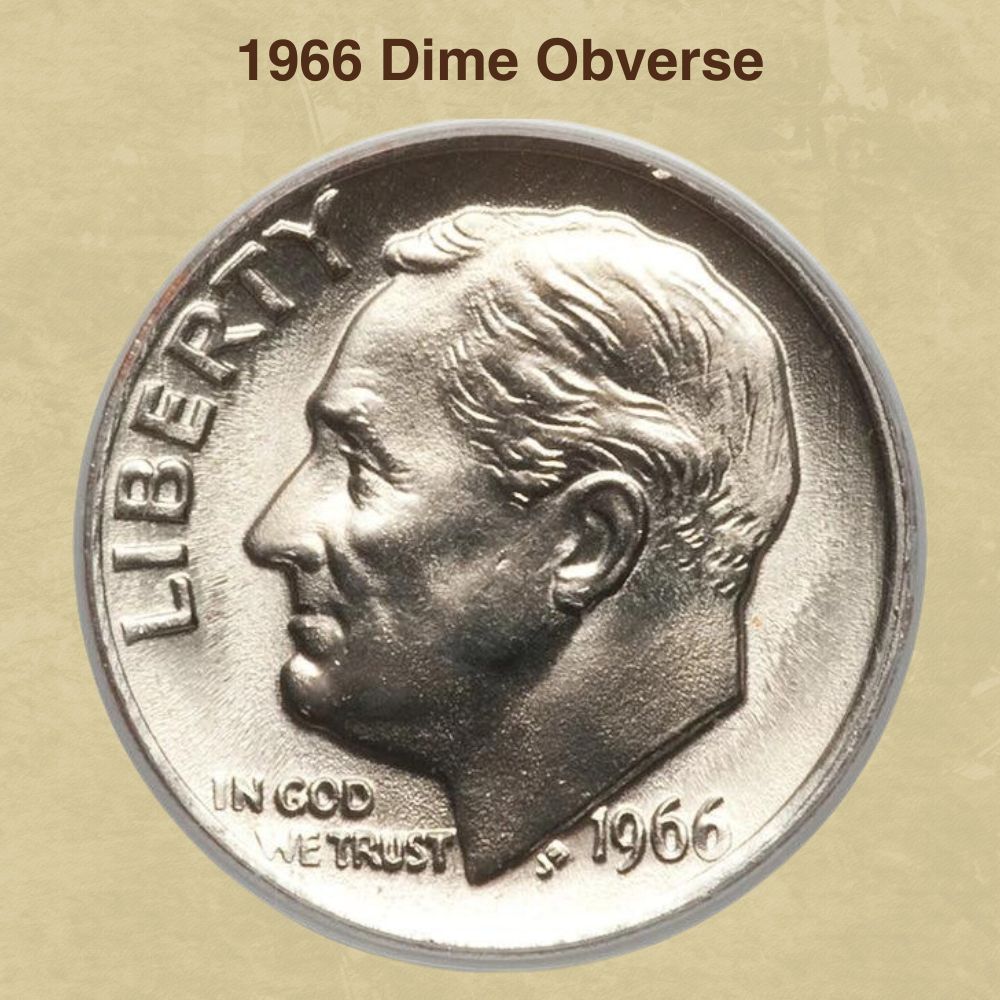
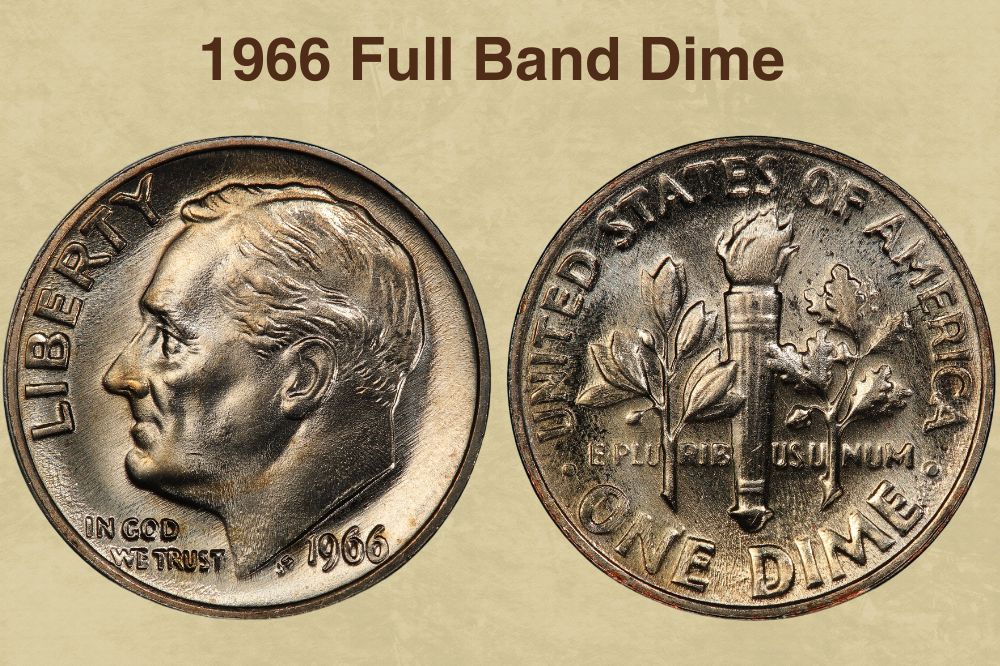
The obverse displays President Franklin D. Roosevelt’s left-facing profile. “LIBERTY” arcs along the left rim, while “IN GOD WE TRUST” appears beneath his chin. The date “1966” and designer’s initials “JS” are positioned at the base of Roosevelt’s neck.
The Reverse of the 1966 Dime
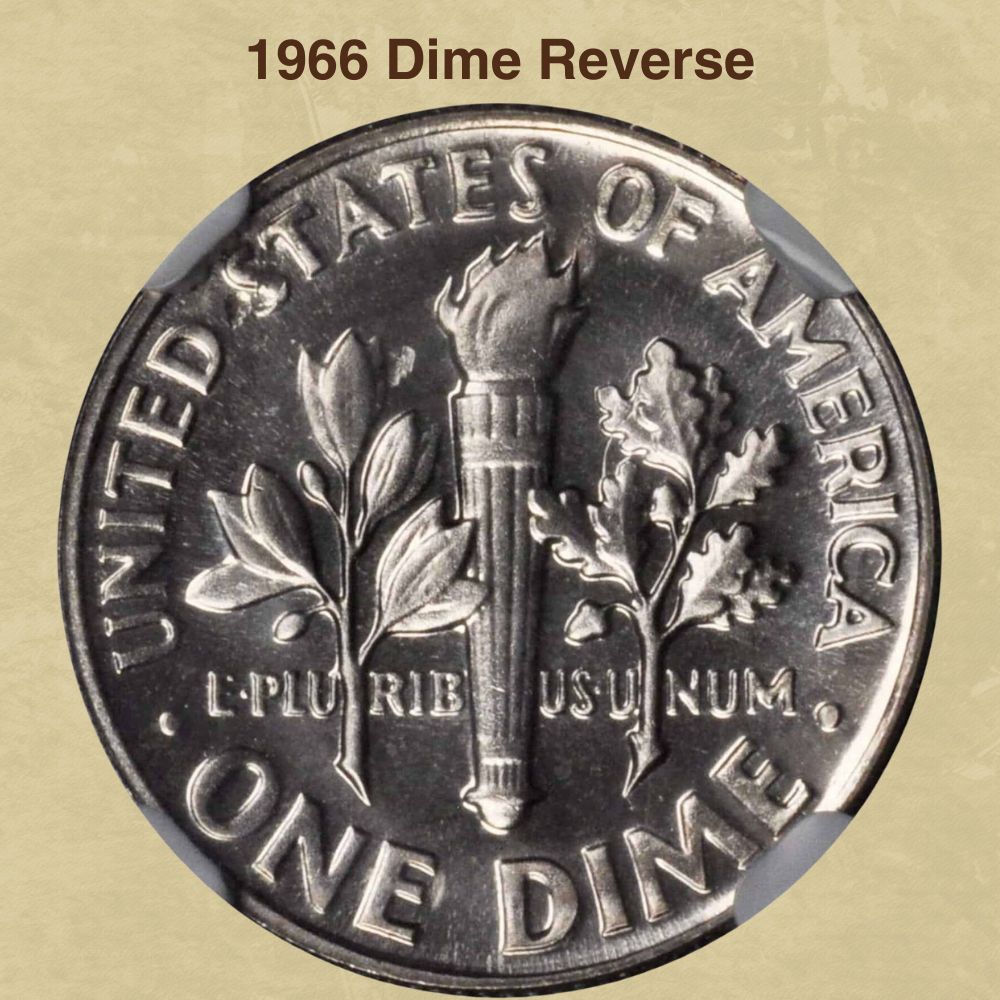
The reverse shows a central torch representing liberty, with an olive branch on the left symbolizing peace and an oak branch on the right representing strength and independence. “UNITED STATES OF AMERICA” curves along the top rim, “E PLURIBUS UNUM” crosses the middle field, and “ONE DIME” appears at the bottom.
Other Features of the 1966 Dime
The coin features a copper-nickel clad composition (75% copper, 25% nickel over a pure copper center), measuring 17.9 millimeters in diameter, weighing 2.27 grams, with a reeded edge.
Also Read: Top 100 Rarest Dimes Worth Money (Most Expensive)
1966 Dime Mintage & Survival Data
1966 Dime Mintage & Survival Chart
Survival Distribution
| Type | Mintage | Survival | Survival Rate |
|---|---|---|---|
| No Mint | 1,300,000,000 | unknown | unknown |
| SMS SP | 2,260,000 | unknown | unknown |
| SMS SP CAM | 2,260,000 | unknown | unknown |
| SMS SP DCAM | 2,260,000 | unknown | unknown |
The 1966 dime saw an exceptionally high production volume, with approximately 1.3 billion regular circulation strikes minted without mint marks. This massive mintage makes the 1966 dime one of the most common Roosevelt dimes in existence.
In contrast, Special Mint Sets were produced in far more limited quantities, with approximately 2.26 million SMS dimes struck. These coins featured superior finishes compared to regular strikes, including standard SMS SP, Cameo (CAM), and Deep Cameo (DCAM) varieties.
The enormous production numbers of circulation strikes, combined with decades of use in commerce, make survival data difficult to determine. While billions were originally minted, countless examples have been lost, worn beyond recognition, or removed from circulation over the past six decades.
The stark contrast between the 1.3 billion circulation strikes and the 2.26 million SMS coins creates a significant rarity differential that directly impacts collector interest and values, particularly for higher-grade SMS specimens with Cameo or Deep Cameo designations.
Also Read: Top 70+ Most Valuable Mercury Dimes Worth Money (Chart By Year)
The Easy Way to Know Your 1966 Dime Value
Determining the value of your 1966 dime depends on several critical factors, starting with its condition or grade.
The grade ranges from circulated conditions (showing wear and tear) to Mint State or Proof grades (appearing nearly brand new with no signs of wear). Professional grading services use the Sheldon Grading scale, which ranks coins from 1 to 70, with 70 representing the highest quality.
The next consideration is identifying whether your coin is a regular strike or a Special Mint Set (SMS) dime, as SMS versions with enhanced finishes command significantly higher premiums.
Additionally, look for minting errors such as doubled die varieties where design elements like “LIBERTY” or Roosevelt’s portrait appear doubled, or the rare “5 on cheek” error where the number 5 mysteriously appears on Roosevelt’s face—these error coins can be worth hundreds or even thousands of dollars.
Another valuable characteristic to examine is whether your dime displays Full Bands (FB) designation, meaning the horizontal bands on the torch sculpture on the reverse are fully separated and clearly visible.
ull Bands dimes are scarcer and more valuable to collectors than regular strikes. Overall appearance matters too—coins with attractive luster, original toning, and minimal blemishes typically command higher prices than those with discolorations or surface issues.
For circulated 1966 dimes, values typically range from face value to around 35 cents, while uncirculated examples can be worth anywhere from a few dollars to several hundred dollars depending on grade. SMS dimes, particularly those with Cameo or Deep Cameo finishes, can reach values exceeding several thousand dollars in the highest grades.

CoinValueChecker App
Not sure what your coins are worth? Get Instant Value • Grade • Error Detection with CoinValueChecker – the ultimate coin value app (FREE Usage Daily)
Accurately assessing all these factors—grade, strike type, errors, and special characteristics—can be challenging without expert knowledge, which is why using the CoinValueChecker App is essential for instantly identifying your 1966 dime’s true worth through advanced image recognition technology that evaluates condition, detects errors, and provides current market valuations in seconds.

1966 Dime Value Guides
- 1966 No Mint Mark Dime
- 1966 SMS Special Strike Dime
- 1966 SMS Special Strike CAM Dime
- 1966 SMS Special Strike DCAM Dime
The 1966 Roosevelt Dime marks a transitional year in U.S. coinage when regular Proof production was suspended and replaced with Special Mint Sets (SMS).
These copper-nickel clad dimes contain no silver content. While circulation strikes hold minimal premium over face value, SMS versions command significantly higher prices, especially those with Cameo (CAM) or Deep Cameo (DCAM) designations.
The coin’s value depends heavily on its condition grade, with uncirculated high-grade specimens worth considerably more than worn circulated pieces.
1966 No Mint Mark Dime Value
The 1966 No Mint Mark Dime Value occupies a unique position in the Roosevelt dime collecting landscape.
With nearly 1.4 billion pieces minted, this coin represents one of the most common dates in the series, making high-grade uncirculated examples readily available and affordable for most collectors. The absence of silver content—unlike pre-1965 issues that contained 90% silver—fundamentally shifts the coin’s market positioning from precious metal investment to pure numismatic interest.
Circulated examples typically hold minimal premium at around face value to 15 cents, while standard uncirculated pieces range from $1 to $8, creating an accessible entry point for beginning collectors.
The real collecting challenge lies in condition rarity rather than absolute scarcity. While billions were produced, high-grade specimens become increasingly scarce at MS67 and above, with fewer than a dozen MS68 examples known.
Full Bands specimens showing complete horizontal torch bands command significantly higher premiums, with values ranging from $10 to $2,900 depending on grade. This characteristic makes the Roosevelt dime series ideal for developing collecting skills without major financial commitment, allowing gradual upgrades from circulated to higher grades.
1966 No Mint Mark Dime (MS) Price/Grade Chart
Price by 1-70 Grade (Latest Auction Records Included)
1966 No Mint Mark Dime (FB) Price/Grade Chart
Price by 1-70 Grade (Latest Auction Records Included)
For a closer look at how auction prices have evolved across different grades, check the Auction Record Chart below.
| Date | Platform | Price | Grade |
|---|
The Market Activity section provides current insights into trading volumes and collector interest levels for this transitional-year coin.
Market Activity: 1966 No Mint Mark Dime
1966 SMS Special Strike Dime Value
The 1966 SMS Special Strike Dime Value represents a unique collector-focused production created during a pivotal moment in American coinage history.
Struck at San Francisco using polished dies and specially prepared blanks, these coins featured higher-quality finishes than typical uncirculated pieces, with more deeply reflective fields and enhanced surface characteristics that distinguish them from regular circulation strikes.
The production process involved polished dies but generally excluded the multiple strikes typical of proof coinage, resulting in coins that occupied a middle ground between standard mint state and traditional proofs.
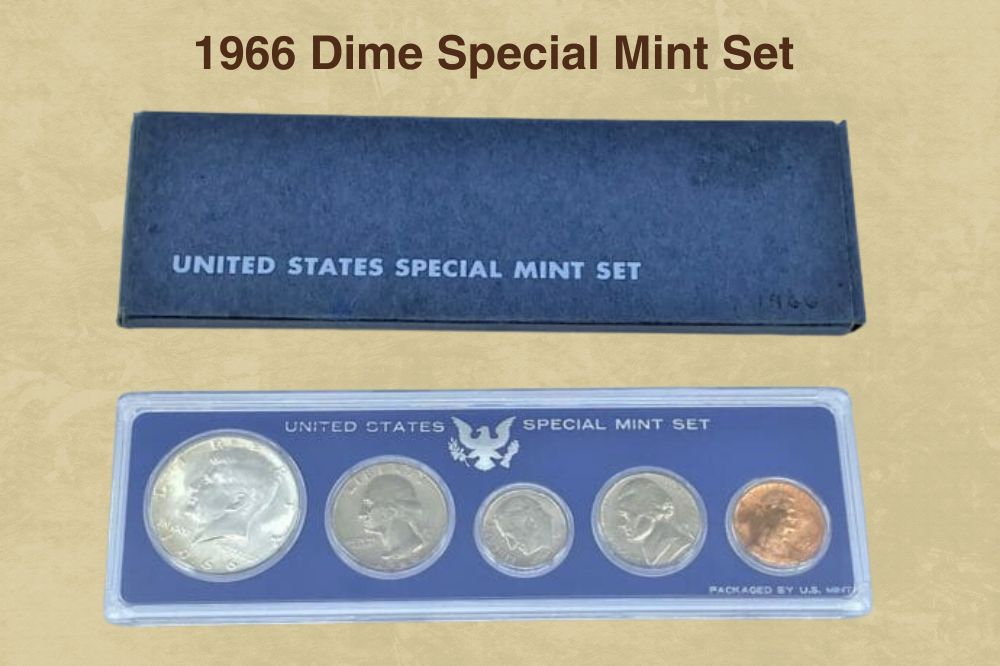
With approximately 2.26 million sets produced, this limited mintage created immediate scarcity relative to the billion-plus circulation strikes from the same year. Originally marketed at $4 per five-coin set—nearly double the $2.10 price of 1964 proof sets—these specimens served collectors during the three-year period when traditional proof production had been suspended.
The coins were packaged in rigid two-piece plastic holders housed in navy-blue boxes emblazoned with “UNITED STATES SPECIAL MINT SET”, presenting a premium product distinct from previous packaging formats.
Value progression demonstrates clear grade sensitivity:standard SP-graded examples remain accessible at under $20 in typical grades, while gem SP65 specimens command around $35, with premiums escalating significantly as grades advance—SP67 pieces routinely bring $125 or more, and the finest SP68+ examples can reach into the hundreds or thousands.
The auction record stands at $12,500 for an SP67 specimen sold via eBay in February 2021, reflecting the premium collectors place on exceptional quality within this specialized series. Landing a high-grade SMS dime represents a significant achievement and marks an advanced Roosevelt dime collection.
1966 SMS Special Strike Dime Price/Grade Chart
Price by 1-70 Grade (Latest Auction Records Included)
The Auction Record Chart below documents realized prices across SP grade levels, illustrating how condition scarcity drives valuations in this collector-oriented production.
| Date | Platform | Price | Grade |
|---|
Market Activity tracking reveals ongoing interest from specialized collectors pursuing these transitional-era specimens that bridge the gap in proof production history.
No valid activity data found
1966 FS-401, “5” on Cheek Dime Value
The 1966 FS-401 “5 on Cheek” represents a recognized die variety catalogued in the Cherrypickers’ Guide, featuring a distinctive impression resembling the numeral “5” on Roosevelt’s cheek caused by struck-through lint or debris during the die production process.
Unlike common mint errors that carry minimal premiums, this variety has achieved formal recognition and catalog designation, elevating it from simple error status to collectible variety. Market data from the past 15 years shows this variety trading at prices ranging from $180 to $500 for specimens graded between SP-66 and SP-67+, establishing a consistent value baseline for certified examples.
More recently, a SP-67 specimen achieved $1,500 at auction in October 2023, reflecting growing collector recognition of this variety’s significance within the Special Mint Set series. The variety’s appeal stems from multiple factors: its official catalog status provides authentication legitimacy, its struck-through origin creates a visually distinctive feature, and its limited population across certified specimens ensures genuine scarcity.
Population data indicates only a handful of examples have been professionally graded across all quality levels, with SP-67 and higher specimens particularly scarce.
For variety specialists and Roosevelt dime collectors, the FS-401 represents one of the most significant 1966 varieties available, commanding substantial premiums over standard SMS dimes at comparable grades while offering a compelling combination of rarity, recognition, and visual interest that justifies its position as a key variety within the transitional-year coinage series.
1966 FS-401, 5 on Cheek Dime Price/Grade Chart
Price by 1-70 Grade (Latest Auction Records Included)
1966 SMS Special Strike CAM Dime Value
The 1966 SMS Cameo dime represents a rare and highly sought-after variety within the Special Mint Set series, with values ranging from approximately $11 for lower grades to several thousand dollars for top-tier SP68 Cameo specimens.
The auction record for this coin stands at $1,035, achieved by a PR68 grade Cameo example in May 2004. What distinguishes the Cameo version is its unique visual contrast effect—frosted design elements set against mirror-like reflective fields create a striking contrast that makes Cameo versions significantly superior to standard SP versions.
In 1996, the Professional Coin Grading Service (PCGS) officially added Cameo and Deep Cameo designations for 1965-1967 Special Mint Set coins, a move that greatly enhanced recognition of these varieties within the collecting community.
The formation of this Cameo effect is not accidental—only fresh, polished dies and precise striking conditions can produce this noticeable contrast between frosted devices and deeply mirrored fields, making 1966 SMS dimes with quality Cameo characteristics relatively scarce.
For series collectors, the Cameo version fills the collecting tier between standard SMS and the rarer Deep Cameo, offering a choice that balances visual appeal with affordability.
1966 SMS Special Strike CAM Dime Price/Grade Chart
Price by 1-70 Grade (Latest Auction Records Included)
To gain deeper insights into auction price performance across different grades, refer to the Auction Record Chart below.
| Date | Platform | Price | Grade |
|---|
Meanwhile, the Market Activity data helps you track current collector interest in this special transitional-period variety.
No valid activity data found
1966 SMS Special Strike DCAM Dime Value
The 1966 SMS Deep Cameo dime stands as the most valuable variety among all 1966 dime types, commanding prices from $40 in lower grades to over $7,850 in the highest grades. The documented auction record reached $2,760 in 2007, though market values have continued their upward trajectory as serious collectors increasingly recognize the rarity of this designation.
The scarcity of Deep Cameo specimens stems from a narrow production window—DCAM designation requires perfect die conditions that exist only during the first few dozen strikes from fresh dies, before any surface wear diminishes the contrast effect.
This production reality means that despite the 2.26 million SMS sets originally struck, only a tiny fraction achieved the Deep Cameo designation, creating genuine condition rarity within an already collector-focused series.

CoinValueChecker App
Not sure what your coins are worth? Get Instant Value • Grade • Error Detection with CoinValueChecker – the ultimate coin value app (FREE Usage Daily)
For investment-oriented collectors, the 1966 SMS DCAM represents the optimal choice among 1966 dimes, with specimens graded MS65 or higher consistently fetching over $400. The combination of historical significance—marking the second year of America’s transition from silver to clad coinage—and extreme visual quality positions these coins as essential acquisitions for advanced Roosevelt dime specialists and registry set competitors.
Unlike their Cameo counterparts that show partial contrast, DCAM specimens deliver maximum visual impact that rivals traditional proof coinage from any era.
1966 SMS Special Strike DCAM Dime Price/Grade Chart
Price by 1-70 Grade (Latest Auction Records Included)
For detailed pricing trajectories across different Deep Cameo grades, the Auction Record Chart below tracks realized values and demonstrates how condition sensitivity drives valuations in this elite tier.
| Date | Platform | Price | Grade |
|---|
The Market Activity section provides current trading volume insights, revealing sustained collector demand for these premium specimens that represent the pinnacle of 1966 Special Mint Set production.
No valid activity data found
Also Read: 16 Rare Dime Errors List with Pictures (By Year)
Rare 1966 Dime Error List
The 1966 Roosevelt dime, while common in circulation, features several notable minting errors that can significantly increase its value. All 1966 dimes were struck at the Philadelphia Mint with no mint mark, and most are worth face value.
However, collectors actively seek error varieties that resulted from die imperfections, improper striking, or manufacturing defects.
1. 1966 Doubled Die Obverse (DDO)
The doubled die error occurs when the word “LIBERTY” or other obverse inscriptions appear double-struck, creating a noticeable doubling effect. This manufacturing flaw happens during the die creation process when the hub impresses the design twice in slightly different positions.
The doubling is most visible on the lettering and date. Coins with prominent doubled die features can be worth $50 to $600, depending on the doubling’s strength and the coin’s overall condition. Collectors use magnification to identify genuine doubled dies versus mechanical doubling.
2. 1966 Doubled Die Reverse (DDR)
Similar to the obverse variety, the doubled die reverse shows doubling on the reverse inscriptions, particularly “UNITED STATES OF AMERICA,” “ONE DIME,” or “E PLURIBUS UNUM.” The torch, olive branch, and oak branch may also display slight doubling effects.
This error shares the same creation process as DDO varieties but affects the coin’s back. Values typically range from moderate to significant premiums depending on doubling visibility. Strong DDR examples with clear separation between doubled elements command higher prices in the collector market.
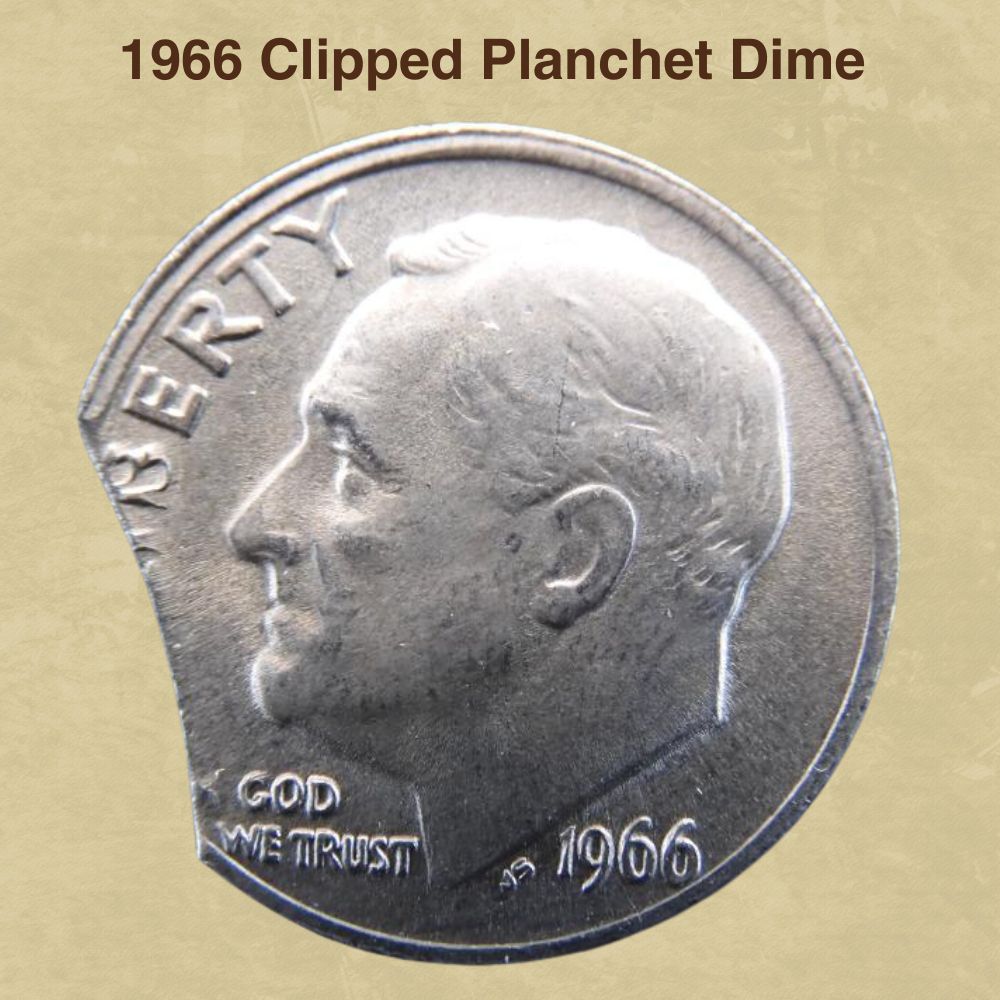
3. 1966 Clipped Planchet Error
A clipped planchet error occurs when a coin is struck on improperly cut metal, creating an irregular or missing section along the rim that resembles a bite taken from the coin. This happens when the metal strip feeding into the blanking press overlaps, and the punch cuts through both layers.
Well-preserved 1966 dimes with clipped planchet errors can be worth approximately $30 to $50. Larger clips generally command higher premiums than smaller ones. The clip must be a mint error, not post-mint damage, which is determined by raised metal along the clip’s edge.
Where to Sell Your 1966 Dime ?
Whether you choose online marketplaces, coin dealers, or auction houses, ensure you have your 1958 dime professionally graded and authenticated to maximize its value and attract serious buyers.
Check out now: Best Places To Sell Coins Online (Pros & Cons)
1966 Dime Market Trend
Market Interest Trend Chart - 1966 Dime
*Market Trend Chart showing the number of people paying attention to this coin.
FAQ About the 1966 Dime
1. Does the 1966 dime contain silver?
No, the 1966 dime does not contain silver. Prior to 1965, dimes were composed of 90% silver, but by 1966, the U.S. Mint had transitioned to a copper-nickel clad composition (75% copper, 25% nickel over a pure copper center). The melt value of 1966 dimes is approximately $0.0206, compared to $1.6378 for silver dimes.
2. Why doesn’t the 1966 dime have a mint mark?
All 1966 dimes were produced without mint marks, even though they were struck at Philadelphia, Denver, and San Francisco mints. The U.S. Mint omitted mint marks on dimes produced in 1965, 1966, and 1967 due to a temporary policy change. The Mint feared that coin enthusiasts would hoard the new dimes in hopes of creating a shortage that would boost their value, so they deleted the mint stamp to discourage such behavior.
3. What are Special Mint Sets (SMS)?
SMS coins, or Special Mint Sets, were produced from 1965 to 1967 to fill the gap left when the U.S. Mint ceased producing Proof Sets to focus on increasing circulation coin production. SMS varieties weren’t of high quality as Proof Sets but superseded the quality and strike of normal circulation coins. The 1966 SMS DCAM (Deep Cameo) varieties are the most valuable, worth up to $7,850 in the highest grade.