Coin Value Contents Table
- 1945 Half Dollar value Chart
- History of the 1945 Half Dollar
- 1945 Walking Liberty Half Dollar Types
- Features of the 1945 Walking Liberty Half Dollar
- 1945 Walking Liberty Half Dollar Grading
- 1945 Half Dollar Value Guides
- 1945 No Mint Mark Half Dollar Value
- 1945 Half Dollar Value (proof)
- 1945 D Half Dollar Value
- 1945 S Half Dollar Value
- Rare 1945 Walking Liberty Half Dollar Error List
- Where to Sell Your 1945 Walking Liberty Half Dollar ?
- FAQ about the 1945 Walking Liberty Half Dollar
The Walking Liberty Half Dollars, minted from 1916 to 1947, were unique and replaced less popular Barber halves. They have represented one of the iconic American coin series sought-after among collectors.
Even though the US Mint stopped producing them long ago, they look modern and elegant, like few pieces in American coinage history. Most collectors still consider them the most beautiful coins the US Mint has ever struck. Therefore, you can expect a 1945 Half Dollar value to be higher than for similar coinage.
1945 Half Dollar value Chart |
|||
| Condition | 1945 No Mint mark Half Dollar | 1945 D Half Dollar | 1945 S Half Dollar |
| Good | $13.5 | $17 | $17 |
| Very good | $14 | $18 | $18 |
| Fine | $15 | $19 | $19 |
| Very fine | $17.5 | $20 | $20 |
| Extra fine | $20 | $23 | $23 |
| AU | $22 | $27 | $27 |
| MS 60 | $35 | $55 | $55 |
| MS 63 | $55 | $87 | $87 |
History of the 1945 Half Dollar
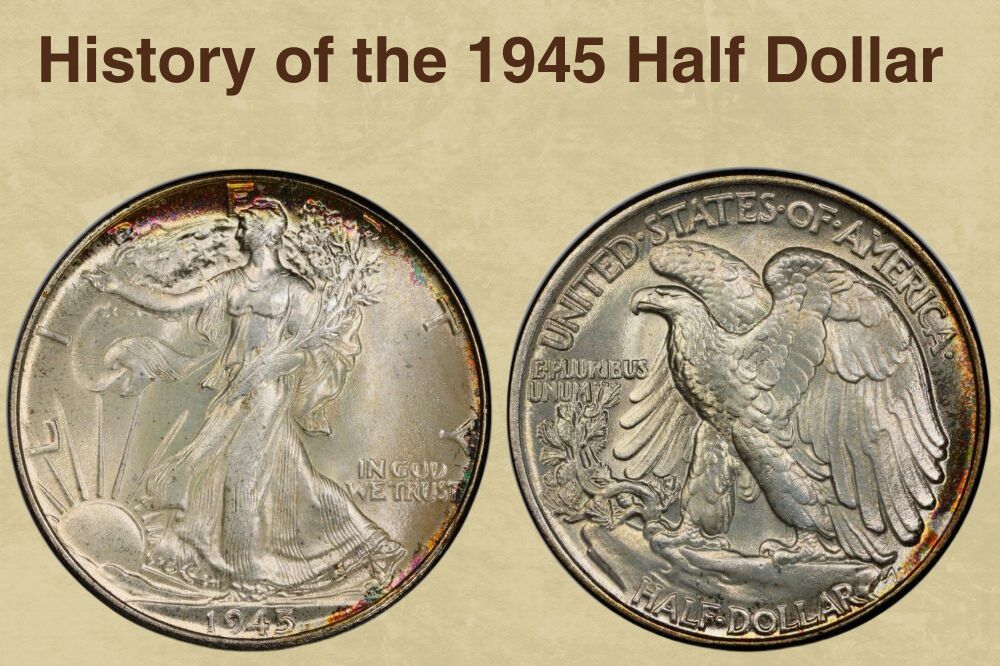
Walking Liberty Half Dollars (Walkers) existed for 31 years in circulation, and the US Mint produced them from 1916 to 1947. Adolph Weinman got the honor to design this fifty-cent coin, and he did a fantastic job, making this series one of the most attractive in American coinage history.
The success was even better since this lovely piece replaced the unpopular Barber Half Dollar. The history of coins with this denomination is fantastic. The first ever minted were Flowing Hair halves (1794 and 1795), followed by Draped and Capped Busts and Seated Liberty Half Dollars.
1945 Walking Liberty Half Dollar Types |
||
| Location | Year | Mintage |
| Philadelphia | 1945 No Mint mark Half Dollar | 31,502,000 |
| San Francisco | 1945 S Half Dollar | 10,156,000 |
| Denver | 1945 D Half Dollar | 9,966,800 |
| Total | / | 51,624,800 |
Thanks to the law, famous Barber (Liberty Head) coins struck from 1892 to 1915 went to history, meaning in numismatists’ hands. In those times, the US Mint was forced to replace each coinage design after 25 years in use. That way, the silver Walking Liberty Half Dollar became an official American circulating coin during WWI in 1916.
Robert W. Woolley started working on this replacement immediately after his appointment as US Mint Director in 1915. He asked the Commission of Fine Arts for help looking for the new Half Dollar design.
Adolph Alexander Weinman (German-born American sculptor) won a contest with his excellent idea. He couldn’t have imagined that he created a coin that many collectors considered the most beautiful in the history of American coinage.
Interestingly, the initial pattern coins showed that the first design was inadequate, so the designer needed to redesign it. Luckily, the new adjusted and slightly lowered relief solved the problem, but numerous specimens came with noticeably weak strikes and without sharp details.
Also read: 13 Most Valuable Franklin Half Dollars Worth Money
Features of the 1945 Walking Liberty Half Dollar
The Walking Liberty Half Dollar is one of the most elegant and beautiful American coins. Those minted in 1945 have additional historical value since they were produced during the last war year, after the magnificent Allied victory over Hitler’s Germany.
The obverse of the 1945 Walking Liberty Half Dollar
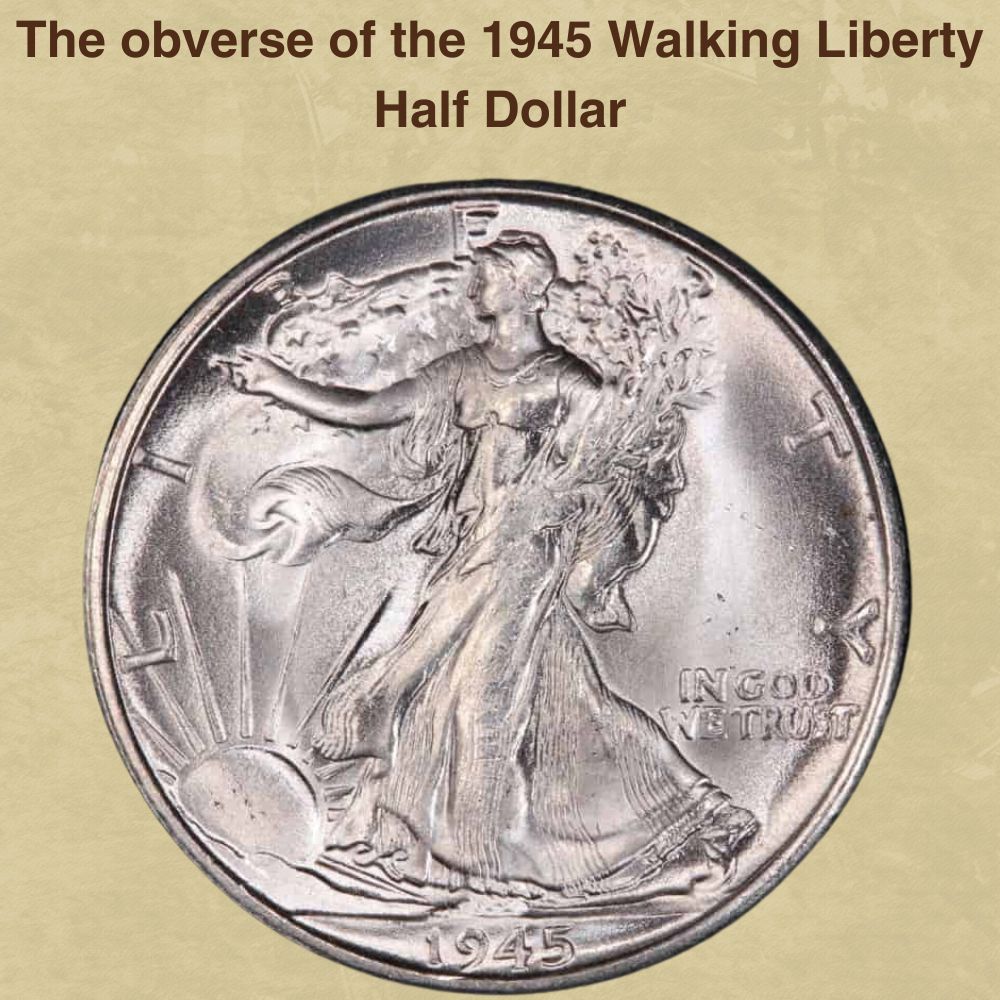
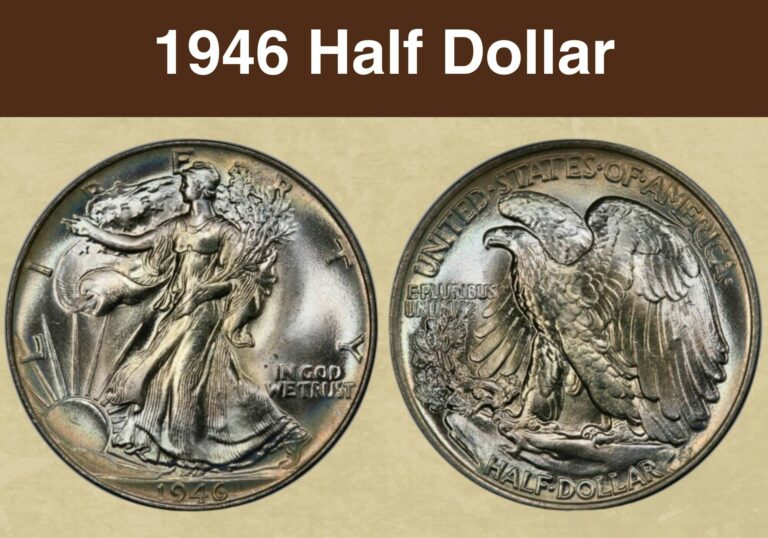
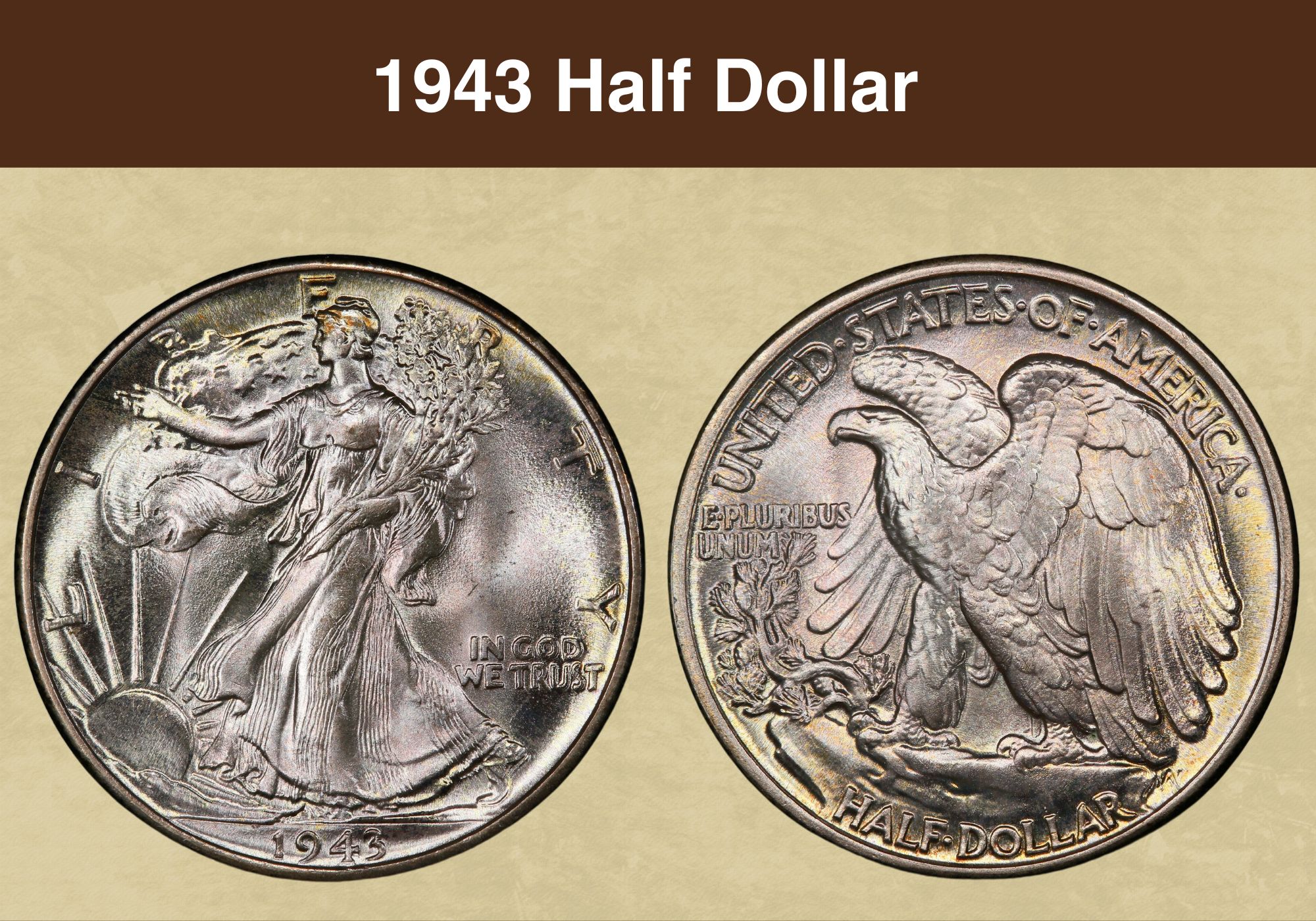
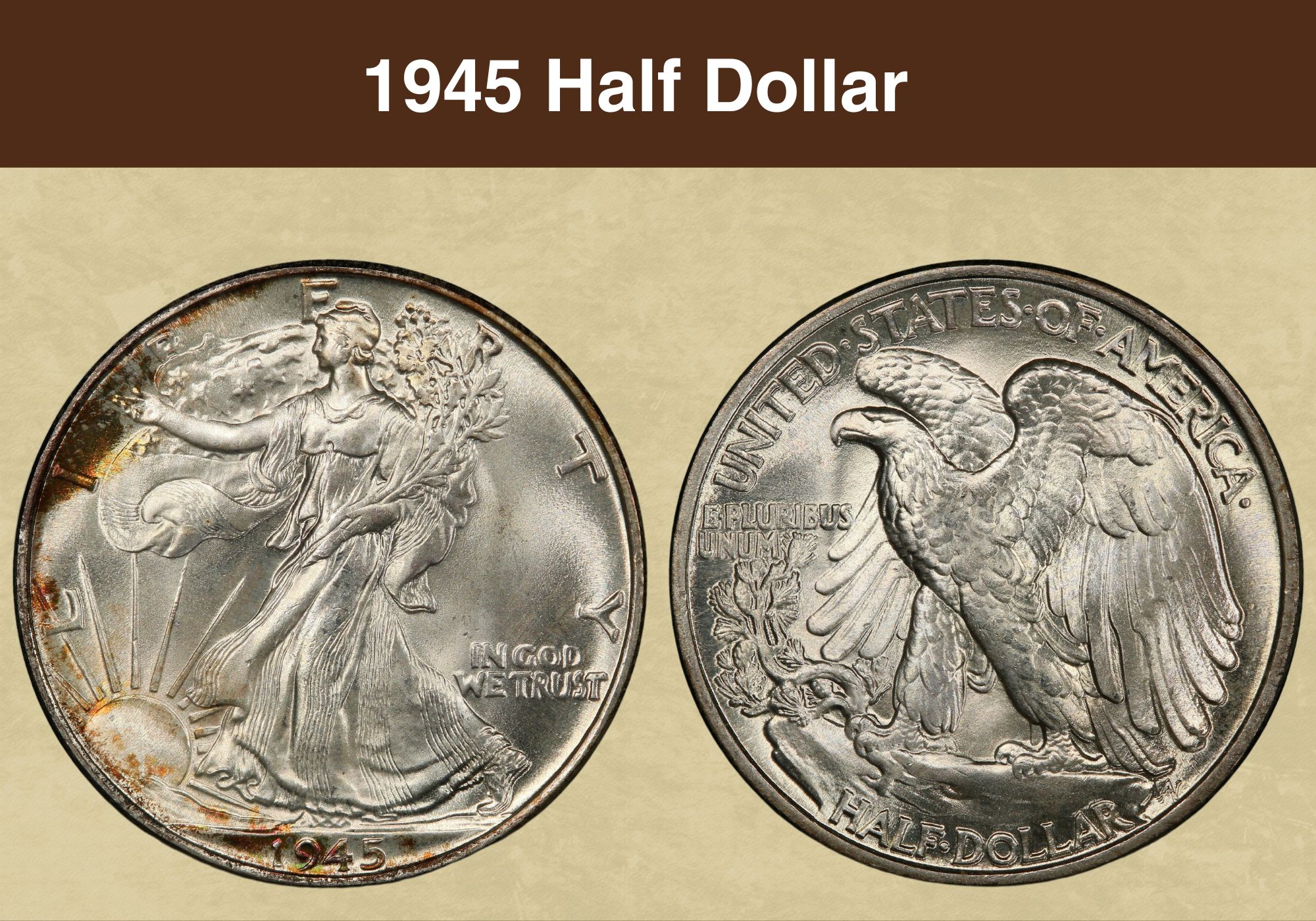
Weinman designed Lady Liberty draped in the American flag and let her walk to meet the shining sun. This brave woman symbolizing freedom, holds an oak branch and laurel twig in her left hand, while the right one is stretched forward to a happy future.
While branches represent civil and military glory and prosperity, a rising sun brings new hope to the brave people living in this country.
The word LIBERTY supports Lady Liberty from the background, while the motto IN GOD WE TRUST is behind her back. You can also see 1945, the minting year, placed under her feet.
The reverse of the 1945 Walking Liberty Half Dollar
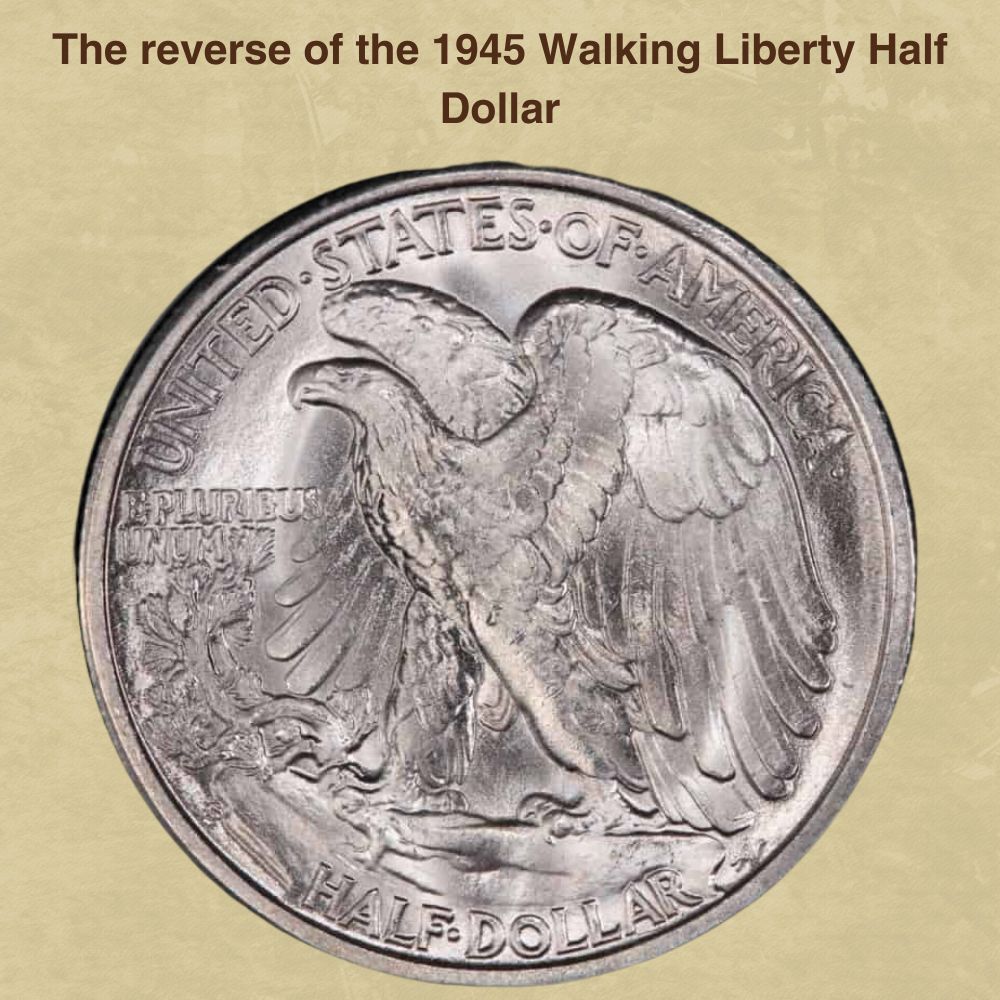
The engraver created a somehow complicated reverse depicting the national bird, a bald eagle, facing left. It looks like it is prepared for flight, with one foot stepped forward and raised wings.
Along the rim is two inscriptions, UNITED·STATES·OF·AMERICA· and HALF·DOLLAR, while the Latin motto is above the twigs growing from the cliff. The discreet mint mark is struck on the left.
1945 Walking Liberty Half Dollar Details |
|
| Face value | Fifty cents ($0.50) |
| Shape | Round |
| Compound | Silver – copper (90% – 10%) |
| Edge | Reeded |
| Coin thickness | 1.8 mm (0.0708661 inches) |
| Coin diameter | 30.63 mm (1.2059055 inches) |
| Silver weight | 11.2498 g (0.36169 troy ounces) |
| Coin weight | 12.50 g (0.40188 troy ounces) |
Other features of the 1945 Walking Liberty Half Dollar
The 1945 Walking Liberty Half Dollar metal composition includes silver and copper in a 90%:10% ratio. This coin type measures 30.63 mm (1.2059055 inches) in diameter, which is significantly more than other large American coins.
Its weight is 12.50 g (0.40188 troy ounces), including 11.2498 g (0.36169 troy ounces) of silver. Each piece is precisely 1.8 mm (0.0708661 inches) thick.
Also read: 13 Most Valuable Kennedy Half Dollar Worth Money
1945 Walking Liberty Half Dollar Grading
Proper grading of the 1945 Walking Liberty Half Dollars means you need to consider a few factors. The first thing to check is their look and the design details’ preservation level.
The next step is to find signs of wear and assess the level of possible damage on the rim, edge, and both coin sides. Finally, make sure that crucial parts are intact, primarily the image, inscriptions, and minting year.
| # | Grade |
|---|---|
| 1 | Basal State-1 |
| 2 | Fair |
| 3 | Very Fair |
| 4, 5, 6 | Good |
| 7, 8, 10 | Very Good |
| 12, 15 | Fine |
| 20, 30 | Very Fine |
| 40 | Extremely Fine |
| 50 | About Uncirculated |
| 60 | Mint State |
| 65 | Mint State |
| 70 | Mint State |
Please check our grading guides to know your coin scale, It’s the necessary step to know the exact value of your coin.
Check out now: How to Grade Walking Liberty Half Dollar?
1945 Half Dollar Value Guides
Three mints produced 51,624,800 Walking Liberty Half Dollars from regular strikes during the last war year. Most coins came without the mint mark since the Philadelphia mint had the highest mintage this year.
1945 No Mint Mark Half Dollar Value
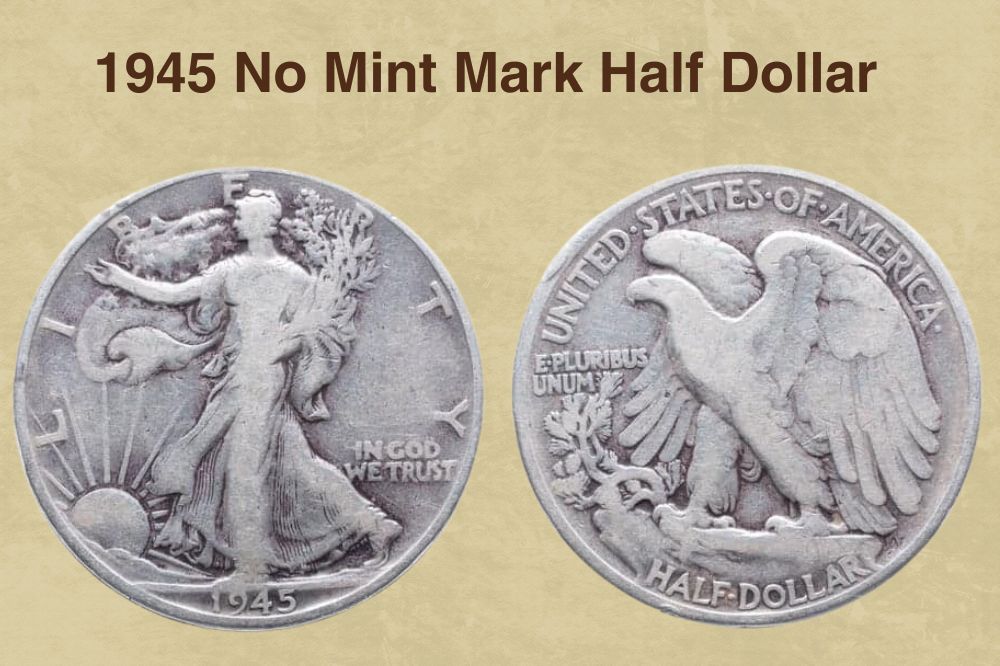
Precisely 31,502,000 Walking Liberty Half Dollars were released from the Philadelphia mint in 1945. It was higher than the production of the other two mints put together.
The result is a relatively low price for most coins, particularly those in circulated condition. You can buy them for $11 to $26, while never used pieces cost $28 to $726, depending on quality.
The priciest Walking Liberty Half Dollar is the one in MS 68 grade. One collector bought this rare specimen for $66,000 in 2021.
1945 Half Dollar Value (proof)
The US Mint produced Walking Liberty Half Dollar proof coins from 1936 to 1942. Unfortunately, their minting was suspended because of WWII, so no coins were intended for collectors with this minting year on the obverse.
1945 D Half Dollar Value
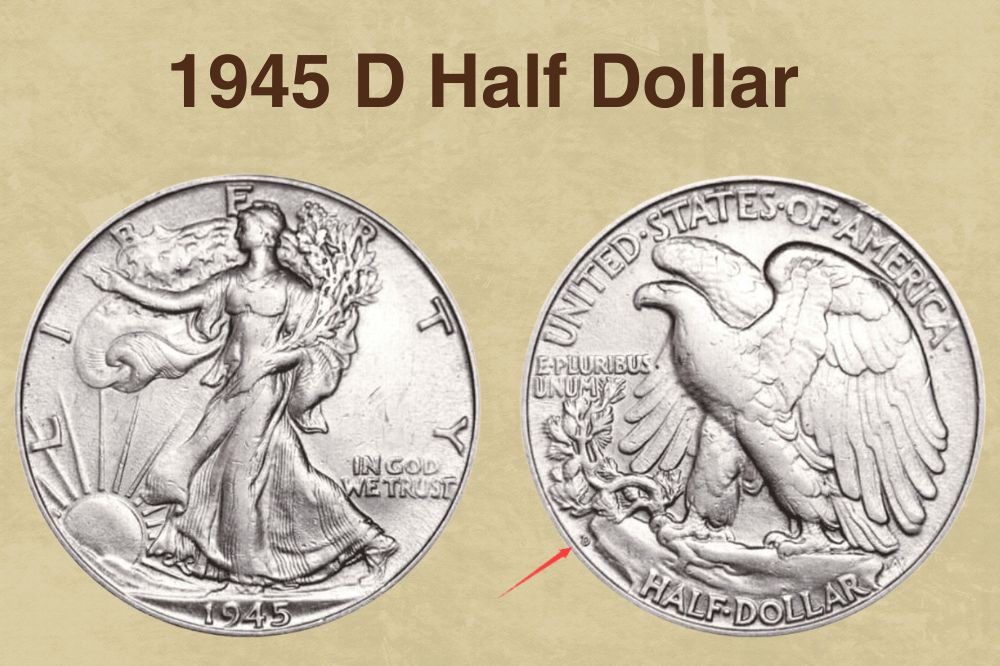
All 9,966,800 Half Dollars minted in Denver in 1945 came with the D mint mark on the reverse. Coins used in everyday transactions are often significantly worn-out so you can expect modest prices, ranging from $11 to $28.
Halves in well-preserved condition can bring you more money, typically from $30 to $756. Only perfectly-looking coins with the MS 68 grade are estimated to be worth about $35,000 to $42,000.
The costliest specimen with this characteristic was paid $40,800 at an auction on June 16, 2021. It is still the most expensive Half Dollar with the D mint mark in the set.
1945 S Half Dollar Value
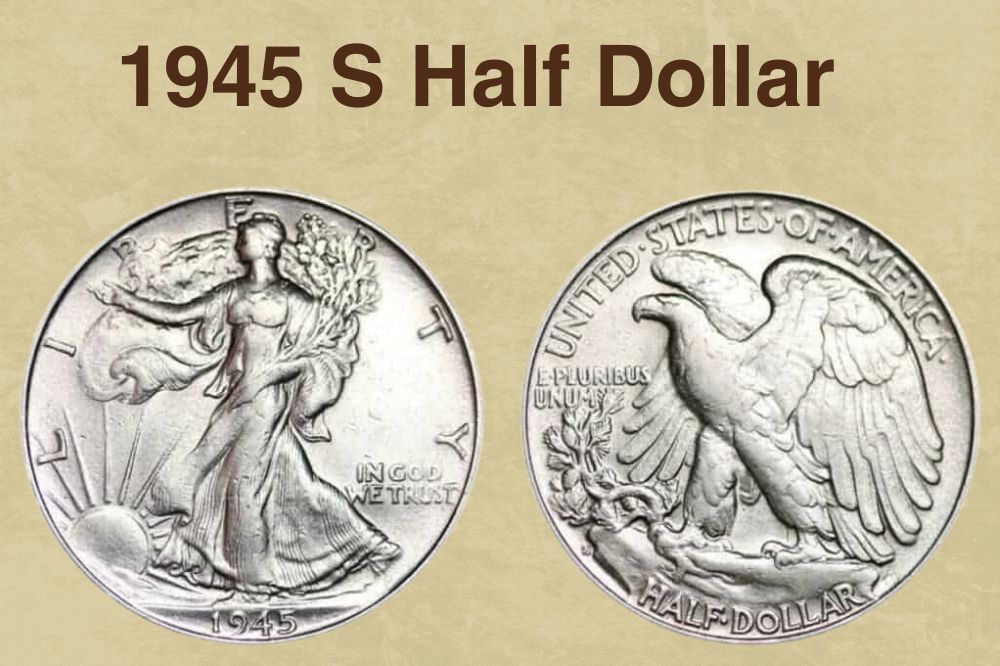
The mint in San Francisco had a mintage of 10,156,000 Half Dollars in 1945. Most spent years in circulation, and their value ranges from $11 to $36 nowadays. On the other hand, you need to set aside more for uncirculated pieces. Their prices vary, depending on their look, luster, and detail quality, ranging from:
- $40 to $48 for coins in MS 60 grade
- $42 to $50 for coins in MS 61 grade
- $46 to $55 for coins in MS 62 grade
- $54 to $65 for coins in MS 63 grade
- $84 to $100 for coins in MS 64 grade
- $106 to $127 for coins in MS 65 grade
- $240 to $290 for coins in MS 66 grade
The only coins that significantly deviate from this price range are Walking Liberty Half Dollars in MS 67 grade. Their assessed prices are $2,800 to $5,250.
However, one excellently-preserved 1945 S Liberty Half Dollar with the MS 67+ grade was surprisingly expensive. One collector set aside an incredibly high $60,000 at an auction organized on June 16, 2021, to get this specimen.
Also read: 11 Most Valuable Half Dollars In Circulation
Rare 1945 Walking Liberty Half Dollar Error List
Like most coins, 1945 Walking Liberty Half Dollars come with several standard errors, increasing their collectability and value. Most experts recommend professional estimation for these pieces since it is the most reliable way to determine their real prices.
Double die reverse
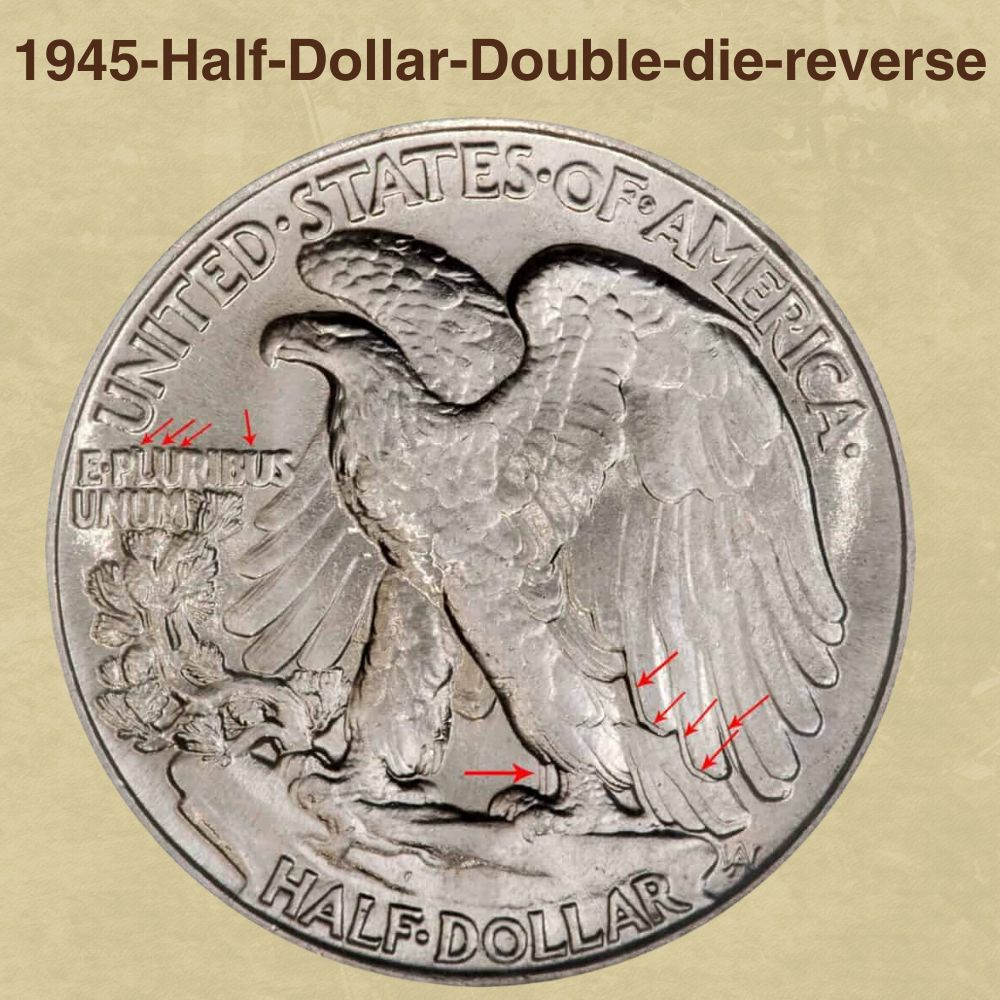
Double die error can occur on both coin sides, but DDR is typical for this coin set. When the misaligned die strikes the coin surface, it leaves double images or lettering outlines. A slightly doubled design is particularly obvious on the eagle’s wings. These collectible pieces cost approximately $90 to $95, but various surprises are possible at auctions.
Double strike
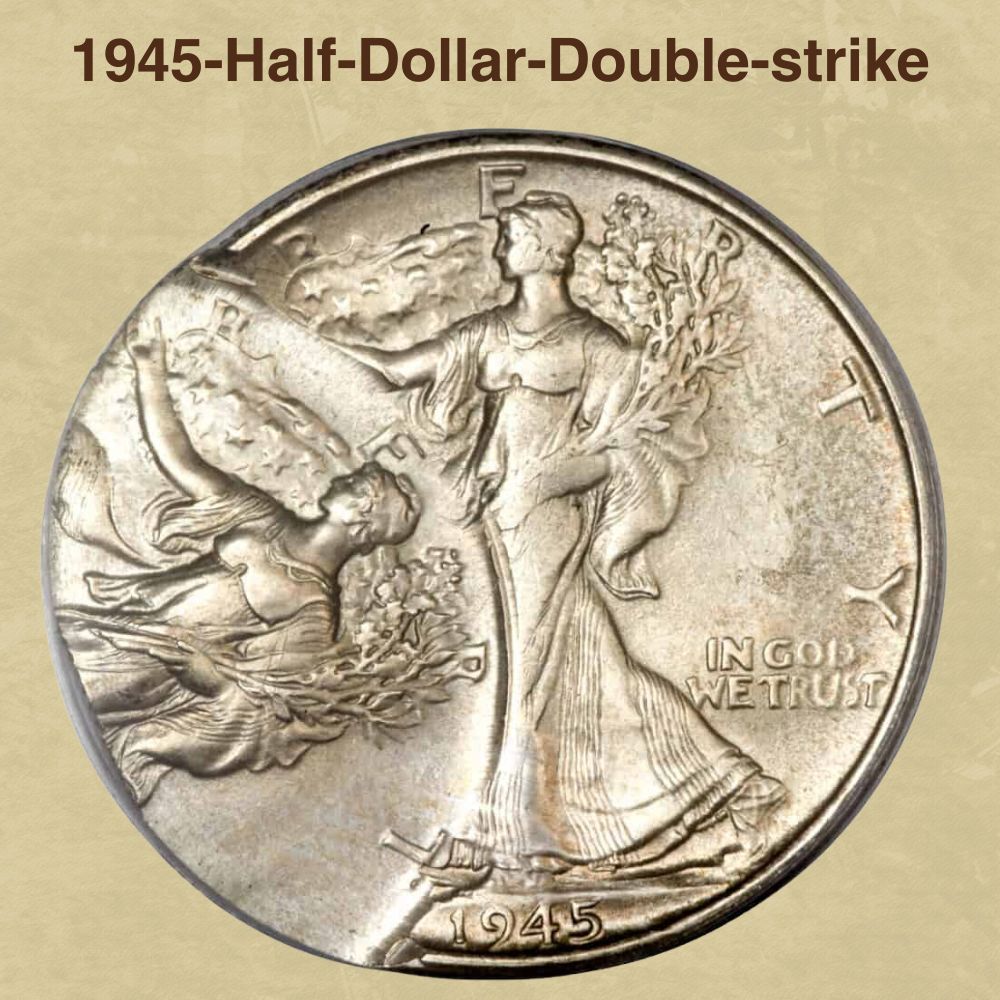
The 1945 Half Dollar with this type of error is relatively rare. It is a coin struck twice during minting with an undoubtedly visible doubled design. One collector recently discovered such a coin with a 55% rotated secondly struck image, showing Lady Liberty to appear horizontal and vertical on the same coin obverse.
Planchet crack error
This relatively common 1945 Half Dollar appears when the blank planchet cracks before hitting. In some cases, these cracks form atypical images on the coin surface, making such pieces attractive.
Estimating the actual value of these error coins is impossible because it depends on numerous factors. In any case, you can count on a few dozen dollars more than after selling regular halves.
Missing designer initials
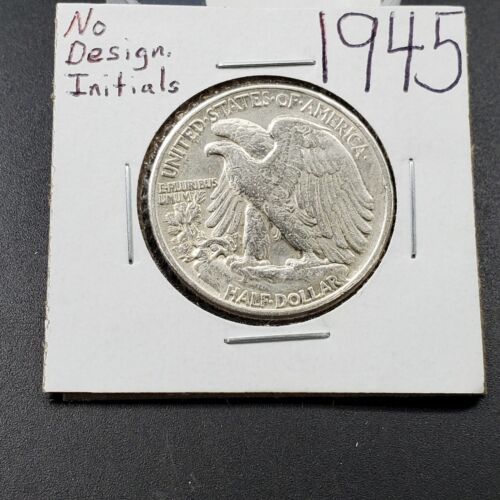
Some 1945 Half Dollars come without Weinman’s initials, regularly struck under the eagle’s tail feather and right of the cliff. Such a coin typically costs about $700, but one piece in MS 66 grade brought $6,000 to its previous owner in 2019. Since these error coins are potentially precious, you can expect to come across fake pieces with erased AW. So, be careful.
1945 Half Dollar on a dime planchet
In rare cases, you can find the 1945 Half Dollar struck on a dime planchet. It is a pretty weird specimen since the 50-cent coin with a diameter of 1.2059 inches (30.63 mm) is struck over a 10-cent piece that has 0.7051 inches (17.91 mm) in diameter.
Since something like this occurs only occasionally, you can be sure that this Half Dollar with changed dimensions is costly. Some collectors mention tens of thousands of dollars as a possible price.
Where to Sell Your 1945 Walking Liberty Half Dollar ?
Now that you know the value of your coins, do you know where to sell those coins online easily? Don’t worry, I’ve compiled a list of these sites, including their introduction, pros, and cons.
Check out now: Best Places To Sell Coins Online (Pros & Cons)
FAQ about the 1945 Walking Liberty Half Dollar
What makes 1945 Walking Liberty Half Dollars rare?
The only thing to adequately estimate your Walking Liberty Half Dollar and check its rarity is to have it evaluated. Most error coins and pieces in pristine condition are scarce and can reach considerably high prices at auctions.
Which 1945 Walking Liberty Half Dollars are the most costly in the set?
- The 1945 MS 68 Liberty Half Dollar was sold at Stack’s Bowers for $66,000 on June 16, 2021
- The 1945 S MS 67+ Liberty Half Dollar was sold at Stack’s Bowers for $60,000 on June 16, 2021
- The 1945 D MS 68 Liberty Half Dollar was sold at Stack’s Bowers for $40,800 on June 16, 2021
- The 1945 MS 66 Liberty Half Dollar (missing designer initials) was sold at Heritage Auctions for $6,000 on October 24, 2019
How much is the 1945 Walking Liberty Half Dollar (No Mint Mark) worth?
Walking Liberty Half Dollars are pretty costly coins considering their denomination. Even those spending years in circulation are worth $11 to $26. A price range for pieces in uncirculated condition is from $28 to $726, depending on appearance and quality.
Which Walking Liberty Half Dollars reached the highest prices at auctions?
The list of the most expensive Walking Liberty Half Dollars from regular strikes includes the following coins:
- 1918 D MS 66+ Walking Liberty half – $340,750
- 1919 D MS 66 Walking Liberty half – $270,250
- 1921 S MS 66 Walking Liberty half – $188,000
- 1921 D MS 66 Walking Liberty half – $168,000
- 1917 S MS 67 Walking Liberty half – $152,750
Proof coins from this series are less expensive but still highly valuable for fifty-cent pieces. The best prices at auctions won the following Walking Liberty Half Dollars:
- 1936 PR 68 Walking Liberty half – $80,500
- 1937 PR 68 Walking Liberty half – $60,000
- 1942 PR 68 Walking Liberty half – $60,000