Coin Value Contents Table
- 1942 silver dime value Chart
- History of the 1942 Silver Dime
- 1942 silver dime Types
- Features of the 1942 Silver Dime
- 1942 Winged Liberty Head Silver Dime Grading
- 1942 Silver Dime Value Guides
- 1942 No Mint mark silver dime Value
- 1942 proof silver dime Value
- 1942 D silver dime Value
- 1942 S silver dime Value
- Rare 1942 Silver Dime Error List
- Where to Sell Your 1942 Dime ?
- FAQ about the 1942 Winged Liberty Head Silver Dime
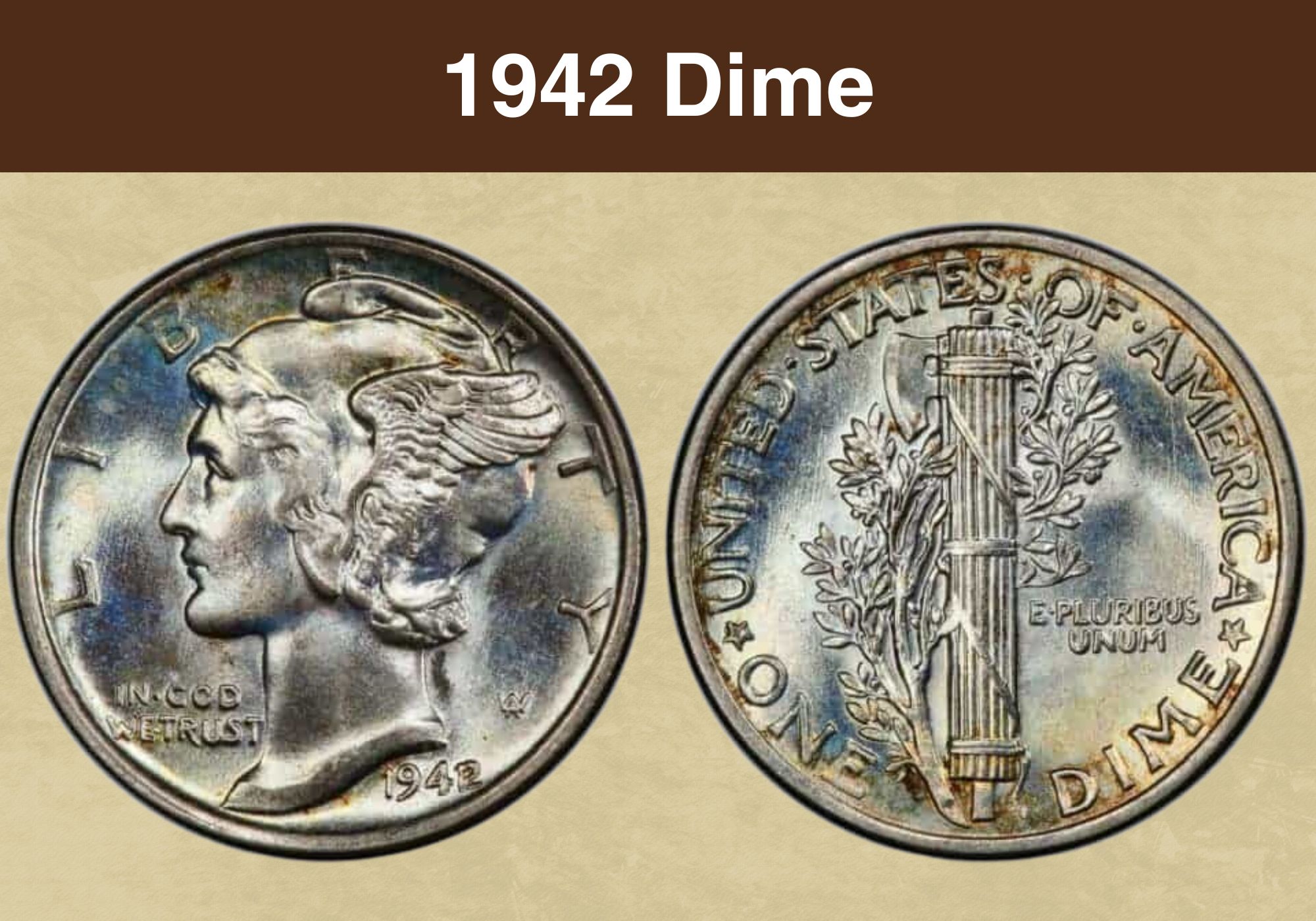
In most cases, the 1942 dime value is more than these coins’ face value, but it always depends on their appearance and absence of damage. They were minted during WWII and had a unique composition adapted to the then-wartime conditions.
These pieces are part of a series that production started in 1916 after Adolph A. Weinman created one of the most beautiful small American coins. However, specimens from the 1942 set are complex, with a few specific errors worth collecting. Let’s see.
1942 silver dime value Chart |
|||||
| Condition | 1942 No mint mark dime | 1942 No mint mark 42 over 41 dime | 1942 D dime | 1942 D 42 over 41 dime | 1942 S dime |
| Good | $3 | $352 | $2.99 | $352 | $2.99 |
| Very good | $3.56 | $410 | $3.55 | $381 | $3.55 |
| Fine | $4.08 | $520 | $4.07 | $493 | $4.07 |
| Very fine | $4.33 | $623 | $4.32 | $598 | $4.32 |
| Extra fine | $4.61 | $739 | $4.60 | $675 | $4.60 |
| AU | $5.58 | $1,973 | $5.57 | $2,109 | $6.78 |
| MS 60 | $7.76 | $2,882 | $7.75 | $2,882 | $10.29 |
| MS 65 | $36 | $17,469 | $33 | $11,357 | $36 |
| PR 65 | $210 | / | / | / | / |
History of the 1942 Silver Dime
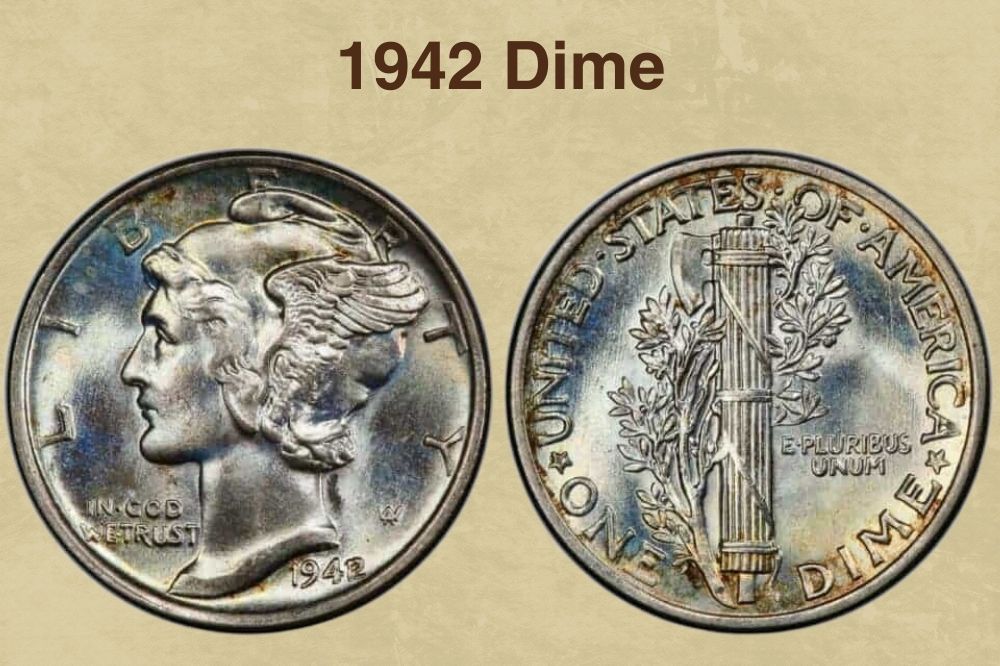
Mercury dimes are unique American coinage minted from 1916 to 1945. They were the fifth dime design that appeared after the US Mint started Draped Bust dime production in 1796, only four years after its establishment.
After 25 years of Barber dimes minted from 1892 to 1916, the Winged Liberty Head dimes came on the scene in all glory. Interestingly, the designer of previous dimes, Charles E. Barber, submitted an entry for creating the new coin, but Weinman’s idea was too beautiful to be ignored.
As the most successful designer attending the competition, he got the opportunity to create both coin sides. These beautiful pieces produced from 1916 to 1945 are still highly sought-after among collectors.
1942 silver dime Types |
||
| Location | Year | Minted |
| Philadelphia | 1942 No Mint mark dime | 205,410,000 |
| Philadelphia | 1942 proof dime | 22,329 |
| San Francisco | 1942 S dime | 49,300,000 |
| Denver | 1942 D dime | 60,740,000 |
| Total | / | 315,472,329 |
The 1942 Mercury dimes had a high mintage, and most were released into circulation. Over 200 million pieces represented the second-highest number of produced coins in the entire series.
Even though most 1942 dimes had an issue with a weak strike, those with Full Bands have vibrant details. Besides, their connection with horrible war times makes them particularly desirable among collectors.
Also read: Top 17 Most Valuable Roosevelt Dimes Worth Money
Features of the 1942 Silver Dime
Adolph A. Weinman was a talented designer, well-known after probably the best-looking American coin ever, the Winged Liberty Head dime. The US Mint minted this beautiful series from 1916 to 1945, when the first Roosevelt silver dimes were released in circulation in 1946.
The obverse of the 1942 dime
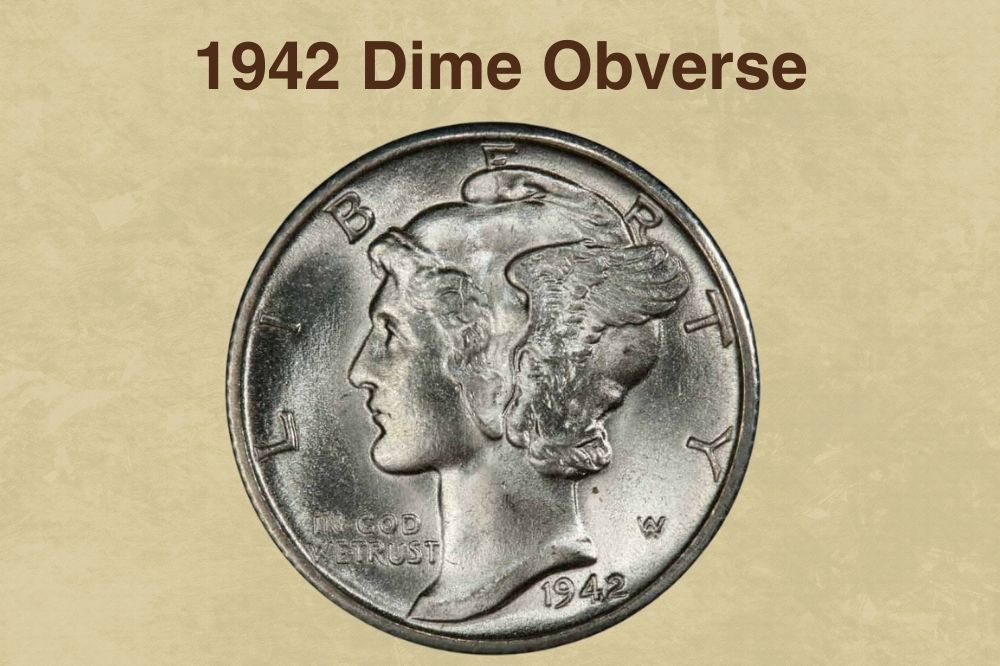
The 1942 war Mercury dimes are silver coins with Lady Liberty on the obverse. Her unusual cap with two wings misled Americans to consider her a Roman god, hence the strange nickname. In fact, most collectors use the term Mercury dime instead of the official coin name.
Adolph Weinman never identified the woman he used as a model for the Winged Liberty Head dime, but some experts believe it was Elsie Stevens. You can see her profile facing left with a pileus, a cap that originated in Ancient Greece.
The designer had ‘liberty of thought’ in mind when creating wings attached to the cap. To emphasize the love of LIBERTY, he added this word above Lady Liberty’s head. The lower coin part is the place for the text, including:
- The date, 1942
- The initials, AW
- The motto – IN GOD WE TRUST
The reverse of the 1942 dime
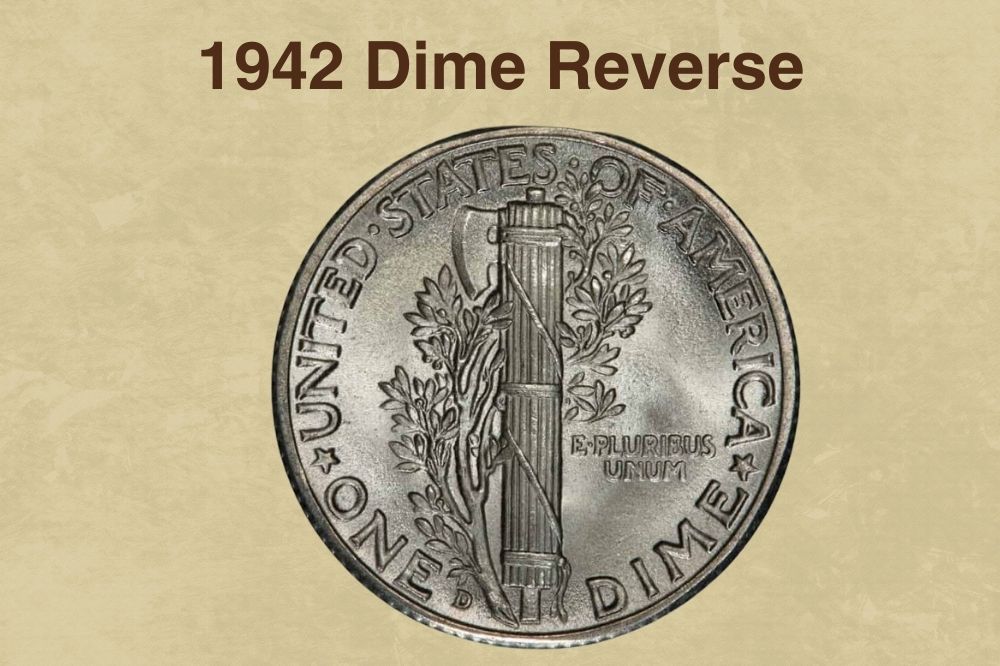
The Mercury dimes have a beautifully decorated reverse filled with symbolism important to every American. Weinman successfully combined a distinctly Roman theme with modern American symbols.
You can notice centrally positioned fasces bound with strong leather straps. This bundle of sticks with an attached axe on the top represents justice and war and was a mandatory piece of equipment for the Roman magistrates’ bodyguards and attendants.
A sizable olive branch wrapped around the fasces represents striving for peace. The new nation’s name is struck along the top rim, with the denomination on the bottom separated by two stars.
The E·PLURIBUS UNUM is the Latin motto required by law for all American coinage. It represents unity and the creation of the US from numerous existing states.
Dimes produced in two mints have the corresponding letters between the word ONE and the torch, representing the mint mark. Only pieces from Philadelphia have that area blank.
1942 silver dime Details |
|
| Face value | Ten cents ($0.10) |
| Shape | Round |
| Coin thickness | 0.053 inches (1.35 mm) |
| Coin diameter | 0.705 inches (17.91 mm) |
| Compound | 0.900 silver with 0.100 copper |
| Silver weight | 0.072 troy ounces (2.24 g) |
| Coin weight | 0.080 troy ounces (2.5 g) |
| Edge | Reeded (118 reeds) |
Other features of the 1942 dime
The 1942 silver dime is a precisely 0.053 inches (1.35 mm) thick ten-cent coin with 118 reeds along the edge. It weighs 0.080 troy ounces (2.5 g), including 90% of the silver weighing 0.072 troy ounces (2.24 g). This coin diameter is 0.705 inches (17.91 mm).
1942 Winged Liberty Head Silver Dime Grading
As always, 1942 silver dime grading describes their appearance and determines their value on the coin market. This procedure aims to calculate each piece’s value according to wear level. The lowest quality of one collectible coin is GOOD, while the flawless specimens are ranked MS 60 to MS 70.
| # | Grade |
|---|---|
| 1 | Basal State-1 |
| 2 | Fair |
| 3 | Very Fair |
| 4, 5, 6 | Good |
| 7, 8, 10 | Very Good |
| 12, 15 | Fine |
| 20, 30 | Very Fine |
| 40 | Extremely Fine |
| 50 | About Uncirculated |
| 60 | Mint State |
| 65 | Mint State |
| 70 | Mint State |
Please check our grading guides to know your coin scale, It’s the necessary step to know the exact value of your coin.
Check out now: How to Grade Mercury Dime?
1942 Silver Dime Value Guides
In the 1942 war year, the US Mint struck 315,472,329 silver dimes in three mints. You can find regular and proof coins as always, but there are also those with the overdate date or the inverted mint mark, typical errors for this particular year.
1942 No Mint mark silver dime Value
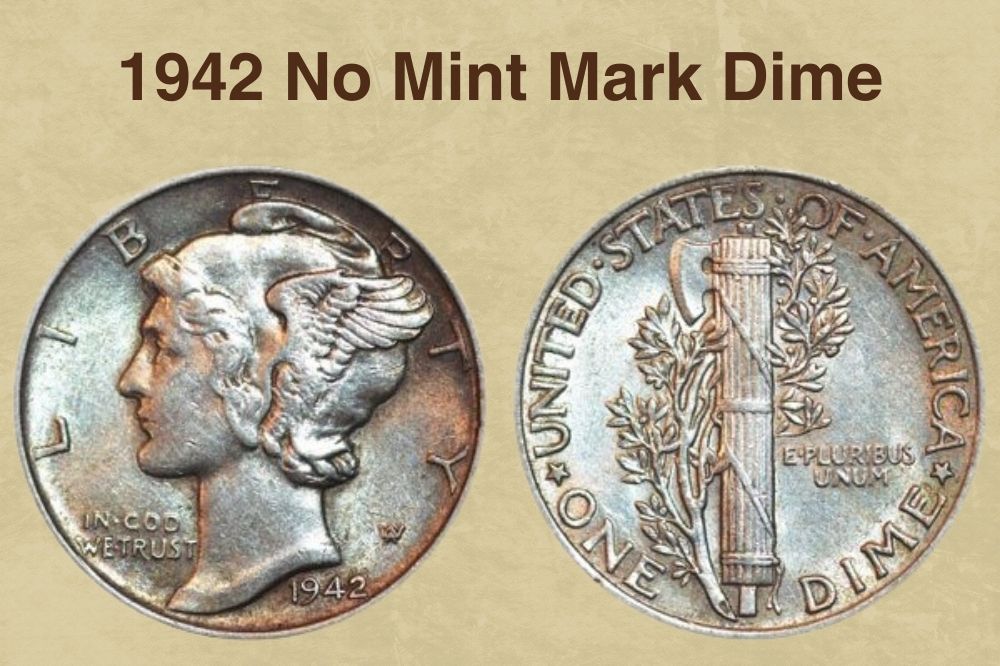
Many preserved dimes of 205,410,000 struck in Philadelphia in 1942 are abundant nowadays, and you can buy those circulated for years for $3. A typical price of pieces in the mint state is slightly higher, and such specimens cost about $7 to $60, depending on grade.
Unlike these relatively affordable prices, you should set aside significantly more for the MS 68 dimes. Such specimens’ price range is from $500 to $600.
Be prepared that coins with Full Bands are more costly, ranging from $13 to $60. However, those with the MS 67 grade are typically worth $220 to $265, while the best-preserved MS 68 grading pieces quickly reach $2,250 to $4,000 at auctions.
1942 proof silver dime Value
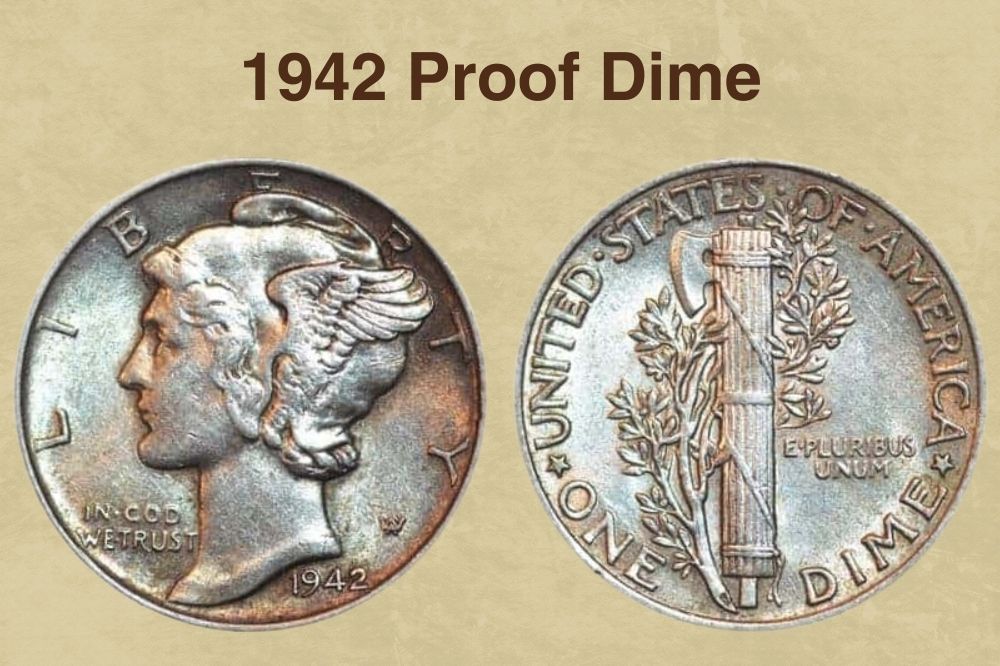
Besides regularly struck silver dimes, Philadelphia produced 22,329 proofs in 1942. These valuable coins cost approximately $95 to $300, but you should pay $1450 for those with the PR 68 grade.
The most expensive 1942 PR 69 silver dime effortlessly reach $15,000 to $22,000 at auctions. Collectors particularly appreciate those with cameo contrast and are prepared to pay them $550 to $4,400, depending on quality.
1942 D silver dime Value
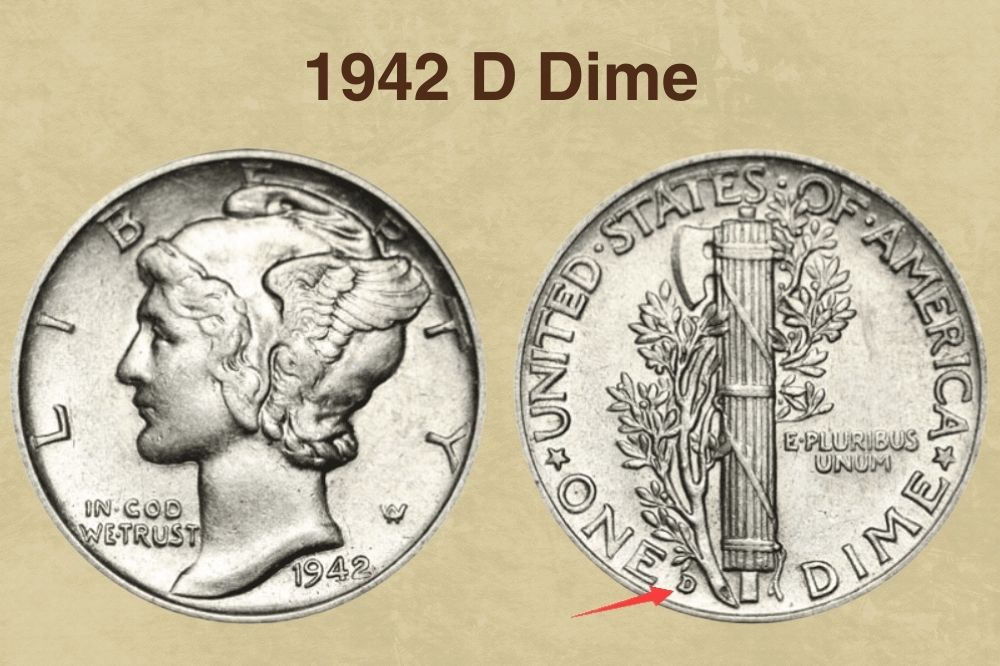
With 60,740,000 silver dimes, the mint in Denver reached the second-high mintage in 1942. Therefore, these coins are abundant and often inexpensive on the market. For instance, you can buy one circulated piece for $2 to $7, while those in the mint state cost approximately $7 to $70.
Only top-rated coins in MS 68 grade are expensive, and you can get one for $500 to $600. Even dimes with Full Bands are relatively inexpensive since their average price is $13 to $170. On the other hand, collectors often set aside $1,100 to $1,300 for the best-preserved specimens ranked MS 68.
1942 S silver dime Value
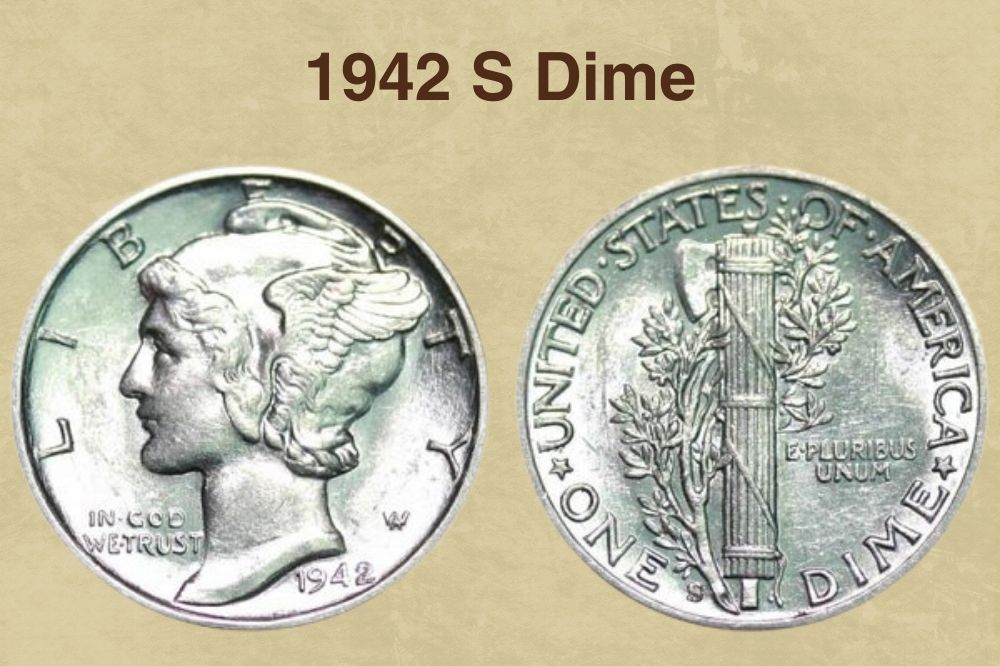
Even though the San Francisco mint had the lowest mintage of 49,300,000 dimes in 1942, those spending years in use are relatively cheap for old silver coins. You can purchase them for $2 to $7 or choose one in impeccable condition for up to $100.
If you prefer flawless silver pieces in your collection, you should count on $1,000 to $1,200 for the MS 68 dime. Specimens with Full Bands in that grade quickly reach $7,200 to $8,640 at auctions, but lower-ranking ones are available for $15 to $430.
Also read: Top 17 Most Valuable Mercury Dimes Worth Money
Rare 1942 Silver Dime Error List
You can recognize two specific errors in the 1942 dime set that significantly increase their value.
Overdate (42 over 41) error
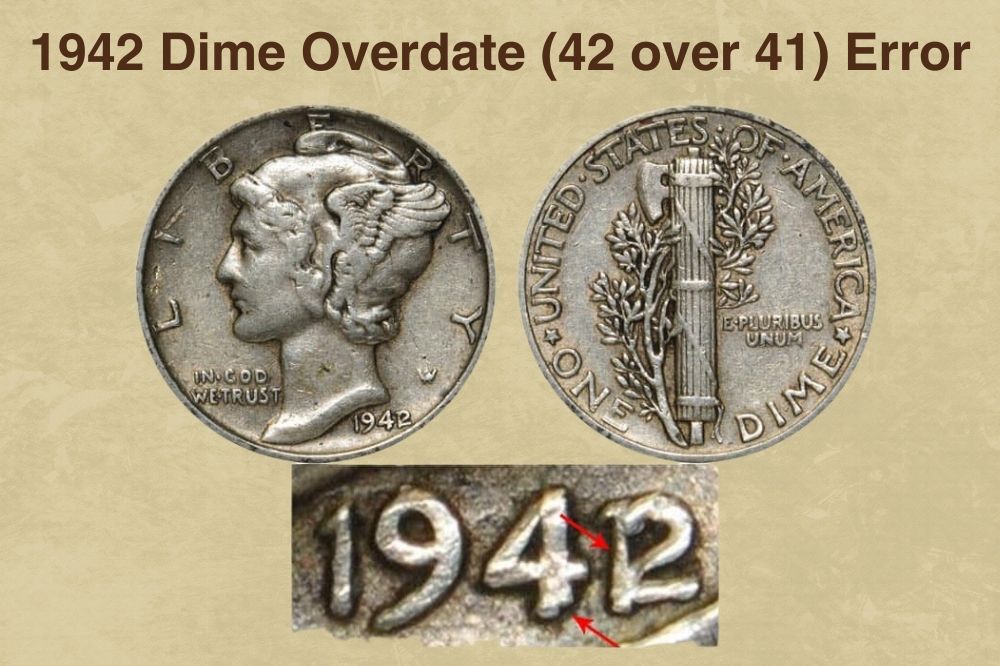
The 1942 silver dime set has one unique overdate error, and you should be prepared that such sought-after coins cost a lot. This imperfection results from striking 1942 over 1941 with a visible underlying older date. Rare coins with such an error cost differently, depending on the mint mark and preservation level.
For instance, the 1942/1 dimes from Philadelphia used in everyday transactions cost $280 to $2,000. Those in perfect condition cost $2,600 (pieces in the MS 60 grade) and $48,000 (MS 67-ranking coins). As expected, specimens with Full Bands are even more costly, ranging from $2,000 to $100,000.
You can also find such coins minted in Denver. Collectors are prepared to pay $260 for AU pieces to $24,000 for the one with the MS 66 grade. Such error dimes with Full Bands cost $1,600 to $75,000.
Re-punched D mint mark
Some silver dimes minted in Denver in 1942 have one D mint mark below the second one on the reverse. One such coin with the AU 55 grade was paid $630 at one auction.
Also read: 13 Most Valuable Dime Errors Worth Money
Where to Sell Your 1942 Dime ?
Now that you know the value of your coins, do you know where to sell those coins online easily? Don’t worry, I’ve compiled a list of these sites, including their introduction, pros, and cons.
Check out now: Best Places To Sell Coins Online (Pros & Cons)
FAQ about the 1942 Winged Liberty Head Silver Dime
What makes a 1942 dime rare?
The unique overdate (42 over 41) error makes dimes from Philadelphia and Denver particularly valuable and collectible. Their average prices are $260 to $48,000, but pieces with Full Bands quickly reach $2,000 to $100,000 at auctions.
Which 1942 silver dimes are particularly costly?
- The 1942 MS 66 Winged Liberty Head dime with Full Bands (1942/1) sold at $120,000 on January 2018
- The 1942 MS 67+ Winged Liberty Head dime (overdate 1942/1) sold at $90,000 on January 2023
- The 1942 D MS 66+ Winged Liberty Head dime with Full Bands (overdate 1942/1) sold at $73,438 on May 2019
- The 1942 MS 66 Winged Liberty Head dime with Full Bands (overdate 1942/1) sold at $57,600 on January 2019
- The 1942 PR 69 Winged Liberty Head dime sold at $37,600 on June 2015
- The 1942 D MS 66 Winged Liberty Head dime with Full Bands (overdate 1942/1) sold at $28,800 on May 2022
- The 1942 MS 66 Winged Liberty Head dime (overdate 1942/1) sold at $16,800 on August 2018
- The 1942 MS 68 Winged Liberty Head dime with Full Bands sold at $15,275 on May 2019
- The 1942 S MS 68 Winged Liberty Head dime with Full Bands sold at $14,750 on January 2014
- The 1942 D MS 64 Winged Liberty Head dime with Full Bands sold at $9,488 on July 2003
- The 1942 D MS 65 Winged Liberty Head dime (overdate 1942/1) sold at $6,900 on July 2002
- The 1942 PR 67 Winged Liberty Head dime (CAM) sold at $4,888 on March 2008
- The 1942 MS 68+ Winged Liberty Head dime sold at $4,800 on January 2019
- The 1942 D AU 58+ Winged Liberty Head dime (overdate 1942/1) sold at $2,174 on February 2017
- The 1942 S MS 65 Winged Liberty Head dime sold at $1,234 on February 2023
- The 1942 D MS 68 Winged Liberty Head dime sold at $1,093 on May 2006
- The 1942 S MS 63 Winged Liberty Head dime (inverted mint mark) sold at $960 on July 2021
- The 1942 S MS 64 Winged Liberty Head dime with Full Bands (inverted mint mark) sold at $241 on January 2020
What is the price of the 1942 silver dimes (No Mint mark)?
The 1942 silver dimes from Philadelphia typically cost $2 to $7 after years spent in circulation. Better-preserved pieces are worth $7 to $60, while collectors don’t mind paying $500 to $600 for the superb MS 68-graded specimens. Be prepared that Full Band silver dimes in the mint state have a price range of $220 to $4,000.
What are the priciest silver dimes (1916 to 1945)?
- 1938 S MS 68+ Winged Liberty Head dime with Full Bands paid $364,250 in 2019
- 1931 S MS 67+ Winged Liberty Head dime with Full Bands paid $270,250 in 2019
- 1916 D MS 67 Winged Liberty Head dime paid $207,000 in 2010

I have a 1942 D great shape full band if your interested.
I have a 1942 D great shape full band if your interested.mercury dime.