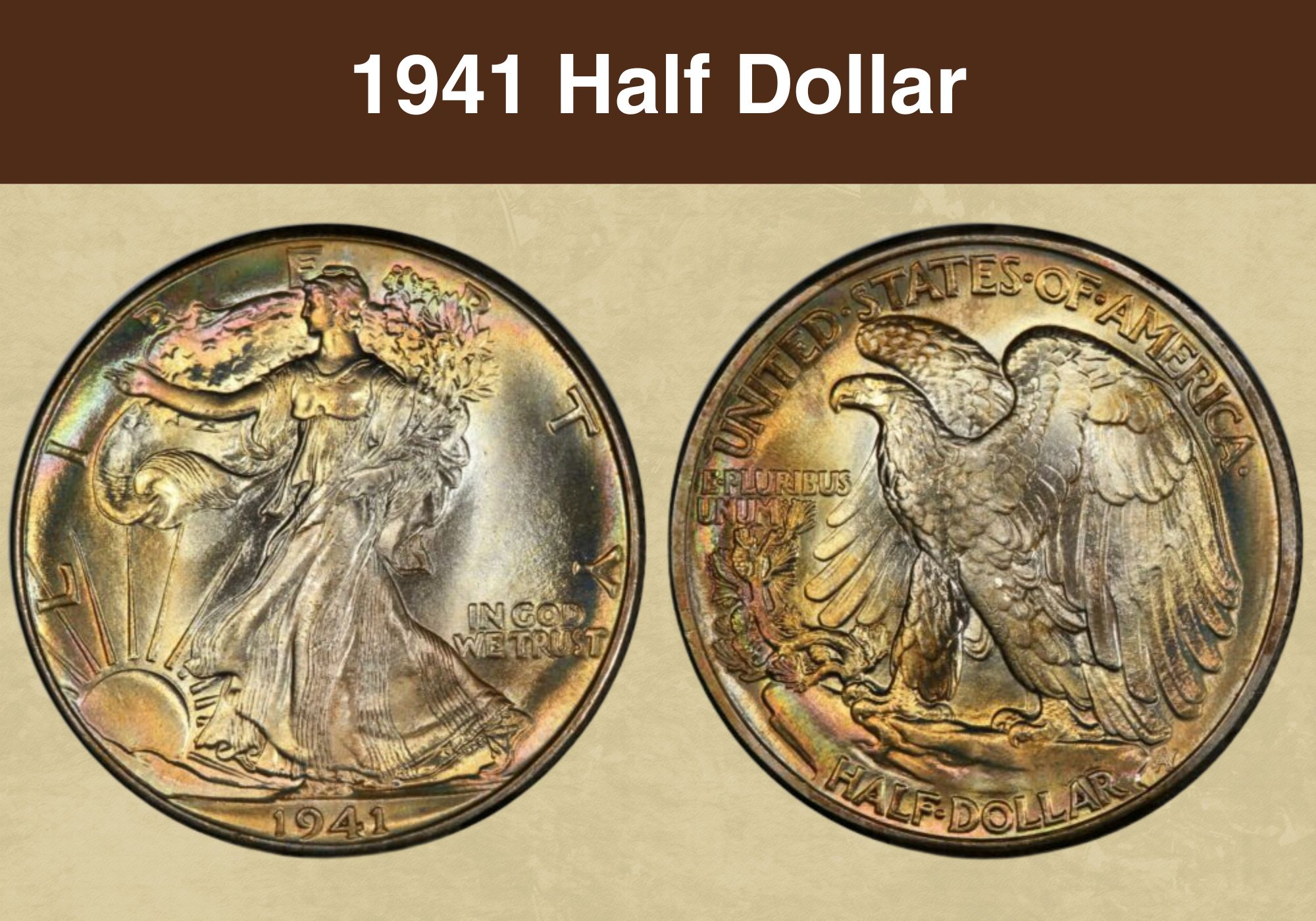
1941 Half Dollar Value Checker: Errors List, “D”, “S” & No Mint Mark Worth

1941 Half Dollar

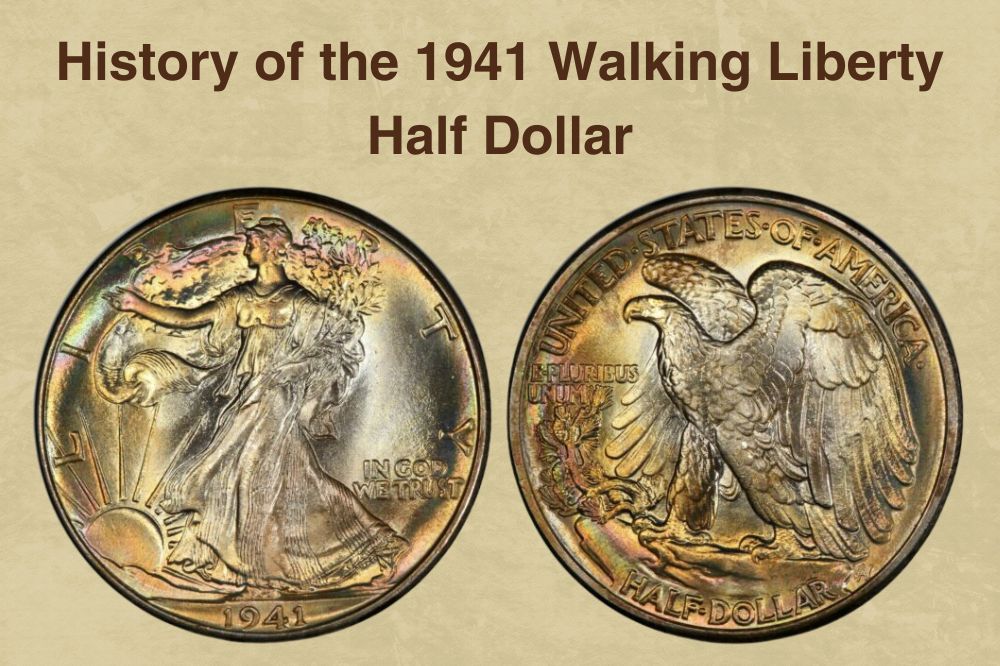
The 1941 Walking Liberty Half Dollar is one of the most celebrated coins in American numismatic history — and with good reason. Struck in 90% silver during the nation’s final full year of peace before World War II, this coin combines stunning artistry with genuine investment potential.

Values range from around $20 for well-worn examples all the way to $90,850 for a superb gem — and that record has stood since 2006. Whether you found one in an old collection or you’re actively building a Walking Liberty set, this guide covers everything you need to know about your 1941 Half Dollar value in 2026.

1941 Half Dollar Value Checker

Identify 1941 Half Dollar D, S and No Mint Mark Price

✨ No Sign-up Required
Obv

Front Obverse

Upload or Take a Photo

Rev

Back Reverse

Upload or Take a Photo


1941 Half Dollar Value By Variety

The value of a 1941 Walking Liberty Half Dollar varies dramatically based on its mint mark, condition, and whether it’s a business strike or proof specimen, with prices ranging from basic silver content value for worn examples to thousands of dollars for pristine uncirculated pieces.

If you know the grade of your coin, you can find the exact price below in the Value Guides section.

1941 Half Dollar Value Chart

TYPEGOODFINEAUMSPR
1941 No Mint Mark Half Dollar Value$35.52$40.33$51.00$123.33
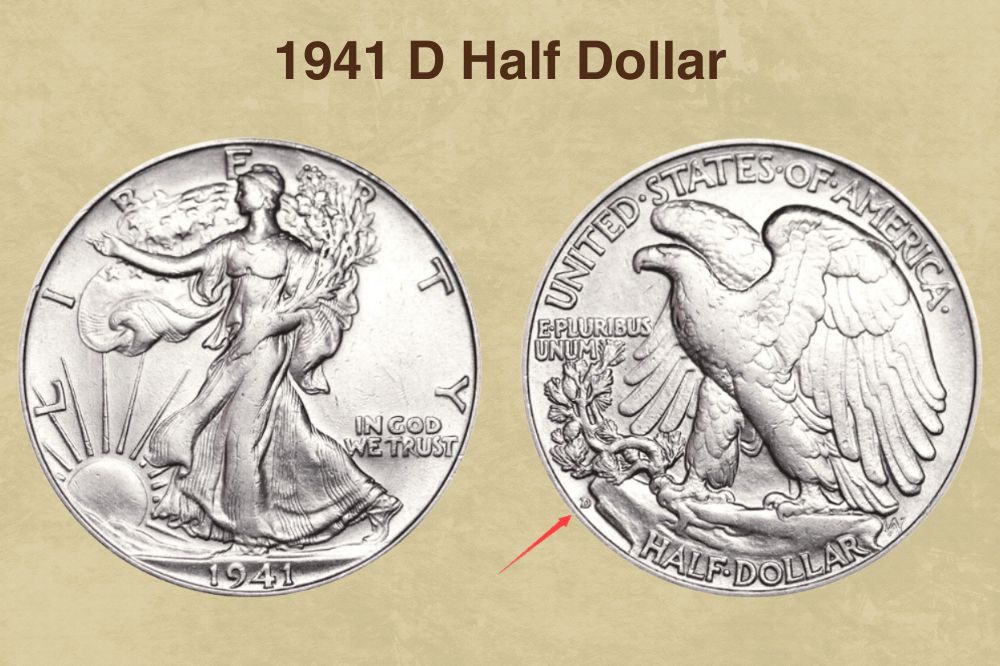
1941 D Half Dollar Value$35.52$40.33$51.00$128.33
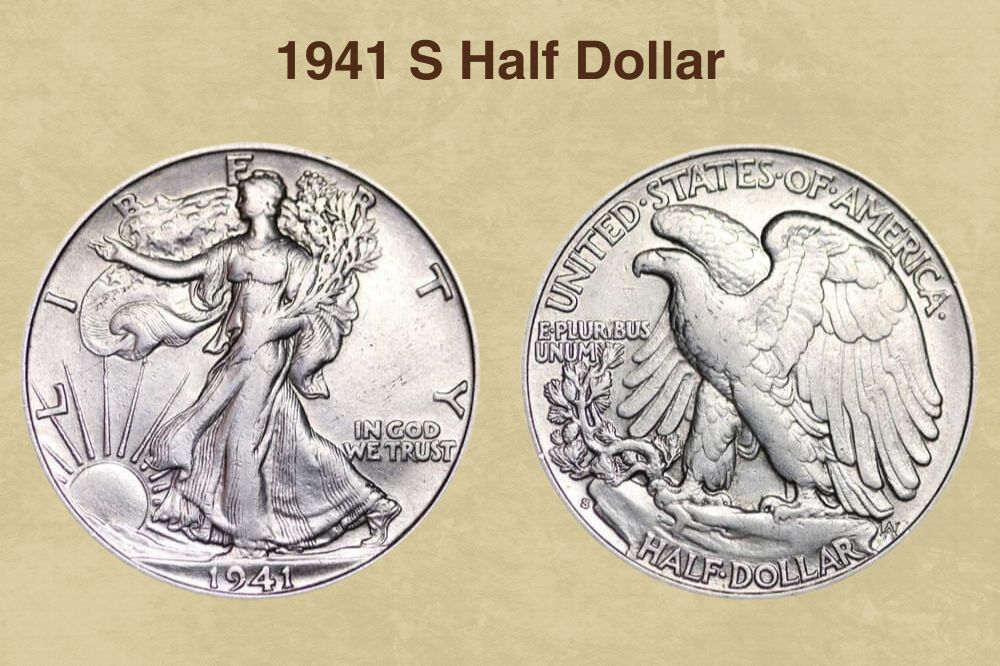
1941 S Half Dollar Value$35.52$40.33$52.00$190.00
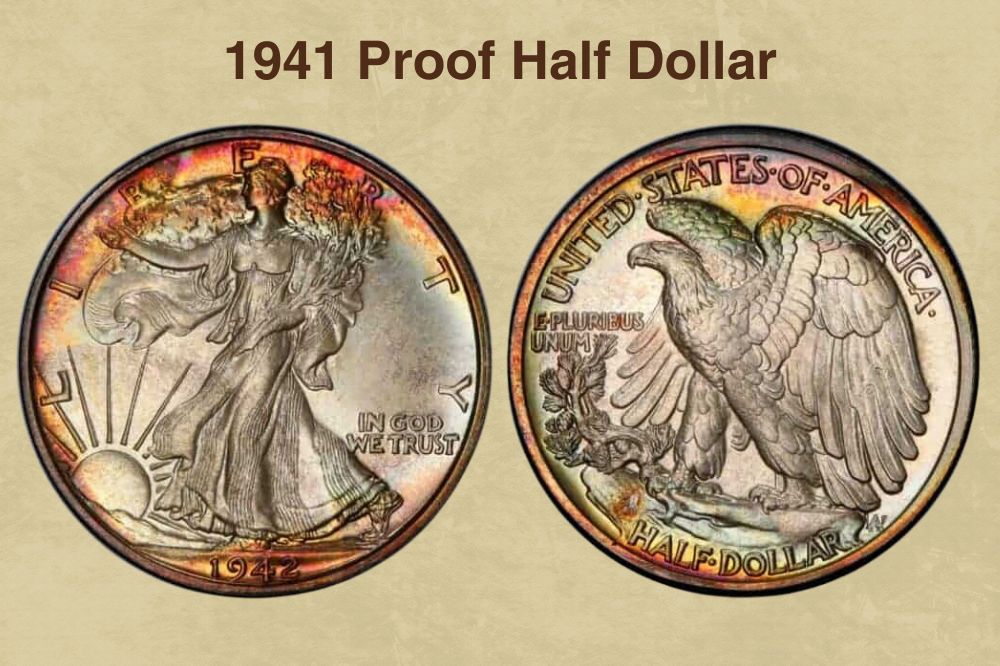
1941 Proof Half Dollar Value$170.00$1300.00
Updated: 2026-05-12 02:31:40

Also Read: Top 100 Most Valuable Kennedy Half Dollar Worth Money (1964 – Present)


Top 10 Most Valuable 1941 Half Dollar Worth Money

Most Valuable 1941 Half Dollar Chart

2001 - Present

The auction records for 1941 Walking Liberty Half Dollars tell a fascinating story about condition rarity and collector competition at the highest levels of the market.

The all-time record holder is a 1941-S graded PCGS MS67, which brought an extraordinary $90,850 at Bowers & Merena in November 2006. PCGS CoinFacts notes this remains the auction record for any 1941 variety — a testament to how difficult it is to find a sharply struck San Francisco coin in superb gem condition.

The Philadelphia issue achieved its peak with an MS68+ example realizing $50,400 at Stack’s Bowers in June 2021, while the finest known Denver coin, graded MS68, sold for $36,000 at Heritage Auctions in August 2022.

Proof coins compete strongly in the top tier. A PR69 example commanded $27,600 at Heritage Auctions in November 2005, and a PR68 “No AW” variety (explained below) brought $2,280 at Stack’s Bowers in November 2022. The dramatic spreads between grades underscore just how critical condition is to determining your 1941 Half Dollar value.


History Of The 1941 Half Dollar

The Walking Liberty Half Dollar design was created by sculptor Adolph Alexander Weinman, whose initials “AW” appear below the eagle’s wings on the reverse. Art historian Cornelius Vermeule called it one of the most beautiful U.S. coins ever made — and Weinman’s design was so beloved that it was revived in 1986 as the obverse of the American Silver Eagle bullion coin.

The 1941 issue holds a unique place in the series because of a dramatic mid-year change in mintmark placement. On February 14, 1941, Mint Director Friedrich von Engelken ordered the mintmark moved from the obverse to the reverse, stating that the obverse mintmarks looked like a defect in the die. This transition was confirmed in writing on April 14, 1941, and created five distinct varieties for the year — a Philadelphia issue plus obverse and reverse mintmark versions from both Denver and San Francisco.

The coin entered circulation in early 1941 against a backdrop of rising international tensions. Mintages across all three facilities jumped sharply that year, fueled by a recovering economy and a growing coin collecting boom following the Great Depression. Unlike earlier dates in the series, PCGS CoinFacts notes that 1941 marked the point at which collectors began saving coins in significant quantities, which directly affects survival rates today.

Interestingly, the design’s intricate details were notoriously difficult to strike cleanly. Mint officials eventually lowered the relief and adjusted striking force to improve production — but strike quality, especially on San Francisco coins, remained an ongoing challenge throughout the 1940s.

Also Read: Top 35 Most Valuable Franklin Half Dollar Worth Money (1948 – 1963)


Is Your 1941 Half Dollar Rare?

25

1941 No Mint Mark Half Dollar

Scarce
Ranked 72 in Walking Liberty Half Dollar
27

1941-D Half Dollar

Scarce
Ranked 68 in Walking Liberty Half Dollar
35

1941-S Half Dollar

Rare
Ranked 52 in Walking Liberty Half Dollar
35

1941 Proof Half Dollar

Rare
Ranked 51 in Walking Liberty Half Dollar

Assess the specific rarity tier and investment potential of your 1941 half dollar using our Coin Value Checker App‘s comprehensive Walking Liberty evaluation system.


Key Features of The 1941 Half Dollar

Minted during America’s final peacetime year, the 1941 half dollar represents both artistic mastery and historical significance within the Walking Liberty series. Its substantial 90% silver content and the refined strike quality of most Philadelphia and Denver coins make it an accessible entry point for collectors seeking to own a piece of pre-war American numismatic heritage.

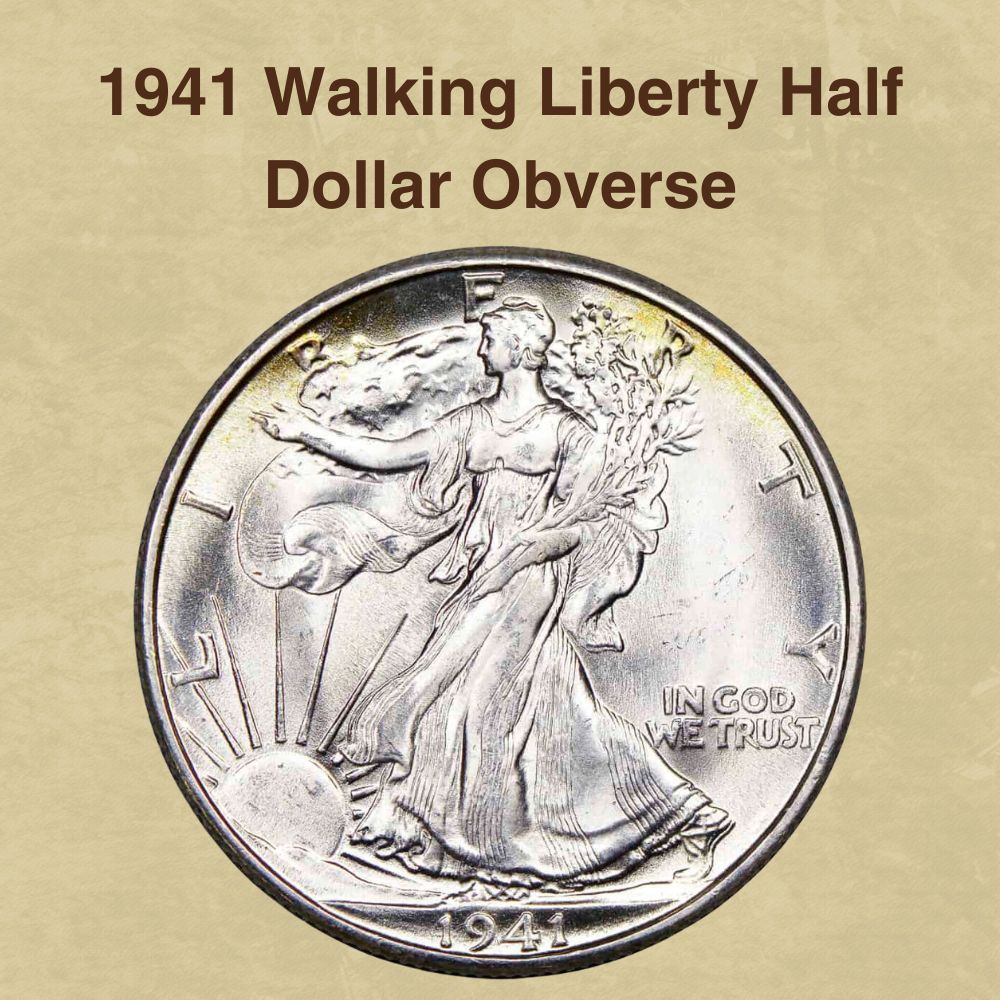
The Obverse Of The 1941 Half Dollar

The Obverse Of The 1941 Half Dollar

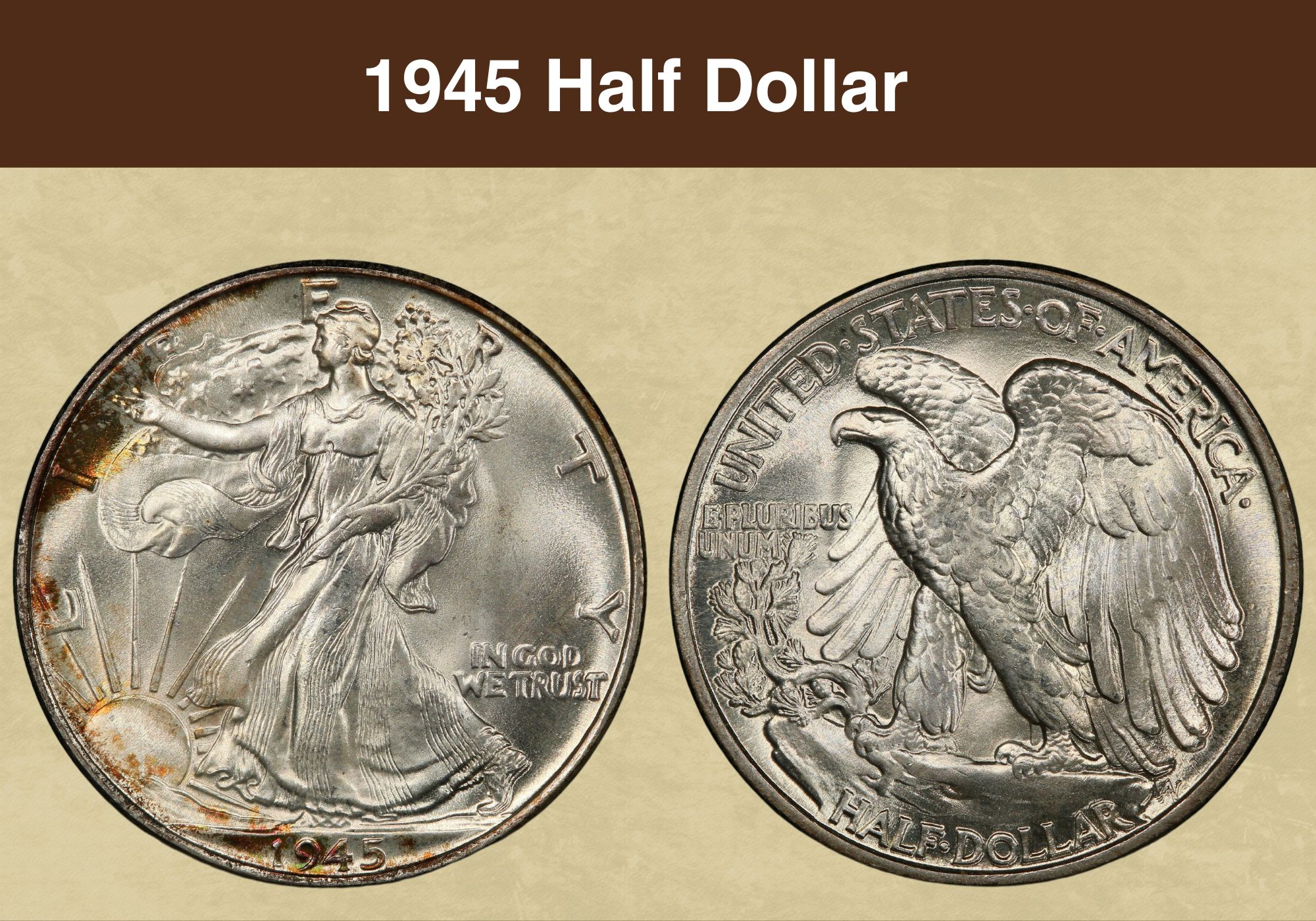
Lady Liberty dominates the obverse, striding confidently toward the rising sun. She is draped in the American flag and carries branches of oak and laurel in her left hand — symbols of military and civic glory.

Three inscriptions frame the central figure: LIBERTY arcs across the top, IN GOD WE TRUST appears behind Liberty’s dress, and the date 1941 sits along the bottom rim. The Fivaz-Stanton (FS) reference system, which catalogs die varieties for U.S. coins, recognizes several obverse mintmark varieties from early 1941 production before the mid-year transition moved mintmarks to the reverse.

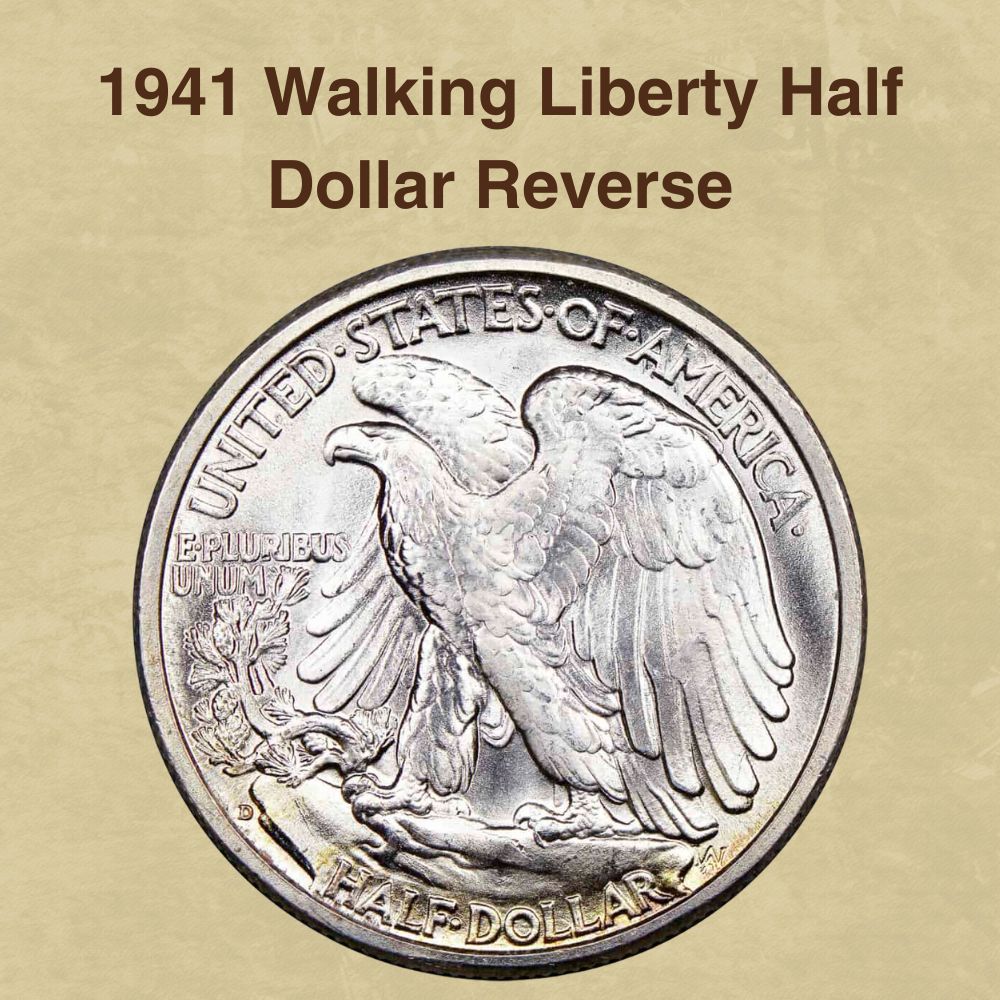
The Reverse Of The 1941 Half Dollar

The Reverse Of The 1941 Half Dollar

Weinman’s reverse shows a bald eagle perched on a rocky crag, wings spread in preparation for flight, with mountain pine saplings at the left. UNITED STATES OF AMERICA arcs above and HALF DOLLAR appears below.

The E PLURIBUS UNUM motto runs along the left rim. Weinman’s “AW” monogram appears just below and to the right of the eagle’s tail feathers — and on some 1941 proof coins, die overpolishing removed this monogram entirely, creating the sought-after “No AW” variety. The mintmark (S or D) appears on the left side of the rock on later-production 1941 coins.

Other Features Of The 1941 Half Dollar

All 1941 Walking Liberty Half Dollars are struck in 90% silver and 10% copper. Each coin contains 11.25 grams (0.36169 troy ounces) of silver in a total weight of 12.5 grams (0.40188 troy ounces).

The diameter is 30.63 mm (1.2059 inches) and thickness is 1.8 mm (0.07086 inches). A reeded edge — the ridged rim you can feel with your fingers — was standard to prevent fraudulent silver removal and to distinguish the coin from counterfeits.

Also Read: Top 60+ Most Valuable Walking Liberty Half Dollar (1916 -1947)


1941 Half Dollar Mintage & Survival Data

1941 Half Dollar Mintage & Survival Chart

Mintage Comparison

Survival Distribution

TypeMintageSurvivalSurvival Rate
No Mint24,192,0001,000,0004.1336%
D11,248,400550,0004.8896%
S8,098,000400,0004.9395%
Proof15,41213,25085.972%

Philadelphia led production in 1941 with 24,192,000 coins, followed by Denver at 11,248,400 and San Francisco at 8,098,000 — a combined total that reflected America’s economic recovery and preparation for potential wartime demand. The Philadelphia Mint also produced a limited run of 15,412 proof coins exclusively for collectors.

Business strike survival rates run consistently around 4–5% across all three mints, reflecting decades of circulation, loss, and occasional silver melt. The proof coins are a striking contrast: thanks to careful collector preservation from the start, their survival rate stands at an exceptional 85.97%.

The CoinWeek population study (updated through May 2024) found that the combined certified population of 1941-S coins in Mint State across PCGS, NGC, and CAC had grown to 16,724 examples — with 5,446 graded MS65 or better. Only 21 PCGS and 58 NGC examples have ever reached MS67 for the S-mint issue, making high-grade 1941-S coins genuinely condition-rare despite the large original mintage.

Also Read: What Half Dollars Are Worth Money?


The Easy Way to Know Your 1941 Half Dollar Value

Determining your 1941 Walking Liberty half dollar’s true value requires understanding how condition drives worth — from silver melt value all the way up to five-figure sums for pristine examples. The key wear points to examine are Liberty’s left hand and outstretched arm on the obverse, the eagle’s breast feathers and leg on the reverse, and the rim (which is particularly vulnerable to stacking friction).

Toning patterns add another layer of complexity. Attractively toned specimens — showing light gold iridescence or rose-colored peripheral toning — can actually earn premium grades, while dark, uneven, or “dingy” toning reduces appeal and value. Distinguishing genuine original toning from artificial coloring requires a trained eye that most new collectors simply don’t have yet.

Our Coin Value Checker App provides instant condition evaluation using advanced image recognition. Upload your 1941 half dollar photo for real-time grading guidance and accurate market valuation.

Coin Value Checker APP Screenshot


1941 Half Dollar Value Guides

The 1941 Walking Liberty Half Dollar market offers something for every collector. Heavily circulated pieces trade near silver melt value (approximately $17–$20 based on current silver prices), while pristine proof specimens command five-figure premiums. The key dividing line in this series is MS67 — below it, coins are relatively accessible; above it, genuine condition rarities emerge with exponentially higher prices.

CoinVaueChecker App 10

1941 Half Dollar Categories:

  • 1941 No Mint Mark Half Dollar (Philadelphia)
  • 1941-D Half Dollar (Denver)
  • 1941-S Half Dollar (San Francisco)
  • 1941 Proof Half Dollar (Philadelphia)


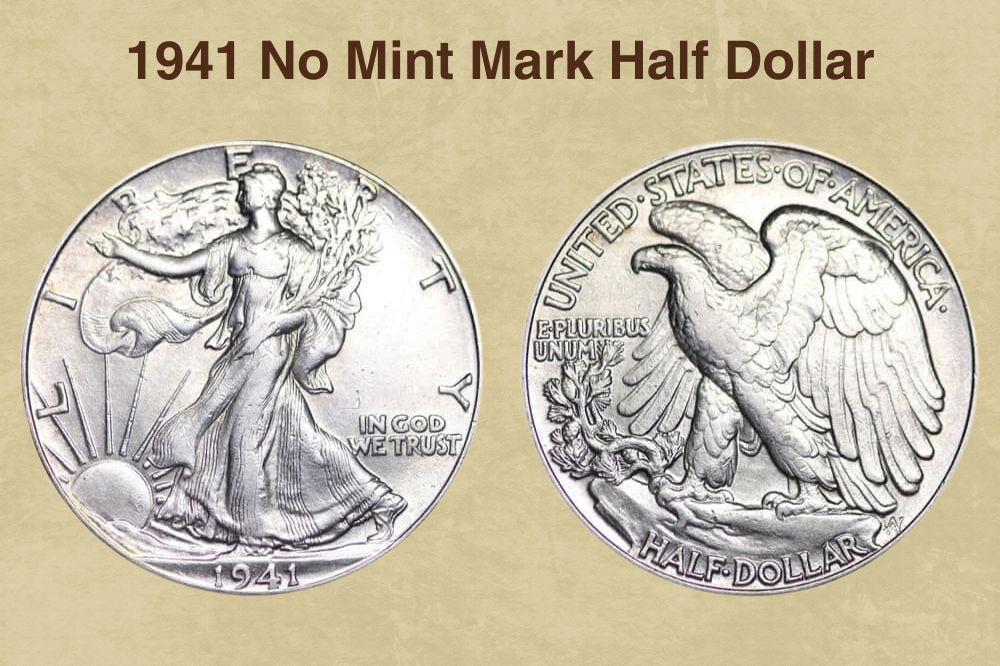
1941 No Mint Mark Half Dollar Value

1941 No Mint Mark Half Dollar Value

Philadelphia struck 24,192,000 Walking Liberty Half Dollars in 1941 — the highest mintage of any 1941 variety. PCGS CoinFacts describes the typical 1941 Philadelphia coin as “very sharply struck” with frosty white luster, making it one of the most visually appealing common-date Walkers in the series. This accessibility makes it a popular “type coin” for collectors building a general American silver collection.

The Greysheet notes that MS68 examples are genuinely rare — only a handful have ever been certified. The finest known example, graded MS68+, sold for $50,400 at Stack’s Bowers in June 2021. In lower uncirculated grades (MS60–MS65), this coin is readily available and offers excellent value for collectors on a budget.

1941 No Mint Mark Half Dollar Price/Grade Chart

Price by 1-70 Grade (Latest Auction Records Included)

Updated: 2026-05-12 02:31:40

Historical auction records reveal significant value variations based on preservation grade and surface quality.

Date PlatformPrice Grade

Current collector interest patterns demonstrate evolving demand for this accessible variety within the series.

Market Activity:1941 No Mint Mark Half Dollar


1941-D Half Dollar Value

1941-D Half Dollar Value

Denver struck 11,248,400 Walking Liberty Half Dollars in 1941, placing the 1941-D as a mid-range variety in terms of both mintage and collector demand. PCGS CoinFacts notes that the 1941-D is “quite available in uncirculated and Gem condition,” with significant quantities saved in original rolls beginning that year.

The Greysheet describes this issue as “readily available in Mint State including gem grades up to MS67, at which point it gets a bit tough,” with MS68 examples considered rare — only a handful exist across all grading services. The finest known MS68 example brought $36,000 at Heritage Auctions in August 2022. Importantly, Greysheet analysts consider the 1941-D underrated within the 1941–1947 short set, ranking it the fifth-rarest date in top Mint State grades despite its seemingly generous mintage.

1941-D Half Dollar Price/Grade Chart

Price by 1-70 Grade (Latest Auction Records Included)

Updated: 2026-05-12 02:31:40

Auction performance data illustrates the premium collectors pay for superior Denver Mint striking quality.

Date PlatformPrice Grade

Market engagement metrics reflect sustained collector attention for this moderately scarce variety.

Market Activity: 1941-D Half Dollar


1941-S Half Dollar Value

1941-S Half Dollar Value

San Francisco’s 8,098,000 mintage makes the 1941-S the scarcest business strike of the year — and its status as the key date of the 1941–1947 “Short Set” drives enormous collector demand. PCGS CoinFacts founder David Hall explained this designation precisely: when coin albums became popular in the 1950s and 1960s, the Walking Liberty series filled two albums, with the second covering 1941–1947. The 1940 cutoff was somewhat arbitrary, but it created a concentrated collecting focus where the 1941-S became the lowest-mintage coin in the second album.

Strike quality is a persistent challenge for the 1941-S. PCGS CoinFacts notes that examples are “often encountered, even otherwise superb Gem examples, that are very weakly struck on Ms. Liberty’s left hand.” Specimens with a sharply struck hand are genuinely rare and command strong premiums. Population data (as of March 2025) shows only 21 coins certified PCGS MS67 and 58 NGC MS67, making certified high-grade examples both scarce and expensive. The all-time auction record remains $90,850 for a PCGS MS67 at Bowers & Merena in November 2006.

1941-S Half Dollar Price/Grade Chart

Price by 1-70 Grade (Latest Auction Records Included)

Updated: 2026-05-12 02:31:40

Price realization records showcase the dramatic premiums commanded by this key date in exceptional condition.

Date PlatformPrice Grade

Market activity analysis reveals the intense collector competition driving this variety’s market dynamics.

Market Activity: 1941-S Half Dollar


1941-S PL Half Dollar Value

1941-S PL Half Dollar Value

The PL (Prooflike) designation is awarded by grading services like PCGS and NGC to business strike coins that display clear reflectivity and mirror-like surfaces when viewed from two to four inches away. This effect occurs when coins are struck from freshly polished dies, typically very early in a die’s production run. On an already scarce coin like the 1941-S, PL examples are exceptionally rare.

Market evidence is limited by the low certified population. A documented auction record shows an MS64 PL example selling for $141 in July 2021 on eBay — a price that reflects the very thin market for this specialist variety rather than its true numismatic potential. As awareness of PL designations grows within the Walking Liberty collector community, these pieces are attracting increasing attention from advanced collectors who focus on population numbers over grade alone.

1941-S PL Half Dollar Price/Grade Chart

Price by 1-70 Grade (Latest Auction Records Included)

Updated: 2026-05-12 02:31:40

Limited auction appearances show the specialized nature of this surface variety.

Date PlatformPrice Grade

Collector engagement patterns suggest growing awareness of prooflike designations within the Walking Liberty series.

Market Activity: 1941-S PL Half Dollar


1941 Proof Half Dollar Value

1941 Proof Half Dollar Value

Proof coins are specially made for collectors using highly polished dies and carefully prepared planchets, resulting in mirror-like fields and sharp, frosted design details. The 1941 proof Walking Liberty Half Dollar was struck at the Philadelphia Mint in a limited run of just 15,412 pieces — making it the second-to-last year of proof coinage before World War II forced suspension of the collector program after 1942.

A critically important fact about the 1941 proof: there are no known Cameo (CAM) or Deep Cameo (DCAM) examples in the entire certified population. PCGS CoinFacts confirms this explicitly, noting that while a very small number of 1942 Cameos exist, none have ever been confirmed for the 1941 issue. This is worth knowing because collectors sometimes search for these designations — they simply don’t exist for this date. The “No AW” variety (where die overpolishing removed Weinman’s monogram) is the most notable variety among 1941 proofs; Wikipedia notes this is most common with the 1941 issue, with much of the year’s proof production lacking the monogram.

Greysheet data shows 1941 proofs remain available through PR67, with PR68 becoming scarce and PR69 representing extreme rarity. The auction record is a PR69 at $27,600 from Heritage Auctions in November 2005.

1941 Proof Half Dollar Price/Grade Chart

Price by 1-70 Grade (Latest Auction Records Included)

Updated: 2026-05-12 02:31:40

Sales data demonstrates the significant value spread between different grades standard proofs and varieties.

Date PlatformPrice Grade

Market interest trends indicate steady collector demand for pre-war proof coinage across all grade levels.

Market Activity: 1941 Proof Half Dollar

Also Read: Rare Half Dollar Coins to Look For


Rare 1941 Half Dollar Error List

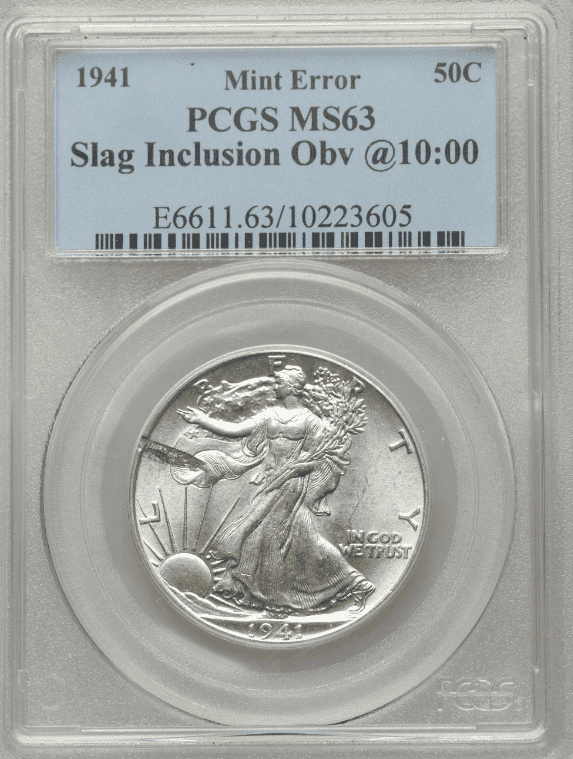
While 1941 Walking Liberty Half Dollar production benefited from over two decades of refined minting techniques, several distinctive error varieties emerged from the high-volume manufacturing process. These errors primarily resulted from die maintenance issues and mechanical striking problems — and today they command strong premiums among specialist collectors.

1. 1941-D/D RPM FS-501 Errors

1941-D/D RPM FS-501 Errors

An RPM (Repunched Mint Mark) error occurs when the mintmark punch strikes the working die more than once at slightly different positions, creating overlapping or doubled impressions visible under magnification. The 1941-D/D RPM FS-501 is the most sought-after RPM for the Denver issue. The Cherrypickers’ Guide to Rare Die Varieties (Fivaz-Stanton reference) describes this variety as showing a secondary “D” punched to the northwest of the primary mintmark, visible on the curved portions of the letter under 5–10x magnification.

Market values reflect strong collector demand. Circulated specimens command $60–$80 in average condition, while uncirculated examples range from $180 to over $1,000 depending on grade. The auction record for an MS67 graded specimen reached $1,700 when it sold in April 2022, with NGC documentation of an MS64 example at $617. The Coins Value reference (November 2025 edition) confirms PCGS attribution number #145786 for this variety.

1941-D/D RPM FS-501 Half Dollar Price/Grade Chart

Price by 1-70 Grade (Latest Auction Records Included)

CoinVaueChecker App 10

Updated: 2026-05-12 02:31:40

2. 1941-S/S RPM FS-501 Errors

1941-S/S RPM FS-501 Errors

The 1941-S/S RPM FS-501, cataloged in the Cherrypickers’ Guide as “Small S over Horizontal S” (also described as “S/S Southwest”), represents a significant repunched mintmark variety from the San Francisco Mint. This variety holds special historical significance: because mintmarks were still hand-punched into individual working dies in 1941 (a practice that didn’t end until the Mint transitioned to hub-punched mintmarks in 1989), even a minor misalignment of the punch created a second, overlapping impression that became permanent in hundreds of coins.

An MS65 graded example of this variety sold for $2,585 at Heritage Auctions in January 2013, demonstrating the healthy market for authenticated San Francisco RPM varieties. Similar period RPM varieties typically command premiums ranging from $17.50 to $75 in lower grades and considerably more in gem uncirculated condition.

1941-S/S RPM FS-501 Half Dollar Price/Grade Chart

Price by 1-70 Grade (Latest Auction Records Included)

Updated: 2026-05-12 02:31:40

3. 1941-S FS-901 Missing Wing Feathers Errors

1941-S FS-901 Missing Wing Feathers Errors

The FS-901 designation in the Fivaz-Stanton system marks this as a recognized die variety, not just a random imperfection. The Missing Wing Feathers error occurred when San Francisco Mint personnel overpolished the reverse die — likely to remove clash marks or surface defects — and inadvertently erased the inner wing feathers on the left side of the eagle in the process. The result is a coin where a defined section of feather detail simply doesn’t exist.

High-grade examples are genuinely scarce and command impressive prices. An MS66+ example sold for $4,113 at Legend Rare Coin Auctions in February 2023. MS66 graded coins with this variety are valued at $2,750–$3,250. This variety represents an important intersection of a key date (the 1941-S) and a recognized die variety, which is why specialist collectors pursue it so aggressively.

1941-S FS-901 Missing Wing Feathers Half Dollar Price/Grade Chart

Price by 1-70 Grade (Latest Auction Records Included)

Updated: 2026-05-12 02:31:40


Where to Sell Your 1941 Half Dollar?

Once you know what your coin is worth, choosing the right venue makes a significant difference in the final price you receive. High-grade certified examples (MS65 and above) belong at major auction houses like Heritage Auctions, Stack’s Bowers, or GreatCollections, where specialist bidders compete aggressively for condition rarities.

Check out now: Best Places To Sell Coins Online (Pros & Cons)


1941 Half Dollar Market Trend

Market Interest Trend Chart - 1941 Half Dollar

*Market Trend Chart showing the number of people paying attention to this coin.


FAQ About The 1941 Half Dollar Value

1. What is the silver content of a 1941 Half Dollar and what is it worth in silver alone?

Every 1941 Walking Liberty Half Dollar contains 0.36169 troy ounces of pure silver (11.25 grams in a total weight of 12.5 grams). Based on a silver spot price of approximately $48 per ounce, the melt value is around $17–$18. Even the lowest collectible grade (G-4) commands roughly $20–$21, which means even worn examples have numismatic value above pure silver content.

2. Is the 1941-S Half Dollar a key date?

Yes — the 1941-S is considered the key date of the popular 1941–1947 “Short Set.” This designation originated in the 1950s and 1960s when coin albums arranged Walking Liberty halves in two separate books, with 1941–1947 filling the second volume. The 1941-S, with its mintage of 8,098,000, was the lowest-mintage coin in that album, making it the most sought-after piece for Short Set collectors. PCGS founder David Hall has noted this key date status is somewhat of a “fluke” of album design, but the collector demand it generates is entirely real.

3. What does “No AW” mean on a 1941 proof Half Dollar?

The “AW” refers to designer Adolph Weinman’s initials, which normally appear below the eagle’s right wing on the reverse. On some 1941 proof coins, these initials were accidentally removed when mint personnel overpolished the reverse die — a common maintenance practice to remove clash marks. Wikipedia confirms the 1941 proof issue is the most common year for this No AW variety. A PR68 No AW example sold for $2,280 at Stack’s Bowers in November 2022.

4. Are there any 1941 Half Dollar Cameo (CAM) or Deep Cameo (DCAM) proof coins?

No — this is an important fact for advanced collectors. PCGS CoinFacts explicitly states there are no known Cameo or Deep Cameo 1941 proof Walking Liberty Half Dollars in the entire certified population. CAM and DCAM designations (which describe frosty devices against mirror-like fields) exist for a very small number of 1942 proof Walkers, but none have ever been confirmed for 1941. If you see a 1941 Walker listed as a Cameo, approach it with caution.

5. Which 1941 Walking Liberty Half Dollars are auction winners?

  • 1941-S MS67 — $90,850 (November 2006, Bowers & Merena)
  • 1941 MS68+ — $50,400 (June 2021, Stack’s Bowers)
  • 1941-D MS68 — $36,000 (August 2022, Heritage Auctions)
  • 1941 PR69 — $27,600 (November 2005, Heritage Auctions)
  • 1941-S MS66+ Missing Wing Feathers — $4,113 (February 2023, Legend Rare Coin Auctions)
  • 1941-S/S MS65 RPM — $2,585 (January 2013, Heritage Auctions)
  • 1941 PR68 No AW — $2,280 (November 2022, Stack’s Bowers)
  • 1941-D/D MS67 RPM — $1,700 (April 2022, eBay)
  • 1941-S MS64 PL — $141 (July 2021, eBay)

6. How much is a 1941 Philadelphia (No Mint Mark) Half Dollar worth?

In circulated condition, 1941 Philadelphia Half Dollars typically sell for $17–$50 depending on wear. Uncirculated (MS60–MS65) examples range from $55 to $675. MS67 coins become genuinely scarce and are worth $1,500–$5,000, while MS68 pieces approach $15,000. The single finest known MS68+ example sold for $50,400 at Stack’s Bowers in 2021.

7. What is the difference between an MS grade and a PR grade on a 1941 Half Dollar?

MS stands for Mint State (also called Uncirculated), which refers to business strike coins — the regular coins made for everyday commerce — that show no wear. PR (or PF) stands for Proof, which describes coins specially made for collectors using polished dies that produce mirror-like fields and sharp details. Both grading scales run from 1 to 70, but proof coins have their own separate population data and generally command higher prices at the same numerical grade due to their specialized production and limited mintage.

8. What is the 1941-D/D RPM FS-501 variety and how do I spot it?

RPM stands for Repunched Mint Mark — an error that occurred when the “D” mintmark punch struck the working die twice at slightly different positions. The FS-501 designation comes from the Fivaz-Stanton reference system (the Cherrypickers’ Guide to Rare Die Varieties), confirming it as a recognized and cataloged variety. To spot it, examine the “D” mintmark on the reverse under 5–10x magnification and look for a secondary “D” impression to the northwest of the primary mark. In MS grades this variety can bring $180–$1,700 depending on condition.

9. What is a Prooflike (PL) designation and does it add value to a 1941-S?

PL (Prooflike) is a designation awarded by PCGS and NGC to business strike coins that display mirror-like, reflective surfaces — similar to proof coins — when viewed from 2–4 inches away. This effect happens when a coin is struck from fresh, highly polished dies very early in the die’s production run. For the 1941-S, PL examples are exceptionally rare because the San Francisco Mint often ran its dies longer than ideal. A certified 1941-S PL coin commands a premium over standard 1941-S coins at the same grade, though the thin market means prices can vary significantly.

10. Should I clean my 1941 Half Dollar before getting it graded or selling it?

Never clean a coin before having it graded or selling it. Cleaning — even with gentle soap and water or a soft cloth — leaves microscopic hairline scratches that are immediately visible under grading-service lighting. PCGS and NGC both assign “cleaned” or “details” designations to cleaned coins, which dramatically reduces their market value. A naturally toned 1941 Walking Liberty Half Dollar in original condition will always sell for more than a cleaned one of the same technical grade. The only legitimate way to improve a coin’s appearance is proper storage going forward.

You May Also Like