Coin Value Contents Table
- 1927 Indian Head (Buffalo) nickel value
- History of the 1927 Indian Head (Buffalo) Nickel
- 1927 Indian Head (Buffalo) nickel Types
- Features of the 1927 Indian Head (Buffalo) Nickel
- 1927 Indian Head (Buffalo) Nickel Grading
- 1927 Indian Head (Buffalo) Nickel Value Guides
- 1927 No Mint Mark nickel Value
- 1927 Buffalo nickel Value (special strikes)
- 1927 D nickel Value
- 1927 S nickel Value
- Rare 1927 Indian Head (Buffalo) Nickel Errors List
- Where to Sell Your 1927 Buffalo Nickel ?
- FAQ about the 1927 Buffalo Nickels
James Earle Fraser was responsible for a new nickel appearance, and the first Buffalo nickels appeared in 1913. Their mintage was finished in 1938 when Jefferson nickels replaced these hard-to-mint coins.
You can recognize two types. The first was minted in 1913 with a bison standing on a raised ground, while all other nickels were redesigned to get recessed coins (Type 2). Weak strikes make the 1927 buffalo nickel value modest, with only a few pieces that stand out from the crowd.
1927 Indian Head (Buffalo) nickel value |
|||
| Condition | 1927 No Mint mark nickel | 1927 D nickel | 1927 S nickel |
| Good | $1.46 | $3.38 | $2.33 |
| Very good | $2.05 | $9.35 | $3.38 |
| Fine | $2.87 | $14 | $5.84 |
| Very fine | $5.84 | $46 | $46 |
| Extra fine | $20 | $96 | $115 |
| AU | $28 | $152 | $262 |
| MS 60 | $40 | $193 | $1,053 |
| MS 63 | $94 | $465 | $2,585 |
History of the 1927 Indian Head (Buffalo) Nickel
In 1904, when President Theodore Roosevelt decided to upgrade American coinage artistically, Augustus Saint Gaudens was tasked with redesigning as many pieces as legally possibilities.
After the famous sculptor died in 1909, other sculptors continued his mission. One of them was James Earle Fraser, who created the Buffalo nickels. He started to make a one-cent design, but he adapted the initial idea and finished a new five-cent piece in 1912.
1927 Indian Head (Buffalo) nickel Types |
||
| Location | Year | Minted |
| Philadelphia | 1927 no mint mark nickel | 37,981,000 |
| Philadelphia | 1927 special strike nickel | 5 |
| San Francisco | 1927 S nickel | 3,430,000 |
| Denver | 1927 D nickel | 5,730,000 |
| Total | / | 47,141,005 |
Problems with these coins started from the very beginning. The Hobbs Manufacturing Co. demanded their alternation because they didn’t fit their machines for detecting fake nickels.
Then, coins were issued on February 22, 1913, to be a gift for Native American chiefs who attended the future National American Indian Memorial groundbreaking ceremony. Unfortunately, the monument was never built.
Things worsened once new coins entered circulation and started wearing out too quickly. Besides, the dies were breaking three times faster than during other coin production.
Everyone seemed happy once this nickel went into history in 1938. On the other hand, it was an excellent news for collectors.
Also read: Top 10 Most Valuable Nickels Worth Money
Features of the 1927 Indian Head (Buffalo) Nickel
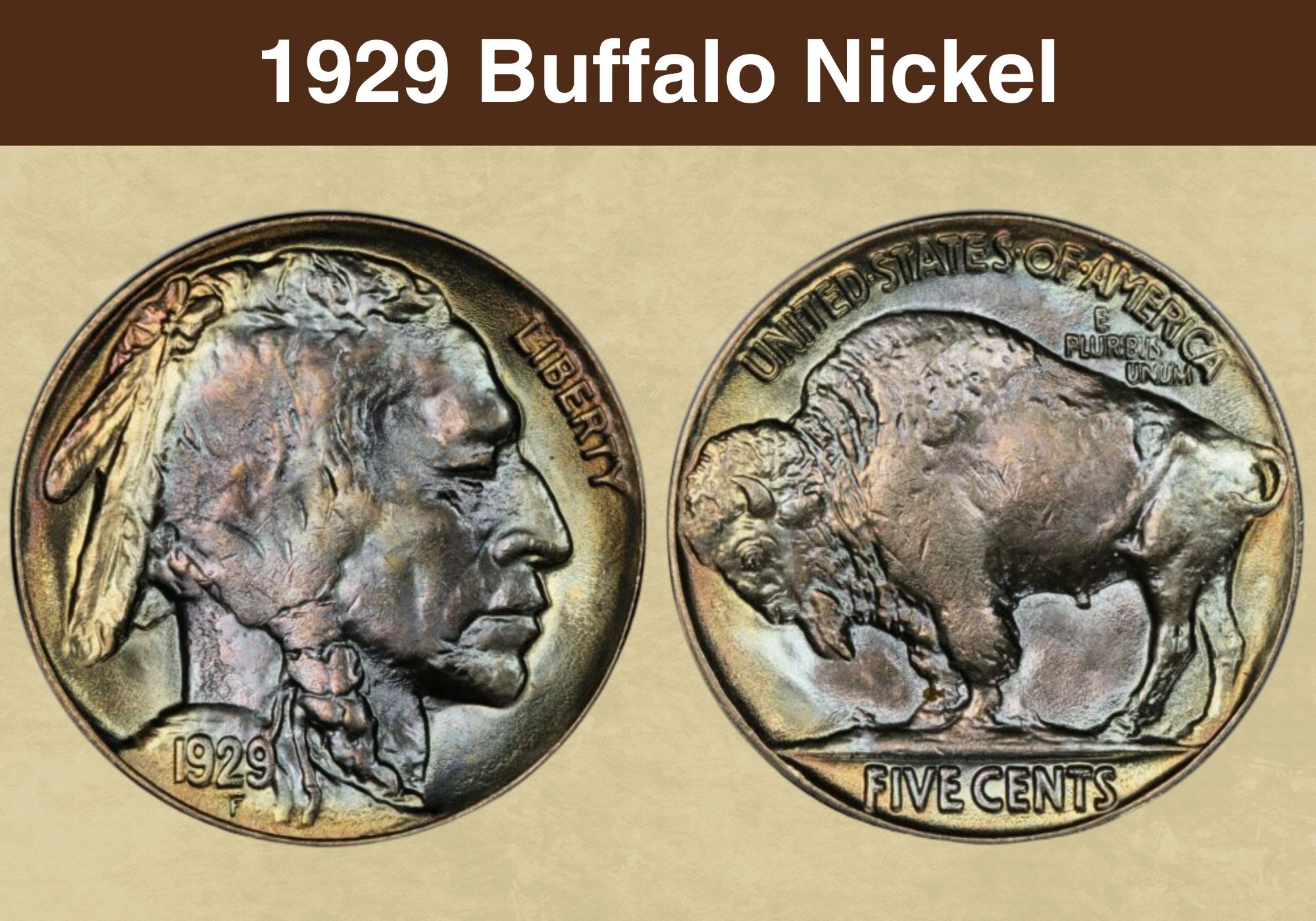
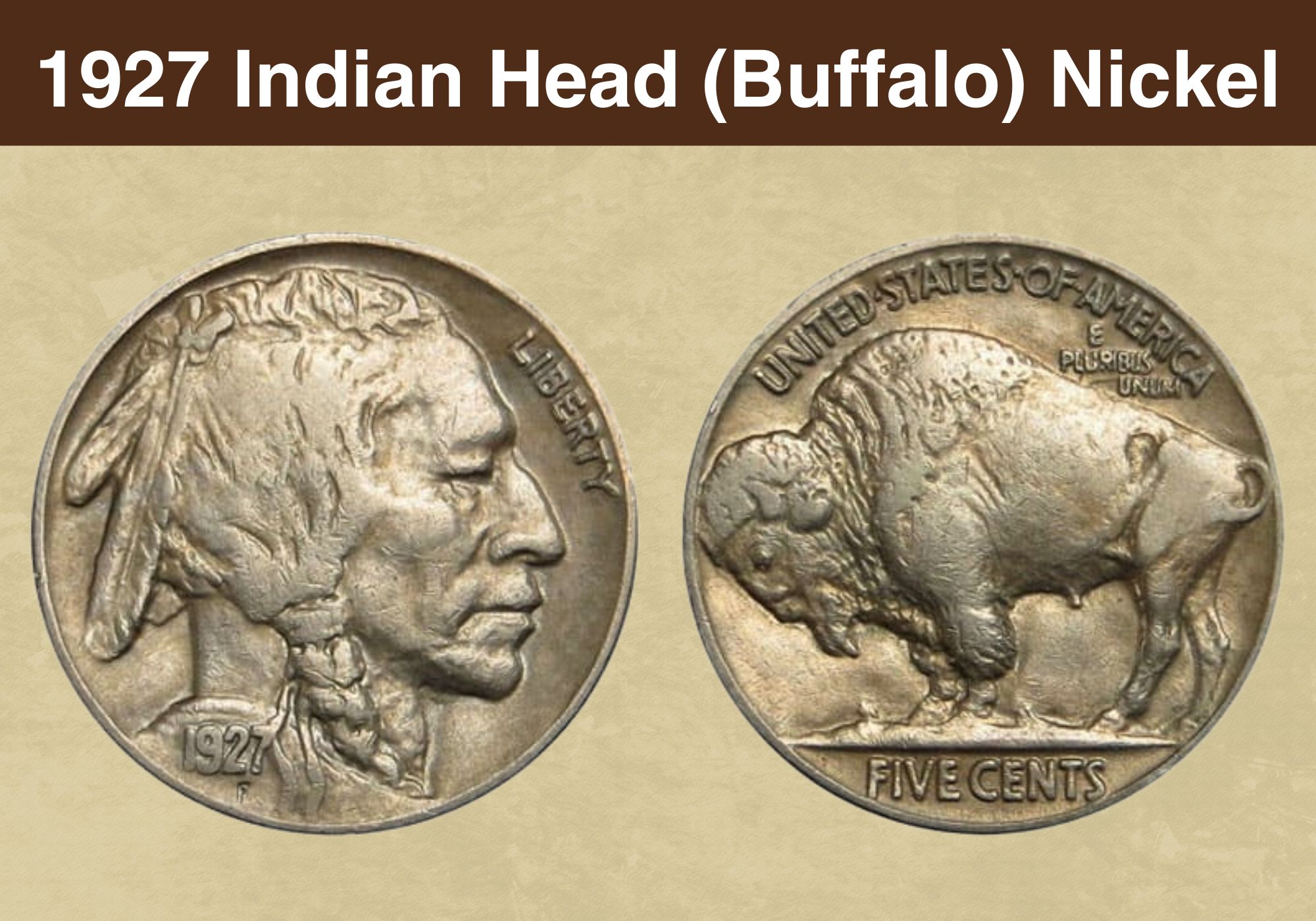
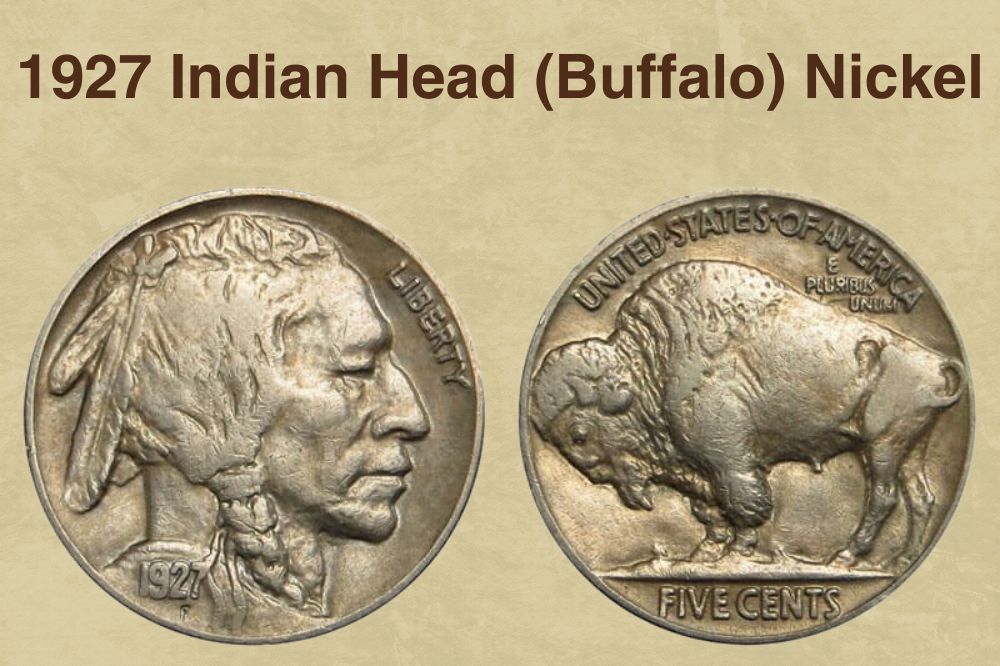
James Earle Fraser created Indian Head nickels in 1913, but they have been remembered in coinage history as Buffalo nickels because of their reverse side. The coin mintage in 1927 included highly collectible pieces with the mint mark S and five special strike coins from Philadelphia.
The obverse of the 1927 Indian Head (Buffalo) nickels
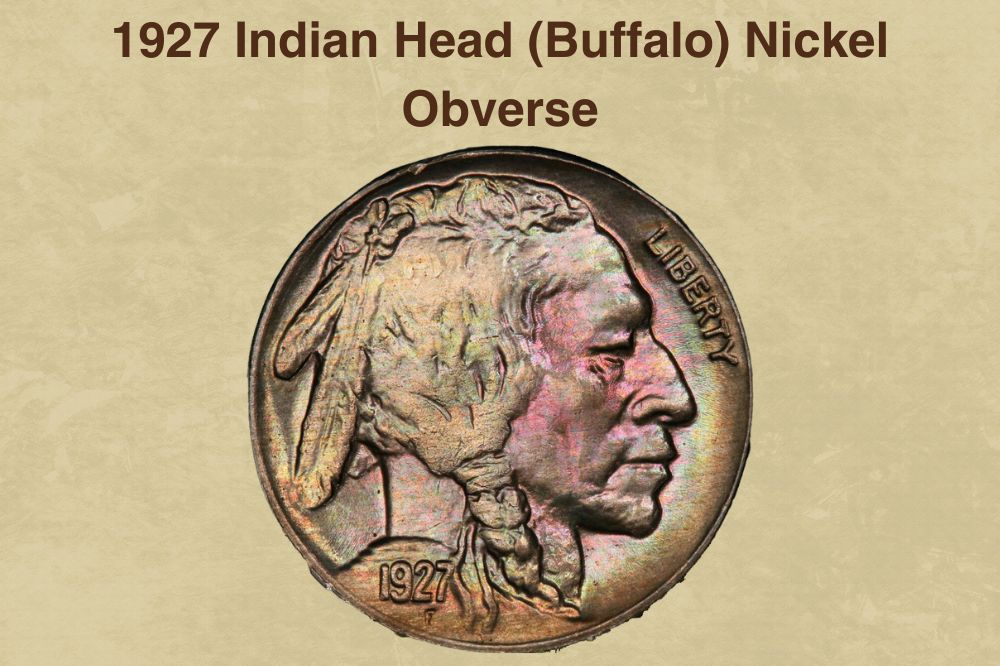
Like other nickels in the series, those from 1927 depict an Indian chief on the coin obverse. However, James Earle Fraser didn’t make an image of one particular man but combined three Native Americans’ facial features. It is assumed that he used portraits of the following chiefs:
- Cheyenne Chief – Two Moons
- Seneca Chief – Big John Tree
- Sioux Chief – Iron Tail
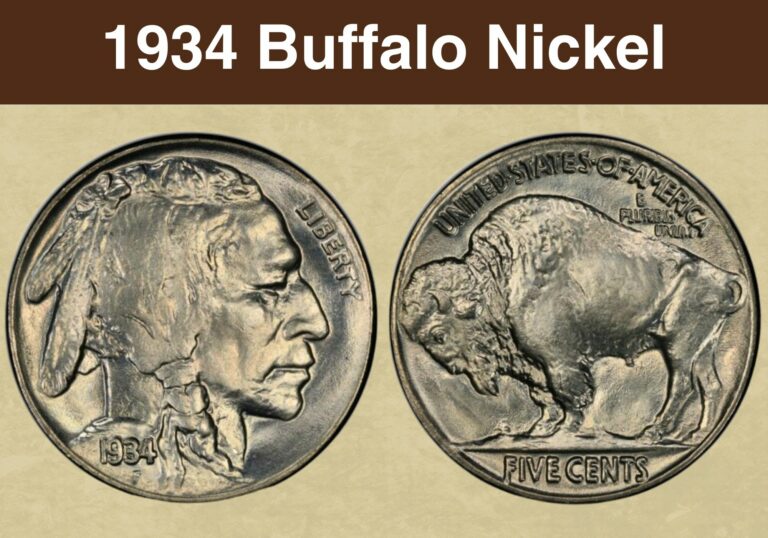
The composition includes the date on the Indian’s shoulder. There is also LIBERTY struck along the right rim and the designer’s initial F under the date.
The reverse of the 1927 Indian Head (Buffalo) nickels
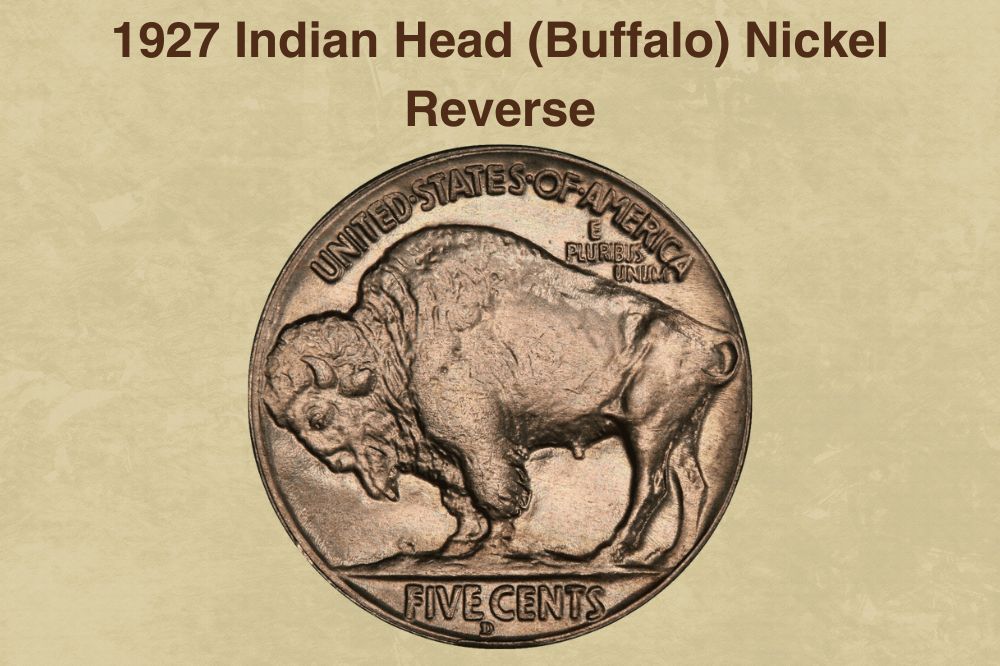
The 1927 nickel reverse is occupied by an American bison standing on a flat surface, with the denomination (FIVE CENTS) under it. The top coin part is fulfilled with inscriptions placed in four lines:
- UNITED·STATES·OF·AMERICA
- E
- PLURIBUS
- UNUM
The mint mark is struck under the denomination, except on coins from Philadelphia. Nickels from this mint have a blank area there.
1927 Indian Head (Buffalo) nickel Details |
|
| Face value | Five cents ($0.05) |
| Compound | Copper-nickel alloy |
| Coin diameter | 0.83504 inches (21.2 mm) |
| Shape | Round |
| Coin weight | 0.17637 ounces (5 g) |
| Edge | Plain |
| Coin thickness | 0.07677 inches (1.95 mm) |
Other features of the 1927 Indian Head (Buffalo) nickels
The 1927 Indian Head (Buffalo) nickel is a coin of five cents made of copper-nickel alloy. You can measure its plain edge thickness of 0.07677 inches (1.95 mm), while the diameter is 0.83504 inches (21.2 mm). Each piece’s weight is 0.17637 ounces (5 g).
Also read: Top 17 Most Valuable Buffalo Nickel Worth Money
1927 Indian Head (Buffalo) Nickel Grading
Like other coins in the series, the 1927 Buffalo nickel grading is a complex way to determine their condition and estimate their price.
Most circulated pieces are affordable, while impeccable, highest-ranking nickels based on the Sheldon scale can be expensive. You can assess your coin yourself, but hiring professionals is better when it is about rare and unique specimens.
| # | Grade |
|---|---|
| 1 | Basal State-1 |
| 2 | Fair |
| 3 | Very Fair |
| 4, 5, 6 | Good |
| 7, 8, 10 | Very Good |
| 12, 15 | Fine |
| 20, 30 | Very Fine |
| 40 | Extremely Fine |
| 50 | About Uncirculated |
| 60 | Mint State |
| 65 | Mint State |
| 70 | Mint State |
Please check our grading guides to know your coin scale, It’s the necessary step to know the exact value of your coin.
Check out now: How to Grade Buffalo Nickel?
1927 Indian Head (Buffalo) Nickel Value Guides
Among 47,141,005 nickels minted in 1927, you can recognize those from the regular strikes and only a few coins from the special strike. There are no proofs with this date on the obverse since the US Mint didn’t issue proof coins from 1916 to 1936.
Factors that affect each nickel’s value include the date, mint mark, design type, condition, and possible minting errors.
1927 No Mint Mark nickel Value
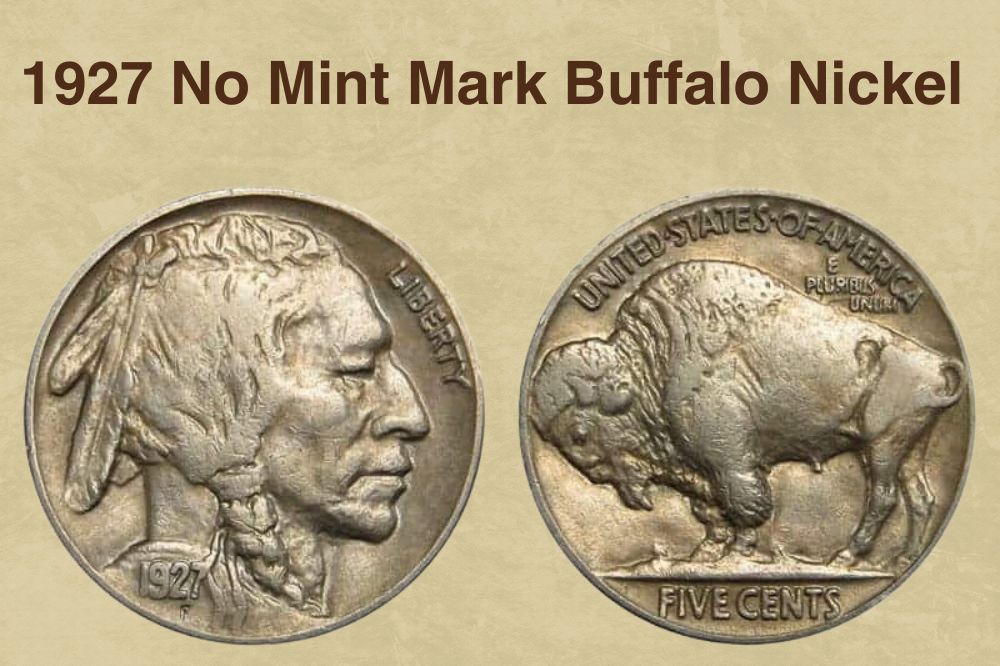
The 1927 Buffalo nickels (No Mint mark) were minted in Philadelphia in a mintage of 37,981,000 coins, the highest mintage reached that year. This impressive number is partially responsible for these pieces’ modest price on the current market.
In most cases, you can find one circulated nickel from this year for $0.45 to $25. The only criterion for this price range is their condition. On the other hand, you can recognize coins in the mint state of various preservation levels that cost:
- MS 60-ranked coin – $30 to $36
- MS 61-ranked coin – $33 to $39.60
- MS 62-ranked coin – $44 to $52.80
- MS 63-ranked coin – $66 to $79.20
- MS 64-ranked coin – $110 to $132
- MS 65-ranked coin – $220 to $260
- MS 66-ranked coin – $420 to $504
You need to be really lucky to come across one 1927 MS 67 Buffalo nickel. Such an excellent specimen is estimated at $2,700 to $3,800, but the auction prices can be significantly higher. For instance, one nickel in MS 67+ cost $24,000 at a 2019 auction.
1927 Buffalo nickel Value (special strikes)
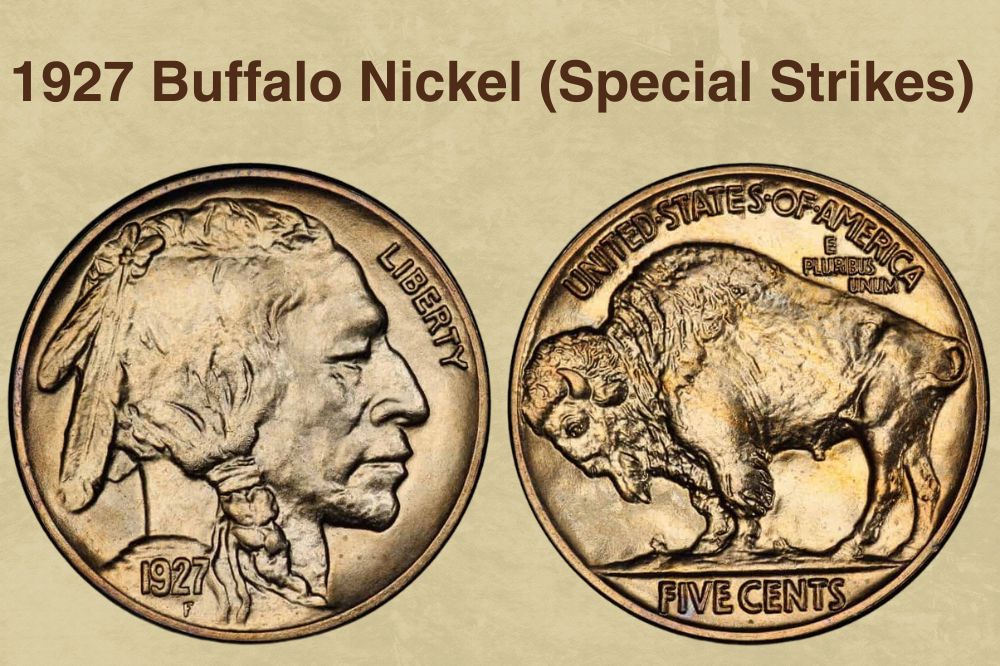
Interestingly, the Philadelphia mint struck five special strike nickels in 1927 on chromium-plated dies. The NGC certified three before Jim Halperin purchased them at a coin show.
Experts are sure these coins are not proofs. However, there is no documentation about their minting, and most people have never heard about these pieces. One such coin in SP 65 grade appeared at an auction in 2009 and sold at $47,150.
1927 D nickel Value
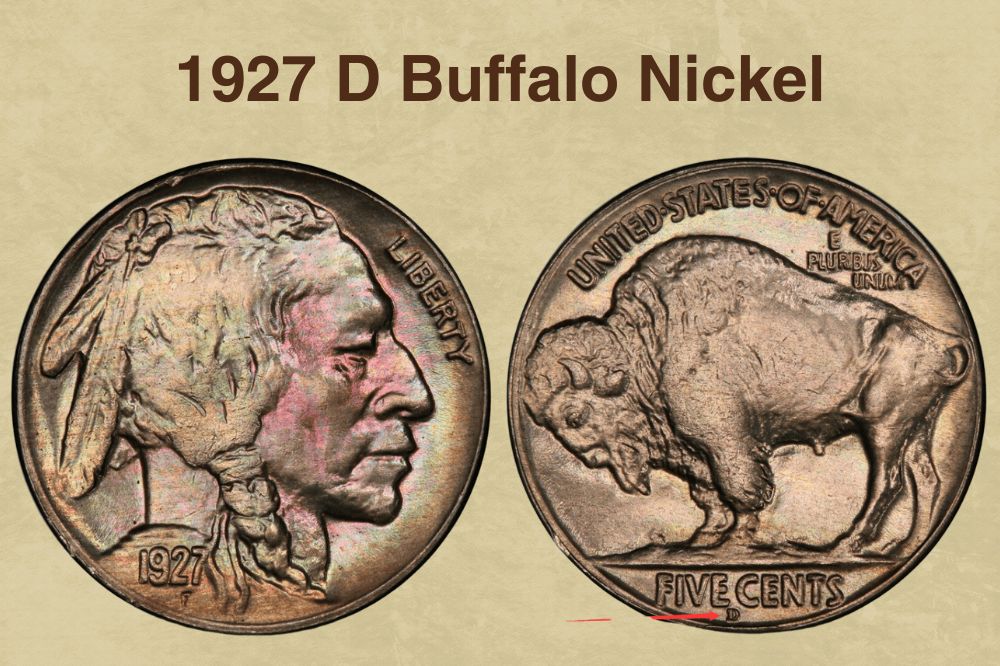
The Denver mint struck 5,730,000 nickels in 1927. Since most were released into circulation, you can expect to pay $2 to $88 for one piece with visible signs of wear. Only AU-graded coins can be more valuable and cost about $100 to $155.
Only a few nickels from this year were never in use, so you can expect dealers to ask $150 to $850 for those with MS 60 to MS 64 ranking, while MS 65-graded pieces cost $2,800 to $3,360.
The most expensive nickels with the D mint mark minted in 1927 are those in MS 66 grade. Their estimated price range is from $17,000 to $20,400, but one such coin was sold at an impressive $46,000 in 2005.
1927 S nickel Value
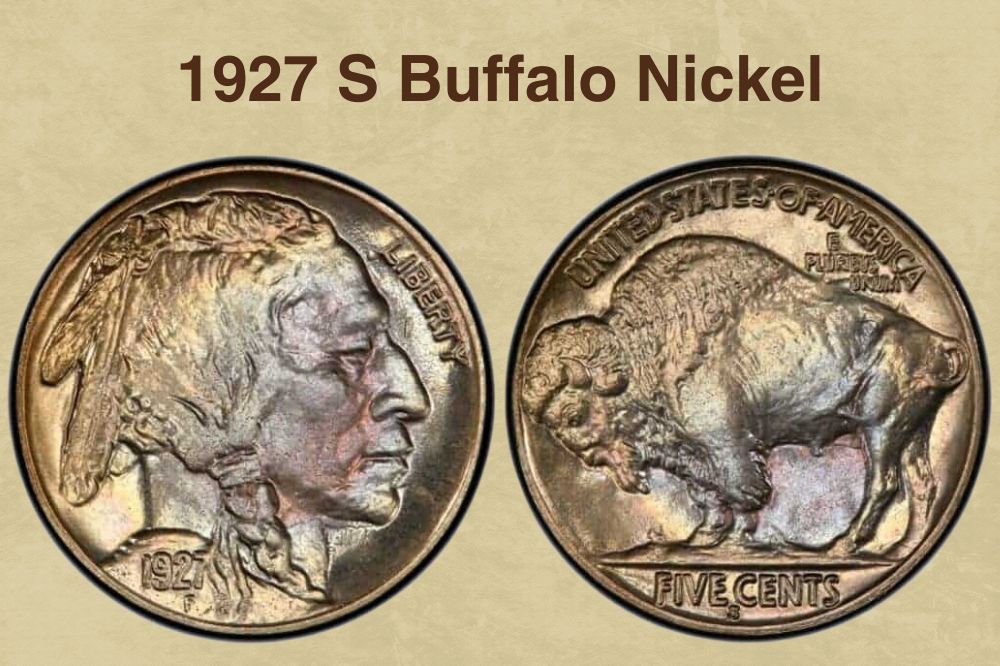
Since only 3,430,000 nickels came from San Francisco in 1927, they are considered the most valuable regular coins in the set. Circulated pieces cost $1.25 to $115, but those in About Circulated condition are more expensive, with an average price range from $180 to $510.
The 1927 nickels in the mint state are reserved for collectors with a high or unlimited budget. Their prices are high and are assessed to be:
- $700 to $840 for MS 60-graded nickels
- $800 to $960 for MS 60-graded nickels
- $1,250 to $1,500 for MS 60-graded nickels
- $1,800 to $2,100 for MS 60-graded nickels
- $2,500 to $3,200 for MS 60-graded nickels
- $9,000 to $14,000 for MS 60-graded nickels
The highest-ranking nickels minted this year are those in MS 66 grade. Experts estimated them at $65,000 to $80,000, but the auction record from 2008 was significantly higher. One such coin was sold at $125,350.
Also read: Top 17 Most Valuable Jefferson Nickels Worth Money
Rare 1927 Indian Head (Buffalo) Nickel Errors List
Like most coins minted in the past, the 1927 Buffalo nickels include several recognizable error coins in the set. Their prices are often higher than regular coins because collectors like rare, imperfect pieces.
Two feathers
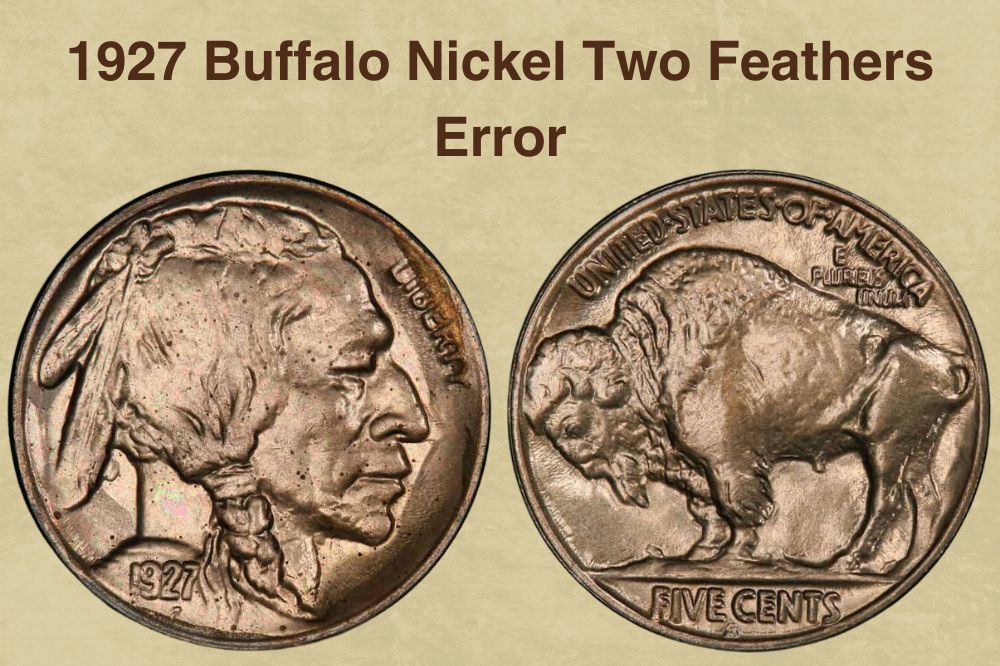
Two Feathers error is typical for Buffalo nickels. Coins without the third feather in Indian hair cost hundreds of dollars. The most expensive piece with the mint mark D was paid $400 at a 2017 auction, while the one from San Francisco was sold at $2,280 in 2021.
3 1/2 legs
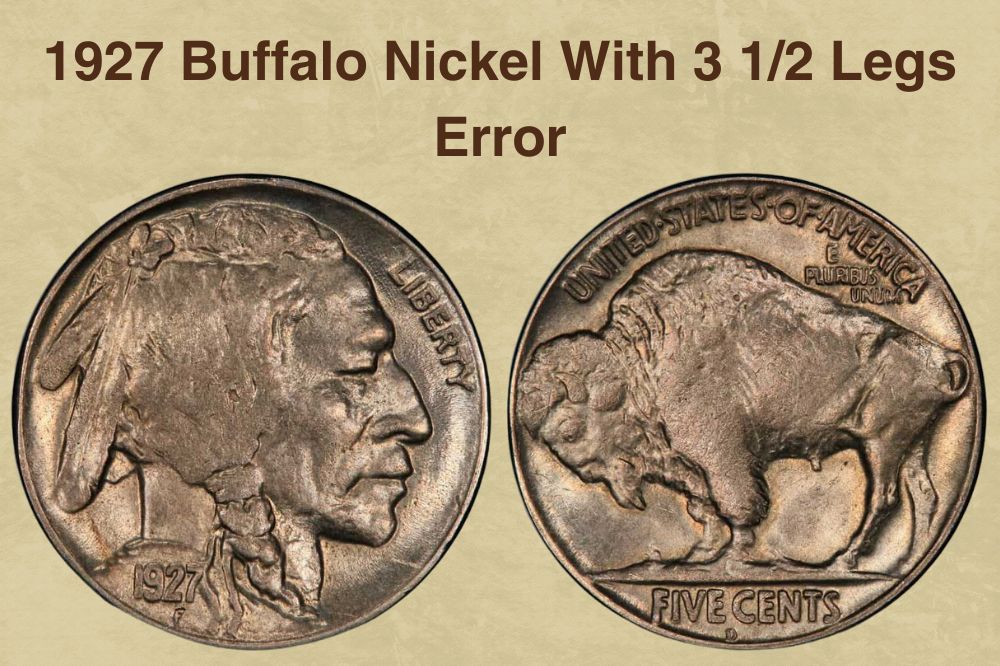
Nickel error with 3 1/2 legs is a famous but relatively rare error among nickels minted in Denver in 1927. Pieces taken from circulation often cost $80 to $660, but those in AU grade quickly reach $700 to $1,200 on eBay and at auctions.
On the other hand, uncirculated pieces can be impressively expensive, with an estimated price from $2,500 to $6,000. The auction winner is the 1927 D MS 62 Buffalo 3 1/2 legs nickel sold at $7,475 in 2012.
Double die obverse
Some coins from San Francisco have duplicated design parts on their obverse, making them sought-after and costly. You can find one of these pieces for a couple of hundred dollars, but one such nickel reached $840 at a 2019 auction.
RPM
The Denver mint released a few 1927 nickels with re-punch mint mark error. Nowadays, these pieces cost approximately $200, but the auction record is higher. In 2021, one collector bought the 1927 D/D XF 40 RPM nickel for $335.
Other errors
Besides these standard error nickels that appear in the series, you can recognize a few rarer and less attractive ones, such as:
- Curved clipped planchet with an average price of $200 per nickel
- Die break combined with clipped planchet with an average price of $90 per nickel
- D/D/D combined with RPM with an average price of $50 to $60 per nickel
- Rotational error with an average price of $30 per nickel
- Lamination on the coin reverse with an average price of $20 per nickel
Also read: 14 Most Valuable Nickel Errors Worth Money
Where to Sell Your 1927 Buffalo Nickel ?
Now that you know the value of your coins, do you know where to sell those coins online easily? Don’t worry, I’ve compiled a list of these sites, including their introduction, pros, and cons.
Check out now: Best Places To Sell Coins Online (Pros & Cons)
FAQ about the 1927 Buffalo Nickels
What makes 1927 Buffalo nickels rare?
The 1927 nickels are relatively scarce coins, particularly those minted in San Francisco. Besides, you can consider some errors rare, making them atypically expensive and collectible for one nickel.
Which 1927 Buffalo nickels are particularly valuable?
- The collector bought the 1927 S MS 66-graded Buffalo nickel for $125,350 at a 2008 auction
- The collector bought the 1927 SP 65-graded Buffalo nickel (special strike) for $47,150 at a 2009 auction
- The collector bought the 1927 D MS 66-graded Buffalo nickel for $46,000 at a 2005 auction
- The collector bought the 1927 MS 67+-graded Buffalo nickel for $24,000 at a 2019 auction
- The collector bought the 1927 D MS 62-graded Buffalo nickel (3 1/2 legs) for $7,475 at a 2012 auction
- The collector bought the 1927 S MS 63-graded Buffalo nickel (two feathers) for $2,280 at a 2021 auction
- The collector bought the 1927 S AU 58-graded DDO Buffalo nickel for $840 at a 2019 auction
- The collector bought the 1927 D XF 40-graded Buffalo nickel (two feathers) for $400 at a 2017 auction
- The collector bought the 1927 D/D XF 40-graded Buffalo nickel (RPM) for $335 on eBay in 2021
How much is the 1927 nickel (No Mint mark) worth?
The 1927 Buffalo nickels from Philadelphia cost $0.45 to $25 in circulated condition. Those in the mint state are often worth $30 to $504, and only specimens in MS 67 grade are sold at higher prices, $2,700 to $3,800.
What are the most expensive Buffalo nickels?
- In 2006, $350,750 for the 1918/7 D MS 65-graded nickel Type 2 (in recess)
- In 2008, $322,000 for the 1926 S MS 66-graded nickel Type 2 (in recess)
- In 2004, $281,750 for the 1916 MS 64-graded DDO nickel Type 2 (in recess)
- In 2021, $96,937.50 for the 1913 PR 68-graded nickel Type 1 (on raised ground)
- In 2021, $79,312.50 for the 1913 MS 68+-graded nickel Type 1 (on raised ground)
- In 2005, $69,000 for the 1915 PR 69-graded nickel Type 2 (in recess)
- In 2005, $66,700 for the 1913 PR 68-graded nickel Type 2 (in recess)