1955 Nickel Value (2026 Guide): Errors List, “D” & No Mint Mark Worth

1955 Nickel Value

What makes a seemingly ordinary 1955 nickel potentially worth over $12,000? Tiny details matter enormously. While you can still find these coins turning up in old jars and estate sales, specific 1955 nickels fetch breathtaking prices at auction — primarily driven by strike quality and the elusive “Full Steps” (FS) designation.

The 1955 Jefferson Nickel is historically significant for reasons beyond its value. Numismatic expert Bernard Nagengast bluntly described this issue in writing: the vast majority of 1955-P coins are of “garbage quality” — dark, poorly struck, nicked, and marked. That harsh assessment makes the rare, perfectly struck survivors all the more extraordinary.

This complete 2025 price guide explores values, history, mintage data, error varieties, and every key feature you need to know about one of the most fascinating years in the Jefferson Nickel series.


1955 Nickel Value By Variety

The table below shows current market values for 1955 nickels across different grades and types. If you know the grade of your coin, you can find the exact price below in the Value Guides section.

1955 Nickel Value Chart

TYPEGOODFINEAUMSPR
1955 No Mint Mark Nickel Value$0.20$0.69$1.00$15.17
1955 No Mint Mark Nickel (FS) Value$1.37$4.70$12.03$434.17
1955 D Nickel Value$0.20$0.69$1.00$18.67
1955 D Nickel (FS) Value$3.51$12.01$30.74$844.60
1955 Proof Nickel Value$17.12
1955 CAM Nickel Value$45.40
1955 DCAM Nickel Value$200.80
Updated: 2026-03-19 01:28:58

Also Read: Top 100 Most Valuable Jefferson Nickels Worth Money List (1938-Present)


Top 10 Most Valuable 1955 Nickel Value Coins Worth Money

Most Valuable 1955 Nickel Chart

2003 - Present

This chart displays the highest auction prices achieved for different types and high grades of 1955 Jefferson Nickels since 2003. The data clearly shows that condition rarity — especially “Full Steps” (FS) on circulation strikes — is the single most important factor driving top-end 1955 nickel values.

The highest-valued coins, ranging from $7,475 to $12,650, are all circulation strikes in extremely high grades (MS65 to MS67) with the Full Steps designation. Meanwhile, the finest known 1955 proof nickel graded PR69 ranks lower on this chart, demonstrating that even flawless proof coins cannot match the extreme rarity of a perfectly struck circulation coin that has survived without damage.

According to PCGS CoinFacts, uncirculated 1955-P examples are genuinely scarce in MS66 condition, with probably no more than a couple hundred known. The 1957-D, struck just two years later, has a mintage exceeding 136 million — making the comparison stark and the rarity of high-grade 1955-P coins even more impressive.


1955 Nickel Value History: Why This Year Is So Special

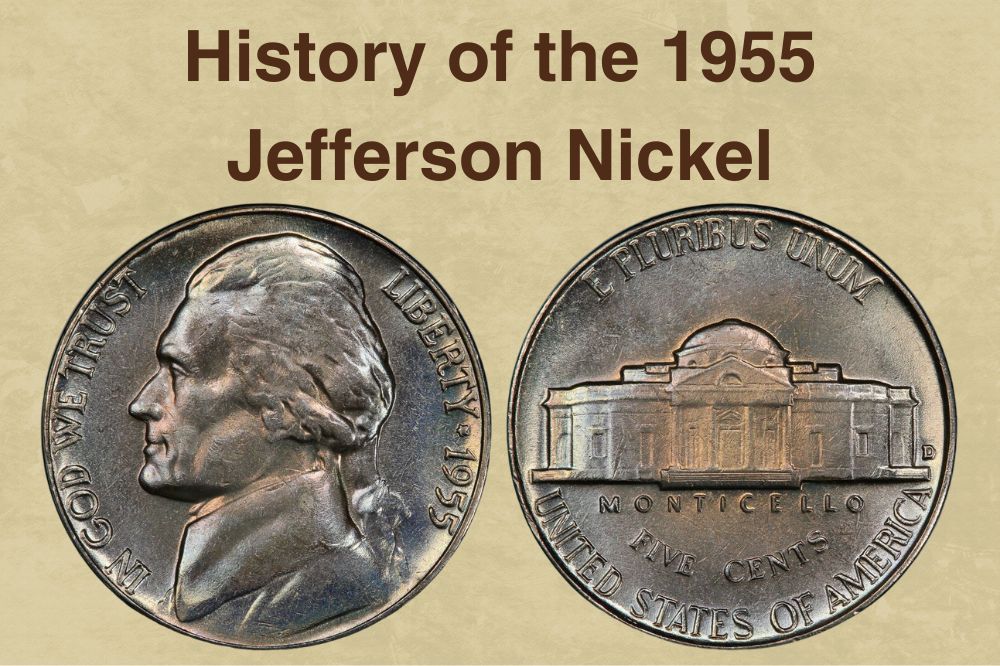
By 1955, the Jefferson Nickel — designed by Felix Schlag, whose entry won a $1,000 prize in a 1938 competition drawing 390 submissions — had been circulating for nearly two decades. But 1955 turned out to be one of the most unusual years in the series.

The defining event of 1955 was the closure of the San Francisco Mint. A January 7, 1955 headline in the Chicago Tribune announced: “San Francisco Mint to Close; Costs Too High.” San Francisco operated just long enough that year to strike Lincoln cents and Roosevelt dimes before shutting down, producing no nickels at all for circulation.

This closure had direct consequences for coin production. According to Q. David Bowers in his authoritative reference A Guide Book of Buffalo and Jefferson Nickels (Whitman Publishing, 2007), the U.S. Mint had prepared at least ten reverse dies stamped with an “S” mintmark for San Francisco nickel production.

With the mint closing, those dies became useless — so they were shipped to Denver, where workers overpunched a “D” mintmark directly over the “S,” creating the now-famous 1955-D/S Overmintmark variety.

The closure also sparked hoarding fever among collectors and speculators. Just as the 1950-D nickel had been hoarded a few years earlier (when its low mintage of 2,630,030 became known), collectors in 1955 scrambled to set aside rolls of Philadelphia and Denver nickels, anticipating future price increases. This early hoarding directly shaped the coin’s long-term availability.

Today, 1955 is recorded as having the fifth-lowest total mintage in the entire Jefferson Nickel series. The Philadelphia Mint’s output that year — just 7,888,000 pieces — represents the lowest production year for that facility across the entire copper-nickel Jefferson series, making it especially significant.

Also Read: Top 60+ Most Valuable Buffalo Nickels Worth Money


Is Your 1955 Nickel Value Coin Rare?

19

1955 No Mint Mark Nickel

Uncommon
Ranked 214 in Jefferson Nickel
29

1955 No Mint Mark Nickel (FS)

Scarce
Ranked 70 in Jefferson Nickel
19

1955-D Nickel

Uncommon
Ranked 195 in Jefferson Nickel
46

1955-D Nickel (FS)

Very Rare
Ranked 36 in Jefferson Nickel
19

1955 Proof Nickel

Uncommon
Ranked 226 in Jefferson Nickel
24

1955 CAM Nickel

Uncommon
Ranked 135 in Jefferson Nickel
34

1955 DCAM Nickel

Scarce
Ranked 57 in Jefferson Nickel
 

Wondering just how rare your 1955 Nickel might be? Don’t guess! Use our CoinValueChecker App to instantly explore detailed rarity information. Discover the true scarcity of your coin and uncover potential treasures today!


Key Features Of The 1955 Nickel Value Coin

This section walks you through the primary design elements and physical characteristics of the 1955 Jefferson Nickel. Understanding what you’re looking at makes it much easier to spot potentially valuable varieties.

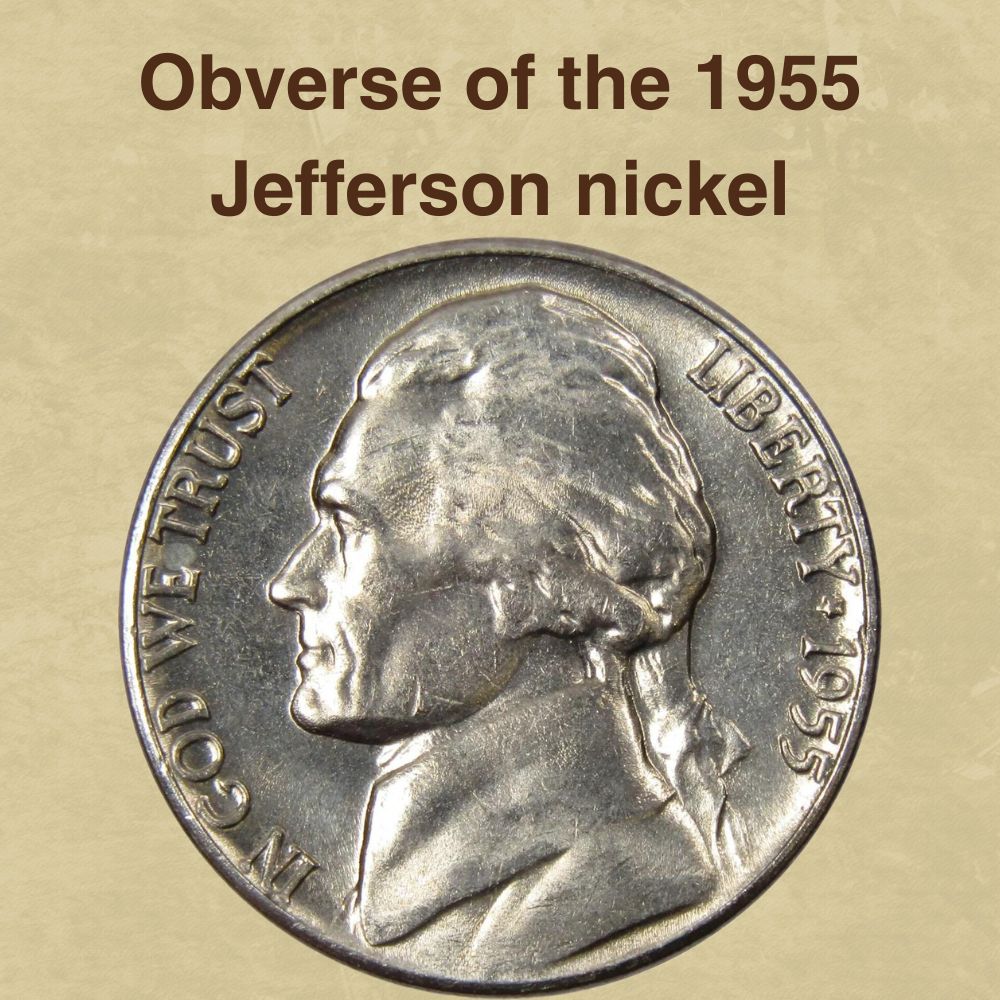
The Obverse Of The 1955 Nickel

The Obverse Of The 1955 Nickel

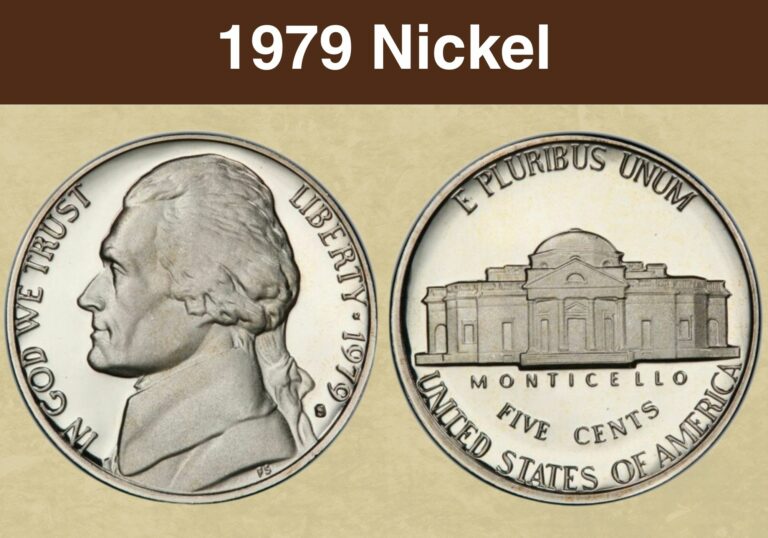
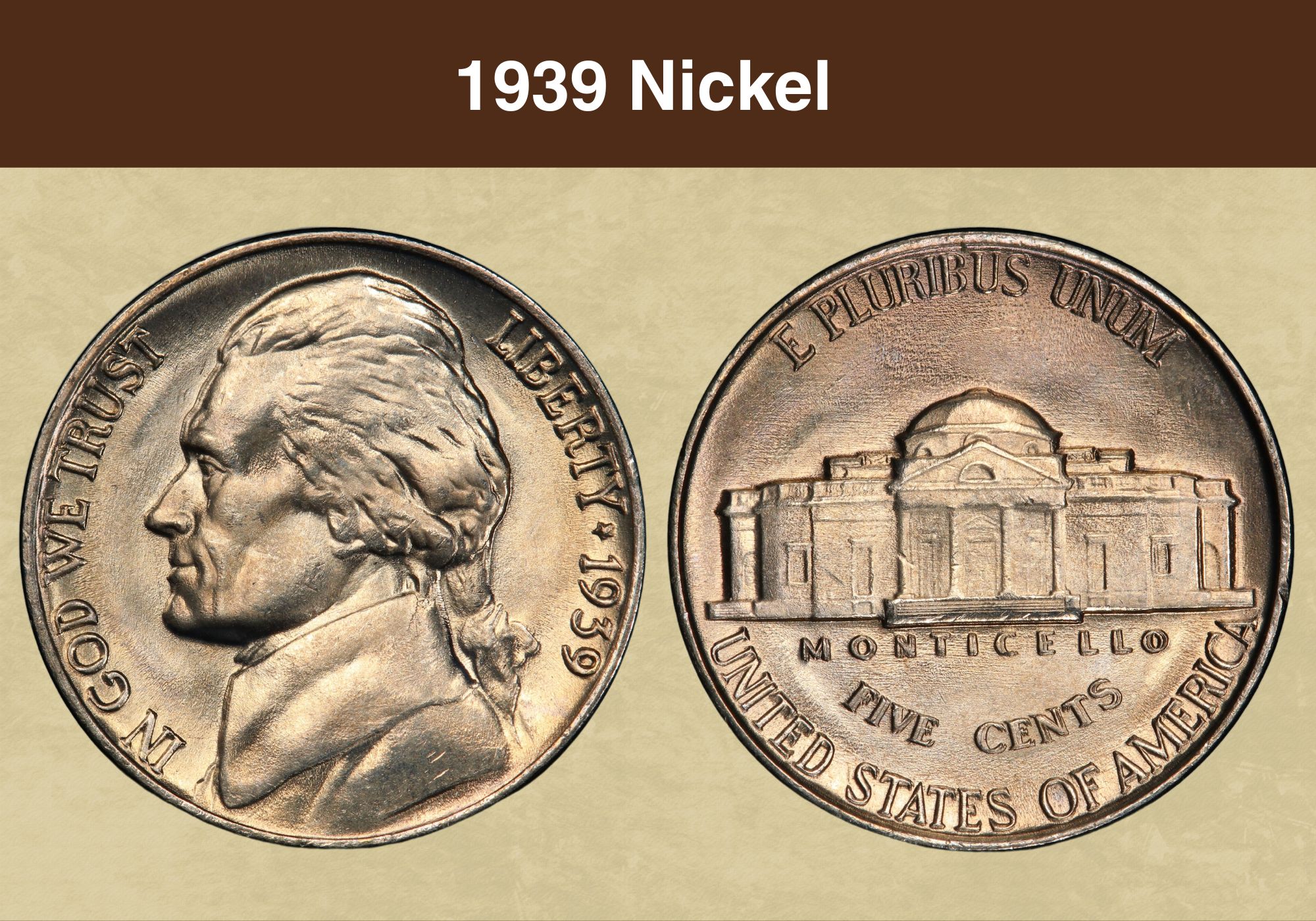
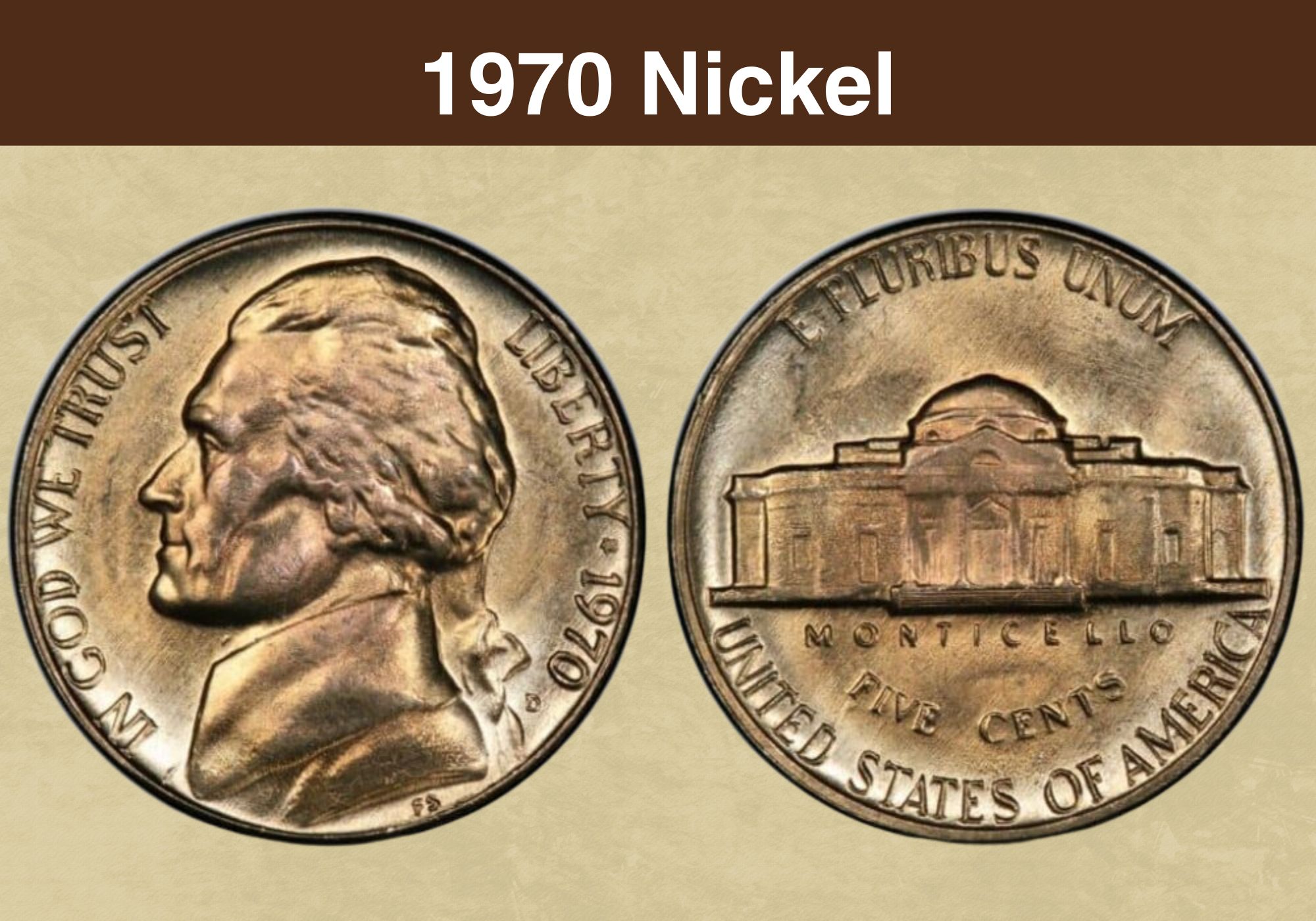
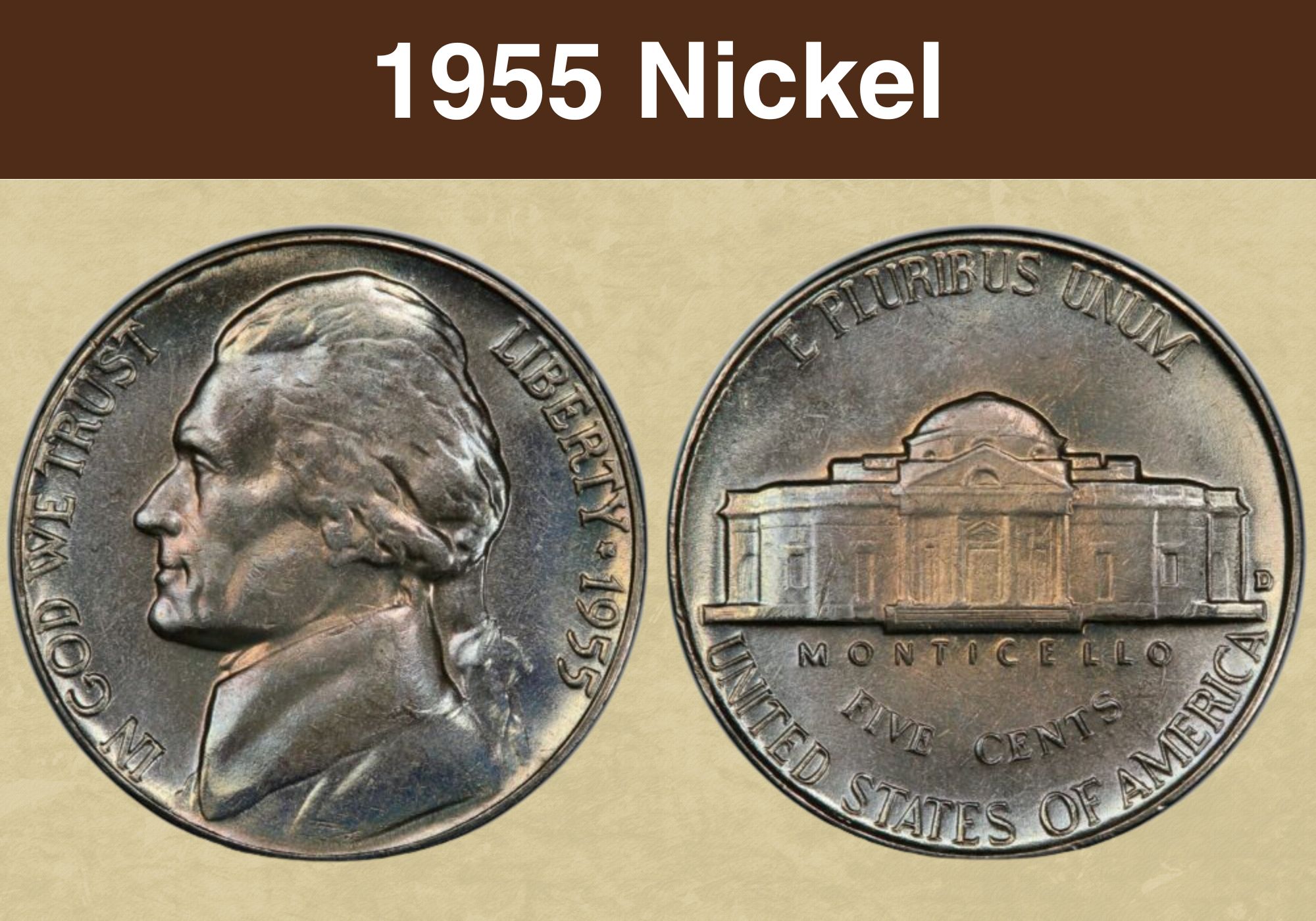
The obverse (front) of the 1955 Jefferson Nickel features the iconic left-facing profile portrait of Thomas Jefferson, designed by Felix Schlag. Jefferson served as the third U.S. President from 1801 to 1809.

Along the left rim, the motto “IN GOD WE TRUST” is inscribed. To the right of the portrait, the word “LIBERTY” appears, positioned directly above the date “1955.” A small star near the bottom rim separates the motto from the other inscriptions — these are the standard obverse elements used throughout this period.

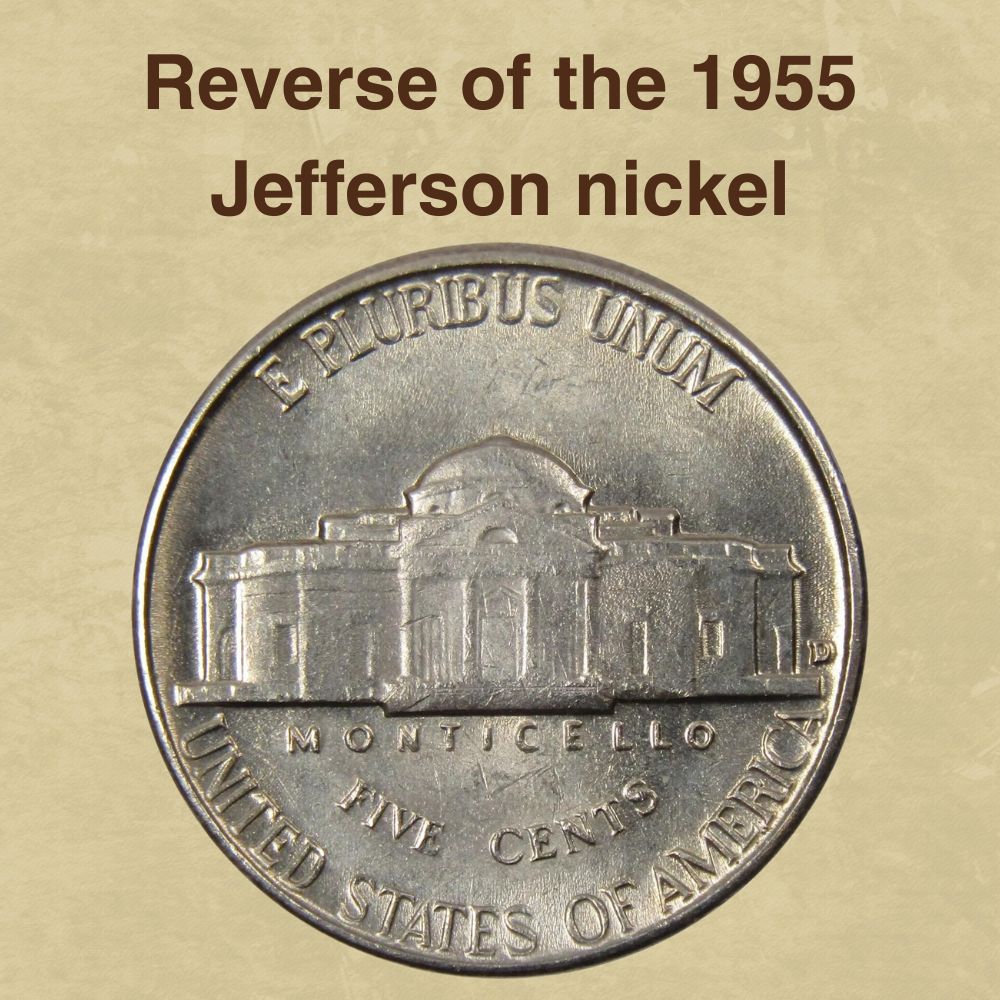
The Reverse Of The 1955 Nickel

The Reverse Of The 1955 Nickel

The reverse (back) features Schlag’s detailed front-facing view of Monticello, Jefferson’s Virginia home. The motto “E PLURIBUS UNUM” arches above the building.

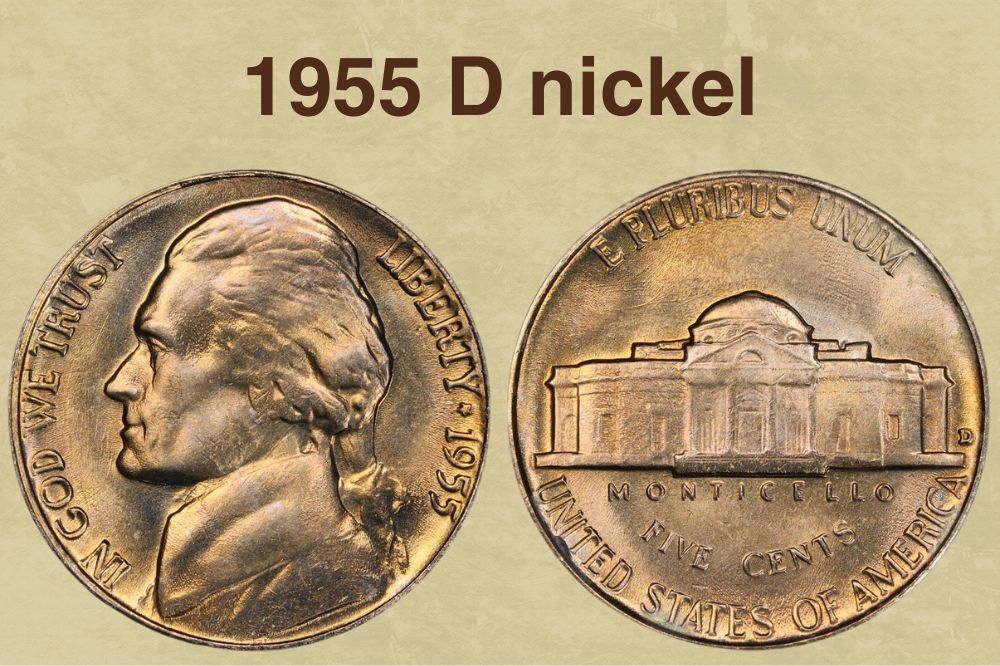
Below the structure, the word “MONTICELLO” is inscribed, followed by the denomination “FIVE CENTS,” and “UNITED STATES OF AMERICA” curves along the bottom rim. For Denver-minted coins, a small “D” mintmark sits to the right of Monticello’s steps; Philadelphia coins bear no mintmark at all.

The Full Steps Feature — The Most Important Detail On A 1955 Nickel

Here is the single most valuable thing to look for on any 1955 Jefferson Nickel. Look at the base of Monticello on the reverse: you’ll see a row of horizontal steps in front of the building’s entrance.

PCGS (Professional Coin Grading Service) — one of the two leading third-party grading services alongside NGC (Numismatic Guaranty Company) — awards the “Full Steps” or “FS” designation when at least five of these steps are clearly visible, with each step fully separated from the others by sharp, unbroken lines.

NGC distinguishes between 5FS and 6FS since 2004. Any weakness, mushiness, or merging disqualifies a coin from this premium designation. Because so many 1955 nickels were poorly struck, a coin that earns the FS designation can be worth many times more than an identical-grade coin without it.

Other Features Of The 1955 Nickel

The 1955 Jefferson Nickel maintains standard post-war specifications. It is composed of 75% copper and 25% nickel (not silver — the silver “War Nickels” of 1942–1945 are a different issue), weighs 5.0 grams, and measures 21.2 millimeters in diameter. The edge is plain (smooth, with no ridges).

Importantly, 1955 is NOT a silver coin. If you’re wondering whether your 1955 nickel contains silver, the answer is no. Only nickels dated 1942 through 1945 with a large mintmark above Monticello’s dome were made from a 35% silver composition.

Also Read: Top 100 Rarest Nickels Worth Money (Most Expensive)


1955 Nickel Value: Mintage & Survival Data

1955 Nickel Mintage & Survival Chart

Mintage Comparison

Survival Distribution

TypeMintageSurvivalSurvival Rate
No Mint7,888,0006,250,00079.2343%
D74,464,10060,000,00080.5757%
Proof378,200200,00052.8821%
CAM378,20085,00022.4749%
DCAM378,20012,0003.1729%

The mintage of the 1955 nickel shows a dramatic imbalance: Denver struck the overwhelming majority of the total output, making the “D” nickel the most common type by far. The Philadelphia Mint produced only about one-tenth of Denver’s figure, establishing the No Mint Mark coin as the scarcer of the two circulation issues.

The Proof series (struck exclusively at Philadelphia for collectors) had far lower mintages — just 378,200 pieces total. But the survival data reveals something surprising: even within the proof coins, the finest finishes are extraordinarily rare.

The Deep Cameo (DCAM) Proof — explained in detail below — records a survival rate of just 3.1729%, making it statistically the rarest variant within the entire 1955 Jefferson Nickel family. According to PCGS population data, the 1955-D nickel in MS66 condition numbers fewer than 100 known examples, and none finer.

Also Read: Jefferson Nickel Value (1938-Present)


The Easy Way to Know Your 1955 Nickel Value

Stop the tedious search through mint marks and complex grading charts! While analyzing mintage and survival rates is the traditional approach, there’s an easier way to get an accurate value. Skip the confusing data comparisons and get straight to a precise appraisal. Simply use the CoinValueChecker App to instantly check the true value of your 1955 Nickel with a quick scan.

CoinValueChecker APP Screenshot


1955 Nickel Value Guides: All Varieties Explained

The 1955 Jefferson Nickel series breaks down into distinct types based on where the coin was minted, and — for proof coins — the quality of the surface finish. Here’s a plain-English explanation of each variety before diving into individual values:

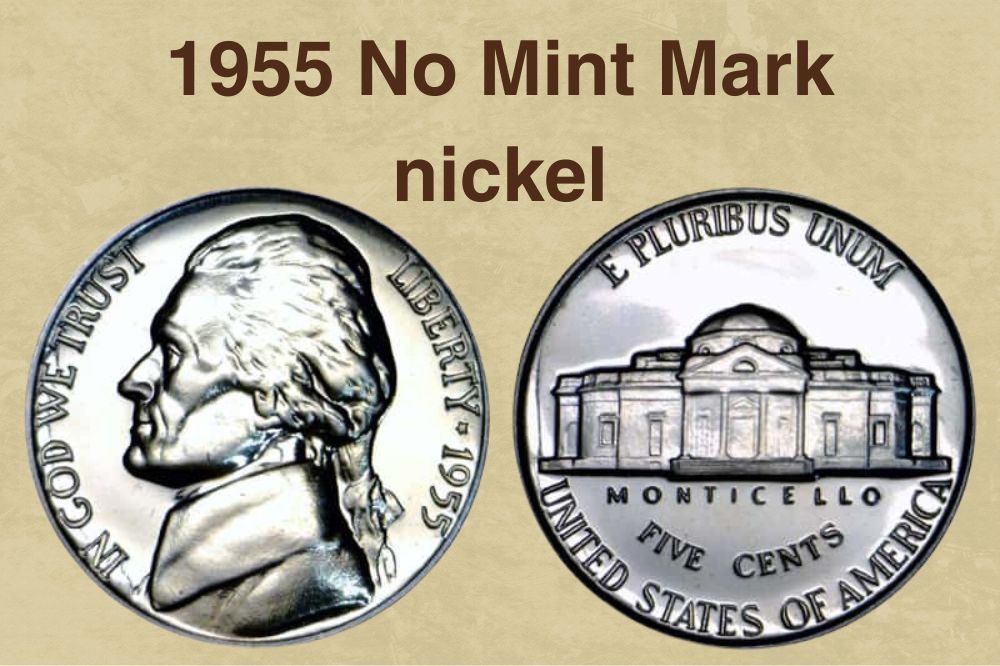
  • 1955 No Mint Mark Nickel: Struck at the Philadelphia Mint, which did not use a mintmark in 1955. The lower-mintage of the two circulation issues.
  • 1955-D Nickel: Struck at the Denver Mint, identified by a “D” to the right of Monticello on the reverse. Common by mintage, but rare in top condition.
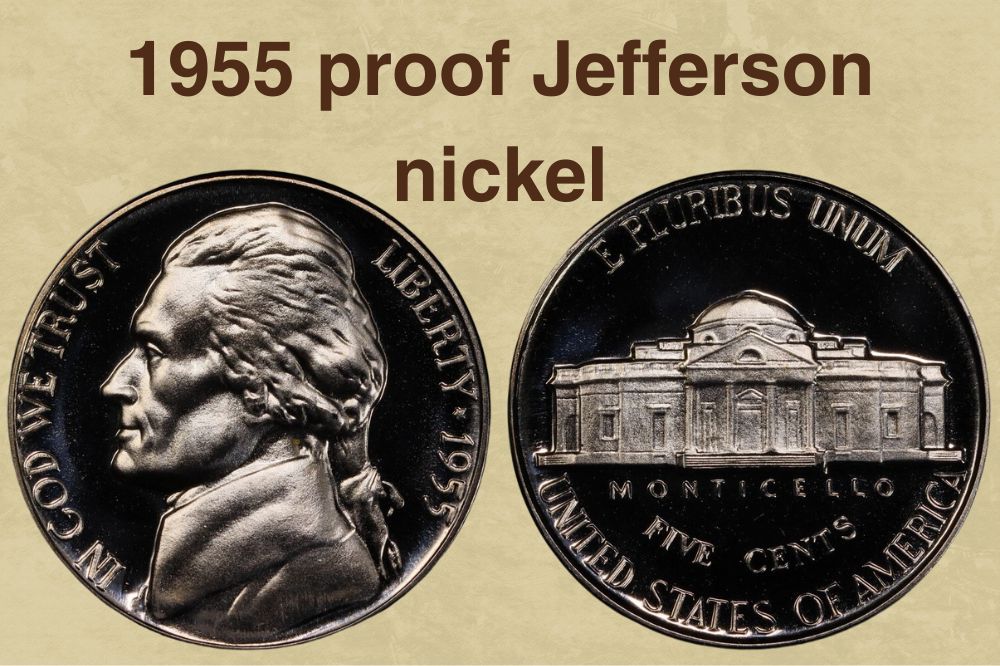
  • 1955 Proof Nickel: A special collector coin struck at Philadelphia using polished dies, producing mirror-like fields. A “field” is the flat background area of the coin.
  • 1955 CAM Nickel: Short for “Cameo.” A proof coin where the raised design elements (portrait and building) carry a light, frosted finish that contrasts against the mirrored fields.
  • 1955 DCAM Nickel: Short for “Deep Cameo.” The highest-quality proof finish, featuring intensely frosted devices against deeply mirrored, almost black-looking fields. The rarest and most valuable 1955 proof type.


1955 No Mint Mark Nickel Value

1955 No Mint Mark Nickel Value

The 1955 No Mint Mark Nickel, struck at the Philadelphia Mint, is one of the most challenging Jefferson Nickels to find in top condition — and its story is largely about quality rather than just quantity. With a mintage of 7,888,000, it represents the single lowest production year for the Philadelphia Mint across the entire copper-nickel Jefferson series.

Numismatic specialist Bernard Nagengast documented in writing that “most of this issue is of ‘garbage’ quality,” describing the typical 1955-P nickel as dark, poorly struck, nicked, and marked. He further characterized a fully struck, brilliant example as “very rare.” This expert assessment perfectly explains why the coin’s value is so heavily tied to strike quality.

A circulated 1955 nickel without a mintmark is worth roughly 25 to 50 cents. A typical uncirculated example grades in the $1–$2 range. It’s only when you reach MS66 or better — with the Full Steps (FS) designation — that values become extraordinary.

The auction record for a 1955 No Mint Mark nickel with Full Steps (MS66 FS) is $12,650, realized at a Bowers & Merena auction in March 2007. This remarkable price reflects the extreme difficulty of finding a perfectly struck 1955-P nickel that has also survived in gem condition.

1955 No Mint Mark Nickel Price/Grade Chart

Price by 1-70 Grade (Latest Auction Records Included)

Updated: 2026-03-19 01:28:58

1955 No Mint Mark Nickel (FS) Price/Grade Chart

Price by 1-70 Grade (Latest Auction Records Included)

CoinVaueChecker App 10

Updated: 2026-03-19 01:28:58

Here is a look at the coin’s Auction Record Chart.

Date PlatformPrice Grade

The following data illustrates this coin’s Market Activity.

Market activity: 1955 No Mint Mark Nickel


1955-D Nickel Value

1955-D Nickel Value

The 1955-D Jefferson Nickel presents a collecting paradox. With a large mintage of 74,464,100 — roughly nine times the Philadelphia issue — it is the common coin of the year in circulated grades. You can still find worn examples in old change jars.

Yet this coin becomes genuinely scarce at MS65 and above. According to PCGS CoinFacts numismatic expert Jaime Hernandez, the 1955-D is “really scarce” in MS66 condition with “less than a hundred known and none being finer.” That’s an extraordinarily small population for a coin with such a large original mintage.

A circulated 1955-D is worth 10 to 25 cents. Typical uncirculated grades fetch 75 cents to $1.50. The auction record for a 1955-D nickel with the Full Steps designation stands at $9,693.75, realized in 2019. The coin’s high-grade rarity and the important D/S Overmintmark variety (see Errors section below) give it strong collector interest regardless of its large original mintage.

1955-D Nickel Price/Grade Chart

Price by 1-70 Grade (Latest Auction Records Included)

Updated: 2026-03-19 01:28:58

1955-D Nickel (FS) Price/Grade Chart

Price by 1-70 Grade (Latest Auction Records Included)

Updated: 2026-03-19 01:28:58

The Auction Record Chart below clearly illustrates the dramatic value gap between average coins and the rare, fully-struck “Full Steps” examples.

Date PlatformPrice Grade

Furthermore, the Market Activity data reflects the level of collector interest for this specific date and mint mark.

Market activity: 1955-D Nickel


1955 Proof Nickel Value

1955 Proof Nickel value

The 1955 Proof Nickel is a classic collector coin from an era when proof mintages were deliberately tiny. Only 378,200 proof nickels were struck that year at the Philadelphia Mint. These coins were sold individually in sets, packaged in Pliofilm packets inside envelopes — a packaging method that, fortunately, preserved many examples in excellent condition.

Proof coins are struck using specially polished dies and planchets, often struck twice to sharpen the details. The result is a mirror-like (sometimes called “brilliant”) field and a sharp, precise design. As the baseline category, the standard 1955 Proof is the starting point for identifying the rarer Cameo and Deep Cameo finishes.

Finding a truly perfect standard Proof is harder than it sounds. Most have microscopic hairlines, contact marks, or haze caused by the original packaging materials. The PCGS values a standard 1955 Proof at roughly $110 for PR68 and $225 for PR69. The record sale for a non-Cameo 1955 Proof stands at $1,100 for a PR69 example.

1955 Proof Nickel Price/Grade Chart

Price by 1-70 Grade (Latest Auction Records Included)

Updated: 2026-03-19 01:28:58

This coin’s auction record chart details its value progression, especially among the highest grade “brilliant” proof coins.

Date PlatformPrice Grade

Therefore, the market activity data shows a persistent demand from collectors to complete high-grade 1955 Proof Sets.

Market activity: 1955 Proof Nickel


1955 CAM Nickel Value

1955 CAM Nickel value

The 1955 Cameo (CAM) Nickel occupies a unique position within the proof coinage of that year. “Cameo” refers to the frosted (satiny) appearance on the raised design elements — Jefferson’s portrait and the image of Monticello — which creates a striking contrast against the highly polished, mirror-like fields.

In 1955, the U.S. Mint had not yet fully mastered or consistently produced this frosted effect. The frost on proof dies tends to wear away quickly after the first few strikes, meaning only the earliest coins from a fresh die pair achieve strong Cameo contrast. Many coins designated “Cameo” from this year exhibit only weak, partial, or uneven frosting.

Because strong, well-balanced Cameo contrast on both sides is genuinely scarce for this year, collectors willingly pay a premium. A 1955 Jefferson Nickel graded PR69 CAM sold for $950 on eBay in July 2022, reflecting that premium demand.

1955 CAM Nickel Price/Grade Chart

Price by 1-70 Grade (Latest Auction Records Included)

Updated: 2026-03-19 01:28:58

The auction record chart below displays the value trend, especially highlighting the realized prices for these sought-after, distinctly outlined Cameo coins.

Date PlatformPrice Grade

Furthermore, the market activity data reflects the demand from specific collectors for high-grade proof coins exhibiting strong and attractive Cameo characteristics.

Market activity: 1955 CAM Nickel


1955 DCAM Nickel Value

1955 DCAM Nickel value

The 1955 Deep Cameo (DCAM) Jefferson Nickel represents the absolute pinnacle of proof coin production for this year. “Deep Cameo” means an exceptionally intense frosted effect on the portrait and Monticello — so strong that the frosted devices appear bright white while the deeply mirrored fields look almost black. The visual contrast is dramatic and immediately apparent.

This intense frost only appeared on the very first coins struck from a freshly prepared die pair. As dies are used repeatedly, the frost wears away rapidly, and subsequent coins transition from DCAM to CAM to standard Proof. The window of opportunity to produce a DCAM is extraordinarily narrow.

As a result, the 1955 DCAM Nickel is far rarer than both the standard Proof and Cameo varieties. With a survival rate of just 3.1729% of the original proof mintage, these coins are genuinely scarce. Only specimens with strong, continuous frosted effects on both sides and near-perfect surfaces can achieve a high grade.

The auction record for the 1955 DCAM Nickel is $4,025, set at a Heritage Auctions sale in January 2004 for a coin graded PR69 DCAM. That price was realized over two decades ago, and given the ongoing appreciation of top-quality proof coins, comparable examples today may command even more.

1955 DCAM Nickel Price/Grade Chart

Price by 1-70 Grade (Latest Auction Records Included)

Updated: 2026-03-19 01:28:58

The auction record chart below presents the market value of these rare DCAM nickels from a historical perspective.

Date PlatformPrice Grade

The market activity data reflects collector demand and highlights the market’s interest in this top-tier proof coin.

Market activity: 1955 DCAM Nickel

Also Read: 22 Rare Nickel Errors List with Pictures (By Year)


Rare 1955 Nickel Value Error List

Beyond the standard issues and proof finishes, 1955 Jefferson Nickels are notable for several important minting errors and varieties. These production mistakes resulted in unique, collectible coins that command significant premiums. Each error tells a story about the pressures and production conditions at the U.S. Mint in 1955.

1. 1955-D/S Overmintmark (OMM) — FS-501

1955-D/S Overmintmark (OMM)

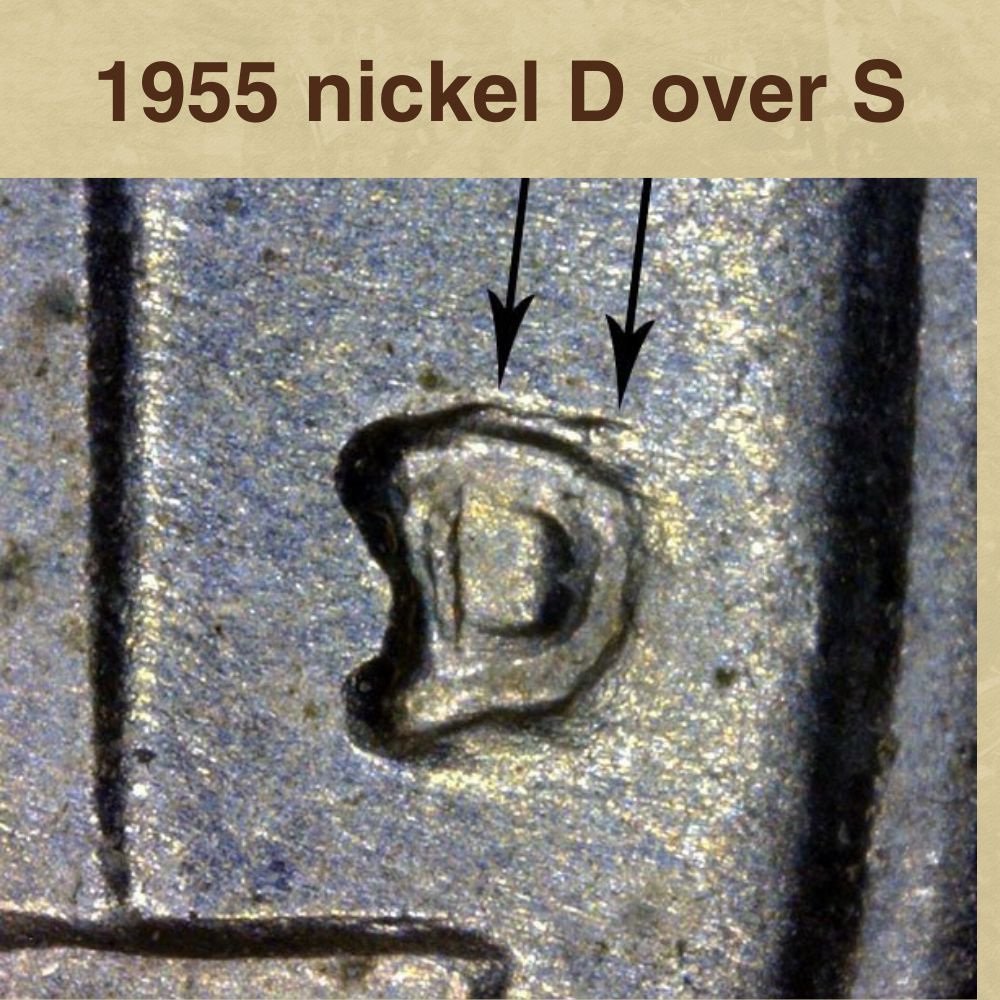
This is the most famous and collectible error variety from 1955, designated FS-501 in the Cherrypickers’ Guide to Rare Die Varieties by Bill Fivaz and J.T. Stanton — the standard numismatic reference for die varieties. An OMM (Overmintmark) occurs when one mintmark letter is punched directly over a different mintmark letter already on the die.

According to Q. David Bowers, at least ten reverse dies intended for San Francisco (bearing an “S” mintmark) were repurposed after the San Francisco Mint closed. Denver workers overpunched a “D” directly over the pre-existing “S.”

The result: a coin that clearly shows the top serif of the “S” peeking above the top of the “D” mintmark. This is visible to the naked eye on the best examples — you don’t need a magnifier to spot it on a sharp specimen.

According to PCGS CoinFacts expert Jaime Hernandez, the 1955-D/S is “considered scarce in all grades — any example is quite a find.” The auction record for this variety stands at $3,738 for an MS66 example sold at Heritage Auctions in June 2008. Circulated examples in worn grades typically trade for $20 to $30, while uncirculated pieces fetch $35 to $100 depending on grade and the clarity of the overmintmark.

1955-D/S Overmintmark Price/Grade Chart

Price by 1-70 Grade (Latest Auction Records Included)

Updated: 2026-03-19 01:28:58

2. 1955 TDR FS-801 (Tripled Die Reverse — Proof Only)

1955 TDR FS-801

This variety is a Tripled Die Reverse (TDR) error found exclusively on 1955 Proof Jefferson Nickels. The designation FS-801 refers to its catalog number in the Cherrypickers’ Guide to Rare Die Varieties by Bill Fivaz and J.T. Stanton.

A Tripled Die occurs when the reverse working die receives three distinct, slightly offset impressions from the master hub during die production — essentially, the die was “hubbed” three times without perfect alignment each time.

Every coin struck by that flawed die then carries the tripling in its design. Look closely at the reverse lettering — particularly “E PLURIBUS UNUM” and “UNITED STATES OF AMERICA” — for clear separation lines showing three slightly offset versions of each letter. Under magnification, the tripling is unmistakable on a good example.

Since this is a Proof-only variety, the grade of the coin (on the standard PR60–PR70 scale) and the degree of Cameo or Deep Cameo contrast both significantly impact its value. PR67 CAM and above examples are especially sought-after.

1955 TDR FS-801 Price/Grade Chart

Price by 1-70 Grade (Latest Auction Records Included)

Updated: 2026-03-19 01:28:58

3. 1955 Doubled Die Errors (DDO / DDR)

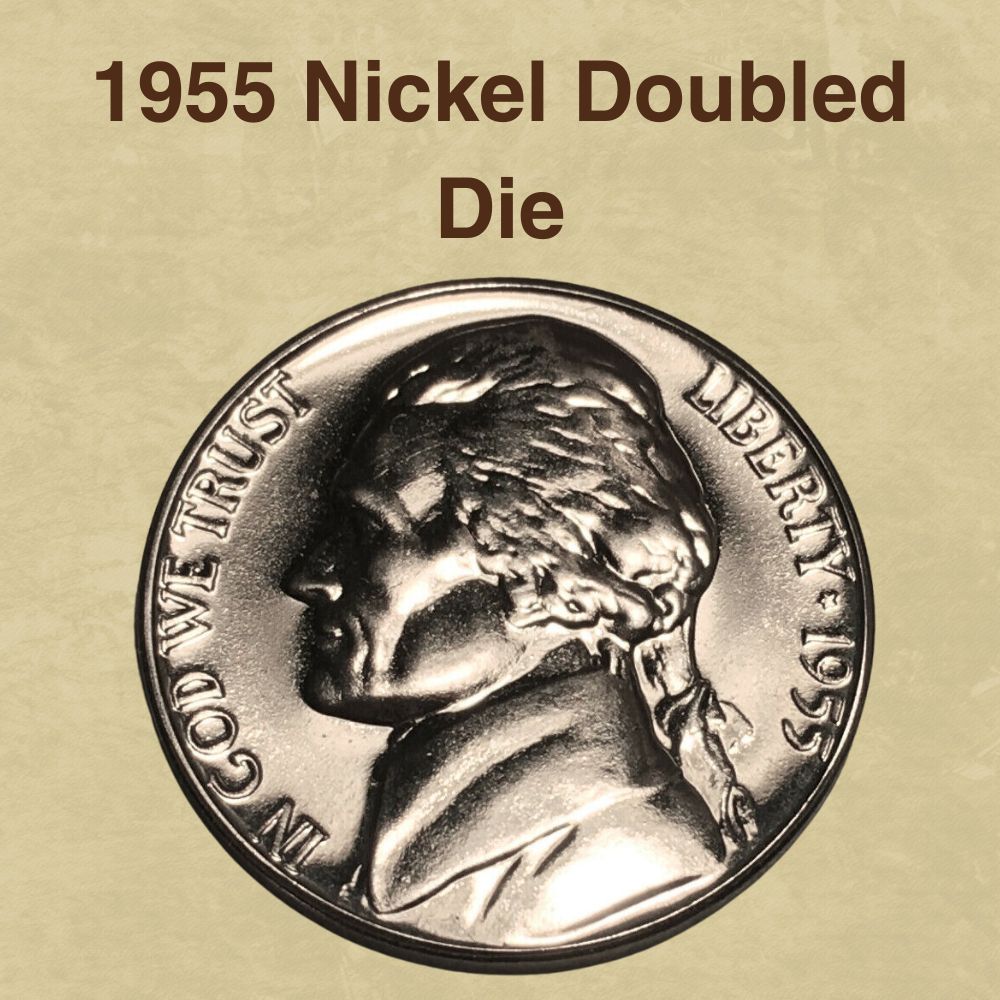
While no major, widely recognized doubled die variety exists for the 1955 Jefferson Nickel on par with the famous 1955 Lincoln Cent doubled die, minor doubled die errors do exist and are worth knowing about. A Doubled Die Obverse (DDO) occurs when the hub strikes the working die twice with slight misalignment. A Doubled Die Reverse (DDR) occurs the same way on the reverse die.

CoinVaueChecker App 10

On 1955 nickels, look for doubling around Jefferson’s eye on the obverse or in the lettering (“MONTICELLO,” “FIVE CENTS”) on the reverse. Importantly, it’s critical to distinguish true hub doubling — which produces rounded, raised doubled images — from common “mechanical doubling” (also called die deterioration doubling), which is flat and shelf-like and carries little to no premium.

The CONECA organization notes that the so-called “poor man’s doubled die” effect seen on many 1955 nickels is actually abrasion doubling from heavily used dies, not genuine hub doubling. True 1955 doubled die nickels tend to be worth $20 to $50 for minor examples depending on visibility and grade.

4. 1955 Off-Center Strikes

Off-center strikes occur when a coin blank (planchet) is not properly centered between the dies at the moment of striking. The result is a coin where part of the design is missing, replaced by a blank area, with the design shifted to one side.

Most off-center errors on 1955 nickels are less than 5% off-center and worth only a modest premium — typically $5 to $15. However, off-center strikes of 10% to 20% become genuinely interesting, trading for roughly $10 to $50.

Dramatically off-center examples (30% or more) with the date still visible can be worth considerably more. The date visibility is key: a 50% off-center coin without the date is worth far less than one where the year “1955” remains clearly legible.


Where To Sell Your 1955 Nickel?

Knowing your coin’s value is the first step. If the next is finding an easy way to sell online, look no further! I’ve put together a handy list of platforms, including their details, benefits, and drawbacks.

Check out now: Best Places To Sell Coins Online (Pros & Cons) 


1955 Nickel Value Market Trend

Market Interest Trend Chart - 1955 Nickel

*Market Trend Chart showing the number of people paying attention to this coin.


FAQ About The 1955 Nickel Value

1. What makes a 1955 Jefferson Nickel rare and valuable?

The primary factor is strike quality. Because most 1955-P nickels were poorly struck, a coin earning the “Full Steps” (FS) designation from PCGS or NGC — meaning at least five sharp, fully separated steps are visible at Monticello’s base — is extraordinarily rare.

A 1955-P graded MS66 FS sold for $12,650 at Bowers & Merena in 2007. Even without FS, the 1955-P’s mintage of just 7,888,000 — the lowest for any copper-nickel Jefferson Nickel from Philadelphia — makes it a notable date.

2. How much is a 1955 No Mint Mark Nickel worth in 2025?

A circulated 1955-P nickel is worth roughly 25 to 50 cents. Typical uncirculated examples grade in the $1–$2 range. Better-grade MS64 and MS65 specimens can reach $8 to $45. The real premium kicks in with Full Steps examples, which range from $175 to over $5,000 depending on grade — with the all-time record at $12,650 for MS66 FS.

3. How much is a 1955-D Nickel worth?

In circulated condition, a 1955-D nickel trades for 10 to 25 cents. In typical uncirculated grades it’s worth 75 cents to $1.50. The auction record for the 1955-D with Full Steps designation is $9,693.75, achieved in 2019. PCGS CoinFacts notes that the 1955-D in MS66 numbers fewer than 100 known — none finer — making it genuinely rare in top condition despite its large mintage.

4. What is the 1955-D/S Overmintmark error and what is it worth?

The 1955-D/S Overmintmark (OMM) — cataloged as FS-501 in the Cherrypickers’ Guide — was created when Denver workers overpunched a “D” mintmark over unused “S” mintmark dies originally prepared for the now-closed San Francisco Mint.

At least ten such dies were created, according to Q. David Bowers. Circulated examples sell for $20–$30, uncirculated pieces fetch $35–$100, and the auction record is $3,738 for an MS66 example at Heritage Auctions in June 2008.

5. Does the 1955 nickel contain silver?

No. The 1955 Jefferson Nickel is composed of 75% copper and 25% nickel — the same alloy used for standard circulation nickels today. The only Jefferson Nickels to contain silver were the “War Nickels” dated 1942 through 1945, which were made from a 35% silver alloy to conserve nickel for World War II military use. Those coins are distinguished by a large mintmark placed above Monticello’s dome on the reverse.

6. What is a Tripled Die Reverse (TDR) on a 1955 Proof Nickel?

The 1955 TDR FS-801 is an error exclusive to 1955 Proof Jefferson Nickels. It was created when the reverse working die received three slightly offset impressions from the master hub during die production.

The tripling appears as clear separation lines in the reverse lettering, most prominently in “E PLURIBUS UNUM” and “UNITED STATES OF AMERICA.” The FS-801 designation comes from the Cherrypickers’ Guide by Bill Fivaz and J.T. Stanton. Higher-grade examples with Cameo contrast command significant premiums.

7. What is the difference between CAM and DCAM on a 1955 Proof Nickel?

Both designations refer to the frosted contrast between the raised design elements and the mirror-like fields on proof coins. A “Cameo” (CAM) coin has a light frosted finish on the portrait and Monticello.

A “Deep Cameo” (DCAM) has an intensely frosted finish — the devices look bright white against fields that appear almost black — producing the most dramatic visual contrast. DCAM coins form only on the very first strikes from a fresh die pair, making them far rarer. The 1955 DCAM Nickel has a survival rate of only 3.1729%, establishing it as the rarest 1955 nickel variety.

8. Why did the San Francisco Mint not produce nickels in 1955?

The San Francisco Mint closed its coin production operations in 1955 as a cost-cutting measure. Both the Philadelphia and Denver Mints had been upgraded to the point where San Francisco was deemed no longer necessary.

The closure was announced in the Chicago Tribune on January 7, 1955. The mint operated just long enough to strike Lincoln cents and Roosevelt dimes before shutting down — producing no nickels for circulation at all that year, and ceasing all operations for over a decade.

9. What are the most expensive Jefferson Nickels ever sold?

The most valuable Jefferson Nickel sold to date is a 1954-S graded MS67 FS, which brought $35,250 in 2020. Two coins from Denver with Full Steps share comparably high values: an MS65-graded 1969-D sold for $33,600 in 2021, and a 1938-D graded MS68+ fetched $33,600 in 2022. The 1955-P FS coin at $12,650 remains among the most notable for the 1950s decade specifically.

10. How do I tell if my 1955 nickel has Full Steps?

Examine the base of Monticello on the reverse of your coin — look for the horizontal lines representing the building’s front steps. Under at least 5x magnification, count the fully separated, unbroken steps from one side to the other. If five or more steps are distinct, clear, and uninterrupted across the full width of the coin, your coin may qualify for the Full Steps designation.

Any mushiness, merging, or weakness in any part of the step area disqualifies the coin. Only professional third-party grading services like PCGS or NGC can officially certify the FS designation — and that certification can transform a $2 coin into a $500 to $12,000 coin.

Similar Posts