Indian Head (Buffalo) Nickel With No Date: Unlimited Guides to Find The Value
Do you own a Buffalo nickel with no date and are curious how much it is worth?
Year dates play an important role in numismatics as they help collectors and graders contextualize a coin and determine its comparable value.
So, without a date, determining the value of a coin can be quite difficult, as is the case with Buffalo nickels.
Buffalo nickels without a date have no intrinsic value. But some niche collectors specialize in these coins mostly because of their peculiarity.
In this guide, we’ll explore the reason for the missing date on Buffalo nickels and how to find the value of these interesting coins.
Let’s get started!
Indian Head (Buffalo) Nickel Value Checker
Identify Indian Head (Buffalo) Nickel With No Date Price
Front Obverse
Upload or Take a Photo
Back Reverse
Upload or Take a Photo
The History of Buffalo Nickels
The Buffalo nickel—officially the Indian Head nickel—is a five-cent coin the United States Mint struck from 1913 to 1938. Sculptor James Earle Fraser designed it as part of the Mint’s push to modernize American coinage.
Buffalo nickels came out of three facilities: San Francisco, Denver, and Philadelphia. The obverse shows a Native American Indian, and the reverse features a bison (or buffalo).
Fraser’s design got the green light, and the first Buffalo nickels hit circulation on March 4, 1913.
Problems showed up almost immediately. The strike came out soft, and both sides wore down fast once the coins started circulating.
Chief Engraver Charles Barber noted that the Indian head nickel wore out or broke three times faster than its predecessor, the Liberty Head Nickel. The date and the denomination, FIVE CENT, took the worst beating—they could vanish completely with enough pocket time.
Barber attempted a fix by redesigning the Indian head nickel. He lowered the date and ONE CENT so they’d sit less exposed to contact wear.
It didn’t help much. The redesigned coins actually wore out faster than Fraser’s originals.
The Treasury and Mint were eager to move on. Once the mandatory 25-year production period expired and congressional approval was no longer needed, plans were already in motion by early 1938 for a replacement. This coin would be the Jefferson nickel.
Also read: Top 10 Most Valuable Nickels Worth Money
Features of the Buffalo Nickel
Before figuring out how to determine the value of a Buffalo nickel with no date, let’s look at what you’re actually holding.
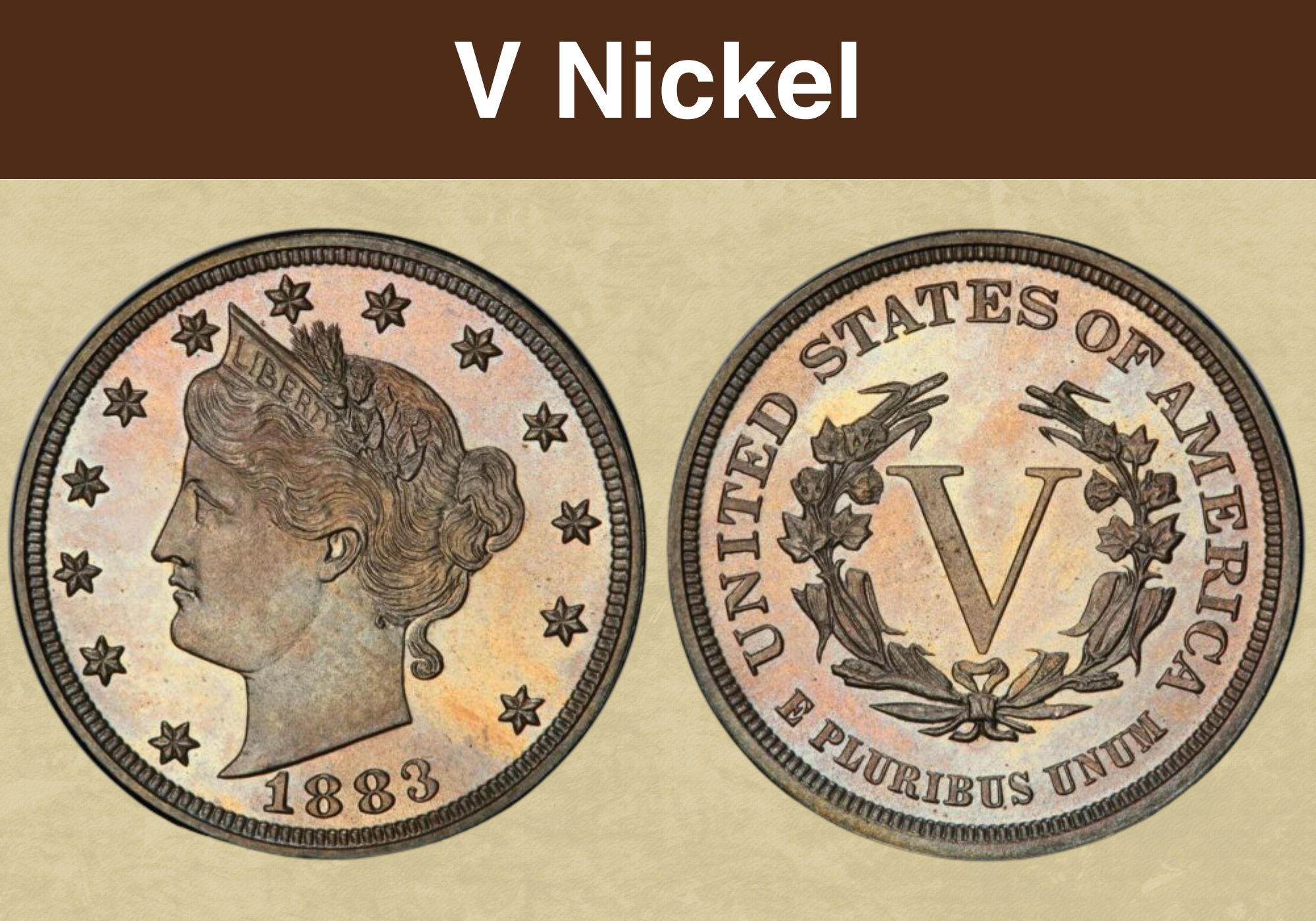
The Obverse of the Buffalo Nickel

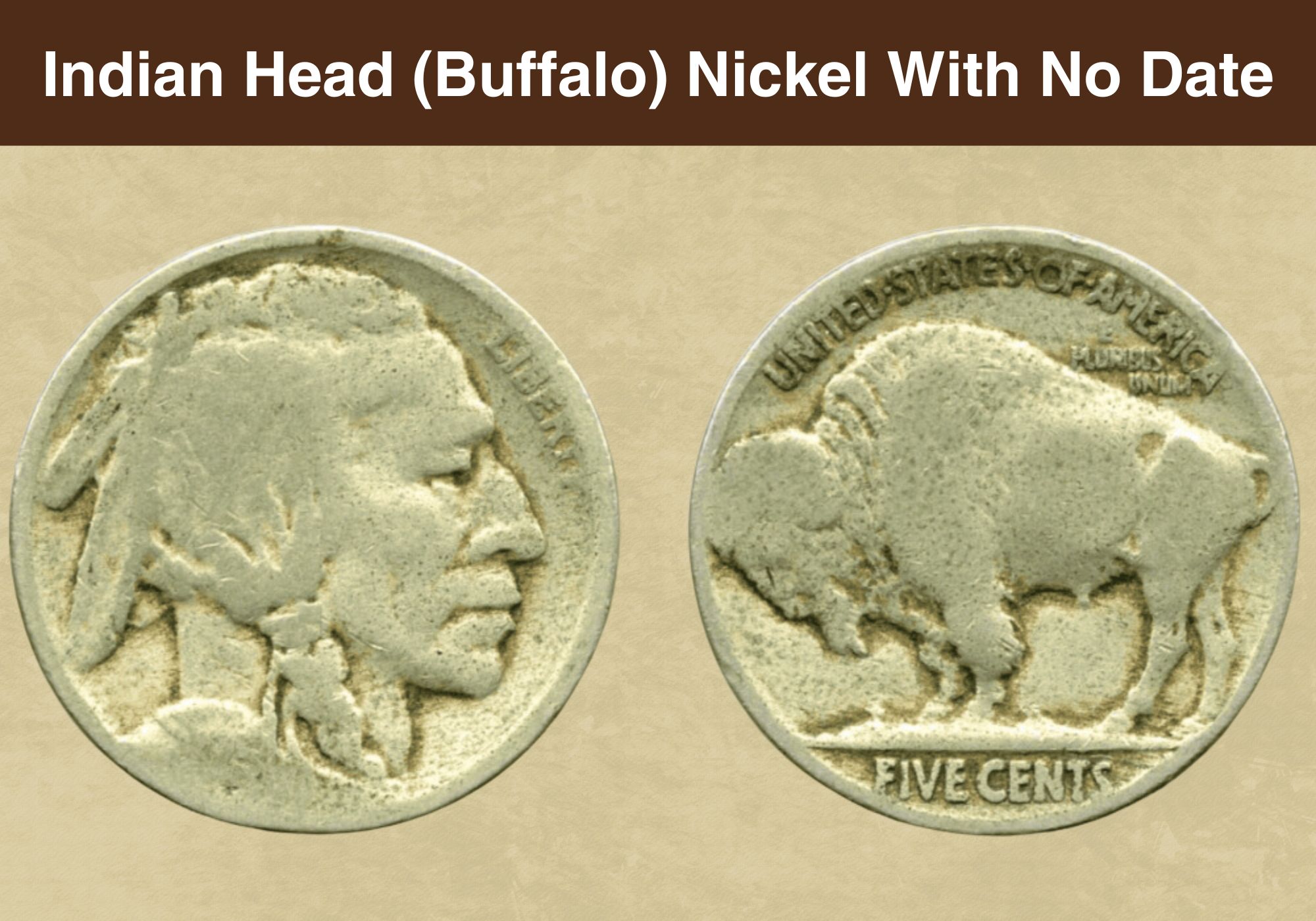
The obverse (heads side) shows a right-facing Native American portrait. Fraser reportedly used three different models when creating this design.
Coin Identifier and Value App
Not sure what your coins are worth? Get Instant Value • Grade • Error Detection with coin identifier and value app (FREE Usage Daily)
LIBERTY runs along the top rim. The date sits on the lower left, right on the model’s shoulder. You’ll also spot a small “F” below the date—Fraser’s initial.
The Reverse of the Buffalo Nickel

Flip it over and you’ll see a bison standing on a mound. A real buffalo at the Bronx Zoo was the model for this design.
UNITED STATES OF AMERICA arcs along the top rim, with E PLURIBUS UNUM just below it.
The denomination, FIVE CENTS, sits at the bottom on that raised mound. That mound was the problem—it left the lettering exposed and it wore flat in no time.
The Mint’s fix was to flatten the mound into a straight line. Coins with the flat line are Type II Buffalo nickels. The originals with the raised mound are Type I.
Other Features of the Buffalo Nickel
Buffalo nickels are round coins made of 75% Copper and 25% Nickel.
They weigh 5 grams and measure 21.20 millimeters across. The edge is plain—no reeding.
These nickels came from Philadelphia, Denver, and San Francisco. Denver coins carry a “D” mint mark and San Francisco coins an “S,” both found on the reverse underneath FIVE CENTS. Philadelphia coins have no mint mark.
Also read: Top 17 Most Valuable Buffalo Nickel Worth Money
Buffalo Nickel With No Date Value Guides
First, you need to understand why these coins lost their dates.
A lot of people assume a dateless Buffalo nickel is some kind of error or special variety. It’s not. These coins had dates when they left the Mint. Circulation just ground them away.
The design was flawed from day one. The date and denomination sat on high points, exposed to constant contact. Even the Mint’s second attempt at fixing the relief didn’t solve the problem.
On top of that, no-date Buffalo nickels are very old coins—over 100 years in some cases. They were popular when they were released, which means they circulated heavily. That’s a recipe for worn-out dates.
Sometimes you’ll find partial-date examples where the last two digits are still visible. Those are worth checking closely, because you can pin down the year and look up a real value.
Tool for Buffalo Nickel With No Date Value: Coin Value Checker
How To Find the Value of A Buffalo Nickel With No Date?

The quickest way to figure out what your dateless Buffalo nickel is worth? Recover the date. One popular method is applying ferric chloride acid to the Indian’s shoulder—right where the date used to be.
You can buy ferric chloride packaged as “Nic-a-Date” at most coin supply shops. The acid reacts differently with the struck areas, bringing the hidden date back to the surface.
Fair warning: the acid can permanently damage the coin’s surface, especially with repeated applications. But if it works and you can read the date, you’ll know exactly what you have—and whether it’s a key date worth real money.
So what’s a dateless Buffalo nickel actually worth?
There’s no precise answer without a date. But Buffalo nickels almost always trade above face value, even in rough shape.
According to the Numismatic Guaranty Company, circulated Buffalo nickels typically bring between $1 and $60.
Coin Identifier and Value App
Not sure what your coins are worth? Get Instant Value • Grade • Error Detection with coin identifier and value app (FREE Usage Daily)
Mint state examples can be worth serious money, but they’re tough to find. Key date specimens graded MS67 have sold for as much as $6,700.
Here’s a quick look at ten of the most valuable Buffalo nickels by date. I think this gives you a good sense of the range.
Most Valuable Buffalo Nickel Price Chart |
||
| Year | Buffalo Nickel | Value |
| 1917 | 1917 D Buffalo Nickel | $10,925 |
| 1937 | 1937 D Buffalo Nickel : 3 Legs | $54,625 |
| 1929 | 1929 P Buffalo Nickel | $63,250 |
| 1935 | 1935 P Buffalo Nickel | $57,500 |
| 1923 | 1923 S Buffalo Nickel | $67,562 |
| 1920 | 1920 D Buffalo Nickel | $97,750 |
| 1919 | 1919 S Buffalo Nickel | $109,250 |
| 1913 | 1913 S Buffalo Nickel | $192,000 |
| 1915 | 1915 S Buffalo Nickel | $52,900 |
| 1925 | 1925 D Buffalo Nickel | $57,500 |
Also read: Top 17 Most Valuable Jefferson Nickels Worth Money
Buffalo Nickel Grading
Most Buffalo nickels came weakly struck, especially D and S mint marks. Even uncirculated pieces can look mushy on both sides.
Heavily circulated examples are usually so worn they’re not worth adding to a serious collection. Focus your attention on uncirculated coins.
Start with the date. A sharp, fully readable date is your first clue. Then check the Indian’s cheek, the braid, and the top of the hair for any dulling or flatness. On a high-grade piece, you’ll see original luster and frost on those high spots.
Flip it over. Look at the bison’s hip, back, and the area above the horn. On uncirculated Buffalo nickels, those areas should show zero wear or color change—just clean, brilliant luster.
Also read: 14 Most Valuable Nickel Errors Worth Money
FAQ
Where on a buffalo nickel is the date?
Look at the Indian’s shoulder on the obverse. If you can’t see it, the date has worn away. A ferric chloride acid product like Nic-a-Date can sometimes bring it back.
What is a dateless Buffalo nickel worth?
Without a date, it’s tough to pin down a value. Most circulated Buffalo nickels trade between $0.20 and $1, though certain dates can bring up to $60 even in worn condition. Mint state examples with desirable dates? Those can run into the hundreds.
How can you tell if a buffalo nickel is rare?
The Mint struck millions for every date, so no Buffalo nickel is truly rare in an absolute sense. What’s rare is finding one in mint state with sharp details on both sides. Notable varieties like the 1937 3-legged bison and certain doubled-die obverses have low populations and tend to bring more than regular strikes.