Coin Value Contents Table
- 1924 Peace silver dollar value
- History of the 1924 Peace Silver Dollar
- 1924 Peace silver dollar Types
- Features of the 1924 Peace Silver Dollar
- 1924 Peace Silver Dollar Grading
- 1924 Peace Silver Dollar Value Guides
- 1924 No Mint Mark silver dollar Value
- 1924 S silver dollar Value
- Rare 1924 Peace Silver Dollar Error List
- Where to Sell Your 1924 Peace Silver dollar ?
- FAQ about the 1924 Peace Silver Dollars
The Peace dollars appeared in circulation in 1921, and the last year of minting was in 1935. These coins replaced famous Morgan dollars to commemorate peace between the US and Germany symbolically.
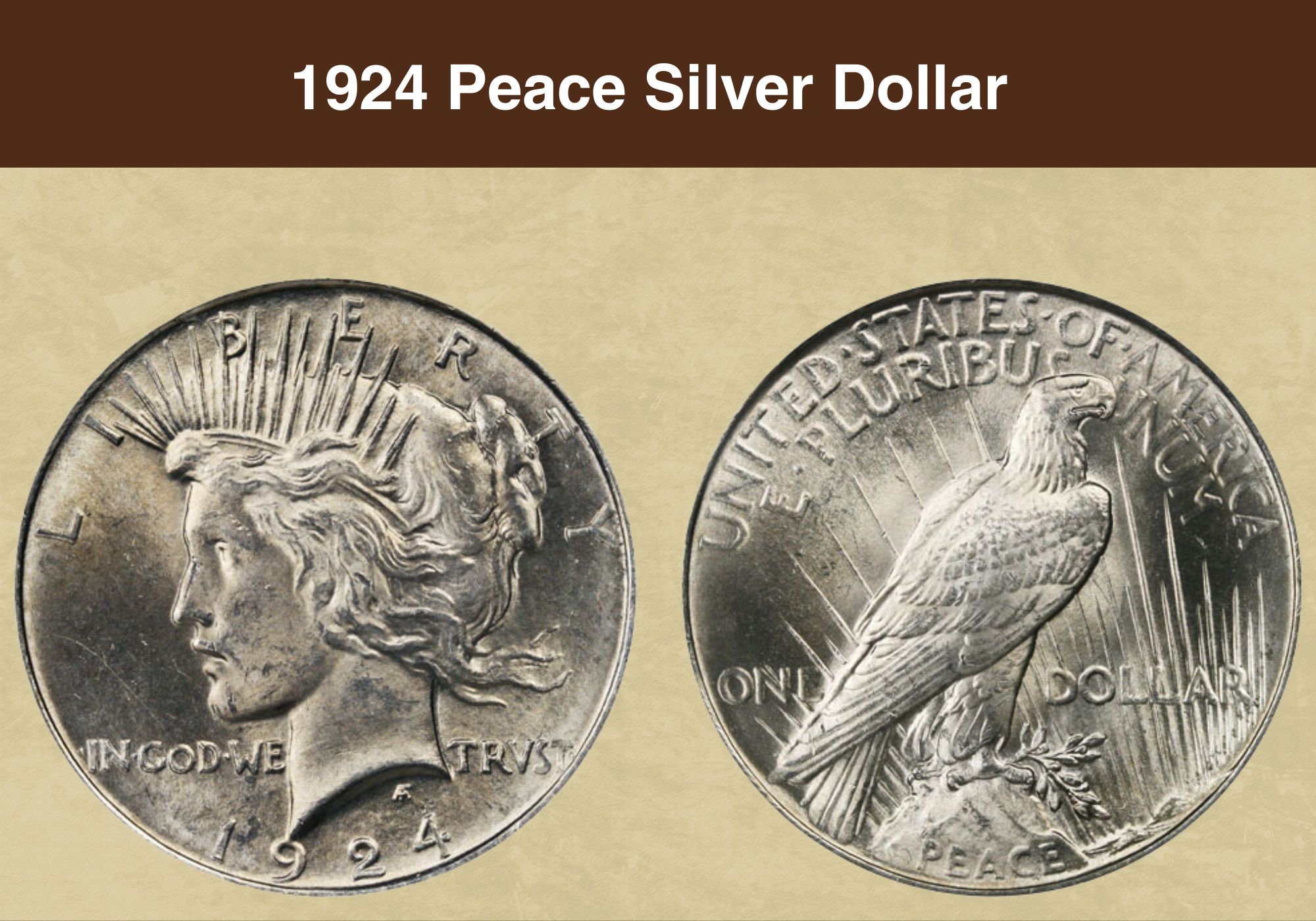
Nowadays, you can find that the 1924 silver dollar value significantly varies, depending on their appearance and the mint mark. Believe it or not, a few scarce specimens are estimated at tens of thousand dollars. Let’s see.
1924 Peace silver dollar value |
||
| Condition | 1924 No mint Mark silver dollar | 1924 S silver dollar |
| Good | $34 | $38 |
| Very good | $34 | $38 |
| Fine | $34 | $44 |
| Very fine | $34 | $48 |
| Extra fine | $36 | $60 |
| AU | $42 | $90 |
| MS 60 | $52 | $260 |
| MS 65 | $250 | $7,200 |
History of the 1924 Peace Silver Dollar
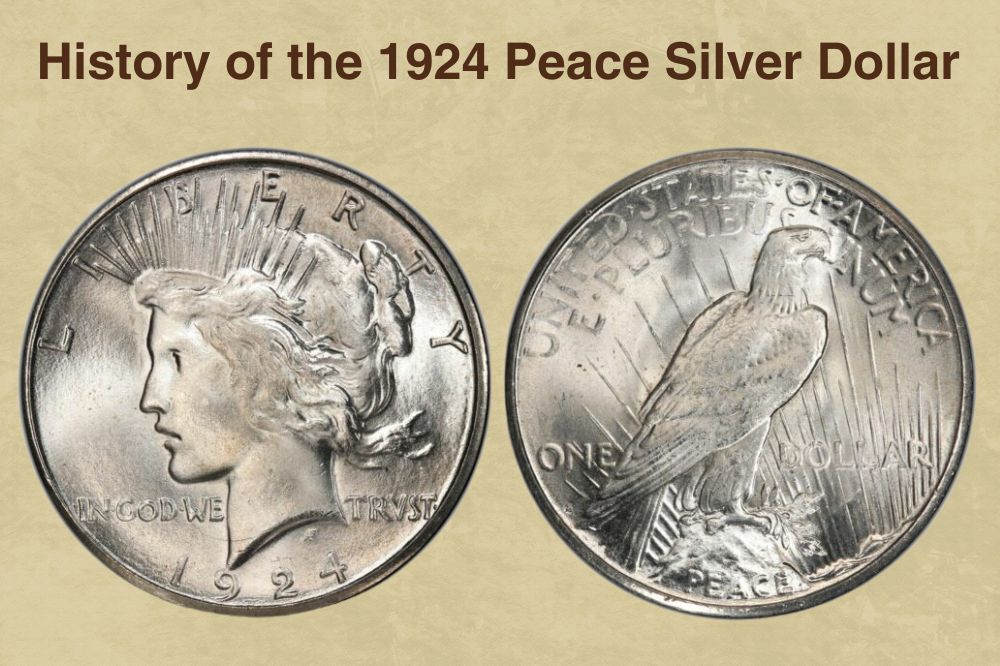
As its name suggests, the Peace silver dollar had the purpose of celebrating the end of WWI and the truce between the war winner, the US, and Germany, the losing side. That symbolism makes these coins highly collectible.
There is one more thing that sets these coins apart from the crowd. They are the last American silver dollar coins made of 90% precious metal ever minted for circulation. You can often hear that they are Americans’ last genuine silver dollars.
1924 Peace silver dollar Types |
||
| Location | Year | Minted |
| Philadelphia | 1924 No Mint mark silver dollar | 11,811,000 |
| San Francisco | 1924 S silver dollar | 1,728,000 |
| Total | / | 13,539,000 |
The first Peace dollar coins were released into circulation in late December 1921, and their minting continued until 1928. After a pause, the US Mint issued new sets in 1934 and 1935, when American dollars made of 90% silver went into history. Since then, they reached a new level as collectibles.
These coins had a specific purpose. Besides celebrating the end of the war, they offered new hope. The US started economic regression, and the existing currency was inadequate.
In those circumstances, the Nevada senator sponsored the so-called Pittman Act on April 23, 1918. It legalized the conversion of up to 350,000,000 existing silver dollars into bullion and allowed their sale.
In 1921, the US Mint produced the last set of Morgan dollars and started with the new silver coinage. The original design was in high relief.
Since this solution shortened expensive minting dies’ life, then Chief Engraver Morgan lowered the design and flattened the most prominent fields. Such intervention increased the dies use, making mass production more effortless.
Nowadays, the most collectible are the rarest Peace silver dollars minted during the last years. Their mintages were significantly lower compared to those reached in the beginning.
Also read: 12 Most Valuable One-Dollar Coin Worth Money
Features of the 1924 Peace Silver Dollar
A naturalized American sculptor, Anthony de Francisci, created the Piece silver dollar to honor peace between the US and Germany. The first coins were realized into circulation in 1921, and their minting lasted until 1935. They were the last silver pieces until the first Eisenhower dollars appeared in 1971.
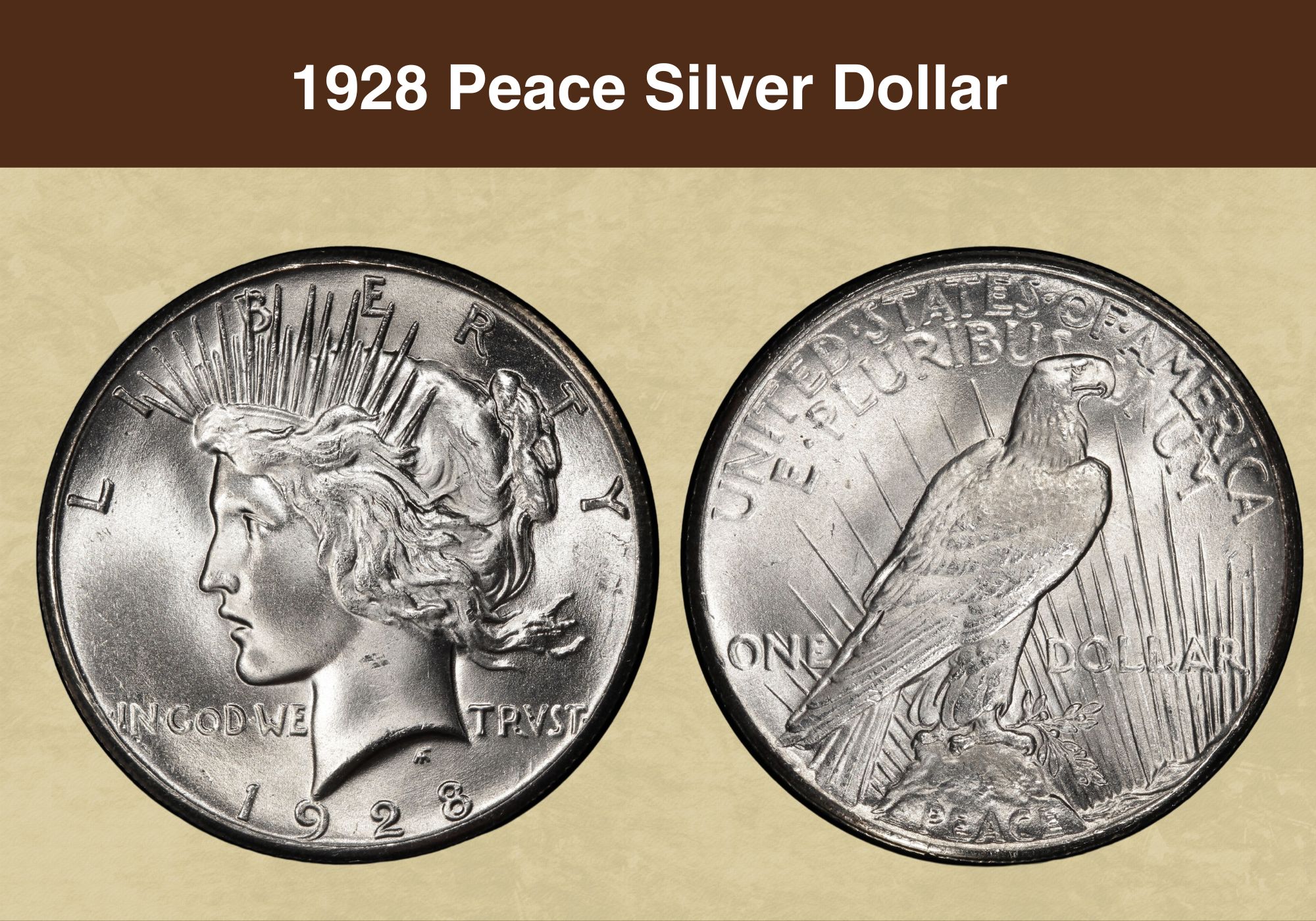
The obverse of the 1924 Peace silver dollar
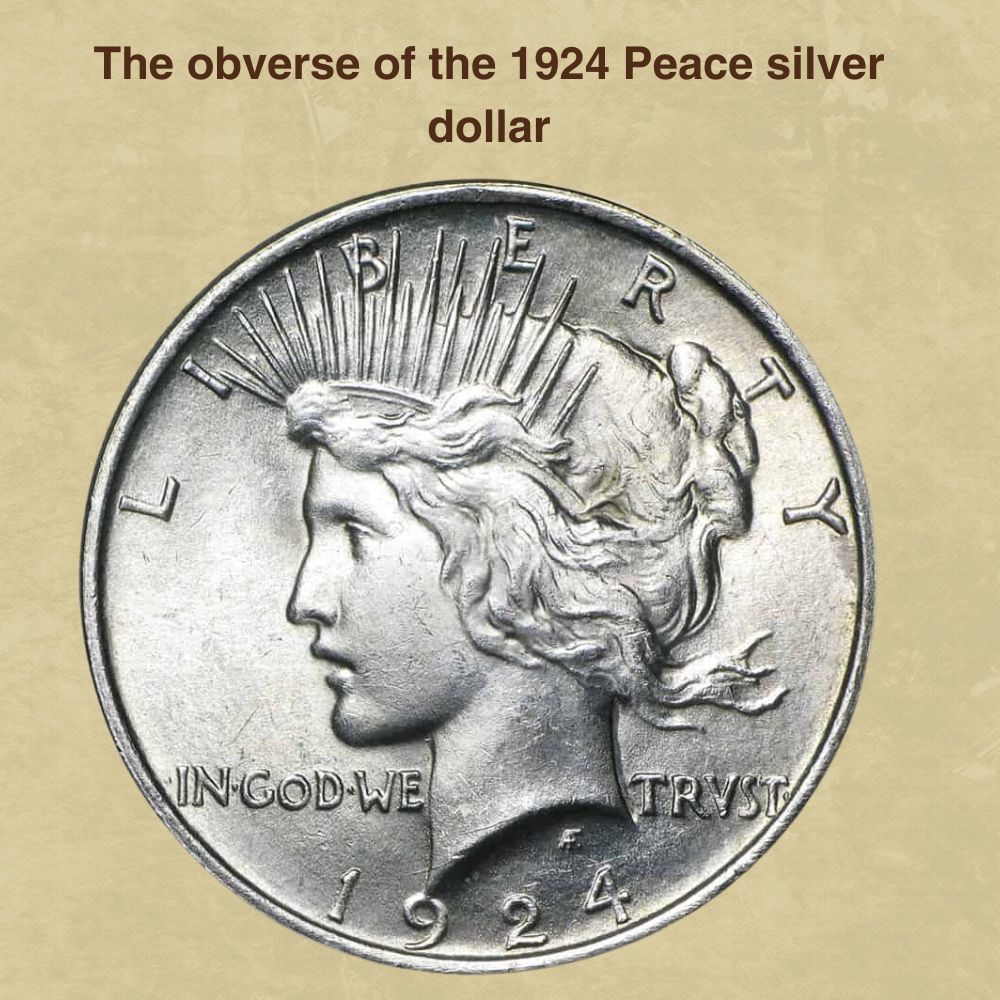
Designer de Francisci based Lady Liberty’s profile on his spouse, Teresa. She looked to the left side, surrounded by the word LIBERTY behind her pointed crown and the date on the bottom coin line. A legend said the artist portrayed his wife near a window to get this unique hair look.
The motto IN · GOD · WE / TRVST is written in a weird way, but it is actually grammatically correct. It is divided into two parts placed left and right of the centrally positioned bust. The AF initials are struck under the neck cut.
The reverse of the 1924 Peace silver dollar
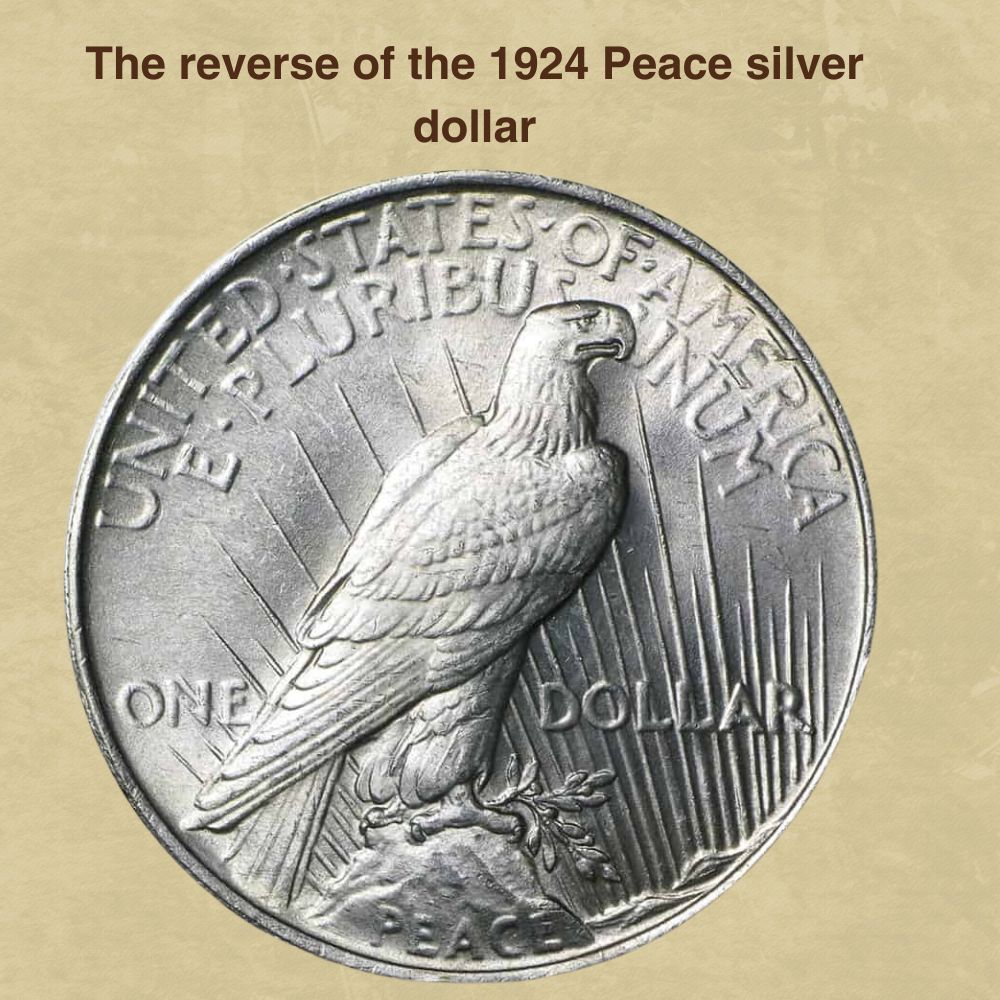
The sun rays on the reverse right side symbolically offer hope to a bald eagle looking at them. The bird with folded wings stands on a rock and holds an olive twig, representing the tendency for peace. The word PEACE under its claws emphasizes these intentions. Inscriptions are shown in three lines, including:
- E · PLURIBUS UNUM
- UNITED · STATES · OF · AMERICA
- ONE / DOLLAR
You can see that the bird divides the denomination into two parts with its body. A tiny S, representing the mint, is placed left of the eagle’s tail under the word ONE.
1924 Peace silver dollar Details |
|
| Face value | One dollar ($1) |
| Shape | Round |
| Compound | 0.900 silver with the remainder of 10% copper |
| Coin thickness | 0.09449 inches (2.4 mm) |
| Coin weight | 0.8594 troy ounces (26.73 g) |
| Silver weight | 0.77344 troy ounces (24.5 g) |
| Coin diameter | 1.5 inches (38.11 mm) |
| Edge | Reeded |
Other features of the 1924 Peace silver dollar
Like previous Peace silver dollars, those from 1924 are round coins with a reeded edge that contain 0.900 silver. In other words, silver is 0.77344 troy ounces (24.5 g) of each coin’s total weight of 0.8594 troy ounces (26.73 g). The coins’ diameter is 1.5 inches (38.11 mm), while the thickness is 0.09449 inches (2.4 mm).
Also read: 14 Most Valuable Coins In Circulation
1924 Peace Silver Dollar Grading
Thanks to the reliable and convenient Sheldon scale, it is possible to quickly and precisely determine each coin grade. Most owners send their Peace silver dollars to professional grading services because of their potentially high value.
What sets these coins apart from many other American coinage is the silver content that makes them valuable regardless of quality. In other words, you can get some money, although your specimen is below the GOOD condition, the lowest collectible grade on the scale.
| # | Grade |
|---|---|
| 1 | Basal State-1 |
| 2 | Fair |
| 3 | Very Fair |
| 4, 5, 6 | Good |
| 7, 8, 10 | Very Good |
| 12, 15 | Fine |
| 20, 30 | Very Fine |
| 40 | Extremely Fine |
| 50 | About Uncirculated |
| 60 | Mint State |
| 65 | Mint State |
| 70 | Mint State |
Please check our grading guides to know your coin scale, It’s the necessary step to know the exact value of your coin.
Check out now: How to Grade Peace Silver Dollar?
1924 Peace Silver Dollar Value Guides
Two mints produced 13,539,000 Peace silver dollars in the fourth year of minting. Most coins came without the mint mark, while almost two million had the letter S on the reverse.
1924 No Mint Mark silver dollar Value
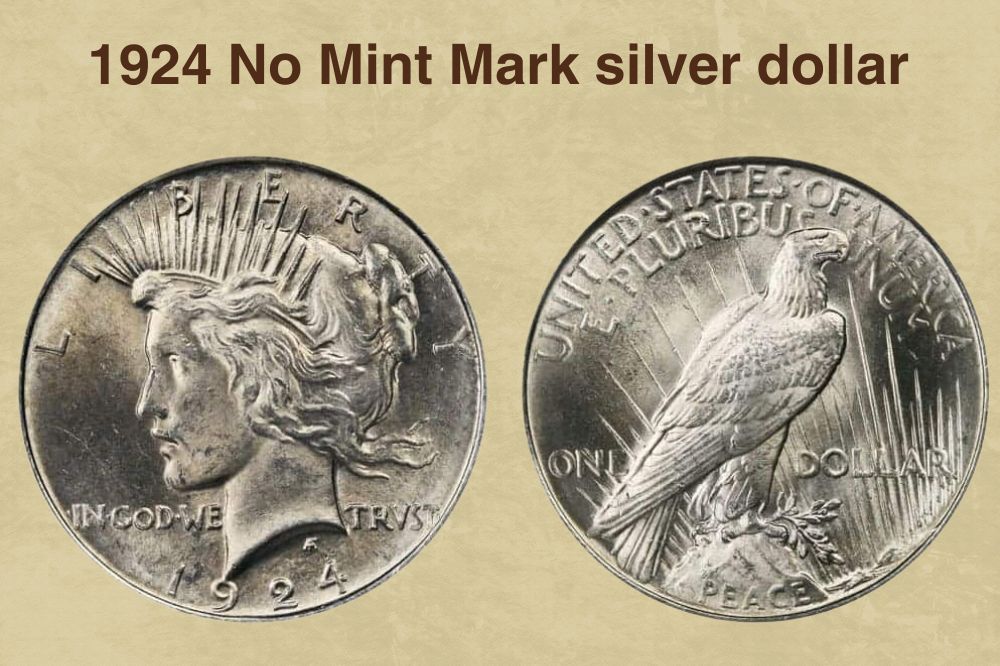
Most of the totally minted Peace dollars came from the Philadelphia mint, precisely 11,811,000 coins. All were without the mint mark and can be worth $32 to $50 in circulated condition.
Expectedly, specimens in uncirculated condition are more valuable, with a price range from $52 to $160. However, the higher-rated coins are worth hundreds or even thousands of dollars, including:
- MS 65-graded dollar coins are estimated at $190 to $250
- MS 66-graded dollar coins are estimated at $440 to $600
- MS 67-graded dollar coins are estimated at $5,000 to $8,750
An expert assessed the 1924 MS 68-graded Peace dollars at $60,000 to $80,000, but the auction record is slightly lower. The highest-paid coin in this set reached $54,625 in 2005.
1924 S silver dollar Value
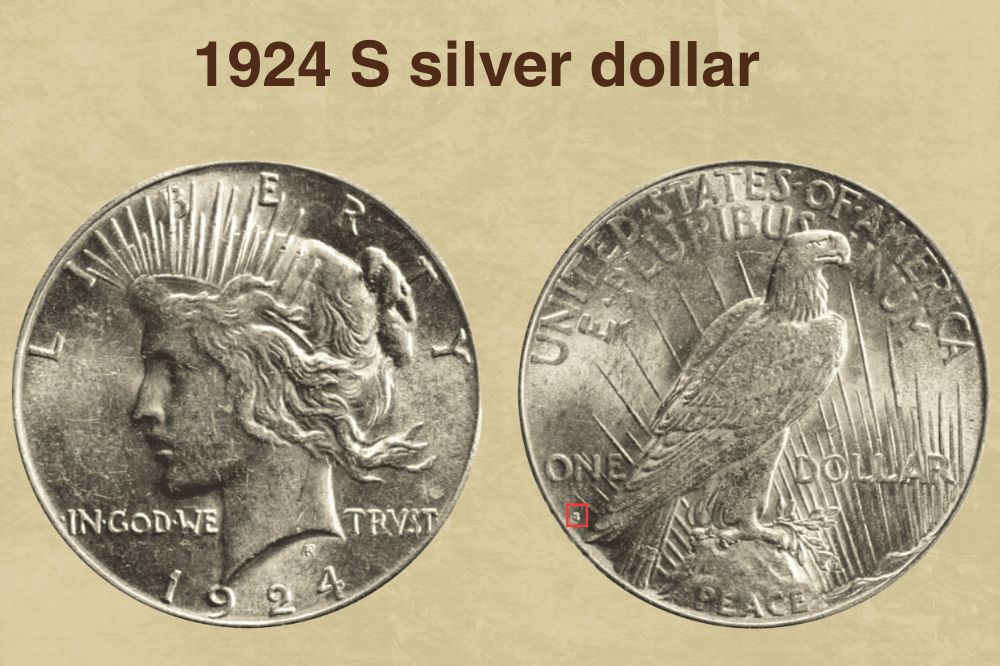
The San Francisco mint produced about a tenth of the Philadelphia mintage, even though 1,728,000 Peace dollars was a respectful number.
The real surprise is that prices for these coins are significantly lower than those from the main mint. The reason is the high number of uncirculated 1924 silver dollars available on today’s market.
Most coins that spent more or less time in circulation cost $38 to $75. You can expect more money only for dollars in AU condition, approximately $90 to $186.
Interestingly, even non-collectible pieces have some value, thanks to their silver content. So, you can get a few bucks even after selling the most worn-out coin. The price range for Peace silver dollars from 1924 in the mint state is about:
- $245 to $300 for coins in MS 60 grade
- $300 to $385 for coins in MS 61 grade
- $390 to $475 for coins in MS 62 grade
- $600 to $700 for coins in MS 63 grade
- $1,000 to $1,600 for coins in MS 64 grade
- $6,000 to $7,200 for coins in MS 65 grade
The most expensive pieces are those with the MS 66 rating assessed at $40,000 to $45,000. At an auction organized in 2011, one of these silver dollars was purchased for $54,625.
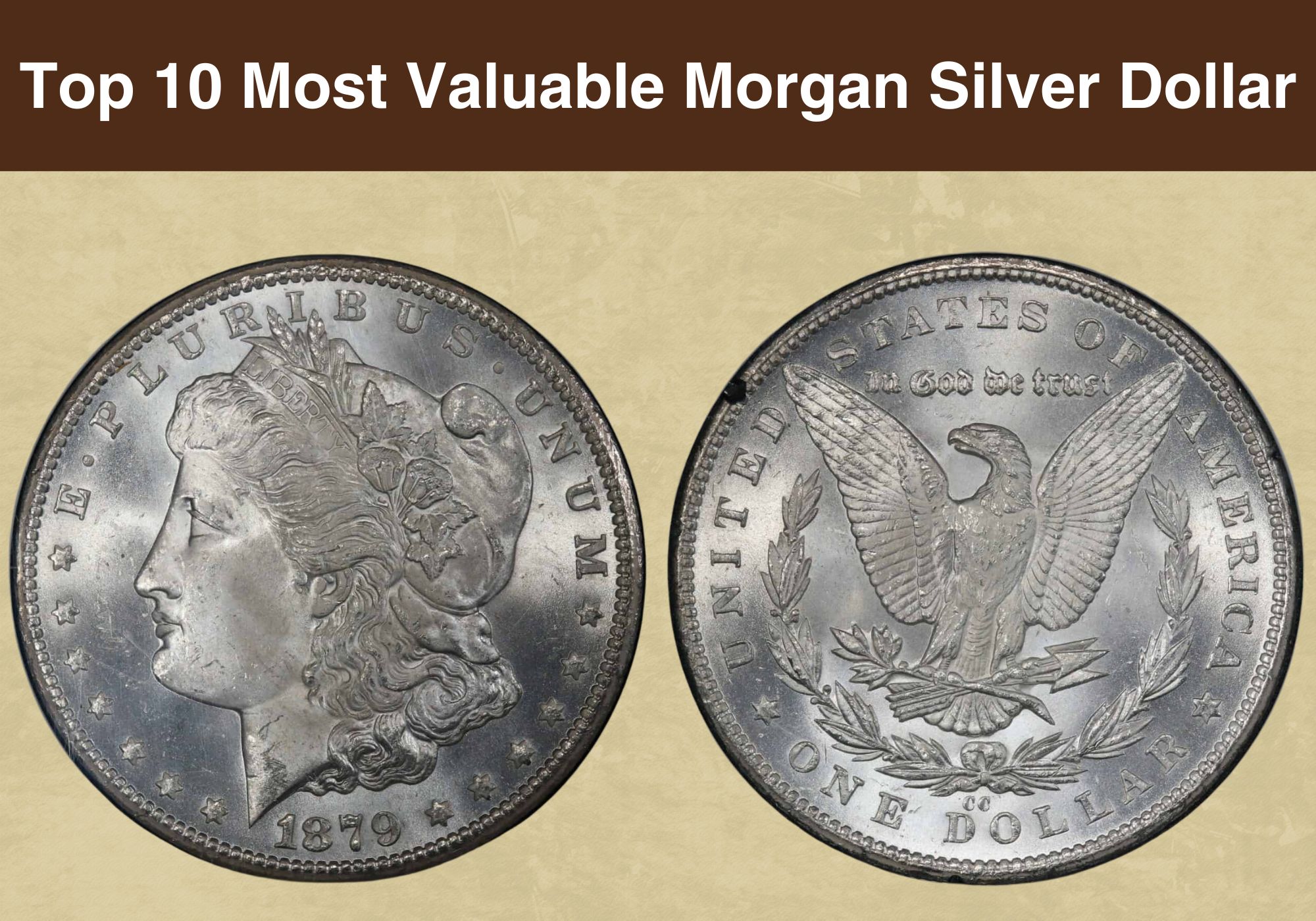
Also read: Top 10 Most Valuable Morgan Silver Dollar Worth Money
Rare 1924 Peace Silver Dollar Error List
Errors often increase the 1924 silver dollar value, but it depends on their type, size, and part of the coin surface where they occur. Besides numerous minor imperfections, you can find some highly collectible pieces. Let’s take a look.
Doubled die reverse
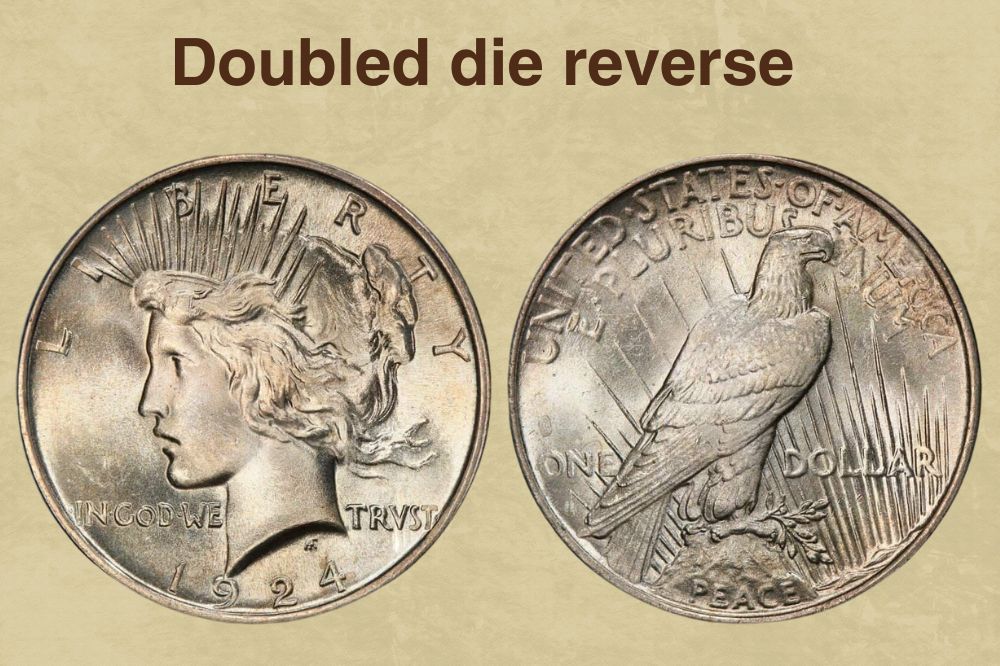
The doubled die reverse is a standard error among American coinage due to the imperfect die. Most Peace dollars minted in 1924 with this error cost a few hundred bucks, with the most expensive piece in MS 64 grade that was paid $852 at an auction.
Extra hair
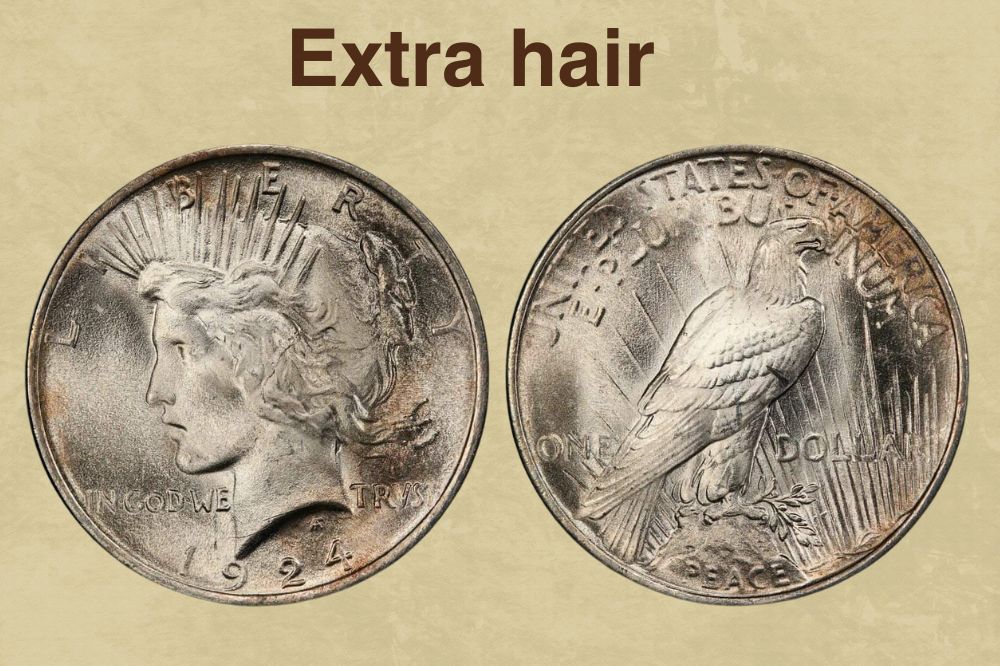
Collectors found extra wispy locks in Lady Liberty’s hairdo that increase such coins’ value to $100 or even $400, depending on ranking. The costliest is a piece in MS 64 grade that was sold at an auction for $552.
Curved clip
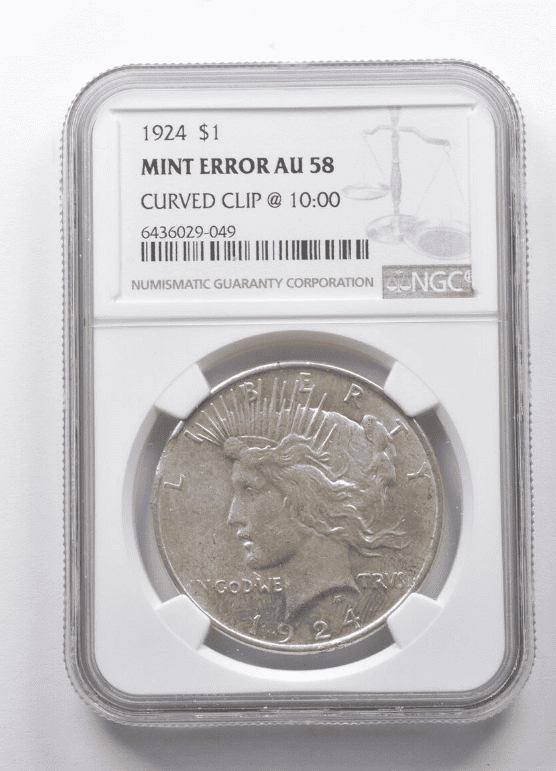
This unusual error coin has a cut edge piece, causing its curved appearance. One 1924 Peace dollar with two curved cuts was sold for over $100 at an auction.
Strikethrough
Silver dollar coins with this error result from a foreign object getting stuck between the dies during minting. You can recognize this coin thanks to a visible pattern on the Liberty face that makes it weak or poorly defined. Depending on its quality and error significance, the expected price range for such a specimen is $50 to $250.
Lamination
You can see such an error coin when an impurity gets stuck between the metal layers during minting. The result is a flaky dollar coin’s surface. Such an imperfection can bring you $50 to $400, depending on an affected area and coin grade.
Broken die
When the die gets cracked or broken, it leaves corresponding traces on the coin’s obverse or reverse design. Depending on the crack location, you can recognize a few types of this imperfection.
Auction records for so-called Broken Wing silver dollars come in a wide price range. Their prices go from $257 for a coin in MS 64 grade to an astonishing $2,233 paid for the 1924 MS 67 Broken Wing Peace dollar sold in 2015.
Another error type is the so-called Broken Jaw Peace dollar. One such specimen in AU 58 grade reached $475 on eBay in 2022.
Where to Sell Your 1924 Peace Silver dollar ?
Now that you know the value of your coins, do you know where to sell those coins online easily? Don’t worry, I’ve compiled a list of these sites, including their introduction, pros, and cons.
Check out now: Best Places To Sell Coins Online (Pros & Cons)
FAQ about the 1924 Peace Silver Dollars
What makes 1924 Peace silver dollars scarce?
The Peace silver dollars glorify the truce after the end of WWI. That makes these dollars historical significance, affecting their value. Besides, the US Mint drastically reduced these coins’ mintage over time, making them rare and sought-after.
Which 1924 Peace silver dollars are the most expensive in the set?
- The 1924 MS 68 Peace dollar sold at $54,625 on November 3, 2005, at Heritage Auctions
- The 1924 S MS 66 Peace dollar sold at $54,625 on April 27, 2011, at Heritage Auctions
Besides those flawless coins from regular strikes, you can find numerous error Peace dollars with many imperfections. The most expensive with this minting year are the following pieces:
- The 1924 MS 67 Peace dollar (broken wing) – $2,233 (Heritage Auctions, 2015)
- The 1924 MS 63 Peace dollar (clashed E) – $1,560 (Heritage Auctions, 2019)
- The 1924 S MS 64 Peace dollar (doubled reverse TOP 50) – $1,175 (Heritage Auctions, 2016)
- The 1924 MS 64 Peace dollar (DDR) – $852 (Heritage Auctions, 2014)
- The 1924 MS 63 Peace dollar (wing die break) – $650 (eBay, 2023)
- The 1924 MS 64 Peace dollar (bar D) – $600 (eBay, 2023)
- The 1924 MS 64 Peace dollar (extra hair) – $552 (Heritage Auctions, 2021)
- The 1924 AU 58 Peace dollar (broken jaw) – $475 (eBay, 2022)
- The 1924 MS 64 Peace dollar (wing break) – $257 (eBay, 2017)
- The 1924 S MS 61 Peace dollar (VAM 1) – $233 (eBay, 2019)
- The 1924 MS 63 Peace dollar (VAM 1) – $199 (eBay, 2022)
- The 1924 MS 66 Peace dollar (clashed E) – $192 (eBay, 2022)
How much is the 1924 Peace silver dollar (No Mint mark) worth?
Peace silver dollars from circulation cost approximately $24 to $41.50, while those in the mint state are worth at least $32.50. You can buy better-graded pieces for $185 to $8,000, while the most expensive are 68-graded coins assessed at $60,000 to $80,000.
What are the most expensive Peace silver dollars?
- 1922 PR 67 High relief Peace dollar with matte finish – $458,250 in 2014
- 1922 PR 67 Modified high relief Peace dollar (production trial J-2020) – $381,875 in 2014
- 1922 PR 65 Low Relief Peace dollar with matte finish – $192,000 in 2023
- 1927 D MS 66+ Peace Dollar – $176,250 in 2019
- 1921 PR 67 Peace dollar with a satin finish – $150,000 in 2023

I have a 1924 one Dollar it has the TRVST
I would be open to sell it
Mike