1886 Silver Dollar Value Checker: Errors List, “O”, “S” & No Mint Mark Worth
1886 Silver Dollar value ranges from $1.00 face value to $780,000. That record belongs to an MS67 DMPL example sold at Stack’s Bowers in November 2020 — a coin so pristine it’s been called the finest Morgan dollar ever known. If you’re wondering what yours might be worth, upload a photo of your coin below for a quick value range. You can also scroll down to check recent eBay sales and see what buyers are actually paying right now.
1886 Silver Dollar Value Checker
Identify 1886 Silver Dollar O, S and No Mint Mark Price
Front Obverse
Upload or Take a Photo
Back Reverse
Upload or Take a Photo
1886 Silver Dollar Value By Variety
Your 1886 Silver Dollar’s value depends on the mint mark and surface type. If you already know the grade, check the exact price in the Value Guides section below.
| Type | Good(G4-6) | Fine(F12-15) | AU(AU50-58) | MS(MS60-70) | PR(PR60-70) |
|---|---|---|---|---|---|
| ▶1886 No Mint Mark Dollar Value | $84 | $84 | $86 | $87 - $17,000 | — |
| ▶1886 No Mint Mark Dollar (PL) Value | $6 - $8 | $12 - $15 | $47 - $78 | $100 - $5,980 | — |
| ▶1886 No Mint Mark Dollar (DMPL) Value | $11 - $13 | $22 - $25 | $81 - $130 | $170 - $3,450 | — |
| ▶1886 O Silver Dollar Value | $84 | $84 | $140 - $480 | $1,380 - $207,000 | — |
| ▶1886 O Silver Dollar (PL) Value | $230 - $270 | $450 - $530 | $1,650 - $2,690 | $3,450 - $29,900 | — |
| ▶1886 O Silver Dollar (DMPL) Value | $620 - $730 | $1,200 - $1,410 | $4,410 - $7,190 | $9,200 - $920,000 | — |
| ▶1886 S Silver Dollar Value | $84 | $84 - $100 | $190 - $330 | $340 - $58,400 | — |
| ▶1886 S Silver Dollar (PL) Value | $26 - $31 | $50 - $59 | $180 - $300 | $390 - $14,700 | — |
| ▶1886 S Silver Dollar (DMPL) Value | $34 - $40 | $65 - $77 | $240 - $390 | $500 - $27,600 | — |
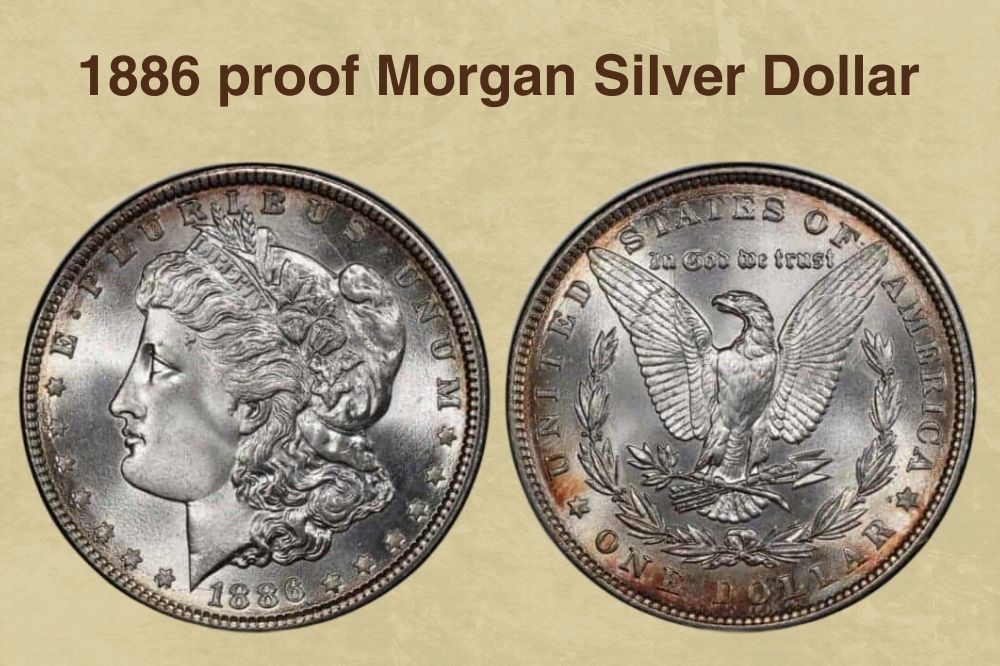
| ▶1886 Proof Silver Dollar Value | — | — | — | — | $2,160 - $29,900 |
| ▶1886 CAM Silver Dollar Value | — | — | — | — | $2,530 - $48,300 |
| ▶1886 DCAM Silver Dollar Value | — | — | — | — | $5,040 - $59,800 |
Also Read: Top 100 Rarest Silver Dollar Coins Worth Money (Most Expensive)
Top 10 Most Valuable 1886 Silver Dollar Worth Money
Most Valuable 1886 Silver Dollar Chart
2000 - Present
The New Orleans “O” mint coins own the top of this list, and it’s not even close. Most Mint State 1886-O survivors are beat up with heavy bag marks and flat luster. Gem examples are almost nonexistent. That makes the 1886-O a textbook condition rarity — common in circulated grades, nearly impossible to find pristine.
The record-setting MS67 DMPL specimen is known as the “double Miller” coin. It passed through the collections of both Wayne Miller and Larry H. Miller before bringing $780,000 at Stack’s Bowers in 2020. That ranks it among the top three Morgan dollar auction results ever recorded.
The lesson here? When you’re evaluating 1886 Silver Dollar value, surface quality and die finish matter just as much as the grade on the slab. A DMPL coin struck from fresh, deeply mirrored dies is a completely different kind of rare compared to a standard strike — and the prices prove it.
History of The 1886 Silver Dollar
By 1886, the Morgan dollar was eight years into production under the Bland-Allison Act, which forced the Treasury to buy up to $4 million in silver monthly and coin it into dollars. Western mining interests loved it. The Treasury, not so much — vaults were overflowing with silver dollars nobody wanted in commerce.
The political fight over silver was far from over. Four years later, the Sherman Silver Purchase Act doubled down, requiring 2,000,000 silver dollars coined each month. That policy helped trigger the Panic of 1893, and Congress repealed it fast.
Here’s one detail I find fascinating about the 1886 coins specifically: many of the Philadelphia strikes sat in Treasury bags for decades, untouched, until massive bag releases in the mid-20th century flooded the market with uncirculated examples. Meanwhile, the Pittman Act of 1918 melted Morgan dollars by the hundreds of thousands — with zero regard for which dates were rare — to supply silver for the war effort. That random destruction is why some 1886 varieties are so much harder to find than others today.
Also Read: Top 100 Most Valuable Morgan Silver Dollar Coins Worth Money List
Is Your 1886 Silver Dollar Rare?
1886 No Mint Mark Dollar
1886 No Mint Mark Dollar (PL)
1886 No Mint Mark Dollar (DMPL)
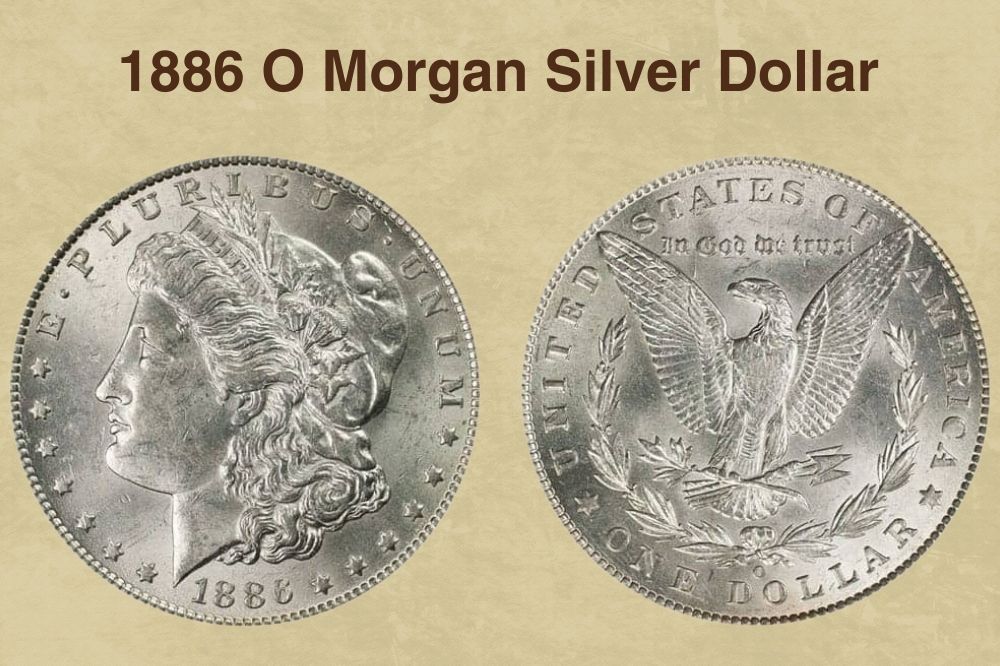
1886-O Silver Dollar
1886-O Silver Dollar (PL)
1886-O Silver Dollar (DMPL)
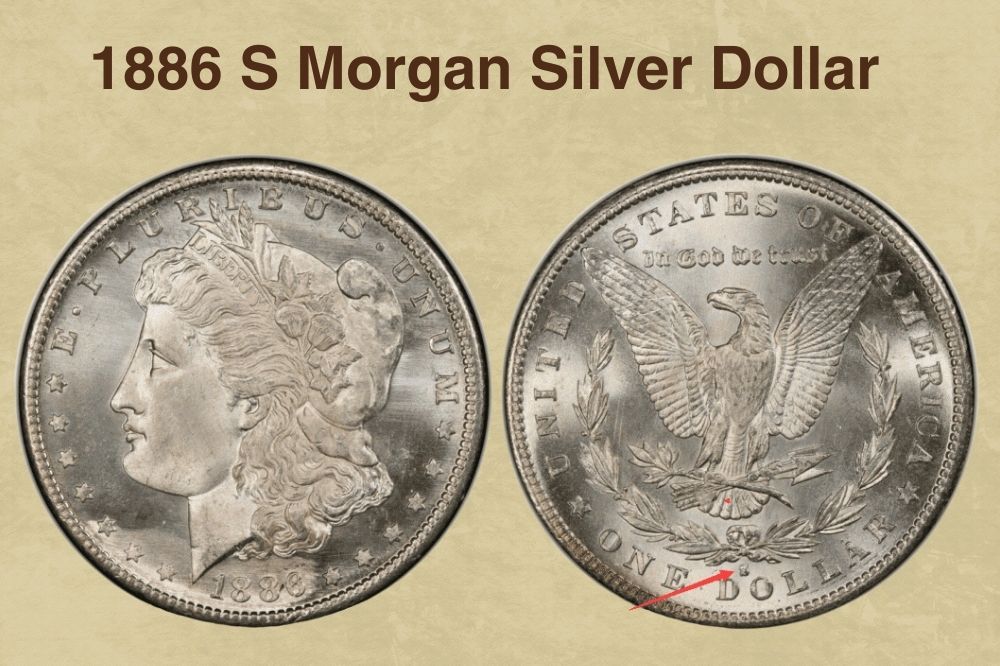
1886-S Silver Dollar
1886-S Silver Dollar (PL)
1886-S Silver Dollar (DMPL)
1886 Proof Silver Dollar
1886 CAM Silver Dollar
1886 DCAM Silver Dollar
The chart above might surprise you. The Philadelphia issue looks common — and it is, in lower Mint State grades. But jump to DMPL surfaces and the population drops off a cliff. The 1886-O flips the script entirely: easy to find circulated, almost impossible in gem condition. Your coin’s rarity depends entirely on that combination of mint mark and surface type — and the Coin Identifier and Value App can help you sort it out fast.
Key Features of The 1886 Silver Dollar
Here’s what to look for when you’re examining an 1886 Morgan dollar up close.
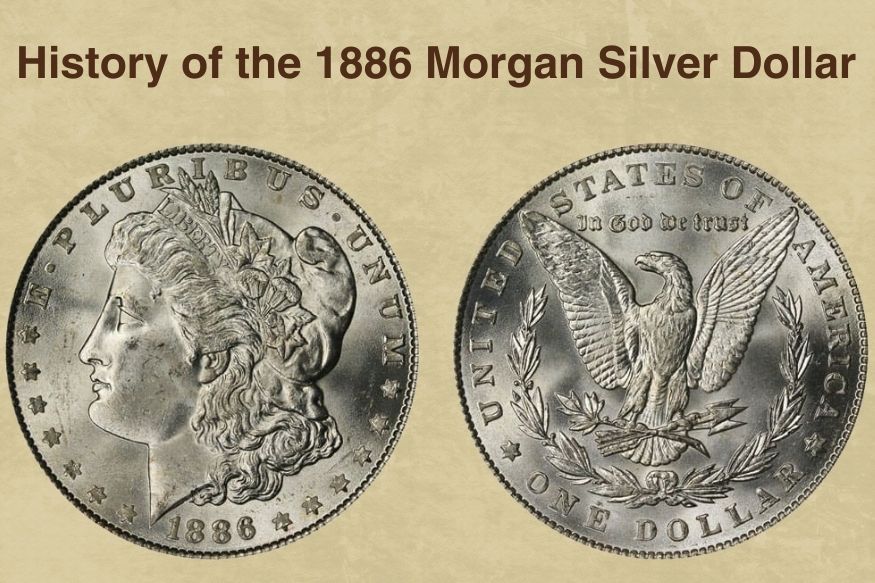
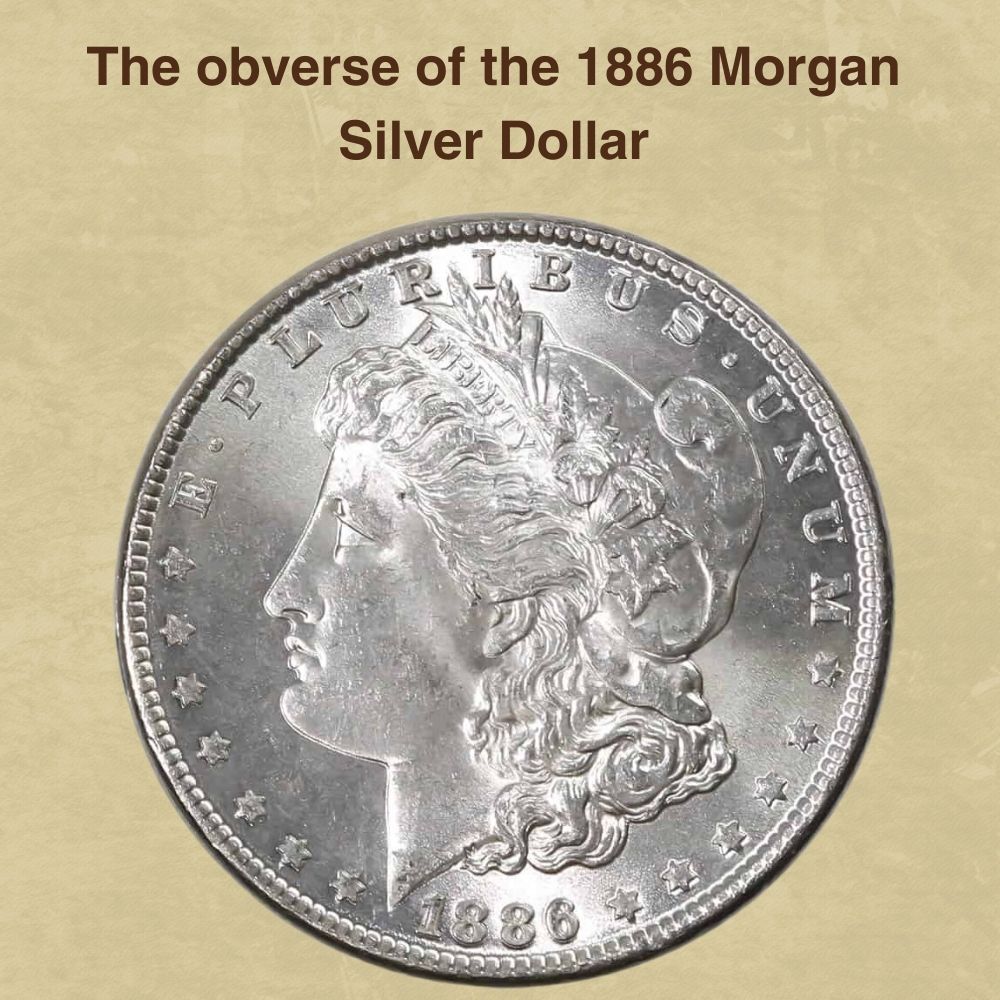
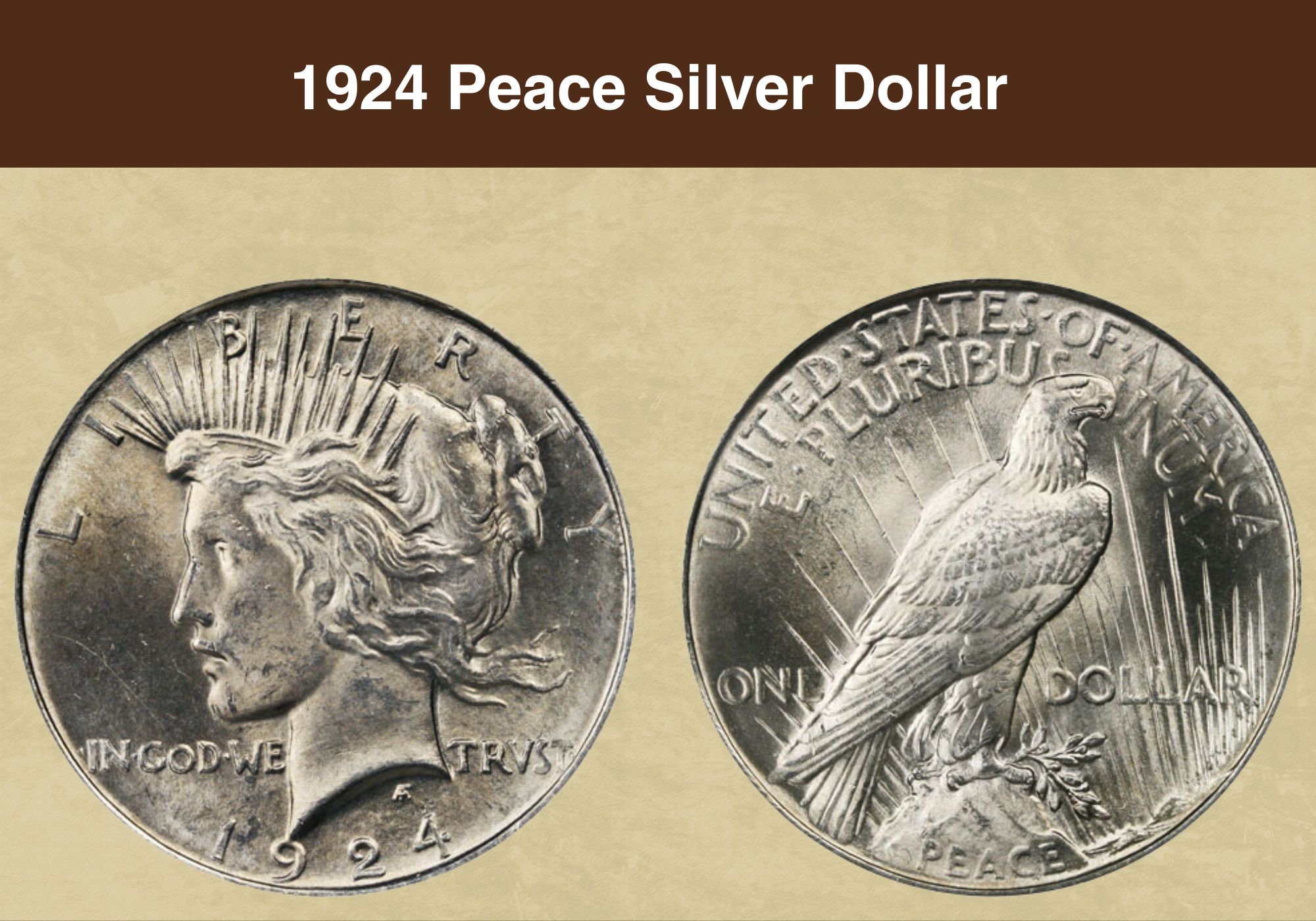
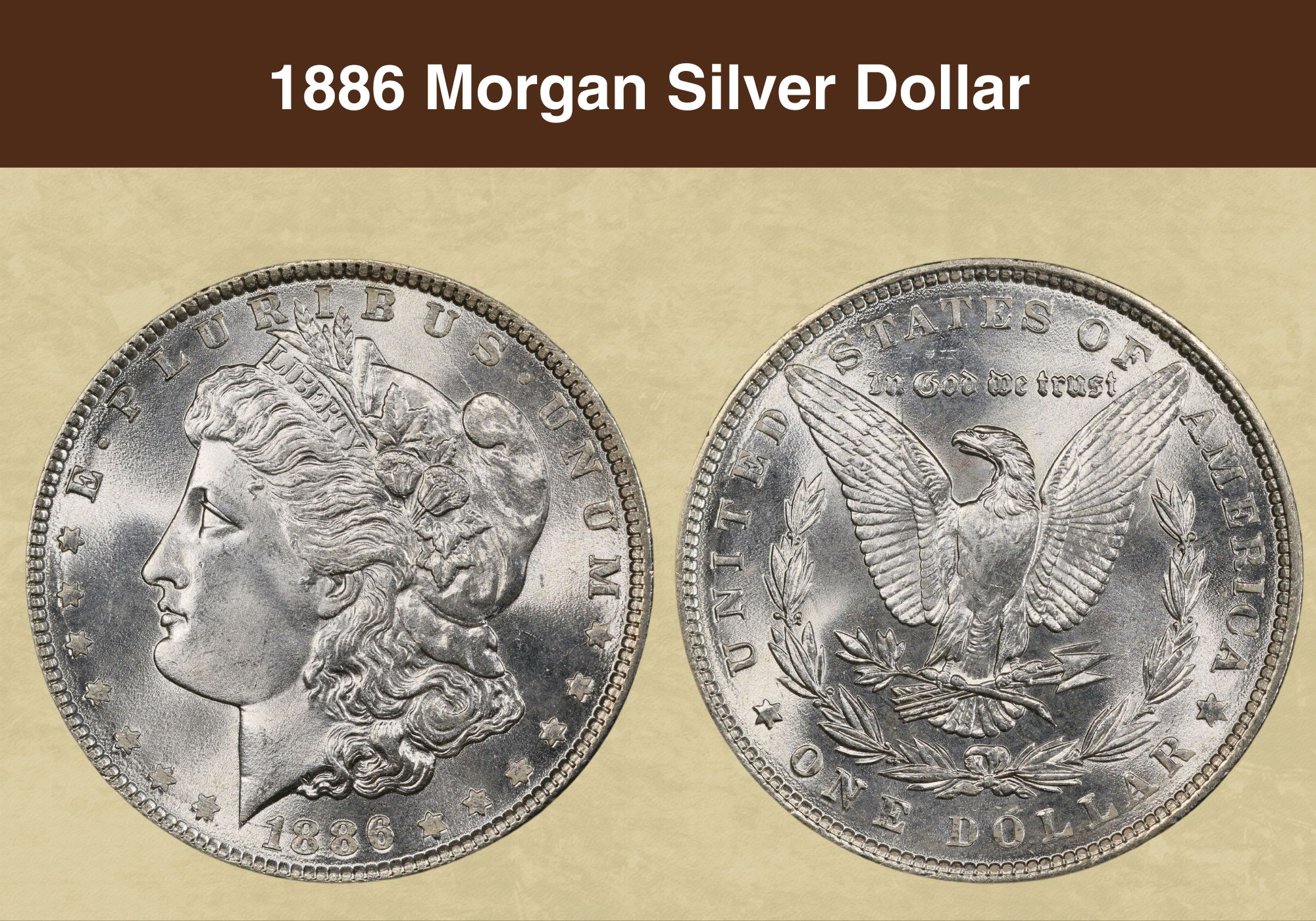
The Obverse Of The 1886 Silver Dollar
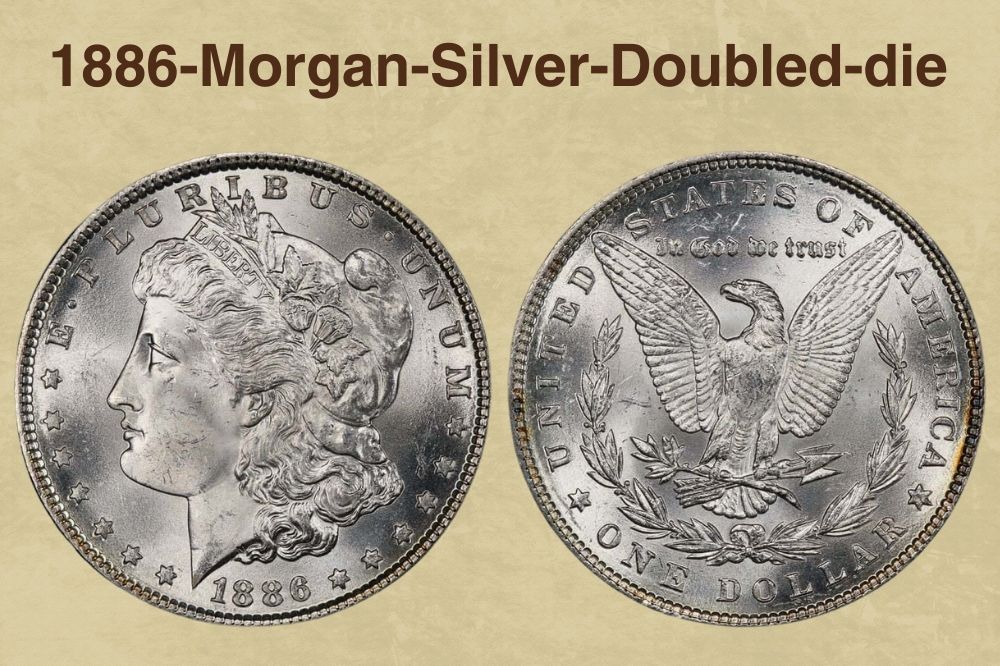
Liberty faces left, wearing a Phrygian cap decorated with cotton and wheat — George T. Morgan’s American spin on the classical freedom symbol.
“E PLURIBUS UNUM” and the date arc around the rim, separated by thirteen stars for the original colonies.
Fun fact: Morgan’s model was Anna Willess Williams of Philadelphia. He considered her profile the most perfect he’d ever seen. That personal touch makes this otherwise official design feel a little more human.
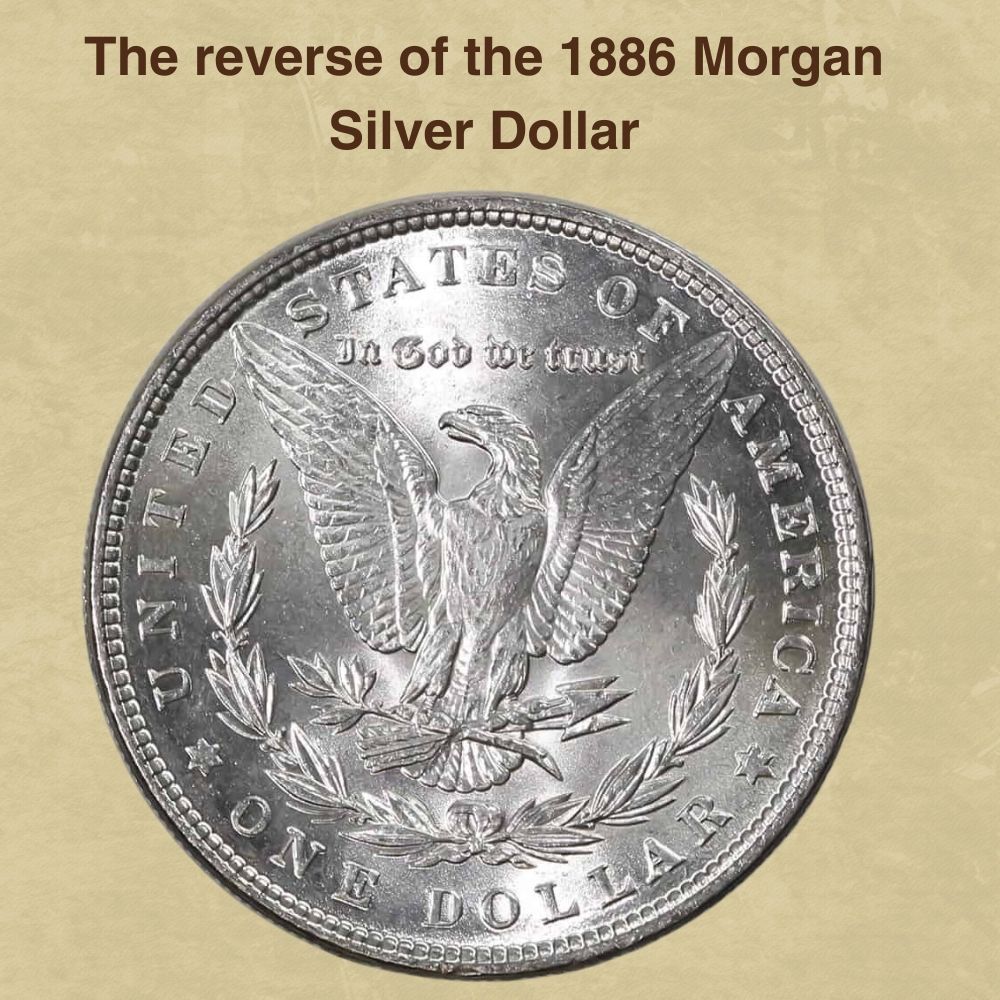
The Reverse Of The 1886 Silver Dollar
Flip it over and you’ll see a heraldic eagle with wings spread wide, gripping an olive branch and a bundle of arrows. Peace and readiness — classic American symbolism.
“IN GOD WE TRUST” sits above the eagle, with “UNITED STATES OF AMERICA” and “ONE DOLLAR” around the border. Look below the wreath for the mint mark. That tiny letter (or lack of one) makes a huge difference in value.
Other Features Of The 1886 Silver Dollar
This is a big coin — 38.1 mm across and 26.73 grams. The composition is 90% silver and 10% copper, giving you 0.77344 troy ounces of pure silver per coin. Check the edge: there should be exactly 180 reeds. Authentication experts look at reed count and uniformity first when screening for counterfeits, so it’s worth checking yours too.
Also Read: Top 80+ Most Valuable Sacagawea Dollar Worth Money (2000-P to Present)
1886 Silver Dollar Mintage & Survival Data
1886 Silver Dollar Mintage & Survival Chart
Survival Distribution
Type Mintage Survival Survival Rate No Mint 19,963,000 2,000,000 10.0185% O 10,710,000 1,000,000 9.3371% S 750,000 75,000 10% Proof 886 380 42.8894% CAM 886 300 33.86% DCAM 886 20 2.2573%
All three circulation-strike varieties show survival rates around 10%. That sounds consistent, but the reality on the ground is very different. The Pittman Act melted coins based on what was sitting in vaults, not what was rare. The New Orleans issue got hit hardest.
Proof coins survived at roughly 43%. They were never in Treasury vaults to begin with — collectors bought them at issue and kept them safe. Their losses came from individual mishandling, not government melting.
Here’s the number that jumps out: Deep Mirror Prooflike examples were scarce from day one. Most collectors will never hold one. The data confirms that DMPL scarcity isn’t accidental — everything had to go right at the mint for those surfaces to exist. And since nobody recorded which specific dates got melted under the Pittman Act, every survival estimate carries some uncertainty. What’s clear is that physical survival and condition survival are two separate problems. For the 1886 dollar, the condition problem is far harder to solve.
Also Read: Top 40+ Most Valuable Presidential Dollar Coins Worth Money
The Easy Way to Know Your 1886 Silver Dollar Value
You can figure out a lot about your 1886 Silver Dollar’s value before ever talking to a dealer. Three things matter most: mint mark, surface type, and honest condition.
Start with the mint mark. Flip to the reverse and look below the eagle’s tail feathers. “O” means New Orleans. “S” means San Francisco. Nothing there? That’s Philadelphia. That single letter — or the lack of one — can swing your coin’s value by thousands.
Next, check the surfaces under a strong, single light source. A regular business strike has even, frosty luster. A Prooflike coin reflects images in its fields. A Deep Mirror Prooflike — the rarest type — shows almost black-mirror depth with frosted, cameo-contrast devices. If yours looks unusually reflective, pay attention.
Finally, be honest about the grade. The jump from MS-63 to MS-65 can mean tens of thousands of dollars on the right variety. Don’t overgrade your own coin.
For a quick starting point, the Coin Identifier and Value App identifies your coin’s variety, surface type, and current market value in minutes — a solid first step before seeking a professional appraisal or heading to auction.

1886 Silver Dollar Value Guides
Three mints produced the 1886 Silver Dollar, and each one turns out coins with different characteristics that directly affect value. Surface finish adds another layer — standard strikes, Prooflikes, and Deep Mirror Prooflikes all trade at different levels. Knowing which variety you hold is step one.
The 6 Types of 1886 Silver Dollar:
- 1886 No Mint Mark Silver Dollar (Philadelphia)
- 1886-O Silver Dollar (New Orleans)
- 1886-S Silver Dollar (San Francisco)
- 1886 Proof Silver Dollar
- 1886 CAM (Cameo) Silver Dollar
- 1886 DCAM (Deep Cameo) Silver Dollar
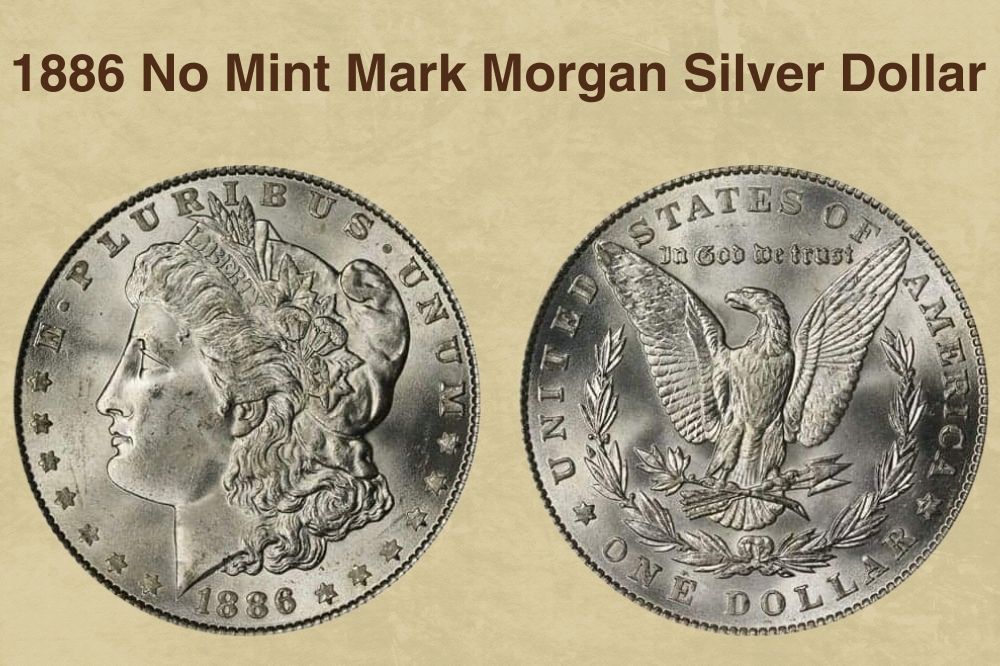
1886 No Mint Mark Silver Dollar Value
Most 1886 Philadelphia Morgans you’ll run across grade MS63 to MS64. At that level, expect to pay around $100. Not exactly a budget-buster.
The price curve gets steep in a hurry, though. Gem Uncirculated (MS65) examples sell for $180 to $220. PCGS MS68 coins have brought $10,000 to $15,000 at auction. At the very top, PCGS reports one example at MS68+ with an estimated value of $22,500.
What makes this date interesting is the surface variety. Philadelphia struck coins with both standard and reflective finishes. Through November 2023, NGC lists 1,151 Prooflike examples and 607 Deep Mirror Prooflikes — giving you multiple tiers to chase within a single date.
1886 No Mint Mark Silver Dollar Price/Grade Chart
Price by 1-70 Grade (Latest Auction Records Included)
1886 No Mint Mark Silver Dollar (PL) Price/Grade Chart
Price by 1-70 Grade (Latest Auction Records Included)
1886 No Mint Mark Silver Dollar (DMPL) Price/Grade Chart
Price by 1-70 Grade (Latest Auction Records Included)
Beyond just tracking sale prices, the following auction history reveals how the Philadelphia issue has responded to broader market conditions over time.
Date Platform Price Grade
Here’s a snapshot of recent dealer and auction activity for the 1886 No Mint Mark dollar across grade levels.
Market Activity: 1886 No Mint Mark Silver Dollar
1886-O Silver Dollar Value
Here’s a question every Morgan collector eventually asks: why does the 1886-O cost so much more than the Philly issue in Mint State? The answer is simple — finding a nice one is brutal. The coin is plentiful up through choice AU-58, but after that, good luck. Even at MS-60 to MS-62 the date proves elusive. At MS-63 and above, you’re facing one of the toughest challenges in the whole series.
New Orleans production conditions are the culprit. Dies were spaced too far apart to reduce wear during massive press runs, so many survivors came out softly struck. Add flat luster and excessive bag marks, and you’ve got a date that punishes condition-conscious collectors.
The numbers at the top tell the story. PCGS has graded only three coins in MS65 (one in MS65+), with a single MS67 Deep Mirror Prooflike example finer. That MS67 DMPL — the “Miller-Miller” coin — brought $780,000 at Stack’s Bowers in 2020.
1886-O Silver Dollar Price/Grade Chart
Price by 1-70 Grade (Latest Auction Records Included)
1886-O Silver Dollar (PL) Price/Grade Chart
Price by 1-70 Grade (Latest Auction Records Included)
1886-O Silver Dollar (DMPL) Price/Grade Chart
Price by 1-70 Grade (Latest Auction Records Included)

Coin Identifier and Value App
Not sure what your coins are worth? Get Instant Value • Grade • Error Detection with coin identifier and value app (FREE Usage Daily)
The records below put the price trajectory of the 1886-O at auction.
Date Platform Price Grade
This is one of the most closely watched coins in Morgan dollar collecting. Even mid-grade examples attract serious bidding.
Market Activity: 1886-O Silver Dollar
1886-S Silver Dollar Value
A lot of collectors don’t realize the 1886-S was once considered a major rarity. In November 1914, the highest price recorded for any Morgan dollar was $26.50 — for an uncirculated 1886-S. That’s how scarce it was thought to be.
Then bag releases happened. The Redfield estate hoard alone is believed to have contained 3,000 or more coins grading MS-60 to MS-63. That single source probably accounts for most of the examples you’ll see on the market today.
Circulated pieces remain affordable. High-grade coins still carry strong premiums, though, because the S-mint typically delivered an above-average strike with excellent luster — a sharp contrast to the mushy New Orleans coins. The MS67 auction record of $66,000, achieved at Stack’s Bowers in 2020, shows how the market prices the finest survivors.
1886-S Silver Dollar Price/Grade Chart
Price by 1-70 Grade (Latest Auction Records Included)
1886-S Silver Dollar (PL) Price/Grade Chart
Price by 1-70 Grade (Latest Auction Records Included)
1886-S Silver Dollar (DMPL) Price/Grade Chart
Price by 1-70 Grade (Latest Auction Records Included)
The auction records below trace the 1886-S journey from former rarity to semi-key date.
Date Platform Price Grade
Here’s where collector demand is concentrating across the grade spectrum right now for the 1886-S.
Market Activity: 1886-S Silver Dollar
1886 Proof Silver Dollar Value
Don’t confuse a Prooflike business strike with an actual proof. The 1886 Proof Morgan was struck exclusively at Philadelphia for collectors, and these coins were carefully preserved from day one. Most show mirrored devices and fields, though fewer than half of survivors carry cameo frosting.
The majority fall in the PR60 to PR64 range. Gems exist, and a few grade PR67 or higher. In the PR63 range, expect to pay around $3,700. At the top end, a PR68 has sold for $32,500.
Here’s what really drives the proof market: surface designation. A standard proof, a CAM, and a DCAM at the same numeric grade can carry wildly different price tags. If you understand that distinction, you’ve got an edge.
1886 Proof Silver Dollar Price/Grade Chart
Price by 1-70 Grade (Latest Auction Records Included)
The records below show how grade and surface type together drive proof pricing.
Date Platform Price Grade
Proof Morgans trade in a specialized corner of the market. Here’s where collector interest is focused right now.
Market Activity: 1886 Proof Silver Dollar
1886 CAM Silver Dollar Value
If you’ve ever wondered why some proof Morgans look dramatically better than others at the same grade — cameo contrast is the answer.
The frosted, sculpted devices against deep mirror fields come from fresh, unpolished dies early in a proof run. As those dies got used, the frost wore off. That’s why not every proof from 1886 earns a CAM designation. It’s a matter of timing during production.
The auction record for a PR68CAM stands at $34,800, achieved at Stack’s Bowers in November 2019. Below that level, prices vary based on contrast depth and field preservation. Hairlines from improper cleaning are the biggest value killer on cameo proof surfaces — sometimes invisible to the naked eye but obvious under magnification.
Fewer than half of surviving proofs meet the CAM standard. For collectors building a proof type set, a mid-grade CAM example delivers strong visual impact without top-pop pricing.
1886 CAM Silver Dollar Price/Grade Chart
Price by 1-70 Grade (Latest Auction Records Included)
The auction history below shows how the market has rewarded quality contrast over time.
Date Platform Price Grade
CAM proof buyers know exactly what they want. The recent market data here reflects that targeted demand.
Market Activity: 1886 CAM Silver Dollar
1886 DCAM Silver Dollar Value
This is the top of the mountain. Maybe three 1886 proofs exhibit true DCAM quality — deep cameo devices against black-mirror fields. That’s it.
These coins were struck from dies in their earliest, most pristine state. No polishing, no repeated use to erode the frost on Liberty’s portrait and the eagle. The result looks almost three-dimensional. I think they’re the most visually stunning coins in the entire Morgan series.
A PR67DCAM reached $66,000 at Heritage Auctions. With most proof Morgans from this year grading PR60 to PR64, a gem-quality DCAM is an extraordinary outcome even within an already tiny proof issue. For registry set collectors, the 1886 DCAM is one of the most difficult — and rewarding — targets out there.
1886 DCAM Silver Dollar Price/Grade Chart
Price by 1-70 Grade (Latest Auction Records Included)
With only a couple dozen true DCAM examples known, every auction appearance matters. The records below document how this extreme rarity has been priced.
Date Platform Price Grade
DCAM Morgans rarely change hands. The following activity data captures just how seldom these coins move.
Market Activity: 1886 DCAM Silver Dollar
Also Read: 17 Rare Dollar Coin Errors List with Pictures (By Year)
Rare 1886 Silver Dollar Error List
The 1886 Silver Dollar has more error and variety action than most collectors expect. Misplaced dates, clashed dies, repunched mintmarks — all three mints produced cherrypickable coins this year.
1. 1886 VAM-1A, Line in 6
If you’re just getting started with Top 100 VAMs, this is a great first pickup. It’s one of the most accessible Top 100 varieties in the Philadelphia series.
Look at the final “6” in the date under magnification. You’ll see a distinct horizontal line — a die gouge — running through the upper loop. There’s also slight doubling on Liberty’s ear. Since the gouge was on the working die itself, every coin struck from it shows the same mark. Easy to confirm once you know where to look.
Greysheet values range from approximately $61 to $1,500 in standard Mint State. Prooflike examples bring $87 to $6,600. That spread shows how much grade and surface quality matter, even on a commonly encountered variety. Steady demand year after year.
1886 VAM-1A, Line in 6 Silver Dollar Price/Grade Chart
Price by 1-70 Grade (Latest Auction Records Included)
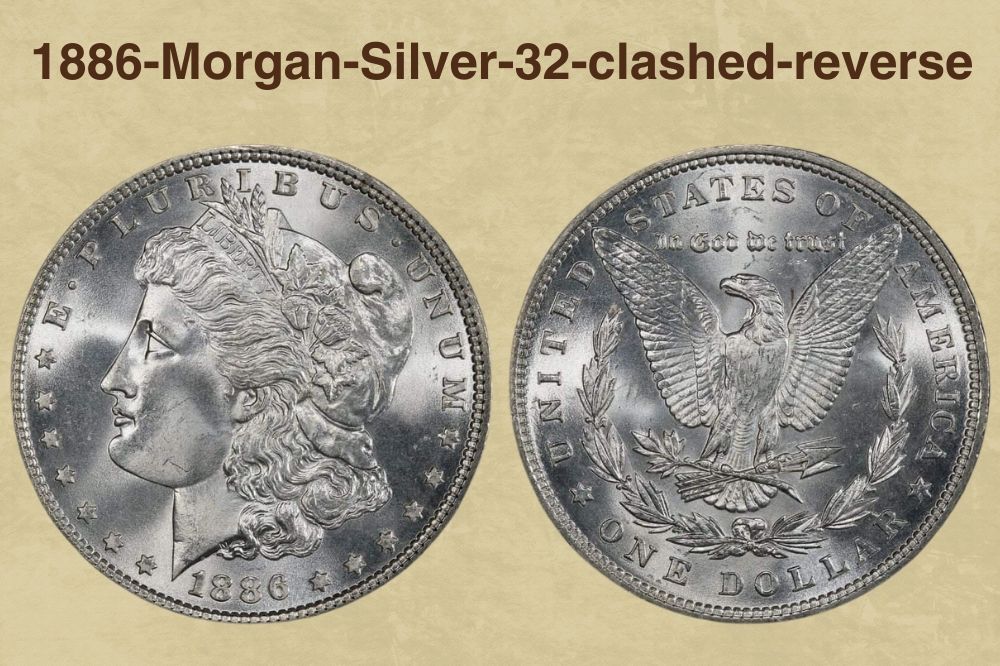
2. 1886 VAM-1C, 3+2 Clashed Reverse
This one carries both Hot 50 and “WOW” designations. The VAM World community reserves “WOW” for the most visually dramatic varieties in the entire Morgan series. That should tell you something.
The obverse and reverse dies collided without a planchet — not once, but multiple times with significant die rotation between clashes. The transferred design elements on both faces are wild to see on a well-preserved example.
Recent NGC MS-64 examples have appeared around $245, with MS-65 specimens at approximately $220. The most dramatic, well-preserved examples exceed those figures. On a high-grade coin where the clash marks read clearly against clean fields, you can see exactly why collectors chase this one.
1886 VAM-1C, 3+2 Clashed Reverse Silver Dollar Price/Grade Chart
Price by 1-70 Grade (Latest Auction Records Included)
3. 1886 VAM-17, Doubled Arrows
Here’s a practical tip: most collectors never bother checking the arrows in the eagle’s talons. That’s exactly why this variety is still cherrypickable from unattributed dealer stock.
The doubling shows on the middle arrow of the three the eagle holds. It happened when the die shifted between hub strikes during manufacturing. Both PCGS and NGC recognize it.
Greysheet values in Mint State start around $220. Prooflike examples range from $220 to $6,250 — that top number reflects how scarce a well-preserved, attributed PL example really is. If you like working the reverse side of Morgans, this one pays off.
1886 VAM-17, Doubled Arrows Silver Dollar Price/Grade Chart
Price by 1-70 Grade (Latest Auction Records Included)
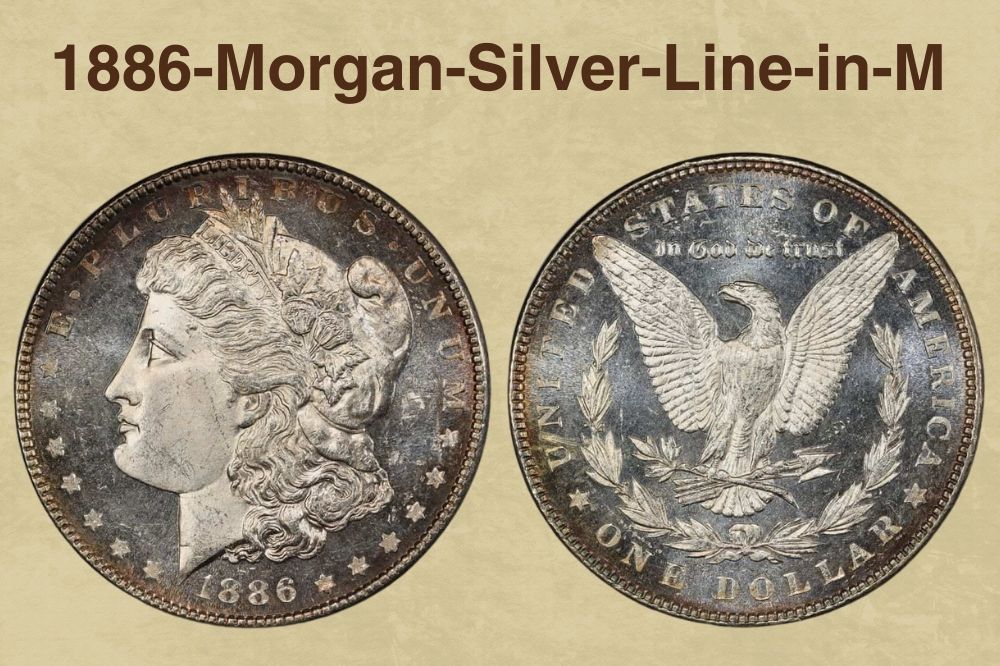
4. 1886 VAM-21, Line in M MPD
This is one of the strangest varieties in the entire Morgan series. A misplaced date punch left the digit “8” visible below the “M” in Morgan’s designer initial on the reverse. There’s also a die gouge running through the M itself.
That dual-diagnostic character — a Misplaced Date (MPD) combined with the line in M — appeals to both date-variety and die-variety specialists. It’s also designated as one of the MEGARED100 in the Mega Red 10th edition.

Coin Identifier and Value App
Not sure what your coins are worth? Get Instant Value • Grade • Error Detection with coin identifier and value app (FREE Usage Daily)
Greysheet values in Mint State range from approximately $67 to $265. That makes it one of the more budget-friendly Top 100 attributions if you’re building a set without breaking the bank.
1886 VAM-21, Line in M MPD Silver Dollar Price/Grade Chart
Price by 1-70 Grade (Latest Auction Records Included)
5. 1886-O VAM-1A, Clashed E
$40 in VF versus $4,800 in MS66+. That price gap tells you everything about the 1886-O as a condition rarity — and the Clashed E variety makes it even tougher.
When the obverse and reverse dies collided, the letter “E” from “UNITED” transferred onto the obverse die. You can spot it as a raised “E” in the reverse field below the eagle’s tail feathers.
The PCGS auction record stands at $4,348 for an MS63+ example sold at Legend Rare Coin Auctions in February 2021. Since the 1886-O is already a beast to find in solid Mint State, adding a clear Clashed E attribution takes real patience — and real money.
1886-O VAM-1A, Clashed E Silver Dollar Price/Grade Chart
Price by 1-70 Grade (Latest Auction Records Included)
6. 1886-O VAM-11A, 2+2 Clash
The “2+2” means clash marks appear on both the obverse and reverse — elements of each design transferred onto the opposing face through repeated die contact. This one earned a MegaRed100 designation, putting it in the top tier of Morgan dollar collectibles.
On a date already notorious for being ugly in Mint State, finding an attributed VAM-11A with strong clash visibility is a specialized hunt.
Greysheet values in Mint State run $900 to $2,600. That’s a narrow, elevated range compared to other 1886-O varieties. It reflects genuine scarcity of attributable examples and the premium collectors pay for visible clash detail on this condition-rare date.
1886-O VAM-11A, 2+2 Clash Silver Dollar Price/Grade Chart
Price by 1-70 Grade (Latest Auction Records Included)
7. 1886-S/S, Repunched Mintmark
The 1886-S already had the lowest mintage of the three 1886 mints. That makes even a relatively accessible variety like the S/S repunched mintmark carry extra weight.
On VAM-2, the mintmark was repunched with a slight rotation between punches. Each serif shows subtle doubling. It’s fairly subtle, which means you can still cherrypick this from unattributed material if you know what to look for. The best grade commonly seen is MS63, and none are known above MS66. Prooflike examples are very rare. DMPL examples are even scarcer.
A PCGS MS-64 example has been offered for approximately $1,470. The broader Greysheet Mint State range extends to $60,000 at the top — driven by the scarcity of the 1886-S itself in gem condition, compounded by confirmed VAM-2 attribution.
1886-S/S, Repunched Mintmark Silver Dollar Price/Grade Chart
Price by 1-70 Grade (Latest Auction Records Included)
Where to Sell Your 1886 Silver Dollar?
Once you’ve assessed your 1886 silver dollars’ value, the next question is where to sell them online with ease. I’ve gathered information on the top selling sites, including their features, strengths, and weaknesses.
Check out now: Best Places To Sell Coins Online (Pros & Cons)
1886 Silver Dollar Market Trend
Market Interest Trend Chart - 1886 Silver Dollar
*Market Trend Chart showing the number of people paying attention to this coin.
FAQ about 1886 Silver Dollar
1. What makes the 1886-O Morgan dollar so much more expensive than the Philadelphia issue in high grades?
Philadelphia had massive Treasury bag releases over the decades, flooding the market with Mint State coins. The New Orleans issue lost most of its Mint State stock to Pittman Act melting in 1918. The few bags that surfaced in the 1940s and 1950s were heavily bagmarked with weak luster. Finding a well-struck, problem-free 1886-O above MS-63 is genuinely difficult, and prices reflect that.
2. Is a circulated 1886 Silver Dollar worth anything beyond its silver content?
Yes. Even a worn Philadelphia issue in Good condition trades well above melt value. An 1886-S in circulated grades carries a meaningful collector premium thanks to lower overall availability. The higher the grade, the wider the gap between melt and numismatic value.
3. How do I tell if my 1886 Morgan dollar has Prooflike or Deep Mirror Prooflike surfaces?
Hold the coin at an angle under a single light source and look into the flat fields between design elements. A standard coin shows frosty or satiny luster. A Prooflike coin clearly reflects your image. A DMPL takes it further — the fields appear almost black when tilted away from light, with near-photographic reflectivity. If you can read text reflected in the fields, you likely have a Prooflike. If the reflection is cartoonishly sharp and deep, DMPL is possible and worth professional evaluation.
4. Does the grading service matter when buying or selling an 1886 Silver Dollar?
Absolutely. PCGS and NGC holders command full market value from serious buyers. For the 1886-O especially — where the jump from MS-63 to MS-65 can mean tens of thousands of dollars — top-tier authentication isn’t optional.
5. Are 1886 Proof Morgan dollars difficult to find?
They’re scarce but not impossible. Most examples that surface grade PR-60 to PR-64. Gems (PR-65 and above) take patience. The real challenge is finding one with original surfaces — proof coins are extremely vulnerable to hairlines from improper cleaning.
6. What is a VAM variety, and should I care about them on my 1886 dollar?
VAM stands for Van Allen-Mallis, the researchers who cataloged Morgan dollar die varieties in their 1971 reference. VAMs are specific die characteristics — doubled dates, clashed letters, repunched mintmarks — that set certain coins apart. For casual collectors, they’re secondary. But if your coin is already valuable as a date/mint combination, confirming a Top 100 or Hot 50 VAM can add hundreds to thousands of dollars.
7. Why does the 1886-S trade at such a premium compared to the no-mint-mark Philadelphia issue?
Lower production plus Pittman Act melting equals fewer survivors. Philadelphia struck far more coins, and Treasury releases ensured plenty of Mint State examples reached collectors. The S-mint also typically delivered a superior strike with better luster, which keeps collector demand strong — especially in higher grades.
8. Can cleaning or polishing an 1886 Silver Dollar reduce its value significantly?
Dramatically. Cleaned coins get a “Details” designation from PCGS and NGC instead of a straight numeric grade. That effectively locks them out of the certified market where serious collectors buy. A cleaned MS-65 coin that might have been worth thousands becomes a fraction of that. This is especially devastating for proofs, where mirror fields show hairlines from even gentle wiping.
9. What should I do if I think I have a rare 1886-O DMPL or gem-grade coin?
Don’t clean it. Don’t touch the surfaces. Don’t try to verify anything with abrasive materials. Put it in a soft coin flip or non-PVC holder and submit to PCGS or NGC for grading. On a potentially valuable 1886-O, the cost of professional grading is nothing compared to the risk of damaging a coin worth thousands — or the upside of discovering it grades higher than you expected.
10. How has the 1886 Silver Dollar market trended in recent years for high-grade examples?
The upper end — gem and superb gem O-mint and DMPL coins — has appreciated strongly over the past two decades. Registry set culture and shrinking supply of condition-census coins drive that trend. The $780,000 realized for the Miller-Miller MS67 DMPL in 2020 showed how intensely the top of the market competes for finest-known examples. Mid-grade Philadelphia coins (MS-63 to MS-64) remain broadly accessible and stable — a solid entry point if you want genuine history without a registry-level budget.