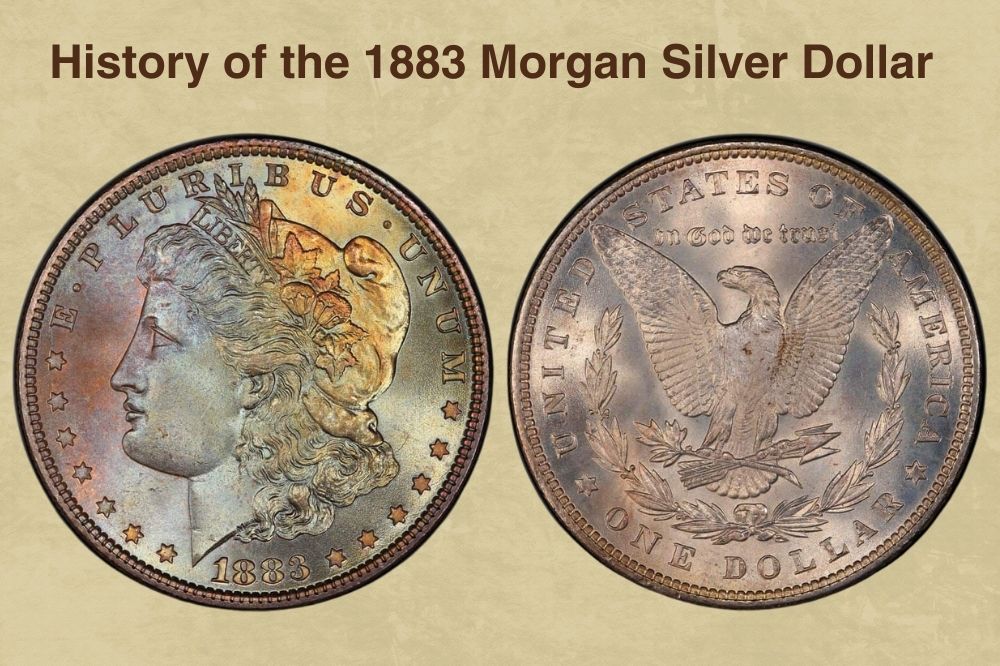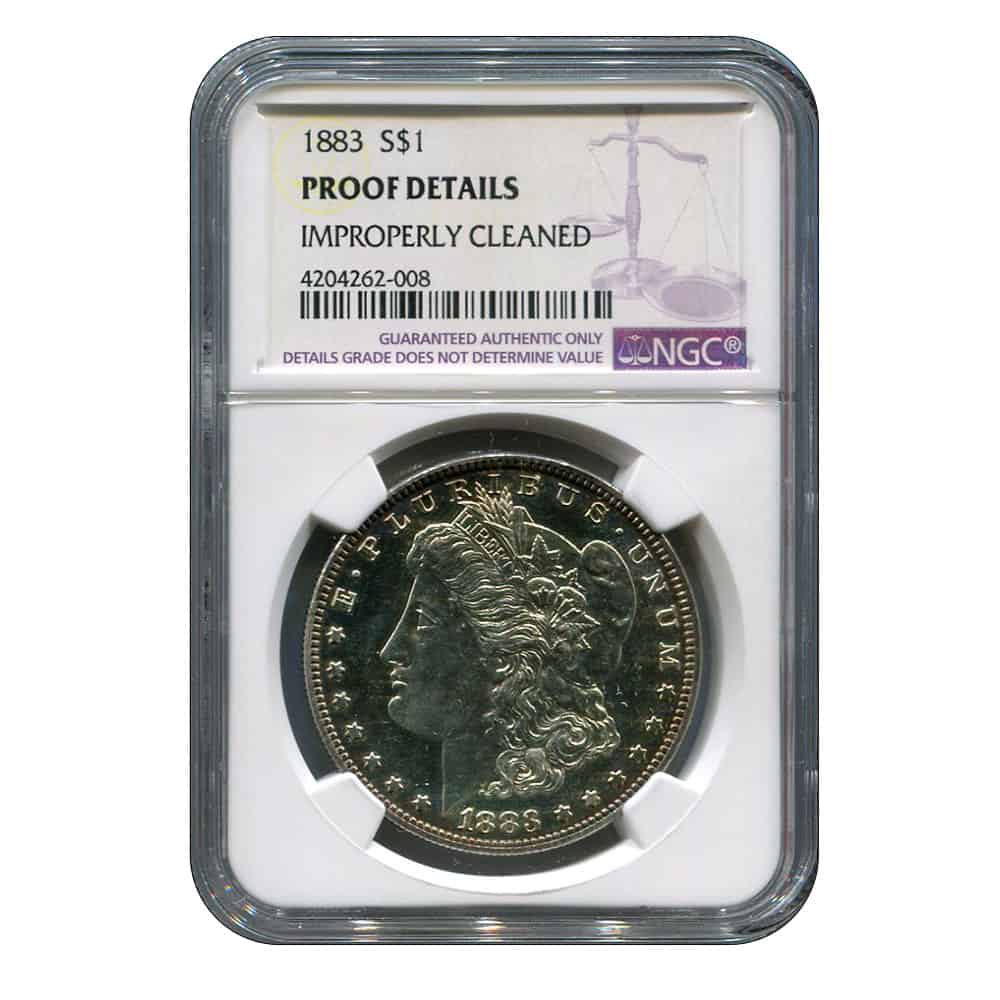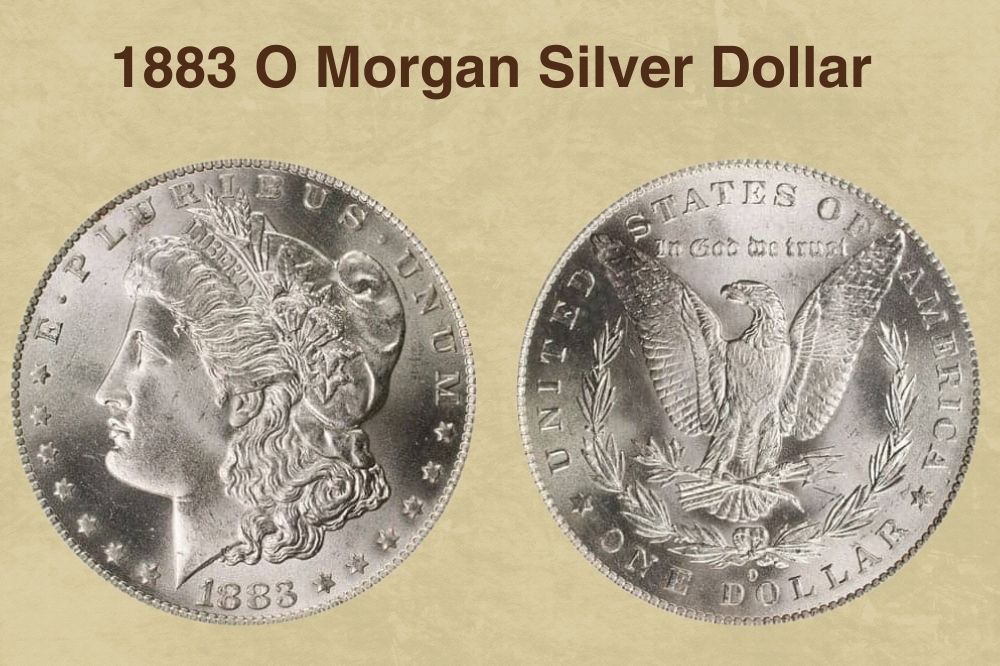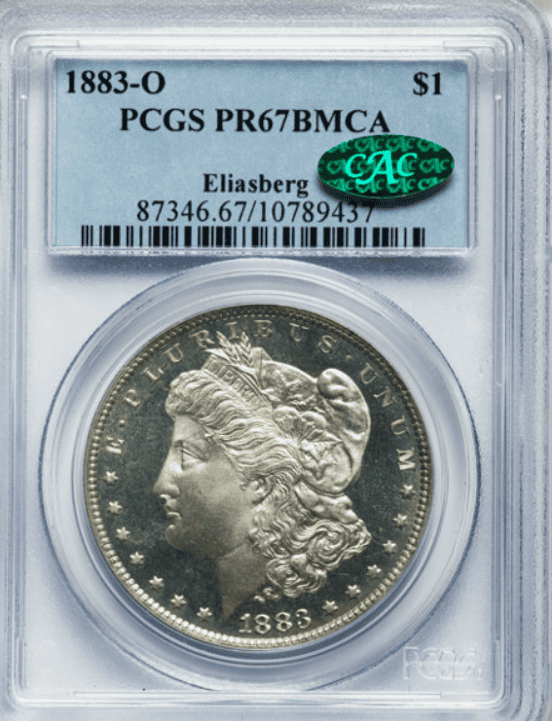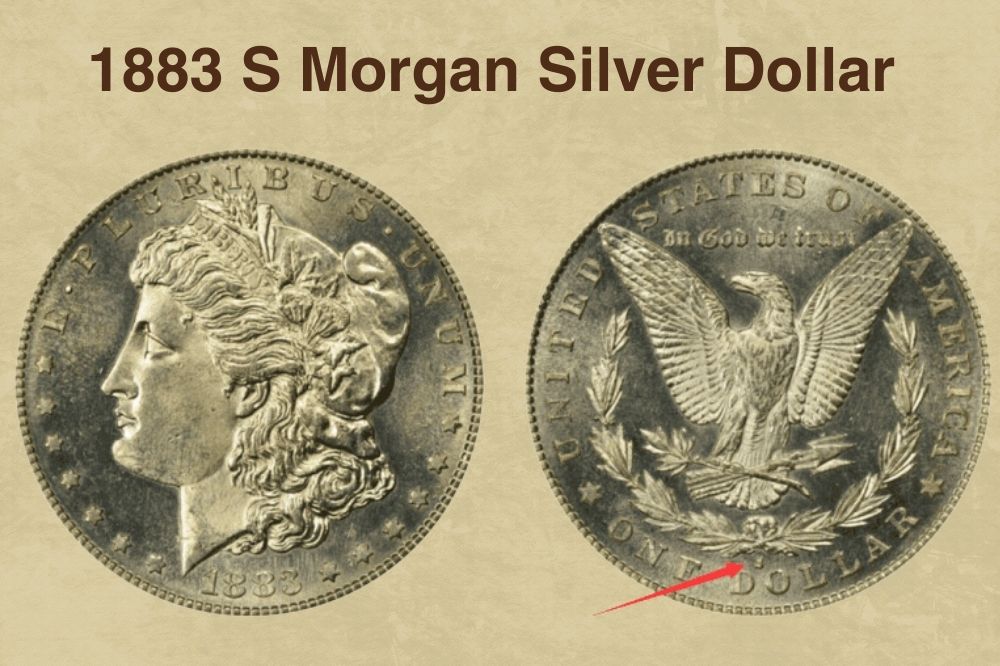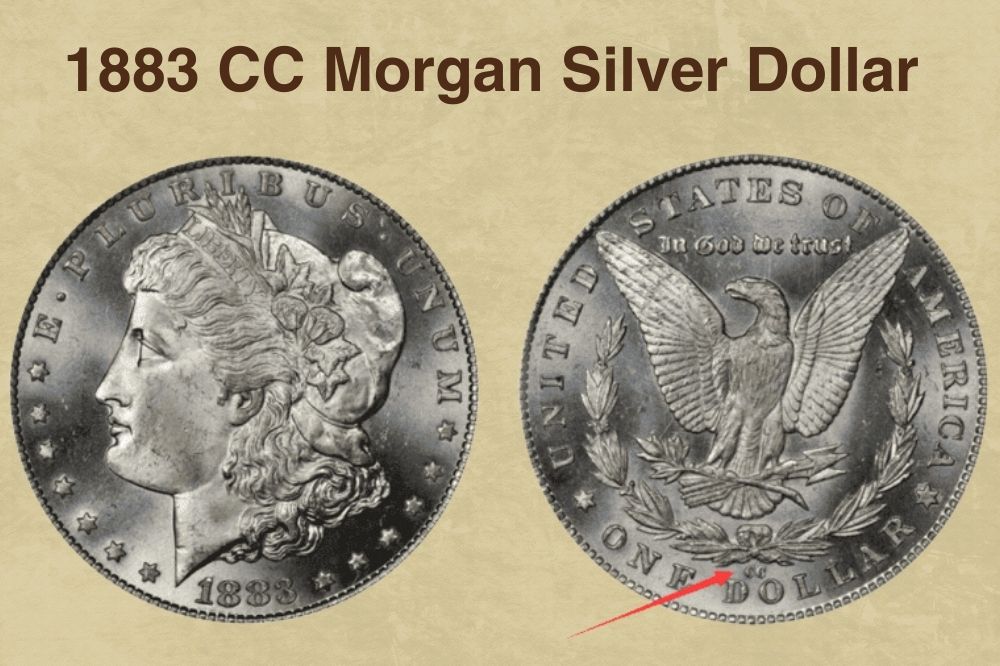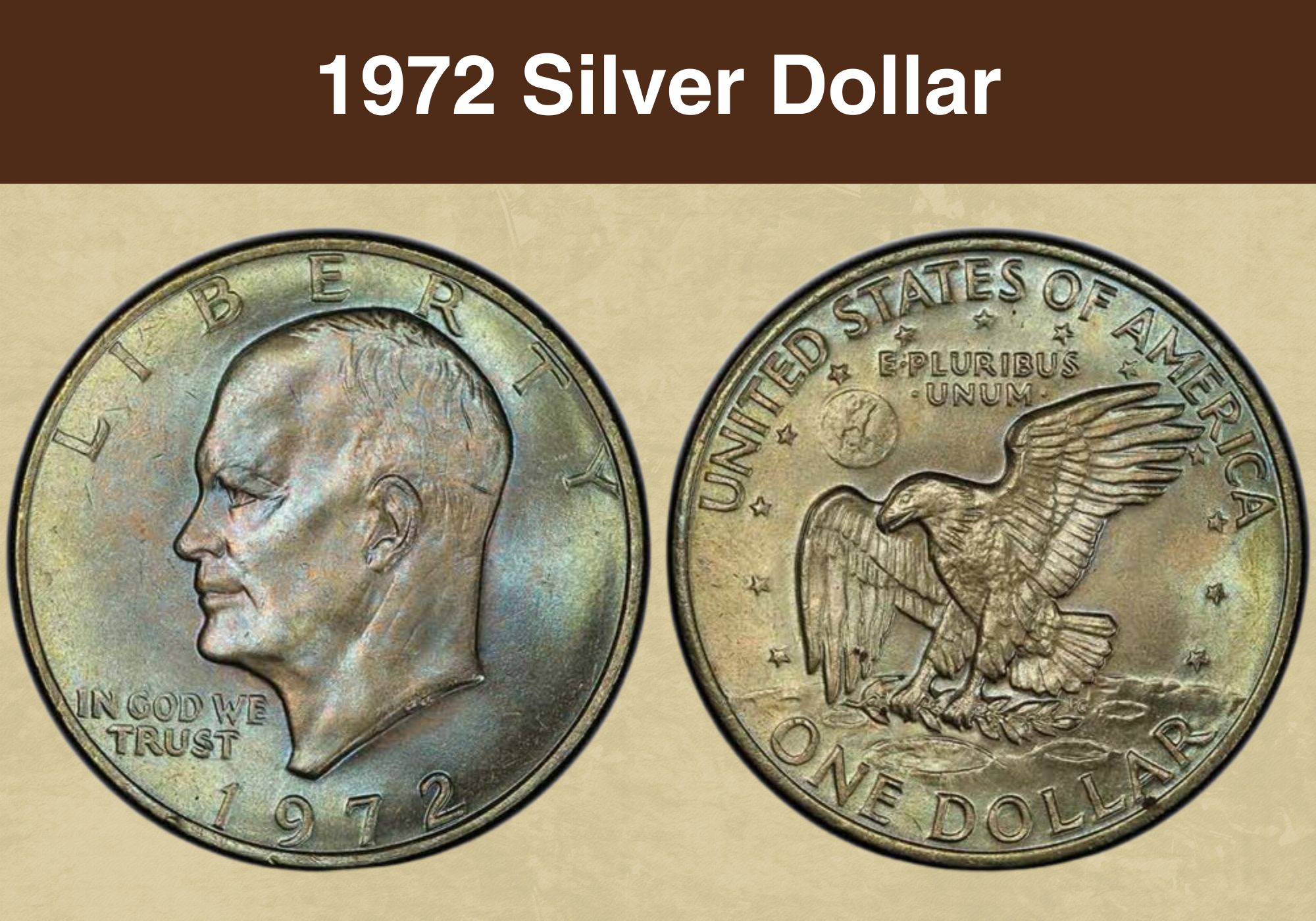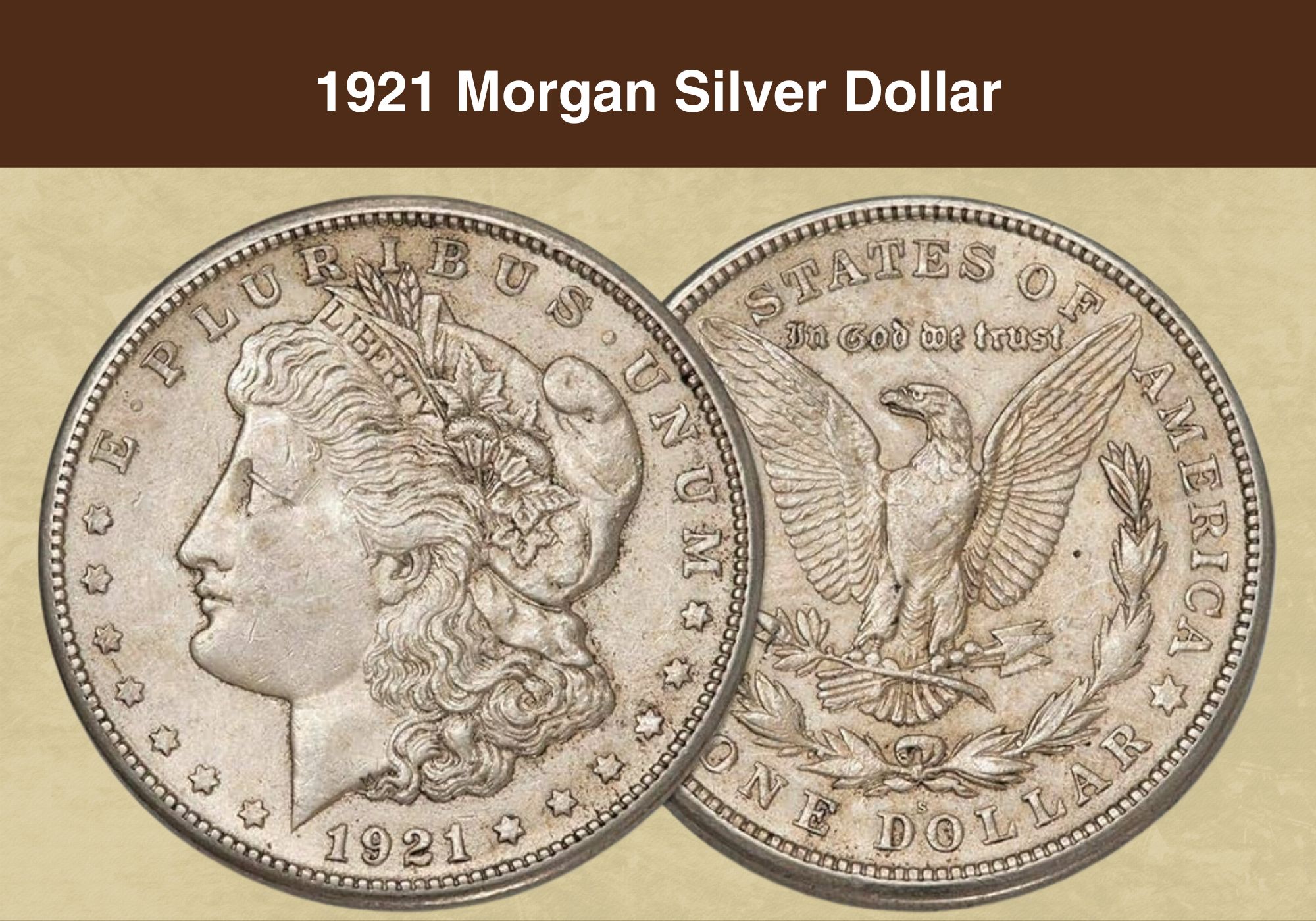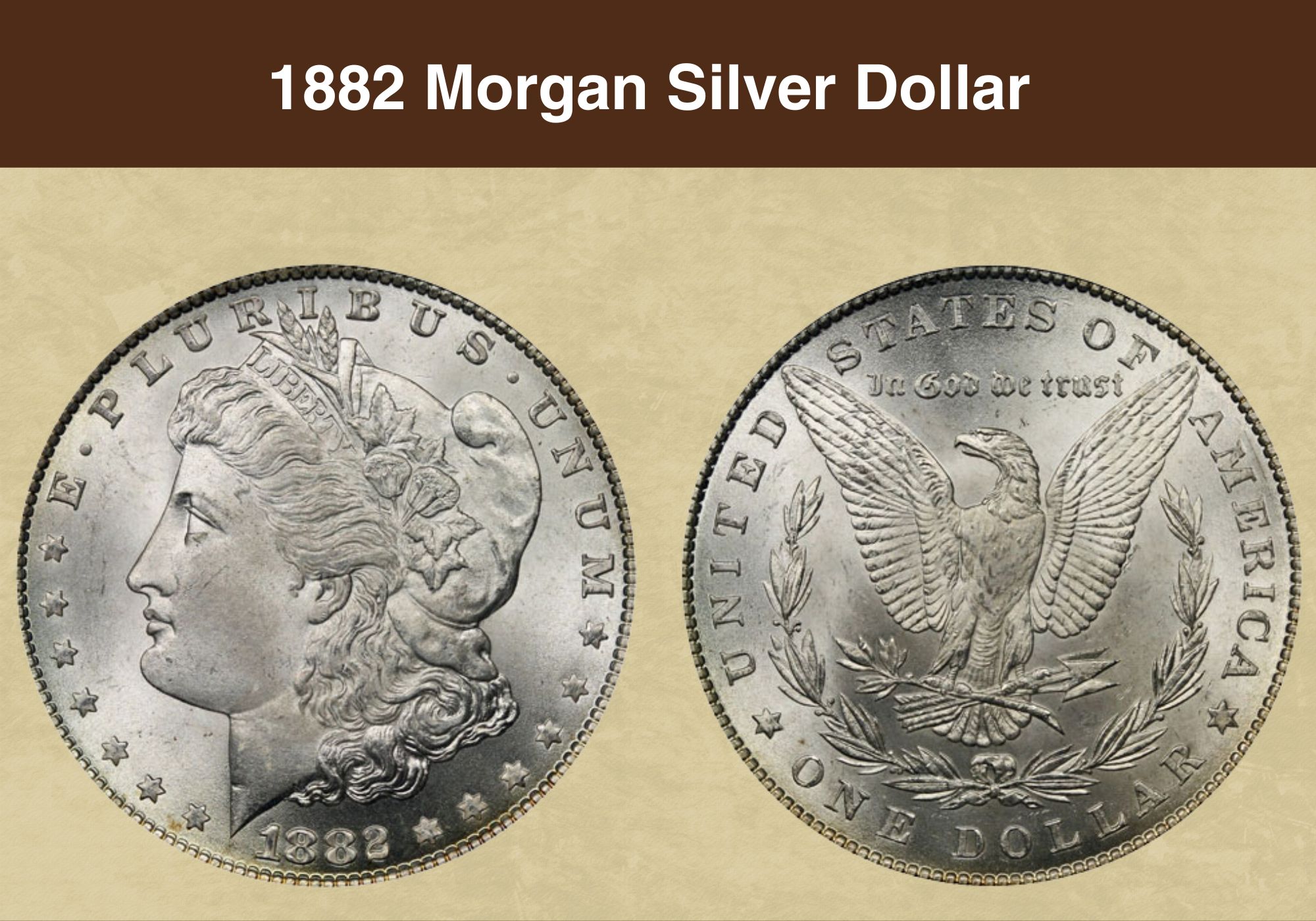
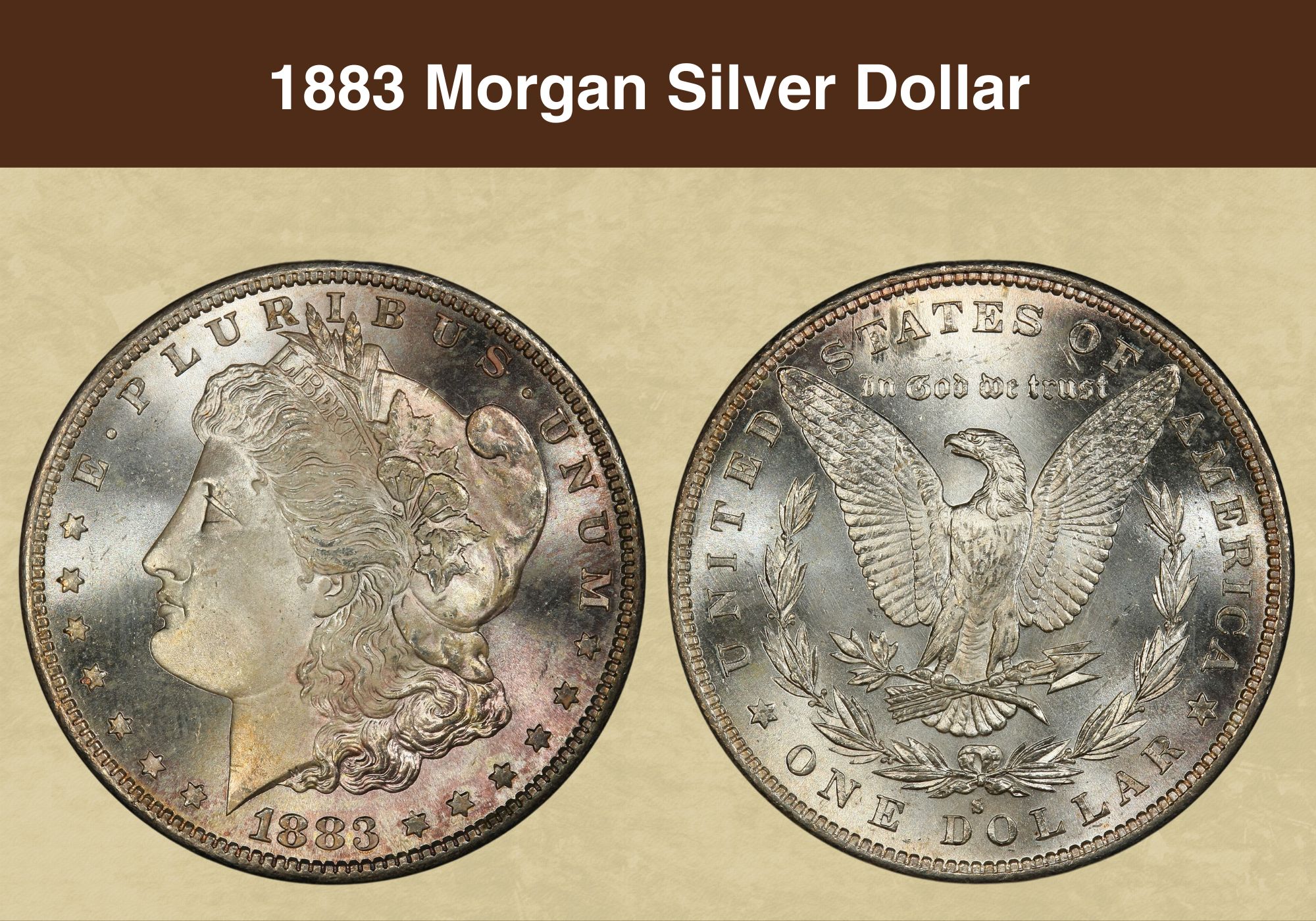
The 1883 Morgan Silver Dollar circulated through the saloons and frontier towns of the Old West during the 1880s and 1890s — they passed through real hands in real history, and that tangible connection to America’s past is something no modern mint can replicate.
But nostalgia alone doesn’t explain the prices. The Carson City Mint’s low production numbers made its coins the rarest of the 1883 issues, and the mass melting of over 270 million Morgan dollars under the Pittman Act of 1918 permanently erased any chance of knowing exactly how many survived.
The result is a market where two coins sharing the same date and face value can differ in price by hundreds of thousands of dollars. A standard Philadelphia example in Good condition sits at $84, and its Mint State counterpart reaches $526 — but cross over to San Francisco, and an MS-grade DMPL jumps to $13,800, while the rarest New Orleans proof variants have fetched $230,000 and beyond.
That single small letter stamped beneath the eagle’s tail feathers — CC, O, S, or nothing at all — can be worth more than a car, or a house. Mint mark, surface quality, and grade aren’t just collector jargon; they are the entire story behind 1883 Silver Dollar Value.
Coin Value Contents Table
- 1883 Silver Dollar Value By Variety
- 1883 Silver Dollar Value Chart
- Top 10 Most Valuable 1883 Silver Dollar Worth Money
- History of The 1883 Silver Dollar
- Is Your 1883 Silver Dollar Rare?
- Key Features of The 1883 Silver Dollar
- 1883 Silver Dollar Mintage & Survival Data
- 1883 Silver Dollar Mintage & Survival Chart
- The Easy Way to Know Your 1883 Silver Dollar Value
- 1883 Silver Dollar Value Guides
- 1883 No Mint Mark Silver Dollar Value
- 1883-CC Silver Dollar Value
- 1883-O Silver Dollar Value
- 1883-S Silver Dollar Value
- 1883 Proof Silver Dollar Value
- 1883 CAM Silver Dollar Value
- 1883 DCAM Silver Dollar Value
- 1883-O BM Silver Dollar Value
- 1883-O BMCA Silver Dollar Value
- Rare 1883 Silver Dollar Error List
- Where to Sell Your 1883 Silver Dollar?
- 1883 Silver Dollar Market Trend
- FAQ about 1883 Silver Dollar
1883 Silver Dollar Value By Variety
Different varieties of the 1883 Morgan Silver Dollar command vastly different values in today’s market. If you know the grade of your coin, you can find the exact price below in the Value Guides section.
1883 Silver Dollar Value Chart
| TYPE | GOOD | FINE | AU | MS | PR |
|---|---|---|---|---|---|
| 1883 No Mint Mark Dollar Value | $84.00 | $84.00 | $86.00 | $526.29 | — |
| 1883 No Mint Mark Dollar (PL) Value | $6.25 | $21.40 | $54.80 | $272.00 | — |
| 1883 No Mint Mark Dollar (DMPL) Value | $17.53 | $60.03 | $153.71 | $624.00 | — |
| 1883 CC Silver Dollar Value | $134.00 | $200.00 | $245.00 | $551.67 | — |
| 1883 CC Silver Dollar (PL) Value | $24.39 | $83.52 | $213.86 | $728.33 | — |
| 1883 CC Silver Dollar (DMPL) Value | $24.39 | $83.52 | $213.86 | $1168.33 | — |
| 1883 O Silver Dollar Value | $84.00 | $84.00 | $86.00 | $162.67 | — |
| 1883 O Silver Dollar (PL) Value | $7.62 | $26.10 | $66.83 | $206.00 | — |
| 1883 O Silver Dollar (DMPL) Value | $12.20 | $41.76 | $106.93 | $506.00 | — |
| 1883 S Silver Dollar Value | $84.00 | $88.33 | $350.00 | $21993.33 | — |
| 1883 S Silver Dollar (PL) Value | $125.77 | $430.66 | $1102.72 | $34566.67 | — |
| 1883 S Silver Dollar (DMPL) Value | $894.14 | $3061.63 | $7839.31 | $13800.00 | — |
| 1883 Proof Silver Dollar Value | — | — | $1190.00 | — | $6354.29 |
| 1883 CAM Silver Dollar Value | — | — | — | — | $7824.29 |
| 1883 DCAM Silver Dollar Value | — | — | — | — | $24300.00 |
| 1883 O BM Silver Dollar Value | — | — | — | — | $230000.00 |
| 1883 O BMCA Silver Dollar Value | — | — | — | — | $391000.00 |
Also Read: Top 100 Rarest Silver Dollar Coins Worth Money (Most Expensive)
Top 10 Most Valuable 1883 Silver Dollar Worth Money
Most Valuable 1883 Silver Dollar Chart
2003 - Present
At the top sits a single 1883-O graded MS-67 — a New Orleans coin in nearly perfect condition — which sold for $270,250, a figure that would surprise anyone who assumes New Orleans issues are the “affordable” option.
Just below it, a Philadelphia proof graded PR-65 reached $170,375, and two San Francisco specimens at MS-67 and MS-66 fetched $161,000 and $137,500 respectively. What the numbers reveal isn’t simply that high grades cost more — that’s obvious. The real pattern is how brutally the market punishes scarcity at the top end.
The difference between an MS-66 and an MS-67 San Francisco dollar isn’t one grade point; it’s often the difference between $60,000 and $161,000. Condition rarity, not just coin rarity, is what drives these peaks.
The Carson City entry — $80,500 for an MS-68 — is almost modest by comparison, a reminder that the CC mint mark’s reputation for value doesn’t automatically guarantee the highest auction realizations.
The New Orleans mint issues command exceptional prices at the highest grade levels, driven by their notorious production quality issues that make gem specimens extraordinarily rare.
Looking forward, the finite population of 1883 Morgan Dollars—further diminished by historical melting programs—suggests continued appreciation potential.
History of The 1883 Silver Dollar
The Morgan dollar series first appeared in 1878 and continued production through 1904, making those struck in 1883 part of the early series. The US Mint needed to respond to mining industry lobbying at the end of the 19th century that sought a market for produced silver, leading George T. Morgan to design a new silver dollar.
The Bland-Allison Act of 1878 committed the US Treasury to purchase between two and four million dollars worth of silver monthly, ensuring high coin production. By 1883, production had reached full maturity, with four mints actively striking coins: Philadelphia, Carson City, New Orleans, and San Francisco.
In 1890, the Sherman Silver Purchase Act dramatically increased silver purchases to 4,500,000 troy ounces monthly and required minting two million silver dollars each month. This legislation contributed to inflation and the devastating Panic of 1893, leading to the act’s repeal in November 1893.
The greatest impact on surviving 1883 Morgan dollars came during World War I when the Pittman Act authorized melting over 270 million silver dollars to help Britain. Experts estimate only about 10-15% of all Morgans survived these measures, making 1883 specimens increasingly valuable despite their originally high production numbers.
Also Read: Top 100 Most Valuable Morgan Silver Dollar Coins Worth Money List
Is Your 1883 Silver Dollar Rare?
1883 No Mint Mark Dollar
1883 No Mint Mark Dollar (PL)
1883 No Mint Mark Dollar (DMPL)
1883-CC Silver Dollar
1883-CC Silver Dollar (PL)
1883-CC Silver Dollar (DMPL)
1883-O Silver Dollar
1883-O Silver Dollar (PL)
1883-O Silver Dollar (DMPL)
1883-S Silver Dollar
1883-S Silver Dollar (PL)
1883-S Silver Dollar (DMPL)
1883 Proof Silver Dollar
1883 CAM Silver Dollar
1883 DCAM Silver Dollar
1883-O BM Silver Dollar
1883-O BMCA Silver Dollar
The word “rare” gets thrown around a lot in coin collecting — but with the 1883 Morgan, it actually means something. Pull out your coin and let the CoinValueChecker App show you exactly where it stands.
Key Features of The 1883 Silver Dollar
After George T. Morgan created the design for the new silver dollar, the US Mint began production in 1878. It lasted until 1904 and was renewed in 1921 for a year. After that, Morgans went to history and became collectibles.
The Obverse Of The 1883 Silver Dollar
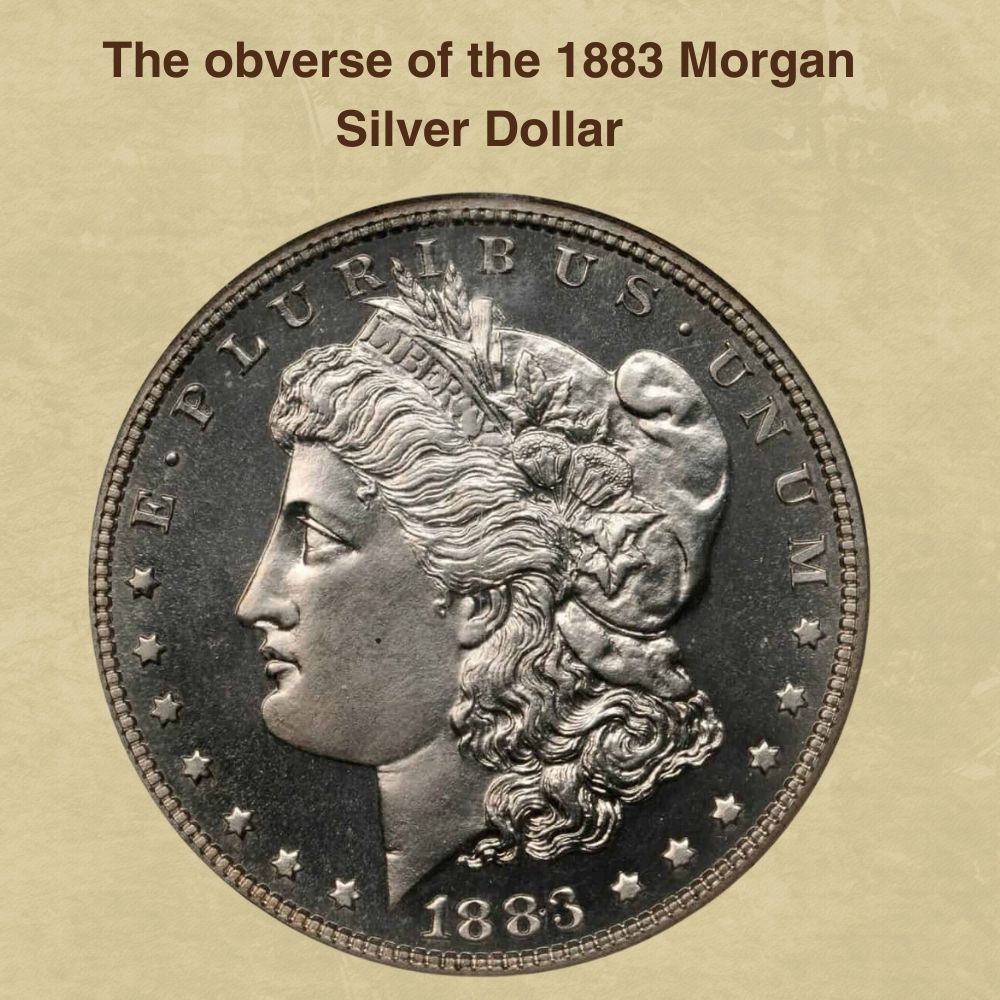
Liberty wears a Phrygian cap, its cotton and wheat sprigs a deliberate nod to the agricultural economy underpinning the silver dollar’s very existence. The word LIBERTY runs across the headband, and thirteen stars arc around the rim. On well-struck examples, the hair above Liberty’s ear resolves into distinct, individual strands — a detail that graders pay close attention to, since it’s one of the first areas to soften with circulation.
Like all Morgans, the word LIBERTY struck on the crown. She is framed with E PLURIBUS UNUM and the date, separated by seven stars on the left and six on the right side. A tiny letter M, representing Morgan’s initial, is placed on Lady Liberty’s neck.
The Reverse Of The 1883 Silver Dollar
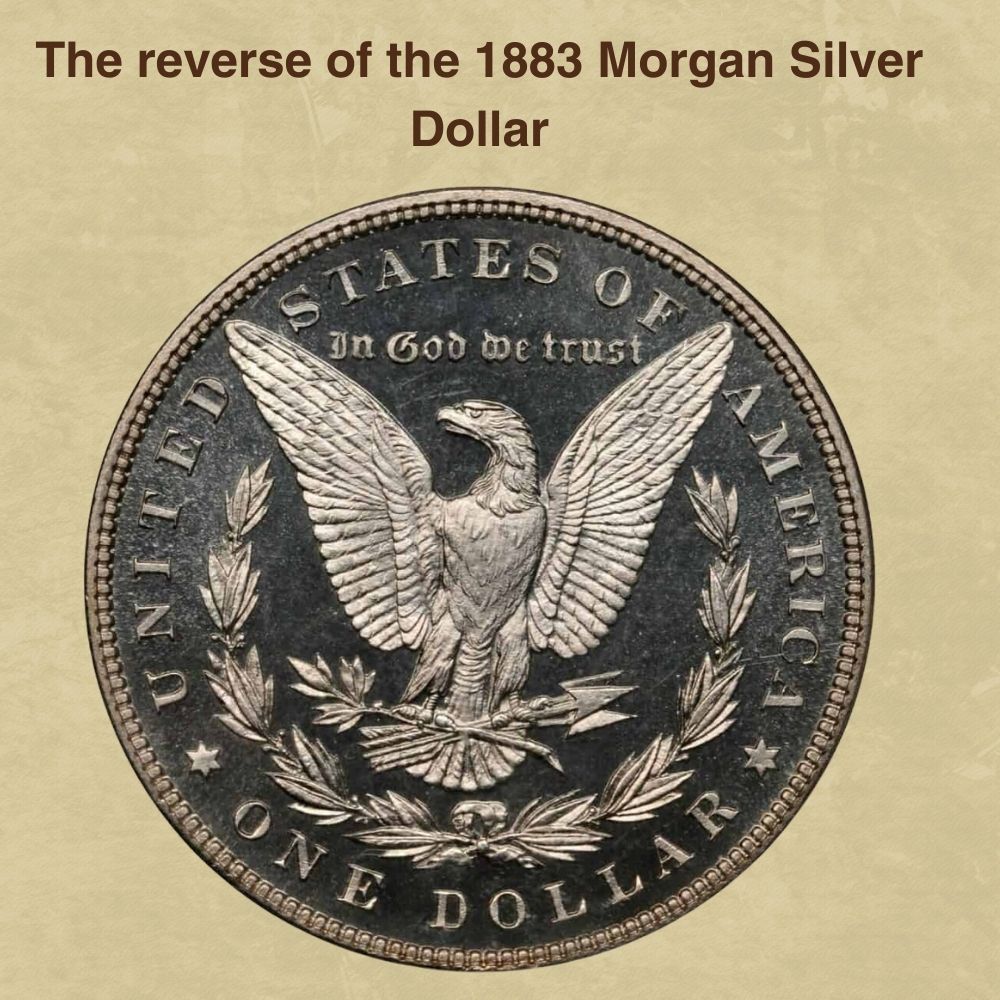
The reverse features a heraldic eagle gripping arrows in one talon and an olive branch in the other — war and peace held in deliberate tension. The eagle’s breast displays a shield, its wings spread wide enough to nearly fill the coin’s field.
You can recognize three inscriptions, UNITED STATES OF AMERICA, IN GOD WE TRUST, and ONE DOLLAR. Interestingly, this beautiful coin is a rare specimen with the same designer initial on both sides. You can see the tiny letter M left of the ribbon tiding the wreath.
Other Features Of The 1883 Silver Dollar
The coin measures 38.10 mm in diameter and 2.4 mm thick, weighing 26.73 grams in total, of which 24.50 grams is pure silver. The reeded edge — those fine parallel grooves running around the coin’s circumference — was an anti-counterfeiting measure, and on genuine examples it should appear sharp and consistent rather than soft or irregular. A coin that deviates even slightly from the standard weight or diameter warrants immediate scrutiny.
Also Read: Top 80+ Most Valuable Sacagawea Dollar Worth Money (2000-P to Present)
1883 Silver Dollar Mintage & Survival Data
1883 Silver Dollar Mintage & Survival Chart
Survival Distribution
Type Mintage Survival Survival Rate No Mint 12,290,000 3,000,000 24.4101% CC 1,204,000 700,000 58.1395% O 8,725,000 875,000 10.0287% S 6,250,000 199,900 3.1984% Proof 1,039 290 27.9115% CAM 1,039 500 48.1232% DCAM 1,039 10 0.9625% O BM 12 4 33.3333% O BMCA 12 2 16.6667%
Philadelphia struck the most coins by a wide margin at over 12 million, yet fewer than a quarter of them are estimated to have survived, the bulk lost to circulation wear, melting, and simple attrition. New Orleans produced nearly 9 million pieces but retains the worst survival rate of the regular-strike issues at just over 10% — a reflection of how heavily those coins circulated in everyday commerce, returning little of their original mint luster to today’s market.
The Carson City figure inverts expectations entirely. With a mintage of just over 1.2 million, it posts the highest survival rate among regular strikes at 58%, largely because a substantial portion sat in Treasury vaults for decades before the GSA dispersed them in the 1970s. San Francisco tells the opposite story: moderate mintage, brutal circulation in the western territories, and a survival rate of barely 3% — which explains why gem-grade 1883-S specimens command such disproportionate premiums at auction.
At the extreme end sit the New Orleans proof variants. Only 12 O BM and 12 O BMCA coins were ever produced, with an estimated 4 and 2 survivors respectively. Those aren’t just rare coins — they are effectively singular objects, and their auction prices reflect exactly that.
Also Read: Top 40+ Most Valuable Presidential Dollar Coins Worth Money
The Easy Way to Know Your 1883 Silver Dollar Value
The mint mark is visible. The grade is not — not without knowing exactly where to look and what wear on Liberty’s cheekbone actually means in dollar terms. That gap between what a coin looks like and what it’s actually worth is where most sellers lose money. Point the CoinValueChecker App at your coin, and it closes that gap instantly — surface quality, strike characteristics, die variety, current market demand, all of it read in one scan rather than an afternoon of second-guessing.

1883 Silver Dollar Value Guides
The 1883 Morgan Silver Dollar wasn’t a single coin — it was a family of distinct issues, each shaped by where it was struck, how it was finished, and who it was made for. Mint mark, surface treatment, and production intent created a spectrum that runs from common pocket change to objects that belong in museum-grade collections. Understanding which category your coin falls into is the first step toward an accurate valuation.
- 1883 No Mint Mark Silver Dollar
- 1883 CC Silver Dollar
- 1883 O Silver Dollar
- 1883 S Silver Dollar
- 1883 Proof Silver Dollar
- 1883 CAM Silver Dollar
- 1883 DCAM Silver Dollar
- 1883 O BM Silver Dollar
- 1883 O BMCA Silver Dollar
1883 No Mint Mark Silver Dollar Value
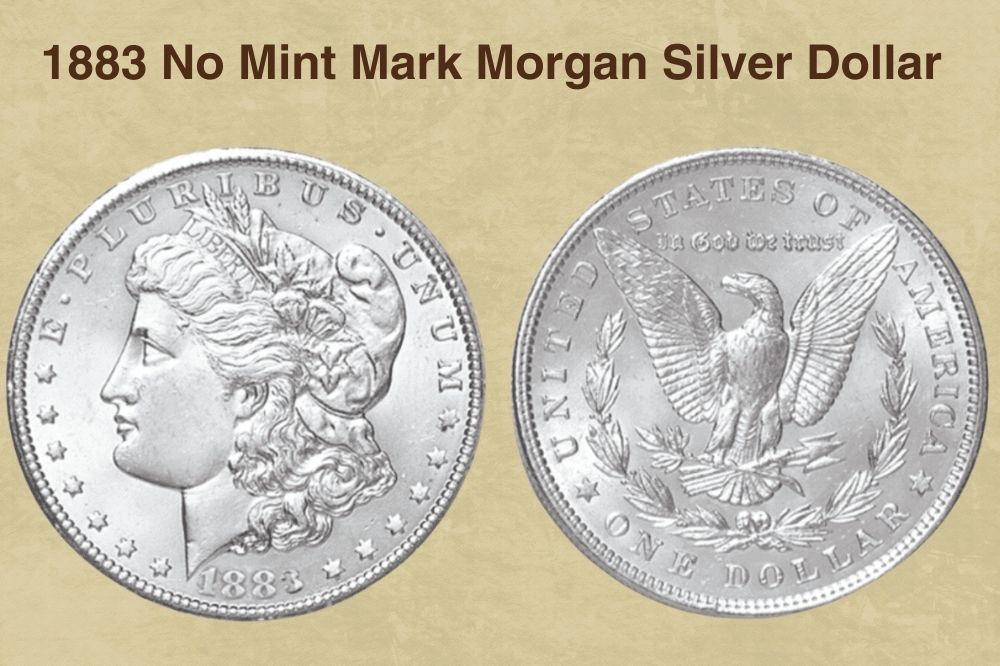
According to numismatic author Miles Standish, 1883 was a particularly strong year for Philadelphia-struck Morgans, with the majority of the issue displaying exceptional luster and high strike quality. That assessment is borne out by the grading population — the Philadelphia issue climbs all the way to MS-68+, one of the higher condition ceilings of any regular-strike Morgan year.
Many coins, however, have weakly defined strikes on the eagle’s breast feathers due to the dies being slightly too far apart during striking — yet most pieces still carry a satiny mint luster regardless of strike sharpness, which makes eye appeal the key variable when selecting an example.
At the bottom of the market, circulated examples are common and inexpensive. At the top, the math changes dramatically: the auction record stands at $49,938 for an MS-68+ example sold at Legend Rare Coin Auctions in June 2015. CAC-stickered MS-67 examples have regularly traded in the four-figure range, making that grade a realistic ceiling for most collectors — anything above is genuinely condition-rare.
1883 No Mint Mark Silver Dollar Price/Grade Chart
Price by 1-70 Grade (Latest Auction Records Included)
1883 No Mint Mark Silver Dollar (PL) Price/Grade Chart
Price by 1-70 Grade (Latest Auction Records Included)
1883 No Mint Mark Silver Dollar (DMPL) Price/Grade Chart
Price by 1-70 Grade (Latest Auction Records Included)
The Philadelphia issue has produced some surprising prices at the top end — every recorded result is below.
Date Platform Price Grade
This chart shows the market activity trends for the 1883 No Mint Mark Silver Dollar over the past year.
Market Activity: 1883 No Mint Mark Silver Dollar
1883-CC Silver Dollar Value
The Carson City issue has a biography unlike any other 1883 Morgan — and most of it happened after it left the mint. The majority of the output moved directly from Carson City to Treasury vaults, where it sat undisturbed until the GSA conducted its public sales between 1972 and 1980, dispersing 755,518 of these coins — with 195,745 offered in the final 1980 sale at $65 each, selling out within ten days.
That vault storage explains something counterintuitive: coins of this date show strong strikes and deep, frosty luster as a rule, and they can be found with ease in all Mint State grades up to MS-67+ — the most frequently seen grade at PCGS alone exceeds 20,519 certified examples at MS-64.
1883-CC Silver Dollar Price/Grade Chart
Price by 1-70 Grade (Latest Auction Records Included)
1883-CC Silver Dollar (PL) Price/Grade Chart
Price by 1-70 Grade (Latest Auction Records Included)
1883-CC Silver Dollar (DMPL) Price/Grade Chart
Price by 1-70 Grade (Latest Auction Records Included)
From $7.50 dealer advertisements in 1951 to five-figure auction results today — the complete price history of the 1883-CC is below.
Date Platform Price Grade
Stable supply meets persistent demand — the trading activity below shows how consistently collectors have priced this coin across time.

Coin Value Checker App
Not sure what your coins are worth? Get Instant Value • Grade • Error Detection with coin identifier and value app (FREE Usage Daily)
Market Activity: 1883-CC Silver Dollar
1883-O Silver Dollar Value
The New Orleans dollar demands patience above all else. The typical coin seen today is likely to have unsatisfactory luster and an unsatisfactory strike — circulation strike quality ranges from quite flat at the center to a minority that offer needle-sharp results, and some coins were struck from worn-out dies showing granularity and metal flow lines. The grading services are silent on these distinctions inside a certified holder, which is precisely why hands-on selection matters so much for this date.
On the upside, there will be absolutely no problem finding a Mint State specimen, even MS-65 or finer — the 1883-O is one of the most available Morgan dates in gem grades, provided the buyer is willing to pass over mediocre strikes.
At the far end of the grading spectrum, availability runs out abruptly: the auction record stands at $60,000 for an MS-68 example sold at Heritage Auctions in January 2020 — a grade so scarce for a New Orleans Morgan that reaching it represents a genuinely extraordinary survival.
1883-O Silver Dollar Price/Grade Chart
Price by 1-70 Grade (Latest Auction Records Included)
1883-O Silver Dollar (PL) Price/Grade Chart
Price by 1-70 Grade (Latest Auction Records Included)
1883-O Silver Dollar (DMPL) Price/Grade Chart
Price by 1-70 Grade (Latest Auction Records Included)
The gap between what a common 1883-O sells for and what its auction record represents is wider than most collectors expect — the full record below puts numbers to that distance.
Date Platform Price Grade
The casting quality of the 1883-O silver dollar keeps it highly popular in various markets.
Market Activity: 1883-O Silver Dollar
1883-S Silver Dollar Value
The San Francisco dollar is where the 1883 date gets serious. Bagmarks are a significant problem with 1883-S dollars, as they must have been stored and handled roughly — in lower grades the coin is plentiful, but at higher levels it is both elusive and worth a good deal of money.
Most of the output went into commercial channels at the time of striking — all grades are available with EF and AU located with regularity, but anything finer than that and “rare” becomes the operative word.
NGC and PCGS each list only two 1883-S Morgans at MS-66 and a single coin at MS-67 — numbers that explain the bidding intensity when one surfaces. The prooflike auction record stands at $161,000 for an MS-67 sold at Heritage Auctions in 2009, while between 2000 and 2024, high-grade 1883-S prices increased nearly 300%.
1883-S Silver Dollar Price/Grade Chart
Price by 1-70 Grade (Latest Auction Records Included)
1883-S Silver Dollar (PL) Price/Grade Chart
Price by 1-70 Grade (Latest Auction Records Included)
1883-S Silver Dollar (DMPL) Price/Grade Chart
Price by 1-70 Grade (Latest Auction Records Included)
Every price the 1883-S has ever achieved at auction is documented below.
Date Platform Price Grade
Three hundred percent appreciation over two decades isn’t a trend, it’s a conviction — the market activity below puts that in concrete terms.
Market Activity: 1883-S Silver Dollar
1883 Proof Silver Dollar Value
The Philadelphia Mint struck only 1,039 proof Morgan dollars in 1883, making this a scarce collectible — produced specifically for collectors, not for everyday spending. The proof coin looks fundamentally different from a business strike: squared-off rims, fully mirrored fields, and devices struck with a deliberateness that circulation coins never received.
Surface originality is the single most important variable in pricing this coin: a problem-free example commands a premium no price guide fully reflects, while a cleaned one — even at a high numeric grade — trades at a significant discount. The PCGS auction record stands at $27,600 for a PR-68 example sold at Heritage Auctions in June 2018.
1883 Proof Silver Dollar Price/Grade Chart
Price by 1-70 Grade (Latest Auction Records Included)
The proof’s value is almost entirely in its surfaces — what the auction room has paid across different surface qualities is laid out below.
Date Platform Price Grade
Proof coins change hands much less frequently than ordinary circulating coins; once they are traded, their market activity fluctuates wildly — the market dynamics below record every appearance of this coin at auction.
Market Activity: 1883 Proof Silver Dollar
1883 CAM Silver Dollar Value
Cameo contrast on a 19th-century proof isn’t guaranteed — it’s a happy accident of fresh dies and precise striking pressure that fades with every coin produced. On a CAM-designated 1883 Morgan, the frosted devices stand visibly against mirrored fields, creating the kind of visual drama that makes proof coins worth collecting in the first place.
The market for 1883 CAM proofs is thin by design — only a fraction of the 1,039 proof strikings retained meaningful cameo contrast after leaving the mint — which means each appearance at auction is essentially its own event.
The PCGS auction record for the 1883 CAM is $170,375 for a PR-65 example sold at Heritage Auctions in August 2013, a figure that represents roughly six times what a comparable non-CAM proof might bring and illustrates exactly how the market prices the visual difference between frosted devices and flat ones.
1883 CAM Silver Dollar Price/Grade Chart
Price by 1-70 Grade (Latest Auction Records Included)
Six times the price of a standard proof — the CAM designation earns every dollar, as the auction record below demonstrates.
Date Platform Price Grade
Thin supply, persistent demand, and no predictable cadence — the market activity below captures what little trading history exists.
Market Activity: 1883 CAM Silver Dollar
1883 DCAM Silver Dollar Value
Deep Cameo takes the visual contrast of a CAM coin to its theoretical limit: the devices approach chalky white while the fields flatten into something close to a black mirror. Achieving this on an 1883 proof required the coin to be struck from a virtually untouched die — a combination available only at the very beginning of a proof run, before repeated impressions wore down the frost.
Only one example has been certified at MS-66, two at MS-66+, and the MS-67 slot remains empty entirely — meaning no coin of this designation has yet cleared that threshold in PCGS’s grading history. The PCGS price guide values the MS-66 at $26,500 and the MS-66+ at $35,000, a premium that reflects both the grade jump and the population reality of owning one of just two coins at that level.
The Greysheet values the 1883 PR DCAM across a range from $3,400 to $28,600, though certified examples at the upper population tiers have consistently outpaced guide prices when they do appear — because at a population of one or two, the guide is really just a starting point for the bidding.
1883 DCAM Silver Dollar Price/Grade Chart
Price by 1-70 Grade (Latest Auction Records Included)
The auction record below shows precisely what strong contrast and a thin population are worth to collectors.
Date Platform Price Grade
Due to their extreme rarity, market activity remains sluggish.
Market Activity: 1883 DCAM Silver Dollar
1883-O BM Silver Dollar Value
The story behind the 1883-O Branch Mint proof is the stuff of legend and moreover mystery. Numismatic scholar Walter Breen postulated that these coins were made as presentation pieces for officials connected with a celebration relating to the cotton industry or perhaps the establishment of Tulane University as the official state university of Louisiana — yet neither theory has ever been proven.
What is documented with certainty is the die pairing: all branch mint proof 1883-O dollars are from the VAM-11 die, with the most visible diagnostics on the reverse, where several leaves appear to float on the lower left portion of the wreath — an effect caused by excessive die polishing that gives these coins an appearance distinctly different from a Deep Mirror Prooflike business strike. That distinction matters legally and financially: the difference between a DMPL business strike and a genuine branch mint proof can be worth six figures.
The PCGS auction record stands at $121,000 for a PR-66 sold at Bowers & Merena in April 1997. Current Greysheet pricing places the BM in a range of $200,000 to $240,000 — a near doubling from that 1997 record that reflects how dramatically the market for this rarity has repriced over the intervening decades.
1883-O BM Silver Dollar Price/Grade Chart
Price by 1-70 Grade (Latest Auction Records Included)
The next chart shows its market trends and activity over the past twelve months.
Market Activity: 1883-O BM Silver Dollar
1883-O BMCA Silver Dollar Value
The BMCA designation adds one more layer to an already extraordinary coin. Where the standard BM proof already commands six figures, the Cameo designation identifies the survivors that retained visible frosting on their devices — the contrast between Liberty’s portrait and the mirrored field behind it still present and legible after more than 140 years.
Only twelve of these branch mint proofs were ever struck, and this coin has been recognized as a proof since 1894 — the surfaces are deeply reflective with significant mint frost on the devices yielding strong cameo contrast, and as a result of being a proof rather than a circulation strike, the surfaces lack the coin-to-coin contact damage normally found on bags of Morgan dollars.
The PCGS auction record stands at $270,250 for a PR-67 example sold at Heritage Auctions in April 2013. The Greysheet currently values the 1883-O BM CAM in a range of $450,000 to $525,000 — placing it among the most valuable Morgan dollars of any date, mint, or designation ever produced.
1883-O BMCA Silver Dollar Price/Grade Chart
Price by 1-70 Grade (Latest Auction Records Included)
There is no market cycle for a coin this rare. The activity below is all there is.
Market Activity: 1883-O BMCA Silver Dollar
Also Read: 17 Rare Dollar Coin Errors List with Pictures (By Year)
Rare 1883 Silver Dollar Error List
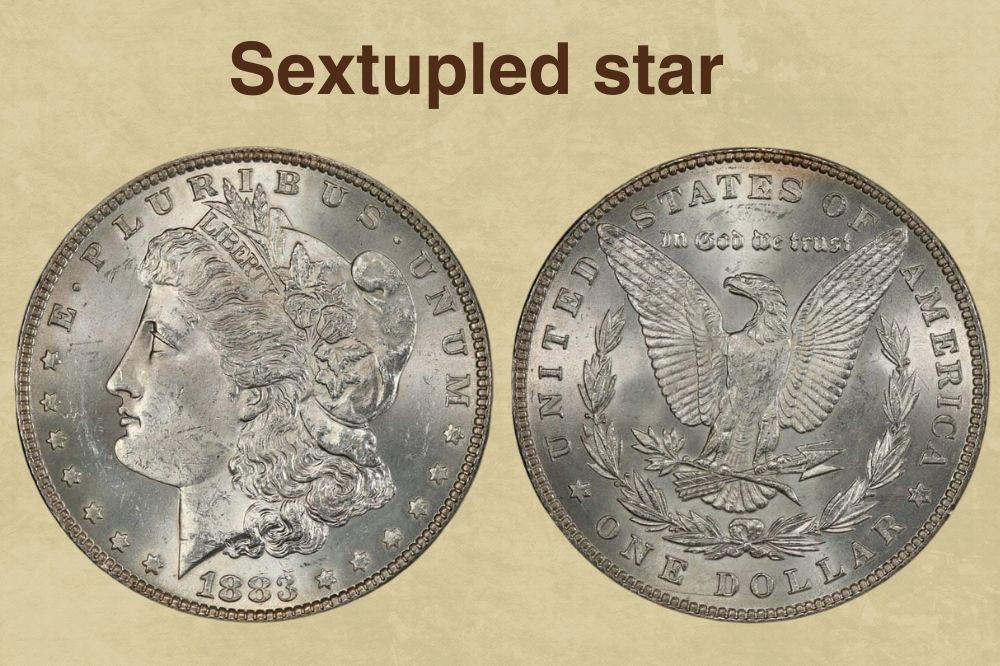
You can find several well-known imperfect pieces among 1883 Morgan dollars, including the Sextupled Star, typical only for this set.

Coin Value Checker App
Not sure what your coins are worth? Get Instant Value • Grade • Error Detection with coin identifier and value app (FREE Usage Daily)
1. 1883 VAM-10 “Sextupled Stars”
This dramatic Philadelphia variety features strong, multi-layered doubling on the obverse stars, most prominent on stars to the left of the date, creating a distinctive “sextupled” appearance visible under magnification.
It holds Top 100 VAM status — the numismatic community’s shortlist of the most collectible Morgan varieties — which translates directly into a meaningful price premium over a standard 1883-P dollar. Identification requires at least a 10x loupe and good lighting, but once seen it’s unmistakable. Attribution by PCGS or NGC is strongly recommended before any transaction.
1883 VAM-10 Sextupled Stars Silver Dollar Price/Grade Chart
Price by 1-70 Grade (Latest Auction Records Included)
2. 1883-O VAM-4 “Strong O/O”
Of all the repunched mintmark varieties across the entire Morgan dollar series, the 1883-O VAM-4 stands among the most visually accessible — a secondary “O” punched beneath and slightly left of the primary mintmark, with enough separation that the doubling reads clearly under a loupe without requiring expert eyes to confirm it. That accessibility is part of what earned it Top 100 VAM status, the numismatic community’s shortlist of the most collectible Morgan varieties.
The variety originated when a mintmark punch was applied to the die, shifted, and then restruck in the correct position — leaving the first impression visible as a ghost below the final mark. On well-preserved examples, both impressions remain distinct, and the misalignment is one of the cleaner repunched mintmark examples in the series to attribute with confidence.
In the current market, MS-61 examples trade around $200, with MS-64 specimens reaching $265 or above — modest premiums over a standard 1883-O, but consistent ones. The VAM-4 also surfaces in PL and DMPL surface finishes, each carrying its own pricing tier above the base figures.
1883 VAM-4 Strong O/O Silver Dollar Price/Grade Chart
Price by 1-70 Grade (Latest Auction Records Included)
3. 1883-O VAM-22A “Partial E Reverse”
The VAM-22A is the result of a die clash event in which the obverse and reverse dies struck each other without a planchet loaded — causing the “E” from the LIBERTY headband on Liberty’s portrait to transfer onto the reverse die, leaving its ghost impression between the eagle’s tail feathers and the top of the wreath. Letter transfers of this kind are among the hardest clash varieties to come by in any series.
The VAM-22A carries Hot 50 designation, placing it on the VAM community’s curated list of the most visually compelling and collectible Morgan varieties — a step below Top 100 in prestige, but well above the average die variety in terms of collector demand. It is considerably scarcer than the related VAM-36A, which also shows a partial E clash on the reverse.
PCGS-certified examples in MS-61 have sold for around $500, reflecting the variety’s accessibility at lower grades, though higher-grade attributed examples command meaningful premiums above standard 1883-O pricing.
1883-O VAM-22A Partial E Reverse Silver Dollar Price/Grade Chart
Price by 1-70 Grade (Latest Auction Records Included)
4. 1883 VAM-4 “Doubled Date”
Key diagnostics for the 1883-CC VAM-4 include a die scratch within the first C of the CC mintmark and noticeable doubling on the date digits on the obverse. The variety was first reported in 1977 and later revised to document multiple die stages — VAM-5A through VAM-5D — with the clashed partial outline of the letter N from “IN GOD WE TRUST” found in front of Liberty’s neck on earlier stages, and a terminal die break at the back edge of Liberty’s cap appearing in the final stage. The progression of die states makes this one of the more technically rewarding Carson City varieties to pursue.
5. Die Rotation
The 1883-O VAM-52 is documented with a counter-clockwise die rotation of up to 77° — an extreme misalignment caused by a die becoming dislodged in the coin press mid-production. Small rotations of five percent or less are fairly common and of little collector interest, but as the rotation approaches 90 degrees, collector demand and premium rise sharply. A near-90° rotation on a Morgan dollar of any date is genuinely scarce; on a specific VAM-attributed 1883-O, it becomes a significant numismatic object.
Where to Sell Your 1883 Silver Dollar?
Having established your 1883 silver dollars’ value, you might be asking where to easily sell them online. I’ve put together a detailed list of recommended platforms, featuring their overviews, benefits, and limitations.
Check out now: Best Places To Sell Coins Online (Pros & Cons)
1883 Silver Dollar Market Trend
Market Interest Trend Chart - 1883 Silver Dollar
*Market Trend Chart showing the number of people paying attention to this coin.
FAQ about 1883 Silver Dollar
1. What is the current market value of an 1883 Morgan Silver Dollar?
It depends heavily on mint mark and condition. A Philadelphia issue in Good circulated grade runs around $84, while an uncirculated example reaches roughly $526. Step up to a San Francisco DMPL in Mint State, and the price climbs past $13,800. The range is enormous — knowing exactly which coin you have is the only way to get a meaningful number.
2. How much does a mint mark actually affect the value?
More than most people expect. That single small letter beneath the eagle’s tail feathers — CC, O, S, or absent entirely — can separate a $84 coin from one worth hundreds of thousands. A New Orleans MS-67 once hammered at $270,250 at auction, while a standard circulated example of the same year trades for pocket change by comparison.
3. Why does the Carson City version have the highest survival rate despite being the rarest by mintage?
Because most CC-struck coins never entered circulation at all. They went straight from the mint into Treasury vaults, where they sat undisturbed for decades until the GSA dispersed them publicly between 1972 and 1980. That protected storage explains both their strong strike quality and their roughly 58% survival rate — far above any other 1883 mint.
4. Why are high-grade San Francisco dollars so expensive?
The 1883-S went directly into heavy commercial use across the western territories, meaning most coins suffered significant wear and bag damage. Today, only two examples are certified MS-66 across both major grading services, with a single coin at MS-67. That population scarcity drives fierce bidding whenever one surfaces — the MS-67 auction record reached $161,000.
5. What did the Pittman Act do to the surviving population of 1883 Morgan dollars?
It drastically reduced it. During World War I, the Pittman Act authorized the melting of over 270 million silver dollars to support Britain’s wartime needs. Combined with ordinary circulation losses, numismatic experts estimate only about 10 to 15 percent of all Morgan dollars survived — making every remaining 1883 specimen more valuable than its original mintage figures would suggest.
6. What separates a Proof from a regular business-strike coin, and how much more is it worth?
Proof coins were made exclusively for collectors using specially prepared dies, producing squared rims, mirror-like fields, and crisp device detail that circulation strikes never received. Only 1,039 proof 1883 Morgans were produced. A Cameo-designated proof graded PR-65 once sold for $170,375 — roughly six times what a comparable non-cameo proof might bring, illustrating exactly how the market prices that visual contrast.
7. What are VAM varieties, and which 1883 examples are worth pursuing?
VAM varieties are coins showing identifiable differences caused by individual die characteristics. For 1883, the Philadelphia VAM-10 “Sextupled Stars” displays dramatic multi-layered star doubling visible under magnification and holds Top 100 VAM status. The New Orleans VAM-4 shows a clearly doubled mintmark, while the VAM-22A carries a ghost impression of the letter “E” transferred onto the reverse during a die clash event — each commanding premiums above standard issue pricing.
8. How can you verify that an 1883 silver dollar is genuine?
Start with the physical specifications: diameter should measure 38.10 mm, thickness 2.4 mm, and total weight 26.73 grams with 24.50 grams of pure silver content. The reeded edge should appear sharp and consistent around the full circumference. The designer’s initial “M” should be visible on Liberty’s neck on the obverse and near the wreath ribbon on the reverse. Any deviation in weight or dimensions warrants serious scrutiny, and professional certification through PCGS or NGC is strongly advisable before any significant transaction.
9. Why do the 1883-O Branch Mint proof varieties command such extraordinary prices?
Only twelve of each designation were ever struck, reportedly as presentation pieces connected to a New Orleans celebration — though the exact occasion has never been definitively proven. With an estimated two BMCA survivors remaining, these coins are effectively singular objects rather than collectibles in any conventional sense. The BMCA auction record stands at $270,250, and current dealer pricing has climbed to a range of $450,000 to $525,000 — placing them among the most valuable Morgan dollars ever produced regardless of date or mint.
10. What is a realistic entry point for someone new to collecting 1883 Morgan dollars?
A circulated Philadelphia issue offers the most accessible starting point, with solid examples available under $100 and no shortage of supply. For collectors interested in variety attribution, the New Orleans VAM-4 “Strong O/O” represents a practical introduction — MS-61 examples trade around $200, offering the intellectual reward of VAM collecting without requiring the budget needed for scarcer issues. Either way, buying certified examples early prevents costly authentication mistakes later.