Coin Value Contents Table
- 1989 penny value Chart
- History of the 1989 Memorial penny
- 1989 Memorial penny Types
- Features of the 1989 Memorial penny
- 1989 Memorial Penny Grading Guides
- 1989 Penny Value Guides
- 1989 No Mint Mark penny Value
- 1989 S proof penny Value
- 1989 D Penny Value
- Rare 1989 Penny Errors List
- Where to Sell Your 1989 penny ?
- FAQ about the 1989 Memorial penny
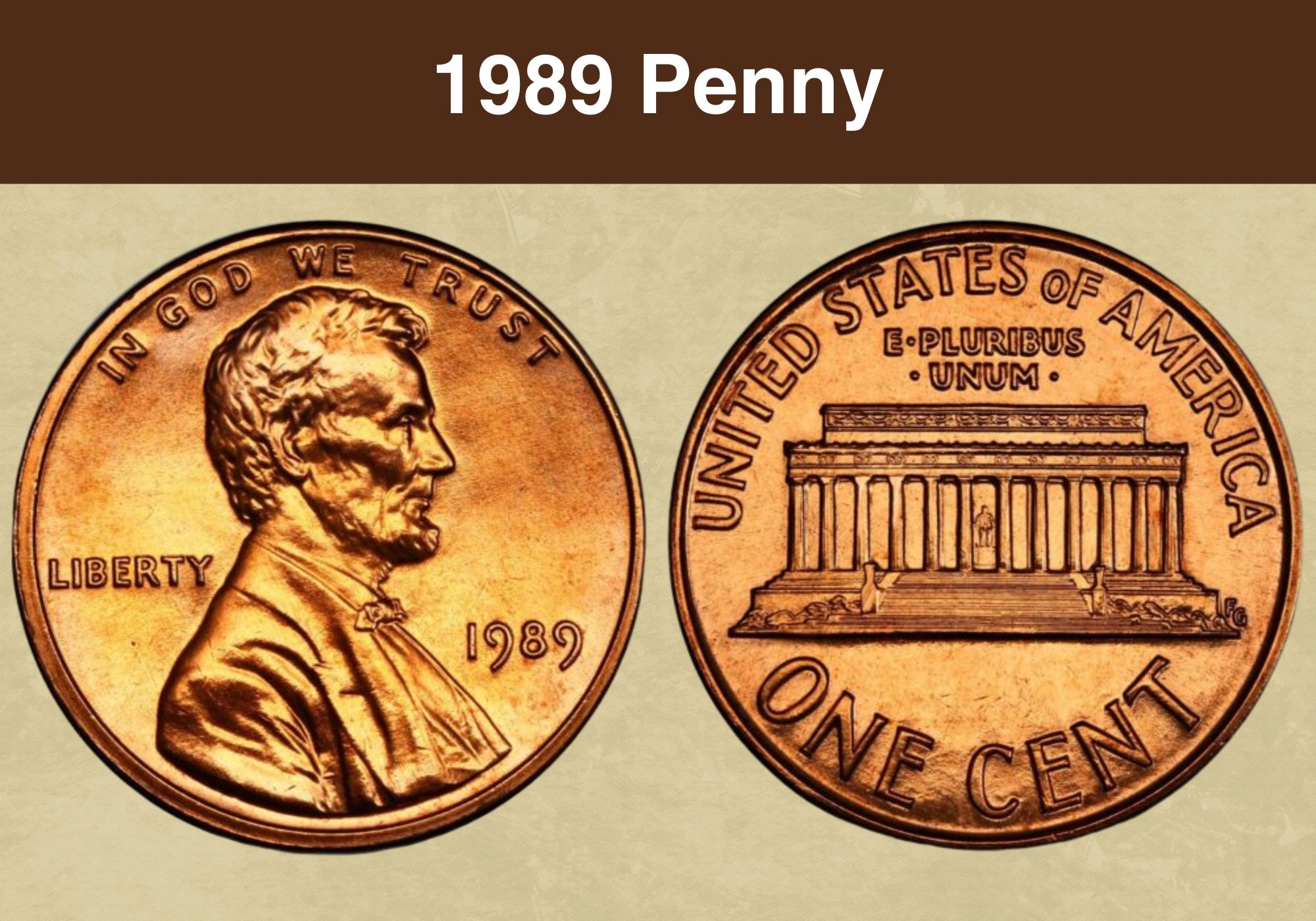
The 1989 penny value is modest since these coins are neither in a group of scarce collectibles nor highly sought-after ones. In fact, you can count on less than $2 for most of these pieces made of zinc and copper alloy, with a few particularly beautiful exceptions.
Even though these Memorial pennies are not among the most attractive pieces in the series, you can find some beauty in collecting them. Besides, excellently preserved coins can become valuable in the future. Who knows?
1989 penny value Chart |
|||
| Condition | 1989 no mint mark penny | 1989 D penny | 1989 S penny |
| MS 65 | $0.34 | $0.34 | / |
| PR 65 | / | / | $10 |
History of the 1989 Memorial penny
Abraham Lincoln was one of the most crucial American Presidents in the US history. This talented politician led the Union during the American Civil War and defeated the Confederacy. Serving as the 16th President, he succeeded in abolishing slavery.
Besides, he modernized the economy and strengthened the federal government. For all these credits, he deserved to become the first genuine man to appear on one American coin, despite George Washington’s views against this monarchist practice.
1989 Memorial penny Types |
||
| Location | Year | Minted |
| Philadelphia | 1989 no mint mark penny | 7,261,535,000 |
| San Francisco | 1989 S penny (proof) | 3,220,194 |
| Denver | 1989 D penny | 5,345,467,111 |
| Total | / | 12,610,222,305 |
The first Lincoln pennies minting started in 1909. It was a way for the nation to celebrate his 100th birthday because this reputable statesman was born on February 12, 1809. Fifty years later, the US Mint appropriately celebrated the assassinated President’s 150th birthday by issuing coins with a re-designed reverse design.
These modern coins’ minting started in 1959 and lasted until 2008 when Lincoln Bicentennial cents with four different reverse looks appeared in 2009. In 2010, the US Mint introduced Shield cents that have stayed actual until today.
Also read: 12 Most Valuable Lincoln Penny Worth Money
Features of the 1989 Memorial penny
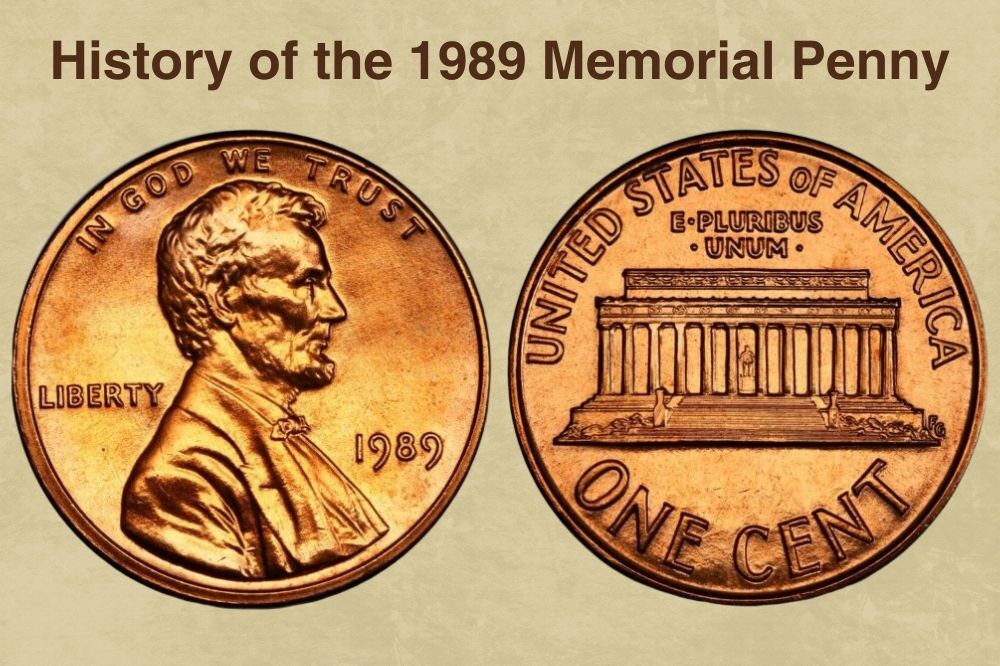
Victor David Brenner designed the Lincoln pennies’ obverse and reverse, and the US Mint issued these coins from 1909 to 1958. The following year, the reverse side was re-designed, and officials chose Frank Gasparro’s idea of placing the Memorial instead of wheat ears.
The obverse of the 1989 penny (Memorial)
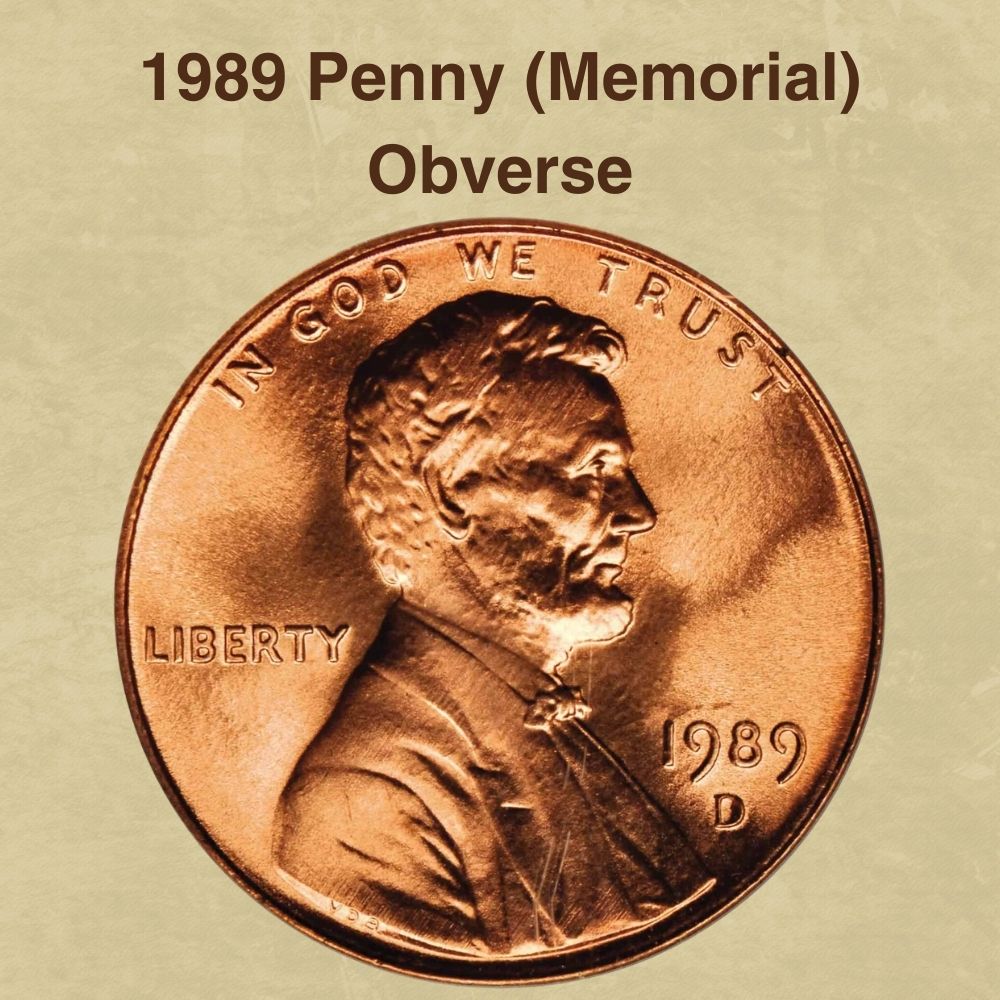
The 1989 penny obverse is identical to the first coins minted to honor the tragically assassinated 16th American President. His portrait occupies the central part of this coin side, surrounded by IN GOD WE TRUST from above.
Besides, the simple obverse includes the date and the mint mark on the right, and LIBERTY struck on the left. The Brenner’s initials, VDB, are placed at the cut-off of the Lincoln’s shoulder after years of intense media controversy.
The reverse of the 1989 penny (Memorial)
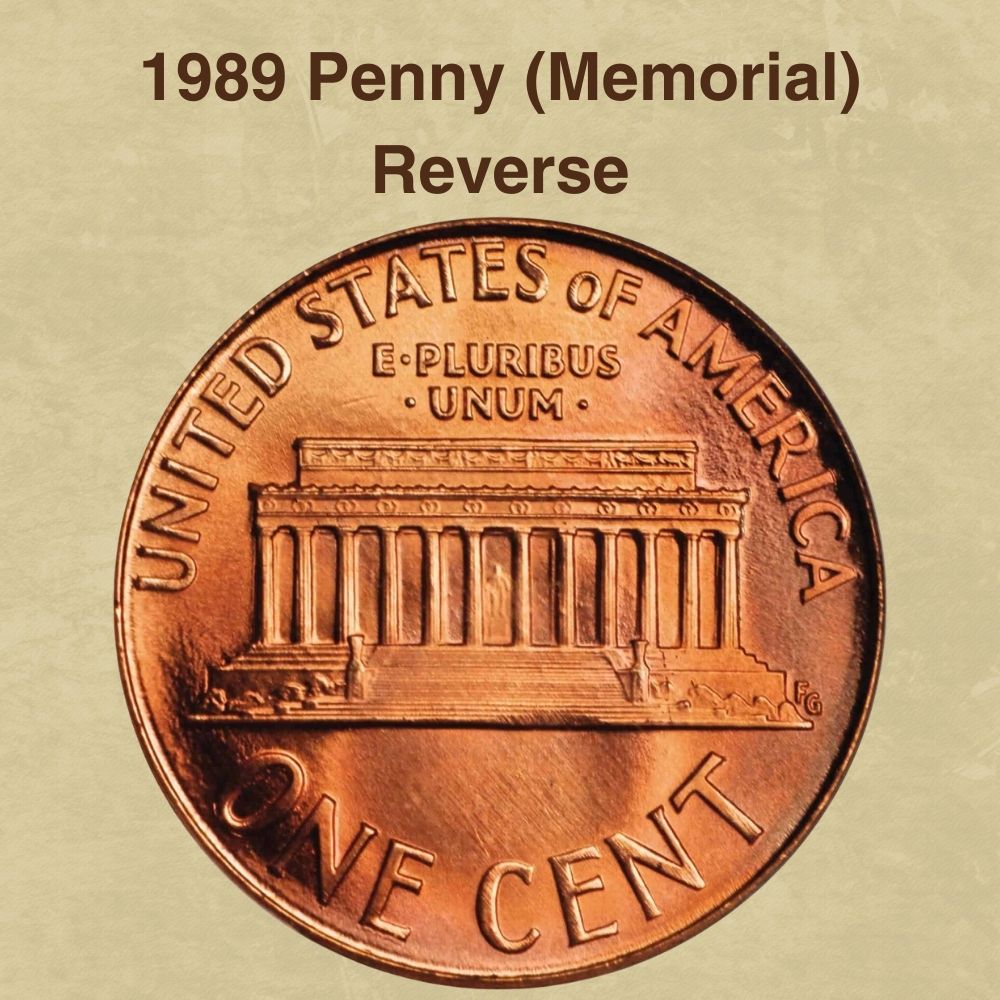
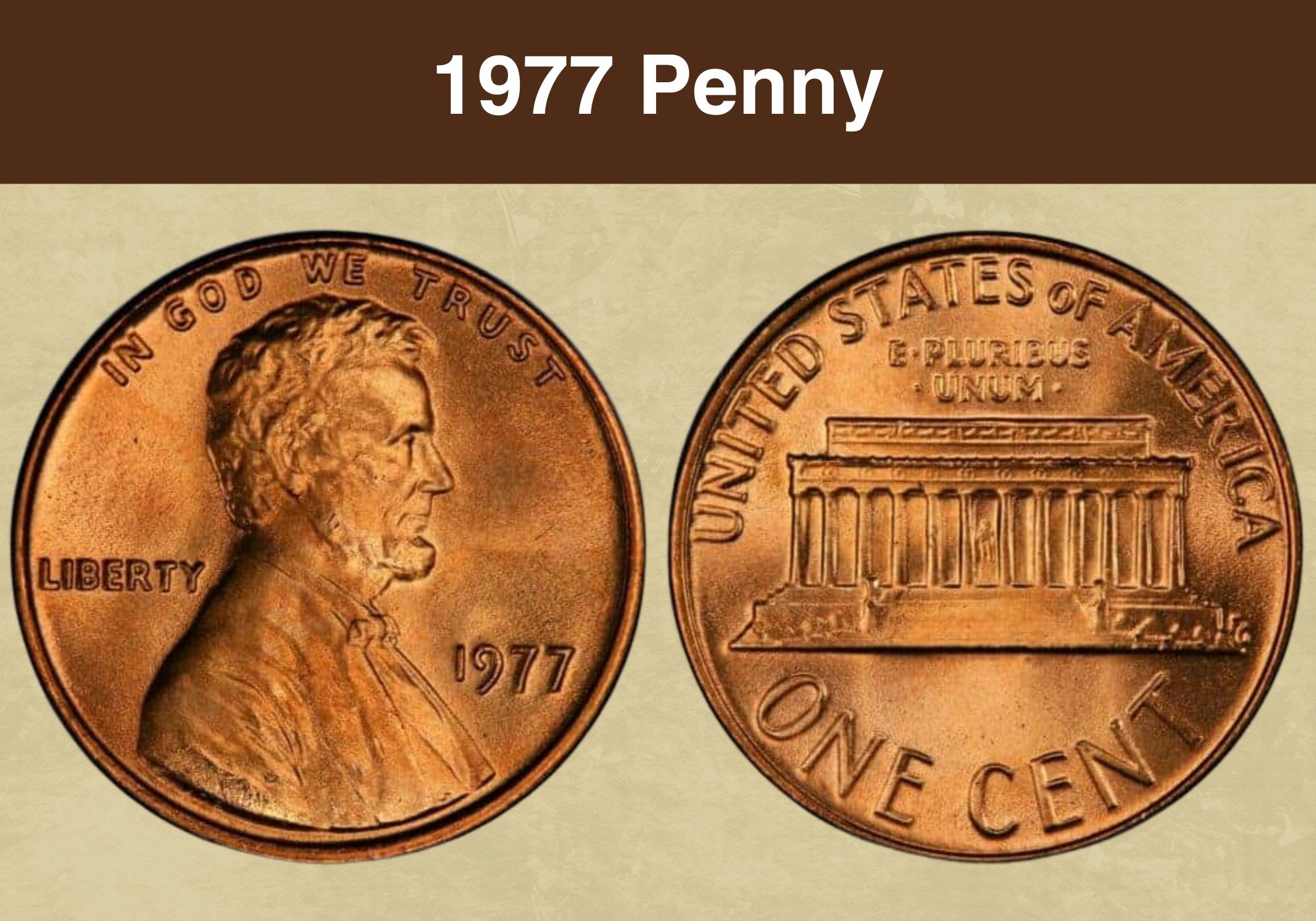
Unlike original pennies minted for the first 50 years, these from 1989 show the Lincoln Memorial on the reverse. Frank Gasparro was an inventive artist who decided to place a small President’s statue inside the building.
You can see it between central pillars in the very center of the coin. The coin rim surrounds inscriptions UNITED STATES oF AMERICA written above the Memorial and ONE CENT struck below it.
There are also letters FG, representing the artist’s initials. They are located to the right of the monument’s foot, while E • PLURIBUS • UNUM • is underneath the country name.
1989 Lincoln Memorial penny Details |
|
| Shape | Round |
| Coin thickness | 1.52 mm (0.05986 inches) |
| Face value | One cent ($0.01) |
| Edge | Plain |
| Compound | Zinc and copper alloy (a 97.5%: 2.5% ratio) |
| Coin diameter | 19.05 mm (0.75 inches) |
| Coin weight | 2.5 g (0.08818 ounces) |
Other features of the 1989 penny (Memorial)
The 1989 Lincoln pennies with the Memorial on the reverse are lovely round one-cent coins with a plain edge. Like other pennies minted after 1982, they contain zinc and copper in a 97.5%: 2.5% ratio.
Their weight was lowered in 1982 from 0.1097 ounces (3.11 g) to only 0.08818 ounces (2.5 g). That was even less than the War Time steel cents’ mass of 0.09524 ounces (2.7 g).
On the other hand, 1989 pennies have kept a standard diameter of 19.05 mm (0.75 inches) and a thickness of 1.52 mm (0.05986 inches).
Also read: 13 Most Valuable Wheat Penny Worth Money
1989 Memorial Penny Grading Guides
The best way to grade your 1989 penny is to send it to a reputable company and let their experts define its condition and assessed price range. Remember that estimating low-graded pieces is typically unprofitable due to their low value. In this case, you can use the Sheldon scale and check your coin quality and possible cost.
| # | Grade |
|---|---|
| 1 | Basal State-1 |
| 2 | Fair |
| 3 | Very Fair |
| 4, 5, 6 | Good |
| 7, 8, 10 | Very Good |
| 12, 15 | Fine |
| 20, 30 | Very Fine |
| 40 | Extremely Fine |
| 50 | About Uncirculated |
| 60 | Mint State |
| 65 | Mint State |
| 70 | Mint State |
Please check our grading guides to know your coin scale, It’s the necessary step to know the exact value of your coin.
Check out now: How to Grade Lincoln Wheat Penny?
1989 Penny Value Guides
The total mintage of pennies in 1989 was 12,610,222,305. This number includes coins from regular strikes minted in the Philadelphia and Denver mints and proofs with the letter S, the mark of San Francisco mint.
1989 No Mint Mark penny Value
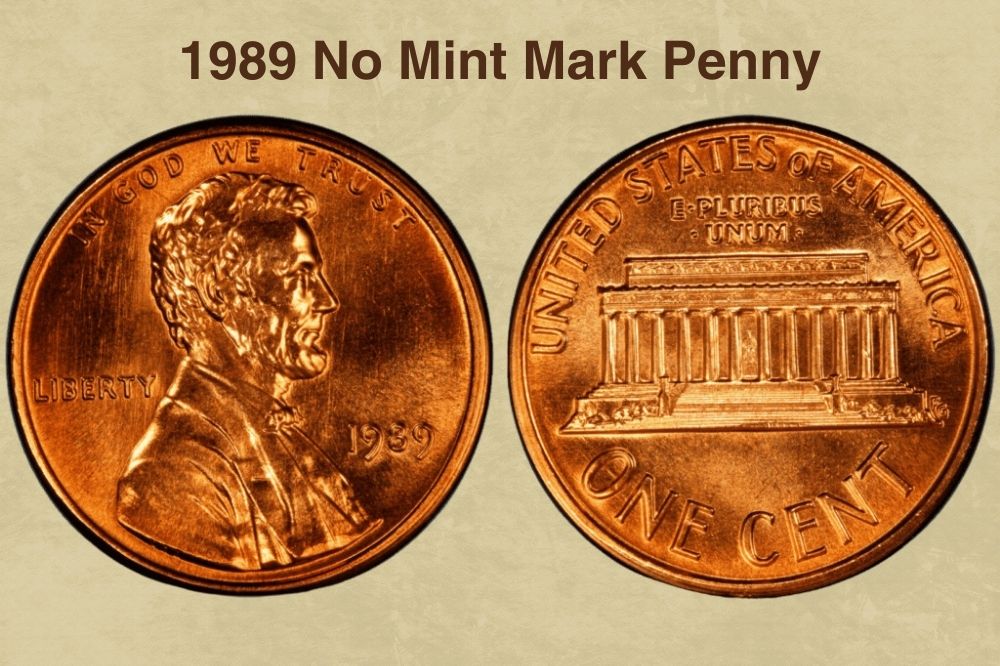
Memorial cents minted in Philadelphia in 1989 are typically affordable coins with a price range from $0.10 to $2. Coins rated MS 66 and MS 67 are more costly and often reach $14 to $40 on the open market.
Only the best-quality survived pieces in MS 68 grade of 7,261,535,000 totally produced are professionally estimated at $400. One of these specimens was a surprise at an auction held in 2013 after winning a record price of $4,113.
1989 S proof penny Value
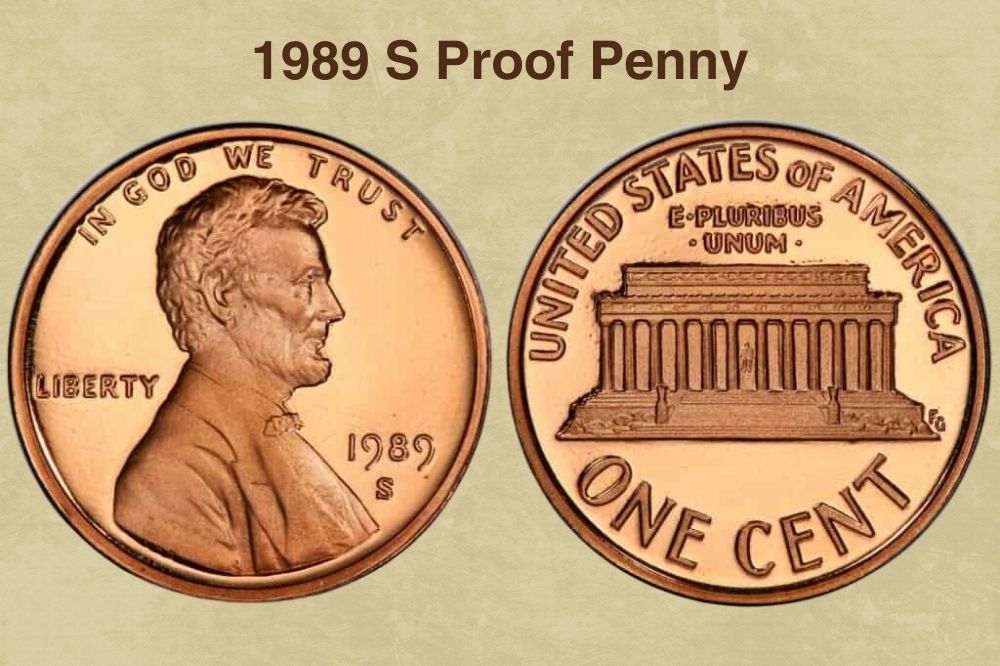
The San Francisco mint issued only proof pennies in 1989, precisely 3,220,194 coins. Be prepared that only those with deep cameo contrast are desirable among collectors, but even their prices are relatively low.
For instance, the most beautiful red pieces in ranks from PR 60 to PR 65 cost $0.18 to $4. Even the highest-graded specimens (PR 66 to PR 69) are worth approximately $5 to $14. On the other hand, one rare penny in PR 70 won an auction record of $1,380 in 2002.
1989 D Penny Value
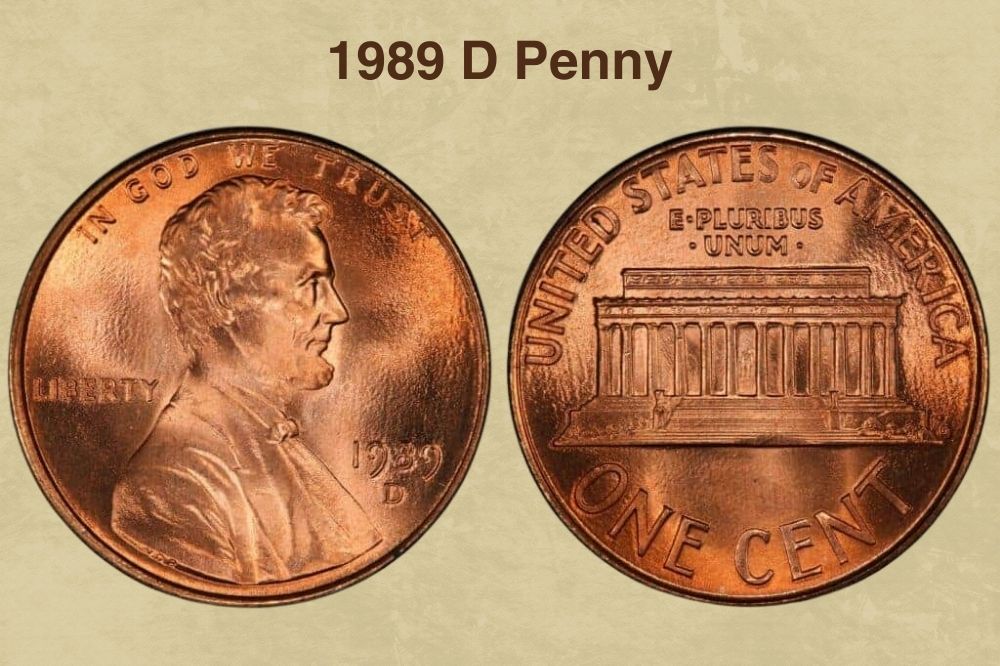
The mint from Denver had an impressive mintage of 5,345,467,111 pennies in 1989, but it was still a lower number compared to Philadelphia. However, this difference doesn’t affect these coins’ value in lower grades, and you can buy one MS 60-rated red piece for $0.10.
Even better-graded coins (from MS 61 to MS 67 ranking) have a relatively moderate price range from $0.12 to $27. On the other hand, an assessed price for MS 68-rated nickels is $275.
Even though you need to set aside up to $10,000 for a penny ranked MS 69, the current record is much lower than professional estimation. One collector paid $1,024 in 2020 to get the 1989 D MS 69 Memorial penny with beautiful red toning.
Also read: 17 Most Valuable Indian Head Penny Worth Money
Rare 1989 Penny Errors List
Despite being a modern coin, the 1989 pennies often come with various imperfections. Considering technological progress, the list of errors that occurred during minting is surprisingly high for a less than 25-year-old coin. Let’s see.
Off-center
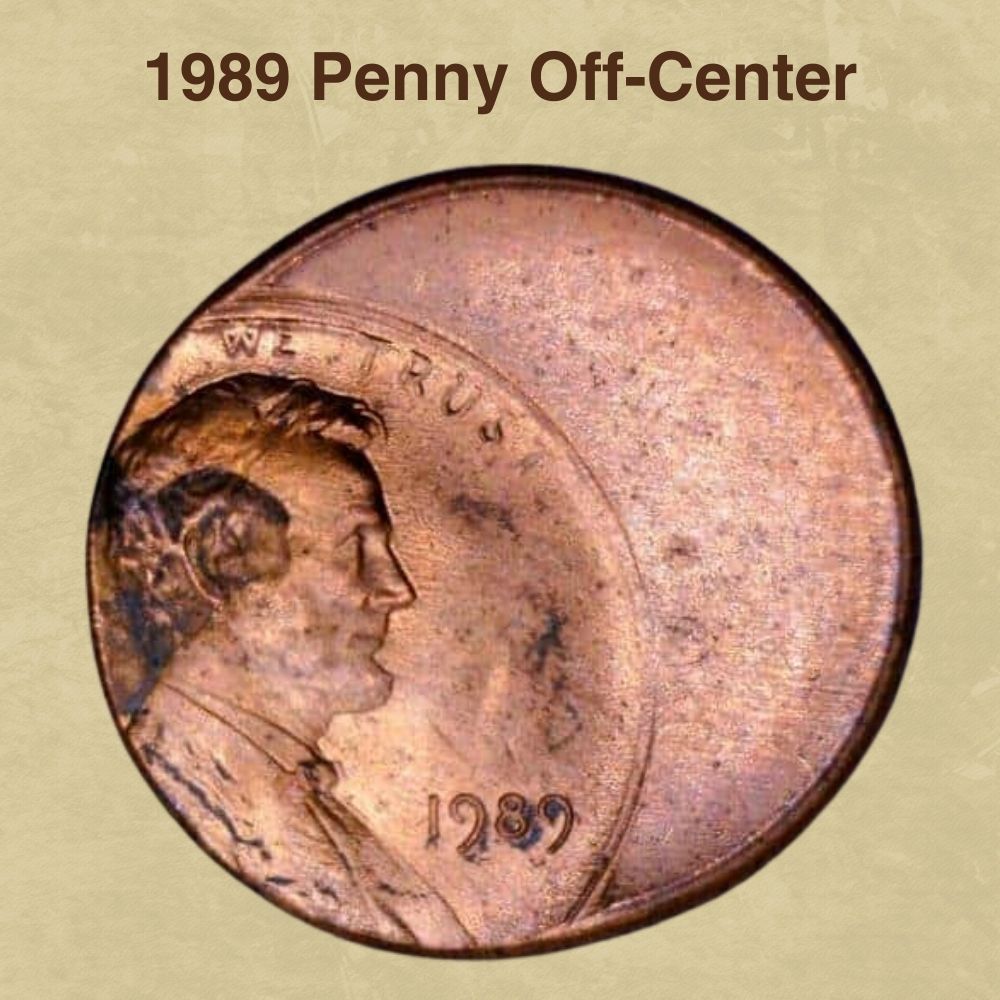
This error happens in the case of an improperly centered coin while a die strikes it. Such a penny has a shifted design, which is measured in percentages. The cheapest pieces are those with 3% to 5% off-center, while those with 10% to 20% moved design cost about $20 to $90.
Collectors prefer specimens with about 45% to 65% shifted design, but even those with higher deviation from the standard appearance are collectible when the date is present.
Penny struck on a dime planchet
As a result of human error, sometimes a dime planchet ended up in the machine during the 1989 Memorial penny production. You can immediately recognize such an error as soon as you notice the coin because it looks entirely weird.
These coins never weigh the standard 2.5 g (0.08818 ounces), but 2.268 g (0.08 ounces), making them smaller and lighter. Their diameter is also different. Unlike regular pennies with a diameter of 19.05 mm (0.75 inches), these coins’ diameter is 17.91 mm (0.705).
Expectedly, such cents are incomplete, with missing inscriptions along the edge. Besides, they have atypical silver coloration, making them recognizable in a bunch of copper-toned pennies. These relatively rare coins can cost approximately $350 to $700, depending on their grade.
Penny struck on a copper planchet
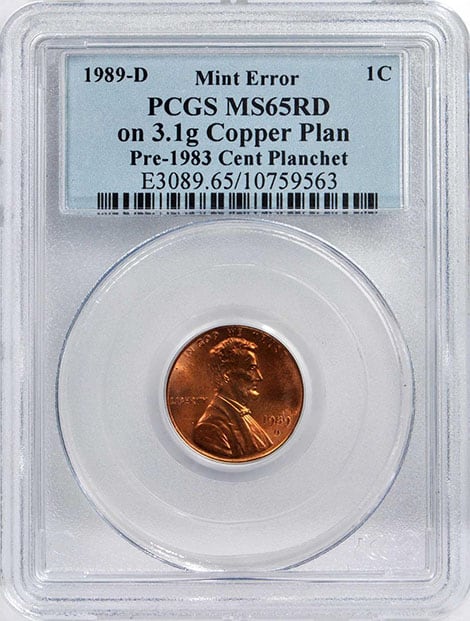
The 1989 cents are coins made of zinc alloy, but some pieces from Denver were minted on the copper planchet. Mint workers quickly noticed their mistake, and only a few such pieces ended up in circulation. Such a rare and valuable specimen can cost $3,500 to $7,500.
Fold-over strike
These deformed pennies occurred when the planchet was positioned in a weird way, resulting in bending or folding during minting. Such coins are relatively rare, and some collectors find them interesting. Therefore, their price range is from $960 to over $1,200.
Obverse cud break
Old dies often crack and break over time, and they leave some unwanted traces on the coins’ surfaces when mints fail to replace them on time. The 1989 pennies with cud break have a narrow line on the obverse and can be worth up to $100.
Double die (DDO or DDR)
The 1989 cents with a doubled design are pretty common, so you should set aside about $10 to $15 to get one. Rarer tripled or quadrupled pieces can cost more under some circumstances.
Double-struck with indent
It is necessary to hit each coin several times to get a desirably looking design. Unfortunately, a machine sometimes fails, and the die hits the planchet before the previous specimen is completed. Such overlapped pennies of high quality can reach about $150.
Die clash
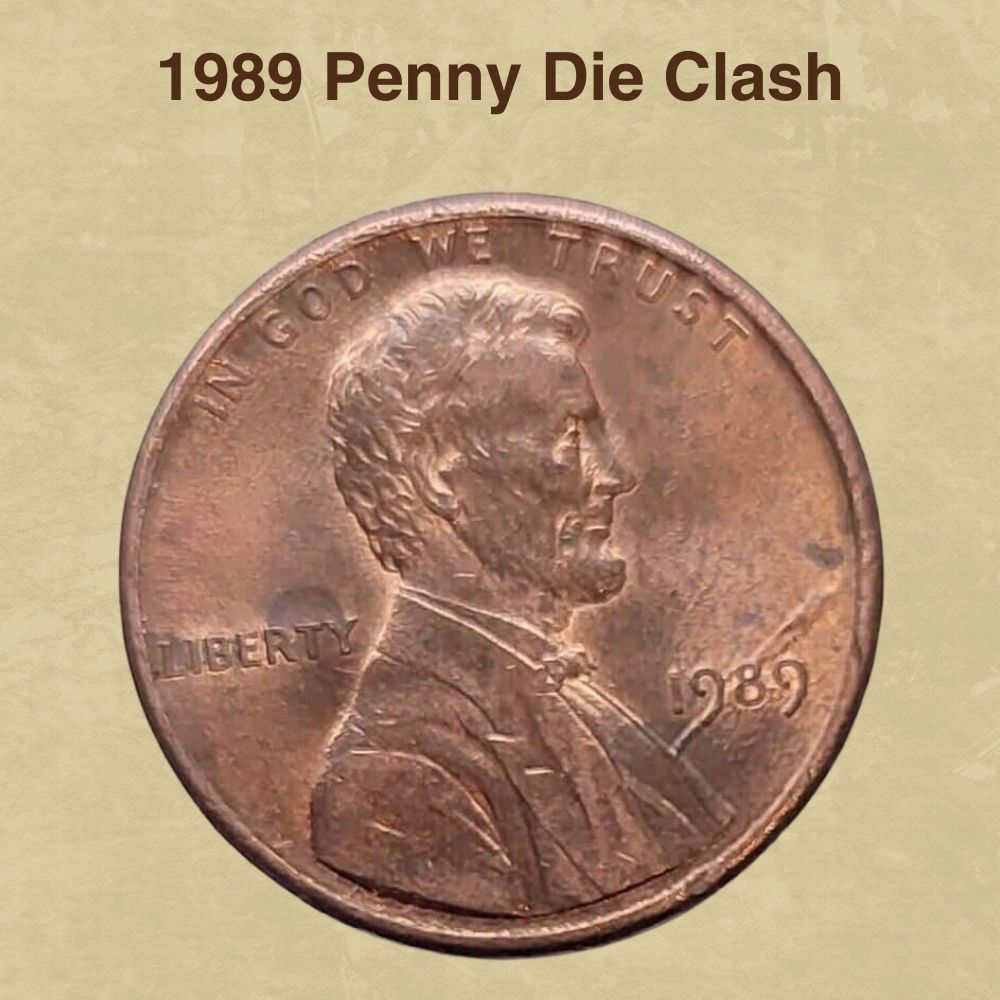
A die clash error occurs when the die strike is a little late. Then, both obverse and reverse die hit each other before the particular planchet comes to the correct position.
Therefore, they leave a partially imprint design pattern on each other. In such a case, the next piece ends up with this error, bringing the future owner about $20.
Improper annealing
Pennies with this error appeared in the Denver mint in 1989. The annealing process implies repeated heating and cooling of the planchet, leaving it appropriately malleable. When this process was improperly done, produced pennies stayed partially discolored and cost more than standard ones.
Clipping error
When the first coin fails to leave its place on the line entirely, the next can’t take its position correctly. The result is a penny with a missing concave piece. Some specimens from other years are scarce and cost a lot, but this is not the case with those minted in 1989. You can expect to get about $30 per one.
Also read: 11 Most Valuable Wheat Penny Errors
Where to Sell Your 1989 penny ?
Now that you know the value of your coins, do you know where to sell those coins online easily? Don’t worry, I’ve compiled a list of these sites, including their introduction, pros, and cons.
Check out now: Best Places To Sell Coins Online (Pros & Cons)
FAQ about the 1989 Memorial penny
What makes a 1989 Memorial penny rare?
Most 1989 Lincoln cents are common coins available at the market at any time at affordable prices. However, a few rare and well-preserved, highest-ranked specimens can be worth a few thousand dollars. Besides, a few interesting errors can reach significant sums at auctions.
Which 1989 Memorial penny is worth a lot of money?
- The 1989 MS 68 red penny (Memorial) won an auction record of $4,113 in 2013
- The 1989 S PR 70 DCAM penny (Memorial) won an auction record of $1,380 in 2002
- The 1989 D MS 69 red penny (Memorial) won an auction record of $1,024 in 2020
- The 1989 PO 1 red-brown penny (Memorial) won an auction record of $925 in 2019
- The 1989 MS 63 brown penny (Memorial) won an auction record of $920 in 2007
- The 1989 D MS 68 red-brown penny (Memorial) won an auction record of $53 in 2022
- The 1989 D UNC Details brown penny (Memorial) won an auction record of $25 in 2021
How much is the 1990 Memorial penny worth?
Most Memorial pennies minted in Philadelphia in 1989 are affordable coins ranging from $0.10 to $10. Only the best-quality specimens in MS 68 are better rated. Their professional estimation is about $200.
What is the priciest Memorial penny?
The most expensive Lincoln penny (Memorial) is the one minted in 1999. This coin in MS 66 grade became the most valuable piece in the series after winning an auction record of $138,000 on April 26, 2006.
Interestingly, one proof reached a far lower price at an auction. This 1963 PR 70 penny with the Memorial reverse was sold at $40,250 in 2004.

I have a shiny red 1989 D Lincoln coin with writing errors also as the die error in almost uncirculated conditions I’m having trouble finding any information on one with with more than one fault.