1970 Penny Coin Value (Errors List, “D”, “S” & No Mint Mark Worth)

1970 Penny

Are you curious about the value of that 1970 penny sitting in your pocket change or coin jar?

In this comprehensive guide, we will explore this coin’s fascinating history during a turbulent era, analyze its distinctive characteristics, and provide essential grading insights. Most importantly, you will discover the 1970 penny values vary dramatically based on variety, with regular Philadelphia and Denver strikes worth $0.33 to $14.68 depending on condition. The San Francisco Small Date variety commands significantly higher prices, reaching $67.17 in mint state and up to $135.50 for proof versions with special finishes.

So, without further delay, let’s dive deep into exploring its true value!


1970 Penny Value By Variety

This value chart demonstrates collecting opportunities across different mint locations and designations.

If you know the grade of your coin, you can find the exact price below in the Value Guides section.

1970 Penny Value Chart

TYPEGOODFINEAUMSPR
1970 No Mint Mark Penny Value (RD)$0.33$1.12$2.87$11.33
1970 D Penny Value (RD)$0.33$1.13$2.90$14.68
1970 S Large Date Penny Value (RD)$0.51$1.76$4.51$14.88
1970 S Small Date Penny Value (RD)$1.68$5.74$14.70$67.17
1970 S Small Date (PR RD)  Penny Value $75.20
1970 S Small Date CAM Penny Value$135.50
1970 S Small Date DCAM Penny Value$122.75
1970 S Large Date  (PR RD) Penny Value$8.67
1970 S Large Date CAM Penny Value$10.12
1970 S Large Date DCAM Penny Value$16.25
Updated: 2026-02-04 01:00:57

Also Read: Top 100 Most Valuable Modern Pennies Worth Money (1959 – Present)


Top 10 Most Valuable 1970 Penny Worth Money

Most Valuable 1970 Penny Chart

2000 - Present

The Most Valuable 1970 Penny Chart reveals the dramatic market stratification that occurs when minting errors intersect with preservation quality and collector demand. FS-101 doubled die varieties dominate the upper echelons, with the $38,400 MS66 specimen representing not only condition rarity but the convergence of technical error and optimal preservation.

At the same time, the chart demonstrates how a single grade increment can create exponential value differences—Red specimens soar from $17,250 for MS65 to $24,150 for MS66. Color designation proves equally crucial, with Red-Brown specimens settling at approximately 40% of Red values despite possessing identical doubling characteristics.

Most evident is the market’s sophisticated understanding of rarity within error categories. The Small Date DCAM’s $18,400 pricing shows that proof coin errors can far exceed commercial strike error values. This data reflects a mature market where collectors recognize that not all errors are created equal, and where preservation condition, attribution accuracy, and visual impact collectively determine value.


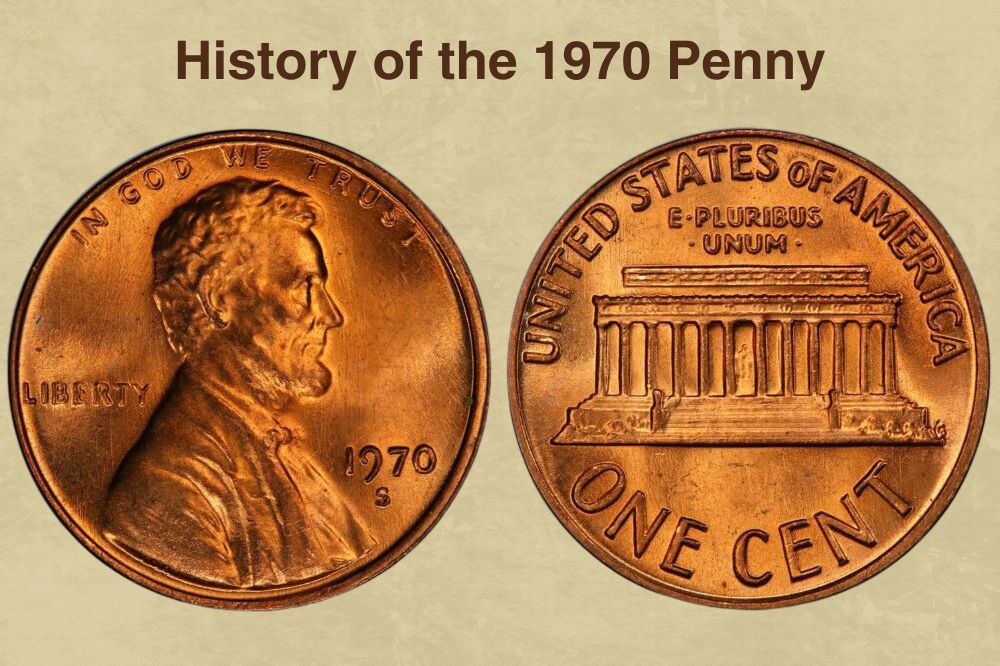
History of the 1970 Penny

The 1970 Lincoln penny was born during a pivotal economic moment. In the early 1970s, driven by Vietnam War demands and global industrial growth, copper prices soared to unprecedented levels, triggering a raw materials crisis.

The dramatic surge in copper prices sparked massive hoarding by speculators who hoped the metal’s value would exceed face value. As a result, penny shortages became extremely severe that year, with merchants and bankers nationwide experiencing periodic coin shortages.

In response, Mint officials began implementing stringent measures. Director Mary Brooks publicly encouraged Americans to spend rather than hoard pennies, established “Penny Redemption Month” . Unfortunately, under the fervor of copper coin hoarding, the Mint’s punitive measures remained largely ineffective.

To seek solutions, the U.S. Mint began testing alternative metals in the mid-1970s, experimenting with aluminum and bronze-clad steel for cent production. In 1974, over 1.5 million experimental aluminum cents were struck, but Congress rejected the proposal amid public opposition. The 1970 cent maintained its traditional composition of 95% copper, which continued until 1982, when economic reality finally forced the Mint to switch to copper-plated zinc.

Looking back, the 1970 cent represents more than just another year’s coinage—it embodies one of the final gasps of America’s centuries-old copper coin tradition. In the grand narrative of U.S. currency, the 1970 cent serves as a bridge connecting the copper-rich past with the zinc-plated future that economic necessity would soon demand.

Also Read: Top 100 Rarest Pennies Worth Money (1787 – Present)


Is Your 1970 Wheat Penny Rare?

10

1970 No Mint Mark Penny (RD)

Common
Ranked 975 in Lincoln Cent (Modern)
10

1970-D Penny (RD)

Common
Ranked 987 in Lincoln Cent (Modern)
13

1970-S Large Date Penny (RD)

Common
Ranked 532 in Lincoln Cent (Modern)
14

1970-S Small Date Penny (RD)

Common
Ranked 376 in Lincoln Cent (Modern)
14

1970-S Small Date PR RD Penny

Common
Ranked 381 in Lincoln Cent (Modern)
13

1970-S Small Date CAM  Penny

Common
Ranked 555 in Lincoln Cent (Modern)
17

1970-S Small Date DCAM  Penny (RD)

Uncommon
Ranked 182 in Lincoln Cent (Modern)
14

1970-S Large Date PR RD Penny

Common
Ranked 349 in Lincoln Cent (Modern)
11

1970-S Large Date CAM Penny (RD)

Common
Ranked 896 in Lincoln Cent (Modern)
13

1970-S Large Date DCAM Penny

Common
Ranked 559 in Lincoln Cent (Modern)

To navigate these complex rarity relationships and identify emerging patterns across different series, our CoinValueChecker App provides real-time ranking analysis and market trend data.


Key Features Of The 1970 Penny

The 1970 penny represents a crucial milestone in American coinage, being among the last pennies struck in the traditional 95% copper composition before economic pressures forced the Mint to seek alternative metals. Understanding these features helps collectors identify this penny’s value.

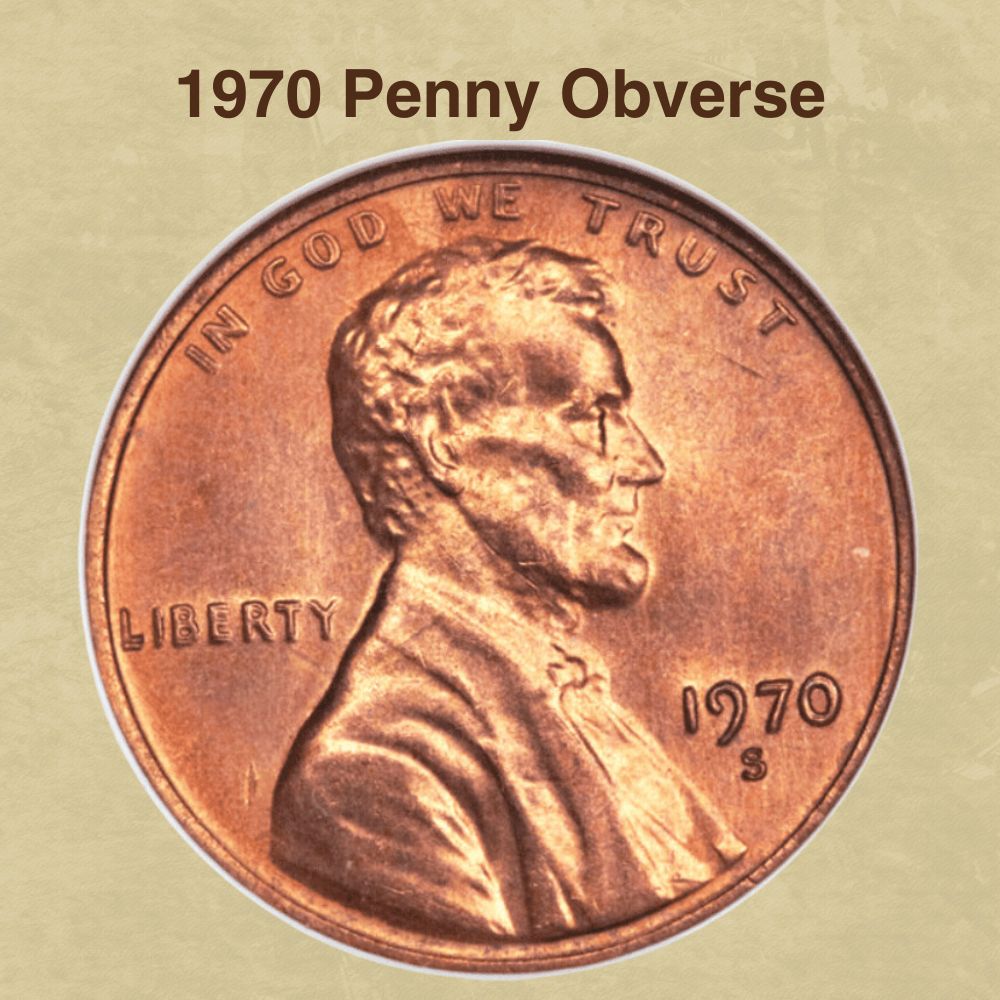
The Obverse Of The 1970 Penny

1970年便士硬币正面

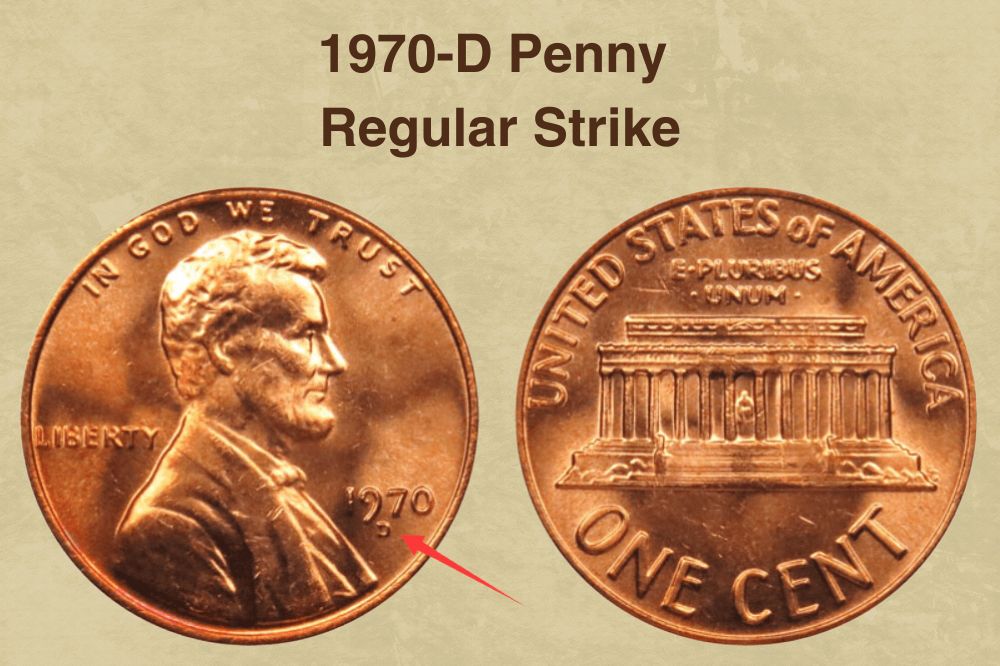
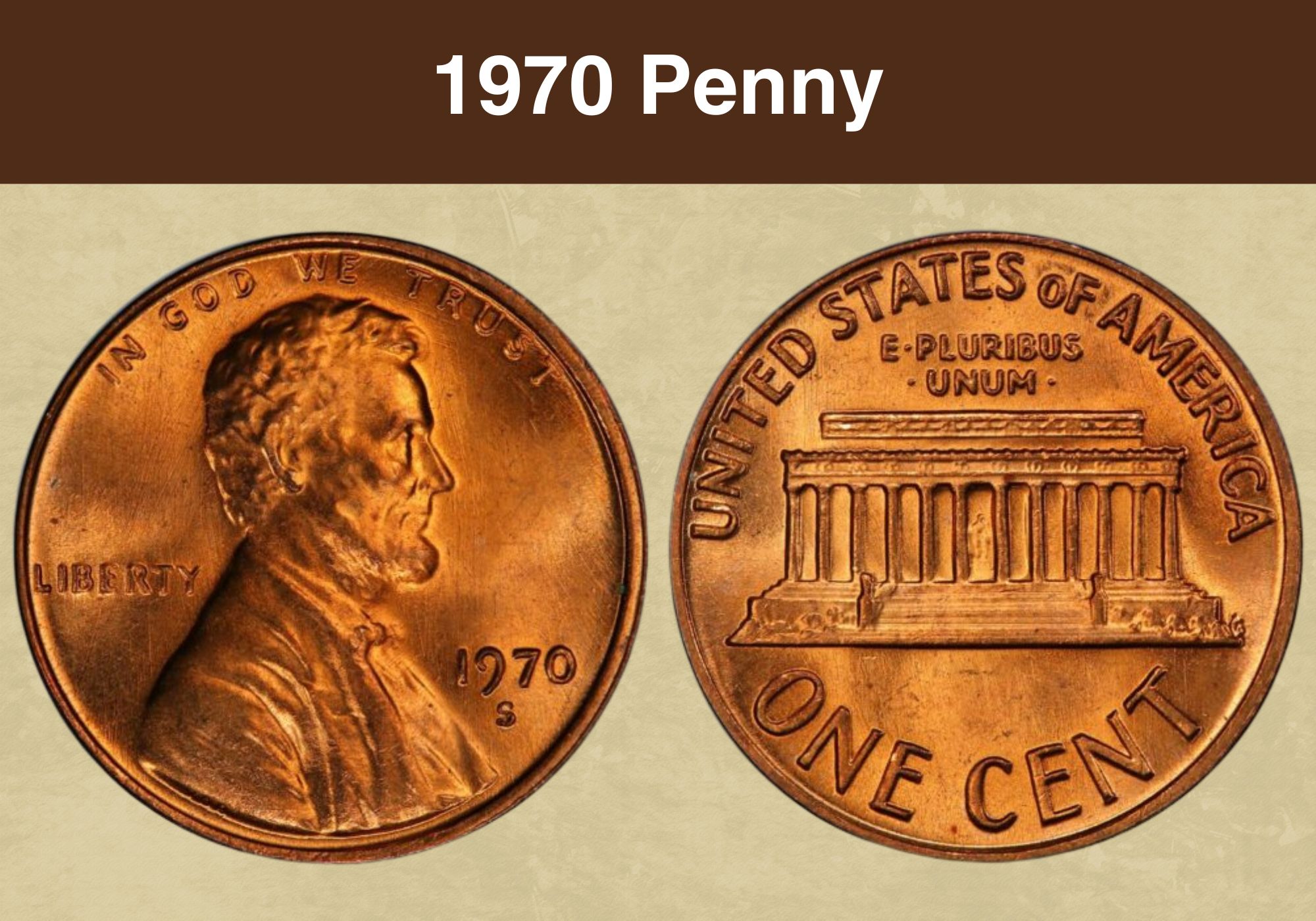
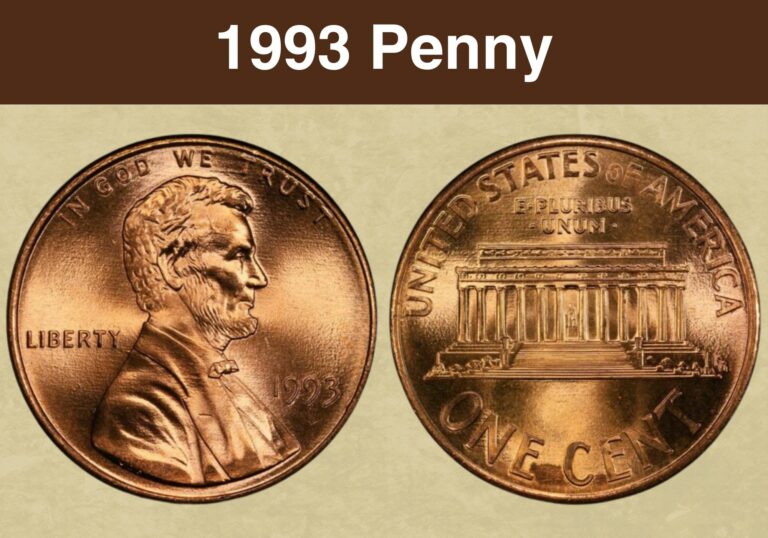
Victor David Brenner’s timeless Lincoln portrait faces right, a design that remained unchanged since 1909 and continues to this day. The motto “In God We Trust” curves gracefully above Lincoln’s head, while “Liberty” appears behind his neck on the left side.

The date “1970” sits prominently before Lincoln’s chest, with the mint mark position directly below—empty for Philadelphia strikes, “D” for Denver coins, and “S” for San Francisco issues. Brenner’s initials “VDB” remain visible on the shoulder truncation, a detail that had been restored to the design in 1918 after earlier controversy.

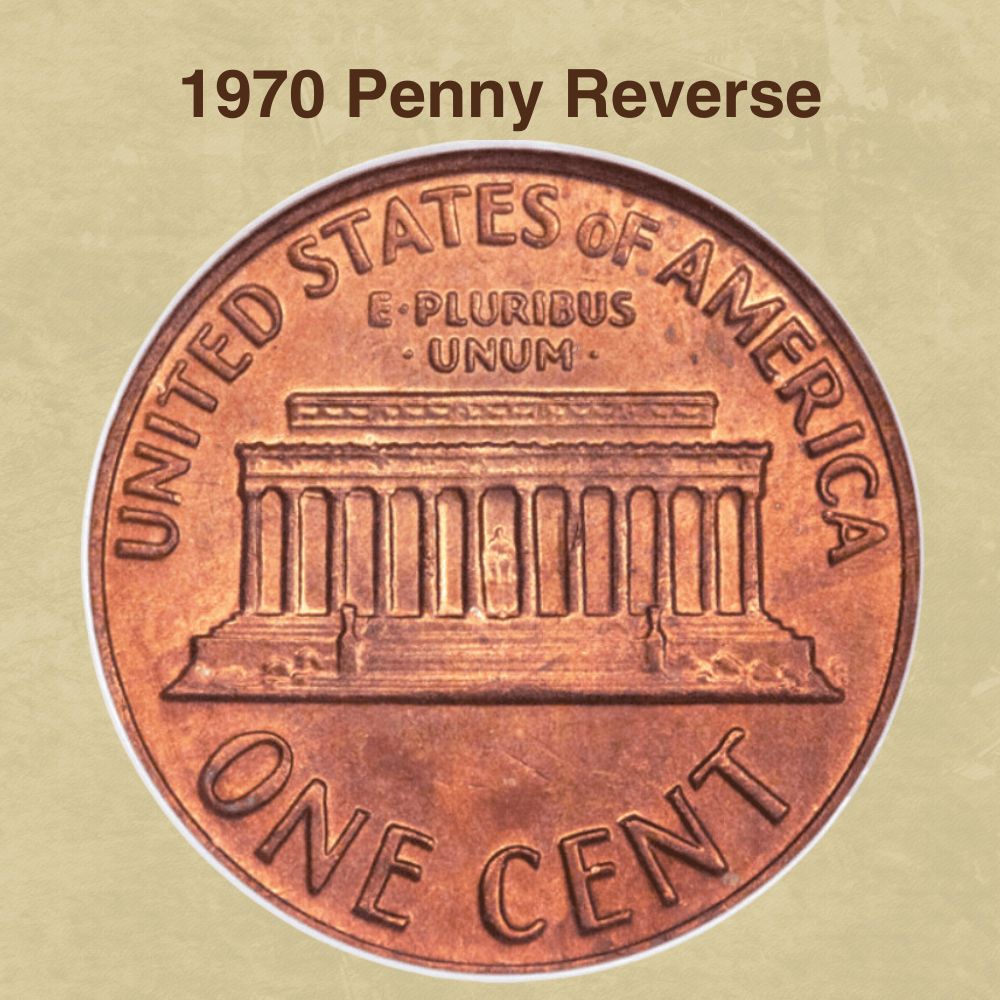
The Reverse Of The 1970 Penny

1970年便士硬币的背面

Frank Gasparro’s Lincoln Memorial design showcases the iconic Washington D.C. monument, featuring Lincoln’s seated statue clearly visible between the central columns on well-struck examples. The legend “United States of America” arcs along the upper rim, followed by the national motto “E Pluribus Unum” beneath it.

The denomination “One Cent” anchors the bottom of the design, while Gasparro’s initials “FG” appear discreetly near the memorial’s right side, marking his enduring contribution to what would become a 50-year reverse design spanning from 1959 to 2008.

Other Features Of The 1970 Penny

The 1970 penny maintained the traditional composition of 95% copper and 5% zinc, measuring 19.05mm in diameter and weighing 3.11 grams, producing a distinctive copper “ring” when dropped.

Copper coins are graded by color: red (RD) for coins retaining their original copper luster, red-brown (RB) for those with slight oxidation, and brown (BN) for heavily oxidized examples. Among these, red coins command the highest premiums among collectors.

Also Read: 100 Most Valuable Wheat Pennies Worth Money (1909 to 1958)


1970 Penny Mintage & Survival Data

1970 Penny Mintage & Survival Chart

Mintage Comparison

Survival Distribution

TypeMintageSurvivalSurvival Rate
No Mint1,898,315,000284,747,25015%
D2,891,438,900433,715,83515%
S Large Date 693,192,814unknownunknown
S Small Date693,192,814unknownunknown
S Small Date (PR RD)2,632,810unknownunknown
S Small Date CAM2,632,810unknownunknown
S Small Date DCAM2,632,810unknownunknown
S Large Date (PR RD)2,632,810unknownunknown
S Large Date CAM2,632,810unknownunknown
S Large Date DCAM2,632,810unknownunknown

The production figures reveal a fascinating tale of American minting priorities and collector behavior. Denver dominated 1970 penny production with a staggering 2.89 billion coins, while Philadelphia contributed 1.9 billion pieces—together accounting for over 4.7 billion circulating pennies.

In stark contrast, San Francisco produced 693 million business strikes each for the Small Date and Large Date varieties, plus an additional 2.6 million proof coins.

What makes these numbers particularly intriguing is that both Philadelphia and Denver issues show identical 15% survival rates, suggesting similar circulation patterns and retention behaviors among collectors. However, the San Francisco varieties present a mystery—their survival rates remain unknown, adding an element of scarcity speculation that drives collector interest today.

Also Read: 100 Most Valuable Indian Head Penny Coins Worth Money (1859 – 1909)


The Easy Way to Know Your 1970 Penny Value

Determining your 1970 penny’s worth begins by locating the mint mark below the date. The most valuable variety is the 1970-S Small Date, where the top of the “7” aligns level with the other digits and the “9” tail points toward the “7.” Regular strikes are worth 25 cents to around $19 in high grades, while the Small Date proof can reach $100 or more.

Look for error coins like doubled dies and floating roof varieties that command premium prices. Use the CoinValueChecker App for accurate identification and instant grade assessment.

CoinValueChecker APP
CoinValueChecker APP Screenshot


1970 Penny Value Guides

1970 Penny Varieties

  • 1970 No Mint Mark (Philadelphia)
  • 1970-D (Denver)
  • 1970-S Large Date (San Francisco)
  • 1970-S Small Date (San Francisco)
  • 1970-S Small Date Proof (San Francisco)
  • 1970-S Small Date CAM (San Francisco)
  • 1970-S Small Date DCAM (San Francisco)
  • 1970-S Large Date Proof (San Francisco)
  • 1970-S Large Date CAM (San Francisco)
  • 1970-S Large Date DCAM (San Francisco)

The 1970 penny showcases the diversity of American minting operations across three facilities. Philadelphia and Denver produced massive quantities of business strikes for everyday circulation, while San Francisco specialized in both regular strikes and premium proof coins. The San Francisco issues are particularly notable for their date size variations and proof finishes.

Also Read: Lincoln Wheat Penny Value (1909-1958)


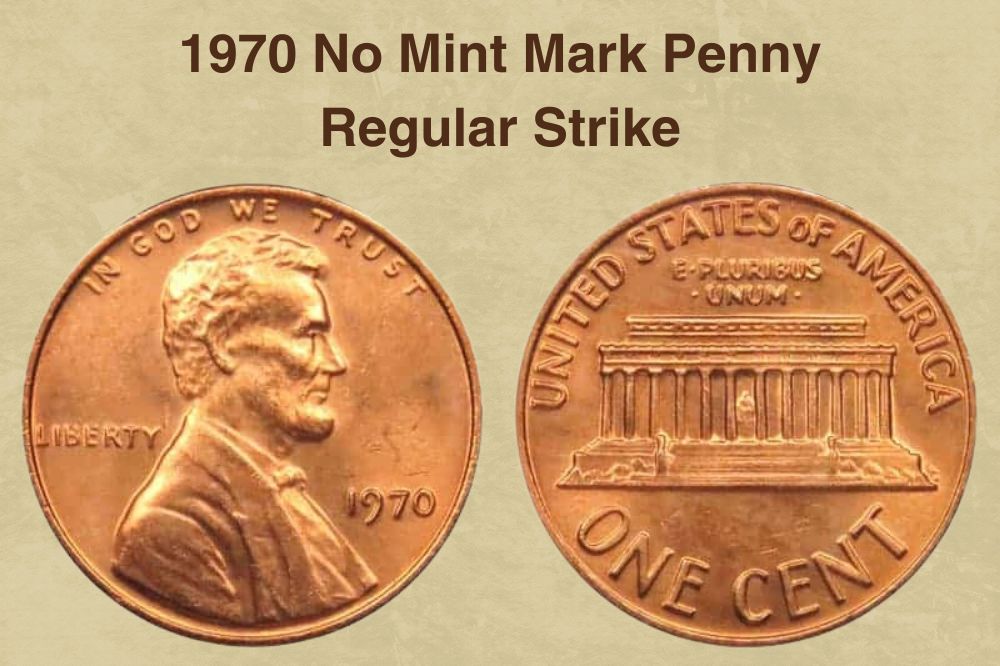
1970 No Mint Mark Penny Value

1970 No Mint Mark Penny Value

The 1970 Philadelphia penny marks the collision between American traditional copper coinage and economic reality. Driven by Vietnam War demand and global industrial expansion, the price of copper rising continuously, triggering the hoarding and shortages that would plague the next decade.

The 1970 Philadelphia penny was both the last hurrah of the lucrative copper coin production and a harbinger of the inflationary pressures that would reshape American monetary policy. This makes the common 1970 no mint mark coin inadvertently become a historical artifact.

The finest Red (RD) specimens can reach $4,406, while Red-Brown (RB) and Brown (BN) specimens trade at progressively lower premiums based on oxidation levels and underlying strike quality.

1970 No Mint Mark Penny (RD) Price/Grade Chart

Price by 1-70 Grade (Latest Auction Records Included)

Updated: 2026-02-04 01:00:57

When examining the comprehensive auction records of the 1970 no mint mark penny, this sharp polarization in value becomes clearly visible.

Date PlatformPrice Grade

The sustained market activity demonstrates collectors’ recognition of this coin’s unique position.

Market activity: 1970 No Mint Mark Penny

Also Read: Value Of Old Pennies By Year (1959-Present)


1970-D Penny Value

1970-D Penny Value

In 2016, auction houses sold the finest known MS67+ Red coin for $2,820, reflecting not only its market value but also the numismatic community’s consensus: the 2.89 billion coins produced by the Denver Mint coincided with the collapse of traditional copper coin economics, making them extraordinarily significant. It represents one of the last massive copper coin productions before inflationary pressures forced the Mint to seek alternative compositions. 

Despite the turbulence in the copper market at that time, the product quality of the Denver Mint remained consistently outstanding and stable. The $2,820 record demonstrates that proper preservation is crucial among high-mintage modern coins.

Red-Brown (RB) coins have an MS63 auction record of $39, far inferior to red coin values; while Brown (BN) coins typically price in single digits unless exceptional underlying minting characteristics are revealed beneath the oxidation layer.

1970-D Penny (RD) Price/Grade Chart

Price by 1-70 Grade (Latest Auction Records Included)

Updated: 2026-02-04 01:00:57

Comprehensive auction record analysis documents this variety’s market performance over the past years.

Date PlatformPrice Grade

Sustained market activity reflects collectors’ appreciation for Denver’s role in the final generation of copper coinage.

Market activity: 1970-D Penny


1970-S Large Date Penny Value

1970-S Large Date Penny Value

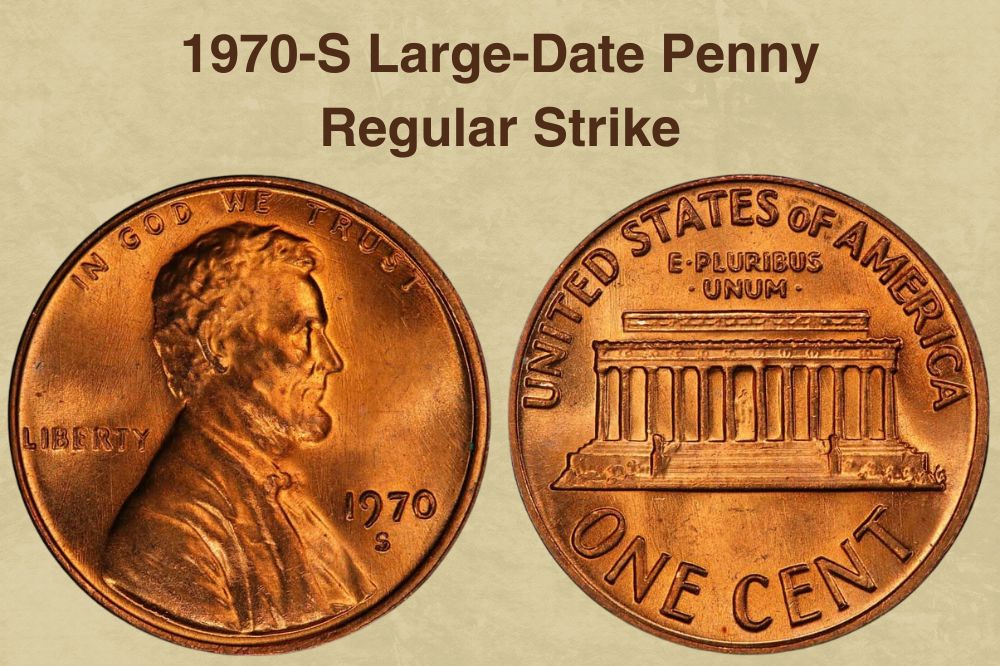
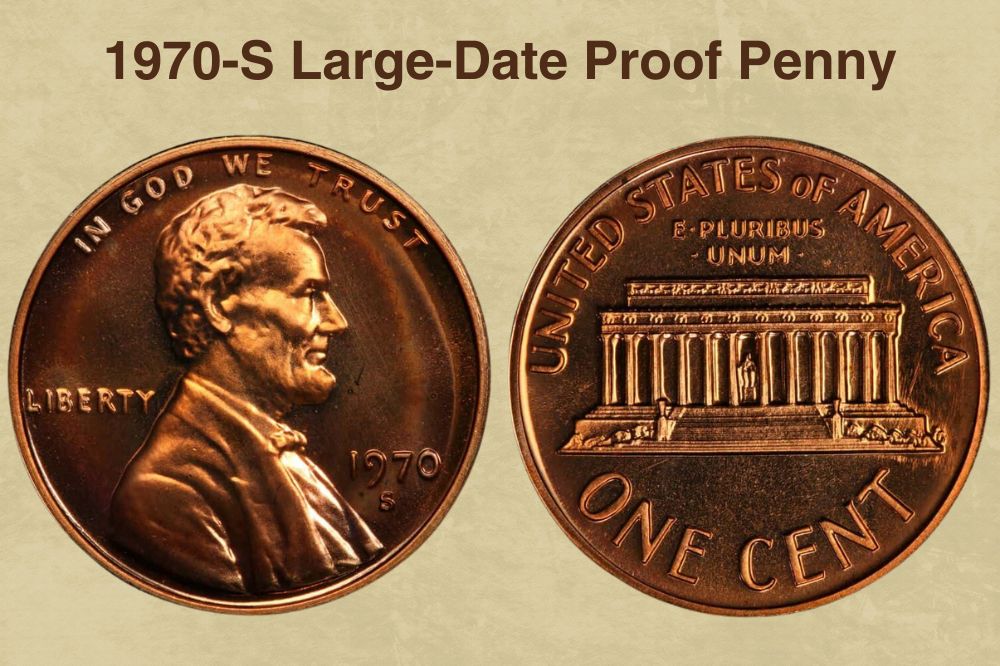
The 1970-S Large Date penny showcases the San Francisco Mint’s masterful dual-hub technology. The Mint leveraged this technology by using a standard date wheel in the master die, systematically positioning the date by placing the numeral 7 below the baseline of the surrounding numerals, resulting in a distinctive “low 7” design. 

The uniqueness of this “low 7” element becomes the distinguishing feature between large-date cents and small-date pennies. 

Auction records show that Red (RD) coins preserving original copper surfaces in MS67+ condition sell for $1,500; exceptional quality coins with more complete design details command higher premiums. Red-Brown (RB) and Brown (BN) coins trade at progressively lower prices based on their oxidation state and underlying quality.

1970-S Large Date Penny (RD) Price/Grade Chart

Price by 1-70 Grade (Latest Auction Records Included)

Updated: 2026-02-04 01:00:57

1970-S Large Date Penny (RB) Price/Grade Chart

Price by 1-70 Grade (Latest Auction Records Included)

Updated: 2026-02-04 01:00:57

This pricing structure reflects broader collecting trends visible in the detailed auction record documentation that traces this variety’s performance across multiple market cycles.

Date PlatformPrice Grade

The continued market activity indicates that collectors have maintained a strong interest in this specimens that showcases the superb minting skills of the San Francisco Mint during the final period of traditional copper one-cent coin production.

Market activity: 1970-S Large Date Penny


1970-S Small Date Penny Value

1970-S Small Date Penny Value

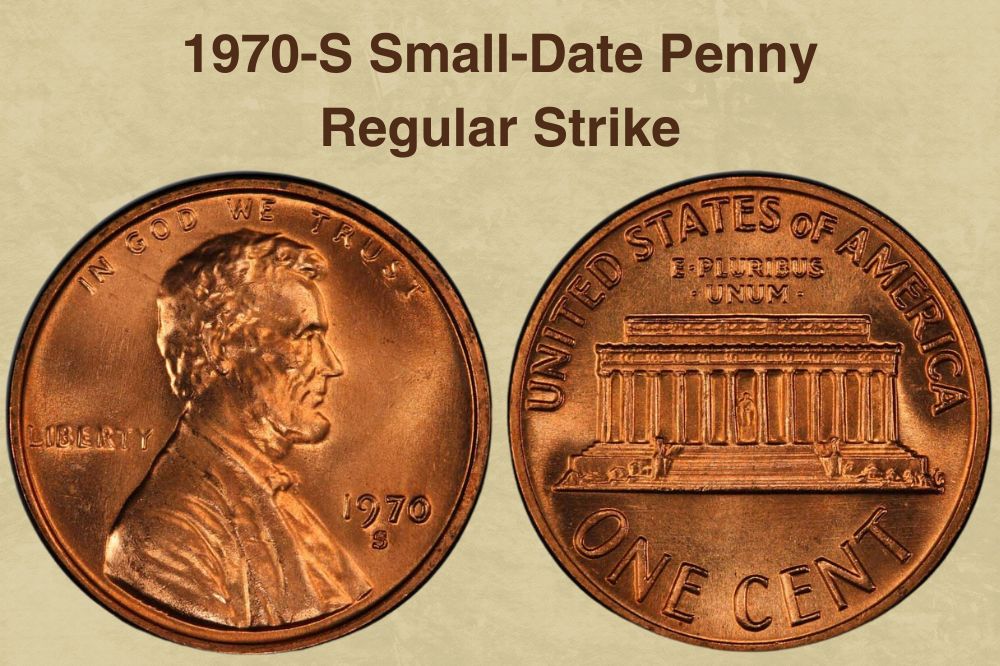
The 1970-S Small Date penny was born from San Francisco’s ambitious exploration of compressed date centering technology, with skilled die technicians developing the revolutionary “High 7” structure through specialized compression processes that aligned the horizontal line of digit tops with adjacent numerals.

This technique requires engraving masters to maintain sharp, clear details while compressing the overall date pattern. This technical challenge resulted in the production of only 10-15% of the total output, making it scarcer than during Large Date pennies.

In the final period of profitable copper coin production, the “High 7” characteristic became a symbol of San Francisco’s most advanced date positioning achievement. Red specimens demonstrate this exceptional technique, sell for up to $2,464 in well-preserved condition, proving the extraordinary premium for coins with complete clarity.

Red-Brown and Brown specimens retain this variety’s basic scarcity advantage while reflecting different stages of copper oxidation through fifty years of preservation challenges. 

1970-S Small Date Penny (RD) Price/Grade Chart

Price by 1-70 Grade (Latest Auction Records Included)

Updated: 2026-02-04 01:00:57

1970-S Small Date Penny (RB) Price/Grade Chart

Price by 1-70 Grade (Latest Auction Records Included)

Updated: 2026-02-04 01:00:57

1970-S Small Date Penny (BN) Price/Grade Chart

Price by 1-70 Grade (Latest Auction Records Included)

Updated: 2026-02-04 01:00:57

Comprehensive auction records document this variety’s exceptional performance patterns.

Date PlatformPrice Grade

Market activity remains consistently robust, reflecting sustained fascination with this precision manufacturing achievement.

Market activity: 1970-S Small Date Penny

1970-S Small Date FS-1401 Penny Value

1970-S Small Date FS-1401 Penny Value

The 1970-S Small Date FS-1401 penny is one of modern numismatics’ most deceptive treasures, with estimated production between 60-70 million pieces creating an illusion of ready availability that shatters under rigorous collecting scrutiny.

This variety’s true scarcity lies in preservation condition—as grades increase, finding coins that retain original copper luster becomes increasingly difficult, with values rising from $20-80 for lower-grade specimens to $112 for exceptionally preserved examples that perfectly display the “High 7” characteristic.

CoinVaueChecker App 10

The FS-1401’s paradox of scarcity persists across the entire color spectrum, as Red-Brown and Brown specimens maintain greater premiums than ordinary 1970s cents despite gradual oxidation affecting the coin’s visual appeal.

1970-S Small Date Penny FS-1401(RD) Price/Grade Chart

Price by 1-70 Grade (Latest Auction Records Included)

Updated: 2026-02-04 01:00:57

1970-S Small Date Penny FS-1401(RB) Price/Grade Chart

Price by 1-70 Grade (Latest Auction Records Included)

Updated: 2026-02-04 01:00:57

1970-S Small Date Penny FS-1401(BN) Price/Grade Chart

Price by 1-70 Grade (Latest Auction Records Included)

Updated: 2026-02-04 01:00:57

The auction history record proves the value of this coin.

Date PlatformPrice Grade

The variety continues generating significant market activity, establishing its position as the definitive modern scarcity that challenges traditional assumptions about recent date collecting.

Market activity: 1970-S Small Date Penny FS-1401


1970-S Small Date PR RD Penny Value

1970-S Small Date PR RD Penny Value

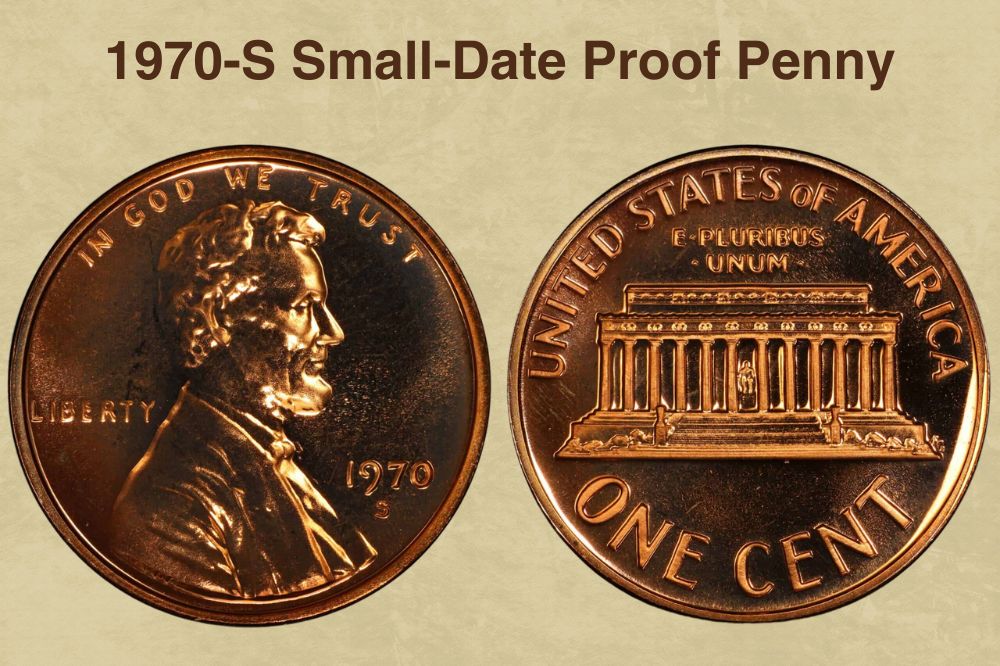
The 1970-S Small Date Proof Red Penny represented the pinnacle of investment opportunity in the Lincoln Memorial series. Following the discontinuation of the copper coin in 1982, the Lincoln Memorial series ceased production in 2008. With only 250,000 to 300,000 of the 1970-S Small Date PR RD Penny minted out of a total of 2.6 million Proof coins, its scarcity rivals that of classic American rare coins.

This coin represents not only the final generation of traditional copper Proof-quality coins but also perfectly combines Small Date scarcity with San Francisco proof technology’s premium appeal, occupying an extraordinary position in portfolio strategy.

Its value is equally impressive, with Red versions selling for up to $1,323 in PR66 condition. Red-Brown and Brown versions, despite surface oxidation, retain significant investment appeal because Small Date scarcity drives value appreciation regardless of color.

1970-S Small Date (PR RD) Penny Price/Grade Chart

Price by 1-70 Grade (Latest Auction Records Included)

Updated: 2026-02-04 01:00:58

Historical auction records demonstrate consistent outperformance versus broader numismatic market trends across multiple economic cycles.

Date PlatformPrice Grade

The sustained investment-grade market activity reflects institutional recognition of this coin series.

Market activity: 1970-S Small Date (PR RD) Penny 

1970-S Small Date PR RD FS-1402 Penny Value

1970-S Small Date PR RD FS-1402 Penny Value

The challenge in collecting the 1970-S Small Date PR RD FS-1402 Penny stems from San Francisco’s dual-center minting system. With approximately 250,000 to 300,000 Small Date PR RD FS-1402 Pennies dispersed among standard proof sets, collectors must meticulously examine each 1970s-S proof coin under magnification in the absence of external authentication. This turns routine inspection of proof coin sets into a forensic analysis in numismatics.

This authentication challenge has intensified market segmentation, with standard-preserved red cents valued at between $50 and $750, while DCAM cents can reach $220 to $8,740.

Meanwhile, market trends indicate that the premium for professionally graded red cents is increasing, as collectors recognize that the grading technology has become more valuable than the coins themselves.

Red-brown and brown specimens require higher expertise to grade, as oxidation can mask the key date compression features that define the varieties, thereby creating additional collecting obstacles that limit market participation.

1970-S Small Date (PR RD) Penny FS-1402 Price/Grade Chart

Price by 1-70 Grade (Latest Auction Records Included)

Updated: 2026-02-04 01:00:58

The comprehensive auction record documentation demonstrates how authentication difficulty directly drives value appreciation in modern variety collecting.

Date PlatformPrice Grade

Sustained market activity reflects the variety’s emergence as the ultimate test of technical collecting competence within the Lincoln Memorial proof series.

Market activity: 1970-S Small Date (PR RD) Penny FS-1402 


1970-S Small Date CAM Penny Value

1970-S Small Date CAM Penny Value

The 1970-S Small Date CAM penny requires collectors to master two identification techniques simultaneously: recognizing the compressed “High 7” date configuration while evaluating subtle contrast differences distinguishing CAM penny, DCAM, and standard proof pennies. And the coin’s great difficulty in authentication stems from the latter.

Because time deteriorates improperly stored coins, original CAM version, DCAM version whose contrast diminishes after 50 years, and standard proof coins that never had a noticeable frosting effect become difficult to distinguish with the naked eye.

Furthermore, the San Francisco Mint was in the process of transitioning from the acid-etching to the sandblasting technique at that time, the Cameo production was process inconsistent throughout the year.

Based on contrast intensity and date compression clarity, 1970-S Small Date CAM pennies can sell for up to $780. Market trends show increasing premiums for coins that simultaneously possess both diagnostic characteristics without compromise.

1970-S Small Date CAM Penny Price/Grade Chart

Price by 1-70 Grade (Latest Auction Records Included)

Updated: 2026-02-04 01:00:58

The systematic auction record patterns reveal how dual authentication requirements create distinctive value progression compared to single-variety collecting challenges.

Date PlatformPrice Grade

Market activity demonstrates growing collector sophistication as participants recognize that CAM designation mastery represents an intermediate step toward advanced Lincoln Memorial

Market activity: 1970-S Small Date CAM Penny 

1970-S Small Date CAM FS-1402 Penny Value

1970-S Small Date CAM FS-1402 Penny Value

The 1970-S Small Date CAM FS-1402 one-cent coin has set a precedent for international collectors in researching transitional minting techniques. This coin became the first Lincoln Memorial Proof coin to receive a systematic FS (First Strike) classification, which not only acknowledges the rarity of the version but also the differences in production quality, and has profoundly influenced the global coin classification system.

The identification of FS-1402 has revolutionized the field of variety collecting, and international distributors and auction houses have also begun adopting analogous categorization methodologies to systematically classify their contemporary collections.

European numismatic journals have started to reference the American FS numbering system when discussing their own Proof coin varieties, while Asian collectors have taken the 1970-S Small Date coin as a case study to understand how technological transitions can create enduring collectible categories.

The global influence of this variety extends beyond mere collecting—it has proven that post-1965 U.S. coins contain truly rare varieties worthy of serious attention, fundamentally changing the international perception of the value of “modern” coins.

1970-S Small Date CAM Penny FS-1402 Price/Grade Chart

Price by 1-70 Grade (Latest Auction Records Included)

Updated: 2026-02-04 01:00:58

Professional grading determines the technical quality of these coins, but auction records reveal their actual market performance and collector demand.

Date PlatformPrice Grade

The sustained international market activity reflects worldwide recognition of American variety classification leadership established through examples like the FS-1402 designation system.

Market activity: 1970-S Small Date CAM Penny FS-1402


1970-S Small Date DCAM Penny Value

1970-S Small Date DCAM Penny Value

The 1970-S Small Date DCAM penny represents the pinnacle of San Francisco proof coin striking processes. Die technicians employed revolutionary sandblasting techniques, replacing the inconsistent acid-etching processes of previous years, creating ultimate contrast between heavily frosted Lincoln portrait details and mirror-like fields.

This Deep Cameo designation originated from San Francisco’s masterful multi-stage die preparation processes. Proof dies received intensive frosting treatment, creating sharp design edges that contrasted sharply with perfectly polished fields.

This technical achievement required precise timing in die preparation cycles to prevent over-frosting from affecting detail clarity. DCAM specimens display the compressed “High 7” date configuration most dramatically, with frosted numerals appearing to float above mirror surfaces with three-dimensional depth, transforming humble Lincoln pennies into miniature sculptures.

This combination of variety scarcity and technical excellence can reach $8,740 in optimal preservation conditions.

1970-S Small Date DCAM Penny Price/Grade Chart

Price by 1-70 Grade (Latest Auction Records Included)

Updated: 2026-02-04 01:00:58

These technical achievements create distinctive documentation patterns in comprehensive auction record analysis that separate DCAM specimens from all other 1970-S varieties.

Date PlatformPrice Grade

Market activity consistently reflects collector recognition of this variety’s position as the ultimate expression of San Francisco’s proof minting capabilities during the final profitable era of copper cent production.

Market activity: 1970-S Small Date DCAM Penny 

1970-S Small Date DCAM FS-1402 Penny Value

1970-S Small Date DCAM FS-1402 Penny Value

The 1970-S Small Date FS-1402 DCAM penny represents a watershed moment in modern American numismatics, being one of the most sought-after post-1950 Lincoln cent varieties created by the San Francisco Mint.

This iconic “High 7” variety, formally cataloged as FS-1402 in the authoritative Cherrypickers’ Guide by Bill Fivaz and J.T. Stanton, transformed from an overlooked mint product into one of the cornerstone treasures for Lincoln Memorial series collectors.

This refined coin is renowned for its perfectly aligned date numerals and the typically weak “LIBERTY” inscription, demonstrating the precision challenges faced by modern minting while creating a lasting legacy that continues to influence collectors’ behavior and market dynamics half a century later.

The auction records for this variety reveal its consistent market performance and growing collector recognition.

Date PlatformPrice Grade

Market activity data demonstrates sustained interest from both variety specialists and Lincoln cent completists, reflecting its established position in the numismatic hierarchy.

Market activity: 1970-S Small Date DCAM Penny FS-1402


1970-S Large Date PR RD Penny Value

1970-S Large Date PR RD Penny Value

The 1970-S Large Date PR RD penny serves as an affordable alternative to its famous Small Date counterpart. While Large Date proof coin scarcity is often overshadowed by Small Date versions, it possesses superior investment stability.

Except for the perfect PR70 selling for $2,530 achieving a significant lead, other grades price between $10-20 with minimal price gaps between grades, making it an ideal entry choice for collectors building complete Lincoln Memorial sets. Unlike scarce varieties, Large Date proof coins have sustained appreciation potential and easy identification.

This variety distinguishes itself through what numismatists call the “Low 7” characteristic—where digit “7’s” top sits notably below the imaginary plane connecting other numerals, forming a visual feature that even beginners can immediately distinguish from precious Small Date varieties.

1970-S Large Date (PR RD) Penny Price/Grade Chart

Price by 1-70 Grade (Latest Auction Records Included)

Updated: 2026-02-04 01:00:58

Recent auction data indicates steady and predictable appreciation trends, quite attractive for conservative numismatic investment portfolios.

Date PlatformPrice Grade

Current market activity reflects collectors seeking reliable proof coin specimens, making this variety a cornerstone of advanced 1970s Lincoln Memorial collecting strategies.

Market activity: 1970-S Large Date (PR RD) Penny 


1970-S Large Date CAM Penny Value

1970-S Large Date CAM Penny Value

Although 1970-S Large Date CAM coin market prices consistently struggle to reach the heights of their Small Date siblings, finding truly exceptional coins that can demonstrate the crucial cameo contrast essential to this proof coin remains quite difficult.

Market trends reveal clear differences between ordinary specimens and top-tier examples. A PR 65 CAM coin sold for merely $11, while a PR 69 CAM coin achieved $46, highlighting the impact of surface quality and cameo completeness clarity on coin values.

1970-S Large Date CAM Penny Price/Grade Chart

Price by 1-70 Grade (Latest Auction Records Included)

Updated: 2026-02-04 01:00:58

The auction records for this variety demonstrate its steady performance across different grade levels.

Date PlatformPrice Grade

Current market activity reflects sustained interest from proof set collectors and Lincoln Memorial series completists seeking quality over rarity.

Market activity: 1970-S Large Date CAM Penny 


1970-S Large Date DCAM Penny Value

1970-S Large Date DCAM Penny Value

The 1970-S Large Date DCAM penny represents the final generation of Deep Cameo proof coins prepared using traditional acid-washing treatment methods. During the 1950-1970 period, San Francisco Mint technicians’ acid-washing processes could only maintain Deep Cameo quality production for approximately 50-100 strikes before acid-etched frost gradually disappeared.

This inherent limitation created natural scarcity among 1970 Deep Cameo specimens, with typically less than 1% of total production achieving highest contrast levels.

Revolutionary change occurred in 1971 when the mint abandoned acid-etching techniques in favor of sandblasting technology, allowing each die pair to produce thousands of deep cameo-quality strikes instead of mere dozens. However, this also reduced DCAM proof coin scarcity in subsequent years compared to the 1970 version.

1970-S Large Date DCAM Penny Price/Grade Chart

Price by 1-70 Grade (Latest Auction Records Included)

Updated: 2026-02-04 01:00:58

The auction records reflect this technological significance, with collectors specifically seeking examples from this final acid-wash generation.

Date PlatformPrice Grade

Market activity demonstrates sustained appreciation for the unique aesthetic qualities achievable only through these traditional preparation methods.

Market activity: 1970-S Large Date DCAM Penny 

Also Read: Top 100 Most Valuable Modern Pennies Worth Money (1959 – Present)


Rare 1970 Penny Error List

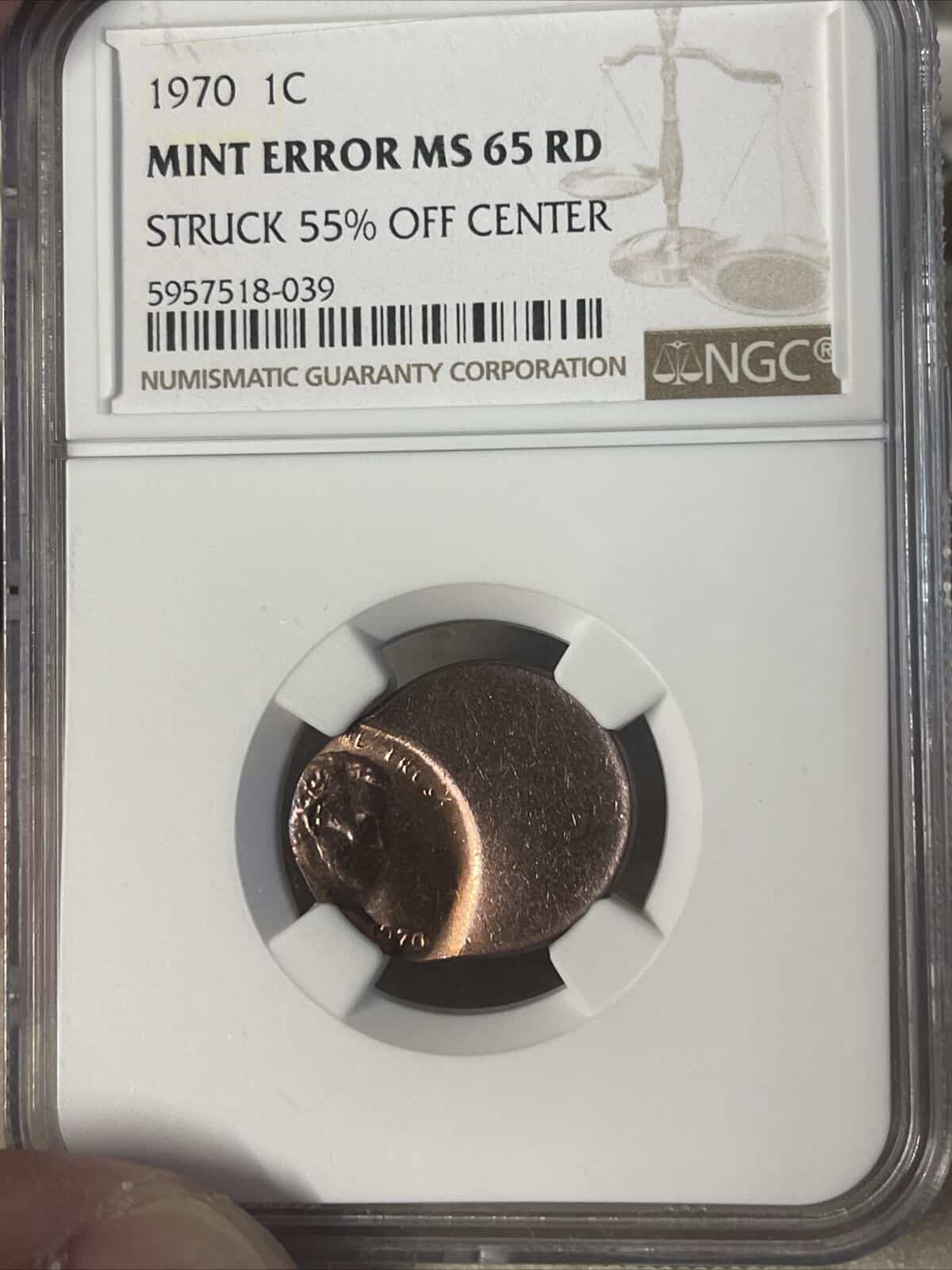
While most 1970 pennies are worth only face value, certain error varieties can command significant premiums from collectors hunting these scarce minting anomalies.

1. 1970-S Double Die Obverse Erros

1970-S Double Die Obverse Erros

The 1970-S Double Die Obverse stands as the third rarest doubled die variety in the entire Lincoln cent series, overshadowed only by the legendary 1955 and 1958 examples. With just 26 certified examples known between major grading services—half the population of the famous 1969-S DDO—this variety showcases dramatic doubling on “LIBERTY,” “IN GOD WE TRUST,” and the date that’s visible even without magnification.

Recent auction records show MS-65 RD examples commanding around $4,080, while the finest MS-66 RD specimens have achieved significantly higher premiums at major auction houses.

CoinVaueChecker App 10

Red-Brown (RB) examples typically trade for 60-70% of full Red values, while Brown (BN) specimens command roughly 40-50% of RD prices, though their extreme scarcity ensures strong collector demand across all color designations.

First publicized in Coin World in 1976 after its initial 1974 discovery, this variety represents a defining moment when doubled die collecting gained serious momentum among Lincoln cent specialists.

1970-S Double Die Obverse Penny (RD) Price/Grade Chart

Price by 1-70 Grade (Latest Auction Records Included)

Updated: 2026-02-04 01:00:58

1970-S Double Die Obverse Penny (RB) Price/Grade Chart

Price by 1-70 Grade (Latest Auction Records Included)

Updated: 2026-02-04 01:00:58

1970-S Double Die Obverse Penny (BN) Price/Grade Chart

Price by 1-70 Grade (Latest Auction Records Included)

Updated: 2026-02-04 01:00:58

For instant grade verification and current market values, you can quickly assess your coin’s worth using our CoinValueChecker App, which provides real-time evaluations across different grading standards.

CoinValueChecker APP Screenshot3
CoinValueChecker APP Screenshot

2. 1970-S DDO FS-101 Erros

1970-S DDO FS-101 Erros

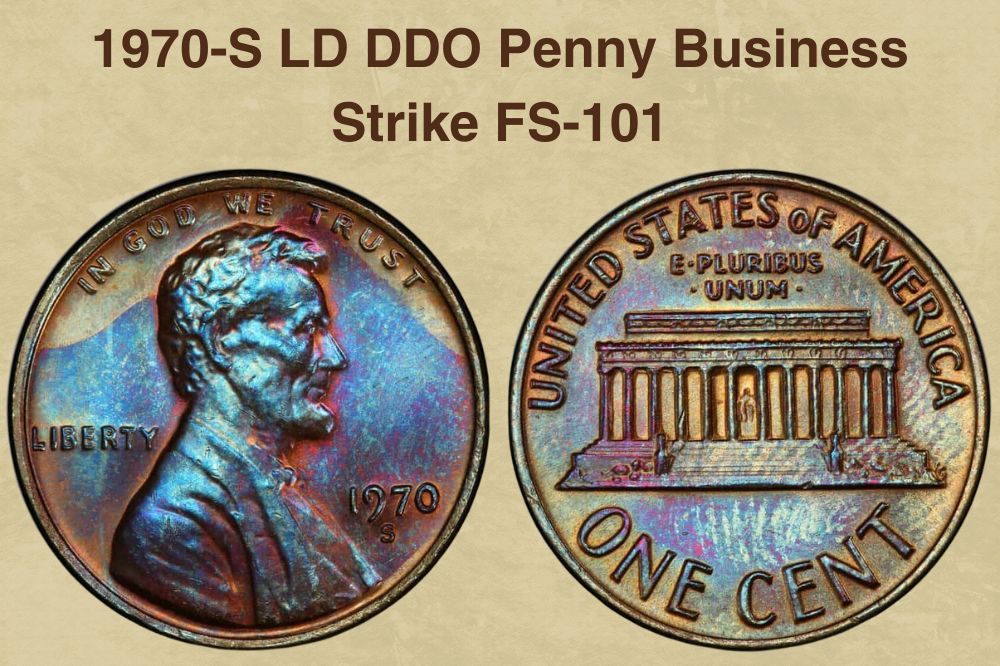
The 1970-S doubled die obverse FS-101 escaped the San Francisco Mint’s precision inspection work to become one of the most famous doubled die coins in American numismatics. While its fame is secondary to the legendary 1958 and 1969-S versions, this coin’s prominent separation of “LIBERTY” and “IN GOD WE TRUST” lettering creates superior visual impact.

Around 1976, Walter Breen recorded it as Breen-2255 in his comprehensive encyclopedia. The combination of technical excellence and historical documentation makes FS-101 a benchmark variety that continues to influence modern doubled die collecting standards and market valuations.

1970-S Double Die Obverse Penny FS-101 (RD) Price/Grade Chart

Price by 1-70 Grade (Latest Auction Records Included)

Updated: 2026-02-04 01:00:58

1970-S Double Die Obverse Penny FS-101 (RB) Price/Grade Chart

Price by 1-70 Grade (Latest Auction Records Included)

Updated: 2026-02-04 01:00:58

1970-S Double Die Obverse Penny FS-101 (BN) Price/Grade Chart

Price by 1-70 Grade (Latest Auction Records Included)

Updated: 2026-02-04 01:00:58

3. 1970-S LD DDO FS-103 Erros

1970-S LD DDO FS-103

The 1970-S large date DDO FS-103 error coin differs from its legendary sibling FS-101 in that the double die error mainly occurs in the “0” of the date. Although the DDO is not very obvious, this version of the coin holds a unique position in the highly sought-after 1970-S error coin series due to its “affordable” price.

It offers a relatively accessible entry point for coin collectors, with the MS66 red variety commanding a premium of $456, while the reddish-brown variety provides a mid-range investment opportunity typically around $130. The brown variety represents the most affordable option, with prices remaining in the tens of dollars.

This indicates that the coin has broad appeal to collectors with various budget ranges. This tiered pricing structure makes FS-103 both a reasonable collecting goal and a potential stepping stone for collectors to advance to FS-101.

1970-S LD DDO Penny FS-103 (RD) Price/Grade Chart

Price by 1-70 Grade (Latest Auction Records Included)

Updated: 2026-02-04 01:00:58

1970-S LD DDO Penny FS-103 (RB) Price/Grade Chart

Price by 1-70 Grade (Latest Auction Records Included)

Updated: 2026-02-04 01:00:58

1970-S LD DDO Penny FS-103 (BN) Price/Grade Chart

Price by 1-70 Grade (Latest Auction Records Included)

Updated: 2026-02-04 01:00:58

4. 1970-S DDO LD/SD FS-102 Erros

1970-S DDO LD/SD FS-102 Errors

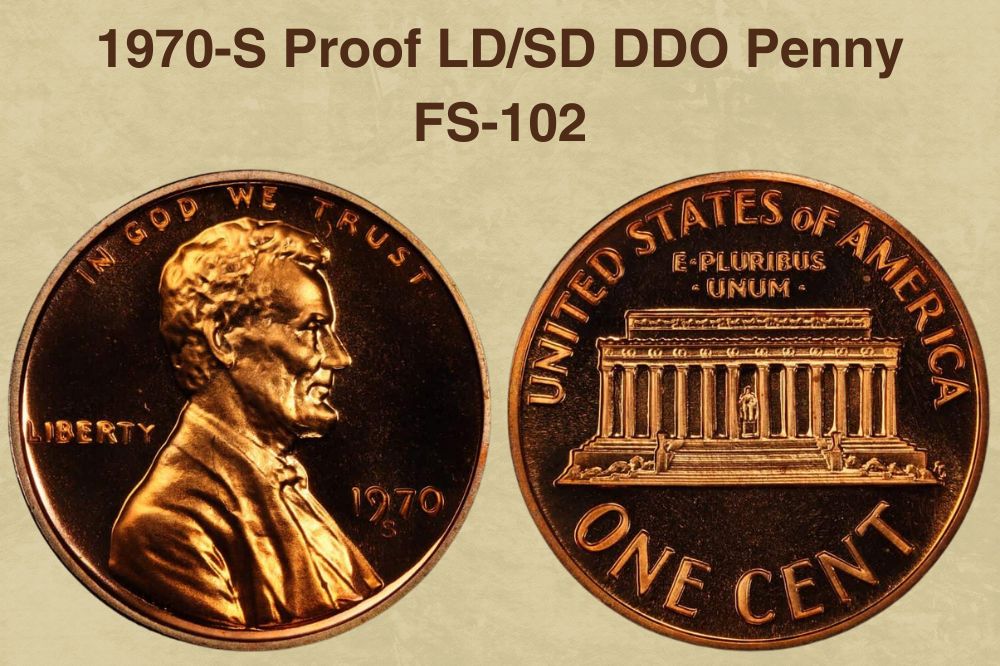
The 1970-S FS-102 DDO is actually a unique error resulting from a mint worker overlapping the large date with the small date. Despite its reputation being overshadowed by the legendary FS-101, the FS-102 variety provides collectors with easier entry into this elite numismatic treasure category.

PR66 Red specimens sell for $1,290, reflecting both their scarcity and the dramatic visual impact of the doubling error. The FS-102 cameo version’s frosted design contrasting sharply with mirror fields adds another layer of appeal; while the Deep Cameo version represents the ultimate fusion of minting error and proof coin craftsmanship.

1970-S DDO LD/SD Penny FS-102 (RD) Price/Grade Chart

Price by 1-70 Grade (Latest Auction Records Included)

Updated: 2026-02-04 01:00:58

1970-S DDO LD/SD Penny FS-102 (CAM) Price/Grade Chart

Price by 1-70 Grade (Latest Auction Records Included)

Updated: 2026-02-04 01:00:58

5. 1970-S Large Date TDO FS-107 Erros

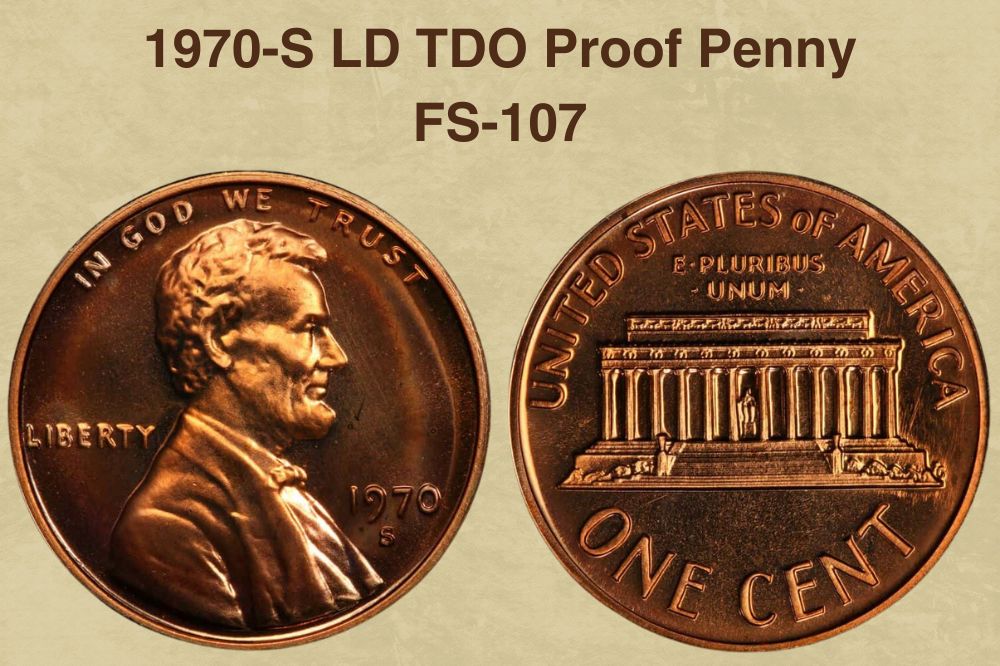
The 1970-S FS-107 Large Date TDO is one of the most challenging varieties in the Lincoln Memorial series, fully demonstrating the remarkable appeal of tripled die errors. Tripled die errors occur when die blanks shift multiple times during hub processing, forming distinctive triple images. This coin’s tripled die error appears primarily in the “IN GOD WE TRUST” and “LIBERTY” inscriptions.

The multiple impression marks create a unique stepped appearance that places this variety among the technical marvels recorded in Bill Fivaz and J.T. Stanton’s authoritative Cherrypickers’ Guide.

Red versions command high prices in proof format, with PF67 RD specimens representing exceptional quality among only 8 coins certified at this grade level. This fascinating error also appears in  Cameo proof versions, with Cameo versions receiving the highest collecting premiums due to their superior contrast.

1970-S Large Date TDO Penny FS-107 (RD) Price/Grade Chart

Price by 1-70 Grade (Latest Auction Records Included)

Updated: 2026-02-04 01:00:58

6. 1970-S LD DDO FS-113 Erros

The 1970-S FS-113 Large Date DDO coin has a unique ghost pattern on the Lincoln portrait and surrounding inscriptions due to its center misalignment. This particular variety, cataloged as FS-030.6 in the Fivaz-Stanton system, exhibits the classic characteristics of Class I doubling—where the secondary image appears as a distinct shadow beneath the primary strike.

With only four examples achieving PR67 RD grade, this variety commands significant premiums, with top-tier RD specimens trading in the thousands of dollars range. The CAM and DCAM versions showcase how the San Francisco Mint’s proof production created additional contrast layers.

The rarity factor becomes particularly pronounced in the highest grades of FS-113 Large Date DDO coins, where the intersection of technical error, proof quality, and preservation creates a perfect storm of numismatic desirability.

1970-S LD DDO Penny FS-113 (RD) Price/Grade Chart

Price by 1-70 Grade (Latest Auction Records Included)

Updated: 2026-02-04 01:00:58

1970-S LD DDO Penny FS-113 (CAM) Price/Grade Chart

Price by 1-70 Grade (Latest Auction Records Included)

Updated: 2026-02-04 01:00:58

Also Read: 42 Rare Penny Errors List with Pictures (By Year)


Where to sell Your 1970 Penny?

Now that you know the value of your coins, do you know where to sell those coins online easily? Don’t worry, I’ve compiled a list of these sites, including their introduction, pros, and cons. 

Check out now: Best Places To Sell Coins Online (Pros & Cons)


1970 Penny Market Trend

Market Interest Trend Chart - 1970 Penny

*Market Trend Chart showing the number of people paying attention to this coin.


FAQ about the 1970 Penny

1. How Rare is the 1970-D Penny?

Not at all. At 2,891,438,900, it had the highest volume of the three mint branches so it’s still quite a common coin. Over 600 samples are known in MS 65 or higher including 4 MS 67+.

2. What is special about a 1970 penny?

1970 pennies mark the end of profitable copper coinage and feature scarce Small Date/Large Date varieties from San Francisco. It was the last year for traditional acid-washed Deep Cameo proofs and produced valuable doubled die errors, making certain varieties highly collectible.

3. Which 1970 pennies are worth money?

San Francisco error varieties are most valuable: 1970-S FS-101 DDO ($38,000+) and 1970-S Small Date DCAM ($18,400). Regular pennies are worth $10-15 uncirculated, with top-grade examples reaching $1,500-4,400. Red specimens command highest prices.

Similar Posts