Coin Value Contents Table
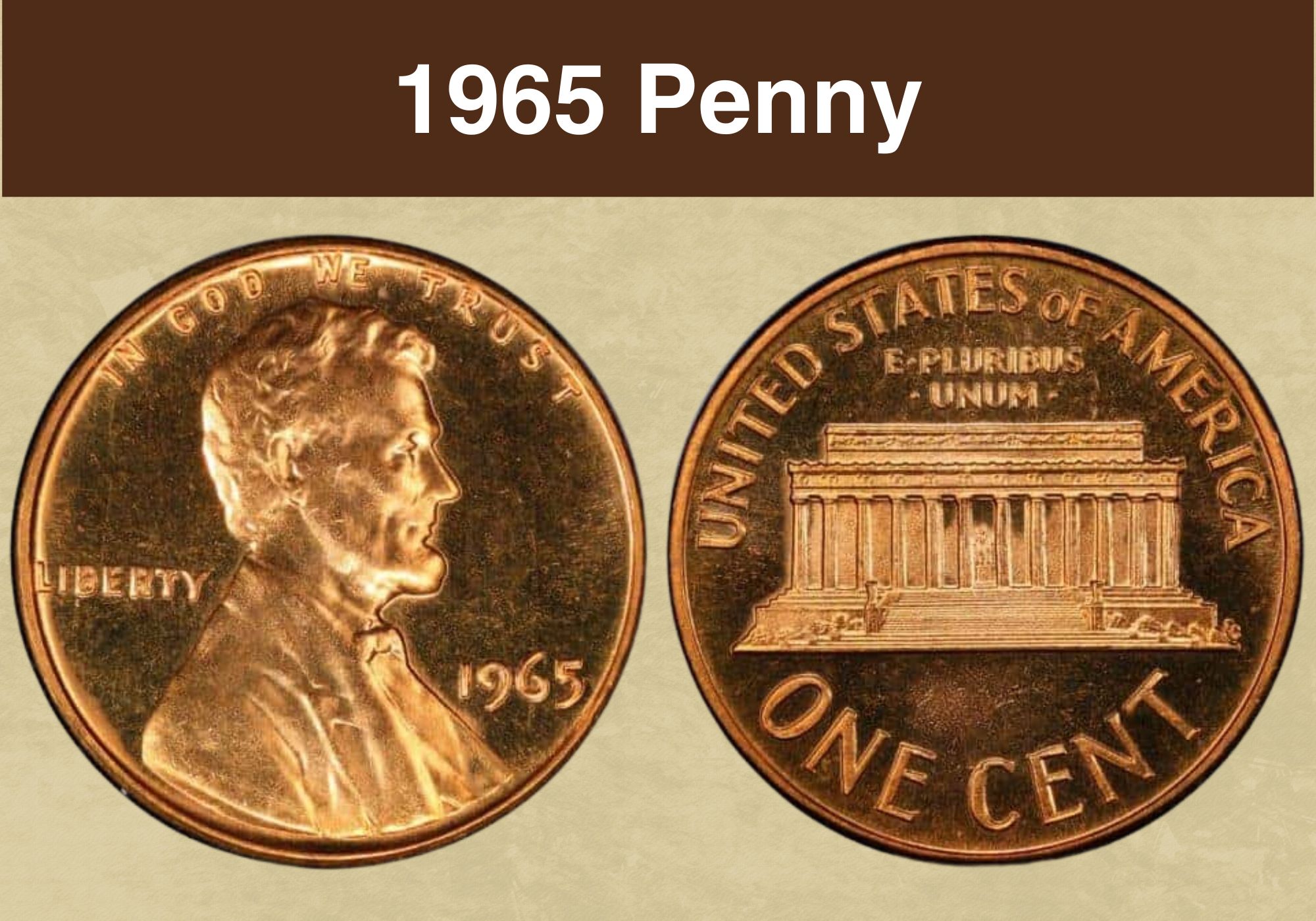
1965 was an important year for American coins. It’s when they all switched to the Johnson Sandwich as a result of the silver spike, coin hoarding, and subsequent shortage. Although pennies had no silver in them, they ended up being stashed as well, just out of habit. So let’s explore the 1965 Penny Value as well as the key cultural and economic factors surrounding it.
1965 Penny Value Chart |
||||
| Coins | MS/SP 60 | MS/SP 63 | MS/SP 65 | MS/SP 67 |
| 1965 No Mint Mark Penny (Red) | – | $5 | $22 | $425 |
| 1965 SMS Satin Finish Penny (Red) | $2 | $6 | $12 | $46 |
History of the 1965 Penny
From the early days of the US Mint, coins were made of gold, silver, or copper. Gold and silver are called specie metals while copper is a base metal. And because specie metals are softer, they had some copper mixed in to help the minting process. Gold coins had 1% copper while silver coins had 10%. As silver got more expensive, the copper was increased to 60%.
While copper is harder than gold or silver, it’s still a relatively soft metal. So the copper coins were sometimes toughened with nickel, zinc, or other metals. Also, metal prices fluctuate, so the mint might change the size of a coin to maintain its monetary value. This happened with pennies in 1856 when they were reduced from 28.5mm (Large Cent) to 19mm (Small Cent).
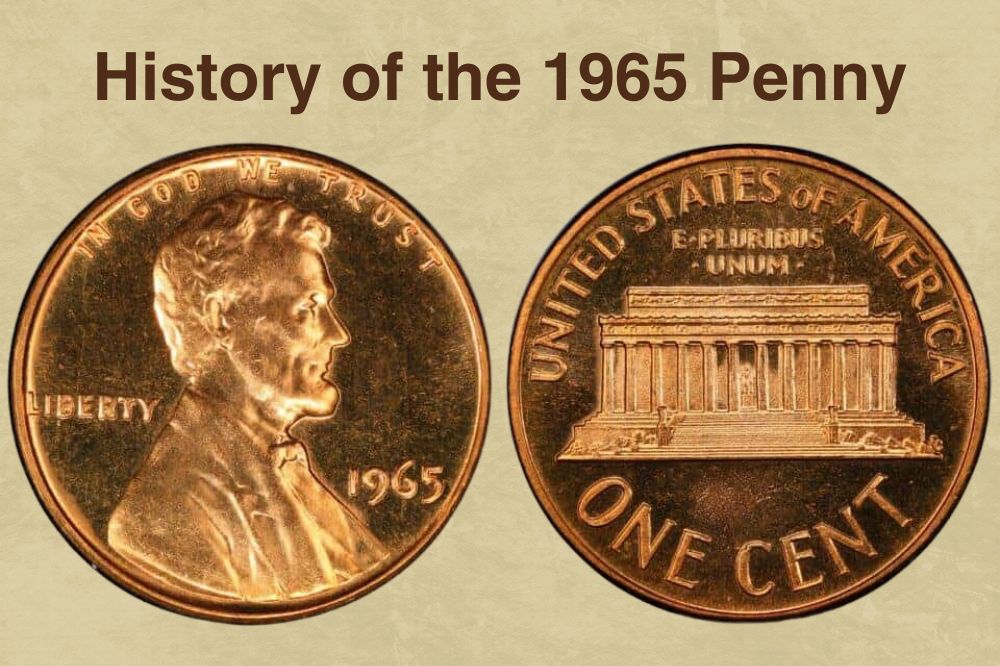
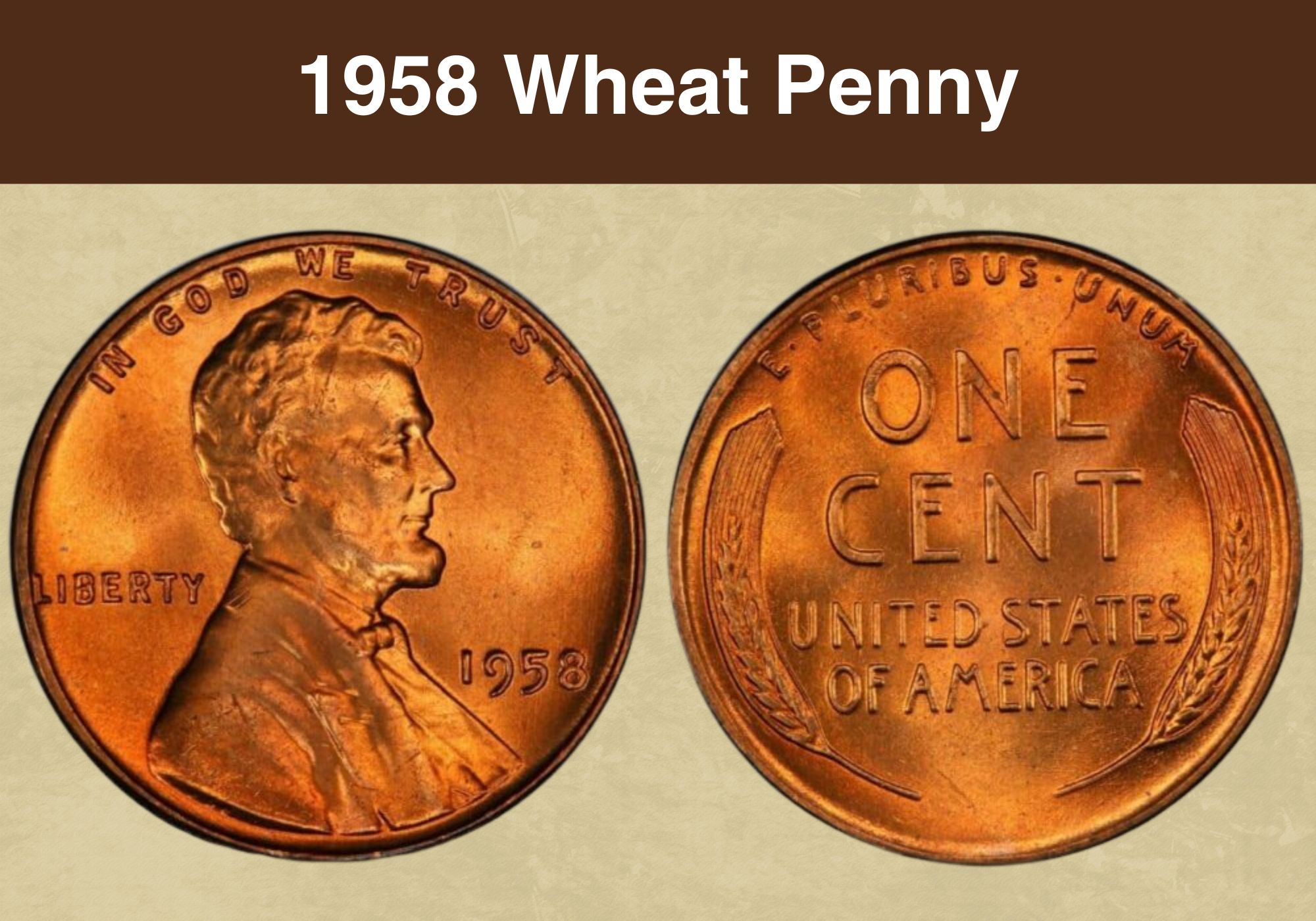
The 1965 Penny was a Small Cent. More specifically, it was a Lincoln Memorial Cent. This design was introduced in 1959 to mark the Sesquicentennial of Abraham Lincoln’s birth. It was a popular icon that continued to be minted until 2008 when it was changed to honor Lincoln’s 2009 Bicentennial. But as we said, 1965 was important in another significant way.
The Exit of Silver from US Coins
That year, the Dime (10c) and Quarter (25c) transitioned from silver coins to cupronickel-clad coins. Their inner layers became pure copper while the outer layers used the 75% copper 25% nickel mixture that was co-opted from Nickels (5c). Half Dollars (50c) got to keep 40% of their silver for another five years before joining the other denominations in cupro-nickel.
The stated reason for these changes was that people were hoarding silver coins and melting them down, which was costing the US Mint a fortune. This behavior was caused by a sharp rise in silver prices. But Mint Director Eva Adams blamed collectors for the coin shortage. So she suggested minting coins without mint marks to deter them. This continued until 1967.
During that period, the mint stopped producing the proof coins that were usually targeted at these same collectors. But there was still demand for a premium strike, so they made Special Mint Sets. These were similar to proof coins in appearance, but it was a last-minute idea. On proof coins, the blanks were burnished i.e. tumbled with stainless steel beads before striking.
Proofs, Special Strikes, and Satin Finish
Since the mint had no time to pre-polish the blanks, they used ordinary coin blanks and struck all the coins with a Satin Finish. Also, unlike other coins that are struck two or more times, Satin Finish coins were only struck once to save time, but they were struck with extra pressure to ensure all the details came out clearly. The Special Strikes are graded SMS or SP.
All this kerfuffle interfered with the mint dates and mint volumes for various coins. Since so many coins were being hidden in drawers, the mint retained the 1964 date on Quarters and Pennies until 1966. This meant lots of 1c and 25c dated 1964 were actually produced in 1965 and 1966. Roughly 1M of the 1965 Pennies were coined in 1965. The rest were made in 1966.
Another factor is the San Francisco Mint. It was closed from 1955 to 1965 due to low coin demand, but in 1965, it resumed production. This mint branch produced the best quality of all the US Mints, and within ten years, it had officially become the home of proof coins and made them exclusively. This also led to fewer mint mistakes since it was a dedicated branch.
Also read: 12 Most Valuable Lincoln Penny Worth Money
Features of the 1965 Penny
Coins are made from blank discs called planchets. The heads side of a coin is the obverse and the tails side is called the reverse. The thinnest side is the edge and its raised border is called a rim or collar. Some coins have ridges on the edge called reeds. The image on a coin is called its device, the words are mottos or legends, and the coin background is known as the field.
The Obverse of the 1965 Penny
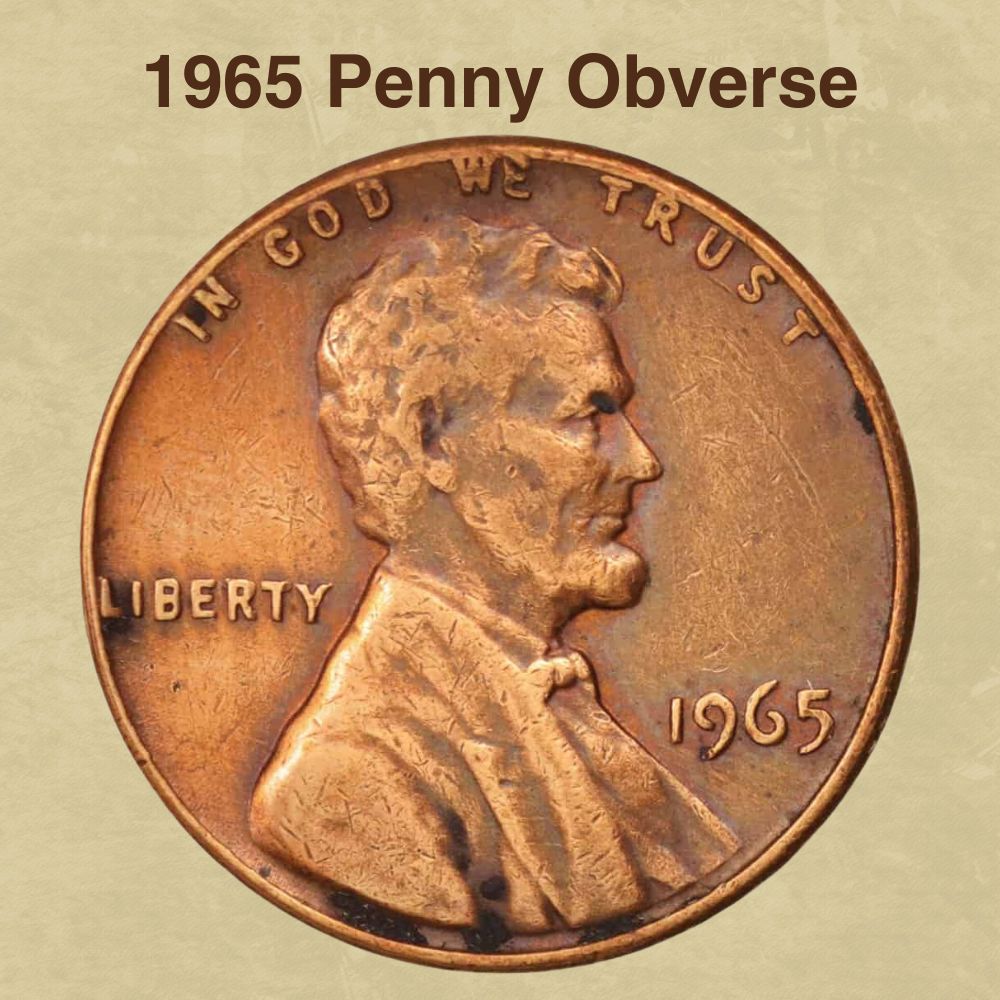
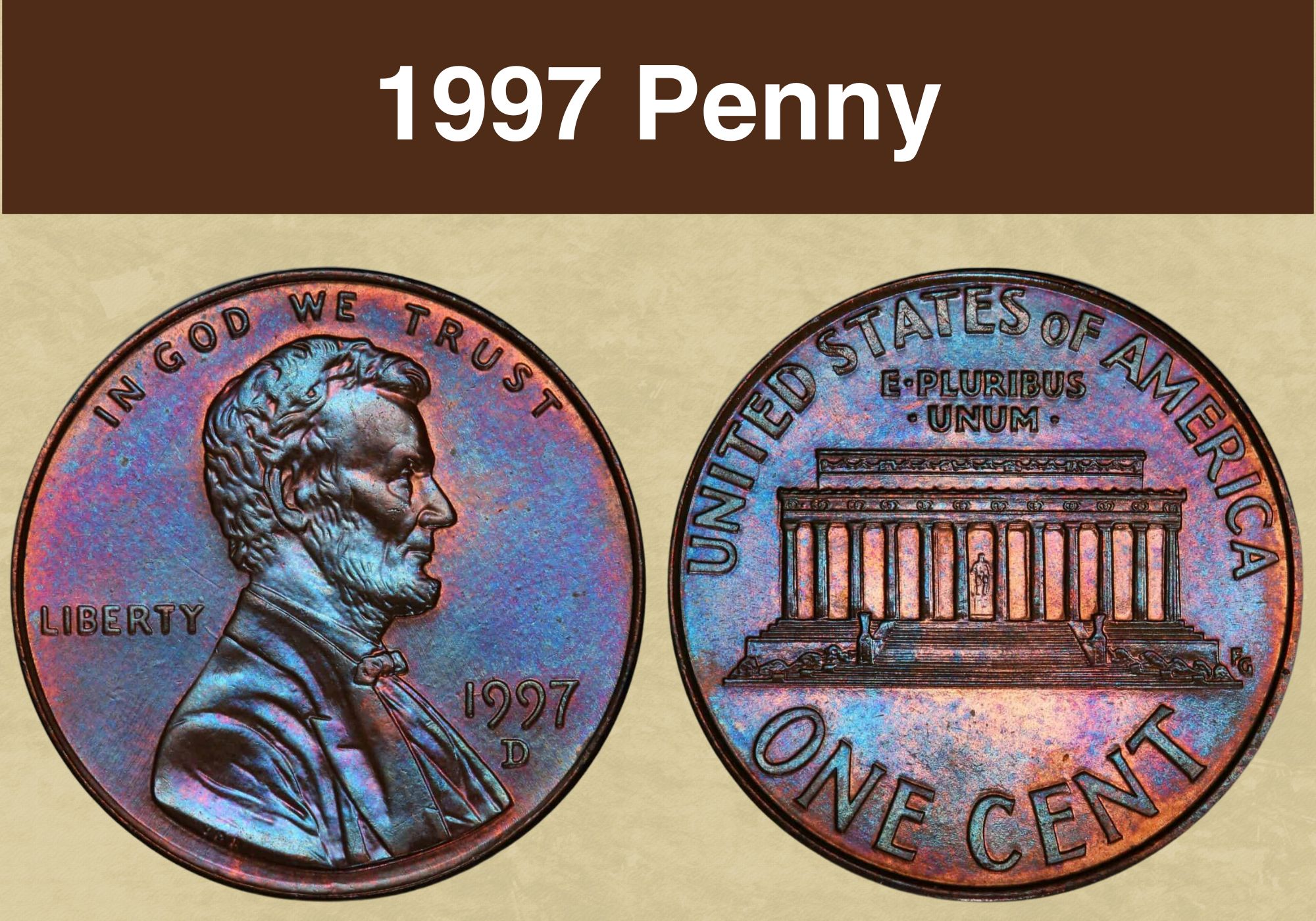
It shows Abraham Lincoln, the 16th President of the United States. He’s facing right, with the motto In God We Trust above his head and the legend Liberty behind his back. He’s wearing a bow tie and jacket. In front of his chest is the mint date, with the mint mark below it. The shoulder cut-off says VDB. These are the initials of the coin designer, Victor David Brenner.
The Reverse of the 1965 Penny
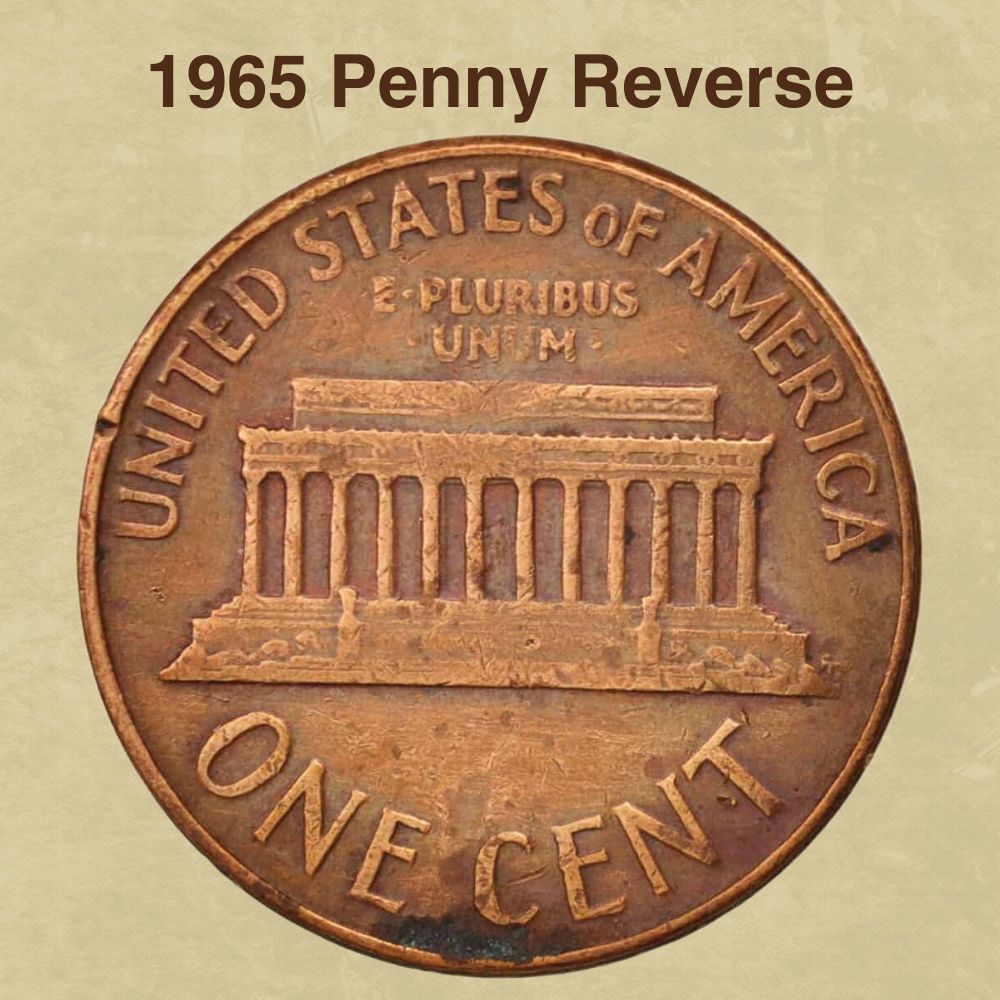
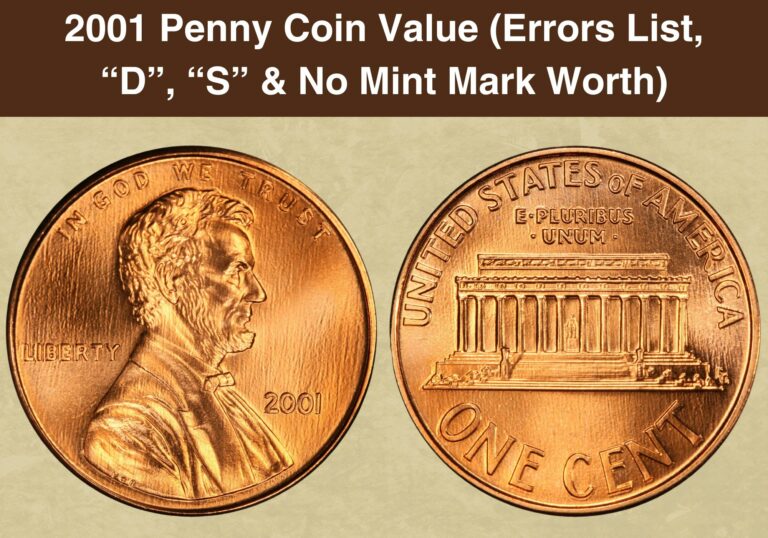
It shows the Lincoln Memorial Building, and you can see Lincoln’s sitting statue through the central pillars. Towards the right corner of the entrance steps, you can see FG for designer Frank Gasparro. The top of the coin reads United States of America. Below that, it says E Pluribus Unum with dots flanking Unum. On the bottom rim of the coin, it says One Cent.
Other Features of the 1965 Penny
The coin has a smooth or plain edge without any reeds. As we mentioned before, this penny is 19.05mm in diameter (0.75”). The 1965 version of the penny weighs 3.11g. It’s 95% copper and 5% zinc. While only a fraction of pennies bearing the 1965 date were minted in 1965, you can’t tell by looking. Only the mint records confirm where and when each 1c coin was made.
Also read: 13 Most Valuable Wheat Penny Worth Money
1965 Penny Grading
Currency is graded using the Sheldon Scale which goes from 1 (Poor) to 70 (Mint State). For coins dated 1965, there’s no proof strike so none of them are graded as PR or PF. Instead, you get SP or SMS for the Special Strike Satin Finish coins. But copper coins are further graded RD for red, RB for reddish-brown, and BN or BRN for brown. It’s the lowest status.
| # | Grade |
|---|---|
| 1 | Basal State-1 |
| 2 | Fair |
| 3 | Very Fair |
| 4, 5, 6 | Good |
| 7, 8, 10 | Very Good |
| 12, 15 | Fine |
| 20, 30 | Very Fine |
| 40 | Extremely Fine |
| 50 | About Uncirculated |
| 60 | Mint State |
| 65 | Mint State |
| 70 | Mint State |
Please check our grading guides to know your coin scale, It’s the necessary step to know the exact value of your coin.
Check out now: How to Grade Lincoln Wheat Penny?
1965 Penny Value Guides
Usually, the value of a coin is dictated by its mint branch and rarity. But as we mentioned, none of these 1965 Pennies have one, so it’s more about the condition of the coin. That said, the mint made Business Strikes or Regular Strikes at all three mint branches. These were the coins meant for everyday use. But Satin Finish coins were only produced in San Francisco.
1965 No-Mint-Mark Penny Value
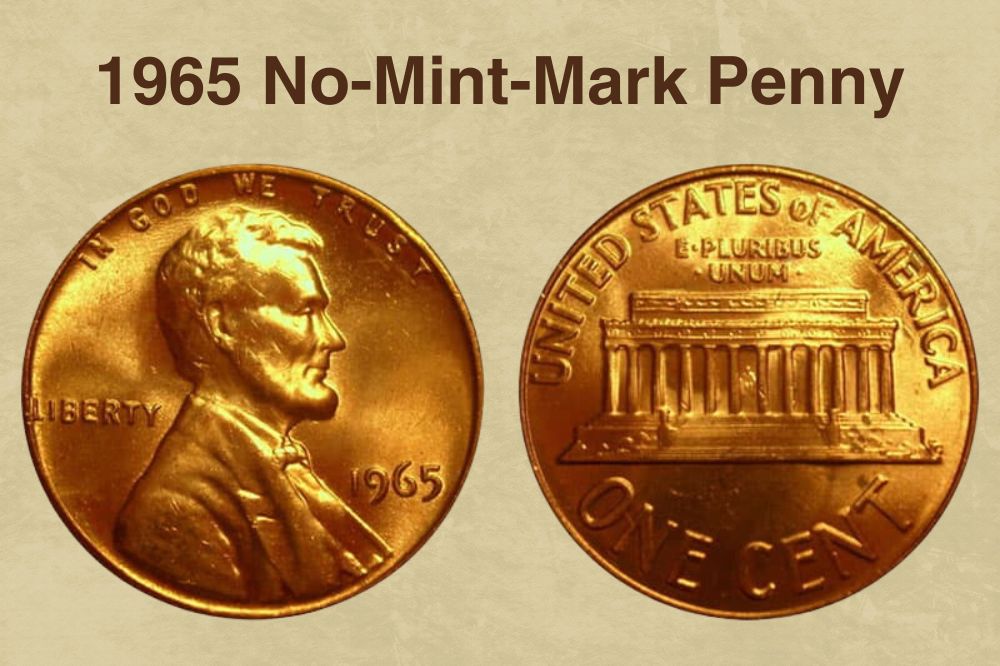
In total, the US Mint made 1,494,864,900 dated 1965. None of them had mint marks, but according to the records, 301,470,000 were made in Philadelphia, 973,364,900 were made in Denver, and 220,030,000 were made in San Francisco. Out of all these 1965 pennies, only 1,085,000 of the Philadelphia coins were minted in 1965. All of the rest were coined in 1966.
Similarly, all the San Francisco and Denver coins dated 1965 were minted in 1966. On 1st May 2009, an MS 62 BN sold for $633. Meanwhile, an MS 67 RB was $690 on 19th January 2012. But on 8th January 2014, an MS 67 RD sold for $7,638. They’re only worth $425 now since PCGS has received 33. But three MS 67+ coins are known, so their estimate is $4,000.
1965 Satin Finish SMS Penny Value
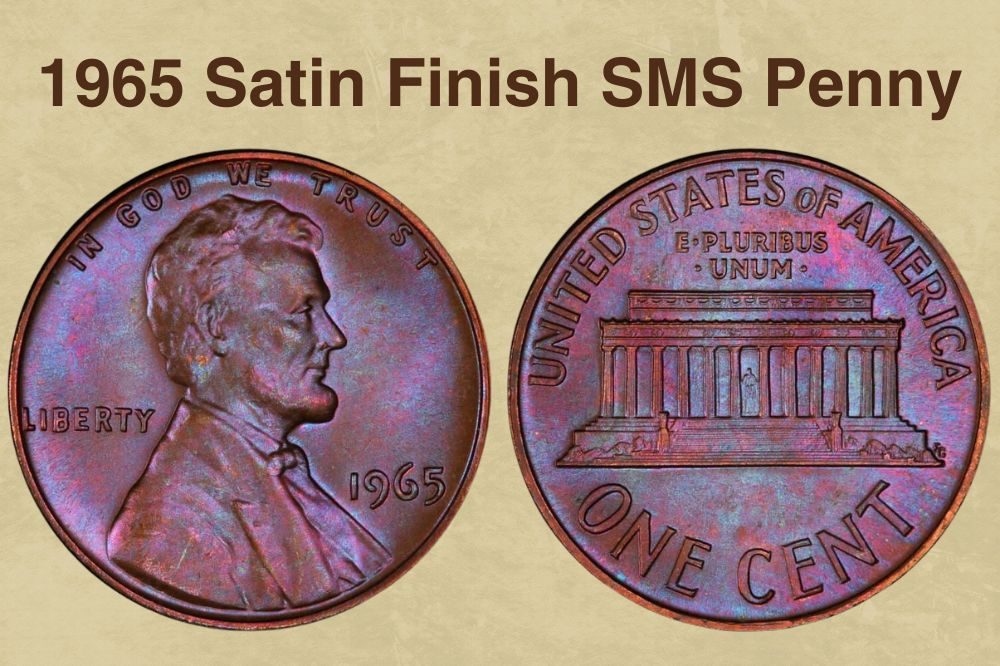
The San Francisco Mint made 2,360,000 Satin Finish Pennies dated 1965. They had no mint marks, and they were all produced in 1966. eBay sales aren’t always consistent, but an SP 66 BN was $250 in 2020 and an SP 67 RB was $260 in 2016. An SP 68 RD went for $2,990 in 2009 while an SP 68 CAM was $1,725 in 2018. Up top, an SP 67 DCAM was $4,140 in 2004.
Also read: 17 Most Valuable Indian Head Penny Worth Money
Rare 1965 Penny Errors List
Today, pennies and nickels have a higher production cost than their face value, so the US Mint makes a loss on them. But for individual investors, older coins with mint mistakes can still earn a profit. Let’s look at some common 1965 Penny Errors and their resale price data.
1965 Penny Mirrored Obverse Die Cap Error
A die cap error is when a planchet gets stuck on the die, blocking the coin below it. As a result, the obstructed coin might have a blurry image or an empty surface. It may also get a sunken or cupped appearance. In this example, the front of the coin was struck correctly but the back was blocked, making the obverse bleed through. In MS 65 RD, this coin was $1,800.
1965 Penny Broadstruck Wheel Mark Error
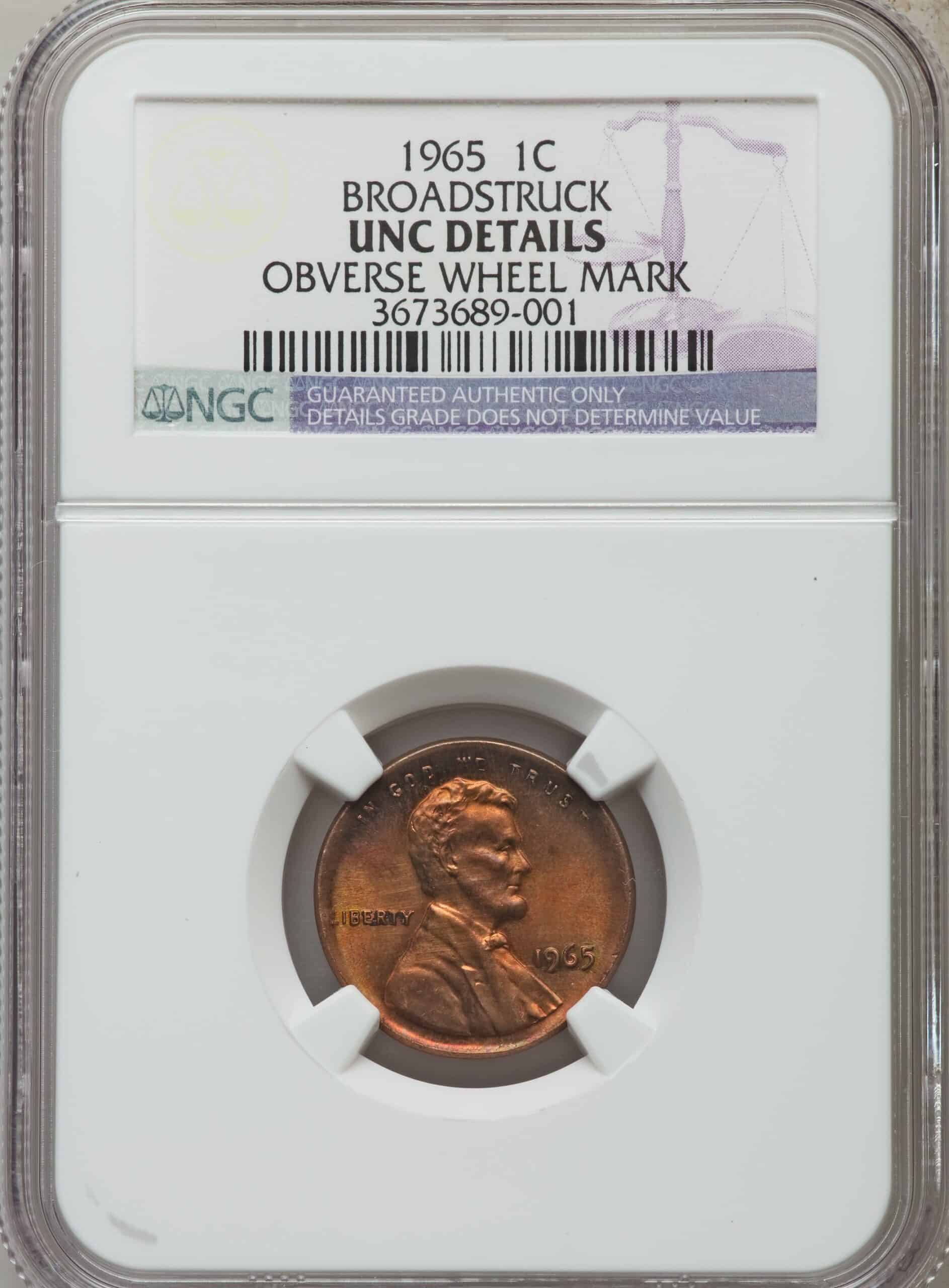
The rim of a coin helps it stack. It also maintains the diameter, thickness, and metal content of the coin, keeping its value consistent. Previously, rims were made using a three-piece detachable collar mold. If any part of the mold came off too soon, the coin lost shape or got thinner on that side aka a broadstrike. Graded Uncirculated Details, it’s only worth $20.
1965 Penny Double Struck Broadstruck Off-Center
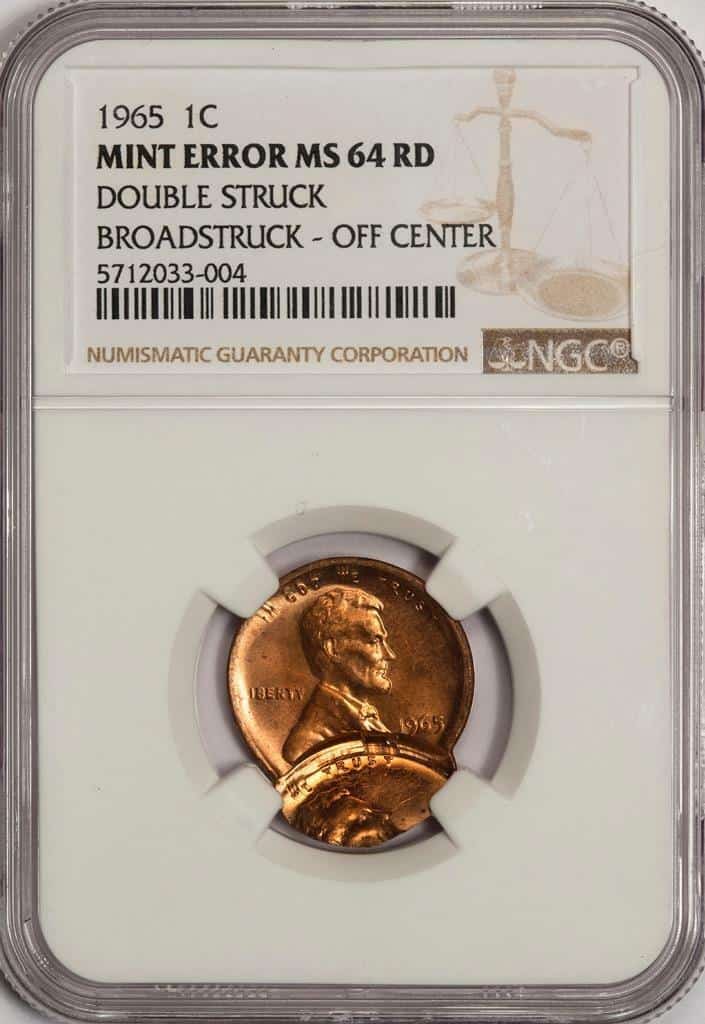
You can easily recognize a broadstrike because the rim is flatter on that part of the coin. The overall diameter might be wider too. But this coin has an additional double strike error i.e. when the die hit the blank the second time, it was partly off the press. This misaligned and overlapped the image, distorting the coin shape. In MS 64 RD, these errors sold for $185.
1965 Penny Clip Error
Planchet sheets go through a blanking machine to be punched into discs. The leftover metal that’s full of holes gets melted and recycled. But if part of it gets back into the press before it’s melted, the coins produced will have curved clips next to the holes. Coins might also have a straight clip if it was near the edge of the planchet sheet. Graded MS 63 RB, it’s worth $20.
1965 Penny Struck on a Defective Planchet Error
The quality of the blank can directly affect the condition of the coin. If the blank was poorly constructed or smelted, it may fall apart or crumble once it gets struck by the die. This is because the pressure and impact disintegrate the metal. On this coin, the defective planchet eroded part of the coin giving it an unpleasantly jagged edge. A 2.7g MS 65 RB sold for $100.
1965 Penny Struck 45% Off-Center on Unusual Planchet
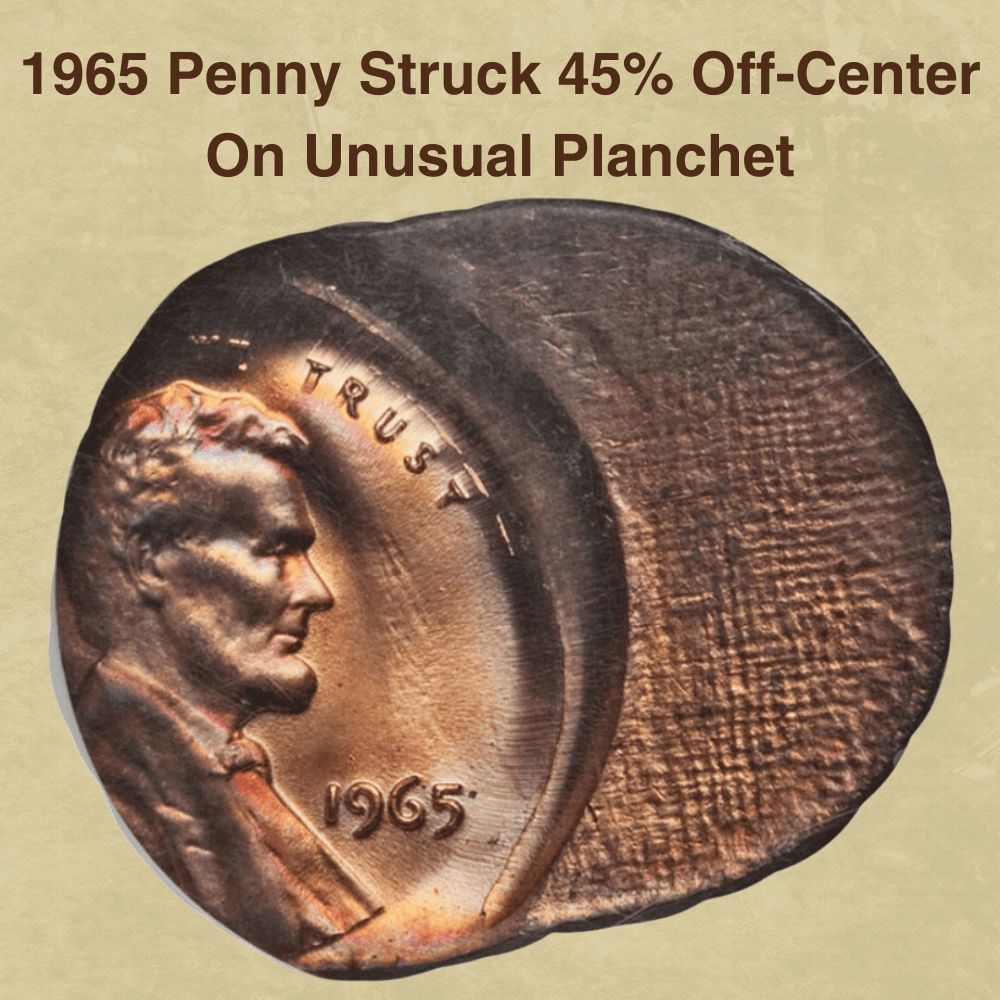
As we mentioned, coins that have multiple errors can increase their cumulative value. Here, the planchet has an odd texture, possibly from being struck through a textured fabric i.e. a piece of cloth got between the blank and the die. Or it was incorrectly annealed so it dried with a rougher finish. It also moved mid-strike so it’s off-center. In MS 67 RB, it’s over $900.
1965 Penny Dropped ‘A’ Reverse Error
This mint error is quite dramatic. At first glance, it looks normal. But if you check the corner of the steps where FG usually sits, you’ll see an extra ‘A’ hanging out by itself. It’s probably from the word America and it got accidentally re-struck on the coin. The front of the coin is slightly misaligned as well, with part of the L in Liberty sliced off. In MS 65 RD, it was $160.
1965 Penny Multi-Strike Error
Unless you have a Special Mint Set coin, a blank is typically struck at least twice to ensure the design is clear. But those additional strikes don’t always land on the same spot. If it’s a slight shift, you get a double-vision effect. But sometimes, the movement is far more drastic. In this case, the 2nd and 3rd strikes were 50% and 70% off respectively. In MS 64 RB, it was $1,000.
1965 Penny Struck on a Clad Dime Planchet
Every planchet sheet has its own metal mix and is punched into different sizes according to its intended denomination. So if a penny is struck on a blank that was meant for a dime, it will end up being the wrong colour. It may also have some words sliced off since a 10c is smaller than a 1c (17.91mm vs 19.05mm). In MS 63, this mint mistake is worth about $300.
Also read: 11 Most Valuable Wheat Penny Errors
Where to Sell Your 1965 penny ?
Now that you know the value of your coins, do you know where to sell those coins online easily? Don’t worry, I’ve compiled a list of these sites, including their introduction, pros, and cons.
Check out now: Best Places To Sell Coins Online (Pros & Cons)
1965 Penny FAQ
How Much is the 1965 Penny Worth?
Depending on its grade and rarity, a 1965 Penny can be anything from $1 to $4,000 in 2023.

I have a 1965 lincoln cent that looks like it is struck in zinc what would its value be?