Coin Value Contents Table
- 1943 nickel value Chart
- History of the 1943 Nickel (Jefferson)
- 1943 nickel Types
- Features of the 1943 Nickel (Jefferson)
- 1943 Nickel Grading
- 1943 Nickel (Jefferson) Value Guides
- 1943 P nickel Value
- 1943 D nickel Value
- 1943 S nickel Value
- Rare 1943 Nickel Error List
- Where to Sell Your 1943 Nickel ?
- FAQ about the 1943 Nickel (Jefferson) Value
The US Mint started producing Jefferson nickels in 1938, just before WWII began. Wartime nickels were five-cent silver-looked coins containing silver besides copper and manganese because the US Army needed all available nickel.
That makes these coins more valuable on the current market than other nickels in the series. The 1943 nickel value depends on the condition and the mint mark, but they are always worth something because of their silver content.
1943 nickel value Chart |
|||||
| Condition | 1943 P nickel | 1942 P nickel (3 Over 2) | 1943 P nickel Doubled Eye | 1943 S nickel | 1943 D nickel |
| Good | $2.20 | $24 | $22 | $1.60 | $1.90 |
| Very good | $2.49 | $36 | $24 | $2.49 | $2.49 |
| Fine | $3.07 | $41 | $29 | $3.07 | $3.07 |
| Very fine | $3.87 | $57 | $36 | $3.87 | $3.87 |
| Extra fine | $4.12 | $115 | $57 | $4.12 | $5.37 |
| AU | $5.37 | $194 | $76 | $5.37 | $6.58 |
| MS 60 | $7.55 | $322 | $145 | $7.55 | $8.81 |
| MS 65 | $24 | $739 | $520 | $24 | $24 |
History of the 1943 Nickel (Jefferson)
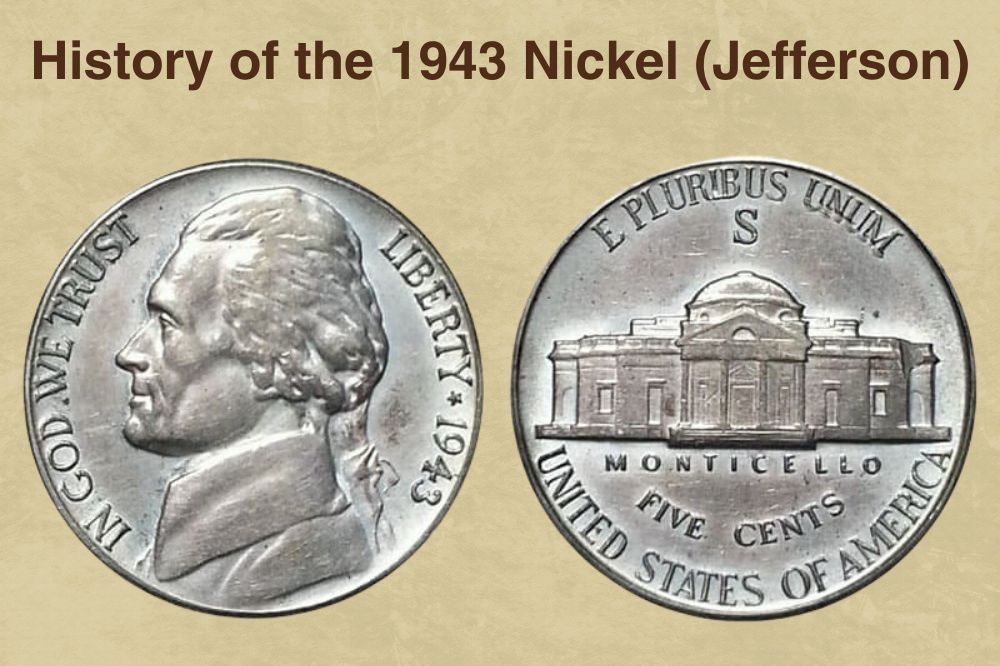
Felix Schlag won $1,000 at the competition with his design for the new Jefferson nickel, beating 390 competitors. That happened only nine years after this German immigrant came to the US.
It was a way for the US Mint to replace the hard-to-mint Buffalo nickel and celebrate future Jefferson’s birthday bicentennial in 1943. Most clad Jefferson nickels minted since 1938 were made of copper and nickel.
However, the so-called war nickels struck from mid-1942 to 1945 contained a different metal combination, including silver. The reason was a nickel shortage because the Army needed it.
So, it happened that these unique coins were produced right on the President’s 200th birth anniversary. Besides that fact, the short minting period and silver content make these nickels collectible nowadays.
1943 nickel Types |
||
| Location | Year | Minted |
| Philadelphia | 1943 P nickel | 271,165,000 |
| San Francisco | 1943 S nickel | 104,060,000 |
| Denver | 1943 D nickel | 15,294,000 |
| Total | / | 390,519,000 |
Also read: Top 10 Most Valuable Nickels Worth Money
Features of the 1943 Nickel (Jefferson)
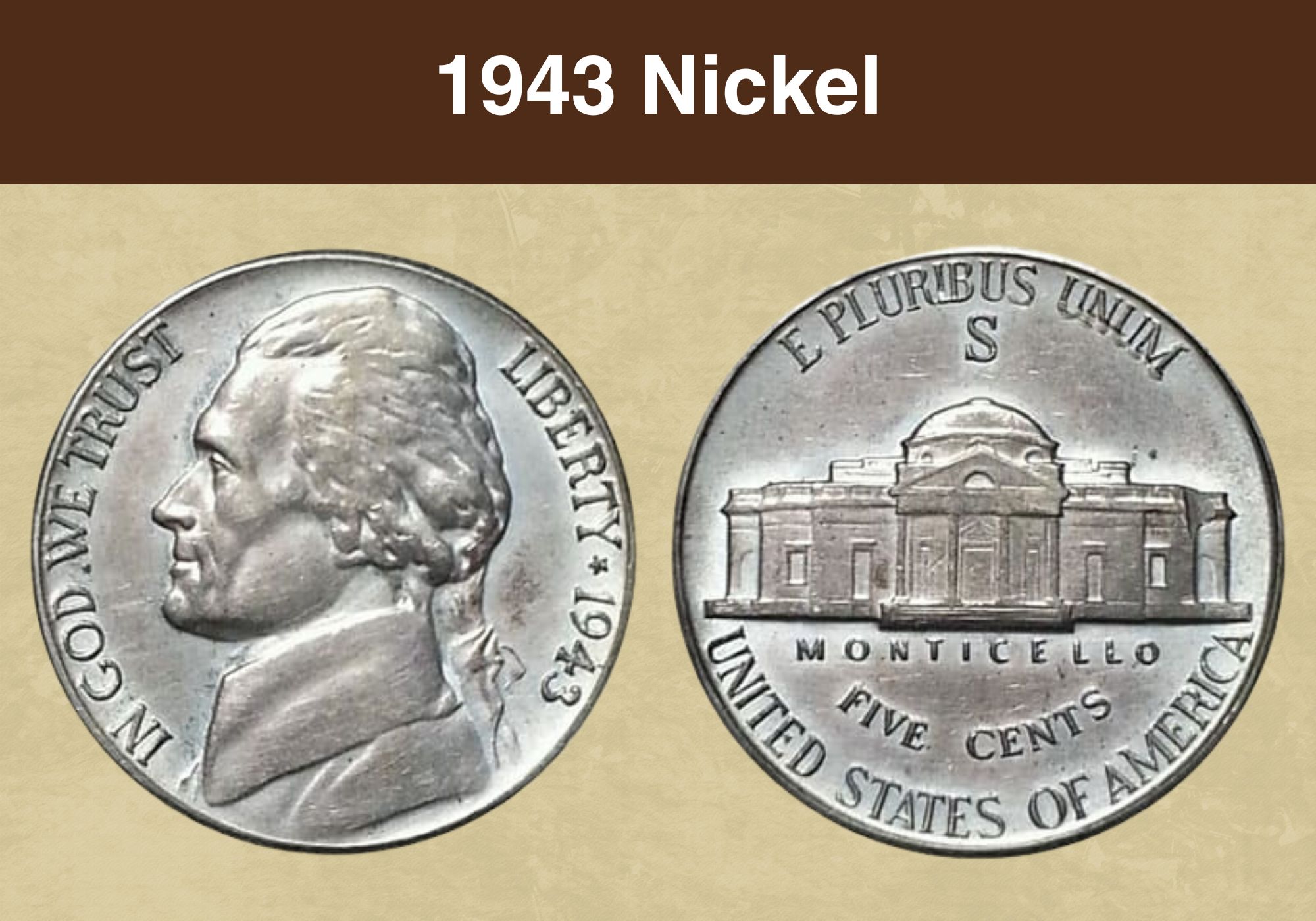
Engraver and designer Felix Schlag created the coin honoring Thomas Jefferson, the 3rd American President. Besides the metal composition and sizable mint mark placed at an atypical position, the 1943 nickel is the same as all others in the series.
The obverse of the 1943 nickel (Jefferson)
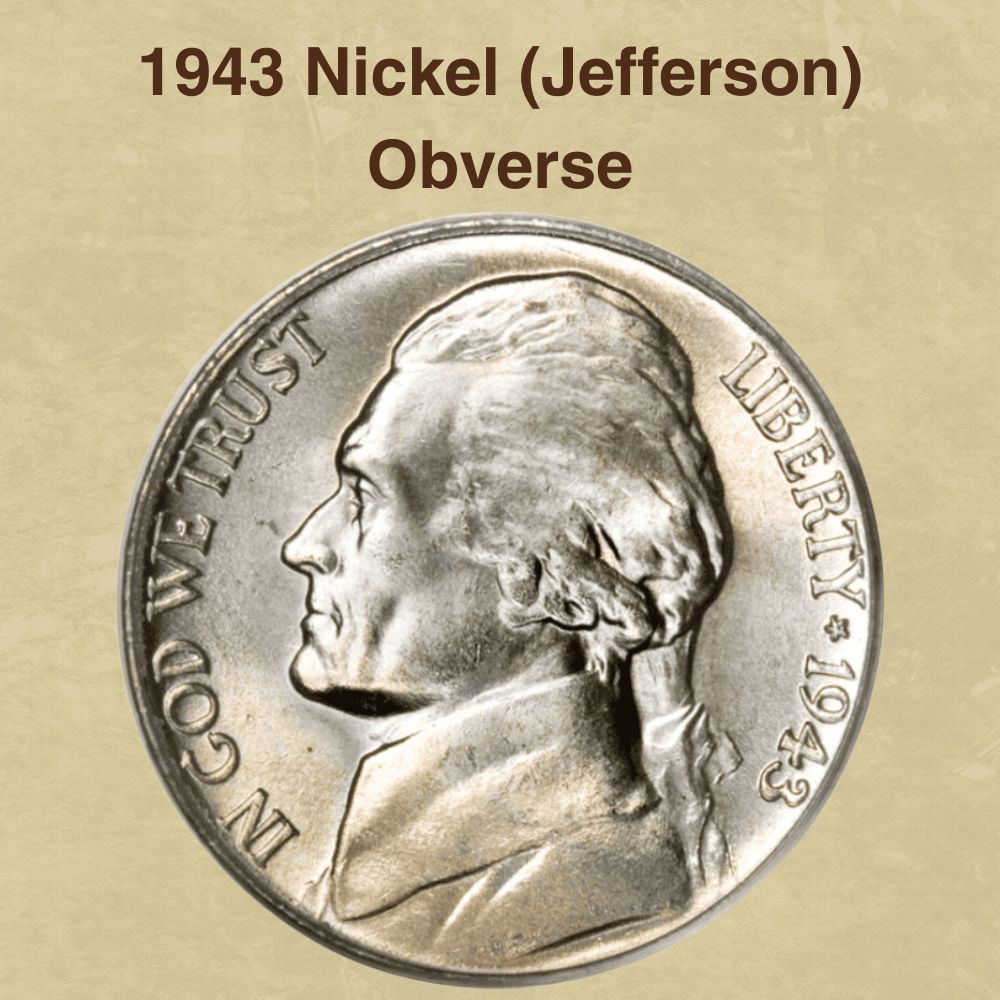
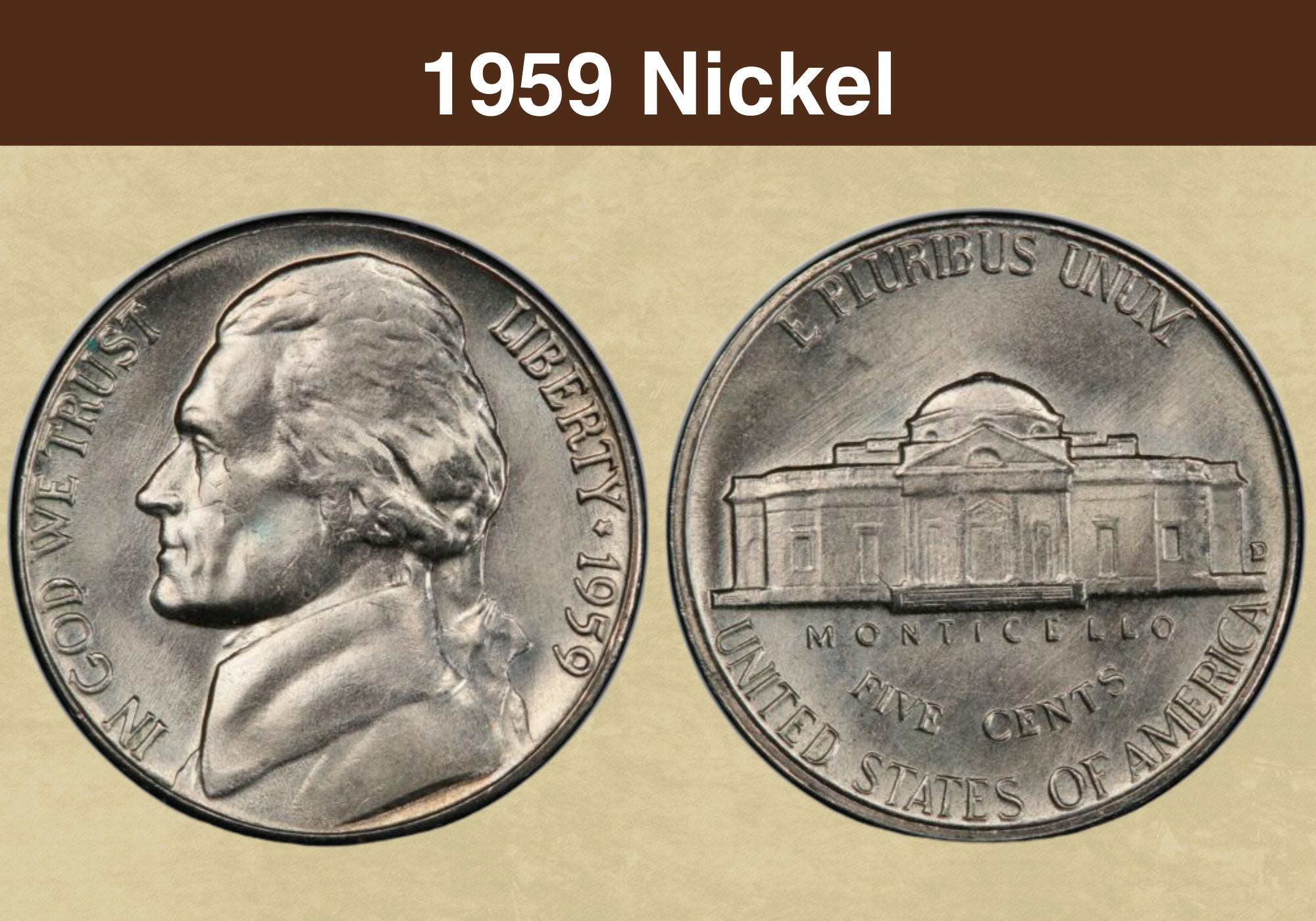
The simple obverse shows a Thomas Jefferson portrait facing left. You can also see words surrounding it, including IN GOD WE TRUST on the left and LIBERTY✶1943 on the right side.
The reverse of the 1943 nickel (Jefferson)
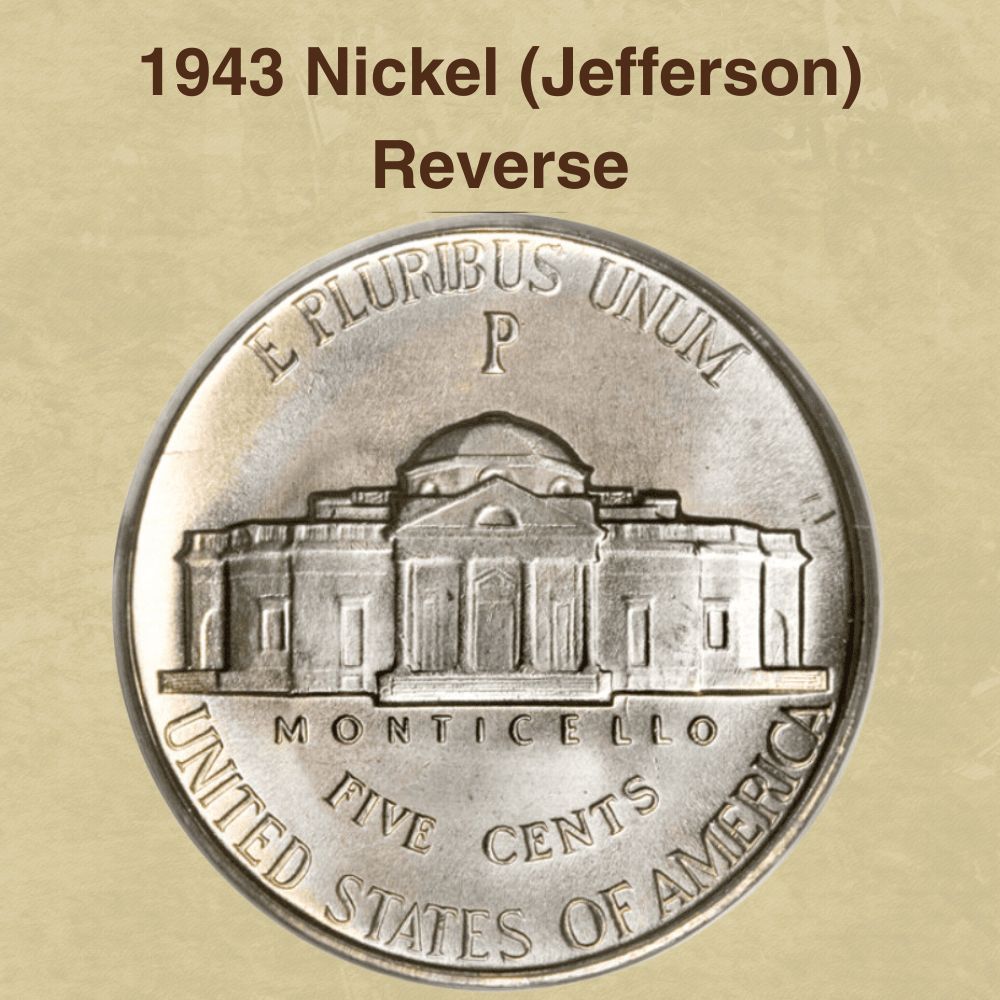
Besides inscriptions, the 1943 nickel reverse contains Monticello, Jefferson’s beloved home in Central Virginia. Above the dome is a sizable mint mark, a standard feature for war nickels.
It was the first time in history that an American coin contained the letter P, besides S and D, representing the mint from Philadelphia. Plus, their place differed from the standard position right of the steps.
As for the written part, you can recognize, arranged from top to bottom of the coin, the following inscriptions:
- E Pluribus Unum
- The mint mark (P, D or S)
- Monticello
- Five Cents
- The United States of America
1943 nickel Details |
|
| Face value | Five cents ($0.05) |
| Coin diameter | 0.83504 inches (21.2 mm) |
| Shape | Round |
| Compound | 35% silver – 56% copper – 9% manganese |
| Silver weight | 0.05625 troy ounces (1.75 g) |
| Coin weight | 0.16075 troy ounces (5 g) |
| Edge | Plain |
| Coin thickness | 0.07677 inches (1.95 mm) |
Other features of the 1943 nickel (Jefferson)
Jefferson nickels minted during mid-WWII are five-cent coins made of an atypical metal alloy. It consists of approximately half copper and another half silver and manganese.
However, these coins’ dimensions are equal to nickels from other years, so you can expect them to be 0.07677 inches (1.95 mm) thick and 0.83504 inches (21.2 mm) in diameter.
Precisely 35% of their weight of 0.16075 troy ounces (5 g) is silver. It is 0.05625 troy ounces (1.75 g) of this precious metal, which melting value makes even worn-out pieces valuable.
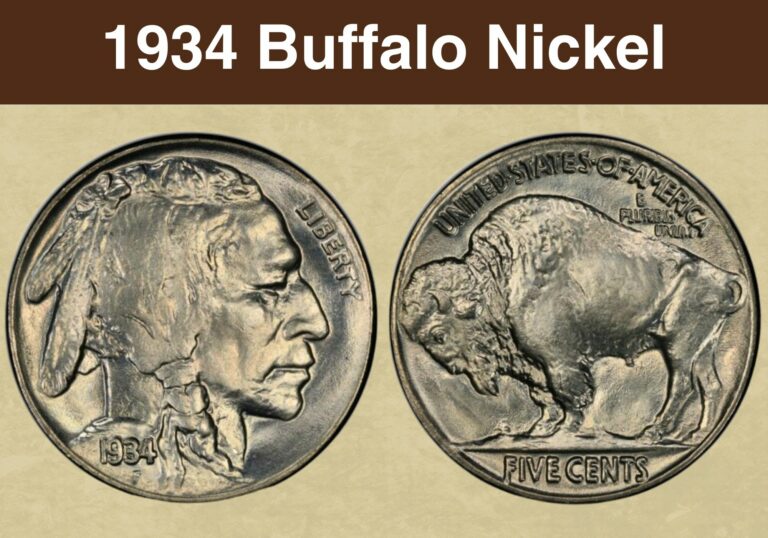
Also read: Top 17 Most Valuable Buffalo Nickel Worth Money
1943 Nickel Grading
It is crucial to closely examine the 1943 Jefferson nickel condition despite its silver content. It is always the first thing collectors check when buying one of these pieces. However, wartime nickel is always worth at least silver melt value, and its look only increases the price.
| # | Grade |
|---|---|
| 1 | Basal State-1 |
| 2 | Fair |
| 3 | Very Fair |
| 4, 5, 6 | Good |
| 7, 8, 10 | Very Good |
| 12, 15 | Fine |
| 20, 30 | Very Fine |
| 40 | Extremely Fine |
| 50 | About Uncirculated |
| 60 | Mint State |
| 65 | Mint State |
| 70 | Mint State |
Please check our grading guides to know your coin scale, It’s the necessary step to know the exact value of your coin.
Check out now: How to Grade Jefferson Nickel?
1943 Nickel (Jefferson) Value Guides
In 1943, three mints released into circulation 390,519,000 Jefferson nickels. They are different from other coins from the series because of their unique composition. The highest mintage was reached in Philadelphia, but no proof coins were minted this war year.
1943 P nickel Value
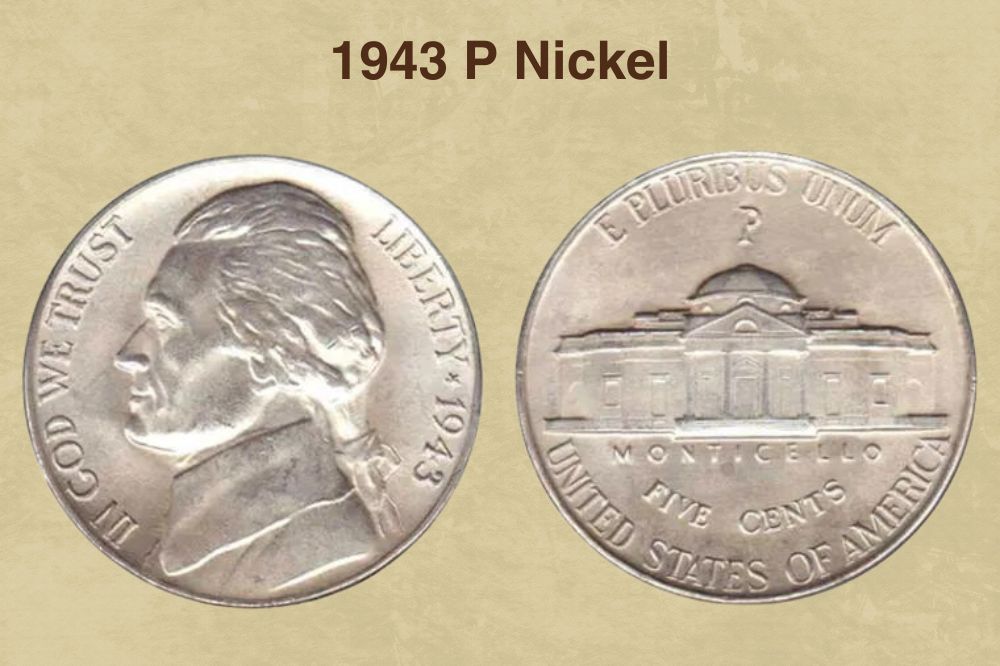
Interestingly, all 271,165,000 nickels produced in Philadelphia in 1943 came with a sizable P mint mark above the Monticello on the coin reverse. Since there were no proof nickels minted from 1942 to 1950, all pieces with this minting year on the obverse are from regular strikes.
Their prices exceed their face value even for circulated coins, ranging from $1 to $2. Nickels that never spent a day in circulation are more valuable, and you can buy one for $3 to $60, depending on their attractiveness.
Be prepared that quality MS 68-ranking Jefferson nickels often reach over $800 at auctions. Sometimes, the day at auction is perfect for buyers, like when one coin owner got an unbelievable $9,400 for the 1943 P MS 64 nickel in 2013.
The most collectible 1943 P nickels are those with Full Steps, meaning pieces with visible five to six steps in front of the President’s mansion. While most such coins are worth $10 to $240, rare MS 68-grading ones are estimated at $10,000.
One of these beautiful nickels was valued even more. One collector bought it for $14,688 at LRC Auctions in 2020.
1943 D nickel Value
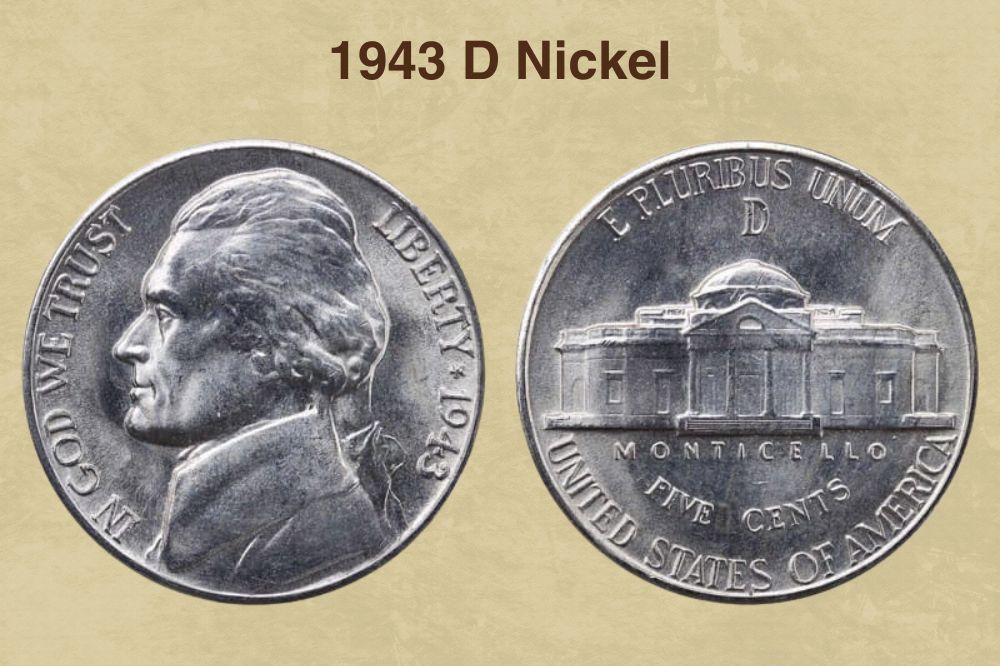
Contrary to its usual high mintage, the mint in Denver produced the lowest number of nickels in 1943. Precisely 15,294,000 coins with the letter D above Monticello were released that year.
These coins are typically worth $1 to $2 in circulated condition, while those in the mint state cost $3 to $50 on average. The most valuable is the 1943 D MS 64 nickel, paid $1,840 at an auction.
The 1943 D Full Steps nickels are more collectible, and collectors are prepared to pay $10 to $100 for most of them. Things are different with rare and highly appreciated pieces graded MS 68. Their estimated price is about $4,250, but one similar coin was paid $6,600 in 2020.
1943 S nickel Value
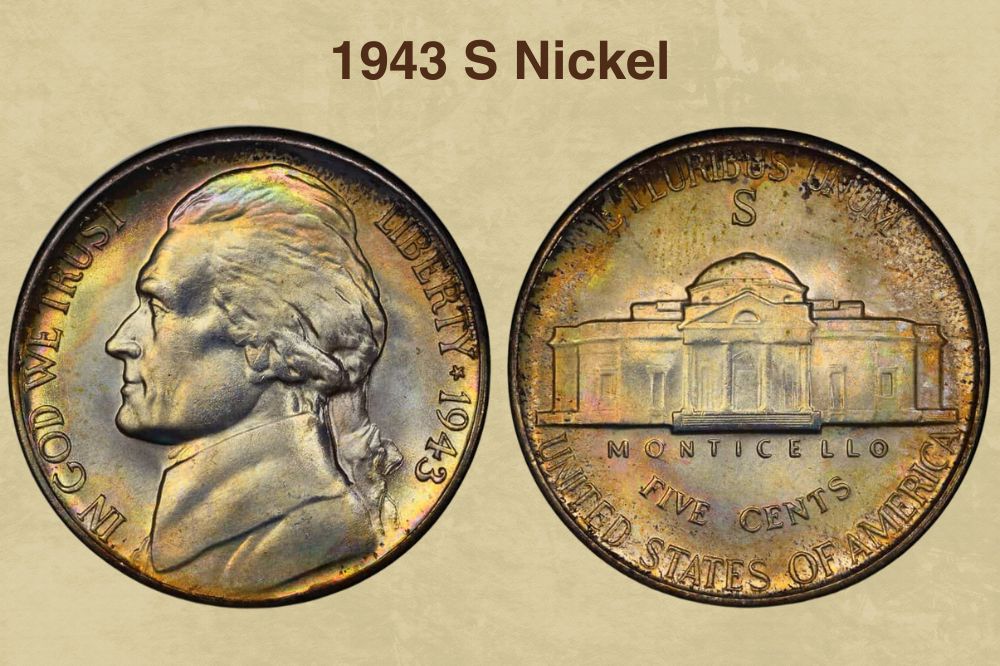
With 104,060,000 produced 1943 S nickels, the mint in San Francisco realized the second-highest mintage of this year. However, it was still much lower coin production than in Philadelphia.
Besides coins spending years in circulation that are worth approximately $1 to $2, most pieces in the mint state have a price range from $3 to $30. Only MS 67-ranking 1943 nickels cost about $70.
As expected, the most expensive are nickels with Full Steps. You should set aside $10 for the one ranking MS 64, while coins in MS 67 grade typically cost $250.
As always, auctions can bring many surprises and twist estimations upside down. As you can see, one 1943 S MS 68 Jefferson nickel with Full Bands was changed owner for $9,000 in 2017.
On the other hand, a less attractive coin reached a higher price. The 1943 S MS 64-ranking nickel won an auction record after selling at $9,775 in 2006.
Also read: Top 17 Most Valuable Jefferson Nickels Worth Money
Rare 1943 Nickel Error List
The 1943 nickels are famous for two unique errors and a few others typical for this series. These coins are always valuable, while some can be particularly expensive. Let’s take a look.
1943/2 P nickel (3 over 2) overdate
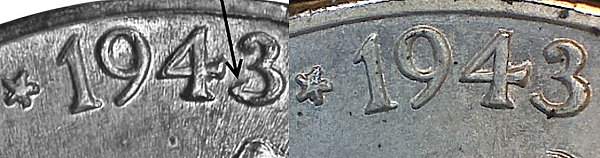
The nickel with an overdate error occurs when one minting date is stamped over the one from the previous year. You can see coins from 1943 with the number 3 over 2 on the obverse.
Experts estimate that there are over 1,000 of these errors, but they are still valuable. The lowest price is approximately $35 to $200 for worn-out nickels, while you can get about $250 to $850 for well-preserved ones.
The rare MS 67-graded error coins can be worth $1,300 to $1,600. However, the most-priced piece, ranking MS 68, was paid 4,300 on May 2, 2001.
Such error nickels in impeccable condition and with Full Steps are the most valuable. When planning to buy one, you need to count on $460 to $4,800. Remember that one 1943/2 P MS 67 nickel with Full Steps was sold at $16,675 in 2008, so be prepared for surprises.
Doubled die obverse (doubled-eye)
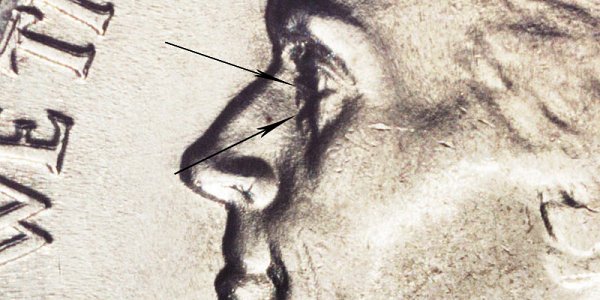
The 1943 P doubled-eye error nickel appeared because of a slight coin moving when the die unexpectedly struck it two times. As a result, you can notice a doubling on Jefferson’s left eye.
This error is quickly noticeable in most cases. However, you sometimes need to use a magnifying glass and a strong light source to detect a slight second eye impression in front of the first one.
Depending on error visibility and coin quality, you can expect to pay $35 to $800 for such a piece. Those with Full Steps are even more expensive, with prices ranging from $340 to $6,500.
The most pricey 1943 DDO nickel ranking MS 67 was sold at a 2006 auction for $3,738. A similar coin with Full Steps reached $11,500 in 2009.
Other nickel errors
Besides the most popular and rare error nickels minted in 1943, you can find pieces with imperfections typical for this coin type, including:
- Off-center
- Nickel struck on a penny planchet
- Nickel struck on a cupronickel planchet
- Nickel struck on an Australian six-pence planchet
- D/D re-punched mint mark
- Nickel retained lamination flap
- Die crack
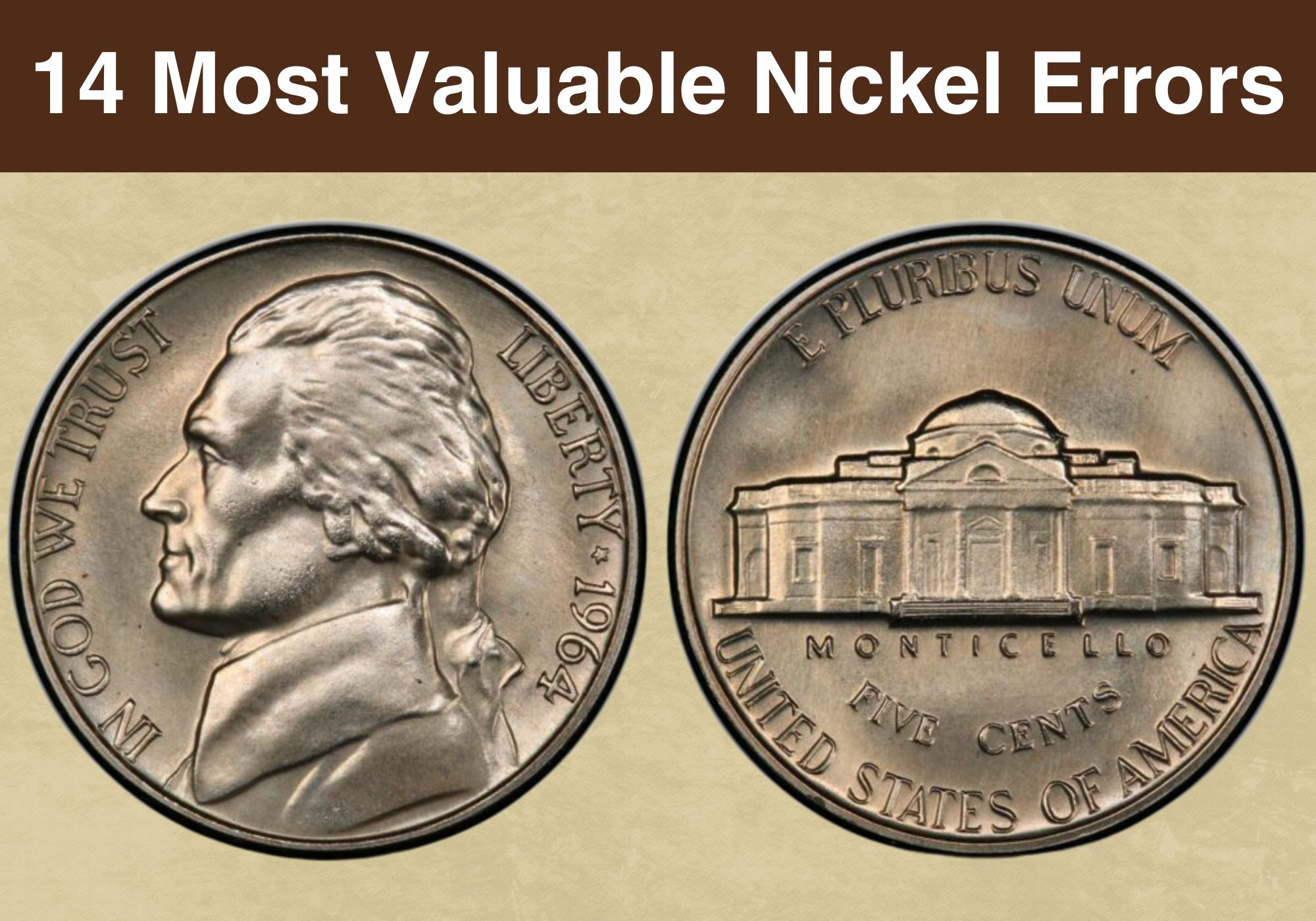
Also read: 14 Most Valuable Nickel Errors Worth Money
Where to Sell Your 1943 Nickel ?
Now that you know the value of your coins, do you know where to sell those coins online easily? Don’t worry, I’ve compiled a list of these sites, including their introduction, pros, and cons.
Check out now: Best Places To Sell Coins Online (Pros & Cons)
FAQ about the 1943 Nickel (Jefferson) Value
What makes 1943 nickels scarce?
The most valuable 1943 nickels are those with an error. The most popular are overdate pieces and those with a doubled-eye on Jefferson’s face. They can cost hundreds of dollars, while the best-preserved ones quickly reach over ten thousand dollars at auctions.
Which 1943 nickels are particularly valuable?
- 1943 P MS 67 nickel (Full Steps, 1943/2 error) auction record was $16,675 at Heritage Auctions on June 26, 2008
- 1943 P MS 68 nickel (Full Steps) auction record was $14,688 at Legend Rare Coin Auctions on July 16, 2020
- 1943 P MS 67 nickel (Full Steps, DDO) auction record was $11,500 at Heritage Auctions on April 1, 2009
- 1943 S MS 64 nickel auction record was $9,775 at Heritage Auctions on August 14, 2006
- 1943 P MS 64 nickel auction record was $9,400 at Heritage Auctions on November 1, 2013
- 1943 S MS 68 nickel (Full Steps) auction record was $9,000 on eBay on February 1, 2017
- 1943 D MS 67+ nickel (Full Steps) auction record was $6,600 at Stack’s Bowers on March 25, 2020
- 1943 P MS 68 nickel (1943/2 error) auction record was 4,300 at Heritage Auctions on May 2, 2001
- 1943 P MS 67 nickel (DDO) auction record was $3,738 at Bowers & Merena on August 16, 2006
- 1943 P MS 66 nickel (DDO) auction record was $1,925 at David Lawrence RC on January 8, 2023
- 1943 D MS 64 nickel auction record was $1,840 at Heritage Auctions on December 4, 2008
- 1943 D MS 67 nickel (RPM, D/D error) auction record was $995 on eBay on October 21, 2021
- 1943 D MS 67 nickel (Full Steps, RPM, D/D error) auction record was $725 on eBay on April 17, 2021
- 1943 P MS 66 nickel (Full Steps, DDO) auction record was $720 at Heritage Auctions on January 15, 2020
- 1943 P MS 66 nickel (DDO) auction record was $650 on eBay on December 17, 2022
How much are the 1943 P nickels worth?
You can buy circulated 1943 nickels for $1 to $2 or pay $3 to $60 to get one in the mint state, but some MS 68-ranking coins can cost over $800 at auctions. Most with Full Steps are worth $10 to $240, but experts estimate scarce MS 68-grading specimens at $10,000.
What Jefferson nickels are the most pricey?
- 1954 S MS 67 FS nickel – $35,250
- 1969 D MS 65 FS nickel – $33,600
- 1938 D MS 68+ FS nickel – $33,600
- 1964 SP 68 (SMS, Full Steps) nickel – $32,900
- 1949 D MS 67 (D/S error) nickel – $32,900
- 1940 PR 68 (1940 reverse of 1938 error) nickel – $28,750
- 1939 D MS 68 (1939 D reverse of 1940 error with Full Bands) nickel – $26,400

Perhaps I need to get in contact with someone who can help me I have a 1943S over S nickel weight 5.4 g and also a 1943/2