Coin Value Contents Table
- 1954 Wheat Penny value Chart
- History of the 1954 Wheat Penny
- 1954 Wheat Penny Types
- Features of the 1954 Wheat Penny
- 1954 Wheat Penny Grading
- 1954 Wheat Penny Value Guides
- 1954 No mint mark Wheat Penny Value
- 1954 D Wheat Penny Value
- 1954 S Wheat Penny Value
- 1954 S Wheat Penny proofs
- Rare 1954 Wheat Penny Errors List
- Where to Sell Your 1954 Wheat penny ?
- FAQ about the 1954 Wheat Penny Value
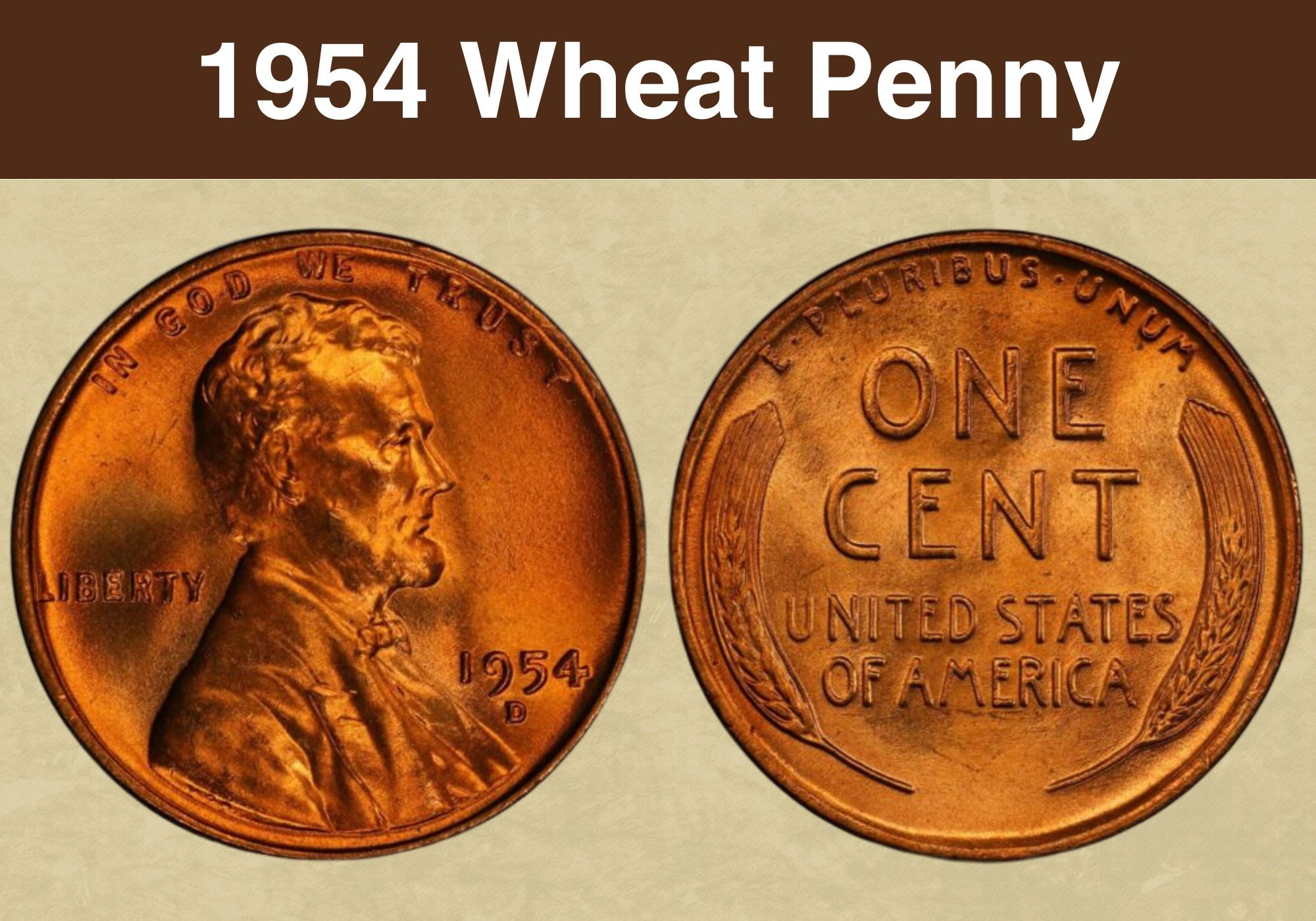
Wheat (Lincoln) pennies are coins minted in the US Mints that got their name from the reverse design featuring wheat stalks. The 1954 Wheat penny value varies depending on each piece’s condition and rarity.
Therefore, the best possible decision is to consult a professional coin appraiser or refer to reputable coin pricing guides for an accurate assessment of your cent value.
1954 Wheat Penny value Chart |
|||
| Condition | 1954 no mint mark Wheat Penny | 1954 D Wheat Penny | 1954 S Wheat Penny |
| Good | $0.05 | $0.05 | $0.05 |
| Very good | $0.05 | $0.05 | $0.05 |
| Fine | $0.05 | $0.05 | $0.05 |
| Very fine | $0.05 | $0.05 | $0.05 |
| Extra fine | $0.10 | $0.10 | $0.10 |
| AU | $0.10 | $0.10 | $0.10 |
| MS 60 | $0.50 | $0.50 | $0.50 |
| MS 63 | $1.50 | $1.50 | $1.50 |
| PR 63 | $24 | / | / |
History of the 1954 Wheat Penny
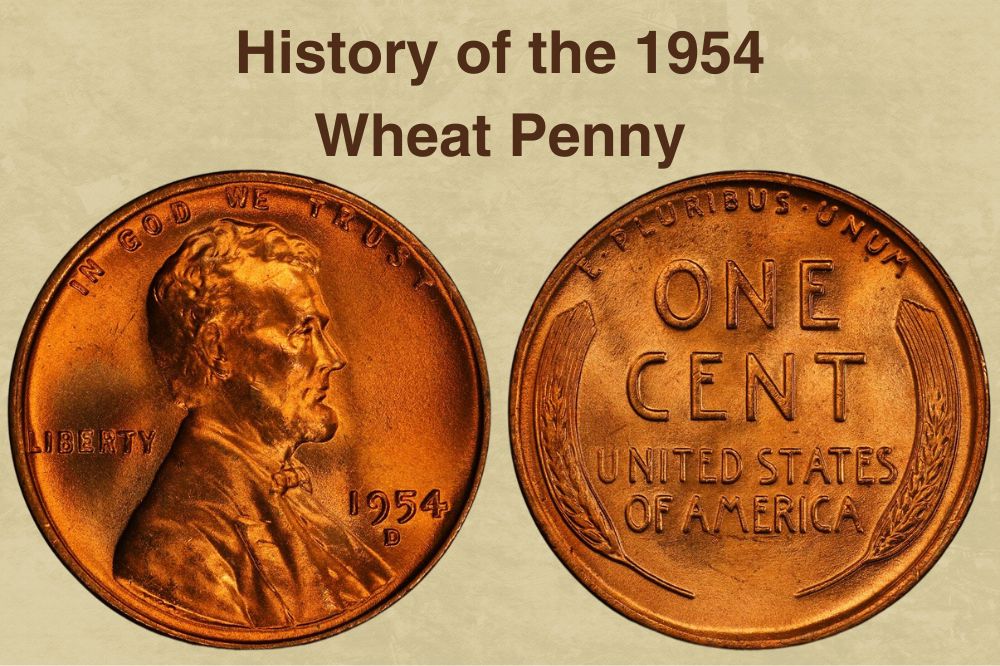
The 1954 pennies belong to the first 50 years of Lincoln cent minting, meaning they kept the same design and composition as the first specimens issued in 1909. Their iconic and long-lasting design honored President Abraham Lincoln.
These coins were the first widely circulated pieces featuring the US President on the obverse. The new design type appeared thanks to President Roosevelt’s initiative. As the one hundred years from Lincoln’s birth approached, it was the right time to dedicate him a coin.
1954 Wheat Penny Types |
||
| Location | Year | Minted |
| Philadelphia | 1954 no mint mark Wheat Penny | 71,640,050 |
| San Francisco | 1954 S Wheat Penny | 96,190,000 |
| San Francisco | 1954 Wheat Penny proofs | 233,300 |
| Denver | 1954 D Wheat Penny | 251,552,500 |
| Total | / | 419,615,850 |
Victor David Brenner, an engraver, sculptor, and medalist, created the Lincoln plaque in 1907. That might have been the reason he got the honor to design new cents. In any case, he used a portrait from the plaque as an inspiration for the penny’s obverse side.
In 1954, three US Mints struck Wheat pennies. The Philadelphia and Denver mints produced regular strike coins, while San Francisco minted proof pennies and pieces for circulation. Cents from 1954 are popular among numismatists as a part of this collectible series.
Also read: 12 Most Valuable Lincoln Penny Worth Money
Features of the 1954 Wheat Penny
The 1954 penny design was Victor David Brenner’s work that President Roosevelt approved in 1909. It was dedicated to the centennial of Abraham Lincoln’s birth and became one of the most recognizable American coins among collectors and enthusiasts. It was also the first US coin featuring the President on the obverse.
The obverse of the 1954 Wheat Penny
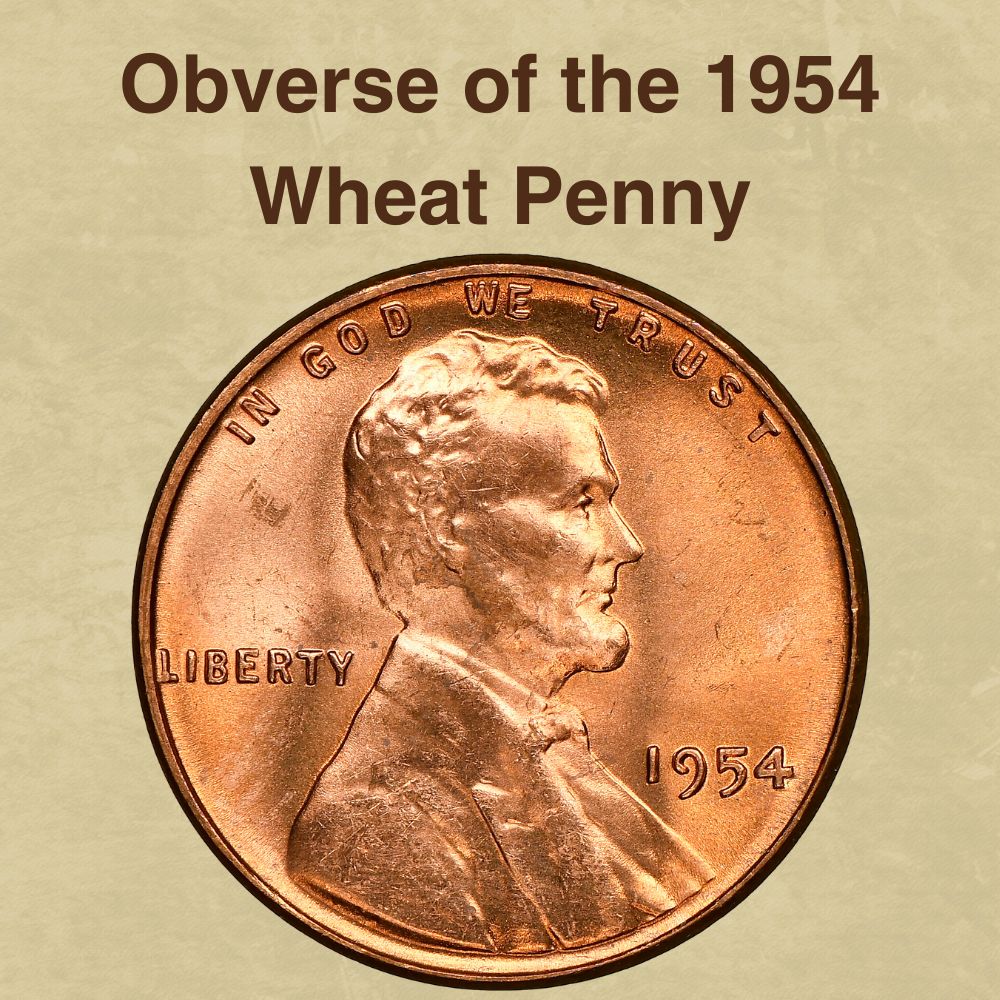
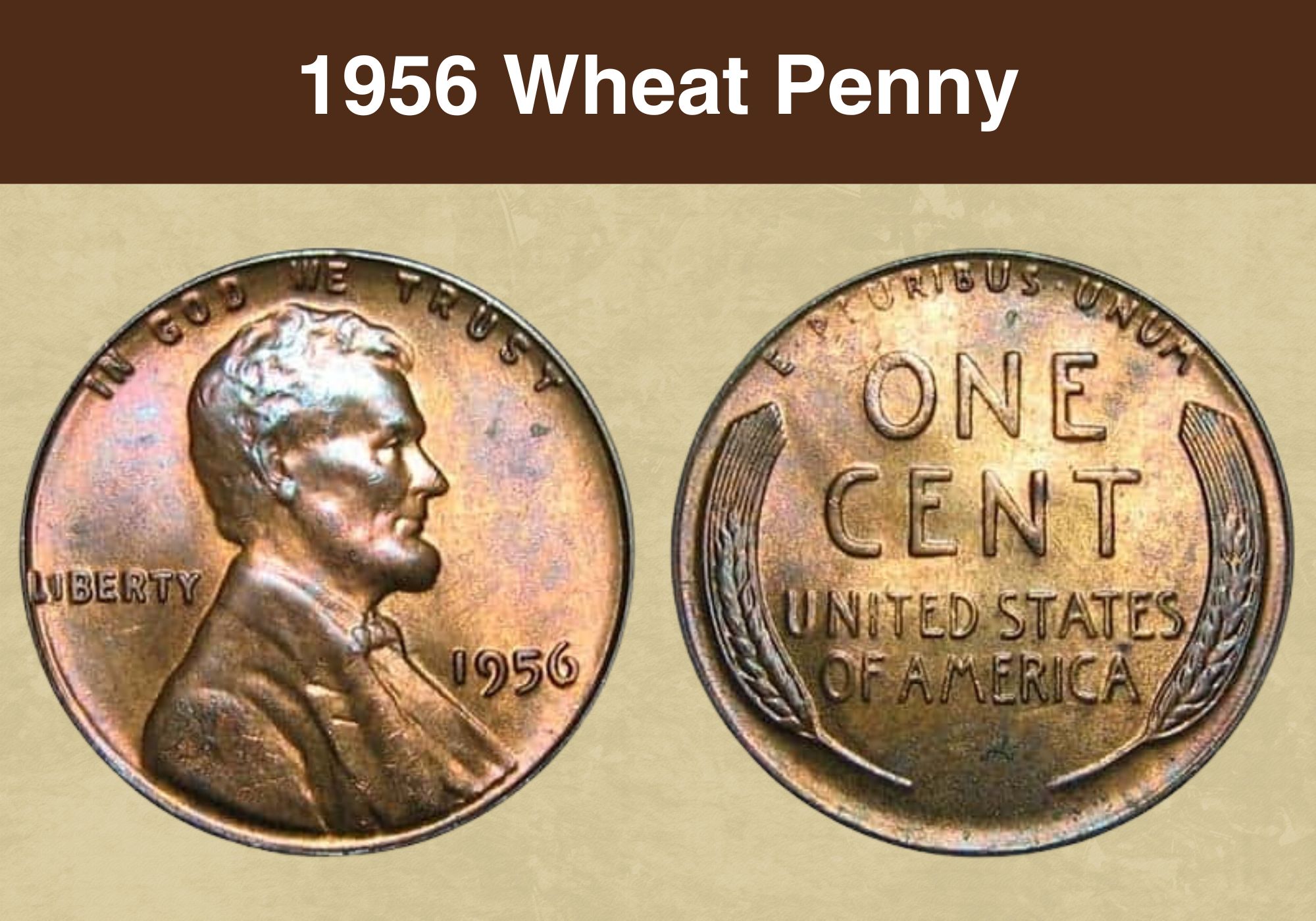
The 1954 penny’s obverse side features a left-facing portrait of President Abraham Lincoln as a dominant element. Thanks to excellent design, you can see details of his beard, hair, and outfit, such as jacket collar and bow tie.
The word LIBERTY, which was first engraved on the US coin in 1793, is behind Lincoln’s shoulder. The minting year, 1954, is on the right side of the coin’s field, in front of the President’s chest.
The mint mark, S or D, is just below the year. IN GOD WE TRUST, which became the official US motto on all American coins a year later, is positioned by the upper penny’s edge.
The reverse of the 1954 Wheat Penny
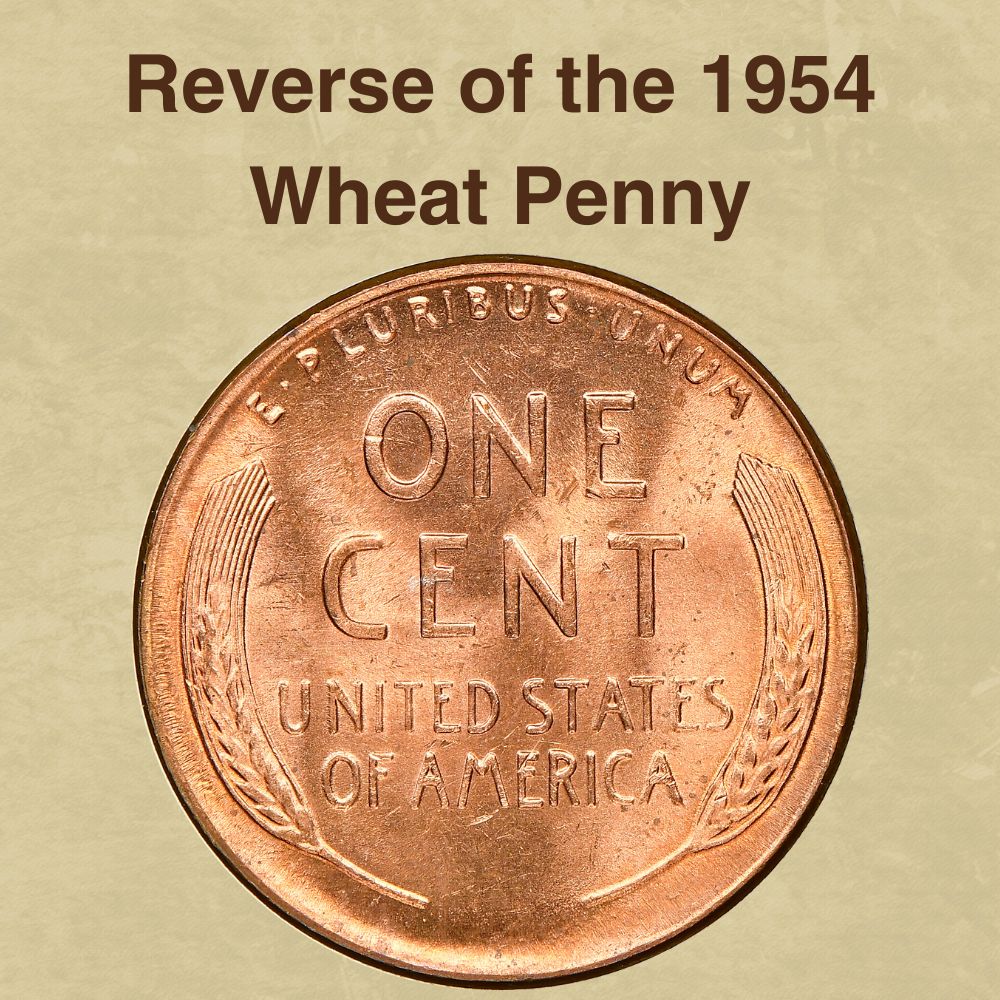
This reverse side look, commonly referred to as the wheat design, was used on Lincoln cents from 1909. Initially, Brenner prepared an entirely different reverse side, but he redesigned it at President Roosevelt’s request.
The reverse coin side included two ears of wheat along the left and right penny rids. These stalks represent the nation’s prosperity.
You can also read the words ONE CENT and UNITED STATES OF AMERICA written in the center. The inscription in Latin, meaning Out of Many, One, is inscribed by the upper rim.
1954 Wheat Penny details |
|
| Face value | One cent ($0.01) |
| Shape | Round |
| Coin diameter | 1.75 inches (19.05 mm) |
| Coin weight | 0.1097 oz (3.11 g) |
| Compound | An alloy of 95% copper with zinc or tin |
| Edge | Plain |
| Coin thickness | 0.03937 inches (1 mm) |
Other features of the 1954 Wheat Penny
The pennies from 1954 are round coins of $0.01 face value. The US Mint produced them from a cupro-zinc alloy with a diameter of 1.75 inches (19.05 mm). Their thickness is 0.03937 inches (1 mm), and they weigh 0.1097 oz (3.11 g).
Also read: 13 Most Valuable Wheat Penny Worth Money
1954 Wheat Penny Grading
Wheat penny grading refers to their condition and quality evaluation. It is typically done based on a scale that ranges from non-collectible (POOR) and collectible (GOOD to MINT STATE), with various grades between them. Signs of wear, luster, surface condition, and overall appeal are crucial features for coins’ grading.
| # | Grade |
|---|---|
| 1 | Basal State-1 |
| 2 | Fair |
| 3 | Very Fair |
| 4, 5, 6 | Good |
| 7, 8, 10 | Very Good |
| 12, 15 | Fine |
| 20, 30 | Very Fine |
| 40 | Extremely Fine |
| 50 | About Uncirculated |
| 60 | Mint State |
| 65 | Mint State |
| 70 | Mint State |
Please check our grading guides to know your coin scale, It’s the necessary step to know the exact value of your coin.
Check out now: How to Grade Lincoln Wheat Penny?
1954 Wheat Penny Value Guides
You can recognize four types of cents minted in three mints in 1954. The total mintage was 419,615,850 coins. Those minted in 1954 can be worth a premium and sometimes reach the price of up to ten thousand dollars, depending on the grade and variety.
1954 No mint mark Wheat Penny Value
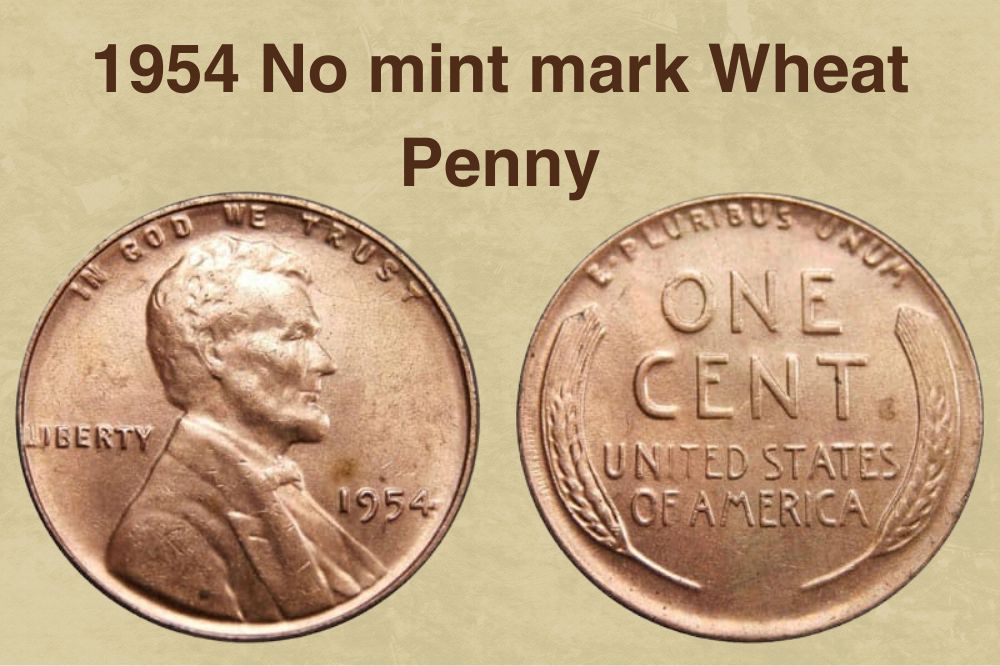
The 1954 pennies came from Philadelphia in a mintage of 71,640,050 pieces. Their value can vary significantly, with prices based on their condition and color.
For instance, brown pieces are the most affordable, ranging from $0.50to $12.50 for those in MS 60 to MS 66 grades. Only pennies ranked MS 67 can reach higher sums, from $35 to $45.
Red-brown specimens are typically evaluated at $3.50 to $55 (MS 63 to MS 67), while red ones can be a real surprise. While the lowest ranked cents (MS 63) cost only $3.50, those in MS 66 grade are assessed at $32 to $120.
The scarce MS 67-rated red pennies can reach $7,800 to $10,000 on the open market. One such coin sold in January 2019 won $31,200 at Heritage Auctions.
1954 D Wheat Penny Value
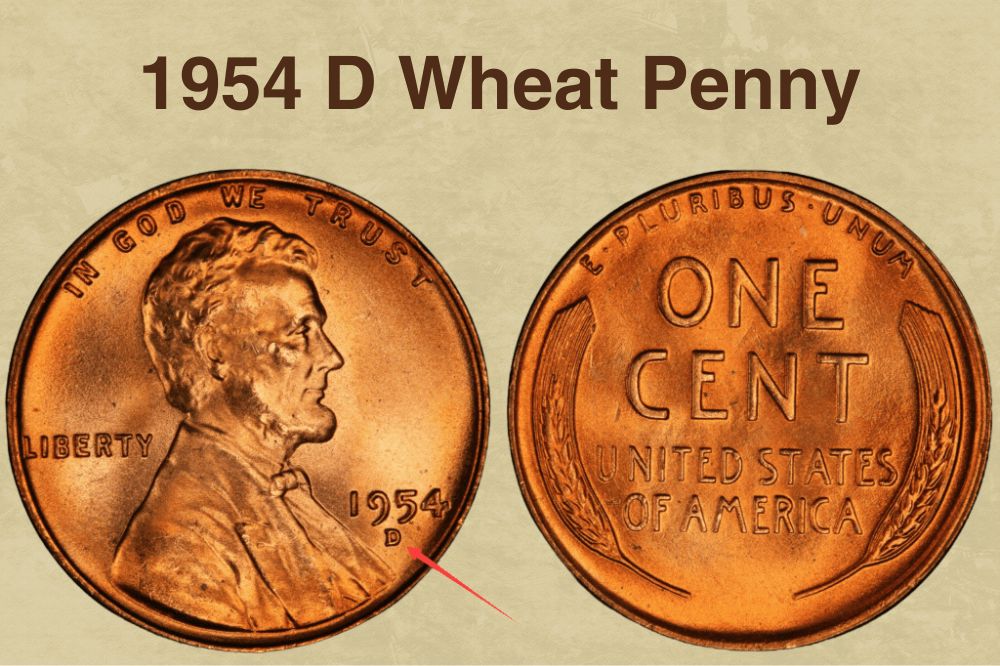
The 1954 D Wheat cents were minted in Denver. Their value significantly varies depending on condition, preservation, and rarity. For instance, brown cents in grades MS 60 to MS 62 cost from $0.50 to $1.
Better graded MS 63 to MS 66 can reach $12.50, while the best-looking cents with MS 67 ranking are available at $24 to $45. The price range of red-brown specimens is a bit higher, and you can find one of these coins at $3.50 to $47.50 (MS 63 to MS 67).
As always, the most collectible red cents are the priciest. The lowest ranked MS 63 pieces cost $0.55 to $6.5, while more beautiful ones are assessed at:
- MS 64 – $1.25 to $12
- MS 65 – $8 to $15
- MS 66 – $30 to $38
- MS 67 – $325 to $525
1954 S Wheat Penny Value
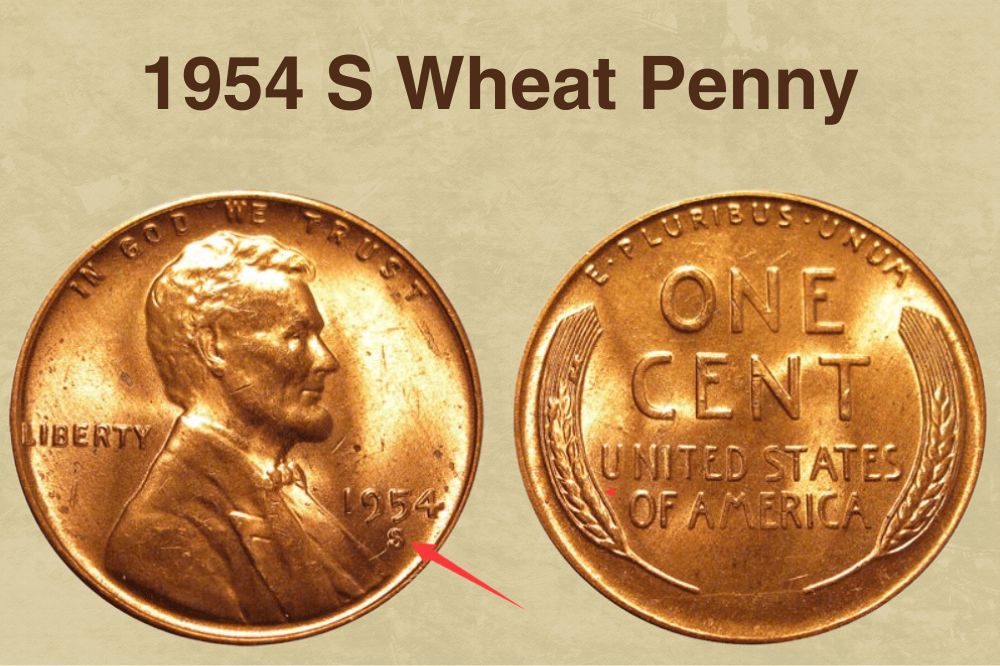
The San Francisco mint produced proofs and coins from regular strikes in 1954. Regularly minted cents are affordable, with the value that depends on the grade and color. Their prices are $0.50 to $2.50 for brown coins in MS 60 and MS 64 grades.
Better-ranked MS 65 and MS 66 pennies cost approximately $5 to $12.50. The most valuable brown pennies from San Francisco are in MS 67 grade, with an average value from $37 to $47.
Expectedly, red-brown specimens are more expensive, ranging from $3.50 for those in MS 63 grade to $17.50 for MS 66-rated coins. The most collectible are those graded MS 67. Their estimated value is $35 to $57.
1954 S Wheat Penny proofs
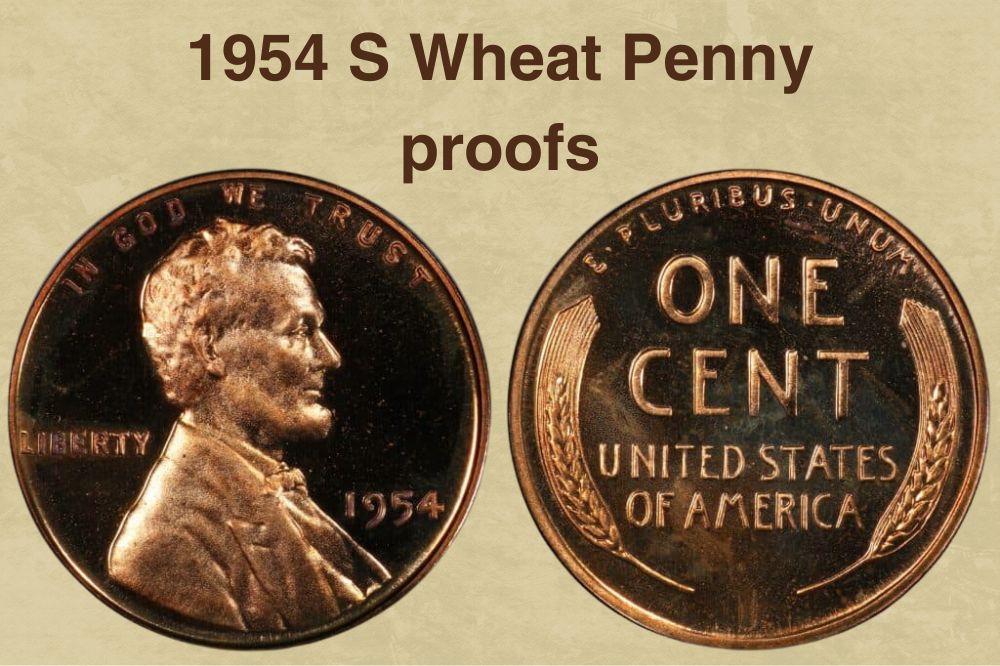
The San Francisco mint produced proofs in 1954 besides regular coinage. Their value depends on their grade, color, and variety. You can expect pieces with brown color and the lowest (PR 60) rating to cost at least $1.5.
Better-rating cents come with a price range from $2 (PR 61) to $12 (PR 66), while the most quality PR 67-graded brown coins are assessed at $25 to $30. Expectedly, red-brown pennies cost approximately $2 to $36, depending on quality.
Most collectors consider red pennies the most desirable and are prepared to pay at least $4 for those with a PR 60 rating. Better quality specimens are estimated at $5 to $45, while those graded above PR 68 cost $150 to $625.
You can also find valuable CAM and DCAM red varieties with prices that exceed other proof coins’ value. In grade PR 65 and MS 66 CAM, such pennies are worth $40 to $75, while those with DCAM quality can reach $345 to $517.
On the other hand, you should pay more for the best-looking pieces since an estimated price range for them is:
- Red PR 67-graded CAM penny costs $200 to $240
- Red PR 67-graded DCAM penny costs $900 to $1,035
- Red PR 68-graded CAM penny costs $1,200 to $1,400
- Red PR 68-graded DCAM penny costs $9,000 to 10,350
Also read: 17 Most Valuable Indian Head Penny Worth Money
Rare 1954 Wheat Penny Errors List
Errors are common in the minting process and can occur for different reasons. Only rare imperfections can significantly increase coin value. Some minting errors inevitably happened during the 1954 Wheat cent minting, including the most prominent:
Doubled die
This error can occur on either coin’s side. Depending on the side it appears, you can recognize a DDO or DDR. The 1954 pennies came with both types because of a mismatch between the die and the working hub.
The doubled die effect is usually visible in the lettering, but the 1954 pennies are recognizable for the mint mark doubling.
Re-punched mint mark
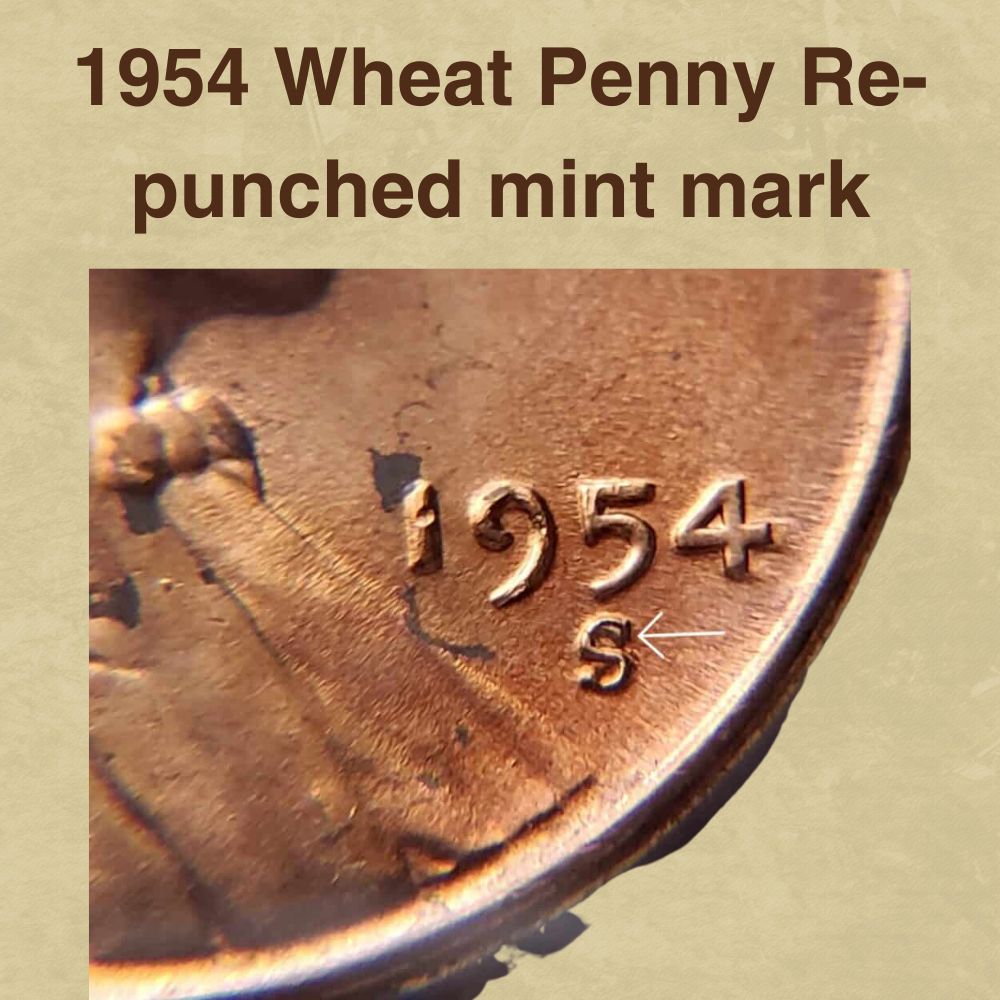
The RPM error occurred when a worker hit the mint mark twice to correct the previous mistake. In most cases, these two letters overlapped, while coins with a separate second mark were scarce.
You can see this error among 1954 S pennies and get one for about $20. Pieces with a D/D error are worth approximately $90, but the auction record from 2018 is $300 for one error penny in MS 66 grade.
Die break (BIE)
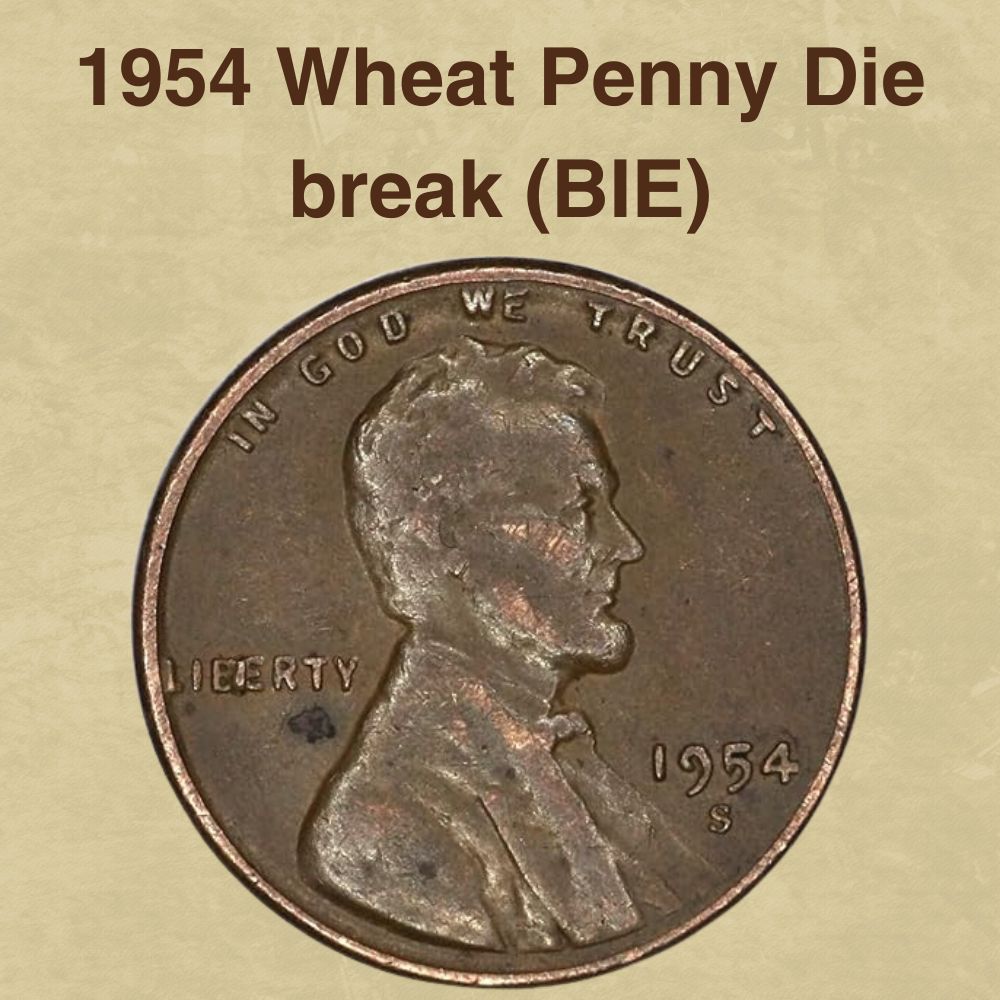
The BIE error appears among most pennies, including those issued in 1954. A die clash causes a raised area between two letters in LIBERTY, creating BIE instead of BE. It rarely significantly affects coin value, but some excellent pieces can cost about $30.
Broad strike
This error occurs when a cent is struck without a retaining ring that defines its final diameter. You can consider such a coin as a broad strike error only when the complete design is visible on both sides, and it costs up to $10.
Die-deterioration doubling
The worn-out die sometimes affects visible doubling on design elements, appearing as a raised or sunk doubling. You can see this imperfection on the 1954 penny lettering, mint mark, and numbers.
Also read: 11 Most Valuable Wheat Penny Errors
Where to Sell Your 1954 Wheat penny ?
Now that you know the value of your coins, do you know where to sell those coins online easily? Don’t worry, I’ve compiled a list of these sites, including their introduction, pros, and cons.
Check out now: Best Places To Sell Coins Online (Pros & Cons)
FAQ about the 1954 Wheat Penny Value
What makes 1954 Wheat Penny rare?
A 1954 Wheat penny is generally not considered rare. However, it can be challenging to find a few specific varieties, making them more valuable to collectors.
Which 1954 Wheat Penny is the costliest in the set?
- In 2019, the 1954 red penny in MS 67 grade won $31,200
- In 2012, the 1954 DCAM penny in PR 68 grade won $14,950
- In 2021, the 1954 brown penny in MS 67 grade won $8,100
- In 2015, the 1954 D red penny in MS 67+ grade won $7,638
- In 2011, the 1954 CAM penny in PR 68 grade won $2,938
- In 2013, the 1954 S red penny in MS 67+ grade won $1,880
- In 2013, the 1954 red penny in PR 69 grade won $1,410
- In 2002, the 1954 red-brown penny in MS 63 grade won $529
- In 2021, the 1954 S brown penny in MS 67 grade won $500
- In 2005, the 1954 D brown penny in MS 63 grade won $403
- In 2020, the 1954 D red-brown penny in MS 66 grade won $395
- In 2018, the 1954 D red penny in MS 66 grade with D/D/D error won $300
- In 2021, the 1954 S red-brown penny in MS 66 grade won $185
- In 2012, the 1954 D red penny in MS 64 grade with RPM error won $154
- In 2021, the 1954 D red-brown penny in MS 66 grade with D/D/D error won $152
- In 2018, the 1954 D brown penny RPM in MS 65 grade won $86
- In 2017, the 1954 D brown penny in MS 63 grade with D/D/D error won $68
How much is the 1963 Wheat Penny (Philadelphia) worth?
Pennies have a face value of one cent. However, prices of coins in the mint state range from $0.10 for a brown cent in MS 60 grade to $10,000 for a red one rated MS 67.
What is the most valuable Wheat Penny?
The costliest penny ever sold is the one minted in Denver in 1943. This specimen in MS 64 grade won $840,000 at Heritage Auctions in January 2021.

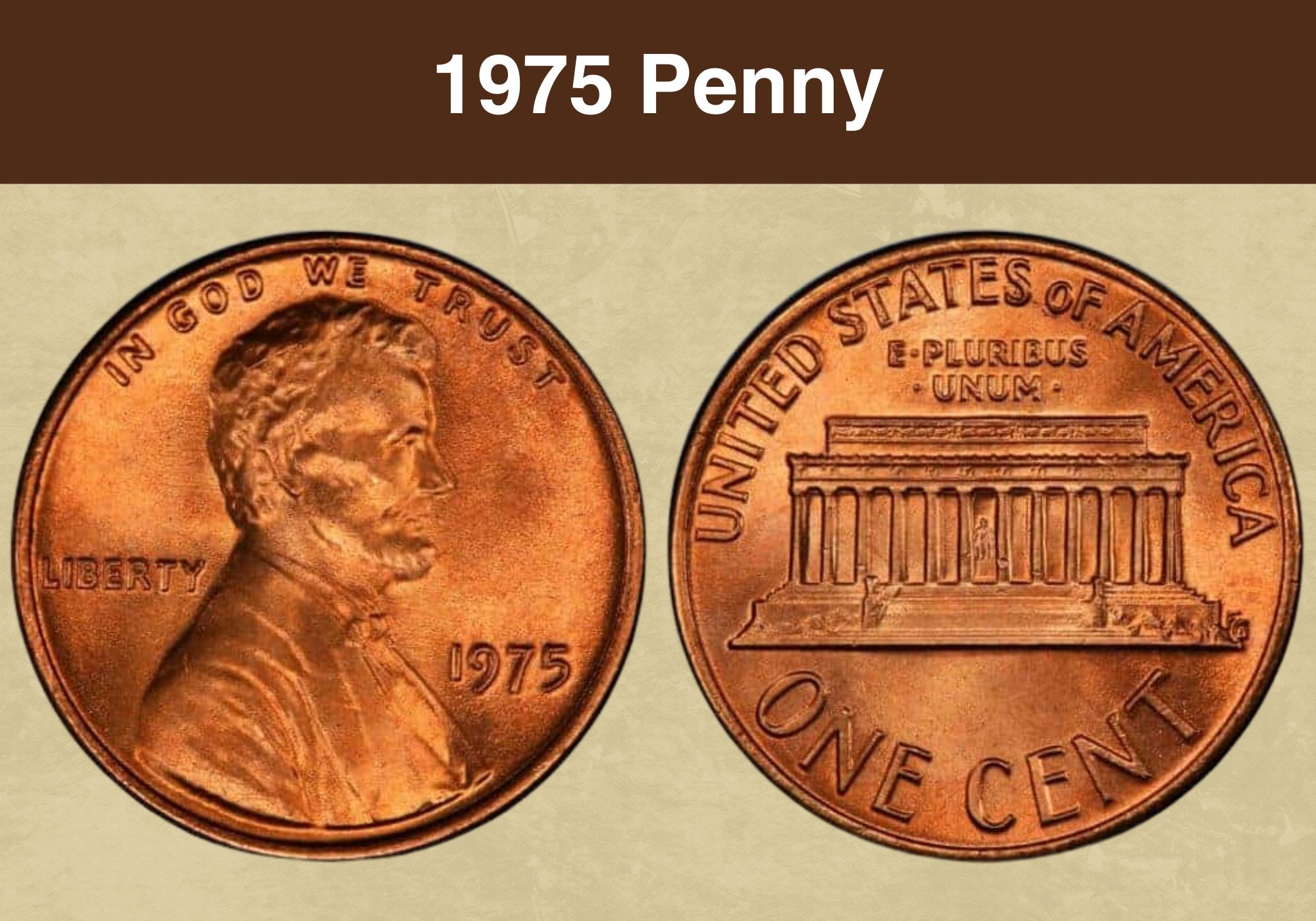
I have a 1969 s penny 1969d and one with no mint mark all Three for your double die beautiful have a 1943 D bronze penny I have a 1970 I have 19 71 I have 1960s I have all the way up I have a 1975 time with hno mnt looks like you came out of a proof set I have a ton of stuff please give me a call back ask for a henk 631-833-3248