1923 Buffalo Nickel Coin Value: Errors List, “S” & No Mint Mark Worth

1923 Nickel value runs from $0.05 face value up to $67,563. A Grade 66 example sold through Heritage Auctions in June 2013 holds that record. Curious what yours could fetch? Upload a photo below for a quick value range, then scroll down to check recent eBay sales and see what the market looks like today.
1923 Buffalo Nickel Value Checker
Identify 1923 Buffalo Nickel S and No Mint Mark Price
Front Obverse
Upload or Take a Photo
Back Reverse
Upload or Take a Photo
1923 Nickel Value By Variety
Your 1923 nickel’s value comes down to one thing: does it have an “S” mintmark or not? If you already know the grade, jump straight to the Value Guides section for exact pricing.
| Type | Good(G4-6) | Fine(F12-15) | AU(AU50-58) | MS(MS60-70) | PR(PR60-70) |
|---|---|---|---|---|---|
| ▶1923 No Mint Mark Nickel Value | $4 - $5 | $9 - $11 | $36 - $64 | $82 - $64,400 | — |
| ▶1923 S Nickel Value | $11 - $12 | $41 - $73 | $320 - $550 | $640 - $43,700 | — |


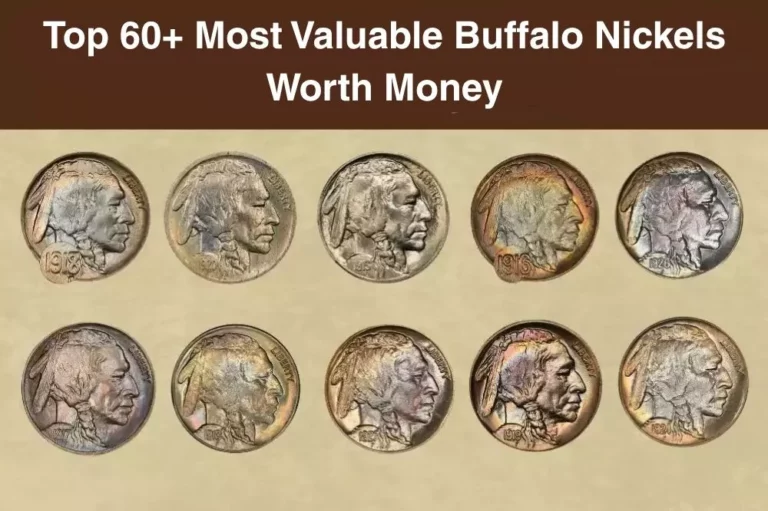
Also Read: Top 60+ Most Valuable Buffalo Nickels Worth Money
Top 10 Most Valuable 1923 Nickel Worth Money
Most Valuable 1923 Nickel Chart
2011 - Present
One grade point on a 1923-S doesn’t nudge the price — it launches it into orbit. The all-time record sits at $67,563, realized at Heritage Auctions on June 5, 2013, for a PCGS MS66. That’s not a premium over MS65. That’s a completely different market.
Strike quality is the bottleneck. San Francisco’s 1923 production was notoriously soft. A PCGS numismatist in the early 1970s personally examined an original roll of 40 strictly uncirculated 1923-S coins. Every single one was flat — no horn, no tail detail on the buffalo whatsoever. So when a 1923-S actually clears MS66, it’s in a category by itself. Scarcity sets the price, and demand does the rest.
History of the 1923 Nickel
By 1923, the Buffalo Nickel had been circulating for a full decade — and zero were struck the year before. The Mint shut down nickel production entirely in 1922 because post-war demand had dried up. So the 1923 issue was a comeback year for the series.
The man behind the design, sculptor James Earle Fraser, grew up on the Western frontier in Minnesota. He’d witnessed the near-extinction of the bison and the displacement of Native tribes firsthand. That experience went straight onto the coin. Fraser based the obverse portrait on three real people: Two Moons (Cheyenne), Iron Tail (Oglala Lakota), and Big Tree (Kiowa). In a 1947 radio interview, he said he wanted something “totally American — a coin that could not be mistaken for any other country’s coin.”
Here’s a fun detail: the coin’s release back in 1913 was actually delayed for months because the Hobbs Manufacturing Company — maker of slug-detection devices for vending machines — argued the new design was too easy to counterfeit. Treasury Secretary MacVeagh pushed the coins out anyway in February 1913.
The design was gorgeous but a headache to produce. High relief meant weak strikes and fast wear. Those same stubborn problems followed the series right into 1923 and are exactly what drives collector value today.
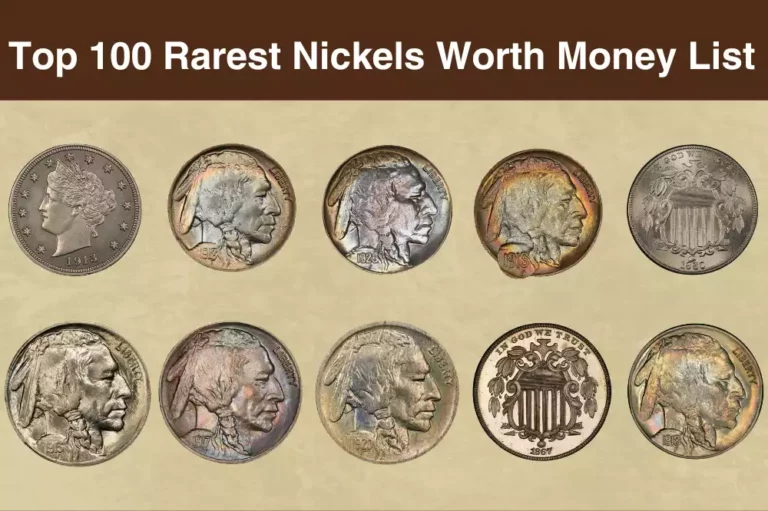
Also Read: Top 100 Rarest Nickels Worth Money (Most Expensive)
Is Your 1923 Nickel Rare?
1923 No Mint Mark Nickel
1923-S Nickel
Here’s what trips people up: the Philadelphia coin had nearly six times the mintage of the S-mint, yet the S-mint actually has a higher survival rate. West Coast dealers were more likely to tuck away fresh examples before they hit heavy circulation. The Philly coins got spent, worn down, and lost. So “common” mintage doesn’t always mean “easy to find” — especially in Gem grades. For a real-time estimate on your specific coin, the Coin Identifier and Value App takes the guesswork out of grading and pricing.
Key Features of the 1923 Nickel
Buffalo nickels only ran for 25 years, and that high-relief design wore down fast in pocket change. Finding a well-preserved 1923 with crisp details takes some patience.
The Obverse of the 1923 Nickel

You’re looking at a right-facing bust of a Native American chief — Fraser’s composite of three real individuals. The cheekbones, hair texture, and feather details are all deeply sculpted.
Look along the right rim ahead of the chief’s face for LIBERTY. Down in the lower-left corner, resting on the Indian’s shoulder, you’ll find the date and Fraser’s initial — a small “F.”
The Reverse of the 1923 Nickel

Flip it over and you’ll see an American bison standing on a mound. The model was widely believed to be Black Diamond, a resident of the Central Park Zoo, though some researchers think it was a herd leader at the Bronx Zoo known simply as “Bronx.”
Along the upper rim: UNITED STATES OF AMERICA. E PLURIBUS UNUM sits on the right. FIVE CENTS runs along the bottom. On San Francisco coins, look just below the denomination for the “S” mint mark.
Other Features of the 1923 Nickel
The 1923 Buffalo nickel is 75% copper and 25% nickel with a plain edge. It weighs 5 grams (0.17637 oz), measures 21.2 millimeters (0.83465 inches) across, and is 1.95 millimeters (0.07677 inches) thick.
Always check the bison’s horn. If it’s sharp and fully visible from base to tip, you’ve got a Full Horn coin. That designation tells you the coin saw minimal wear and got a solid strike — and it can push the value well above standard price guide figures.
Also Read: Top 100 Most Valuable Jefferson Nickels Worth Money List (1938-Present)
1923 Nickel Mintage & Survival Data
1923 Nickel Mintage & Survival Chart
Survival Distribution
| Type | Mintage | Survival | Survival Rate |
|---|---|---|---|
| No Mint | 35,715,000 | 10,000 | 0.028% |
| S | 6,142,000 | 9,000 | 0.1465% |
Philadelphia struck 35,715,000 coins. San Francisco made 6,142,000. Nearly six-to-one. But here’s the twist: only about 10,000 Philly coins survive in collectible shape — a survival rate of roughly 0.028%. The 1923-S, despite its smaller mintage, has a survival rate around 0.1465%.
Why? West Coast dealers and collectors sat closer to the San Francisco Mint and were more likely to pull fresh coins before they entered heavy circulation. Philadelphia’s output flooded the Eastern economy during postwar industrial expansion. Those coins got spent hard, worn down, and lost. To put it another way, out of every 3,500 Philadelphia nickels struck, roughly one survives in collectible condition today.
Also Read: Jefferson Nickel Value (1938-Present)
The Easy Way to Know Your 1923 Nickel Value
Grade honestly, and the value follows. A 1923 nickel in Fine condition looks perfectly respectable in hand — but it’s worth $13 at best. Push into AU territory and that same Philadelphia coin jumps past $50; find an “S” mintmark and AU means over $385.
Coin Identifier and Value App
Not sure what your coins are worth? Get Instant Value • Grade • Error Detection with coin identifier and value app (FREE Usage Daily)
The distance between those numbers is condition, and condition is something the Coin Identifier and Value App was built to help you measure accurately.

1923 Nickel Value Guides
Two mints, two very different coins:
- 1923 No Mint Mark Nickel
- 1923-S Nickel
The Philadelphia issue is the high-mintage, easier-to-find variety. The San Francisco coin, held back by lower production and chronic strike weakness, sits in a much higher tier for both scarcity and realized prices.
1923 No Mint Mark Nickel Value

Don’t let the word “common” fool you. The Philadelphia 1923 typically comes with a sharp strike and frosty luster — a real contrast to the mushy reverses you see on the S-mint coins. In lower Mint State grades, it’s affordable. Above MS65, it gets serious fast.
PCGS has certified this issue in solid numbers through MS65, with Heritage Auctions noting a population of 356 coins at MS65 and 197 above that level. Past that point, the numbers fall off a cliff — the 1923 Philly is actually rarer in Gem condition than most later Philadelphia Buffalo Nickels, except the 1924. The condition ceiling was set when a PCGS MS67 example brought $18,400 at Bowers & Merena in January 2003. Over two decades later, that’s still the auction record for this issue.
GreatCollections has sold 266 examples over its 16-year history, with prices ranging from $8 to $14,063. CAC-approved coins — those verified by a third-party stickering service as exceptional for their grade — pull meaningful premiums over standard slabbed examples.
1923 No Mint Mark Nickel Price/Grade Chart
Price by 1-70 Grade (Latest Auction Records Included)
This chart tracks every major certified auction result for the 1923 No Mint Mark Nickel, giving you a clear picture of where the market has historically placed this coin at each grade level.
| Date | Platform | Price | Grade |
|---|---|---|---|
| 06/26 | SB | $561 | 64 |
| 03/26 | HA | $2,806 | 67 |
| 03/26 | HA | $139 | 62 |
| 03/26 | HA | $512 | 65 |
| 11/25 | SB | $2,880 | 67 |
| 08/25 | HA | $14,400 | 67 |
| 07/25 | HA | $4,800 | 67 |
| 06/25 | SB | $3,120 | 67 |
| 04/25 | SB | $384 | 65 |
| 03/25 | SB | $600 | 65 |
This section reflects the trend of 1923 No Mint Mark Nickel market activity in today’s collector market.
Market activity: 1923 No Mint Mark Nickel
Market activity score: 52/100 as of Nov 2026 — down 35 points from Aug 2026. 12-month peak: 87 (Aug 2026).
1923-S Nickel Value

How rare is a nice 1923-S? I think it’s one of the most underappreciated keys in the entire Buffalo series. It’s scarce in circulated grades, rare in Mint State, and nearly impossible in Gem — trailing only the 1920-S, 1925-S, 1926-S, and 1927-S for overall scarcity.
The problem is always the strike. San Francisco recycled worn dies from earlier runs, and the results show. You’ll find plenty of coins with a decent obverse but a mushy, lifeless reverse. According to PCGS CoinFacts, a leading numismatist in the early 1970s inspected an original roll of 40 strictly uncirculated 1923-S coins. Not one showed horn or tail detail. Every coin was, as he put it, “flat as a pancake.” So when PCGS grades a 1923-S at MS66, they’re certifying a coin that cleared both the condition bar and the strike bar — and almost nothing does.
PCGS has certified only a couple of examples in MS66, with none graded higher. The all-time record is $67,563, realized at Heritage Auctions on June 5, 2013 for a PCGS MS66. If you’re cherrypicking rolls or raw coins at shows, this is the date to keep in the back of your mind.
1923-S Nickel Price/Grade Chart
Price by 1-70 Grade (Latest Auction Records Included)
A full record of certified auction results for the 1923-S Nickel, sorted by grade.
| Date | Platform | Price | Grade |
|---|---|---|---|
| 02/25 | SB | $192 | 40 |
| 08/23 | HA | $174 | 45 |
| 06/23 | SB | $144 | 40 |
| 06/23 | SB | $216 | 45 |
| 05/23 | HA | $69 | 20 |
| 05/23 | HA | $79 | 25 |
| 04/23 | SB | $192 | 40 |
| 02/23 | HA | $204 | 45 |
| 01/23 | DL | $95 | 30 |
| 10/22 | HA | $84 | 30 |
See how the 1923-S Nickel is currently performing across all grades in today’s collector market.
Market activity: 1923-S Nickel
Market activity score: 76/100 as of Nov 2026 — down 10 points from Aug 2026. 12-month peak: 86 (Aug 2026).
Also Read: 22 Rare Nickel Errors List with Pictures (By Year)
Rare 1923 Nickel Error List
Mint errors happen during striking or planchet preparation — not from damage after the coin leaves the facility. Genuine errors can add serious money to a 1923 nickel’s value.
The star of the show is the Two Feathers variety. You’ll also find off-center strikes, clipped planchets, and lamination flaws turning up from time to time.
1. Two Feathers Error

Normally you see three feathers in the chief’s hair. On Two Feathers coins, the one closest to the neck — just below the longest feather — is completely gone. Heavy die polishing wore it away during production.
This variety is cataloged by PCGS as FS-401 and ranks among the rarest across the entire Buffalo Nickel series. Only an estimated 17 to 32 examples of Die #1 are currently known. Even better for variety collectors: Die #1 also shows a doubled die obverse (DDO), which makes it a two-for-one rarity. Values run from around $50 in Good condition to $1,000 or more at MS64.
1923 Two Feathers Nickel Price/Grade Chart
Price by 1-70 Grade (Latest Auction Records Included)
2. Off-Center Strike

When the planchet sits crooked between the dies, you get a shifted design with a crescent of blank metal on one side. The bigger the shift, the bigger the premium.
Minor 5–15% off-centers typically sell for $50 to $150. Dramatic 30–50% examples can hit $200 to $500 or more. One critical rule: the date must be fully legible. If “1923” shifted into the blank zone, the coin loses most of its appeal.
3. Clipped Planchet

This happens when the blanking press misfires — the metal strip doesn’t advance properly, and the punch overlaps a previously cut hole. You end up with a coin blank missing a chunk of its edge.
Small clips removing 5–10% of the planchet start around $50 to $100. Larger clips taking out 20–30% can reach $200 to $400, especially when the date and key design elements remain intact. Curved clips are the most common variety you’ll encounter.
4. Lamination Error

Coin Identifier and Value App
Not sure what your coins are worth? Get Instant Value • Grade • Error Detection with coin identifier and value app (FREE Usage Daily)
Impurities or gas pockets trapped in the alloy during planchet preparation cause the metal to crack and peel in layers. It looks like the coin’s surface is flaking apart — because it is.
On Buffalo Nickels, these flaws tend to show up across the obverse field or on high-relief areas like the chief’s portrait and the bison’s shoulder. Well-preserved examples with pronounced lamination typically bring $50 to $200 in circulated grades, and more when the underlying design stays sharp.
5. Doubled Die Obverse (DDO)
A DDO happens when the hub strikes the die twice with a slight misalignment. Every coin from that die carries the same doubling — usually visible on the date, LIBERTY, or the portrait details.
On 1923 Buffalo Nickels, the DDO is most closely tied to the Two Feathers Die #1 (FS-401) described above. That coin combines the missing feather with the doubled die — a great cherrypicking target. Standalone DDOs without the missing feather pop up occasionally but are far less documented. Even minor doubling visible under 5x magnification can add $30 to $200 depending on grade and clarity.
Where to Sell Your 1923 Nickel?
After determining what your coins are worth, you’re probably wondering about convenient online selling options. I’ve researched and compiled a guide to the best platforms, outlining their services, pros, and cons.
Check out now: Best Places To Sell Coins Online (Pros & Cons)
FAQ about the 1923 Nickel Value
1. How do I tell if my 1923 nickel is from Philadelphia or San Francisco?
Flip it to the reverse and look below “FIVE CENTS.” See a small “S”? San Francisco. No letter? Philadelphia. That one detail is the biggest value driver — the 1923-S is worth many times more than the No Mint Mark at any comparable grade.
2. Why is the 1923-S so much more valuable than the No Mint Mark version?
Lower mintage (6,142,000 vs. 35,715,000) and terrible strike quality. San Francisco used worn-out dies that year, leaving most coins with a soft, flat reverse. PCGS CoinFacts documents that an original roll of 40 uncirculated 1923-S coins examined in the early 1970s showed every single coin completely flat, with no horn or tail detail visible at all.
3. Does a dateless or worn 1923 Buffalo Nickel have any value?
A little. Heavily worn examples typically bring $1 to $3. Without a visible date, you can’t attribute the coin with certainty, which kills collectibility. Products like “Nic-A-Date” can reveal worn dates but permanently damage the surface, dropping the coin to 10–20% of a naturally worn example’s value.
4. What does “Full Horn” mean and why does it matter for 1923 nickel value?
Full Horn (FH) means the bison’s horn is complete from base to tip. The horn was one of the first details to go — from both wear and weak strikes. A true Full Horn coin signals great preservation and a solid strike. On many 1920s branch mint dates, a Full Horn example can be worth 3–5 times more than a standard coin of the same numerical grade.
5. What is the highest price ever paid for a 1923-S nickel?
$67,563, realized at Heritage Auctions on June 5, 2013, for a PCGS MS66. PCGS has certified only a couple of examples at MS66, with none graded higher.
6. Is the 1923 Buffalo Nickel a good investment?
High-grade 1923-S coins above MS64 have shown strong auction results over time, with top specimens reaching five figures. Circulated examples are great entry points for new collectors but offer less upside. Condition and mint mark are everything, and CAC-approved pieces typically pull additional premiums over standard slabbed coins.
7. What is the Two Feathers error and how do I identify it?
The Two Feathers error (PCGS FS-401) shows only two feathers in the chief’s hair instead of three. The feather closest to the neck was worn away by excessive die polishing. Only an estimated 17 to 32 examples of Die #1 are known to exist. Die #1 also shows a doubled die obverse, adding even more collector appeal.
8. What role does the CAC sticker play in 1923 nickel value?
CAC (Certified Acceptance Corporation) reviews already-graded coins and stickers the ones that meet or exceed the quality standard for their assigned grade. A green or gold CAC sticker tells you the coin is at the top of its grade, not the bottom — and buyers pay up for that assurance. GreatCollections noted that of the 266 1923 Buffalo Nickels it has sold, 32 were CAC-approved.
9. Why were no Buffalo Nickels struck in 1922?
Post-World War I demand dropped off, and the Federal Reserve decided existing coin stocks were enough. The Mint shut down nickel production for the entire year. That makes 1923 a comeback issue, which partly explains why the Philadelphia coin is more condition-scarce in Gem grades than you’d expect from its mintage.
10. How does a 1923 nickel’s value change if it has been cleaned?
Cleaning is a value killer. PCGS and NGC will label a cleaned coin as “Details” grade instead of giving it a straight grade. A 1923 nickel that might grade MS63 in original condition could sell for 40–70% less with a Details designation. Never clean a Buffalo Nickel — not even with water or a soft cloth. Any contact with the original surface hurts its numismatic value.