Coin Value Contents Table
- 1962 quarter value Chart
- History of the 1962 Washington Quarter
- 1962 Washington quarter Types
- Features of the 1962 Washington Quarter
- 1962 Washington Quarter Grading
- 1962 Quarter Value Guides
- 1962 No Mint Mark quarter Value
- 1962 proof quarter Value
- 1962 D Washington quarter Value
- Rare 1962 Quarter Errors List
- Where to Sell Your 1962 Washington Quarter ?
- FAQ about the 1962 Washington Quarter
Once the Standing Liberty quarter went into history in 1930, the US Mint introduced new 25-cent coins with George Washington on the obverse in 1932. Thirty years later, these coins were still made of silver, making the 1962 quarter value significant.
Unlike coins in the worst grade that are worth only their melting value, some high-rated pieces are collectible and sometimes incredibly expensive. In fact, a few of the best-looking ones won auction records of a few thousand dollars, which was a big deal for coins of such a low denomination.
1962 quarter value Chart |
||
| Condition | 1962 quarter | 1962 D quarter |
| Good | $6 | $6 |
| Very good | $6 | $6 |
| Fine | $6 | $6 |
| Very fine | $6 | $6 |
| Extra fine | $6 | $6 |
| AU | $7 | $7 |
| MS 60 | $10 | $10 |
| MS 65 | $30 | $38 |
| PR 65 | $17 | / |
History of the 1962 Washington Quarter
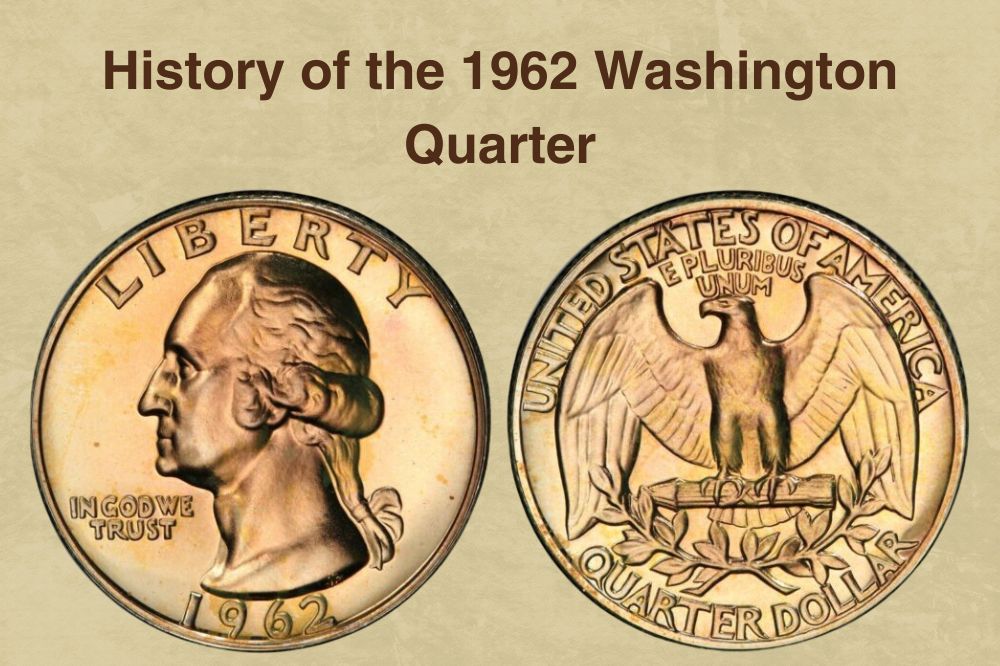
The first American coins didn’t show real persons on the obverse, particularly not ex-presidents. The reason was George Washington’s conviction that the young nation shouldn’t follow the old monarchist customs.
After the Lincoln penny appeared in circulation, Americans decided they liked their beloved Presidents on their coinage. The final result was the Presidential $1 series minted from 2007 to 2020 with a particular coin for each US President in history.
In 1932, the United States prepared George Washington’s birth bicentennial celebration. Expectedly, the US Mint wanted to contribute to such an important event. Even though this President appeared on the $1 bill in 1869, it was time to add his portrait on coinage.
Bicentennial committee members wanted to dedicate half-dollars to the first President, but Congress decided to replace the Standing Liberty quarter. Then, Congressmen asked for the Washington quarter minting instead.
The committee members’ second idea was to engage talented sculptor Laura Gardin Fraser to adapt her winning half-dollar design for the quarter. Unfortunately, the then-Treasury Secretary disagreed with a female artist and favored Flanagan’s design.
The first plan was to release Washington quarters for only one year and return to the Standing Liberty coins in 1933. However, Americans adored their new quarters, and they stayed in circulation. Moreover, their minting has continued until today.
1962 Washington quarter Types |
||
| Location | Year | Minted |
| Philadelphia | 1962 quarter | 36,156,000 |
| Philadelphia | 1962 proof quarter | 3,218,019 |
| Denver | 1962 D quarter | 127,554,756 |
| Total | / | 130,772,775 |
Nowadays, Washington quarters are common and affordable coins, particularly modern sets. The only exceptions are keys, including the 1932 D and 1932 S quarters.
Despite their silver content, only the highest-rated 1962 coins with the first President on the obverse are expensive. Low-quality pieces cost less than the silver they contain, so many owners sell their pieces for melting.
On the other hand, dedicated numismatics prefer keeping these coins safe as a part of their collections. Some hope the 1962 quarters can become an excellent investment for rainy days because they are among the last sets made of precious metal.
Also read: Top 13 Most Valuable State Quarters Worth Money
Features of the 1962 Washington Quarter
John Flanagan was an American sculptor and medalist who got the honor of designing Washington quarters in the early 1930s. The series started in 1932 when it replaced the Standing Liberty quarter.
This design is considered the longest-lived in the US coinage history since it lasted with only minor changes by 1998. It was finally withdrawn from circulation in 2022.
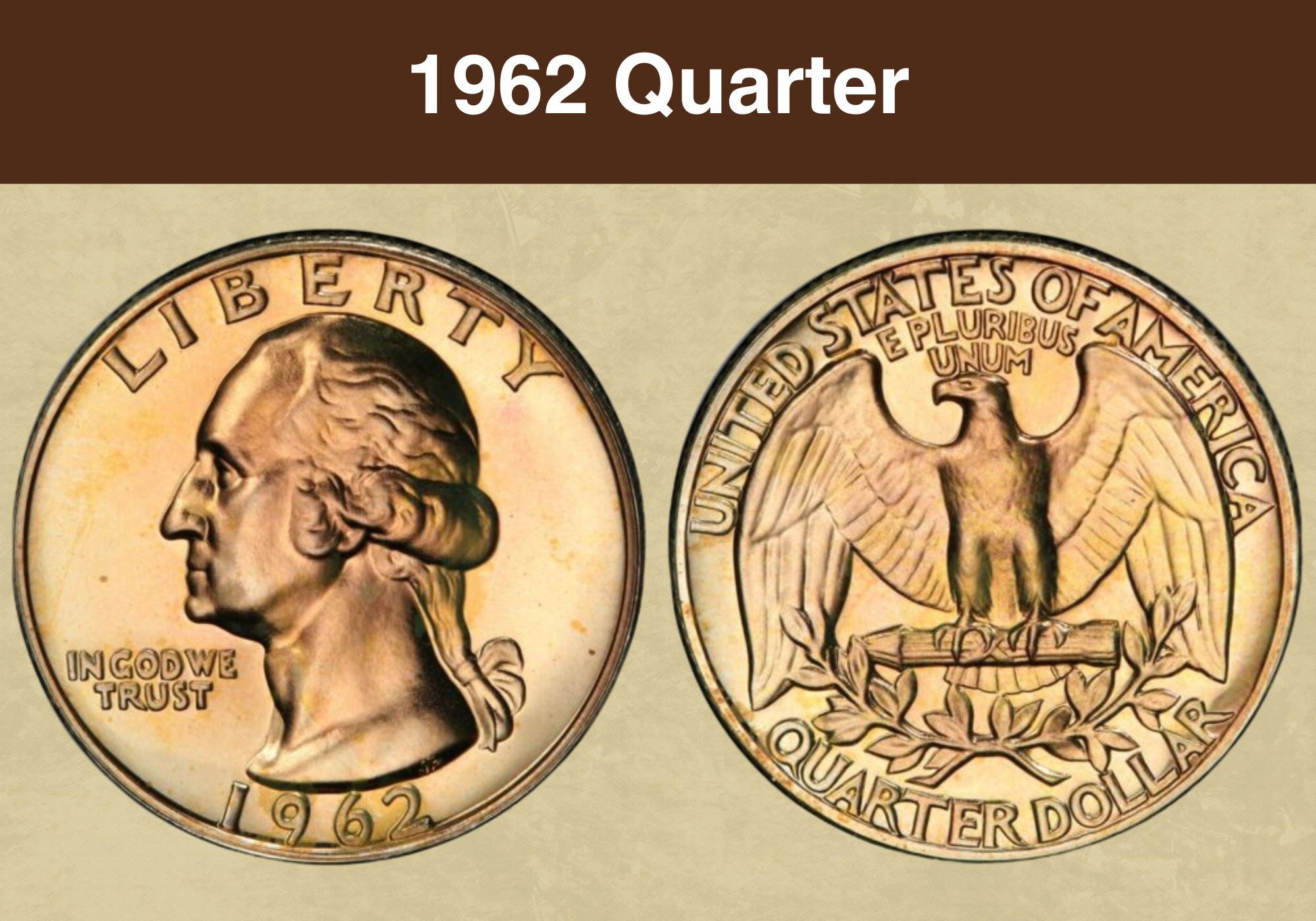
The obverse of the 1962 Washington quarter
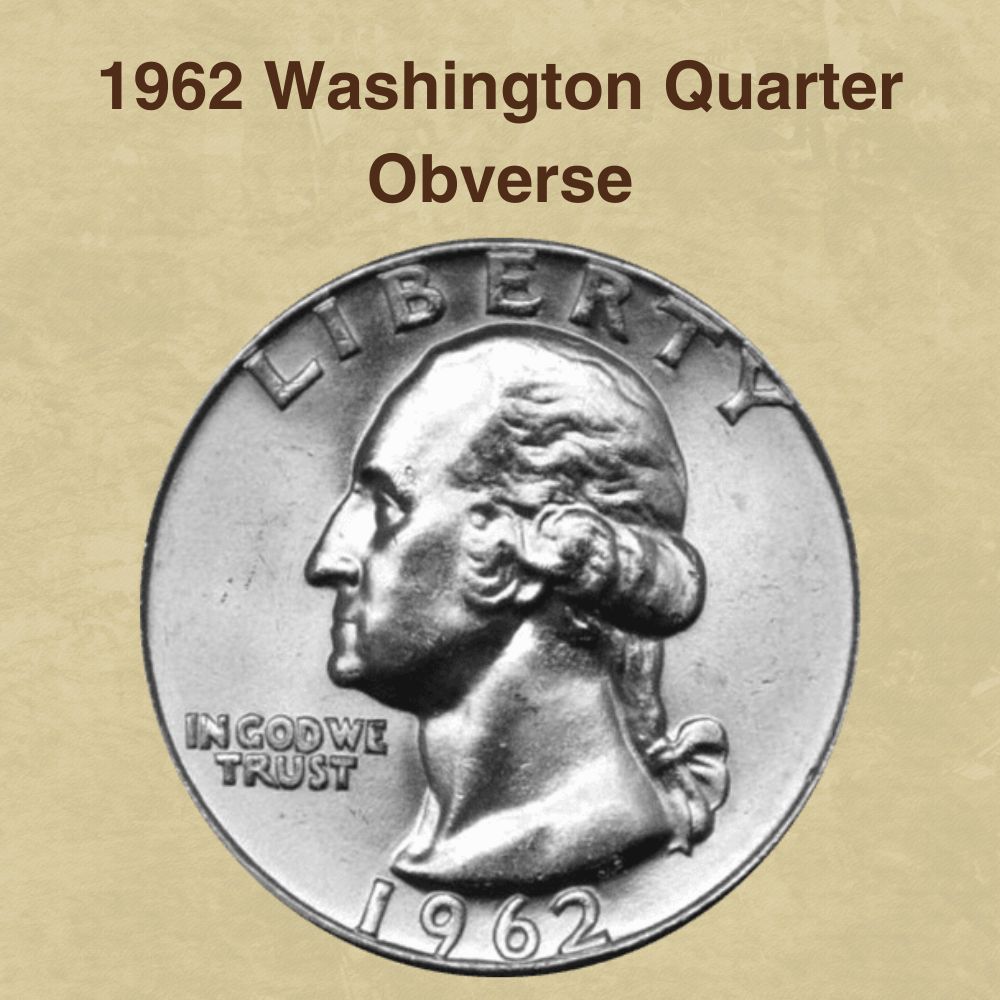
The designer depicted George Washington’s portrait on the obverse and added his subtly engraved initials (JF) at the neckline tructation. Besides, you can spot the LIBERTY above the President and IN GOD WE TRUST in front of his neck. The simple 1962 Washington quarter design also includes the date.
The reverse of the 1962 Washington quarter
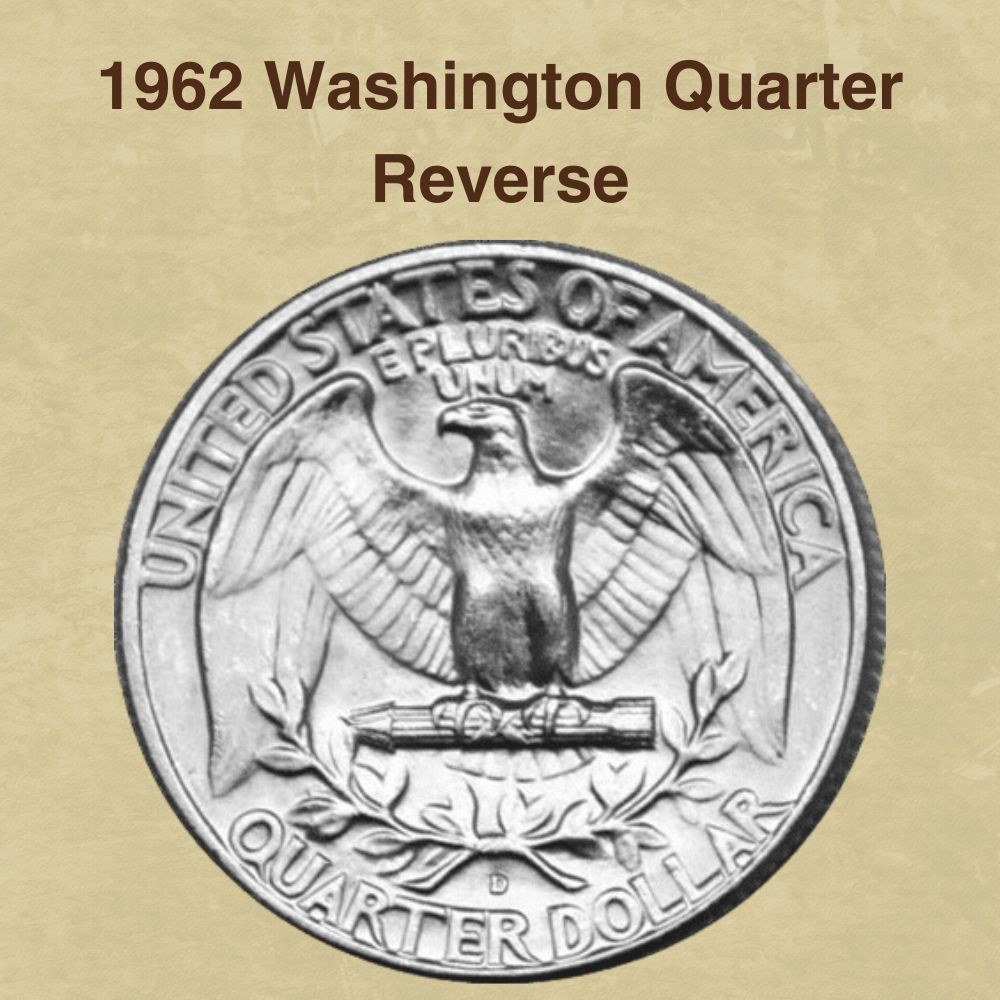
The 1962 quarter reverse side includes an American eagle in the center with 13 arrows visible in its claws. Their number symbolically represents the original States in the Union.
Olive branches placed under the eagle’s wings represent symbolic balance since they represent peace. You can see the D mint mark in pieces struck in Denver under the twig’s middle.
The reverse inscriptions include UNITED STATES OF AMERICA with E PLURIBUS UNUM below. The QUARTER DOLLAR, coin denomination, is placed the way to surround the composition from the bottom.
1962 Washington quarter Details |
|
| Face value | Twenty-five cents ($0.25) |
| Shape | Round |
| Coin thickness | 1.75 mm (0,06870 inches) |
| Coin diameter | 24.3 mm (0,95669 inches) |
| Silver weight | 5.623 g (0.1808 troy ounces) |
| Compound | Silver and copper (90%: 10% ratio) |
| Coin weight | 6.25 g (0,2009 troy ounces) |
| Edge | Reeded (119 reeds) |
Other features of the 1962 Washington quarter
The 1962 Washington quarters are in a group of the last silver coins before the US Mint changed their composition in 1965. These twenty-five-cent-worth round coins contain 5.623 g (0.1808 troy ounces) of this precious metal, which is 90% of their total weight of 6.25 g (0,2009 troy ounces).
Their diameter is 24.3 mm (0,95669 inches), and it is impossible to shorten it thanks to a reeded edge. Regularly struck pieces have a thickness of 1.75 mm (0,06870 inches).
Also read: Top 16 Most Valuable Modern Quarters Worth Money
1962 Washington Quarter Grading
Most owners avoid estimating their 1962 quarters professionally because of their low value. In these cases, they use the Sheldon scale to assess their pieces themselves and try to sell them online. However, precisely estimated, well-preserved coins are always a better option since they can multiply their price at auctions.
| # | Grade |
|---|---|
| 1 | Basal State-1 |
| 2 | Fair |
| 3 | Very Fair |
| 4, 5, 6 | Good |
| 7, 8, 10 | Very Good |
| 12, 15 | Fine |
| 20, 30 | Very Fine |
| 40 | Extremely Fine |
| 50 | About Uncirculated |
| 60 | Mint State |
| 65 | Mint State |
| 70 | Mint State |
Please check our grading guides to know your coin scale, It’s the necessary step to know the exact value of your coin.
Check out now: How to Grade Washington Quarter?
1962 Quarter Value Guides
In 1962, only two mints issued Washington quarters. The total mintage of 130,772,775 coins included two types from regular strikes (with and without the D mint mark) and over three million proofs. Such a high number secured moderate prices, which was excellent news for collectors.
1962 No Mint Mark quarter Value
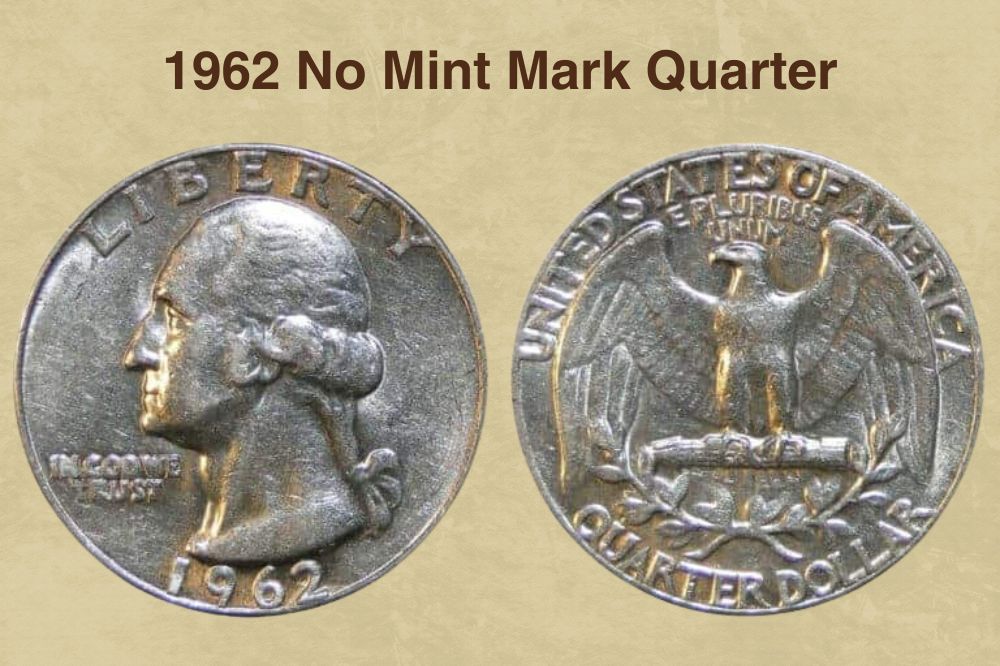
In 1962, the mint in Philadelphia produced 36,156,000 quarters with George Washington on the obverse. All these coins came without the mint mark, according to the US Mint policy at the time.
Some of these coins are still in circulation, and you can get about $6 if you find one in collectible condition. Interestingly, even some pieces in the mint state cost almost the same, and you can buy one in MS 60 to MS 64 for $10 to $25. On the other hand, better-rated quarters can reach higher sums, like:
- MS 65-graded coin costs $30
- MS 66-graded coin costs $55
- MS 67-graded coin costs $2,250
- MS 68-graded coin costs $4,500
The most expensive Washington 25-cent coin from 1962 is the one in MS 67+ grade. It won an auction record of $26,400 in 2019.
1962 proof quarter Value
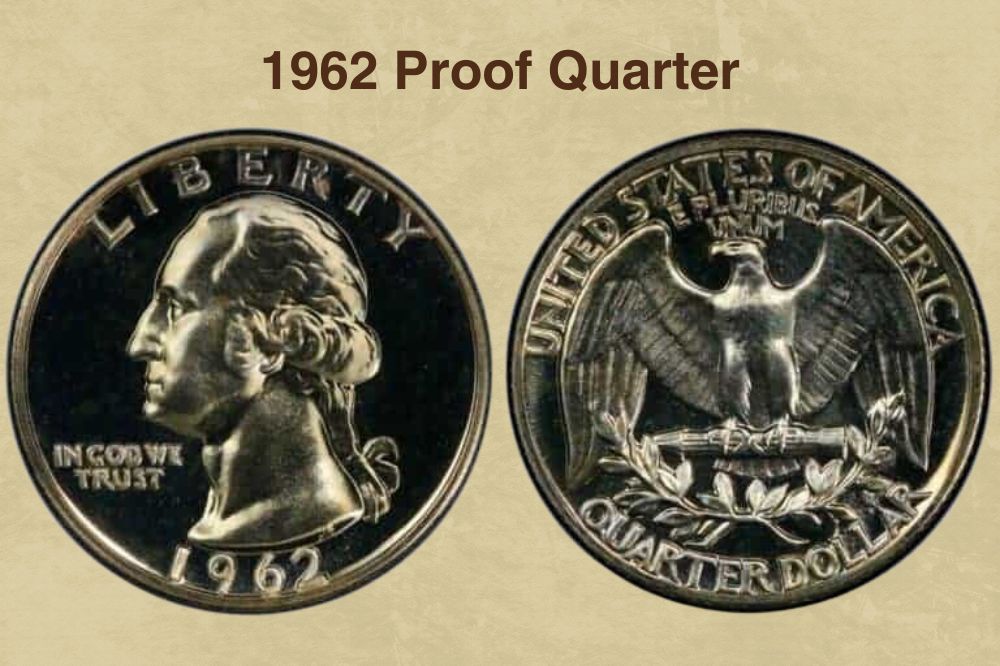
Besides regularly struck quarters in 1962, the Philadelphia mint also issued 3,218,019 proofs for collectors. Thanks to the high number released this year, these coins are affordable even for collectors who need to take care of their budget.
Coins from PR 60 to PR 69 grade cost $6 to $40, and only perfectly preserved ones are more valuable. In most cases, it is enough to pay $240 to get one PR 70-rated piece, but one 25-cent coin of this quality was sold at Heritage Auctions for $322 in 2002.
Besides these ordinary coins, you can also pick out the one with cameo contrast. Their estimated price range is from $18 (PR 65) to $120 (PR 69), making them affordable for many collectors.
Finally, the most appreciated quarters with deep cameo contrast are available for approximately:
- $27 – the 1962 Washington quarters in PR 65 grade
- $30 – the 1962 Washington quarters in PR 66 grade
- $45 – the 1962 Washington quarters in PR 67 grade
- $210 – the 1962 Washington quarters in PR 68 grade
- $450 – the 1962 Washington quarters in PR 69 grade
As expected, rare specimens rated PR 70 are more expensive. One such piece was offered at Heritage Auctions in 2022 and sold at an impressive $7,800.
1962 D Washington quarter Value
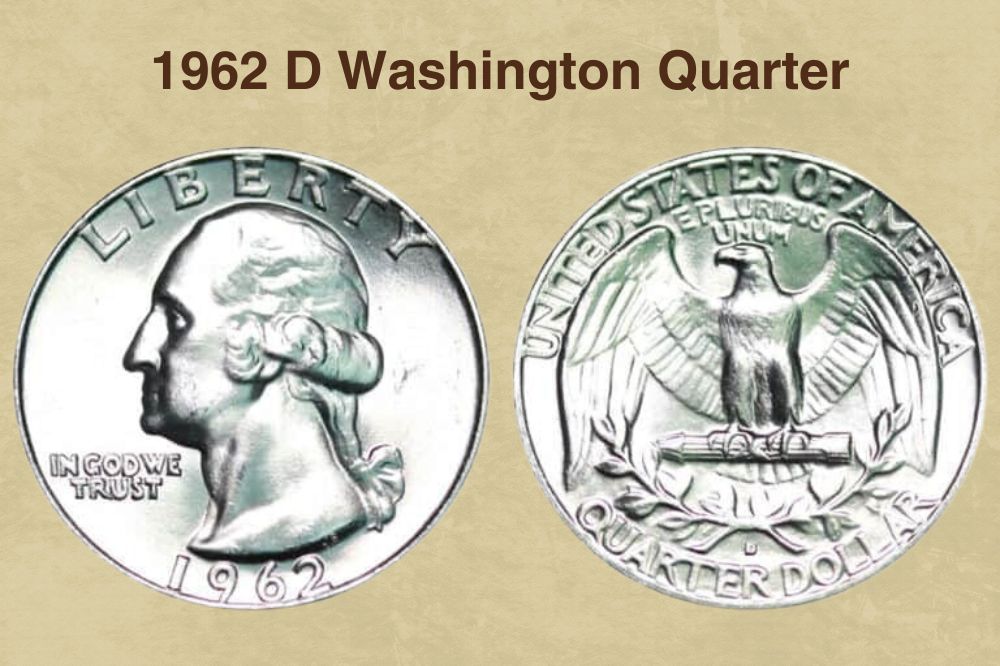
The Denver mint had four times higher quarter production in 1962 than the one from Philadelphia. Most of the 127,554,756 issued coins with the D mint mark were released into circulation, and you can buy one for about $6 today.
While uncirculated pieces in lower ranges cost $10 to $85, those in MS 67 grade the rarest and most expensive. Their estimated price range is from $3,000 to $8,750, but a few pieces found the new owners for more money. Currently, the priciest 1962 D quarter is the one in MS 67 grade, sold in 2012 at Heritage Auctions for $18,400.
Also read: 17 Most Valuable Quarter Errors Worth Money
Rare 1962 Quarter Errors List
The 1962 Washington quarters are well-known after a few valuable errors resulting from irregularity during their production. Great interest among collectors for these imperfect specimens makes them more valuable than regular coins.
In some cases, low-available pieces come with significantly increased prices. So, only numismatists with unlimited budgets can afford them.
Doubled die
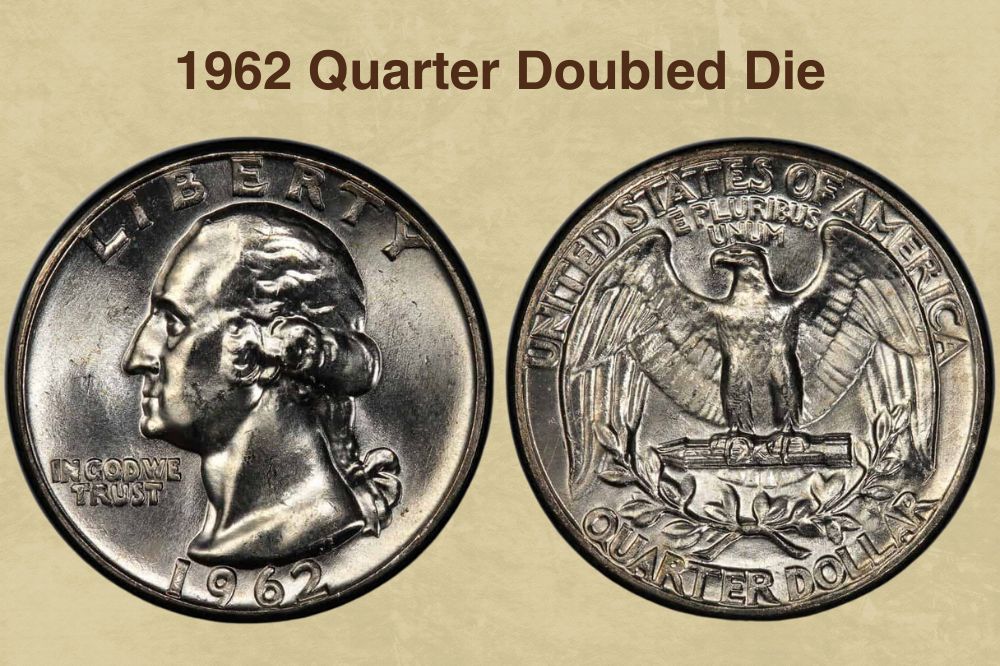
When a steel die hits a planchet twice, the result is an error coin with significant structural anomalies or minor deviations in an image and lettering. You can spot these imperfections on both the obverse and reverse of the 1962 silver quarters.
The most famous are the specimens with DDO on the motto IN GOD WE TRUST. This coin in MS 66+ grade sold at $3,290 in 2016. On the other hand, you can expect to get about $25 to $70 for a piece with a DDR error.
Re-punched mint mark
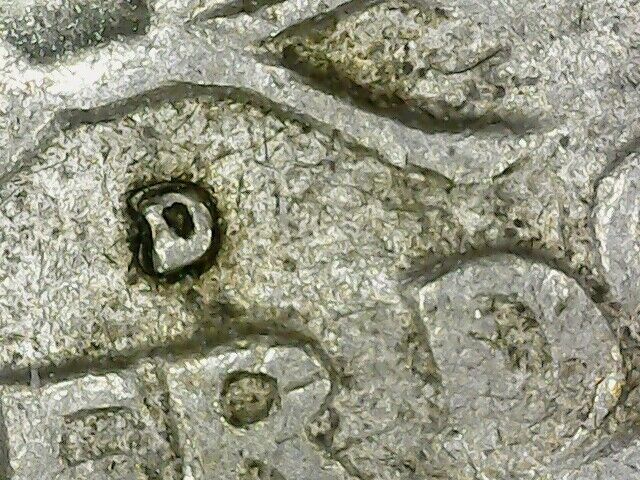
Manual punching of the mint mark often leads to deviations, so mint workers used to hit this letter twice or sometimes more times to place it right. Such coins have a slight D letter doubling, and you can find numerous 1962 Washington quarters minted in Denver with this imperfection.
Expectedly, that makes these pieces affordable, and they are usually worth at most $100. However, you can hear about a few exceptions that reached higher prices at auctions. For instance, one 1962 MS 65 Washington 25-cent coin with RPM error was sold at $495 on eBay in 2021.
Where to Sell Your 1962 Washington Quarter ?
Now that you know the value of your coins, do you know where to sell those coins online easily? Don’t worry, I’ve compiled a list of these sites, including their introduction, pros, and cons.
Check out now: Best Places To Sell Coins Online (Pros & Cons)
FAQ about the 1962 Washington Quarter
What makes a 1962 Washington quarter rare?
The 1962 quarters with Washington’s image on the obverse are abundant coins on the market nowadays. Besides rare pieces in the highest grades and an expensive DDO error, most are affordable and readily available to collectors.
Which 1962 Washington quarter is particularly worth money?
- The 1962 MS 67+ Washington 25-cent coin sold at Heritage Auctions for $26,400 in 2019
- The 1962 D MS 67 Washington 25-cent coin sold at Heritage Auctions for $18,400 in 2012
- The 1962 PR 70 DCAM Washington 25-cent coin sold at Heritage Auctions for $7,800 in 2022
- The 1962 MS 66+ Washington 25-cent coin (DDO) sold at Heritage Auctions for $3,290 in 2016
- The 1962 MS 66+ Washington 25-cent coin (Type B reverse) sold on eBay for $1,500 in 2019
- The 1962 D/D MS 65 Washington 25-cent coin (RPM) sold on eBay for $495 in 2021
- The 1962 PR 70 Washington 25-cent coin sold at Heritage Auctions for $322 in 2002
- The 1962 PR 69 Washington 25-cent coin (CAM) sold at Heritage Auctions for $196 in 2005
How much is the 1962 Washington quarter without the mint mark worth?
Since the 1962 Washington quarters are abundant on the current coin market, you can expect to pay about $6 for circulated pieces in the lower mint state ranks.
Besides specimens from MS 65 to MS 67 grades with a price range from $30 to $2,250, you can also find precious ones ranked MS 68. Their assessed price is approximately $4,500.
What is the most pricey Washington quarter?
- The 1932 D MS 66 quarter is the most expensive silver piece minted in Denver ($143,750 in 2008)
- The 1932 S MS 66 quarter is the most expensive silver piece minted in San Francisco ($45,500 in 2020)
- The 1948 MS 68+ quarter is the most expensive silver piece minted in Philadelphia ($43,200 in 2021)
- The 1950 PR 68 quarter is the most expensive silver proof minted in ($31,200 in 2022)
- The 1966 MS 68+ quarter is the most expensive clad piece minted in Philadelphia ($21,000 in 2023)