Coin Value Contents Table
- 1945 Wheat Penny Value
- The 1945 Wheat Penny History
- 1945 Wheat Penny Types
- The 1945 Wheat Penny Features
- 1945 Wheat Penny Grading
- 1945 Wheat Penny Value Guides
- 1945 No Mint Mark Wheat Penny Value
- 1945 D Wheat Penny Value
- 1945 S Wheat Penny Value
- Rare 1945 Wheat Penny Error List
- Where to Sell Your 1945 Wheat Penny ?
- FAQ about the 1945 Wheat Penny
Collectors and coin enthusiasts like adding pennies minted in 1945 to their collections, particularly when they are in a high grade with excellent toning. The 1945 penny value depends not only on their condition and the mint mark but also on their superb backstory and rich history.
Besides, you can enjoy finding rare error pieces that are worth much more than the estimated six cents up to $1 for one average coin. Also, remember that one of these cents won an auction record of $20,400. What do you think, can there be only one in this case?
1945 Wheat Penny Value |
|||
| Condition | 1945 No Mint mark penny | 1945 D penny | 1945 S penny |
| Fine | $0.06 | $0.06 | $0.11 |
| Very fine | $0.11 | $0.11 | $0.17 |
| Extra fine | $0.23 | $0.23 | $0.23 |
| AU | $0.40 | $0.40 | $0.40 |
| MS 60 | $0.98 | $0.98 | $0.98 |
| MS 63 | $2.33 | $2.33 | $2.33 |
The 1945 Wheat Penny History
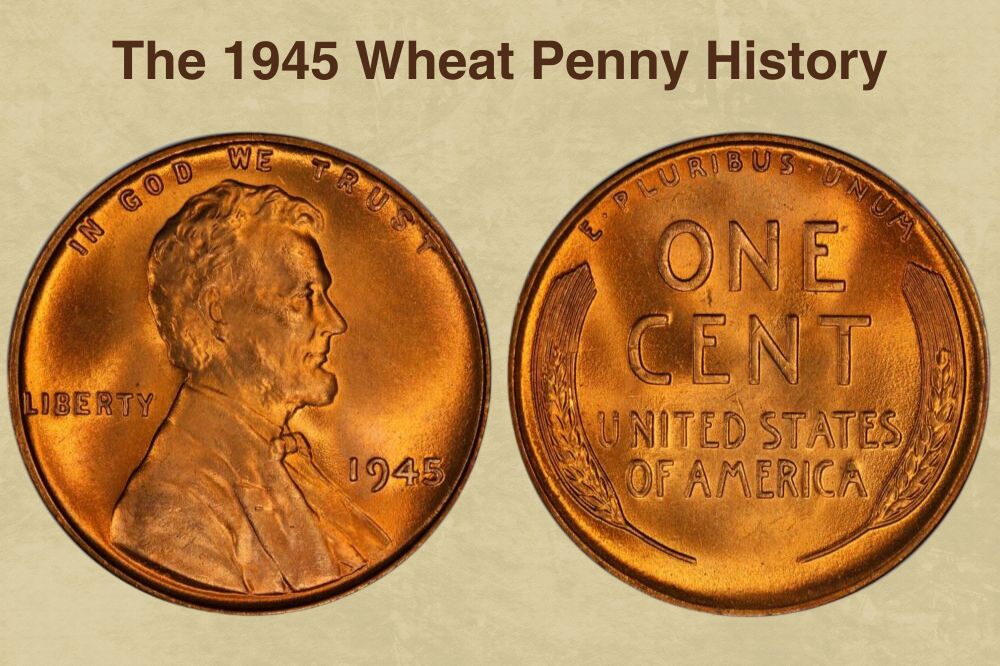
The 1945 Lincoln cents are small coins from the Wheat penny series minted in three US Mints. This series appeared in 1909 after Victor D. Brenner’s design. The goal was to celebrate the 100th birthday of the 16th American President, Abraham Lincoln.
The US Mint continued minting these coins until 1959 when the reverse was changed in honor to the 150th birthday of this respectful man. The obverse stayed the same in memory of the first American coin depicting a real person.
Since Americans adored the President who abolished slavery and united the young nation into one country, they barely waited for the new coin. It was recorded that people waited in line for hours to get their pennies, making this first set a hit.
On the other hand, vending machine companies hated the new cent because they were too thick for existing slots. Since the Mint’s chief engraver Charles E. Barber refused to make any change in the penny appearance, producers modified their vending machines because of this coin.
From 1909 to 1935, the US Mint produced only pennies from regular strikes, but these lovely small coins became highly collectible. Therefore, the production of the proof version started in 1936 at the Philadelphia mint.
1945 Wheat Penny Types |
||
| Location | Year | Minted |
| Philadelphia | 1945 No Mint mark penny | 1,040,515,000 |
| San Francisco | 1945 S penny | 181,770,000 |
| Denver | 1945 D penny | 266,268,000 |
| Total | / | 1,488,553,000 |
As you know, the 1945 Wheat pennies occurred in circulation during the final year of WWII, making them historically valuable. Rumors said that a part of the mintage contained the ammunition shells left after military training, like many other cents minted from 1944 to 1946.
Problems appeared in the middle of WWII because of copper shortages. After short-lived changes in composition and zinc-plated steel penny production in 1943, coins in 1945 were made the same way as pre-war ones.
That was necessary because 1943 steel pennies were highly unpopular because of quick rusting and similarity with dimes, causing confusion in everyday transactions.
Except for these atypical features and an excellent story connected with their existence, pennies with the 1945 minting year are the same as other pieces in the series.
These coins come in three variations, without the mint mark or with S or D letter below the struck year. They are common in all grades nowadays, including the highest MS 65.
Also read: 12 Most Valuable Lincoln Penny Worth Money
The 1945 Wheat Penny Features
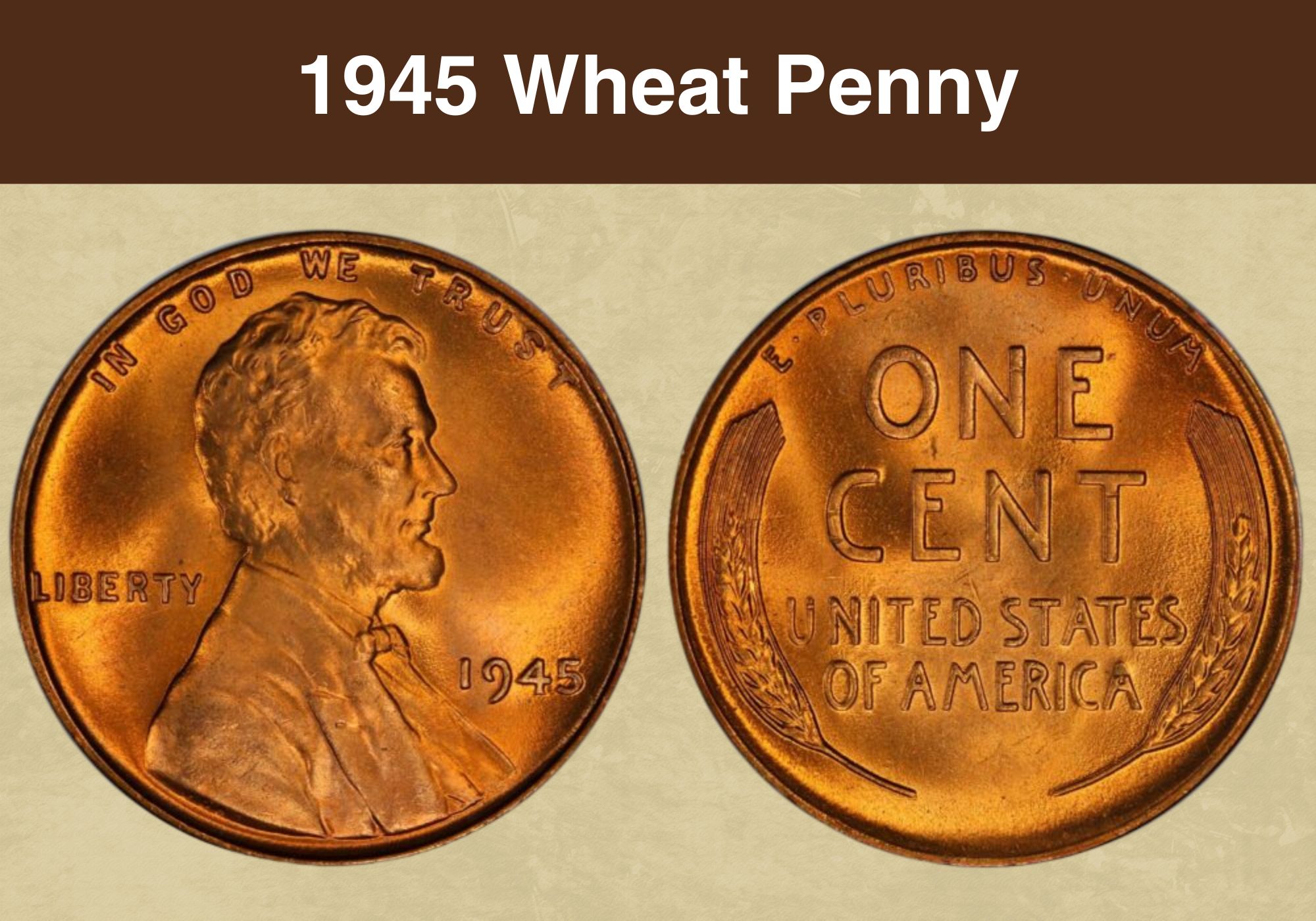
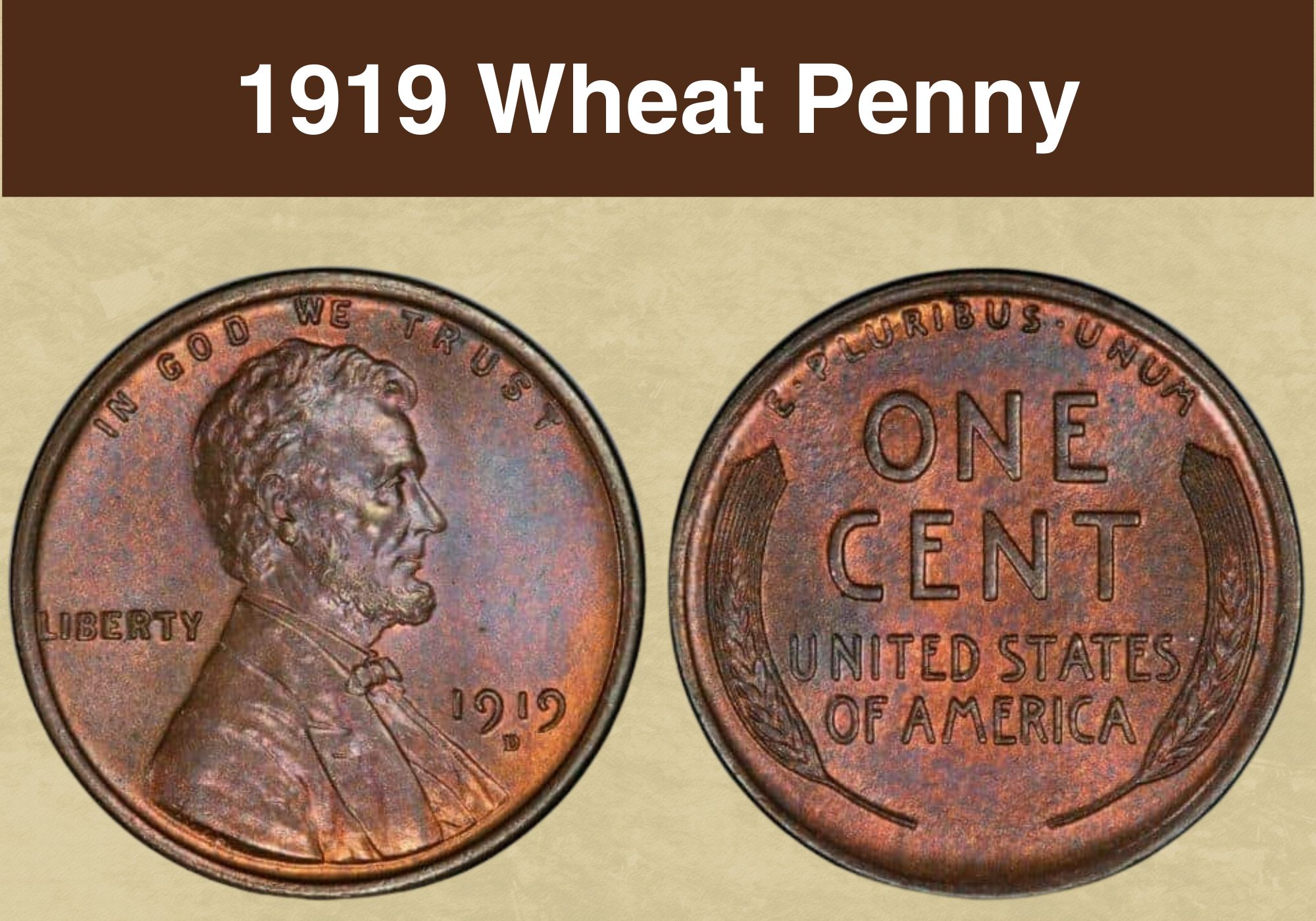
Engraver Victor D. Brenner designed those pennies made of copper alloy with traditional ears of wheat on the reverse and a Lincoln bust on the obverse. It is possible to find coins minted in 1945 in three colors, including red, brown, and red-brown.
The 1945 Wheat Penny obverse
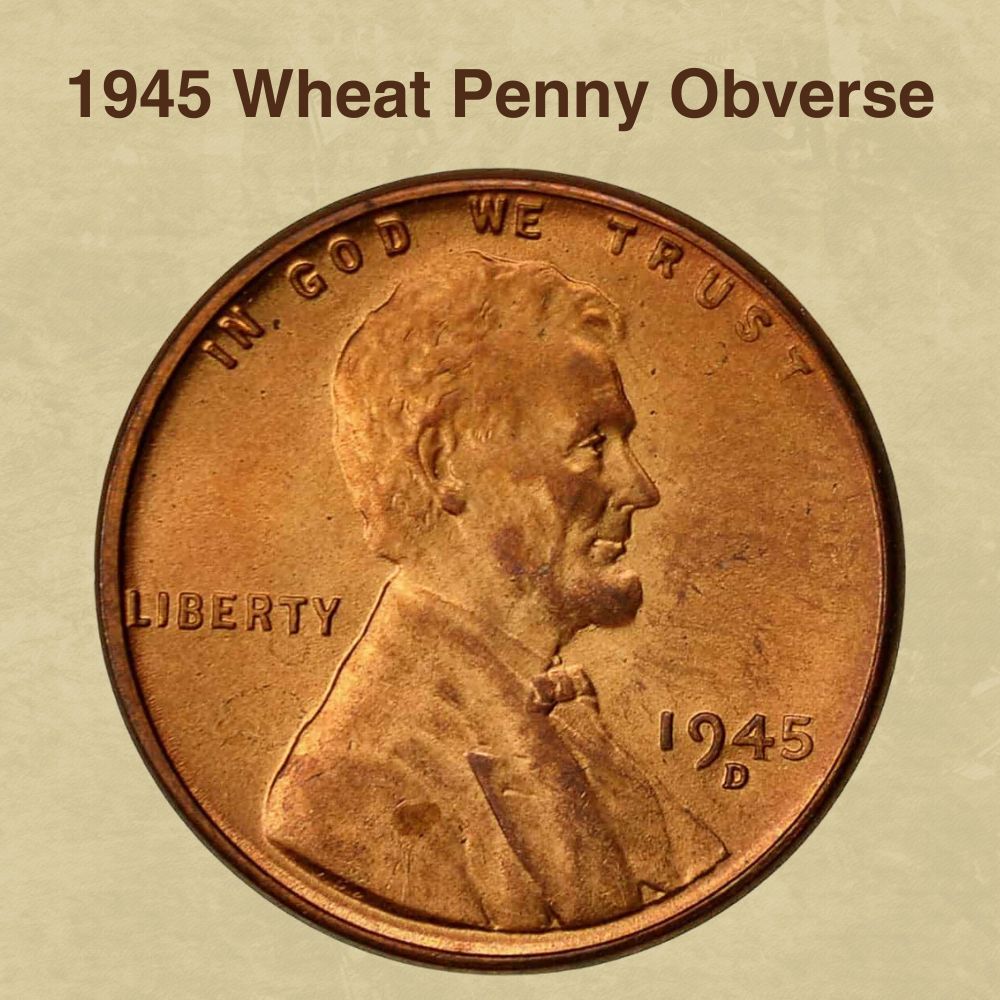
Like other Lincoln pennies, those minted in 1945 have this President on the obverse. You can see the minting date on the right with the mint mark below when a particular coin is from Denver or San Francisco. On the left is the word LIBERTY, while IN GOD WE TRUST is over the 16th President’s head.
The 1945 Wheat Penny reverse
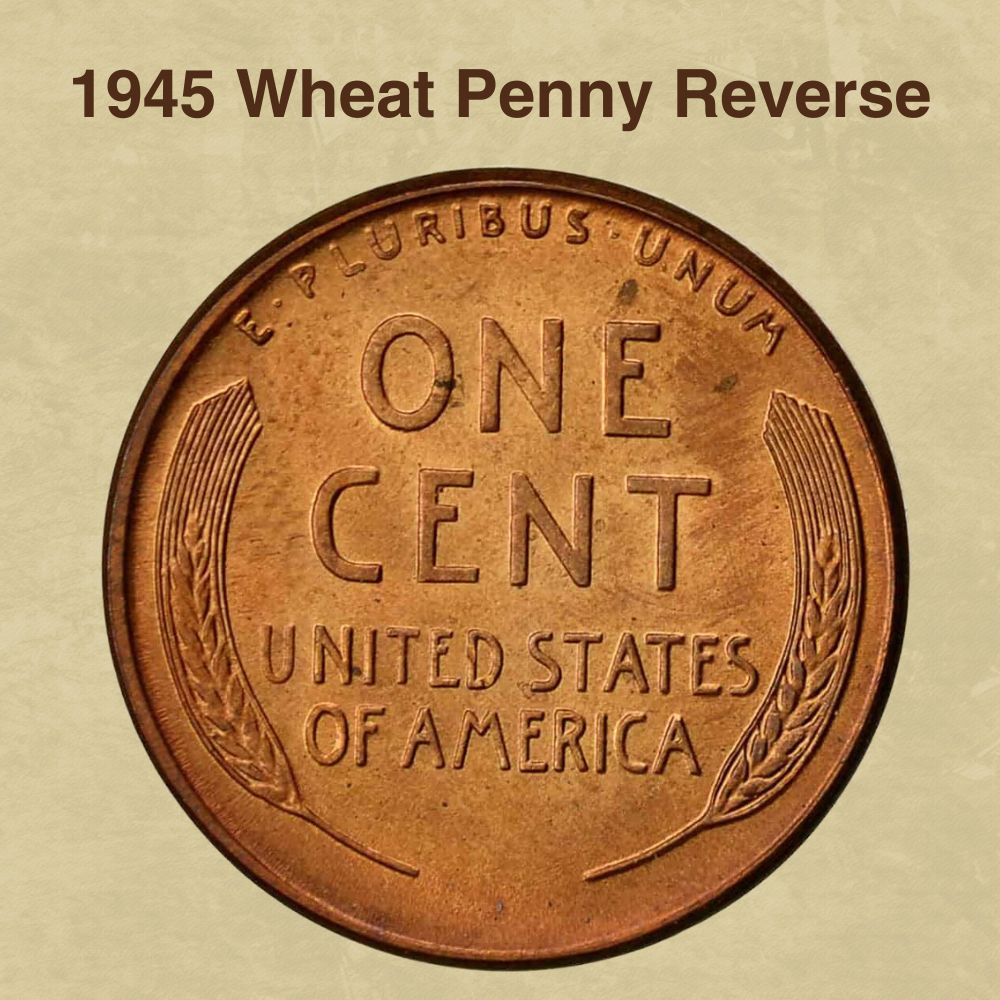
You can see two wheat ears on both Lincoln cent rims on the reverse. Between them are two inscriptions in four lines:
- ONE
- CENT
- UNITED STATES
- OF AMERICA
Finally, the Latin motto covers centrally positioned composition.
1945 Wheat Penny Details |
|
| Coin diameter | 19.05 mm (1.75 inches) |
| Coin weight | 3.11 g (0.10970 ounces) |
| Face value | One cent ($0.01) |
| Shape | Round |
| Compound | An alloy of 95% copper with zinc or tin |
| Coin thickness | 1 mm (0.03937 inches) |
| Edge | Plain |
Other features of the 1945 Wheat Penny
The 1945 plain-edged one-cent penny is a round coin made of 95% copper. Each piece has a diameter of 19.05 mm (1.75 inches) and a weight of 3.11 g (0.10970 ounces). You can expect it to be thin, with a standard thickness of 1 mm (0.03937 inches).
Also read: 13 Most Valuable Wheat Penny Worth Money
1945 Wheat Penny Grading
Most professional grading companies use modifying Sheldon grading system to evaluate coins’ condition and value. You can roughly estimate your 1945 penny quality by following detailed guidelines established by famous numismatist Dr. William Sheldon in 1948.
| # | Grade |
|---|---|
| 1 | Basal State-1 |
| 2 | Fair |
| 3 | Very Fair |
| 4, 5, 6 | Good |
| 7, 8, 10 | Very Good |
| 12, 15 | Fine |
| 20, 30 | Very Fine |
| 40 | Extremely Fine |
| 50 | About Uncirculated |
| 60 | Mint State |
| 65 | Mint State |
| 70 | Mint State |
Please check our grading guides to know your coin scale, It’s the necessary step to know the exact value of your coin.
Check out now: How to Grade Lincoln Wheat Penny?
1945 Wheat Penny Value Guides
Three mints released 1,488,553,000 Lincoln cents from regular strikes in 1945. Since the US Mint didn’t consider proof coin production from 1942 to 1950, it is impossible to find such pieces on the market.
1945 No Mint Mark Wheat Penny Value
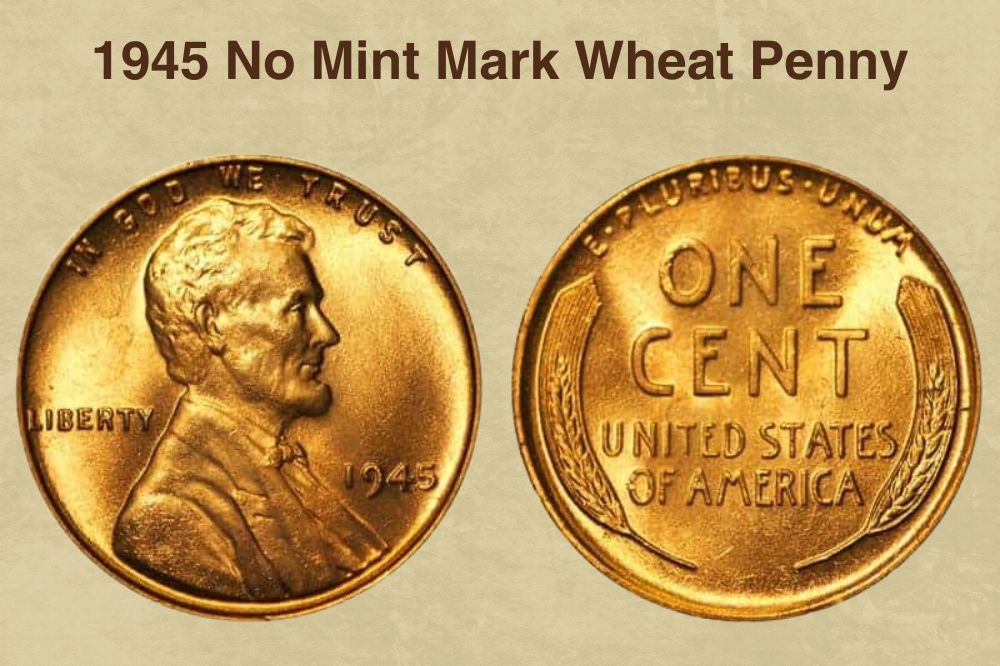
The mintage of 1,040,515,000 No Mint mark pennies struck in Philadelphia in 1945 was respectable. Since that makes these coins abundant nowadays, you can expect to buy most coins at low prices.
Besides their condition, the most crucial feature you should consider before trading is their color. For instance, brown Wheat cents minted this year typically cost $0.25 to $45. These prices are high for one-cent coins but relatively low for pieces minted almost 80 years ago.
Those with red-brown toning have slightly higher prices, so you should set aside about $0.35 to $55 to get one. The situation is different for highly collectible red-toning pennies. Lower-quality pieces are affordable, ranging from $0.55 to $32.40.
However, those in the best condition are costly. Pennies with the MS 67 grade are worth $180 to $220, while the most expensive are rare highest-ranking pieces. You should count on prices from $5,000 to $6,000 when finding those in MS 68 grade.
1945 D Wheat Penny Value
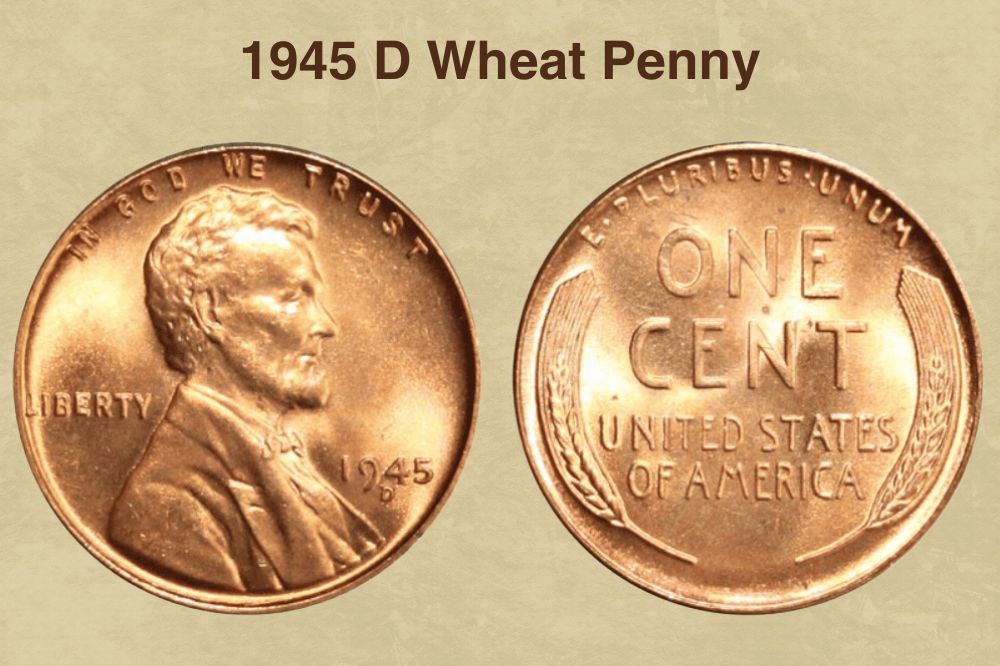
The Denver mint released 266,268,000 Lincoln Wheat cents in circulation in 1945. You can recognize these coins in three colors, including the most collectible red pieces and the least appreciated brown ones.
The 1941 D brown pennies typically cost $0.25 to $45, while those combining red and brown shades are worth slightly more, from $0.35 to $55. Uncirculated red Lincoln cents struck in 1945 come with different prices, depending on their preservation level. So, you can expect to pay:
- $0.55 to $0.66 for the 1945 MS 63 penny
- $1.25 to $1.50 for the 1945 MS 64 penny
- $8 to $10 for the 1945 MS 65 penny
- $23 to $30 for the 1945 MS 66 penny
- $115 to $138 for the 1945 MS 67 penny
Only cents with the MS 68 grade are scarce, and their prices are estimated to be an astonishing $12,000 to $15,000. For now, the most expensive piece of such quality was paid $14,400 at an auction organized in 2019.
1945 S Wheat Penny Value
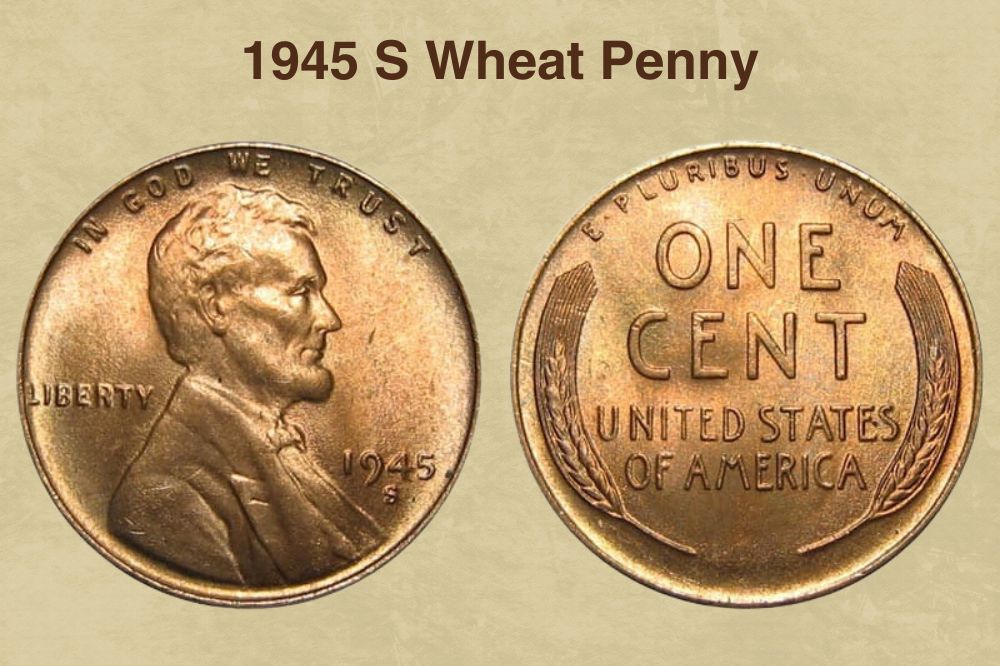
Like in most cases, the mint in San Francisco had the lowest penny mintage of all three mints that produced this type of coin in 1945. It issued 181,770,000 pieces. Most of these coins, including those in the mint state, are affordable nowadays.
The most expensive 1945 S Lincoln cents are those with appealing red shade, so you should count on approximately:
- $0.85 to $0.96 for cents in MS 63 rank
- $1.25 to $1.50 for cents in MS 64 rank
- $8 to $10 for cents in MS 65 rank
- $23 to $35 for cents in MS 66 rank
- $70 to $150 for cents in MS 67 rank
Finding 1945 S red cents in the highest grades can be challenging, so one collector happily paid $2,174 for one MS 67+ ranked specimen in 2015.
As expected, red-brown cents are more affordable, with an average price from $0.65 to $57, depending on their ranking. If you don’t mind collecting brown pennies with 1945 struck on the obverse, you can buy one such coin for $0.55 to $47.
Also read: 17 Most Valuable Indian Head Penny Worth Money
Rare 1945 Wheat Penny Error List
You can find error 1945 Wheat pennies in numerous forms, making them differently expensive. Besides, most of these coins are highly collectible, particularly the rare ones.
Clipped planchet
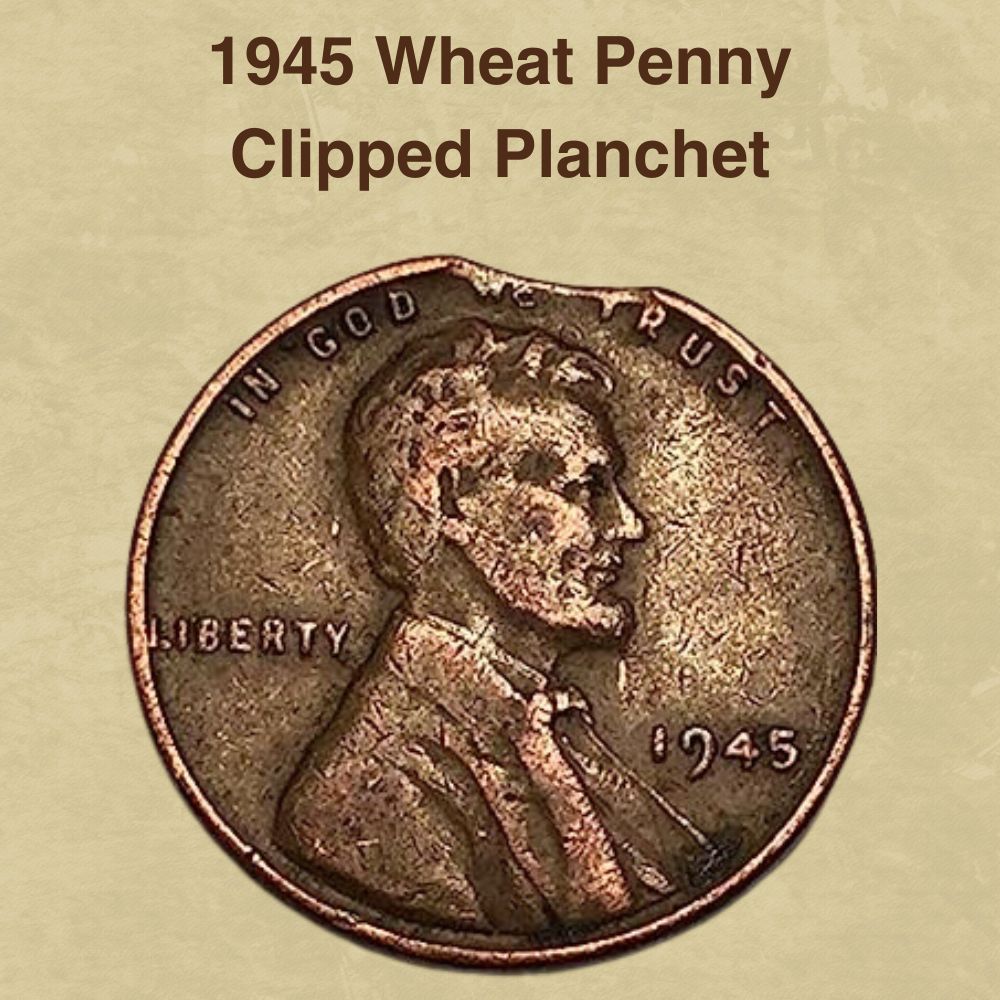
When the metal planchet comes between the dies improperly, the result is pieces with a clipped edge. Their prices vary, depending on the size of the cut part and coin grade, and are typically up to $100.
Lamination flaw
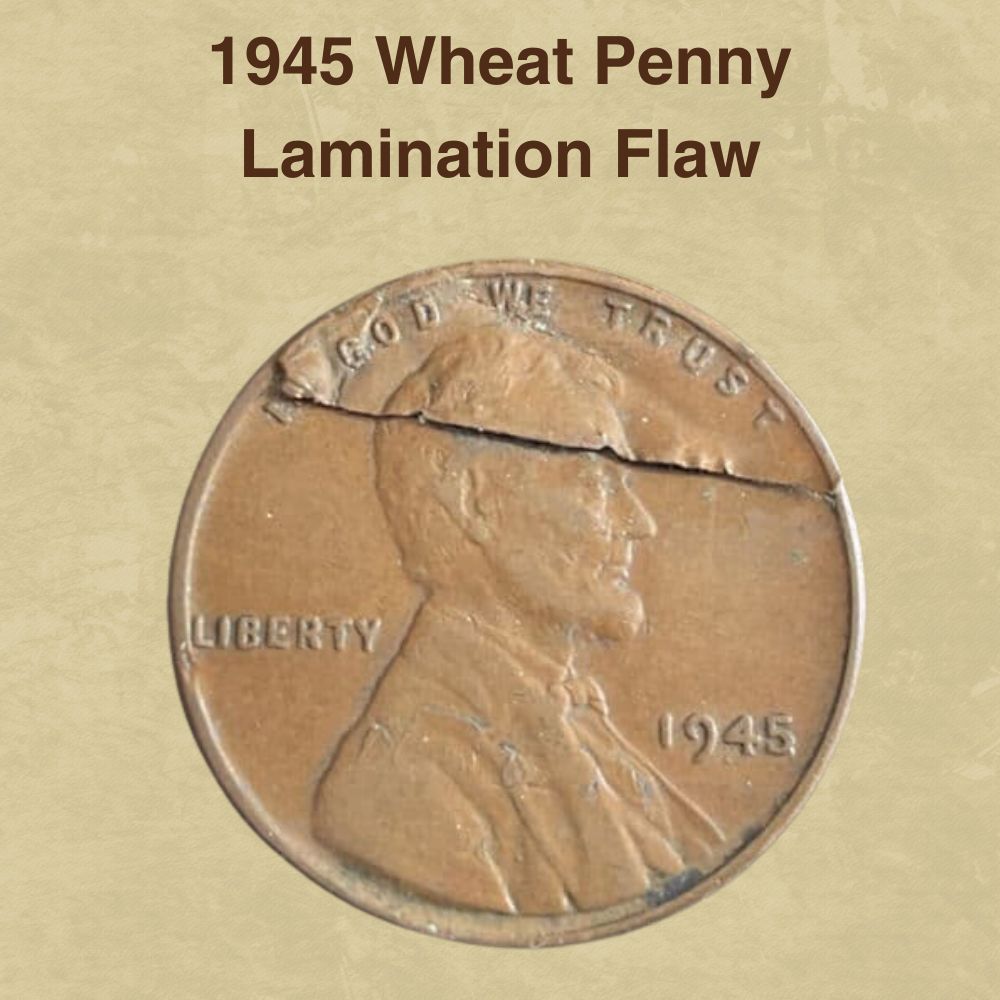
In this case, the top coin layer separates from its based structure during minting. The 1945 cent with bubbles or peeled lines on the surface can cost $90 to $160.
Doubled die
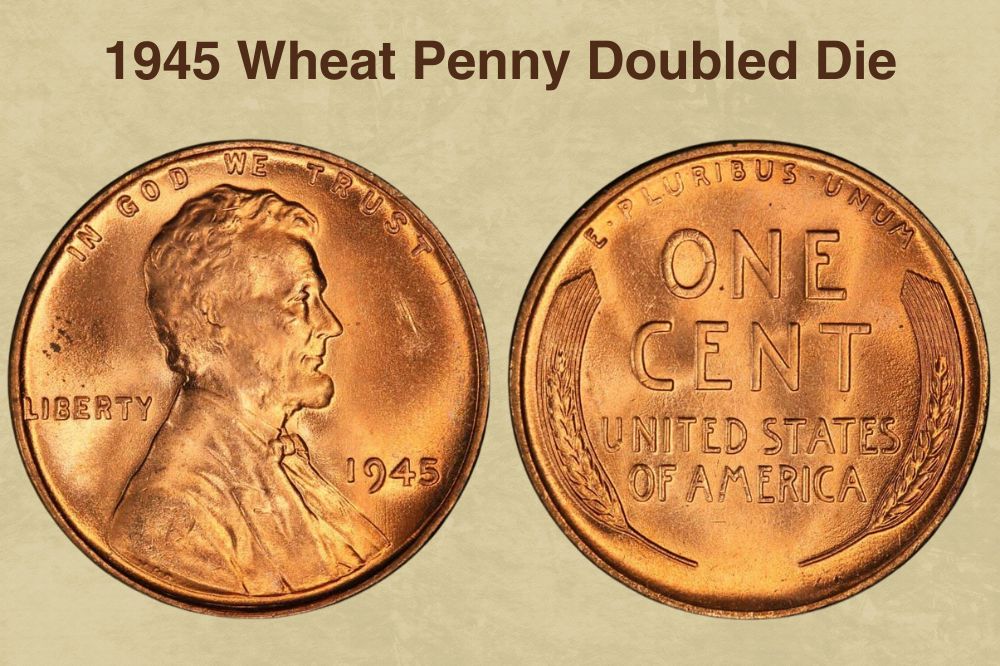
The 1945 pennies with doubled inscriptions or an image are a result of the double striking when they slightly move during the process. Such coins’ price range is from $100 to $500. On the other hand, those in lower grades are worthless because seeing such a subtle imperfection on the worn-out metal surface is impossible.
Broad strike
Such an error penny occurs when striking without a retaining collar. In this case, you get a wide coin without the edge design. Even though this error is not particularly rare among the 1945 pennies, they are collectible and often worth up to $200.
Weight error
This rare coin weighs 0.11288 ounces (3.2 g) instead of standard piece weighing 0.10970 ounces (3.11 g). Such a coin is collectible and can be worth a few dozen or hundred dollars.
Also read: 11 Most Valuable Wheat Penny Errors
Where to Sell Your 1945 Wheat Penny ?
Now that you know the value of your coins, do you know where to sell those coins online easily? Don’t worry, I’ve compiled a list of these sites, including their introduction, pros, and cons.
Check out now: Best Places To Sell Coins Online (Pros & Cons)
FAQ about the 1945 Wheat Penny
What makes 1945 Wheat Penny rare?
The 1945 pennies are not particularly rare, but you can guess that finding those with the D or S mint mark is more challenging. Besides, pieces with a DDO error are scarce and can cost over $1,000 at auctions.
Which Wheat Penny minted in 1945 are worth a lot?
- The 1945 red Wheat cent in MS 67+ grade reached the top auction price of $20,400 in 2022
- The 1945 D red Wheat cent in MS 68 grade reached the top auction price of $14,400 in 2019
- The 1945 D Genuine Wheat cent (brown) reached the top auction price of $5,000 in 2020
- The 1945 S red Wheat cent in MS 67+ grade reached the top auction price of $2,174 in 2015
- The 1945 Wheat cent (brown DDO) in MS 64 grade reached the top auction price of $1,410 in 2017
- The 1945 Genuine Wheat cent (brown) reached the top auction price of $1,000 in 2020
- The 1945 S brown Wheat cent in XF 45 grade reached the top auction price of $748 in 2007
- The 1945 red-brown Wheat cent in MS 67 grade reached the top auction price of $575 in 2011
- The 1945 Wheat cent (red DDO) in MS 64 grade reached the top auction price of $395 in 2019
- The 1945 D red-brown Wheat cent in MS 64 grade reached the top auction price of $243 in 2020
- The 1945 S red-brown Wheat cent in MS 67 grade reached the top auction price of $225 in 2018
How much is the 1945 No Mint mark Wheat Penny worth?
Most 1945 Wheat cents produced in Philadelphia are affordable, and most are worth $0.25 to 55. However, highly-graded red specimens often reach $180 to $220, except for rare and valuable MS 68-ranking pieces. Their estimated price range is roughly $5,000 to $6,000.
What are the most pricey Wheat Pennies ever sold?
- 1943 D bronze brown penny in MS 64 grade – $840,000
- 1943 S bronze brown penny in MS 63 grade – $504,000
- 1944 S steel penny in MS 66 grade – $408,000
- 1943 bronze brown penny in MS 62 grade – $372,000
- 1909 VDB penny in MS 67+ grade – $258,500
- 1958 DDO red penny in MS 64 grade – $336,000
- 1943 penny in AU 58 grade – $218,500
- 1944 steel penny in MS 64 grade – $180,000
- 1909 S VDB RD penny in MS 67 grade – $168,000
- 1943 S AU 58 penny in AU 58 grade – $138,000
- 1914 penny in PR 68 grade – $126,500

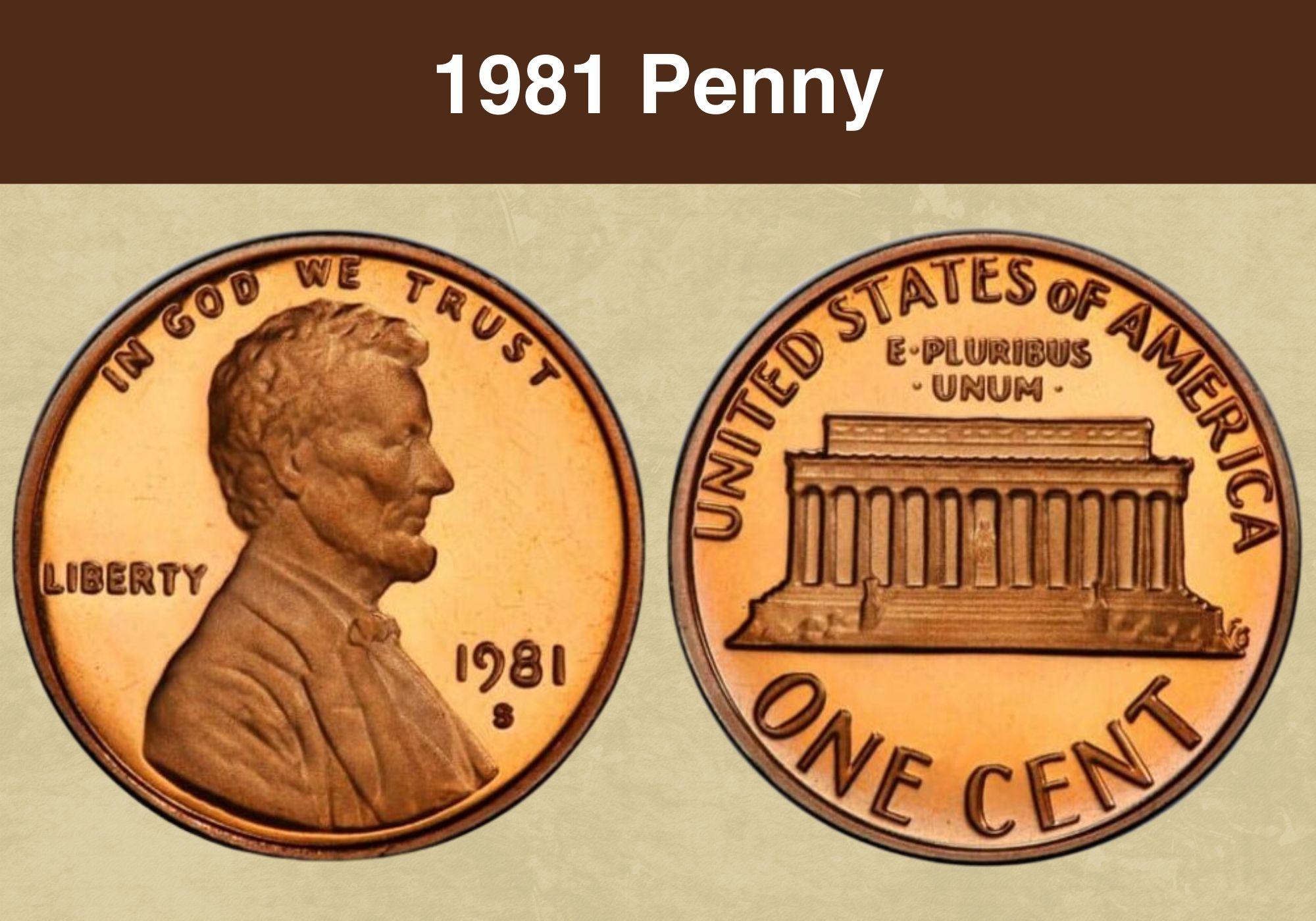
Hey, I was referring to your website to see if there was any value (more than the face value) of a 1945 Wheat penny I found. Looks like I’m not going to be able to retire just yet…
But I did notice a minor error listed on the specification of the penny. I is listed as 19.05mm / 1.75 inches. Um, last time I checked, a penny is not quite 1 3/4 inches across, but actually only 3/4 of an inch! A bit of a downgrade in size, but it’s stature won’t change a bit! Just to be clear, the 1945 wheat penny measures 19.05 mm, or 0.75″. Otherwise, your information provided was very helpful! Now, if you could see your way to offer a bit more for my poor little 3/4″ 1945 Denver Wheat penny, say, 1 million bucks, I would forever be in your debt!
I have a penny that’s 1945 i looked it up but need you to take a look please
i have a 1945 brown wheat penny small s and writting under the wheai ears on the left side is it valuable
I have a 45 no mint has L no in in liberty