Coin Value Contents Table
- 1977 nickel value Chart
- History of the 1977 Jefferson Nickel
- 1977 Jefferson nickel Types
- Features of the 1977 Jefferson Nickel
- 1977 Jefferson Nickel Grading Guides
- 1977 Jefferson Nickel Value Guides
- 1977 No Mint Mark nickel Value
- 1977 D Jefferson nickel Value
- 1977 S proof Jefferson nickel Value
- Rare 1977 Jefferson Nickel Errors List
- Where to Sell Your 1977 Nickel ?
- FAQ about the 1977 Jefferson Nickel
The 1977 nickel value can be sometimes notable, although these coins are not particularly rare. Since they are relatively modern, collectors choose only excellently preserved pieces, while those in poor condition are worth only their melting value.
On the other hand, the Jefferson nickel series is historically significant. So, be prepared that many Americans look for these coins and are prepared to pay a lot for particularly unique pieces. For instance, the most expensive specimen in the set is worth over $4,000!
1977 nickel value Chart |
|||
| Condition | 1977 no mint mark nickel | 1977 D nickel | 1977 D nickel D over S |
| MS 60 | $1 | $1 | / |
| MS 65 | $16 | $12 | / |
| PR 65 | / | / | $2.33 |
History of the 1977 Jefferson Nickel
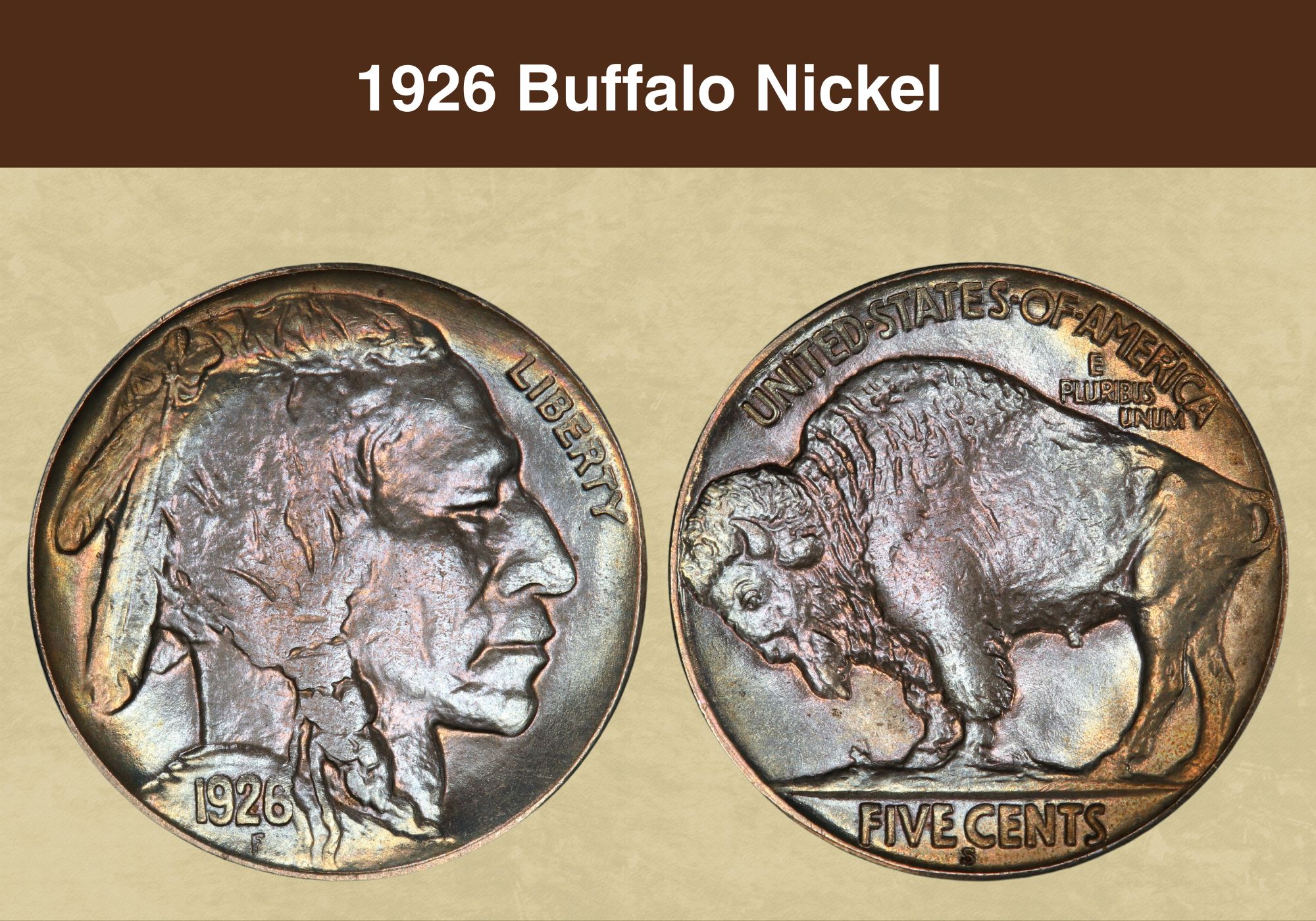
Nickels with Thomas Jefferson on the obverse were the fourth five-cent design since the first Shield nickels appeared in 1866. They also replaced Buffalo nickels minted for a required quarter of a century.
These coins were the third among American coinage with a real person and one of the Presidents on the obverse. That was a way for the US Mint officials to give up traditional fictional symbolic characters that were actual for decades.
The Mint officials decided to honor Thomas Jefferson and his home, Monticello, by putting them on the coin. Jefferson was a significant figure in American history, as one of the Founding Fathers and the Declaration of Independence’s primary author.
He was honored to be the first US secretary while the President was George Washington and the second vice President in American history under John Adams. Finally, he served as the third President of the US at the very beginning of the 19th century. Besides, he was a talented diplomat, philosopher, architect, and lawyer.
1977 Jefferson nickel Types |
||
| Location | Year | Minted |
| Philadelphia | 1977 no mint mark nickel | 585,376,000 |
| Denver | 1977 D nickel | 297,313,460 |
| San Francisco | 1977 S nickel proofs | 3,251,152 |
| Total | / | 885,940,612 |
German-born American Felix Schlag was the first choice to design the new coin after the decision to replace Buffalo nickels after 25 years of minting. He moved to the US after finishing his education at the University of Fine Arts in Munich.
Even though this talented artist won numerous art contests, this lovely nickel was his only attempt to create a coin. No one knows why he entered this contest, but he managed to win and got the $1,000 prize for his conceptual solution.
Jefferson nickels are respectful collectibles nowadays, but it was entirely the opposite in the beginning. The officials hated the Fraser design, although it was appropriate for celebrating 200 years of the President’s birth.
The problem was in the lettering type and angled view of Monticello. Therefore, the designer was forced to change the reverse look and correct all requested details.
Interestingly, the first coin sets came without the artist’s initials, but it was unclear whether it was because of oversight or misunderstanding. Anyway, the US Mint corrected the injustice only in 1966, when letters FS appeared under the President’s bust on the nickel obverse.
Even though the first coins appeared in circulation in 1938, Americans hoarded them, so these pieces became common in circulation only in 1940.
Also read: Top 10 Most Valuable Nickels Worth Money
Features of the 1977 Jefferson Nickel
After winning the competition, Felix Schlag was honored to create the Jefferson nickels. His design is historically significant, as the third American coin with one of the Presidents on the obverse, after Lincoln and Washington.
That way, the US Mint gave up the tradition of minting coins with symbolic figures on the obverse it followed for decades. It was a way to respect the first President’s belief, who despised that monarchist European custom.
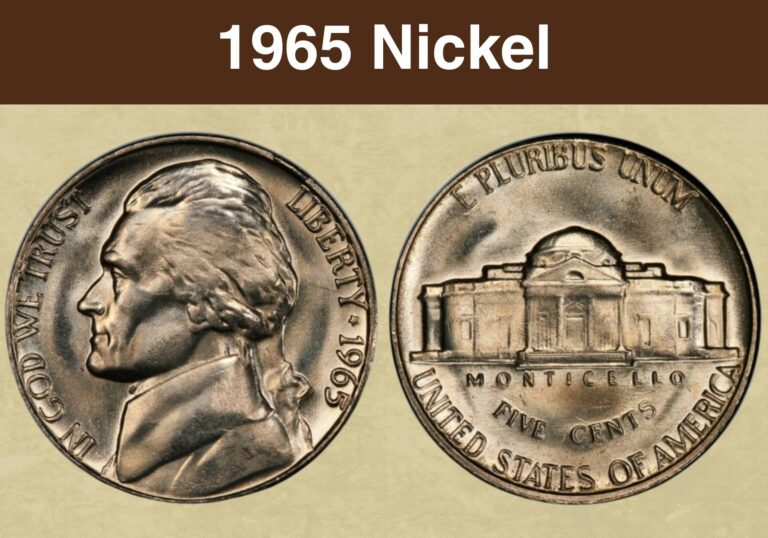
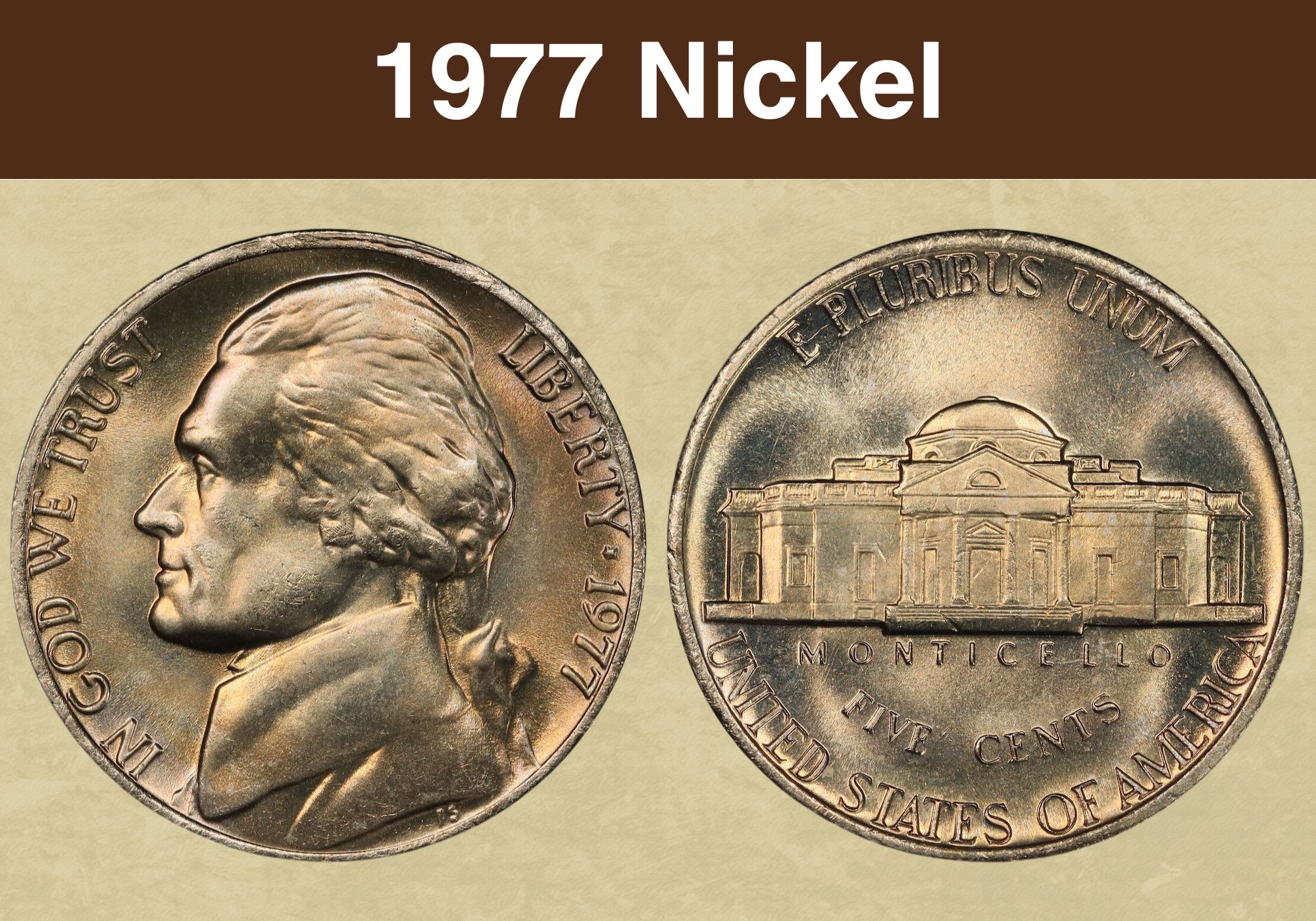
The obverse of the 1977 Jefferson nickel
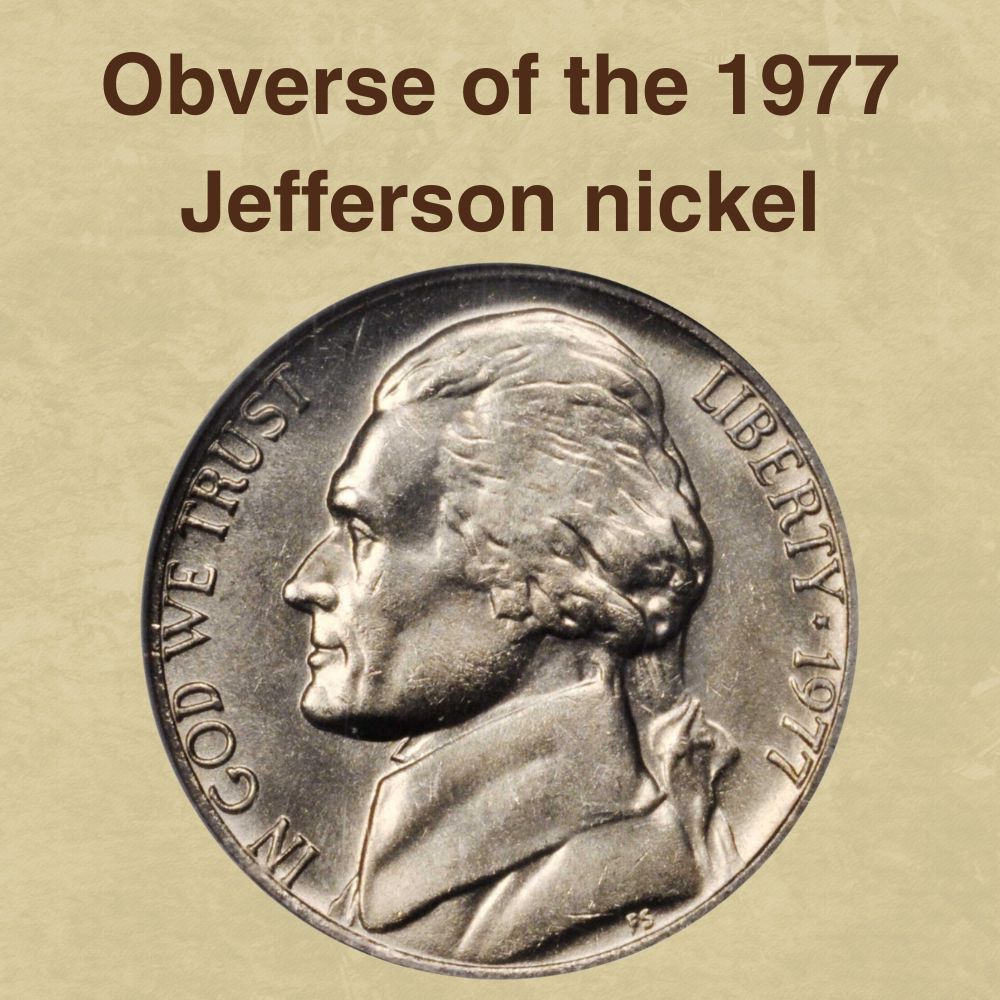
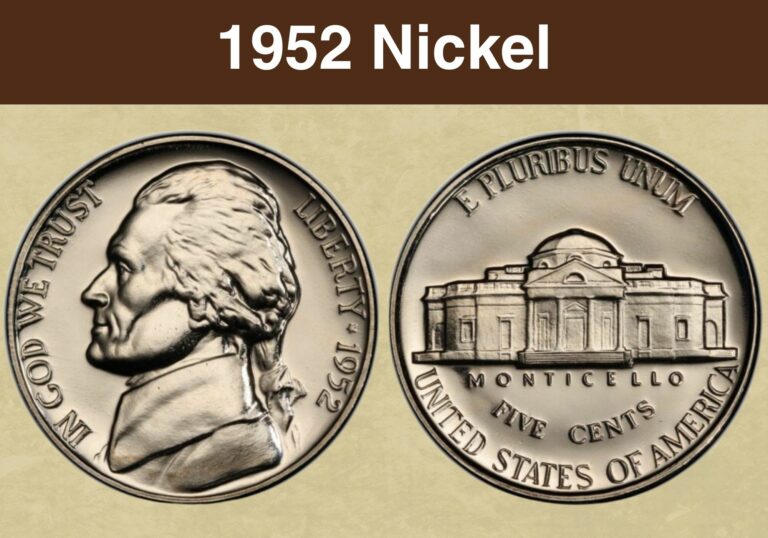
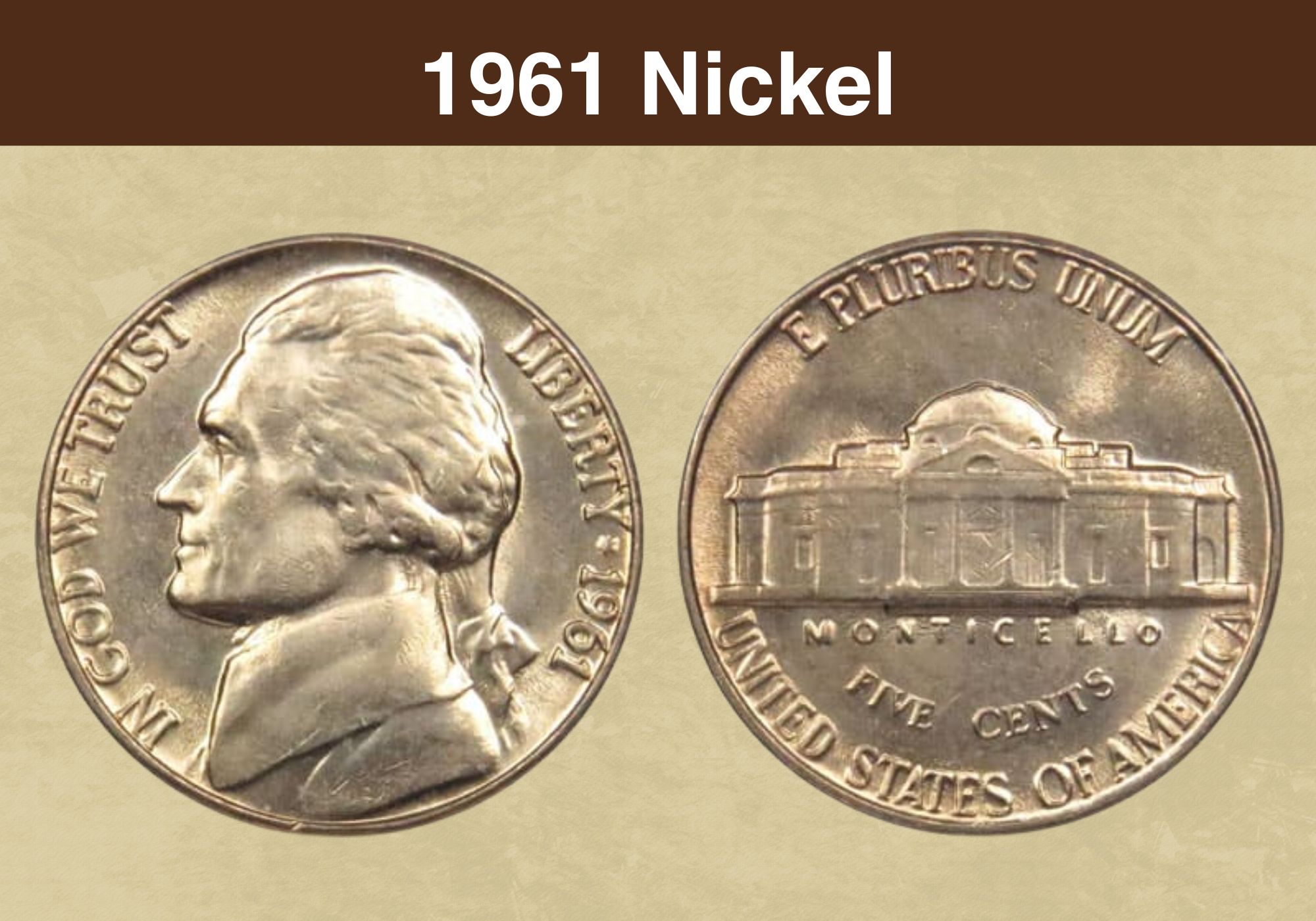
The 1977 nickel obverse is standard for this coin type, showing one versatile figure in American history, Thomas Jefferson. This philosopher, lawyer, American diplomat, and one of the Founding Fathers became the third US President on March 4, 1801, and spent eight years in office until 1809.
Schlag surrounded the President with required inscriptions, including:
- IN GOD WE TRUST on the left, in front of Jefferson’s face
- LIBERTY * 1955 on the right, behind the President’s back
The reverse of the 1977 Jefferson nickel
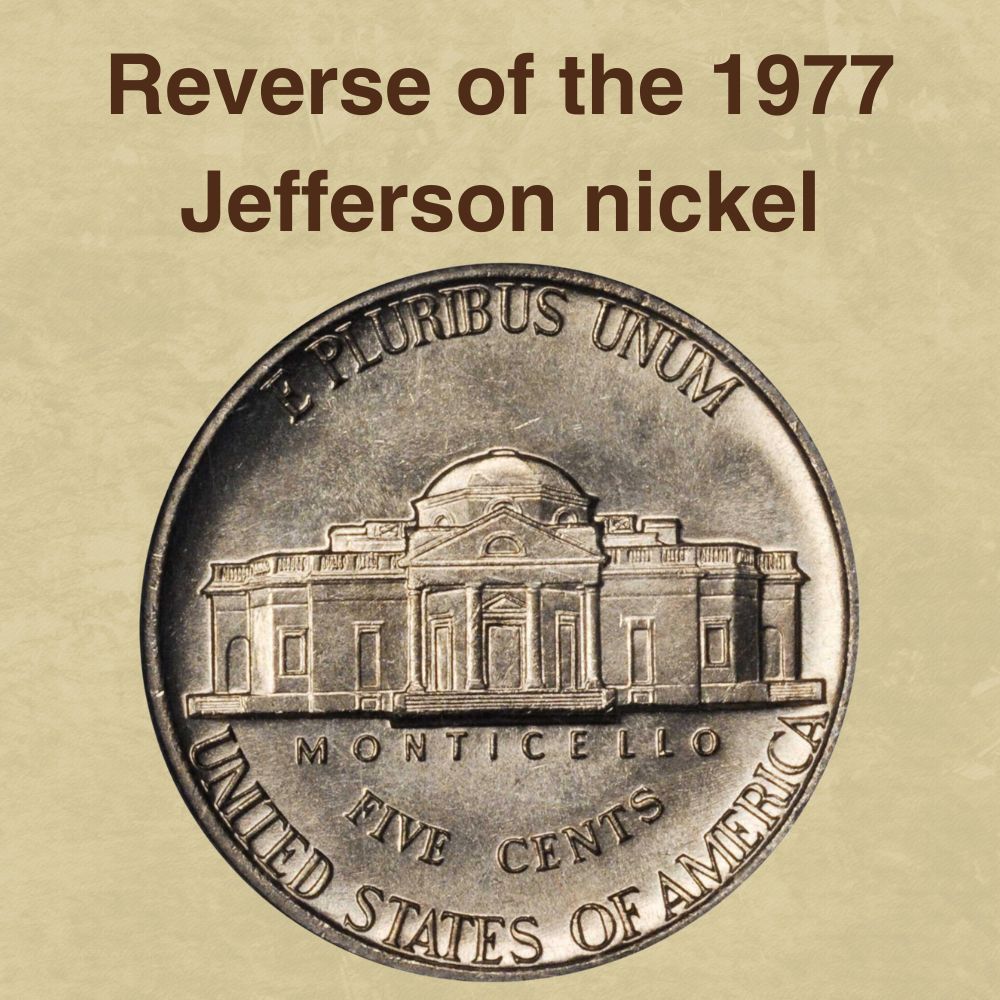
The 1955 nickel depicts Jefferson’s mansion based on the Italian architecture style, which he created himself. Monticello was built on his plantation in the Piedmont region, Virginia. It is now a historical site and a National Historic Landmark.
Schlag added all necessary words around the central image, including the Latin phrase (E PLURIBUS UNUM), the building name, denomination, and the name of the State that Jefferson led for eight years.
1977 Jefferson nickel Details |
|
| Face value | Five cents ($0.05) |
| Shape | Round |
| Compound | Mostly copper with some nickel |
| Coin thickness | 0.07677 inches (1.95 mm) |
| Coin diameter | 0.83504 inches (21.21 mm) |
| Coin weight | 0.17637 ounces (5 g) |
| Edge | Plain |
Other features of the 1977 Jefferson Nickel
Like other Jefferson nickels, those minted in 1977 are round cupronickel five-cent coins with a diameter of 0.835 inches (21.2 millimeters). They are 0.07677 inches (1.95 millimeters) thick and have a plain edge. Each coin has a standard weight of 0.17637 ounces (5 grams).
Also read: Top 17 Most Valuable Buffalo Nickel Worth Money
1977 Jefferson Nickel Grading Guides
Nowadays, the only relevant way to grade your coin is to follow the Sheldon scale evaluation. That system ranks coins by quality on a scale of 1 to 70, with the worst-graded pieces marked the number 1 and the superb coins ranked 70.
Basically, every experienced collector can follow guidance and determine a coin’s grade and quality. However, only professionally ranked pieces can reach the best prices at auctions. Most collectors want to be sure and prefer buying certified specimens.
| # | Grade |
|---|---|
| 1 | Basal State-1 |
| 2 | Fair |
| 3 | Very Fair |
| 4, 5, 6 | Good |
| 7, 8, 10 | Very Good |
| 12, 15 | Fine |
| 20, 30 | Very Fine |
| 40 | Extremely Fine |
| 50 | About Uncirculated |
| 60 | Mint State |
| 65 | Mint State |
| 70 | Mint State |
Please check our grading guides to know your coin scale, It’s the necessary step to know the exact value of your coin.
Check out now: How to Grade Jefferson Nickel?
1977 Jefferson Nickel Value Guides
In 1977, three mints struck 885,940,612 nickels in total. Two issued only regular coins, while the third was responsible for producing proofs. These pieces were never released into circulation but ended in the collector’s hands.
1977 No Mint Mark nickel Value
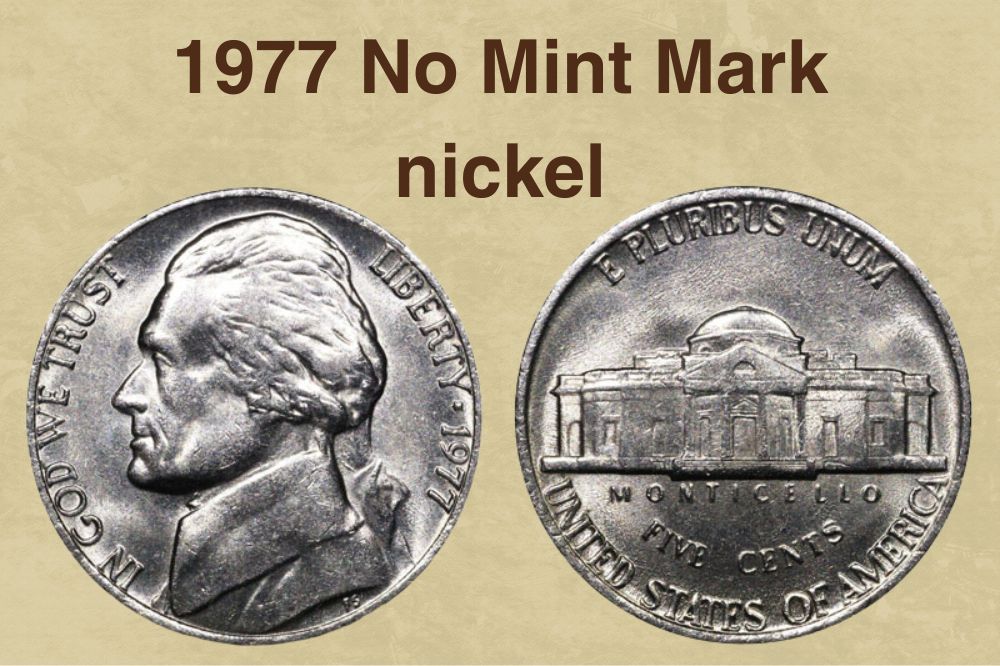
The Philadelphia mint had a high mintage of 585,376,000 nickels in 1977. Since these coins are modern and there are a lot of pieces available on the market, you can expect moderate prices with only a few surprises at auctions.
The 1977 Jefferson nickels without the mint mark cost $0.05 to $5 in most cases, except for those graded MS 66. Their estimated prices can reach $45. However, remember that the most expensive specimens minted this year are those in MS 63 grade, sold at $1,725 in 2003.
You can expect most nickels minted in 1977 with Full Steps and MS 64 to MS 66 grades to be worth $30 to $800. However, one specimen rated MS 67 became the priciest in the set after selling at $4,495 on eBay in 2019.
1977 D Jefferson nickel Value
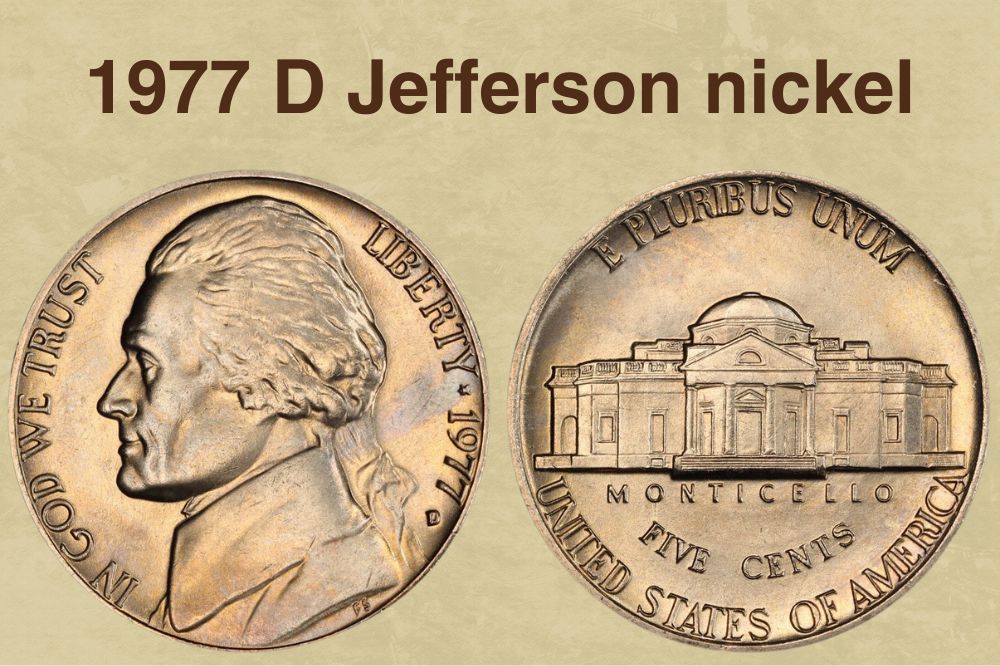
The mint in Denver issued 297,313,460 Jefferson nickels in 1977. While circulated coins cost their face value, those in the mint state are estimated at $0.10 to $35, depending on their appearance and quality. The highest price for one 1977 nickel in MS 67 grade is $247 (2018).
Expectedly, the 1977 D nickels with Full Steps (5 or 6 steps in front of Jefferson’s home) cost more. Their assessed price range is from $12 (MS 64) to $225 (MS 66).
However, scarce coins with the highest MS 67 ranking quickly reach over $4,250 at auctions. For instance, one such piece was worth for the collector, who set aside $4,320 to add it to the collection in 2021.
1977 S proof Jefferson nickel Value
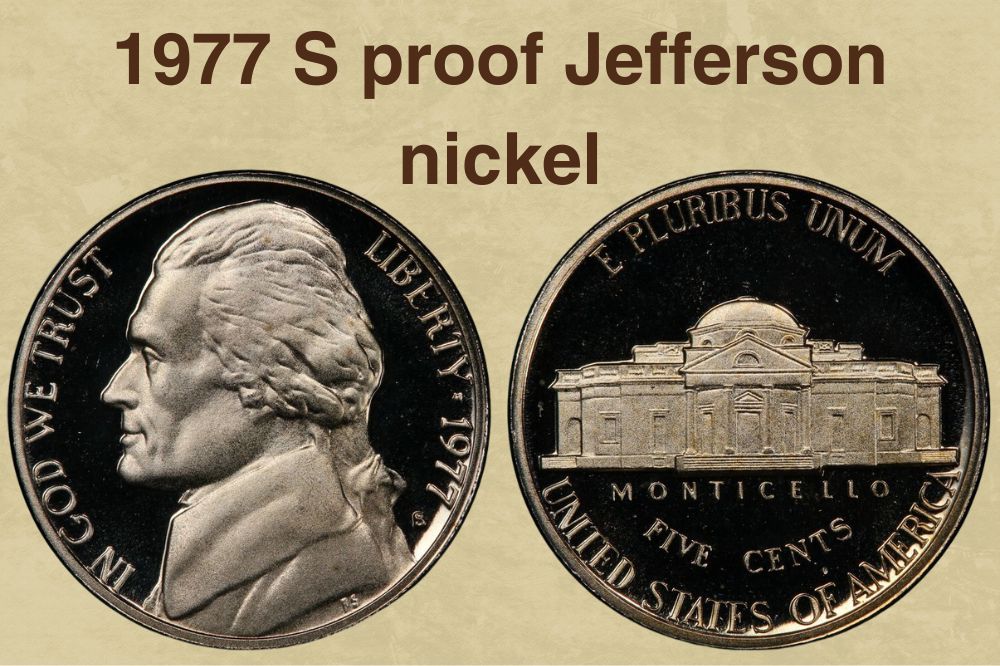
With 3,251,152 minted nickels, the San Francisco mint had the lowest mintage in 1977. Since it produced only proofs intended to numismatists, you probably expect these beautiful specimens to cost a lot.
Interestingly, that is not the case here, and you can buy most coins in DCAM quality for less than a dollar. Only better-ranked proofs cost more, and you can get one after setting aside about
- $5 for the nickel proof in PR 66 grade
- $6 for the nickel proof in PR 67 grade
- $8 for the nickel proof in PR 68 grade
- $15 for the nickel proof in PR 69 grade
Even perfectly preserved pieces ranked PR 70 are common on the market, and you can effortlessly find one at $185. The auction record is surprising. One collector bought one of these coins for $1,840 in 2007.
Also read: Top 17 Most Valuable Jefferson Nickels Worth Money
Rare 1977 Jefferson Nickel Errors List
A few rare 1977 nickels come with a few errors, which are particularly appreciated among collectors. Since coins from this set are modern and available, rare imperfect pieces challenging to find are an amusing and sometimes precious diversity.
Cud error
The 1977 nickels with a cud error come with a damaged, blob-like area on one or both surfaces. It is always raised a bit and obliterates inscriptions or design parts along the coin edge.
Such nickels result from severe breaks or cracks on the die and cost differently, depending on the damage size. Most pieces are available at a price range from $20 to $35.
1977 D Jefferson nickel cud with the filled D mint mark
Some nickels minted this year come with two combined errors, including the cud and filled D mint mark. Such a situation resulted from the broken die and accumulated grease, but these coins are uninteresting to most collectors. You can find them for $4 to $5 on the market.
Off-center
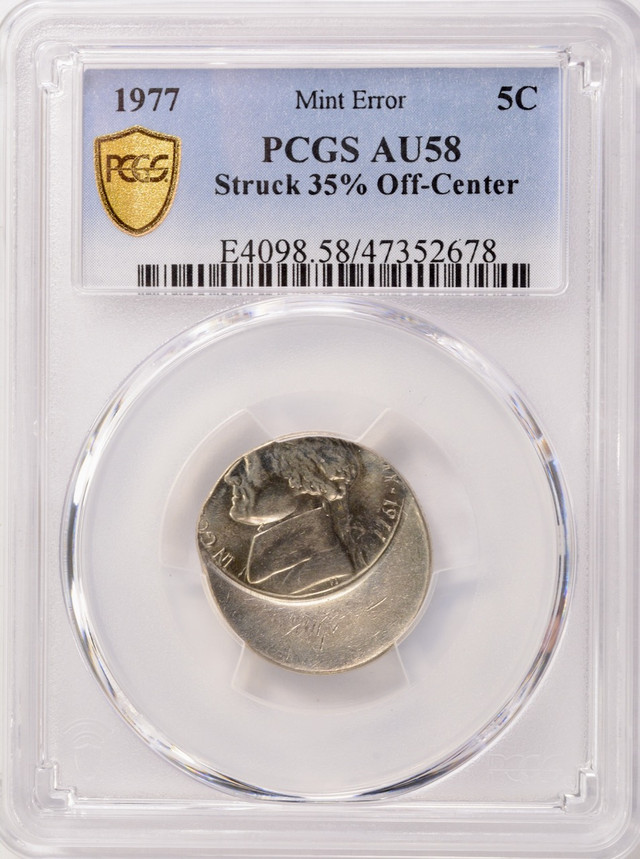
The 1977 nickels with off-center are common coins when the error percentage is low. Pieces with the design shifted about 3% to 10% cost about $5 to $10, while those with 50% off-center are the most collectible and available at approximately $100.
You can also find nickels with a low off-center percentage combined with DDO or DDR error, but it never significantly increases their value. Most cost up to $5.
Nickel struck on an incorrect planchet
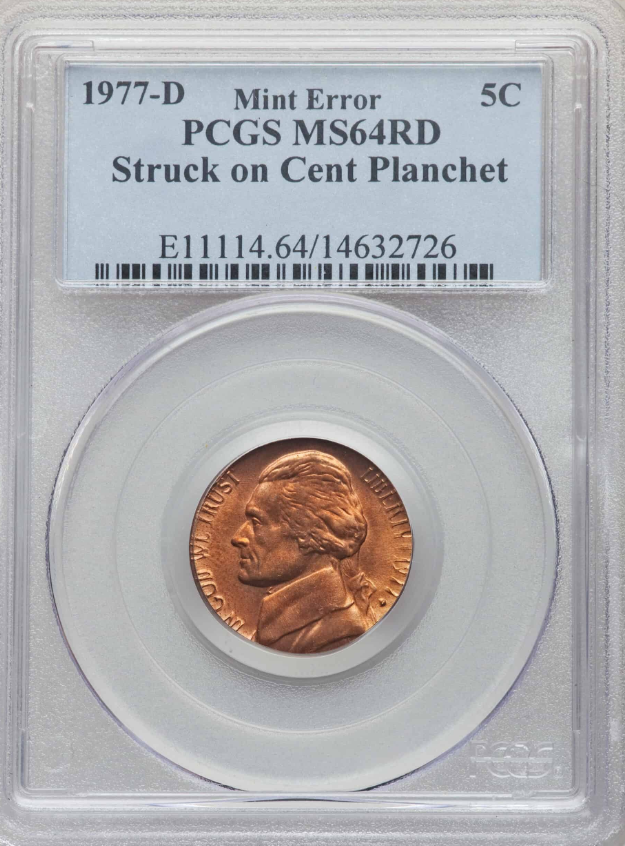
In rare cases, the 1977 nickels were struck on the wrong, typically one-cent (penny) or 10-cent (dime) planchet. In both cases, such a nickel is smaller and thinner and can show outlines of the wrong reverse.
They also have a coppery color. Even though most such coins are worth about $150, some can reach a few thousand dollars at auctions.
Also read: 14 Most Valuable Nickel Errors Worth Money
Where to Sell Your 1977 Nickel ?
Now that you know the value of your coins, do you know where to sell those coins online easily? Don’t worry, I’ve compiled a list of these sites, including their introduction, pros, and cons.
Check out now: Best Places To Sell Coins Online (Pros & Cons)
FAQ about the 1977 Jefferson Nickel
What makes a 1977 Jefferson nickel rare?
Jefferson nickels are too modern and common coins to be scarce. However, a few top-rated pieces and error coins in excellent condition can be rarer than usual. However, such pieces are still the exception and not the rule.
Which 1977 Jefferson nickel is worth a lot of money?
- The most expensive 1977 Jefferson nickel with Full Steps in MS 67 grade reached $4,495 on eBay in 2019
- The most expensive 1977 D Jefferson nickel with Full Steps in MS 67 grade reached $4,320 at Stack’s Bowers in 2021
- The most expensive 1977 S Jefferson nickel with Full Steps in PR 70 grade reached $1,840 at Heritage Auctions in 2007
- The most expensive 1977 Jefferson nickel in MS 63 grade reached $1,725 at Bowers & Merena in 2003
- The most expensive 1977 D Jefferson nickel in MS 67 grade reached $247 on eBay in 2018
How much is the 1977 No Mint Mark Jefferson nickel worth?
The 1977 nickels minted in Philadelphia are coins without the mint mark. They are abundant nowadays, and you should set aside only $0.05 to $30 per one. Specimens with Full Steps can be more expensive, and one can be yours for $20 to $440, depending on their grade.
What is the costliest Jefferson nickel?
The most expensive nickel in the series is the one produced in San Francisco in 1954. This FS coin in MS 67 grade was sold at $35,250 in 2020. The next is the MS 65-graded specimen from Denver with Full Steps, bought for $33,600 in 2021.
The most expensive Philadelphia nickel is one of the special strike pieces with Full Steps in SP 68 grade. Its price from 2016 is $32,900. As for coins with an error, the most expensive are the following specimens:
- The 1949 D/S MS 67 nickel ($32,900 in 2014)
- The 1942 D/D MS 64 D/Horizontal D nickel ($32,200 in 2006)