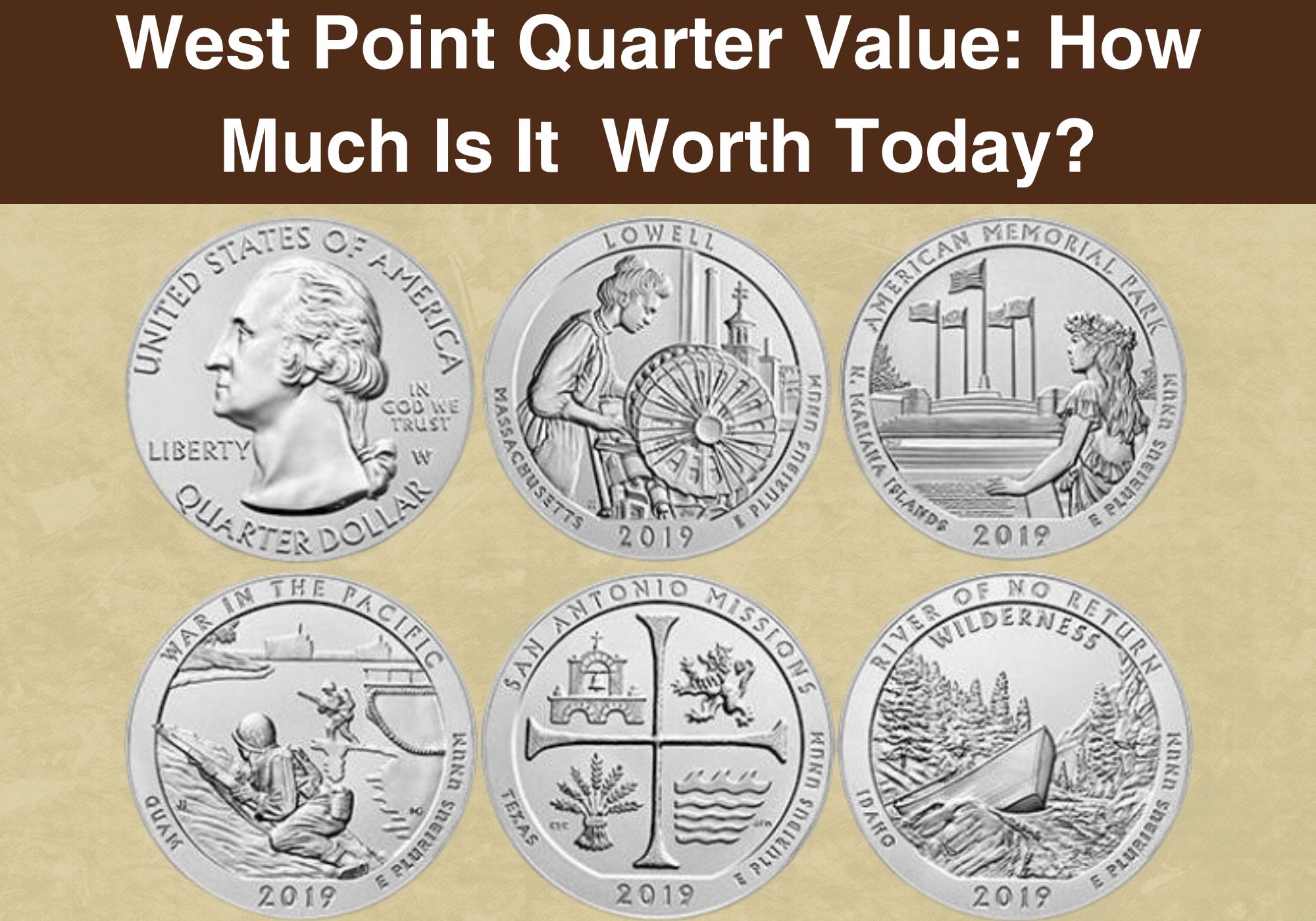
20 Rare Washington Quarter Errors Worth Money (Full List with Pictures)

A 1965 Washington quarter struck on a leftover silver planchet sold for $7,050 at auction in 2014 — a transitional error from the year the U.S. Mint switched from silver to clad coinage. The complete list of rare Washington quarter errors spans the full 1932–1998 series, with values ranging from $5 grease fills to four-figure doubled dies and wrong planchet strikes. The series ran for over six decades and produced billions of coins, which means plenty of mistakes slipped through. Here are 20 documented error types worth checking for.
1. Washington Quarter Struck-Through Grease Error (Up to $50)

Grease, oil, and metallic debris build up in the recessed areas of a die during extended production runs. When enough material packs into a letter or design element, the planchet metal can’t flow into that recess during striking, and the affected detail comes out weak or entirely missing.
The most common presentations on Washington quarters are missing letters in E PLURIBUS UNUM or a partially obscured eagle. Larger fills that knock out significant portions of Washington’s portrait or the eagle are less common and proportionally more valuable. The error itself is a die problem, but the visible result only appears at the moment of striking.
Value: Minor grease fills affecting a single letter sell for $5 to $15 on eBay. Larger fills that obscure major design elements like Washington’s face or the eagle’s wings can reach $30 to $50 in uncirculated grades. No major auction house records exist for Washington quarter grease fills specifically.
How to Identify: Look for areas where design elements are mushy or completely absent while surrounding details remain crisp. Under a 5x loupe, the affected area should blend smoothly into the field — not look gouged, scratched, or pitted.
The distinction from wear is specificity. A grease fill erases particular elements while leaving adjacent areas fully struck. Worn coins lose detail gradually across all high points. Check the opposite side — a weak strike from insufficient pressure shows weakness on both sides, while grease typically affects only one side or specific features. Don’t confuse with environmental damage, which shows rough, pitted surfaces. Fastest check: a cleanly missing letter with everything around it sharp.
Use Our Washington Quarter Value Checker
2. Washington Quarter Clipped Planchet Error (Up to $50)

Before striking, circular blanks are punched from a continuous metal strip. If the strip doesn’t advance far enough between punches, the next punch overlaps a previous hole and creates a planchet with a crescent-shaped bite missing.
The defective blank gets struck anyway. On Washington quarters, clips that remove part of Washington’s portrait or the eagle are more visually dramatic than clips that only nick the rim. The size of the clip directly determines value — anything under 5% is common, while 15–25% clips are genuinely scarce. Silver-era clips (1932–1964) carry a slight premium over clad-era examples because the 90% silver composition adds intrinsic value.
Value: Small clips removing less than 5% of the planchet sell for $5 to $15. Clips in the 10–25% range bring $25 to $50 depending on grade and which part of the design is affected. No major auction house records exist specifically for Washington quarter clipped planchets, but comparable examples appear regularly on eBay.
How to Identify: Look for a smooth, curved area of missing metal along the rim. The key diagnostic is the Blakesley effect — on the opposite side of the coin from the clip, the rim will be weak or flat because the planchet didn’t upset properly in the rim-forming mill before striking.
Weigh the coin. A standard clad quarter is 5.67 grams; silver quarters run 6.25 grams. A clipped planchet will come in under its standard weight. Run your finger along the clipped edge — a genuine clip feels smooth because it formed before striking, while a post-mint cut feels sharp or shows file marks. The reeding along the clip will also be absent or distorted. Fastest confirmation: Blakesley effect on the rim directly opposite the clip.
Use Our Washington Quarter Value Checker
3. Washington Quarter Partial Collar Error (Up to $99)

The collar die is a ring that surrounds the planchet during striking, creating the coin’s reeded edge and maintaining its diameter. A partial collar error occurs when the planchet sits only partially inside the collar at the moment of striking.
One side of the coin gets normal reeding while the opposite side flares outward with a smooth, rounded edge. Collectors call this a “railroad rim” because the flared edge resembles a railroad track. The transition zone between normal reeding and the smooth flare is the fingerprint of this error. Partial collars happen when the planchet isn’t seated properly, often because it entered the press at a slight angle.
Value: A 1998-D Washington quarter with a partial collar and obverse brockage sold for $99 in Choice AU+ condition. Most partial collar errors on Washington quarters trade in the $39 to $99 range depending on condition and how dramatic the flare is.
How to Identify: Hold the coin at eye level and rotate it slowly. One side should show sharp, normal reeding while the opposite side flares outward and appears smooth. The transition between the two should be gradual and natural-looking.
Use calipers to measure the diameter at the flared side versus the reeded side. The flared portion will exceed the standard 24.26mm while the reeded side measures normally. Weight should remain 5.67 grams (clad) or 6.25 grams (silver) since no metal was added or removed. Don’t confuse this with a dryer coin, which shows random damage around the entire rim rather than a clean directional flare. A vice job leaves tool marks and lacks the smooth metal flow of a genuine error. Fastest check: sharp reeding on one side transitioning to a smooth outward flare on the other.
Use Our Washington Quarter Value Checker
4. Washington Quarter Repunched Mint Mark Error (Up to $150)

Before 1990, mint marks were added to working dies by hand using a steel punch and mallet. If the punch didn’t land cleanly on the first strike, the engraver would hit it again — sometimes in a slightly different position.
The result is a coin with overlapping or doubled mint mark impressions. The secondary image can appear above, below, or to one side of the primary mark. Some RPMs show dramatic separation; others require magnification to spot. The practice of hand-punching mint marks ended when the Mint began including them on the master die, so RPMs on Washington quarters are limited to pre-1990 dates. Known years include 1950-D, 1950-S, 1954-S, and 1960-D among others.
Value: RPM errors on Washington quarters generally command $10 to $150 depending on the visibility of the repunching, the date, and the coin’s grade. Strong, clearly separated repunchings on earlier dates bring the highest premiums. Silver-era RPMs are worth more than their clad counterparts.
How to Identify: Use a 10x–20x loupe or USB microscope and examine the mint mark closely. A genuine RPM shows two or more overlapping impressions of the same letter, with the secondary image typically appearing as a partial shadow offset from the primary mark.
The secondary image should be the same shape and style as the primary mint mark — just shifted in position. Don’t confuse with machine doubling, which creates flat shelf-like spreading across the entire coin rather than affecting only the mint mark. Die deterioration can also create fuzzy mint marks, but deterioration affects all design elements equally rather than showing a distinct secondary impression. Compare your coin against published RPM listings for the specific year on Variety Vista or Wexler’s Die Varieties. Fastest check: a clearly offset second mint mark impression visible at 10x.
Use Our Washington Quarter Value Checker
5. Washington Quarter Overmintmark Error (Up to $150)

An overmintmark differs from a repunched mint mark in one critical way: two different mint letters overlap. A D appears over an S, or vice versa. This happened when the Mint reassigned dies between facilities — a die originally prepared for San Francisco might get shipped to Denver, where a technician punched a D over the existing S.
The most well-known Washington quarter OMM is the 1950-S/D variety, where a Denver mint mark sits beneath the San Francisco mark. These varieties dried up after the Mint centralized mint mark placement on the master die in 1990. Each OMM variety is a distinct die combination, making them individually attributable.
Value: Washington quarter overmintmarks typically command $50 to $150 over regular-issue prices depending on clarity, grade, and which specific OMM variety it is. Auction records for individual OMMs are scarce in the available data, but dealers regularly price clearly attributed examples in this range.
How to Identify: Under 12x or higher magnification, examine the mint mark for evidence of two different letters occupying the same space. Unlike an RPM where the same letter repeats, an OMM shows distinctly different letter shapes — the curves of an S beneath the straight lines of a D, for example.
The underlying mint mark is usually incomplete or partially obscured by the top mark, but traces of its distinctive shape should be visible at the edges or in areas where the two marks don’t perfectly overlap. Cross-reference against published OMM listings for the specific date. The key difference from an RPM is that both marks must be identifiably different letters. If both impressions look like the same letter, it’s an RPM, not an OMM. Fastest check: traces of a different letter shape beneath the visible mint mark.
Use Our Washington Quarter Value Checker
6. Washington Quarter Broadstrike Error (Up to $200)

A broadstrike occurs when the retaining collar malfunctions or is entirely absent at the moment of striking. Without the collar constraining the planchet, metal flows outward under die pressure, producing a coin with a larger diameter than normal, no raised rim, and a smooth plain edge instead of reeding.
All design elements are present but appear stretched and slightly softer than a properly struck coin. The 1965 SMS broadstrike is particularly well-known because the Special Mint Set finish combined with the expanded diameter creates a coin with unusual reflective surfaces. Broadstrikes from the silver era (1932–1964) carry premiums over clad examples both for the error and the metal content.
Value: Standard broadstrikes on modern clad Washington quarters range from $5 to $50. Silver-era broadstrikes and higher-grade examples can reach $100 to $200. No specific high-value auction records are documented for Washington quarter broadstrikes, but they appear regularly in error coin dealer inventories.
How to Identify: Measure the coin’s diameter with calipers. A normal quarter is 24.26mm; broadstrikes typically measure 25–27mm or more. The coin should feel thinner and wider than a standard quarter.
There should be no raised rim on either side — the design extends to the very edge. The edge will be smooth and plain without any reeding, since the collar die that creates reeding was absent. Weight should remain normal (5.67g clad, 6.25g silver) because no metal was added or removed. Look for radial stretch marks extending outward from the center. Don’t confuse with a dryer coin, which shows random dings and still retains some reeding. A genuine broadstrike has evenly expanded design elements and a completely smooth edge. Fastest check: no reeding, no rim, larger diameter, normal weight.
Use Our Washington Quarter Value Checker
7. Washington Quarter Die Crack / Cud Error (Up to $200)

Dies endure millions of strikes under enormous pressure. Eventually the steel cracks.
Small die cracks transfer to coins as raised lines because planchet metal flows into the fracture during striking. A “cud” is what happens when a piece of the die breaks away entirely at the rim — the result is a raised, featureless blob of metal at the coin’s edge where the die fragment separated. Cuds are more valuable than standard die cracks because they’re more dramatic and indicate a later stage of die failure. The size and location of the crack or cud directly determine the premium.
Value: Minor die cracks sell for $5 to $25. Major cuds — raised blobs at the rim — can reach $50 to $200 depending on size and location. Cuds affecting prominent design elements like Washington’s portrait or the eagle bring the highest premiums.
How to Identify: Under a 5x loupe, look for raised lines on the coin’s surface that aren’t part of the original design. Die cracks radiate from high-stress areas and follow paths that make mechanical sense — from design elements toward the rim or between closely spaced letters.
For cuds, look for a raised, flat-topped blob of metal connected to the rim. The blob should be featureless on top because the die was missing in that area. Don’t confuse die cracks with scratches — scratches are incuse (cut into the surface) while die cracks are raised above it. Post-mint damage like contact marks appears random, while die cracks follow consistent paths. Multiple coins from the same die will show the same crack pattern in the same location. Fastest check: if the line is raised above the surface rather than cut into it, it’s a die crack.
Use Our Washington Quarter Value Checker
8. Washington Quarter Flip-Over Double Strike Error (Up to $375)

A flip-over double strike happens when a coin fails to eject from the press, flips over, and gets struck again. The second strike lands on the opposite side from the first, so obverse design elements appear on the reverse and vice versa — all on the same coin.
The result is a coin with design impressions from both sides overlapping on each face. If the second strike is off-center, the overlapping images create a dramatic visual effect that’s immediately recognizable without magnification. The “flip” is the key distinction from a standard double strike — the coin physically rotated between impacts.
Value: A 1974 Washington quarter with a double struck in-collar flip-over error sold for $375 at auction. General market prices for flip-over double strikes on Washington quarters range from $150 to $400 depending on grade and how dramatic the overlap appears.
How to Identify: Look for design elements from the opposite side of the coin showing through on each face. Washington’s portrait should not appear on the reverse of a normal quarter, and eagle details shouldn’t show on the obverse.
The two strike impressions will typically be at different angles or positions, creating overlapping images with visible separation. The coin may be slightly thicker than normal from receiving two strikes. Check that both impressions show genuine struck detail — not just wear-through or incuse marks from contact with another coin. A genuine flip-over shows the design at full or near-full relief on both impressions. The edge may show distortion from the second strike. Fastest check: recognizable obverse design elements visible on the reverse face.
Use Our Washington Quarter Value Checker
Coin Identifier and Value App
Not sure what your coins are worth? Get Instant Value • Grade • Error Detection with coin identifier and value app (FREE Usage Daily)
9. Washington Quarter Brockage Error (Up to $400)

A brockage occurs when a previously struck coin fails to eject from the press and sticks to one of the dies. The stuck coin then acts as a makeshift die, pressing its image into the next planchet that enters the chamber.
The result is a coin with a normal design on one side and a mirror-image, incuse impression of the same design on the other side. Full brockages — where the mirror image covers the entire coin — are rarer and more valuable than partial brockages. Silver-era brockages (1932–1964) are considerably scarcer than clad-era examples because the Mint’s quality control caught more errors on silver production lines.
Value: A 1998 Washington quarter with a 50% brockage graded MS64 sold for $380 on eBay. A 1998-D partial collar/obverse brockage brought $99. Full brockages in higher grades can exceed $400. Silver-era examples, if they surface, would command substantially more.
How to Identify: Flip the coin over. One side should show normal struck design. The other side should show a mirror-reversed, incuse version of a design — what would normally be raised elements appear sunken, and the entire image reads backward.
The mirror image should be complete or partially complete depending on how the stuck coin was positioned. Under magnification, the incuse impression should show die polish lines and flow marks consistent with having been struck through another coin rather than being a die impression. Post-mint damage can create shallow depressions but won’t produce a coherent, detailed mirror image. The coin’s weight should be normal. Don’t confuse with a die clash, which leaves much fainter transferred images. A brockage shows full-depth incuse impressions. Fastest check: a complete or near-complete reversed design visible on one side.
Use Our Washington Quarter Value Checker
10. Washington Quarter on Dime Planchet Error (Up to $550)

Wrong planchet errors occur when a blank intended for one denomination accidentally enters the press for another. A quarter struck on a dime planchet produces a dramatically undersized coin with the Washington quarter design compressed onto a 17.9mm blank instead of the standard 24.26mm.
The size mismatch means much of the peripheral design gets cut off — letters near the rim are missing or incomplete, and only the central portion of Washington’s portrait and the eagle transfer fully. The error typically happens when stray dime blanks get caught in planchet transportation hoppers between mint stations and later dislodge into the quarter press feed.
Value: Washington quarters struck on dime planchets generally sell for $375 to $550. A Stack’s Bowers 2024 example brought $528. The value depends on how much of the design transferred and the coin’s grade. Silver-era examples (struck on 90% silver dime blanks) carry additional premium.
How to Identify: The first clue is size. A quarter struck on a dime planchet measures approximately 17.9mm instead of 24.26mm — obviously undersized. It should weigh approximately 2.27 grams (clad dime weight) instead of the standard 5.67 grams.
Check the edge. A clad dime planchet has reeding, so the resulting coin should show reeded edges even though the diameter is wrong. The design will appear compressed with missing peripheral elements — LIBERTY, IN GOD WE TRUST, and the date may be partially or completely absent depending on strike alignment. Don’t confuse with a shrunken coin created by spark erosion or post-mint alteration, which will show tool marks and unnatural surfaces. A genuine wrong planchet has clean struck surfaces with normal luster. Fastest check: weigh it — 2.27 grams with quarter design elements confirms dime planchet.
Use Our Washington Quarter Value Checker
11. Washington Quarter Die Clash Error (Up to $835)

A die clash occurs when the obverse and reverse dies slam together without a planchet between them. Each die picks up a partial mirror-image impression of the opposing die, and every subsequent coin struck with those damaged dies carries ghost-like traces of the wrong design.
The transferred images appear as faint incuse shadows beneath the normal design. On Washington quarters, you might see traces of the eagle’s wings on Washington’s cheek or faint outlines of Washington’s profile behind the eagle on the reverse. A 1976-S Proof Bicentennial quarter combined a die clash with a 45% off-center strike — a double error that dramatically increased its value.
Value: The 1976-S Proof Bicentennial quarter with clashed dies and 45% off-center strike reached a bid of $835 at auction. Standard die clashes on Washington quarters trade for $25 to $150 depending on how clearly the transferred design shows.
How to Identify: Under a 10x loupe, examine the field areas around Washington’s portrait on the obverse. Look for faint incuse lines or shapes that don’t belong — transferred impressions from the eagle reverse die.
On the reverse, check around the eagle for traces of Washington’s profile or obverse lettering. Clash marks appear as shallow, incuse impressions that are mirror-reversed from their normal orientation. The marks will be consistent on every coin struck by that die pair — if you find a second example with identical clash marks, that confirms the die origin. Don’t confuse with die deterioration, which shows fuzzy generalized spreading rather than specific transferred images. Clash marks are sharp enough to identify the source design element. Fastest check: eagle wing outlines visible on Washington’s portrait.
Use Our Washington Quarter Value Checker
12. Washington Quarter Missing Clad Layer Error (Up to $880)
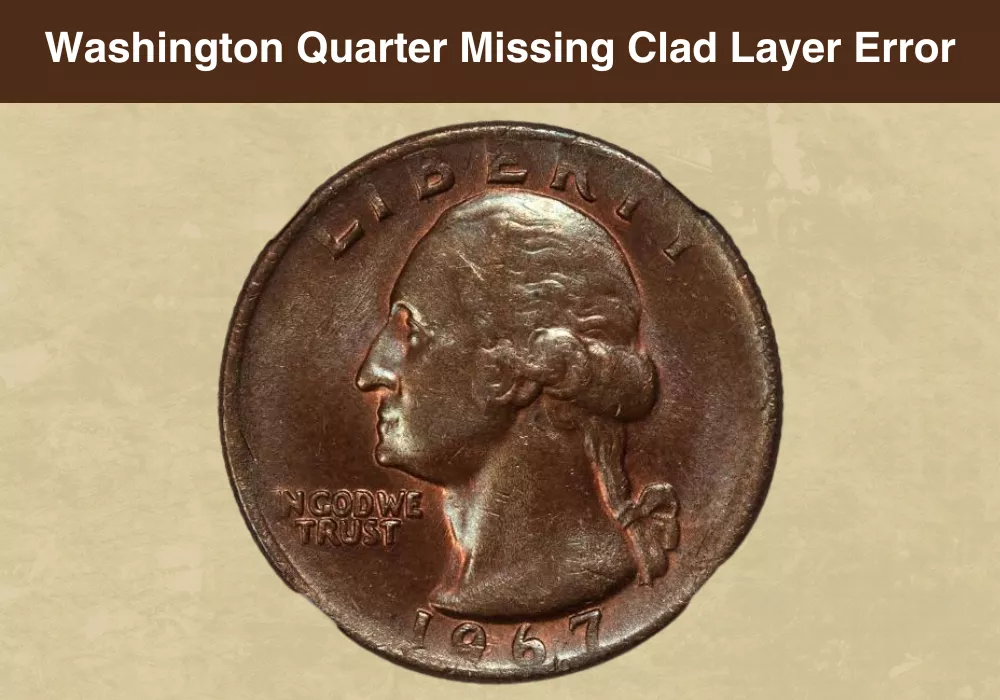
Post-1964 quarters are a three-layer sandwich: copper-nickel outer layers bonded to a pure copper core. A missing clad layer error occurs when one outer layer fails to bond during planchet manufacturing — a process called delamination.
The result is a coin where one side looks normal while the other side shows exposed reddish-brown copper. The weight difference is the definitive diagnostic — a missing clad quarter weighs approximately 4.7 grams instead of the standard 5.67 grams. This error only exists on clad coins (1965 onward), since silver-era quarters are a homogeneous 90% silver alloy with no layers to separate.
Value: A 2001-P State Quarter graded MS65 with a partial missing clad layer sold for $880 on eBay in 2015. A 2001-D New York quarter with a missing reverse clad layer graded NGC MS63 BN has a documented retail value of $275 through Sullivan Numismatics. General range: $100 to $880.
How to Identify: Weigh the coin. This is the most important test. A normal clad quarter is 5.67 grams; a missing clad layer reads approximately 4.7 grams — roughly one gram light. One side will appear reddish-brown copper while the other looks normal.
Check the edge. You should see an asymmetric layer separation — the copper-nickel-copper sandwich will show only two layers instead of three. The most common fake is an acid-dipped coin. An acid-dipped quarter weighs near-normal (acid barely removes mass), has mushy corroded design details, shows copper discoloration on the reeded edge, and may be slightly smaller in diameter. A genuine missing clad error has sharp, crisp design details on the copper side because it was struck that way. Fastest check: weigh it — 4.7 grams with sharp details means it’s genuine.
Use Our Washington Quarter Value Checker
13. Washington Quarter Struck-Through Retained Error (Up to $1,020)

A struck-through error occurs when a foreign object gets trapped between the die and planchet during striking. When the object stays briefly attached to the coin’s surface rather than falling away immediately, it leaves a more dramatic impression — and earns the “retained” designation.
Common culprits include cloth fibers, wire fragments, metal shavings, and hardened grease chunks. The error is more valuable when it impacts a central design element like Washington’s portrait. A retained struck-through that shows the actual outline or texture of the trapped object is rarer and more dramatic than a standard strike-through where the object fell away cleanly.
Value: In 2018, a 2001-D Washington quarter graded MS67 with a struck-through error on the obverse sold for $1,020 at Stack’s Bowers. General market prices range from $100 to $500 for clearly visible struck-through errors. The object’s clarity, size, and location determine the final price.
How to Identify: Look for an area where the design appears depressed, voided, or shows unusual texture that’s inconsistent with the surrounding surface. Run your finger over the spot — a genuine struck-through feels like a subtle depression, not a sharp gouge.
The impression should have smooth edges that blend into the surrounding design, not the jagged rough edges of a post-mint scratch or ding. If the object was retained, you may see an embedded fragment or a detailed outline of whatever was trapped. The affected area should retain normal metal luster since the error occurred during minting. Compare the spot to the same area on a normal quarter — anything that looks oddly missing or flattened could be the real thing. Fastest check: a smooth depression with no tool marks affecting a specific design element.
Use Our Washington Quarter Value Checker
14. Washington Quarter on Cent Planchet Error (Up to $1,200)

A quarter struck on a Lincoln cent planchet produces one of the most visually striking wrong planchet errors available. The cent blank is copper-colored, dramatically smaller (19.05mm versus 24.26mm), and weighs only 3.11 grams — roughly half the normal quarter weight.
The resulting coin is a copper-colored mini-quarter with most of the peripheral design missing. Because cent and quarter planchets differ in both diameter and composition, the error is immediately obvious to the naked eye. These happen the same way other wrong planchet errors occur — stray blanks left in transportation hoppers between production lines. The copper composition makes these particularly eye-catching in a collection of silver-toned quarters.
Value: A 1978 Washington quarter struck on a cent planchet graded PCGS MS64 Red sold for $1,200 at Sullivan Numismatics. General market prices for quarter-on-cent errors range from $600 to $1,200 depending on grade, date, and color designation. Red specimens command the highest prices.
How to Identify: Size, weight, and color give this away instantly. The coin will be copper-colored, noticeably smaller than a quarter, and weigh approximately 3.11 grams (or 2.5 grams for zinc-era cents after 1982).
The Washington quarter design will be cut off at the edges because the cent blank is too small to hold the full impression. Check the edge — cent planchets are smooth (no reeding), so the coin will have a plain edge instead of the reeded edge expected on a quarter. The copper surface should show normal striking luster, not the dull matte of an altered or plated coin. A genuine wrong planchet has design details that are crisp where they appear and cleanly truncated where the blank ran out. Fastest check: copper-colored, smooth edge, weighs 3.11 grams, has Washington quarter design.
Use Our Washington Quarter Value Checker
15. Washington Quarter Folded Overstrike Error (Up to $1,350)
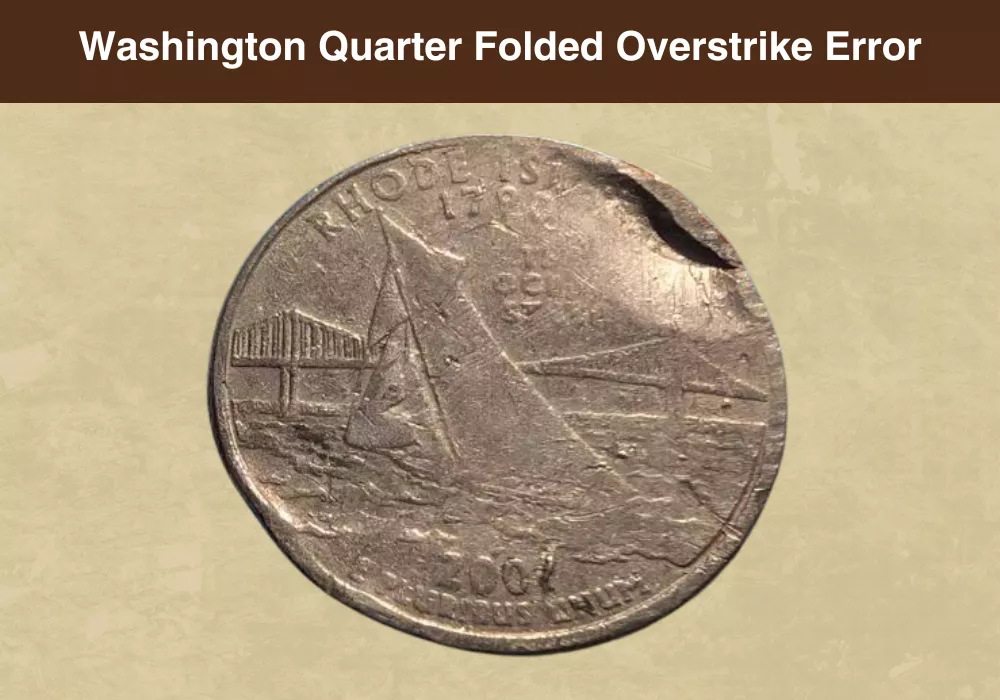
A folded overstrike happens when a planchet enters the press improperly and folds under the enormous striking pressure. The result is a crescent-shaped or taco-shaped coin with one edge folded over itself — one of the most visually dramatic errors possible on any denomination.
Part of the design gets hidden under the fold while the visible portion shows normal striking detail. Each folded overstrike is essentially unique because the fold angle and position are never replicated exactly. These errors are rare because the physical distortion is extreme enough that quality control usually catches them before they leave the Mint.
Value: A 2001-P Washington State Quarter graded MS68 with a folded overstrike sold for $1,350 at Heritage Auctions in 2019. Less dramatic examples in lower grades bring $200 to $600. The amount of visible design and the drama of the fold both affect price.
How to Identify: This error requires no magnification. The coin is physically bent or folded, with a crescent or taco-like shape. Part of Washington’s portrait or the reverse design will be concealed under the folded metal.
Examine the fold edge for compression marks and metal flow consistent with being struck under extreme pressure. The fold happened during minting, not after. A post-mint bent coin will show stress cracks and sharp fold lines, while a genuine folded overstrike shows smooth compression where the metal flowed during striking. Check that design elements visible on the folded-under portion were struck simultaneously with the exposed portion. Weight should be approximately normal since no metal is missing. Fastest check: physically folded coin with struck design on both the exposed and hidden portions.
Use Our Washington Quarter Value Checker
16. Washington Quarter Multiple Strike Error (Up to $1,375)

A multiple strike error occurs when a coin fails to eject from the coining press and gets struck again — sometimes two, three, or even four times. Each additional strike can land on-center or at varying degrees of off-center, creating overlapping design impressions.
The visual effect depends on how much the coin shifted between strikes. An on-center double strike thickens the design and makes it appear bolder, while off-center subsequent strikes create clearly separated duplicate images. A 2001-P New York quarter was documented with four strikes — the 2nd, 3rd, and 4th all 20% off-center — creating an extraordinary quadruple-struck coin graded MS63 by PCGS at Heritage Auctions.
Value: In 2015, a 2001-D Washington quarter graded MS68 with a dual planchet strike error sold for $1,375 at Heritage Auctions — the highest confirmed price for a modern Washington quarter striking error. General market prices for multiple strikes range from $200 to $800 depending on the number of strikes and displacement.
How to Identify: Look for duplicated design elements that appear as distinct, separated impressions at different positions or angles — not the subtle spreading of doubled die errors. On the obverse, Washington’s portrait may appear twice or more with visible separation.
The coin may be slightly thicker than the standard 1.52mm from receiving multiple blows. Weight should still be approximately 5.67 grams since it’s the same planchet struck repeatedly. Check the rim for distortion from off-center subsequent strikes. Don’t confuse with doubled die errors, which show consistent subtle doubling across all coins from the same die. Multiple strikes show full, separated complete impressions at different positions, and each multiple-struck coin is unique. Fastest check: two or more clearly separated complete design impressions at different angles.
Use Our Washington Quarter Value Checker
Coin Identifier and Value App
Not sure what your coins are worth? Get Instant Value • Grade • Error Detection with coin identifier and value app (FREE Usage Daily)
17. Washington Quarter Off-Center Strike Error (Up to $3,000)

An off-center strike happens when the planchet isn’t centered between the dies. Part of the design hits metal while the rest hits air, leaving a crescent-shaped blank area on the coin.
Severity ranges from barely visible 1% shifts to dramatic 95% displacements where only a sliver of design shows. The value sweet spot sits at 50% off-center with the date still visible — enough displacement to be dramatic, but the date confirms the year. Without a visible date, an off-center Washington quarter is just an anonymous crescent. Silver-era off-centers (1932–1964) carry substantial premiums because the 90% silver composition adds both metal value and collector appeal.
Value: The most valuable off-center strikes show 50%+ displacement with full dates. These can reach $500 to $3,000 depending on the era, grade, and specific date. Silver-era examples with visible key dates like 1932-D or 1932-S would be worth substantially more. Minor off-centers of 5–10% bring $20 to $100.
How to Identify: This error is visible without magnification. The design is shifted toward one edge with a blank crescent on the opposite side.
Estimate displacement by measuring how much design area is missing. The full circular planchet should be present — the disc isn’t broken, just misaligned. Weight should remain standard since no metal is missing. Both sides show the same directional shift. Don’t confuse with a clipped planchet, which removes metal and creates a curved bite. Off-center strikes keep the full circle intact with the design simply pushed to one side. Also distinguish from misaligned die errors, where the shift is very slight (under 5%) and both rim and design remain mostly visible. Fastest check: full circular planchet with design pushed to one side and a blank crescent opposite.
Use Our Washington Quarter Value Checker
18. 1943-S Washington Quarter “Goiter” Variety (Up to $4,935)

The Goiter variety resulted from progressive die failure at the San Francisco Mint in 1943. The obverse die developed a depression beneath Washington’s chin, and as planchet metal flowed into this abnormal cavity during striking, it created a raised, swollen bulge that looks like a goiter on Washington’s neck.
The bulge is pronounced enough to distort surrounding design elements — the letters in IN GOD WE TRUST lean noticeably leftward, particularly “WE” and “UST.” This isn’t a minor die chip or random blob. It’s a systematic die failure that produced a consistent, identifiable variety across every coin struck by that die. PCGS has certified fewer than 100 examples, and only six have graded higher than MS65.
Value: A 1943-S Goiter Washington quarter graded MS67 sold at auction for approximately $4,935 in 2016. Current price guides list values ranging from $125 in lower uncirculated grades to over $5,750 for MS67 specimens depending on die state. Even circulated examples command premiums.
How to Identify: Look at Washington’s chin and neck area on the obverse. A genuine Goiter shows a raised, rounded bulge beneath the chin that’s clearly abnormal compared to the standard Washington portrait. The swelling should be smooth and uniform, not rough or pitted.
Check the surrounding lettering. The IN GOD WE TRUST motto should show leftward leaning, particularly in “WE” and the final letters of “TRUST.” This distortion confirms the die state that produced the Goiter variety. The coin must be a 1943-S — Philadelphia and Denver 1943 quarters don’t carry this variety. Compare against published images on PCGS CoinFacts. Don’t confuse with die chips or random struck-through marks, which produce irregular shapes rather than the consistent smooth bulge of the Goiter. Fastest check: smooth raised bulge under Washington’s chin plus leftward-leaning letters on a 1943-S quarter.
Use Our Washington Quarter Value Checker
19. Washington Quarter Doubled Die Error (Up to $5,750)

Doubled die errors originate during die manufacturing. When the master hub impresses its design onto a working die, any alignment shift between impressions leaves the die with permanent doubled images that transfer to every coin it strikes.
The most valuable Washington quarter DDO is the 1943 Philadelphia issue, the scarcest major doubled die in the entire series. The 1965 DDO (FS-101) is another significant variety, showing clear doubling on IN GOD WE TRUST, LIBERTY, the date, and Washington’s profile. On the reverse side, the 1942-D DDR holds the record, with doubled eagle details visible on MS66 specimens. The 1967 SMS DDR is also notable, with SP67 Cameo examples commanding $550 or more.
Value: A 1942-D DDR Washington quarter graded MS66 achieved $5,750 at auction — the highest price for any Washington quarter doubled die. The 1943 DDO in MS67 reached $4,935 in 2016. The 1967 SMS DDR in SP67 CAM brings $550+. Current market range spans $125 to $5,750 depending on the specific variety, die state, and grade.
How to Identify: Under 10x–20x magnification, examine the inscriptions, date, and Washington’s portrait for areas where design elements appear doubled with distinct separation. Check LIBERTY, IN GOD WE TRUST, and the date first — these are the most common doubling locations.
Genuine hub doubling shows raised, rounded secondary images with clear separation between the primary and secondary impressions. The doubling is consistent in direction and magnitude across related design elements. Machine doubling — which is worthless — shows flat, shelf-like spreading that looks mushy. If the secondary image is raised with rounded edges, it’s likely genuine. If it’s flat and shelf-like, it’s mechanical and valueless. Cross-reference against published variety listings on Variety Vista, Wexler’s, or CONECA. Known DDO years include 1934, 1937, 1942-D, 1943, 1943-S, and 1965. Fastest check: split or notched letter serifs with rounded rather than flat doubling.
Use Our Washington Quarter Value Checker
20. 1965 Washington Quarter Silver Planchet Transitional Error (Up to $7,050)

In 1965, the U.S. Mint switched from 90% silver to copper-nickel clad for all dimes and quarters. During the transition, the Philadelphia Mint was simultaneously striking 1964-dated silver quarters and 1965-dated clad quarters — and at least one 1965 quarter ended up struck on a leftover silver planchet.
The result is a 1965 quarter that weighs 6.25 grams instead of the standard 5.67 grams. Only a handful of authenticated examples are known to exist. This transitional error sits at the intersection of two eras — the last silver coinage and the first clad coinage — which gives it historical weight beyond its mechanical rarity.
Value: A 1965 Washington quarter on a silver planchet sold for $7,050 at auction in 2014. This is the highest confirmed price for any Washington quarter error. Given the extreme rarity — a tiny number of authenticated specimens — any future example in higher grade could exceed this figure.
How to Identify: Weight is everything. A standard clad 1965 quarter weighs 5.67 grams. A silver planchet example weighs 6.25 grams — a difference of 0.58 grams that a precision scale will catch immediately. The 90% silver composition also means the edge will show a uniform silver color rather than the copper-nickel-copper sandwich stripe visible on clad quarters.
The coin’s surfaces may appear slightly different in luster compared to a normal 1965 clad quarter — silver has a warmer, brighter sheen than copper-nickel. A specific gravity test can confirm the silver composition. Don’t confuse with a plated coin, which weighs the same as a normal clad quarter. The combination of weight (6.25g), silver edge (no copper stripe), and 1965 date is the diagnostic triad. PCGS or NGC authentication is essential before assigning this kind of value. Fastest check: weigh it — 6.25 grams with no copper edge stripe on a 1965 quarter.
Use Our Washington Quarter Value Checker
Conclusion
Washington quarter errors range from $5 grease fills to the $7,050 silver planchet transitional error — an unusually wide spread for a single series. The practical hunting ground for most collectors sits in the $50 to $500 range, where wrong planchets, missing clad layers, and broadstrikes appear with some regularity. Die varieties like the 1943-S Goiter and major doubled dies occupy the $1,000 to $5,750 tier and require more targeted searching. A precision scale and a 10x loupe are the two tools that separate productive error hunting from guesswork.