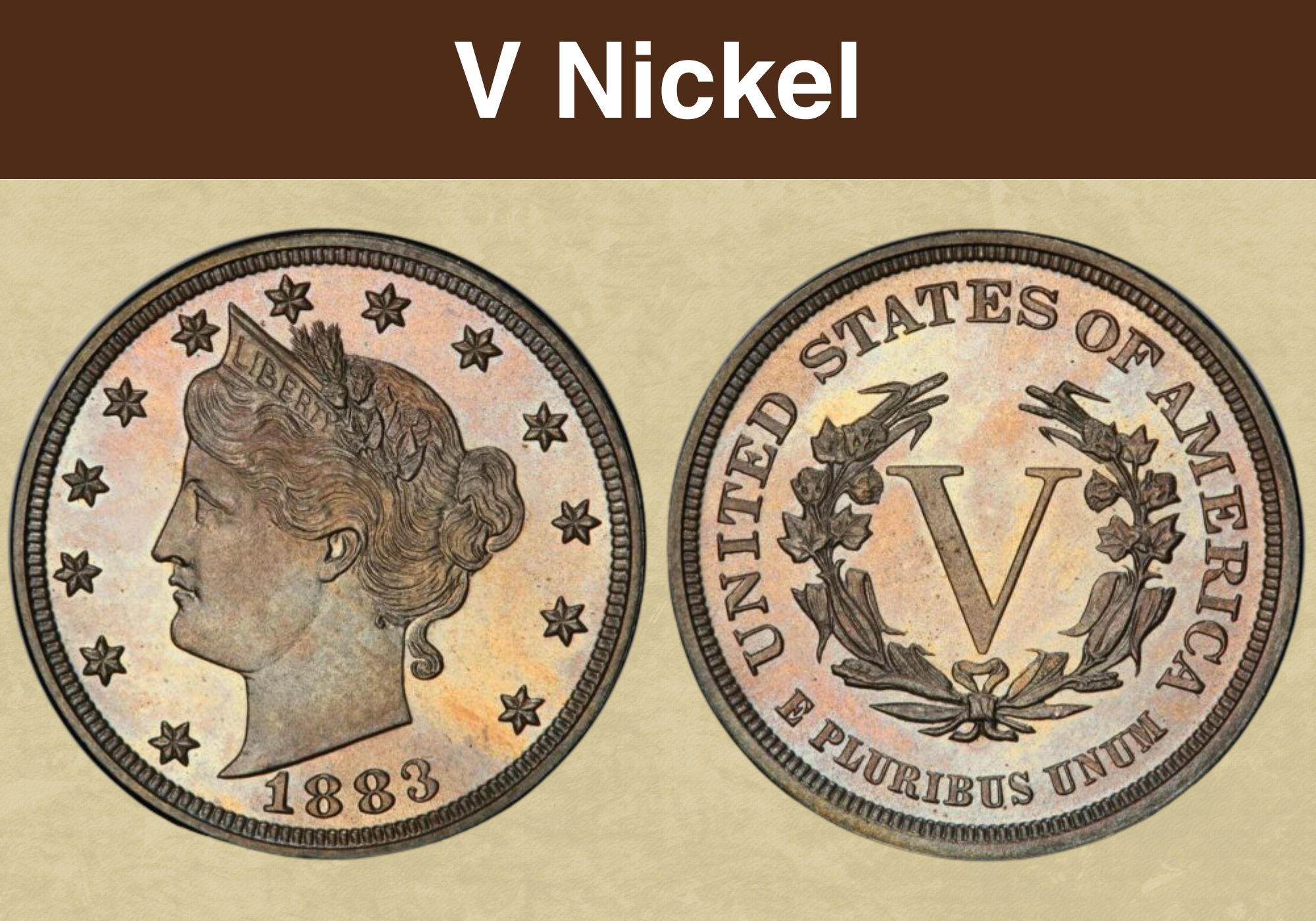
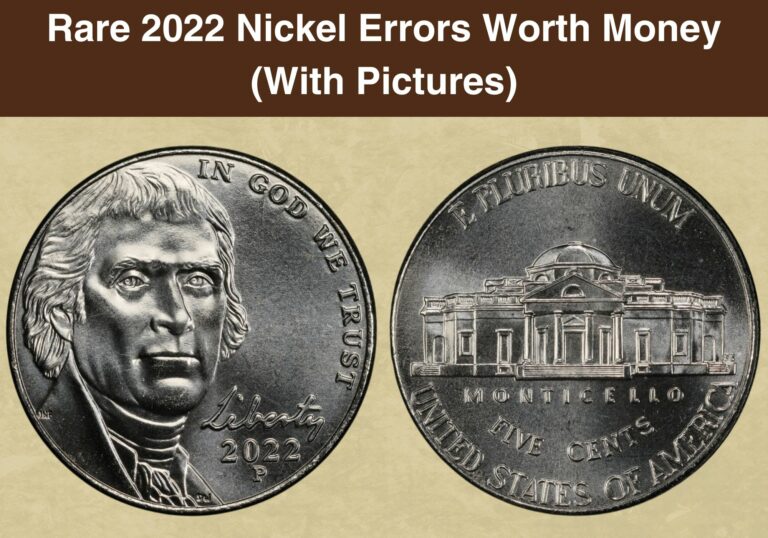
2024 Nickel Coin Value: Errors List, “D”, “S” & “P” Mint Mark Worth

2024 Nickel value ranges from $0.05 face value to $181. That record was a perfect Grade 70 First Strike example sold through EA Auctions in February 2025 — a brand-new coin with a special designation that collectors are already tracking down in top condition. Upload a photo of yours below to get a quick value range. Then scroll down to check what 2024 Nickels are selling for on eBay right now.
2024 Nickel Value Checker
Identify 2024 Nickel D, S and P Mint Mark Price
Front Obverse
Upload or Take a Photo
Back Reverse
Upload or Take a Photo
2024 Nickel Value By Variety
Here’s what 2024 nickels are bringing across mint marks and grades right now. If you already know your coin’s grade, jump down to the **Value Guides** section for exact pricing.
| Type | Good(G4-6) | Fine(F12-15) | AU(AU50-58) | MS(MS60-70) | PR(PR60-70) |
|---|---|---|---|---|---|
| ▶2024 P Nickel (FS) Value | $0.80 - $0.90 | $1 | $4 - $7 | $8 - $41 | — |
| ▶2024 D Nickel (FS) Value | $0.90 - $1 | $1 | $5 - $9 | $11 - $59 | — |
| ▶2024 S DCAM Nickel Value | — | — | — | — | $2 - $12 |


Also Read: Top 100 Most Valuable Jefferson Nickels Worth Money List (1938-Present)
Top 6 Most Valuable 2024 Nickel Worth Money
Most Valuable 2024 Nickel Chart
2024 - Present
The coin sitting at #1 is a 2024-S First Strike PR70 that sold for $181. A perfect proof with the earliest-submission label — that’s the combination collectors chase hardest on modern issues.
Right behind it, MS67FS business strikes from Philadelphia and Denver are pulling $153 to $180. These are coins with zero wear, full original luster, and at least five completely unbroken steps on Monticello. MS means Mint State — no circulation wear at all — and FS stands for Full Steps, awarded only when those staircase lines are crisp and complete. Very few coins out of tens of millions make that cut. First Strike and First Day of Issue are special labels from grading services certifying a coin was among the earliest produced or submitted, and they add a real bump beyond the physical grade alone.
History of the 2024 Nickel
The Jefferson nickel series kicked off in 1938 after Felix Schlag, a German-born sculptor, won a design competition with roughly 390 entries. His realistic portrait and detailed Monticello view beat them all — and collectors still recognize that design instantly.
The 2024 nickel carries on a tradition now past the eight-decade mark. The series has seen tweaks along the way, but the core idea — honoring Jefferson and his Virginia estate — hasn’t changed.
In 2004–2005, the Mint issued special “Westward Journey” designs marking the Lewis and Clark Expedition bicentennial. Those nickels are popular today because of their short production windows.
When regular production came back in 2006, a new forward-facing Jefferson portrait by Jamie N. Franki replaced the old profile view. That portrait was picked from 147 design candidates submitted by U.S. Mint medallic artists and Artistic Infusion Program (AIP) artists — one of the most competitive modern coin design selections in U.S. history. That’s the same portrait on your 2024 nickel.
At the same time, U.S. Mint Medallic Artist John Mercanti restored Felix Schlag’s original Monticello reverse using Schlag’s own early sketches. The architectural details became more faithful than at any point in the prior 65+ years. The 2024 issue carries both of those 2006 design improvements.
Here’s the fun detail. Starting in 2026, all circulating Jefferson nickels will carry the dual date “1776~2026” for America’s 250th anniversary — authorized by the Circulating Collectible Coin Redesign Act of 2020 (Public Law 116-330). That makes 2024 one of the last years you’ll find a standard single-date Jefferson nickel in pocket change. Long-term collectors are already paying attention.
Also Read: Top 60+ Most Valuable Buffalo Nickels Worth Money
Is Your 2024 Nickel Rare?
2024-P Nickel (FS)
2024-D Nickel (FS)
2024-S DCAM Nickel
Check your 2024 nickel’s rarity and grade using the Coin Identifier and Value App for instant evaluation.
Key Features That Affect 2024 Nickel Value
The 2024 Jefferson nickel uses the “Return to Monticello” design that started in 2006. Knowing what to look for on both sides helps you spot the coins worth real money.
The Obverse of the 2024 Nickel

Flip to the heads side. You’ll see Jamie Franki’s forward-facing Jefferson portrait — a big departure from the classic profile used from 1938 through 2003. It’s based on a Rembrandt Peale painting from 1800, capturing Jefferson during his most active political years. Look closely at the hair and clothing detail. That’s exactly what graders examine when judging strike quality.
“IN GOD WE TRUST” runs along the right edge. Next to Jefferson’s chin, “LIBERTY” appears in an italic, handwritten-style font replicating Jefferson’s own handwriting from historical documents.
The date “2024” sits at the lower right of the portrait, with the mint mark just below it. Grab a magnifier and you can spot the designer’s initials: “JNF” on Jefferson’s upper left collar (Jamie N. Franki) and “DW” on the lower right collar (sculptor Donna Weaver).
The Reverse of the 2024 Nickel

Flip it over. You’re looking at Monticello in a detailed frontal view — originally Felix Schlag’s design, meticulously restored by John Mercanti in 2006. That restoration brought back the dome, columns, and front steps that had softened over decades of production.
Above the building: “E PLURIBUS UNUM.” Below the structure: “MONTICELLO,” then “FIVE CENTS,” with “UNITED STATES OF AMERICA” curving along the bottom edge.
Now look at the steps. This is the money spot. Coins showing 5 or 6 clearly defined, unbroken steps earn the Full Steps (FS) designation from PCGS (Professional Coin Grading Service) and NGC (Numismatic Guaranty Company). That designation drives serious premiums over non-FS examples.
One thing to know: NGC began separately recording 5FS (5 Full Steps) and 6FS (6 Full Steps) starting in 2004, while PCGS awards a single “FS” designation. A coin graded MS67 6FS is generally more desirable than MS67 5FS because all six steps are completely defined — an exceptionally tough standard to meet.
Other Features of the 2024 Nickel
The 2024 nickel is 75% copper and 25% nickel — the same cupro-nickel alloy used since the series went back to standard composition after World War II (during which nickels contained 35% silver from 1942–1945). That’s why modern nickels are non-magnetic with a silver-gray look that develops warm toning over time.
Round shape, plain smooth edge — no reeding like you’d see on a dime or quarter. It weighs 5 grams, measures 21.20 millimeters in diameter, and runs approximately 1.95 millimeters thick.
Also Read: Top 100 Rarest Nickels Worth Money (Most Expensive)
The Easy Way to Know Your 2024 Nickel Value
Condition matters most. A nickel with no wear and strong original luster is worth far more than a circulated piece. Pretty straightforward.
Mint mark matters too — P for Philadelphia, D for Denver, S for San Francisco. And then there’s Full Steps. Five or six clearly separated, uninterrupted steps on Monticello mean a superior strike, and that pushes both the grade ceiling and the price way up.
For proof coins, the DCAM (Deep Cameo) label is what you want. That means frosted design elements — Jefferson’s portrait, Monticello’s architecture, the lettering — sitting against mirror-like fields. It creates a dramatic “floating” look that collectors love.
The Coin Identifier and Value App provides instant, accurate assessments of your coin’s grade and value.

2024 Nickel Value Guides
Three mints produced 2024 Jefferson nickels, each with its own character.
- 2024-P Nickel — Struck at the Philadelphia Mint (79,920,000 minted)
- 2024-D Nickel — Produced at the Denver Mint
- 2024-S DCAM Nickel — Special proof coins from San Francisco, sold only in collector sets
Each variety carries a mint mark showing where it was made. San Francisco proofs feature the Deep Cameo (DCAM) designation — mirror-like fields with frosted, contrasting design elements — and never enter regular circulation.
Also Read: Jefferson Nickel Value (1938-Present)
2024-P Nickel Value

Coin Identifier and Value App
Not sure what your coins are worth? Get Instant Value • Grade • Error Detection with coin identifier and value app (FREE Usage Daily)
How does a coin with nearly 80 million siblings sell for $180? Simple — almost none of them survived in gem condition with Full Steps. That’s the story of the 2024-P nickel.
Strike quality is everything here. You need all five or six front steps on Monticello clearly separated and unbroken to earn the FS designation from PCGS or NGC. The premium over non-FS examples at the same grade is dramatic.
According to PCGS CoinFacts, a certified MS67 Full Steps example sold for $180 on eBay in December 2024. Huge mintage on one end, extreme scarcity at the top grades on the other. That gap is exactly what makes modern Jefferson nickels fun to cherrypick.
2024-P Nickel (FS) Price/Grade Chart
Price by 1-70 Grade (Latest Auction Records Included)
Market activity for the 2024-P nickel reflects strong collector engagement with this modern release.
Market activity: 2024-P Nickel (FS)
Market activity score: 49/100 as of Oct 2026 — up 3 points from Jul 2026. 12-month peak: 53 (Sep 2026).
2024-D Nickel Value

Did you know Denver has historically produced sharper strikes than Philadelphia on Jefferson nickels? That makes Full Steps examples from the D mint a bit more accessible — but still genuinely scarce at the top grades.
An MS67 Full Steps specimen hit $153 at auction in October 2024. Even lightly circulated examples carry some collector appeal: PCGS CoinFacts records an AU58 selling for $32 on eBay in February 2025. AU58 means only the faintest traces of wear on the highest points, with nearly full original luster — one step below Mint State.
Finding a 2024-D at that grade in pocket change isn’t common. That’s why even lightly worn pieces trade above face value. I think the Denver mint’s strike consistency makes this one worth checking carefully before you spend it.
2024-D Nickel (FS) Price/Grade Chart
Price by 1-70 Grade (Latest Auction Records Included)
The 2024-D nickel has attracted consistent collector attention in the marketplace.
Market activity: 2024-D Nickel (FS)
Market activity score: 40/100 as of Oct 2026 — unchanged since Jul 2026. 12-month peak: 56 (Dec 2025).
2024-S DCAM Nickel Value

A PR69 Deep Cameo for around $10? That’s one of the best entry points in modern proof collecting. And if you land a perfect PR70 with the First Strike label, you’re looking at $181.
Proof coins are struck multiple times on specially prepared, polished dies and mirror-like planchets. The result is a level of surface quality and detail that business strikes can’t touch. DCAM — Deep Cameo — means the design elements (Jefferson’s portrait, the lettering, Monticello) appear frosted and white, while the background fields are completely mirrored. It creates a three-dimensional “floating cameo” effect that’s stunning in hand.
PCGS and NGC grade this contrast as CAM (Cameo, moderate contrast) or DCAM (Deep Cameo, strongest contrast). DCAM is the most desirable and commands the highest prices in the proof category.
2024-S DCAM Nickel Price/Grade Chart
Price by 1-70 Grade (Latest Auction Records Included)
Trading patterns show collectors continue to actively acquire this proof variety.
Market activity: 2024-S DCAM Nickel
Market activity score: 45/100 as of Oct 2026 — down 3 points from Jul 2026. 12-month peak: 53 (May 2026).
Also Read: 22 Rare Nickel Errors List with Pictures (By Year)
Rare 2024 Nickel Error List
Mistakes happen at the Mint, and those mistakes can turn a five-cent coin into something worth real money. Die damage, misalignment, foreign material — all of it creates collectible errors. Since 2024 nickels are still new, some varieties are still being discovered and documented.
1. Die Clash Errors
Die clash errors happen when the obverse and reverse dies slam together with no planchet between them. That impact transfers a faint ghost of one die’s design onto the other. Every coin struck afterward carries that ghost image until the dies get swapped out.
On 2024 nickels, you might spot faint traces of Monticello near Jefferson’s portrait, or hints of Jefferson’s profile ghosting onto the reverse around the building. These show up as shallow, mirrored impressions. You’ll usually need good lighting and a loupe to catch them.
Value depends on how bold the clash marks are. Minor examples with subtle marks bring $3 to $10 over face value. Moderate clashes with more visible detail run $7 to $25. Dramatic specimens with bold, easily photographed clash marks can hit $20 or more, with exceptional pieces pulling even higher from specialists.
2. Die Chip Errors
When small fragments break away from a working die, the gaps fill with metal during each strike. The result: tiny raised blobs on the finished coin’s surface.
Chips show up most often near high-stress areas — letters, numerals, Jefferson’s facial features, Monticello’s architectural details. Each chip creates a unique raised area with irregular edges, making authentic examples easy to tell apart from post-mint damage.
Location is the value driver. A chip on Jefferson’s eye or a letter in “LIBERTY” generates far more interest than one in the open field. Multiple chips on the same coin can create a visually dramatic piece that bumps desirability even higher.
3. Off-Center Errors
When the planchet isn’t seated properly in the collar, the dies only strike part of the blank. You get a crescent-shaped blank area and a partial design. These are eye-catching errors.
Displacement percentage drives the price. Minor 5–10% off-center strikes keep most of the design and bring modest premiums. Dramatic examples over 50% — where only fragments of the design are visible — can sell for $100 to $150 or more when the date is still readable.
That’s the key: date and mint mark visibility. A 50% off-center 2024 nickel with a complete, legible date is worth substantially more than one where that info shifted off the planchet.
4. Struck-Through Grease Errors
Ever seen a coin where part of the design looks erased? That’s a struck-through grease error. Excess lubricant or debris on the die prevents full metal contact during the strike, leaving weak, ghostly, or completely missing details.
On 2024 nickels, look for Jefferson’s portrait appearing unusually faint, or sections of Monticello looking blurry and partially filled in. Here’s how to tell it’s real: a legitimate struck-through shows raised but poorly defined details, because the metal flowed around the grease. Post-mint damage scratches or depresses the surface — totally different look.
Small affected areas bring $5 to $20 over face value. Dramatic examples where a major element is largely missing — like Jefferson’s entire face or a big chunk of Monticello — can command $50 to $150 depending on overall grade.
5. Die Crack and Cud Errors
Die cracks show up as raised, irregular lines on the coin’s surface — direct evidence of a die wearing out from repeated use. Common on high-production coins like modern nickels. They range from barely visible hairlines to dramatic raised gashes.
A cud is the extreme version. An entire section of the die breaks away, leaving a raised blank blob at the coin’s rim. Cuds always appear at the edge because that’s where die stress is greatest.
Small, inconspicuous die cracks on 2024 nickels add $1 to $5. Dramatic cuds covering a significant portion of the rim and wiping out multiple letters or design elements can bring $30 to $75 or more, depending on severity and condition.
6. Doubled Die Reverse (DDR) Errors
A DDR happens during die-making, when the hub makes two slightly misaligned impressions on the same working die. Every coin struck from that die shows doubled or “shadowed” features on the reverse — typically on the lettering, Monticello’s lines, or the denomination.
Don’t confuse this with machine doubling. That’s common and worthless. A true DDR shows distinct, separated doubled images rather than flat, shelf-like doubling. On 2024 nickels, check “FIVE CENTS,” “E PLURIBUS UNUM,” and Monticello’s columns and steps.
Minor DDR varieties in circulated condition typically range from $15 to $40. Strong examples with bold, clearly separated doubling can command $75 to $250 in Mint State grades. If the coin also carries a Full Steps designation alongside the doubling, the premium climbs even further.
7. Split Planchet Errors
These are the showstoppers. A split planchet happens when the metal blank separates into layers — before or after striking — due to impurities or problems during the rolling process. Jefferson nickels, made from a solid 75%/25% copper-nickel alloy, are susceptible when the alloy isn’t properly blended.
The coin literally peels open, exposing the raw interior of the blank. If the split happens before striking, both halves may show partial design impressions. If after, one side looks normal while the other reveals a raw, striated metal surface.
These are dramatic, visually compelling, and hard to fake. Genuine examples on 2024 nickels typically range from $200 to $800 depending on how dramatic the split is and the overall condition of the struck portion.
Where to Sell Your 2024 Nickel?
Looking to sell your 2024 nickels? I’ve assembled a comprehensive guide to reputable online marketplaces. Each listing includes detailed introductions, advantages, and drawbacks to help you choose the platform that best suits your selling needs.
Coin Identifier and Value App
Not sure what your coins are worth? Get Instant Value • Grade • Error Detection with coin identifier and value app (FREE Usage Daily)
Check out now: Best Places To Sell Coins Online (Pros & Cons)
2024 Nickel Market Trend
Market Interest Trend Chart - 2024 Nickel
Market interest: 44,330 collectors tracking this coin as of Oct 2026 — up 1,000 from Mar 2026. 12-month peak: 54,890 (Dec 2025).
*Market Trend Chart showing the number of people paying attention to this coin.
FAQ About the 2024 Nickel
1. What makes a 2024 Nickel Value coin rare?
Most aren’t rare — Philadelphia alone struck nearly 80 million. But genuine scarcity exists at the top. The Full Steps designation requires strike quality that only a tiny fraction of production achieves, and very few 2024 nickels have been certified at MS67 or above by PCGS/NGC. Those specific coins are legitimately rare.
2. How do I tell if my 2024 Nickel is valuable?
Start with condition. Check Jefferson’s cheekbone, hair, and Monticello’s roof and columns under good lighting for any wear. Then grab a magnifier and count the steps at Monticello’s base: five or six completely unbroken horizontal lines qualify for Full Steps status and significantly boost value.
Next, check the mint mark below the date (P = Philadelphia, D = Denver, S = San Francisco proof). Look for strong luster and minimal bag marks. The Coin Identifier and Value App can give you an instant, photo-based evaluation to narrow down your coin’s likely grade and market value.
3. How much is a 2024 Nickel worth today?
Circulated? Face value — five cents. With the Full Steps designation, Fine condition examples average around $2.45, while Mint State Full Steps specimens can reach $16.87 and up depending on grade. The auction record stands at $180 for an MS67 Full Steps example (December 2024, eBay).
San Francisco proofs are another tier: Deep Cameo PR69 coins sell for approximately $10, while perfect PR70 examples with First Strike designation have reached $181.
4. What exactly is the Full Steps (FS) designation and how is it graded?
PCGS and NGC award Full Steps when Monticello’s front steps show five or six completely unbroken, clearly defined horizontal lines. Even a single bridge, gouge, or weakness between lines disqualifies the coin. That’s why FS coins represent a genuinely small percentage of any Jefferson nickel’s surviving population.
NGC began separately tracking 5FS (five Full Steps) and 6FS (six Full Steps) in 2004, while PCGS awards a single “FS” designation covering both. A 6FS coin is the gold standard and often commands a premium even over a 5FS coin at the same numeric grade.
5. Will the 2026 dual-date nickel affect the value of my 2024 nickel?
It might. Beginning in 2026, all circulating Jefferson nickels will carry the dual date “1776~2026” per the Circulating Collectible Coin Redesign Act of 2020. That makes 2024 and 2025 among the last years with a standard single date on the familiar “Return to Monticello” design.
Coins right before a major design change tend to attract growing collector interest over time. We think high-grade 2024 examples — especially Full Steps coins — could benefit from this “last of series” appeal down the road.
6. What does DCAM (Deep Cameo) mean on a 2024-S proof nickel?
DCAM stands for Deep Cameo. It means the coin shows the strongest possible contrast between design elements and background fields. The portrait, lettering, and architecture appear bright white and frosted, while the background is completely mirrored — like a tiny, flawless mirror.
CAM (Cameo) describes moderate contrast. DCAM is the most dramatic version and the most collectible. Any 2024-S nickel labeled DCAM was specially produced and carries greater collector appeal than a proof without the designation.
7. What was the mintage for the 2024-P nickel, and why does that matter?
Philadelphia struck 79,920,000 business strike nickels in 2024. That’s actually modest by recent Jefferson nickel standards — earlier years have seen hundreds of millions. Still a big number, but lower than many recent years.
Fewer coins entering circulation means fewer gem survivors over time. Combine that with the inherent scarcity of Full Steps examples — which require extraordinary strike quality regardless of total mintage — and well-preserved 2024-P specimens have a slightly stronger rarity argument than higher-mintage years.
8. How does the 2024 nickel compare to key dates in the Jefferson series?
The 2024 nickel is not a key date. It’s a common-date modern issue. The classic keys are the 1950-D (only 2,630,000 minted, the series low for Denver), the 1939-D, and the rare 1971 No-S proof, which can reach four figures in high grades.
But here’s what the 2024 shares with those coins: condition and strike quality matter far more than date alone for modern Jeffersons. A 2024 nickel in MS67 Full Steps is genuinely scarce in slabbed form and can be worth more than many older, lower-mintage coins that don’t command the same collector premium.
9. Should I have my 2024 nickel professionally graded by PCGS or NGC?
Grading typically costs $30 to $50 per coin for standard service, plus membership fees and shipping. It only makes financial sense if your coin is likely worth at least $150 to $200. For 2024 nickels, the cases where certification pays off are: coins that appear MS67 or higher with Full Steps, dramatic error coins (off-center strikes over 50%, split planchets, strong doubled dies), and proof PR70 candidates with First Strike or First Day of Issue potential.
Use the Coin Identifier and Value App for a free photo-based evaluation first. If the app suggests your coin may be in the premium tier, certification is worth the cost. Otherwise, most 2024 nickels are better left raw.
10. What is the most valuable 2024 nickel error type to look for?
Split planchet errors top the list at $200–$800. After that, dramatic off-center strikes of 50%+ with a visible date (up to $150+) and strong Doubled Die Reverse (DDR) varieties in Mint State grades ($75–$250). Split planchets are especially prized because they reveal the coin’s interior structure and can’t be faked through normal post-mint damage.
Die clashes are the most commonly found error on modern Jefferson nickels, but most bring only $3–$25. The dramatic planchet and striking errors are the real cherrypicking targets. If you think you have a significant error, always get it authenticated by PCGS or NGC before assigning value — post-mint damage can mimic some error types and has zero collector value.