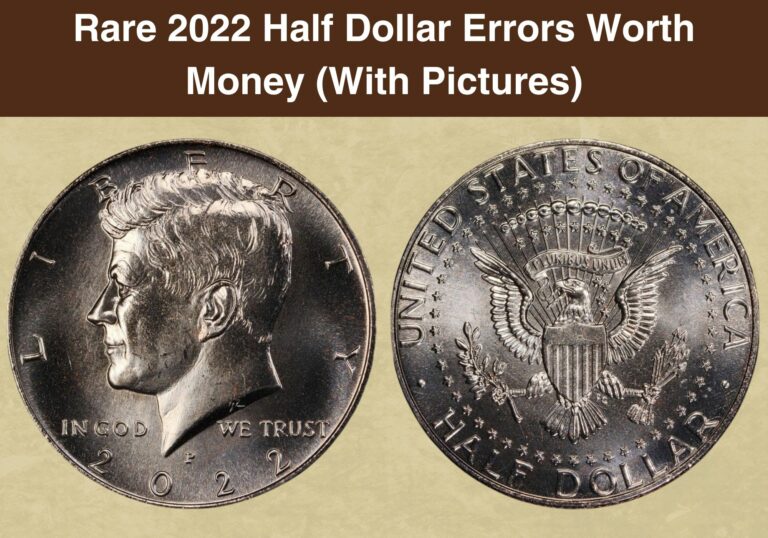
2006 Half Dollar Coin Value: Errors List, “P”, “S” & “D” Mint Mark Worth

2006 Half Dollar value ranges from $0.50 face value to $2,585. That record was set by a Grade 68 example sold through Heritage Auctions in February 2017. Upload a photo of your coin below to find out what yours is worth with a quick value range. Then scroll down to check recent eBay sales and see what buyers are paying for them today.
2006 Half Dollar Value Checker
Identify 2006 Half Dollar D, S and P Mint Mark Price
Front Obverse
Upload or Take a Photo
Back Reverse
Upload or Take a Photo
2006 Half Dollar Value By Variety
Six varieties came out of three mints in 2006. Each one carries a different premium depending on strike type, condition, and how scarce it is in today’s market.
If you know the grade of your coin, you can find the exact price below in the Value Guides section.
| Type | Good(G4-6) | Fine(F12-15) | AU(AU50-58) | MS(MS60-70) | PR(PR60-70) |
|---|---|---|---|---|---|
| ▶2006 P Half Dollar Value | $1 | $1 | $1 | $4 - $430 | — |
| ▶2006 D Half Dollar Value | $1 | $1 | $1 | $4 - $2,200 | — |
| ▶2006 S Silver Proof DCAM Half Dollar Value | — | — | — | — | $33 - $46 |
| ▶2006 S Proof DCAM Half Dollar Value | — | — | — | — | $1 - $29 |
| ▶2006 P Satin Finish Speciai Strike Half Dollar Value | — | — | — | — | $1 - $55 |
| ▶2006 D Satin Finish Speciai Strike Half Dollar Value | — | — | — | — | $1 - $130 |


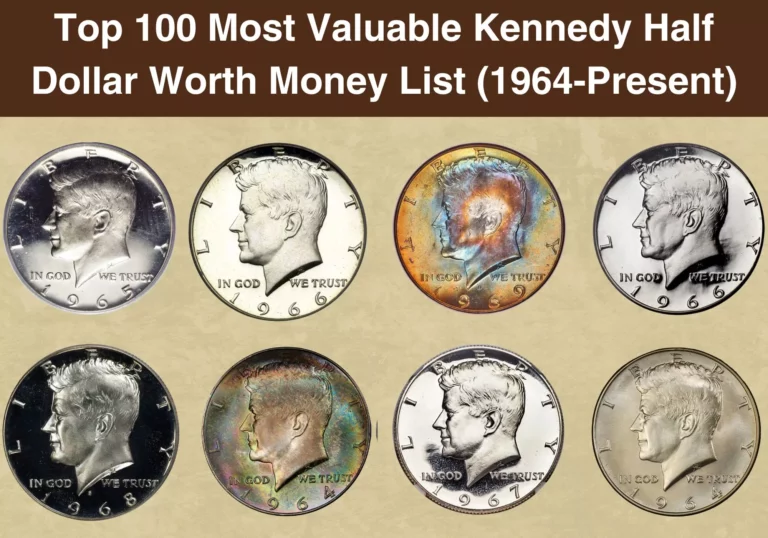
Also Read: Top 100 Most Valuable Kennedy Half Dollar Worth Money (1964 – Present)
Top 10 Most Valuable 2006 Half Dollar Value Worth Money
Most Valuable 2006 Half Dollar Chart
2006 - Present
The top coin on this list is a 2006-D graded MS-68 by PCGS. It sold for $2,585 at Heritage Auctions. That’s a modern clad half dollar — not silver, not a proof — pulling four figures because of one thing: condition rarity.
PCGS CoinFacts shows that 2006-D business strikes are common through MS-65. They get scarce at MS-67, with fewer than 100 examples certified there and none graded finer. That hard ceiling at MS-67 is exactly why the lone MS-68 brought more than $2,500.
Second place goes to a 2006-P MS-68 that sold for $764 at Heritage Auctions on August 5, 2014. Philadelphia had a slightly higher mintage — 2.4 million versus Denver’s 2 million — which explains the price gap. Both Satin Finish varieties also show up near the top. Denver’s SP-69 hit $569 (sold November 30, 2011 via eBay) and Philadelphia’s SP-69 reached $150 (sold April 28, 2021 via eBay).
Silver proofs add precious metal appeal. The 2006-S Silver Proof PR-70 DCAM brought $546 at Heritage Auctions on October 2, 2007. The regular clad 2006-S Proof DCAM PR-70 hit $575 in January 2008 — actually outpacing the silver version thanks to strong early demand.
The bottom line for 2006 Kennedys? Condition and variety decide whether your coin is worth 50 cents or several hundred dollars. Mintage alone won’t tell you.
History of the 2006 Half Dollar Value and Its Place in Modern Coinage
The Kennedy half dollar started as a national mourning piece after President Kennedy’s assassination on November 22, 1963. Congress fast-tracked the redesign, and the first coins reached the public on March 24, 1964, replacing the Franklin half dollar.
Those original 1964 coins were 90% silver. Rising silver prices forced a cut to 40% from 1965–1970, and silver disappeared from circulation strikes entirely in 1971. The copper-nickel clad composition used today has been the standard ever since.
Here’s the detail that matters for 2006: the last year Kennedy halves entered regular Federal Reserve circulation was 2001. Starting in 2002, the Mint made them exclusively for collectors — sold at a premium through bags, rolls, and sets. Collectors call these NIFC coins: “Not Intended For Circulation.” That’s why you won’t find a 2006 Kennedy in your pocket change.
What made 2006 special was the variety count. Philadelphia and Denver each struck standard business strikes plus Satin Finish Special Strike coins — those distinctive matte-surface pieces that look nothing like a regular uncirculated coin or a proof. San Francisco handled both copper-nickel and silver proofs. Six varieties total. I think it was the most comprehensive Kennedy program up to that point, and the Satin Finish technology used from 2005–2010 influenced Mint specialty offerings for years afterward.
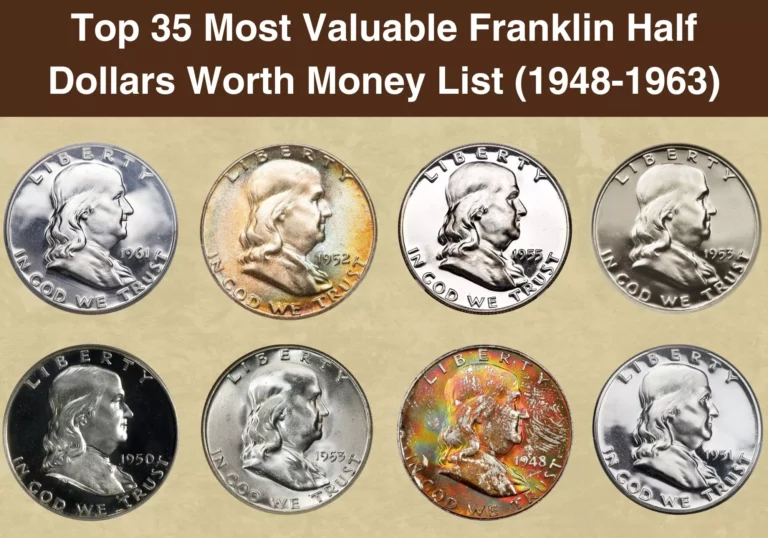
Also Read: Top 35 Most Valuable Franklin Half Dollar Worth Money (1948 – 1963)
Is Your 2006 Half Dollar Value Affected by Rarity?
2006 P Half Dollar
2006 D Half Dollar
2006 S Silver Proof DCAM Half Dollar
2006 S Proof DCAM Half Dollar
None of the 2006 Kennedy varieties are rare in an absolute sense. But rarity at the top grades? That’s where real money shows up. The 2006-D business strike is common through MS-65, scarce above MS-66, and hits a verified ceiling at MS-67 — fewer than 100 certified, none finer.
The Satin Finish varieties have the clearest population data. PCGS has certified 346 examples of the 2006-D Satin Finish at MS-68, with only 32 graded higher at MS-69. Zero have ever hit MS-70 or SP-70. That’s a hard ceiling confirmed by PCGS population records showing 33/0 at the MS-69/SP-69 level.
The 2006-P Satin Finish has a slightly deeper top-grade pool: 586 at MS-68 and 92 at MS-69, but again zero at MS-70. So SP-69 is the finest certified grade for both varieties, and those coins carry genuine premiums because of it.
You can easily check current rarity assessments and updated market data through our Coin Identifier and Value App for instant verification of your coin’s standing.
Key Features That Affect 2006 Half Dollar Value
The 2006 Kennedy half dollar came in six varieties across three mints, mixing traditional production with the experimental Satin Finish surface treatment. Knowing what to look for on each variety helps you figure out exactly what you’re holding — and what it’s worth.
The Obverse of the 2006 Half Dollar

Gilroy Roberts designed the obverse based on Kennedy’s official presidential medal, not a life portrait. Kennedy’s left-facing profile shows clean separation between forehead, cheek, and jaw across all 2006 varieties.
Hair detail runs in individual strands from crown to nape. The eye sockets show proper recession matching the standards set in 1964. “LIBERTY” arcs across the upper rim in block letters, and “IN GOD WE TRUST” splits around Kennedy’s neckline.
The date “2006” sits centered along the bottom rim. Roberts’ initials “GR” appear at the neck truncation. Mint marks show up below the date: “P” for Philadelphia, “D” for Denver, “S” for San Francisco.
Here’s a quick identification tip: hold a Satin Finish coin under a strong light at about a 45-degree angle. The matte, non-reflective surface looks dramatically different from the brilliant luster on a standard business strike or the mirror fields on a proof.
The Reverse of the 2006 Half Dollar

Flip it over and you’ll see Frank Gasparro’s heraldic eagle with wings spread horizontally. The eagle’s head faces left — toward the olive branch in its left talon — symbolizing a preference for peace over the thirteen arrows in its right talon.
“UNITED STATES OF AMERICA” follows the upper rim, and “HALF DOLLAR” runs along the bottom. Fifty stars encircle the eagle, each struck to matching depth regardless of mint or striking method.
Look for Gasparro’s initials “FG” near the lower-left of the design — same placement since 1964. On DCAM (Deep Cameo) proof coins, where mirror-like fields contrast against heavily frosted devices, the eagle’s feather texture really pops with vivid three-dimensional depth.
Other Features of the 2006 Half Dollar
Two compositions exist for 2006. Business strikes and clad proofs use outer layers of 75% copper and 25% nickel bonded to a pure copper core — that familiar silver-gray look. Silver proofs contain 90% silver and 10% copper, giving them real precious metal value above face.
Clad varieties measure 30.61 mm in diameter and weigh 11.34 grams. Silver proofs keep the same dimensions but weigh approximately 11.30 grams due to the different metal mix. All 2006 half dollars have 150 evenly-spaced reeds around the edge.
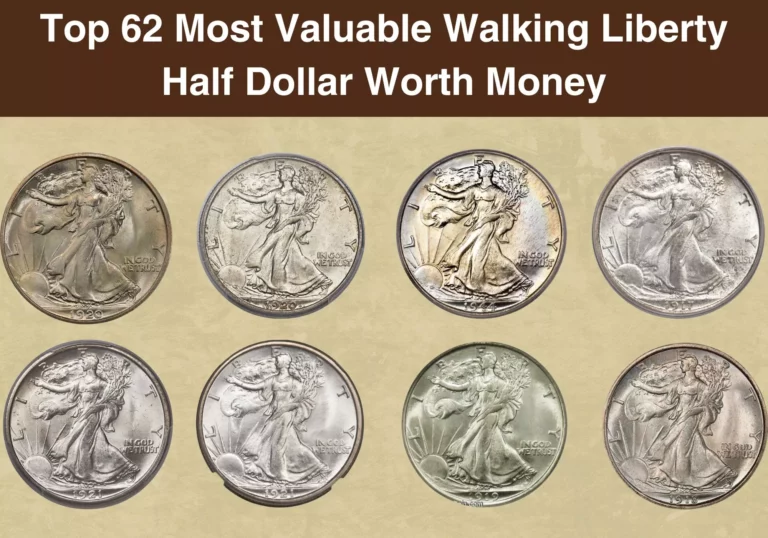
Also Read: Top 60+ Most Valuable Walking Liberty Half Dollar (1916 -1947)
2006 Half Dollar Value: Mintage & Survival Data
2006 Half Dollar Mintage & Survival Chart
Survival Distribution
| Type | Mintage | Survival | Survival Rate |
|---|---|---|---|
| P | 2,400,000 | unknown | unknown |
| D | 2,000,000 | unknown | unknown |
| S Silver PR DCAM | 1,054,008 | 1,032,927 | 97.9999% |
| S PR DCAM | 2,000,428 | 1,960,419 | 98% |
| P Satin Finish SP | 847,361 | unknown | unknown |
| D Satin Finish SP | 847,361 | unknown | unknown |
Philadelphia struck 2.4 million business strikes and Denver struck 2 million — both among the lower mintages for post-2002 NIFC Kennedys. Greysheet and PCGS consider these “conditionally rare” above MS-67.
San Francisco produced 2,000,428 copper-nickel proofs and 1,054,008 silver proofs. Both Philadelphia and Denver contributed identical 847,361-coin mintages of Satin Finish Special Strikes, distributed only through uncirculated mint sets. You couldn’t buy a single Satin Finish coin on its own — it came packaged in the 2006 Uncirculated Coin Set or not at all.
To put that in perspective: 2 million Denver business strikes sounds like a lot, but PCGS has documented fewer than 100 examples at MS-67 with none finer. That means gem-quality preservation was the exception, even for coins that never saw a cash register. High mintage doesn’t mean high survival in top grades.
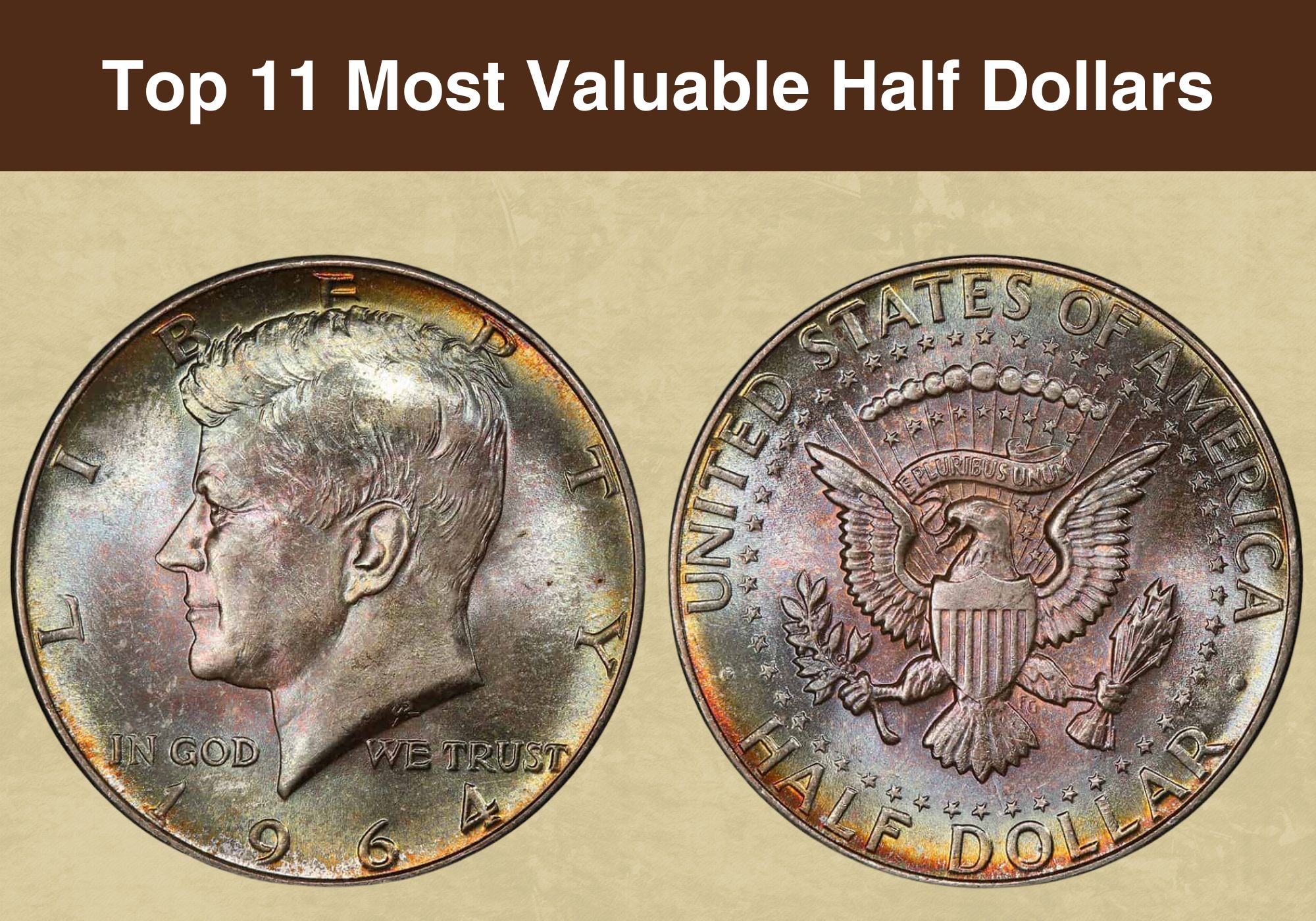
Also Read: What Half Dollars Are Worth Money?
The Easy Way to Know Your 2006 Half Dollar Value
Start by checking the mint mark below the date: “P” for Philadelphia, “D” for Denver, “S” for San Francisco proofs.
Next, figure out the surface finish. Standard business strikes show bright, uniform mint luster with that swirling cartwheel effect. Satin Finish coins look completely different — hold yours at an angle under a direct light and the surface will appear almost frosted or velvety with no cartwheel at all. Proof coins have sharply contrasting mirror-like fields against raised, frosted design elements. The DCAM (Deep Cameo) designation — extreme contrast between mirror fields and frosted devices — is the most desirable proof category and pulls the highest premiums.
Silver proofs (“S” mint mark) contain 90% silver, adding melt value on top of the numismatic premium. Regular business strikes average $13–$15 in MS condition, while the all-time record sits at $2,585 for a 2006-D MS-68. Satin Finish varieties carry premiums tied to their 847,361 limited mintage and hard grading ceiling — no example of either Satin Finish variety has ever been graded MS-70 or SP-70 by PCGS.
Telling a genuine Satin Finish from an altered or mishandled coin takes a trained eye. The differences are subtle. If you’re looking at anything above MS-67 or SP-67, I’d strongly recommend submitting to PCGS or NGC before buying or selling.
Coin Identifier and Value App
Not sure what your coins are worth? Get Instant Value • Grade • Error Detection with coin identifier and value app (FREE Usage Daily)
Coin Identifier and Value App provides comprehensive variety recognition, analyzing surface characteristics and calculating current market value across all six 2006 production types instantly.

2006 Half Dollar Value Guides
- 2006-P
- 2006-D
- 2006-S Proof DCAM
- 2006-S Silver Proof DCAM
- 2006-P Satin Finish Special Strike
- 2006-D Satin Finish Special Strike
Six varieties across two compositions, three mints, and three surface treatments. That makes 2006 one of the most variety-rich years in the modern NIFC Kennedy era.
2006-P Half Dollar Value

Most people don’t realize the 2006-P was never released into circulation. PCGS CoinFacts confirms it directly: “The 2006-P Kennedy Half Dollars were not released into circulation. Instead they were sold directly by the U.S. Mint to collectors and the public.” That controlled distribution created immediate collector interest and set the template for Kennedy half dollar sales that continues today.
Philadelphia pulled double duty in 2006 — 2.4 million standard business strikes plus 847,361 Satin Finish pieces. The business strike auction record stands at $764 for an MS-68 sold at Heritage Auctions on August 5, 2014. The 2006-P Satin Finish MS-69/SP-69 record reached $150 in April 2021. PCGS has certified 586 examples of the Satin Finish at MS-68 with 92 graded MS-69 — and none higher. MS-69 is the top of the population.
2006 P Half Dollar Price/Grade Chart
Price by 1-70 Grade (Latest Auction Records Included)
Recent auction performance demonstrates sustained collector recognition of the coin’s historical importance and technical innovations.
| Date | Platform | Price | Grade |
|---|---|---|---|
| 09/19 | HA | $456 | 68 |
| 09/19 | HA | $252 | 68 |
| 11/18 | HA | $312 | 68 |
| 11/17 | HA | $84 | 68 |
| 12/16 | HA | $51 | 67 |
| 09/16 | HA | $188 | 68 |
| 09/16 | HA | $212 | 68 |
| 11/14 | GC | $20 | 67 |
| 08/13 | GC | $7 | 66 |
| 03/13 | GC | $15 | 67 |
Current market activity indicates consistent dealer and collector interest in both coins.
Market Activity: 2006 P Half Dollar
Market activity score: 35/100 as of Nov 2026 — unchanged since Aug 2026. Currently at its 12-month peak.
2006-D Half Dollar Value

Here’s a question worth asking: how does a coin with 2 million siblings sell for $2,585? The answer is grade rarity. The 2006-D carries the lowest business strike mintage between the two mints, and PCGS CoinFacts spells out why high-grade examples are so tough: “Examples up to MS65 condition appear to be common. Only in MS66 condition and higher are they scarce. In MS67 grade they are much scarcer with less than 100 graded in this condition and none being finer.”
That ceiling is what made the MS-68 record of $2,585 possible — a coin that shouldn’t exist based on the population data. For the Denver Satin Finish, PCGS has certified 346 at MS-68 with 32 examples graded MS-69/SP-69, and none has ever hit MS-70 or SP-70. The Denver Satin Finish SP-69 record sits at $569 achieved on November 30, 2011.
Unlike the 2006-P, Denver coins went through conventional Federal Reserve banking channels. But practical demand for half dollars was basically zero by 2006, so most ended up in collector hands or sat in accumulations anyway.
2006-D Half Dollar Price/Grade Chart
Price by 1-70 Grade (Latest Auction Records Included)
Auction records show steady performance across multiple grades with consistent bidding for quality examples.
| Date | Platform | Price | Grade |
|---|---|---|---|
| 02/17 | HA | $2,585 | 68 |
| 01/17 | HA | $1,528 | 68 |
| 09/16 | HA | $49 | 67 |
| 07/14 | HA | $82 | 67 |
| 08/13 | GC | $12 | 67 |
| 08/13 | GC | $9 | 67 |
| 10/12 | GC | $12 | 66 |
| 06/12 | GC | $8 | 66 |
| 07/10 | DL | $12 | 68 |
| 05/10 | DL | $12 | 66 |
High-grade specimens draw the most attention from dealers and collectors, especially anything at MS-67 or above.
Market Activity: 2006-D Half Dollar
Market activity score: 37/100 as of Nov 2026 — unchanged since Aug 2026. 12-month peak: 43 (Jun 2026).
2006-S Silver Proof DCAM Half Dollar Value

If you want the best-looking coin in the 2006 Kennedy lineup, this is it. The 2006-S Silver Proof DCAM combines the Deep Cameo designation — extreme contrast between mirror-like fields and heavily frosted devices — with 90% silver composition. At 1,054,008 pieces, it’s the second-lowest mintage among all 2006 varieties and the only one with genuine precious metal melt value backing it up.
San Francisco’s proof process involves multiple strikes from specially polished dies onto carefully prepared planchets. That’s how they get such dramatic visual contrast. The all-time record of $546 was set by a PCGS PR-70 sold at Heritage Auctions on October 2, 2007. The near-perfect survival rate for this variety makes sense — when you pay a premium for a silver proof, you tend to store it carefully.
2006-S Silver Proof DCAM Half Dollar Price/Grade Chart
Price by 1-70 Grade (Latest Auction Records Included)
Kennedy specialists and silver collectors both chase this variety, keeping demand consistent across the board.
| Date | Platform | Price | Grade |
|---|---|---|---|
| 07/22 | DL | $60 | 70 |
| 09/16 | HA | $43 | 70 |
| 12/14 | GC | $61 | 70 |
| 11/14 | GC | $50 | 70 |
| 11/14 | GC | $43 | 70 |
| 11/14 | GC | $42 | 70 |
| 09/14 | GC | $46 | 70 |
| 07/14 | GC | $49 | 70 |
| 06/14 | GC | $15 | 69 |
| 06/14 | GC | $51 | 70 |
Market activity stays steady thanks to that dual appeal — numismatic value plus silver content.
Market Activity: 2006-S Silver Proof DCAM Half Dollar
Market activity score: 37/100 as of Nov 2026 — down 10 points from Aug 2026. 12-month peak: 53 (Oct 2026).
2006-S Proof DCAM Half Dollar Value

Want DCAM eye appeal without paying the silver premium? This is your coin. The 2006-S Proof DCAM is the clad copper-nickel proof from San Francisco, struck with the same multi-strike process as the silver version. At 2,000,428 pieces — the highest mintage among 2006 varieties — it’s the most affordable entry point into proof Kennedy collecting.
The DCAM designation means the same thing here as on the silver proof: mirror-like fields with sharp, frosted design elements. The 98% retention rate tells you collectors put these away immediately after purchase. The all-time record stands at $575 for a PR-70 sold in January 2008. Current values range from approximately $6 for lower certified grades up to meaningful premiums at the PR-70 level.
2006-S Proof DCAM Half Dollar Price/Grade Chart
Price by 1-70 Grade (Latest Auction Records Included)
Consistent bidding across grades reflects a solid collector base, especially among people building complete Kennedy proof sets.
| Date | Platform | Price | Grade |
|---|---|---|---|
| 10/19 | DL | $12 | 69 |
| 05/18 | DL | $30 | 70 |
| 09/16 | HA | $35 | 70 |
| 12/14 | GC | $23 | 70 |
| 11/14 | GC | $13 | 69 |
| 09/14 | GC | $11 | 70 |
| 06/14 | GC | $16 | 69 |
| 05/14 | GC | $13 | 69 |
| 04/14 | GC | $26 | 70 |
| 03/14 | GC | $45 | 70 |
Dealer participation stays regular, with steady turnover at most grade levels.
Market Activity: 2006-S Proof DCAM Half Dollar
Market activity score: 53/100 as of Nov 2026 — unchanged since Aug 2026. Currently at its 12-month peak.
2006-P Satin Finish Special Strike Half Dollar Value

You couldn’t buy this coin by itself. The 2006-P Satin Finish came only inside the 2006 Uncirculated Coin Set — 847,361 pieces produced, no standalone sales. PCGS designates it “SP” (Special Strike or Specimen) to acknowledge it sits between a standard business strike and a proof.
Here’s the population data that matters: 586 certified at MS-68/SP-68, only 92 at the top grade of MS-69/SP-69, and zero — ever — at MS-70 or SP-70. That permanent ceiling at the 69-point level means any SP-69 you find is a confirmed finest-known specimen. The auction record of $150 for an SP-69 (sold April 28, 2021) reflects that status.
For comparison, the 2005-P Satin Finish — with a much smaller mintage of just 314,029 — achieved an SP-70 record of $1,822 at Heritage Auctions in September 2016. That shows you how mintage and grade ceiling interact to shape value. The 2006-P has more coins but a lower ceiling, which keeps top-grade prices more modest.
2006-P Satin Finish Special Strike Half Dollar Price/Grade Chart
Price by 1-70 Grade (Latest Auction Records Included)
Collectors recognize the limited availability, and auction results reflect that across various grade levels.
| Date | Platform | Price | Grade |
|---|---|---|---|
| 09/16 | HA | $74 | 69 |
| 09/14 | GC | $58 | 69 |
| 08/14 | GC | $30 | 68 |
| 04/13 | GC | $24 | 66 |
| 03/13 | GC | $35 | 69 |
| 03/12 | GC | $35 | 68 |
| 11/11 | GC | $16 | 67 |
| 08/09 | HA | $32 | 68 |
| 01/09 | HA | $42 | 69 |
| 09/08 | HA | $21 | 69 |
2006-D Satin Finish Special Strike Half Dollar Value

Same mintage as Philadelphia. A completely different kind of rare at the top. While the Philly Satin Finish has 92 examples at MS-69/SP-69, Denver’s top-grade population is dramatically tighter: only 32–33 examples at MS-69/SP-69 with zero finer. Denver’s Satin Finish is objectively scarcer at the highest certifiable grade despite the identical 847,361 mintage.
That tighter population explains a huge gap in value. Denver’s SP-69 auction record of $569 dwarfs Philadelphia’s $150 record. Grade rarity — not mintage — drives the premium here. Both varieties received the SP (Special Strike) designation from PCGS to separate them from regular MS business strikes, recognizing the extra care in the production process.
We think the Denver Satin Finish SP-69 is one of the better cherrypicking targets in the modern Kennedy series for collectors who pay attention to population reports.
2006-D Satin Finish Special Strike Half Dollar Price/Grade Chart
Price by 1-70 Grade (Latest Auction Records Included)
Auction results confirm strong collector demand, particularly at the top grades where Denver’s scarcity advantage shows up clearly.
| Date | Platform | Price | Grade |
|---|---|---|---|
| 01/23 | DL | $18 | 67 |
| 11/17 | HA | $210 | 69 |
| 09/16 | HA | $74 | 69 |
| 05/14 | GC | $20 | 67 |
| 01/14 | GC | $15 | 68 |
| 10/13 | GC | $20 | 67 |
| 07/13 | GC | $9 | 67 |
| 04/13 | GC | $16 | 67 |
| 06/12 | GC | $22 | 68 |
| 11/11 | EA | $569 | 69 |
Also Read: Rare Half Dollar Coins to Look For
Rare 2006 Half Dollar Value Errors and What They’re Worth
Quality control got better after 2002, but errors still slip through. When they show up on 2006 coins, the premiums can be significant — especially on Satin Finish varieties where even the base coin is already limited.
Coin Identifier and Value App
Not sure what your coins are worth? Get Instant Value • Grade • Error Detection with coin identifier and value app (FREE Usage Daily)
1. 2006-P Doubled Die Obverse (DDO)
A DDO happens when the working die gets multiple, slightly misaligned impressions from the master hub. That creates raised, rounded doubling on the design. On the 2006-P, look at “LIBERTY” and “IN GOD WE TRUST” — the “LIB” letters and Kennedy’s eye area typically show the strongest doubling on confirmed examples.
Don’t confuse this with machine doubling, which produces flat, shelf-like doubling worth very little. Certified examples with strong hub doubling have sold for $200 or more. Minor examples in problem-free condition typically bring $25–$75 depending on doubling strength and overall preservation.
2. 2006-D Off-Center Strike
Off-center strikes happen when the planchet sits crooked under the dies at the moment of impact. You get partial design transfer and a visible blank crescent. Two things determine value: the percentage of displacement and whether the date and mint mark are still fully visible.
Minor 5–10% off-center examples typically bring $15–$35. Hit 25%+ displacement with a readable date and you’re looking at $100–$300. Extreme 50%+ off-center pieces are the most valuable, though verified examples are tough to find on modern NIFC issues.
3. 2006-S Proof Struck-Through Error
Struck-through errors happen when something — grease, a cloth fiber, a metal fragment — gets trapped between die and planchet during striking. It leaves an impression or missing detail on the finished coin. On the mirror-like surfaces of 2006-S proofs, these obstructions are way more visible and dramatic than on a business strike.
Minor grease-filled die examples where detail is simply weak in one area typically sell for $30–$80. Dramatic struck-through pieces where you can clearly see the foreign object’s impression on the frosted DCAM surfaces can exceed $150, especially when slabbed by PCGS or NGC.
4. 2006 Satin Finish Planchet Lamination Error
Lamination errors occur when the copper-nickel cladding doesn’t bond properly to the copper core before striking. You’ll see raised flaps, blisters, or missing surface areas. The Satin Finish’s distinctive matte surface makes these defects stand out more than on a standard business strike.
Expect $40–$120 premiums over base coin value on either 2006 Satin Finish variety. Large examples with significant peeling or complete missing clad areas can reach $200 or more, particularly when the satin surface stays intact on the unaffected portions.
5. 2006 Wrong Planchet Error
This is the big one. A wrong planchet error means a half dollar die struck a blank meant for a different denomination. For 2006, examples struck on quarter-dollar planchets have surfaced — smaller diameter, lighter weight, partial half dollar design on an undersized blank.
These are exceedingly rare for post-2002 NIFC coinage. If you think you have one, submit it to PCGS or NGC immediately for authentication and weight verification. Verified wrong planchet Kennedy errors from the modern era typically bring $500–$2,500+ depending on design transfer and condition.
Where to Sell Your 2006 Half Dollar for Best Value
Finding the right selling venue makes a meaningful difference in what you receive for your 2006 Kennedy half dollar. Online auction platforms like Heritage Auctions and GreatCollections provide the broadest national buyer exposure and competitive bidding — particularly effective for error coins, high-grade certified examples, or SP-69 Satin Finish specimens where specialist collectors drive prices up.
Local dealers offer convenience and immediate payment, though their offers typically reflect wholesale rather than retail market values. Coin shows allow you to get multiple in-person offers in a single location, which can be helpful when comparing bids for more valuable varieties.
Check out now: Best Places To Sell Coins Online (Pros & Cons)
FAQ About the 2006 Half Dollar Value
1. What determines the value of a 2006 half dollar?
Four things: variety (which of the six types you have), condition (circulated coins are worth face value; Mint State examples range from $2 to $2,585), surface finish type (business strike vs. Satin Finish vs. proof), and whether it’s been professionally certified by PCGS or NGC. Satin Finish varieties with 847,361 limited mintage command $10–$50 in average grades. Silver proofs carry both numismatic and precious metal value starting around $28 and up.
2. Is the 2006 satin finish variety worth collecting?
Absolutely — especially the 2006-D Satin Finish. Only 33 PCGS-certified examples exist at the top MS-69/SP-69 grade with none finer and none at SP-70. That hard ceiling makes top-grade examples legitimate condition rarities. The 2006-P Satin Finish has a somewhat deeper top-grade population of 92 at MS-69, but that’s still a tiny fraction of the 847,361 produced.
3. Are 2006 half dollar errors valuable?
They can be. A DDO with strong, visible doubling can bring $200 or more when certified. Off-center strikes at 25%+ displacement reach $100–$300. Wrong planchet errors — very rare on post-2002 coinage — can exceed $1,000 in verified examples. Always submit suspected errors to PCGS or NGC for authentication before buying or selling.
4. What does NIFC mean, and why does it matter for 2006 Kennedy half dollars?
NIFC stands for “Not Intended For Circulation.” After 2001, the Mint stopped releasing Kennedy halves into regular Federal Reserve circulation. All 2006 half dollars were produced exclusively for collector sales at premiums above face value. You won’t find one in pocket change, and that’s why even business strikes often survive in better-than-average condition.
5. What is the DCAM designation and how does it affect 2006 half dollar value?
DCAM stands for “Deep Cameo.” PCGS and NGC assign it to proof coins with dramatic contrast between deeply mirrored fields and heavily frosted design devices. On 2006-S proofs, DCAM examples are worth significantly more than standard proofs. The 2006-S Silver Proof DCAM PR-70 achieved $546 at Heritage Auctions in October 2007. When you’re looking at a proof Kennedy, the white, almost chalky appearance of Kennedy’s portrait against mirror-like background fields is the DCAM characteristic you want.
6. How can I tell a genuine 2006 Satin Finish coin from a regular business strike?
Hold the coin under a direct light at a 45-degree angle. A genuine Satin Finish will show a soft, non-reflective matte or velvety surface across the entire coin — no cartwheel luster. A regular business strike will show brilliant, swirling luster that rotates as you tilt it. Fakes or altered coins sometimes show an uneven or blotchy matte appearance. For certainty, professional certification by PCGS (PCGS #96790 for Philadelphia, #96791 for Denver) is the definitive method.
7. Can I still find 2006 Kennedy half dollars at banks today?
Occasionally. Some 2006 business strikes from collector rolls and bags have filtered into bank vaults over the years. You might find one in a customer-wrapped roll or coin accumulation. But your odds are low — these coins almost never circulate. Half dollars in general re-entered Federal Reserve circulation in 2021 after a hiatus, but 2006 coins specifically remain almost exclusively in collector hands. Hunting coin rolls at banks is a legitimate low-cost search method, though original Mint bags and rolls are the most reliable source.
8. How does the 2006-D Satin Finish compare to the 2006-P in certified population and value?
Both have identical 847,361 mintages, but Denver is significantly rarer at the top. PCGS has certified only 32–33 examples of the 2006-D SF at MS-69/SP-69 with none finer, versus 92 examples of the 2006-P SF at MS-69 with none finer. That explains the price gap: the 2006-D SF SP-69 auction record is $569 versus $150 for the 2006-P SF SP-69. Even at MS-68, the 2006-P SF population (586 certified) is substantially larger than Denver’s (346 certified), suggesting Denver coins were slightly harder to preserve at gem quality.
9. What is the silver melt value of the 2006-S Silver Proof half dollar?
The 2006-S Silver Proof contains 90% silver and 10% copper, weighing approximately 11.30 grams (about 0.3617 troy ounces of silver content). At current silver prices near $30–$35 per troy ounce, melt value runs approximately $10.85–$12.66. Since numismatic value as a DCAM proof typically starts well above $28, this coin nearly always trades above melt — but the silver floor gives you baseline investment protection that clad proof varieties don’t have.
10. Should I have my 2006 half dollar professionally graded by PCGS or NGC?
Only when the potential value premium exceeds the submission fee. For standard 2006-P or 2006-D business strikes in average condition, grading won’t pay for itself. But for any coin you believe grades MS-67 or higher, any Satin Finish piece that looks SP-68 or above, any proof with strong DCAM contrast, or any suspected error — send it in. Slabbed coins sell faster, bring better prices, and protect both sides from disputes. For Satin Finish SP-69 candidates especially, the difference between a certified and raw sale price can easily exceed $100.