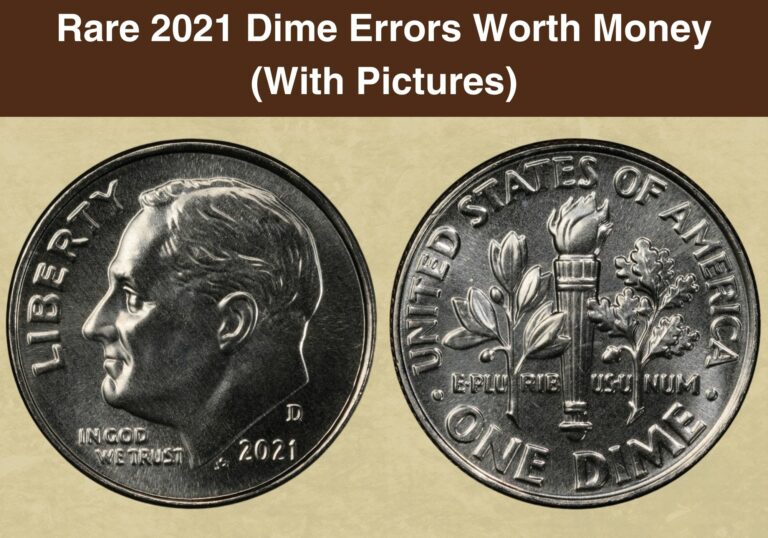
1996 Dime Coin Value: Errors List, “P”, “D”, “S” & “W” Mint Mark Worth

1996 Dime value ranges from $0.10 face value to $1,385. That record was set by a Grade 68 example sold through eBay Auctions in July 2021. If you’re curious what yours might be worth, upload a photo of your coin below for a quick value range. You can also scroll down to check recent eBay sales and see what buyers are actually paying right now.
1996 Dime Value Checker
Identify 1996 Dime D, S, W and P Mint Mark Price
Front Obverse
Upload or Take a Photo
Back Reverse
Upload or Take a Photo
1996 Dime Value By Variety
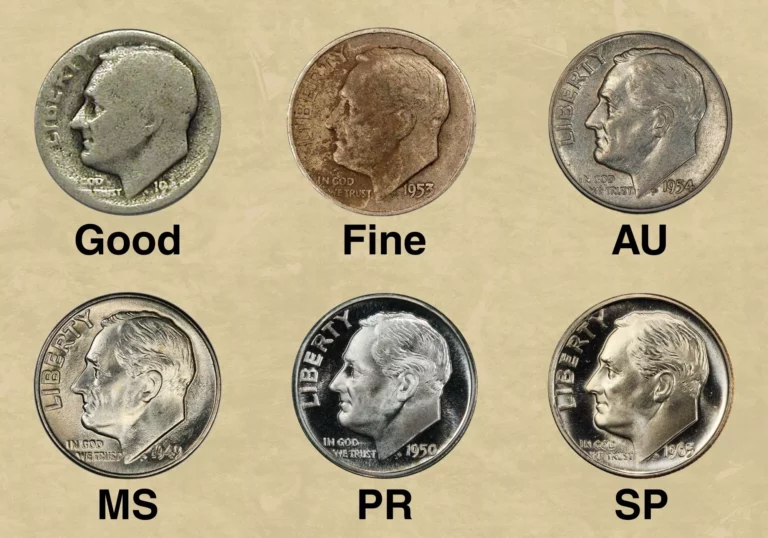
Your coin’s grade and condition drive everything. If you already know the grade, jump to the Value Guides section below for exact pricing.
| Type | Good(G4-6) | Fine(F12-15) | AU(AU50-58) | MS(MS60-70) | PR(PR60-70) |
|---|---|---|---|---|---|
| ▶1996 P Dime Value | $0.15 | $0.20 - $0.25 | $0.70 - $1 | $3 - $41 | — |
| ▶1996 P Dime (FB) Value | $0.35 - $0.40 | $0.60 - $0.70 | $1 - $2 | $4 - $960 | — |
| ▶1996 D Dime Value | $0.15 | $0.20 - $0.25 | $0.70 - $1 | $3 - $390 | — |
| ▶1996 D Dime (FB) Value | $0.30 - $0.35 | $0.50 - $0.60 | $1 - $2 | $3 - $590 | — |
| ▶1996 W Dime Value | $0.45 - $0.50 | $0.80 - $0.90 | $2 - $3 | $5 - $390 | — |
| ▶1996 W Dime (FB) Value | $0.50 - $0.60 | $0.90 - $1 | $2 - $4 | $6 - $100 | — |
| ▶1996 S DCAM Dime Value | — | — | — | — | $3 - $16 |
| ▶1996 S Silver DCAM Dime Value | — | — | — | — | $6 - $27 |


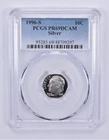


Also Read: Roosevelt Dime Value (1946-Present)
Top 10 Most Valuable 1996 Dime Worth Money
Most Valuable 1996 Dime Chart
2002 - Present
The king of the 1996 dime world is a Philadelphia MS68 Full Split Bands that hammered for $1,385. Think about that — a coin pulled from pocket change, struck so perfectly and preserved so well that it outpaces every other 1996 dime ever sold. Only a handful exist at that grade, and collectors fight hard when one surfaces.
Denver’s best showing is an MS68 Full Split Bands at $750. The drop-off from there is steep — mid-grade coins sell for a fraction of these top-tier prices, which tells you just how much the market rewards condition and strike quality at the very top.
San Francisco proofs hold their own, too. A standard PR68 DCAM brought $600 and a Silver PR70 DCAM hit $575, both through Heritage Auctions. On the West Point side, a 1996-W MS69 FB sold for $411 at Heritage Auctions in 2014, with an MS68 at $245. Top-grade W mints are genuinely scarce.
History of The 1996 Dime
The Roosevelt dime debuted on January 30, 1946 — what would have been FDR’s 64th birthday. It honored his leadership through the Depression and World War II, plus his founding role in the March of Dimes to fight polio, a disease he battled personally.
By 1996, the series hit its golden anniversary. The Mint went all out. Philadelphia, Denver, and San Francisco kept up regular production with circulation strikes and proofs, but the real story was West Point. Officials chose that facility to strike a special commemorative dime, and the geography wasn’t random — Roosevelt was born in Hyde Park, New York, fewer than 40 miles north of West Point.
The 1996-W became a genuine first. No regular-issue, non-commemorative U.S. coin had ever carried the “W” mint mark before. West Point had only struck gold bullion and commemorative coins up to that point.
Here’s the fun part. Mint Engraver John Mercanti tried to hand-punch the “W” onto the working die, but the steel hadn’t been properly annealed. The punch mushroomed and was destroyed — and it was the only “W” punch they had. So Engraver Thomas D. Rogers, Sr. had to carve the “W” directly into the master model by hand. That’s why the “W” on a 1996 dime looks slightly different from mint marks on earlier West Point issues.
Distribution was collector-only. The 1996-W never entered general circulation. That anniversary strategy worked — the 1996 Mint Set has consistently outperformed other sets of the era in the secondary market for over 30 years.
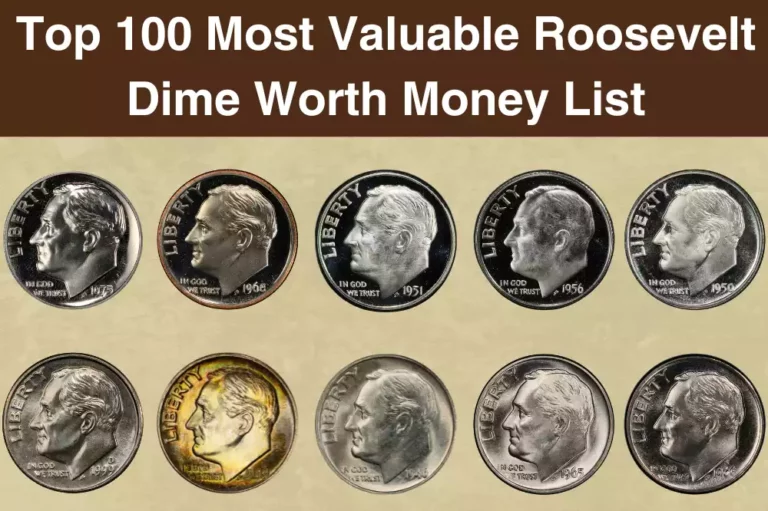
Also Read: Top 100 Most Valuable Roosevelt Dimes Worth Money List
Is Your 1996 Dime Rare?
1996-P Dime
1996-P Dime (FB)
1996-D Dime
1996-D Dime (FB)
1996-W Dime
1996-W Dime (FB)
1996-S DCAM Dime
1996-S Silver DCAM Dime
The rarity chart above might surprise you. The 1996-W has the lowest mintage, but Full Bands versions of the common P and D mints can actually be harder to find in top grades. That’s condition rarity at work — billions were struck, yet almost none survived in MS68 FB. Our CoinValueChecker App can scan your coin and compare it against verified rare specimens in seconds.
Key Features of The 1996 Dime
The 1996 Roosevelt dime carries John R. Sinnock’s original 1946 design, largely unchanged after five decades. Four Mint facilities struck coins this year, with the West Point edition marking a historic first for regular-issue dimes.
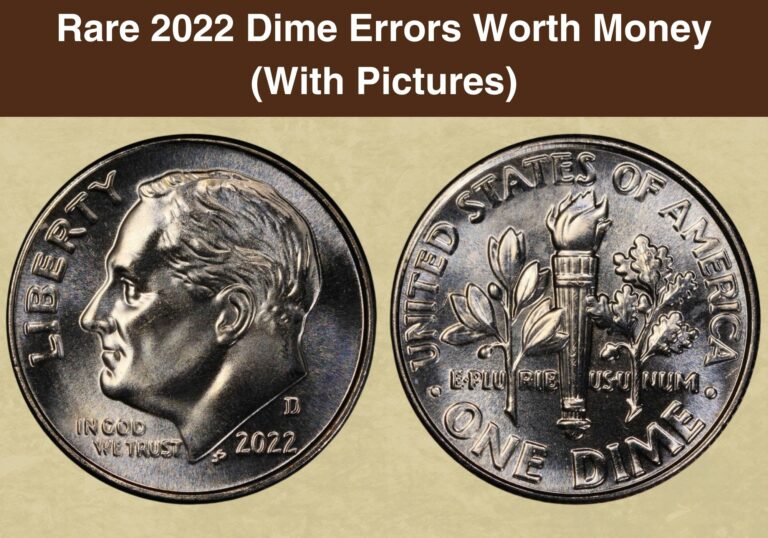
The Obverse Of The 1996 Dime

Roosevelt faces left in a classic presidential portrait. “LIBERTY” runs along the upper rim in front of his face, with “IN GOD WE TRUST” in smaller letters below his chin.
The date “1996” sits at the lower right beneath the neck truncation. Look closely at the base of the neck cutoff for designer John R. Sinnock’s initials “JS” — a detail that actually sparked Cold War controversy when some Americans mistakenly thought it referenced Soviet leader Joseph Stalin.
For the 1996-W, check just above the right side of the date for the “W” mint mark. Because of the production mishap described above, Engraver Rogers carved it directly into the master model. That gives the “W” a slightly hand-crafted look — and it’s one of the best ways to spot a genuine example versus a fake.
The Reverse Of The 1996 Dime

Flip it over and you’ll see the central flaming torch flanked by two branches — olive on the left for peace, oak on the right for strength. This is Sinnock’s original 1946 reverse, unchanged.
“E PLURIBUS UNUM” stretches across the field horizontally. “ONE DIME” appears at the bottom, with “UNITED STATES OF AMERICA” arcing across the top, separated by small decorative dots.
Now look at the torch closely. Two horizontal bands cross it — one near the top, one near the bottom. When both bands show complete separation, that’s the coveted “Full Bands” (FB) or “Full Torch” (FT) designation. Here’s something worth knowing: PCGS and NGC grade this differently. PCGS awards “Full Bands” when both bands show complete separation with no significant interruptions. NGC’s “Full Torch” also requires the vertical lines of the torch to be clearly defined — making the NGC standard stricter and harder to achieve.
Other Features Of The 1996 Dime
The 1996 dime measures 17.90 millimeters in diameter with a thickness of 1.35 millimeters. Clad versions weigh 2.27 grams — slightly lighter than the pre-1965 silver predecessors.
The edge carries 118 precisely machined vertical ridges (reeding), which serves as both an anti-counterfeiting feature and a tactile identifier. The clad composition is 75% copper and 25% nickel outer layers bonded over a pure copper core — standard for business strikes and clad proofs.
The 1996-S Silver proof is different: 90% silver and 10% copper, weighing 2.50 grams, matching the precious metal content of the original 1946–1964 Roosevelt dimes. That silver content gives it a melt value of approximately $6.48 at current silver spot prices.
Also Read: Top 100 Rarest Dimes Worth Money (Most Expensive)
1996 Dime Mintage & Survival Data
1996 Dime Mintage & Survival Chart
Survival Distribution
| Type | Mintage | Survival | Survival Rate |
|---|---|---|---|
| P | 1,421,163,000 | unknown | unknown |
| D | 1,400,300,000 | unknown | unknown |
| W | 1,457,000 | unknown | unknown |
| S DCAM | 1,750,244 | 1,662,731 | 95% |
| S Silver DCAM | 775,021 | 736,269 | 94.9999% |
Philadelphia cranked out about 1,421,163,000 dimes. Denver added roughly 1,400,300,000. Combined, that’s over 2.8 billion business-strike dimes flooding into commerce.
Now compare that to the West Point issue: just 1,457,000 pieces. Nearly a thousand times scarcer than a regular circulation strike. That makes the 1996-W the lowest-mintage business-strike Roosevelt dime in the entire series. To put it another way, its mintage is roughly one-tenth that of the 1955-P or 1949-S Roosevelt dimes — though those earlier coins got chewed up in circulation, while nearly all 1996-W examples survive in Mint State.
PCGS population data tells an interesting story about strike quality on the W: about 6,700 certified without Full Bands versus roughly 4,500 with FB. That’s a surprisingly narrow gap, proving even this “special” issue wasn’t always struck sharply. No Full Bands 1996-W has ever been certified above MS68 FB. MS69 is the top pop for non-FB examples. Proof edition survival rates are excellent thanks to protective packaging and careful collector handling.
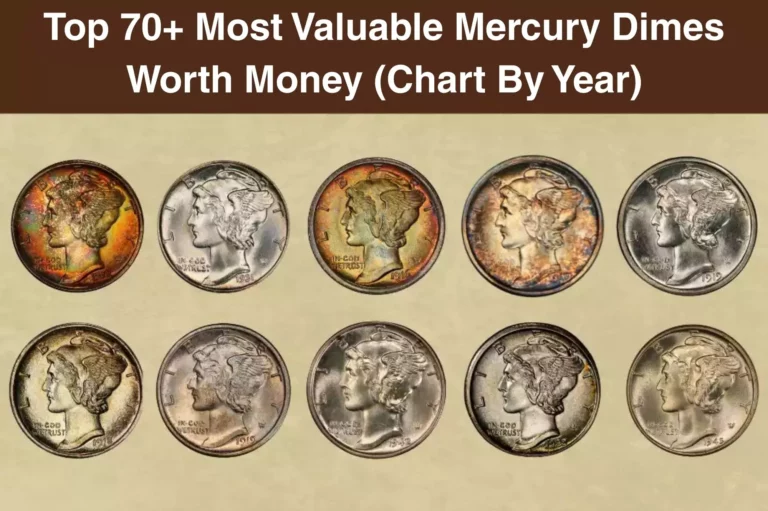
Also Read: Top 70+ Most Valuable Mercury Dimes Worth Money (Chart By Year)
The Easy Way to Know Your 1996 Dime Value
Three quick checks get you started: find the mint mark just above the right side of the date (P, D, W, or S), judge whether the coin is circulated or uncirculated, and examine the torch bands on the reverse for complete separation.
Circulated P and D dimes? Face value. Uncirculated examples start around $1.50 and go up from there depending on grade and strike. The 1996-W starts around $15 even in basic uncirculated condition.
For instant, professional-grade appraisals, download Coin Identifier and Value App to snap a photo and receive accurate grading, current market values, and error detection — eliminating guesswork and ensuring you never overlook a valuable specimen.

1996 Dime Value Guides
The 1996 Roosevelt dime was minted in five primary varieties:
- 1996-P Dime (Standard Philadelphia circulation strike with over 1.4 billion produced, valued primarily in uncirculated grades)
- 1996-D Dime (Denver circulation strike with similar high production, commanding premiums only in superior mint state conditions)
- 1996-W Dime (Exclusive West Point 50th anniversary commemorative with only 1,457,000 struck, distributed solely through mint sets)
- 1996-S DCAM Dime (San Francisco Deep Cameo proof in clad composition, featuring mirror-like fields and frosted devices)
- 1996-S Silver DCAM Dime (Special 90% silver proof edition with Deep Cameo contrast, lower mintage and precious metal content)
Each variety plays a different role in the market. The P and D are high-volume circulation coins where only top-grade survivors matter. The West Point edition offers real scarcity with its limited release. San Francisco proofs come in clad and silver, with the silver version carrying both a lower mintage and precious metal content that supports a higher price floor.
1996-P Dime Value

Over 1.42 billion struck — and yet a single 1996-P dime sold for $1,385. How? Grade and strike quality. The Philadelphia issue is the most common 1996 dime by mintage, but finding one in MS67 FB or higher is a completely different kind of rare.
Coin Identifier and Value App
Not sure what your coins are worth? Get Instant Value • Grade • Error Detection with coin identifier and value app (FREE Usage Daily)
PCGS notes this date is exceptionally scarce in MS67 FB and has “very few graded examples” at MS68 FB. Greysheet data shows PCGS has certified 181 examples at MS68 with zero graded higher. NGC shows just 12 at the same peak grade.
Prices stay modest through the lower uncirculated grades. MS67 FB examples run around $45. But jump to MS68 FB and you’re over $1,000. A standard PCGS MS65 sold for $285 at eBay in October 2022 — compare that to the $1,385 record for an MS68 FB and you can see how dramatically Full Bands multiplies value.
1996-P Dime Price/Grade Chart
Price by 1-70 Grade (Latest Auction Records Included)
1996-P Dime (FB) Price/Grade Chart
Price by 1-70 Grade (Latest Auction Records Included)
Recent auction results provide valuable pricing benchmarks across different grades for Philadelphia specimens.
| Date | Platform | Price | Grade |
|---|---|---|---|
| 10/22 | EA | $285 | 65 |
| 07/22 | HA | $36 | 64 |
| 07/22 | HA | $63 | 65 |
| 08/10 | HA | $45 | 66 |
| 05/09 | HA | $69 | 66 |
| 03/09 | DL | $34 | 67 |
| 03/09 | HA | $14 | 68 |
| 10/08 | HA | $21 | 68 |
| 09/08 | HA | $14 | 68 |
| 09/08 | HA | $21 | 68 |
Market activity patterns over the past year reveal sustained collector engagement with 1996-P dimes.
Market Activity: 1996-P Dime
Market activity score: 53/100 as of Nov 2026 — up 10 points from Aug 2026. Currently at its 12-month peak.
1996-D Dime Value

Here’s a useful tip if you’re cherrypicking rolls: Denver coins from 1996 are generally considered better struck than their Philadelphia counterparts. That makes Full Bands examples more attainable — though still scarce overall. About 1.40 billion were struck, so circulated pieces are worth face value, period.
Uncirculated examples start around $2.47 in basic mint state. Values stay contained through MS66–MS67 because supply is plentiful at those levels. PCGS CoinFacts confirms the Denver issue is common up to MS67 without Full Bands, but with Full Bands it’s scarce in all grades — likely from weakly struck working dies.
At the top end, things get interesting. GreatCollections sold a 1996-D MS68 FB for $405. Stack’s Bowers recorded a 1996-D MS64 sale at $216 in June 2024. The all-time record sits at $750 for an MS68 Full Bands specimen. I think the 1996-D offers excellent value for budget-conscious collectors building Roosevelt dime sets.
1996-D Dime Price/Grade Chart
Price by 1-70 Grade (Latest Auction Records Included)
1996-D Dime (FB) Price/Grade Chart
Price by 1-70 Grade (Latest Auction Records Included)
Auction records demonstrate the trading dynamics for Denver Mint examples at various quality levels.
| Date | Platform | Price | Grade |
|---|---|---|---|
| 06/24 | SB | $216 | 64 |
| 06/14 | GC | $8 | 67 |
| 07/08 | HA | $11 | 65 |
| 02/08 | DL | $37 | 67 |
| 10/07 | HA | $24 | 68 |
| 01/06 | DL | $8 | 65 |
| 12/04 | HA | $26 | 68 |
| 03/04 | HA | $38 | 68 |
| 6/24 | SB | $216 | 64 |
Tracking market trends helps measure collector interest and liquidity for 1996-D specimens.
Market Activity: 1996-D Dime
Market activity score: 53/100 as of Nov 2026 — up 7 points from Aug 2026. Currently at its 12-month peak.
1996-W Dime Value

Only 1,457,000 made. That’s it. The 1996-W is the lowest-mintage business-strike Roosevelt dime in the entire series — scarcer in raw numbers than any silver Roosevelt dime from 1946 to 1964. It’s also the first U.S. dime to carry the West Point “W” mint mark.
Every single one was distributed inside the year’s 11-coin Uncirculated Mint Sets, sealed in protective cellophane. That means nearly all survivors are in Mint State. No bank rolls, no pocket change — collector hands only.
But don’t assume they’re all well-struck. PCGS population data shows roughly 6,700 non-FB versus 4,500 FB certified specimens — a 2-to-1 ratio that proves even this “special” issue had strike problems. No Full Bands 1996-W has ever been certified above MS68 FB. MS69 is the current top pop for non-FB examples.
Entry-level MS65 grades start around $16. MS68 examples run about $65 today. The pinnacle MS69 FB grade achieved $411 at Heritage Auctions in 2014. If you’ve got a raw one still in the original mint set cellophane, it’s worth getting it slabbed — especially if the torch bands look sharp.
1996-W Dime Price/Grade Chart
Price by 1-70 Grade (Latest Auction Records Included)
1996-W Dime (FB) Price/Grade Chart
Price by 1-70 Grade (Latest Auction Records Included)
Historical auction data showcases the premium values achieved by this key commemorative issue.
| Date | Platform | Price | Grade |
|---|---|---|---|
| 09/22 | SB | $60 | 68 |
| 07/20 | SB | $35 | 68 |
| 01/16 | HA | $54 | 68 |
| 01/16 | HA | $66 | 68 |
| 09/15 | HA | $62 | 68 |
| 11/14 | GC | $96 | 68 |
| 10/14 | HA | $42 | 67 |
| 08/14 | GC | $19 | 66 |
| 08/14 | GC | $36 | 67 |
| 05/14 | GC | $46 | 67 |
Market activity charts reflect the consistently strong collector demand for West Point anniversary dimes.
Market Activity: 1996-W Dime
Market activity score: 53/100 as of Nov 2026 — unchanged since Aug 2026. Currently at its 12-month peak.
1996-S DCAM Dime Value

A PR68 DCAM sold for $600 — on a coin you can buy raw for $3–$5. That’s the kind of spread that makes proof collecting interesting. San Francisco struck 1,750,244 of these clad proofs, more than double the silver version’s mintage, but perfect examples are another story entirely.
Deep Cameo means frosted design elements popping against deeply mirrored fields — Roosevelt’s portrait looks almost three-dimensional against that glassy background. These came in regular annual proof sets sold directly to collectors.
Certified PR69 DCAM specimens trade for $7–$18 right now. Very affordable for a set builder. But only 18 specimens have been certified at PR70 DCAM, so if you’re chasing perfection, the hunt gets real. That $600 auction record was actually on a PR68 DCAM, showing that exceptional eye appeal can command serious money even below the perfect PR70 tier.
1996-S DCAM Dime Price/Grade Chart
Price by 1-70 Grade (Latest Auction Records Included)
Auction performance illustrates pricing structure for clad proof specimens across the grading spectrum.
| Date | Platform | Price | Grade |
|---|---|---|---|
| 06/21 | HA | $600 | 68 |
| 06/19 | DL | $7 | 69 |
| 09/14 | GC | $25 | 70 |
| 02/14 | GC | $18 | 70 |
| 10/13 | GC | $11 | 69 |
| 10/13 | GC | $28 | 70 |
| 09/13 | GC | $25 | 70 |
| 07/13 | GC | $25 | 70 |
| 07/13 | GC | $18 | 70 |
| 02/13 | GC | $24 | 70 |
Monitoring market patterns reveals the steady collector base pursuing 1996-S Deep Cameo proofs.
Market Activity: 1996-S DCAM Dime
Market activity score: 37/100 as of Nov 2026 — down 13 points from Aug 2026. 12-month peak: 50 (Oct 2026).
1996-S Silver DCAM Dime Value

What’s the floor on a 90% silver proof dime? About $6.48 in melt value alone. Even a damaged, ungradeable example has that going for it. Only 775,021 were struck, making this the scarcest proof in the 1996 lineup.
The silver planchet produces noticeably better Deep Cameo contrast than the clad version. Silver just reflects light differently — the mirror fields are deeper and the frosted devices pop harder. You can see the difference side by side.
Raw Deep Cameo examples start around $9–$12. Certified PR69 DCAM specimens trade in the $15–$25 range depending on the slab and current silver prices. The auction record hit $575 for a perfect PR70 DCAM, sold by Heritage Auctions in May 2003. One thing to keep in mind: current market values for high-grade examples generally run lower than those early-2000s records. Use recent auction data when gauging today’s fair market value.
1996-S Silver DCAM Dime Price/Grade Chart
Price by 1-70 Grade (Latest Auction Records Included)
Recent sales records establish value benchmarks for silver proof examples at elite certification levels.
| Date | Platform | Price | Grade |
|---|---|---|---|
| 07/14 | GC | $15 | 69 |
| 06/14 | GC | $30 | 70 |
| 05/14 | GC | $10 | 69 |
| 01/14 | HA | $70 | 70 |
| 12/13 | HA | $66 | 70 |
| 11/13 | GC | $55 | 70 |
| 09/13 | GC | $83 | 70 |
| 08/13 | GC | $10 | 69 |
| 06/13 | GC | $9 | 69 |
| 12/12 | GC | $21 | 69 |
Market activity analysis indicates robust collector interest in premium silver Deep Cameo specimens.
Market Activity: 1996-S Silver DCAM Dime
Market activity score: 40/100 as of Nov 2026 — down 6 points from Aug 2026. 12-month peak: 50 (Oct 2026).
Also Read: 16 Rare Dime Errors List with Pictures (By Year)
Rare 1996 Dime Error List
Most 1996 Roosevelt dimes came off the press just fine. But a small percentage didn’t — and those mistakes can be worth real money. Error coins break down into three categories: planchet errors (bad blank), die errors (bad stamp), and striking errors (something went wrong during the press).
1. Broadstrike Errors
When the restraining collar fails to rise during striking, the metal spreads beyond normal diameter. The coin comes out wider and thinner than it should, with smooth edges instead of reeding. You can spot these immediately — they just look wrong.
Values for 1996 broadstrikes typically range from $5 to $20 depending on how much the coin spread and its overall condition. Uncentered broadstrikes — where the design is off-center but still complete — are a distinct subcategory and can bring higher premiums.
2. Off-Center Strike Errors
The planchet didn’t sit right between the dies. Part of the design is missing, and you can see blank planchet where the strike didn’t reach. Minor 5–10% shifts bring modest premiums. Dramatic 50% or greater displacements with a visible date? Those can reach hundreds of dollars.
Check both sides to confirm the striking pattern matches the displacement percentage. Be especially careful with 1996-W specimens — weak rim areas from mint-set storage can mimic off-center errors. Make sure you’re looking at a genuine mint error, not handling damage.
3. Missing Clad Layer Errors
One of the nickel-clad outer layers failed to bond during planchet preparation, exposing the pure copper core underneath. One side shows distinct copper coloration while the other looks normal. Hard to miss.
Coin Identifier and Value App
Not sure what your coins are worth? Get Instant Value • Grade • Error Detection with coin identifier and value app (FREE Usage Daily)
These typically bring $20–$40 for Roosevelt dimes. Even novice collectors can spot them instantly. Weigh the coin — it’ll come in lighter than the standard 2.27 grams, which gives you extra confirmation.
4. Double Clipped Planchet Errors
A clipped planchet happens when the metal strip gets misfed, punching out a blank that’s missing a curved section from its edge. Double clips mean two distinct curved bite marks. Think of it like someone took two bites out of a cookie.
A documented 1996-P Roosevelt dime with a double clipped planchet was authenticated and certified by PCGS at AU-58, and later sold through GreatCollections. Single curved clips on Roosevelt dimes typically bring $15–$50. Dramatic multi-clip examples with full design details command significantly more.
5. Doubled Die Errors (DDO / DDR)
During die manufacturing, the hub strikes the working die more than once at a slightly different angle. The result is visible doubling on design elements. For a DDO, check “LIBERTY,” “IN GOD WE TRUST,” and the date. For a DDR, look at “E PLURIBUS UNUM” and the torch details.
Roosevelt dime DDO errors in circulated grades sell for $25–$150 depending on doubling strength. Gem uncirculated examples can reach $300–$600 or more. Grab a 5x to 10x loupe and check yours before writing it off as normal.
6. Partial Collar (Railroad Rim) Errors
The collar die sits crooked during striking, so part of the edge gets normal reeding while the rest stays smooth. Look at the coin edge-on — you’ll see a stepped rim that collectors call a “railroad rim.” This is one of the most commonly reported errors on Roosevelt dimes.
Minor examples sell for $5–$8. More dramatic cases where the smooth area covers a big chunk of the edge can bring $25 or more, especially on clean, problem-free coins.
Where to Sell Your 1996 Dime?
Whether selling through online marketplaces, local coin dealers, or specialized numismatic auction houses, always obtain professional grading from PCGS or NGC for higher-value specimens to maximize returns. Major auction houses like Heritage Auctions and Stack’s Bowers are ideal for premium examples — Full Bands specimens, 1996-W coins in top grades, or dramatic errors.
For mid-range coins, platforms like GreatCollections and eBay provide competitive liquidity with large audiences of active collectors. Multiple quotes ensure competitive pricing, particularly for key varieties like the 1996-W or Full Bands examples that command substantial premiums in today’s collector market.
Check out now: Best Places To Sell Coins Online (Pros & Cons)
1996 Dime Market Trend
Market Interest Trend Chart - 1996 Dime
Market interest: 5,110 collectors tracking this coin as of Nov 2026 — up 1,100 from Mar 2026. Currently at its 12-month peak.
*Market Trend Chart showing the number of people paying attention to this coin.
FAQ about The 1996 Dime Value
1. What makes the 1996-W dime special?
It’s the only business-strike dime ever to carry the West Point “W” mint mark. Struck for the Roosevelt dime’s 50th anniversary, it was available exclusively in 1996 Uncirculated Mint Sets. Only 1,457,000 were produced — the lowest mintage of any business-strike Roosevelt dime.
Bonus backstory: the original “W” punch mushroomed on improperly annealed steel, so Engraver Thomas D. Rogers, Sr. had to carve the “W” directly into the master model. That’s why the mint mark has a uniquely hand-crafted look.
2. Are regular 1996-P and 1996-D dimes worth more than face value?
Circulated? No — just 10 cents. Uncirculated MS65 examples bring about $1.50 to $2.50. Full Bands specimens in top grades like MS68 can reach $750–$1,385 at auction, depending on mint mark and strike sharpness.
3. What is the Full Bands designation, and why does it matter so much?
“Full Bands” (FB) is awarded by PCGS when both horizontal bands on the reverse torch show complete separation with no interruptions. NGC calls this “Full Torch” (FT) and applies a stricter standard that also requires the vertical torch lines to be clearly defined. Many 1996 dimes — even in high uncirculated grades — lack this feature because of weak die strikes, which is exactly why FB/FT specimens can be worth 3x to 20x more than non-FB coins of the same grade.
4. What’s the difference between the two 1996 proof dimes?
The clad version (1,750,244 produced) uses standard copper-nickel composition. The silver proof (775,021 produced) contains 90% silver, weighs 2.50 grams, and has a melt value of ~$6.48. Silver proofs command more because of lower mintage, precious metal content, and superior Deep Cameo contrast.
5. How do I tell if my 1996-W dime is genuine?
Forgeries exist — people add fake “W” mint marks to common 1996-P dimes. Genuine examples should come from original 1996 U.S. Mint Uncirculated Sets (often still in original cellophane) or PCGS/NGC certified holders. Examine the “W” for tooling marks, unnatural edges, or discoloration from glue or solder — signs of a counterfeit mint mark. When in doubt, submit to PCGS or NGC for authentication.
6. What is the PCGS population for top-grade 1996-P dimes?
PCGS has certified 181 examples of the 1996-P at MS68, with zero graded higher. NGC shows just 12 specimens at the same peak grade. For the Full Bands designation at MS68 FB, only about 29 examples have been certified across services, with none graded higher — making these the condition rarities of the entire 1996-P population.
7. Can I find a 1996-W dime in circulation?
Extremely unlikely, but not impossible. Some have escaped collector sets over the decades. A circulated example would show wear and be worth less than an uncirculated one, but it’s still a genuine collector’s piece worth getting authenticated.
8. What error types are most valuable on 1996 dimes?
The most valuable error types include double clipped planchets (a documented 1996-P example was certified PCGS AU-58 and sold through GreatCollections), major off-center strikes with 50%+ displacement and a visible date (potentially worth hundreds), and missing clad layer errors ($20–$40+). Doubled die obverse errors can bring $150–$600 depending on the strength of doubling. Partial collar “railroad rim” errors are more common and typically worth $5–$25.
9. Does the PCGS or NGC certification service matter when buying a 1996 dime?
For Full Bands/Full Torch examples, yes. NGC’s “Full Torch” standard is marginally stricter because it also requires clearly defined vertical torch lines. Some registry set builders specifically seek NGC FT coins, which can create a small but real price premium over PCGS FB for the same grade.
10. What is the best way to store a 1996 dime to preserve its value?
Use inert, non-PVC holders — Mylar flips, PCGS or NGC slabs, or airtight capsules. Handle by the edges only. PVC-based holders leach chemicals over time, causing hazy green residue that permanently damages luster and grade. Store in a stable environment away from humidity and temperature swings. And never clean a coin — even gentle cleaning strips original mint luster and destroys value.