1903 Morgan Silver Dollar Coin Value: Errors List, “O”, “S” & No Mint Mark Worth
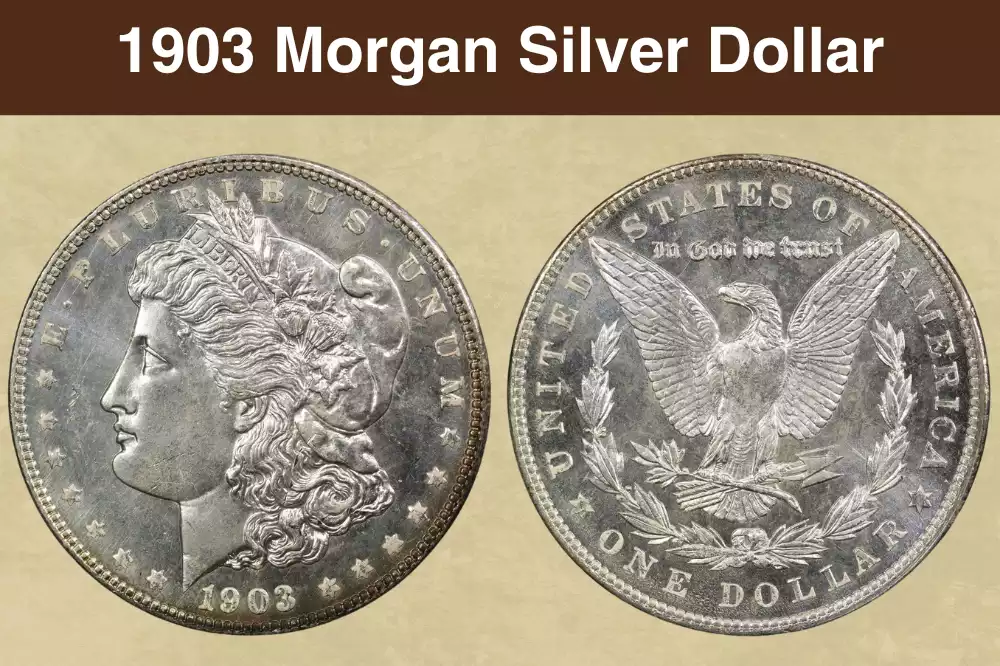
What you can get for a 1903 Morgan Silver Dollar value depends heavily on grade — it runs from $1.00 face value up to $86,250. A Grade 67 example sold through Heritage Auctions in January 2009 set that record. Not sure what yours is worth? Drop a photo below for a quick value range, then scroll down to check recent eBay sales and get a real sense of today’s market.
1903 Morgan Silver Dollar Value Checker
Identify 1903 Morgan Silver Dollar O, S and No Mint Mark Price
Front Obverse
Upload or Take a Photo
Back Reverse
Upload or Take a Photo
1903 Morgan Silver Dollar Value By Variety
Each 1903 Morgan Silver Dollar variety carries its own collector following and price premium based on mint mark, strike quality, and die characteristics.
If you know the grade of your coin, you can find the exact price below in the Value Guides section.
| Type | Good(G4-6) | Fine(F12-15) | AU(AU50-58) | MS(MS60-70) | PR(PR60-70) |
|---|---|---|---|---|---|
| ▶1903 No Mint Mark Morgan Silver Dollar Value | $84 | $84 | $86 - $92 | $100 - $33,100 | — |
| ▶1903 No Mint Mark Morgan Silver Dollar (PL) Value | $13 - $15 | $25 - $30 | $95 - $150 | $200 - $2,760 | — |
| ▶1903 No Mint Mark Morgan Silver Dollar (DMPL) Value | $29 - $34 | $56 - $66 | $200 - $330 | $430 - $21,600 | — |
| ▶1903 O Morgan Silver Dollar Value | $400 - $410 | $430 | $520 - $660 | $680 - $5,520 | — |
| ▶1903 O Morgan Silver Dollar (PL) Value | $38 - $46 | $74 - $87 | $270 - $440 | $570 - $13,800 | — |
| ▶1903 O Morgan Silver Dollar (DMPL) Value | $44 - $51 | $83 - $98 | $300 - $500 | $640 - $13,300 | — |
| ▶1903 S Morgan Silver Dollar Value | $84 - $100 | $170 - $190 | $2,620 - $4,460 | $6,210 - $105,800 | — |
| ▶1903 S Morgan Silver Dollar (PL) Value | $430 - $510 | $840 - $990 | $3,090 - $5,030 | $6,440 - $28,900 | — |
| ▶1903 Proof Morgan Silver Dollar Value | — | — | — | — | $2,110 - $36,800 |
| ▶1903 CAM Morgan Silver Dollar Value | — | — | — | — | $2,570 - $59,800 |


Also Read: Top 100 Rarest Silver Dollar Coins Worth Money (Most Expensive)
Top 10 Most Valuable 1903 Morgan Silver Dollar Worth Money
Most Valuable 1903 Morgan Silver Dollar Chart
2003 - Present
The 1903-S Morgan Silver Dollar in MS67 tops the chart at $86,250. PCGS has certified only three coins at that grade for the date, so you can imagine the bidding war. That sale happened at Heritage Auctions in January 2009, and nothing from 1903 has touched it since.
Two Micro S varieties sit right behind it, both at $76,375. Here’s the weird part—one is MS62 and the other MS65, yet they sold for the same money. That tells you the variety itself is doing the heavy lifting. This is VAM-2, where someone at the San Francisco Mint grabbed a quarter dollar mintmark punch (0.75mm) instead of the standard dollar punch (0.9mm). Specialists go crazy for it.
The 1903 proof in MS67 reached $52,875, while the 1903-O in MS67+ brought $36,000. That New Orleans number is impressive considering how many bags turned up in the 1960s vault releases. Overall, the top ten spans $33,600 to over $86,000—proof that condition, mint mark, and variety can swing your coin’s value by tens of thousands.
History of The 1903 Morgan Silver Dollar
By 1903, the Morgan Dollar series was winding down. Silver dollars weren’t popular in everyday commerce—people preferred paper money and smaller coins. The Annual Report of the Director of the Mint that year noted silver bullion was nearly gone and would likely run out before Congress met again.
That lack of demand hit the New Orleans Mint hardest. Nearly the entire 1903-O mintage went straight from the press into vault storage without ever seeing a cash register. When the facility shut down in 1909, those coins stayed locked up. Two decades later, hundreds of bags were shipped to Philadelphia and sealed in Treasury vaults.
Then came the Pittman Act of 1918, which authorized melting up to 350 million silver dollars to supply Great Britain with silver bullion during World War I. Over 270 million Morgan Dollars went into the smelter. Collectors naturally assumed the 1903-O had been wiped out. By the early 1960s, it catalogued at $1,500—the most expensive Morgan Dollar in the book.
Here’s a fun detail: Kansas collector Will W. Neil wrote in The Numismatist in 1926 that after eight years of searching through coins in his drugstore business, he’d examined five million silver dollars and found exactly one 1903-O.
Everything flipped in October 1962. Michigan banks started handing out pristine 1903-O specimens over the counter. As Q. David Bowers documented in Silver Dollars & Trade Dollars of the United States (Bowers and Merena Galleries, 1993), the Treasury had finally cracked open those sealed vaults, releasing bag after bag through March 1964. Overnight, the rarest Morgan Dollar became one you could buy for pocket change.
Also Read: Top 100 Most Valuable Morgan Silver Dollar Coins Worth Money List
Is Your 1903 Morgan Silver Dollar Rare?
1903 No Mint Mark Morgan Silver Dollar
1903 No Mint Mark Morgan Silver Dollar (PL)
1903 No Mint Mark Morgan Silver Dollar (DMPL)
1903-O Morgan Silver Dollar
1903-O Morgan Silver Dollar (PL)
1903-O Morgan Silver Dollar (DMPL)
1903-S Morgan Silver Dollar
1903-S Morgan Silver Dollar (PL)
1903 Proof Morgan Silver Dollar
1903 CAM Morgan Silver Dollar
The rarity of your 1903 Morgan Silver Dollar depends on its mint mark, condition, and any special varieties it may possess—download the Coin Identifier and Value App to instantly assess your coin’s rarity and current market value.
Key Features of The 1903 Morgan Silver Dollar
George T. Morgan designed this coin after arriving at the U.S. Mint from England in 1876. His approach broke from the traditional Greco-Roman look that dominated American coinage, going for something more distinctly American instead.
The Obverse Of The 1903 Morgan Silver Dollar

Flip the coin to the heads side and you’ll see Lady Liberty facing left. Morgan modeled her after Anna Willess Williams, a Philadelphia schoolteacher who sat for him in 1877. She wears a Phrygian cap—a classical freedom symbol—with a ribbon reading “LIBERTY” wrapped around it.
Look closely at her hair. You’ll spot cotton bolls and wheat heads tucked in there, nodding to America’s agricultural backbone. “E PLURIBUS UNUM” arcs above her head, and thirteen stars ring the lower rim for the original colonies. The date “1903” sits centered at the bottom.
What makes Morgan’s portrait stand out is the realistic hair detail and soft facial features. I think it’s one of the most attractive designs in all of U.S. coinage—a real departure from the stiff classical look of earlier issues.
The Reverse Of The 1903 Morgan Silver Dollar

A heraldic eagle dominates the center with wings spread wide, symbolizing American strength and independence.
- Olive Branch: Held in the eagle’s right talon, representing peace and diplomacy
- Arrows: Clutched in the eagle’s left talon, symbolizing military readiness and defense
- Laurel Wreath: Surrounds the eagle, signifying honor and victory
- “IN GOD WE TRUST”: Positioned above the eagle in Gothic lettering
- “UNITED STATES OF AMERICA”: Arcs along the upper rim
- “ONE DOLLAR”: Appears at the bottom
Look for the mint mark below the wreath bow, between the “D” and “O” in “DOLLAR.” You’ll see an O for New Orleans, S for San Francisco, or nothing at all for Philadelphia.
Other Features Of The 1903 Morgan Silver dollar
The coin is 90% silver, 10% copper—standard under the Bland-Allison Act. It weighs 26.73 grams (412.5 grains) and measures 38.1 millimeters across. Each one contains 0.77344 troy ounces of pure silver, so even a beat-up example has real melt value.
The edge carries about 189 vertical reeds. That reeding originally served to prevent clipping—people shaving silver off the edges—and made counterfeiting harder.
One detail VAM collectors care about: the 1903 reverse uses the C-4 hub, introduced in 1900. You can spot it by the wider U-shaped junction where the eagle’s wing meets its neck, plus slightly larger stars compared to the earlier C-3 hub.
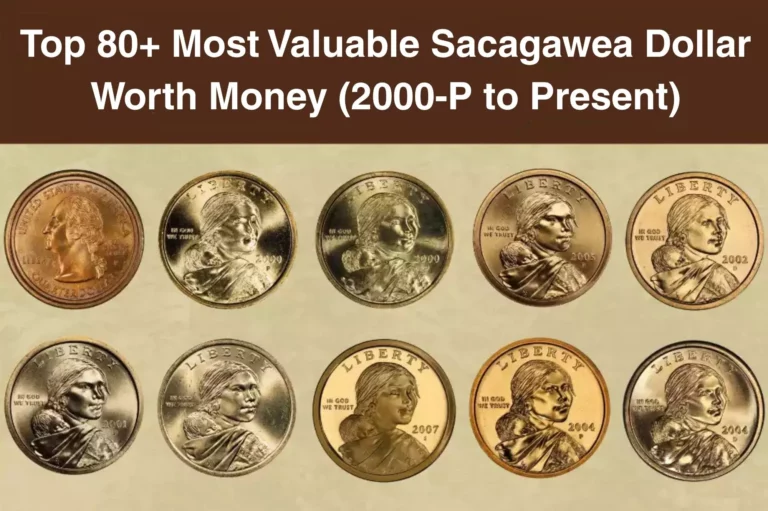
Also Read: Top 80+ Most Valuable Sacagawea Dollar Worth Money (2000-P to Present)
1903 Morgan Silver Dollar Mintage & Survival Data
1903 Morgan Silver Dollar Mintage & Survival Chart
Survival Distribution
| Type | Mintage | Survival | Survival Rate |
|---|---|---|---|
| No Mint | 4,652,000 | 465,000 | 9.9957% |
| O | 4,450,000 | 445,000 | 10% |
| S | 1,241,000 | 124,000 | 9.9919% |
| Proof | 755 | 630 | 83.4437% |
| CAM | 755 | 20 | 2.649% |
Philadelphia led production at 4,652,000 coins, with the biggest single delivery—2,000,000 pieces—hitting in June 1903. New Orleans came in close at 4,450,000. San Francisco trailed at just 1,241,000 business strikes.
Here’s what’s interesting: despite those different mintages, all three mints show roughly 10% survival rates. Bowers estimated 300,000 to 600,000 Philadelphia coins survive in MS60–MS62, with another 40,000 to 75,000 in MS63. PCGS alone has slabbed over 13,000 Philly examples.
The proof story is a sharp contrast. Of 755 proofs struck, about 630 survive—an 83.4% survival rate, thanks to careful handling from day one. But Cameo proofs? Only 20 out of that same 755 made it. That’s a 2.6% survival rate, making them a completely different kind of rare.
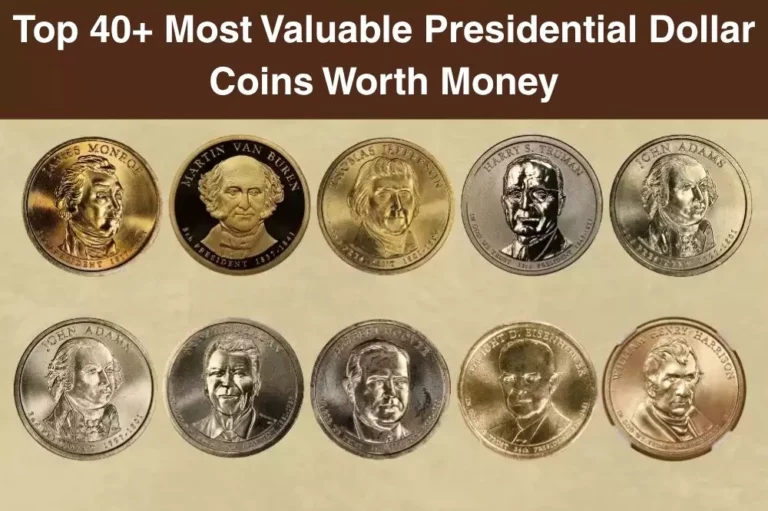
Also Read: Top 40+ Most Valuable Presidential Dollar Coins Worth Money
The Easy Way to Know Your 1903 Morgan Silver Dollar Value
To figure out what your coin is worth, you need three things: the mint mark (flip it over and look below the wreath), the grade, and whether it’s a special variety like the Micro S. Grading services use the Sheldon scale from 1 to 70 to judge wear, luster, and surface quality.
For a faster answer, download the Coin Identifier and Value App to scan your coin and get a value estimate based on current market data.

1903 Morgan Silver Dollar Value Guides
The 1903 Morgan Silver Dollar breaks down into several collectible categories, each with its own market dynamics.
1903 Morgan Silver Dollar Varieties:
- 1903 No Mint Mark Morgan Silver Dollar: Philadelphia issue, considered the best-struck Morgan at that mint, with brilliant satin surfaces and few abrasions.
- 1903-O Morgan Silver Dollar: Once the legendary “king” of the series at $1,500; now accessible after the 1962 Treasury vault discovery.
- 1903-S Morgan Silver Dollar: Recognized key date, scarce in all grades with nine identified VAM varieties.
- 1903 Proof Morgan Silver Dollar: Limited striking of 755, displaying a partially polished portrait rather than cameo contrast.
- 1903 CAM Morgan Silver Dollar: Extremely rare accidental cameo variety with strong frosted contrast; only a handful certified.
The three business strike mints each produced coins with their own striking quirks, surface quality, and survival patterns. The San Francisco issue is the toughest to find in higher grades and commands serious premiums.
Proof specimens are a separate collecting lane. Regular proofs survive in decent numbers, but Cameo examples with frosted devices against mirrored fields are incredibly scarce. Those attract advanced collectors who’ll pay up for the eye appeal and rarity.
1903 No Mint Mark Morgan Silver Dollar Value

Wayne Miller called the 1903 “definitively the best Morgan dollar struck at the Philadelphia Mint” in his 1982 reference book. That’s a bold claim, but the coins back it up. Most show sharp high-point detail with a brilliant, smooth satin finish instead of the typical frosty luster you see on other dates. Bag marks? Surprisingly few.
Bowers estimated about 18,000 to 35,000 MS64 examples survive. Jump to MS65 and better, though, and you’re looking at the low hundreds. Gem pieces are genuinely hard to find.
This date also comes in mirror-like finishes. Prooflike (PL) examples—struck from freshly polished dies—are very scarce, maybe 1,000 to 2,000 surviving. Deep Mirror Prooflike (DMPL) coins, the ones that reflect at four inches or more, number roughly one-fifth of that. PCGS CoinFacts calls them “almost impossible to find.”
Mint State examples stayed hidden until 1955, when banks across Ohio, western Pennsylvania, and New York started paying out bags of them. A letter in the February 1956 issue of The Numismatist from collector John J. Pittman confirmed you could get all-uncirculated 1903 Philadelphia dollars at face value during that period.
The auction record hit $36,000 for an MS68 specimen at Heritage Auctions in November 2023.
1903 No Mint Mark Morgan Silver Dollar Price/Grade Chart
Price by 1-70 Grade (Latest Auction Records Included)
1903 No Mint Mark Morgan Silver Dollar (PL) Price/Grade Chart
Price by 1-70 Grade (Latest Auction Records Included)
1903 No Mint Mark Morgan Silver Dollar (DMPL) Price/Grade Chart
Price by 1-70 Grade (Latest Auction Records Included)
The following table chronicles this coin’s complete auction history.
Coin Identifier and Value App
Not sure what your coins are worth? Get Instant Value • Grade • Error Detection with coin identifier and value app (FREE Usage Daily)
| Date | Platform | Price | Grade |
|---|---|---|---|
| 03/25 | SB | $125 | 64 |
| 03/25 | SB | $105 | 64 |
| 03/25 | SB | $125 | 64 |
| 03/25 | SB | $216 | 65 |
| 03/25 | SB | $240 | 65 |
| 03/25 | SB | $480 | 66 |
| 02/25 | SB | $85 | 63 |
| 02/25 | SB | $85 | 63 |
| 02/25 | SB | $145 | 64 |
| 02/25 | SB | $125 | 64 |
Meanwhile, the chart below illustrates the market activity trends of this Philadelphia coin over the past year.
Market Activity: 1903 No Mint Mark Morgan Silver Dollar
Market activity score: 66/100 as of Oct 2026 — down 17 points from Jul 2026. 12-month peak: 84 (Sep 2026).
1903-O Morgan Silver Dollar Value

How does a $1,500 coin become a $20 coin? Ask the 1903-O. Before the 1962 Treasury vault opening, this was the most expensive Morgan Dollar in the Guide Book. Then the bags came pouring out, and the bottom fell out of the market. It’s one of the wildest price collapses in all of numismatics.
The stories from that era are incredible. In 1991, collector John Pancratz told Q. David Bowers he’d bought rolls of 1903-O dollars from a local bank, tossed them in his car trunk over winter, and didn’t check them until spring—every roll packed with uncirculated New Orleans Morgans.
Because these coins went straight from the press to storage with almost no movement, they tend to have fewer bag marks than you’d expect. The price spreads between finishes tell the real story: at MS65, standard examples trade around $1,150–$1,250. Prooflike (PL) specimens jump to $3,000–$3,750. DMPL pieces? $6,750–$8,500.
The finest MS67+ example brought $36,000 at Heritage Auctions in January 2023. Common through MS65, scarce in MS66, genuinely rare in MS67 or higher. If you’re cherrypicking, look for sharp strikes with strong luster—not every example is equal.
1903-O Morgan Silver Dollar Price/Grade Chart
Price by 1-70 Grade (Latest Auction Records Included)
1903-O Morgan Silver Dollar (PL) Price/Grade Chart
Price by 1-70 Grade (Latest Auction Records Included)
1903-O Morgan Silver Dollar (DMPL) Price/Grade Chart
Price by 1-70 Grade (Latest Auction Records Included)
The following table tracks notable auction results for this type.
| Date | Platform | Price | Grade |
|---|---|---|---|
| 06/24 | SB | $432 | 8 |
| 11/23 | SB | $432 | 25 |
| 11/23 | SB | $480 | 53 |
| 07/23 | HA | $660 | 45 |
| 06/23 | SB | $384 | 4 |
| 03/23 | HA | $408 | 6 |
| 02/23 | HA | $456 | 4 |
| 02/23 | HA | $564 | 25 |
| 02/23 | HA | $540 | 30 |
| 11/22 | SB | $360 | 8 |
The chart below shows current market trends and collector activity for the 1903-O silver dollar.
Market Activity: 1903-O Morgan Silver Dollar
Market activity score: 84/100 as of Oct 2026 — up 1 point from Jul 2026. 12-month peak: 86 (Sep 2026).
1903-S Morgan Silver Dollar Value

Did you know the 1903-S is rarer in MS61–MS62 than in higher grades? That defies the usual pattern and catches a lot of collectors off guard. With only 1,241,000 struck and no significant hoards ever found, most of these saw hard use in the American West. The 1962–1964 Treasury release didn’t include any. A small batch surfaced from the San Francisco Mint in November 1953, but by the late 1950s, government storage was tapped out.
PCGS CoinFacts data shows over 600 Mint State examples certified by November 2011, with MS64 being the most common uncirculated grade. The top-pop coins are a trio of MS67 examples—anything above MS65 is a genuine rarity. Researchers have cataloged nine different VAM varieties for this date.
An MS67 example reached $86,250 at Heritage Auctions in January 2009—the all-time record for any 1903 Morgan Dollar. Even rarer surface varieties bring serious money: a Prooflike (PL) MS65 sold for $31,200 in January 2024.
Watch out for fakes. Since any AU or Mint State 1903-S exceeds $1,000, counterfeiters love this date. The most common trick is adding a fake “S” to a cheap Philadelphia coin. Check the area around the mint mark for unusual texture, tool marks, or discoloration from adhesive. Get any 1903-S authenticated by PCGS or NGC before you buy.
1903-S Morgan Silver Dollar Price/Grade Chart
Price by 1-70 Grade (Latest Auction Records Included)
1903-S Morgan Silver Dollar (PL) Price/Grade Chart
Price by 1-70 Grade (Latest Auction Records Included)
Historical auction results for this key date appear in the table below.
| Date | Platform | Price | Grade |
|---|---|---|---|
| 03/25 | SB | $240 | 25 |
| 01/25 | SB | $145 | 15 |
| 01/25 | SB | $216 | 25 |
| 12/24 | SB | $168 | 15 |
| 12/24 | SB | $240 | 30 |
| 12/24 | SB | $264 | 30 |
| 11/24 | SB | $216 | 20 |
| 08/24 | SB | $240 | 20 |
| 04/24 | SB | $192 | 20 |
| 11/23 | SC | $620 | 12 |
The chart below tracks its market activity over the past twelve months.
Market Activity: 1903-S Morgan Silver Dollar
Market activity score: 86/100 as of Oct 2026 — up 3 points from Jul 2026. Currently at its 12-month peak.
1903-S Micro S Morgan Silver Dollar Value

Somebody at the San Francisco Mint grabbed the wrong punch. That’s the short version of how VAM-2 was born—a Top 100 variety where the mint mark measures just 0.75mm instead of the standard 0.9mm. The engraver used a quarter dollar punch on a silver dollar die, and the result is about one-third smaller than normal. You can spot it without a loupe if you know what to look for.
Around 5,000 specimens survive across all grades, and nearly all are circulated. Only two MS62 examples were known until 2015, when the sole gem-quality MS65+ specimen appeared—a jaw-dropping 3.5-grade jump in the condition census. No PL or DMPL examples exist.
Even a heavily worn Good-4 commands $160. At VF35, you’re looking at $1,250. The first documented Mint State example brought $76,375 at Heritage Auctions in April 2015, and another MS62 hit $72,000 in September 2019. Professional certification is a must given the premiums this variety carries even in lower grades.
1903-S Micro S Morgan Silver Dollar Price/Grade Chart
Price by 1-70 Grade (Latest Auction Records Included)
The table below documents this variety’s auction milestones.
| Date | Platform | Price | Grade |
|---|---|---|---|
| 01/26 | SB | $216 | 10 |
| 08/24 | SB | $432 | 30 |
| 08/24 | HA | $1,860 | 45 |
| 01/24 | HA | $1,620 | 45 |
| 01/24 | HA | $19,200 | 55 |
| 07/23 | HA | $420 | 25 |
| 07/23 | HA | $504 | 30 |
| 01/23 | DL | $1,903 | 45 |
| 11/22 | HA | $252 | 12 |
| 11/22 | HA | $1,440 | 40 |
The chart below shows how this variety has been trading recently among collectors.
Market Activity: 1903-S Micro S Morgan Silver Dollar
Market activity score: 66/100 as of Oct 2026 — up 20 points from Jul 2026. Currently at its 12-month peak.
1903 Proof Morgan Silver Dollar Value

If you’re expecting full cameo contrast on an 1903 proof, you’ll be disappointed. When the Philadelphia Mint moved to its new facility in 1901, die preparation methods changed. The result is a partially polished Liberty portrait rather than the dramatic frosted look of earlier proofs. It’s a distinctive characteristic of 1902–1904 proof Morgans.
Most survivors grade between PR62 and PR66. A PR63 typically trades around $4,500 to $4,850, while PR64 examples reach $5,500 to $5,750. Once you get to PR65 and above, only about 95 pieces survive—that’s an R-8.0 on the Numismatic Rarity scale.
The top result? A PR68★ example brought $76,375 at Heritage Auctions in 2012. Each coin contains 0.7734 troy ounces of pure silver, but at these prices, nobody’s buying them for melt.
1903 Proof Morgan Silver Dollar Price/Grade Chart
Price by 1-70 Grade (Latest Auction Records Included)
The table below documents all historical auction records for this issue.
| Date | Platform | Price | Grade |
|---|---|---|---|
| 05/26 | HA | $9,150 | 65 |
| 01/26 | HA | $13,420 | 67 |
| 11/25 | HA | $7,800 | 65 |
| 07/25 | HA | $6,000 | 64 |
| 04/25 | SB | $2,760 | 62 |
| 04/25 | HA | $2,760 | 62 |
| 04/25 | HA | $3,360 | 63 |
| 04/25 | HA | $4,320 | 64 |
| 11/24 | SB | $5,280 | 65 |
| 08/24 | SB | $3,240 | 63 |
The chart below tracks market activity over the past twelve months.
Market Activity: 1903 Proof Morgan Silver Dollar
Market activity score: 72/100 as of Oct 2026 — up 29 points from Jul 2026. 12-month peak: 74 (Aug 2026).
1903 CAM Morgan Silver Dollar Value

Only seven. That’s how many 1903 Cameo proof Morgans have been certified across all grades. After the Mint’s 1901 facility move, the new die prep methods basically killed cameo contrast on proofs. The few that slipped through were happy accidents.
“CAM” means you get white frost-textured raised designs against deeply mirrored fields—dramatic visual contrast that makes the coin pop. The certified population breaks down to one PR62, one PR63, three PR64, one PR65, and one PR67. No Deep Cameo (DCAM) examples exist for this date.
PR67 specimens typically command $26,000–$45,000. PR66 examples range $17,500–$20,000. One PR68 Cameo realized $37,375 through Superior Galleries. We think these are among the most underappreciated rarities in the entire Morgan proof series.
1903 CAM Morgan Silver Dollar Price/Grade Chart
Price by 1-70 Grade (Latest Auction Records Included)
Past sales help put the current market in perspective.
| Date | Platform | Price | Grade |
|---|---|---|---|
| 11/24 | HA | $4,560 | 64 |
| 05/23 | HA | $7,800 | 62 |
| 11/22 | SB | $31,200 | 68 |
| 03/18 | SB | $2,880 | 63 |
| 08/17 | HA | $3,055 | 64 |
| 08/17 | HA | $22,325 | 68 |
| 07/16 | HA | $4,935 | 64 |
| 07/14 | GC | $4,070 | 63 |
| 08/13 | HA | $32,900 | 68 |
| 03/13 | HA | $5,288 | 63 |
The chart below shows recent collector interest and trading activity for this issue.
Market Activity: 1903 CAM Morgan Silver Dollar
Market activity score: 38/100 as of Oct 2026 — unchanged since Jul 2026. Currently at its 12-month peak.
Also Read: 17 Rare Dollar Coin Errors List with Pictures (By Year)
Rare 1903 Morgan Silver Dollar Error List
Beyond standard date and mint mark collecting, 1903 Morgans offer some interesting error and variety coins worth cherrypicking. Die clashes, repunched mint marks, and gouges all show up in this year’s production. On Morgans, clash marks are easiest to spot at Liberty’s neck—where the eagle’s wing tip leaves a raised line—and on the reverse where her profile transfers onto the eagle’s wing.
1. 1903-O Clashed Dies Through Debris (VAM-4A) Error
Die clashing happens when the upper and lower dies slam together with no planchet between them. The 1903-O VAM-4A is an unusual case—foreign material was sitting on the die during the clash, creating raised lumps at matching positions on both dies.
Those lumps transferred onto every coin struck afterward. On the obverse, you’ll see partial letter impressions from the reverse motto on Liberty’s neck and chin. Flip it over and you’ll find corresponding marks where Liberty’s profile pressed into the eagle design.
This variety turns up often enough that you can find one without too much hunting, though higher-grade examples carry modest premiums. Getting it attributed in a third-party holder makes a big difference when you go to sell.
2. 1903-S Repunched Mintmark (RPM) Error
Back in 1903, mint employees punched each mint mark into the die by hand using a steel punch. Any slight movement between hammer blows created a repunched mint mark. On certain 1903-S coins, you can see traces of the original position as shadow lines or partial serifs next to the final placement.
These RPM varieties each carry specific VAM numbers. Nine total VAM varieties have been identified for the 1903-S date. Since the 1903-S is already a key date, even common RPM varieties trade above standard-issue prices in comparable grades. A PCGS or NGC attribution on the holder helps a lot with resale.
3. 1903 Philadelphia Die Gouge Error
Die gouges happen when something hard contacts the die surface, cutting a groove that shows up as a raised line on struck coins. Several 1903 Philadelphia dies have documented gouges, mostly in the reverse legend around “DOLLAR.”
You can tell a gouge from a die crack because gouges run straight with consistent width—no branching. Early die state coins show the gouge crisp and sharp. Later die states show it blurred from polishing attempts. Early states bring more money from variety specialists.
Coin Identifier and Value App
Not sure what your coins are worth? Get Instant Value • Grade • Error Detection with coin identifier and value app (FREE Usage Daily)
Variety collectors often chase multiple die states of the same gouge, tracking the progression from fresh to worn out. Professional attribution gets these into population reports, which matters for registry set competition.
4. 1903 Philadelphia Wide Neck/Wing Space Hub Variety
Every 1903 Philadelphia Morgan uses the C-4 reverse hub, introduced in 1900. The telltale sign is a wider U-shaped junction where the eagle’s wing meets its neck, plus slightly larger stars compared to the older C-3 hub.
To identify it on your coin, you really need a C-3 example from an earlier year for side-by-side comparison. No C-3/C-4 transitional varieties are known for the 1903 Philadelphia issue, unlike the 1900 date. If someone claims their 1903 Philly shows C-3 characteristics, be skeptical and get it professionally examined.
Where To Sell Your 1903 Morgan Silver Dollar?
Successfully selling your 1903 Morgan Dollar requires choosing the right venue based on your coin’s grade, rarity, and your timeline, while balancing convenience against potential returns.
Check out now: Best Places To Sell Coins Online (Pros & Cons)
1903 Morgan Silver Dollar Market Trend
Market Interest Trend Chart - 1903 Silver Dollar
Market interest: 1,930 collectors tracking this coin as of Oct 2026 — up 1,000 from Mar 2026. Currently at its 12-month peak.
*Market Trend Chart showing the number of people paying attention to this coin.
FAQ About 1903 Morgan Silver Dollar Value
1. How much is a 1903 Morgan Silver Dollar worth?
A circulated 1903 Philadelphia Morgan typically ranges from $29–$85. Uncirculated examples start around $120 and can reach $36,000 for an MS68 sold at Heritage Auctions in November 2023.
The 1903-O trades between $384–$955 depending on condition. The 1903-S commands much higher premiums—Mint State specimens easily exceed $1,000 even in lower grades thanks to its key date status.
2. Why was the 1903-O once considered extremely rare but became more available?
Until 1962, the 1903-O was valued at $1,500—the priciest Morgan Dollar in the book. Collectors figured most had been melted under the 1918 Pittman Act. Will W. Neil famously searched five million silver dollars and found just one.
Then in October 1962, banks started releasing hundreds of bags from sealed Treasury vaults. The rarest Morgan Dollar became widely available almost overnight. Circulated examples, though, remain genuinely scarce—most coins skipped circulation entirely, going straight from press to vault.
3. What is the 1903-S Micro S variety and what is it worth?
The Micro S (VAM-2) has an undersized mint mark of just 0.75mm—someone at the Mint grabbed a quarter dollar punch instead of the dollar-sized one. The size difference is obvious when you compare it to a standard 1903-S.
About 5,000 survive, nearly all circulated. A Good-4 example runs about $160. The finest known MS65+ specimen brought $76,375 at Heritage Auctions in April 2015.
4. What does Prooflike (PL) or Deep Mirror Prooflike (DMPL) mean for a 1903 Morgan Dollar?
PL and DMPL are designations for business strikes that show mirror-like fields, created when they were among the first coins struck from freshly polished dies. PL coins show noticeable reflectivity. DMPL coins reflect at four or more inches with strong contrast between mirrored fields and frosted devices.
For the 1903 Philadelphia issue, Bowers estimated only 1,000–2,000 PL examples exist, with DMPLs at roughly one-fifth that number. DMPL 1903 dollars command two to three times more than comparable standard Mint State examples.
5. Is the 1903-S Morgan Dollar frequently counterfeited?
Absolutely. It’s one of the most faked Morgan dates because of its high value across all grades. The usual trick is adding a false “S” to a genuine 1903 Philadelphia coin or using die-struck counterfeits from overseas.
Check the mint mark area for unusual texture, tool marks, incorrect sizing, or discoloration. A genuine 1903-S weighs exactly 26.73 grams, measures 38.10mm, and is non-magnetic. For any 1903-S purchase—especially the Micro S—buy only PCGS or NGC certified examples from reputable dealers.
6. How many proof 1903 Morgan Dollars were minted and how many survive today?
Philadelphia struck exactly 755 proofs in 1903. These feature mirror-like fields and a partially polished Liberty portrait—a hallmark of 1902–1904 proofs from the Mint’s new facility.
About 630 regular proofs survive (83.4% survival rate). Cameo proofs are dramatically rarer—only about 20 certified examples from that same original mintage.
7. What are the key wear points to look for when grading a 1903 Morgan Dollar?
On the obverse, check Liberty’s hair above her ear first. That high point shows wear before anything else and is the main dividing line between AU and Mint State. Also look at the cheekbone and top of the head.
On the reverse, the eagle’s breast feathers and wing tips wear earliest. Sharp, defined breast feathers with visible luster in the fields usually means AU55 or better. Flat, mushy breast feathers put you in the lower circulated grades.
8. What is the difference between the 1903 Proof Morgan and the 1903 Cameo Proof Morgan?
Both come from the same 755-coin proof mintage at Philadelphia, but they look very different. A standard 1903 Proof has mirrored fields with a semi-polished Liberty portrait—no strong frost. That’s how the Mint’s post-1901 die prep worked.
A 1903 Cameo (CAM) proof shows white, frosted devices against deeply mirrored fields—real visual drama. Only about seven are known across all grades (PR62 through PR67). Cameos sell for roughly three to five times what standard proofs bring in comparable grades.
9. What is the silver melt value of a 1903 Morgan Silver Dollar?
Each 1903 Morgan contains exactly 0.77344 troy ounces of pure silver from its 90% silver, 10% copper composition. At roughly $48.50 per troy ounce (late 2025 spot price), melt value works out to about $37.51.
That’s your floor for the most worn Philadelphia examples. For the key-date 1903-S, any variety coin, or anything grading MS64 or higher, collector value far exceeds melt—often by hundreds or thousands of dollars.
10. Should I clean my 1903 Morgan Silver Dollar before selling it?
Never. Not even a gentle wipe. Cleaning permanently destroys original surfaces and tanks the value. Even light dipping removes the microscopic texture of original mint luster. PCGS and NGC graders spot cleaning instantly, and the resulting “details” grade sharply limits what you can get.
A naturally toned or lightly circulated 1903 Morgan in original condition will always outsell a cleaned coin of the same grade level. Store your coins in archival-quality holders—slabs, or inert 2×2 Mylar flips—away from moisture, heat, and PVC-containing plastics that cause green residue damage.