1883 Indian Head Penny Coin Value (Error List)

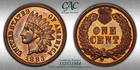
1883 Penny value ranges from about $5 for a well-worn example to $33,600 in an exceptional historical sale. The upper figure belongs to an MS67+ RD cent sold by Heritage in April 2021, not an ordinary circulated penny.
This is the Indian Head cent, a bronze one-cent coin struck at Philadelphia. PCGS lists a mintage of 45,591,500 circulation strikes for 1883.
1883 Indian Head Penny Value Checker
Identify your 1883 Indian Head Penny
Front Obverse
Upload or Take a Photo
Back Reverse
Upload or Take a Photo
1883 Indian Head Penny Value Chart
| Type | Good(G4-6) | Fine(F12-15) | AU(AU50-58) | MS(MS60-70) | PR(PR60-70) |
|---|---|---|---|---|---|
| ▶1883 Indian Head Penny MS (RD) | $6 - $7 | $11 - $13 | $44 - $71 | $92 - $18,400 | — |
| ▶1883 Indian Head Penny Proof (RD) | — | — | — | — | $200 - $18,400 |


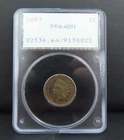
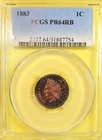

Compare the same grade, variety and strike type. Red copper entries represent original red coins; worn brown examples should not be valued by the Red Mint State figures.
In this value guide:
- 1883 Indian Head Penny Value
- 1883 Doubled Reverse and Date Varieties
- 1883 Penny Errors List with Pictures
- 1883 Proof Penny Value
- Top 10 Most Valuable 1883 Indian Head Pennies Sold at Auction
1883 Indian Head Penny Value

The 1883 Indian Head penny was produced only at the Philadelphia Mint. There is no mint mark on this coin — no P appears on the coin.
In Good to Fine condition, expect roughly $5 to $11 for a brown example. Very Fine coins sell for around $16 to $20, and Extremely Fine pieces bring $25 to $40.
At the Uncirculated level (MS60 and above), values climb from about $65 for an MS60 Brown to $170 or more for an MS64 Brown.
Color matters at Mint State grades. Red and Brown (RB) examples in MS63 to MS65 trade for $185 to $590.
Full Red (RD) coins are the scarcest and most valuable, with MS65 Red around $1,000 and MS66 Red regularly reaching $3,000 or higher.
Note: Do not confuse this coin with the 1883 Liberty Head nickel (the famous “No CENTS” variety). The Indian Head penny always shows ONE CENT on the reverse inside an oak wreath, and it is struck in bronze — not nickel.
1883 Indian Head Penny MS (RD) Price/Grade Chart
Price by 1-70 Grade (Latest Auction Records Included)
| Date | Platform | Price | Grade |
|---|---|---|---|
| 03/25 | HA | $3,240 | 66 |
| 03/25 | HA | $14,400 | 67 |
| 11/23 | HA | $3,120 | 66 |
| 08/23 | SB | $780 | 64 |
| 06/23 | SB | $840 | 65 |
| 05/23 | HA | $2,040 | 65 |
| 04/23 | HA | $1,560 | 65 |
| 03/23 | HA | $252 | 63 |
| 02/23 | HA | $18,000 | 67 |
| 12/22 | HA | $425 | 64 |
1883 Indian Head Penny MS (RD) Market Activity
Market activity score: 38/100 as of Nov 2026 — down 8 points from Aug 2026. 12-month peak: 46 (Aug 2026).
Use Our 1883 Penny Value Checker
1883 Doubled Reverse and Date Varieties

Several recognized die varieties exist for the 1883 Indian Head cent. Understanding how each one happened helps you tell a genuine variety from post-mint damage.
Doubled Die Reverse (DDR): The most collected 1883 variety is Snow-6 (FS-801), a doubled die reverse. Look at the lower half of the wreath from about 3 o’clock to 9 o’clock — the leaves and ribbon bow show a clear secondary image from a misaligned hub impression. The upper portion of the reverse does not show doubling on this die. A second DDR attributed as Snow-16 affects different areas of the wreath and is cataloged as a separate die.
DDR coins are created when the working die receives a second impression from the hub at a slightly different angle. This is a die-making error, not a striking error, so every coin struck from that die carries the same doubling.
Repunched Date (RPD): Several 1883 dies show traces of earlier date punches beside the final digits. The most recognized examples display remnants above or below the 1 and 8, and a secondary outline to the lower left of the second 3. Note that a broken loop or a flat top on the 3 by itself may be a punch defect shared across multiple dies, not a true RPD — a genuine repunched date requires a second outline shifted from the primary one.
Misplaced Date (MPD): On certain 1883 dies, fragments of date numerals appear in unexpected locations within the design. Snow-7 (FS-302) shows a “1” impressed between the third and fourth beads of the necklace and an “8” between the ribbon end and the bust truncation. Snow-8 (FS-301) places digits among the denticles. These happened when a date punch accidentally struck the wrong area of the die during preparation.
The RPD and MPD varieties were caused by hand-punching individual digits into working dies — a different mechanism from hub doubling. Both are collected as die varieties and carry modest premiums over common examples, typically selling in the $50–$500 range depending on grade and eye appeal.
1883 Penny Errors List with Pictures
Below are the documented error types and die varieties reported for the 1883 Indian Head cent. Each entry explains what to look for, how the error was made, and what value evidence exists.
Status labels: “Source-reported” means a reference or dealer catalog documents the variety but we have not independently authenticated a specimen; “Auction-verified” means a certified coin sold at a tracked public auction.
1. 1883 Indian Head Penny Die Clashes

This detail is from a documented 1887 Indian Head cent and illustrates the same error family, rather than a confirmed 1883 specimen.
What it is: A die clash happens when the obverse and reverse dies strike each other without a planchet between them. The impact transfers part of one die’s design onto the opposite die as transferred design impressions.
Where to look: Check the obverse below the letters STA in STATES. The 1883 clash is specifically a misaligned clash — the die contact was off-center, leaving marks in an unusual position. This is not an off-center strike of the coin itself. This variety is cataloged as Snow-11 and cross-referenced as OCC-001.
Value: No same-year auction record located for this specific clash variety. Value to be confirmed with certified examples. (Source-reported: indianvarieties.com)
2. 1883 Indian Head Penny Lamination and Separating Metal

This detail is from a documented 1866 Indian Head cent and illustrates the same error family, rather than a confirmed 1883 specimen.
Coin Identifier and Value App
Not sure what your coins are worth? Get Instant Value • Grade • Error Detection with coin identifier and value app (FREE Usage Daily)
What it is: A lamination error occurs when impurities, gas bubbles, or improper alloy mixing during planchet preparation cause layers of metal to separate or peel away from the coin’s surface.
Where to look: The documented example shows a peeling bronze layer on the obverse (front) of the coin. The specific clock position is not described in the source. This coin was certified by NGC as AG3 (certification number 5962236-005) with the label “1883 1C Obverse Lamination.”
What it is not: Scratches, corrosion, post-mint scraping, or surface dirt can mimic a lamination. A true lamination shows metal separating along the coin’s internal layers, not surface damage.
Value: No same-year auction price located. The NGC-certified example confirms the variety exists for 1883. (Source-reported: Northeast Coin, NGC holder)
3. 1883 Indian Head Penny Die Cracks, Chips and Cuds

What it is: Die cracks appear as raised lines on the coin where the steel die developed a fracture from repeated striking pressure. Die chips are small pieces that broke away, leaving a raised blob. A cud is a larger break at the rim where a section of the die fell away, producing a flat, featureless area.
Where to look on the obverse: Check from the nose and cheek area through the letters BERTY — continuous crack lines have been documented running through this zone. These are progressive die cracks, meaning they started small and grew longer with continued use.
Where to look on the reverse: Cracks run from about 3:30 to 5 o’clock and from 8:45 to 10:15 on the wreath. Small rim breaks have also been documented. The variety cataloged as Snow-28 shows a depression near 6 o’clock on the reverse, recorded as a retained (still attached) die break that accompanied the cracking. Some dies progressed to full cud breaks where the broken piece fell away.
Die chips: Small raised lumps have been documented below the right upright of the N in ONE and below the O, cataloged as minor die breaks.
What they are not: Scratched lines (incuse, not raised), contamination streaks, or contact marks from other coins.
Value: No specific same-year auction record located for these crack/cud varieties. Common minor die cracks add little to no premium, while a full cud at the rim can bring $25–$100+ depending on size and grade. (Source-reported: indianvarieties.com)
4. 1883 Indian Head Penny Repunched Dates

What it is: Before the adoption of fully hubbed dies, individual date digits were hand-punched into each working die. If a digit was punched, then repositioned and punched again, remnants of the first impression remain visible beside the final position.
Where to look: Examine all four digits of the date. The documented 1883 RPDs show remnants above or below the 1 and 8, and a secondary outline to the lower left of the second 3.
Important distinction: A broken loop or flat top on the numeral 3 may be a shared punch defect — the same damaged punch was used on multiple dies. A true RPD requires a shifted duplicate outline, not just a deformed digit.
Value: No specific same-year graded auction record located. RPD Indian cents in this era typically sell for $30–$150 above a normal coin in comparable grade, depending on the visibility of the repunching. (Source-reported: indianvarieties.com)
5. 1883 Indian Head Penny Doubled Dies: DDO and DDR

What it is: A doubled die occurs when the hub impresses the working die twice at slightly different angles or positions. Every coin struck from that die shows the same doubling.
Where to look (DDR): Focus on the lower half of the reverse wreath, from about 3 o’clock to 9 o’clock. Snow-6 (FS-801) shows clear secondary outlines on the leaf and ribbon details in this zone. The upper half of the reverse does not show doubling on this particular die. A second DDR, Snow-16, affects different wreath elements and is considered a separate die pair.
What it is not: Mechanical doubling (also called machine doubling or shelf doubling) is a flat, shelf-like distortion that happens during the strike. It lacks the rounded, full secondary outline of a true hub-doubled die. Double strikes are also different — see section 7 below.
Value: An 1883 Snow-6 FS-801 DDR graded AU-55 BN by PCGS sold for $114 at Stack’s Bowers in June 2021. Higher-grade certified examples are scarce. (Source-reported: indianvarieties.com; auction data: Greysheet)
6. 1883 Indian Head Penny Misplaced Dates and Digits

What it is: A misplaced date occurs when the date punch accidentally strikes an area of the die outside the intended date position, leaving a numeral fragment embedded within the design.
Where to look: Snow-7 (FS-302) shows a “1” impressed between the third and fourth beads of the necklace, and an “8” between the ribbon end and the bust truncation. Snow-8 (FS-301) places digit fragments among the denticles near the date. Another reported instance shows portions of “83” visible within the denticles.
What it is not: Normal bead shapes in the necklace, denticle irregularities, or tiny die chips can look like misplaced digits. A genuine MPD shows recognizable numeral shapes — curves, serifs, or straight strokes consistent with the date font.
Value: An 1883 Snow-8 FS-301 MPD graded MS61 by NGC sold for $400 on eBay (certified example). An AU-53 Snow-1 FS-303 brought $96 at Stack’s Bowers in November 2022. These varieties carry moderate premiums depending on how dramatic the displaced digit appears. (Source-reported: indianvarieties.com; auction data: Greysheet, eBay certified sales)
7. 1883 Indian Head Penny Multiple-Strike Errors

What it is: A multiple-strike error occurs when a coin that has already been struck fails to eject from the press and is struck again. The second impression usually lands off-center from the first, creating a dramatic overlapping image.
Where to look: The documented 1883 double-strike examples show the first strike centered and the second strike offset. One specimen recorded in Mint Error News (Issue 29, p. 105) was graded NGC MS62 BN, with the second strike approximately 85% off-center toward 1 o’clock. A second example, sold as Heritage Auctions lot 2506 in January 2008, was graded NGC VF30 with approximately 75% off-center second strike. These are the same type of error (double strike, off-center second impression) but are separate physical coins.
What it is not: Doubled dies (a die-making issue) and mechanical doubling (a flat shelf effect) both differ from a true double strike, which shows a complete second set of design elements displaced from the first.
Value: The Heritage Auctions NGC VF30 example sold for $518 in January 2008. Multiple-strike errors on Indian Head cents are scarce and typically bring strong premiums. (Source-reported: Mint Error News Issue 29; auction data: Heritage Auctions via iCollector)
8. 1883 Indian Head Penny Double-Denomination and Overstrike Errors

This date-free detail shows the 1909 Indian cent struck over a 1906 Barber dime, pictured by Heritage and reproduced by Treasure Town. It illustrates double denomination, not a photographed 1883 specimen.
Coin Identifier and Value App
Not sure what your coins are worth? Get Instant Value • Grade • Error Detection with coin identifier and value app (FREE Usage Daily)
What it is: An overstrike occurs when a coin die strikes a planchet that already carries a design from a different denomination. In this case, an 1883 Indian Head cent die reportedly struck over an already-minted silver dime, creating a coin that shows traces of both the cent and dime designs.
Where to look: The reported specimen shows an undersized planchet (consistent with a dime rather than a cent blank) with remnants of the dime’s design visible beneath the Indian Head cent impression. The base coin’s specific date and mint are not recorded in the available sources.
Historical context: This variety is documented in USPatterns.com, which references Don Taxay’s research. It is cataloged as a Mint-made experimental or error piece, not a privately-made novelty. The coin was struck over a previously minted dime — not over a blank dime planchet — which makes it a double-denomination overstrike rather than a wrong-planchet error.
What it is not: Silver-plated cents, post-mint alterations, or a separately minted dime from the same year. The key diagnostic is the presence of both cent AND dime design elements on one coin.
Value: No confirmed recent auction price located. The existing specimen(s) and their current location(s) are not fully documented in available sources. As a unique or near-unique Mint error, this piece would carry a substantial premium if authenticated and sold. (Source-reported: USPatterns.com citing Taxay; Mint Error News Issue 59)
1883 Proof Penny Value

The Philadelphia Mint struck 6,609 Proof Indian Head cents in 1883 — the highest Proof mintage in the entire Indian cent series (1859–1909). That generous total was driven by strong collector demand that year, partly because the U.S.
Mint also released multiple nickel five-cent types (Shield, Liberty Head No CENTS, and Liberty Head With CENTS), boosting interest in minor Proof sets.
Despite the relatively high mintage, the 1883 Proof cent is still scarce, and survivors with original color command serious premiums.
| Designation | PR-63 | PR-64 | PR-65 | PR-66 | PR-67 |
|---|---|---|---|---|---|
| Brown (BN) | $170–$210 | $280–$360 | $450–$650 | $530–$690 | $2,040+ |
| Red-Brown (RB) | $195+ | $350–$500 | $600+ | $1,000–$5,070 | — |
| Red (RD) | $285+ | $460–$600 | $840+ | $1,440+ | $14,000+ |
| Red Cameo (RD CAM) | — | $2,500+ | $2,760–$6,000 | $8,340+ | — |
Full Red Proof coins from the 1880s are scarce on a percentage basis. According to certified population data, only about 5% of surviving 1883 Proofs retain enough original color to grade as Red.
Cameo contrast (frosted devices against mirrored fields) is especially rare and adds a large premium.
The highest auction result located for an 1883 Proof cent is a Snow-PR3 graded Proof-66+ RD by PCGS with a CAC sticker, which sold for $16,200 at Stack’s Bowers in August 2019. Standard Proof-64 Brown examples have traded in the $230–$384 range in recent years.
1883 Indian Head Penny Proof (RD) Price/Grade Chart
Price by 1-70 Grade (Latest Auction Records Included)
| Date | Platform | Price | Grade |
|---|---|---|---|
| 11/24 | HA | $22,200 | 67 |
| 04/23 | HA | $840 | 65 |
| 02/23 | HA | $456 | 64 |
| 12/22 | HA | $4,680 | 67 |
| 11/22 | HA | $492 | 64 |
| 05/22 | HA | $1,440 | 66 |
| 09/20 | HA | $15,600 | 67 |
| 08/19 | SB | $16,200 | 66 |
| 05/19 | HA | $480 | 64 |
| 06/18 | HA | $780 | 65 |
1883 Indian Head Penny Proof (RD) Market Activity
Market activity score: 43/100 as of Nov 2026 — up 5 points from Aug 2026. Currently at its 12-month peak.
Use Our 1883 Penny Value Checker
Our Coin Identifier and Value App can help compare your photos and find relevant value information. Valuable errors still need professional authentication.

Also Read: Rare Penny Errors List with Pictures by Year
Top 10 Most Valuable 1883 Indian Head Pennies Sold at Auction
1883 Indian Head Penny Auction Results
2011 - Present