Rare 2020 Penny Errors Worth Money (Full List With Pictures)
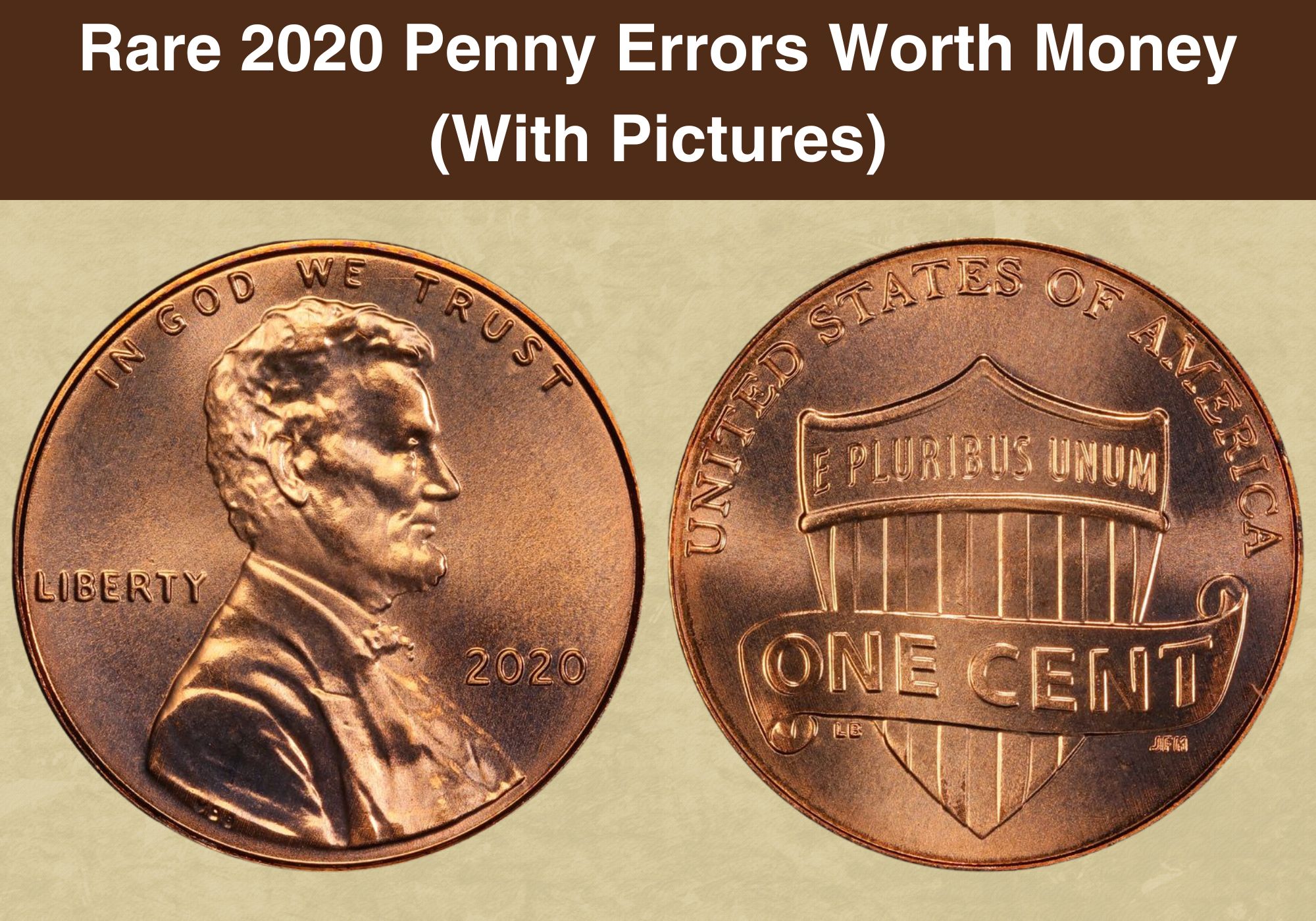
A 2020 Lincoln penny with a die break running through Lincoln’s skull sold for $2,499 at auction. That one coin is reason enough to study the 2020 penny error list carefully.
Philadelphia and Denver together struck over 8 billion pennies in 2020, producing die failures, planchet defects, and striking mistakes at every stage of production. Values range from $5 for minor die cracks to $600+ for wrong planchet errors — here’s every documented type with real sale prices.
1. 2020 Penny BIE Error (Up to $30)

The BIE error is exclusive to Lincoln cents. A small section of the die surface between “B” and “E” in LIBERTY cracks during use, and metal flows into the gap when the die strikes a planchet.
The finished coin shows what looks like a capital letter “I” standing between B and E. It is not a misprint — it is a mechanical failure in one specific spot that just happens to resemble a letter.
Some collectors try to assemble complete BIE sets across every year of the Lincoln cent series. That is harder than it sounds.
Value: No major auction house records exist specifically for 2020 BIE pennies. Pricing comes from eBay completed sales and dealer inventory. Circulated examples with faint cracks typically sell for $5 to $10. Sharp, well-defined BIE varieties in uncirculated condition reach $20 to $30. The error is common enough across Lincoln cent years that 2020 examples carry no date premium — crack clarity and grade drive the price.
How to Identify: Examine the word LIBERTY on the obverse under at least 10x magnification. You want a thin, raised vertical line between “B” and “E” running from the baseline toward the letter tops.
The line should have the same surface luster as the surrounding coin. If it looks scratched or gouged, that is post-mint damage — die breaks produce raised metal, not incised grooves.
A true BIE sits roughly centered in the gap and runs vertically. Diagonal scratches or lines extending beyond the letter area are damage.
The coin should weigh 2.5 grams and measure 19.05mm. The fastest confirmation is running a fingertip across the area — a genuine BIE feels raised, while a scratch feels recessed.
Use Our 2020 Penny Value Checker
2. 2020 Penny Clipped Planchet Error (Up to $50)

Clipped planchet errors happen before the coin is even struck. The mint punches circular blanks from flat metal strips, and when the strip fails to advance properly between punches, the next blank overlaps a previously punched hole.
The result is a coin missing a crescent-shaped bite along its edge. Curved clips are the most common type because they follow the circular edge of the previous punch.
On 2020 pennies, most clips remove 5% to 15% of the planchet, though larger clips occasionally surface. Both Philadelphia and Denver strikes have been documented with this error.
Value: No confirmed Heritage Auctions or GreatCollections records exist specifically for 2020 clipped planchet pennies. Pricing relies on eBay completed sales. Small clips removing under 10% of the planchet sell for $10 to $20 in circulated grades. Larger clips with 15% to 25% missing reach $30 to $50, especially in uncirculated condition. A clipped planchet paired with another error type, such as an off-center strike, would push the price above $50.
How to Identify: Look for a crescent-shaped area of missing metal along the edge. The clip area should show a smooth, unstruck surface with no tool marks or file scratches.
Weigh the coin on a precision scale. A normal 2020 penny weighs 2.5 grams, and a clipped example will weigh noticeably less depending on the clip size.
The Blakesley effect is your best diagnostic tool. On the opposite side of the coin from the clip, the rim should appear weak or missing entirely — the collar cannot apply full pressure where the planchet is incomplete.
If the rim looks normal all the way around but a chunk appears missing, it is likely post-mint damage from a vice or tool. The fastest test: weak rim opposite the clip confirms a genuine error.
Use Our 2020 Penny Value Checker
3. 2020 Penny Die Clash Error (Up to $50)

A die clash occurs when the hammer die and anvil die strike each other without a planchet between them. The impact transfers part of each die’s design onto the opposing die’s face, and every coin struck afterward carries ghost images from the wrong side.
On 2020 pennies, the most visible clash signature is the horizontal lines of the Union Shield appearing on Lincoln’s profile. You can spot the shield’s pattern overlaid on Lincoln’s cheek and jaw area where it does not belong.
Value: A circulated 2020 penny with a visible die clash error sold for $50 on eBay. A 2020-D clashed die penny sold for $15 on eBay in 2025. No graded examples have appeared at Heritage Auctions or GreatCollections for this specific year. Mild clashes with faint ghost images typically sell for $5 to $15, while strong clashes with clearly visible transferred design elements reach $30 to $50.
How to Identify: Examine Lincoln’s portrait under 10x magnification and look for design elements that do not belong on the obverse. The shield’s horizontal lines are the most common clash transfer on Shield cents.
Check the reverse too. Lincoln’s profile or the letters from IN GOD WE TRUST may appear as ghost images in the shield area.
A genuine clash affects every coin struck from that die pair, so the ghost images will be consistent and symmetrical. If the transferred image appears smudged or only on one spot, suspect post-mint contact damage instead.
The fastest check is tilting the coin under bright light at multiple angles. The flat clash impressions stand out against the raised design elements.
Use Our 2020 Penny Value Checker
4. 2020 Penny Re-Punched Mint Mark Error (Up to $50)

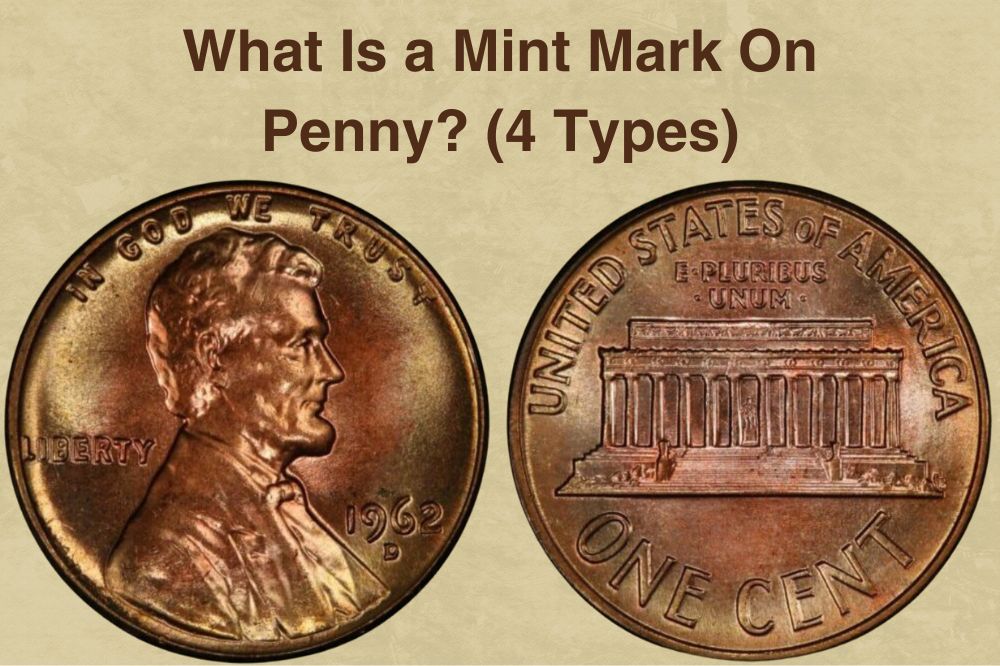
The re-punched mint mark, or RPM, occurs when the mint mark punch strikes the working die more than once at slightly different positions. On 2020-D pennies, the “D” beneath the date received a second impression with a slight offset, leaving a ghosted or doubled appearance that is visible under magnification.
RPM errors were far more dramatic on older coins when mint marks were hand-punched into each die individually. Modern hub-based methods reduced the severity, but subtle misaligned secondary impressions still occur on 2020-D dies documented by variety specialists.
Value: Well-defined 2020-D RPM varieties sell for $15 to $50 on eBay, depending on the visibility of the secondary impression and overall coin grade. Raw, circulated examples with faint doubling start around $5 to $10. No graded 2020 RPM pennies have appeared at Heritage Auctions or GreatCollections. These are considered affordable starter errors for collectors building a die variety set, keeping prices accessible across all budget levels.
How to Identify: Focus your loupe on the “D” mint mark below the date. Under 5x to 10x magnification, look for a secondary shadow or extra thickness on one side of the letter.
The doubling should appear as a raised, consistent impression, not a flat smear. Compare the “D” to reference images of catalogued 2020-D RPM varieties on Wexler’s Die Variety News or Coppercoins.com.
RPM doubling affects only the mint mark, not the surrounding design. If the date or LIBERTY also appear doubled, you have a doubled die error instead, which is a different category.
The mint mark on genuine RPMs shows two distinct positions of the same letter. If the secondary image is blurry or radiates outward, it is mechanical doubling from the strike, not an RPM.
A side-by-side comparison with known RPM reference photos is the fastest way to confirm.
Use Our 2020 Penny Value Checker
5. 2020 Penny Broadstruck Error (Up to $140)

A broadstruck error happens when a coin is struck without the retaining collar in place. The collar normally constrains the planchet to a precise 19.05mm diameter during striking, and without it, the metal spreads outward freely under the full force of the press.
The result is a coin with an enlarged diameter and a thin, irregular edge. The design appears on both sides but may look slightly spread or weak toward the perimeter, and the rim is either partial or entirely absent because the collar never shaped it.
Value: One circulated 2020 penny combining a broadstruck error with a die break on Lincoln’s cheek and nose sold for $140 on eBay. Pure broadstruck errors without additional defects typically sell for $9 to $25 depending on how dramatically the diameter expanded. Uncirculated broadstruck pennies with full Red designation can reach $40 to $75. Multiple defects on one coin multiply the price.
How to Identify: Measure the coin’s diameter with calipers. A normal 2020 penny is 19.05mm, and a broadstruck example will measure larger, sometimes 20mm or more. The coin should still weigh 2.5 grams since the planchet is correct — only the striking was abnormal.
Check the rim. A genuine broadstruck coin shows a weak, irregular, or completely absent rim around part or all of the circumference.
If the rim is intact and uniform but the coin looks large, suspect environmental damage. Both sides should display the complete design, though the outermost details may appear soft.
Compare the edge profile against a normal penny — broadstruck coins have a flat, knife-like edge where the collar should have formed a smooth, rounded profile. The fastest confirmation: enlarged diameter on calipers combined with a missing or irregular rim.
Use Our 2020 Penny Value Checker
6. 2020 Penny Rotated Die Error (Up to $150)

A rotated die error occurs when one of the two dies is installed at an incorrect angle relative to the other. Normal coin alignment means flipping the coin top-to-bottom shows both designs upright, but when a die rotates, the reverse appears tilted or completely inverted.
Minor rotations of 15 to 45 degrees are fairly common and often pass unnoticed in circulation. A full 180-degree rotation, where the reverse appears completely upside down relative to the obverse, is the most desirable variety and commands the strongest premiums.
Value: Minor rotations of 15 to 45 degrees on 2020 pennies sell for $8 to $20. A quarter-turn at 90 degrees reaches $40 to $100 depending on grade. Half-turn examples at 180 degrees can bring $100 to $150. No graded 2020 rotated die pennies have appeared at Heritage Auctions, so pricing is based entirely on eBay completed sales and dealer offerings.
Coin Identifier and Value App
Not sure what your coins are worth? Get Instant Value • Grade • Error Detection with coin identifier and value app (FREE Usage Daily)
How to Identify: Hold the coin with the obverse facing you and Lincoln’s portrait upright. Flip the coin along its vertical axis, left to right. The shield on the reverse should appear upright — if it is tilted, estimate or measure the angle of rotation.
A genuine rotated die error shows the same rotation on every coin struck from that die pair, so the rotation is precise and consistent. If the alignment seems uneven depending on where you measure, suspect a bent coin.
The weight should remain 2.5 grams and the diameter 19.05mm. The fastest check: flip the coin and see if the shield lines up vertically with Lincoln.
Use Our 2020 Penny Value Checker
7. 2020 Penny Doubled Die Reverse Error (Up to $150)

Doubled die reverse errors form when the hub creating the reverse design impresses the working die multiple times at misaligned positions. On 2020 Lincoln Shield pennies, DDR errors show doubled text in “E PLURIBUS UNUM,” “ONE CENT,” or “UNITED STATES OF AMERICA.”
The shield’s vertical lines may also appear thickened or split. The 2020-D mint produced several documented DDR varieties with varying degrees of doubling strength, though reverse varieties typically draw smaller premiums than obverse ones because the doubling is harder to spot at a glance.
Value: Minor 2020 DDR varieties sell for $3 to $7 in circulated condition on eBay. More prominent examples with clearly visible doubling reach $15 to $50. Moderate-to-strong examples affecting “ONE CENT” sell for $10 to $30 in lower Mint State and $50 to $75+ in certified MS67RD. High-grade uncirculated specimens with strong, sharp doubling can sell for $75 to $150 depending on eye appeal.
How to Identify: Flip the coin to the reverse and examine the “ONE CENT” inscription at the bottom under 10x magnification. Look for a raised, rounded secondary impression where each letter shows two distinct edges with genuine depth — not a flat shadow or blurry smear.
Thickened vertical lines within the shield can also indicate reverse doubling. Compare these against known DDR reference images from doubleddie.com.
DDR doubling maintains consistency across the entire reverse, affecting multiple design elements in the same direction simultaneously. If only one letter or area appears doubled, suspect machine doubling instead.
Check catalogues at Wexler’s Die Variety News, where 2020 DDR varieties are listed with specific die markers. The fastest confirmation: compare your coin’s “ONE CENT” to a catalogued WDDR photo at matching magnification.
Use Our 2020 Penny Value Checker
8. 2020 Penny Doubled Die Obverse Error (Up to $150)

The doubled die obverse happens during die production when the working hub stamps the design onto the die more than once at slightly misaligned angles. Every coin struck from that die carries the same doubling pattern, and on 2020 pennies, the most notable variety is WDDO-001 with moderate extra thickness on the date and LIBERTY.
Both 2020-P and 2020-D pennies have documented DDO varieties. The strongest 2020 DDOs show doubling visible without magnification, which is the threshold where prices climb fastest.
Value: Circulated 2020 DDO pennies typically sell for $5 to $15 depending on doubling strength. Uncirculated examples with strong, visible doubling fetch $25 to $100 on eBay. The most dramatic specimens, where the doubling is visible without magnification, reach $150. No major auction house records exist yet for 2020 DDOs specifically, so eBay completed sales remain the primary pricing reference. The spread and visibility determine where in the $25 to $150 range a given coin falls.
How to Identify: Use a 10x loupe to examine the obverse. Start with LIBERTY and IN GOD WE TRUST — look for thickened letters that appear slightly shadowed or show a secondary impression. The date should also show extra thickness or a clear secondary outline.
Genuine DDO errors show the same doubling pattern consistently across multiple design elements. If only one letter appears doubled while everything else looks normal, suspect machine doubling or strike irregularity.
True doubled die doubling appears as raised, distinct separation between original and secondary impressions. Machine doubling, by contrast, produces flat, shelf-like distortion on one side of each letter.
Check Wexler’s catalogue for the specific die markers on WDDO-001. The fastest test: if the doubling direction and degree match across LIBERTY, the date, and IN GOD WE TRUST simultaneously, it is almost certainly genuine.
Use Our 2020 Penny Value Checker
9. 2020 Penny Strike-Through Error (Up to $200)

Strike-through errors occur when foreign material gets caught between the die and the planchet during striking. The obstruction prevents metal from fully filling the die cavities and leaves its own impression on the finished coin — anything from cloth fibers and metal fragments to wire, grease, or shop debris can cause this.
On 2020 pennies, strike-throughs range from simple grease-filled areas where part of the design appears weak to dramatic impressions showing the texture and shape of the trapped object. The most valuable 2020 example showed clear impressions on both sides, particularly across Lincoln’s shoulders.
Value: The top 2020 strike-through penny sold for $200, featuring impressions visible on both obverse and reverse with distinctive texture patterns showing the foreign object’s shape. Minor grease-filled die strikes sell for $5 to $15 on eBay. Dramatic strike-throughs with clear impressions of cloth, wire, or other identifiable materials fetch $50 to $200 depending on visibility, the area of coverage, and whether both sides are affected.
How to Identify: Look for areas where the design appears weak, mushy, or completely absent. Grease-filled strikes typically affect one specific zone rather than the entire coin — a single letter, part of Lincoln’s portrait, or a section of the shield.
For dramatic strike-throughs, examine the anomalous area under 10x magnification for texture patterns. Cloth fibers leave parallel line impressions, wire leaves a thin raised line, and metal fragments leave irregular angular depressions.
The key distinction from post-mint damage: strike-throughs are flat or slightly depressed relative to the surrounding design, while damage from contact or tools typically produces raised burrs or displaced metal. The coin should weigh 2.5 grams.
The fastest check: if the anomaly appears pressed into the surface without disturbing the surrounding details, it happened during striking.
Use Our 2020 Penny Value Checker
10. 2020 Penny Off-Center Strike Error (Up to $300)

Off-center strikes happen when a blank planchet is not properly positioned between the dies before striking. The dies come down on whatever portion of the blank sits in their path, leaving a crescent of unstruck metal on one side and cutting off part of the normal design.
Both Philadelphia and Denver produced 2020 off-center pennies. The feeding mechanism that positions blanks occasionally misfires during high-speed production runs, though these errors remain uncommon relative to the billions of normal strikes produced that year.
Value: Minor off-center strikes at 5% to 10% sell for $10 to $20 on eBay. The sweet spot is 40% to 50% off-center with a visible date, fetching $100 to $150. Extreme examples showing 60% to 75% displacement can reach $200 to $300 in uncirculated grades. A 2020 off-center broadstruck example sold for $150 on eBay. Undated off-center strikes, where the date was pushed off the coin entirely, sell for significantly less.
How to Identify: Look for a crescent of blank, unstruck metal on one side of the coin. The struck portion should display normal, full-strike detail with sharp features.
Genuine off-center strikes show smooth, featureless metal in the unstruck crescent with no rim in that area. The struck portion retains its normal rim.
If the coin has a complete rim all the way around but the design appears shifted, you have a misaligned die error instead — a different category. Check both sides, as obverse and reverse may show slightly different displacement degrees.
The coin should weigh 2.5 grams since the full planchet was used, just not centered. The fastest confirmation: smooth blank crescent with no rim on one side, sharp design detail on the other.
Use Our 2020 Penny Value Checker
11. 2020 Penny Lamination Error (Up to $300)

Lamination errors originate in the planchet before striking. During alloy mixing and rolling, impurities or gas bubbles become trapped within the metal layers, creating weak zones that may not be visible on a fresh blank.
The stress of striking and subsequent handling causes the metal to peel, flake, or split along the trapped impurity. On 2020 zinc pennies, the copper plating can separate from the zinc core, creating a coin where one layer lifts away from the other and reveals gray metal underneath.
Value: Minor lamination peeling on 2020 pennies sells for $5 to $20 on eBay. Moderate lamination with noticeable flaking or raised areas fetches $25 to $75. Dramatic examples where significant portions peeled away or the planchet split completely can reach $100 to $300 depending on the affected area and overall coin grade. No Heritage Auctions records exist for 2020 lamination pennies specifically, so eBay completed sales set the pricing baseline.
How to Identify: Look for areas where the surface appears to be peeling, flaking, or lifting away from the coin’s body. Exposed zinc appears gray or silvery beneath the copper surface on affected 2020 cents.
Weigh the coin — if a significant piece has separated, it will be lighter than 2.5 grams. Under 10x magnification, genuine lamination follows curved or irregular paths along natural metal grain boundaries.
Post-mint corrosion produces pitting, green verdigris, or uniform surface degradation rather than clean peeling. The edge of a genuine lamination flaw should show the layered structure of the planchet.
The fastest test: if you can see two distinct metal layers at the edge of the flaw, it is a lamination error.
Use Our 2020 Penny Value Checker
12. 2020 Penny Die Crack and Cud Error (Up to $500)

Die cracks form when the die’s surface develops fractures during extended use. Metal flows into these fractures when the die strikes a planchet, creating raised lines on the finished coin.
Coin Identifier and Value App
Not sure what your coins are worth? Get Instant Value • Grade • Error Detection with coin identifier and value app (FREE Usage Daily)
The most collected 2020 die crack variety is the “Crying Eye” or “Lincoln’s Tears” pattern, where cracks run from Lincoln’s eyes down his cheek. When a crack progresses far enough that a piece of the die breaks away near the rim, the result is a cud — a raised, shapeless blob of metal at the coin’s edge.
Value: Simple, short die cracks sell for $2 to $10 on eBay. The “Crying Eye” variety fetches $35 to $200 depending on crack severity and sharpness of the pattern. A circulated 2020 Crying Eye penny sold for $35 to $39 on eBay. Major cuds where metal chunks are completely missing from the die can sell for $100 to $500, with price determined primarily by the cud’s size and its location on the coin.
How to Identify: Run your finger across any suspected line on the coin’s surface. Genuine die cracks feel raised because metal filled the crack during striking — scratches from post-mint damage feel recessed or grooved.
Under 10x magnification, a die crack appears as a raised line with the same luster and color as the surrounding surface. If the line looks different in color or texture, it is likely a scratch.
Cuds appear at the rim as raised, flat, featureless blobs of metal replacing part of the normal design. They always connect to the rim because they form when the die edge breaks.
The coin’s weight remains standard at 2.5 grams. The fastest check: raised line or blob with matching surface luster equals a genuine die crack or cud.
Use Our 2020 Penny Value Checker
13. 2020 Penny Wrong Planchet Error (Up to $600)

A wrong planchet error occurs when a blank intended for a different denomination gets fed into the penny press. The cent dies strike this foreign blank, producing a coin with Lincoln’s portrait and the Shield reverse on a planchet that has the wrong size, weight, or metal composition — most commonly a dime planchet.
This is a serious quality control failure at the mint. Post-2002 production changes reduced error rates significantly, making modern wrong planchet coins scarcer and more valuable than older examples of the same type.
Value: Confirmed wrong planchet errors on 2020 pennies fetch $300 to $600 or more at auction. Heritage Auctions and Stack’s Bowers are the main houses handling significant modern Lincoln cent errors of this type. An uncertified 2020 wrong planchet penny listed on eBay attracted significant collector interest and competitive bidding. Professional authentication by PCGS or NGC is essential for these since the error type is frequently misidentified or faked.
How to Identify: Start with weight and diameter. A normal 2020 penny weighs 2.5 grams and measures 19.05mm. A penny struck on a dime planchet would weigh approximately 2.27 grams and measure 17.91mm.
A penny struck on a nickel planchet would weigh 5.0 grams and measure 21.21mm. Use a precision digital scale accurate to 0.01 grams and calipers for these measurements.
Examine the edge and metal color. A dime planchet has a clad sandwich edge showing distinct layers, while a nickel planchet appears uniformly silver-colored.
The design will appear distorted if the planchet is smaller than intended. Authentication by PCGS or NGC is essential — the fastest path to confirmation is professional grading.
Use Our 2020 Penny Value Checker
14. 2020 Penny Die Break Error (Up to $2,499)

The most valuable 2020 penny error on record is a die break nicknamed the “Assassination Penny.” A large section of the die fractured along a line running from the rim through the back of Lincoln’s head and out through his eye, and the crack path on the finished coin resembles a bullet’s trajectory.
The visual parallel to Lincoln’s 1865 assassination at Ford’s Theatre is what turned a routine die failure into a four-figure collectible. The raised line on the coin is thick, prominent, and impossible to miss with the naked eye.
Value: A circulated 2020 penny with the “Assassination” die break sold for $2,499 on eBay, making it the most expensive 2020 penny error recorded to date. Standard die breaks without the dramatic placement sell for $10 to $100 depending on size and position. The narrative behind this specific error drove the price far beyond what typical die breaks command. An uncirculated example, if one surfaces, would likely exceed this figure.
How to Identify: Look for a thick, raised line crossing Lincoln’s portrait from the back of his head through the eye area and extending to or near the rim. The line should show matching luster to the surrounding surface, not scratches or tool marks.
Under magnification, the break should show consistent width and depth along its entire length, characteristic of a single fracture event. Compare the path against known images of the Assassination Penny — the specific trajectory entering from behind the head and exiting through the eye defines this variety.
Other die breaks crossing Lincoln’s portrait exist but do not carry the same premium unless the path mimics the assassination angle. The coin weighs 2.5 grams and measures 19.05mm.
The fastest confirmation: a thick raised line through the back of Lincoln’s head and out through the eye, visible without magnification.
Use Our 2020 Penny Value Checker
Conclusion
The 2020 penny error spectrum runs from $5 BIE varieties to a $2,499 die break at the top. Most errors land in the $10 to $200 range, with doubled dies, off-center strikes, and die cracks making up the bulk of what circulates through eBay and dealer inventories.
A 10x loupe and a 0.01-gram digital scale are the only tools you need to check every 2020 penny that crosses your path.